The Official Blog of the

Archive for the ‘United States’ Category

Iran: Dark Clouds, Future Uncertain

In Being a World Citizen, Conflict Resolution, Current Events, Democracy, Human Rights, Middle East & North Africa, NGOs, Nonviolence, Peacebuilding, Social Rights, Solidarity, The Search for Peace, United States on January 7, 2026 at 7:30 AM

By René Wadlow

Since the “12-day war” of Israel and the USA last June, Iran has been a powder keg with unresolved political tensions, deepening economic turmoil, and rising domestic dissent. With the start of 2026, the keg has exploded. Protests have started in some 32 cities and larger towns throughout the country.

The protests were first focused on economic issues symbolized by the sharp collapse of the rial, the national money, and the inflation exceeding 40 percent. These dynamics have turned the bazaaris – the merchants – traditionally a more conservative social group, into key participants in the protests. Economic hardship has become a daily experience for a wide segment of the population.

Although the protests began with economic demands, reports from across the country indicate that slogans have increasingly shifted toward explicitly political and anti-governmental messages, including chants directed at the Iranian leadership and the political system as a whole. Universities have once again emerged as key protest centers with action by both students and professors.

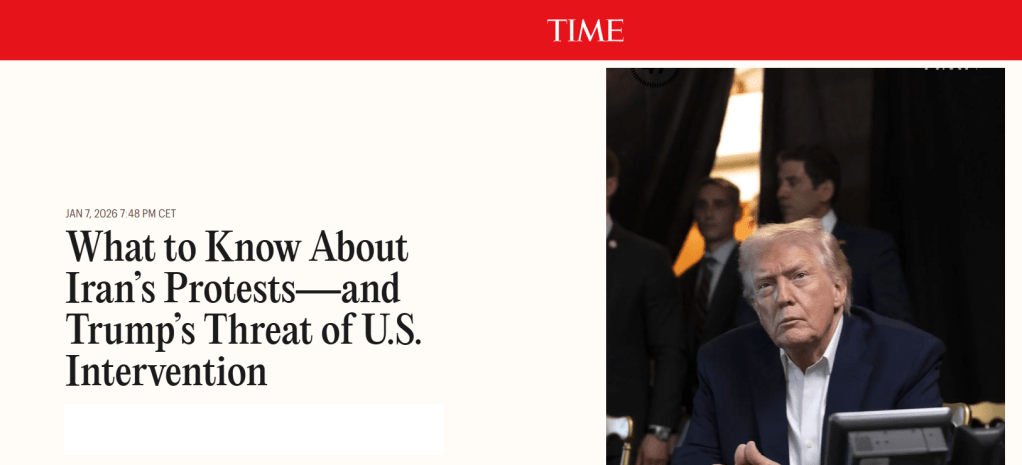
The government led by President Masoud Pezeshkian has promised economic reforms, but there is no protest leadership with which to negotiate. The security forces have increased repression with a large number of people arrested. A number of persons have been killed. Funerals for the protesters killed have become occasions for additional protests. The repression has led the United States (U.S.) President, Donald Trump, to say, “If Iran violently kills peaceful protesters, which is their custom, the United States of America will come to their rescue. We are locked and loaded and ready to go.”

The U.S. threats in the Iran situation are very unhelpful. It is time to unlock and unload. Rather, the Association of World Citizens calls on the Iranian authorities to cease immediately the use of force against peaceful protesters and to release those arbitrarily detained. This will create space for genuine dialogue and the needed reforms for economic justice.

Prof. René Wadlow is President of the Association of World Citizens.
Thailand-Cambodia: Urgent Ceasefire Needed

In Asia, Being a World Citizen, Conflict Resolution, Cultural Bridges, Current Events, International Justice, NGOs, Nonviolence, Peacebuilding, Solidarity, Spirituality, The Search for Peace, Track II, United Nations, United States, World Law on December 10, 2025 at 7:00 PM

By René Wadlow

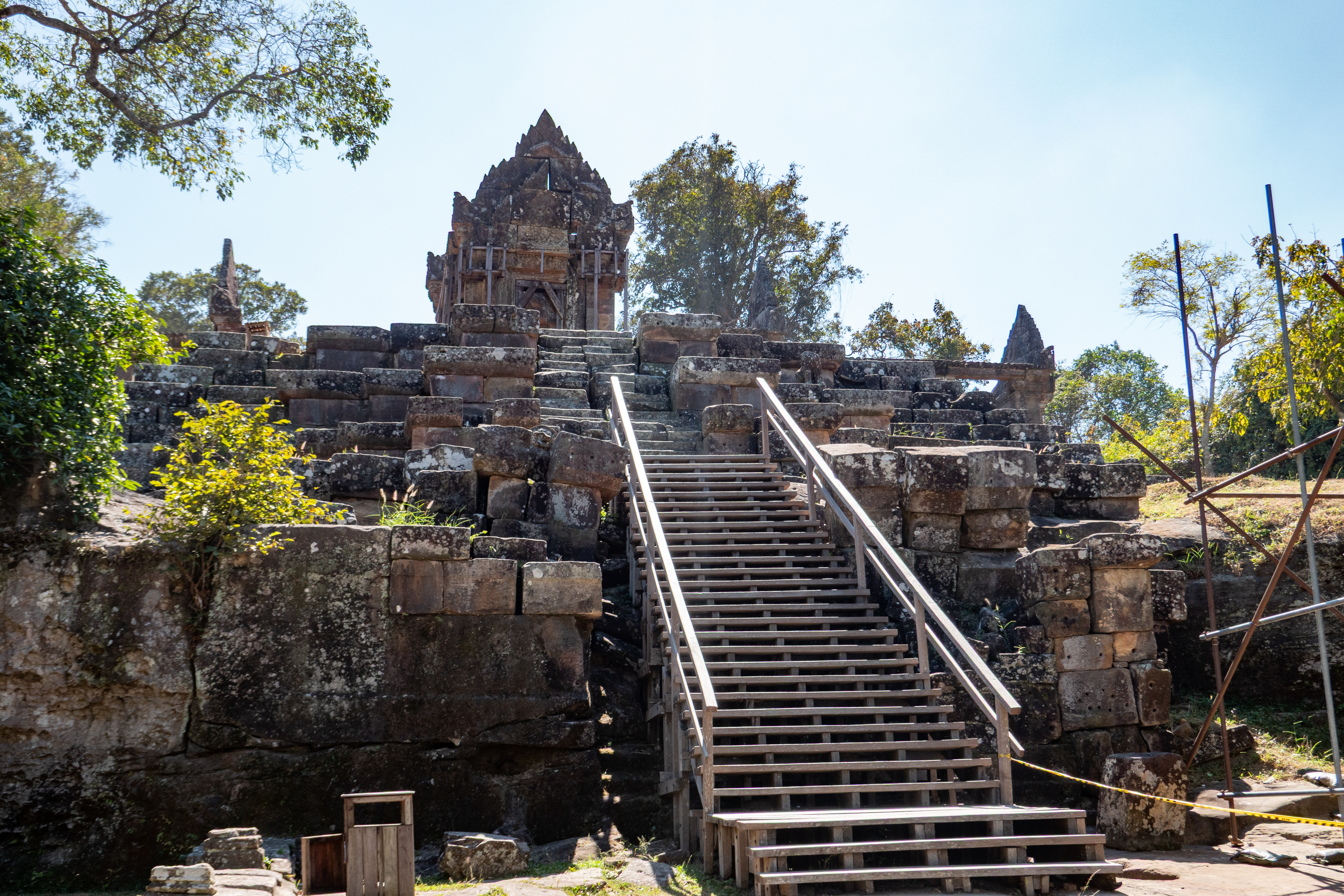
The Association of World Citizens (AWC) calls for an urgent ceasefire in the renewed armed conflict between Thailand and Cambodia which flared up again on December 8, 2025 with the Thai military launching airstrikes on Cambodia.

A ceasefire had been agreed to in July 2025 in negotiations led by U.S. mediators. There is a 500-mile frontier between the two countries. The frontier was drawn when Cambodia was under French rule. Thailand contests the frontier lines.

Prasat Preah Vihear, the temple claimed by both Thailand and Cambodia (C) PsamatheM

The decades-long dispute has already displaced many persons on both sides of the frontier. The frontier area on both sides has a large number of landmines planted making the whole area unsafe. The disputed area contains a Buddhist temple which should be a symbol of peace and harmony but is now a factor in the dispute.

The AWC stresses that urgent measures of conflict resolution should be undertaken. Nongovernmental Organizations may be able to play a positive role in such efforts. Contacts should be undertaken now.

Prof. René Wadlow is President of the Association of World Citizens.
Crucial Middle East Negotiations: A Ray of Hope at Last?

In Being a World Citizen, Conflict Resolution, Current Events, Humanitarian Law, Middle East & North Africa, NGOs, Nonviolence, Peacebuilding, Solidarity, The Search for Peace, Track II, United Nations, United States, War Crimes, World Law on October 13, 2025 at 7:00 AM

By René Wadlow

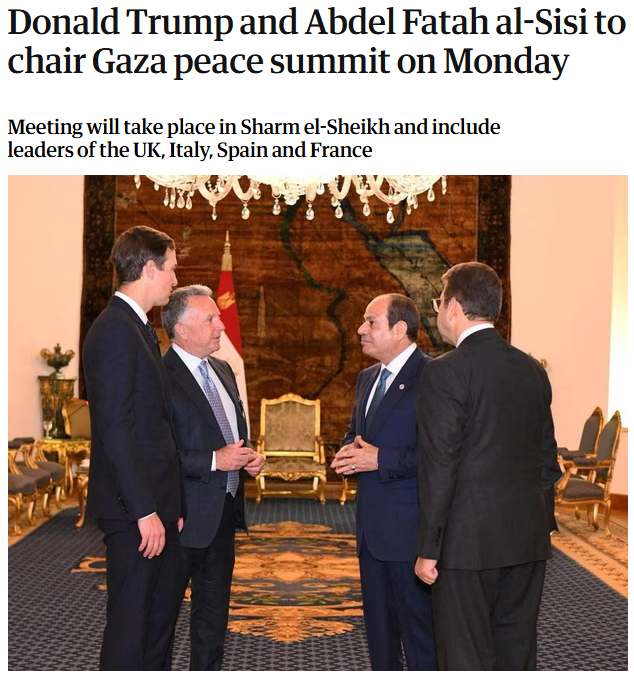
Close attention needs to be focused on the deadly and destructive conflict in the Gaza Strip and the multi-party negotiations being held in the Egyptian city of Sharm El-Sheikh. The elite of Middle East diplomacy are in Sharm El-Sheikh these days, including Steve Withoff and Jared Kushner from the USA, the Israeli Strategic Affairs Minister Ron Derner, Khalil Al-Hayya, the head of the Hamas negotiation team, and Mohammed Al-Hindi of the Palestinian Islamic Jihad which holds some of the 20 living Israeli hostages.

The exchange of Israeli hostages – 20 living and the bodies of 28 who have died – and some 2,000 Palestinian prisoners held in Israeli jails and army camps is the first order of business. The exchange should take place on Monday, October 13. President Donald Trump should go first to Israel and then Egypt on Monday to start multi-party negotiations with implications for the wider Middle East.

The negotiations are being held against a politically unstable situation in Israel and the USA where in both there are deep divisions among political parties. The armed conflict in the Gaza Strip could start again with “We tried negotiations and they failed” as a battle theme.

As the representatives of UN Consultative Status NGO, we must see how we can build on these advances toward a stable peace. There is much at stake, and we must be ready to take action.

Prof. René Wadlow is President of the Association of World Citizens.
Gaza Strip Peace Plan: Making Peace Without Peacemakers?

In Being a World Citizen, Conflict Resolution, Current Events, Humanitarian Law, Middle East & North Africa, NGOs, Nonviolence, Peacebuilding, Solidarity, The Search for Peace, Track II, United Nations, United States, World Law on October 6, 2025 at 7:00 PM

By René Wadlow

(An earlier version of this piece was published on Transcend Media Service.)

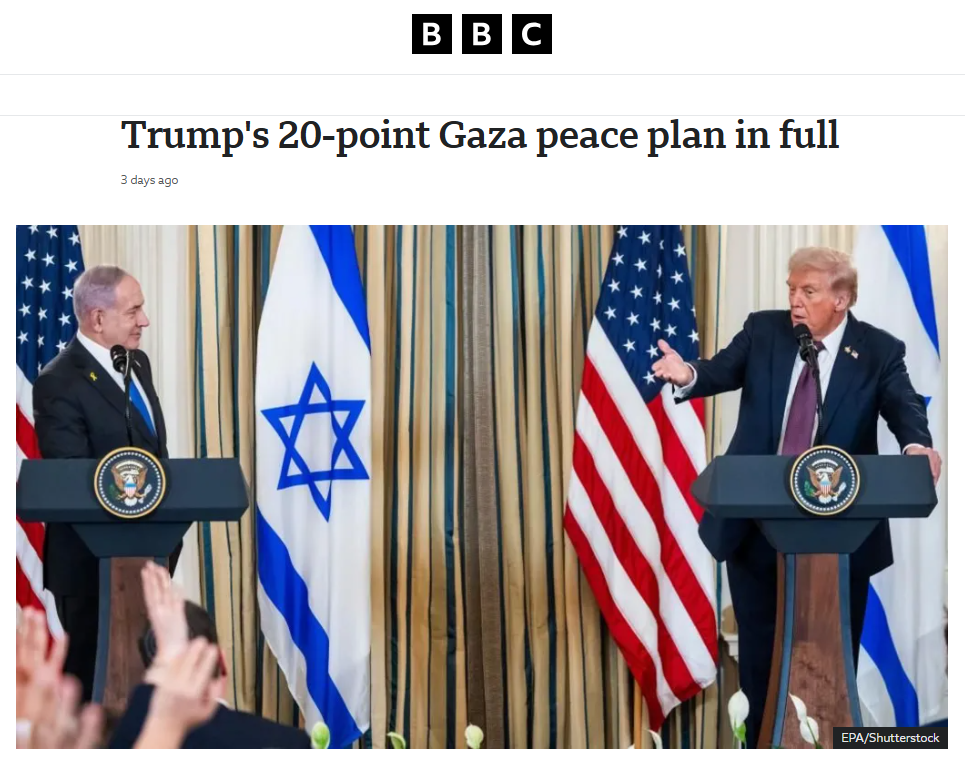
On September 29, 2025, United States (U.S.) President Donald Trump presented his 20-point Peace Plan for the Gaza Strip which sets out a ceasefire, a release of hostages held by the Palestinian Islamic Resistance Movement (Hamas) and its armed allies, a dismantling of Hamas’ military structures, the withdrawal of Israeli troops, and the creation of an international “Board of Peace” to supervise the administration of the Gaza Strip with President Trump as chair and former British Prime Minister Tony Blair as the chief administrator. Relief supplies to meet human needs would be facilitated. The plan concerns only the Gaza Strip and does not deal directly with the West Bank where tensions are strong.

The plan has been presented to the Israeli Prime Minister, Benyamin Netanyahu who was in Washington, D.C. and to Arab leaders who were at the United Nations in New York. The plan has been given to Hamas’ leaders through intermediaries, but Hamas’ leadership has been severely weakened by deaths. Thus, it is not clear how decision-making will be done by Hamas. The plan has also been presented to the Palestinian Authority (PA) in Ramallah, led by Mahmoud Abbas, but the PA would play no part in the Gaza Strip’s future. The plan is being widely discussed, but no official decisions have been announced.

The Gaza Peace Plan has some of the approach of the Transcend proposals (1) with, in addition, the possibility of violence if the Gaza Peace Plan is not carried out. Threats of violence are not among Transcend’s tools. One of the distinctive aspects of Transcend and the broader peace research movement is to present specific proposals for transcending current conflicts through an analysis of the roots of the conflict, the dangers if the conflict continues as it is going, and then the measures to take. (2) The Israeli-Palestinian conflict is one which presents dangers to the whole region if creative actions are not taken very soon. We must act now. We cannot wait for President Trump to do it for us.

Notes:

(1) Transcend Media Service, “The Time Has Arrived for a Comprehensive Middle East Peace”, Jeffrey D. Sachs and Sybil Fares, July 7, 2025.
(2) See:
Johan Galtung, The True Worlds (New York/The Free Press/1980/469pp)
John Paul Lederach, Preparing for Peace (Syracuse, NY/Syracuse University Press/1995/133pp)

Prof. René Wadlow is President of the Association of World Citizens.
Stronger Track Two Networks Needed

In Being a World Citizen, Conflict Resolution, NGOs, Nonviolence, Peacebuilding, Solidarity, The Search for Peace, Track II, United Nations, United States on August 5, 2025 at 5:45 PM

By René Wadlow

The continuing armed conflicts in Ukraine and the Gaza Strip, increased tensions between Mainland China and Taiwan with the lack of any formal governmental negotiations forces us to ask if more can be done on the part of Nongovernmental Organizations (NGOs) to encourage negotiations in good faith.

Governmental efforts, bilateral or within the United Nations (UN) can be called Track One. Track One diplomacy is official government negotiations with the backup resources of government research and intelligence agencies. There can also be Track One “back channels” of informal or unofficial contacts.

Track Two diplomacy is a non-official effort usually by an NGO or an academic institution. The use of non-official mediators is also increasing as awareness grows that there is a tragic disjuncture between the UN mandate to keep peace and its inability to intervene in conflicts within a State – often confrontations between armed groups and government forces and sometimes among different armed groups.

Track Two talks are discussions held by non-officials of conflicting parties in an attempt to clarify outstanding disputes and to explore the options for resolving them in settings that are less sensitive than those associated with formal negotiations. The participants usually include scholars, senior journalists, former government officials and former military officers. They should be in close contact with national leaders and decision-makers. The purposes of Track Two talks vary, but they are all related to reducing tensions. Much depends on the caliber and dedication of the participants and their relations with governmental leadership.

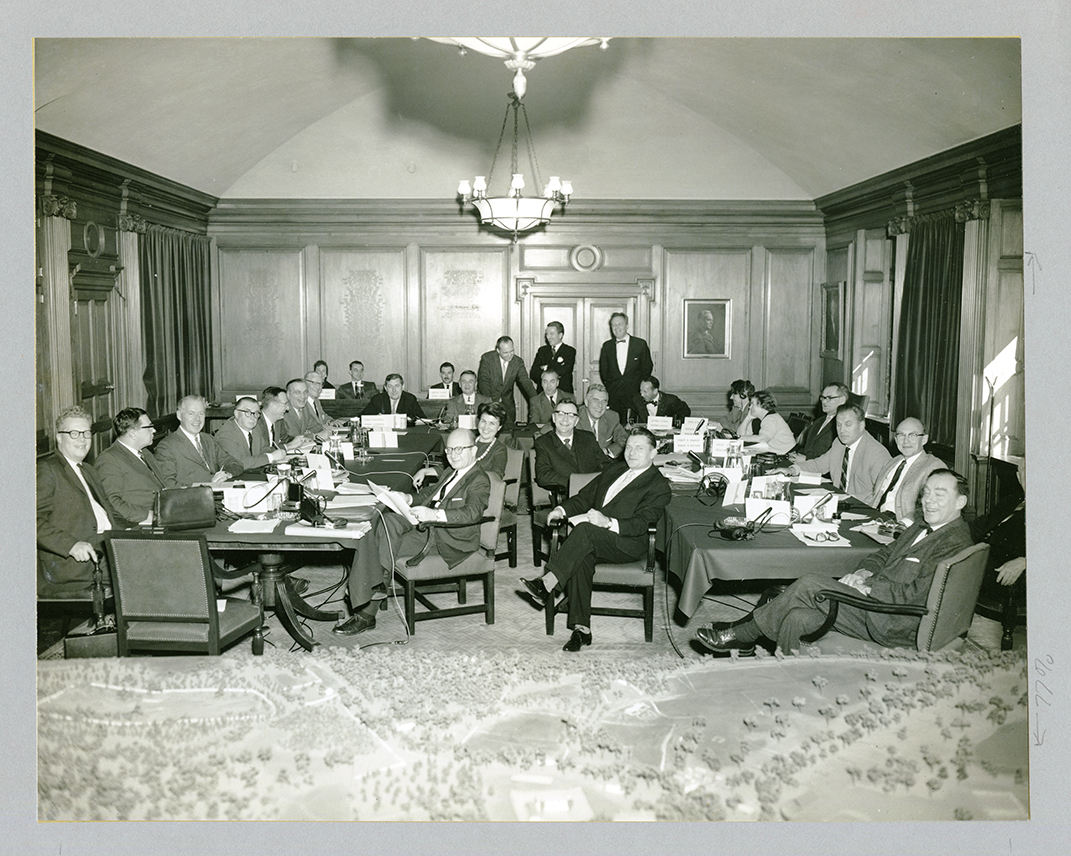
Citizens of the World were involved in one of the earliest continuing Track Two efforts. In 1959 President Eisenhower asked the world citizen Norman Cousins, editor of the New York-based journal The Saturday Review of Literature, if there were some way that could be arranged to get private Soviet and United States (U.S.) citizens together to discuss U.S.-Soviet relations.

The first meeting was held at Dartmouth College and became known as the Dartmouth Conferences held in many different places in the USA. David Rockefeller, chief of the Chase Manhattan Bank, whose name as a capitalist was known by most Soviets, was one of the active participants. Rockefeller and his family had many contacts with U.S. intellectuals and scholars on whom they could call to participate in the Dartmouth meetings.

A Russian-American Conference, Dartmouth Group, October 1962 (C) Phillips Academy Archives and Special Collections, CC BY-SA 2.0

As Kenneth Boulding, a Quaker economist who often participated in Track Two efforts wrote:

“When Track One will not do,

We have to travel on Track Two.

But for results to be abiding,

The Tracks must meet upon some siding.” (1)

Note:

1) Quoted in John W. McDonald with Noa Zanolli, The Shifting Grounds of Conflict and Peacebuilding (Lanham, MD: Lexington Books, 2008, 241 pp)

Prof. René Wadlow is President of the Association of World Citizens.
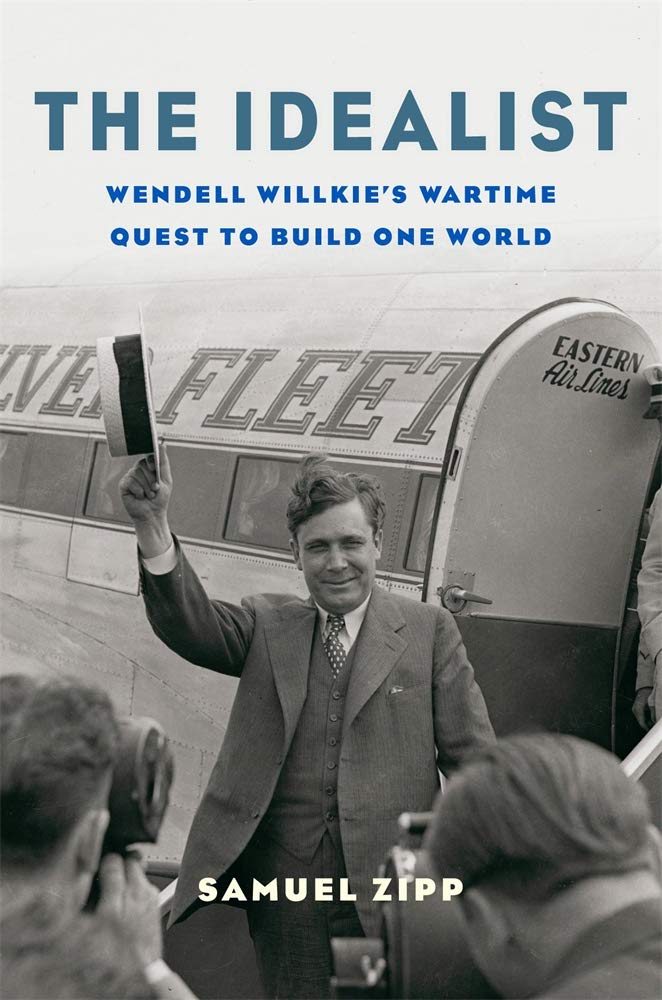
BOOK REVIEW: Samuel Zipp, “The Idealist: Wendell Willkie’s Wartime Quest to Build One World”

In Being a World Citizen, Book Review, Conflict Resolution, Democracy, Peacebuilding, Solidarity, The Search for Peace, United States, World Law on August 4, 2025 at 6:40 AM

By Lawrence Wittner

Samuel Zipp, The Idealist: Wendell Willkie’s Wartime Quest to Build One World.

Cambridge, MA: Belknap Press of Harvard University Press, 2020

Wendell Willkie – successful lawyer and businessman, as well as a defeated candidate for U.S. President on the Republican Party ticket in 1940 – is a largely forgotten figure today. But, as Samuel Zipp reminds us, Willkie was extremely influential during World War II, when he launched a popular campaign for “global interdependence” or, as it became known, “One World.”

In this beautifully written and well researched book, Zipp, Professor of American Studies at Brown University, points out that, unlike the conservatives and isolationists in his party, Willkie was a liberal who had backed Woodrow Wilson’s call for a League of Nations, advocated racial equality, and usually supported President Franklin D. Roosevelt’s policy of collective security.

Indeed, with World War II well underway, he and Roosevelt hatched a plan to have Willkie embark on a worldwide goodwill tour, by aircraft, from August to October 1942. This well-publicized venture was designed to demonstrate America’s political unity in wartime, foster support for the Allied powers, and provide a source of information on governmental and public opinion abroad.

Willkie – an informal, garrulous, likeable individual with a common touch – not only had great success along these lines, but was powerfully influenced by what he saw. Appalled by imperialism and racism and impressed by the demand for freedom of colonized or subordinate people in Africa, the Middle East and Asia, Willkie returned, as Zipp notes, convinced of the need to get Americans “to see the wider world through the lens of fraternity and cooperation.” He hoped to convince them that their independence “would require a new form of interdependence with the world,” one in harmony with “global desires for an end to empire and a guarantee of self-determination.”

Back in the United States, Willkie embarked on a round of interviews, speeches, and articles along these lines, capped off by the publication of an immensely popular book, One World. With sales topping 1.6 million copies by July, some observers called it the best-selling book in U.S. history. Furthermore, that June over 100 newspapers in the United States and abroad, with a combined circulation of over seven million readers, ran an abridged version in their pages. Using his celebrity status to assail both “narrow nationalism” and “imperialism,” Willkie produced what Zipp calls “a fleeting moment,” when he “showed the country an alternative possible future.”

But the moment passed. Nationalists and imperialists began to criticize this vision, the Republican Party repudiated his leadership, and, in October 1944, Willkie – only 52 years of age – died of a heart attack. Although, after the atomic bombing of Japan, world federalist and nuclear disarmament groups adopted “One World or None” as their slogan, the idea of egalitarian global interdependence gradually lost favor, despite its occasional revival by environmentalists and others.

Even so, Zipp concludes, Willkie’s “diagnosis of the value of global interdependence has never been more prescient,” while “his warnings about the perils of racially charged ‘narrow nationalism’ have never been more indispensable.”

Lawrence Wittner (http://lawrenceswittner.com) is Professor of History Emeritus at SUNY/Albany.

Russia-Ukraine Armed Conflict: Start of the Last Lap?

In Being a World Citizen, Conflict Resolution, Current Events, Europe, Human Rights, Humanitarian Law, NGOs, Peacebuilding, Refugees, Solidarity, The former Soviet Union, The Search for Peace, Track II, UKRAINE, United States, War Crimes, World Law on February 22, 2025 at 9:45 AM

By René Wadlow

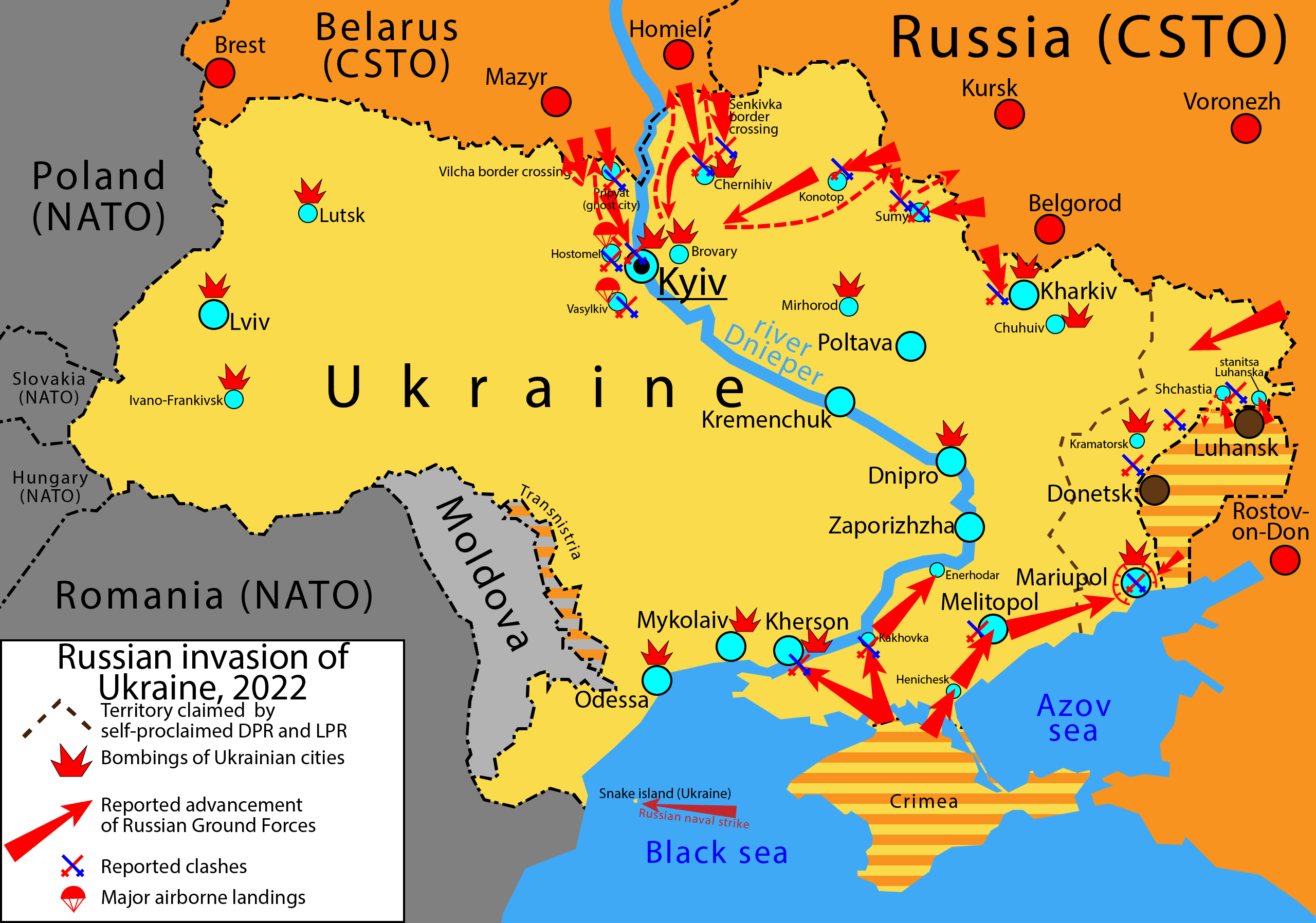
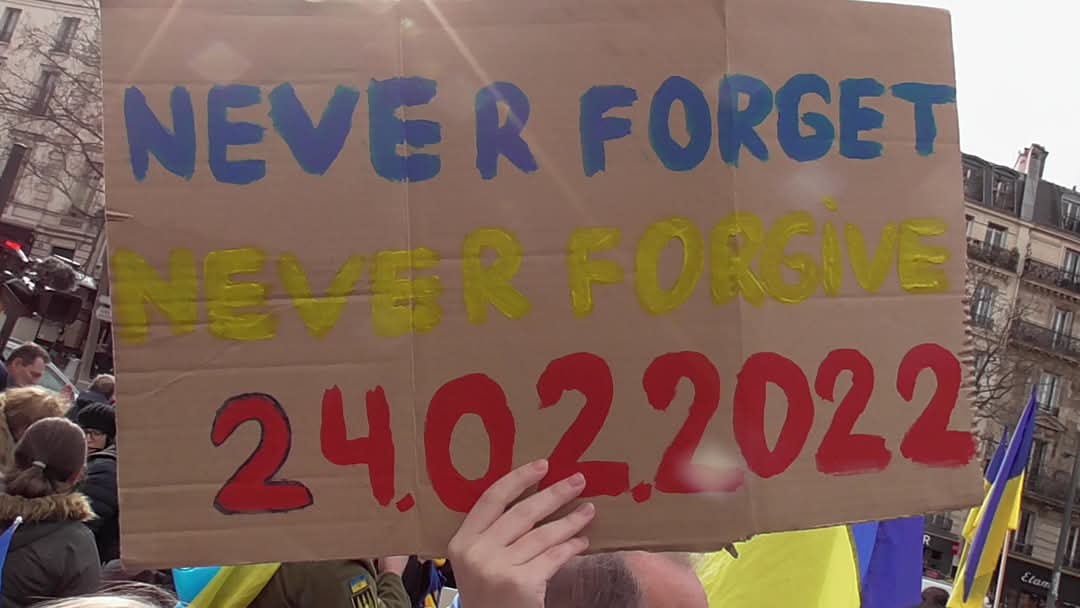
February 24 marks the anniversary of the start of the Russian “Special Military Operation” in Ukraine in 2022 which very quickly became a war with the large loss of life both military and civil, with the displacement of population, and a crackdown on opposition to the war. For three years, the war has continued, lap after lap. Although there were fears that the war might spread to neighboring countries, the fighting has been focused on Ukraine, and more recently on a small part of Russian territory attacked by Ukrainian forces. Can there be a realistic end to the armed conflict in sight?

On February 18, 2025, the United States (U.S.) Secretary of State, Marco Rubio, and the Russian Foreign Minister, Sergei Lavrov, met and discussed in part ending the armed conflict in Ukraine. They discussed a possible Putin-Trump summit that could be held in Saudi Arabia. Earlier, U.S. Army General Mark Milley had said, “There has to be a mutual recognition that military victory is probably, in the true sense of the word, not achievable through military means, and therefore, when there is an opportunity to negotiate, when peace can be achieved, seize it.”

However, the conflict is not one only between the USA and the Russian Federation; it also involves directly Ukraine. The Ukrainian President, Volodymyr Zelenskyy, has stressed strongly that the Ukraine government leadership wants to play a key role in any negotiations. Certain European countries such as France, Germany, Poland and Turkey have been involved in different ways in the conflict as well as in proposing possible avenues of negotiation to bring the conflict to an end. The bargaining process could be lengthy, but also it could be short as there is “handwriting on the wall.”

One key aspect concerns the fate of four Ukrainian areas “annexed” by Russia, Donetsk, Luhansk, Kherson, and Zaporizhzhia largely controlled by Russian troops. President Putin has said, “These regions had been incorporated by the will of the people into the Russian Federation. This matter is closed forever and is no longer a matter of discussion.” However, the status of Crimea and the Donetsk and Luhansk People’s Republics is at the core of what President Zelenskyy wants discussed.

(C) Homoatrox

“Made in War” is the mark of origin stamped upon nearly all States. Their size, their shape, their ethnic makeup is the result of wars. There are virtually no frontiers today that are not the results of wars: world wars, colonial struggles, annexations by victors, wars against indigenous populations. States were not created by reasonable negotiations based on ethnic or geographic characteristics. If frontiers can be modified only by the victors in wars, then there must be new imaginative transnational forms of cooperation. What is needed are not new frontiers but new states of mind.

From April 5 to 7, 2023, the President of France, Emmanuel Macron, was in China and urged that China could play a key role in bringing peace to the Russia-Ukraine conflict. President Xi Jinping had made a very general 12-point peace plan to resolve the Russia-Ukraine conflict – an indication that China is willing to play a peace-making role. China is probably the only country with the ability to influence Russian policymakers in a peaceful direction.

However, there are long historic and strategic aspects to the current armed conflict. Security crises are deeply influenced both by a sense of history and current perceptions. Thus, the Association of World Citizens (AWC) encourages the development of a renewed security architecture as was envisaged by the Helsinki Final Act and the creation of the Organization for Security and Cooperation in Europe (OSCE). There will be much to do to re-create an environment of trust and confidence that has been weakened by this conflict. Nongovernmental Organizations should play an active and positive role.

(C) Bernard J. Henry/AWC

Prof. René Wadlow is President of the Association of World Citizens.
Preventing the Expansion of the Gaza Conflict: Are Peace Brigades a Possibility?

In Asia, Being a World Citizen, Conflict Resolution, Current Events, Middle East & North Africa, NGOs, Nonviolence, Solidarity, The Search for Peace, Track II, United Nations, United States, World Law on January 16, 2024 at 12:28 PM

By René Wadlow

Antony Blinken, the United States (U.S.) Secretary of State, has been again in the Middle East working to prevent the violence of the Gaza Strip of spreading to much of the area. The Gaza Strip conflict has already spread to the West Bank with increased violence between Jewish settlers and Palestinian inhabitants. There is increased violence along the frontier of Lebanon with the activities of the armed faction Hezbollah and the displacement of Israeli villages. Negotiations in good faith seem far off, and political speeches grow more conflictual. Could there be a role for unarmed, non-governmental peace brigades to monitor frontiers and lessen tensions?

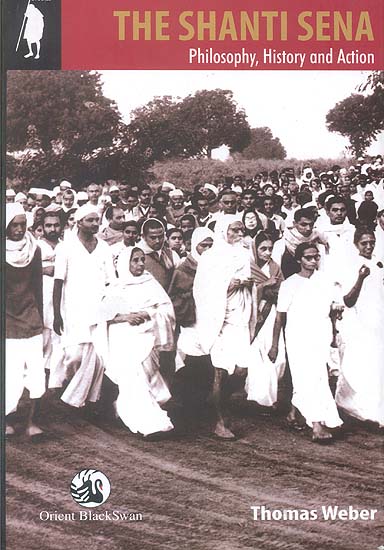
One possibility, inspired by the efforts of Shanti Sena (Peace Army) developed by followers of Mahatma Gandhi in India to deal with Hindu-Muslim violence is to place some nongovernmental teams on the frontier between antagonists in order to provide an opportunity for all parties to “cool off” and negotiate.

(C) Exotic India

One such effort in which I was directly involved was an effort to place a peace team on the Nicaraguan-Honduras frontier in 1981. At the time, it was thought that the 400 strong U.S. troops stationed in Honduras might cross the frontier to attack the Sandinista-leftest government in Nicaragua or to help actively the anti-Sandinista Contras to do so. A group of persons associated with the Santa Cruz Resource Center for Nonviolence in California and affiliated to the organization Peace Brigades International were able to put a team together and move to the Nicaragua-Honduras frontier on short notice. The group called itself “The Jalapa Brigade” after the small Nicaraguan city near the Honduran frontier where it was posted.

When the Jalapa Brigade was being put into place, the Ambassador of Nicaragua to the United Nations (UN) in Geneva was a former student of mine, and his brother, also a former student of mine, was the legal advisor to the President of Nicaragua. In fact, when the team arrived, Daniel Ortega, the President, introduced the team as “Friends of Humanity.”

Through the Ambassador, I was able to inform all the Central American Missions to the UN as to the aims and role of the Peace Brigade. In the end, the U.S. military did not cross the frontier. Perhaps it never intended to do so. It may also have been that the interposition of U.S. citizens with good organizational contacts helped to weigh in the U.S. military decision-making process. When the team left, the leader of the Protestant “Evangelical Committee for Development Aid” said “The proof of your triumph lies in the fact that no attacks were made while you were in the Jalapa area.”

There have been other such interposition efforts. One was the Gulf Peace Team created at the time of the 1990 Iraqi annexation of Kuwait. The aim of the 73-member Peace Team was to be an “international multicultural team working for peace and opposing any form of armed aggression by setting up one or more international peace camps between the opposing armed forces. Our object will be to withstand nonviolently any armed aggression by any party to the present Gulf dispute.” However, on January 27, 1991, the peace camp was closed by Iraq because the authorities had “decided that the continued presence of the camp was a security risk.”

Likewise, a January 2022 proposal of the Association of World Citizens, “Ukraine-Donbass-Russian Frontier: Is a Nongovernmental Interposition Peace Team a Possibility?“, was followed three weeks later by the Russian invasion of Ukraine.

Thus, the creation of interposition peace teams in the Israel-Palestine conflict would not be easy to create for political and logistic reasons. There are economic and logistic resources required and, more importantly, there is the need to raise enough volunteers who are mature, culturally sensitive, and analytically minded to achieve a critical mass that would make a difference in the decision-making of the conflicting parties. There is also the need to keep the unity of purpose within the teams if they have not worked together before. However, the current situation is very dangerous. The dangers are widely recognized. Therefore, all forms of conflict reduction need to be explored.

Prof. René Wadlow is President of the Association of World Citizens.
Caresse Crosby: A World Citizen’s Passionate Years

In Being a World Citizen, Cultural Bridges, Europe, Literature, Poetry, The Search for Peace, United States on April 22, 2023 at 8:22 AM

By René Wadlow

Caresse Crosby (April 20, 1891 – January 24, 1970) was one of the more colorful figures of the early world citizens movement, heading the World Citizen Information Center in Washington, D. C. Her autobiography The Passionate Years was first published in 1953 and more recently republished by the Southern Illinois University Press in 1968. The Southern Illinois University Library holds her papers.

Most of The Passionate Years concerns Caresse Crosby’s life in Paris as the publisher of the Black Sun Press, at the center of the United States (U. S.) writers living in Paris in the 1920s – what has been called the Lost Generation – Ernest Hemingway, Ezra Pound, F. Scott Fitzgerald, Archibald MacLeish. She had moved to Paris in 1922 from Boston with her then husband, Harry Crosby. Harry Crosby was a nephew of J. P. Morgan, the banker. Harry had a short-term job at the Paris branch of the Morgan Bank, but he was not interested in banking and had a reasonable income from a trust fund. Thus, he started a small publishing house to publish in fine but limited editions books of his own poems and those of his friends. Harry Crosby was always preoccupied with the idea of death, having seen it closely as a medical worker in France during the last part of the First World War. Hence the name of Black Sun, a symbol of death overcoming the light of the Sun for the publishing house. On a trip back to New York in 1929 in what may have been a suicide pact, Harry Crosby first shot a woman friend and then himself with her in his arms. (1)

Caresse stayed on in Paris to continue the Black Sun publishing house, opening it also to French writers she liked such as Antoine de Saint-Exupéry. In 1936, seeing the clouds of tensions growing in Europe, she moved back to the USA, living in New York City and Washington, D. C. It was at this time that she began promoting the idea of world citizenship to counter the narrow nationalism she had seen firsthand in visits to Italy and Germany.

Right at the end of the Second World War, she wanted to create a Center for World Peace at Delphi, Greece – a place of inspiration from the Greek gods. However, the Greek Government still weak from the German occupation and the anti-Communist civil war did not want such a center with an ideology that it did not understand. The Greek Government refused the visas. Caresse then moved the idea to Cyprus and created the World Man Center with a geodesic dome designed by Buckminster Fuller, who had become her lover at the time. Cyprus, then under British control, was somewhat out of the way for the sort of visiting writers, painters, and intellectuals that Caresse usually attracted. Thus, she bought a castle north of Rome, the Castello di Rocca Sinibalda, and established an artists’ colony for young artists. She divided her time between this Rome area and her New York and Washington quarters.

For Caresse Crosby, World Citizenship was an aesthetic rather than a political concept, but she did plant seeds in the minds of people largely untouched by geopolitical considerations.

Caresse Crosby and her whippet, Clytoris (1922, author unknown)

1) See Geoffrey Wolff, Black Sun: The Brief Transit and Violent Eclipse of Harry Crosby (New York: New York Review of Books, 2003).

Prof. René Wadlow is President of the Association of World Citizens.
Benjamin Ferencz, Champion of World Law, Leaves a Strong Heritage on Which to Build

In Africa, Being a World Citizen, Conflict Resolution, Current Events, Europe, Human Rights, International Justice, NGOs, The Balkan Wars, The Search for Peace, Track II, United Nations, United States, War Crimes, World Law on April 18, 2023 at 7:11 AM

By René Wadlow

Benjamin Ferencz, champion of World Law and World Citizenship, died on April 7, 2023 at the age of 103, leaving a strong heritage of action for world law. He was particularly active in the creation of the International Criminal Court (ICC) located in the Hague.

He was born in March 1920 in what is now Romania, close to the frontiers of Hungary and Ukraine. In the troubled period after the end of the First World War, the parents of Ferencz, who were Jews, decided to emigrate to New York with the help of the Hebrew Immigrant Aid Society. They settled in New York City, and Ferencz changed his Yiddish name Berrel to Benjamin and studied in the New York school system. He did his undergraduate work at City College and then received a scholarship to Harvard Law School, a leading United States (U. S.) law school.

(C) United States Holocaust Memorial Museum

At the end of his law studies at Harvard, he was taken into the U. S. Army and in 1944, he was in Europe with the Army legal section, the Judge-Advocate General Corps. By conviction and interest, he began to collect information on the Nazi concentration camps. He was able to find photos, letters, and other material that he later was able to use as one of the prosecution team in the Nuremberg trials of Germans accused of war crimes. He was also a staff member of the Joint Restitution Successor Organization concerned with the restoration or compensation of goods having belonged to Jewish families. Thus, he developed close cooperation with the then recently created state of Israel.

(C) Leit

From his experiences with the German trials and the many difficulties that the trials posed to be more than the justice of the victors and also the need not to antagonize the recently created Federal Republic of Germany, Ferencz became a strong advocate of an international legal system such as the Tribunals on ex-Yugoslavia of 1993 and on Rwanda (1994). Much of his effort was directed to the creation of the ICC, a creation that owes much to efforts of nongovernmental organizations, such as the Association of World Citizens. It was during this effort for the creation of the ICC that we came into contact.
Benjamin Ferencz leaves a heritage on which we can build. The development of world law is often slow and meets opposition. However, the need is great, and strong efforts at both national and international levels continue.

(C) Adam Jones

(1) See Benjamin B. Ferencz, A Common Sense Guide to World Peace (Dobbs Ferry, NY: Oceana Publications, 1985).

Prof. René Wadlow is President of the Association of World Citizens.