A new phase of tensions between the USA and the Islamic Republic of Iran is unfolding, shaped by external military pressure from the USA and internal, political, and economic instability within Iran. Iranian security forces’ lethal response to demonstrations with civilian deaths and mass arrests has further eroded public trust in the Iranian leadership.
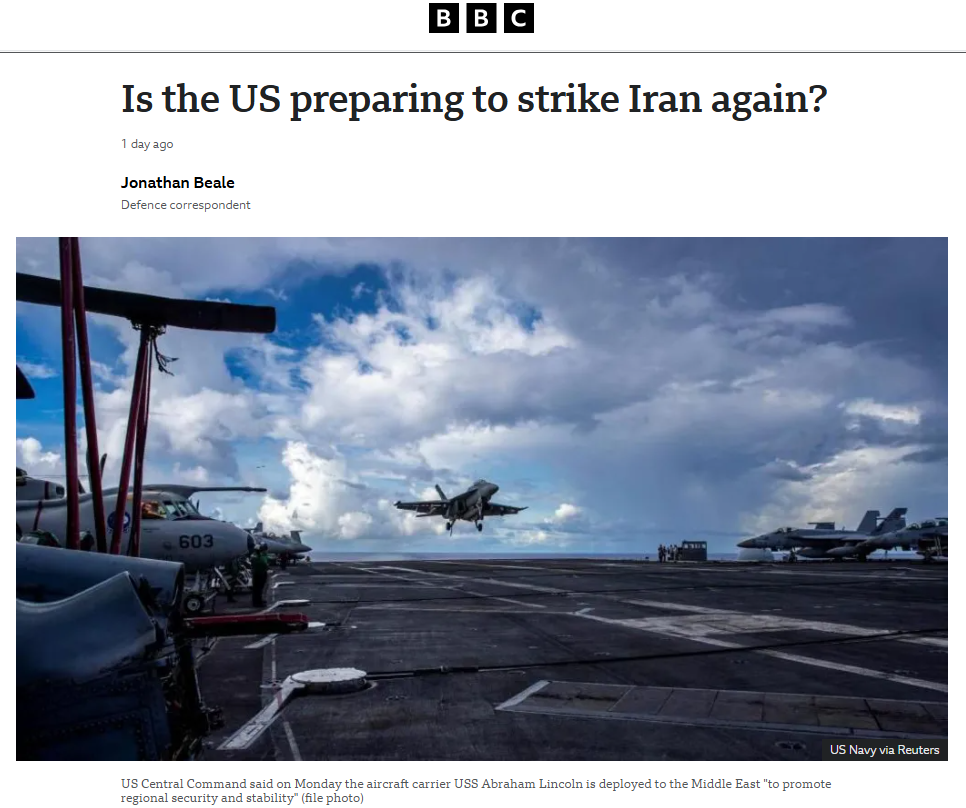
United States (U.S.) President Donald Trump has announced that an armada led by the aircraft carrier Abraham Lincoln is moving toward Iran. The U.S. Air Force has reported that its exercises across the Middle East indicates its readiness and escalation dominance. Tehran can retaliate with missile strikes – alone or through proxies – against U.S. bases in the Middle East. The situation is unstable and thus vulnerable to accidents and miscalculations.
It is said that indirect mediation efforts are being undertaken by diplomats from Türkiye, Egypt, and Qatar. The next few days may be crucial. Nongovernmental organizations may have a role to play in encouraging negotiations in good faith.
Prof. René Wadlow is President of the Association of World Citizens.
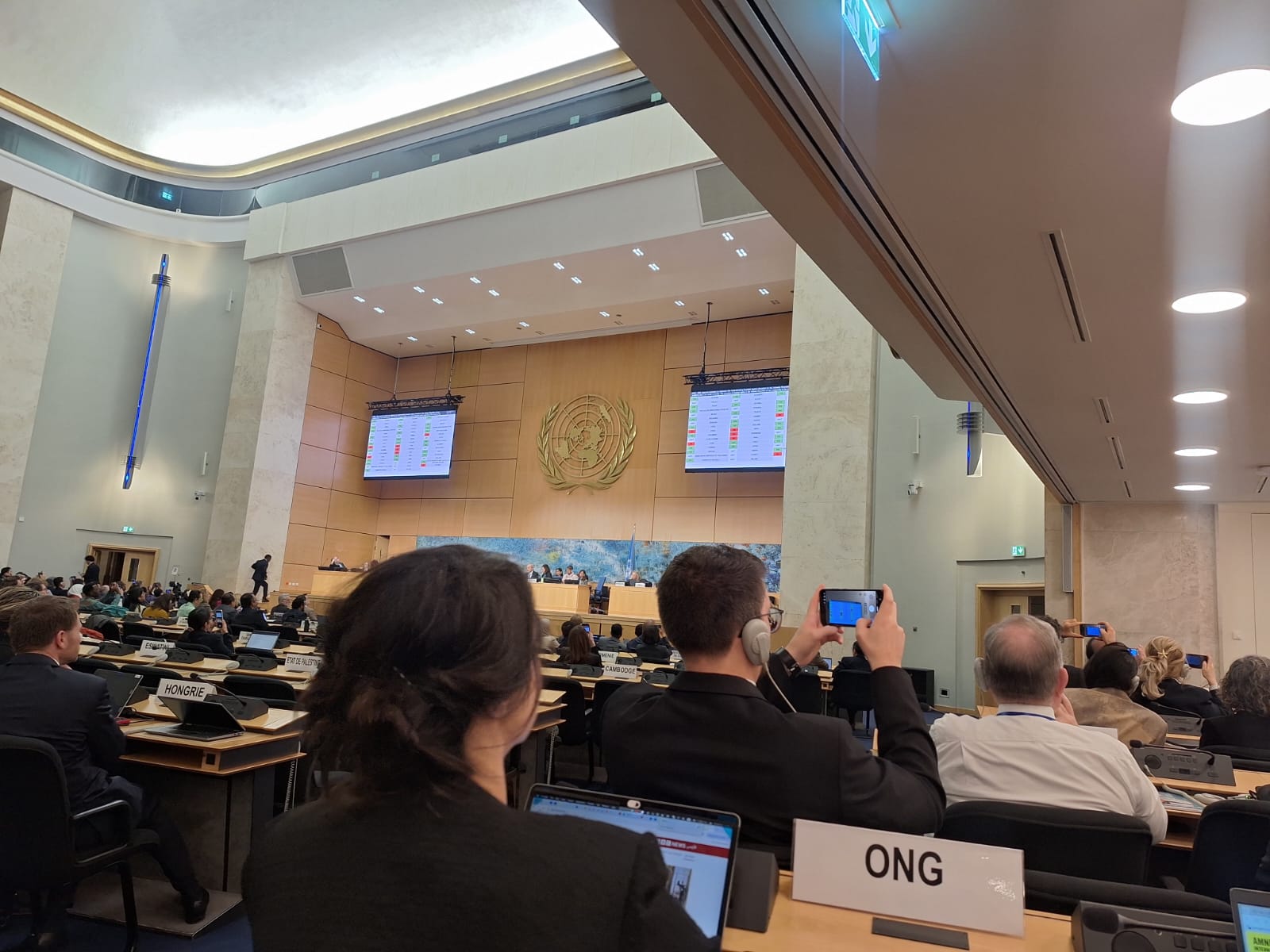
On January 23, 2026, the 47 members of the United Nations (UN) Human Rights Council met in Geneva, Switzerland in a Special Session devoted to the violent repression of protests in the Islamic Republic of Iran. The session began with a call by Volker Türk, UN High Commissioner for Human Rights, for the release of detainees, a halt to the implementation of death sentences, and the adoption of serious steps in response to human rights violations. He stressed that “these protests are the latest in a long line of heartfelt calls by the Iranian people for change, met by a long line of violent repression by the Iranian authorities”.
Ms. Mai Sato, the UN Special Rapporteur on Iran, highlighted the large number of protesters killed, including youth and children. She called upon the authorities of Iran to act in compliance with international human rights standards. She voiced alarm about “the unprecedented scale of the violent crackdown on peaceful protesters by security forces”.
A number of government representatives noted the difficulties of following the current situation due to the cutting of the Internet and other forms of communication.
The Iranian Ambassador, Ali Bahreini, said that the Special Session of the Council had been “politicized” and that Iran rejected the discussion as “external interference in internal affairs”.
Iceland’s Ambassador, Einar Gunnarsson, presented the resolution of the Session saying that “the victims and survivors deserve truth, justice, and accountability”. The resolution which extends the mandate for two years of the UN Fact-Finding Mission, first established after the 2022 protests, was accepted with 25 States in favor, 7 against (China, India, Pakistan, Indonesia, Vietnam, Cuba, Iraq) and 14 abstentions.
From an NGO’s point of view (C) Assia Tanner/AWC
Assia Tanner, Representative for Diplomatic Relations at the Geneva Office of the Association of World Citizens (AWC), attended the session on our behalf. “Demonstrating is a human right, yet the regime has killed demonstrators and hanged innocent Iranians, resorting to the death penalty which is a serious human rights violation”, she reported. “The UN asked Iran to respect human rights, engage in dialogue, end the violence, and stop terrorizing the population. While The Netherlands called the Iranian regime a terrorist state, some Arab countries called for dialogue as they fear consequences from Tehran. Some African countries called for peaceful support instead of a formal condemnation.”
Nonetheless, the general feeling was definitely one of outrage. “In a session that lasted from 2PM to 6PM with no break whatsoever, all Council members were saying the same thing: Iran must be condemned”, Tanner added. “I felt they were holding the same discourse as all human rights organizations”.
Precisely, Nongovernmental Organizations (NGOs) now have the difficult task of calling on the Iranian government to stop arbitrary arrests, enforced disappearances, and extrajudicial killings. The situation in Iran must be watched as closely as possible and encouragement given to good faith negotiations.
Prof. René Wadlow is President of the Association of World Citizens.
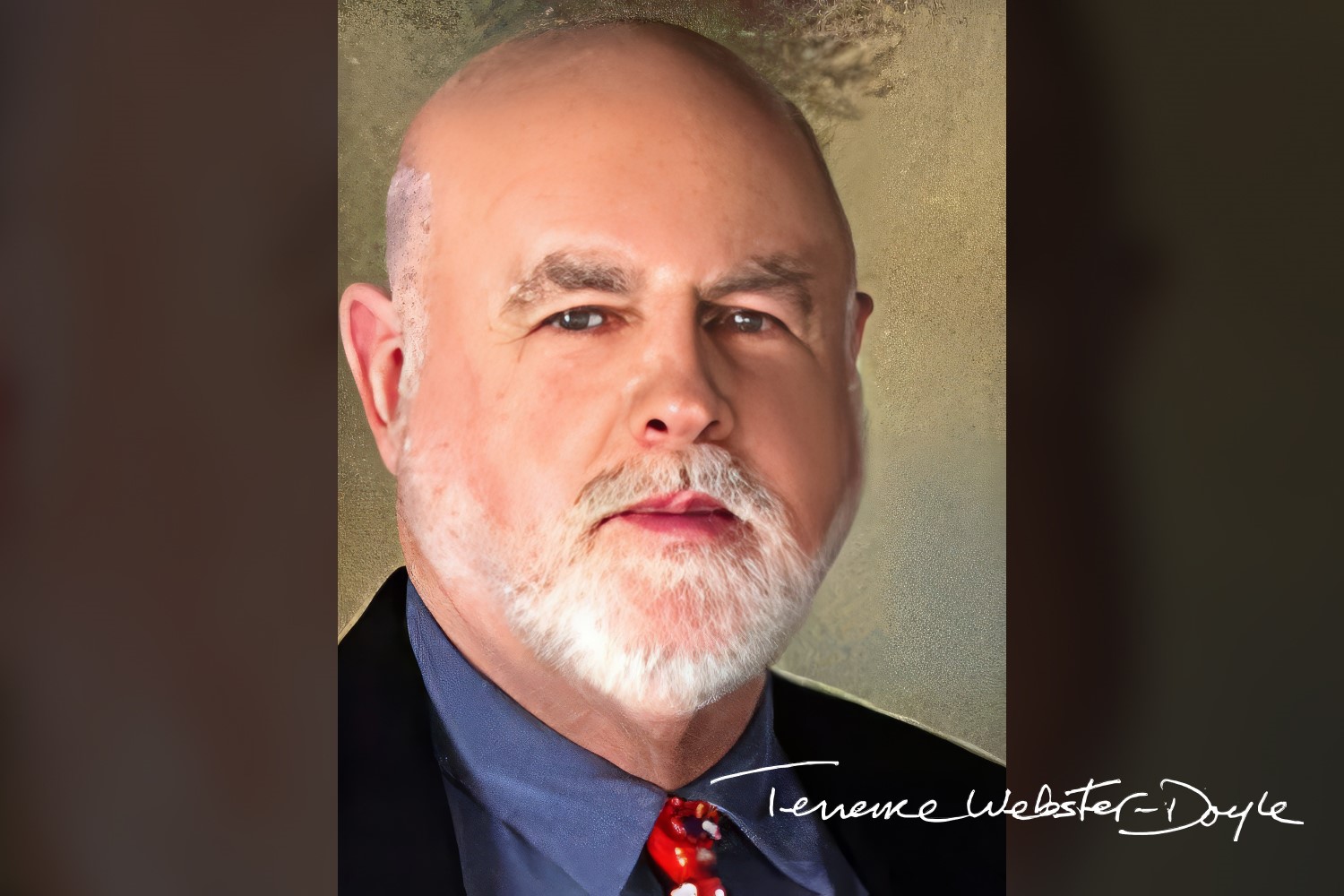
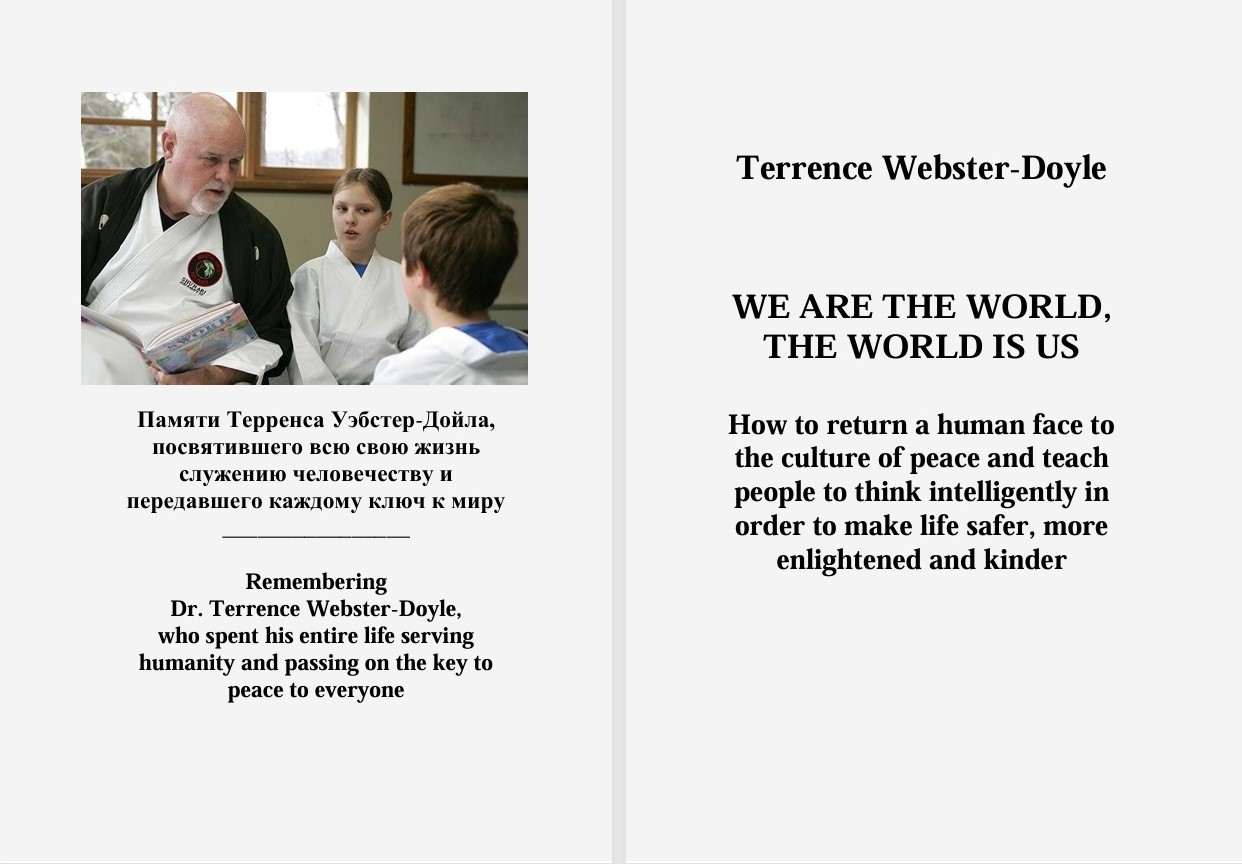
One of the most renowned authors and educators in the field of peace education, Dr. Terrence Webster-Doyle, passed away at noon on Friday, June 16, 2023, in Paonia, Colorado, USA. He was 83.
Dr. Terrence Webster-Doyle (1940-2023) was the founder and director of the Atrium Peace Institute and the Brave New Child Peace Museum Exhibits. He had a sixth-degree black belt in martial arts and was a co-founder of the Martial Arts for Peace Safety Awareness Response System Program (MAP STARS). Holding a Ph.D. in Health and Human Services, a Master’s Degree in Humanistic Psychology, he taught at Sonoma State University and Santa Rosa Community College in California.
He was the author of more than 150 scientific and methodological works, including 15 monographs, 20 textbooks and 23 curricula; the developer of a series of conflict resolution courses for adolescents; a ten-time recipient of the Benjamin Franklin Lifetime Achievement Award for excellence in independent publishing. He was awarded the Robert Burns Medal by the Albert Schweitzer Society of Austria for outstanding service in promoting peace. Recipient of the Benjamin Franklin Gold Medal for his book “Fighting the Invisible Enemy. Understanding the Effects of Conditionality”.
Dr. Terrence Webster-Doyle’s books have been widely recognized by the professional community as an important resource in conflict prevention and resolution. He is the author of the first seminal book on bullying “Why Is Everybody Always Picking on Me? A Guide to Handling Bullies”. Dr. Webster-Doyle is credited to have given a human face back to the culture of peace.
A two-page spread of Terrence Webster-Doyle’s last book, We are the World, the World is Us (Samara, 2024. – 236 p.)
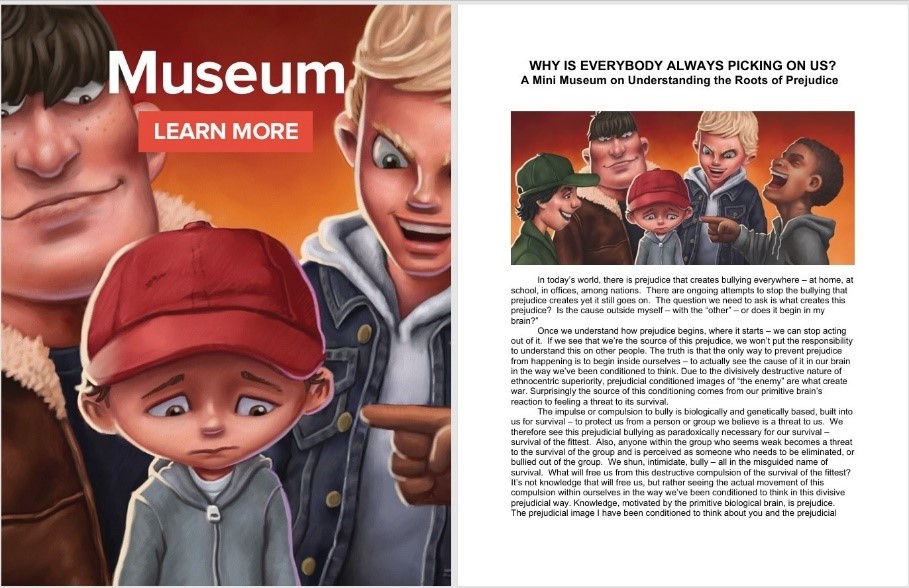
In one of his latest books, A Mini Museum on Understanding the Roots of Prejudice and Discord. Learn More about How to Make Life Safer and Kinder (Samara, 2022), T. Webster-Doyle invites young people to take a fascinating page-by-page museum tour through the illustrated ideas, images, and stories in the book, and learn more about the anthropological, psychological, historical, and social roots of reprehensible thinking and hostility between people, cultures, and nations. The author thrives to show that freeing oneself from prejudice and understanding the root causes of fear and violence in human life is the way to make life better, more peaceful and kinder.
A two-page spread of the book Museum: Learn More. Why is Everybody Always Picking on Us? A Mini Museum on Understanding the Roots of Prejudice (English Edition, Atrium Society Publications, USA, 2019. – 75 p.)
In his writings, Webster-Doyle sought to show that all the best in a person is tied to peace. To achieve peace, we must understand what hinders it, and what hinders it is our very predisposition to ethno- and sociocentrism. The origins of conflicts lie in our prehistory, in the biological predisposition of our brain to protect itself from external threats – imaginary and real. Sometimes a person does not notice how he/she himself/herself becomes a victim of his/her own prejudices. No image. No enemy. No war. It is important to be able to observe and recognize situations that challenge us based on cultural resistance and behavioral stereotypes, and not succumb to outbursts of intolerance, hostility, and aggression.
Once in a conversation with me, T. Webster-Doyle shared the thought that “peace is a given, but only as a premise, a potential, under attack every time by prejudice and preconceptions. Peace requires a true awakening of the mind, here and now, but peace does not require multiple and endless theoretical constructions. Therefore, it is important to understand what creates it, and how one can achieve a real, rather than an imaginary peace”.
Т. Webster-Doyle thought a lot about why people cannot create a lasting peace and find harmony with each other. He began to ask questions: how to bring cultures closer together, to deal with mistrust and enmity, to learn how to build peace on the basis of reasonable, virtuous and humanistic principles. In my search for answers to these questions, I began to use the training materials he developed on peacebuilding pedagogy.
Terrence Webster-Doyle never ceased to remind people that “understanding is the key to peace”. But how can we find the key to understanding itself? Maybe it is the works of T. Webster-Doyle that could become such a key, opening the doors to dialogue, peace and harmony among peoples, cultures and nations.
Vladimir Ionesov, Doctor of Cultural Studies, Candidate of Historical Sciences, Professor with the Department of Cultural Studies, Museology and Art History at Samara State Institute of Culture. Developer of the concept of cultural transformation and models of civilization viability in transition. Full member of the European Academy of Sciences and Arts. Deputy Chairperson, Research Advisory Council, “Personality. Culture. Peace” Scientific and Enlightening Center of Samarkand International University of Technology (SIUT).
 Association of World Citizens