The Official Blog of the

Archive for the ‘Humanitarian Law’ Category

Appel AWC sur le Conflit au Liban

In Being a World Citizen, Conflict Resolution, Cultural Bridges, Current Events, Humanitarian Law, International Justice, Middle East & North Africa, NGOs, Nonviolence, Peacebuilding, Solidarity, Syria, The Search for Peace, Track II, United Nations, War Crimes, World Law on June 16, 2026 at 7:01 AM

LES CITOYENS DU MONDE APPELLENT A DES MESURES EFFECTIVES POUR METTRE FIN AUX ATTAQUES CONTRE LES CIVILS ET BATIR LA PAIX AU LIBAN

Il y a quarante ans, le groupe pop français Gold grimpait en haut des classements avec une ballade intitulée Ville de Lumière, chanson dont le personnage était un combattant de l’une des factions en guerre au Liban. Pleurant sa chère capitale, Beyrouth, dont il était éloigné, le soldat concluait : «Je sais, je ne te reverrai pas, Ville de Lumière, Qu’ont-ils fait de moi ?».

L’Association of World Citizens (AWC) est consternée de voir qu’une chanson d’il y a quarante ans, qui devrait être aujourd’hui un beau souvenir musical, pourrait avoir été écrite juste hier. Une fois de plus, le Liban est déchiré par la violence, avec les civils libanais pris pour cible par la Force de Défense israélienne (Tsahal) qui a envahi le pays, tandis que les civils israéliens sont attaqués par la milice oppressive du Hezbollah et, par-delà la frontière syrienne, là où la milice soutenue par l’Iran assistait autrefois la guerre barbare de la dynastie Assad contre son propre peuple, tant Tsahal que le Hezbollah frappent une nation qui commence à peine à guérir et se construire un autre avenir.

Aucun de ces trois pays n’a besoin ou envie de voir davantage de combattants périr les armes à la main, ou davantage de civils massacrés par des forces d’invasion. Aucun de ces trois pays n’a besoin ou envie de voir ses propres «villes de lumière» sombrer pour toujours dans l’obscurité. Même si les négociations entreprises par les Etats-Unis et l’Iran semblent offrir un rayon de lumière, rien ne peut être réellement résolu si le but est seulement, comme c’est le cas de manière quasi systématique au Moyen-Orient, d’atteindre un cessez-le-feu qui ne sera qu’une solution de bricolage sans autre issue.

Bien qu’il ne fasse aucun doute qu’il faut des négociations, il est essentiel que celles-ci traitent enfin les problèmes de fond au long terme qui alimentent l’hostilité et le conflit entre Israël et le Liban, avec la Syrie désormais également impliquée malgré elle en tant que tierce partie. Obtenir la fin des hostilités tout en mettant de côté les causes du conflit n’a mené dans le passé qu’à des massacres tels que celui de Sabra et Chatila en 1982, Qana en 1996, et une nouvelle fois Qana en 2006. Chaque jour qui passe expose les trois pays au risque d’une nouvelle tragédie de telle nature.

C’est pourquoi l’AWC appelle à des négociations urgentes, de bonne foi et exhaustives entre toutes les parties prenantes afin de mettre un terme aux violences en cours entre le Liban, Israël et la Syrie, ainsi que de traiter enfin les questions de fond entre Israël et le Liban auxquelles il a déjà été permis d’engendrer bien plus d’inhumanité qu’une terre de trois croyances peut tolérer. Il incombe à présent aux dirigeants de toutes les parties au conflit en cours de faire en sorte que, pour le quarantième anniversaire de la chanson, cette fois-ci, aucune «ville de lumière» ne se fasse éteindre.

Prof. René WADLOW
Président

Bernard HENRY
Officier des Relations Extérieures

Cherifa MAAOUI
Officier de Liaison,
Afrique du Nord & Moyen-Orient

AWC Statement on the Conflict in Lebanon

In Being a World Citizen, Conflict Resolution, Cultural Bridges, Current Events, Humanitarian Law, International Justice, Middle East & North Africa, NGOs, Nonviolence, Peacebuilding, Solidarity, Syria, The Search for Peace, Track II, United Nations, War Crimes, World Law on June 16, 2026 at 7:00 AM

WORLD CITIZENS CALL FOR EFFECTIVE MEASURES TO STOP ATTACKS ON CIVILIANS AND BUILD PEACE IN LEBANON

Forty years ago, the French pop band Gold topped the charts with a ballad called Ville de Lumière (City of Light), a song whose protagonist was a fighter from one of the warring factions in Lebanon. Crying from afar over his beloved capital, Beirut, the soldier concluded, “I know I will never see you again, City of Light, What have they made of me?”.

The Association of World Citizens (AWC) is appalled to see that a forty-year-old song which should be a beautiful musical memory by now might as well have been written yesterday. Once again, Lebanon is being torn apart by violence, with Lebanese civilians being targeted by the invading Israeli Defense Force (IDF) while Israeli citizens come under attack from the oppressive Hezbollah militia and, over the Syrian border where the Iran-backed militia used to assist the Assad dynasty’s barbaric war on their own people, both the IDF and Hezbollah are striking a nation and people barely starting to heal and build a new future.

None of these three countries needs to have more fighters killed in combat or civilians slaughtered by invading forces. None of the three countries needs to have its own “cities of light” turn dark forever. While the negotiations undertaken between the United States and Iran appear to offer a ray of hope, nothing can be truly resolved if the goal is only, as happens all but systematically in the Middle East, to reach a quick-fix, dead-end ceasefire.

Even though negotiations are undoubtedly needed, these need to finally address the long-term core issues fueling hostility and conflict between Israel and Lebanon, now also involving Syria as an unwilling third party. Having hostilities cease while leaving the causes for conflict unaddressed has only led in the past to such massacres as Sabra and Shatila in 1982, Qana in 1996, and Qana a second time in 2006. Every day that passes places all three countries at risk of a new tragedy of that nature.

Therefore, the AWC calls for urgent, honest, and comprehensive negotiations between all stakeholders with a view to ending the ongoing violence between Lebanon, Israel, and Syria, as well as to finally addressing the core issues between Israel and Lebanon which have already been allowed to create more inhumanity than a land of three faiths can possibly tolerate.

It is up to the leaders of all parties to the current conflict to ensure that, as the song turns forty, no “city of light” gets turned off this time.

Prof. René Wadlow
President

Bernard J. Henry
External Relations Officer

Cherifa Maaoui
Liaison Officer,
Middle East & North Africa

Iran War: Peace Action Needed

In Being a World Citizen, Conflict Resolution, Cultural Bridges, Current Events, Humanitarian Law, International Justice, Middle East & North Africa, NGOs, Nonviolence, Peacebuilding, Solidarity, The Search for Peace, Track II, United Nations, United States, World Law on April 6, 2026 at 8:00 AM

By René Wadlow

Since the month-old United States (U.S.) and Israeli military attacks against the Islamic Republic of Iran began, the Association of World Citizens (AWC) has called for negotiations in good faith to bring the war to a halt. The war is destructive of life and property. From the very start, it has been in danger of spreading to other countries. There are real dangers of miscalculations by the military that will lead to deeper military escalation.

The AWC has stressed that the war is a violation of international law as structured in the Charter of the United Nations. The war has also led to violations of international humanitarian law as structured in the Geneva Conventions. There have been attacks on schools, health facilities, and essential economic infrastructure. The war has led to a large number of persons being displaced.

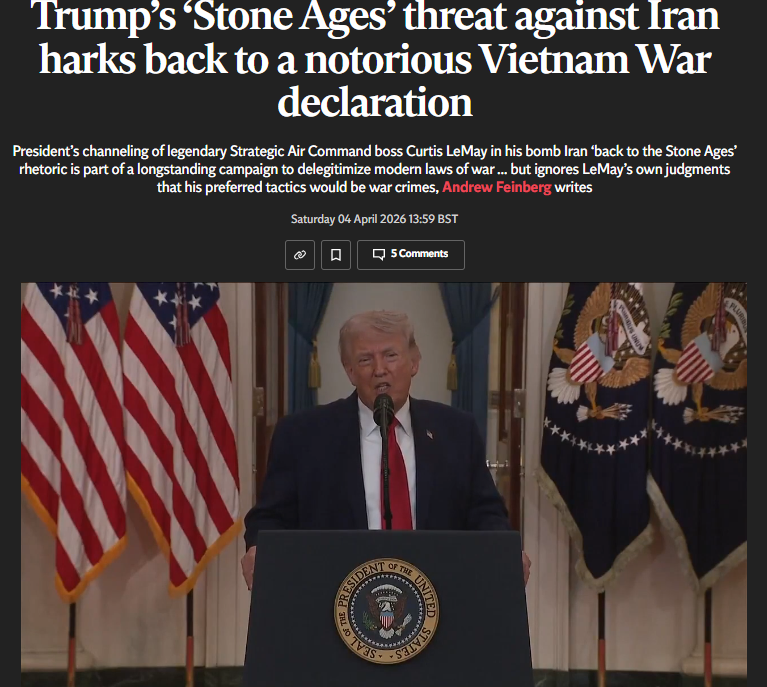
U.S. President Donald Trump has recently warned the Iranian authorities that the USA could bomb Iran “back to the Stone Age” if the Iranian authorities did not meet U.S. demands for an agreement. In reality, Iran and Persia before it had long left the Stone Age and made important contributions to world culture.

Thus, strong efforts must be made through both the United Nations and Nongovernmental Organizations such as AWC for an end to the armed conflict and the start of a harmonious regional society. Your help in these vital efforts is much appreciated.

Prof. René Wadlow is President of the Association of World Citizens.

Pakistan-Afghanistan Armed Conflict: Humanitarian Law Needs to be Upheld

In Being a World Citizen, Conflict Resolution, Current Events, Humanitarian Law, International Justice, Middle East & North Africa, NGOs, Peacebuilding, Solidarity, The Search for Peace, World Law on March 19, 2026 at 7:00 AM

By René Wadlow

The Association of World Citizens (AWC) calls upon the military authorities of Pakistan and Afghanistan to uphold international humanitarian law, in particular the protection of medical and health installations.

More than 400 people were killed and at least 265 others were injured in a Pakistani airstrike on a drug rehabilitation center, Camp Phoenix, in Kabul, Afghanistan on March 15, 2026. Camp Phoenix, known locally as Omid Camp – Camp of Hope – has been for over a decade a drug treatment center. Afghanistan has a good number of people who have become dependent on the use of drugs. Thus, the drug treatment center meets a real need.

Pakistan declared war on Afghanistan in late February 2026 for harboring Pakistani Taliban, a militant group which has repeatedly attacked Pakistani security forces. Over the past three weeks, Pakistani forces have hit Afghan military installations, residential areas, and civilian infrastructures, including more than 20 health care facilities. Afghan troops have responded with drone strikes and border raids. For the moment, a negotiated end to the armed conflict seems unlikely. Violence may expand.

Thus, there is a need to uphold international humanitarian law, of which the protection of medical centers and medical workers is a core element. The AWC welcomes others who also facilitate international humanitarian law in these critical times.

Prof. René Wadlow is President of the Association of World Citizens.
Of related interest:

February 10, 2025: Strengthening Respect for International Humanitarian Law

October 11, 2024: World Citizen Appeal to Uphold International Humanitarian Law

March 2, 2022: Upholding International Humanitarian Law in Times of Armed Conflict: A World Citizen Appeal

Cooperative Peacebuilding Efforts Urgently Needed

In Being a World Citizen, Conflict Resolution, Cultural Bridges, Current Events, Humanitarian Law, NGOs, Nonviolence, Peacebuilding, Solidarity, The Search for Peace, Track II, United Nations, World Law on March 10, 2026 at 7:00 AM

By René Wadlow

At this time when there is armed conflict and strong political tensions in world society, broadly-based efforts are needed to develop a harmonious political culture based on world law. A political culture is a set of attitudes and beliefs which give order and meaning to a political process. Such a positive political culture is a product of both the collective history of a political system and the life histories of the members of that system.

“To establish conditions under which justice and the respect for the obligations arising from treaties and other sources of international law can be maintained” is one of the four objectives of the United Nations (UN) as set out in the preamble to the Charter, firmly related to the three other aims: the prevention of war, respect for human rights, and social progress. The phrasing of the aims rightly stresses not the enactment of international law but rather the need to “establish conditions” under which justice and respect for international law is possible.

Respect for international law should place limitations upon the number of options open to a government in choosing how to carry out a policy in foreign affairs. The most fundamental limitation is the prohibition on using military action except in self-defense against aggression.

When abuse of State power, denial of human rights, corruption, and the absence of participation in decision-making are the daily routine, people look upon law as a method to establish justice. The rule of law at both the international and national level must be based on a social consensus.

Nongovernmental Organizations (NGOs) can play a vital role in developing this social consensus on the rule of law. NGOs have proven that they can respond effectively to the challenges faced by today’s world society. Thus, there is a growing role for NGOs within the UN system in the making and implementation of policies. NGOs are involved more than ever before in global policy-making and project implementation. They bring citizens’ concerns to governments and advocate specific policies.

Today, with armed violence ongoing in many parts of the world, cooperative peacebuilding efforts are urgently needed. NGOs are playing an increasing role in such peacebuilding efforts and must be encouraged.

Prof. René Wadlow is President of the Association of World Citizens.
Child Soldiers in Colombia: Action Needed

In Being a World Citizen, Children's Rights, Conflict Resolution, Current Events, Human Rights, Humanitarian Law, Latin America, NGOs, Nonviolence, Peacebuilding, Solidarity, The Search for Peace, Track II, United Nations on February 18, 2026 at 8:00 AM

By René Wadlow

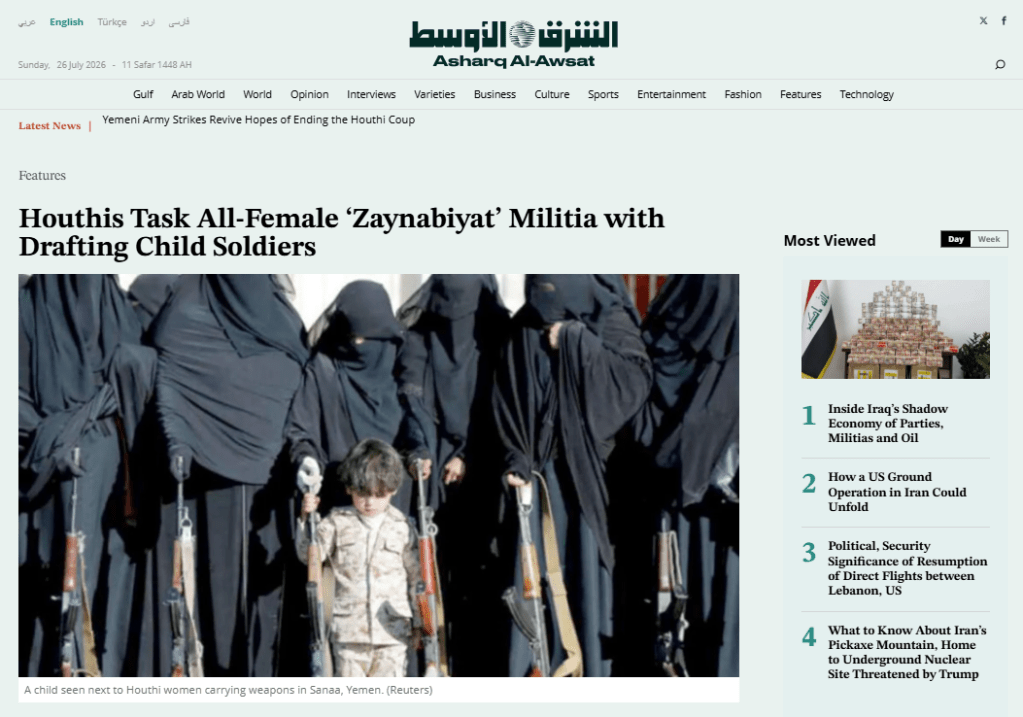
The Association of World Citizens (AWC) has worked actively in the United Nations (UN) human rights bodies against the use of child soldiers in armed conflicts. The Association has also made direct Appeals to governments and militias that use child soldiers.

During the Iran-Iraq war (1980-1985) tens of thousands of Iranian youth, tied into groups to prevent their escape, threw themselves onto barbed wire or walked straight into Iraqi mine fields and faced machine gun fire. In at least twenty-one armed conflicts in different parts of the world, child soldiers have been used.

February 12 has been set by the UN General Assembly as the International Day Against the Use of Child Soldiers. Thus, the Association of World Citizens along with the International Crisis Group with its headquarters in Belgium focused on the use of youth by militias, often involved in the drug trade, in Colombia where youth are forced into militias. There had been in 2016 a ceasefire agreement between the government of Colombia and the Revolutionary Armed Forces of Colombia (FARC), the largest of the armed groups active in the country. This agreement has led many of those in the FARC ranks to be integrated into civil society. However, smaller armed groups have continued to be active. They are often involved in the drug trade as a way to finance their activities.

Thus, strong social action is needed, especially in those parts of the country inhabited by indigenous populations. Events in Venezuela also have an impact on Colombia and thus merit watching closely.

Prof. René Wadlow is President of the Association of World Citizens.
Protection of Children in Armed Conflict: Action Needed

In Africa, Being a World Citizen, Children's Rights, Conflict Resolution, Current Events, Human Rights, Humanitarian Law, NGOs, Nonviolence, Peacebuilding, Refugees, Solidarity, The Search for Peace, Track II, United Nations on January 6, 2026 at 8:00 AM

By René Wadlow

The recent armed conflicts in Darfur, Sudan, the Gaza Strip, and in the Democratic Republic of Congo have highlighted the fate of children caught in such armed conflicts. In addition to the children deliberately massacred or caught in the crossfire, many more have been deprived of their physical, mental, and emotional needs by the armed conflict. Children can be specifically targeted in strategies to eliminate the next generation. Children, especially girls, have been made the targets of sexual abuse and gender-based violence.

This brutal reality has been exacerbated by the changes in the nature of armed conflicts. Today’s conflicts are often internal, fought by multiple semi-autonomous armed groups within existing State boundaries. The international law of war governing Inter-State conflicts fought by regular armies is routinely ignored. Often the village has become the battlefield and the civilian population the primary victim.

Displaced children in North Kivu, 2007 (C) Julien Harneis

At the heart of this social disintegration is a crisis of values. Perhaps the most fundamental loss a society can suffer is the collapse of its value system. Many societies exposed to protracted armed conflicts have seen their community values radically undermined or shattered altogether. This loss has given rise to an ethical vacuum, a setting in which international standards are ignored with impunity and where local value systems have dissolved.

The world society has an obligation to focus attention on the plight of children. The Association of World Citizens (AWC) has worked to raise greater governmental and public awareness of the need for protection of children in times of armed conflict. The Convention on the Rights of the Child calls for the protection of children’s right to life, education, health, and other fundamental needs. Thus, the international standards are in place. Our task is to see that they are put into practice. Positive action is needed. This is a policy goal for 2026 of the AWC.

Prof. René Wadlow is President of the Association of World Citizens.
Renewed Appeal for Mediation in Sudan Civil War

In Africa, Being a World Citizen, Conflict Resolution, Current Events, Human Rights, Humanitarian Law, International Justice, NGOs, Peacebuilding, Solidarity, Sudan, The Search for Peace, Track II, United Nations, War Crimes, World Law on November 3, 2025 at 7:45 AM

By René Wadlow

In response to the reports of mass killings earlier this month, including persons in hospital beds in El-Fasher, Sudan, by members of the Rapid Support Forces (RSF), the Association of World Citizens (AWC) has called for strong UN efforts to mediate an end to the civil war in Sudan.

A civil war has gone on since April 2023 in Sudan between the Rapid Support Forces led by General Mohamed Hamdan, known by his battle name of Hemedti, and the Sudanese Armed Forces then led by General Abdul Fattah al-Burham. Each of the two generals has created local militias which rob, torture, rape, and create conditions of disorder.  Many of these militias use child soldiers in violation of UN treaties on the protection of children.  The civil war has led to some 150,000 persons killed and 10 million displaced.

The capture of El-Fasher came after more than 500 days of siege. Already on June 13, 2024, the UN Security Council called for an end to the siege of El-Fasher, capital of the North Darfur Province of Sudan. The Council requested all parties to enable lifesaving aid to enter El-Fasher, the center of the most vicious fighting in the province. Unfortunately, the Security Council appeal fell on deaf ears.

The AWC does not underestimate the difficulties of mediation to end the Sudan Civil War.  There has been armed conflict in Sudan since the eve of independence in the mid-1950s. These conflicts were organized along ethnic and religious lines. The conflicts led to the creation of a new state, South Sudan, where tensions are also strong.

Mediation efforts should be carried out under UN responsibility. However, Nongovernmental Organizations (NGOs) may play a positive role.

Mediation is about men and women, and the attitudes that make for conflict between them. The attempt to bring about a change in understanding will include continual interpretation of what the others are saying, explanations of their attitudes, and exposure of false rumors – roles which NGOs can play.

Prof. René Wadlow is President of the Association of World Citizens.
Crucial Middle East Negotiations: A Ray of Hope at Last?

In Being a World Citizen, Conflict Resolution, Current Events, Humanitarian Law, Middle East & North Africa, NGOs, Nonviolence, Peacebuilding, Solidarity, The Search for Peace, Track II, United Nations, United States, War Crimes, World Law on October 13, 2025 at 7:00 AM

By René Wadlow

Close attention needs to be focused on the deadly and destructive conflict in the Gaza Strip and the multi-party negotiations being held in the Egyptian city of Sharm El-Sheikh. The elite of Middle East diplomacy are in Sharm El-Sheikh these days, including Steve Withoff and Jared Kushner from the USA, the Israeli Strategic Affairs Minister Ron Derner, Khalil Al-Hayya, the head of the Hamas negotiation team, and Mohammed Al-Hindi of the Palestinian Islamic Jihad which holds some of the 20 living Israeli hostages.

The exchange of Israeli hostages – 20 living and the bodies of 28 who have died – and some 2,000 Palestinian prisoners held in Israeli jails and army camps is the first order of business. The exchange should take place on Monday, October 13. President Donald Trump should go first to Israel and then Egypt on Monday to start multi-party negotiations with implications for the wider Middle East.

The negotiations are being held against a politically unstable situation in Israel and the USA where in both there are deep divisions among political parties. The armed conflict in the Gaza Strip could start again with “We tried negotiations and they failed” as a battle theme.

As the representatives of UN Consultative Status NGO, we must see how we can build on these advances toward a stable peace. There is much at stake, and we must be ready to take action.

Prof. René Wadlow is President of the Association of World Citizens.
Gaza Strip Peace Plan: Making Peace Without Peacemakers?

In Being a World Citizen, Conflict Resolution, Current Events, Humanitarian Law, Middle East & North Africa, NGOs, Nonviolence, Peacebuilding, Solidarity, The Search for Peace, Track II, United Nations, United States, World Law on October 6, 2025 at 7:00 PM

By René Wadlow

(An earlier version of this piece was published on Transcend Media Service.)

On September 29, 2025, United States (U.S.) President Donald Trump presented his 20-point Peace Plan for the Gaza Strip which sets out a ceasefire, a release of hostages held by the Palestinian Islamic Resistance Movement (Hamas) and its armed allies, a dismantling of Hamas’ military structures, the withdrawal of Israeli troops, and the creation of an international “Board of Peace” to supervise the administration of the Gaza Strip with President Trump as chair and former British Prime Minister Tony Blair as the chief administrator. Relief supplies to meet human needs would be facilitated. The plan concerns only the Gaza Strip and does not deal directly with the West Bank where tensions are strong.

The plan has been presented to the Israeli Prime Minister, Benyamin Netanyahu who was in Washington, D.C. and to Arab leaders who were at the United Nations in New York. The plan has been given to Hamas’ leaders through intermediaries, but Hamas’ leadership has been severely weakened by deaths. Thus, it is not clear how decision-making will be done by Hamas. The plan has also been presented to the Palestinian Authority (PA) in Ramallah, led by Mahmoud Abbas, but the PA would play no part in the Gaza Strip’s future. The plan is being widely discussed, but no official decisions have been announced.

The Gaza Peace Plan has some of the approach of the Transcend proposals (1) with, in addition, the possibility of violence if the Gaza Peace Plan is not carried out. Threats of violence are not among Transcend’s tools. One of the distinctive aspects of Transcend and the broader peace research movement is to present specific proposals for transcending current conflicts through an analysis of the roots of the conflict, the dangers if the conflict continues as it is going, and then the measures to take. (2) The Israeli-Palestinian conflict is one which presents dangers to the whole region if creative actions are not taken very soon. We must act now. We cannot wait for President Trump to do it for us.

Notes:

(1) Transcend Media Service, “The Time Has Arrived for a Comprehensive Middle East Peace”, Jeffrey D. Sachs and Sybil Fares, July 7, 2025.
(2) See:
Johan Galtung, The True Worlds (New York/The Free Press/1980/469pp)
John Paul Lederach, Preparing for Peace (Syracuse, NY/Syracuse University Press/1995/133pp)

Prof. René Wadlow is President of the Association of World Citizens.