The Official Blog of the

Archive for March, 2026|Monthly archive page

Pakistan-Afghanistan Armed Conflict: Humanitarian Law Needs to be Upheld

In Being a World Citizen, Conflict Resolution, Current Events, Humanitarian Law, International Justice, Middle East & North Africa, NGOs, Peacebuilding, Solidarity, The Search for Peace, World Law on March 19, 2026 at 7:00 AM

By René Wadlow

The Association of World Citizens (AWC) calls upon the military authorities of Pakistan and Afghanistan to uphold international humanitarian law, in particular the protection of medical and health installations.

More than 400 people were killed and at least 265 others were injured in a Pakistani airstrike on a drug rehabilitation center, Camp Phoenix, in Kabul, Afghanistan on March 15, 2026. Camp Phoenix, known locally as Omid Camp – Camp of Hope – has been for over a decade a drug treatment center. Afghanistan has a good number of people who have become dependent on the use of drugs. Thus, the drug treatment center meets a real need.
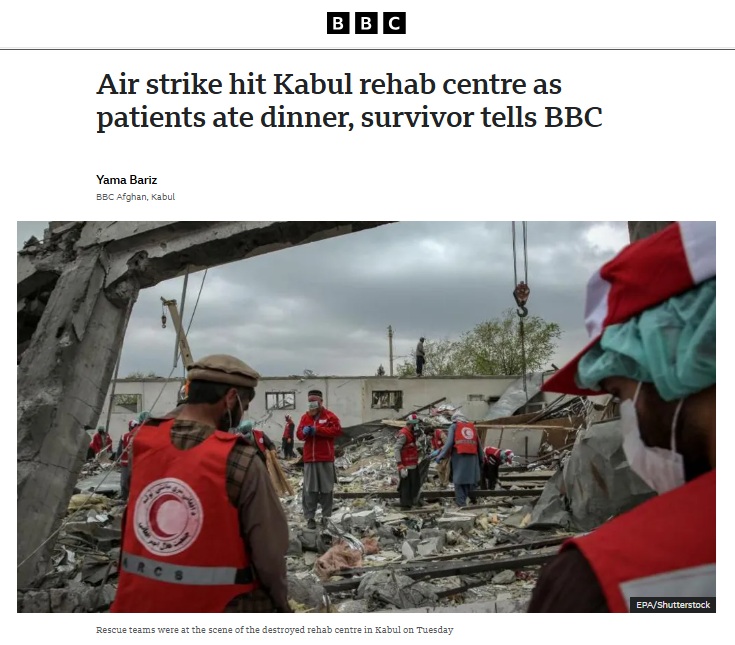
Pakistan declared war on Afghanistan in late February 2026 for harboring Pakistani Taliban, a militant group which has repeatedly attacked Pakistani security forces. Over the past three weeks, Pakistani forces have hit Afghan military installations, residential areas, and civilian infrastructures, including more than 20 health care facilities. Afghan troops have responded with drone strikes and border raids. For the moment, a negotiated end to the armed conflict seems unlikely. Violence may expand.

Thus, there is a need to uphold international humanitarian law, of which the protection of medical centers and medical workers is a core element. The AWC welcomes others who also facilitate international humanitarian law in these critical times.

Prof. René Wadlow is President of the Association of World Citizens.

Of related interest:

February 10, 2025: Strengthening Respect for International Humanitarian Law

October 11, 2024: World Citizen Appeal to Uphold International Humanitarian Law

March 2, 2022: Upholding International Humanitarian Law in Times of Armed Conflict: A World Citizen Appeal
Cooperative Peacebuilding Efforts Urgently Needed

In Being a World Citizen, Conflict Resolution, Cultural Bridges, Current Events, Humanitarian Law, NGOs, Nonviolence, Peacebuilding, Solidarity, The Search for Peace, Track II, United Nations, World Law on March 10, 2026 at 7:00 AM

By René Wadlow

At this time when there is armed conflict and strong political tensions in world society, broadly-based efforts are needed to develop a harmonious political culture based on world law. A political culture is a set of attitudes and beliefs which give order and meaning to a political process. Such a positive political culture is a product of both the collective history of a political system and the life histories of the members of that system.

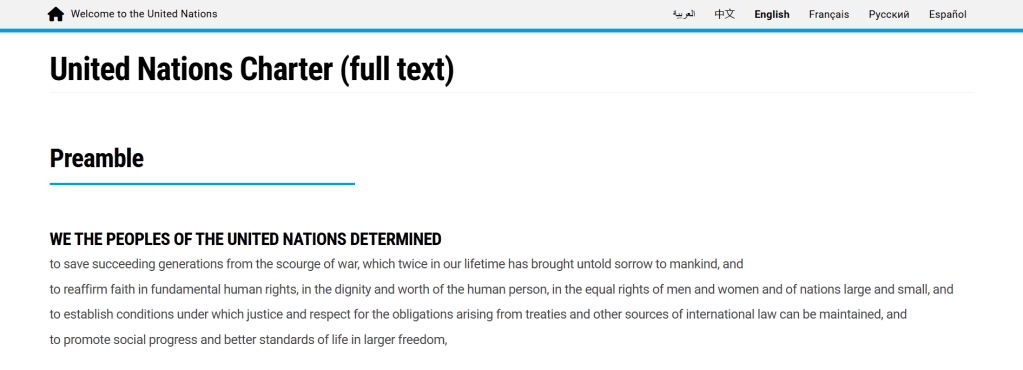
“To establish conditions under which justice and the respect for the obligations arising from treaties and other sources of international law can be maintained” is one of the four objectives of the United Nations (UN) as set out in the preamble to the Charter, firmly related to the three other aims: the prevention of war, respect for human rights, and social progress. The phrasing of the aims rightly stresses not the enactment of international law but rather the need to “establish conditions” under which justice and respect for international law is possible.

Respect for international law should place limitations upon the number of options open to a government in choosing how to carry out a policy in foreign affairs. The most fundamental limitation is the prohibition on using military action except in self-defense against aggression.

When abuse of State power, denial of human rights, corruption, and the absence of participation in decision-making are the daily routine, people look upon law as a method to establish justice. The rule of law at both the international and national level must be based on a social consensus.

Nongovernmental Organizations (NGOs) can play a vital role in developing this social consensus on the rule of law. NGOs have proven that they can respond effectively to the challenges faced by today’s world society. Thus, there is a growing role for NGOs within the UN system in the making and implementation of policies. NGOs are involved more than ever before in global policy-making and project implementation. They bring citizens’ concerns to governments and advocate specific policies.

Today, with armed violence ongoing in many parts of the world, cooperative peacebuilding efforts are urgently needed. NGOs are playing an increasing role in such peacebuilding efforts and must be encouraged.

Prof. René Wadlow is President of the Association of World Citizens.