The Official Blog of the

Archive for August, 2026|Monthly archive page

Cinq ans de règne tyrannique des Talibans

In Middle East & North Africa, Human Rights, Current Events, Solidarity, Women's Rights, Conflict Resolution, The Search for Peace, Asia, United Nations, World Law, Being a World Citizen, Refugees, NGOs, Track II, Peacebuilding on August 22, 2026 at 1:00 PM

Par René Wadlow

L’Association of World Citizens (AWC) a mis en lumière la situation dangereuse qui règne en Afghanistan – une combinaison de tensions avec le Pakistan et de problèmes internes engendrés par le traitement sévère infligé aux femmes et aux jeunes filles par les autorités.

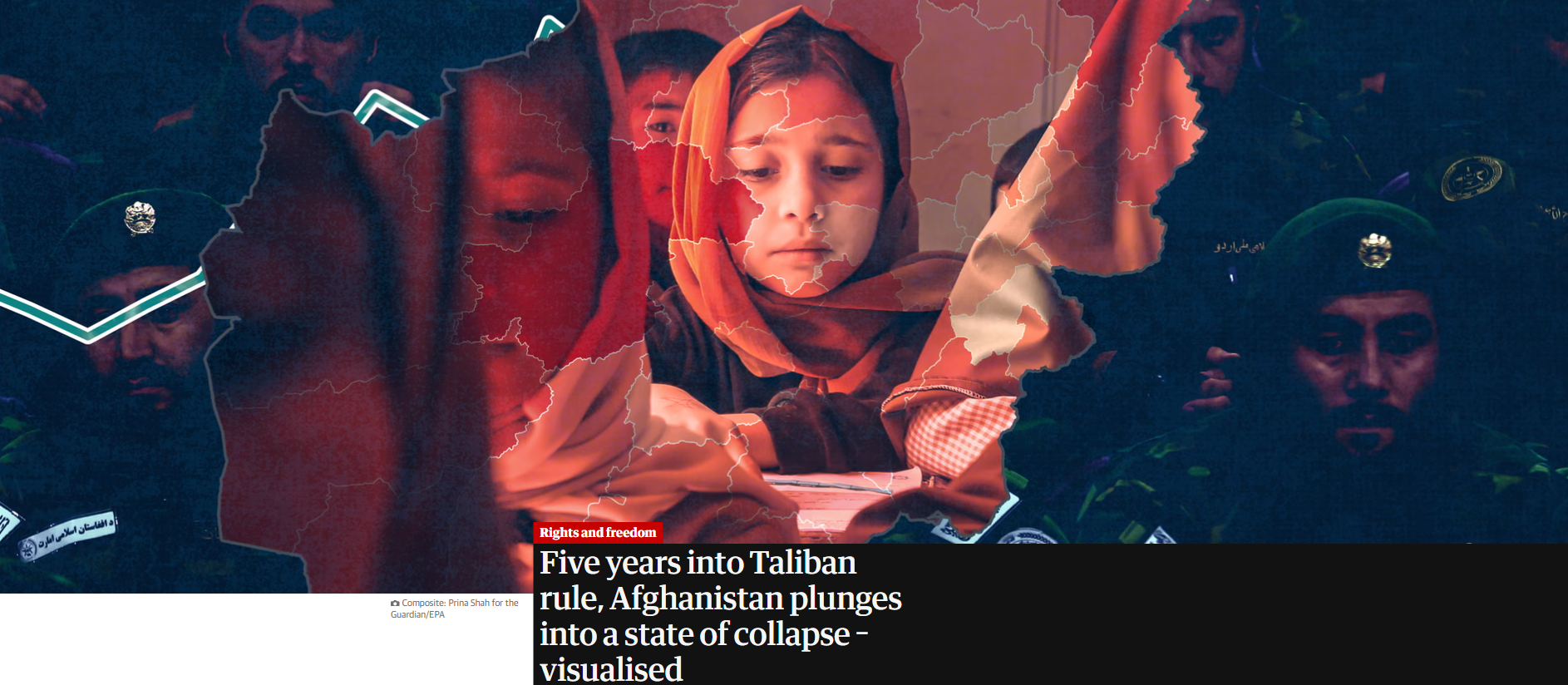
Le 15 août 2026 a marqué le cinquième anniversaire du retour au pouvoir des Talibans en Afghanistan.

On dit souvent que l’humanité possède deux ailes : l’une masculine, l’autre féminine. Tant que ces ailes n’ont pas la même force, l’oiseau ne peut s’envoler. Les Talibans n’ont pas inventé l’inégalité entre les hommes et les femmes en Afghanistan. Cependant, ils en ont fait une politique d’État. Ils ont pris pour modèle la République islamique d’Iran en créant un organisme gouvernemental chargé de traquer ce que le gouvernement considère comme des violations de la morale : le PVPV (Propagation de la vertu et prévention du vice).

Les femmes ont été largement écartées de la vie publique. Les filles se voient refuser l’accès à l’enseignement formel au-delà de l’école primaire. De nombreux Afghans, et pas seulement les femmes, ont le sentiment que leur voix n’est pas entendue au sein des instances gouvernementales actuelles. Le poids des traditions et des pratiques du passé est écrasant.

Les femmes pourraient jouer un rôle essentiel dans la production agricole en tant que gardiennes de la terre. Dans de nombreux pays, elles constituent une part importante de la main-d’œuvre agricole. La production agricole en Afghanistan se situe à un niveau historiquement bas, en grande partie à cause du traitement réservé aux femmes.

Les femmes pourraient jouer un rôle essentiel dans la production agricole en tant que gardiennes de la terre. Dans de nombreux pays, elles constituent une part importante de la main-d’œuvre agricole. En Afghanistan, la production agricole a atteint un niveau historiquement bas, en grande partie à cause du traitement réservé aux femmes.
Un grand nombre d’Afghans qui s’étaient réfugiés en Iran, au Pakistan et en Europe occidentale sont contraints de retourner en Afghanistan, alors qu’un nombre croissant de pays adoptent des politiques anti-migrants. Des efforts ont été déployés au sein du système des Nations unies (ONU) pour améliorer les conditions de migration. Cependant, ces efforts de l’ONU n’ont pas permis de réduire les flux migratoires. Il arrive que des migrants soient traités comme des criminels et renvoyés de force dans leur pays d’origine. L’étude des flux migratoires actuels est importante pour se faire une idée réaliste de la migration et, surtout, pour apporter des améliorations.

Les tensions avec le Pakistan, qui ont débouché sur des violences armées, sont liées aux accusations portées par le Pakistan selon lesquelles l’Afghanistan aurait permis à des militants opposés au gouvernement pakistanais, affiliés au Tehreek-e-Taliban Pakistan (TTP), d’utiliser le territoire afghan comme base pour attaquer les forces pakistanaises. Des efforts doivent être déployés pour résoudre ce conflit.

La Chine pourrait jouer un rôle, bien que l’Afghanistan soit largement coupé de tout contact diplomatique avec de nombreux pays qui ne reconnaissent pas la légitimité du régime taliban.

La situation en Afghanistan et son impact régional doivent être suivis de près. Les Organisations Non-Gouvernementales pourraient jouer un rôle positif.

Le Professeur René Wadlow est Président de l’Association of World Citizens.

A lire également:
Five Years of Taliban Misrule

In Middle East & North Africa, Human Rights, Current Events, Solidarity, Women's Rights, Conflict Resolution, The Search for Peace, Asia, United Nations, World Law, Being a World Citizen, Refugees, NGOs, Track II, Peacebuilding on August 22, 2026 at 1:00 PM

By René Wadlow

The Association of World Citizens (AWC) has highlighted the dangerous situation in Afghanistan – a combination of tensions with Pakistan and the internal conditions created by the authorities’ harsh treatment of women and girls.

August 15, 2026 marked the passage of five years since the Taliban forces returned to power in Afghanistan.

There is a saying that humanity is possessed of two wings, the male and the female. So long as these wings are not equivalent in strength, the bird will not fly. The Taliban did not invent the inequality between men and women in Afghanistan. However, they established it as policy. They have copied the Islamic Republic of Iran in creating a government body to track what the government considers as violations of morals: the PVPV, Propagation of Virtue and Prevention of Vice.

Women have been largely erased from public life. Girls are denied formal education beyond primary school. Many Afghans, not only women, feel that their voices are not heard in the current government’s councils. There is a heavy weight of the traditions and practices of the past.

Women could play a vital role in agricultural production as stewards of the land. Women comprise much of the agricultural labor force in many countries. Agricultural production in Afghanistan is at a record low level due in large part to the treatment of women.

A large number of Afghans who had fled to Iran, Pakistan and Western Europe are being forced back to Afghanistan as an increasing number of countries enact anti-migrant policies. There have been efforts within the United Nations (UN) system to improve the conditions of migration. However, these UN efforts have not diminished the flow of migration. There are cases where migrants are treated as criminals and pushed back to their home countries. The study of current migration flows is important to have a realistic picture of migration and especially to make improvements.

Tension with Pakistan which has led to armed violence concern accusations by Pakistan that Afghanistan has allowed anti-Pakistan government militants affiliated with the Tehreek-e-Taliban Pakistan (TTP) to use Afghanistan as a base to attack Pakistani forces. Efforts at conflict resolution need to be made.

China may be able to play a role although Afghanistan is largely cut off from diplomatic contact with many countries who do not recognize the legitimacy of Taliban rule.

The situation in Afghanistan and its regional impact needs to be followed closely. Nongovernmental Organizations may be able to play a positive role.

Prof. René Wadlow is President of the Association of World Citizens.

Of related interest:

L’épanouissement de la culture : un objectif de l’éducation à la citoyenneté mondiale menée par l’UNESCO

In Human Rights, Human Development, Solidarity, The Search for Peace, United Nations, Cultural Bridges, Being a World Citizen, Nonviolence, Peacebuilding on August 11, 2026 at 7:00 AM

Par René Wadlow

L’épanouissement de la culture constitue une réponse importante aux grands défis mondiaux tels que les conflits armés, la pauvreté persistante, l’intensification des migrations et les conséquences du changement climatique. Le programme d’éducation à la citoyenneté mondiale mené par l’UNESCO met l’accent sur l’objectif de développer un sentiment d’appartenance à une humanité commune, en partageant des valeurs et des responsabilités communes avec empathie et solidarité. Il est donc nécessaire d’agir efficacement aux niveaux local, national et mondial pour une société mondiale pacifique et harmonieuse.

L’éducation à la citoyenneté mondiale se veut transformatrice : elle vise à développer les connaissances, les compétences, les valeurs et les attitudes nécessaires pour contribuer à une société mondiale plus inclusive, plus juste et plus pacifique. Elle s’inscrit dans une perspective d’apprentissage tout au long de la vie, commençant dès l’enfance et se poursuivant à tous les niveaux d’enseignement, à travers des approches à la fois formelles et extrascolaires.

La culture joue un rôle essentiel dans la compréhension des valeurs communes, tout en développant l’appréciation et le respect des différences et de la diversité en matière de langue, de littérature, de musique et de religion. Compte tenu de la position dominante de la culture occidentale sur la scène mondiale, il est nécessaire de mieux comprendre les philosophies asiatiques que sont le confucianisme, le taoïsme, le bouddhisme, l’hindouisme et l’islam.

Nous constatons de plus en plus une prise de conscience croissante de l’harmonie et de l’unité de l’humanité. Néanmoins, il existe encore de forts courants de peur, de méfiance et de rejet de « l’autre » que nous devons surmonter. Nous sommes appelés à adopter une morale active et universelle, ainsi que l’idéal de liberté qui en est l’expression politique. L’avenir sera le fruit de nos choix à tous les niveaux d’action. Faisons des choix créatifs et profonds !

Le Professeur René Wadlow est Président de l’Association of World Citizens.

A Flowering of Culture: A Goal of the UNESCO-led Education for Global Citizenship

In Human Rights, Human Development, Solidarity, The Search for Peace, United Nations, Cultural Bridges, Being a World Citizen, Nonviolence, Peacebuilding on August 11, 2026 at 7:00 AM

By René Wadlow

A flowering of culture is an important response to major world challenges such as armed conflicts, persistent poverty, increased migration, and the consequences of climate change. The UNESCO-led program of Education for Global Citizenship stresses the aim of developing a sense of belonging to a common humanity, sharing common values and responsibilities with empathy and solidarity. Thus, there is a need to act effectively at the local, national and global levels for a peaceful and harmonious world society.

Education for Global Citizenship aims to be transformative, building the knowledge, skills, values, and attitudes needed to contribute to a more inclusive, just, and peaceful world society. Education for Global Citizenship applies a lifelong learning perspective, beginning from childhood and continuing through all levels of education, with both formal and extracurricular approaches.

Culture plays a vital role in understanding shared values, and at the same time developing an appreciation of, and respect for, differences and diversity with respect to language, literature, music, and religion. Given the strong position of Western culture on the world scene, there is a need for a greater understanding of the Asian philosophies of Confucianism, Taoism, Buddhism, Hinduism, and Islam.

Increasingly, we see the growth of the awareness of harmony and the unity of humanity. Nevertheless, there are still strong currents of fear, mistrust, and rejection of “the other” which we must overcome. We are summoned to embrace an active, world-embracing morality and the ideal of freedom which is the political expression of that morality. The future will be the result of our choices at every level of activity. Let us make creative and profound choices!

Prof. René Wadlow is President of the Association of World Citizens.

Les Citoyens du Monde appellent à redoubler d’efforts pour résoudre le conflit entre le Pakistan et l’Afghanistan

In Current Events, Solidarity, Conflict Resolution, The Search for Peace, Asia, United Nations, World Law, Being a World Citizen, Humanitarian Law, NGOs, Peacebuilding on August 9, 2026 at 2:00 PM

Par René Wadlow

La Mission d’Assistance des Nations Unies en Afghanistan (MANUA) a publié fin juillet 2026 un rapport sans concession sur les tensions armées entre différents groupes en Afghanistan et au Pakistan. Quelque 500 Afghans ont été tués, environ 1 220 blessés, principalement lors de frappes aériennes, et 150 000 personnes ont été déplacées par les combats. Les membres de l’UNAMA ne sont pas en mesure de mener des enquêtes au Pakistan ; il n’existe donc pas de chiffres de l’ONU concernant le nombre de personnes tuées et blessées dans ce pays.

La plupart des victimes des bombardements sont des civils, car les combats menés par les forces armées régulières sont rares. Pour l’instant, aucune négociation de bonne foi n’est en cours entre les deux pays.

C’est pourquoi l’Association of World Citizens lance un appel aux autorités pakistanaises et aux dirigeants de facto en Afghanistan pour qu’ils s’engagent dans des efforts de résolution du conflit. Le risque existe que les combats s’étendent et deviennent encore plus destructeurs. Une action constructive s’impose dès maintenant.

Le Professeur René Wadlow est Président de l’Association des Citoyens du Monde.

À lire également :

Pakistan-Afghanistan Armed Conflict: Humanitarian Law Needs to be Upheld

World Citizens Urge Renewed Conflict Resolution Efforts Between Pakistan and Afghanistan

In Current Events, Solidarity, Conflict Resolution, The Search for Peace, Asia, United Nations, World Law, Being a World Citizen, Humanitarian Law, NGOs, Peacebuilding on August 9, 2026 at 2:00 PM

By René Wadlow

The United Nations Assistance Mission in Afghanistan (UNAMA) published at the end of July 2026 a stark report on the armed tensions between groups in Afghanistan and Pakistan. Some 500 Afghans have been killed, some 1,220 wounded mostly by air attacks, and 150,000 persons have been displaced by the fighting. UNAMA members are not able to investigate in Pakistan, so there are no UN figures on the number of persons killed and wounded in the country.

Most of the deaths by bombing are civilians as there is little fighting by regular armed forces. For the moment, there are no negotiations in good faith between the two countries.

Therefore, the Association of World Citizens appeals to the authorities of Pakistan and the de facto leadership in Afghanistan to undertake conflict resolution efforts. There is a danger that the fighting will spread and be more destructive. Constructive action is needed now.

Prof. René Wadlow is President of the Association of World Citizens.

Of related interest:

Pakistan-Afghanistan Armed Conflict: Humanitarian Law Needs to be Upheld

Les Citoyens du Monde s’opposent à la loi sur l’unité ethnique

In Human Rights, Current Events, Solidarity, Democracy, Asia, United Nations, World Law, Cultural Bridges, Being a World Citizen, Fighting Racism, NGOs on August 5, 2026 at 6:00 AM

Par René Wadlow

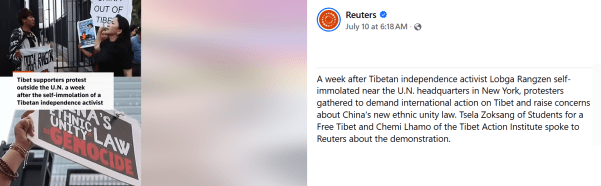
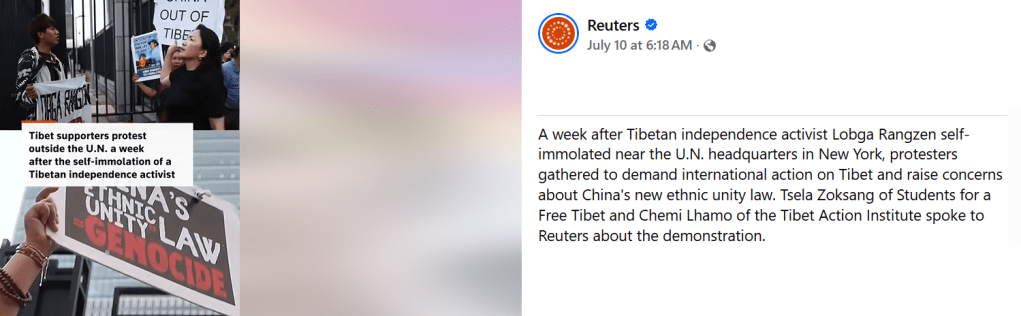
Le gouvernement chinois impose des restrictions aux minorités ethniques par le biais d’une nouvelle loi sur l’unité ethnique, laquelle renforce le contrôle de l’État sur l’identité, la culture et les pratiques religieuses. Cette loi est entrée en vigueur le 1er juillet 2026. Pour protester contre cette mesure, Lobga Rangzen, un militant tibétain de 52 ans, s’est donné la mort en signe de sacrifice devant le siège des Nations Unies à New York.

La préservation du mode de vie des minorités ethniques constitue un enjeu dans de nombreux pays. D’une part, ces minorités doivent être protégées ; d’autre part, elles ne doivent pas être réduites à un simple folklore destiné au regard des touristes. Trouver le juste équilibre n’est pas chose aisée.

Le gouvernement chinois adopte une position extrême en cherchant à mouler d’importantes minorités ethniques, telles que les Tibétains, dans ce qu’il considère comme étant l’identité chinoise.

L’Association of World Citizens a appelé les autorités chinoises à reconsidérer leurs politiques et à modifier ou abroger la loi sur l’unité ethnique. Pour l’heure, les autorités n’ont pris aucune mesure, malgré les protestations d’autres groupes de défense des Droits Humains.

La situation mérite une attention particulière.

Le Professeur René Wadlow est Président de l’Association of World Citizens.

World Citizens Oppose Ethnic Unity Law

In Human Rights, Current Events, Solidarity, Democracy, Asia, United Nations, World Law, Cultural Bridges, Being a World Citizen, Fighting Racism, NGOs on August 5, 2026 at 6:00 AM

By René Wadlow

The Chinese Government limits ethnic minorities with a new Ethnic Unity law which expands state control over identity, culture, and religious practice. The Ethnic Unity Law came into force on July 1, 2026. To protest the Ethnic Unity Law, Lobga Rangzen, a 52-year-old Tibetan activist, made a sacrificial death at the doors of the United Nations in New York.

The protection of the way of life of ethnic minorities is an issue in many countries. On the one hand, minorities must be protected; on the other hand, minorities must not be relegated to folklore to be looked at by tourists. Finding the proper balance is not easy.

The Chinese Government presents one extreme position in its effort to mold large ethnic minorities, such as the Tibetans, into what the government considers to be Chinese identity.

The Association of World Citizens has appealed to the Chinese authorities to reconsider its policies and to modify or abolish its Ethnic Unity Law. For the moment, the authorities have taken no action despite protests by other human rights action groups.

The situation should be followed closely.

Prof. René Wadlow is the President of the Association of World Citizens.