The Official Blog of the

Archive for the ‘Human Rights’ Category

World Humanitarian Day: A Need for Common Actions

In Conflict Resolution, Current Events, Human Rights, Humanitarian Law, Middle East & North Africa, NGOs, Solidarity, The Search for Peace, Track II, United Nations, World Law on August 19, 2023 at 8:26 PM

By René Wadlow

In memory of Sergio Vieira de Mello (1948-2003)

The United Nations (UN) General Assembly has designated August 19 as “World Humanitarian Day” to pay tribute to aid workers in humanitarian service in difficult and often dangerous conditions.  August 19 was designated in memory of the August 19, 2003 bombing of the UN office building in Baghdad, Iraq in which Sergio Vieira de Mello, United Nations (UN) High Commissioner for Human Rights and, at the time, Special Representative of the UN Secretary General was killed along with 21 UN staff members. Over 200 UN employees were injured. The exact circumstances of the attack are not known, and why USA and UN security around the building was not tighter is still not clear. A truck with explosives was able to dive next to the building and then blew itself up.

Sergio Vieira de Mello had spent his UN career in humanitarian efforts, often with the Office of the High Commissioner for Refugees and at other times as Special Representative of the UN Secretary General. As a Nongovernmental Organization’s (NGO’s) representative to the UN in Geneva and active on human rights issues, I knew him during his short 2002-2003 tenure as High Commissioner for Human Rights. Many of us had high hopes that his dynamism, relative youth – he was 54 – and wide experience in conflict resolution efforts would provide new possibilities for human rights efforts. His death along with the death of others who had been Geneva-based was a stark reminder of the risks that exist for all engaged in humanitarian and conflict resolution work.
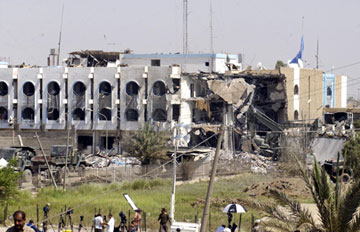
This year, the risks and dangers are not just memories but are daily news. On May 3, 2016, the UN Security Council unanimously adopted Resolution 2286 calling for greater protection for health care institutions and personnel considering recent attacks against hospitals and clinics in Syria, Iraq, Yemen, South Sudan, Democratic Republic of Congo, and Afghanistan.  These attacks on medical facilities are too frequent to be considered “collateral damage.” The attacks indicate a dangerous trend of non-compliance with world law by both State and non- State agents.  The protection of medical personnel and the treatment of all the wounded − both allies and enemies − goes back to the start of humanitarian law.

The Association of World Citizens (AWC) has stressed the need for accountability, including by investigation of alleged violations of the laws of war.  The grave violations by the Islamic State in Iraq and al-Sham (ISIS) must be countered by as wide a coalition of concerned voices as possible. There is a real danger that as ISIS disintegrates and no longer controls as much territory, it will increase terrorist actions.

The laws of war, now more often called humanitarian law, have two wings, one dealing with the treatment of medical personnel in armed conflict situations, the military wounded, prisoners of war, and the protection of civilians. This wing is represented by the Geneva (Red Cross) Conventions. The second wing, often called The Hague Conventions limit or ban outright the use of certain categories of weapons. These efforts began at The Hague with the 1900 peace conferences and have continued even if the more recent limitations on land mines, cluster weapons and chemical weapons have been negotiated elsewhere.
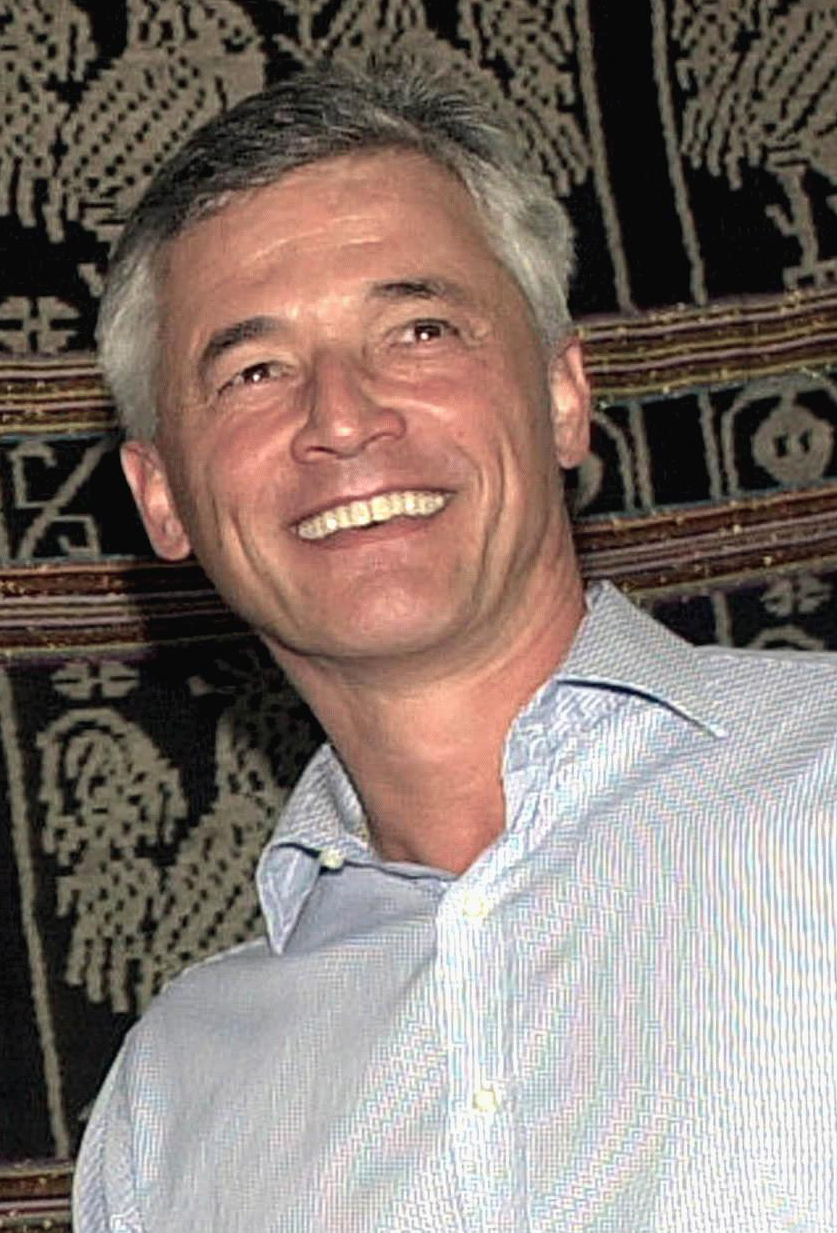
Sergio Vieira de Mello (C) Wilson Dias/ABr

The ban on the use of weapons is binding only on States which have ratified the convention. Thus, the current use of United States (U.S.)-made cluster weapons in Yemen by the Saudi Arabia-led coalition is, in a narrow sense, legal as the USA, Saudi Arabia and Yemen have not signed the cluster weapon ban. The AWC was one of the NGOs leading the campaign against cluster weapons. My position is that when a large number of States ratify a convention, as is the case with the cluster-weapons ban, then the convention becomes world law and so must be followed by all States and non-State actors even if they have not signed or ratified the convention. The same holds true for the use of land mines currently being widely used by ISIS in Syria and Iraq.

The current situation concerning refugees and internally displaced persons can also be considered as part of humanitarian law.  Therefore, those working with refugees and the displaced within their country are also to be honored by the World Humanitarian Day.  To prevent and alleviate human suffering, to protect life and health and to ensure respect for the human person − these are the core values of humanitarian law.

There needs to be a wide public outcry in the defense of humanitarian law so that violations can be reduced. The time for action is now.

Prof. René Wadlow is President of the Association of World Citizens.
June 4: Memories of Tiananmen Square

In Asia, Being a World Citizen, Democracy, Europe, Human Rights, NGOs, Nonviolence, Solidarity, The former Soviet Union, Track II on June 4, 2023 at 4:55 PM

By René Wadlow

June 4 makes the security forces in China somewhat uneasy, especially in Hong Kong where, in the past, there were large memorial meetings to remind people of June 4, 1989, when the military and police moved against those who had been protesting publicly for over a month. Students from colleges and universities in China’s capital initiated protests after the death of the former General Secretary of the Communist Party, Hu Yaobang, on April 15, 1989 who was considered a liberal reformer. The movement then spread over a number of weeks to most of the major cities. Students made numerous demands, among them were calls for an end to government corruption, increased funding for education, and freedom of the press. As the movement went on, students were increasingly joined by industrial workers.

There were differences of opinion within the ruling government circle as to how to deal with the protests. As the protests continued, there was more and more international media attention, especially as there were an increasing number of journalists in Beijing in advance of the visit of the Soviet leader, Mikhail Gorbachev, with a large delegation of Soviet officials.

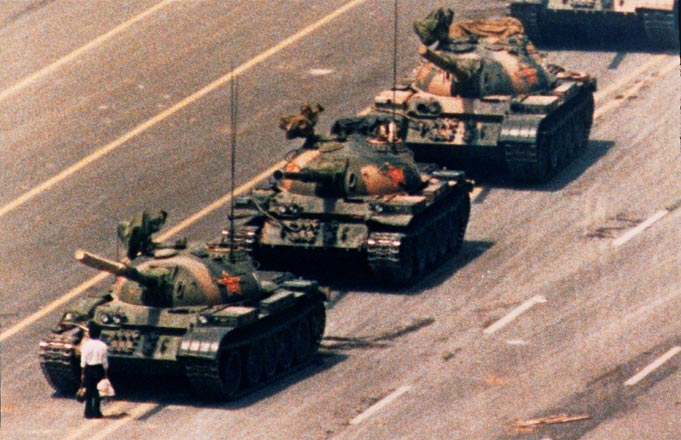
(C) Jeff Widener/Associated Press

Students and intellectuals started writing petitions setting out demands that were signed by more and more people. The decentralized structure of power and decision-making among groups in Tienanmen Square allowed for tactical innovation as each group was free to act as it desired and stress the symbols it wanted. Thus, art school students created the Goddess of Democracy, largely based on the Statue of Liberty in New York harbor. The growth in support for the student-led protests led the more anti-reformist faction in the government to order a crackdown by the military and the police. The tanks started to move into Tiananmen Square.

Since June 1989 there have been reforms within China – what we might call “democratization from below” but without large scale, highly visible public protests. ‘Stability’ and ‘harmony’ have been the stated government policy aims, colored by the breakup of the Soviet Union and fundamental changes in Eastern Europe. So, democratization needs to proceed quietly and gradually. Such democratization requires long-term vision and skillful leadership. Democratization is basically linked to individualization, to an ever-larger number of people thinking for themselves, creating their own lifestyles and ‘thinking outside the box’. It can be a slow process and repressive forces within the government watch events closely. However, it is likely that the direction of individualism is set and cannot be reversed.

Prof. René Wadlow is President of the Association of World Citizens.
Politics Beyond National Frontiers

In Being a World Citizen, Conflict Resolution, Cultural Bridges, Democracy, Environmental protection, Human Development, Human Rights, Humanitarian Law, International Justice, Migration, Modern slavery, NGOs, Nonviolence, Refugees, Religious Freedom, Social Rights, Solidarity, Sustainable Development, The Search for Peace, Track II, United Nations, Women's Rights, World Law on May 24, 2023 at 6:38 AM

By René Wadlow

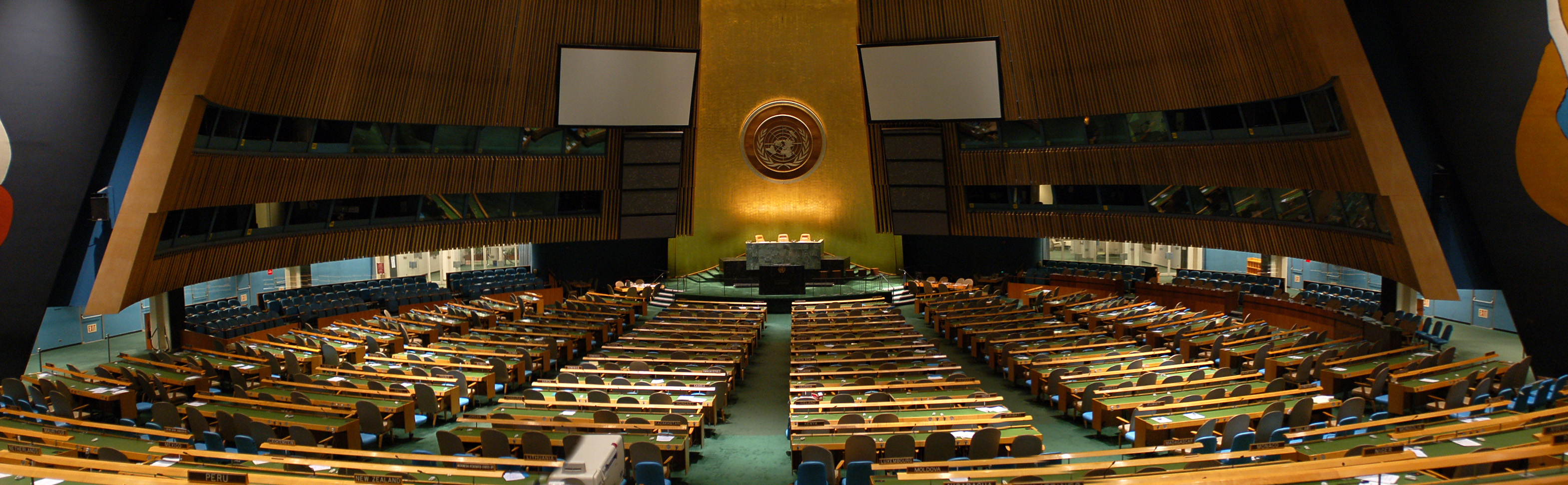
In our current globalized world society, there is an increased role for politics without borders. Politics no longer stops at the water’s edge but must play an active role on the world stage. However, unlike politics at the national level which usually has a parliament at which the actors can recite their lines, the world has no world parliament as such. Thus, new and inventive ways must be found so that world public opinion can be heard and acted upon.

The United Nations (UN) General Assembly is the closest thing to a world parliament that we have today. However, all the official participants are diplomats appointed by their respective States – 195 member states. UN Secretariat members, the secretariat members of UN Specialized Agencies such as UNESCO and the ILO, are in the hallways or coffee shops to give advice. Secretariat members of the financial institutions such as the World Bank and the IMF are also there to give advice on costs and the limits of available funds. The representatives of Nongovernmental Organizations (NGO) in Consultative Status with the UN who can speak at sessions of the Economic and Social Council and the Human Rights Council cannot address the General Assembly directly. However, they are also in the coffee shops and may send documents to the UN missions of national governments.

(C) Jérôme Blum

Politics without borders requires finding ways to express views for action beyond the borders of individual countries. Today, most vital issues that touch the lives of many people go beyond the individual State: the consequences of climate change, the protection of biodiversity, the resolution of armed conflicts, the violations of human rights, and a more just world trade pattern. Thus we need to find ways of looking at the world with a global mind and an open heart. This perspective is an aim of world citizenship.

However, World Citizens are not yet so organized as to be able to impact political decisions at the UN and in enough individual States so as to have real influence. The policy papers and Appeals of the Association of World Citizens (AWC) are often read with interest by the government representatives to whom they are sent. However, the AWC is an NGO among many and does not have the number of staff as such international NGOs as Amnesty International, Human Rights Watch, and Greenpeace.

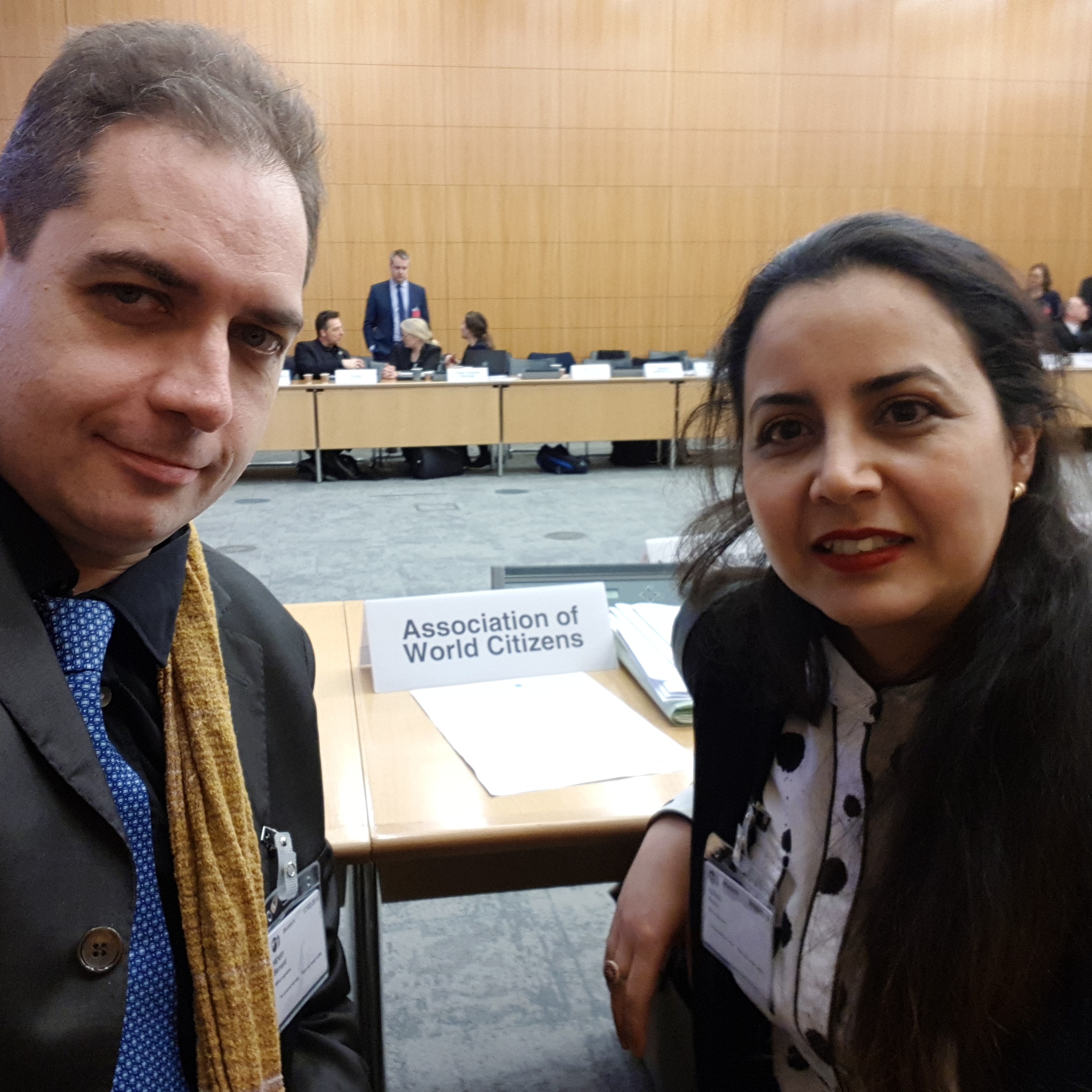
The First Officer and External Relations Officer, Bernard J. Henry, and the Legal and Mediation Officer, Attorney Noura Addad, representing the AWC at an OECD roundtable in March 2019 (C) Bernard J. Henry/AWC

We still need to find effective ways so that humanity can come together to solve global problems, that is, politics without borders. Prof. René Wadlow is President of the Association of World Citizens.
UN Security Council Focus on World Hunger

In Africa, Being a World Citizen, Conflict Resolution, Current Events, Human Rights, NGOs, Social Rights, Solidarity, Sustainable Development, The Search for Peace, Track II, UKRAINE, United Nations, World Law on May 8, 2023 at 12:00 PM

By René Wadlow

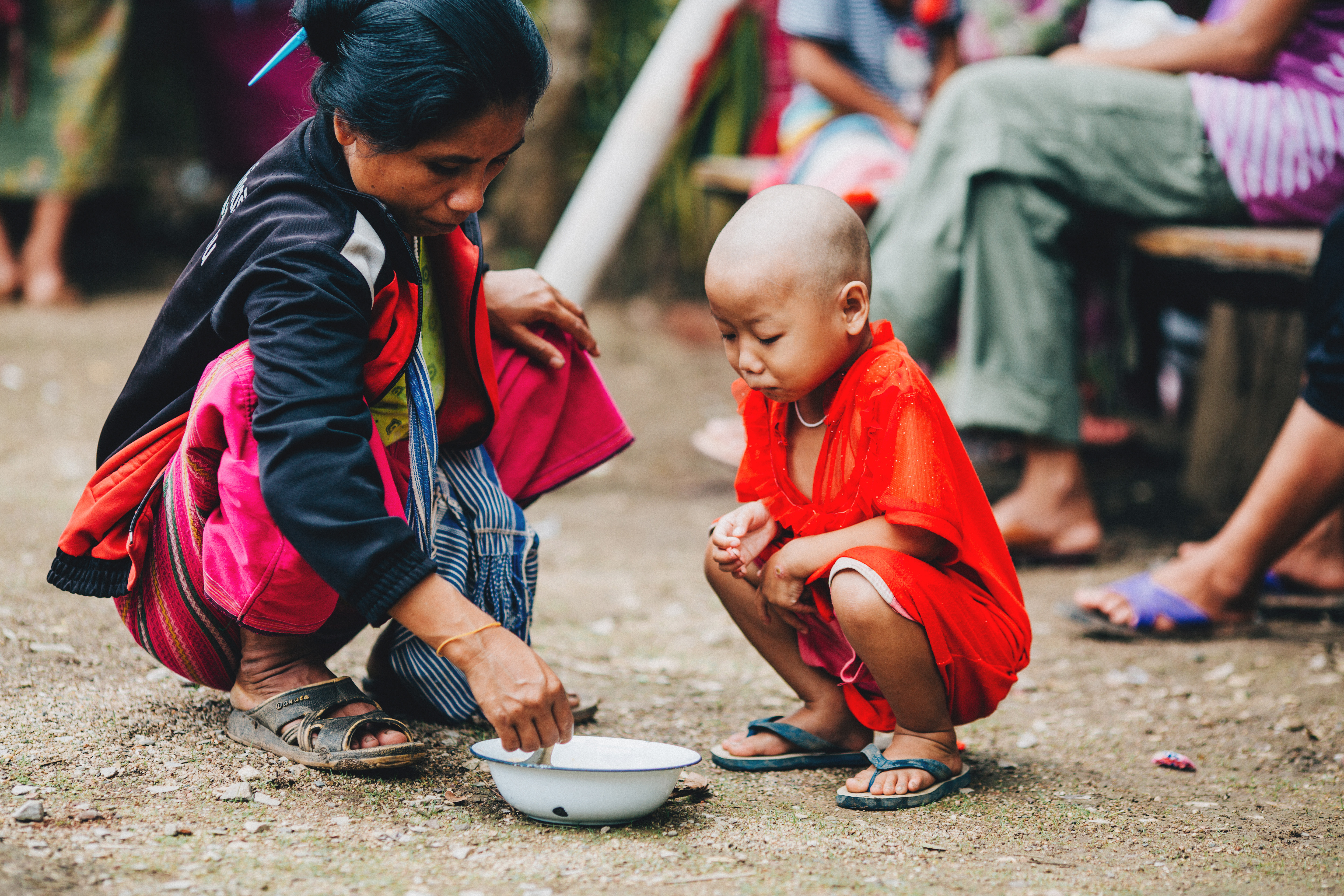
On May 23, the United Nations (UN) Security Council will hold a special briefing to address the issue of food insecurity under the chairmanship of Mr. Alain Berset, President of the Swiss Confederation. During May, the rotating chairmanship is held by Switzerland led by the Swiss Ambassador to the UN in New York, Ms. Pascale Baeriswyl. The meeting will have as background a May 3 report of the Food and Agriculture Organization (FAO) concerning early warning on areas facing acute food insecurity. The report highlights that some 250 million persons are living in this situation of acute food insecurity with the Democratic Republic of Congo leading the list with some 27 million persons due to armed violence and the breakdown of governmental structures. The Congo is followed by Ethiopia, largely due to fighting in the Tigray area. The war in Ukraine is also having a negative impact limiting production and export of food goods – a principal export of Ukraine. In addition to armed conflict, there is the growing impact of the consequences of climate change.

Today, cooperation on food insecurity is needed among the UN family of agencies, national governments, nongovernmental organizations, and the millions of food producers to respond to this food crisis. These measures will have to be taken in a holistic way with actions going from the local level of the individual farmer, the national level with new governmental policies, to measures at the multi-State regional level such as the European Union and the African Union, and at the world level with better coordinated action through the UN system.

(C) Feed My Starving Children

There is a need for swift, short-term measures to help people now suffering from lack of food and malnutrition due to high food prices, inadequate distribution, and situations of violence. Such short-term action requires additional funding for the UN World Food Program and the release of national food stocks. However, it is on the longer-range and structural issues on which we must focus our attention.

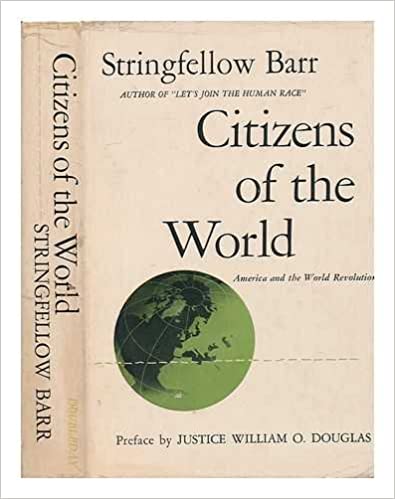
The Association of World Citizens has taken a lead in the promotion of a coordinated world food policy with an emphasis on the small-scale farmer and a new awareness that humans are part of Nature with a special duty to care and respect for the Earth’s inter-related life-support system. As Stringfellow Barr wrote in Citizens of the World (1952), “Since the hungry in the world community believe that we can all eat if we set our common house in order, they believe also that it is unjust that some die because it is too much trouble to arrange for them to live.”

A central theme which Citizens of the World have long stressed is that there needs to be a world food policy and that such a world food policy is more than the sum of national food security programs. John Boyd Orr, the first Director General of the FAO, proposed a World Food Board to stabilize food prices and supplies. He resigned as Director General when the food board proposal was not accepted and then devoted much of his energy to the world citizen movement.

For World Citizens, the emphasis must be placed on creating a world food policy which draws upon improving local self-reliance while not creating nationalistic policies which harm neighbors. Food is a key aspect of deep structural issues in the world society and thus must be seen in a holistic framework. The briefing and debate of the UN Security Council may give us strong elements on which to promote a world food policy.

Prof. René Wadlow is President of the Association of World Citizens.
Benjamin Ferencz, Champion of World Law, Leaves a Strong Heritage on Which to Build

In Africa, Being a World Citizen, Conflict Resolution, Current Events, Europe, Human Rights, International Justice, NGOs, The Balkan Wars, The Search for Peace, Track II, United Nations, United States, War Crimes, World Law on April 18, 2023 at 7:11 AM

By René Wadlow

Benjamin Ferencz, champion of World Law and World Citizenship, died on April 7, 2023 at the age of 103, leaving a strong heritage of action for world law. He was particularly active in the creation of the International Criminal Court (ICC) located in the Hague.

He was born in March 1920 in what is now Romania, close to the frontiers of Hungary and Ukraine. In the troubled period after the end of the First World War, the parents of Ferencz, who were Jews, decided to emigrate to New York with the help of the Hebrew Immigrant Aid Society. They settled in New York City, and Ferencz changed his Yiddish name Berrel to Benjamin and studied in the New York school system. He did his undergraduate work at City College and then received a scholarship to Harvard Law School, a leading United States (U. S.) law school.

(C) United States Holocaust Memorial Museum

At the end of his law studies at Harvard, he was taken into the U. S. Army and in 1944, he was in Europe with the Army legal section, the Judge-Advocate General Corps. By conviction and interest, he began to collect information on the Nazi concentration camps. He was able to find photos, letters, and other material that he later was able to use as one of the prosecution team in the Nuremberg trials of Germans accused of war crimes. He was also a staff member of the Joint Restitution Successor Organization concerned with the restoration or compensation of goods having belonged to Jewish families. Thus, he developed close cooperation with the then recently created state of Israel.

(C) Leit

From his experiences with the German trials and the many difficulties that the trials posed to be more than the justice of the victors and also the need not to antagonize the recently created Federal Republic of Germany, Ferencz became a strong advocate of an international legal system such as the Tribunals on ex-Yugoslavia of 1993 and on Rwanda (1994). Much of his effort was directed to the creation of the ICC, a creation that owes much to efforts of nongovernmental organizations, such as the Association of World Citizens. It was during this effort for the creation of the ICC that we came into contact.
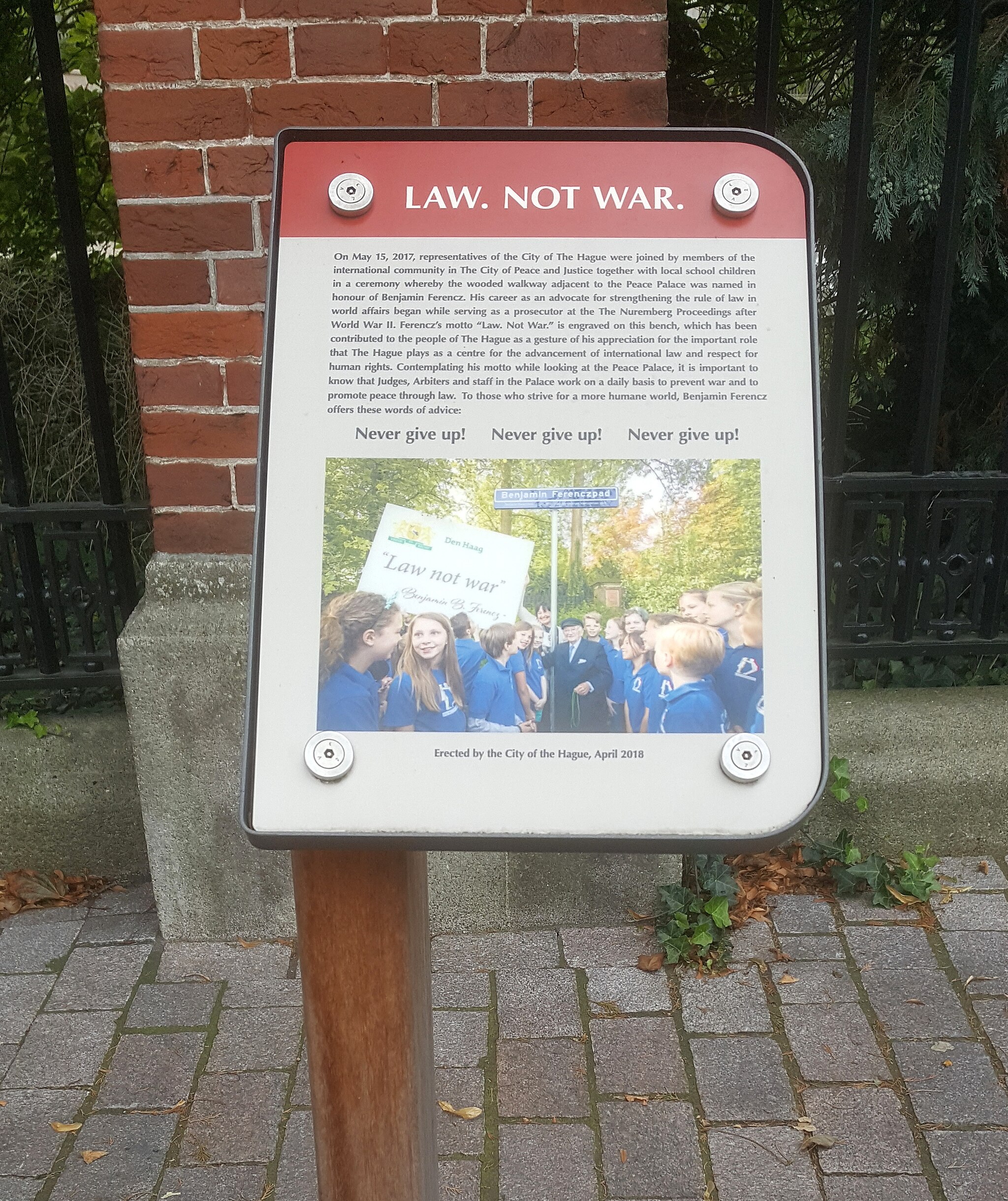
Benjamin Ferencz leaves a heritage on which we can build. The development of world law is often slow and meets opposition. However, the need is great, and strong efforts at both national and international levels continue.

(C) Adam Jones

(1) See Benjamin B. Ferencz, A Common Sense Guide to World Peace (Dobbs Ferry, NY: Oceana Publications, 1985).

Prof. René Wadlow is President of the Association of World Citizens.

Israel-Palestine: Tension-reduction Measures Urgently Needed

In Being a World Citizen, Conflict Resolution, Current Events, Human Rights, Middle East & North Africa, NGOs, Solidarity, The Search for Peace, Track II, United Nations, World Law on April 11, 2023 at 7:05 AM

By René Wadlow

The Association of World Citizens (AWC) calls for urgently needed tension-reduction measures in the Israel-Palestine-Lebanon area.

Tensions have led to a barrage of missiles from Gaza and Lebanon and rapid Israeli missiles in return aiming at weakening Hamas and Hezbollah.

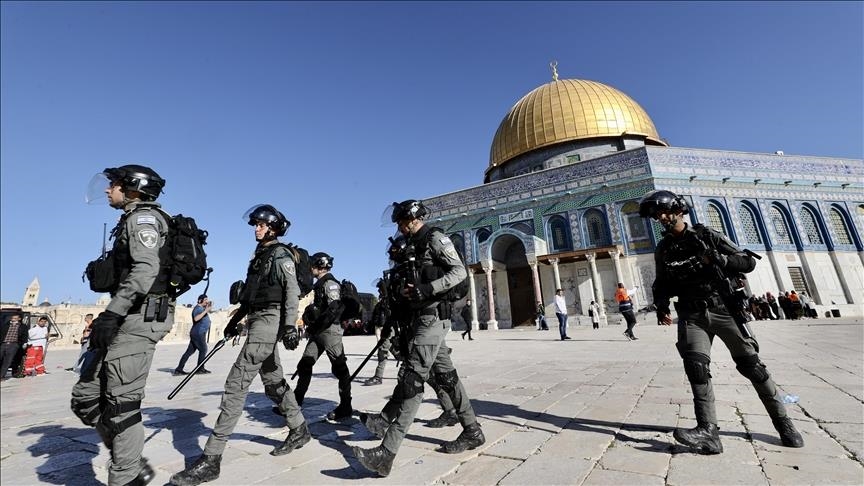
Growing tensions had led to Israeli police attacking Palestinian worshipers celebrating the holy month of Ramadan within the Al-Aqsa Mosque compound on April 5-6, 2023. The images of Israeli police firing teargas and beating worshipers were widely seen on social media outlets and other media.

Tensions in the area have been growing since the formation of the Netanyahu-led government with right-wing ministers. Government proposals for changes concerning the court system and the appointment of judges have led to strong and widespread protest demonstrations. However, Palestinian issues were not directly addressed by these demonstrations.

Tensions between Israel and Iran and Iranian-backed groups in Syria have also been growing. The dangers of further violence have been raised in the United Nations Security Council, but no positive actions were undertaken. United Nations peacekeeping forces in Lebanon are on “high alert”.

For the moment, there are no high-level public negotiations underway or planned. Thus, tension-reduction measures must be undertaken as unilateral measures by the government of Israel, the Palestinian Authority, and the government of Lebanon. Such tension-reduction measures are urgently needed but may be unlikely. Thus, the AWC calls upon civil society organizations and persons of good will to consider what measures can be taken immediately and what structures may be established so that tension-reduction processes continue. This is an urgent call for creative and courageous actions.

Prof. René Wadlow is President of the Association of World Citizens.
H.G. Wells and Human Rights

In Being a World Citizen, Human Rights, Literature, Solidarity, United Nations, World Law on January 21, 2023 at 8:42 PM

By René Wadlow

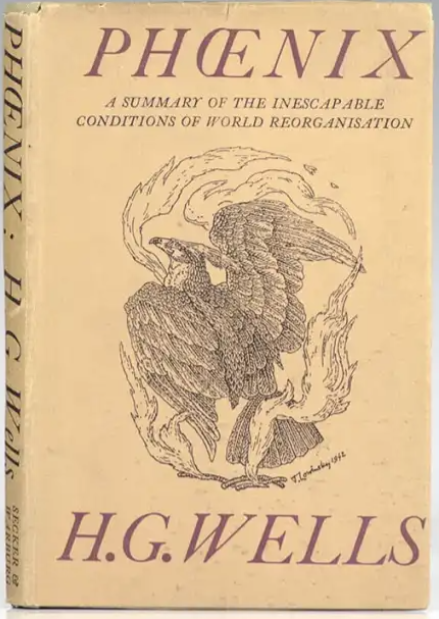
2023 will see a year-long effort leading to December 10, 2023, the 75th anniversary of the Universal Declaration of Human Rights. The effort carries the title “Dignity, Freedom and Justice for All”. Thus, it is useful to look at some of the intellectual preparations both within the League of Nations and among individual thinkers for the Universal Declaration. One of the most widely read was that of Herbert George (H.G.) Wells’ “Declaration of the Rights and Duties of the World Citizen” which is found in his book Phoenix: A Summary of the Inescapable Conditions of World Reorganization published in 1942. The Declaration of the Rights and Duties of the World Citizen had been translated into 10 languages and sent to 300 editors of newspapers in 48 countries.

H.G. Wells was concerned from the 1930s on with the ways the world should be organized with a world organization stronger than the League of Nations. Such a world organization should be backed up and urged on by a strong body of public opinion linked together worldwide by the unifying bond of a common code of human rights and duties.

At the end of the First World War, H.G. Wells was a strong advocate of the League of Nations, but as time went on, he became aware of its weaknesses. He wrote in 1939, “The League of Nations, we can all admit now, was a poor and ineffective outcome of that revolutionary proposal to banish armed conflict from the world and inaugurate a new life for mankind… Does this League of Nations contain within it the gem of any permanent federation of human effort? Will it grow into something for which men will be ready to work for and, if necessary, fight – as hither to they have been willing to fight for their country and their own people? There are few intimations of any such enthusiasm for the League at the present time. The League does not even seem to know how to talk to the common man. It has gone into official buildings, and comparatively few people in the world understand or care what it is doing there.”

Thus, there was a need for a clear statement of world values that could be understood by most and that would be a common statement of the aspiration on which to build a new freedom and a new dignity. Wells had a strong faith in international public opinion when it was not afraid to express new and radical thoughts that cut across the conventional wisdom of the day. He wrote in 1943, “Behind the short-sighted governments that divide and mismanage human affairs, a real force for world unity and order exists and grows.”

Wells hoped that the “Declaration of the Rights of the World Citizen” would become the fundamental law for mankind through the whole world – a true code of basic rights and duties which set out the acceptable shape of a just world society.

Wells set out 10 rights which combined civil liberties already common to many democratic states with economic and social rights which were often considered as aspirations but not as rights. Thus, among the 10 rights we find the Right to Participate in Government, Freedom of Thought and Worship, the Right to Knowledge, Freedom from Violence including Torture, along with the Right to Education, the Right to Medical Care, the Right to Work with Legitimate Remuneration, the Protection of Minors, Freedom of Movement about the Earth.

The drafters of the United Nations (UN) Charter in 1945 included a pledge by member states “to reaffirm faith in fundamental human rights, in the dignity and worth of the human person, in equal rights of men and women, and of nations large and small.” Much of the debate from 1946 when the UN Commission on Human Rights was created until December 1948 when the Universal Declaration of Human Rights was proclaimed concerned the relative place of civil liberties and of economic, social, and cultural rights.

While the text of H.G. Wells is largely forgotten today, he had the vision of the strong link between freedom of thought based on civil liberties and the need for economic dignity set out in the economic, social, and cultural rights.

Prof. René Wadlow is President of the Association of World Citizens.

UN Human Rights Rapporteurs Concerned by Rape, Forced Conversion and Marriage to Rapists in Pakistan

In Asia, Cultural Bridges, Current Events, Human Rights, NGOs, Solidarity, Spirituality, Track II, United Nations, World Law on January 21, 2023 at 8:41 PM

By René Wadlow

The Human Rights Council, building on the earlier practice of the United Nations (UN) Commission on Human Rights, has a number of Special Rapporteurs devoted to certain themes – usually specific violations of human rights – or to specific countries. These Special Rapporteurs are independent experts selected by the Council. They usually report their findings at each session of the Council. When violations concern more than one issue, there can be joint Reports to the Council or joint Appeals to a government. Such a collective Appeal to the government of Pakistan sent on October 26, 2022 was made public on January 15, 2023.

The joint Appeal by six Special Rapporteurs concerned the sequence of rape of young women, forced conversion to Islam, followed by marriage to the rapist. The Appeal was led by the Special Rapporteur on Freedom of Religion or Belief, the Special Rapporteur on Sexual Exploitation of Children, the Special Rapporteur on Violence against Women and Girls, and the Special Rapporteur on Trafficking in Persons, especially Women and Children. The subject of the Appeal is not new, having been raised previously by Nongovernmental Organizations (NGOs), including by the Association of World Citizens (AWC).

However, the Appeal by the Special Rapporteurs clearly identifies a systemic problem on which the Pakistani government has failed to act. The girls raped are usually minors under 18 years of age and belong to Hindu and Christian minorities of the country, often rural and poor. Most Christians in Pakistan are converts from low caste or “untouchables” (Dalit) Hindus. Seeing no future within the Hindu-influenced caste system, they converted to Christianity which has no caste structure. Most of the Pakistani Hindus and Christians are illiterate and have little or no political influence.

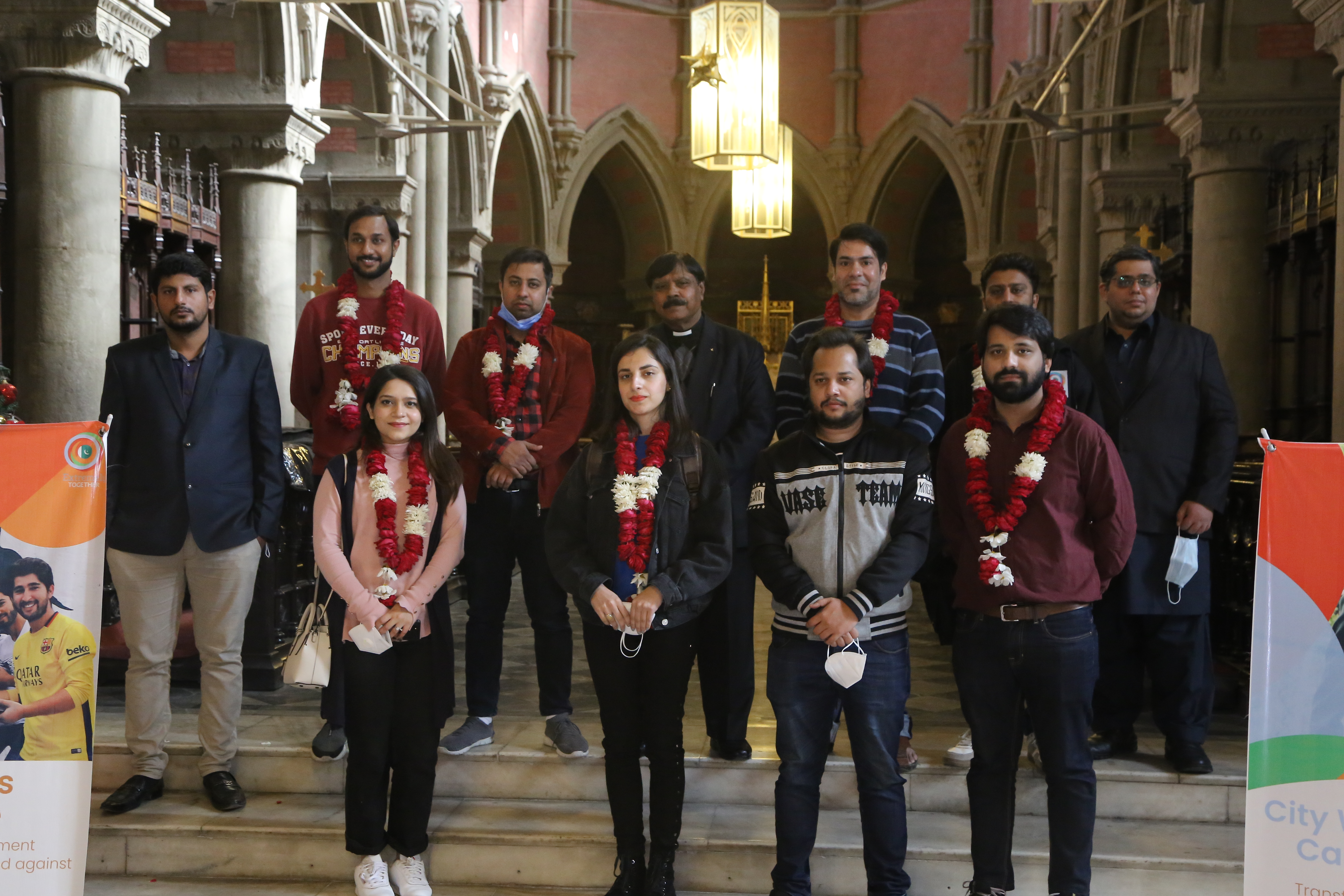
A peace tour arranged by different social activists and minority rights activists in Lahore, Pakistan, with the participation of Muslim, Christian and Hindu youth. (C) RedMiNote

The Pakistani police and the court employees are agents of these human rights violations. Illiterate parents sign with a thumbprint document that they do not understand and are then filled in by the police to attest that the girl is older than 18, the legal age for marriage. If the girl or her family agrees to the marriage with the rapist, the rapist cannot be arrested and tried for the rape. As the practice takes place usually in rural areas, there are few if any NGOs to take up the specific cases. Urbanized Christian groups in Pakistan have made some protests of the practice but are often unaware of the specific rural cases.

NGOs have brought evidence of the practice to the attention of the Geneva-based Special Rapporteurs. When a human rights violation is given to the UN human rights secretariat, it is sent on to the Geneva-based Ambassador of the country mentioned. The Ambassador may not reply at all or more usually will reply saying that the facts are incorrect or deliberately misleading. However, as in the Pakistani case, the evidence piles up. In this current situation, there is, two months ago, a newly appointed High Commissioner for Human Rights, Volker Turk, formerly UN Undersecretary-General for Policy. The Special Rapporteurs may have wanted to see how he will act on violations of a powerful country. The situation in Pakistan merits close watching.

Prof. René Wadlow is President of the Association of World Citizens.
World Citizens Strongly Protest Public Executions of Demonstrators in Iran

In Being a World Citizen, Current Events, Democracy, Human Rights, Middle East & North Africa, NGOs, Solidarity, World Law on January 8, 2023 at 8:46 PM

By René Wadlow

“I shall die, but that is all that I shall do for death. I am not on his payroll. I will not tell him the whereabouts of my friends nor of my enemies either”.

–Edna St-Vincent Millay, U. S. poetess.

The Association of World Citizens (AWC) has repeatedly called upon governments for a moratorium on executions with a view to abolishing the death penalty – a penalty that extensive research has shown has little or no impact on the level of crime and too often opens the door to judicial errors and injustice. In addition to State-sponsored official executions, usually carried out publicly or at least with official observers, a good number of countries have State-sponsored “death squads” – persons affiliated to the police or to intelligence agencies that kill “in the dark of the night” unofficially. These deaths avoid a trial which might attract attention or even a “not guilty” decision.

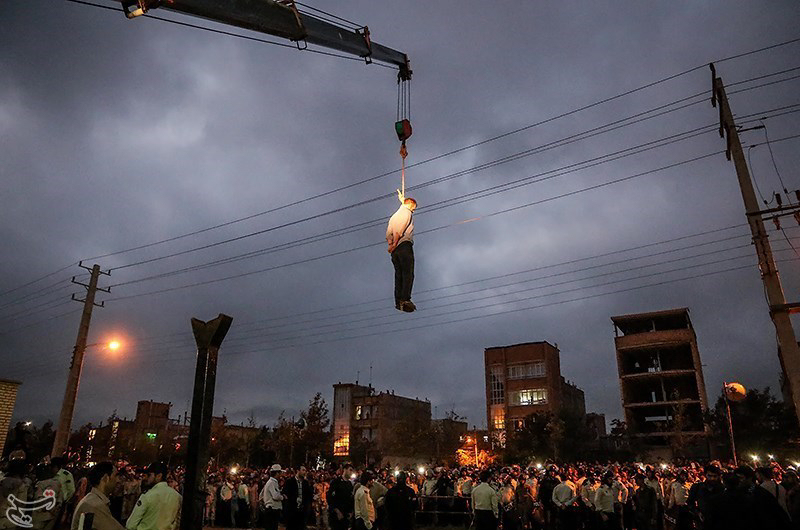
The January 7 hanging of Mohammad Mehdi Karami, 22 years old, and Seyed Mohammad Hosseini, 39, by the authorities of the Islamic Republic of Iran is an obvious effort to crush dissent and demonstrations which have shaken the authorities, set off by the death of Mahsa Animi in September at the hands of the morality police.

The January 7 hangings follow the December hangings of Moshen Shekari and Majidreza Rahmavd, both 23 years old. 14 other persons have been sentenced to death and are at imminent risk of execution – mostly young men. More than 40 persons are facing charges that could carry the death penalty. The four persons hanged did not have fair trials, and the court-appointed lawyers had no time to prepare a defense. The AWC is devoted to universal application of human rights law which includes fair trials and adequate defense – trials carried out with established international norms.

A public execution in Parsabad, Iran on September 20, 2017. (C) Mohsen Zare/Tasnim News Agency

Kenneth Patchen’s (1911-1972) clear words have been a credo for the AWC, opposed to executions on moral grounds:

    “This is a man

     he is a poor creature

     you are not to kill him

     This is a man

     he has a hard time

     upon the earth

     You are not to kill him”

Prof. René Wadlow is President of the Association of World Citizens.
Convention on the Rights of the Child: The Vital Role of NGOs

In Being a World Citizen, Children's Rights, Human Rights, NGOs, Solidarity, The Search for Peace, Track II, United Nations, World Law on November 20, 2022 at 9:07 AM

By René Wadlow

When the Convention on the Rights of the Child was unanimously adopted by the United Nations General Assembly on November 20, 1989, governments took a major step forward in establishing a framework of world law to protect the basic dignity and rights of children in all parts of the world. Thus, on 20 November, we remember with gratitude those who worked to develop the concepts and reality of the Rights of the Child but also to measure the tasks that are before us, especially as members of nongovernmental organizations (NGOs). This universal framework is based on the principle that each child should have the possibility to develop into an active and responsible member of society. The way in which a society treats its children reflects not only its qualities of compassion and protective caring, but also its sense of justice, its commitment to the future and its urge to better the human condition for continuing generations.

The effort to create a legal framework for the welfare of the child began early in the League of Nations efforts with the Geneva Declaration of the Rights of the Child of 1924 which was largely based on a text written by the then newly established NGO “Save the Children International Union”. Child welfare has always been a prime example of cooperative efforts among governments, scholars highlighting the conditions of children, and NGOs working actively in the field. The Geneva Declaration served as the basis for the UN General Assembly resolution on the Declaration of the Rights of the Child adopted also on November 20, 1959. The 1959 Declaration was followed with more specific provisions of the Declaration on Social and Legal Principles relating to the Protection and Welfare of Children, the UN Standard Minimum Rules for the Administration of Juvenile Justice, and the Declaration on the Protection of Women and Children in Emergency and Armed Conflict.

In 1978, some representatives of both governments and NGOs in the UN human rights circles in Geneva felt that it was time to bring together these different declarations and provisions into a single text that would have the legal force of a UN convention. The Polish delegation to the UN Commission on Human Rights took the lead in this effort, but some governments felt that the different declarations needed to be closely reviewed and measured against changing realities. Thus, a Special Working Group on the Rights of the Child was created in 1979 under the chairmanship of the Polish representative, the legal specialist Adam Lopatka. Government and NGO representatives worked together from 1979 to 1988 for a week each year. There was a core group, including the Association of World Citizens (AWC), which worked steadily and represented a wide range of different beliefs, values and traditions, as well as a wide range of socio-economic realities.

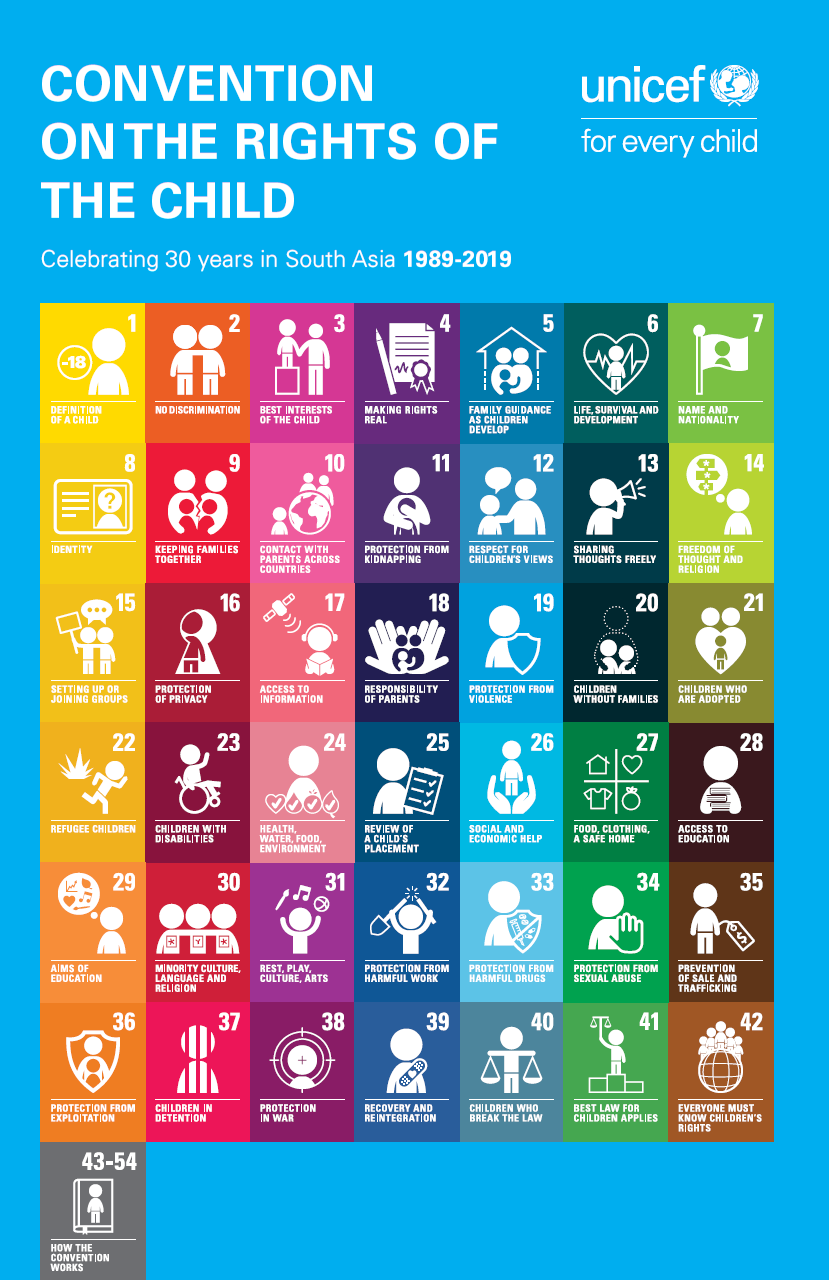
As a result of serious discussions, the Convention covers a wide range of human rights which can be summarized as the three “Ps”: provision, protection, and participation. Each child has the right to be provided with certain things and services, such as a name and a nationality, to health care and education. Each child has a right to be protected from certain acts such as torture, exploitation, arbitrary detention, and unwarranted removal from parental care. Each child has a right to participate in decisions affecting their lives as well as in community life.

The Working Group managed to come to a consensus on the final version in time for the General Assembly to adopt it on November 20, 1989, the anniversary date of the Declaration. The Convention on the Rights of the Child is meant to provide guidance for governments to review national legislation and policies in their child-related initiatives. It is by examining national law and policy and the effectiveness of government structures and mechanisms that progress can be measured. The Convention also provides a framework of goals for the vital activities of NGOs. NGOs work on two lines simultaneously: to remind governments of their obligations through approaches to ministries, elected officials and the media and to undertake their own operational efforts.

To help governments to fulfill their obligations and to review national practices, a Committee on the Rights of the Child was created as called for in article 43 of the Convention. The Committee is composed of 10 independent experts elected for a four-year term by the States which have ratified the Convention. The Committee usually meets three times a year for a month each time in Geneva to review and discuss reports submitted by governments, once every four years. The sessions of the Committee are largely carried out in a non-confrontational dialogue with an emphasis on “unmet needs”. The discussion usually lasts six to nine hours for each country. The Committee members have received information and suggestions from NGOs in advance. The Committee members ask many questions and, based on the government’s responses, make suggestions for improving the promotion and protection of children’s rights in the country.

By creating a common legal framework of world law, the Convention on the Rights of the Child has increased levels of governmental accountability, bringing about legislative and institutional reforms, and increasing international cooperation. As James P. Grant, then UNICEF’s Executive Director, said, “Transcending its detailed provisions, the Convention on the Rights of the Child embodies the fundamental principle that the lives and the normal development of children should have first call on society’s concerns and capacities and that children should be able to depend upon the commitment in good times and in bad, in normal times and in times of emergency, in times of peace and in times of war, in times of prosperity and in times of recession.

(C) UNICEF ROSA

Prof. René Wadlow is President of the Association of World Citizens.