At this time of increased tensions and armed conflicts in different parts of the world, it is useful to recall the positive possibilities of unofficial diplomacy. Unofficial diplomats recognize that the suspicions of government officials are a major hurdle to overcome and that they must emphasize their impartiality and independence from governments. Preparing the way for official policy changes or for improved interstate relations is a slow-building evolutionary process. Personal contacts across borders hold the potential for influencing the knowledge and attitudes of those involved as well as the ability to gain information.
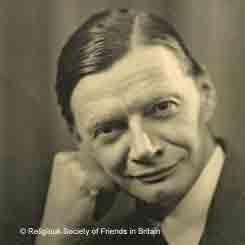
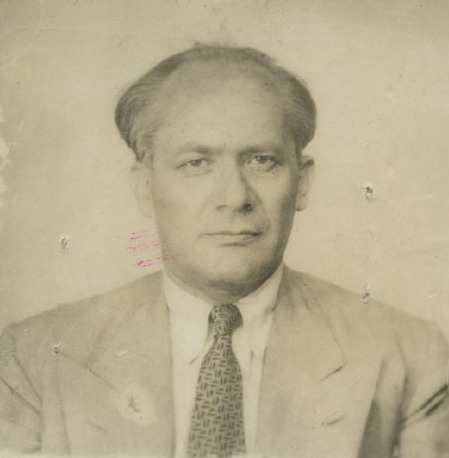
Horace Alexander (1889-1989), the British Quaker and friend of Mahatma Gandhi, is a good example of the unofficial diplomat and mediator. Horace Alexander was born in an English Quaker family. His father was a lawyer deeply involved in peace efforts and in opposing the opium trade active between India and China. Horace Alexander was a Cambridge University graduate who went on to teach international relations at Woodbroke, an adult education center run by Quakers. Alexander was very active in efforts to support the League of Nations.
In 1926 and 1927 there was increased agitation and repression in India as the Indian National Congress became increasingly active. Thus in 1928 Horace Alexander was sent to India by the British Quakers to see if relations between the Vice Roy Lord Irwin and Mahatma Gandhi could be improved. Alexander saw the spiritual dimension of Gandhi but also his political impact and suggested to the British government that Gandhi be invited to the Roundtable on Indian politics which was to be held in London in 1931.
Alexander developed close relations with Gandhi and divided his time between India and England. He was active in relief work during the famine in Bengal in 1943-1944 and was active with the Indian National Congress during the negotiations which led to independence in 1947, but he sensed the birth pangs of the creation of the two states of India and Pakistan and the terrible days of partition when fighting between religious communities took a deadly toll in human life and spirit.
While he was with Gandhi in India, seeing the growing divide between Hindus and Muslims, he created the Fellowship of Friends of Truth. As he wrote “The basis and goal of the Fellowship of Truth will be a common striving toward fuller knowledge of the Truth that is God. Members will commit themselves to learn with and from one another of the things that are eternal, through common acts of quiet worship and meditation and through other forms of communion with God and man.” Horace Alexander lived his later years in the United States and died at the age of 100.
Unofficial diplomacy rarely creates a breakthrough as situations can be completely blocked and even minimal proposals are unacceptable at the time. However, small steps can be useful if taken in the right direction. Unofficial Diplomacy, which is increasingly called Track II diplomacy, is growing in importance and merits support.
Prof. René Wadlow is President of the Association of World Citizens.
Deux ans déjà, deux ans d’une guerre mondiale qui semble interminable, une Troisième Guerre Mondiale non entre deux ou plusieurs alliances d’Etats souverains, ou contre un envahisseur extraterrestre comme dans certains films ou séries de science-fiction, mais contre un virus – un coronavirus, le SARS-CoV-2 responsable de la COronaVIrus Disease of 2019ou Covid-19. Après la souche originelle dite de Wuhan, le monde a découvert les variants, d’abord affublés de gentilés (anglais, sud-africain, indien) puis renommés selon l’alphabet grec : Alpha, Beta, Delta … Et maintenant Omicron.
La lutte progresse mais la pandémie sait contre-attaquer, comme avec Omicron. Hélas, l’inégalité vaccinale entre pays et régions du monde, couplée aux décisions scientifiquement absurdes de certains gouvernements, se fait pour le virus une alliée inespérée.
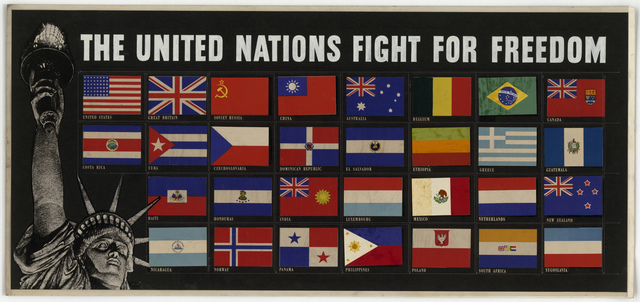
L’histoire nous l’enseigne, lorsqu’une crise mondiale éclate et se prolonge, ce n’est pas après qu’elle a pris fin qu’il faut envisager l’avenir, mais pendant même qu’elle se produit, et faire de ses projets son but réel de guerre. L’histoire nous l’enseigne, oui, et l’an prochain verra le quatre-vingtième anniversaire des Nations Unies, non pas de l’organisation internationale créée en 1945 à San Francisco – également berceau de l’Association of World Citizens (AWC) – mais de l’alliance militaire des pays combattant l’Allemagne nazie, l’Italie fasciste et le Japon. Une alliance militaire qui avait retenu les leçons de l’échec de la Société des Nations et compris, à l’avenant, qu’un combat armé ne vaut rien s’il n’est porteur d’un projet politique pour un monde en paix, donc, un monde plus uni.
Un monde plus uni … Que certains partis politiques ici ou là le veuillent ou non, c’est ce que produira inéluctablement cette pandémie, après une épreuve dont aucun continent sur terre n’aura été épargné. Et même si cela dérange ces partis xénophobes de divers pays et continents, là encore, ce monde ne pourra plus regarder de la même manière le sujet dont ils ont fait leur fonds de commerce pendant le demi-siècle écoulé – la migration.
La forteresse WENA
Si c’est littéralement le monde entier qui est touché, tout comme par la Covid-19, par le virus de la xénophobie qu’aucun vaccin ne vient enrayer, le centre mondial de l’épidémie est bien la WENA (Western Europe and North America, Europe occidentale et Amérique du Nord). Depuis le début du siècle, avec des entrées au gouvernement en Autriche et en Italie notamment, ainsi qu’une présence au second tour de l’élection présidentielle en France et un résultat électoral sans précédent aux Pays-Bas, l’extrême droite xénophobe n’a cessé de croître en WENA, jusqu’à fusionner au Canada avec la droite traditionnelle incarnée par le Parti conservateur. Mais, après des reflux ici et là, l’année 2015 est venue lui ouvrir grand les portes jusqu’alors closes du pouvoir.
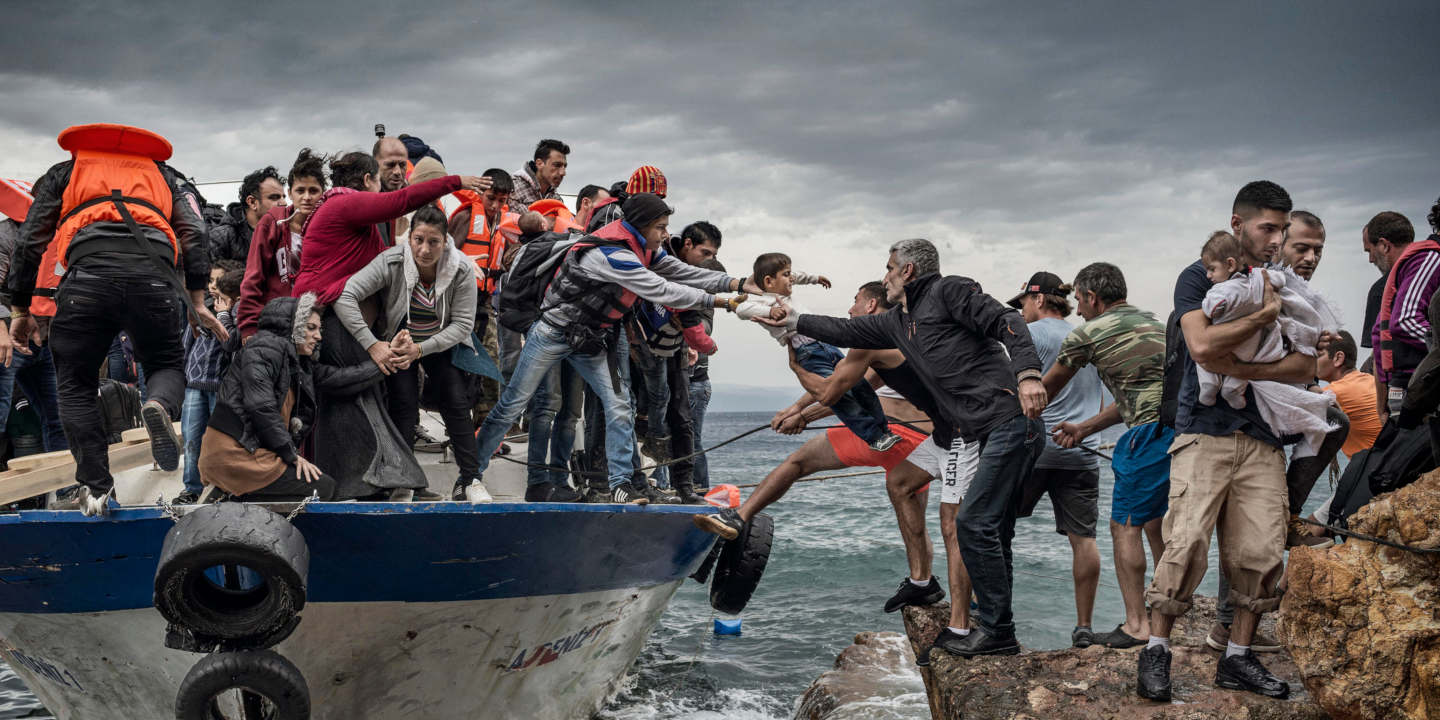
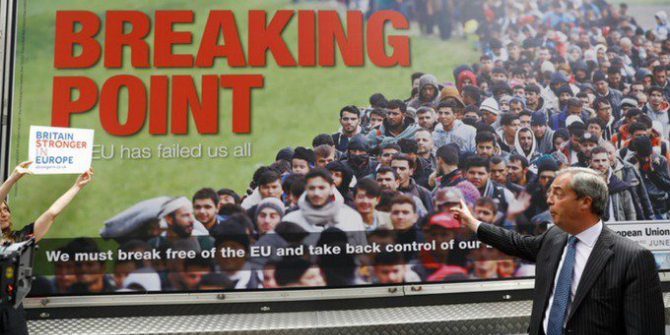
Après ce que d’aucuns appelaient la «crise migratoire» de l’été, lorsque migrants et réfugiés avaient eu l’impudence de venir déranger la baignade et la bronzette des Européens en accostant sur la rive sud de la Méditerranée, un exode vite réduit par certains à une attaque envers l’Occident de Daesh, le soi-disant «État islamique en Irak et en Syrie» qui avait déjà en janvier fait couler le sang à Paris, la Grande-Bretagne suivit sans mal l’année suivante un UKIP déchaîné contre des hordes d’envahisseurs vers le vote du Brexit. A des milliers de kilomètres de là, loin des rivages du désespoir, un Donald Trump donné perdant d’avance remporta contre toute attente la Maison Blanche en évoquant, entre autres, un mur géant le long de la frontière mexicaine censé bloquer toute immigration clandestine. En 2017, bien que largement vaincue en fin de compte, l’extrême droite française atteignit une nouvelle fois les marches de l’Élysée. En 2018, les électeurs italiens consacrèrent Matteo Salvini. Il ne suffisait plus d’une «forteresse Europe», le temps était venu d’une «forteresse WENA», à bâtir du plus ironiquement sur des plans fournis par Moscou, où le pouvoir inspire et parfois finance les partis d’extrême droite comme de gauche radicale, antagonistes mais unanimes pour saper la démocratie libérale.
Ile de Lesbos (Grèce), 11 octobre 2015 (C) Antonio Masiello
Ils savent ce qui leur fait peur, les tenants de la forteresse WENA. Ils le désignent par deux mots – le grand remplacement, celui d’une population européenne blanche et chrétienne qui n’existe que dans leur imaginaire par des hordes d’Arabes et d’Africains musulmans. Leur imaginaire où trône Le Camp des Saints, roman publié en 1973 par Jean Raspail et qui, en écho à l’antisémitisme délirant des Turner Diaries adulés par les suprémacistes blancs des Etats-Unis, décrit la chute de l’Occident blanc devant une invasion venue des pays du Sud. Loin d’avoir été oublié avec le temps, Le Camp des Saints inspire encore aujourd’hui l’extrême droite française ainsi que des proches de Donald Trump.
Personne au sud ne prône un «grand remplacement», concept qui n’existe donc qu’en WENA. Et pour cause, il ne pouvait venir d’ailleurs. S’il est une région au monde dont les pays ont, dans le passé, débarqué de force sur des rivages lointains, usé de la force pour imposer leur présence puis, in fine, leurs institutions, leur religion et leur culture, ce sont bien ceux de la WENA à travers le colonialisme, imités plus tard, tragique ironie, par l’URSS «anticolonialiste» sous couvert de soutien idéologique et pour les pires effets, dont deux en Afghanistan ayant pour noms les Talibans et Al-Qaïda.
Il n’y a qu’eux qui y pensent, eux pour qui la relation avec l’autre n’est que haine ou mépris, et pour certains, violence et guerre où l’on ne peut être que vainqueur ou vaincu. Dans leur immense majorité, celles et ceux qui, au sud, veulent gagner la WENA y recherchent tout au contraire son mode de vie, ses opportunités de travail et de construction d’une vie nouvelle, ses libertés que leur refusent les gouvernements de leurs pays d’origine, se servant la plupart du temps de la culture traditionnelle locale comme d’un alibi et nourrissant ainsi les fantasmes des xénophobes en WENA, trop contents de prendre en tenaille des migrants et réfugiés déjà pourchassés par leurs propres gouvernants.
Nigel Farage, chef du parti UKIP, agitant le spectre de la migration pour amener les Britanniques à voter pour le Brexit en 2016 (C) @epkaufm (Twitter), licensed under Public Domain
La WENA a peur. Elle a peur de tous ces gens qui voient en elle un exemple pour leurs propres dirigeants, peur de toutes ces victimes qui l’appellent à agir pour leur permettre de vivre en paix chez eux ou, si elle s’y refuse, à les admettre au moins sur son territoire. Elle a peur aussi de ses propres enfants, ceux dont les parents sont eux-mêmes venus d’ailleurs ou dont les ancêtres plus lointains y ont été amenés de force, notamment comme esclaves. Elle a peur des Black Lives Matter et autres mouvements exigeant la justice pour qui, né ou élevé dans la WENA, s’y voit rejeté car porteur de cet ailleurs qui la tétanise.
Ses dirigeants ont peur, et ceux qui voudraient l’être aussi. Délogé de la présidence américaine, Donald Trump ne désarme pas. En France, terre de l’adoption de la Déclaration universelle des Droits de l’Homme en 1948, l’extrême droite se dédouble en deux partis rivalisant de peur et de haine d’autrui, tandis que le parti héritier de celui du Général de Gaulle parle arrêt de l’immigration et sortie de la Cour européenne des Droits de l’Homme, même la gauche se laissant tenter par la facilité xénophobe en s’en prenant par exemple aux transferts d’argent de travailleurs migrants vers leurs familles au pays.
Mise à mal par l’exemple russe de la démocratie illibérale de pure façade et celui de l’autoritarisme de marché donné par la Chine, la WENA n’est plus, elle le sait, maîtresse du monde. Devenir la forteresse WENA ne résoudra pourtant, pour elle, aucun problème. Fantasmer n’est pas empêcher les difficultés, encore moins les surmonter mais bien les rendre hors de contrôle. A travers le monde entier, migration et recherche d’asile génèrent des drames sans lien avec les peurs irraisonnées des opinions occidentales. La WENA peut bien rêver d’isolement, mais tout comme ceux que crée la Covid-19, les drames de la migration ont aboli les frontières et uni le monde – pour le pire.
Le monde uni en fait refuse de l’être en droit
Déjà tourmentée par ses cauchemars de « grand remplacement » et les capitulations de ses démocrates supposés devant les vrais populistes, la WENA tente l’impossible en s’obstinant à séparer strictement les migrants, en quête d’une vie meilleure, et les réfugiés, qui fuient une persécution potentiellement mortelle. Il est pourtant de moins en moins possible de chercher une vie meilleure sans fuir aussi une certaine forme d’oppression, même en filigrane, là où un réfugié peut certes avoir dû laisser derrière lui une vie confortable mais à laquelle a mis fin une soudaine et brutale menace. Et le mouvement des demandeurs d’asile s’exerce toujours bien davantage vers la WENA qu’à partir d’elle … Mais qui érige la peur en système s’en soucie bien peu. Tant pis pour les tragédies qui en sortent et tant pis pour le mauvais exemple ainsi envoyé au reste du monde, qui ne le reçoit que trop clairement.
Toute cette année, l’AWC n’a pu que le constater en intervenant sur des situations où les frontières des Etats ne s’ouvrent que pour laisser entrer l’oppression venue d’ailleurs. Entre la Pologne, Etat membre de l’Union européenne (UE), et le Belarus sous la tyrannie d’Aleksandr Loukachenko, des migrants et réfugiés venus du Moyen-Orient sont bloqués hors du monde, utilisés par Minsk tels des pions contre l’UE et refoulés par Varsovie qui craint un afflux si elle laisse entrer un petit groupe de personnes. A l’intérieur de l’UE même, le Danemark où l’extrême droite inquiète un gouvernement social-démocrate restreint encore ses lois sur l’asile et ordonne aux réfugiés de Syrie de rentrer chez eux, comme si la fin des combats actifs dans certaines régions du pays rendait plus sûr, et meilleur, le régime tyrannique de Bachar el-Assad. Et c’est à toute l’UE que se pose, comme au monde entier, la question de l’accueil des réfugiés d’Afghanistan depuis le retour au pouvoir le 15 août dernier de la milice islamiste des Talibans, dont la première cible est depuis un quart de siècle toujours la même – les femmes, premières à devoir fuir et premières à chercher asile.
Manifestation de soutien aux réfugiés à Berlin le 31 août 2014 (C) Montecruz Foto
Cherchant toujours plus à fermer ses frontières à qui veut y entrer, la WENA n’a en revanche aucun état d’âme à les ouvrir grand pour en faire sortir l’inspiration du refus de l’autre. Et ça marche.
En Amérique latine où se produit la deuxième plus grave crise de demandeurs d’asile au monde, celle du Venezuela où quiconque le peut fuit la dictature de Nicolas Maduro soutenue par Moscou, le Pérou qui accueille le plus grand nombre d’exilés vénézuéliens refuse aux enfants son statut de «Migration Humanitaire», plongeant donc des mineurs déjà déracinés dans une invivable inexistence officielle. En Égypte, où déjà sévit une répression intense, des réfugiés de conflits africains comme celui de l’Érythrée se voient, en dépit de l’évidence même, déboutés de leurs demandes d’asile et placés dans l’expectative d’un rapatriement forcé à tout moment. En Russie, une réfugiée d’Ouzbékistan privée d’un jour à l’autre de son statut après avoir dénoncé les manquements de Moscou à ses obligations en la matière a fini sa course en détention dans un aéroport, «hors du monde», comme emmurée «dans la prison des frontières», selon la Complainte du Partisan, l’autre chant de la Résistance française pendant la Seconde Guerre Mondiale.
Qu’attendre d’autre d’un monde qui s’entête à ne pas comprendre que, bien que composé d’États souverains, il est désormais uni dans l’épreuve et doit donc le devenir aussi pour la vaincre ? Un monde uni de fait qui refuse de l’être de droit, ce n’est pas nouveau dans l’histoire et on en sait les conséquences. En 1914, c’est un monde où l’Europe faisait la loi mais où une forme de mondialisation, économique et technologique, existait déjà qui est entré en guerre, car sa politique était restée peu ou prou celle du Congrès de Vienne, là où les nations ayant vaincu l’Empire français de Napoléon Ier avaient décidé entre elles du sort des autres. Pour certains la Grande Guerre, pour d’autres «la der des der», le conflit mondial sorti d’un ordre international périmé allait certes engendrer la première organisation politique internationale de l’histoire, la Société des Nations, mais cette dernière allait s’avérer elle aussi en retard sur son temps, incapable d’arrêter les ambitions italiennes en Éthiopie puis celles plus dévastatrices et meurtrières encore d’Adolf Hitler et du Troisième Reich allemand. Ce n’est qu’en combattant le fléau d’un temps en son temps, en créant contre Hitler une alliance militaire prenant le nom de Nations Unies, que le monde libre allait réussir à vaincre le Reich génocidaire et créer une nouvelle organisation, celle que nous connaissons encore aujourd’hui – l’Organisation des Nations Unies.
Voir le passé avec l’œil du présent, l’historien le dira, il faut se l’interdire. Mais l’inverse n’est pas plus souhaitable, et de 1914, l’historien pourra le dire encore. Que conclure alors d’un monde qui, en proie à une pandémie qui a déchiré les frontières, s’y enferme comme en des murailles et se le voit enseigner par la région même qui, depuis la fin de la Seconde Guerre Mondiale, symbolisait la liberté ?
(C) U.S. National Archives & DVDs
Qu’on le veuille ou non
Un monde sans frontières est aussi peu probable qu’un «grand remplacement» en WENA, peu probable et, pour nous, une fausse bonne idée. L’AWC défend depuis le départ une Citoyenneté Mondiale accessible à toutes et tous, acceptable par toutes et tous, fondée sur un principe simple mais qui semble si difficile à accepter : étant toutes et tous natifs et habitants de la planète Terre, il est du devoir de chacun(e) de la protéger ainsi que son peuple, notre peuple, l’humanité, et accepter cet état d’esprit est entrer dans une Citoyenneté Mondiale qui s’exerce en supplément de la citoyenneté nationale, non à la place, d’autant qu’il n’existe au niveau planétaire aucune structure reconnue par les États qui permette une telle substitution. Même la citoyenneté de l’UE n’est acquise que par la citoyenneté nationale de l’un de ses États membres, se vouloir citoyen(ne) de l’Union de manière directe et exclusive étant impossible.
Pour autant, et l’histoire ne va pas dans une direction autre, qu’est-ce qui oblige les frontières à s’ériger en remparts, a fortiori contre un ennemi inexistant et chimérique ? Au nom de quoi les États souverains devraient-ils être des citadelles ? Et surtout, comment exercer dans de telles conditions la moindre Citoyenneté Mondiale alors que le sort de toute la planète et toute l’humanité nous le commande ? C’est ce que l’AWC a toujours défendu et, aujourd’hui, ce que l’on pouvait refuser comme n’étant qu’un simple axiome de notre part est devenu, plus que jamais, un fait prouvé. Même si un autre enseignement de la Covid-19 est, hélas, que les faits prouvés peuvent n’être plus probants.
Négateurs du virus, promoteurs de thérapies inefficaces, d’aucuns auront rejeté l’évidence nue face au SARS-CoV-2. Chefs d’État ou de gouvernement, qu’ils se nomment Trump, Johnson ou Bolsonaro, ils auront tous fini par rencontrer ce virus qu’ils niaient ou minimisaient, finissant ainsi par prouver au contraire son existence et le besoin absolu de s’en protéger. D’autres poursuivent aujourd’hui le travail de sape de ces derniers, parfois en y laissant leur vie. Les faits prouvés peuvent n’être plus probants, mais Lénine le savait, «les faits sont têtus».
Ces politiques migratoires et ces injustices qui nous ont amenés à intervenir, nous ne les avons pas inventées. L’AWC n’a pas le temps, encore moins le goût, de fabriquer des problèmes, trop occupée qu’elle est à tenter de résoudre ceux dont elle vient à avoir connaissance. Une vision des frontières, de l’étranger et de la migration qui n’est plus adaptée à son temps, c’est un problème, majeur, que nous ne résoudrons jamais seuls et qui demande une implication littéralement universelle. D’autant qu’il n’est pas sans rencontrer l’autre problème majeur du moment, le coronavirus. Si ce n’est par la coupable méfiance vis-à-vis de traitements venus de l’extérieur et/ou par la tout aussi coupable négligence alimentant l’inégalité vaccinale entre nations, plusieurs fois dénoncée de concert par l’Organisation mondiale de la Santé et le Fonds monétaire international, comment expliquer l’apparition des variants Delta puis Omicron respectivement en Inde puis en Afrique du Sud ? On empêchera des êtres humains de quitter leur pays, on les empêchera d’entrer dans celui qu’ils espèrent atteindre, mais des gardes-frontières n’arrêtent pas un virus. Les frontières non plus, et voir en elles une solution soit à la migration tant redoutée soit à la Covid-19, c’est rendre impossible tant une migration ordonnée et humaine que la fin de la pandémie.
Un seul monde, ce n’est plus un slogan, c’est maintenant un fait. Que la WENA vous nomme un migrant si vous y venez ou si vous allez et venez en dehors d’elle (le terme «réfugié» n’ayant plus rien d’automatique, même devant un danger avéré), ou un expatrié si vous en venez et la quittez, vous serez toujours soumis aux lois nationales sur la migration et c’est là, partout, un domaine régalien, privilège absolu de l’État. Mais si ces lois sont adoptées et/ou appliquées les yeux grands fermés à la marche du monde, votre sort ne regardera bientôt plus seulement votre État de provenance et/ou d’arrivée. Pas plus que votre nationalité ne fera quelque différence si vous êtes positif à la Covid-19, où que vous soyez. Les deux questions seront mondiales.
Le droit absolu à la migration, sans demander l’avis de l’État d’arrivée, n’existera probablement jamais. Pour autant, le droit à la migration, celui d’être accueilli dignement, d’être ainsi traité même si l’on doit ensuite repartir et, certes, de n’être en aucun cas traité en migrant lorsque l’on est demandeur d’asile, peut et doit être un droit absolu, pour d’élémentaires raisons d’humanité dont même une catastrophe planétaire claire et présente n’autorise pas l’oubli.
Qu’on le veuille ou non, il n’existe plus qu’un seul monde. S’il prend au sérieux les malades de la Covid-19, alors il n’a pas d’excuse pour ne pas prendre au sérieux les migrants. Au moment où la deuxième année de la pandémie s’achève, s’il est déjà temps de prendre une bonne résolution, alors, que ce soit celle d’y parvenir enfin. Et immuniser les consciences contre nos coupables indifférences.
Bernard J. Henry est Officier des Relations Extérieures de l’Association of World Citizens.
Genocide is the most extreme consequence of racial discrimination and ethnic hatred. Genocide has as its aim the destruction, wholly or in part, of a national, ethnic, racial, or religious group as such. The term was proposed by the legal scholar Raphael Lemkin, drawing on the Greek genos (people or tribe) and the Latin –cide (to kill) (1). The policies and war crimes of the Nazi German government were foremost on the minds of those who drafted the Genocide Convention, but the policy was not limited to the Nazis (2).
The Genocide Convention is a landmark in the efforts to develop a system of universally accepted standards which promote an equitable world order for all members of the human family to live in dignity. Four articles are at the heart of this Convention and are here quoted in full to understand the process of implementation proposed by the Association of World Citizens (AWC), especially of the need for an improved early warning system.
Article I
In the present Convention, genocide means any of the following acts committed with intent to destroy, in whole or in part, a national, ethnical, racial or religious group, as such:
(a) Killing members of the group; (b) Causing serious bodily or mental harm to members of the group; (c) Deliberately inflicting on the group conditions of life calculated to bring about its physical destruction in whole or in part; (d) Imposing measures intended to prevent births within the group; (e) Forcibly transferring children of the group to another group.
Unlike most humanitarian international law which sets out standards but does not establish punishment, Article III sets out that the following acts shall be punishable:
(a) Genocide; (b) Conspiracy to commit genocide; (c) Direct and public incitement to commit genocide; (d) Attempt to commit genocide; (e) Complicity in genocide
Article IV
Persons committing genocide or any of the other acts enumerated in article III shall be punished, whether they are constitutionally responsible rulers, public officials or private individuals.
Article VIII
Any Contracting Party may call upon the competent organs of the United Nations to take such action under the Charter of the United Nations as they consider appropriate for the prevention and suppression of acts of genocide or any of the other acts enumerated in article III.
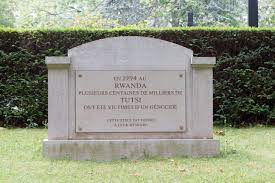
Numerous reports have reached the Secretariat of the United Nations (UN) of actual, or potential, situations of genocide: mass killings; cases of slavery and slavery-like practices, in many instances with a strong racial, ethnic, and religious connotation — with children as the main victims, in the sense of article II (b) and (c). Despite factual evidence of these genocides and mass killings as in Sudan, the former Yugoslavia, Rwanda, Burundi, the Democratic Republic of Congo, Sierra Leone and in other places, no Contracting Party to the Genocide Convention has called for any action under article VIII of the Convention.
As Mr. Nicodème Ruhashyankiko of the Sub-Commission on Prevention of Discrimination and Protection of Minorities wrote in his study of proposed mechanisms for the study of information on genocide and genocidal practices “A number of allegations of genocide have been made since the adoption of the 1948 Convention. In the absence of a prompt investigation of these allegations by an impartial body, it has not been possible to determine whether they were well-founded. Either they have given rise to sterile controversy or, because of the political circumstances, nothing further has been heard about them.”
Raphael Lemkin
Yet the need for speedy preventive measures has been repeatedly underlined by UN Officials. On December 8, 1998, in his address at UNESCO, UN Secretary-General Kofi Annan said “Many thought, no doubt, that the horrors of the Second World War — the camps, the cruelty, the exterminations, the Holocaust — could not happen again. And yet they have, in Cambodia, in Bosnia and Herzegovina, In Rwanda. Our time — this decade even — has shown us that man’s capacity for evil knows no limits. Genocide — the destruction of an entire people on the basis of ethnic or national origins — is now a word of our time, too, a stark and haunting reminder of why our vigilance must be eternal.”
In her address Translating words into action to the UN General Assembly on December 10, 1998, the then High Commissioner for Human Rights, Ms. Mary Robinson, declared “The international community’s record in responding to, let alone preventing, gross human rights abuses does not give grounds for encouragement. Genocide is the most flagrant abuse of human rights imaginable. Genocide was vivid in the minds of those who framed the Universal Declaration, working as they did in the aftermath of the Second World War. The slogan then was ‘never again’. Yet genocide and mass killing have happened again — and have happened before the eyes of us all — in Rwanda, Cambodia, the former Yugoslavia and other parts of the globe.”
We need to heed the early warning signs of genocide. Officially directed massacres of civilians of whatever numbers cannot be tolerated, for the organizers of genocide must not believe that more widespread killing will be ignored. Yet killing is not the only warning sign. The Convention drafters, recalling the radio addresses of Hitler and the constant flow of words and images, set out as punishable acts “direct and public incitement to commit genocide”. The Genocide Convention, in its provisions concerning public incitement, sets the limits of political discourse. It is well documented that public incitement — whether by Governments or certain non-governmental actors, including political movements — to discriminate against, to separate forcibly, to deport or physically eliminate large categories of the population of a given State, or the population of a State in its entirety, just because they belong to certain racial, ethnic, or religious groups, sooner or later leads to war. It is also evident that, at the present time, in a globalized world, even local conflicts have a direct impact on international peace and security in general. Therefore, the Genocide Convention is also a constant reminder of the need to moderate political discourse, especially constant and repeated accusations against a religious, ethnic, and social category of persons. Had this been done in Rwanda, with regard to the Radio Mille Collines, perhaps that premeditated and announced genocide could have been avoided or mitigated.
For the UN to be effective in the prevention of genocide, there needs to be an authoritative body which can investigate and monitor a situation well in advance of the outbreak of violence. As has been noted, any Party to the Genocide Convention (and most States are Parties) can bring evidence to the UN Security Council, but none has. In the light of repeated failures and due to pressure from nongovernmental organizations, the Secretary-General has named an individual advisor on genocide to the UN Secretariat. However, he is one advisor among many, and there is no public access to the information that he may receive.
Therefore, a relevant existing body must be strengthened to be able to deal with the first signs of tensions, especially ‘direct and public incitement to commit genocide.” The Committee for the Elimination of Racial Discrimination (CERD) created to monitor the 1965 International Convention on the Elimination of All Forms of Racial Discrimination would be the appropriate body to strengthen, especially by increasing its resources and the number of UN Secretariat members which service the CERD. Through its urgent procedure mechanisms, CERD has the possibility of taking early-warning measures aimed at preventing existing strife from escalating into conflicts, and to respond to problems requiring immediate attention. A stronger CERD more able to investigate fully situations should mark the world’s commitment to the high standards of world law set out in the Genocide Convention.
Notes 1) Raphael Lemkin. Axis Rule in Occupied Europe (Washington: Carnegie Endowment for World Peace, 1944). 2) For a good overview, see: Samantha Power. A Problem from Hell: America and the Age of Genocide (New York: Basic Books, 2002) 3) E/CN.4/Sub.2/1778/416, Para 614
Prof. René Wadlow is President of the Association of World Citizens.
that burning! Light up a fire of love in thy soul,
Burn all thought and expressions away.
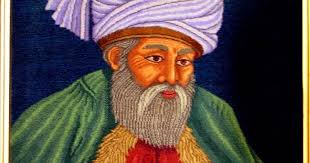
Jalal al-Din Rumi
Sufism — mysticism in the Islamic world — has flourished chiefly in Arab countries and in Persia, and later in what is now India and Pakistan. In Persia and the Indian Sub-continent, Sufism built upon earlier pre-Islamic traditions of mystic thought. As Walter Stace noted in his Teachings of the Mystics, “The natural drift toward pantheism which is a general feature of mysticism in the West — where the theologians and ecclesiastical authorities try to suppress it and brand it as heresy — is even more pronounced in Sufism than in Christianity — although Muslim orthodoxy disapproves of it quite as emphatically as Christian orthodoxy does. Indeed, the Islamic disapproval may be stronger than the Christian, owing to its more rigid monotheism. After all, no Christian mystic was ever martyred for his pantheistic utterances, whereas this did happen in Baghdad” to Al Hallaj in 922.
Sufism is not one homogeneous body of thought or a well-defined set of doctrines and practices. There is considerable internal diversity. However, central to Sufi practice is the role of the spiritual teacher (pir or sheikh) who is believed to have received esoteric wisdom from his own master forming a chain. The role of the teacher has always been to guide the disciple in ways of meditation or other mystical practices often related to breathing so he would acquire spiritual insight through inner experience.
Jalal al-Din Rumi
These chains can be considered separate spiritual orders. Often the tomb of a Sufi leader becomes a shrine and a pilgrimage site. In Pakistan recently, there have been armed attacks on popular Sufi shrines carried out by more legalistic Muslim groups.
Spirituality, in the Sufi tradition, cannot be set apart from life itself, and spiritual development can only be realized through living life to the fullest expression of our potential, using all of our human faculties with the ideal of becoming a more complete human being.
In Europe and the USA, one of the best known of the Sufi ‘chains’ is that of an Indian teacher Hazrat Inayat Khan, of the Chishti Sufi Order, named after the Indian town where it had its headquarters who came to the West in 1910 to create a Sufi movement in North America and Europe. He set his headquarters in Geneva, an international city because of the League of Nations. He married Ora Baker, a cousin of Mary Baker Eddy, founder of The Christian Science Monitor. His son Vilayat Inayat Khan succeeded him. In 2000, the grandson Zia Inayat Khan assumed leadership of what has become the Sufi Order International.
In the West, the Islamic base of the teaching is rarely stressed though it is not denied. Most of the members do not come from traditional Muslim families. Here in France where I have had some contacts, most members are not from North Africa which makes up the bulk of the Islamic population but are rather Europeans who are looking for meditation techniques and who could have chosen Tibetan Buddhism had a different opportunity presented itself.
Pir VilayatInayat Khan
Pir Vilayat has written on the aims of his work: “I am trying to develop an updated spirituality for our times. I believe that to develop our own being to the highest potential we need to discover our ideal and allow an inborn strength, a conviction in ourselves, to give us the courage toward developing this ideal. This requires both knowing our life purpose and mastery or discipline over ourselves in terms of body, mind, and emotions. With an attitude of joy and enthusiasm, we do not suppress but instead control and direct impulses toward the fulfillment of our goals.”
There is a good deal of emphasis placed on “opening the heart” and love as love is considered an attribute of God. Pir Vilayat wrote “When the light of love has been lit, the heart becomes transparent, so that the intelligence of the soul can see through it; but until the heart is kindled by the flame of love, the intelligence, which is constantly yearning to experience life on the surface, is groping in the dark.”
Philip Gowins has written a useful introduction which outlines exercises linked both to breathing and to creative visualization in meditation. The subtitle of the book is “A Field Guide to the Spiritual Path” (1). However, the emphasis is on the need for a teacher as writings are only of limited help and in working alone one may misjudge one’s own progress on the path.
******************************************
Note
1) Philip Gowins. Practical Sufism: A Guide to the Spiritual Path (Wheaton, IL: Quest Books, 2010, 219 pp.)
******************************************
Prof. René Wadlow is President of the Association of World Citizens.
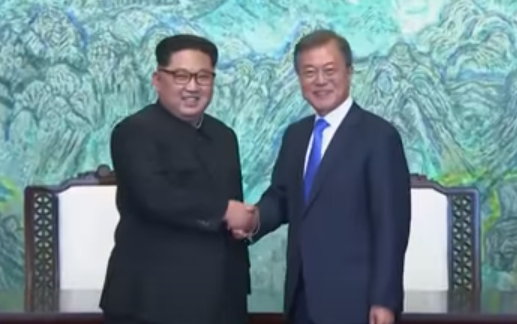
The Association of World Citizens (AWC) warmly welcomes the statement to the United Nations (UN) General Assembly on September 21, 2021 by President Moon Jae-in of the Republic of Korea. “Today, I once again urge the community of nations to mobilize its strengths for the end-of-war declaration on the Korean Peninsula. When the parties involved in the Korean War stand together and proclaim an end to the war, I believe we can make irreversible progress in denuclearization and usher in an era to complete peace.”
On March 14, 2013, the AWC had sent a message to the then UN Secretary-General, Ban ki-moon, urging a UN-sponsored Korean-sponsored Korean Peace Settlement Conference now that all the States which participated in the 1950-1953 Korean War were UN member states. The 60th anniversary of the 1953 Armistice would be an appropriate occasion.
Such a Korean Peace Settlement Conference could build a framework for a broader, comprehensive approach to Northeast Asia security. The AWC stressed the need for strong diplomatic measures by concerned States such as China, Russia, the USA, and Japan. The World Citizens highlighted that in the past, there had been a series of dangerous but ultimately resolvable crisis concerning the two Korean States. However, there are always dangers of miscalculations and unnecessary escalation of threats.
The AWC noted in its message that there had been a number of Track II, nongovernmental efforts, on Korean issues and that the voices of civil society are legitimate and should be heard.
Today, the conditions for such a Korean Peace Settlement Conference seem more favorable than in 2013. The opportunities should be actively explored.
Prof. René Wadlow is President of the Association of World Citizens.
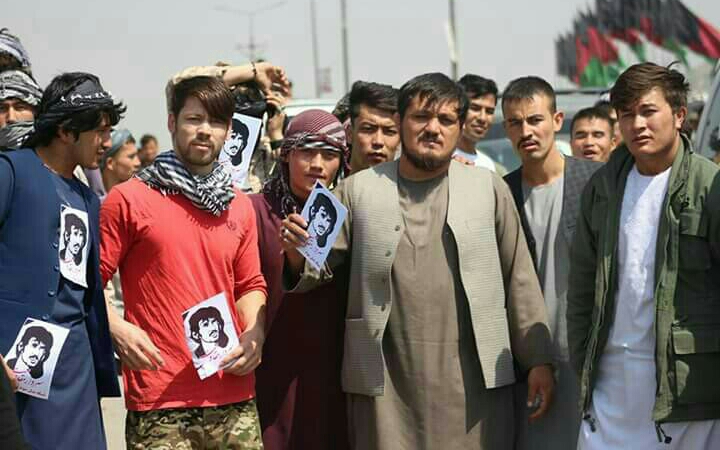
The Association of World Citizens (AWC) is strongly concerned by possible repression against the Hazara population in Afghanistan, repression of such an extent that it could be considered genocide. While it is still too early to know what the policies and practice of the Taliban toward minorities will be now, during the past Taliban rule (1996-2001) there was systematic discrimination against the Hazara and a number of massacres.
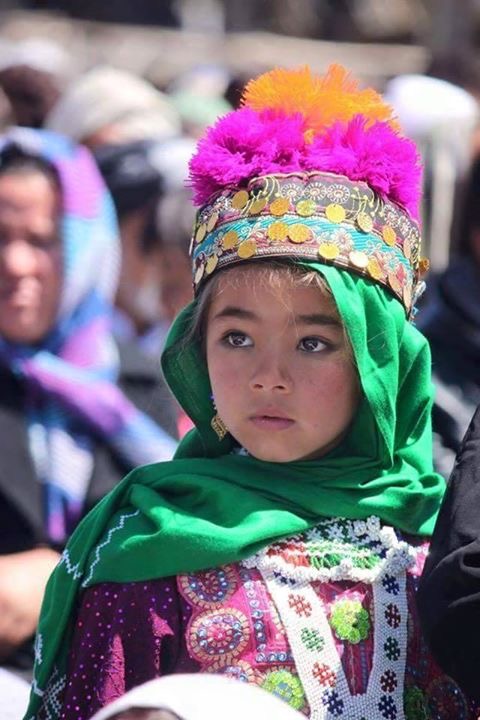
There are some three million Hazara whose home area is in the central mountainous core of Afghanistan, but a good number have migrated to Kabul, most holding unskilled labor positions in the city. The Hazara are largely Shi’a in religion but are considered as non-Muslim heretics or infidels by the Taliban as well as by members of the Islamic State in Khorasan (ISIS-K), now also an armed presence in Afghanistan.
In the past there was a genocidal period under the rule of Abdur Rahman Khan. During the 1891-1893 period, it is estimated that 60 percent of the Hazara were killed, and many others put into slavery-like conditions.
To understand fully the concern of the AWC for the Hazara, it is useful to recall Article II of the 1948 Convention against Genocide.
In the present Convention, genocide means any of the following acts committed with intent to destroy, in whole or in part, a national, ethnic, racial or religious group, as such:
* Killing members of the group; * Causing serious bodily or mental harm to members of the group; * Deliberately inflicting on the group conditions of life calculated to bring about the physical destruction in whole or in part; * Imposing measures intended to prevent births within the group; * Forcibly transferring children of the group to another group.
There have been repeated appeals to make the 1948 Genocide Convention operative as world law. The then United Nations Secretary-General, Kofi Annan, said in an address at UNESCO on December 8, 1998 “Many thought, no doubt, that the horrors of the Second World War – the camps, the cruelty, the exterminations, the Holocaust – could not happen again. And yet they have. In Cambodia, in Bosnia and Herzegovina, In Rwanda. Our time – this decade even – has shown us that man’s capacity for evil knows no limits. Genocide – the destruction of an entire people on the basis of ethnic or national origins – is now a word our out time too, a stark and haunting reminder of why our vigilance but be eternal.”
The 1948 Convention has an action article, Article VIII:
Any Contracting Party may call upon the competent organs of the United Nations to take such action under the Charter of the United Nations as they consider appropriate for the prevention and suppression of acts of genocide […]
Despite factual evidence of mass killings, some with the intent to destroy “in whole or in part”, no Contracting Party has ever called for any action under Article VIII. (1)
The criteria for mass killings to be considered genocide does not depend on the number of people killed or the percentage of the group destroyed but on the possibility of the destruction of the identity of a group. It is the identity of the Hazara and their religious base which is the key issue. Events need to be watched closely, and nongovernmental organizations must be prepared to take appropriate action.
Note (1) For a detailed study of the 1948 Convention and subsequent normative development see: William A. Schabas, Genocide in International Law (Cambridge University Press, 2000, 624 pp.)
Prof. René Wadlow is President of the Association of World Citizens.
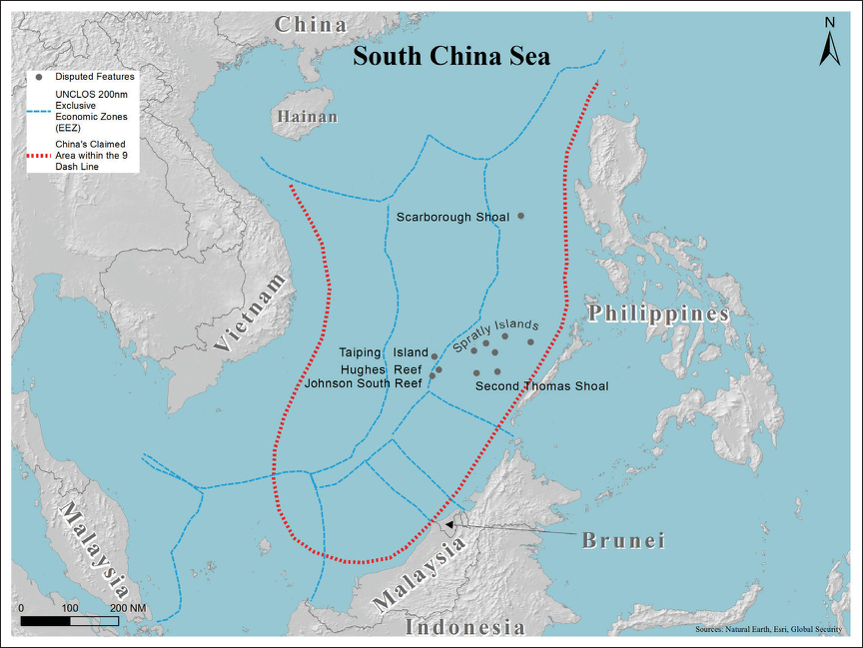
Six days of Chinese naval maneuvers started on August 6, 2021 near southeast Hainan province in the South China Sea at the same time as warships of the USA, the United Kingdom, Australian Defense Forces ships and those of the Japan Self-Defense Forces are also training in the area. The South China Sea is fast becoming a theater of brinkmanship.
“We view with concern China’s unlawful claim to the entire South China Sea – directly and negatively impacting all the countries in the region from their livelihood, whether it be with fishing or access to natural resources.” said John Aquilino, commander of the U. S. Indo-Pacific Command at the Aspen Security Forum on August 4. The U. S. Commander added that he was concerned by China’s suppression in Hong Kong, human rights issues in Xinjiang, as well as China’s military actions on the border with India. “These are the things that lead me to believe that our execution of integrated deterrence has to occur now with a sense of urgency.”
The Chinese Foreign Minister Yang Yi quickly replied that “foreign powers” must stop extending “black hands” in the South China Sea and show “four respects – respect for historic truth, international law, the countries of the region and their agreements”.
China’s Global Times published a harsh editorial on the same lines warning to “follow the current international shipping lanes and stay at least 12 nautical miles away from the Chinese islands and reefs … Stopping such intrusive behavior that violates China’s territorial waters is a struggle China is destined to intensify … Under international law, warships, including those of the U. S. and its allies, have been able to pass through the South China Sea unimpeded. But if those ships want to exert geopolitical pressure and build a wall to contain China along those shipping lines, those warships will face a confrontation from China. And the intensity of the confrontation is bound to increase constantly.”
It is probable that the Cold War-like rhetoric in Washington has encouraged China’s siege mentality. While it is unlikely that there will be a deliberate use of violence by any party, there can be miscalculations and misinterpretations of actions. In addition to China, Vietnam, the Philippines, Indonesia, Malaysia, Taiwan, and Brunei all make claims to some of the islands in the South China Sea. Slowly but surely, Beijing has been expanding its strategic influence in the South China Sea. The South China Sea islands and surrounding waters are crucial as potential military platforms, plausible points of strategic surveillance, as well as sites of energy reserve.
It is in the interest of the world society that the tensions concerning the delimitations in the South China Sea be reduced. The current tensions could slip out of control.
Prof. René Wadlow is President of the Association of World Citizens.
I am always conscious of the fact that I am a member of the human race. This consciousness prompts me to work for the great human synthesis which is the implicit goal of the World Organization I had the privilege of serving … Thus I am making a plea for a dual allegiance. This implies an open acceptance of belonging to the human race as well as to our local community and nation … I believe that the mark of the truly educated person facing the 21st century is that he feels himself to be a World Citizen. U. Thant in View from the UN (New York: Doubleday, 1979)
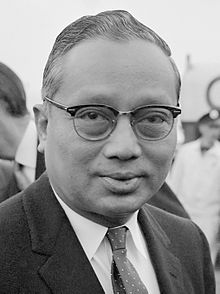
At a time when the face of Burmese leadership is that of the current military dictator General Min Aung Hlaing, best known for his campaign against the Rohingya, it is useful to recall another style of Burmese leadership, that of U. Thant, the United Nations (UN) Secretary-General from 1961 to 1971.
U. Thant was the third UN Secretary-General. This gentle Burmese Buddhist was regarded as unremarkable which was exactly what the major powers, led by the USA. and the USSR, wanted after the lightning bolt of the second Secretary-General, Dag Hammarskjold.
The Secretary-General is accorded a central role – by the UN Charter, by history, and by the trust placed in him by Member States. With no enforcement capacity, the Secretary-General is armed only with the tools of his own making. States would generally prefer a good housekeeper who does not initiate, innovate, or otherwise threaten their equilibrium of the status quo. But U. Thant’s self-effacing nature belied his moral courage and inner strength. Those who voted for him were later to find themselves surprised.
The fullest statement of U. Thant’s beliefs and practices is his talk on “The Role of Religious Convictions” at the Third International Teach-in at Toronto, Canada in 1967. The teach-in was part of an effort at conflict resolution in the 1963-1975 USA-led Vietnam war. The USA had worked so that the war in Vietnam would be discussed as little as possible at the UN and especially that the UN would take no action. This left U. Thant highly frustrated. As a Burmese, he knew Indochina well, and as UN Secretary-General, he believed that the UN should be a leader in conflict resolution efforts worldwide. As the UN was unable to act officially, he gave support, both moral and intellectual, to religious efforts to mediate the Vietnam conflict. Thus, his statement to the Toronto teach-in stressed his Buddhist roots as some of the Vietnamese Buddhists were very active in conflict resolution efforts.
As a Buddhist, I was trained to be tolerant of everything except intolerance. I was brought up not only to develop the spirit of tolerance but also to cherish moral and spiritual qualities, especially modesty, humility, compassion and most important, to attain a certain degree of emotional equilibrium. I was taught to control my emotions through a process of concentration and meditation. Of course, being human, and not yet having reached the stage of arhat (enlightened being) I cannot completely “control” my emotions.
Among the teaching of the Buddha are four features of meditation, the primary purpose of which is the attainment of moral and spiritual excellence: metta (goodwill or kindness), karuna (compassion), mudita (sympathetic joy), and upekka (equanimity or equilibrium).
A true Buddhist practices his metta (kindness) to all, without distinction – just as the sun shines on all, or the rain falls on all, without distinction. Metta embraces all being impartially and spontaneously, expecting nothing in return, not even appreciation. Metta is impersonal love or goodwill, the opposite of sensuous caring or a burning sensual fire that can turn into wrath, hatred, or revenge when not requited.
Karuna, the quality of compassion, is deeply rooted in the Buddhist concept of suffering. Human life is one of suffering, hence it is the duty of a good Buddhist to mitigate the suffering of others.
Mudita (sympathetic joy) can best be defined as one’s expression of sympathy with other people’s joy. The happiness of others generates happiness in the mind of a good Buddhist. The person who cultivates altruistic joy radiates it over everyone in his surroundings.
Upekka (equanimity) connotes the acquisition of a balance of mind whether in triumph or tragedy. This balance is achieved only as a result of deep insight into the nature of things, and primarily by contemplation and meditation. If one understands how unstable and impermanent all worldly conditions are, one learns to bear lightly the greatest misfortune or the greatest reward. To achieve upekka, one has to meditate. Buddhist meditation aims at cleansing the mind of impurities, such as ill will, hatred, and restlessness; it aims at cultivating such qualities as concentration, awareness, intelligence, confidence, and tranquility, leading finally to the attainment of the highest wisdom.
The highest wisdom is in little evidence on the part of the Burmese military these days. There is a real danger that military violence will provoke violence in return. Mediation efforts in the spirit outlined by U. Thant are urgently needed.
Prof. René Wadlow is President of the Association of World Citizens.
What are, if any, the lessons to be learned from the COVID-19 crisis? As far as we, World Citizens, are concerned, the most important one is undoubtedly this: As we have been saying since the early days of our movement, global problems require global solutions.
Beyond the appearance of a mere self-serving statement, this traditional World Citizen slogan finds a new meaning today. Never has it been so visible and proven that national sovereignty can be not only a hurdle to solving global problems, but a full-scale peril to the whole world when abused. While many European nations were quick to react to the virus as a major health crisis right from early 2020, others led by nationalists, namely the USA, the UK and Brazil, adamantly refused to take any action, dismissing the virus as harmless if not non-existent. Just like an individual who is not aware of being sick can pass the disease on others while behaving without precaution, a country that does not act wisely can contribute dramatically to spreading the disease throughout the world. And that is what happened.
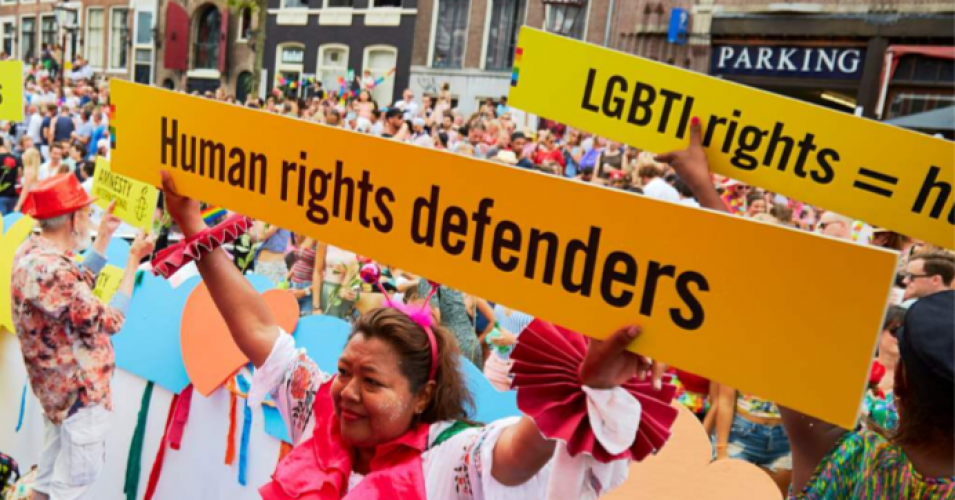
No use beating about the bush – that kind of behavior is a violation of human rights, starting with the right to life and the right to health. Even though COVID-19 is first and foremost a medical issue, it also has implications in terms of human rights. There comes a question which has been with us since the beginning of the century: In the absence of a global institution, such as a global police service, in charge of overseeing respect for human rights worldwide, what about the people devoting their lives to performing this duty of public service, these private citizens whom we call Human Rights Defenders (HRDs)? Before COVID-19 ever appeared, many of them were already in danger. While vaccines and medicines are being developed to counter COVID-19, there does not seem to be a cure in sight for the perils HRDs face every day.
Legal, legitimate, but unrecognized
HRDs, people defending human rights, have existed from the early days of human civilization in one form or another. Since 1948 and the adoption of the Universal Declaration of Human Rights (UDHR), followed by a number of treaties and similar declarations, it has obviously been viewed as more legitimate and legal to promote and protect rights which were now internationally recognized. The UDHR itself has made history by evolving from a non-binding resolution of the United Nations (UN) General Assembly to an instrument of customary international law, toward which states feel obligated through, as international law puts it, opinio juris. But in a postwar Westphalian world where only states had international legal personality, the people defending the rights enshrined in the UDHR, in other words HRDs, long remained deprived of formal recognition.
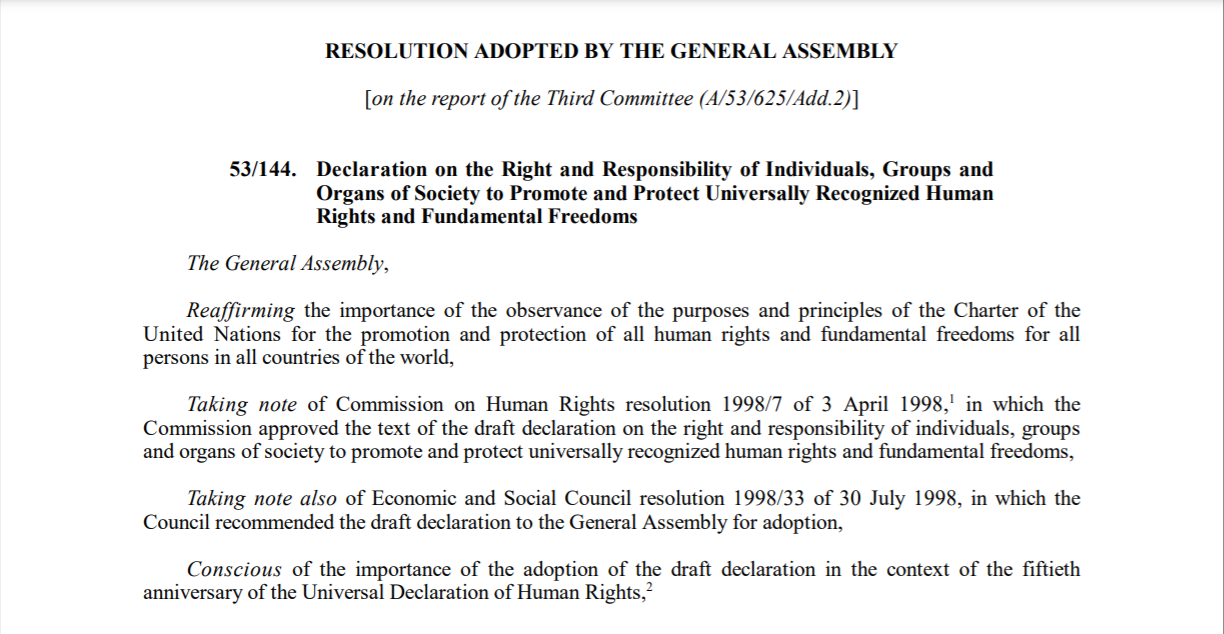
It all changed in 1998, when the UN General Assembly celebrated the half-century of existence of the UDHR by presenting it with a companion text, officially called Resolution 53/144 of December 9, 1998 but better known as the Declaration on the Right and Responsibility of Individuals, Groups and Organs of Society to Promote and Protect Universally Recognized Human Rights and Fundamental Freedoms – in short, the Declaration on Human Rights Defenders (DHRD).
Like the UDHR, the DHRD was born “soft law”. But the resemblance stops there. In twenty-two years of existence, the DHRD has been nowhere near accepted by states under opinio juris. Accepting international human rights is one thing, but endorsing the creation, if only morally speaking, of an international category of people authorized to go against the state to promote the same rights, well, that continues to be more than the nation-state can live with. Everywhere in the world, HRDs feel the pain of that denial of recognition.
Human rights under attack means defenders in danger
Traditionally, human rights in the Western sense of the word mean freedom of opinion and expression. These rights continue to be curtailed in too many countries, beyond geographical, cultural, religious, or even political differences. Inevitably, that goes for HRDs defending these rights too. The two “least democratic” countries sitting as Permanent Members on the UN Security Council, Russia and China, also stand out as world leaders in political repression.
During the Cold War, the Eastern bloc would put forward economic and social rights as a counterpoint to the said Western notion. Even though human rights were “reunified” over thirty years ago, economic and social rights remain taboo in various parts of the world. In Thailand and Nicaragua, health workers have been punished for demanding better equipment to treat COVID-19 patients. In the Philippines, city residents who pushed for more adequate shelter in times of lockdown were similarly repressed by their government.
Cultural rights, often alongside indigenous rights, can truly be described as disturbing all forms of governments in countries which used to be colonies of Western powers, from Latin America, most recently in Honduras and Paraguay, to Asia with such examples as Malaysia and Indonesia. In such countries, being an HRD trying to advance the rights of indigenous groups all but equates trying to tear the whole nation apart.
Everywhere in the world, such typical 21st-century pressing issues as LGBT rights and, more than ever since the #MeToo scandal, women’s rights may be popular causes, but taking them up almost systematically means trouble, be it in North African countries like Egypt and Tunisia or in the European nations of Poland and Andorra.
Last but not least, even though one might think the wide consensus on the issue opens doors for action, defending environmental rights is proving no easy task. From Madagascar to Belarus, trying to get your government to live up to its responsibilities is bound to create a most unsafe environment for you.
For those who need and manage to flee, being abroad does not even mean being safe anymore. China has been found to be heavily spying on activists from the Uyghur minority living in foreign countries, and last month the AWC had to send an appeal to the authorities of Canada regarding a Pakistani HRD from the Baloch minority group who was found dead in Toronto, after the local police service said the death was not a criminal act but a fellow Baloch HRD and refugee there expressed serious doubts.
When the DHRD should be providing greater relief and comfort for the performance of human rights work, HRDs continue to be denied any character of public service, leading to acute stigmatization, intimidation, and ultimately repression. As many signs that the nation-state is losing its nerves in trying to defend a Westphalian national sovereignty that COVID-19 has now largely proved is out of date.
Shattering national borders – and human rights, too
One form of human rights abuse that has become particularly salient since the late 2000s, further fueled by Brexit in 2016 and the now-ending Trump presidency since 2017, is the systematic persecution of refugees and migrants – and, more preoccupying still, of those nationals in the countries of arrival trying to lend a hand to the newcomers. In France, President Emmanuel Macron was thought to have been spared from the influence of populist parties backed by Vladimir Putin’s Russia; yet several activists have been prosecuted on these sole grounds, such as Martine Landry of Amnesty International France and Cédric Herrou, both from the Nice area near the Italian border. Eventually, both were cleared by the judiciary. In the USA, migrants’ rights activist Scott Warren was similarly prosecuted – and similarly acquitted. But in both countries and others still, the problem remains unsolved.
No wonder this is happening at all. Even those governments least favorable to the brand of xenophobia “exported” by Moscow since the last decade have become unfathomably sensitive to the issue of migration and asylum, as they too feel threatened by the outside world and flaunt their borders as ramparts, shielding them from some barbaric conduct with which they confuse different customs and religions, thus adopting the very same attitude as those populists they claim to be fighting. That leaves citizens trying to help refugees and migrants singled out as traitors and criminals.
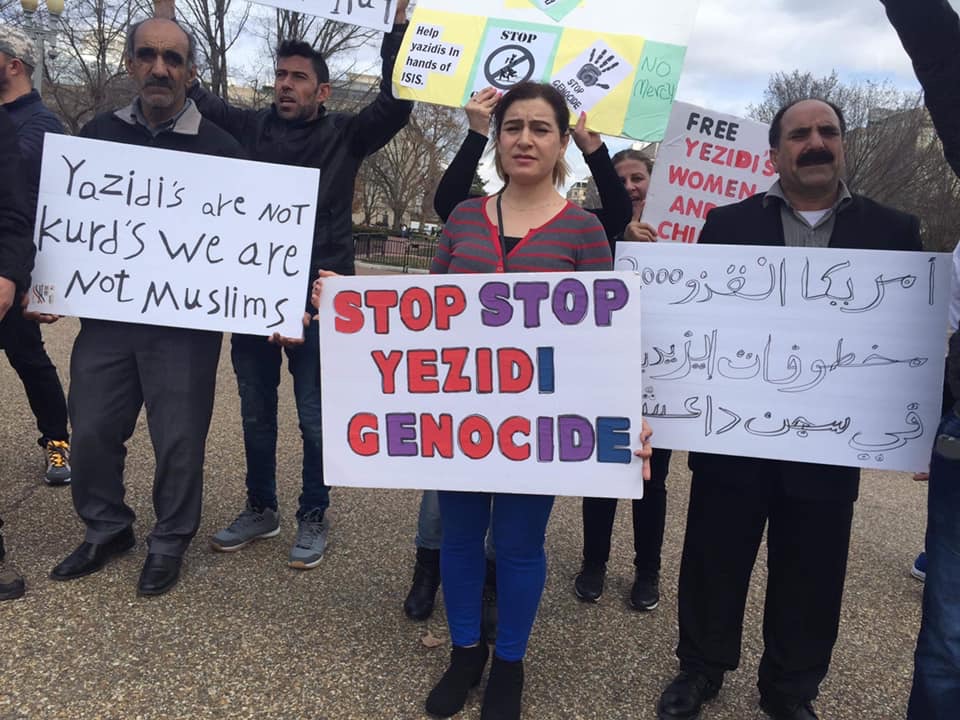
The mass arrival of migrants and refugees from Africa and the Middle East in the summer of 2015 proved that Europe and, for this purpose, the rest of the world were wrong to assume that crises in other, distant parts of the world could never hit home too violently. In this case, the crisis bore a name – ISIS, the “Islamic State in Iraq and the Sham (the Levant)”. The Iraqi-born terrorist group had conquered a wide swath of land the previous year, seizing territory from both Iraq and Syria along the border, and established on it a “caliphate” that drew scores of individuals from many parts of the world, especially Europe and North Africa. The previous summer had seen its militias persecute the millennia-old Christian minority of Iraq and other religious groups such as the Yezidis. A year before the UN dared called it genocide, the AWC did.
When the Taliban’s “Islamic Emirate” of the late 1990s in Afghanistan had been recognized by three countries, no one recognized the “Islamic State”, let alone the caliphate. Obviously, recognizing the “caliphate” would have been both a violation of international law and an insult to all of ISIS’s victims back home and abroad. Nonetheless, as the French-American scholar Scott Atran and the specialist Website e-ir.info noted, the “ISIS crisis” proved that the traditional notion of the nation-state was now being violently rejected – violently, and ISIS leaders knew full well how to make good use of it, cleverly rendering their barbaric ways appealing to Westerners and North Africans frustrated at the lack of social and political change back in their home countries.
Questioning the nation-state in such an insane, murderous manner can only be diametrically opposed to the mindset of a World Citizen. Stopping borders from serving as ramparts against foreigners irrationally viewed as enemies, bringing the people of the world together regardless of political nationality, none of this can ever be compatible with the creation of yet another nation-state, albeit de facto, to terrorist ends at home and abroad. Even though the massive afflux of migrants and refugees was certainly no phenomenon the best-prepared state in the world could have successfully dealt with overnight, European nations failed at it miserably. In suspecting and rejecting foreigners for fear of terrorism, they only made it easier to commit terrorist attacks on their soil and endanger their own population, including the Muslim population which automatically becomes a scapegoat every time a jihadi terrorist attack is carried out. Nobody’s human rights were well-served and everybody’s human rights ended up as losers.
Globalizing solidarity with HRDs
There you have it. The harder states, European and others, strive to defend their borders as sacred, God-given privileges, the harder human rights and their defenders get hit and everybody loses.
Consequently, returning to the comparison with COVID-19, a true World Citizen perspective toward protecting HRDs must put forward what has been absent throughout the pandemic, in terms of both public health and patient care – globalization. Not the unfair, inhumane economic globalization we have known since the 1990s, for that one too is responsible for what has happened over the past twelve months. A World Citizen can only seek a globalization of solidarity, bearing in mind that, as French President Emmanuel Macron once put it, “the virus does not have a passport” and travels freely through all human beings who accept, or get forced, to become its living vehicles.
The very same principle should apply to human rights and their defenders. The UDHR is by name universal, as are all human rights. Therefore, why wouldn’t the defense of the same rights be universal by nature? If terrorism can be let to shun national borders in its war on the whole world, then why can’t brave, devoted HRDs enjoy the recognition they deserve, in every country, on every continent, and from every type of government? Why in the world would a terrorist get greater attention than a citizen dedicating their life to championing the dignity of all fellow human beings? If this divided world of ours could possibly find some sort of unity in support of health workers fighting COVID-19, then why not around HRDs, too?
World leaders can no longer look away from the issue. Uniting around one global problem means endorsing the principle of global solutions for everything else. If there is to be a different future for the world, a better future, then trusting and respecting HRDs, supporting and helping them, and ultimately joining their ranks are as many keys that will unlock a brand new era of shared true dignity.
Bernard J. Henry is the External Relations Officer of the Association of World Citizens.
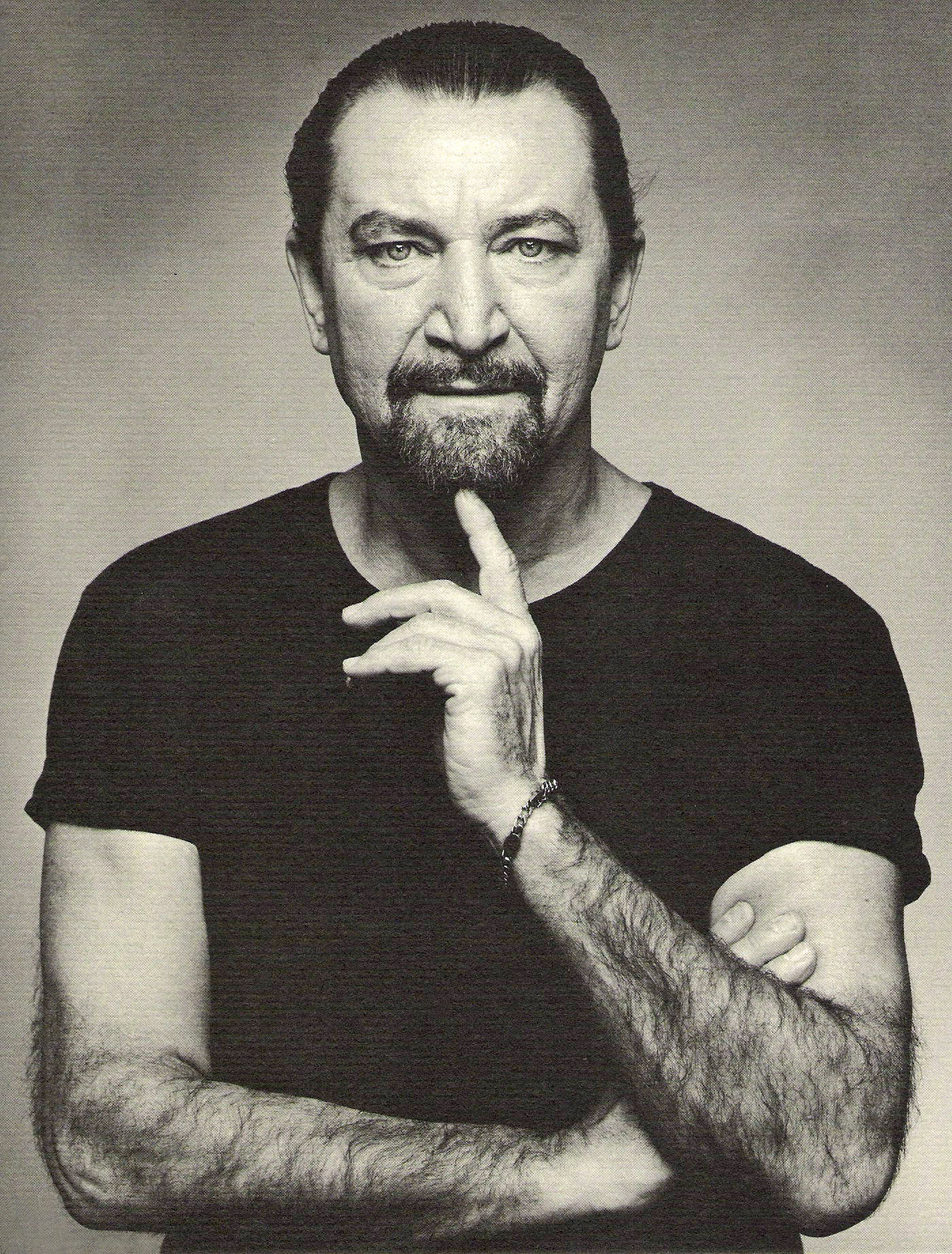
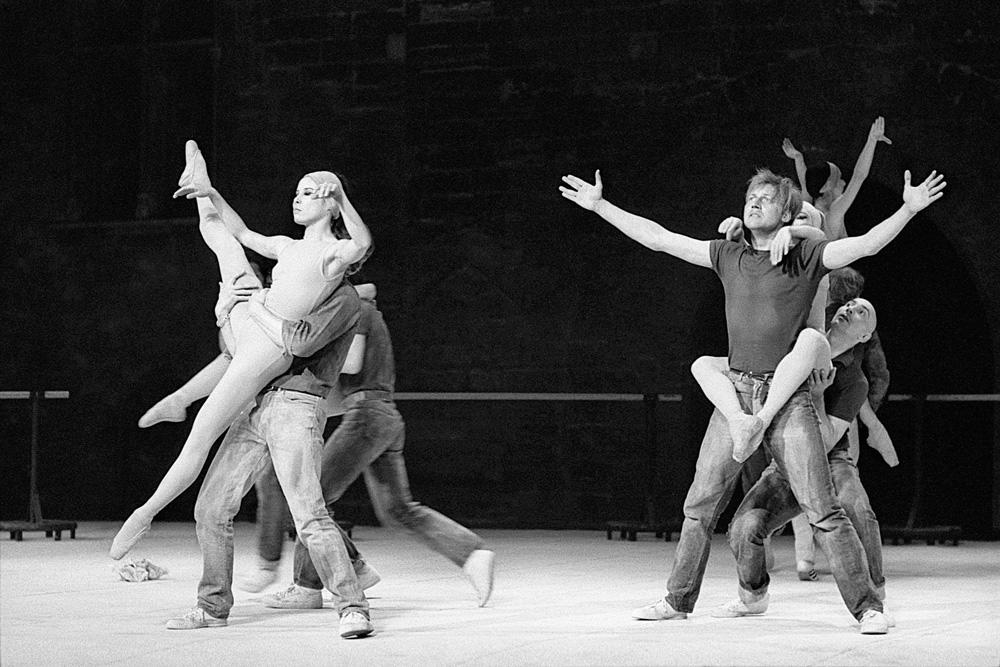
January 1 is the birth anniversary of Maurice Béjart, an innovative master of modern dance. In a world where there is both appreciation and fear of the mixing of cultural traditions, Maurice Béjart was always a champion of blending cultural influences. He was a World Citizen of culture and an inspiration to all who work for a universal culture. His death on November 22, 2007 was a loss, but he serves as a forerunner of what needs to be done so that beauty will overcome the walls of separation. One of the Béjart’s most impressive dance sequences was Jérusalem, cité de la Paix in which he stressed the need for reconciliation and mutual cultural enrichment.
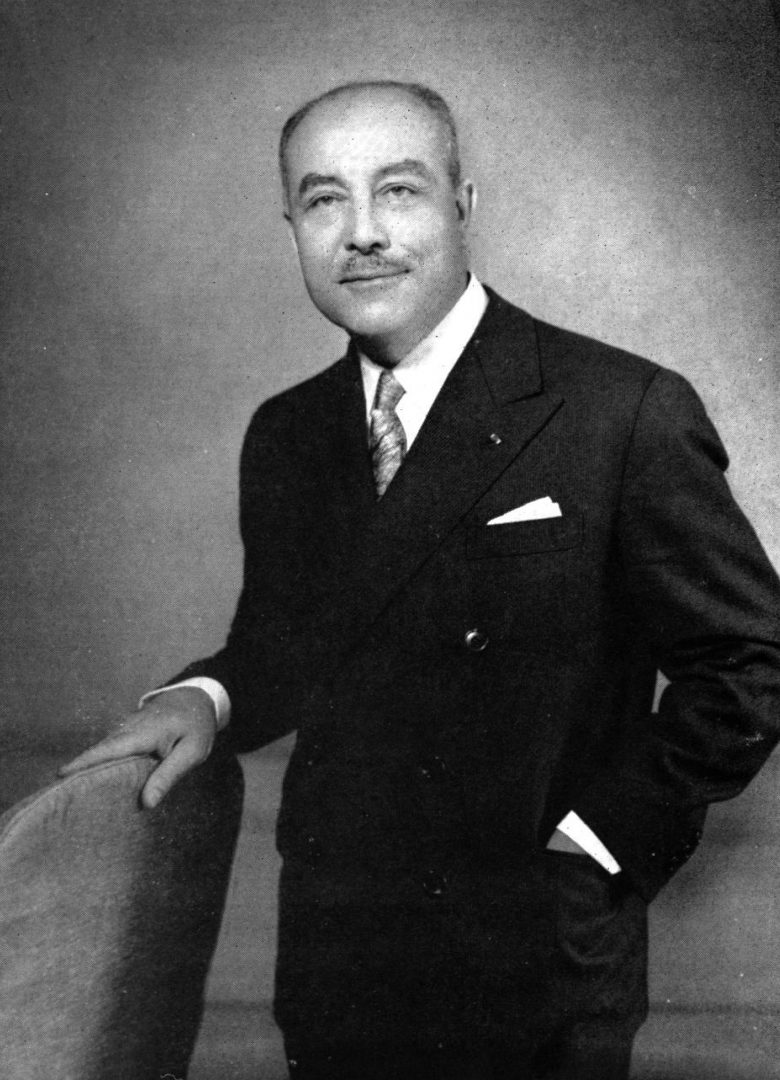
Béjart followed in the spirit of his father, Gaston Berger (1896-1960), philosopher, administrator of university education, and one of the first to start multi-disciplinary studies of the future. Gaston Berger was born in Saint-Louis du Sénégal, with a French mother and a Senegalese father. Senegal, and especially Leopold Sedar Senghor, pointed with pride to Gaston Berger as a “native son” — and the second university after Dakar was built in Saint-Louis and carries the name of Gaston Berger. Berger became a professor of philosophy at the University of Aix-Marseille and was interested in seeking the basic structures of mystical thought, with study on the thought of Henri Bergson and Pierre Teilhard de Chardin, both of whom were concerned with the basic energies which drive humanity forward. Berger was also interested in the role of memory as that which holds the group together writing that it is memory which allows us “to be able to hope together, to fear together, to love together, and to work together.”
Gaston Berger
In 1953, Gaston Berger was named director general of higher education in France with the task of renewal of the university system after the Second World War years. Thus, when Maurice-Jean Berger, born in 1927, was to start his own path, the name Berger was already well known in intellectual and administrative circle. Maurice changed his name to Béjart which sounds somewhat similar but is the name of the wife of Molière. Molière remains the symbol of the combination of theater-dance-music.
Maurice Béjart was trained at the Opera de Paris and then with the well-known choreographer Roland Petit. Béjart’s talent was primarily as a choreographer, a creator of new forms blending dance-music-action. He was willing to take well-known music such as the Bolero of Maurice Ravel or The Rite of Spring and The Firebird of Stravinsky and develop new dance forms for them. However, he was also interested in working with composers of experimental music such as Pierre Schaeffer.
Béjart also continued his father’s interest in mystical thought, less to find the basic structures of mystic thought like his father but rather as an inspiration. He developed a particular interest in the Sufi traditions of Persia and Central Asia. The Sufis have often combined thought-music-motion as a way to higher enlightenment. The teaching and movements of G. I. Gurdjieff are largely based on Central Asian Sufi techniques even if Gurdjieff did not stress their Islamic character. Although Gurdjieff died in October 1948, he was known as an inspiration for combining mystical thought, music and motion in the artistic milieu of Béjart. The French composer of modern experimental music, Pierre Schaeffer with whom Béjart worked closely was a follower of Gurdjieff. Schaeffer also worked closely with Pierre Henry for Symphonie pour un homme seul and La Messe pour le Temps Présent for which Béjart programmed the dance. Pierre Henry was interested in the Tibetan school of Buddhism, so much of Béjart’s milieu had spiritual interests turned toward Asia.
Maurice Béjart
It was Béjart’s experience in Persia where he was called by the Shah of Iran to create dances for the Persepolis celebration in 1971 that really opened the door to Sufi thought — a path he continued to follow.
Béjart also followed his father’s interest in education and created dance schools both in Bruxelles and later Lausanne. While there is not a “Béjart style” that others follow closely, he stressed an openness to the cultures of the world and felt that dance could be an enrichment for all social classes. He often attracted large audiences to his dance performances, and people from different milieu were moved by his dances.
Béjart represents a conscious effort to break down walls between artistic forms by combining music, dance, and emotion and the walls between cultures. An inspiration for World Citizens to follow.