The Official Blog of the

Archive for the ‘Refugees’ Category

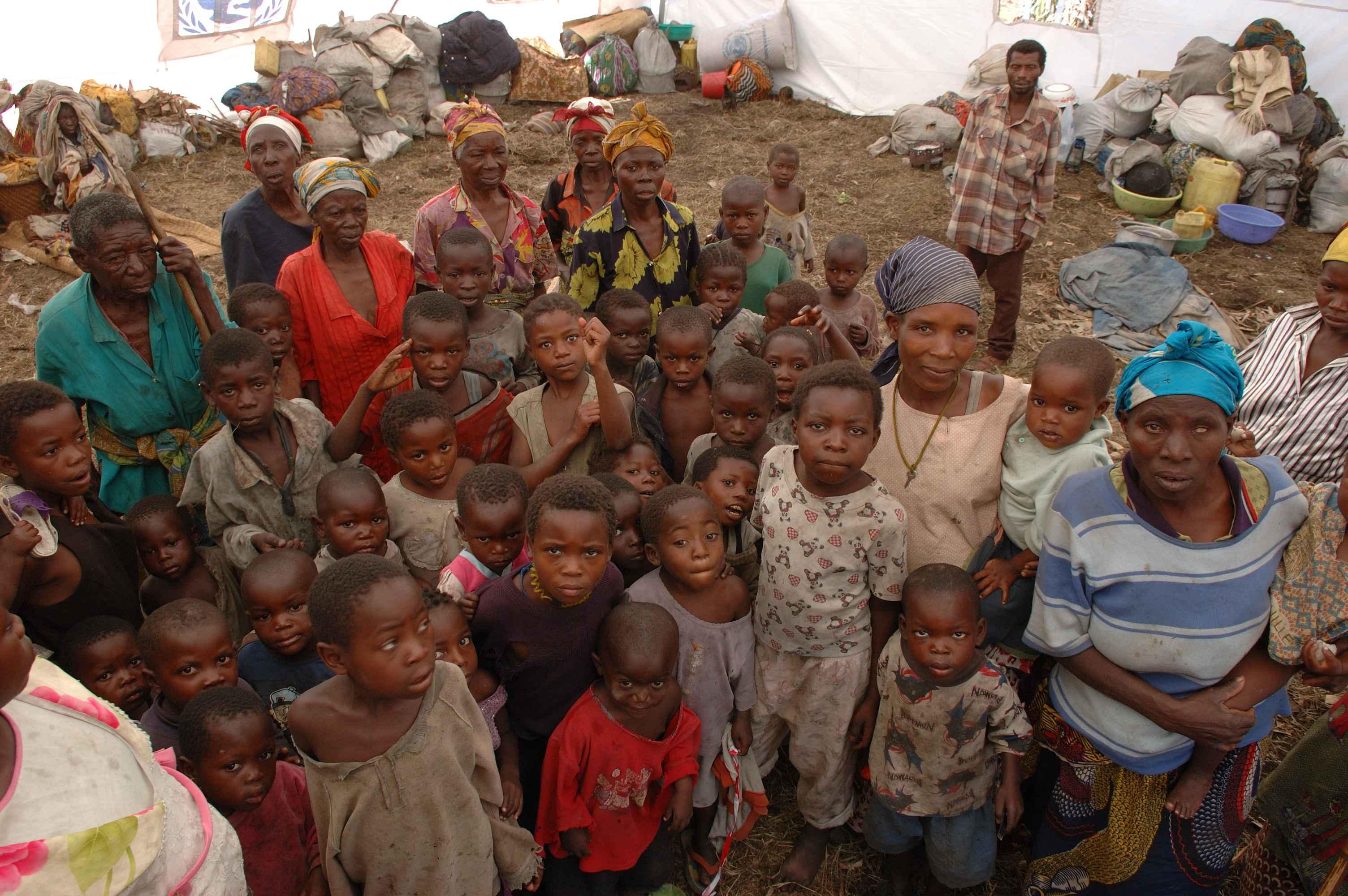
BOOK REVIEW: Peter L. Wilson, “Peacock Angel: The Esoteric Tradition of the Yezidis”

In Being a World Citizen, Book Review, Conflict Resolution, Cultural Bridges, Human Rights, Humanitarian Law, International Justice, Middle East & North Africa, Modern slavery, Peacebuilding, Refugees, Religious Freedom, Solidarity, Spirituality, Syria, The Search for Peace, United Nations, War Crimes, Women's Rights, World Law on August 4, 2025 at 5:55 PM

By René Wadlow

Peter L. Wilson, Peacock Angel: The Esoteric Tradition of the Yezidis.

Rochester, VT, Inner Traditions, 2022, 272pp.

Peter Wilson, a specialist on the Middle East, has written a useful book on the religious framework of the Yezidis as seen by someone outside the Yezidi faith. A Yezidi website has been established by Yezidis living in Nebraska, USA: https://yeziditruth.org.

The yearly Sakharov Prize for Freedom of Thought awarded by the European Parliament was given on October 27, 2016 to Nadia Murad who is also the co-laureate of the 2018 Nobel Peace Prize. She had been taken captive by the forces of the Islamic State in Iraq and Syria (ISIS) in August 2014 and then sold into sexual slavery and forced marriage. She was able to escape with the help of a compassionate Muslim family and went to Germany as a refugee. She has become a spokesperson for the Yezidi, especially Yezidi women.

There are some 500,000 Yezidis, a Kurdish-speaking religious community living in northern Iraq. There were also some 200,000 Yezidis among the Kurds of Türkiye, but nearly all have migrated to Western Europe, primarily Germany as well as to Australia, Canada, and the USA.

There are also some Yezidi among Kurds living in Syria, Iran and Armenia. The Yezidis do not convert people. Thus, the religion continues only through birth into the community.

The structure of the Yezidi religious system is Zoroastrian, a faith born in Persia proclaiming that two great cosmic forces, that of light and good and that of darkness and evil are in constant battle. Humans are called upon to help light overcome darkness.

However, the strict dualistic thinking of Zoroastrianism was modified by another Persian prophet, Mani of Ctesiphon in the third century of the Common Era. Mani tried to create a synthesis of religious teachings that were increasingly coming into contact through travel and trade: Buddhism and Hinduism from India, Jewish and Christian thought, Hellenistic Gnostic philosophy from Egypt and Greece as well as many small belief systems.

Mani kept the Zoroastrian dualism as the most easily understood intellectual framework, though giving it a somewhat more Taoist (yin/yang) flexibility, Mani having traveled to China. He developed the idea of the progression of the soul by individual effort through reincarnation. Unfortunately, only the dualistic Zoroastrian framework is still attached to Mani’s name – Manichaeism. This is somewhat ironic as it was the Zoroastrian Magi who had him put to death as a dangerous rival.

Within the Mani-Zoroastrian framework, the Yezidi added the presence of angels who are to help humans in the constant battle for light and good, in particular Melek Tawsi, the peacock angel. Although there are angels in Islam, angels that one does not know could well be demons. Thus, the Yezidis are regularly accused of being “demon worshipers”.

The Yezidis have always been looked down upon by both their Muslim and Christian neighbors as “pagans”. The government of Saddam Hussein was opposed to the Yezidis not so much for their religious beliefs but rather because some Yezidis played important roles in the Kurdish community, seen as largely opposed to the government. The Yezidi community is still in socio-economic difficulty given the instability of the situation in Iraq.

Peter Wilson has written a useful introduction to this little-known faith.

Prof. René Wadlow is President of the Association of World Citizens.
Human Rights Education: A Vital Need

In Being a World Citizen, Human Rights, International Justice, NGOs, Nonviolence, Peacebuilding, Refugees, Religious Freedom, Social Rights, Solidarity, The Search for Peace, United Nations, World Law on July 26, 2025 at 6:30 AM

By René Wadlow

Education for human rights is a vital need in order to create a universal culture of human rights. Such a culture of human rights can be built around peoples’ needs and current struggles. A human rights culture is more than knowing and respecting the provisions of the Universal Declaration of Human Rights. It is a break in the cycle of humiliation, abuses of power and violence in which too many people are caught today. People want to know that they are in full control of their lives and that their society embodies their uniqueness as people with the full development of their personality and sense of dignity.

Knowledge requires appropriate pedagogical techniques for imparting human rights information, and therefore there is a need to train teachers at all levels of formal education in the teaching of human rights. There is a need to develop innovative material for use especially in professional training for the judiciary, law enforcement, military, medical and social work. The need to develop innovative teaching material and techniques is true for the efforts against torture especially on persons held in custody.

In addition to human rights education within formal educational institutions, an emphasis can be placed on popular education and the informal sector. There is a role for writers and anthropologists to collect stories and songs that evoke the historical memory of people about hope, respect, equality and human dignity. Likewise, the media can play an important role both in giving information and in developing respect for human rights and dignity.

Human rights education is an indispensable tool in the empowerment of peoples. Learning of human rights leads to participation, reciprocity and accountability on all levels of society. This strengthens the democratic process as persons become aware of their rights and responsibilities, of the full dimension of equal respect between women and men, and among peoples of different cultural and ethnic identities.

There is much to be done, and many can play a role. Join in this vital effort for human rights education!

Prof. René Wadlow is President of the Association of World Citizens.

Russia-Ukraine Armed Conflict: Start of the Last Lap?

In Being a World Citizen, Conflict Resolution, Current Events, Europe, Human Rights, Humanitarian Law, NGOs, Peacebuilding, Refugees, Solidarity, The former Soviet Union, The Search for Peace, Track II, UKRAINE, United States, War Crimes, World Law on February 22, 2025 at 9:45 AM

By René Wadlow

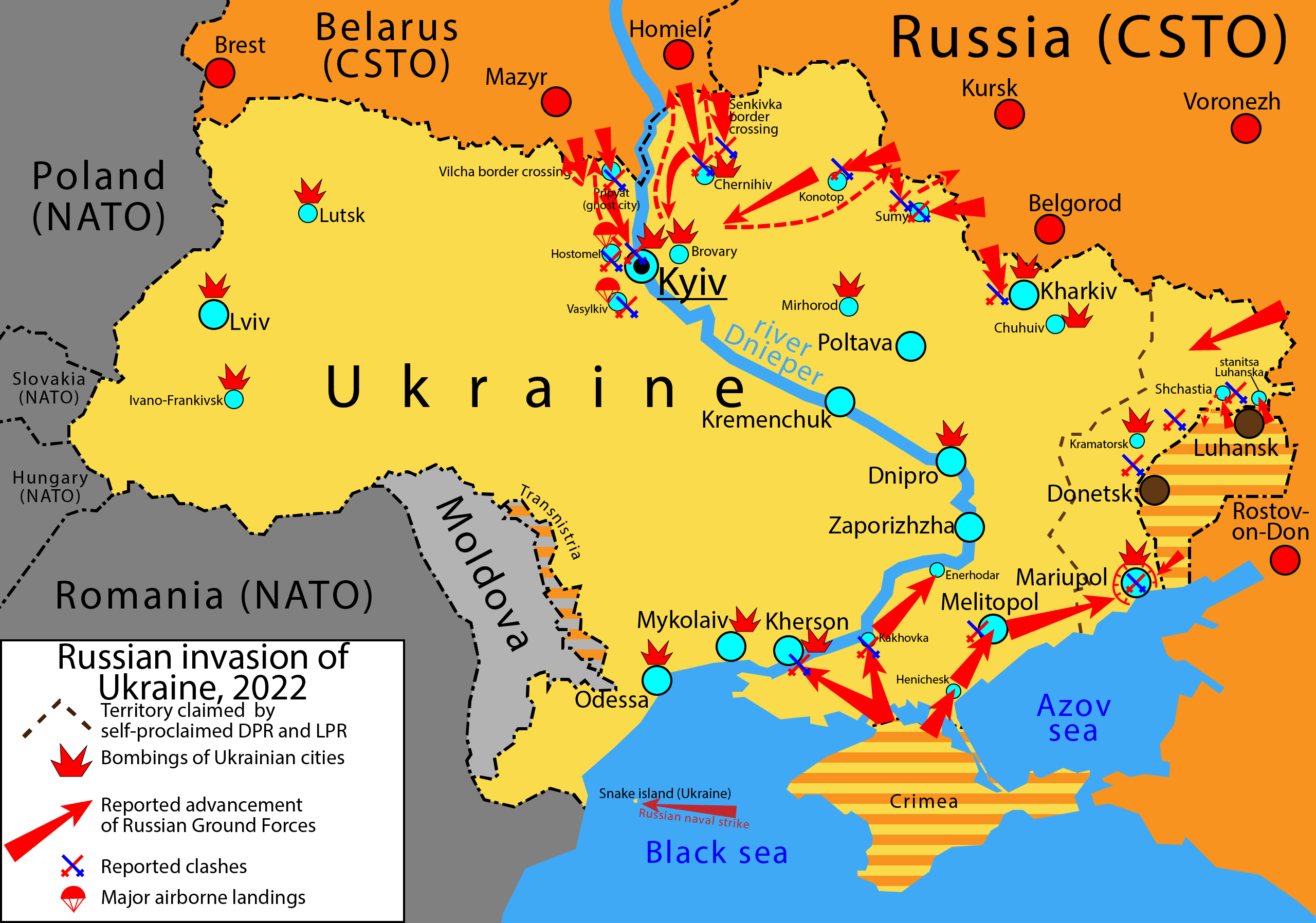
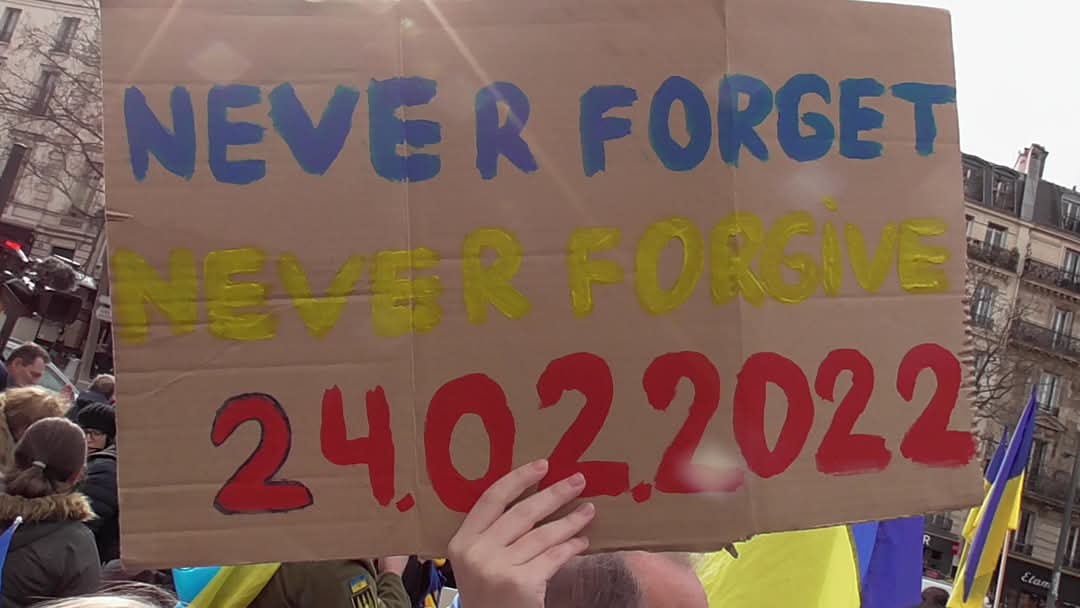
February 24 marks the anniversary of the start of the Russian “Special Military Operation” in Ukraine in 2022 which very quickly became a war with the large loss of life both military and civil, with the displacement of population, and a crackdown on opposition to the war. For three years, the war has continued, lap after lap. Although there were fears that the war might spread to neighboring countries, the fighting has been focused on Ukraine, and more recently on a small part of Russian territory attacked by Ukrainian forces. Can there be a realistic end to the armed conflict in sight?

On February 18, 2025, the United States (U.S.) Secretary of State, Marco Rubio, and the Russian Foreign Minister, Sergei Lavrov, met and discussed in part ending the armed conflict in Ukraine. They discussed a possible Putin-Trump summit that could be held in Saudi Arabia. Earlier, U.S. Army General Mark Milley had said, “There has to be a mutual recognition that military victory is probably, in the true sense of the word, not achievable through military means, and therefore, when there is an opportunity to negotiate, when peace can be achieved, seize it.”

However, the conflict is not one only between the USA and the Russian Federation; it also involves directly Ukraine. The Ukrainian President, Volodymyr Zelenskyy, has stressed strongly that the Ukraine government leadership wants to play a key role in any negotiations. Certain European countries such as France, Germany, Poland and Turkey have been involved in different ways in the conflict as well as in proposing possible avenues of negotiation to bring the conflict to an end. The bargaining process could be lengthy, but also it could be short as there is “handwriting on the wall.”

One key aspect concerns the fate of four Ukrainian areas “annexed” by Russia, Donetsk, Luhansk, Kherson, and Zaporizhzhia largely controlled by Russian troops. President Putin has said, “These regions had been incorporated by the will of the people into the Russian Federation. This matter is closed forever and is no longer a matter of discussion.” However, the status of Crimea and the Donetsk and Luhansk People’s Republics is at the core of what President Zelenskyy wants discussed.

(C) Homoatrox

“Made in War” is the mark of origin stamped upon nearly all States. Their size, their shape, their ethnic makeup is the result of wars. There are virtually no frontiers today that are not the results of wars: world wars, colonial struggles, annexations by victors, wars against indigenous populations. States were not created by reasonable negotiations based on ethnic or geographic characteristics. If frontiers can be modified only by the victors in wars, then there must be new imaginative transnational forms of cooperation. What is needed are not new frontiers but new states of mind.

From April 5 to 7, 2023, the President of France, Emmanuel Macron, was in China and urged that China could play a key role in bringing peace to the Russia-Ukraine conflict. President Xi Jinping had made a very general 12-point peace plan to resolve the Russia-Ukraine conflict – an indication that China is willing to play a peace-making role. China is probably the only country with the ability to influence Russian policymakers in a peaceful direction.

However, there are long historic and strategic aspects to the current armed conflict. Security crises are deeply influenced both by a sense of history and current perceptions. Thus, the Association of World Citizens (AWC) encourages the development of a renewed security architecture as was envisaged by the Helsinki Final Act and the creation of the Organization for Security and Cooperation in Europe (OSCE). There will be much to do to re-create an environment of trust and confidence that has been weakened by this conflict. Nongovernmental Organizations should play an active and positive role.

(C) Bernard J. Henry/AWC

Prof. René Wadlow is President of the Association of World Citizens.
Goma: Cry of the Imburi

In Africa, Being a World Citizen, Conflict Resolution, Current Events, Human Rights, Humanitarian Law, NGOs, Refugees, Solidarity, The Search for Peace, Track II, United Nations, World Law on January 26, 2025 at 8:00 AM

By René Wadlow

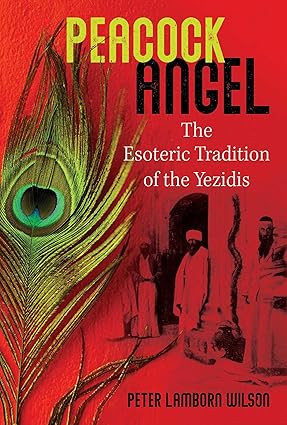
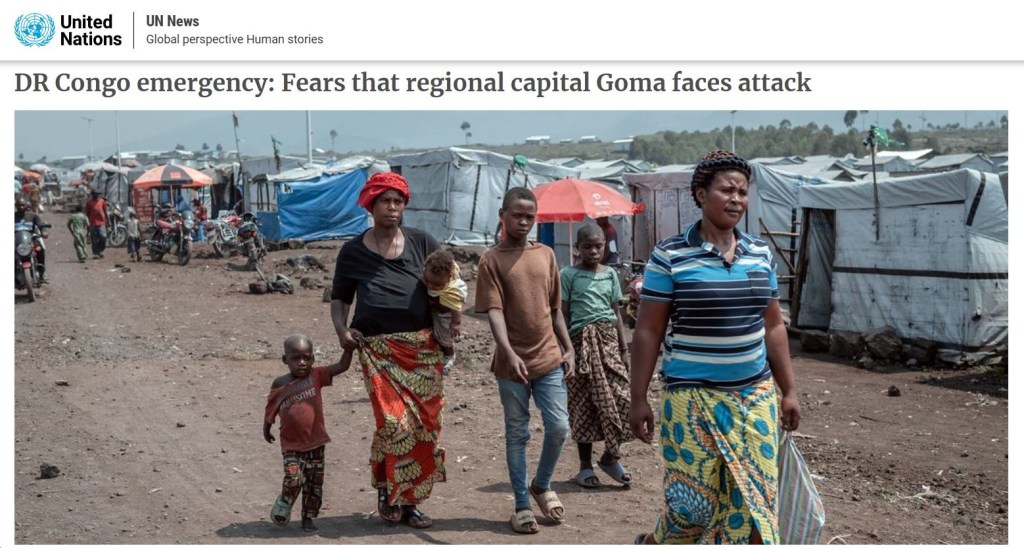
The Imburi are spirits that are said to inhabit the forests of Gabon, in Equatorial Africa, and who cry out for those who can hear them at times of impending violence and danger. The Imburi are now crying out loudly on the increasing dangers and forced migration in Goma, capital of the North Kivu province of the Democratic Republic of Congo – democratic in name only.

The July 31, 2024 ceasefire agreement – never fully effective – has now been broken. Troops of the Tutsi-led militia known as M23 along with regular military of Rwanda are advancing toward Goma, the capital of North Kivu. The Association of World Citizens has members in Goma who keep us informed of the critical situation there – getting worse each day.

(C) UN News

People in the neighboring province of South Kivu are frightened and have started to flee. There are a large number of displaced persons in both North and South Kivu, and some have fled across the frontier into Burundi. Many people are living in displaced persons camps in difficult situations despite the efforts of the United Nations (UN), the International Committee of the Red Cross, and humanitarian aid organizations.

This eastern area of the Congo has been the scene of fighting at least since 1998 – in part as a result of the genocide in neighboring Rwanda in 1994. In mid-1994, more than one million Rwandan Hutu refugees poured into the Kivus, fleeing the advance of the Tutsi-led Rwandan Patriotic Front, which now comprises the government of Rwanda. Many of these Hutu were still armed, among them the “génocidaires” who, a couple of months before, had participated in the killing of some 800,000 Tutsi and moderate Hutu in Rwanda.

Today, there is still large-scale occurrence of serious violations of human rights and international humanitarian law by all parties with massive displacement of populations, plundering of villages, systematic rape of women, summary executions and the use of child soldiers. There is a report from the UN Group of Experts on the Democratic Republic of Congo of December 27, 2024 which outlines clearly the disintegrating situation.

Thus, there is a need to create an enabling political environment which would help develop the rule of law and a vital civil society – a vast task that the Imburi are not sure will be carried quickly enough.

Prof. René Wadlow is President of the Association of World Citizens.

Sixty-Day Ceasefire Starts in Israeli-Hezbollah Conflict: Urgent Measures Needed to Make It Permanent

In Being a World Citizen, Conflict Resolution, Current Events, Middle East & North Africa, NGOs, Refugees, Solidarity, The Search for Peace, Track II, United Nations on November 29, 2024 at 7:00 AM

By René Wadlow

The ceasefire between Israeli troops and the Hezbollah militia is good news in an area deep in armed conflicts. After a year-long period of hostilities, we must strive so that the ceasefire holds, becomes permanent, and that the United Nations (UN) forces are able to carry out their mandate.

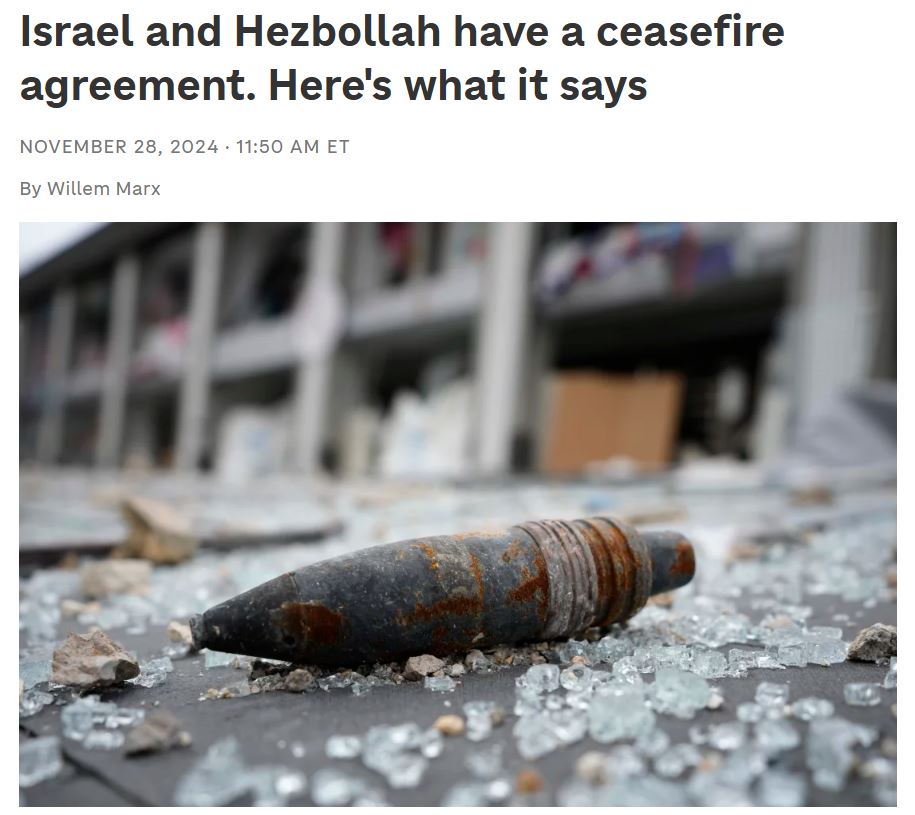
The ceasefire between Israeli forces and those of Hezbollah started at 4 AM on November 27, 2024, a conflict that has killed some 4,000 people, displaced more than one million in Lebanon and some 60,000 in Israel. As the ceasefire started, some Lebanese were already starting to return to their homes at day light although many houses in villages near the frontier have been destroyed.

The “Cessation of Hostilities” text which sets out the terms of the ceasefire calls for the ability of civilians on both sides of the Blue Line (the de facto border between Lebanon and Israel) to return safely to their lands and homes.

The ceasefire was negotiated by diplomats from the USA and France. Amos Hochstein was the lead United States (U.S.) negotiator. The U.S. and France will continue to have diplomats to follow the ceasefire process and to deal with any violations or unsolved tensions. There have already been accusations of violations of the ceasefire by both sides. The UN Interim Force in Lebanon (UNIFIL) – some 10,000 soldiers, will again be able to control the Blue Line frontier. There is currently discussion on adding members to the UN force.

The ceasefire was able to be developed as there was a convergence of interests among leaders in Israel, Lebanon, Hezbollah and Iran which is a strong supporter of Hezbollah. Many in Israel, including in the active military, are exhausted by the armed conflicts and must continue operations in the Gaza Strip and the West Bank. Lebanon faces economic and political difficulties provoking a growth of the already strong sectarian tensions. Hezbollah’s military and leadership has been seriously weakened by Israeli actions. However, the movement continues, and new leaders are coming to the fore such as Hassan Fadlallah, a Hezbollah deputy in the Lebanese Parliament. With a new Iranian President and a new U.S. administration, Iran’s leaders may want to see what policies President Trump will develop toward Iran.

Turning the 60-day ceasefire into a permanent peace accord will not be an easy task. There are territorial disputes along the Blue Line which have not been solved in the past, a consequence of the 2006 war. Today, all the parties lack peace-oriented leaders. As noted, the ceasefire is in the current interest of all the leaders, but such situations can change due to internal political factors. 

Thus, there is an opportunity for Nongovernmental Organizations to continue promotion of a permanent ceasefire and to advance stability for the region. It is an opportunity for which we must organize with others.

Prof. René Wadlow is President of the Association of World Citizens.
Rape as a Weapon of War in Sudan: Counter Measures Needed

In Africa, Being a World Citizen, Conflict Resolution, Current Events, Human Rights, Humanitarian Law, International Justice, Modern slavery, NGOs, Refugees, Solidarity, Sudan, The Search for Peace, Track II, United Nations, War Crimes, World Law on November 25, 2024 at 8:00 AM

By René Wadlow

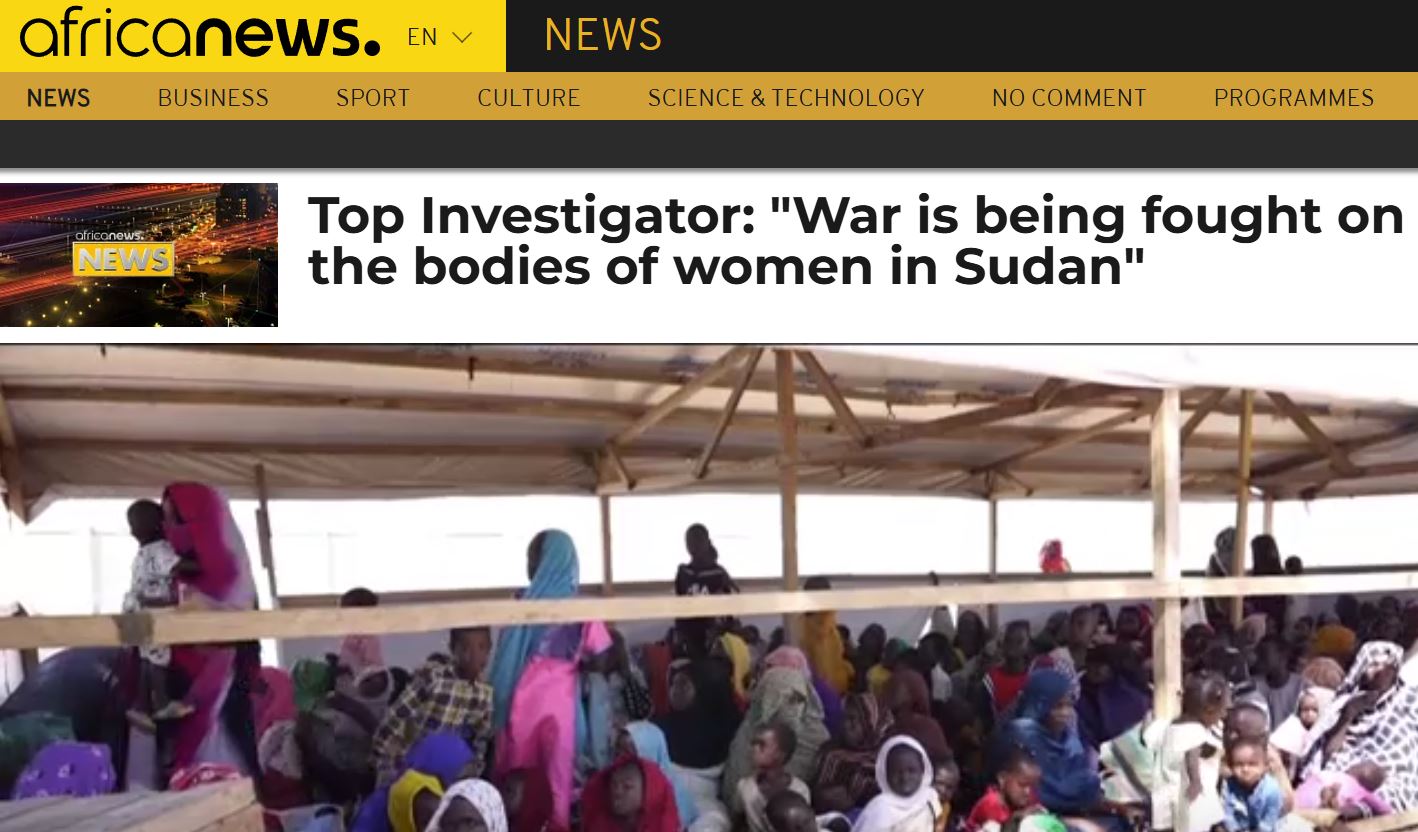
Sudan’s armed conflict which began on April 15, 2023 is between two former allies. On one side is General Abdel Fattah Al Burham of the Sudanese Armed Forces; on the other side is General Mohamed Hamdan Dagulo, known by his battle name of Hemedhi of the Rapid Support Forces. The conflict, which has spread to 14 of the 18 provinces of Sudan, has killed and wounded tens of thousands of civilians, displaced nearly 8 million people, and forced over two million to flee to neighboring countries. The agriculture of the country is disorganized, and many people face acute hunger.

There has been an appalling range of human rights and international humanitarian law violations including indiscriminate airstrikes and shelling against civilians, hospitals, and vital water services. The warring parties and their respective militia allies have made rape a weapon of war and have organized markets where women are sold for sexual slavery.

Rape harms not only the woman raped but also the whole family system. Often, the husband repudiates his wife. The whole family may scorn her. In a country where “the family” is a wide circle of people, the repudiated woman has few people to whom to turn for support. As was done by the “Islamic State” (IS, or Da’esh) in Iraq and Syria, sexual slave markets have been created where women are bought or exchanged.

So far, efforts by the United Nations (UN) and regional governments for a ceasefire and negotiations have not led to constructive action. Thus, the conflictual situation requires close cooperation among UN agencies, humanitarian and peace Nongovernmental Organizations.

Prof. René Wadlow is President of the Association of World Citizens.
Pact for the Future: A Partly Open Door for NGO-UN Cooperation

In Being a World Citizen, Conflict Resolution, Cultural Bridges, Current Events, Human Development, Human Rights, NGOs, Refugees, Religious Freedom, Social Rights, Solidarity, Sustainable Development, The Search for Peace, Track II, United Nations, World Law on October 4, 2024 at 6:00 AM

By René Wadlow

The Pact for the Future was accepted by the United Nations (UN) General Assembly in a three-stage process. The first stage was a nearly year-long drafting of the document with many small revisions in the 56 paragraphs setting out the goal of a renewed UN better able to guarantee peace and development. The second stage was a last moment motion by the Russian Federation which asked for a vote, finding some of the wording, especially on human rights, too strong. The Russian motion was put to a vote with 143 States voting for the text of the Pact, 15 abstentions, and 7 opposed (Russia, Belarus, North Korea, Iran, Syria, Sudan, and Nicaragua.)

After this vote, the President of the General Assembly called for a vote by acclamation. Everyone applauded, some more vigorously than others. Thus, the Pact was adopted by consensus.

The Pact should be seen as a springboard for action rather than as an end point. With the 193 UN members potentially involved in drafting the document, there was a need for compromises and general ideas rather than any new specific proposals. The Pact is a reaffirmation of the goals and processes of the UN system, but it also notes the need for constant renewal. In paragraph 6, the Pact states, “We recognize that the multilateral system and its institutions, with the United Nations and its Charter at the center, must be strengthened to keep pace with a changing world. They must be fit for the present and the future – effective and capable, prepared for the future, just, democratic, equitable and representative of today’s world, inclusive, interconnected and financially stable.”

Paragraph 9 states, “We also reaffirm that the three pillars of the United Nations – sustainable development – peace and security, and human rights – are equally important, interlinked and mutually reinforcing. We cannot have one without the others.”

In practice, it was easier to stress sustainable development since the 2030 Sustainable Development Goals had already been set out, through progress is very uneven. For peace and security, there are Articles 25 and 26 stating that, “We will advance the goal of a world free of nuclear weapons. We will uphold our disarmament obligations and commitments.” A culture of peace is mentioned in a number of places, but no specific steps are set out.

For two days prior to the governments’ discussion and voting on the Pact, there was what were called “Action Days” to which were invited Nongovernmental Organizations (NGOs), academics working on UN issues, and the representatives of business corporations involved in international trade. The two days were certainly a time for networking if not for “action”.

The Pact is a partially open door for UN cooperation with NGOs stating in a general way the “participation of relevant stakeholders in appropriate formats.” More specifically, the Pact calls to “Facilitate more structured, meaningful and inclusive engagement of nongovernmental organizations in consultative status with the Economic and Social Council in the activities of the Council in line with ECOSOC resolution 1996/21”. The door of the Pact was most open to youth calling for an increase in the representation of youth, which can only be via NGOs. We will have to see what, as NGO representatives, we can make of the partly open door.

Prof. René Wadlow is President of the Association of World Citizens.
Sudan Conflict Grows Worse as UN Security Council Appeals Fall on Deaf Ears

In Africa, Being a World Citizen, Conflict Resolution, Current Events, Human Rights, Humanitarian Law, Middle East & North Africa, NGOs, Refugees, Spirituality, Sudan, The Search for Peace, Track II, United Nations, War Crimes on June 17, 2024 at 6:00 AM

By René Wadlow

On June 13, 2024, the United Nations (UN) Security Council called for an end to the siege on El Fasher, the capital of the North Darfur Province of Sudan. The Council requested all parties to enable lifesaving aid to enter the city of El Fasher, the center of the most vicious fighting. The brutality of the fighting makes it impossible for aid workers to enter the city.

The civil war has gone on since April 2023 between the Rapid Support Forces led by General Mohamed Hamdan, known by his battle name of Hemedti, and the Sudanese Armed Forces led by General Abdul Fattah al-Burham. The fighting has led to some 15,000 persons being killed and 8 million displaced. The agriculture in the country is disorganized, and many people face acute hunger and, in some areas, famine.

Each of the two generals has created local militias which rob, torture, rape, and create conditions of disorder. Many of the militias use child soldiers in violation of UN treaties on the protection of children. Each of the two generals has opened the door to foreign fighters. There are Russian mercenaries which had been under the control of the Russian Wagner Group who had been fighting in Mali, Chad, Niger, and the Central African Republic. There are Ukrainian mercenaries who have come to fight the Russians.

It is difficult to understand the intensity of the current divisions represented by the two generals who had once been allies. The current divisions do not follow earlier fault lines in Sudan.

(C) Cable News Network

On behalf of the Association of World Citizens (AWC), I had been the first to raise in the UN Commission on Human Rights in 2004 the violent conditions in Darfur, Sudan, having been informed by a member of the UN Secretariat who was leaving the country and who could not speak out for himself. The violent conditions in Darfur were largely based on ethnic divisions linked to lifestyle differences between settled agriculturalists and cattle herders. There were also aspects of political divisions at the national level.

We kept in close contact with the Sudanese Mission to the UN in Geneva. Thus, the AWC was invited to be observers in the referendum which led to the creation of the State of South Sudan. The World Citizens had sent a team of observers.

Today, the suffering is real. Enlightened action is necessary. The conflictual situation requires close cooperation among humanitarian and peace nongovernmental organizations to see what is possible.

Prof. René Wadlow is President of the Association of World Citizens.
For a historic background on Darfur, see Julie Flint and Alex de Wall, Darfur: A Short History of a Long War (London: Zed Books, 2005).

The Uprooted

In Being a World Citizen, Current Events, Europe, Human Rights, Humanitarian Law, Middle East & North Africa, Migration, NGOs, Refugees, Solidarity, The former Soviet Union, The Search for Peace, UKRAINE, United Nations, World Law on April 30, 2024 at 6:00 AM

By René Wadlow

Increasing numbers of people in countries around the world have been forced from their homes by armed conflicts and systematic violations of human rights. Those who cross internationally recognized borders are considered refugees and are relatively protected by the refugee conventions signed by most states. The 1951 Convention Relating to the Status of Refugees and its 1967 protocol give the United Nations (UN) High Commissioner for Refugees an international legal basis to ensure the protection of refugees.

However, those who are displaced within a country as is the case currently for many in the Gaza Strip and in Ukraine are not protected by the international refugee conventions. Thus, displacement within a State poses a challenge to develop international norms and ways to address the consequences of displacement and the possibility to reintegrate their homes, though in the case of Gaza many of the homes have been destroyed.

Refugees from Ukraine arrive in Poland (C) European Union

Armed conflicts within States often reflect a crisis of identity within the State. This can occur when a State becomes monopolized by a dominant group to the exclusion or marginalization of other groups. There is a need to provide protection and assistance to the uprooted. The UN High Commissioner for Refugees has been able to act in some cases as has been true also for the International Committee of the Red Cross (ICRC) which is mandated to protect civilians in war zones. The obligation to assist populations in immediate danger of starvation is largely recognized, and the UN World Food Program has been able to act. In some cases, nongovernmental humanitarian agencies have been able to be active. However, each situation requires new negotiations and results differ.

Thus, what is essential is that there be predictable responses in situations of internal displacement and that attention be paid not only to material assistance but also to the human rights of those displaced. To be effective, strategies to address mass displacement need to be broad and comprehensive. There is a need for political initiatives that seek to resolve the conflicts as the consequences often involve neighboring countries. Efforts must engage local groups, national institutions, and Nongovernmental Organizations (NGOs) to prevent situations that lead to persons being uprooted. As the representatives of NGOs, we have an opportunity to discuss with other NGOs the most appropriate next steps for action.

Prof. René Wadlow is President of the Association of World Citizens.
Rwanda Genocide: The Lasting Consequences of Armed Violence

In Africa, Being a World Citizen, Conflict Resolution, Current Events, Fighting Racism, Human Rights, Humanitarian Law, International Justice, Refugees, Solidarity, The Search for Peace, United Nations, War Crimes, World Law on April 12, 2024 at 6:00 AM

By René Wadlow

On April 7, 2024, Paul Kagame, President of Rwanda, lit the memorial flame of the monument to the victims of the 1994 genocide during which some 800,000 persons, mostly ethnic Tutsi, were killed. In 1994, Paul Kagame was the head of a Tutsi-led militia, the Rwanda Patriotic Front, which put an end to the massacres in Rwanda. Many of the Hutu-led governmental forces of 1994 fled to what is today the Democratic Republic of Congo, where there were already established Hutu communities. Ethnic-tribal frontiers do not follow the same frontiers as those created by the colonial powers.

During the colonial period and also since independence, when speaking of Rwandan politics, politics was described as a struggle between Tutsi and Hutu. However, the conflictual cleavages were more complicated. There were a good number of “mixed marriages” between Tutsi and Hutu. Nevertheless, in times of tension, political leaders played upon the Hutu-Tutsi divide.

In 1994, as soon as Kagame’s forces took control of the capital, Kigali, he declared himself president and has held power since. His emphasis has been on economic stability, the development of tourism and the creation of an effective civil service. Because of the 1994 genocide, Rwanda has received a good deal of foreign aid and support. However, some 70 percent of the population are still in the rural areas and farm small plots of land.

A symbolic tombstone in memory of the Tutsi victims of the Rwandan genocide at the Père Lachaise cemetery in Paris, France (C) Pierre-Yves Beaudouin / Wikimedia Commons / CC BY-SA 4.0

The entry of Hutu militias into the Democratic Republic of Congo when defeated in Rwanda added to an already complicated situation in the administrative provinces of North and South Kivu. In mid-1994, more than one million Rwandan Hutu refugees poured into the Kivus. Many of these Hutu were still armed; among them were the “génocidaires” who, a couple of months earlier, were killing Tutsi and moderate Hutu. The “génocidaires” continued to kill Tutsi living in the Congo, many of whom had migrated there in the eighteenth century.

The people in eastern Congo have lived together for several centuries and had developed techniques of conflict resolution especially between the two chief agricultural lifestyles – that of agriculture and that of cattle herding. The Hutu were farmers and the Tutsi cattle raisers. However, a desire of others to control the wealth of the area – rich in gold, tin, and tropical timber – overburdened the local techniques of conflict resolution and opened the door to new negative forces interested only in making money and gaining political power. The inability to deal with land tenure and land use issues, the lack of social services and socio-economic development created the conditions which led to multiple forms of violence.

Land tenure issues have always been complex. Land is often thought of as belonging to the ethnic community and is given to clans or to individuals for their use, sometimes for a given period, sometimes for several lifetimes if the land is cultivated. The rules of land tenure often differ from one ethnic group to another even a small distance apart. Traditionally clan chiefs would be called upon to settle land disputes. However, with the large displacement of people, land disputes have become more frequent, and clan chiefs have often disappeared or lost their function as judges.

Into this disorder, in 1999, the United Nations (UN) sent peacekeepers but there was no peace to keep. The UN Stabilization Mission in the Democratic Republic of Congo (MONUSCO) was the largest of the UN peacekeeping forces, currently some 2,000 military, 180 police, and 400 civilian administrators.

Troops with the Ghanaian Battalion of MONUSCO marking their medal presentation day in Kinshasa on October 19, 2017 (C) MONUSCO Photos

The States which have provided the bulk of the UN forces in the Congo – India, Pakistan, Bangladesh, and Nepal – have other worries and few cultural affinities. Thus, these States have made no large effort to call world attention to the eastern Congo and to the very difficult situation the soldiers face. UN troops are not trained to deal with complex cultural issues – especially land tenure and land use issues which are the chief causes of the conflicts.

Thus, there is a popular frustration at the ineffectiveness. The troops are popularly called “tourists” who only watch what is going on. Despite the UN troops, there have been large-scale occurrences of violation of human rights and humanitarian law by all the many parties in the conflict with massive displacement of population, plundering of villages, systematic rape of women, summary executions and the use of child soldiers. Thus, the newly elected President, Felix Tshisekedi, has asked the UN to remove all its troops by the end of 2024. Troops are currently being removed.

One of some 200 armed groups in eastern Congo, the M23, is said to be backed by Rwanda, although the Rwanda government denies this. Today, there is a security vacuum, and the military of the Democratic Republic of Congo will have difficulty to create stable socioeconomic structures. Thus, the 1994 genocide is a stark reminder that violence has long range consequences.

Prof. René Wadlow is President of the Association of World Citizens.