On May 23, 2025, the United Nations (UN) High Commissioner for Human Rights, Volker Türk, gave a stark warning about the rapidly deteriorating human rights situation in the state of South Sudan. He stated that, “The escalating hostilities in South Sudan portend a real risk of further exacerbating the already dire human rights and humanitarian situation.” It is estimated that some 125,000 persons have been displaced within the country between March and mid-April 2025. In addition, there are refugees present fleeing the armed conflict in the state of Sudan. South Sudan is filled with arms from the long years of civil war: 1956-1972 and 1982-2005 between the north – largely Muslim and Arabized and the south which followed traditional tribal religions with southern leaders largely Christian. In 2011, there was a referendum in which southern Sudan voted to become the independent state of South Sudan. The Association of World Citizens was among the Nongovernmental Organizations (NGOs) observing the independence referendum.
Since independence, political life has been structured by the tensions between the President, Salva Kiir, and the Vice-president, Rick Machar. There was an armed conflict between the two from December 2013 and August 2015 in which many persons were killed. There were multiple violations of international humanitarian law and human rights abuses. In addition to the forces under the control of the two political leaders, there are a host of armed militias usually based on ethnic-clanic structures.
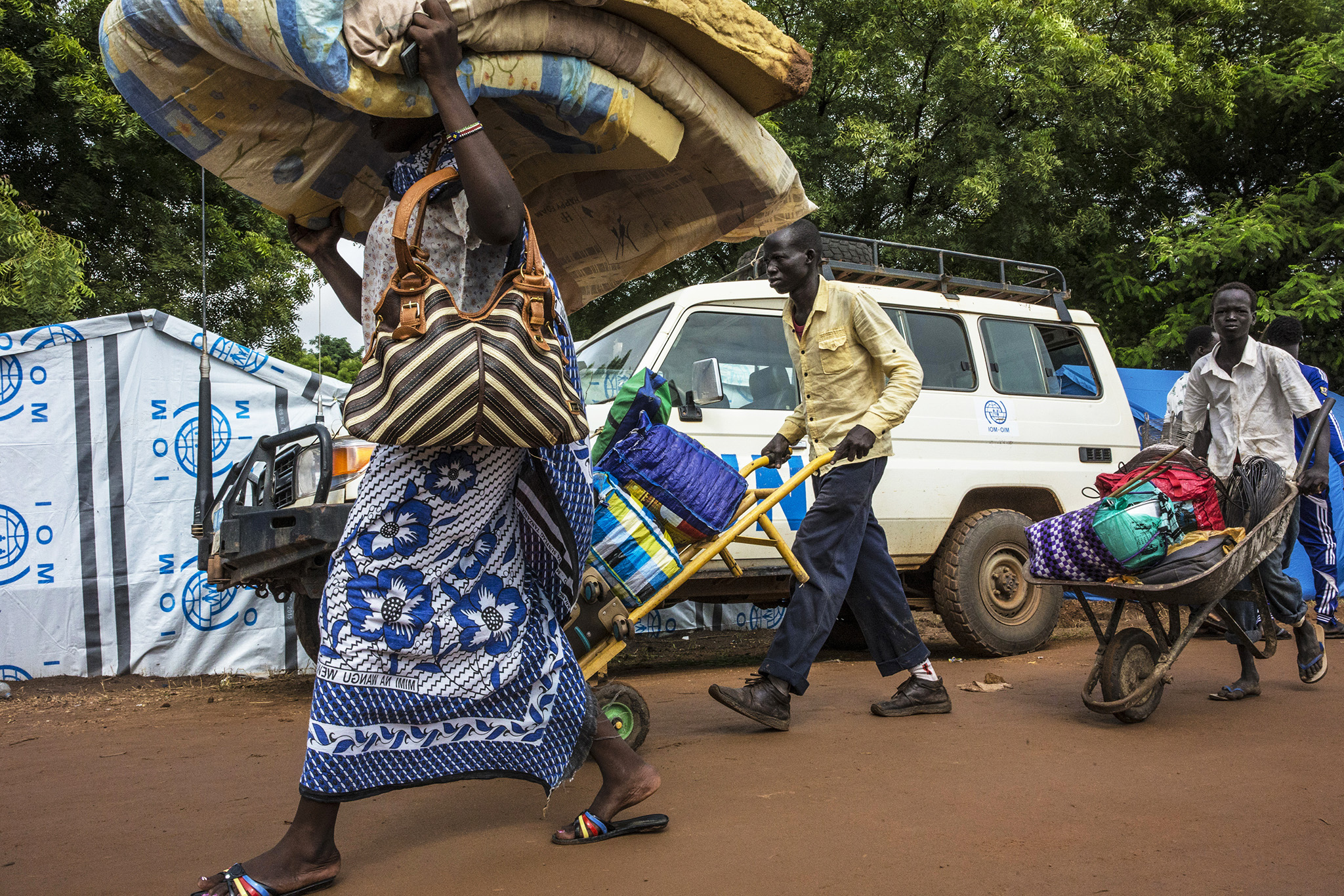
In July 2016, internally displaced persons in Juba, the capital of South Sudan, relocating to a cleaner, drier location across town, under the protection of the United Nations Mission in South Sudan (UNMISS). (C) Isaac Billy/UN Photo
The UN and the African Union have made efforts to reach peace agreements among the parties, but the provisions of the peace agreements have not been put into practice. There is a lack of trust on all sides. It is difficult to see how progress can be made given the intensity of the resentments. There is no doubt a need for new leadership, but there are no signs of any leaders leaving the scene. Elections are not in the style of the country. South Sudan is a situation which merits observation and reconciliation efforts when possible.
Prof. René Wadlow is President of the Association of World Citizens.
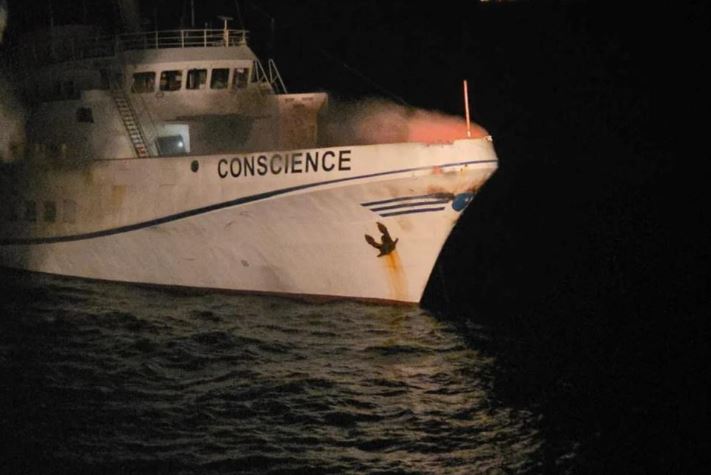
On May 2, 2025, a ship carrying food and medical supplies for the Gaza Strip organized by the Freedom Flotilla Coalition was attacked by drones in international waters near Malta. The ship was badly damaged and its cargo lost. The ship was appropriately called The Conscience.
Conscience is that inner voice which helps each person to know right from wrong. Every thought and deed has an ethical significance and consequence – what is called in Indian thought Karma. Conscience, this perception of choice between right and wrong, is within each person as a clear guide. A sensitive conscience speaks with a voice of authority so that one can act positively and with justice.
Conscience under attack (C) The Malta Independent
Nonviolent action to protect civilians and to call attention to crucial situations is being increasingly used. There are real dangers involved. In 2010, a similar humanitarian aid ship of the Freedom Flotilla Coalition was attacked by Israeli forces in international waters. Ten persons were killed and many wounded.
Today, many of us have called for the end to the Israeli blockade of supplies to the Gaza Strip, a blockade which began again after the end of a ceasefire on March 18, 2025. Families are struggling to meet their most basic needs of food and medicine. We need to develop creative and positive avenues of action.
Early April 2025, Finland’s Prime Minister announced the state’s intention to withdraw from the 1997 Convention on the Prohibition of Anti-Personnel Mines, called for short the Ottawa Convention – reflecting the vital role that Canada played in its creation.
The Convention, which came into force on March 1, 1999, prohibits the use, production, stockpiling, and transfer of anti-personnel landmines. Over the decades, such anti-personnel mines have caused civilian harm, often of children, long after the hostilities have ended as they can be set off many years after they have been placed. The Convention has also advanced mine clearing operations, thus significantly reducing landmine-related harm and bolstered assistance for survivors.
As of March 2025, 165 states have ratified or acceded to the Convention. However, some major military powers including the USA, China, the Russian Federation, India, and Pakistan are still outside the treaty. Given the armed conflict in Ukraine, some states which have a land frontier with the Russian Federation have also indicated that they have started a withdrawal process: Finland with 1,340 km of frontier with the Russian Federation, Estonia with 294 km, Latvia with 284 km, Lithuania with 297 and Poland with 232 km.
In the same spirit as the Landmine Convention, a combination of progressive states such as Norway and Ireland and a combination of Nongovernmental Organizations (NGOs) including the Association of World Citizens (AWC) worked for the creation of the Convention on Cluster Munitions which came into force in August 2010. This Convention bans the use, production, and transfer of cluster munitions and sets deadlines for stockpile destruction and clearance of contaminated land.
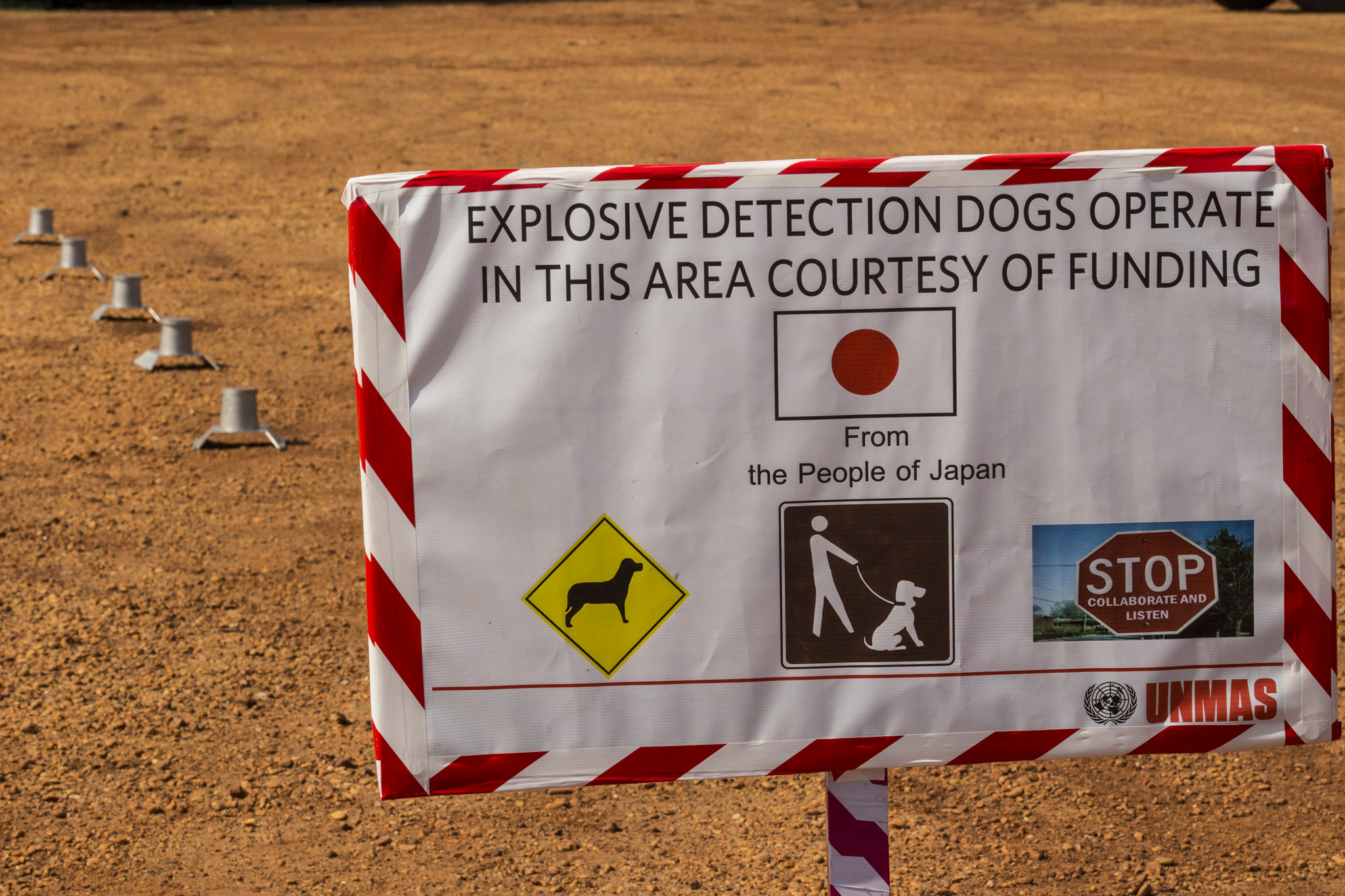
Landmines and explosive remnants of a war site in South Sudan (C) UNMISS
Cluster munitions are warheads that scatter scores of smaller bombs. Many of these sub-munitions fail to detonate on impact, leaving them scattered on the ground ready to kill or maim when disturbed or handled. Reports from humanitarian organizations and mine-clearing groups have shown that civilians make up the vast majority of the victims of cluster bombs, especially children attracted by their small size and often bright colors.
The issue of the indiscriminate impact of cluster bombs was raised by the representative of the Quaker United Nations (UN) Office in Geneva and by me for the Association of World Citizens, starting in 1979. (1) Many of the same NGOs active on anti-personnel mines were also active on the cluster bomb issue – a combination of disarmament and humanitarian groups.
The withdrawal of states from the Landmine Convention is a dangerous weakening of an important arms control effort. Thus, as Citizens of the World, we ask states tempted to withdraw from the Convention on Landmines to reconsider their position. We call upon the government of Canada to reaffirm its support for the Ottawa Convention.
Note
(1) See René Wadlow, “Banning Cluster Bombs: Light in the Darkness of Conflicts”, Journal of Humanitarian Medicine, Palermo, Italy, July-September 2010.
Prof. René Wadlow is President of the Association of World Citizens.
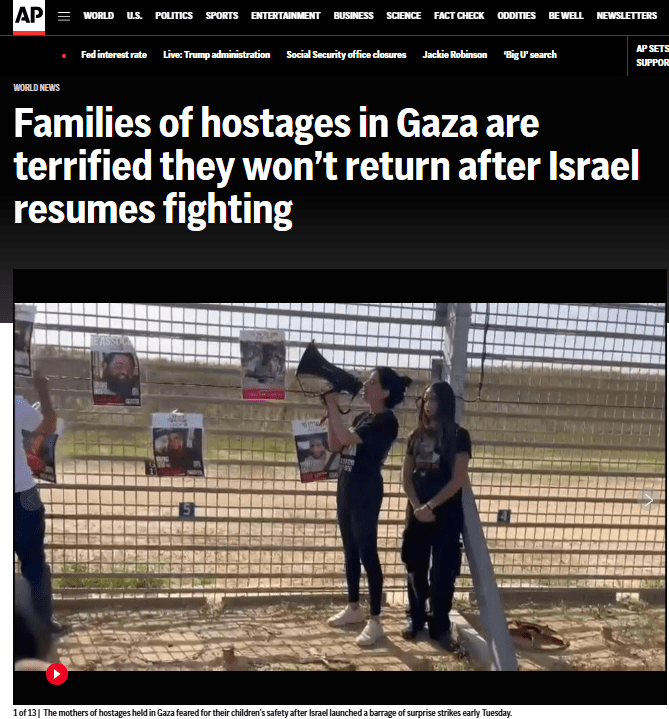
On March 18, 2025, Israeli airstrikes across the Gaza Strip killed over 400 Palestinians, including women and children, and wounding more than 500, ending a ceasefire which had begun on January 19, 2025.
Prime Minister Benjamin Netanyahu resumed the fighting pointing to Hamas’s unwillingness to release the remaining hostages. He has long insisted that attacks on the Gaza Strip would continue until Hamas is destroyed. He has indicated that the March attack was only the beginning. Some analysts see renewed combat as imminent with the conditions of life in the Gaza Strip, already bad, getting worse. Violence among Palestinians and Israeli Jewish settlers on the West Bank also seems to be growing. In such a negative atmosphere, are negotiations possible?
With no progress in government-led talks, are Track Two discussions a way to advance?
The phrase “Track Two” was coined in 1982 by Joseph Montville of the United States (U.S.) Foreign Service Institute to describe methods of diplomacy that are outside the formal diplomatic system but with people in middle-level-leadership positions who have skills of negotiation and compromise. Track Two provides a type of flexibility not available in formal governmental settings. Track Two are discussions held by non-officials of conflicting parties in an effort to clarify outstanding disputes and to explore the options for resolving them in settings that are less sensitive, less structured, and with less media attention than those associated with official negotiations. The non-officials involved usually include scholars, senior journalists, former government officials, retired military officers, and businesspeople. Depending on the aims and the styles of these meetings, the profile and expertise of Track Two participants will differ.
Joseph Montville (C) C-SPAN
With governmental negotiations at a standstill, the Association of World Citizens (AWC) has suggested the possibility of Track Two efforts to see on what issues negotiations might be possible. As an earlier AWC proposal stated,
The role of Track Two dialogues can be modest. The goal is not to change the basic views or philosophies of the participants. The goal is that the decisions of participants on crucial issues will be made with finer perceptions of the views and intentions of others.
National political leaders often have a short attention span for issues unless there are strong domestic reasons for remaining involved. Therefore, World Citizens need a longer-range vision and must be willing to take measures which do not give immediate results. However, each effort helps to build an infrastructure of people used to discussion and clear communication. For World Citizens, Track Two approaches are infused with a vision of the good society with an emphasis on human development, and a broadly-based civil society.
Prof. René Wadlow is President of the Association of World Citizens.
«You’re fired !», «T’es viré !». C’est par ces trois mots brutaux que Donald Trump, jusqu’alors homme d’affaires parmi les plus célèbres des Etats-Unis, en dépit même de plusieurs échecs retentissants comme sa «Trump University» qui ne vécut que six ans et mourut en 2011 dans le scandale, s’est imposé en 2014 dans une nouvelle carrière, celle d’animateur de télé-réalité. Dans une émission intitulée The Apprentice (L’Apprenti), des candidats se mettaient dans la peau d’aspirants-Trump et, lorsque l’un d’eux décevait trop l’animateur-juge-arbitre, il se voyait expulsé de l’émission sur ces trois mots. En fin de compte, une série de commentaires xénophobes sur les Mexicains ont amené les producteurs à se séparer de Trump en 2015. On connaît la suite, qui se joue de nouveau depuis janvier dernier.
Trump aime l’image, il aime l’excès, et plus encore les deux à la fois. Voilà pourquoi la vidéo qu’il a relayée le mois dernier sur ses réseaux sociaux, créée par un studio californien et où l’Intelligence Artificielle (IA) rêve d’une Bande de Gaza pacifiée, reconstruite et transformée, selon sa propre expression, en «Riviera du Moyen-Orient», entièrement rendue au luxe et, surtout, à la vénération de Trump lui-même en dieu sauveur, sur fond de clichés racistes envers la population palestinienne locale dépeinte dans son entier comme un Hamas apprivoisé, a légitimement choqué mais ne pouvait surprendre personne. Avant même ce nouvel hommage audiovisuel de Trump à lui-même, bientôt suivi par une séance de brutalisation publique à l’écran du Président ukrainien Volodymyr Zelenskyy en duo avec le Vice-président Elon Musk – non, pardon, J.D. Vance, les pays arabes avaient déjà fait savoir ce qu’ils comptaient faire du plan de Trump, bien sûr entièrement favorable à Israël et au gouvernement d’extrême droite de Benyamin Netanyahu. Sans même avoir besoin d’aller jusqu’à «You’re fired !», ils avaient d’emblée répondu «You’re not hired !», «Tu n’es pas embauché !».
Un plan alternatif conçu par les pays arabes a ensuite été annoncé, présenté le 4 mars par la Présidence égyptienne et repris en détail sur Middle East Eye. Sans surprise là encore, le plan arabe ne reprend rien du rêve de Trump de transformer Gaza en «Riviera» mais cherche à recréer, en cinq ans de temps, une Bande de Gaza habitable et exploitable par une population palestinienne qu’il entend, au-delà des seules questions économiques et sociales, réintégrer au droit international, ce droit international dont la population palestinienne dans son entier est privée depuis 1948 certes, mais plus encore depuis le 7 octobre 2023, d’abord avec le pogrom perpétré par le Hamas dans le sud d’Israël depuis Gaza, viols massifs et prises d’otages à l’appui, et ensuite, depuis le 8, avec la campagne militaire destructrice et meurtrière de la Force de Défense israélienne (Tsahal) sur place, à tel point que l’idée de trêve, en tout cas durable, en devient d’emblée dérisoire. A examiner ce plan de plus près, il est difficile d’échapper à la tentation du «C’était mieux avant», tant les solutions proposées ont tôt fait de prendre un goût de déjà-vu, hélas jamais traduit en un «déjà fait».
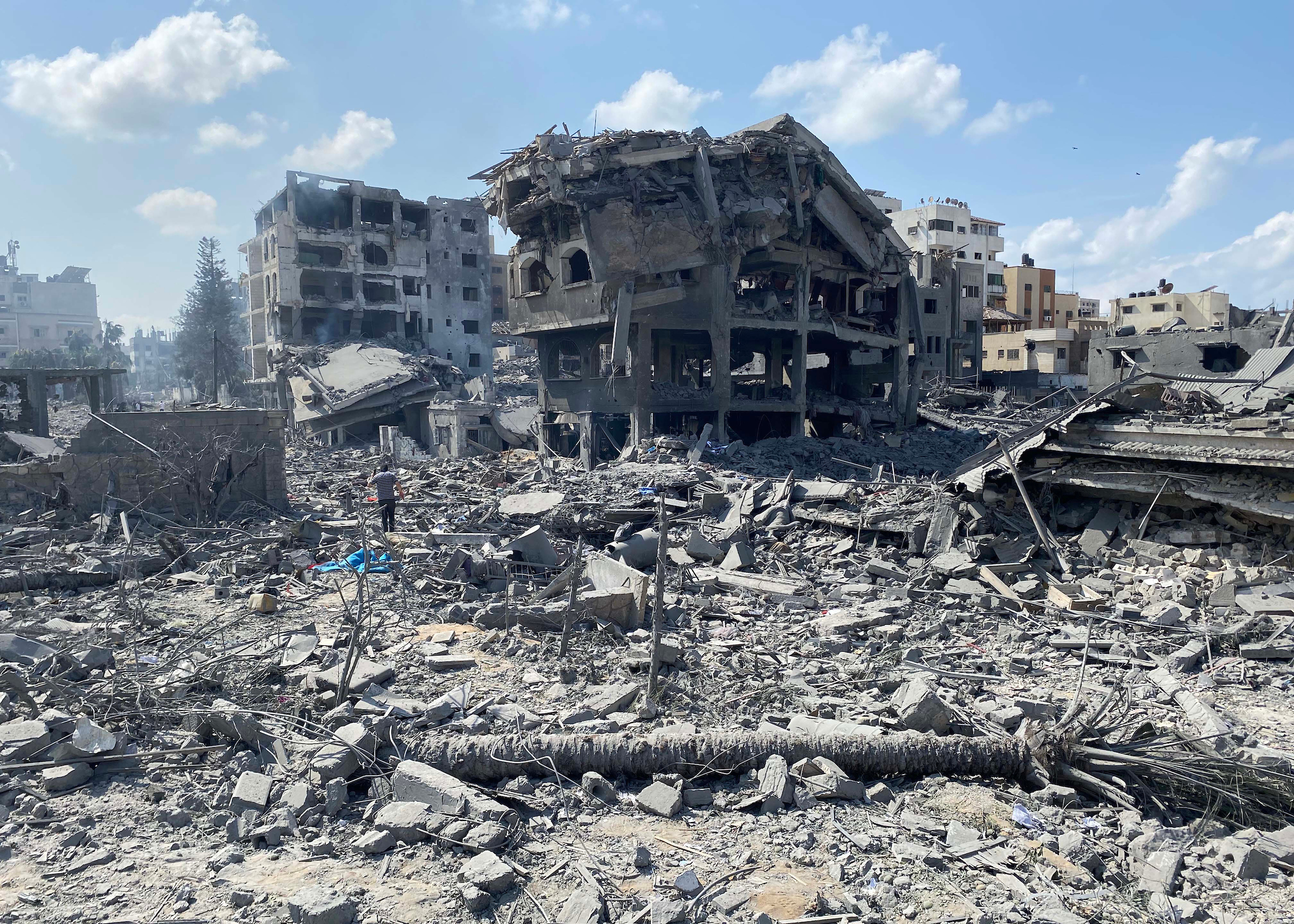
Un immeuble détruit par Tsahal à Al-Remal, Gaza, le 10 octobre 2023 (C) Omar Naaman / APAimages
Le Hamas exclu – pas forcément pour les raisons que l’on croit
Le premier trait, et le plus saillant, du plan arabe pour Gaza, c’est la mise à l’écart du Hamas, le «Mouvement de la Résistance Islamique», de son nom complet, vainqueur inattendu des élections législatives palestiniennes début 2006 et, depuis juin 2007, seul maître à bord à Gaza après en avoir évincé l’Autorité palestinienne de Mahmoud Abbas à l’issue d’un bref conflit armé.
En 2008 et 2009, le gouvernement israélien du parti Kadima, fondé par Ariel Sharon en scission du Likoud alors qu’il était Premier Ministre, avait affronté une première fois le Hamas à Gaza lors de l’Opération «Plomb Durci». Revenu au pouvoir à la tête du Likoud après la désertion de Sharon, Benyamin Netanyahu avait fait de même en 2012, 2014, 2018, 2021 et 2022, tout en le laissant en place à Gaza.
Dès le lendemain, littéralement, du drame du 7 octobre 2023, la presse israélienne avait relevé cette contradiction, n’hésitant pas à l’accuser d’avoir «soutenu» le Hamas et lui imputant la responsabilité du pogrom, son seul but ayant été, poursuivaient les journalistes de son pays, d’avoir voulu couver le Hamas pour faire pièce à l’Autorité palestinienne et l’empêcher de progresser vers la création d’un Etat palestinien. Plus tard, les familles des otages du Hamas s’en sont prises au Premier Ministre en l’accusant d’ignorer le sort des leurs, jusqu’à empêcher tout accord avec le Hamas pour la libération de leurs proches.
Que les pays arabes, dont les dirigeants font pour la plupart face à des oppositions internes d’inspiration islamiste, ne tiennent guère à favoriser le Hamas pour la reconstruction de Gaza, rien de très étonnant. Mais que leur volonté d’écarter le mouvement islamiste soit guidée par un souci de modernité et de démocratie à Gaza plus que par celui de mettre hors-jeu une formation qui, tout en se posant en premier rempart contre Israël, n’en a pas moins fait le jeu du Likoud autant que Netanyahu a fait celui d’un Meshaal ou d’un Sinwar, il y a bien de quoi en douter.
Quoi qu’il en soit, seul le résultat compte et le plan arabe ferme la porte au Hamas, même s’il ne s’agit ainsi que de dire leur refus des velléités d’Israël. Et pour la suite, les pays arabes savent ce qu’ils veulent pour le peuple de Gaza.
Un projet résolu, concret et chiffré
Ce qu’ils veulent, c’est replacer l’Autorité palestinienne au cœur de l’avenir de Gaza en lui confiant la tête d’un Comité d’Administration de Gaza pour six mois, un comité que formeraient technocrates et personnalités non-partisanes sous la coordination du gouvernement palestinien de Ramallah, en Cisjordanie. Selon le plan, Égypte et Jordanie se chargeraient de former une police de l’Autorité palestinienne pour déploiement à Gaza, d’autres pays étant appelés à apporter un appui politique et financier à la formation de cette police dans l’avenir proche.
Ce qu’ils veulent, c’est replacer également l’ONU au centre du jeu, l’ONU bannie par Israël sous la forme de son Agence de Secours et de Travaux pour les Réfugiés de Palestine, plus communément désignée sous son acronyme anglais UNRWA, l’ONU dont les représentants du Secrétaire Général se sont eux aussi retrouvés déclarés persona non grata en territoire israélien. Selon le plan, l’Organisation mondiale doit envisager, à travers son Conseil de Sécurité, une «présence internationale» à Gaza – ainsi qu’en Cisjordanie même, soit sous la forme d’une protection internationale soit à travers des troupes de maintien de la paix, en tant que partie intégrante du processus de reconstruction.
Qui dit troupes de maintien de la paix dit existence de deux belligérants qu’il faut forcer à ne plus l’être puis, en déployant de telles troupes, dissuader de l’être à nouveau. Dans le contexte israélo-palestinien, voilà qui renvoie immanquablement à l’idée de deux États, battue en brèche depuis octobre 2023. Le plan arabe la réhabilite et la présente même comme étant la seule et unique solution, sans aucune alternative, donc comme le seul fondement à donner y compris aux mesures les plus immédiates qu’il préconise.
Pour les six premiers mois, le plan commence par demander une trêve à moyen terme entre Israël et, donc, non pas le Hamas mais bien l’Autorité palestinienne, une trêve qui ne s’appliquât pas dans la seule Bande de Gaza mais aussi en Cisjordanie. Le plan propose de consolider la trêve par des négociations entre les deux parties et, surtout, des mesures pour bâtir la confiance – la base même du peacebuilding, la «construction de la paix». Un premier pas indispensable, toujours selon le plan, est l’arrêt immédiat des actes unilatéraux «des deux côtés», ce bien qu’Israël soit le premier concerné, se voyant ainsi sommé de cesser toute implantation, annexion, démolition, raid militaire sur des villes palestiniennes ou tentative d’altérer le statut juridique et historique des lieux saints.
En six mois, des abris temporaires doivent aussi être construits pour un million et demi de personnes, les débris doivent être déblayés pour ouvrir un couloir servant à la reconstruction, avant de passer à l’étape suivante prévue pour deux ans. Viendra alors le temps de réhabiliter soixante mille logements endommagés, d’en construire deux cent mille neufs pour un million six cent mille personnes, de réhabiliter huit mille cent hectares de terre cultivable, ainsi que d’équiper Gaza en électricité, télécommunications et bâtiments utilitaires.
Pendant ces deux ans, une question cruciale partout au Moyen-Orient devra être réglée – la question de l’eau. Le plan prévoit l’installation de l’eau courante, de systèmes anti-incendie et d’assainissement, mais aussi la construction de deux usines de désalinisation, deux réservoirs d’eau potable et anti-incendie, deux autres pour l’eau d’irrigation agricole et deux usines de traitement des eaux usées.
Après ces deux ans s’ouvrira l’ultime phase du plan, étalée sur deux ans et demi. D’ici là, il faudra avoir terminé la construction de logements pour trois millions de personnes en tout, d’une zone industrielle de deux cent quarante-trois hectares, d’un port de pêche, d’un port commercial, d’un aéroport international et d’une route côtière de dix kilomètres.
Pour faire renaître ainsi une Bande de Gaza qui n’a connu jusqu’ici, depuis le désengagement israélien de 2005, que la théocratie armée du Hamas et les déchaînements de Tsahal, les pays arabes estiment nécessaire une somme de cinquante-trois milliards de dollars américains, qu’ils attendent de l’ONU, des institutions financières internationales, des fonds d’investissement ainsi que des agences et banques de développement.
Ils espèrent également compter sur les investissements directs de sociétés étrangères mais aussi, et c’est une bonne surprise, sur les organisations de la société civile, dont ils reconnaissent qu’elles jouent un rôle essentiel pour la mobilisation des ressources financières pour voir guérir et renaître Gaza.
Autre bonne surprise, pour accroître la transparence et l’efficacité, il sera créé un fonds fiduciaire supervisé internationalement, chargé de contrôler les investissements et les dépenses dans le cadre du plan.
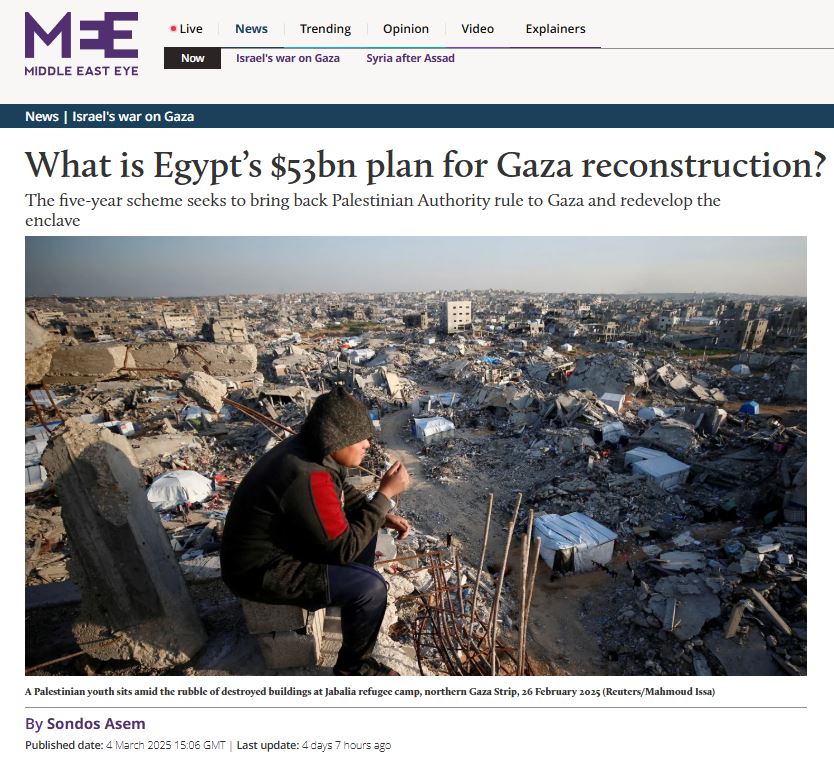
(C) Middle East Eye
La douleur du passé refoulé
Bien entendu, quelques manques se font sentir, par exemple en termes de garanties de respect des Droits Humains par l’Autorité palestinienne ainsi remise en position de force à Gaza ; comment attendre d’une population locale qui n’a que trop vu ses droits violés qu’elle en accepte davantage encore sous le prétexte de la reconstruction ? Puisque nous sortons du 8 mars, Journée internationale des Droits des Femmes, quid de la Résolution 1325 du Conseil de Sécurité qui «fête» en octobre prochain son quart de siècle ? Corrigibles en route, ces manques, sans doute. Oui, mais encore faut-il que le plan soit adopté en premier lieu par la communauté internationale, au sein de laquelle une Administration Trump vivant dans ses rêves et un gouvernement Netanyahu jouissant de toutes ses faveurs restent à convaincre.
Malgré tout, face aux chimères d’un Donald Trump, comment ne pas trouver ce plan arabe infiniment préférable, et comment ne pas le trouver non seulement plus réaliste mais autrement plus enthousiasmant ? Enthousiasmant et, c’est là tout son paradoxe, décevant. Oui, décevant, car s’il est pour l’heure le seul à porter tant soit peu une perspective viable pour Gaza, ce plan apparaît vite comme étant, plus qu’autre chose, un catalogue de faillites, celles des espérances passées de paix au Proche-Orient qu’il a paru plus simple, pour chacune en son temps, de laisser derrière soi avec toutes les conséquences que l’on sait à présent.
L’origine du plan elle-même, le statu quo maintenu par Netanyahu avec le Hamas et qui a fini par dégénérer en le pogrom d’octobre 2023, ne sent que trop sa redite d’une faillite politique, une faillite à l’autre bout du monde et peut-être venue, qui sait, d’un temps où Israël entretenait des relations étroites avec l’Afrique du Sud de l’apartheid alors Etat paria – à juste titre – dans le reste du monde. Après avoir fait libérer Nelson Mandela en 1990, le Président blanc afrikaner Frederik de Klerk avait entrepris des négociations avec l’African National Congress (ANC) jusqu’alors banni. Cependant, ces négociations s’étaient interrompues en 1991 et de Klerk avait alors pris pour prétexte la montée en puissance de l’Inkatha Freedom Party, formation de fondement zoulou menée par Mangosuthu Buthelezi et qui se voulait plus radicale que l’ANC face au pouvoir blanc.
Ce que de Klerk n’avouait pas, et pour cause, c’est que la montée de l’Inkatha était en fait l’œuvre de son propre gouvernement, avec le pari fou d’affaiblir ainsi l’ANC. Pari perdu. En fin de compte, de Klerk fut contraint de reprendre les discussions qui, en 1992, allaient aboutir au référendum abolissant les dernières lois d’apartheid – et ouvrant la voie aux élections de 1994 qui allaient porter Nelson Mandela au poste de premier Président d’une Afrique du Sud devenue non seulement multiraciale mais aussi pleinement démocratique. En cette même année 1992, dans la foulée de la Conférence de Madrid l’année précédente, Israël portait au pouvoir Yitzhak Rabin et son Parti travailliste, artisans de la poignée de main entre ce même Rabin et Yasser Arafat l’année suivante à la Maison Blanche.
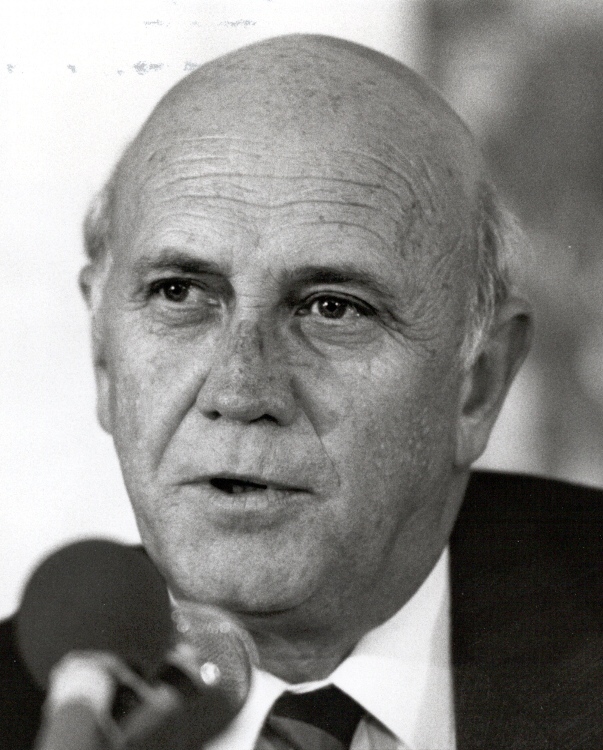
Frederik de Klerk en 1990 (C) Walter Rutishauser / Bibliothèque Am Guisanplatz
Plus de trente ans ont passé, et à travers le plan arabe pour Gaza, quiconque a connu cette époque ne peut qu’adopter cette rengaine traditionnelle passéiste, «C’était mieux avant», tant ce que le plan propose renvoie à ce qui avait déjà été proposé, mais jamais appliqué ou trop peu pour avoir pu faire la différence.
L’Autorité palestinienne, création des Accords d’Oslo, avait reçu en 1994 un mandat résumé sous le titre «Gaza-Jéricho d’abord», du nom de ces deux territoires qui devaient servir de banc d’essai à son administration autonome. Sa police palestinienne avait reçu sa formation de plusieurs de ses homologues internationales, parmi lesquelles la Gendarmerie nationale française. Après quelques années de succès, la Seconde Intifada causée par les provocations gouvernementales israéliennes en 2000 a dépassé la police palestinienne qui, depuis, n’a jamais vraiment réussi à s’en relever, en dépit de certaines mesures de soutien international qui n’ont jamais réussi à raviver les espérances initiales.
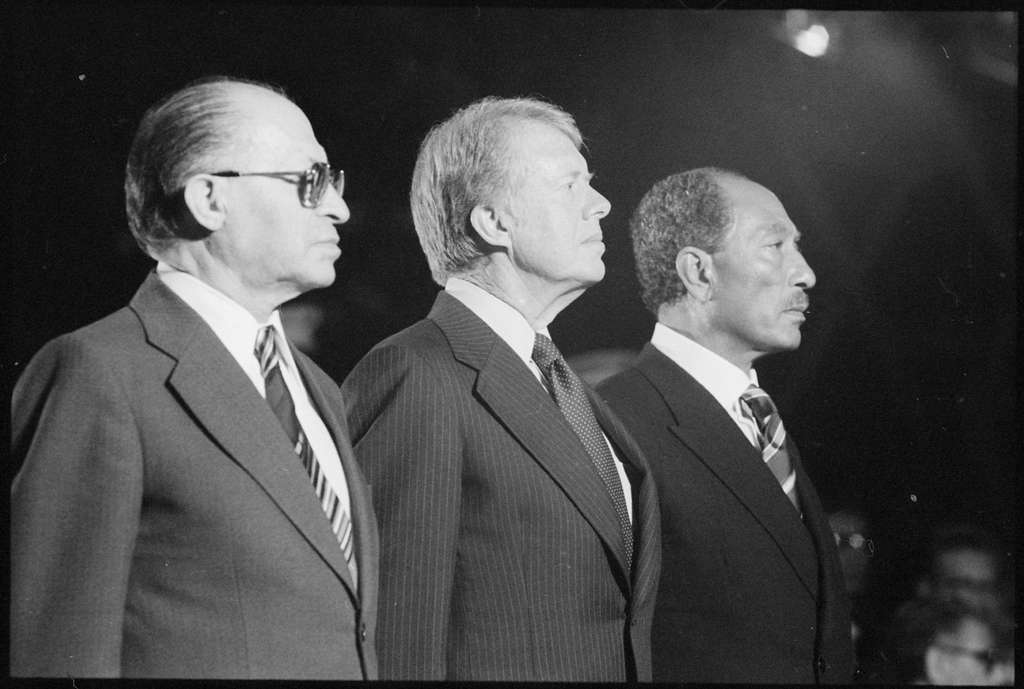
(G. à d.) Le Premier Ministre israélien Menachem Begin, le Président américain Jimmy Carter et le Président égyptien Anouar el-Sadate à Camp David le 9 juillet 1978
Une «présence internationale», si besoin est sous la forme de troupes de maintien de la paix, ce n’est pas autrement que fut résolu le problème du Sinaï en 1978, à travers les Accords de Camp David sous l’impulsion du Président américain Jimmy Carter récemment disparu. L’Egypte réclamait la restitution du Sinaï qui lui revenait de droit, tandis qu’Israël s’y refusait de peur de voir l’armée égyptienne utiliser le Sinaï pour s’en prendre de nouveau à lui. En fin de compte, la solution trouvée fut de restituer à l’Egypte le Sinaï mais démilitarisé, placé sous la responsabilité d’une Force multinationale d’Observateurs qui y demeure active à ce jour. Après six batailles à Gaza entre 2008 et 2022, jamais le gouvernement israélien n’a proposé de reprendre cette idée, pourtant couronnée de succès. Pourquoi ?
Il est vrai que le nationalisme israélien s’accommode mal de la période où, entre 1978 et 1982, Israël a dû mettre en œuvre l’accord de paix qui le liait maintenant à son voisin égyptien, cette période portant pour les faucons d’Israël un nom spécifique : Yamit. En 1972, sur la côte méditerranéenne du Sinaï occupé depuis 1967 et la Guerre des Six Jours remportée par Israël, Ariel Sharon, alors général de Tsahal, faisait expulser en secret, sur l’ordre du Ministre de la Défense Moshe Dayan, ancien général et «conquérant du Sinaï», des fermiers bédouins de la plaine de Rafah pour créer sur place une colonie de peuplement, à laquelle était donné le nom de Yamit. Déjà à l’époque, Israël rêvait de sa «Riviera du Moyen-Orient», souhaitant attirer de nouveaux habitants grâce à des coûts fonciers peu élevés et, plus encore, faire de Yamit un port commercial. Mais le public israélien n’achetait pas, littéralement parlant, puis, en avril 1982, en application des Accords de Camp David, Israël devait évacuer Yamit.
Même si la plupart acceptaient d’être indemnisés par Tel Aviv et de partir, Tsahal devait tout de même intervenir pour évacuer les habitants, peu nombreux mais toujours trop, qui refusaient de partir, dont des partisans du «Grand Israël». L’évacuation avait lieu dans la douleur, sous les ordres du Ministre israélien de la Défense, un certain … Ariel Sharon, le même qui, dix ans plus tôt, avait fait place nette pour la création de la colonie. Refusant de laisser Le Caire utiliser quoi que ce soit de sa construction, Israël rasait Yamit, suscitant ainsi la colère en Egypte. Quant à Sharon, devenu Premier Ministre, le fantôme de Yamit allait revenir le hanter lorsqu’en 2005, il ordonnerait l’évacuation par la force de Gaza. Un premier essai de «Riviera du Moyen-Orient» dont l’issue n’aurait pu être pire. Et dont les leçons auraient dû être retenues …
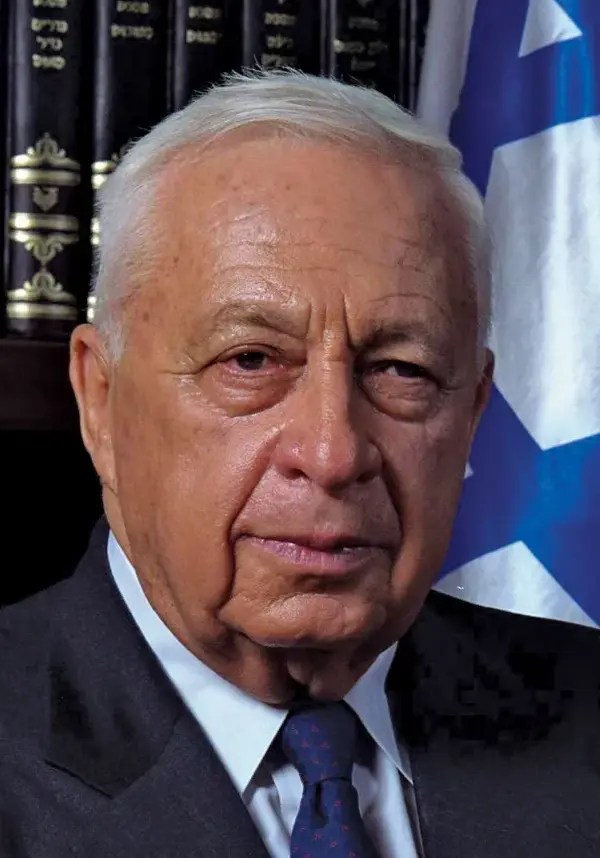
Ariel Sharon pendant son mandat de Premier Ministre d’Israël (C) Avi Ohayon / Government Press Office of Israel
Reste la solution à deux Etats, sur laquelle repose tout le plan arabe. L’Initiative de Genève, mise en avant par les anciens négociateurs du sommet de Taba en 2003, et la Feuille de route proposée la même année par les Nations Unies ne l’envisageaient pas elles-mêmes différemment. La seconde prévoyait la fin du conflit israélo-palestinien en 2005. Il fallait bien qu’un Ariel Sharon à la tête non seulement du Likoud, mais aussi de ce qui était alors le gouvernement le plus à droite de l’histoire d’Israël, ne puisse s’y faire. Face à ces perspectives de paix, son idée fut d’ériger un mur entre Israël et la Cisjordanie, ayant pris prétexte de lutter contre le terrorisme mais n’ayant pu ignorer qu’il ne pouvait s’agir au mieux que d’une solution à très court terme, ses intentions réelles ne pouvant laisser de doute. Saisie de la question, la Cour internationale de Justice avait clairement désavoué Sharon. C’était encore avant la brouille avec Netanyahu, la fondation de Kadima et, in fine, l’évacuation forcée de Gaza.
Sharon voulait la hafrada, la séparation physique entre Israéliens et Palestiniens dans les Territoires occupés. L’idée lui était aussi venue que les démographies opposées des populations juive et arabe, la première en déclin et la seconde en constante hausse, finiraient par produire une majorité arabe en Israël et dans les Territoires, ramenant les Juifs à l’état de minorité dans ce qui était censé devenir «l’Etat juif».
S’il en était venu, lui, le faucon parmi les faucons, idole des nationalistes, à souhaiter désormais l’établissement d’un Etat palestinien et se mettre à dos Netanyahu qui s’obstinait à le rejeter, ce n’était pas parce que le faucon serait soudainement devenu colombe, mais parce qu’il y voyait le seul moyen de garder l’Etat d’Israël strictement juif, en tout cas avec les Juifs comme population dominante, Israël comptant aussi parmi ses citoyens des Arabes qui, il est vrai, ne votaient pas pour Sharon et ne comptaient donc pas pour lui.
Là où Netanyahu a reproduit avec le Hamas l’erreur de Frederik de Klerk avec l’Inkatha, Sharon avait été le premier à se mettre dans les pas du même de Klerk, élu pour prolonger l’apartheid mais qui s’était fait l’artisan de sa fin, non parce qu’il aurait fini par en comprendre l’horreur absolue mais parce qu’il estimait que le système ne pouvait pas ou plus fonctionner. A ceci près que, là où de Klerk avait aidé à détruire le système raciste qu’il avait si longtemps défendu, Sharon ne voulait rien détruire mais, au contraire, espérait porter la séparation raciale à son extrême.
Depuis l’évacuation de Gaza, vingt années se sont écoulées. Depuis la mort de Yasser Arafat, assiégé à Ramallah depuis 2000 et finalement évacué vers la France, vingt-et-une. Depuis la victoire électorale du Hamas et la fin du mandat d’Ariel Sharon, dix-neuf. Depuis la prise du pouvoir du Hamas à Gaza, dix-huit. Quel que soit le repère que l’on choisit parmi ceux-ci, il n’en sort qu’une évidence – il s’est écoulé suffisamment de temps pour que l’on comprenne que les années 2000 étaient le meilleur espoir de paix au Proche-Orient et qu’on l’a laissé filer.
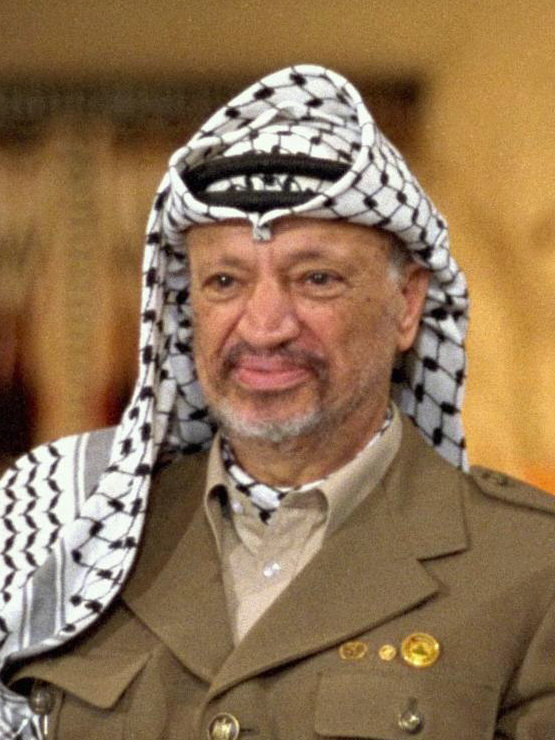
Yasser Arafat à Oslo (Norvège) en 1994 (C) Saar Yaacov / Government Press Office of Israel
Rebâtir Gaza – et un espoir de paix
C’est aussi ce que nous disent les dirigeants arabes qui ont approuvé le plan pour Gaza. Leur but n’est pas de raviver un plan de paix au Proche-Orient, «seulement» de rebâtir Gaza en préservant la dignité humaine de la population arabe palestinienne, meilleur moyen qui soit de préserver la sécurité pour la population juive – et arabe – israélienne, loin d’une Gaza de fiction qui n’existe que dans les fantasmes des nouveaux dirigeants des Etats-Unis. Pourtant, au point où nous en sommes, est-il encore possible de dissocier la reconstruction de Gaza de la paix au Proche-Orient dans son entier ? Est-il en fait souhaitable de distinguer les deux ?
Vingt ans, si l’on ne se base que sur le désengagement israélien de Gaza, c’est long. Entre les diverses opérations de Tsahal sur place, les attentats en Israël et, bien sûr, le 7 octobre ainsi que ses suites, une quantité inhumaine de vies ont été perdues, plus encore ont été brisées. Mais pour celles qu’il est possible de sauver, à Gaza et en Cisjordanie, pour ouvrir enfin l’espoir en Israël d’un avenir autre que la haine et la mort sous Netanyahu, il faut que le plan soit adopté et aille jusqu’au bout.
En dehors de sa finalité matérielle, importante et urgente au point d’en être une question de vie ou de mort, le plan arabe pour Gaza est sans doute là pour rappeler cette triste évidence : les espoirs de paix au Proche-Orient, «C’était mieux avant». Le temps avance mais ne recule jamais, impossible de retrouver cet «avant» et de tout reprendre à zéro. Le passé n’est pas fait pour y vivre. En revanche, il peut être un extraordinaire enseignant si l’on sait, si l’on veut, en tirer les leçons.
De cette victoire à remporter sur la rancœur, sur l’orgueil, ou sur les deux dépend l’avenir, ne serait-ce que la survie, d’un endroit que les Israéliens s’étaient habitués pendant la Première Intifada à comparer à l’enfer, l’expression hébraïque «Lekh le-Azza !», «Va à Gaza !» étant devenue l’équivalent de «Va au diable !» en français. Le paradis onirique d’un Donald Trump se croyant un messie ne sauvera pas Gaza. Mais le plan des dirigeants arabes est la meilleure chance de la sauver de l’enfer qu’elle subit depuis 2007, celui d’un diable aux deux visages, Hamas d’un côté, Netanyahu de l’autre. Et de comprendre qu’il n’est que temps de réparer, autant que faire se peut encore, les sanglantes erreurs du passé.
(G. à d.) : Le Premier Ministre israélien Yitzhak Rabin, le Président américain Bill Clinton et Yasser Arafat, Président de l’État de Palestine, le 13 septembre 1993 à la Maison Blanche (C) Vince Musi / The White House
Bernard J. Henry est Officier des Relations Extérieures de l’Association of World Citizens.
On March 6, 2025, the United Nations (UN) Children’s Fund (UNICEF) warned that many children in the conflicts among militias in Sudan are at risk of rape and other forms of sexual violence which are being used as weapons of war. In November 2024, the Association of World Citizens (AWC) had highlighted that rape was being used as a weapon of war in the Sudan conflicts and that strong counter measures are needed.
“There are numerous types of rape. Rape is committed to boast the soldiers’ morale, to feed soldiers’ hatred of the enemy, their sense of superiority, and to keep them fighting; rape is one kind of war booty; women are raped because war intensifies men’s sense of entitlement, superiority, avidity and social license to rape; rape is a weapon of war used to spread political terror; rape can destabilize a society and break its resistance; rape is a form of torture; gang rapes in public terrorize and silence women and force them to flee homes, families and communities; rape targets women because they keep the civilian population functioning and are essential to its social and physical continuity; rape is used in ethnic cleansing; it is designed to drive women from their homes or destroy the possibility of reproduction; genocidal rape treats women as reproductive vessels to make them bear babies of the rapists’ nationality, ethnicity, race or religion, and genocidal rape aggravates women’s terror and future stigma, producing a class of outcast mothers and children – this is rape committed with consciousness of how unacceptable a raped woman is to the patriarchal community and to herself. This list combines individual and group motives with obedience to military command; in doing so, it gives a political context to violence against women, and it is this political context that needs to be incorporated in the social response to rape.”
The AWC first raised the issue of rape as a weapon of war in the UN Commission on Human Rights in March 2001 after the judgement of the International Criminal Tribunal for the Former Yugoslavia (ICTY) maintained that there can be no time limitation on bringing an accused to trial. The Tribunal also reinforced the possibility of universal jurisdiction – that a person can be tried not only by his national court but by any court claiming universal jurisdiction and where the accused is present.
As Citizens of the World, we need to have a peace-building approach which asks: How does a political conflict degenerate into pervasive mass violence, generating new crises and new forms of violent conflict in the future? Even after a war ends, the effects of sexual violence continue in the form of unwanted pregnancies, sexually transmitted infections, discrimination and ostracizing of victims and often lasting psychological damage. Thus, we must ask how a community pulls itself out from the cycle of violence and creates new attitudes to promote human dignity and develop new institutions of conflict resolution.
Prof. René Wadlow is President of the Association of World Citizens.
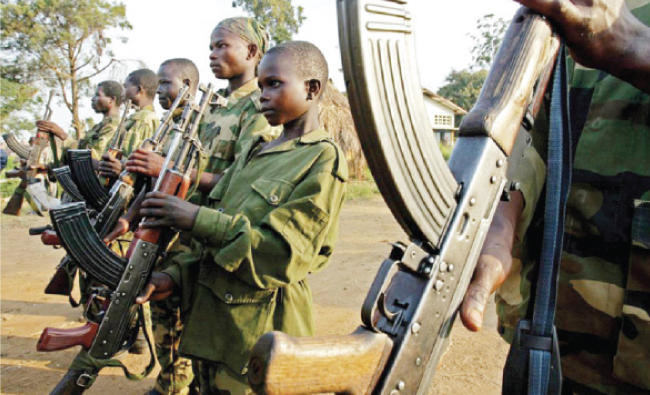
The conquest of the city of Goma, North-Kivu, a city of two million people in the Democratic Republic of Congo in November-December 2024, followed by the conquest by the same forces of Bukavu, the capital of South-Kivu in January-February 2025, a city of one million persons, has brought to attention the use of “child soldiers”, very young people mobilized to kill and destroy. The armed forces, the regular Army of the Democratic Republic of Congo, not having been paid in some time, faded away and left the fighting largely to militias organized along clanic or ethnic lines. There are real possibilities that the fighting will spread to Rwanda and Burundi, perhaps even Uganda.
The issue of child soldiers had gained attention in the ethnic-based fighting in Liberia. Young people had also been used in fighting in Colombia, South America. Child soldiers were often accused of sexual abuse, and there were difficulties in reintegrating the youth in their home villages when the fighting stopped.
Nongovernmental Organizations (NGOs) active in Geneva in the United Nations’ (UN’s) human rights bodies felt that action was needed on the issue of child soldiers and began to organize on the issue. In practice, what gives NGOs their influence is not what an individual NGO can do alone but what they can do collectively. “Networking” is a key method of progress. NGOs make networks which facilitate the trans-national movement of norms and information. Such networks tend to be temporary and highly personalized. However, at the UN, they are bound together in a common desire to protect the planet and advance the welfare of humanity.
In 1979 a Special Working Group on the Rights of the Child was created under the chairmanship of the Polish representative, the legal specialist Adam Lopatka. Government and NGO representatives worked together from 1979 to 1988 for one week each year in Geneva. There was a core group, including the Association of World Citizens (AWC), which worked steadily together. Representatives of the International Committee of the Red Cross and the International Labor Organization were brought into the sessions.
The Working Group managed to come to a consensus on a final version in time for the UN General Assembly to adopt the Convention on the Rights of the Child on November 20, 1989. By creating a common legal framework of world law, the Convention on the Rights of the Child has increased levels of government accountability, bringing about legislative and institutional reforms and increasing international cooperation. As James P. Grant, then UNICEF’s Executive Director, said at the time, “Transcending its detailed provisions, the Convention on the Rights of the Child embodies the fundamental principle that the lives and the normal development of children should have first call on society’s concerns and capacities and that children should be able to depend upon that commitment in good times and bad, in normal times and in times of emergency, in times of peace and in times of war, in times of prosperity and in times of recession.”
The Convention of the Rights of the Child has an important provision banning the recruitment and use in hostilities of persons under 15 years of age. The same provision has been placed in the Rome Statute creating the International Criminal Court. These international legal standards are tools which can be used. It is difficult to reach out to the armed militias active in Congo. However, we must try, as Citizens of the World, to make world law known and put into practice.
Prof. René Wadlow is President of the Association of World Citizens.
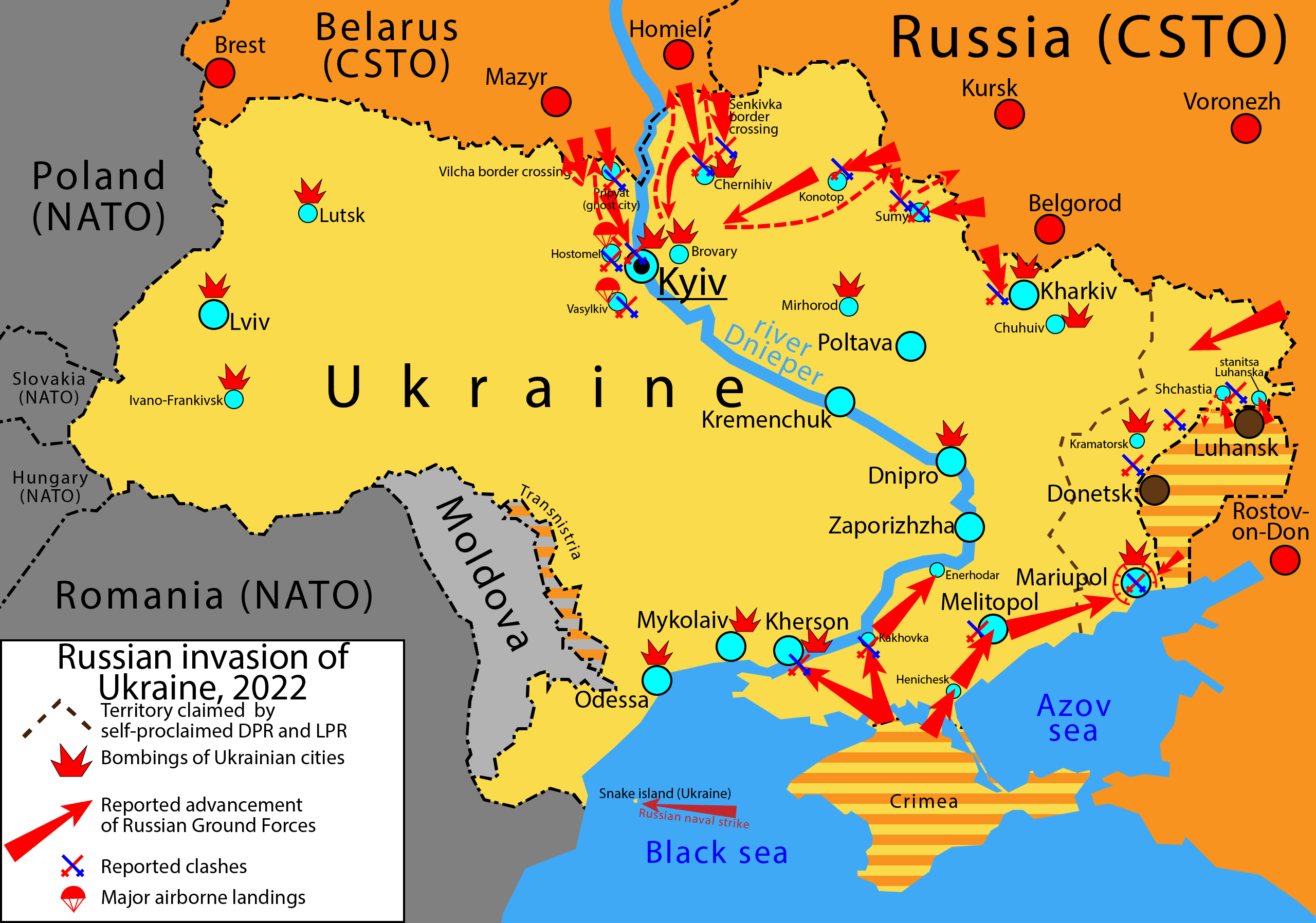
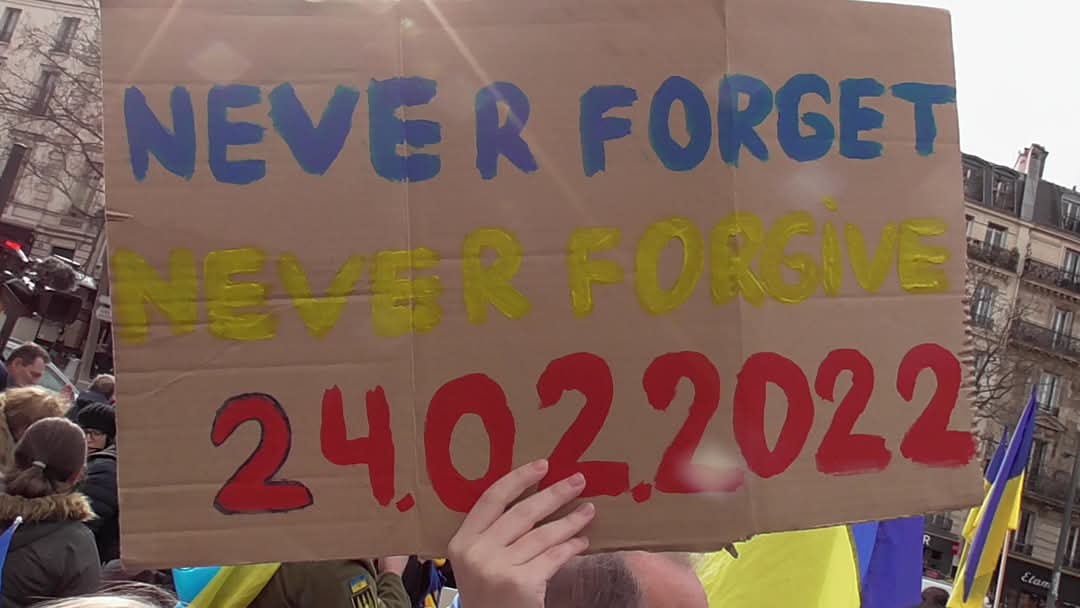
February 24 marks the anniversary of the start of the Russian “Special Military Operation” in Ukraine in 2022 which very quickly became a war with the large loss of life both military and civil, with the displacement of population, and a crackdown on opposition to the war. For three years, the war has continued, lap after lap. Although there were fears that the war might spread to neighboring countries, the fighting has been focused on Ukraine, and more recently on a small part of Russian territory attacked by Ukrainian forces. Can there be a realistic end to the armed conflict in sight?
On February 18, 2025, the United States (U.S.) Secretary of State, Marco Rubio, and the Russian Foreign Minister, Sergei Lavrov, met and discussed in part ending the armed conflict in Ukraine. They discussed a possible Putin-Trump summit that could be held in Saudi Arabia. Earlier, U.S. Army General Mark Milley had said, “There has to be a mutual recognition that military victory is probably, in the true sense of the word, not achievable through military means, and therefore, when there is an opportunity to negotiate, when peace can be achieved, seize it.”
However, the conflict is not one only between the USA and the Russian Federation; it also involves directly Ukraine. The Ukrainian President, Volodymyr Zelenskyy, has stressed strongly that the Ukraine government leadership wants to play a key role in any negotiations. Certain European countries such as France, Germany, Poland and Turkey have been involved in different ways in the conflict as well as in proposing possible avenues of negotiation to bring the conflict to an end. The bargaining process could be lengthy, but also it could be short as there is “handwriting on the wall.”
One key aspect concerns the fate of four Ukrainian areas “annexed” by Russia, Donetsk, Luhansk, Kherson, and Zaporizhzhia largely controlled by Russian troops. President Putin has said, “These regions had been incorporated by the will of the people into the Russian Federation. This matter is closed forever and is no longer a matter of discussion.” However, the status of Crimea and the Donetsk and Luhansk People’s Republics is at the core of what President Zelenskyy wants discussed.
(C) Homoatrox
“Made in War” is the mark of origin stamped upon nearly all States. Their size, their shape, their ethnic makeup is the result of wars. There are virtually no frontiers today that are not the results of wars: world wars, colonial struggles, annexations by victors, wars against indigenous populations. States were not created by reasonable negotiations based on ethnic or geographic characteristics. If frontiers can be modified only by the victors in wars, then there must be new imaginative transnational forms of cooperation. What is needed are not new frontiers but new states of mind.
From April 5 to 7, 2023, the President of France, Emmanuel Macron, was in China and urged that China could play a key role in bringing peace to the Russia-Ukraine conflict. President Xi Jinping had made a very general 12-point peace plan to resolve the Russia-Ukraine conflict – an indication that China is willing to play a peace-making role. China is probably the only country with the ability to influence Russian policymakers in a peaceful direction.
However, there are long historic and strategic aspects to the current armed conflict. Security crises are deeply influenced both by a sense of history and current perceptions. Thus, the Association of World Citizens (AWC) encourages the development of a renewed security architecture as was envisaged by the Helsinki Final Act and the creation of the Organization for Security and Cooperation in Europe (OSCE). There will be much to do to re-create an environment of trust and confidence that has been weakened by this conflict. Nongovernmental Organizations should play an active and positive role.
(C) Bernard J. Henry/AWC
Prof. René Wadlow is President of the Association of World Citizens.
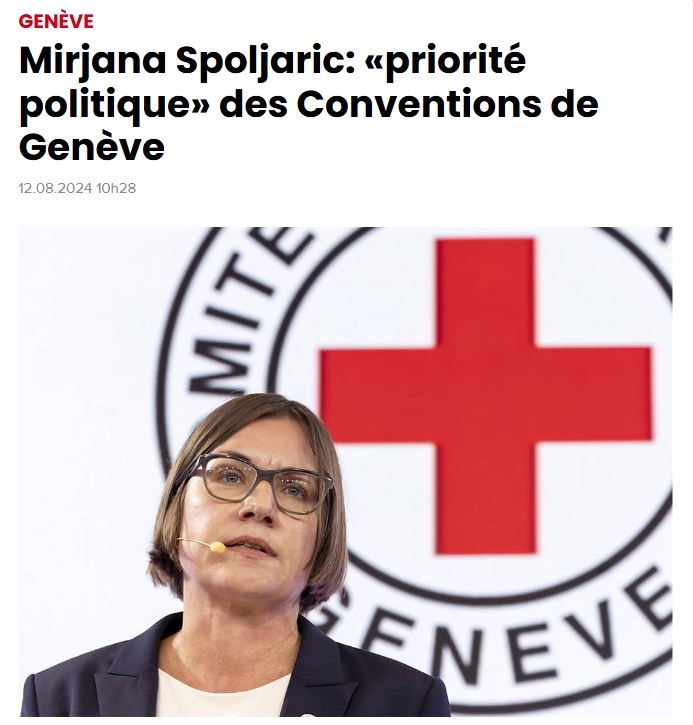
Mirjana Spoljaric, President of the International Committee of the Red Cross (ICRC), warned on February 6, 2025 that there is a serious erosion of respect for international humanitarian law. The ICRC is, through agreements signed with most governments, the chief agency for the respect of the Geneva Conventions, the heart of international humanitarian law.
The armed conflict in Ukraine now spreading to a part of Russia and the conflict between Israelis and Palestinians, especially in the Gaza Strip, have led to the destruction of medical and educational facilities. Civilians have been directly targeted, prisoners of war abused, and hostages taken – all violations of international humanitarian law.
To this sad record of recent abuses must now be added the situation in Goma and the eastern area of the Democratic Republic of Congo. Humanitarian law should be respected by nongovernmental militias such as the M23 in Goma, but they have never signed an agreement to respect the Geneva Conventions. There have been discussions within the ICRC and other humanitarian aid agencies as to the role of nongovernmental militias with respect to international humanitarian law. These are vital discussions as the role of nongovernmental militias has become more frequent in armed conflicts.
The Association of World Citizens (AWC) played a key role in having a coalition of armed groups fighting in Burma to sign the Geneva Conventions. The signature was deposited with the Swiss Government which is the depository power for the Conventions. The signature was considered as only “symbolic” as not involving a government. However, the signature by the militias led to an exchange of prisoners showing that it was taken seriously by the Burmese government.
The AWC has strongly supported the strengthening of international humanitarian law. International humanitarian law is a central core of the broader body of world law. The strengthening of respect for humanitarian law develops a base for the application of international law and such institutions as the World Court.
As Mirjana Spoljaric, a Swiss diplomat before she became President of the ICRC, has stressed, the world society is at a crucial moment. There is a need to reaffirm respect for humanitarian law. Unfortunately, such reaffirmation is not a high priority for most Ministries of Foreign Affairs. Thus, as the AWC has urged, most recently through its appeals of March 2022, October 2023 and October 2024, there is a real possibility for NGOs to take the lead.
Prof. René Wadlow is President of the Association of World Citizens.
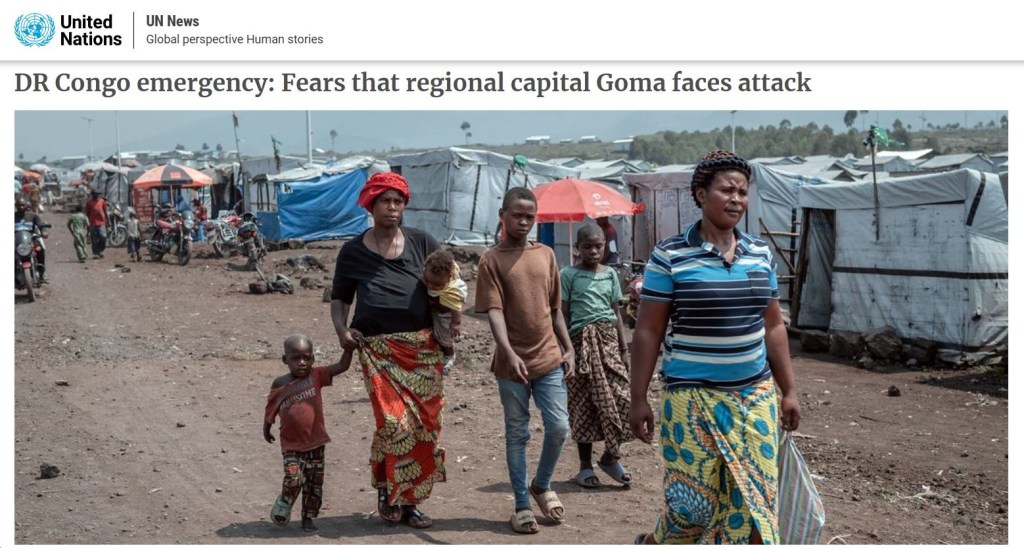
The Imburi are spirits that are said to inhabit the forests of Gabon, in Equatorial Africa, and who cry out for those who can hear them at times of impending violence and danger. The Imburi are now crying out loudly on the increasing dangers and forced migration in Goma, capital of the North Kivu province of the Democratic Republic of Congo – democratic in name only.
The July 31, 2024 ceasefire agreement – never fully effective – has now been broken. Troops of the Tutsi-led militia known as M23 along with regular military of Rwanda are advancing toward Goma, the capital of North Kivu. The Association of World Citizens has members in Goma who keep us informed of the critical situation there – getting worse each day.
(C) UN News
People in the neighboring province of South Kivu are frightened and have started to flee. There are a large number of displaced persons in both North and South Kivu, and some have fled across the frontier into Burundi. Many people are living in displaced persons camps in difficult situations despite the efforts of the United Nations (UN), the International Committee of the Red Cross, and humanitarian aid organizations.
This eastern area of the Congo has been the scene of fighting at least since 1998 – in part as a result of the genocide in neighboring Rwanda in 1994. In mid-1994, more than one million Rwandan Hutu refugees poured into the Kivus, fleeing the advance of the Tutsi-led Rwandan Patriotic Front, which now comprises the government of Rwanda. Many of these Hutu were still armed, among them the “génocidaires” who, a couple of months before, had participated in the killing of some 800,000 Tutsi and moderate Hutu in Rwanda.
Today, there is still large-scale occurrence of serious violations of human rights and international humanitarian law by all parties with massive displacement of populations, plundering of villages, systematic rape of women, summary executions and the use of child soldiers. There is a report from the UN Group of Experts on the Democratic Republic of Congo of December 27, 2024 which outlines clearly the disintegrating situation.
Thus, there is a need to create an enabling political environment which would help develop the rule of law and a vital civil society – a vast task that the Imburi are not sure will be carried quickly enough.
Prof. René Wadlow is President of the Association of World Citizens.