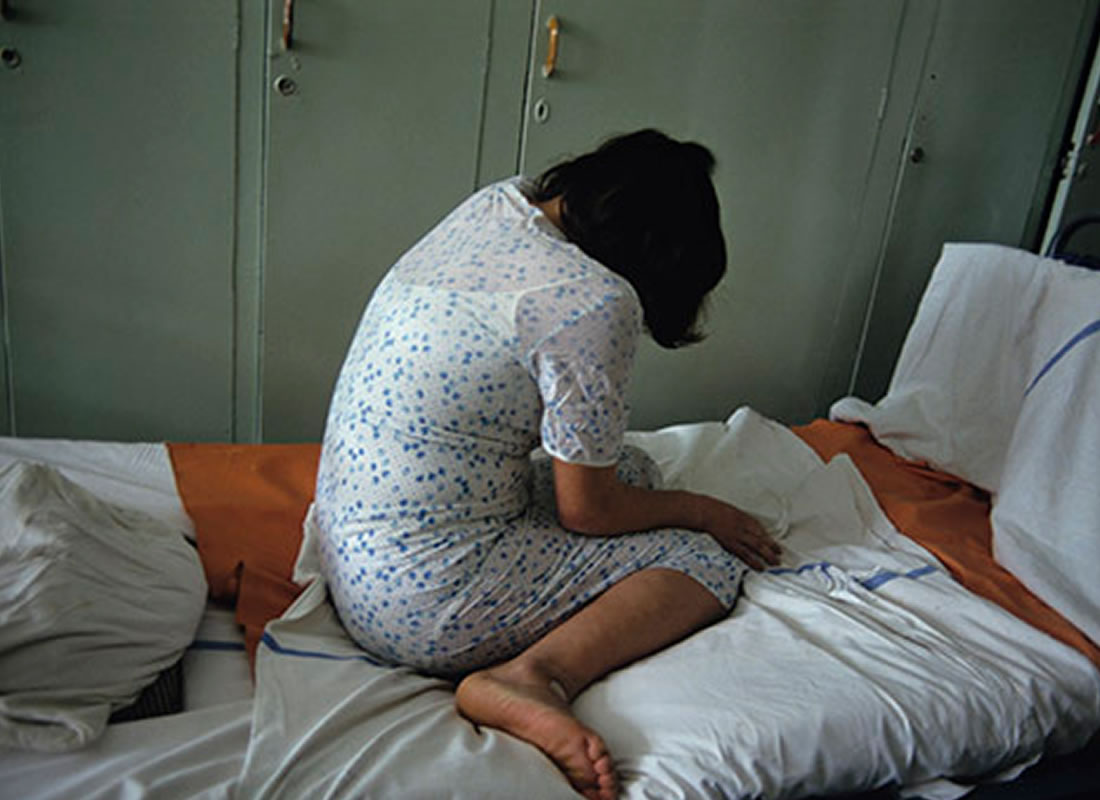
Pramila Patten, the United Nations (UN) Human Rights Council Special Rapporteur on sexual violence in times of conflict reported mid-October 2022 that rape is increasingly used in the armed conflict in Ukraine as a weapon to humiliate and discourage the populations. There had been an earlier September 27 report to the High Commissioner for Human Rights setting out many of the same facts and calling for international action.
In the past, sexual violence had often been dismissed as acts of individual soldiers, rape being one of the spoils of war for whom rape of women was an entitlement. However, with the 2001 trials of war crimes in former Yugoslavia by the International Criminal Tribunal for ex-Yugoslavia, the first convictions of rape as a crime against humanity and violations of the laws or customs of war were handed down against Bosnian Serb soldiers. Bosnian Serb fighters were charged with mass rape and forced prostitution involving dozens of Muslim women and girls, some only 12 years old. The case had taken five years of investigations and more than 30 witnesses for the prosecution. The three soldiers being tried were given a sentence of 12 years imprisonment.
Since then, we have seen patterns of systematic rape become part of International Humanitarian Law, and since 2002 one of the crimes that can be prosecuted within the International Criminal Court. (1)
There have been reports of systematic rape in Ukraine since 2014 with the creation of the People’s Republics of Donetsk and Luhansk by both Ukrainian and separatist soldiers. However, little international attention was given to these reports. It is only with the invasion of Ukraine by Russian troops on February 24, 2022 that international attention has focused on reports of rape especially in areas that were for a time under the control of the Russian military or the militias of the two People’s Republics. (2)
Unfortunately, it would seem that the armed conflict in Ukraine will drag on. There are few signs of a willingness for a negotiated settlement. International Humanitarian Law moves slowly. Rape as a war weapon is used in other armed conflicts such as those in the Democratic Republic of Congo, Darfur, Sudan, and Syria. Strong nongovernmental pressure is needed to keep governmental and UN efforts going on.
Notes
1) For a good overview of both specific armed conflicts and the slow but steady international response, see Carol Rittner and John K. Roth (Eds), Rape: Weapon of War and Genocide (St. Paul, MN: Paragon House, 2012)
2) See Amnesty International “Ukraine 2021”: http://www.amnesty.org, Secretary-General’s Report, Organization for Security and Cooperation in Europe, http://www.osce.org
Prof. René Wadlow is President of the Association of World Citizens.
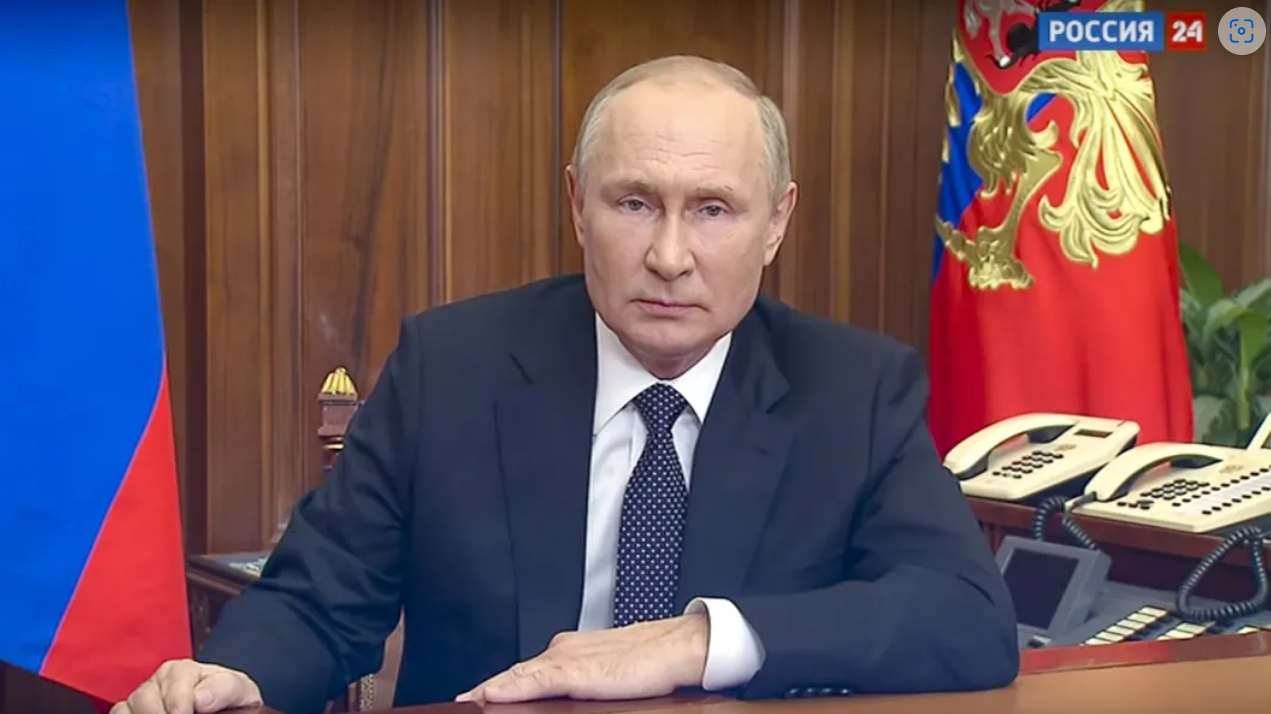
On September 21, the United Nations (UN)-designated Day of Peace, Vladimir Putin, President of the Russian Federation, said in an address to the nation,
“I am addressing you – all citizens of our country, people of different generations, ages and ethnicities, the people of our great Motherland, all who are united by the great historical Russia, soldiers, officers and volunteers who are fighting on the frontline and doing their combat duty, our brothers and sisters in the Donetsk and Lugansk People’s Republics, Kherson and Zaporazhye regions and other areas that have been liberated from the neo-Nazi regime.”
He set out the dangers facing the Federation,
“The goal of that part of the West is to weaken, divide and ultimately destroy our country. They are saying openly now that in 1991 they managed to split up the Soviet Union and now is the time to do the same to Russia, which must be divided into numerous regions that would be at deadly feud with each other … Washington, London and Brussels are openly encouraging Kiev to move hostilities to our territory. They openly say that Russia must be defeated on the battlefield by any means, and subsequently deprived of political, economic, cultural and any other sovereignty and ransacked.”
To meet these challenges, he ordered a “partial mobilization in the Russian Federation to defend our Motherland and its sovereignty and territorial integrity, and to ensure the safety of our people and people in the liberated territories.” Sergey Shoigu, the Russian Defense Minister, set out the details in a public statement just after Putin’s address. The mobilization will call up men below the age of 65 who have had military service. There are some 300,000 people in this category.
The nuclear saber rattling followed. Putin went on,
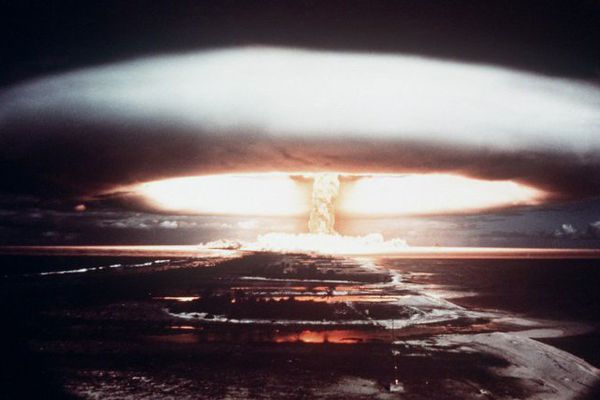
“I am referring to the statements made by some high-ranking representatives of the leading NATO countries on the possibility and admissibility of using weapons of mass destruction – nuclear weapons against Russia … In the event of a threat to the territorial integrity of our country and to defend Russia and our people, we will certainly use all weapon systems available to us. This is not a bluff.”
He ended by saying, “The citizens of Russia can rest assured that the territorial integrity of our Motherland, our independence and freedom will be defended – I repeat – by all the systems available to us.”
What makes the current situation more ambiguous and dangerous is that Vladimir Putin announced and confirmed by Sergey Shoigu that from September 23 to 27, 2022, there would be referendums in the Donetsk and Lugansk People’s Republics and in the areas under Russian control in the Kherson and Zaporazhye regions on joining the Russian Federation. People who are refugees in Russia from these areas will also be able to vote. A vote favorable to joining Russia is not in doubt. Thus, any future military operations by Ukraine forces in these areas could be considered by Russia as an attack on Russian territory.
It is impossible to know to what extent the nuclear weapon saber rattling is serious and goes beyond a justification for the mobilization of former military – not a popular policy. The situation calls for active efforts to decrease tensions on the part of the UN, national governments, and Nongovernmental Organizations. The next weeks may be crucial.
Prof. René Wadlow of the President of the Association of World Citizens.
Après les Etats-Unis en 1976, les Français ont célébré en 1989 le Bicentenaire de la Révolution qui a créé leur république, avec pour traits d’union entre les deux pays le Marquis de la Fayette, «héros des deux mondes» en France comme le deviendrait plus tard Giuseppe Garibaldi en Italie, et le fameux «Ça ira» de Benjamin Franklin, Ministre des Etats-Unis d’Amérique à Paris mais francophone malhabile qui, lorsqu’on lui demandait des nouvelles de son pays, répondait par ces deux seuls mots que les sans-culottes avaient fini par reprendre à leur profit. Mais en France, l’année 1989 fut loin d’être placée sous le seul signe des idéaux de la Révolution française tels que résumés en sa devise officielle – Liberté, Égalité, Fraternité.
Depuis le début des années 1980, la France était régulièrement frappée par le terrorisme lié au conflit israélo-palestinien, comme lorsque fut frappé voici quarante ans ce mois-ci, le 9 août 1982, le restaurant Jo Goldenberg dans le quartier juif de Paris. Depuis les élections municipales de 1983 et dans des proportions sans précédent depuis la Libération, l’extrême droite reprenait pied dans la politique française avec les succès électoraux du Front National, dénoncés ainsi que la complaisance du reste de la classe politique par Louis Chedid dans Anne, ma sœur Anne.
C’était déjà beaucoup, évidemment trop. Mais ce n’était pourtant qu’un début, et bientôt une France déjà en proie à ses propres démons allait se trouver prise au cœur de luttes d’envergure mondiale, luttes qui, bien que jamais vraiment disparues, viennent aujourd’hui se rappeler tragiquement au souvenir non seulement de la France mais du monde entier, avec l’agression de Salman Rushdie le 12 août dans l’État de New York.
La Dernière Tentation du Christ : la Contre-Révolution contre-attaque
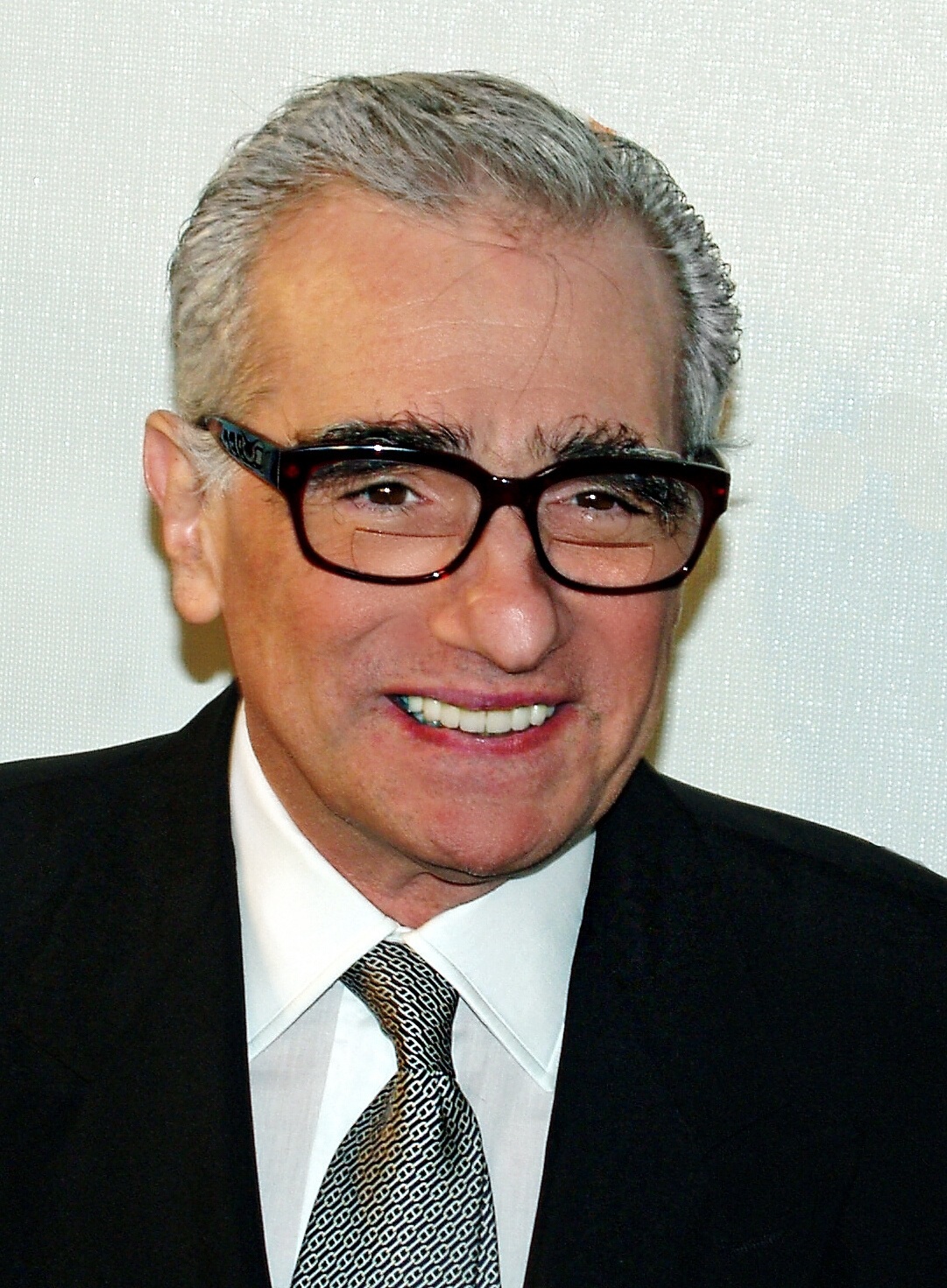
Le réalisateur américain Martin Scorsese (C) David Shankbone
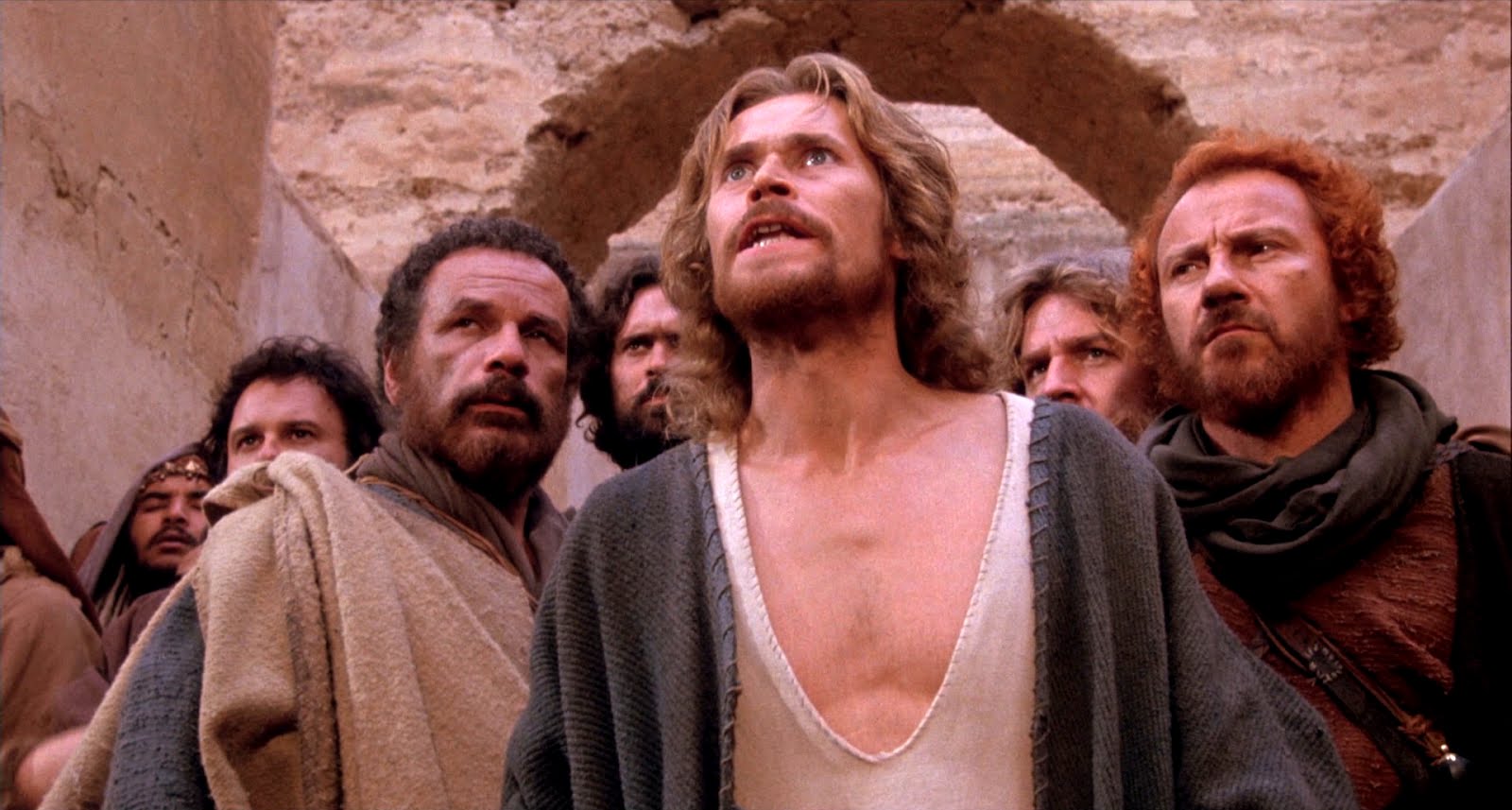
En août 1988, le cinéaste américain Martin Scorsese sort son nouveau film, La Dernière Tentation du Christ, d’après un roman de Níkos Kazantzákis. En rupture directe avec les récits bibliques, Scorsese y dépeint un Jésus vivant comme tout mortel, peu soucieux du péché ou de la foi, et qui prend soudainement conscience de sa mission divine puis entame un parcours messianique en s’opposant aux dirigeants mêmes du peuple juif dont il est issu. Devant les caméras de Scorsese, c’est Jésus lui-même qui demande à Judas, son premier adepte, de le dénoncer aux Romains afin d’être arrêté et mourir en martyr. Mais, alors qu’il attend la mort sur sa croix, Jésus se voit offrir le salut par un ange qui vient lui dire qu’il est Fils de Dieu, mais non pas le Messie, et doit vivre en homme normal. Sauvé par l’ange de la crucifixion, Jésus épouse Marie-Madeleine et fonde avec elle une famille heureuse.
A la fin de sa vie, Jésus appelle auprès de lui ses anciens disciples et Judas lui avoue que l’ange qui l’a sauvé était en réalité Satan, dont lui est venue cette «dernière tentation» de vivre en homme ordinaire et non en Messie. Mourant, Jésus rampe jusqu’à la croix dont Satan l’avait jadis extrait, dans une Jérusalem en flammes puisque n’ayant jamais été pacifiée par son enseignement. Il implore Dieu de le replacer sur la croix, afin de pouvoir enfin accomplir sa destinée. Crucifié une nouvelle fois, il sait sa mission menée à bien et meurt.
Cette uchronie religieuse soulève la fureur chez les Chrétiens à travers le monde entier, d’abord chez les Protestants aux Etats-Unis même puis, en France, chez les Catholiques, l’Archevêque de Paris Jean-Marie Lustiger parvenant même à faire plier le Gouvernement socialiste de François Mitterrand qui, d’abord partenaire du film, finit par jeter l’éponge.
A sa sortie en France en septembre, le film réveille un mouvement catholique intégriste que l’on croyait décapité depuis l’excommunication au printemps de Monseigneur Marcel Lefebvre et la mise au ban par le Vatican de sa Fraternité sacerdotale Saint-Pie-X traditionaliste et hostile à Vatican II. En octobre, un cinéma projetant La Dernière Tentation du Christ est incendié dans l’est de la France et, à Metz, la visite du Pape Jean-Paul II donne lieu au retrait du film des salles locales. Bientôt, le film est déprogrammé partout ailleurs ou projeté sous protection policière. Le 23 octobre, un commando catholique intégriste attaque l’Espace Saint-Michel à Paris, dernière salle projetant encore le film, blessant quatorze personnes dont deux grièvement.
En pleine célébration de sa Révolution et de l’Être suprême, divinité laïque sous les auspices de laquelle était adoptée le 26 août 1789 la Déclaration des Droits de l’Homme et du Citoyen, la France découvre que l’esprit vengeur des Chouans de Bretagne et des royalistes de Vendée qui refusaient la fin de la monarchie de droit divin était toujours là, et que, comme leurs ancêtres révolutionnaires, les Français républicains de 1989 allaient devoir y faire face. Et à l’intégrisme catholique menaçant le Bicentenaire allait bientôt s’ajouter l’intégrisme issu des rangs d’une autre religion majeure de France – l’Islam.
Allah et Les Versets sataniques : les «intégristes musulmans» à l’assaut de l’Être suprême
En 1989, la France ne parle pas encore d’islamisme. Ce terme n’apparaît que l’année suivante, lorsque les premières élections libres et multipartites en Algérie voient non pas la victoire courue d’avance du Front de Libération Nationale (FLN), jusqu’alors parti unique, mais du Front islamique du Salut (FIS), parti prônant une application stricte de la loi coranique dans tous les domaines de l’administration et de la vie publique. Pour l’instant, en cette année 1989, la France parle d’intégrisme musulman. Jusqu’à présent, cet intégrisme s’est surtout manifesté à travers le terrorisme, non dans une moindre mesure en lien avec l’Iran comme en témoigne l’affaire Wahid Gordji. Mais la France est sur le point de découvrir que cet intégrisme peut aussi frapper là où elle l’attend le moins, sur un terrain où, ceinte de ses idéaux révolutionnaires, elle se croit inexpugnable. Le terrain de la culture.
Dès 1987, la chanteuse Véronique Sanson envisageait une chanson contre l’intégrisme religieux, racontant l’histoire d’un couple maghrébin se muant en auteurs d’un attentat-suicide par l’explosion d’un camion. Alors qu’elle entend intituler sa chanson Dieu, le chanteur Michel Berger, son ancien compagnon qui produit pour elle l’album devant contenir la chanson, lui suggère de l’intituler Allah en référence à l’extrémisme musulman qui, à travers le monde, s’affirme alors de plus en plus comme une «troisième force» entre les Etats-Unis de Ronald Reagan et l’URSS de Mikhaïl Gorbatchev. C’est ainsi que la chanteuse enregistre Allah, où elle s’en prend directement au Dieu de l’Islam pour les attentats commis en son nom par des fanatiques.
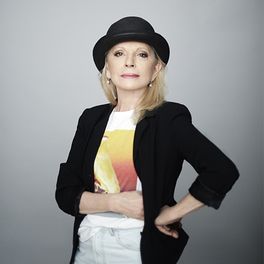
Véronique Sanson
Alors qu’elle s’apprête à donner un concert à l’Olympia, Véronique Sanson reçoit des menaces de mort lui enjoignant de ne pas chanter Allah. Le 14 février 1989, une fatwa est lancée contre elle avec ordre de la tuer. La carrière de la chanson s’arrête là. Mais pas celle de l’extrémisme se réclamant de l’Islam, car bien sûr, Rushdie est le prochain sur la liste.
C’est en septembre 1988 que l’écrivain britannique d’origine indienne, naturalisé américain, publie son quatrième roman, Les Versets sataniques (The Satanic Verses). Les protagonistes, deux artistes indiens vivant en Angleterre contemporaine, se trouvent pris dans un détournement d’avion et, alors que l’appareil explose en plein vol, se voient miraculeusement y survivre puis prendre pour l’un, la personnalité de l’Ange Gabriel et, pour l’autre, celle d’un démon. Ce dernier réussit à ruiner la vie, notamment sentimentale, de son comparse qui le lui pardonne toutefois en bon ange que, selon lui, il est devenu. Tous deux rentrés en Inde, le premier tue sa compagne avant de se suicider, et le second, jusqu’alors brouillé avec son identité indienne ainsi que son propre père, se réconcilie avec les deux et reste vivre dans son Inde natale.
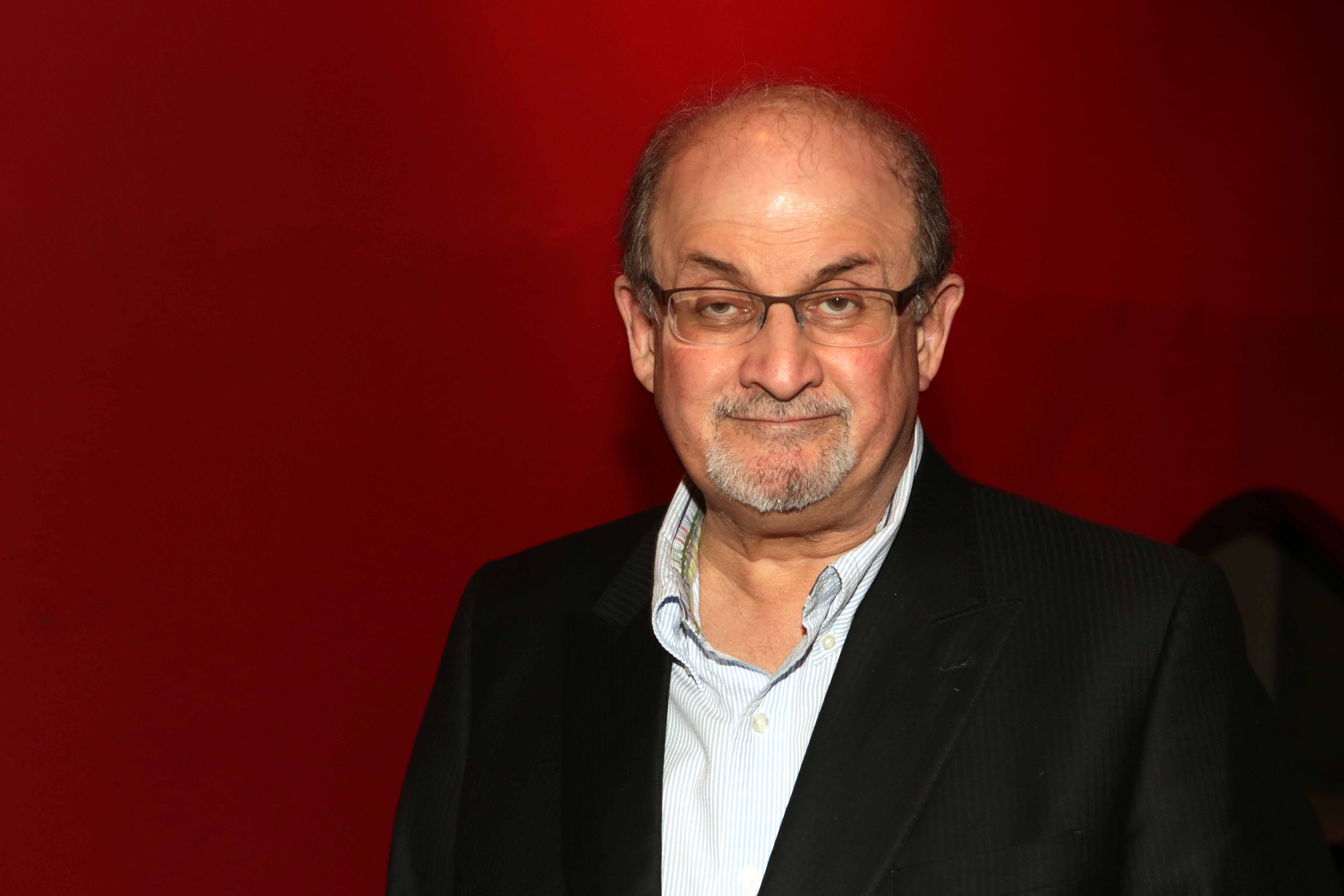
Salman Rushdie
Mais derrière cette histoire de deux Indiens frappés d’une maladie mentale, servant de trame au roman de Rushdie, d’autres parties du roman s’avèrent plus problématiques, du moins pour les Musulmans les plus dogmatiques.
A l’instar de Scorsese mettant en scène un Christ détourné de sa mission salvatrice par un Satan habilement déguisé, Rushdie dépeint Mahomet, le Prophète de l’Islam, adoptant trois divinités païennes de La Mecque en violation du principe islamique du dieu unique, les trois divinités ayant dicté à Mahomet de faux versets du Coran en ayant pris l’apparence d’Allah. Le récit romancé de Rushdie amène ensuite des prostituées de La Mecque à se faire passer pour les épouses du Prophète, puis l’un des compagnons de Mahomet à douter de lui en tant que messager de Dieu et l’accuser d’avoir volontairement réécrit certaines parties du Coran en occultant le verbe divin.
Rushdie poursuit avec le récit, toujours fictif, d’une jeune paysanne indienne affirmant recevoir des révélations de l’Archange Jibreel («Gabriel» en arabe). Elle convainc son village entier d’entreprendre un pèlerinage en marchant jusqu’à La Mecque, affirmant qu’ils pourront tous traverser la mer à pied. Mais les pèlerins disparaissent tous, les témoignages discordant sur leur noyade pure et simple ou leur traversée miraculeuse de la mer comme l’aurait promis l’Archange Jibreel.
Puis Rushdie présente un chef religieux fanatique expatrié, «l’Imam», chef religieux en lequel est aisément reconnaissable l’Imam Ruhollah Khomeini, Guide suprême de la République islamique d’Iran, exilé en France jusqu’à la révolution islamique de 1979.
Après le tollé chez les Chrétiens contre Scorsese, c’est au tour de Rushdie d’enflammer le monde musulman. Au Pakistan, Les Versets sataniques sont interdits et, le 12 février 1989, dix mille personnes manifestent contre lui à Islamabad où le Centre culturel américain et un bureau d’American Express sont mis à sac. L’Inde interdit l’importation de l’ouvrage et des autodafés se font jour en Grande-Bretagne.
En février 1989, c’est au tour de Khomeini d’ajouter à la polémique en édictant une fatwa, littéralement une «opinion juridique», facultative en Islam sunnite mais ayant valeur contraignante chez les Chiites, appelant au meurtre de Rushdie et de ses éditeurs ainsi qu’à faciliter ce meurtre à défaut de le commettre soi-même. En Grande-Bretagne, le Gouvernement conservateur de Margaret Thatcher prend fait et cause pour Rushdie, qu’il place sous protection policière, mais un jeune député travailliste nouvellement élu organise dans sa circonscription une marche pour l’interdiction des Versets sataniques et un ancien leader du Parti conservateur, Norman Tebbit, sans aucun lien personnel avec l’Inde ou l’Islam par ailleurs, condamne et injurie publiquement Rushdie.
Là où Martin Scorsese continue d’aller et venir librement, Véronique Sanson ayant tôt fait de sortir de nouveaux titres et faire oublier Allah, Rushdie se trouve désormais prisonnier d’une alternative qui résume tout son sort – la clandestinité ou la mort.
Héritage humaniste contre héritage de haine
Devenu invisible et introuvable, Rushdie publie en 1995 un nouveau roman, Le dernier soupir du Maure (The Moor’s Last Sigh). Mais, pour avoir perdu en intensité, la menace de Téhéran n’en a pas pour autant disparu. Loin des regards, c’est désormais par procuration que Rushdie continue d’être attaqué.
En 1991, les traducteurs italien et japonais de Rushdie sont assassinés. Deux ans plus tard, un traducteur norvégien des Versets sataniques échappe de peu à une tentative de meurtre par balles puis un traducteur turc manque de succomber à un incendie volontaire qui le visait.
En 1998, l’Iran de Mohammed Khatami, Président se voulant réformiste, annonce la fin de la fatwa contre Rushdie qui, à son tour, abandonne sa vie en clandestinité. Mais en 2006, le conservateur nationaliste Mahmoud Ahmadinejad qui a succédé à Khatami fait marche arrière ; pour lui, une fatwa ne peut être annulée que par la personne qui l’a édictée, et puisque Khomeini est décédé, la fatwa est irréversible. Dix ans plus tard, la prime promise par l’Iran pour le meurtre de Rushdie dépasse les trois millions de dollars, notamment sous l’impulsion des médias iraniens.
Et le 12 août dernier, alors qu’il s’apprête à donner une conférence à la Chautauqua Institution dans l’Etat de New York, Rushdie est poignardé au cou par Hadi Matar, Chiite d’origine libanaise dont les réseaux sociaux grouillent de messages de soutien au régime iranien et d’admiration pour Khomeini. Hospitalisé en urgence, placé sous assistance respiratoire, il est menacé de perdre un œil ; le 14, son agent annonce qu’il se rétablit et respire normalement. En Iran, la presse conservatrice couvre de louanges Hadi Matar qui, ensuite amené devant la justice, plaide non coupable.
En France, d’aucuns convoquent aussitôt le souvenir de l’attentat terroriste du 7 janvier 2015 contre la rédaction de Charlie Hebdo, régulièrement accusé de s’en prendre systématiquement à l’Islam et aux Musulmans, en particulier depuis la publication dans ses colonnes, en 2006, de caricatures de Mahomet parues dans un journal d’extrême droite au Danemark. C’est toutefois après avoir critiqué non l’Islam mais l’islamisme, incarné par le parti tunisien Ennahda et une partie du Conseil national de Transition en Libye, que Charlie Hebdo avait connu en 2011 l’incendie de ses locaux à Paris. Quant à l’attentat ayant décimé sa rédaction, Charlie Hebdo le devait bien à deux terroristes résolus, deux frères membres d’Al-Qaïda en Péninsule Arabique, Cherif et Saïd Kouachi. L’Islam ne tue pas, l’islamisme oui.
Pour les Français, immanquablement, le souvenir de l’attentat contre Charlie Hebdo en appelle un autre, celui de l’assassinat de Samuel Paty, professeur d’histoire-géographie victime d’un autre attentat terroriste à Conflans-Sainte-Honorine, en région parisienne, le 16 octobre 2020 alors que se tenait justement à Paris le procès des auteurs présumés des attentats de janvier 2015 dont celui contre Charlie Hebdo, en dehors des frères Kouachi et d’Amedy Coulibaly qui avait attaqué l’Hyper Cacher de la Porte de Vincennes. Samuel Paty avait été dénoncé par certains élèves musulmans comme ayant utilisé des dessins parodiques de Mahomet parus dans Charlie Hebdo, ce qui avait fait de lui une cible du seul fait de son enseignement, non contre l’Islam mais en faveur de l’esprit critique.
Étrangère à l’univers anglo-saxon de l’Amérique de Scorsese ou de l’Angleterre de Rushdie, la France qui célébrait sa Révolution s’était retrouvée victime collatérale des deux épisodes mais n’en avait pas connu de semblable pour ses propres artistes, notamment pas pour Véronique Sanson contre laquelle la fatwa aura fait long feu. Inspirée par le Bicentenaire de la Révolution, Isabelle Adjani, l’une des actrices françaises les plus en vogue à l’époque, n’en avait pas moins lu à haute voix un extrait des Versets sataniques lors de la cérémonie des Césars en 1988. Malgré tout, la France républicaine avait bien dû se faire une raison, constatant que les idéaux qu’elle célébrait et voulait universels ne l’étaient pas tant qu’elle le croyait et que, dans cet Occident qui regardait de haut un «Tiers Monde» auquel il imputait l’intégrisme religieux comme une conséquence de son sous-développement, ce même intégrisme existait aussi, non du seul fait de migrants musulmans mais aussi de citoyens de lignée locale depuis des siècles, non du seul fait d’un Islam qui, ailleurs, avait pris les armes mais aussi du même catholicisme qui, le dimanche matin, rassemblait les fidèles devant Le Jour du Seigneur sur la télévision d’État.
Triste préfiguration d’un monde qui, en quittant les années 1980 et par miracle la Guerre Froide, (r)entrait successivement dans la guerre «chaude» avec la campagne militaire internationale pour la libération du Koweït envahi en août 1990 par l’Irak, les guerres balkaniques avec camps d’internement et purification ethnique rappelant sombrement la Shoah, le terrorisme généralisé, ici islamique du fait d’Al-Qaïda et ailleurs d’extrême droite comme à Oklahoma City, et l’extrême droite au pouvoir, fût-ce en coalition gouvernementale, comme en Italie.
D’aucuns en France voudraient penser que tous les chemins mènent non à Rome, mais à Paris, et donc que tous les chemins en partent aussi. En 1789, la Déclaration des Droits de l’Homme et du Citoyen avait bel et bien résonné, pour sa part, loin par-delà les frontières du Royaume de France. Là où les textes constitutionnels américains avaient été scrutés principalement par les ennemis britannique et espagnol de la jeune Amérique indépendante, la proclamation française «en présence de l’Être suprême» avait permis au monde entier de comprendre qu’une nouvelle ère commençait. Deux cents ans plus tard, la fête de ce légitime moment de fierté pour le peuple français lui offrait tout le contraire, l’obscurantisme et la violence venues d’ailleurs convergeant vers Paris pour ternir ce moment de joie et ouvrir la voie à une fin du vingtième siècle qui ne pouvait que laisser craindre le pire.
La Déclaration universelle des Droits de l’Homme et du Citoyen adoptée le 26 août 1789 (C) Musée Carnavalet – Paris
Aucun respect du droit sans respect de l’écrit
Et le vingt-et-unième siècle n’a pas manqué de tenir les terribles promesses de son prédécesseur. Pire attentat terroriste de l’histoire en 2001, extrême droite au pouvoir dans deux pays d’Europe et ayant manqué de l’être aussi en France en 2002, invasion de l’Irak cette fois sans mandat international en 2003, tortures de civils dans ce même Irak l’année suivante … La liste serait bien trop longue. Mais une chose est sûre, ce qui était au vingtième siècle le futur ressemble horriblement à ce qui était vu, à l’époque, comme un passé révolu.
Des écrivains comme Rushdie, tous les pouvoirs tyranniques en ont toujours emprisonné, interdit, torturé voire tué. Dans le contexte individuel de 1989, plus encore en France, Rushdie était devenu le symbole vivant d’un mal nouveau, menaçant un monde où le Mur de Berlin était toujours debout même si l’URSS vaincue en Afghanistan semblait à genoux. Mais avec le nouveau siècle est venue l’expansion de la nouvelle technologie, et avec elle, la possibilité d’être auteur sans plus devoir passer par un journal ou une maison d’édition, avec l’apparition des blogs et, pas toujours pour le meilleur, des réseaux sociaux. Et qui dit nouveaux moyens d’expression dit nouvelle peur pour les régimes répressifs, et avec cette nouvelle peur, de nouveaux motifs de répression. Publié sur papier ou autopublié sur Internet, qu’importe aujourd’hui, vous risquez tout autant de payer cher le moindre de vos mots contre qui veut régner en imposant le silence.
Active au sein du Conseil des Droits de l’Homme des Nations Unies, l’Association of World Citizens ne s’est jamais limitée pour autant à cette seule enceinte genevoise, ayant toujours porté la défense des Droits Humains partout où elle le peut.
En Tunisie où, depuis un an, les initiatives du Président Kaïs Saied mettent à mal l’héritage de la Révolution de janvier 2011, le journaliste Salah Attia en a fait les frais pour avoir dénoncé ces dérives autoritaires en direct sur la chaîne Al Jazeera. Jugé sur ce seul fondement par des militaires en uniforme, il s’est retrouvé détenu à la prison de Mornaguia près de Tunis. Dans la Libye voisine qui n’a jamais su trouver sa voie nouvelle depuis la révolte populaire contre Mu’ammar Kadhafi, hélas devenue intervention militaire franco-britannique aux motifs plus qu’incertains, c’est Mansour Atti, journaliste lui aussi, mais également blogueur et dirigeant local du Croissant-Rouge, qui fut enlevé en juin 2021 par un groupe armé réputé proche des Forces armées libyennes.
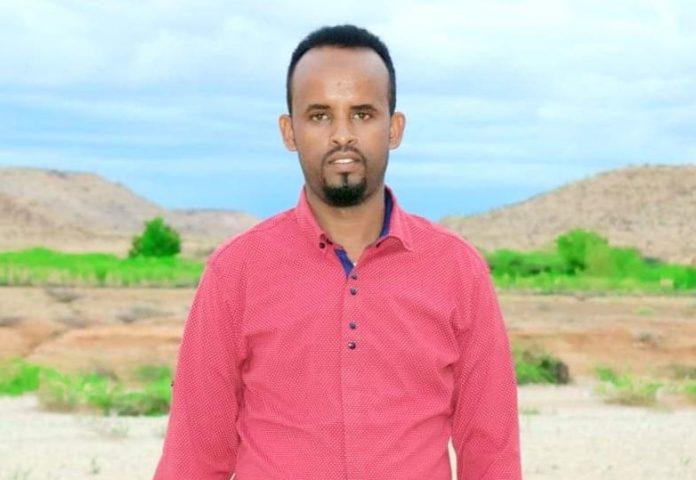
Toujours en Afrique mais plus au sud, dans la Corne du continent, en Somalie où l’État central ne s’est jamais vraiment reconstitué depuis 1990 et la désagrégation du pays après la fin de la dictature de Mohamed Siad Barré, un journaliste indépendant nommé Kilwe Adan Farah fut arrêté en décembre 2020 dans la région autonome de facto du Puntland où il venait de couvrir une manifestation contre les autorités locales. Jugé lui aussi par un tribunal militaire, il fut condamné à trois ans d’emprisonnement pour avoir «répandu des fausses nouvelles et incité au mépris envers l’État». A ce jour, il purge encore sa peine.
Kilwe Adan Farah
Le terrorisme jihadiste en France et ailleurs l’a prouvé : ce qui menaçait Salman Rushdie n’a jamais disparu, tout au plus changé de forme. Mais aujourd’hui, là où un interdit fanatique peut toujours frapper quelqu’un qui s’exprime par l’écrit, l’interdit peut venir également des forces armées dans un pays cherchant sa voie constitutionnelle et, dans le meilleur des cas, démocratique. Quitte à oser vouloir faire croire qu’un écrit public dénué de toute intention malveillante peut menacer un pays tout entier de ne jamais (re)trouver une vie libre et paisible.
En France, en Grande-Bretagne et aux Etats-Unis, mais bien sûr pas seulement, la loi permet de saisir la justice contre un écrit public et obtenir soit réparation si l’on est visé à titre personnel, soit condamnation pénale dans le cas d’un abus de la liberté d’expression internationalement reconnaissable comme tel, par exemple à travers la jurisprudence de la Cour européenne des Droits de l’Homme. Et ce sera toujours, dans ces trois pays et partout ailleurs dans le monde, une infaillible indication du respect de l’État de droit par opposition à la loi de la jungle ou à celle du talion. Quiconque se reconnaît Citoyen du Monde doit défendre sans faille ces principes, sachant que là où un écrit peut valoir la mort, il n’est aucune responsabilité envers sa communauté locale, a fortiori envers la communauté humaine mondiale, que l’on puisse entendre assumer à moins que ce ne soit, au bout du compte, en vain.
Bernard J. Henry est Officier des Relations Extérieures de l’Association of World Citizens.
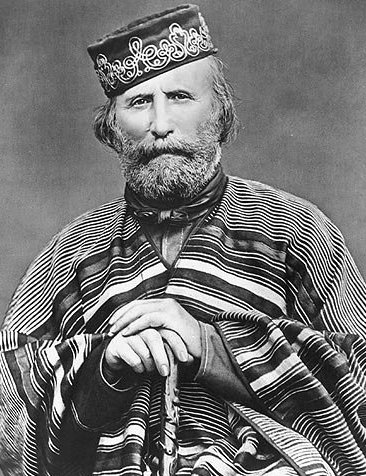
Giuseppe Garibaldi born on the July 4, 1807 in Nice, now in France, often called the Hero of Two Worlds (in Italian, “L’Eroe dei Due Mondi”) because of his efforts for independence in Latin America and then Europe, is in many ways in inventor of transnational democratic politics. He was brought up in a religious Catholic family; his mother hoped that he would become a priest. However, the Church of Pope Leo XII had fallen asleep in its dreams of past glories. Garibaldi saw the need for change, and for a mystic motor to produce that change. Thus at 26, he joined the Young Italy movement of Giuseppe Mazzini. Young Italy was the public face of the Carbonari with its overlapping membership with that of Freemasonry, both outlawed throughout Italy, except in the Piedmont.
Giuseppe Garibaldi
The factor uniting the Carbonari and Freemasonry was a militant opposition to the Roman Catholic domination of Italy. Both the Carbonari and Freemasonry shared the idea that politics should be based on the growth of individual development through stages of initiation. As Mazzini wrote in his Faith and the Future, “How many stars, unraveled concepts of each epoch, must be raised in the sky of intelligence that Man, complete embodiment of the earthly Word, may say to himself: I have faith in myself; my destiny is accomplished.” (1)
Although, by definition, it is difficult to trace the influence of secret societies, the Carbonari are credited with winning constitutions in Spain and some states in Italy in 1820-21. They were also involved in the struggle for Greek independence and with the 1825 Decembrist rising in Russia. The Carbonari had a transnational view of politics and were willing to work wherever democratic ideals could be advanced, at times by armed revolt.
In 1834, Garibaldi participated in a failed military coup against the Duke of Savoy and was forced into exile in Latin America from 1836 to 1848. It was in Uruguay and Argentina that with Italian volunteers he organized a guerrilla force, the Red Shirts — modeled on the shirts worn in slaughterhouses so as not to show the stains of blood. The militias of colored shirts were taken up by Mussolini and Hitler — a symbol of civilian unity outside the uniforms of military forces.
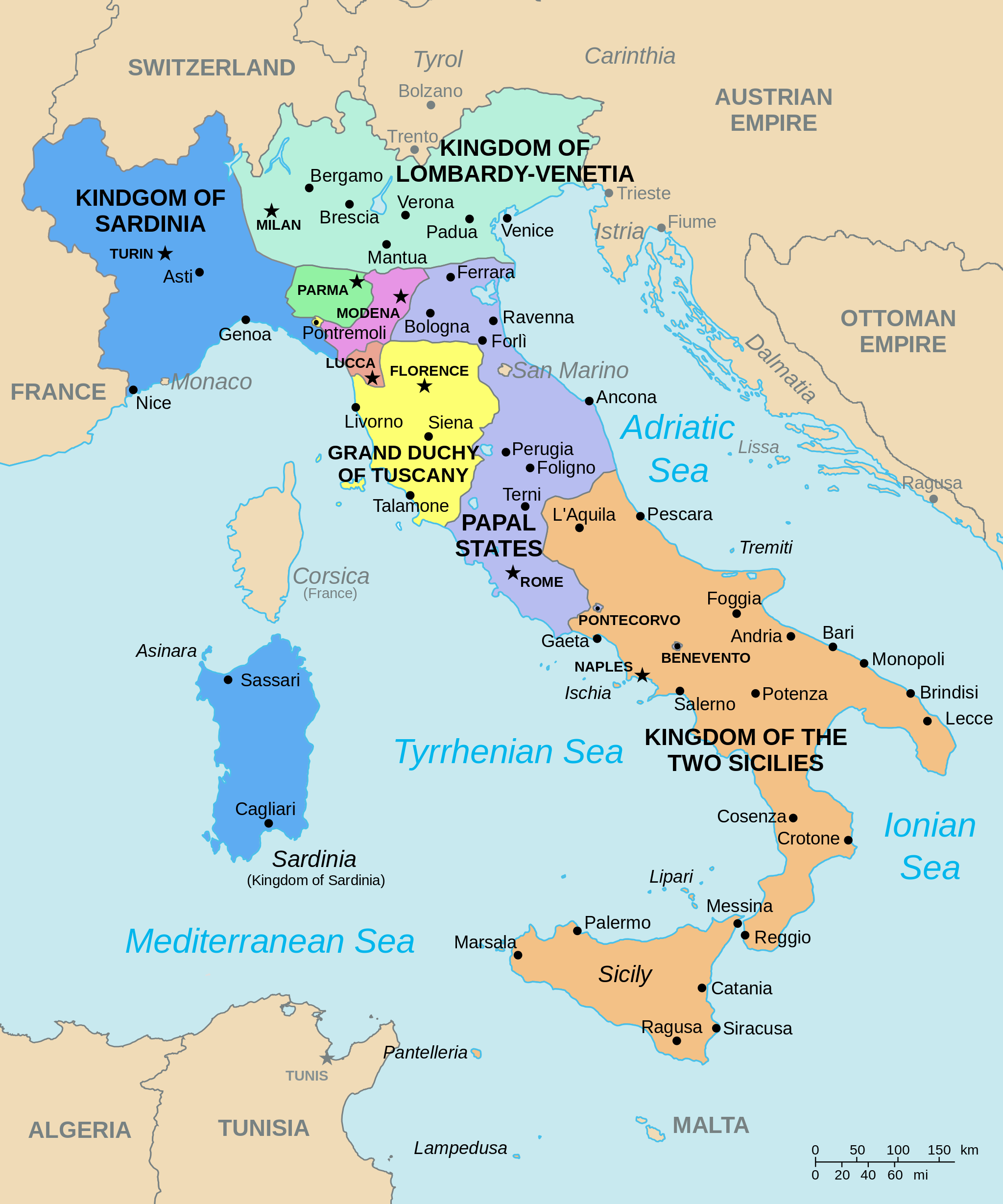
He returned to Italy in 1848 — the year of failed democratic revolutions. The Italian political movements could not decide on what type of Italy they wanted — federal or centralized, republican or monarchist. But the foundations of autocratic rule would never be the same again. By 1860-61, the power of Vittorio Emanuele as King of Italy was established, though the real unity of Italy would take longer. The Papal states, an area going from Rome to the port of Ancona on the Adriatic and north as far as Bologna, were not yet integrated. It was in large measure Garibaldi who was able to unite the self-aggrandizement of the Piedmontese Government of Vittorio Emanuele under the skilled leadership of Camillo Cavour with the progressive republicanism of Mazzini.
Italy in 1843, before unification
After the unification of Italy, his last military battles were with what he hoped would become Republican France against Prussia in 1870-71. The last 10 years of his life are those which made him the godfather of transnational democratic politics. From his island home of Caprera, off Sardinia, as president of the League of Democracy, he advocated a united democratic Europe, the emancipation of women, free education for all, the abolition of the death penalty, the end of the Papacy, and the independence of mind. His program followed closely that of his early Carbonari days, and he re-established his Carbonari-Freemasonry ties with the democratic forces of Europe.
Many major Italian movements, Fascism and Communism included, claimed Garibaldi as their ancestor. Only Planned Parenthood could not use him for their cause. The Italian state has used Garibaldi as a figure of Italian patriotism. However, as Max Gallo underlines in his biography Garibaldi, La force d’un destin, it is as a European with a policy of transnational politics, that Garibaldi stands out. From secret society to ideological advocacy in the League for Democracy, Garibaldi experimented with many forces of transnational politics. While the use of force must be ruled out today, his other avenues may serve as inspiration as we develop new forces of democracy and justice.
Note: (1) Quoted in E.E.Y. Hales, Mazzini and the Secret Societies (New York: P. J. Kenedy & Sons, 1954).
Prof. René Wadlow is President of the Association of World Citizens.
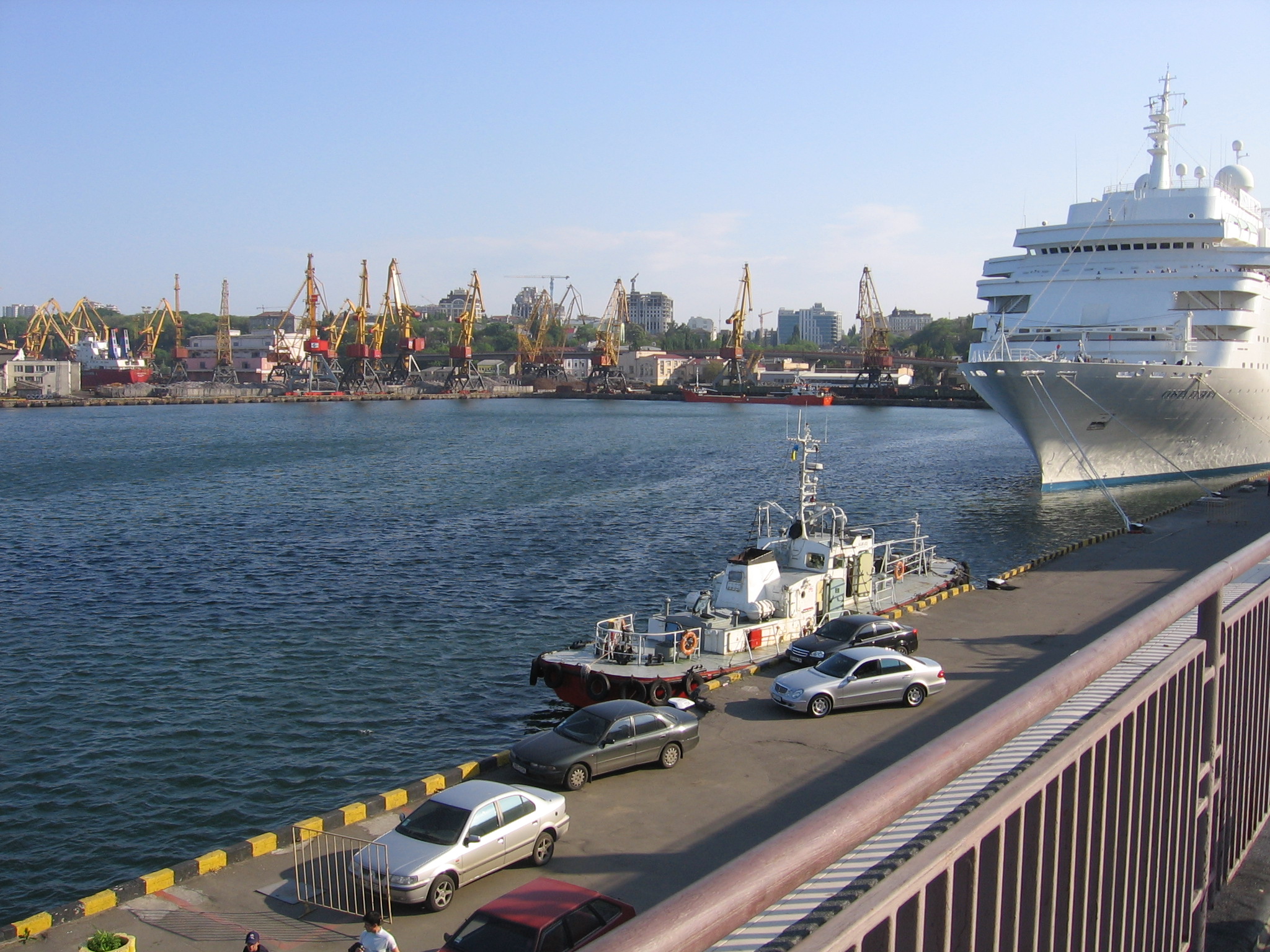
The Association of World Citizens (AWC) urges action to lift the blockade on Odessa and other Black Sea ports so that grain and other food resources can resume to flow. Ukraine has a vast agricultural base producing 46 percent of the world’s sunflower exports and 10 percent of the world’s wheat exports. The Middle East and Africa are Ukraine’s food export market. Odessa has a large grain terminal in which vast quantities of food exports are now stuck. It is not physically possible to transport large quantities of grain by rail and road.
Odessa’s port, peaceful and flourishing, before the Russian invasion. (C) Raymond Zoller
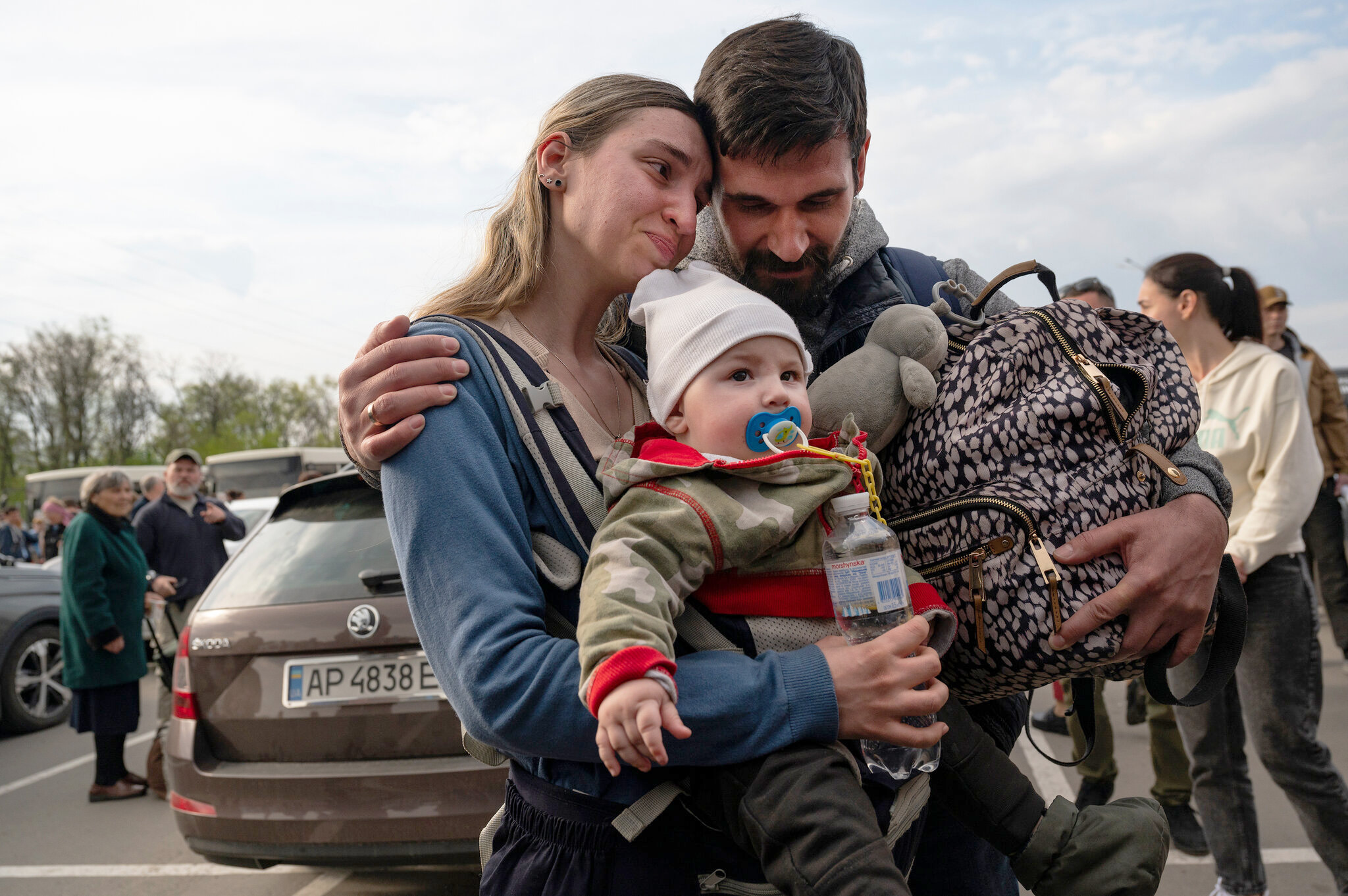
In part due to this blockade, food prices for grain have risen some 20 percent, hitting especially the poor. In some parts of Africa, due to climate conditions and armed conflict, there are near famine conditions. New food supplies are urgent.
A Ukrainian family evacuated from Mariupol. (C) Lynsey Addario for The New York Times
Russian authorities have said that they were ready to provide a humanitarian corridor for ships carrying food, but only in return for the lifting of U. S. and Western European sanctions. However, the Western sanctions have a multitude of sources. The lifting of the Odessa blockade and renewed grain shipments must be treated as a single issue, although it is obviously colored by the whole armed conflict.
There are diplomatic efforts underway led by the African Union and the United Nations. It is urgent that speedy progress be made. Nongovernmental organizations may be able to play a creative role as many NGOs are already involved in ecologically-sound development projects in areas under agricultural and food stress. The AWC, concerned with the resolution of armed conflicts through negotiations in good faith, appeals for creative diplomatic measures so that the blockade is ended as soon as possible.
Prof. René Wadlow is President of the Association of World Citizens.
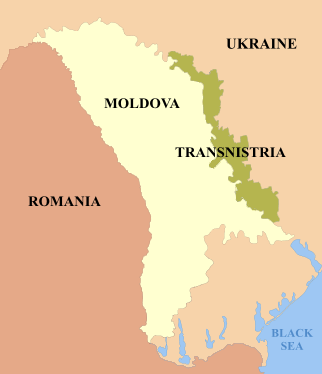
Recent statements by Russian military authorities such as General Roustan Minnekaiev involved in the Ukraine conflict have drawn attention to what was often considered as a “frozen conflict” in Moldova. The situation of the Transnistrian region in Moldova has been considered as a frozen conflict due to its unresolved but static condition since the violent confrontation in June 1992.
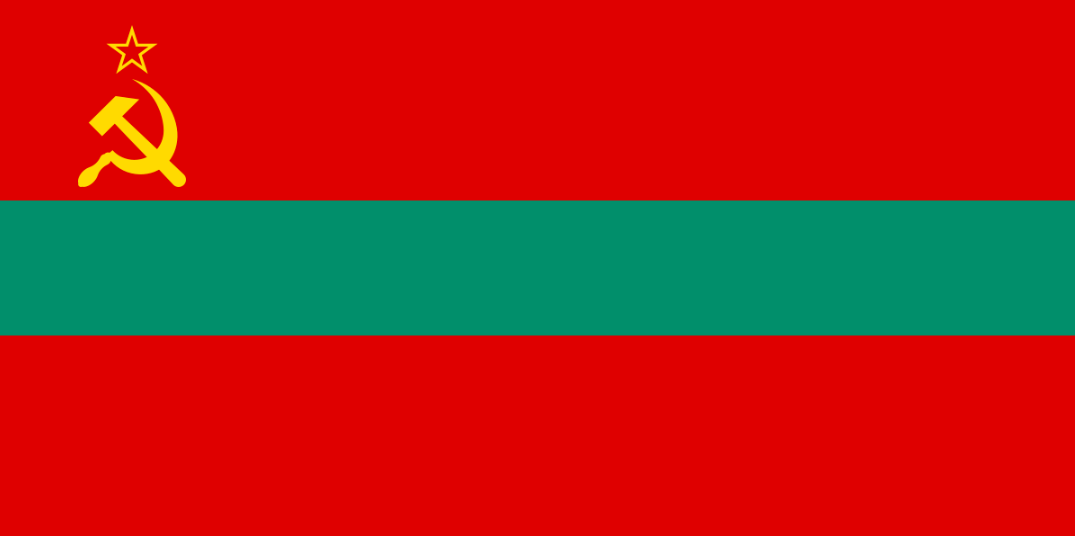
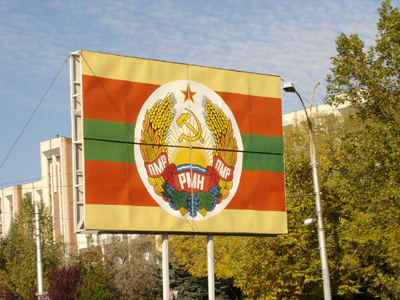
Transnistria is de facto independent with many state-like attributes and calls itself officially the Moldovan Republic of Dniestr. However, no other state, including the Russian Federation, has recognized it as an independent state. There are, however, some 1,500 Russian military permanently present in Transnistria. Transnistria had some 706,000 inhabitants in 1991 at the time of the breakup of the Soviet Union. Today, there are some 450,000 – probably less. Many, especially young people, have left to study or work abroad. Many in Transnistria have Russian passports in order to travel. The Transnistrian economy is in the hands of a small number of persons closely linked to the government.
There have been a number of negotiations between representatives of the government of Moldova and those of the government of Transnistria, but which have led to no agreement as to a possible reintegration of Transnistria. Official negotiations have been complemented by Track II efforts, informal discussions in which members of civil society also participated. The newly elected, in November 2020, President of Moldova, Ms. Maia Sandu, has been actively speaking of the reintegration of Transnistria into Moldova. Her position has been strongly supported by the government of Ukraine which sees the parallel with their situation concerning the two People’s Republics – the People’s Republic of Donetsk and the People’s Republic of Luhansk.
Presidents Maia Sandu (left) and Volodymyr Zelensky of Ukraine (right)
There is a danger that the frozen conflict of Moldova begins to melt. Russian military authorities involved in the Ukraine conflict have spoken of a possible creation of a land route between Crimea and Transnistria. In addition, there have been recently a number of rocket attacks, possibly by Ukrainian forces, on to Transnistria damaging radio-TV towers used by Russian broadcasting. While it is unlikely that the fighting in Ukraine spreads to Transnistria and Moldova, the situation must be closely watched and preventive discussions put into place.
Prof. René Wadlow is President of the Association of World Citizens.
The invasion by Russian troops into Ukraine has raised in a dramatic way the issue of the respect of international humanitarian law. There have been reports of the use of cluster munitions fired into civilian areas. The Association of World Citizens (AWC) was very active on efforts which led to the convention banning cluster weapons.
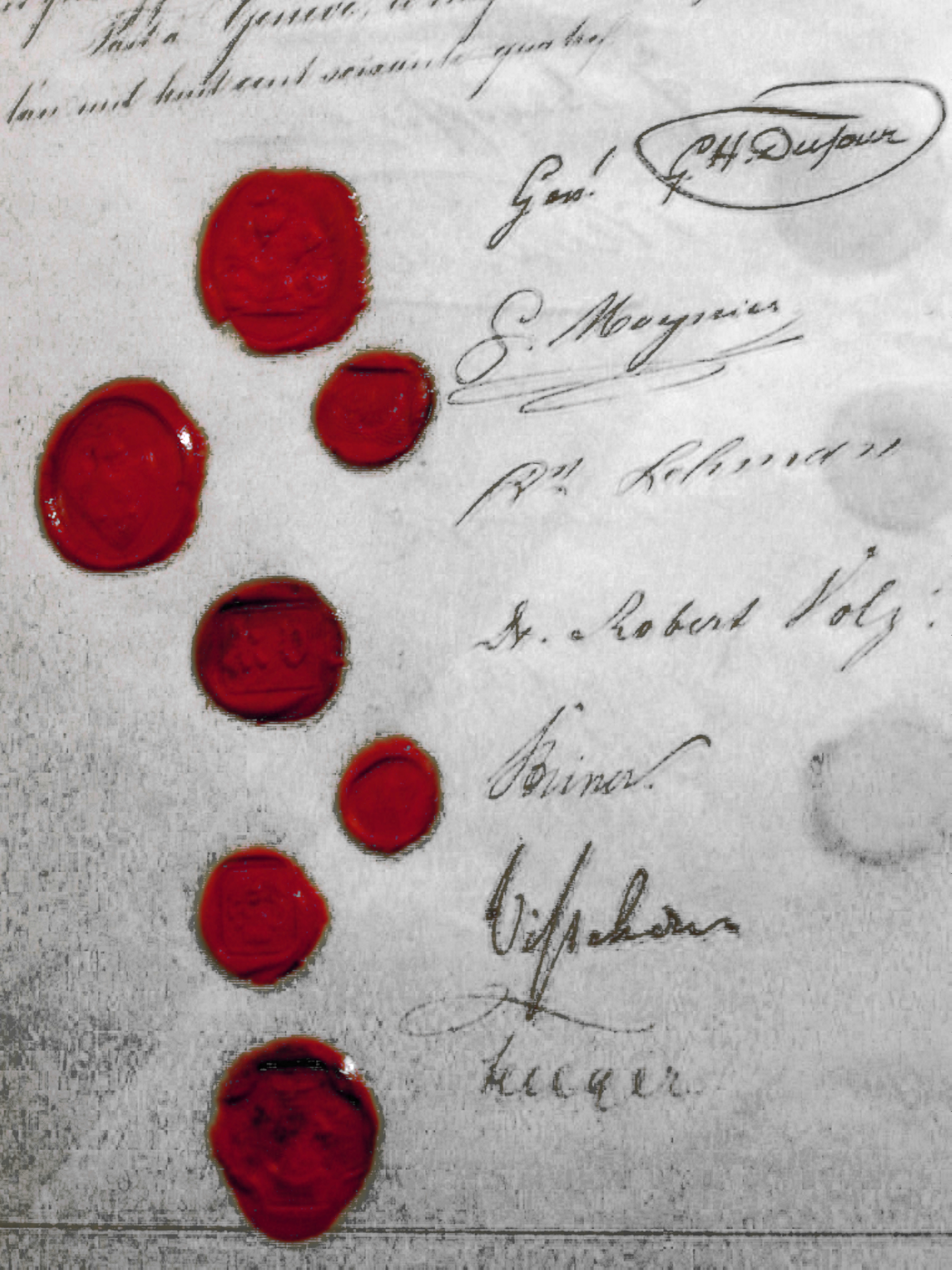
Regular military personnel of all countries are theoretically informed of the rules of the Geneva Conventions of August 12, 1949, and the Protocol Additional adopted in 1977.
When the 1949 Geneva Conventions were drafted and adopted, it was possible to spell out in considerable detail rules regarding prisoners of war and the protection of civilians, in particular Common Article 3 (so called because it is found in all four Conventions) provides that “each Party to the conflict shall be bound to apply, as a minimum, the following provisions: Persons taking no active part in the hostilities…shall in all circumstances be treated humanely without any adverse distinction founded on race, color, religion or faith, sex, birth or wealth, or any other similar criteria.”
The importance of Common Article 3 should not be underestimated. It sets out in straightforward terms important protections that all parties to a conflict must respect. In order to meet the need for additional protection, international humanitarian law has evolved to cover not only international armed conflict but also internal armed conflict. Today, international human rights standards are also considered part of international humanitarian law, thus providing additional protection for vulnerable population groups such as women, children, and minorities.
As situations of internal violence and strife proliferate, abuses committed by non-State actors, such as armed militias, are increasing concerns. Fundamental standards of international humanitarian law are intended to ensure the effective protection of human beings in all situations. The standards are clear. (1)
There are two major weaknesses in the effectiveness of international humanitarian law. The first is that many people do not know that it exists and that they are bound by its norms. Thus, there is an important role for greater promotional activities, the dissemination of information through general education, specific training of the military, outreach to armed militias, and cooperation with a wide range of nongovernmental organizations.
The second weakness is that violations of international humanitarian law are rarely punished. Governments too often tolerate these violations. Few soldiers are tried, or court-martialed, for the violations of international humanitarian law. This weakness is even more true of non-governmental militias and armed groups.
In fact, most violations of international humanitarian law are not actions of individual soldiers or militia members carried away by a sudden rush of anger, fear, a desire of revenge or a sudden sexual urge to rape a woman. Soldiers and militia members violating the norms of international humanitarian law are acting on orders of their commanders.
Thus, the only sold response is an act of conscience to refuse an order of a military or militia higher up and refuse to torture, to bomb a medical facility, to shoot a prisoner, to harm a child, and to rape a woman. Conscience, that inner voice which discerns what is right from wrong and encourages right action is the value on which we can build the defense of international humanitarian law. The defense of conscience to refuse unjust orders is a large task but a crucial action for moving toward a law-based world society.
Notes
(1) For useful guides to international humanitarian law see:
D. Schindler and J. Toman, The Laws of Armed Conflicts (Martinus Nihjoff Publishers, 1988)
H. McCoubrey and N.D. White, International Law and Armed Conflicts (Dartmouth Publishing Co., 1992)
Prof. René Wadlow is President of the Association of World Citizens.
There are many dimensions to the current tensions on the Ukraine-Donbas-Russia frontiers, both geopolitical and domestic considerations. There are long historic and strategic aspects to the current crisis. Security crises are deeply influenced both by a sense of history and by current perceptions. There have been bilateral discussions between United States (U. S.) and Russian authorities, between Russian and French leaders, between Russian and Chinese leaders, between the Ukrainian leader and a number of others and multilateral discussions within the Organization for Security and Cooperation in Europe (OSCE), within NATO, at the United Nations (UN) Security Council, and within the European Union. For the moment, there has been no de-escalation of tensions nor a lowering of troop levels.
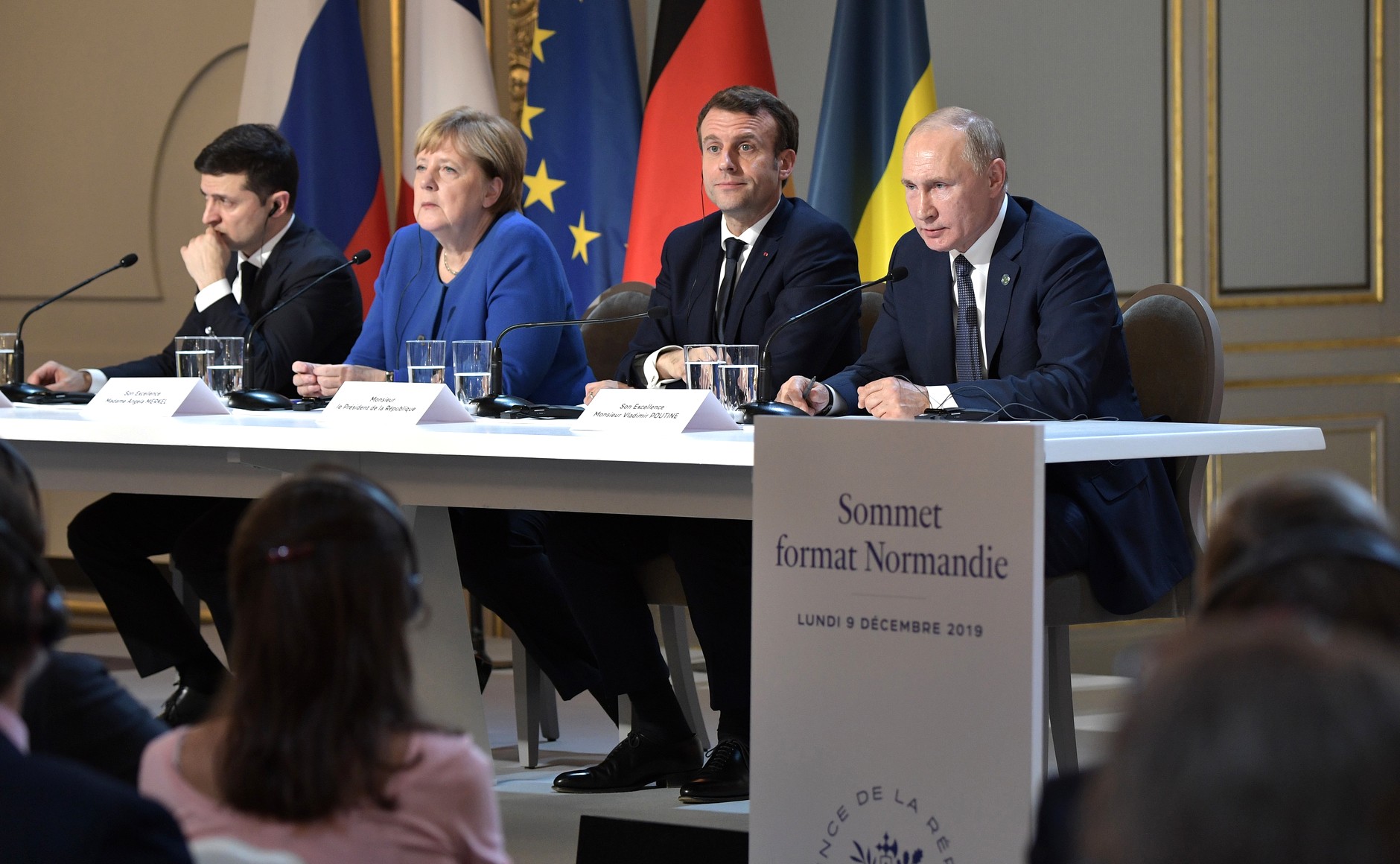
Currently, there is only one permanent structure for multilateral negotiations on the Ukraine tensions – the “Normandy Format” which brings together the representatives of Ukraine and Russia, France, and Germany primarily to negotiate on the status of the separatist People’s Republics.
The Minsk II Agreement of February 12, 2015 agreed that the areas covered by the Donetsk and Luhansk People’s Republics would not be separated from Ukraine but would be given a “Special Status” set out in a new Ukrainian Constitution. However, beyond some rather vague discussion on decentralization, the nature of the Special Status has not been agreed upon, and no Ukrainian government administrative measures have been put into place.
In the period since 2015, the socioeconomic situation in the two People’s Republics has gotten worse. Many people have left either for Ukraine or Russia. There are constant violations of the ceasefire agreements which are monitored by observers of the OSCE. Thus, in their December 15, 2021 report, the OSCE monitors noted that between December 10-12, there were 444 ceasefire violations in the Donetsk region and 104 in the Luhansk region. However, the freedom of movement of the OSCE observers is restricted. The number of violations, usually exchanges of small arms fire, is probably higher.
Solving the Donbas aspect of the conflict on the basis of a real and vital autonomy and trans-frontier cooperation should be a top priority for action. The Association of World Citizens has always stressed the importance of developing appropriate forms of government as a crucial aspect of the resolution of armed conflicts. The Association has particularly highlighted the possibilities of con-federalism and the need for transfrontier cooperation. The Association was involved at the start of the Abkhazia-Georgia conflict in August 1992 and the first efforts at negotiations carried out in Geneva with representatives from Abkhazia who were in Geneva and officials from the UN and the International Committee of the Red Cross. Thus, we know how a cycle of action-reaction can deepen a conflict and how difficult it is to reestablish structures of government once separation has been established.
The need to progress on the structure of Ukraine stands out sharply at this time when there are real possibilities of escalatory risks. There is a need for confidence-building measures reaching out to different layers of society in a cumulative process. Advances on the Special Status would be an important step in the deescalation of tensions. Discussions on the Special Status must be carried out by those living in Ukraine. However, government representatives as well as nongovernmental organizations in Russia, Germany, and France can also contribute actively. The new German Foreign Minister, the ecologist Annalena Baerbach, coming from a federalist-structured State with many local initiatives possible, may bring new visions to these discussions which are increasingly under way.
Prof. René Wadlow is President of the Association of World Citizens.
Despite United States (U. S.)-Russian Federation discussions in Geneva and a full Organization for Security and Cooperation in Europe (OSCE) meeting, there seems to be no advance toward a reduction of an estimated 100,000 Russian troops on the Ukrainian frontier. There are discussions at the United Nations (UN) Security Council in New York on what could be a U. S.-led response if there were a Russian intervention into Ukraine. While such a Russian intervention seems unlikely, the possibility of such an intervention is being seriously discussed in NATO government circles. Thus, it is opportune for nongovernmental organizations also to discuss possible measures to prevent conflict and reduce tensions.
(C) Taras Gren
One possibility, inspired by the efforts of the Shanti Sena (Peace Army) developed by followers of Mahatma Gandhi in India is to place some nongovernmental teams on the frontier in order to provide an opportunity for all parties to “cool off” and negotiate. One such effort in which I was directly involved as the representative to the UN in Geneva of the Peace Brigades International (PBI) was the effort of a team of the newly created PBI in 1981 on the Nicaragua-Honduras frontier.
At the time, it was thought that U. S. troops stationed in Honduras might cross the frontier to attack the Sandinista-leftist government in Nicaragua or actively help the anti-Sandinista “Contras” to do so. A PBI-related group from California – the Jalapa Brigade, already created – was able to move to the frontier on short notice. At the time that the Jalapa Brigade was put into place, the Ambassador of Nicaragua to the UN in Geneva was a former student of mine, and his brother, also a former student of mine, was the legal advisor to the President of Nicaragua. Through the Ambassador, I was able to inform the Central American Missions to the UN as to the aims and role of the Peace Brigades.
In the end, the U. S. military did not cross the frontier. Perhaps it never intended to do so. It may also have been that the interposition of U. S. civilians with a good number of organizational contacts helped to weigh in the U. S. military decision-making process.
Members of the Gulf Peace Camp
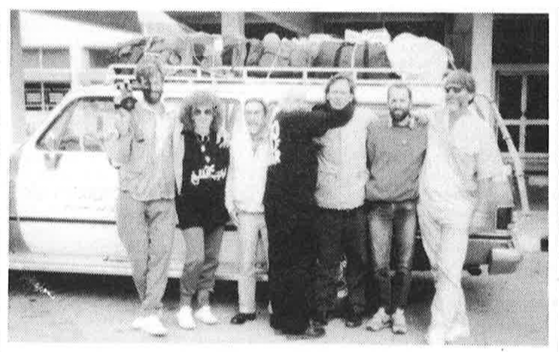
There have been other such interposition efforts. One was the Gulf Peace Team created at the time of the 1990 Iraqi annexation of Kuwait. The aim of the 73-member Peace Team in their statement of purpose was to be an “international multicultural team working for peace and opposing any form of armed aggression by setting up one or more international peace camps between the opposing armed forces. Our object will be to withstand nonviolently any armed aggression by any party to the present Gulf dispute.” However, on January 27, 1991, the peace camp was closed by Iraq, because the authorities had “decided that the continued presence of the camp was a security risk”.
This interposition approach by nongovernmental organizations is logistically and politically very difficult to accomplish. There are economic and logistic resources required and, more importantly, the need to raise enough volunteers who are mature, culturally sensitive, and analytically-minded to achieve a critical mass that would make a difference in the decision-making of the military present. There is also the need to keep unity of purpose within the teams if they have not worked together before.
The 100,000 Russian troops are at the frontier. Can peace team interposition be created quickly?
Prof. René Wadlow is President of the Association of World Citizens.
Deux ans déjà, deux ans d’une guerre mondiale qui semble interminable, une Troisième Guerre Mondiale non entre deux ou plusieurs alliances d’Etats souverains, ou contre un envahisseur extraterrestre comme dans certains films ou séries de science-fiction, mais contre un virus – un coronavirus, le SARS-CoV-2 responsable de la COronaVIrus Disease of 2019ou Covid-19. Après la souche originelle dite de Wuhan, le monde a découvert les variants, d’abord affublés de gentilés (anglais, sud-africain, indien) puis renommés selon l’alphabet grec : Alpha, Beta, Delta … Et maintenant Omicron.
La lutte progresse mais la pandémie sait contre-attaquer, comme avec Omicron. Hélas, l’inégalité vaccinale entre pays et régions du monde, couplée aux décisions scientifiquement absurdes de certains gouvernements, se fait pour le virus une alliée inespérée.
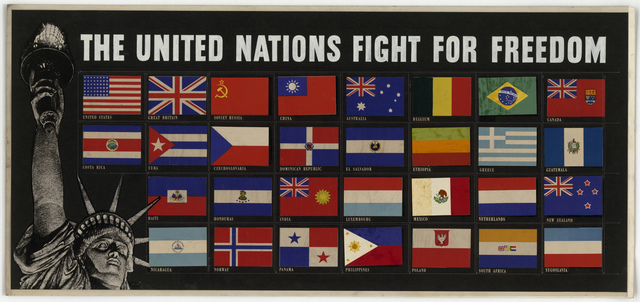
L’histoire nous l’enseigne, lorsqu’une crise mondiale éclate et se prolonge, ce n’est pas après qu’elle a pris fin qu’il faut envisager l’avenir, mais pendant même qu’elle se produit, et faire de ses projets son but réel de guerre. L’histoire nous l’enseigne, oui, et l’an prochain verra le quatre-vingtième anniversaire des Nations Unies, non pas de l’organisation internationale créée en 1945 à San Francisco – également berceau de l’Association of World Citizens (AWC) – mais de l’alliance militaire des pays combattant l’Allemagne nazie, l’Italie fasciste et le Japon. Une alliance militaire qui avait retenu les leçons de l’échec de la Société des Nations et compris, à l’avenant, qu’un combat armé ne vaut rien s’il n’est porteur d’un projet politique pour un monde en paix, donc, un monde plus uni.
Un monde plus uni … Que certains partis politiques ici ou là le veuillent ou non, c’est ce que produira inéluctablement cette pandémie, après une épreuve dont aucun continent sur terre n’aura été épargné. Et même si cela dérange ces partis xénophobes de divers pays et continents, là encore, ce monde ne pourra plus regarder de la même manière le sujet dont ils ont fait leur fonds de commerce pendant le demi-siècle écoulé – la migration.
La forteresse WENA
Si c’est littéralement le monde entier qui est touché, tout comme par la Covid-19, par le virus de la xénophobie qu’aucun vaccin ne vient enrayer, le centre mondial de l’épidémie est bien la WENA (Western Europe and North America, Europe occidentale et Amérique du Nord). Depuis le début du siècle, avec des entrées au gouvernement en Autriche et en Italie notamment, ainsi qu’une présence au second tour de l’élection présidentielle en France et un résultat électoral sans précédent aux Pays-Bas, l’extrême droite xénophobe n’a cessé de croître en WENA, jusqu’à fusionner au Canada avec la droite traditionnelle incarnée par le Parti conservateur. Mais, après des reflux ici et là, l’année 2015 est venue lui ouvrir grand les portes jusqu’alors closes du pouvoir.
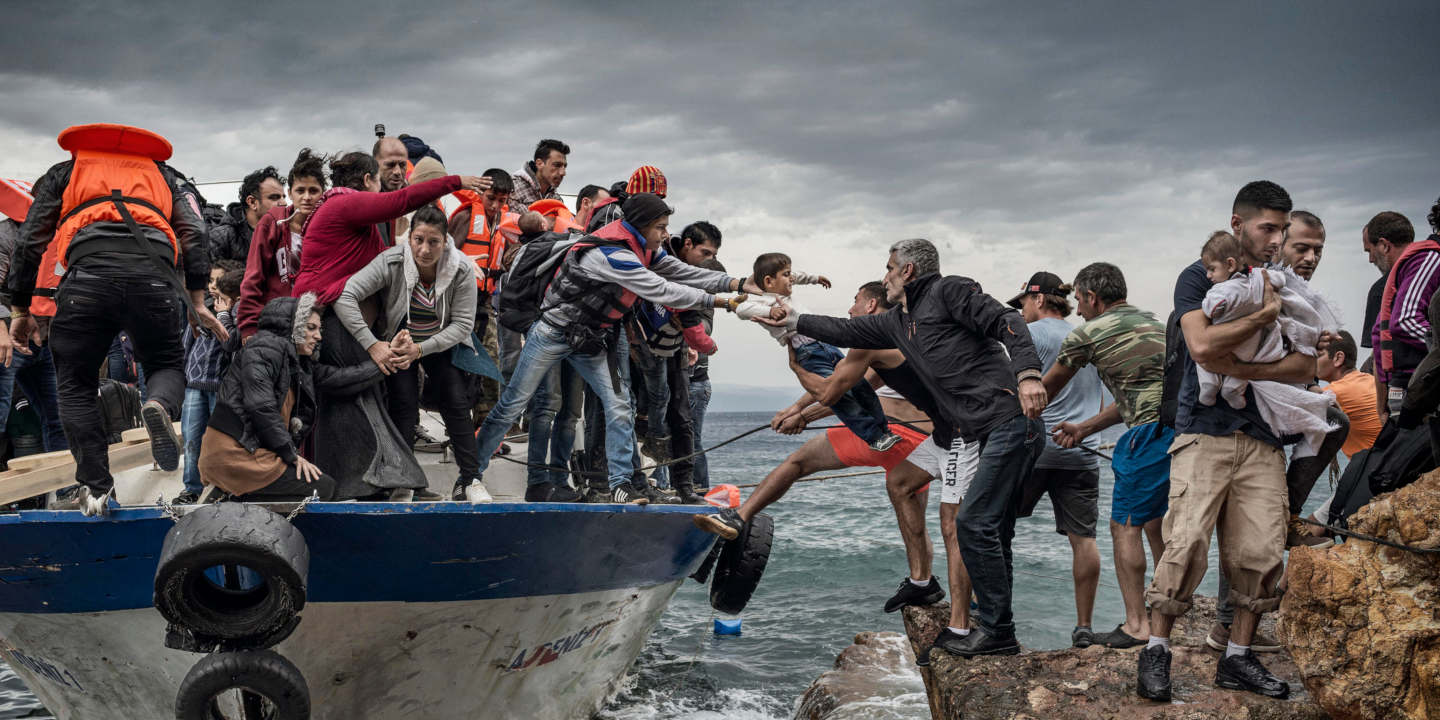
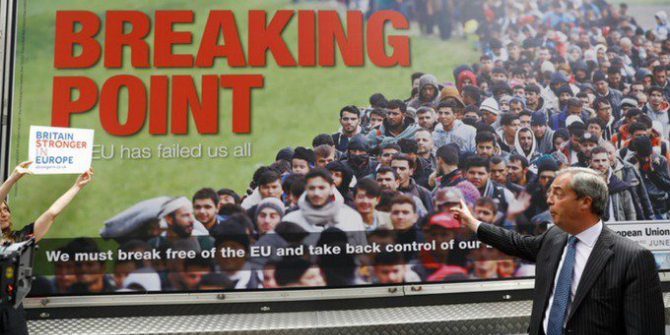
Après ce que d’aucuns appelaient la «crise migratoire» de l’été, lorsque migrants et réfugiés avaient eu l’impudence de venir déranger la baignade et la bronzette des Européens en accostant sur la rive sud de la Méditerranée, un exode vite réduit par certains à une attaque envers l’Occident de Daesh, le soi-disant «État islamique en Irak et en Syrie» qui avait déjà en janvier fait couler le sang à Paris, la Grande-Bretagne suivit sans mal l’année suivante un UKIP déchaîné contre des hordes d’envahisseurs vers le vote du Brexit. A des milliers de kilomètres de là, loin des rivages du désespoir, un Donald Trump donné perdant d’avance remporta contre toute attente la Maison Blanche en évoquant, entre autres, un mur géant le long de la frontière mexicaine censé bloquer toute immigration clandestine. En 2017, bien que largement vaincue en fin de compte, l’extrême droite française atteignit une nouvelle fois les marches de l’Élysée. En 2018, les électeurs italiens consacrèrent Matteo Salvini. Il ne suffisait plus d’une «forteresse Europe», le temps était venu d’une «forteresse WENA», à bâtir du plus ironiquement sur des plans fournis par Moscou, où le pouvoir inspire et parfois finance les partis d’extrême droite comme de gauche radicale, antagonistes mais unanimes pour saper la démocratie libérale.
Ile de Lesbos (Grèce), 11 octobre 2015 (C) Antonio Masiello
Ils savent ce qui leur fait peur, les tenants de la forteresse WENA. Ils le désignent par deux mots – le grand remplacement, celui d’une population européenne blanche et chrétienne qui n’existe que dans leur imaginaire par des hordes d’Arabes et d’Africains musulmans. Leur imaginaire où trône Le Camp des Saints, roman publié en 1973 par Jean Raspail et qui, en écho à l’antisémitisme délirant des Turner Diaries adulés par les suprémacistes blancs des Etats-Unis, décrit la chute de l’Occident blanc devant une invasion venue des pays du Sud. Loin d’avoir été oublié avec le temps, Le Camp des Saints inspire encore aujourd’hui l’extrême droite française ainsi que des proches de Donald Trump.
Personne au sud ne prône un «grand remplacement», concept qui n’existe donc qu’en WENA. Et pour cause, il ne pouvait venir d’ailleurs. S’il est une région au monde dont les pays ont, dans le passé, débarqué de force sur des rivages lointains, usé de la force pour imposer leur présence puis, in fine, leurs institutions, leur religion et leur culture, ce sont bien ceux de la WENA à travers le colonialisme, imités plus tard, tragique ironie, par l’URSS «anticolonialiste» sous couvert de soutien idéologique et pour les pires effets, dont deux en Afghanistan ayant pour noms les Talibans et Al-Qaïda.
Il n’y a qu’eux qui y pensent, eux pour qui la relation avec l’autre n’est que haine ou mépris, et pour certains, violence et guerre où l’on ne peut être que vainqueur ou vaincu. Dans leur immense majorité, celles et ceux qui, au sud, veulent gagner la WENA y recherchent tout au contraire son mode de vie, ses opportunités de travail et de construction d’une vie nouvelle, ses libertés que leur refusent les gouvernements de leurs pays d’origine, se servant la plupart du temps de la culture traditionnelle locale comme d’un alibi et nourrissant ainsi les fantasmes des xénophobes en WENA, trop contents de prendre en tenaille des migrants et réfugiés déjà pourchassés par leurs propres gouvernants.
Nigel Farage, chef du parti UKIP, agitant le spectre de la migration pour amener les Britanniques à voter pour le Brexit en 2016 (C) @epkaufm (Twitter), licensed under Public Domain
La WENA a peur. Elle a peur de tous ces gens qui voient en elle un exemple pour leurs propres dirigeants, peur de toutes ces victimes qui l’appellent à agir pour leur permettre de vivre en paix chez eux ou, si elle s’y refuse, à les admettre au moins sur son territoire. Elle a peur aussi de ses propres enfants, ceux dont les parents sont eux-mêmes venus d’ailleurs ou dont les ancêtres plus lointains y ont été amenés de force, notamment comme esclaves. Elle a peur des Black Lives Matter et autres mouvements exigeant la justice pour qui, né ou élevé dans la WENA, s’y voit rejeté car porteur de cet ailleurs qui la tétanise.
Ses dirigeants ont peur, et ceux qui voudraient l’être aussi. Délogé de la présidence américaine, Donald Trump ne désarme pas. En France, terre de l’adoption de la Déclaration universelle des Droits de l’Homme en 1948, l’extrême droite se dédouble en deux partis rivalisant de peur et de haine d’autrui, tandis que le parti héritier de celui du Général de Gaulle parle arrêt de l’immigration et sortie de la Cour européenne des Droits de l’Homme, même la gauche se laissant tenter par la facilité xénophobe en s’en prenant par exemple aux transferts d’argent de travailleurs migrants vers leurs familles au pays.
Mise à mal par l’exemple russe de la démocratie illibérale de pure façade et celui de l’autoritarisme de marché donné par la Chine, la WENA n’est plus, elle le sait, maîtresse du monde. Devenir la forteresse WENA ne résoudra pourtant, pour elle, aucun problème. Fantasmer n’est pas empêcher les difficultés, encore moins les surmonter mais bien les rendre hors de contrôle. A travers le monde entier, migration et recherche d’asile génèrent des drames sans lien avec les peurs irraisonnées des opinions occidentales. La WENA peut bien rêver d’isolement, mais tout comme ceux que crée la Covid-19, les drames de la migration ont aboli les frontières et uni le monde – pour le pire.
Le monde uni en fait refuse de l’être en droit
Déjà tourmentée par ses cauchemars de « grand remplacement » et les capitulations de ses démocrates supposés devant les vrais populistes, la WENA tente l’impossible en s’obstinant à séparer strictement les migrants, en quête d’une vie meilleure, et les réfugiés, qui fuient une persécution potentiellement mortelle. Il est pourtant de moins en moins possible de chercher une vie meilleure sans fuir aussi une certaine forme d’oppression, même en filigrane, là où un réfugié peut certes avoir dû laisser derrière lui une vie confortable mais à laquelle a mis fin une soudaine et brutale menace. Et le mouvement des demandeurs d’asile s’exerce toujours bien davantage vers la WENA qu’à partir d’elle … Mais qui érige la peur en système s’en soucie bien peu. Tant pis pour les tragédies qui en sortent et tant pis pour le mauvais exemple ainsi envoyé au reste du monde, qui ne le reçoit que trop clairement.
Toute cette année, l’AWC n’a pu que le constater en intervenant sur des situations où les frontières des Etats ne s’ouvrent que pour laisser entrer l’oppression venue d’ailleurs. Entre la Pologne, Etat membre de l’Union européenne (UE), et le Belarus sous la tyrannie d’Aleksandr Loukachenko, des migrants et réfugiés venus du Moyen-Orient sont bloqués hors du monde, utilisés par Minsk tels des pions contre l’UE et refoulés par Varsovie qui craint un afflux si elle laisse entrer un petit groupe de personnes. A l’intérieur de l’UE même, le Danemark où l’extrême droite inquiète un gouvernement social-démocrate restreint encore ses lois sur l’asile et ordonne aux réfugiés de Syrie de rentrer chez eux, comme si la fin des combats actifs dans certaines régions du pays rendait plus sûr, et meilleur, le régime tyrannique de Bachar el-Assad. Et c’est à toute l’UE que se pose, comme au monde entier, la question de l’accueil des réfugiés d’Afghanistan depuis le retour au pouvoir le 15 août dernier de la milice islamiste des Talibans, dont la première cible est depuis un quart de siècle toujours la même – les femmes, premières à devoir fuir et premières à chercher asile.
Manifestation de soutien aux réfugiés à Berlin le 31 août 2014 (C) Montecruz Foto
Cherchant toujours plus à fermer ses frontières à qui veut y entrer, la WENA n’a en revanche aucun état d’âme à les ouvrir grand pour en faire sortir l’inspiration du refus de l’autre. Et ça marche.
En Amérique latine où se produit la deuxième plus grave crise de demandeurs d’asile au monde, celle du Venezuela où quiconque le peut fuit la dictature de Nicolas Maduro soutenue par Moscou, le Pérou qui accueille le plus grand nombre d’exilés vénézuéliens refuse aux enfants son statut de «Migration Humanitaire», plongeant donc des mineurs déjà déracinés dans une invivable inexistence officielle. En Égypte, où déjà sévit une répression intense, des réfugiés de conflits africains comme celui de l’Érythrée se voient, en dépit de l’évidence même, déboutés de leurs demandes d’asile et placés dans l’expectative d’un rapatriement forcé à tout moment. En Russie, une réfugiée d’Ouzbékistan privée d’un jour à l’autre de son statut après avoir dénoncé les manquements de Moscou à ses obligations en la matière a fini sa course en détention dans un aéroport, «hors du monde», comme emmurée «dans la prison des frontières», selon la Complainte du Partisan, l’autre chant de la Résistance française pendant la Seconde Guerre Mondiale.
Qu’attendre d’autre d’un monde qui s’entête à ne pas comprendre que, bien que composé d’États souverains, il est désormais uni dans l’épreuve et doit donc le devenir aussi pour la vaincre ? Un monde uni de fait qui refuse de l’être de droit, ce n’est pas nouveau dans l’histoire et on en sait les conséquences. En 1914, c’est un monde où l’Europe faisait la loi mais où une forme de mondialisation, économique et technologique, existait déjà qui est entré en guerre, car sa politique était restée peu ou prou celle du Congrès de Vienne, là où les nations ayant vaincu l’Empire français de Napoléon Ier avaient décidé entre elles du sort des autres. Pour certains la Grande Guerre, pour d’autres «la der des der», le conflit mondial sorti d’un ordre international périmé allait certes engendrer la première organisation politique internationale de l’histoire, la Société des Nations, mais cette dernière allait s’avérer elle aussi en retard sur son temps, incapable d’arrêter les ambitions italiennes en Éthiopie puis celles plus dévastatrices et meurtrières encore d’Adolf Hitler et du Troisième Reich allemand. Ce n’est qu’en combattant le fléau d’un temps en son temps, en créant contre Hitler une alliance militaire prenant le nom de Nations Unies, que le monde libre allait réussir à vaincre le Reich génocidaire et créer une nouvelle organisation, celle que nous connaissons encore aujourd’hui – l’Organisation des Nations Unies.
Voir le passé avec l’œil du présent, l’historien le dira, il faut se l’interdire. Mais l’inverse n’est pas plus souhaitable, et de 1914, l’historien pourra le dire encore. Que conclure alors d’un monde qui, en proie à une pandémie qui a déchiré les frontières, s’y enferme comme en des murailles et se le voit enseigner par la région même qui, depuis la fin de la Seconde Guerre Mondiale, symbolisait la liberté ?
(C) U.S. National Archives & DVDs
Qu’on le veuille ou non
Un monde sans frontières est aussi peu probable qu’un «grand remplacement» en WENA, peu probable et, pour nous, une fausse bonne idée. L’AWC défend depuis le départ une Citoyenneté Mondiale accessible à toutes et tous, acceptable par toutes et tous, fondée sur un principe simple mais qui semble si difficile à accepter : étant toutes et tous natifs et habitants de la planète Terre, il est du devoir de chacun(e) de la protéger ainsi que son peuple, notre peuple, l’humanité, et accepter cet état d’esprit est entrer dans une Citoyenneté Mondiale qui s’exerce en supplément de la citoyenneté nationale, non à la place, d’autant qu’il n’existe au niveau planétaire aucune structure reconnue par les États qui permette une telle substitution. Même la citoyenneté de l’UE n’est acquise que par la citoyenneté nationale de l’un de ses États membres, se vouloir citoyen(ne) de l’Union de manière directe et exclusive étant impossible.
Pour autant, et l’histoire ne va pas dans une direction autre, qu’est-ce qui oblige les frontières à s’ériger en remparts, a fortiori contre un ennemi inexistant et chimérique ? Au nom de quoi les États souverains devraient-ils être des citadelles ? Et surtout, comment exercer dans de telles conditions la moindre Citoyenneté Mondiale alors que le sort de toute la planète et toute l’humanité nous le commande ? C’est ce que l’AWC a toujours défendu et, aujourd’hui, ce que l’on pouvait refuser comme n’étant qu’un simple axiome de notre part est devenu, plus que jamais, un fait prouvé. Même si un autre enseignement de la Covid-19 est, hélas, que les faits prouvés peuvent n’être plus probants.
Négateurs du virus, promoteurs de thérapies inefficaces, d’aucuns auront rejeté l’évidence nue face au SARS-CoV-2. Chefs d’État ou de gouvernement, qu’ils se nomment Trump, Johnson ou Bolsonaro, ils auront tous fini par rencontrer ce virus qu’ils niaient ou minimisaient, finissant ainsi par prouver au contraire son existence et le besoin absolu de s’en protéger. D’autres poursuivent aujourd’hui le travail de sape de ces derniers, parfois en y laissant leur vie. Les faits prouvés peuvent n’être plus probants, mais Lénine le savait, «les faits sont têtus».
Ces politiques migratoires et ces injustices qui nous ont amenés à intervenir, nous ne les avons pas inventées. L’AWC n’a pas le temps, encore moins le goût, de fabriquer des problèmes, trop occupée qu’elle est à tenter de résoudre ceux dont elle vient à avoir connaissance. Une vision des frontières, de l’étranger et de la migration qui n’est plus adaptée à son temps, c’est un problème, majeur, que nous ne résoudrons jamais seuls et qui demande une implication littéralement universelle. D’autant qu’il n’est pas sans rencontrer l’autre problème majeur du moment, le coronavirus. Si ce n’est par la coupable méfiance vis-à-vis de traitements venus de l’extérieur et/ou par la tout aussi coupable négligence alimentant l’inégalité vaccinale entre nations, plusieurs fois dénoncée de concert par l’Organisation mondiale de la Santé et le Fonds monétaire international, comment expliquer l’apparition des variants Delta puis Omicron respectivement en Inde puis en Afrique du Sud ? On empêchera des êtres humains de quitter leur pays, on les empêchera d’entrer dans celui qu’ils espèrent atteindre, mais des gardes-frontières n’arrêtent pas un virus. Les frontières non plus, et voir en elles une solution soit à la migration tant redoutée soit à la Covid-19, c’est rendre impossible tant une migration ordonnée et humaine que la fin de la pandémie.
Un seul monde, ce n’est plus un slogan, c’est maintenant un fait. Que la WENA vous nomme un migrant si vous y venez ou si vous allez et venez en dehors d’elle (le terme «réfugié» n’ayant plus rien d’automatique, même devant un danger avéré), ou un expatrié si vous en venez et la quittez, vous serez toujours soumis aux lois nationales sur la migration et c’est là, partout, un domaine régalien, privilège absolu de l’État. Mais si ces lois sont adoptées et/ou appliquées les yeux grands fermés à la marche du monde, votre sort ne regardera bientôt plus seulement votre État de provenance et/ou d’arrivée. Pas plus que votre nationalité ne fera quelque différence si vous êtes positif à la Covid-19, où que vous soyez. Les deux questions seront mondiales.
Le droit absolu à la migration, sans demander l’avis de l’État d’arrivée, n’existera probablement jamais. Pour autant, le droit à la migration, celui d’être accueilli dignement, d’être ainsi traité même si l’on doit ensuite repartir et, certes, de n’être en aucun cas traité en migrant lorsque l’on est demandeur d’asile, peut et doit être un droit absolu, pour d’élémentaires raisons d’humanité dont même une catastrophe planétaire claire et présente n’autorise pas l’oubli.
Qu’on le veuille ou non, il n’existe plus qu’un seul monde. S’il prend au sérieux les malades de la Covid-19, alors il n’a pas d’excuse pour ne pas prendre au sérieux les migrants. Au moment où la deuxième année de la pandémie s’achève, s’il est déjà temps de prendre une bonne résolution, alors, que ce soit celle d’y parvenir enfin. Et immuniser les consciences contre nos coupables indifférences.
Bernard J. Henry est Officier des Relations Extérieures de l’Association of World Citizens.





 Association of World Citizens