The Human Rights Council, building on the earlier practice of the United Nations (UN) Commission on Human Rights, has a number of Special Rapporteurs devoted to certain themes – usually specific violations of human rights – or to specific countries. These Special Rapporteurs are independent experts selected by the Council. They usually report their findings at each session of the Council. When violations concern more than one issue, there can be joint Reports to the Council or joint Appeals to a government. Such a collective Appeal to the government of Pakistan sent on October 26, 2022 was made public on January 15, 2023.
The joint Appeal by six Special Rapporteurs concerned the sequence of rape of young women, forced conversion to Islam, followed by marriage to the rapist. The Appeal was led by the Special Rapporteur on Freedom of Religion or Belief, the Special Rapporteur on Sexual Exploitation of Children, the Special Rapporteur on Violence against Women and Girls, and the Special Rapporteur on Trafficking in Persons, especially Women and Children. The subject of the Appeal is not new, having been raised previously by Nongovernmental Organizations (NGOs), including by the Association of World Citizens (AWC).
However, the Appeal by the Special Rapporteurs clearly identifies a systemic problem on which the Pakistani government has failed to act. The girls raped are usually minors under 18 years of age and belong to Hindu and Christian minorities of the country, often rural and poor. Most Christians in Pakistan are converts from low caste or “untouchables” (Dalit) Hindus. Seeing no future within the Hindu-influenced caste system, they converted to Christianity which has no caste structure. Most of the Pakistani Hindus and Christians are illiterate and have little or no political influence.
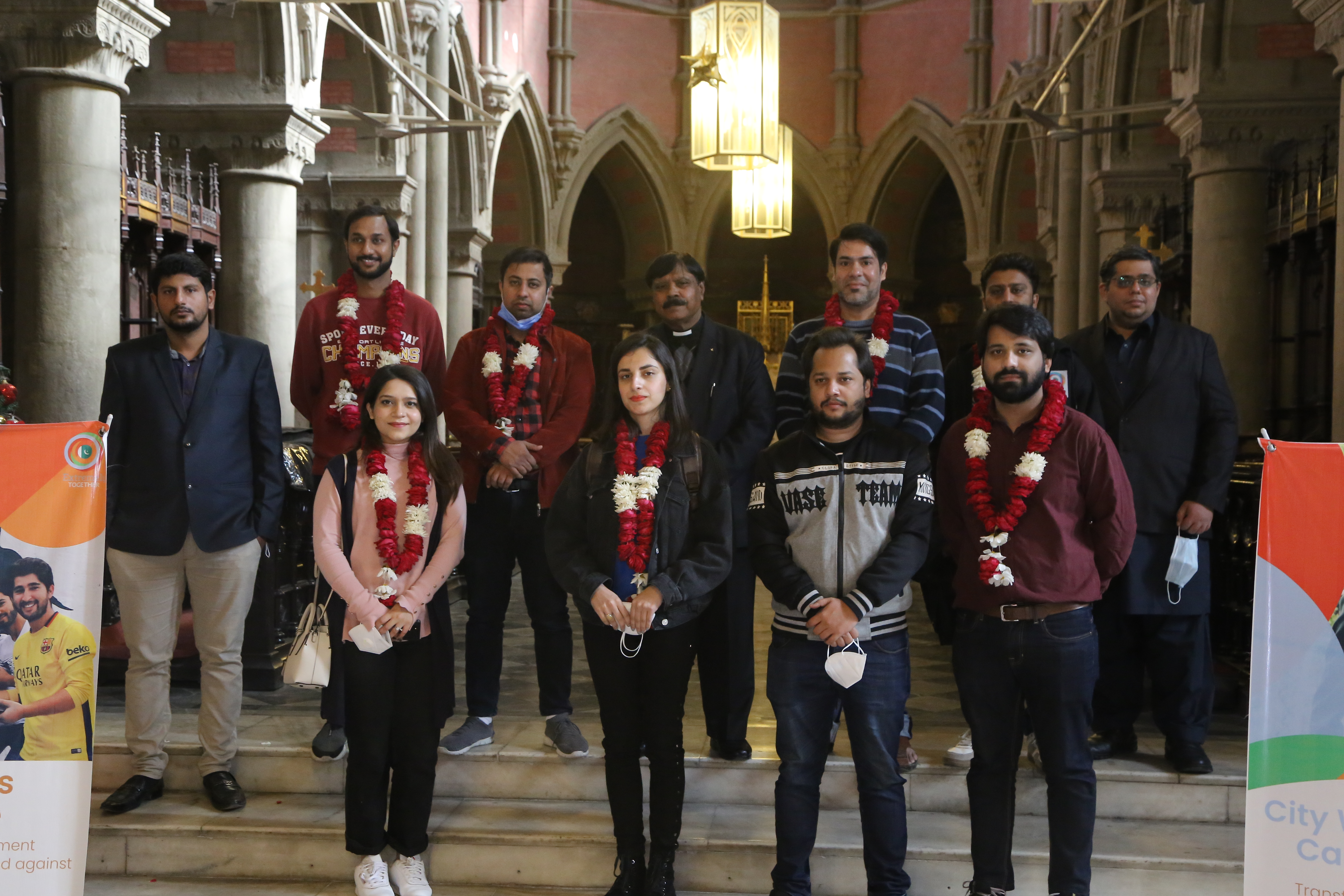
A peace tour arranged by different social activists and minority rights activists in Lahore, Pakistan, with the participation of Muslim, Christian and Hindu youth. (C) RedMiNote
The Pakistani police and the court employees are agents of these human rights violations. Illiterate parents sign with a thumbprint document that they do not understand and are then filled in by the police to attest that the girl is older than 18, the legal age for marriage. If the girl or her family agrees to the marriage with the rapist, the rapist cannot be arrested and tried for the rape. As the practice takes place usually in rural areas, there are few if any NGOs to take up the specific cases. Urbanized Christian groups in Pakistan have made some protests of the practice but are often unaware of the specific rural cases.
NGOs have brought evidence of the practice to the attention of the Geneva-based Special Rapporteurs. When a human rights violation is given to the UN human rights secretariat, it is sent on to the Geneva-based Ambassador of the country mentioned. The Ambassador may not reply at all or more usually will reply saying that the facts are incorrect or deliberately misleading. However, as in the Pakistani case, the evidence piles up. In this current situation, there is, two months ago, a newly appointed High Commissioner for Human Rights, Volker Turk, formerly UN Undersecretary-General for Policy. The Special Rapporteurs may have wanted to see how he will act on violations of a powerful country. The situation in Pakistan merits close watching.
Prof. René Wadlow is President of the Association of World Citizens.
“I shall die, but that is all that I shall do for death. I am not on his payroll. I will not tell him the whereabouts of my friends nor of my enemies either”.
–Edna St-Vincent Millay, U. S. poetess.
The Association of World Citizens (AWC) has repeatedly called upon governments for a moratorium on executions with a view to abolishing the death penalty – a penalty that extensive research has shown has little or no impact on the level of crime and too often opens the door to judicial errors and injustice. In addition to State-sponsored official executions, usually carried out publicly or at least with official observers, a good number of countries have State-sponsored “death squads” – persons affiliated to the police or to intelligence agencies that kill “in the dark of the night” unofficially. These deaths avoid a trial which might attract attention or even a “not guilty” decision.
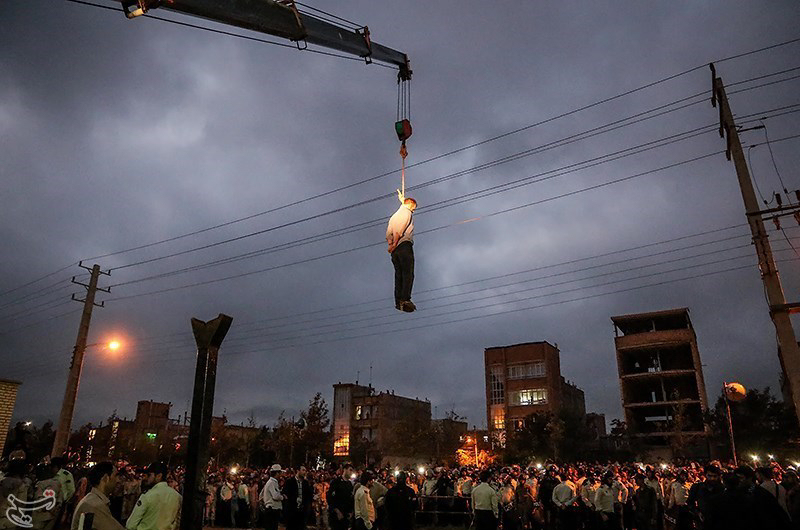
The January 7 hanging of Mohammad Mehdi Karami, 22 years old, and Seyed Mohammad Hosseini, 39, by the authorities of the Islamic Republic of Iran is an obvious effort to crush dissent and demonstrations which have shaken the authorities, set off by the death of Mahsa Animi in September at the hands of the morality police.
The January 7 hangings follow the December hangings of Moshen Shekari and Majidreza Rahmavd, both 23 years old. 14 other persons have been sentenced to death and are at imminent risk of execution – mostly young men. More than 40 persons are facing charges that could carry the death penalty. The four persons hanged did not have fair trials, and the court-appointed lawyers had no time to prepare a defense. The AWC is devoted to universal application of human rights law which includes fair trials and adequate defense – trials carried out with established international norms.
A public execution in Parsabad, Iran on September 20, 2017. (C) Mohsen Zare/Tasnim News Agency
Kenneth Patchen’s (1911-1972) clear words have been a credo for the AWC, opposed to executions on moral grounds:
“This is a man
he is a poor creature
you are not to kill him
This is a man
he has a hard time
upon the earth
You are not to kill him”
Prof. René Wadlow is President of the Association of World Citizens.
In the early hours of December 19, 2022, the delegates to the United Nations (UN) Convention on Biodiversity (COP 15) reached an agreement on a Biodiversity Framework after 12 days of intense negotiations. The theme of COP 15 was “Ecological Civilization: Building a shared future for all life on earth”. There were some 15,000 persons present during the meetings: government delegates, some 70 Nongovernmental Organizations (NGOs), academic research institutes and business companies. The global biodiversity framework, to be called the “Kunming-Montreal Framework”, sets out to protect at least 30 percent of the world’s land and water by 2030. Montreal, Canada, is the headquarters of the UN Secretariat of the Convention on Biodiversity, and Kunming is the city in the People’s Republic of China where the conference was to be held but was changed because of COVID 19 restrictions.
There is general agreement among specialists that world-wide there is a loss of biodiversity due to a number of factors such as increase in mono-culture agriculture, livestock grazing, the loss of forest lands through lumbering and firewood gathering, overuse of pesticides and the growth of urbanization. Many ecosystems are under stress and facing degradation. The tree and plant cover of the world have been taking increasing losses in almost all parts of the world. There is also the impact of climate change and a lack of rainfall in some parts of the world.
As with many UN conferences, a key issue of discussion is finance. The protection of biodiversity and the restoration of degraded areas costs money without necessarily bringing in new financial wealth. There is a Global Environment Facility which is called upon to manage increase funds.
It is hoped that NGOs can play a vital role at the international level on biodiversity protection. At the national level in many countries, NGOs have played an important role in the creation of national parks and protected areas. Can they play a vital role at the international level? While there are some long-standing international ecological organizations, none yet have been able to mobilize a wide international public opinion. However, what was new at Montreal was the concerted effort of women’s organizations to have a gender focus put into the Framework for the first time. They were successful, and the Framework states that the Framework should “ensure gender equality in the implementation of the Framework through a gender-responsive approach where all women and girls have equal opportunity and capacity to contribute to the objectives of the Convention, including by recognizing their equal rights and access to land and natural resources and their full, equitable, meaningful and informed participation and leadership at all levels of action, engagement, policy, and decision-making related to biodiversity.”
There is also a growing movement among young people for the safeguard of biodiversity who may watch closely at the ways the Framework leads to action. As Marco Lambertini, Director General of World Wildlife Fund International, said, “The agreement represents a major milestone for the conservation of our natural world, and biodiversity has never been so high on the political and business agenda, but it can be undermined by slow implementation and failure to mobilize the promised resources. Governments have chosen the rights side of history in Montreal, but history will judge us all if we don’t deliver on the promise made today.”
Prof. René Wadlow is President of the Association of World Citizens.
Pramila Patten, the United Nations (UN) Human Rights Council Special Rapporteur on sexual violence in times of conflict reported mid-October 2022 that rape is increasingly used in the armed conflict in Ukraine as a weapon to humiliate and discourage the populations. There had been an earlier September 27 report to the High Commissioner for Human Rights setting out many of the same facts and calling for international action.
In the past, sexual violence had often been dismissed as acts of individual soldiers, rape being one of the spoils of war for whom rape of women was an entitlement. However, with the 2001 trials of war crimes in former Yugoslavia by the International Criminal Tribunal for ex-Yugoslavia, the first convictions of rape as a crime against humanity and violations of the laws or customs of war were handed down against Bosnian Serb soldiers. Bosnian Serb fighters were charged with mass rape and forced prostitution involving dozens of Muslim women and girls, some only 12 years old. The case had taken five years of investigations and more than 30 witnesses for the prosecution. The three soldiers being tried were given a sentence of 12 years imprisonment.
Since then, we have seen patterns of systematic rape become part of International Humanitarian Law, and since 2002 one of the crimes that can be prosecuted within the International Criminal Court. (1)
There have been reports of systematic rape in Ukraine since 2014 with the creation of the People’s Republics of Donetsk and Luhansk by both Ukrainian and separatist soldiers. However, little international attention was given to these reports. It is only with the invasion of Ukraine by Russian troops on February 24, 2022 that international attention has focused on reports of rape especially in areas that were for a time under the control of the Russian military or the militias of the two People’s Republics. (2)
Unfortunately, it would seem that the armed conflict in Ukraine will drag on. There are few signs of a willingness for a negotiated settlement. International Humanitarian Law moves slowly. Rape as a war weapon is used in other armed conflicts such as those in the Democratic Republic of Congo, Darfur, Sudan, and Syria. Strong nongovernmental pressure is needed to keep governmental and UN efforts going on.
Notes
1) For a good overview of both specific armed conflicts and the slow but steady international response, see Carol Rittner and John K. Roth (Eds), Rape: Weapon of War and Genocide (St. Paul, MN: Paragon House, 2012)
2) See Amnesty International “Ukraine 2021”: http://www.amnesty.org, Secretary-General’s Report, Organization for Security and Cooperation in Europe, http://www.osce.org
Prof. René Wadlow is President of the Association of World Citizens.
November 6 is set by the United Nations (UN) General Assembly in Resolution A/RES/56/4 as the International Day for Preventing the Exploitation of the Environment in War and Armed Conflict. Throughout history, in armed conflicts, water wells have been poisoned, crops set on fire, forests cut down, and animals killed to gain military advantage. Today, many armed conflicts have been linked to the exploitation of natural resources such as timber, diamonds, and fertile land and water.
The Association of World Citizens (AWC) has stressed that protection of the environment needs to be an important part of conflict prevention. The resource base that people depend upon for their livelihood needs to be safeguarded. Most recently, the AWC has highlighted the deliberate destruction of food-related resources in the armed conflict between the Ethiopian federal forces and the opposition movements in Tigray.
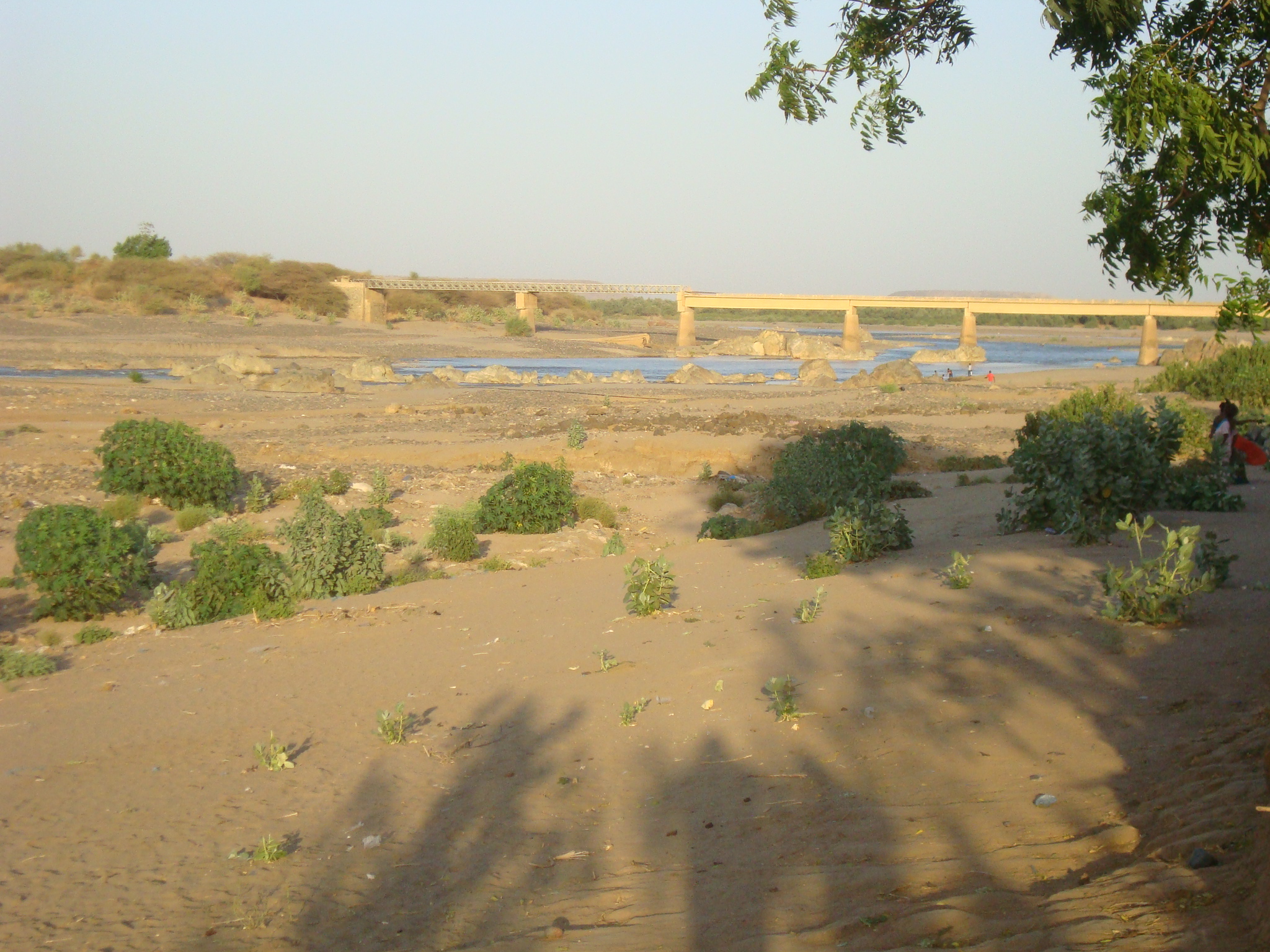
Humera in Tigray near the border with Sudan and Eritrea (C) Jnyssen
Since November 4, 2020, fighting has gone on in Tigray with the deliberate destruction of crops and agricultural infrastructures. UN-led humanitarian food relief was prevented from entering the area. Fortunately, at the start of November 2022, a ceasefire and a peace agreement facilitated by the African Union (AU) was signed in South Africa where the negotiations had been held. The AU has designated a team of 10 persons to follow up the process. However, the restoration of the agricultural infrastructure will be a lengthy process. It is not sure that all the factions involved will agree to the ceasefire. The situation merits a close watch.
There are currently other conflicts linked to natural resources, such as those in the Democratic Republic of Congo. The International Day must serve as a reminder, but efforts of protection need to be permanent. The AWC will continue its efforts.
Prof. René Wadlow is President of the Association of World Citizens.
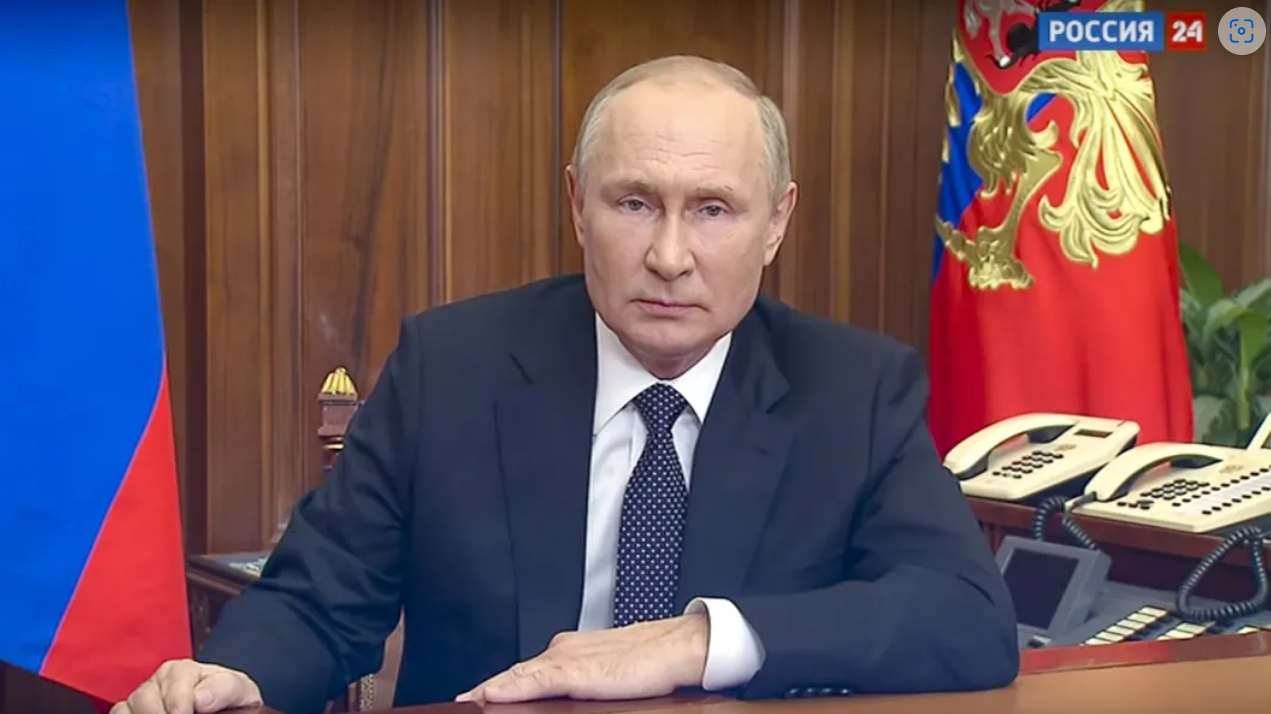
On September 21, the United Nations (UN)-designated Day of Peace, Vladimir Putin, President of the Russian Federation, said in an address to the nation,
“I am addressing you – all citizens of our country, people of different generations, ages and ethnicities, the people of our great Motherland, all who are united by the great historical Russia, soldiers, officers and volunteers who are fighting on the frontline and doing their combat duty, our brothers and sisters in the Donetsk and Lugansk People’s Republics, Kherson and Zaporazhye regions and other areas that have been liberated from the neo-Nazi regime.”
He set out the dangers facing the Federation,
“The goal of that part of the West is to weaken, divide and ultimately destroy our country. They are saying openly now that in 1991 they managed to split up the Soviet Union and now is the time to do the same to Russia, which must be divided into numerous regions that would be at deadly feud with each other … Washington, London and Brussels are openly encouraging Kiev to move hostilities to our territory. They openly say that Russia must be defeated on the battlefield by any means, and subsequently deprived of political, economic, cultural and any other sovereignty and ransacked.”
To meet these challenges, he ordered a “partial mobilization in the Russian Federation to defend our Motherland and its sovereignty and territorial integrity, and to ensure the safety of our people and people in the liberated territories.” Sergey Shoigu, the Russian Defense Minister, set out the details in a public statement just after Putin’s address. The mobilization will call up men below the age of 65 who have had military service. There are some 300,000 people in this category.
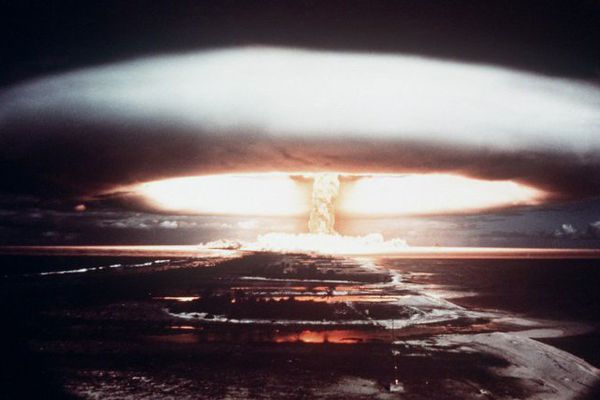
The nuclear saber rattling followed. Putin went on,
“I am referring to the statements made by some high-ranking representatives of the leading NATO countries on the possibility and admissibility of using weapons of mass destruction – nuclear weapons against Russia … In the event of a threat to the territorial integrity of our country and to defend Russia and our people, we will certainly use all weapon systems available to us. This is not a bluff.”
He ended by saying, “The citizens of Russia can rest assured that the territorial integrity of our Motherland, our independence and freedom will be defended – I repeat – by all the systems available to us.”
What makes the current situation more ambiguous and dangerous is that Vladimir Putin announced and confirmed by Sergey Shoigu that from September 23 to 27, 2022, there would be referendums in the Donetsk and Lugansk People’s Republics and in the areas under Russian control in the Kherson and Zaporazhye regions on joining the Russian Federation. People who are refugees in Russia from these areas will also be able to vote. A vote favorable to joining Russia is not in doubt. Thus, any future military operations by Ukraine forces in these areas could be considered by Russia as an attack on Russian territory.
It is impossible to know to what extent the nuclear weapon saber rattling is serious and goes beyond a justification for the mobilization of former military – not a popular policy. The situation calls for active efforts to decrease tensions on the part of the UN, national governments, and Nongovernmental Organizations. The next weeks may be crucial.
Prof. René Wadlow of the President of the Association of World Citizens.
Après les Etats-Unis en 1976, les Français ont célébré en 1989 le Bicentenaire de la Révolution qui a créé leur république, avec pour traits d’union entre les deux pays le Marquis de la Fayette, «héros des deux mondes» en France comme le deviendrait plus tard Giuseppe Garibaldi en Italie, et le fameux «Ça ira» de Benjamin Franklin, Ministre des Etats-Unis d’Amérique à Paris mais francophone malhabile qui, lorsqu’on lui demandait des nouvelles de son pays, répondait par ces deux seuls mots que les sans-culottes avaient fini par reprendre à leur profit. Mais en France, l’année 1989 fut loin d’être placée sous le seul signe des idéaux de la Révolution française tels que résumés en sa devise officielle – Liberté, Égalité, Fraternité.
Depuis le début des années 1980, la France était régulièrement frappée par le terrorisme lié au conflit israélo-palestinien, comme lorsque fut frappé voici quarante ans ce mois-ci, le 9 août 1982, le restaurant Jo Goldenberg dans le quartier juif de Paris. Depuis les élections municipales de 1983 et dans des proportions sans précédent depuis la Libération, l’extrême droite reprenait pied dans la politique française avec les succès électoraux du Front National, dénoncés ainsi que la complaisance du reste de la classe politique par Louis Chedid dans Anne, ma sœur Anne.
C’était déjà beaucoup, évidemment trop. Mais ce n’était pourtant qu’un début, et bientôt une France déjà en proie à ses propres démons allait se trouver prise au cœur de luttes d’envergure mondiale, luttes qui, bien que jamais vraiment disparues, viennent aujourd’hui se rappeler tragiquement au souvenir non seulement de la France mais du monde entier, avec l’agression de Salman Rushdie le 12 août dans l’État de New York.
La Dernière Tentation du Christ : la Contre-Révolution contre-attaque
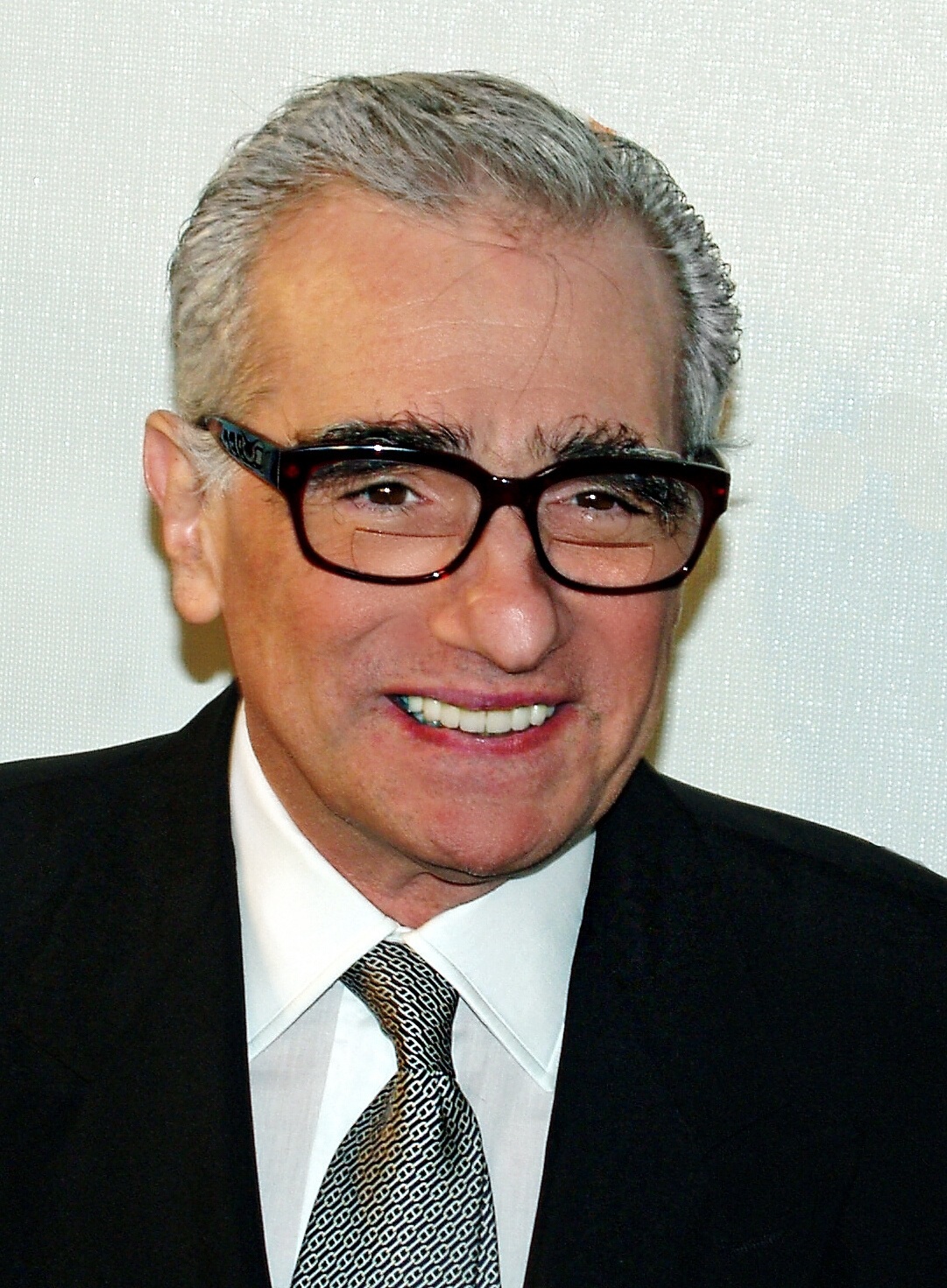
Le réalisateur américain Martin Scorsese (C) David Shankbone
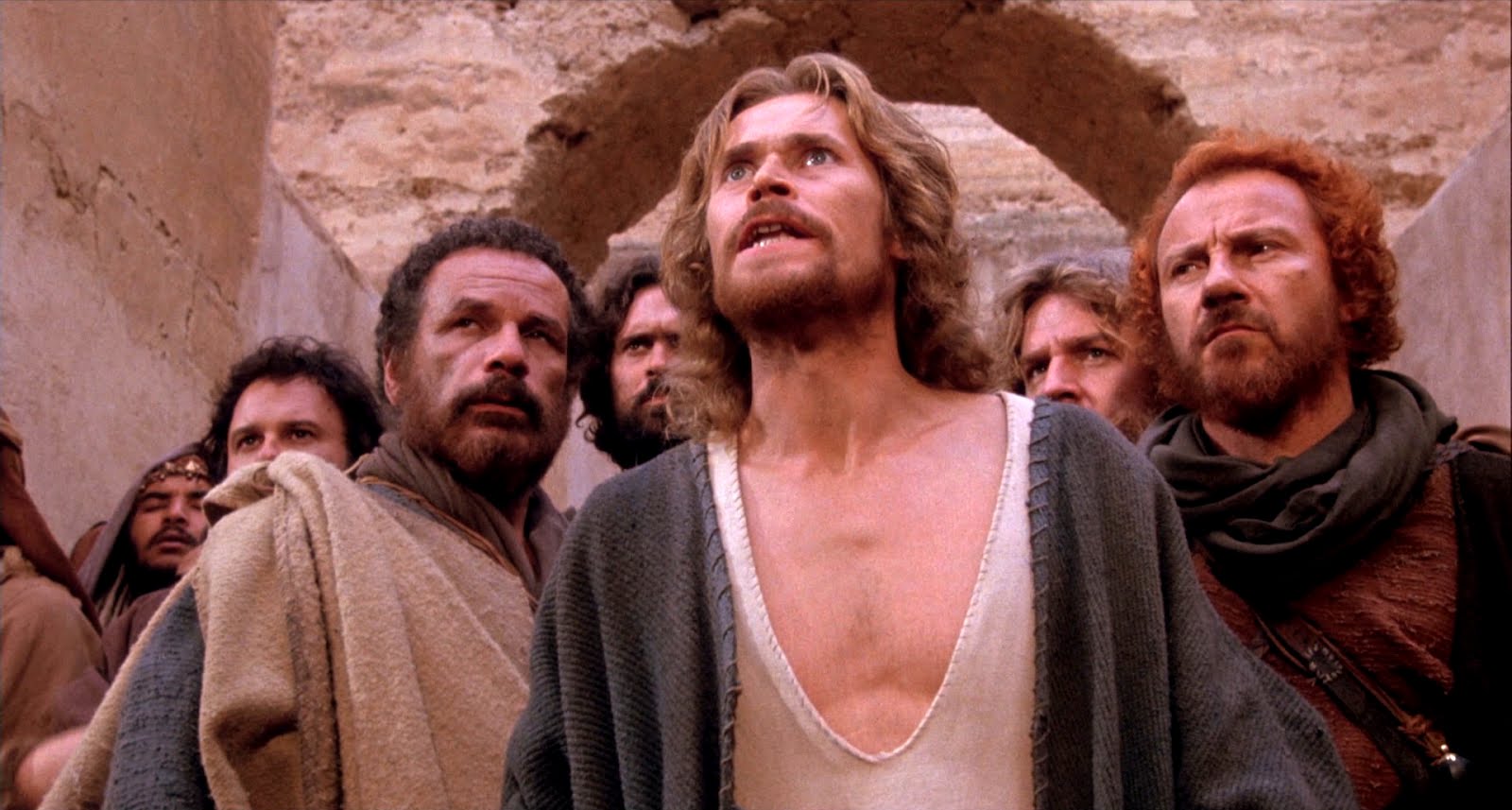
En août 1988, le cinéaste américain Martin Scorsese sort son nouveau film, La Dernière Tentation du Christ, d’après un roman de Níkos Kazantzákis. En rupture directe avec les récits bibliques, Scorsese y dépeint un Jésus vivant comme tout mortel, peu soucieux du péché ou de la foi, et qui prend soudainement conscience de sa mission divine puis entame un parcours messianique en s’opposant aux dirigeants mêmes du peuple juif dont il est issu. Devant les caméras de Scorsese, c’est Jésus lui-même qui demande à Judas, son premier adepte, de le dénoncer aux Romains afin d’être arrêté et mourir en martyr. Mais, alors qu’il attend la mort sur sa croix, Jésus se voit offrir le salut par un ange qui vient lui dire qu’il est Fils de Dieu, mais non pas le Messie, et doit vivre en homme normal. Sauvé par l’ange de la crucifixion, Jésus épouse Marie-Madeleine et fonde avec elle une famille heureuse.
A la fin de sa vie, Jésus appelle auprès de lui ses anciens disciples et Judas lui avoue que l’ange qui l’a sauvé était en réalité Satan, dont lui est venue cette «dernière tentation» de vivre en homme ordinaire et non en Messie. Mourant, Jésus rampe jusqu’à la croix dont Satan l’avait jadis extrait, dans une Jérusalem en flammes puisque n’ayant jamais été pacifiée par son enseignement. Il implore Dieu de le replacer sur la croix, afin de pouvoir enfin accomplir sa destinée. Crucifié une nouvelle fois, il sait sa mission menée à bien et meurt.
Cette uchronie religieuse soulève la fureur chez les Chrétiens à travers le monde entier, d’abord chez les Protestants aux Etats-Unis même puis, en France, chez les Catholiques, l’Archevêque de Paris Jean-Marie Lustiger parvenant même à faire plier le Gouvernement socialiste de François Mitterrand qui, d’abord partenaire du film, finit par jeter l’éponge.
A sa sortie en France en septembre, le film réveille un mouvement catholique intégriste que l’on croyait décapité depuis l’excommunication au printemps de Monseigneur Marcel Lefebvre et la mise au ban par le Vatican de sa Fraternité sacerdotale Saint-Pie-X traditionaliste et hostile à Vatican II. En octobre, un cinéma projetant La Dernière Tentation du Christ est incendié dans l’est de la France et, à Metz, la visite du Pape Jean-Paul II donne lieu au retrait du film des salles locales. Bientôt, le film est déprogrammé partout ailleurs ou projeté sous protection policière. Le 23 octobre, un commando catholique intégriste attaque l’Espace Saint-Michel à Paris, dernière salle projetant encore le film, blessant quatorze personnes dont deux grièvement.
En pleine célébration de sa Révolution et de l’Être suprême, divinité laïque sous les auspices de laquelle était adoptée le 26 août 1789 la Déclaration des Droits de l’Homme et du Citoyen, la France découvre que l’esprit vengeur des Chouans de Bretagne et des royalistes de Vendée qui refusaient la fin de la monarchie de droit divin était toujours là, et que, comme leurs ancêtres révolutionnaires, les Français républicains de 1989 allaient devoir y faire face. Et à l’intégrisme catholique menaçant le Bicentenaire allait bientôt s’ajouter l’intégrisme issu des rangs d’une autre religion majeure de France – l’Islam.
Allah et Les Versets sataniques : les «intégristes musulmans» à l’assaut de l’Être suprême
En 1989, la France ne parle pas encore d’islamisme. Ce terme n’apparaît que l’année suivante, lorsque les premières élections libres et multipartites en Algérie voient non pas la victoire courue d’avance du Front de Libération Nationale (FLN), jusqu’alors parti unique, mais du Front islamique du Salut (FIS), parti prônant une application stricte de la loi coranique dans tous les domaines de l’administration et de la vie publique. Pour l’instant, en cette année 1989, la France parle d’intégrisme musulman. Jusqu’à présent, cet intégrisme s’est surtout manifesté à travers le terrorisme, non dans une moindre mesure en lien avec l’Iran comme en témoigne l’affaire Wahid Gordji. Mais la France est sur le point de découvrir que cet intégrisme peut aussi frapper là où elle l’attend le moins, sur un terrain où, ceinte de ses idéaux révolutionnaires, elle se croit inexpugnable. Le terrain de la culture.
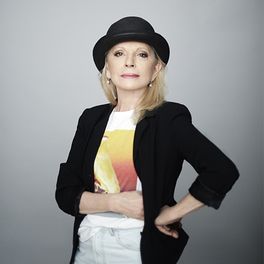
Dès 1987, la chanteuse Véronique Sanson envisageait une chanson contre l’intégrisme religieux, racontant l’histoire d’un couple maghrébin se muant en auteurs d’un attentat-suicide par l’explosion d’un camion. Alors qu’elle entend intituler sa chanson Dieu, le chanteur Michel Berger, son ancien compagnon qui produit pour elle l’album devant contenir la chanson, lui suggère de l’intituler Allah en référence à l’extrémisme musulman qui, à travers le monde, s’affirme alors de plus en plus comme une «troisième force» entre les Etats-Unis de Ronald Reagan et l’URSS de Mikhaïl Gorbatchev. C’est ainsi que la chanteuse enregistre Allah, où elle s’en prend directement au Dieu de l’Islam pour les attentats commis en son nom par des fanatiques.
Véronique Sanson
Alors qu’elle s’apprête à donner un concert à l’Olympia, Véronique Sanson reçoit des menaces de mort lui enjoignant de ne pas chanter Allah. Le 14 février 1989, une fatwa est lancée contre elle avec ordre de la tuer. La carrière de la chanson s’arrête là. Mais pas celle de l’extrémisme se réclamant de l’Islam, car bien sûr, Rushdie est le prochain sur la liste.
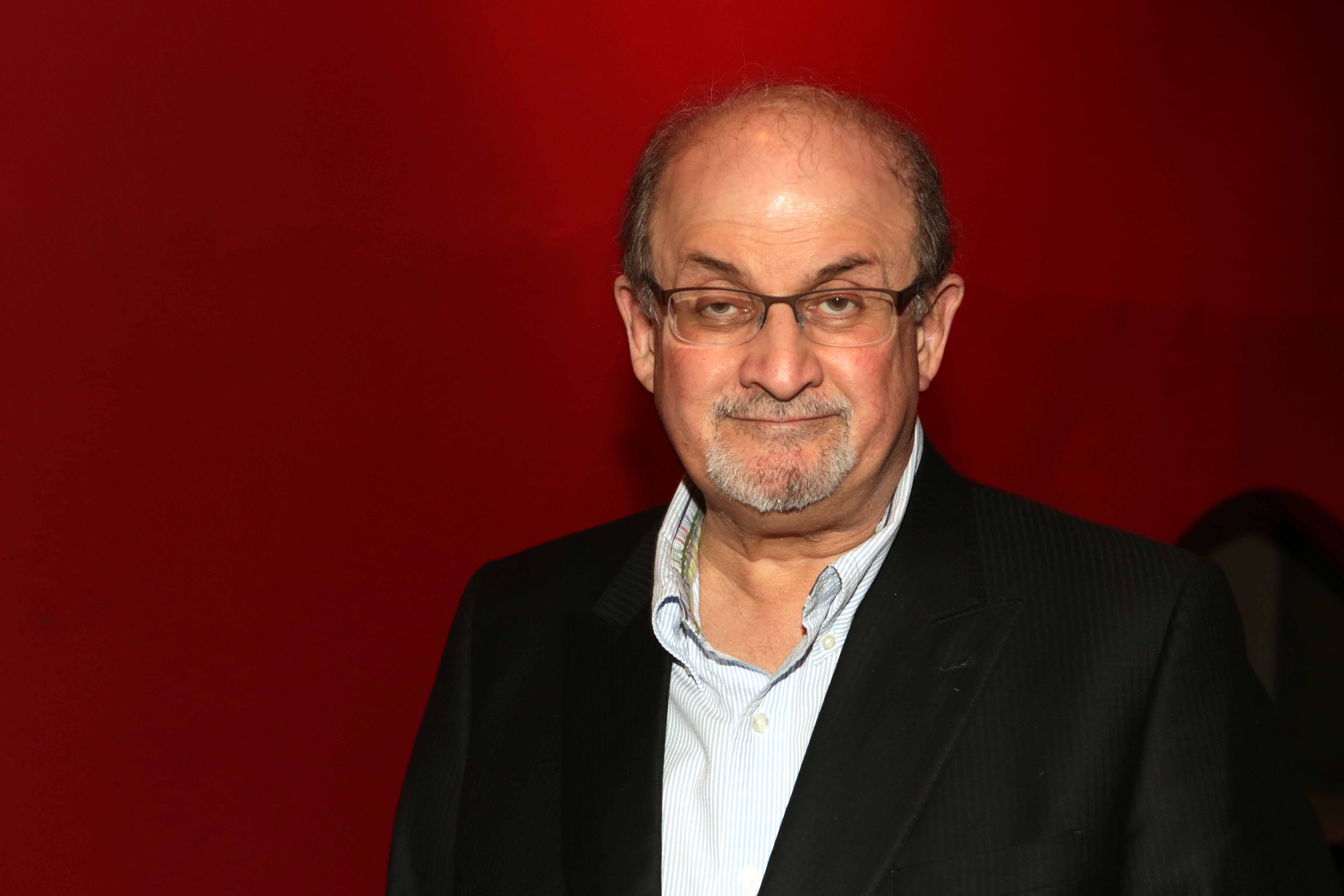
C’est en septembre 1988 que l’écrivain britannique d’origine indienne, naturalisé américain, publie son quatrième roman, Les Versets sataniques (The Satanic Verses). Les protagonistes, deux artistes indiens vivant en Angleterre contemporaine, se trouvent pris dans un détournement d’avion et, alors que l’appareil explose en plein vol, se voient miraculeusement y survivre puis prendre pour l’un, la personnalité de l’Ange Gabriel et, pour l’autre, celle d’un démon. Ce dernier réussit à ruiner la vie, notamment sentimentale, de son comparse qui le lui pardonne toutefois en bon ange que, selon lui, il est devenu. Tous deux rentrés en Inde, le premier tue sa compagne avant de se suicider, et le second, jusqu’alors brouillé avec son identité indienne ainsi que son propre père, se réconcilie avec les deux et reste vivre dans son Inde natale.
Salman Rushdie
Mais derrière cette histoire de deux Indiens frappés d’une maladie mentale, servant de trame au roman de Rushdie, d’autres parties du roman s’avèrent plus problématiques, du moins pour les Musulmans les plus dogmatiques.
A l’instar de Scorsese mettant en scène un Christ détourné de sa mission salvatrice par un Satan habilement déguisé, Rushdie dépeint Mahomet, le Prophète de l’Islam, adoptant trois divinités païennes de La Mecque en violation du principe islamique du dieu unique, les trois divinités ayant dicté à Mahomet de faux versets du Coran en ayant pris l’apparence d’Allah. Le récit romancé de Rushdie amène ensuite des prostituées de La Mecque à se faire passer pour les épouses du Prophète, puis l’un des compagnons de Mahomet à douter de lui en tant que messager de Dieu et l’accuser d’avoir volontairement réécrit certaines parties du Coran en occultant le verbe divin.
Rushdie poursuit avec le récit, toujours fictif, d’une jeune paysanne indienne affirmant recevoir des révélations de l’Archange Jibreel («Gabriel» en arabe). Elle convainc son village entier d’entreprendre un pèlerinage en marchant jusqu’à La Mecque, affirmant qu’ils pourront tous traverser la mer à pied. Mais les pèlerins disparaissent tous, les témoignages discordant sur leur noyade pure et simple ou leur traversée miraculeuse de la mer comme l’aurait promis l’Archange Jibreel.
Puis Rushdie présente un chef religieux fanatique expatrié, «l’Imam», chef religieux en lequel est aisément reconnaissable l’Imam Ruhollah Khomeini, Guide suprême de la République islamique d’Iran, exilé en France jusqu’à la révolution islamique de 1979.
Après le tollé chez les Chrétiens contre Scorsese, c’est au tour de Rushdie d’enflammer le monde musulman. Au Pakistan, Les Versets sataniques sont interdits et, le 12 février 1989, dix mille personnes manifestent contre lui à Islamabad où le Centre culturel américain et un bureau d’American Express sont mis à sac. L’Inde interdit l’importation de l’ouvrage et des autodafés se font jour en Grande-Bretagne.
En février 1989, c’est au tour de Khomeini d’ajouter à la polémique en édictant une fatwa, littéralement une «opinion juridique», facultative en Islam sunnite mais ayant valeur contraignante chez les Chiites, appelant au meurtre de Rushdie et de ses éditeurs ainsi qu’à faciliter ce meurtre à défaut de le commettre soi-même. En Grande-Bretagne, le Gouvernement conservateur de Margaret Thatcher prend fait et cause pour Rushdie, qu’il place sous protection policière, mais un jeune député travailliste nouvellement élu organise dans sa circonscription une marche pour l’interdiction des Versets sataniques et un ancien leader du Parti conservateur, Norman Tebbit, sans aucun lien personnel avec l’Inde ou l’Islam par ailleurs, condamne et injurie publiquement Rushdie.
Là où Martin Scorsese continue d’aller et venir librement, Véronique Sanson ayant tôt fait de sortir de nouveaux titres et faire oublier Allah, Rushdie se trouve désormais prisonnier d’une alternative qui résume tout son sort – la clandestinité ou la mort.
Héritage humaniste contre héritage de haine
Devenu invisible et introuvable, Rushdie publie en 1995 un nouveau roman, Le dernier soupir du Maure (The Moor’s Last Sigh). Mais, pour avoir perdu en intensité, la menace de Téhéran n’en a pas pour autant disparu. Loin des regards, c’est désormais par procuration que Rushdie continue d’être attaqué.
En 1991, les traducteurs italien et japonais de Rushdie sont assassinés. Deux ans plus tard, un traducteur norvégien des Versets sataniques échappe de peu à une tentative de meurtre par balles puis un traducteur turc manque de succomber à un incendie volontaire qui le visait.
En 1998, l’Iran de Mohammed Khatami, Président se voulant réformiste, annonce la fin de la fatwa contre Rushdie qui, à son tour, abandonne sa vie en clandestinité. Mais en 2006, le conservateur nationaliste Mahmoud Ahmadinejad qui a succédé à Khatami fait marche arrière ; pour lui, une fatwa ne peut être annulée que par la personne qui l’a édictée, et puisque Khomeini est décédé, la fatwa est irréversible. Dix ans plus tard, la prime promise par l’Iran pour le meurtre de Rushdie dépasse les trois millions de dollars, notamment sous l’impulsion des médias iraniens.
Et le 12 août dernier, alors qu’il s’apprête à donner une conférence à la Chautauqua Institution dans l’Etat de New York, Rushdie est poignardé au cou par Hadi Matar, Chiite d’origine libanaise dont les réseaux sociaux grouillent de messages de soutien au régime iranien et d’admiration pour Khomeini. Hospitalisé en urgence, placé sous assistance respiratoire, il est menacé de perdre un œil ; le 14, son agent annonce qu’il se rétablit et respire normalement. En Iran, la presse conservatrice couvre de louanges Hadi Matar qui, ensuite amené devant la justice, plaide non coupable.
En France, d’aucuns convoquent aussitôt le souvenir de l’attentat terroriste du 7 janvier 2015 contre la rédaction de Charlie Hebdo, régulièrement accusé de s’en prendre systématiquement à l’Islam et aux Musulmans, en particulier depuis la publication dans ses colonnes, en 2006, de caricatures de Mahomet parues dans un journal d’extrême droite au Danemark. C’est toutefois après avoir critiqué non l’Islam mais l’islamisme, incarné par le parti tunisien Ennahda et une partie du Conseil national de Transition en Libye, que Charlie Hebdo avait connu en 2011 l’incendie de ses locaux à Paris. Quant à l’attentat ayant décimé sa rédaction, Charlie Hebdo le devait bien à deux terroristes résolus, deux frères membres d’Al-Qaïda en Péninsule Arabique, Cherif et Saïd Kouachi. L’Islam ne tue pas, l’islamisme oui.
Pour les Français, immanquablement, le souvenir de l’attentat contre Charlie Hebdo en appelle un autre, celui de l’assassinat de Samuel Paty, professeur d’histoire-géographie victime d’un autre attentat terroriste à Conflans-Sainte-Honorine, en région parisienne, le 16 octobre 2020 alors que se tenait justement à Paris le procès des auteurs présumés des attentats de janvier 2015 dont celui contre Charlie Hebdo, en dehors des frères Kouachi et d’Amedy Coulibaly qui avait attaqué l’Hyper Cacher de la Porte de Vincennes. Samuel Paty avait été dénoncé par certains élèves musulmans comme ayant utilisé des dessins parodiques de Mahomet parus dans Charlie Hebdo, ce qui avait fait de lui une cible du seul fait de son enseignement, non contre l’Islam mais en faveur de l’esprit critique.
Étrangère à l’univers anglo-saxon de l’Amérique de Scorsese ou de l’Angleterre de Rushdie, la France qui célébrait sa Révolution s’était retrouvée victime collatérale des deux épisodes mais n’en avait pas connu de semblable pour ses propres artistes, notamment pas pour Véronique Sanson contre laquelle la fatwa aura fait long feu. Inspirée par le Bicentenaire de la Révolution, Isabelle Adjani, l’une des actrices françaises les plus en vogue à l’époque, n’en avait pas moins lu à haute voix un extrait des Versets sataniques lors de la cérémonie des Césars en 1988. Malgré tout, la France républicaine avait bien dû se faire une raison, constatant que les idéaux qu’elle célébrait et voulait universels ne l’étaient pas tant qu’elle le croyait et que, dans cet Occident qui regardait de haut un «Tiers Monde» auquel il imputait l’intégrisme religieux comme une conséquence de son sous-développement, ce même intégrisme existait aussi, non du seul fait de migrants musulmans mais aussi de citoyens de lignée locale depuis des siècles, non du seul fait d’un Islam qui, ailleurs, avait pris les armes mais aussi du même catholicisme qui, le dimanche matin, rassemblait les fidèles devant Le Jour du Seigneur sur la télévision d’État.
Triste préfiguration d’un monde qui, en quittant les années 1980 et par miracle la Guerre Froide, (r)entrait successivement dans la guerre «chaude» avec la campagne militaire internationale pour la libération du Koweït envahi en août 1990 par l’Irak, les guerres balkaniques avec camps d’internement et purification ethnique rappelant sombrement la Shoah, le terrorisme généralisé, ici islamique du fait d’Al-Qaïda et ailleurs d’extrême droite comme à Oklahoma City, et l’extrême droite au pouvoir, fût-ce en coalition gouvernementale, comme en Italie.
D’aucuns en France voudraient penser que tous les chemins mènent non à Rome, mais à Paris, et donc que tous les chemins en partent aussi. En 1789, la Déclaration des Droits de l’Homme et du Citoyen avait bel et bien résonné, pour sa part, loin par-delà les frontières du Royaume de France. Là où les textes constitutionnels américains avaient été scrutés principalement par les ennemis britannique et espagnol de la jeune Amérique indépendante, la proclamation française «en présence de l’Être suprême» avait permis au monde entier de comprendre qu’une nouvelle ère commençait. Deux cents ans plus tard, la fête de ce légitime moment de fierté pour le peuple français lui offrait tout le contraire, l’obscurantisme et la violence venues d’ailleurs convergeant vers Paris pour ternir ce moment de joie et ouvrir la voie à une fin du vingtième siècle qui ne pouvait que laisser craindre le pire.
La Déclaration universelle des Droits de l’Homme et du Citoyen adoptée le 26 août 1789 (C) Musée Carnavalet – Paris
Aucun respect du droit sans respect de l’écrit
Et le vingt-et-unième siècle n’a pas manqué de tenir les terribles promesses de son prédécesseur. Pire attentat terroriste de l’histoire en 2001, extrême droite au pouvoir dans deux pays d’Europe et ayant manqué de l’être aussi en France en 2002, invasion de l’Irak cette fois sans mandat international en 2003, tortures de civils dans ce même Irak l’année suivante … La liste serait bien trop longue. Mais une chose est sûre, ce qui était au vingtième siècle le futur ressemble horriblement à ce qui était vu, à l’époque, comme un passé révolu.
Des écrivains comme Rushdie, tous les pouvoirs tyranniques en ont toujours emprisonné, interdit, torturé voire tué. Dans le contexte individuel de 1989, plus encore en France, Rushdie était devenu le symbole vivant d’un mal nouveau, menaçant un monde où le Mur de Berlin était toujours debout même si l’URSS vaincue en Afghanistan semblait à genoux. Mais avec le nouveau siècle est venue l’expansion de la nouvelle technologie, et avec elle, la possibilité d’être auteur sans plus devoir passer par un journal ou une maison d’édition, avec l’apparition des blogs et, pas toujours pour le meilleur, des réseaux sociaux. Et qui dit nouveaux moyens d’expression dit nouvelle peur pour les régimes répressifs, et avec cette nouvelle peur, de nouveaux motifs de répression. Publié sur papier ou autopublié sur Internet, qu’importe aujourd’hui, vous risquez tout autant de payer cher le moindre de vos mots contre qui veut régner en imposant le silence.
Active au sein du Conseil des Droits de l’Homme des Nations Unies, l’Association of World Citizens ne s’est jamais limitée pour autant à cette seule enceinte genevoise, ayant toujours porté la défense des Droits Humains partout où elle le peut.
En Tunisie où, depuis un an, les initiatives du Président Kaïs Saied mettent à mal l’héritage de la Révolution de janvier 2011, le journaliste Salah Attia en a fait les frais pour avoir dénoncé ces dérives autoritaires en direct sur la chaîne Al Jazeera. Jugé sur ce seul fondement par des militaires en uniforme, il s’est retrouvé détenu à la prison de Mornaguia près de Tunis. Dans la Libye voisine qui n’a jamais su trouver sa voie nouvelle depuis la révolte populaire contre Mu’ammar Kadhafi, hélas devenue intervention militaire franco-britannique aux motifs plus qu’incertains, c’est Mansour Atti, journaliste lui aussi, mais également blogueur et dirigeant local du Croissant-Rouge, qui fut enlevé en juin 2021 par un groupe armé réputé proche des Forces armées libyennes.
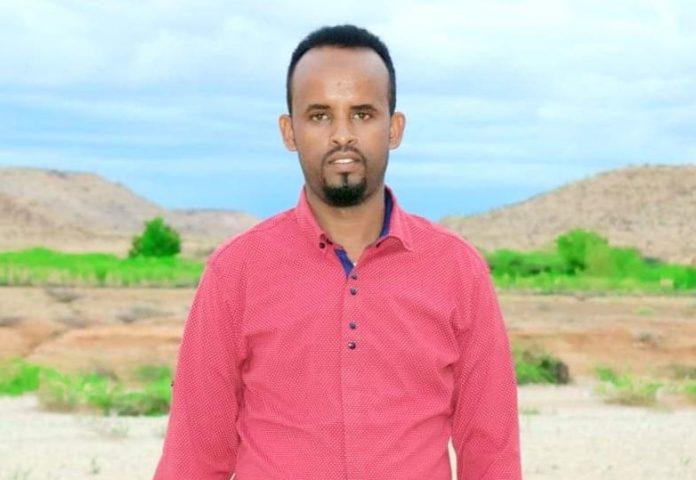
Toujours en Afrique mais plus au sud, dans la Corne du continent, en Somalie où l’État central ne s’est jamais vraiment reconstitué depuis 1990 et la désagrégation du pays après la fin de la dictature de Mohamed Siad Barré, un journaliste indépendant nommé Kilwe Adan Farah fut arrêté en décembre 2020 dans la région autonome de facto du Puntland où il venait de couvrir une manifestation contre les autorités locales. Jugé lui aussi par un tribunal militaire, il fut condamné à trois ans d’emprisonnement pour avoir «répandu des fausses nouvelles et incité au mépris envers l’État». A ce jour, il purge encore sa peine.
Kilwe Adan Farah
Le terrorisme jihadiste en France et ailleurs l’a prouvé : ce qui menaçait Salman Rushdie n’a jamais disparu, tout au plus changé de forme. Mais aujourd’hui, là où un interdit fanatique peut toujours frapper quelqu’un qui s’exprime par l’écrit, l’interdit peut venir également des forces armées dans un pays cherchant sa voie constitutionnelle et, dans le meilleur des cas, démocratique. Quitte à oser vouloir faire croire qu’un écrit public dénué de toute intention malveillante peut menacer un pays tout entier de ne jamais (re)trouver une vie libre et paisible.
En France, en Grande-Bretagne et aux Etats-Unis, mais bien sûr pas seulement, la loi permet de saisir la justice contre un écrit public et obtenir soit réparation si l’on est visé à titre personnel, soit condamnation pénale dans le cas d’un abus de la liberté d’expression internationalement reconnaissable comme tel, par exemple à travers la jurisprudence de la Cour européenne des Droits de l’Homme. Et ce sera toujours, dans ces trois pays et partout ailleurs dans le monde, une infaillible indication du respect de l’État de droit par opposition à la loi de la jungle ou à celle du talion. Quiconque se reconnaît Citoyen du Monde doit défendre sans faille ces principes, sachant que là où un écrit peut valoir la mort, il n’est aucune responsabilité envers sa communauté locale, a fortiori envers la communauté humaine mondiale, que l’on puisse entendre assumer à moins que ce ne soit, au bout du compte, en vain.
Bernard J. Henry est Officier des Relations Extérieures de l’Association of World Citizens.
Dans un premier temps, il nous semble important de faire un rappel de l’état des lieux environnemental dans lequel se trouvent la terre et ses ressources, en considérant les interactions entre l’humanité et les écosystèmes qui y vivent.
Selon le Rapport Planète Vivante de WWF (2020), les activités humaines ont amené à une diminution de 68% des populations mondiales de mammifères, d’oiseaux, de poissons, de reptiles et d’amphibiens en 50 ans.
En Europe, par exemple, l’Union Internationale pour la Conservation de la Nature (UICN) indique la disparition de 36 espèces entre 2015 et aujourd’hui, et plus de 11% sont menacées d’extinctions (dont 58% d’arbres endémiques et 40% de poissons d’eau douce).
En Afrique, ce sont 700 millions d’hectares de terres (soit plus de dix fois la surface de la France), qui ont été dégradées par la pression humaine, et ce en lien avec la désertification et le surpâturage (source : la Banque mondiale, 2016). Cette situation crée un cercle vicieux, qui amène à une urgence alimentaire, laquelle nécessite à son tour une exploitation excessive des arbres et une sur-utilisation des engrais et pesticides[1].
Au niveau mondial, le stock de poissons a reculé de 50% entre 1970 et 2010, les côtes africaines étant les plus pillées au monde, notamment par la Chine[2]. Il se pourrait que les stocks halieutiques exploités par les êtres humains déclinent jusqu’à disparaître en 2048, si l’on en croit les prévisions d’Isabelle Autissier, présidente de WWF-France (jusqu’en janvier 2021).
Quant aux villes, si elles n’occupent que 3% de la surface continentale mondiale[3], elles concentrent 55% de la population mondiale et consomment plus des deux tiers de la demande énergétique mondiale (source : Rapport de situation 2019 sur les énergies renouvelables dans les villes de l’ONU). Elles sont, par ailleurs, particulièrement vulnérables aux changements climatiques et aux catastrophes naturelles du fait, entre autres, de leur forte concentration humaine, tout en étant en partie les causes de ces aléas climatiques[4].
L’histoire de l’humanité est en train de se jouer, en notre défaveur à tous ; il n’y a pas de région, de pays ou de continent épargnés. Il y a une réelle urgence à s’en préoccuper, car si nous n’agissons pas, c’est notre propre espèce que nous mettons en péril.
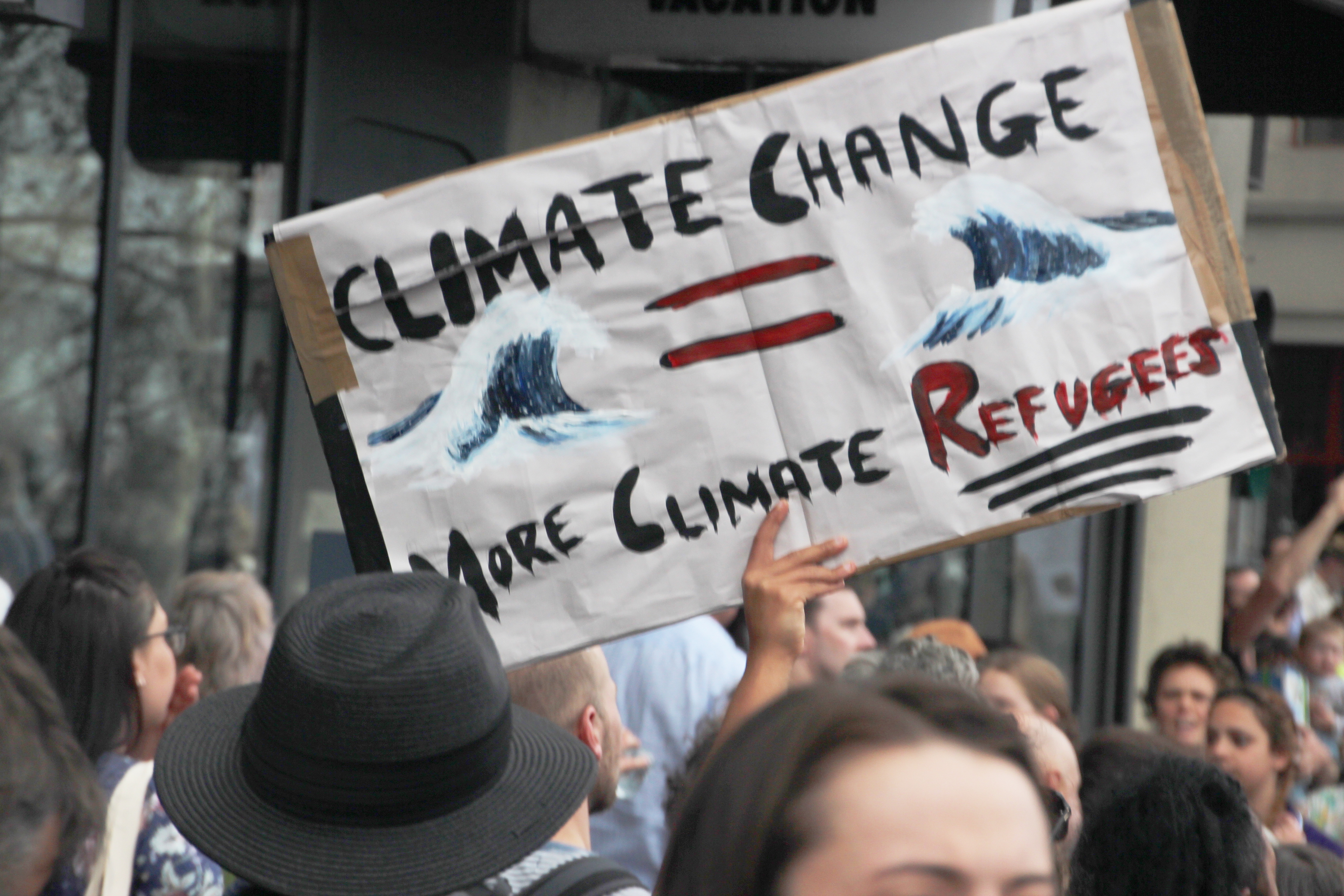
Une des premières conséquences de ces désordres environnementaux est d’obliger, inexorablement, des populations à se déplacer.
Bien que l’histoire de l’humanité soit faite de migrations, ces dernières se multiplient fortement, depuis quelques années. Auparavant, c’était les guerres, les violences, maintenant, ce sont aussi les aléas climatiques qui poussent les êtres humains à quitter la terre qui les a vus grandir et qui leur a permis de construire leurs identifications fondamentales.
Nous savons que, d’une manière générale, toute migration, à laquelle s’ajoute celle due à l’environnement, provoque des perturbations socioculturelles énormes, autant pour ceux qui la subissent que pour ceux qui l’accueillent. Elle engendre des souffrances humaines indicibles qui questionnent et violentent notre humanité.
Lequel d’entre nous n’a pas encore, en mémoire, ces images insoutenables des migrants noyés gisants sur les plages, en particulier sur les deux rives de la Méditerranée ?
Parmi ces migrants, combien sont des réfugiés climatiques ? Nous n’avons pas encore assez d’études qui nous renseignent avec précision sur cette question, mais il est avéré qu’ils sont de plus en plus nombreux.
Pourtant, force est de constater que le sujet des réfugiés climatiques est le parent pauvre de la politique actuelle, le lien entre migration et réchauffement climatique faisant l’objet d’un silence assourdissant de la part de nos politiques. Pour autant, en 2013, un rapport du Conseil norvégien pour les réfugiés (NRC) fait état de 22 millions de personnes ayant été déplacées en raison de catastrophes naturelles, ce qui est trois fois plus élevé que le nombre des personnes fuyant un conflit.
Mais qui sont ces migrants, ces réfugiés de l’environnement ? Ce sont des personnes « qui sont forcées de quitter leur lieu de vie temporairement ou de façon permanente à cause d’une rupture environnementale (d’origine naturelle ou humaine) qui a mis en péril leur existence ou sérieusement affecté leurs conditions de vie »[5].
Alors comment sont catégorisés ces « réfugiés climatiques », appelés aussi « déplacés » ou « éco-migrants » ? Ils sont, d’emblée, intégrés aux seules catégories existantes: celles des « réfugiés économiques » ou des « réfugiés de la misère ». En effet, ils n’ont pas de statut juridique, car ils ne remplissent pas les critères de la Convention de Genève signée en 1951.
Cette dernière n’accorde l’assurance d’une protection aux réfugiés que dans certains cas, à savoir, « des situations de persécutions liées à la race, à la religion, à la nationalité, aux opinions politiques, ou à l’appartenance à certains groupes sociaux » (UNHCR).
De ce fait, les pays d’accueil, connus pour leur qualité de vie et leur sécurité, et vers lesquels se dirigent naturellement ces éco-migrants, ne disposent d’aucun budget pour recevoir ces derniers.
Selon le Rapport mondial sur le déplacement interne (2020) de l’ONG Internal Displacement Monitoring Center (IDMC), chaque année, plus de 20 millions de personnes qui sont déplacées, le sont pour cause de catastrophes naturelles, dont 86% de nature hydrométéorologique.
Alors, quels sont les changements environnementaux qui provoquent de tels flux migratoires ?
L’Ined (Institut national d’études démographiques) fait état de 3 phénomènes[6] principaux :
1) L’intensité accrue des catastrophes naturelles.
En effet, entre 1995 et 2015, plus de 600.000 personnes sont décédées du fait de ces catastrophes météorologiques. Plus de 4 milliards de personnes ont en été blessées, ou sont tombées dans une forte précarité à la suite de ces catastrophes. (Source : rapport du Bureau des Nations unies pour la réduction des risques de catastrophes)
2) La hausse du niveau des mers.
Elle risque de rendre inhabitables certaines zones basses à forte densité de population.
C’est le cas de nombreuses régions du Bangladesh[7], par exemple. Ce pays, tout comme l’Inde, a vu s’accroître ses problèmes socio-économiques et politiques en raison notamment du déplacement des Rohingyas, forcés de fuir le Myanmar.
3) La raréfaction des ressources hydriques, aussi appelée stress hydrique.
Elle engendre sécheresse et désertification. C’est notamment le cas des États du Sahel, où les modèles climatiques prédisent une aggravation de la sécheresse dans les années à venir. Cette situation a déjà été à l’origine de déplacements majeurs de populations et d’une perte importante du bétail dans cette région d’Afrique. Le bétail, rappelons-le, constitue la principale source de production agricole[8].
Par ailleurs, et depuis quelques années, on assiste à une augmentation des inondations meurtrières notamment en Afrique de l’Ouest. Ces évènements sont dus à différents phénomènes tels que le changement de l’usage des terres, la réduction des jachères, ou encore la déforestation et l’urbanisation. Tout ceci rend les sols incapables d’absorber les eaux diluviennes notamment dans la zone du Sahel[9].
Ainsi, en 2018, ce sont 250.000 Afghans qui ont dû fuir leurs villages en raison des fortes chaleurs, induisant une vulnérabilité extrême de cette population, déjà exposée aux conflits armés.
Selon un rapport du Conseil norvégien pour les réfugiés, « en 2013, les catastrophes naturelles ont fait presque trois fois plus de déplacés que les guerres » (INED) et 85% d’entre eux sontdes pays en développement.
Pour une grande partie de ces populations, c’est l’exode vers l’Occident, et particulièrement l’Europe, qui est le plus tentant et le plus tenté, dans l’espoir de vivre dignement, ou tout au moins de survivre …
Comment dès lors permettre à ces populations de vivre dans leurs territoires, d’y travailler et d’en utiliser les ressources ?
Certaines bonnes pratiques locales, simples d’accès, notamment pour les populations autochtones pourraient aider à lutter contre ces problématiques environnementales. Quelques-unes commencent d’ores et déjà à émerger et devraient faire, nous l’espérons, effet « boule de neige ».
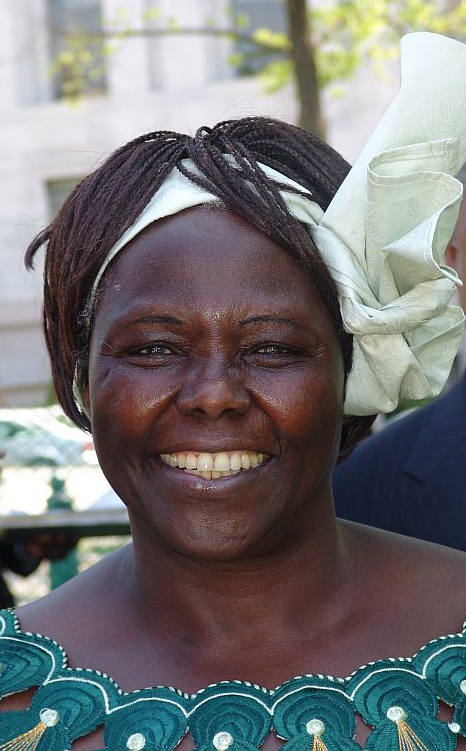
À titre d’exemple, citons le mouvement de la ceinture verte au Kenya (Green Belt Movement) qui a été lancé par la biologiste Wangari Maathai et qui encourage les femmes à planter des arbres, ce qui leur permet, à terme, d’améliorer leur niveau de vie.
En Mongolie, toute une muraille verte a également vu le jour, pour résister à l’avancée du désert de Gobi.
Au Burkina Faso, des paysans construisent des cuvettes en demi-lunes qui permettent de concentrer les précipitations et réduire le ruissellement[10].
Au Rajasthan, pour récupérer l’eau des moussons, recharger les nappes phréatiques et réalimenter les rivières, les paysans ont remis au goût du jour le « johad », une technique agricole ancestrale, qui consiste à collecter les eaux de pluie pendant la saison des moussons et les utiliser en les faisant filtrer dans le sous sol pendant la saison sèche[11].
Wangari Maathai
On peut aussi évoquer la transformation de la villa « ASSIE GAYE » au Sénégal en 2009-2010, qui s’est faite grâce à l’utilisation de matériaux locaux, comme la terre crue argileuse. Elle est alimentée en énergies renouvelables, grâce à un générateur éolien, un générateur photovoltaïque et un collecteur thermique. Ce qui en fait une maison durable, à la fois sur le plan écologique et économique[12].
Enfin, nous devons rappeler qu’il est indispensable pour l’humanité de relever le défi majeur de ces problématiques environnementales et humaines qui s’offrent à elle. Il nous faut intégrer tous les possibles en matière de changement climatique annoncés par les rapports du Groupe GIEC, dans le but d’y répondre.
Il serait ainsi plus urgent d’attribuer certains budgets étatiques à la prise en charge des réfugiés climatiques, plutôt que d’augmenter, par exemple, ceux inhérents à la défense et à l’armement.
Par ailleurs, la lutte contre le fléau de l’évasion fiscale pourrait, éventuellement, profiter à ces mêmes réfugiés et ainsi limiter la pression sur les pays d’origine ou encore sur les pays accueillant ces migrants.
Pour clôturer mon propos, j’emprunte un peu de sa sagesse à Wangari Maathai qui précise qu’« Aujourd’hui, nous affrontons un défi qui exige un renouvellement de notre mode de pensée, pour que l’humanité cesse de menacer le système qui assure sa propre survie. Nous sommes appelés à aider la terre à guérir ses blessures et, à guérir les nôtres – en fait, à embrasser la totalité de la création dans toute sa diversité, sa beauté et ses merveilles. »[13]
Nadia Belaala est architecte et ingénieure sociale, anciennement Officier du Développement durable de l’Association of World Citizens.
[5] Cournil, C. (2010). Les “réfugiés environnementaux” : enjeux et questionnements autour d’une catégorie émergente. Migrations Société, 2(2), 67-79. https://doi.org/10.3917/migra.128.0067
[7] Kholiquzzaman Ahmad, Q. (2006). Changement climatique, inondations et gestion des crues : le cas du Bangladesh. Hérodote, 2(2), 73-94. https://doi.org/10.3917/her.121.0073
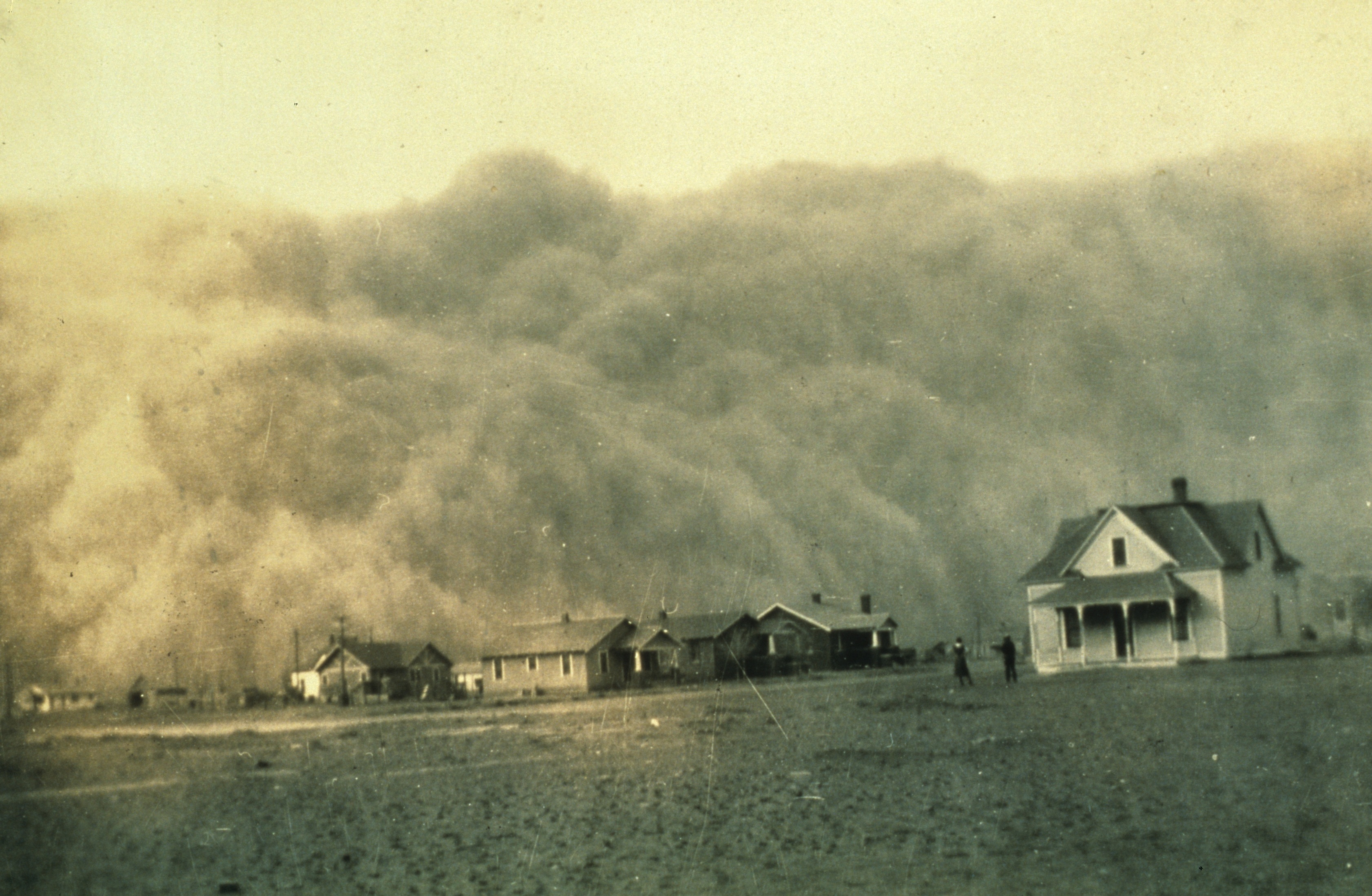
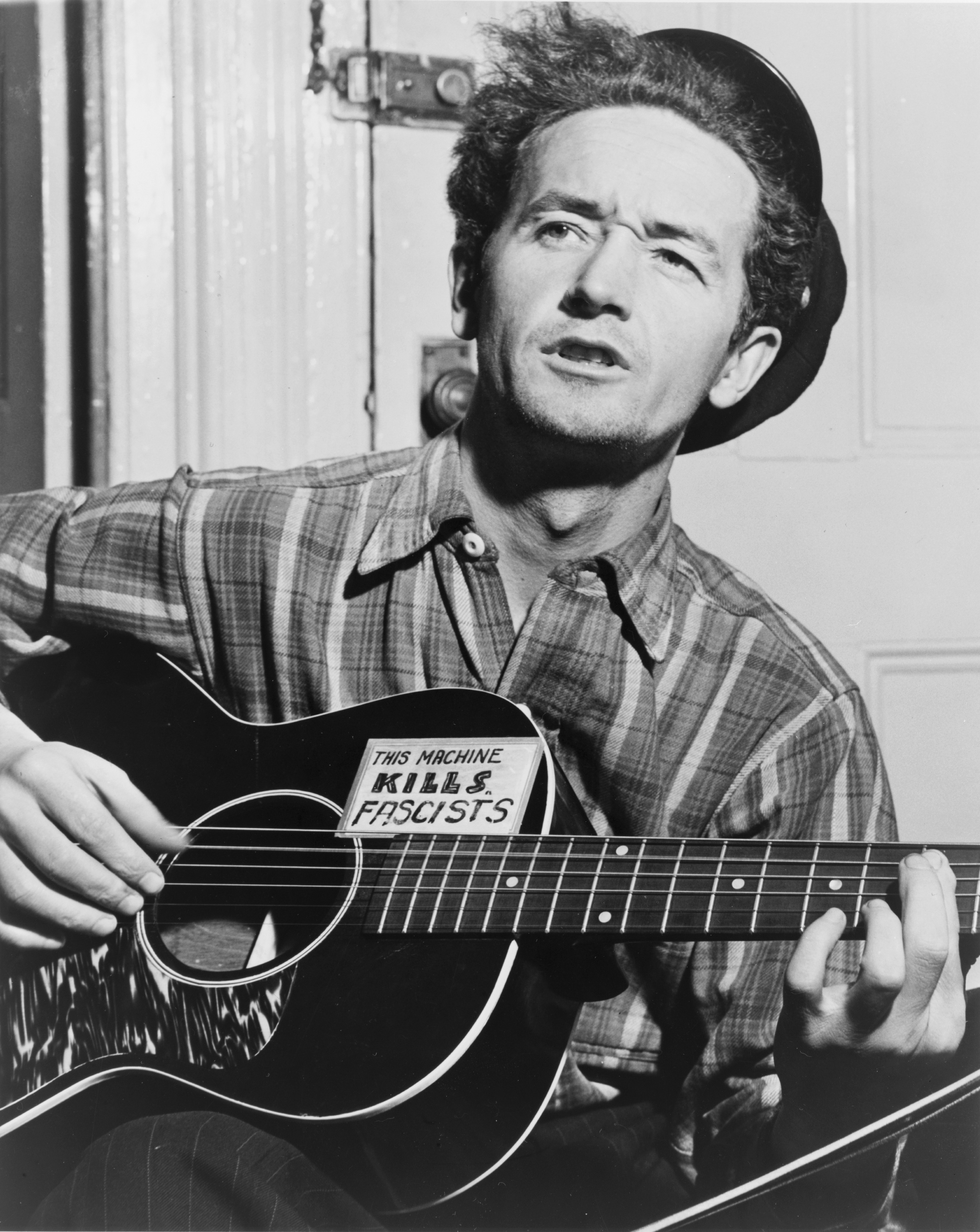
Woodrow Wilson Guthrie (1912-1967) whose birth anniversary we note on July 14, was the voice of the marginalized, especially those hit by the drought in the west of the USA during the late 1920s-early 1930s – what has been called the “dust bowl”.
Many lost their farms due to unpaid bank loans, and others moved to the greener pastures of California where they were not particularly welcomed. However, nearly all were United States (U. S.) citizens and they could not be deported to another country.
A dust storm in Texas, 1935
Times have changed. Today, there are the homeless who would like to reach the USA. There has been a good deal of media attention given to those at the frontier, including those who have died trying to reach the USA.
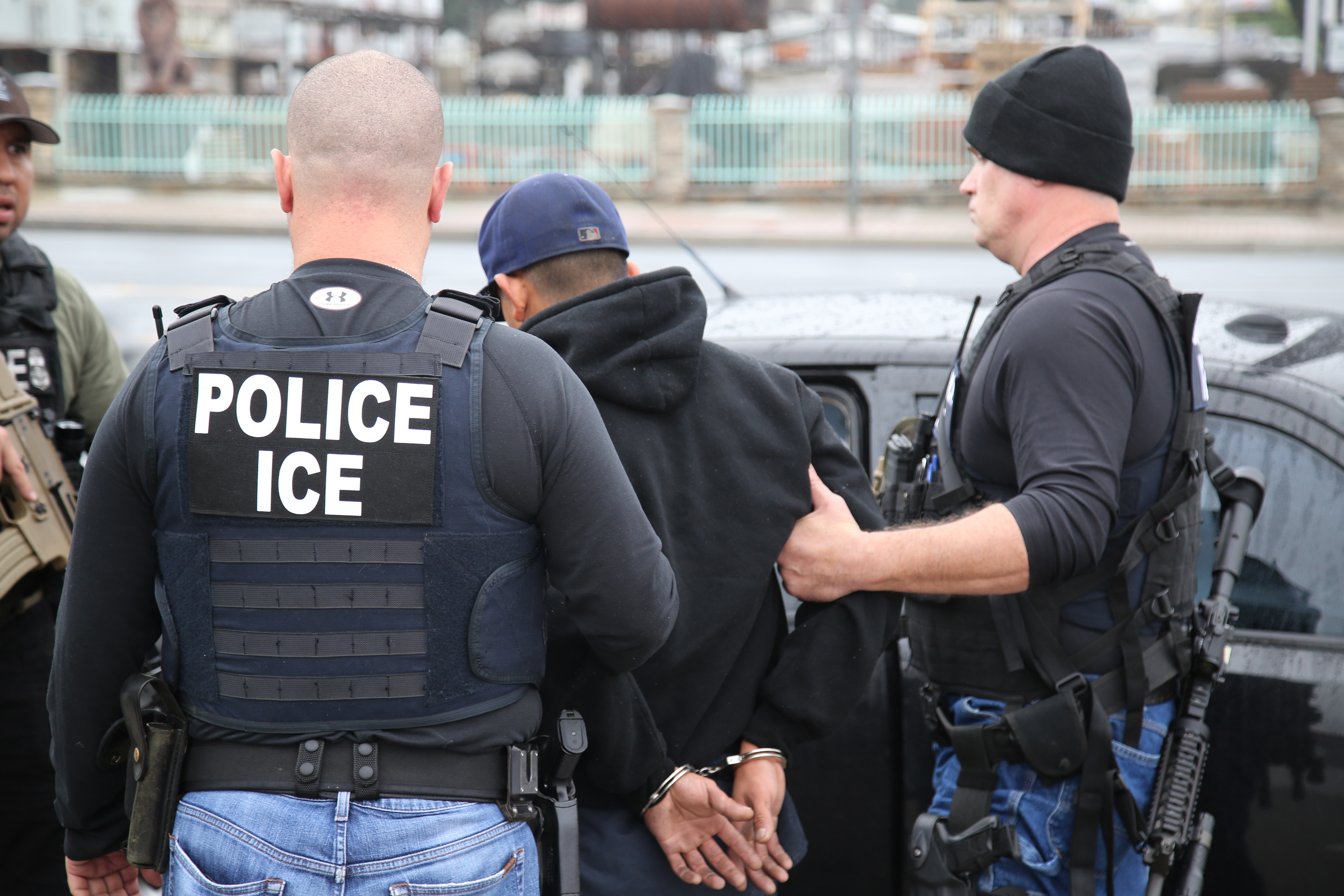
Less media attention has been given to those living in the U. S. and who are being deported to their “home country” although some have been living in the U. S. since childhood and could sing “This land is my land.”
A large number of persons, an estimated three million, were deported during the 8-year presidency of Barack Obama with relatively little attention given except by specialists. The more flamboyant speeches of former President Trump have awakened more people to the issue of deportation and the conditions in which people are held prior to deportation.
Those in danger of deportation are not organized in a formal way. The U. S. trade union movement is a weak organizational force whose membership has vastly declined. In practice, trade unions never fought to protect “illegal” foreign workers even when trade unions were stronger. There are legitimate, non-racist concerns that an influx of immigrants will lower wage rates and overburden welfare services. These non-racist concerns join in with the noisier, racist voices.
Opposition to deportation has come largely from religious-spiritual groups stressing human dignity and using places of worship as sanctuaries in which to house people in danger of deportation. This sanctuary movement began in the early 1980s to provide safe havens for Central American refugees fleeing civil armed conflicts. Obtaining refugee status and asylum in the U. S. was difficult. Some 500 congregations joined the sanctuary movement to shelter people based on the medieval laws which protected church building against soldiers. Other congregations used the image of the Underground Railroad which protected runaway slaves prior to the Civil War.
There is now a new sanctuary movement started in the Age of Trump, focused on the protection of undocumented families from the newly created police of the U. S. Immigration and Customs Enforcement (ICE). Woody Guthrie would no doubt lend his singing voice to help those in danger of deportation as he did for the farmers and workers of the 1930s.
Prof. René Wadlow is President of the Association of World Citizens.
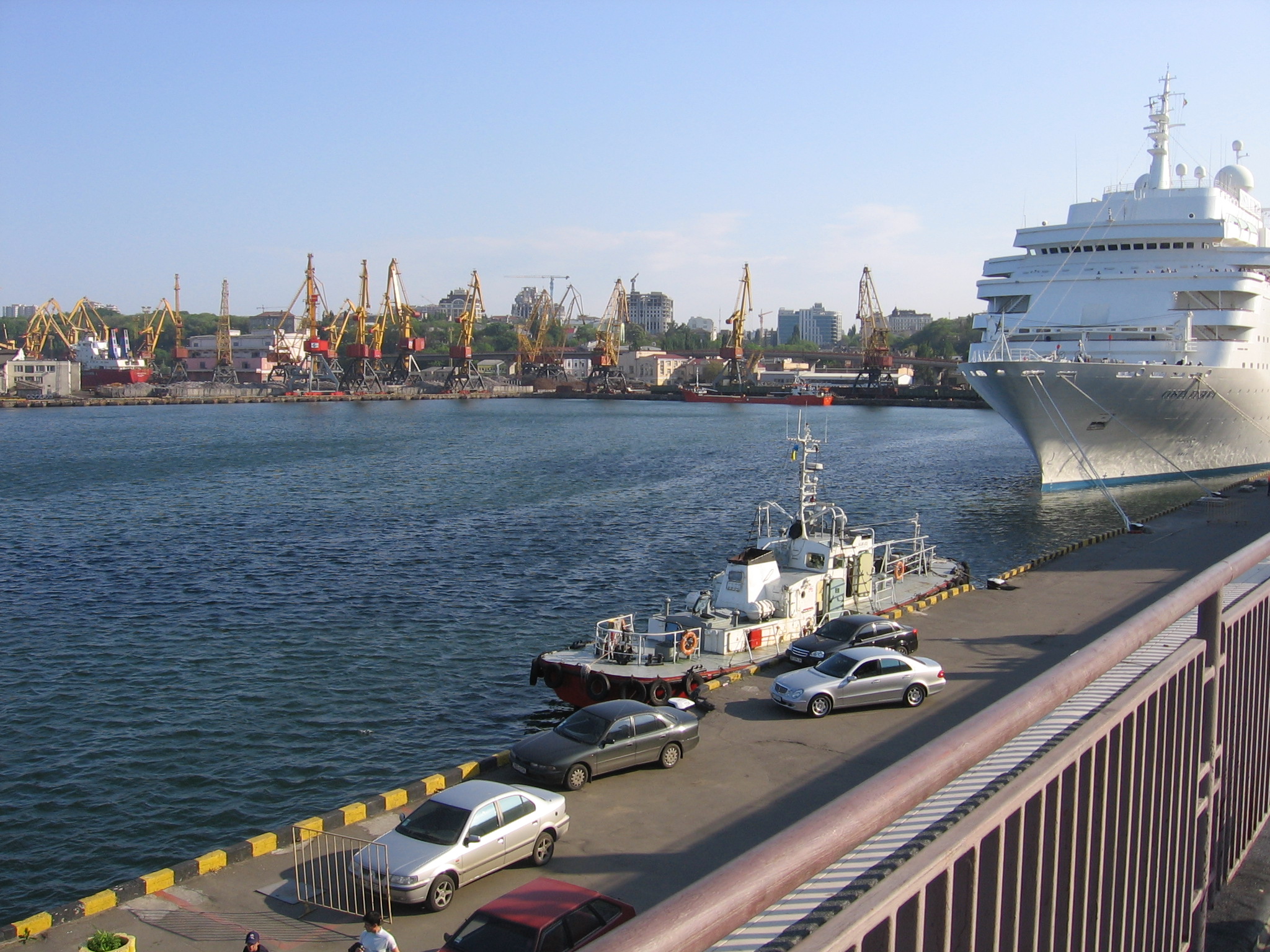
The Association of World Citizens (AWC) urges action to lift the blockade on Odessa and other Black Sea ports so that grain and other food resources can resume to flow. Ukraine has a vast agricultural base producing 46 percent of the world’s sunflower exports and 10 percent of the world’s wheat exports. The Middle East and Africa are Ukraine’s food export market. Odessa has a large grain terminal in which vast quantities of food exports are now stuck. It is not physically possible to transport large quantities of grain by rail and road.
Odessa’s port, peaceful and flourishing, before the Russian invasion. (C) Raymond Zoller
In part due to this blockade, food prices for grain have risen some 20 percent, hitting especially the poor. In some parts of Africa, due to climate conditions and armed conflict, there are near famine conditions. New food supplies are urgent.
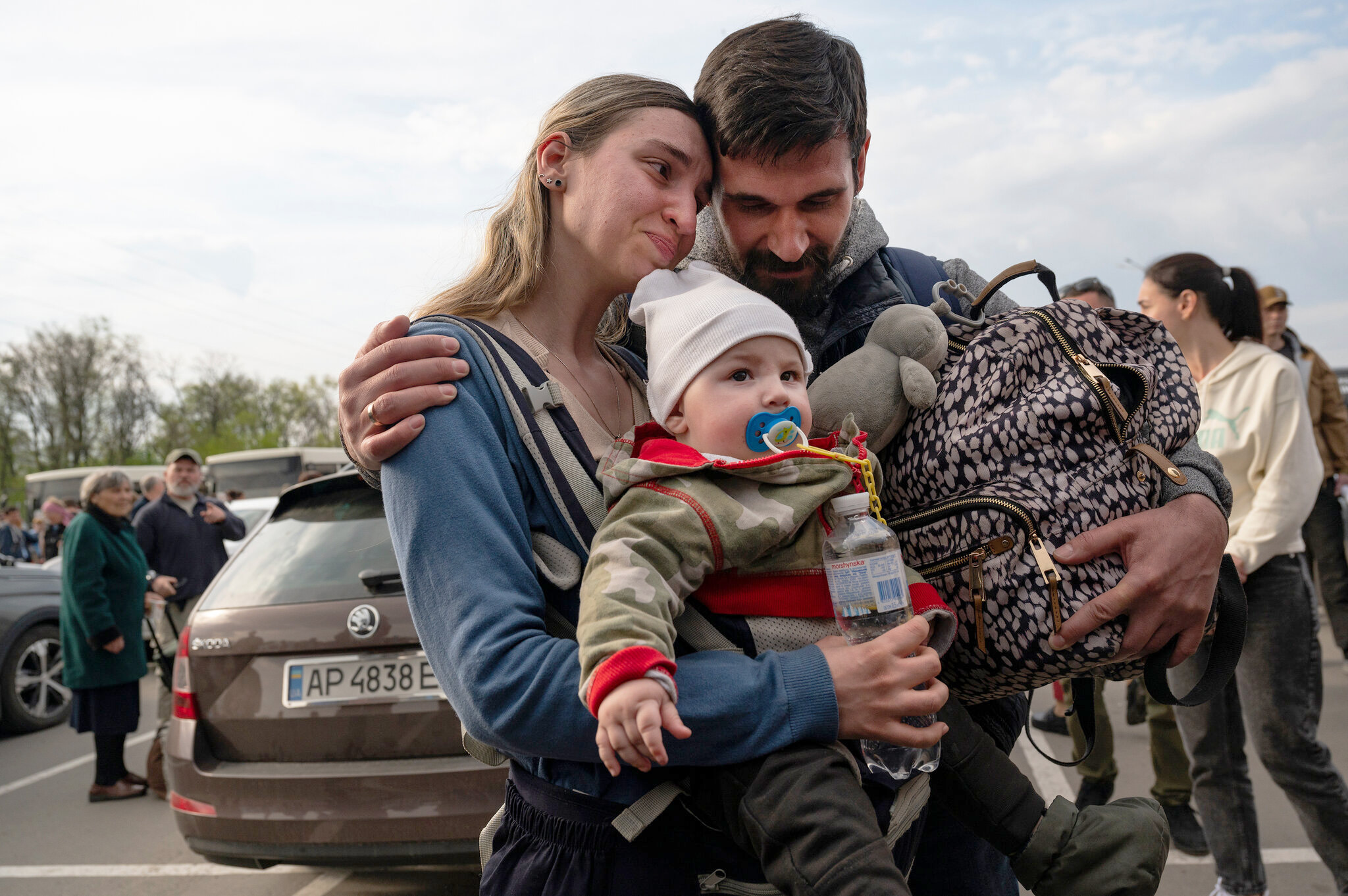
A Ukrainian family evacuated from Mariupol. (C) Lynsey Addario for The New York Times
Russian authorities have said that they were ready to provide a humanitarian corridor for ships carrying food, but only in return for the lifting of U. S. and Western European sanctions. However, the Western sanctions have a multitude of sources. The lifting of the Odessa blockade and renewed grain shipments must be treated as a single issue, although it is obviously colored by the whole armed conflict.
There are diplomatic efforts underway led by the African Union and the United Nations. It is urgent that speedy progress be made. Nongovernmental organizations may be able to play a creative role as many NGOs are already involved in ecologically-sound development projects in areas under agricultural and food stress. The AWC, concerned with the resolution of armed conflicts through negotiations in good faith, appeals for creative diplomatic measures so that the blockade is ended as soon as possible.
Prof. René Wadlow is President of the Association of World Citizens.