The Official Blog of the

Archive for the ‘United Nations’ Category

UN System Weakened by U.S. Retreats

In Human Rights, Current Events, Solidarity, Women's Rights, Conflict Resolution, The Search for Peace, United Nations, World Law, Being a World Citizen, United States, NGOs, Track II, Peacebuilding on January 12, 2026 at 7:40 AM

By René Wadlow

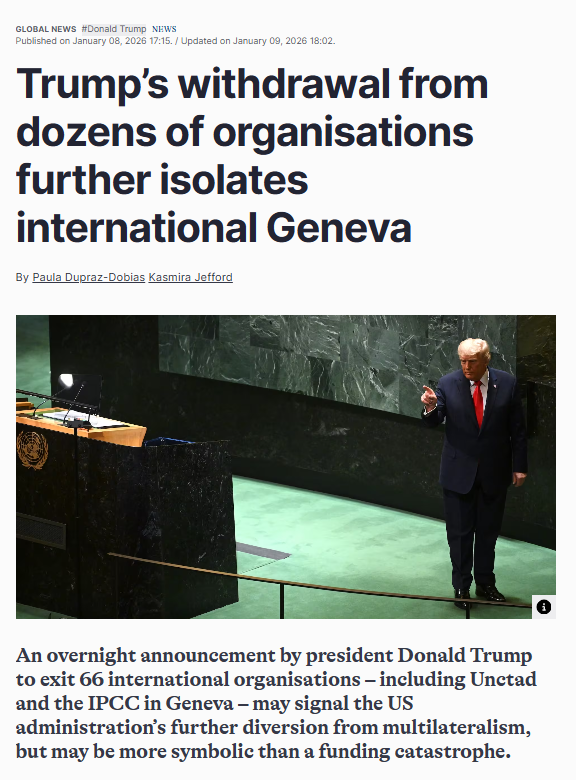
On January 7, 2026, the United States (U.S.) government announced that it was withdrawing from membership (and thus financial contribution) to 31 United Nations (UN) bodies and programs. According to U.S. Secretary of State Marco Rubio, these institutions and programs are “redundant in their scope, mismanaged, unnecessary, wasteful, poorly run and captured by the interests of actors advancing their own agendas contrary to our own.” He added, “Many of these bodies promote radical climate policies, global governance and ideological programs that conflict with U.S. sovereignty and economic strength.”

The U.S. withdrawal comes at a time when the UN as a whole (the 193 member States) is in the process of evaluating UN structures and programs (UN 80). The results of this evaluation should be presented later this year.

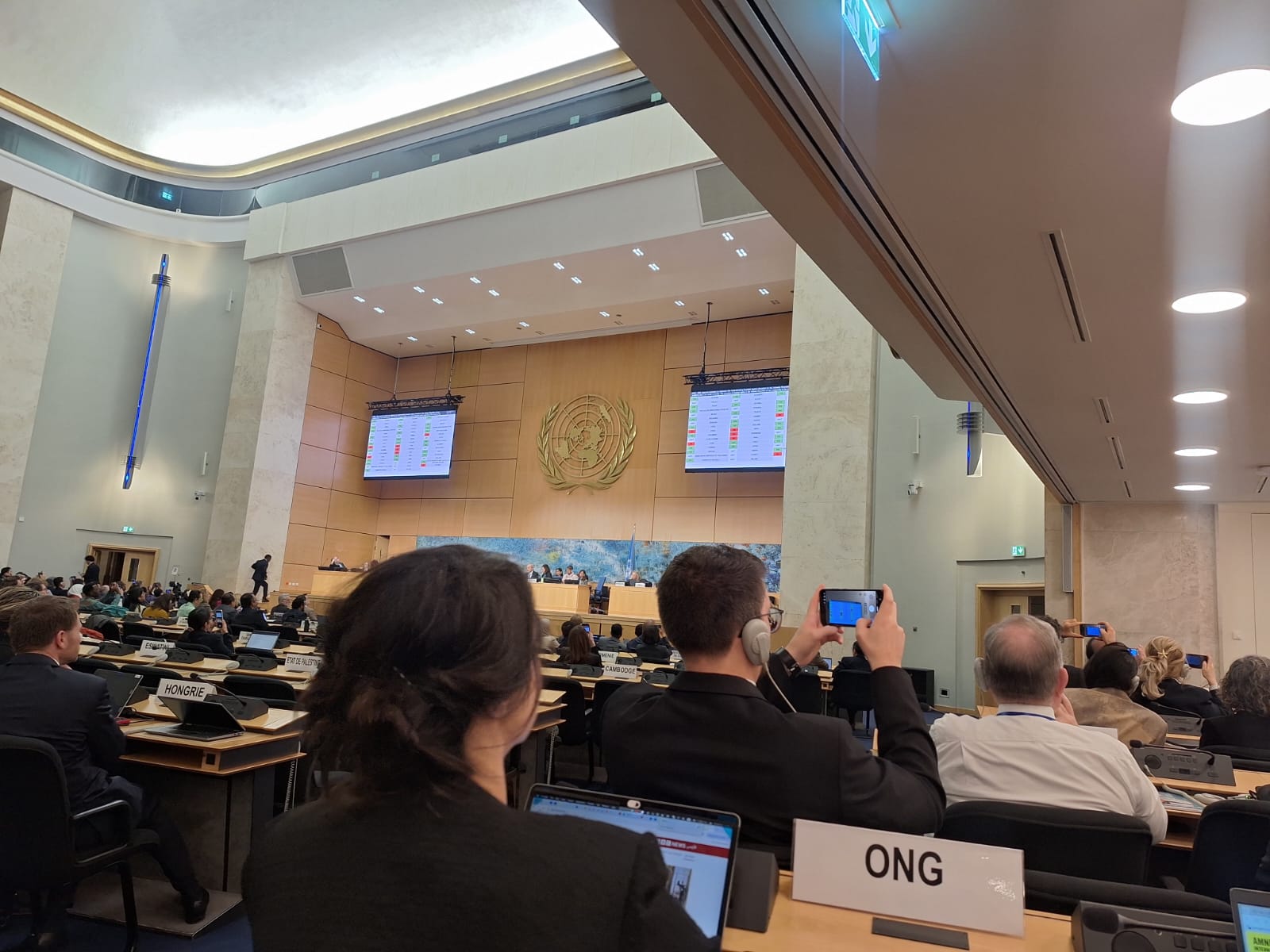
A good number of the programs from which the United States of America (USA) is withdrawing are based or have activities in Geneva, Switzerland. As an NGO representative to the UN in Geneva, I have interacted with many of these programs and the Secretariat members. At this time when there are real challenges in the world society, the withdrawal of the USA weakens the UN system as a whole. The representatives of Nongovernmental Organizations (NGOs) in consultative status will increase their activities so that the intellectual dynamics will not be weakened, but NGOs cannot fill the financial gap.

One of the bodies marked for withdrawal is the International Law Commission. A colleague from Egypt who taught international law at the University of Geneva was a leading member of the Commission and had a deep understanding of Middle East culture. Stronger respect for international law in the Middle East remains a real need.

Another institution is the Geneva-based International Trade Center where I had a good friend in the Secretariat. The Trade Center helped developing countries negotiate contracts with transnational corporations. These corporations usually have sophisticated lawyers to write contracts, not the case for many developing countries. Thus, the work of the Trade Center filled a real need.

The UN Institute for Training and Research has its headquarters in New York, but many of its activities were Geneva-based and so the Secretariat cooperated with Geneva-based NGOs. The same holds true for the UN University with headquarters in Japan but with many Geneva-based activities.

The USA is withdrawing from support for the Office of the Special Representative for Children in Armed Conflict, from the UN Entity for Gender Equality, and from the Special Representative on Sexual Violence in Conflict – all issues on which the Association of World Citizens has been active. The USA is leaving the UN Alliance of Civilizations at a time when cross-cultural understanding is a vital need.

Many of the UN activities which the USA is leaving have dedicated U.S. citizens in the Secretariat. I am not sure what their status will be once the withdrawal is complete.

The USA is also withdrawing from the UN Framework Convention on Climate Change, the key instrument on climate change issues. The consequences of climate change are being increasingly felt, and U.S. action would be needed.

As I noted, the representatives of NGOs will have to increase sharply their activities in the UN bodies and programs. The challenges facing us are heavy, and constructive action is urgently needed.

Prof. René Wadlow is President of the Association of World Citizens.

BOOK REVIEW: Jean Ziegler, “Destruction Massive: Géopolitique de la faim”

In Human Rights, Human Development, Solidarity, The Search for Peace, United Nations, Being a World Citizen, Social Rights, Latin America, Sustainable Development, Book Review on January 8, 2026 at 7:30 AM

By René Wadlow

Jean Ziegler, Destruction Massive: Géopolitique de la faim.

Paris: Editions du Seuil, 2011, 343pp.

Translated into English and published as

Jean Ziegler, Betting on Famine: Why the World Still Goes Hungry

New York: The New Press, 2013

The First Millennium Goals set in 2000 were to half poverty and hunger by 2015.

Hunger and malnutrition are major causes of deprivation and suffering. As there has been no rapid progress in reducing hunger, other goals, such as reduced child mortality and improved maternal health, have not been met either. Many years of empirical evidence point to the negative impact of hunger and malnutrition on health, education, and labor productivity.

The impact of hunger has been known for some time. Jean Ziegler pays tribute to the research and action of a mutual friend, Josue de Castro, Brazilian nutritionist and World Citizen.

De Castro had pointed out in the late 1930s that hunger in Brazil was not a fatality of nature but the result of unjust human structures. Thus, things could change with enlightened action by farmers with the help of enlightened governments. He helped to organize peasant leagues and was elected to the parliament of Brazil. He undertook visits and studies in other Latin American countries. These studies convinced him of the socio-economic causes of hunger and of their wide geopolitical impact. The Geopolitics of Hunger is de Castro’s most widely read book and serves as the subtitle of Jean Ziegler’s book as hunger remains a geopolitical issue, not simply a question of locally improved agricultural techniques.

De Castro had been the independent president of the Executive Council of the Food and Agriculture Organization (FAO) of the United Nations (UN) from 1952 to 1955, at which time the governments decided to abolish the post of independent president. The Executive Council has been chaired by national diplomats since. While at the FAO, de Castro was invited to look at agriculture in a good number of countries. He had created in 1957 a Nongovernmental Organization, World Campaign against Hunger (Association mondiale de lutte contre la faim), ASCOFAM from its title in French. He drew on persons active in the world citizen movement such as l’Abbé Pierre, René Dumont and Max Habicht.

When I arrived in Geneva to teach at the Graduate Institute of Development Studies in September 1963, de Castro was the Ambassador of Brazil to the UN in Geneva, and I went to see him shortly afterwards to discuss development issues. Then in April 1964, the military led by General Castelo Bianco took power in Brazil. Their right-wing and brutal dictatorship lasted from 1964 to 1985. De Castro was quickly replaced as Ambassador and moved to Paris to teach and work with NGOs on hunger and agricultural issues. I saw him a number of times in Paris. He died in Paris in September 1973, aged only 65, but he left a heritage of study and action on the power dynamics of hunger and agricultural policies. Jean Ziegler, a sociologist of African societies and for a good number of years a Socialist member of the Swiss parliament, was from 2000 to 2008 the UN Commission on Human Rights’ Special Rapporteur on the Right to Food. Much of the research for the book was carried out with his UN team but is presented in a fiery style not found in UN reports.

Increased action to improve rural life needs to be taken quickly. As the recent UN-sponsored Millennium Ecosystem Assessment states, “Human activity is putting such strain on the natural functions of Earth that the ability of the planet’s ecosystem to sustain future generations can no longer be taken for granted. It is becoming ever more apparent that human society has a rapidly shrinking window of opportunity to alter its path.”

However, as Ziegler points out, it is not general human activity that is causing a strain, but the human activities of the powerful, the pred$atory sharks and financial speculators. He stresses the dangers of the increasing use of ethanol and other biofuels, often without consideration of the impact of the production of biofuels on land use and food production.

Their use should be limited at present so that the consequences of their use can be studied and biofuels developed from non-food sources. Ziegler also stresses that there needs to be a detailed analysis and then action on the role of speculation in the rise of commodity prices.

Banks and hedge funds, having lost money in real estate mortgage packages, are now investing massively in commodities. For the moment, there is little governmental regulation of this speculation. There needs to be an analysis of these financial flows and their techniques of operation − the wide use of offshore banks and holdings − and their impact on the price of grains and other foods.

Ziegler also stresses relatively new dangers to a just world food system. In many developing countries, the urban elite have been buying farmland as an investment, not necessarily to increase agricultural production with improved techniques, but to resell later when prices go up. Ziegler also stresses the sale or long-term rent of agricultural lands, especially in Africa, to governments or State-related companies of the Arab Gulf States and China. Again, the land is often not used for current agricultural improvement but is held for future use or sale. Thus, rather than seeing land reform, we are seeing dangerous trends of an increasing number of landless agricultural workers.

Jean Ziegler highlights the need for cooperation among the UN system of agencies, national governments, non-governmental organizations, and the millions of food producers.

There is a need for swift, short-term measures to help people now suffering from lack of food and malnutrition due to high food prices, the systems of food distribution, and situations of violence. However, it is the longer-range and structural issues on which we must focus our attention. The world requires a holistic World Food Policy and a clear Plan of Action. A knowledge of the geopolitics of hunger is a necessary first step.

Prof. René Wadlow is President of the Association of World Citizens.
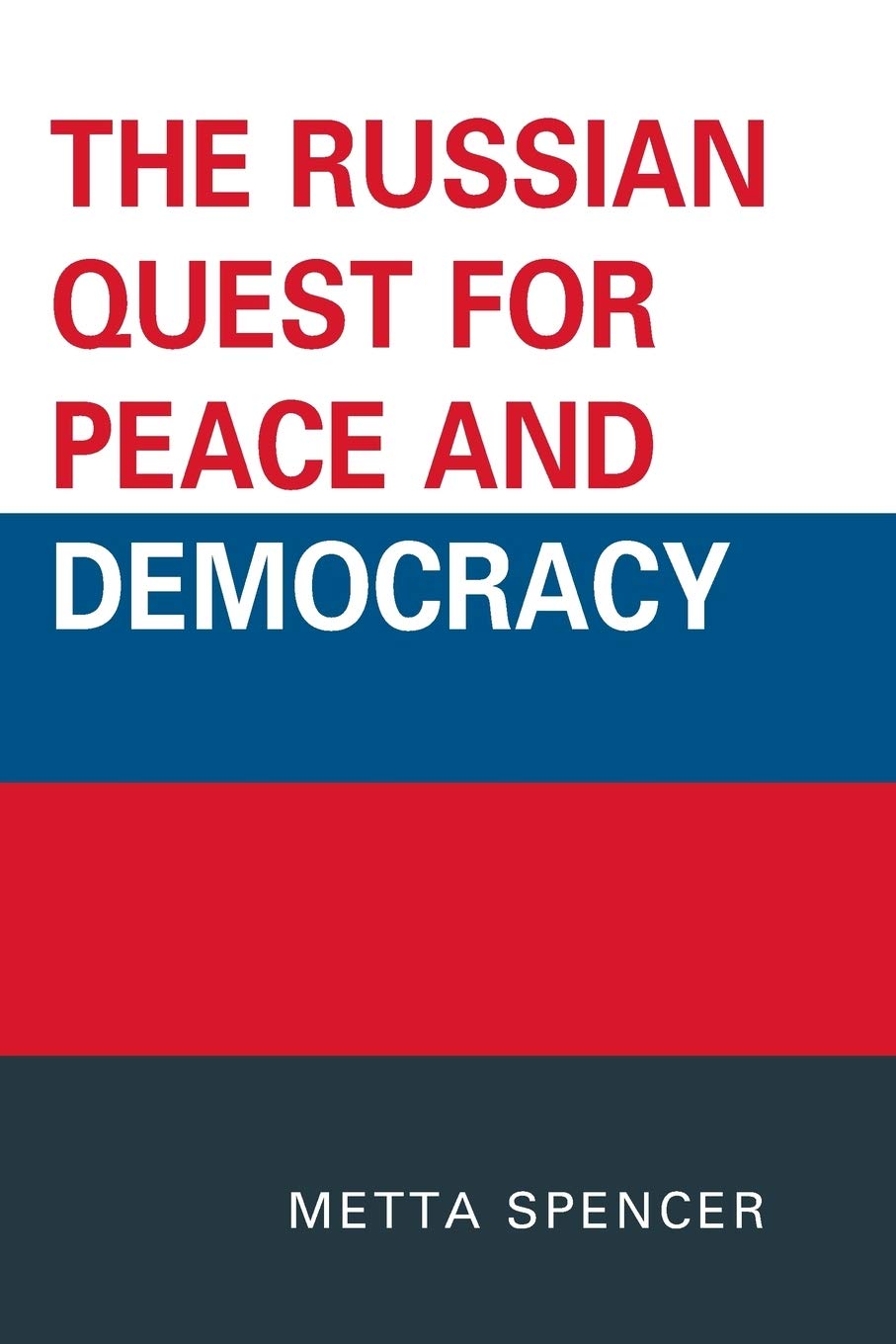
BOOK REVIEW: Metta Spencer, “The Russian Quest for Peace and Democracy”

In Being a World Citizen, Book Review, Conflict Resolution, Current Events, Democracy, Human Rights, NGOs, Nonviolence, Peacebuilding, Solidarity, The former Soviet Union, The Search for Peace, Track II, United Nations, United States on January 7, 2026 at 8:00 AM

By René Wadlow

Metta Spencer, The Russian Quest for Peace and Democracy.

New York: Lexington Books, 2010, 348pp.

With the violence and tensions in Ukraine and the reactions of the USA, Russia, and NATO, some writers have spoken of a “New Cold War”. Thus, it is useful to look at how civil society representatives helped to keep lines of communication open during the first Cold War (1945-1990), in particular how Gorbachev’s advancement of democracy and peaceful foreign relations was fostered by private conversations with members of international civil society and NGOs.

There is in the Agni Yoga teachings of Helena Roerich, to which Raisa Gorbachev was particularly devoted, a line which says, “Not the new is proclaimed but what is needed for the hour.” This idea became a guideline for Mikhail Gorbachev whose new thinking was not really new. Many of us had been saying the same thing for years before, but none of us was head of state.

Gorbachev’s September 1987 address to the United Nations (UN) General Assembly was a clear call for the rule of law both domestically and internationally. He recommended greater use of the International Court of Justice and that all states accept its compulsory jurisdiction. He called upon the permanent members of the Security Council to join in formulating guidelines to help lead the way. This was a renunciation of a sixty-year resistance to the World Court that the then Foreign Minister Maxim Litvinov − though an internationalist − had initiated in 1922 claiming that there could be no impartial arbitrator between the Soviet and the non-Soviet world saying, “Only an angel could be impartial in judging Russian affairs.”

Unfortunately, the United States (U.S.) State Department took the speech as a propaganda ploy to further embarrass the U.S. over the World Court’s Nicaragua litigation. Therefore, the U.S. delegation to the UN did everything it could to hinder discussion of giving the World Court a larger role and was successful in stopping any effort to expand compulsory jurisdiction.

Gorbachev did all he could to strengthen the peace-making role of the UN, leading to the successful completion of what had been seemingly endless negotiations at the Palais des Nations in Geneva concerning the Soviet intervention in Afghanistan, and the very difficult negotiations, also in Geneva, between Iraq and Iran to end their war.

Progress was also made on the Vietnamese occupation of Kampuchea (Cambodia) which led to the 1992 Paris Accord. This combination of deescalation in tensions and violence in the international area and significant steps in arms control was largely due to the leadership of Gorbachev. His seven years in power (1985-1991) left the world a safer place and Russia a more openly pluralistic society. However, the common ground on which he tried to stand was constantly eroded by forces he could not control, leaving him at the end with no place to stand.

Metta Spencer, Editor of Peace Magazine and professor emeritus of sociology at the University of Toronto tells some of this story, especially through interviews with persons in Gorbachev’s inner circle as well as other participants in the fast-changing scene. She has continued her interviewing so that persons also reflect on events and trends in post-Gorbachev Russia − the Yeltsin and early Putin years.

What is most helpful to those of us interested in citizen diplomacy and who were involved in talks with Soviets on arms control is her account on how discussions with members of the Soviet Academy of Sciences’ institutes, especially the USA/Canada Institute of Georgi Arbatov and the Institute for World Economy and International Relations (IMEMO) had an impact on Soviet decision-making. As Spencer notes, Gorbachev’s advancement of democracy and peaceful foreign relations was fostered by private conversations with members of international civil society. Among the Soviets who participated, some became Gorbachev’s chief advisors.

The ground for these discussions had started relatively early at the time of Nikita Khrushchev. The Pugwash meetings started in 1957, and the Dartmouth conferences led by Norman Cousins and Georgi Arbatov began in 1960.

Metta Spencer sets out clearly the core of her book. Democracy, human rights, and nonviolence are rarely reinvented independently by local citizens. Usually, they are imported from abroad and spread by personal contacts in international civil society, not by diplomats or rulers. That was the way it happened in the Soviet Union. This book describes how certain back-channel relationships with foreign peace researchers and activists influenced the Soviet Union’s brief democratization, its foreign policy and its military doctrine. She adds that transnational civil society or organizations are most helpful for they create heterogeneous relationships − those that tend to bridge society’s disparate elements. Such relationships inform and strengthen individuals who, in an authoritarian setting, face heavy pressures to conform.

Metta Spencer’s interviews with people well after the events, give a sense of necessary distance, of the strengths and weaknesses of movements and individuals.

Note

1) For a good overview of citizen diplomacy efforts with the Soviet Union, see the following listed by date of publication:

Gale Warner and Michael Shuman, Citizen Diplomats: Pathfinders in Soviet-American Relations − And How You Can Join Them (New York: Continuum, 1987)

David D. Newsom (Ed.), Private Diplomacy with the Soviet Union (Lanham, MD.: University Press of America, 1987)

Gale Warner, Invisible Threads: Independent Soviets Working for Global Awareness and Social Transformation (Washington, DC: Seven Locks Press, 1991)

Matthew Evangelista, Unarmed Forces: The Transnational Movement to End the Cold War (Ithaca, NY: Cornell University Press, 1999)

Prof. René Wadlow is President of the Association of World Citizens.
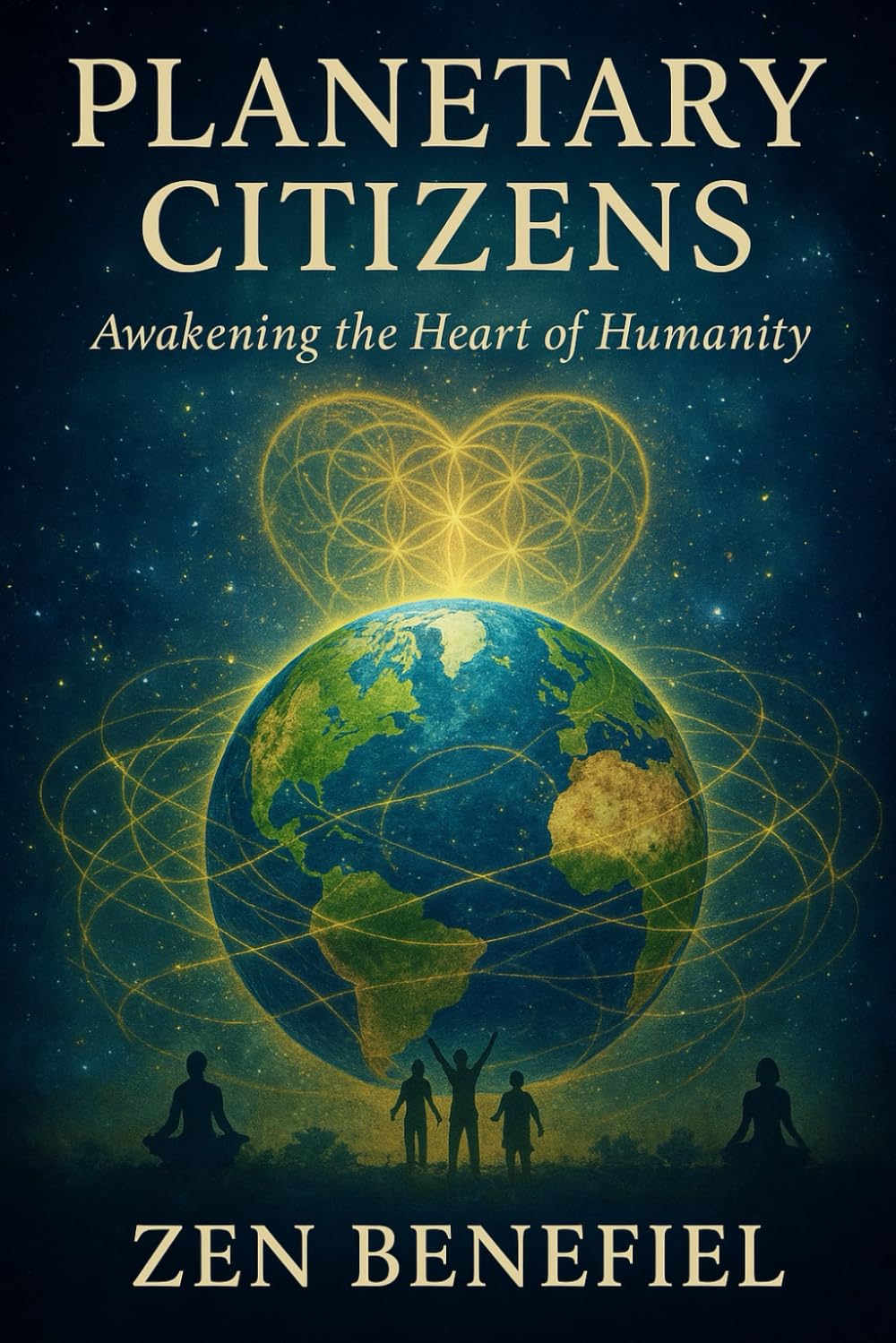
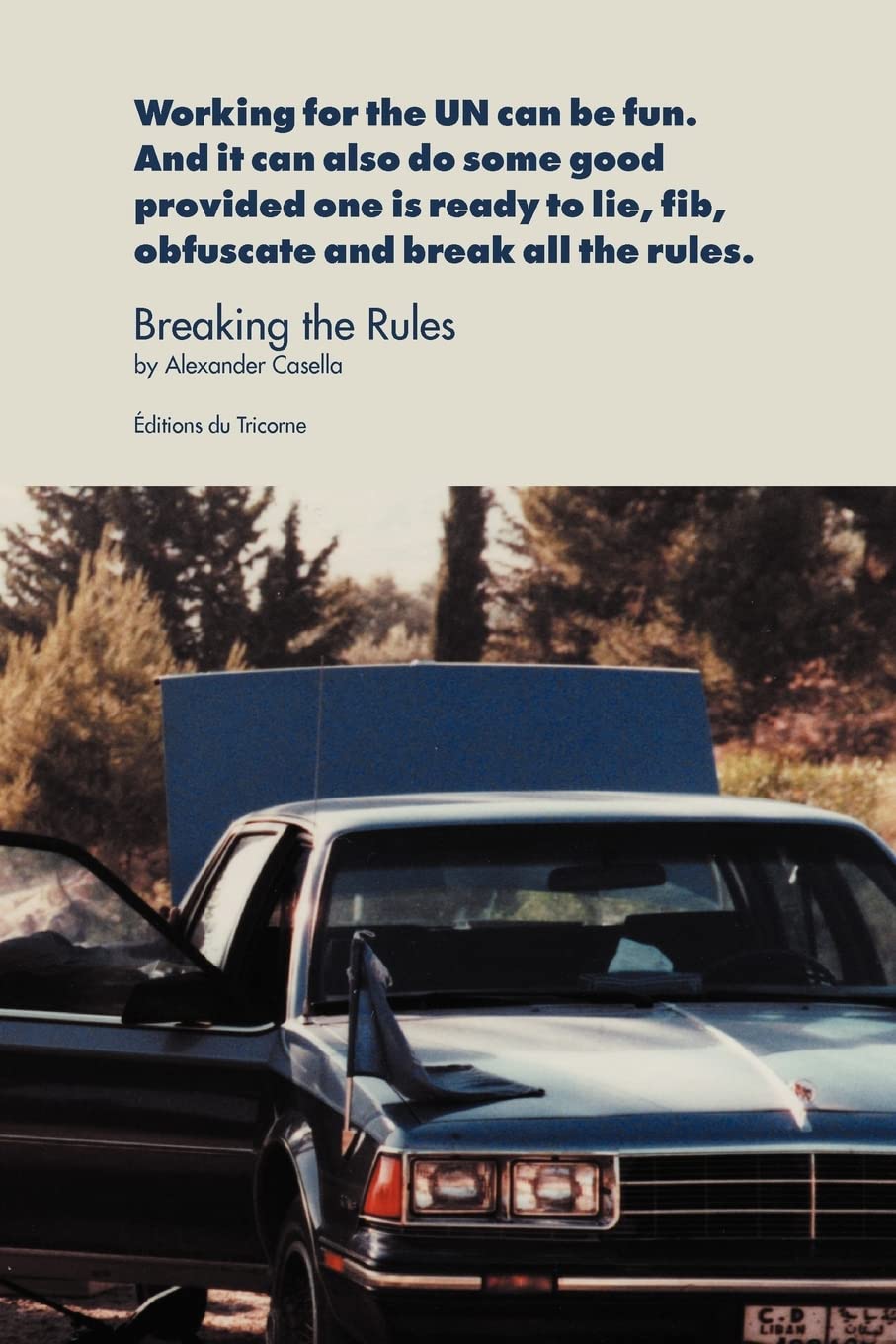
BOOK REVIEW: Alexander Casella, “Breaking the Rules: Working for the UN can be fun. And it can also do some good provided one is ready to lie, fib, obfuscate and break all the rules.”

In Asia, Being a World Citizen, Book Review, Human Rights, NGOs, Refugees, Solidarity, United Nations, United States on January 7, 2026 at 8:00 AM

By René Wadlow

Alexander Casella, Breaking the Rules: Working for the UN can be fun. And it can also do some good provided one is ready to lie, fib, obfuscate and break all the rules.

Geneva: Editions du Tricorne, 2011, 368pp.

Alexander Casella has written a lively account of his years first as a journalist for the Journal de Genève covering events in Vietnam and China and then as a staff member of the Office of the United Nations (UN) High Commissioner for Refugees dealing largely with Indochina with short stays in other trouble spots – Beirut and Albania after the Serbia-Kosovo conflict. He has kept his journalist ability to paint word portraits of colleagues and Vietnamese and Chinese officials.

Thus, he writes, “During the twenty years that I spent in the cut-throat world of humanitarian action, from Hanoi to Beirut to Bangkok to Hong Kong, the humanitarians I encountered included more than their share of the self-righteous, the unimaginative and the careerist. And as for the philanthropic organizations they served in, while these were certainly doing some good they were also spending an inordinate amount of time stabbing each other in the back as they vied for visibility and a larger slice of the public’s money. To my mind, the worst of the lot were to be found among the so-called advocates, those who had made it their mission to preach rather than to act. Vain, arrogant, self-obsessed and with human rights violations as their daily bread they would on occasion not hesitate to fabricate fodder in the race to appear more proactive than their competitors.”

Casella jumps over his years as a student at the University of Geneva and his Ph.D. studies at the Geneva Graduate Institute for International Studies where he might have seen some backstabbing and also his years as a journalist where all his colleagues were not necessarily imaginative and selfless. However, his emphasis is on his years with the Office of the High Commissioner for Refugees (UNHCR).

He began with UNHCR early in 1973 at a particularly critical moment in the history of the United States (U.S.) war in Vietnam. The High Commissioner was the atypical Prince Sadruddin Aga Khan who had a particular interest in Vietnam. He was the son of the Aga Khan, who as a delegate of India had been for a year the President of the Council of the League of Nations as well as the head of the Ismaili branch of Shia Muslims. Thus, Sadruddin grew up in a diplomatic milieu, studied at Harvard where he made U.S. friends and contacts and had personal money which let him do things without checking with UNHCR accountants. Sadruddin also had a large château on the edge of the Lake of Geneva where he could invite people to whom he wished to speak informally. For Casella, all the following High Commissioners who came from national politics or the International Committee of the Red Cross had less style, fewer doors that opened at the sound of the name, and followed more closely bureaucratic rules.

Breaking the Rules gives the book its title and somewhat its theme. But there is a difference between the rules and the spirit of the rules. The rules are set for an organization whose headquarters are in Geneva and where following rules in the narrow sense is part of the city s culture. Thus, to give an example Casella uses, if you want to buy a ton of cement to build something in Geneva, you need to summit three estimates from three different companies to get an O.K. In Geneva, you can get three estimates in a hurry. But Casella wanted a ton of cement in Hanoi, which had to be shipped from China. There were not three companies in competition. So he bought cement from the one company available. Casella had a good local Vietnamese assistant so he did not pay too much.

As with much national diplomacy, UN organizations have to obfuscate while knowing the real situation. Thus, in the early days when North Vietnam was not a member of the UN, the UNHCR had to deal with what was called the North Vietnamese Red Cross though in practice the people were from the Foreign Ministry. That also happened with the boat people issue of Vietnamese landing in other Asian countries. Some boat people could not be granted refugee status and agreements had to be reached on their return to Vietnam with a government agreement not to prosecute for illegal exit. The negotiations were difficult. Some things had to be made very clear; other things left vague. People known earlier reappear in different categories. You need a good memory.

A main difference between being part of a national diplomatic service and a UN agency, is that in a national service, although people have different temperaments, they share a common culture while in the UN, people come from different cultural backgrounds. Thus when Madame Ogata became High Commissioner “however well she spoke English, she still had the mindset of a Japanese and there was no getting away from it…The stern-looking woman who received me that evening at six did not move from her desk as I was ushered into her office and did not seem particularly pleased to see me either.”

Another difference is the need to raise funds to carry out activities. While most of the bureaucratic functions of UNHCR are covered by a regular budget, activities on behalf of refugees in the field must be covered by special donations, usually from rich countries. Thus, there is a need to sell programs and not to offend the leaders of states who donate funds. There must be as few waves as possible and no reports of financial mismanagement.

Thus, the need at times to whitewash events, to make complicated situations look simpler, to have regional representation of staff and yet somehow to weave the mosaic into one operational entity. Casella has written a realistic picture of UNHCR both in Geneva and Asia – a welcome addition to the small body of writings of firsthand experiences.

Prof. René Wadlow is President of the Association of World Citizens.
Protection of Children in Armed Conflict: Action Needed

In Africa, Being a World Citizen, Children's Rights, Conflict Resolution, Current Events, Human Rights, Humanitarian Law, NGOs, Nonviolence, Peacebuilding, Refugees, Solidarity, The Search for Peace, Track II, United Nations on January 6, 2026 at 8:00 AM

By René Wadlow

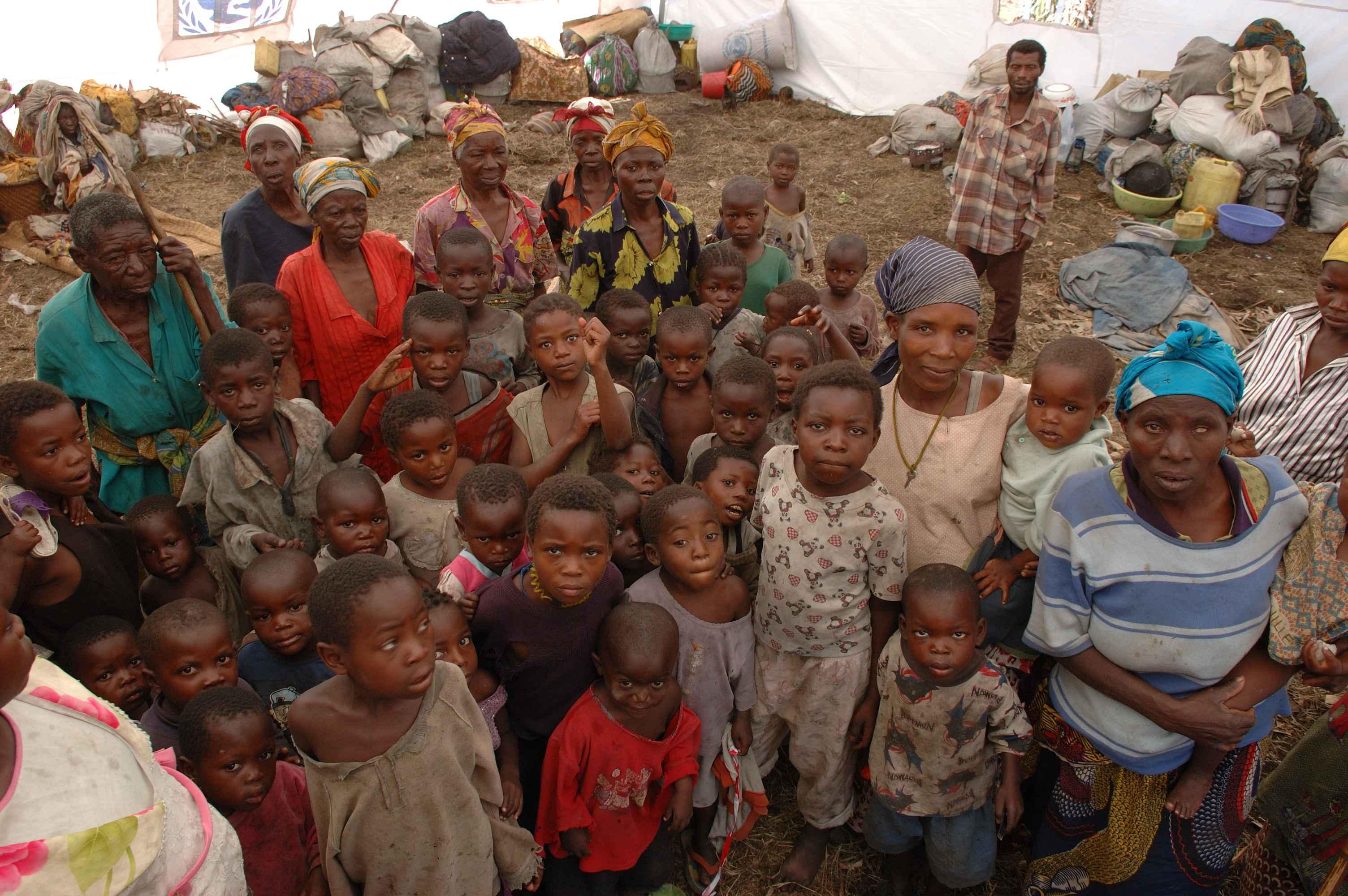
The recent armed conflicts in Darfur, Sudan, the Gaza Strip, and in the Democratic Republic of Congo have highlighted the fate of children caught in such armed conflicts. In addition to the children deliberately massacred or caught in the crossfire, many more have been deprived of their physical, mental, and emotional needs by the armed conflict. Children can be specifically targeted in strategies to eliminate the next generation. Children, especially girls, have been made the targets of sexual abuse and gender-based violence.

This brutal reality has been exacerbated by the changes in the nature of armed conflicts. Today’s conflicts are often internal, fought by multiple semi-autonomous armed groups within existing State boundaries. The international law of war governing Inter-State conflicts fought by regular armies is routinely ignored. Often the village has become the battlefield and the civilian population the primary victim.

Displaced children in North Kivu, 2007 (C) Julien Harneis

At the heart of this social disintegration is a crisis of values. Perhaps the most fundamental loss a society can suffer is the collapse of its value system. Many societies exposed to protracted armed conflicts have seen their community values radically undermined or shattered altogether. This loss has given rise to an ethical vacuum, a setting in which international standards are ignored with impunity and where local value systems have dissolved.

The world society has an obligation to focus attention on the plight of children. The Association of World Citizens (AWC) has worked to raise greater governmental and public awareness of the need for protection of children in times of armed conflict. The Convention on the Rights of the Child calls for the protection of children’s right to life, education, health, and other fundamental needs. Thus, the international standards are in place. Our task is to see that they are put into practice. Positive action is needed. This is a policy goal for 2026 of the AWC.

Prof. René Wadlow is President of the Association of World Citizens.
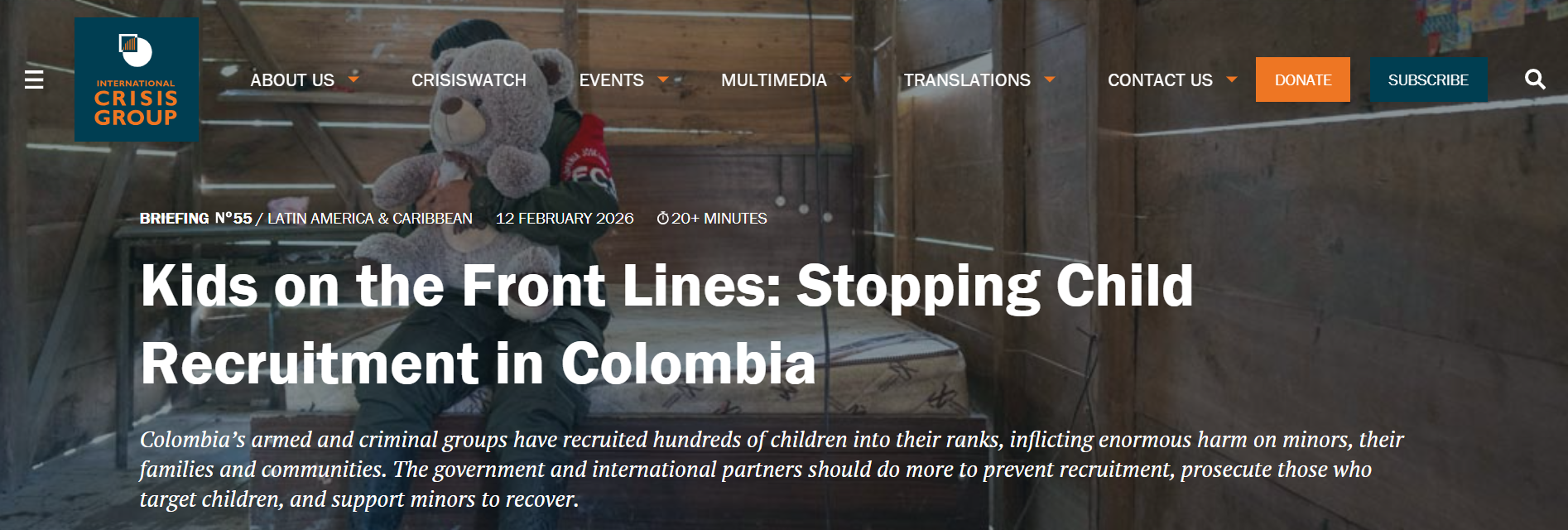
RECENSION (BOOK REVIEW IN FRENCH) : Ghita El Khyari, «La Négociatrice»

In Being a World Citizen, Book Review, Conflict Resolution, Current Events, Middle East & North Africa, NGOs, Peacebuilding, Solidarity, Syria, The Search for Peace, Track II, UKRAINE, United Nations on January 5, 2026 at 8:00 AM

Par Bernard J. Henry

Ghita el Khyari, La Négociatrice.
Publishdrive Incorporated, 2025, 267 pp.

Peut-il y avoir pire manière de commencer une recension qu’en jugeant le livre dont l’on va parler rien qu’à sa couverture ? Non, bien entendu. Alors, autant faire le contraire et ne pas se gêner. Quand on tombe sur un livre comme La Négociatrice, ce n’est pas seulement le principe qui le commande mais, plus encore, le besoin impérieux de prévenir la lectrice ou le lecteur de l’erreur terrible qu’elle ou il commettrait en s’arrêtant à ce que laisse penser sa couverture. Et pourtant … 

Dès l’abord, le ton est donné : une jeune femme brune fait face à la salle vide du Conseil de Sécurité des Nations Unies, comme se demandant que faire lorsque les représentants permanents des Etats membres seront là, eux dont le vote – ou le veto – est pour tout projet onusien une question de vie ou de mort. La Négociatrice, c’est donc potentiellement L’Interprète de Sydney Pollack, incarnée par Nicole Kidman, ou Keira Knightley dans Official Secrets de Gavin Hood en 2019, traductrice confrontée à un dilemme à la Mordechai Vanunu en ce début d’année 2003 où Etats-Unis et Grande-Bretagne s’apprêtent à attaquer l’Irak de Saddam Hussein sous prétexte de la détention par le pays d’armes nucléaires prohibées. Mais, justement, voilà pourquoi il ne faut jamais juger un livre à sa couverture.

Non, La Négociatrice n’est pas film d’espionnage sous forme de roman. Dans une uchronie, puisqu’il s’agit de la Syrie sous les Assad qui n’existe plus depuis le 8 décembre 2024 et la libération aussi inattendue qu’inespérée du pays, il va être question d’ouvrir enfin une fenêtre pour la réconciliation nationale. Et La Négociatrice, c’est Alya Nasser, fonctionnaire des Nations Unies que le communiqué officiel annonçant sa nomination présente ainsi :

«Madame Nasser apporte à ce poste des années d’expérience politique et diplomatique, pour avoir servi aussi bien au sein de son gouvernement qu’à l’ONU.

Madame Nasser a occupé plusieurs fonctions au sein de l’organisation, ayant notamment été Coordonnatrice spéciale pour le Liban et Représentante adjointe du Programme des Nations Unies pour le Développement en Afghanistan.

Madame Nasser est née à Paris en 1976. Elle est diplômée de Sciences Po Paris et de l’université de Harvard».

Une annonce plus vraie que les vraies, et ce n’est pas hasard. L’auteure, Ghita el Khyari, n’est pas juste une romancière bien informée ou qui aura avant d’écrire, selon l’expression consacrée depuis la pandémie de Covid-19, «fait ses recherches». Ce milieu de la diplomatie et des relations internationales, c’est le sien depuis vingt ans. Après avoir effectué la majeure partie de sa carrière à l’ONU et servi dans de nombreux pays, elle a voulu prendre une pause et quitté son poste pour revenir à des envies jusqu’alors délaissées, à commencer par l’écriture. Et s’il est vrai que le fruit ne tombe jamais loin de l’arbre, alors La Négociatrice est le pur fruit de son arbre, ni trop sucré comme du Sidney Sheldon, ni trop salé comme du John Le Carré, le récit pur et vrai, bien que fictif, d’une mission diplomatique risquée.

Alya Nasser n’est jamais vraiment menacée par les uns ou les autres dans sa mission en Syrie, sa pire ennemie s’avérant être l’invasion de l’Ukraine par la Russie en février 2022 qui éloigne le regard de la communauté internationale de la Syrie exsangue. Risquée, la mission ne l’est pourtant pas moins, les dangers venant de ce que le grand public ne peut pas percevoir dans ce milieu diplomatique international, ce milieu qui, comme le souligne l’auteure, reste encore méconnu et qu’elle entend nous présenter, ainsi que les personnes qui l’habitent.

Trop souvent encore, ce milieu n’existe souvent dans l’esprit du grand public que par la caricature, celle d’un milieu fermé de privilégiés où l’on gagne des fortunes en se faisant plaisir. Je me demande quant à moi quel genre de plaisir a pu éprouver Sergio Vieira de Mello, l’Emissaire spécial du Secrétaire général des Nations Unies en Irak, également Haut Commissaire des Nations Unies pour les Droits Humains, lorsqu’il a été assassiné lors de l’attentat terroriste contre l’Hôtel Canal à Bagdad du 19 août 2003, ou bien quelle pensée il a eu, en se voyant mourir, pour ce qu’il ne pourrait pas faire de son salaire à la fin du mois. Les clichés ont la vie dure, et l’on aime toujours tant soi-même haïr ce que l’on rêverait dans le même temps de voir ses enfants devenir, soutien financier assuré pour ses vieux jours à la clé.

Alya Nasser n’est pas une demi-déesse invincible, pas plus qu’une pauvre victime d’un système où, même dans le monde de l’après-MeToo, les femmes peinent encore à percer le plafond de verre et, quand bien même elles y parviennent comme Francesca Albanese, Représentante spéciale des Nations Unies sur les Territoires palestiniens, en paient le prix fort – au sens strict du terme.

Passionnée par son travail, idéaliste libérale – au sens de l’école du même nom des relations internationales, en bonne onusienne qu’elle est – Alya Nasser veut arriver à ses fins, quitte à perdre de vue les moyens au profit de la fin. Non par arrivisme, mais parce que le récit la trouve alors qu’elle a déjà commis l’irréparable. Elle s’est oubliée.

Alya a oublié qu’elle était une femme, dans un milieu professionnel où redescend encore trop lentement la testostérone. Alors même qu’un épisode MeToo impliquant son supérieur direct lui-même vient brutalement le lui rappeler, elle doit affronter l’idée qu’elle n’a pas su gérer les liens féminins les plus importants de son existence, avec sa mère qui n’en peut plus de souffrir en silence dans son couple, sa meilleure amie et ancienne camarade de fac qui ne parvient plus à réconcilier carrière professionnelle et vie de famille, mais aussi, plus tragiquement encore, avec sa petite nièce qu’elle adore sans pourtant l’avoir jamais trop vue, cette petite fille qui lui met devant les yeux l’enfant qu’elle, en revanche, ne pourra jamais avoir, celui que la biologie lui refuse et ne pourrait venir que par adoption.

Au masculin, Alya affronte aussi Gabriel, son ancien compagnon qu’elle croise ici et là, qui l’abandonne à son sort dans un aéroport italien puis refait surface un jour en lui proposant d’adopter ensemble un enfant – trop peu, trop tard. Et encore, il n’est pas pour elle l’homme le plus dangereux. Celui-là s’appelle Alexeï, jeune diplomate russe aisé, charmeur, qui lui apparaît d’abord tel un démon venu torpiller sa mission – pour protéger le régime Assad affidé de Moscou – puis s’installe dans sa vie comme un ange interdit, dans une relation amoureuse intermittente et contre-nature à laquelle se raccroche une Alya épuisée de solitude, plombée par un alcoolisme qui va et vient, mais voulant mener à bien sa mission au risque même de laisser sans le voir son désarroi prendre la barre.

Sans rien divulgâcher, pas de happy end dans La Négociatrice, mais un petit coup de main de la chance, ou d’autre chose pour qui y croit, qui évite à Alya le pire sans pour autant lui offrir le meilleur. Disons, peut-être pas tout de suite. Et toujours, tout au long de la lecture du roman, ce désir de prendre la main d’Alya, de lui offrir une épaule où se blottir, de lui dire combien elle se trompe et de la ramener à la raison, sans certitude d’y parvenir.

A l’Association of World Citizens (AWC) également, la négociation joue un rôle central, comme tout ce qui forme le peacebuilding. Bien entendu, les organisations non-gouvernementales (ONG) comme la nôtre ne sont jamais sujettes aux mêmes attentes que l’ONU, la Ligue arabe ou quelque autre organisme interétatique que ce soit. Désormais majoritaires – j’ai moi-même largement œuvré pour cela – parmi nos Officiers et Représentants, les femmes servant dans nos rangs ne connaissent pas les pressions professionnelles et familiales d’une Alya, même si le milieu de la diplomatie internationale n’est pas moins clément envers les opératrices non-gouvernementales pour lesquelles être une femme demeure, comme dans tant d’autres milieux, une quasi-disqualification d’office.

J’hésite à leur demander à toutes de lire La Négociatrice, en particulier aux plus jeunes d’entre elles qui rêvent peut-être un jour de franchir le pas entre notre ONG et la diplomatie (inter)gouvernementale. J’hésite parce que, comme le vit Alya dans le récit, la destination est pour moi claire mais le trajet, tout à coup, plus tellement. A moins que, bien sûr, la vraie raison n’en soit que seule la vérité blesse, et qu’un ouvrage que l’on hésite à partager soit précisément celui que l’on doit mettre entre toutes les mains, surtout celles de jeunes femmes que l’on prend le risque de dissuader, car, tout à propos, ce risque marche avec l’espoir – et la chance – de leur donner au contraire l’envie d’affronter des obstacles qui, là où une diplomate uchronique trébuche, seront pour elles les pierres à collectionner quand on les leur jette car c’est le début d’un piédestal, comme le disait Hector Berlioz.

Je pense donc que je vais le leur recommander. Par chance, il convient à tous les budgets.

Bernard J. Henry est Officier des Relations Extérieures de l’Association of World Citizens.

BOOK REVIEW: Camilla Reeve (Ed.) & Esme Edwards (Ed.), “So Many Unavoidable Journeys”

In Being a World Citizen, Book Review, Current Events, Human Rights, Migration, NGOs, Refugees, Solidarity, The Search for Peace, Track II, United Nations on January 5, 2026 at 8:00 AM

By René Wadlow

Camilla Reeve (Ed.) & Esme Edwards (Ed.), So Many Unavoidable Journeys.
London: Palewell Press, 2025, 125pp.

This collection devoted to the stories of migrants is “dedicated to all those who facing impossible conditions in their home, or ejected from it by hostile action, dare to seek a new place to live.” To become a migrant is never an easy choice but a profoundly sad and complex one. Migration becomes a central focus of one’s life story.

Some of the life stories cover relatively known ground. There is an account of five women who had been jailed in Evin Prison in Iran. The repression in Iran, especially of women, has become known both in Iran and outside. The repression has led to a wide-spread protest movement in Iran, known by its motto “Woman-Life-Freedom.”

Other situations are less known. There was the repression of ethnic minorities in Bhutan in the early 1990s with persons fleeing, or being deported, to Nepal which was also in turmoil. The Association of World Citizens had raised the Bhutan situation in the United Nations (UN) human rights bodies in Geneva. Pingala Dhital, who writes on the Bhutan-Nepal case, stresses the positive actions of the staff of the Geneva-based International Organization for Migration and the UN High Commissioner for Refugees.

Palewell Press is based in London. Thus, there are moving accounts of migrants from Iraq and Palestine, adapting to London life and the British structure of education.

As the South African Jan Christian Smuts wrote at the end of the First World War, “There is no doubt that Mankind is once more on the move. The very foundations have been shakened and loosened, and things are again fluid. The tents have been struck and the great caravan of Humanity is once more on the march.” Migration, chosen or forced by violence or the consequences of climate change has become a prime focus for governments and Nongovernmental Organizations. This collection catches some of the spirit of these transformations.

Prof. René Wadlow is President of the Association of World Citizens.
Thailand-Cambodia: Urgent Ceasefire Needed

In Asia, Being a World Citizen, Conflict Resolution, Cultural Bridges, Current Events, International Justice, NGOs, Nonviolence, Peacebuilding, Solidarity, Spirituality, The Search for Peace, Track II, United Nations, United States, World Law on December 10, 2025 at 7:00 PM

By René Wadlow

The Association of World Citizens (AWC) calls for an urgent ceasefire in the renewed armed conflict between Thailand and Cambodia which flared up again on December 8, 2025 with the Thai military launching airstrikes on Cambodia.

A ceasefire had been agreed to in July 2025 in negotiations led by U.S. mediators. There is a 500-mile frontier between the two countries. The frontier was drawn when Cambodia was under French rule. Thailand contests the frontier lines.

Prasat Preah Vihear, the temple claimed by both Thailand and Cambodia (C) PsamatheM

The decades-long dispute has already displaced many persons on both sides of the frontier. The frontier area on both sides has a large number of landmines planted making the whole area unsafe. The disputed area contains a Buddhist temple which should be a symbol of peace and harmony but is now a factor in the dispute.

The AWC stresses that urgent measures of conflict resolution should be undertaken. Nongovernmental Organizations may be able to play a positive role in such efforts. Contacts should be undertaken now.

Prof. René Wadlow is President of the Association of World Citizens.
Renewed Appeal for Mediation in Sudan Civil War

In Africa, Being a World Citizen, Conflict Resolution, Current Events, Human Rights, Humanitarian Law, International Justice, NGOs, Peacebuilding, Solidarity, Sudan, The Search for Peace, Track II, United Nations, War Crimes, World Law on November 3, 2025 at 7:45 AM

By René Wadlow

In response to the reports of mass killings earlier this month, including persons in hospital beds in El-Fasher, Sudan, by members of the Rapid Support Forces (RSF), the Association of World Citizens (AWC) has called for strong UN efforts to mediate an end to the civil war in Sudan.

A civil war has gone on since April 2023 in Sudan between the Rapid Support Forces led by General Mohamed Hamdan, known by his battle name of Hemedti, and the Sudanese Armed Forces then led by General Abdul Fattah al-Burham. Each of the two generals has created local militias which rob, torture, rape, and create conditions of disorder.  Many of these militias use child soldiers in violation of UN treaties on the protection of children.  The civil war has led to some 150,000 persons killed and 10 million displaced.

The capture of El-Fasher came after more than 500 days of siege. Already on June 13, 2024, the UN Security Council called for an end to the siege of El-Fasher, capital of the North Darfur Province of Sudan. The Council requested all parties to enable lifesaving aid to enter El-Fasher, the center of the most vicious fighting in the province. Unfortunately, the Security Council appeal fell on deaf ears.

The AWC does not underestimate the difficulties of mediation to end the Sudan Civil War.  There has been armed conflict in Sudan since the eve of independence in the mid-1950s. These conflicts were organized along ethnic and religious lines. The conflicts led to the creation of a new state, South Sudan, where tensions are also strong.

Mediation efforts should be carried out under UN responsibility. However, Nongovernmental Organizations (NGOs) may play a positive role.

Mediation is about men and women, and the attitudes that make for conflict between them. The attempt to bring about a change in understanding will include continual interpretation of what the others are saying, explanations of their attitudes, and exposure of false rumors – roles which NGOs can play.

Prof. René Wadlow is President of the Association of World Citizens.
The Impact of Nonviolent Accompaniment

In Being a World Citizen, Conflict Resolution, Human Rights, Latin America, Middle East & North Africa, NGOs, Nonviolence, Peacebuilding, Solidarity, The Search for Peace, United Nations on October 21, 2025 at 7:00 AM

By René Wadlow

Third-party nonviolent intervention is the physical presence of a third party into an area of conflict in such a way as to reduce the level of violence. Accompaniment of persons in danger was developed as a technique in the early 1980s by Peace Brigades International (PBI), which I represented in Geneva, especially in contacts with persons at the United Nations. PBI sent volunteers, mostly from the USA, to El Salvador and Guatemala.

Later, in 1989, during a wave of killing of lawyers in Sri Lanka, the Sri Lankan bar association invited PBI to send a team there to accompany lawyers. The protective accompaniment worked so well that PBI was asked to extend its work to labor organizers and journalists, also under danger.

Similar forms of protective accompaniment have been organized by two largely Christian organizations to work with Palestinians. One is the World Council of Churches, based in Geneva, which began a program in 2002. Since then, some 2,000 volunteers from 21 countries have spent three months in Israel to accompany children going to school or persons passing through multiple check points.

The second organization is the Christian Peacemaker Teams (CPT), closely related to the Mennonite church in Canada and the USA, working in the Hebron area since 1995, a mixed Palestinian and Israeli community. When active, they have a red hat which is a clear identification.

CPT have also worked in other parts of Israel with mixed communities. Allies from other countries send messages and emails to Israeli officials in support of the Teams’ efforts. The team uses videos to highlight tense situations, often associated with house demolitions. The Peacemaker Teams have developed good working relations with Israeli human rights organizations such as Rabbis for Human Rights. The team members are often arrested by the Israeli police and spend time in Israeli jails with prisoners who are not used to nonviolent activists.

Photograph of Abu Hishma village and residents by the Christian Peacemaker Teams (C) CPT

As one Christian Peacemaker, Wendy Lehman, wrote, “Intellectually, I knew there were good reasons to risk arrest when doing nonviolent direct action. Many activists view it as an effective way to draw attention to injustice. Others argue that if you are doing what you believe is right – defending someone from being beaten by soldiers, participating in a public vigil, or standing up for a rightful landowner – arrest may occur ‘organically’ out of the situation.”

Developing the skills needed for nonviolent accompaniment is crucial. Volunteers need awareness and skills to be able to act judiciously and have an impact. They must be able to observe, evaluate and make decisions. They can be facilitators – one who helps a group reach a common decision, often with consensus decision-making and participatory management.

To keep a clear focused attention in the middle of violence, hate and confusion requires inner calm. There are techniques, often developed in spiritual training, to be able to stay calm and focused in times of confusion. There are also ways of developing an inner vitality so that one’s vital energy is not drained away by the presence of hostile persons. Such techniques are usually related to increasing the flow of subtle energies within the body, techniques taught in yoga, in certain breathing exercises, and in meditation. In a more secular spirit, the International Committee of the Red Cross has been working on stress reduction techniques for Red Cross workers in tension situations.

The current situation in Israel, while there are positive currents, is one of continuing tensions. Thus, there will be a need for nonviolent accompaniment.

Prof. René Wadlow is President of the Association of World Citizens.