that burning! Light up a fire of love in thy soul,
Burn all thought and expressions away.
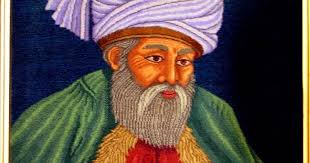
Jalal al-Din Rumi
Sufism — mysticism in the Islamic world — has flourished chiefly in Arab countries and in Persia, and later in what is now India and Pakistan. In Persia and the Indian Sub-continent, Sufism built upon earlier pre-Islamic traditions of mystic thought. As Walter Stace noted in his Teachings of the Mystics, “The natural drift toward pantheism which is a general feature of mysticism in the West — where the theologians and ecclesiastical authorities try to suppress it and brand it as heresy — is even more pronounced in Sufism than in Christianity — although Muslim orthodoxy disapproves of it quite as emphatically as Christian orthodoxy does. Indeed, the Islamic disapproval may be stronger than the Christian, owing to its more rigid monotheism. After all, no Christian mystic was ever martyred for his pantheistic utterances, whereas this did happen in Baghdad” to Al Hallaj in 922.
Sufism is not one homogeneous body of thought or a well-defined set of doctrines and practices. There is considerable internal diversity. However, central to Sufi practice is the role of the spiritual teacher (pir or sheikh) who is believed to have received esoteric wisdom from his own master forming a chain. The role of the teacher has always been to guide the disciple in ways of meditation or other mystical practices often related to breathing so he would acquire spiritual insight through inner experience.
Jalal al-Din Rumi
These chains can be considered separate spiritual orders. Often the tomb of a Sufi leader becomes a shrine and a pilgrimage site. In Pakistan recently, there have been armed attacks on popular Sufi shrines carried out by more legalistic Muslim groups.
Spirituality, in the Sufi tradition, cannot be set apart from life itself, and spiritual development can only be realized through living life to the fullest expression of our potential, using all of our human faculties with the ideal of becoming a more complete human being.
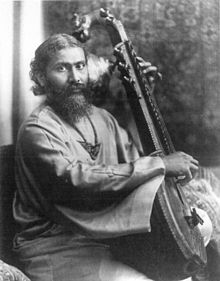
In Europe and the USA, one of the best known of the Sufi ‘chains’ is that of an Indian teacher Hazrat Inayat Khan, of the Chishti Sufi Order, named after the Indian town where it had its headquarters who came to the West in 1910 to create a Sufi movement in North America and Europe. He set his headquarters in Geneva, an international city because of the League of Nations. He married Ora Baker, a cousin of Mary Baker Eddy, founder of The Christian Science Monitor. His son Vilayat Inayat Khan succeeded him. In 2000, the grandson Zia Inayat Khan assumed leadership of what has become the Sufi Order International.
In the West, the Islamic base of the teaching is rarely stressed though it is not denied. Most of the members do not come from traditional Muslim families. Here in France where I have had some contacts, most members are not from North Africa which makes up the bulk of the Islamic population but are rather Europeans who are looking for meditation techniques and who could have chosen Tibetan Buddhism had a different opportunity presented itself.
Pir VilayatInayat Khan
Pir Vilayat has written on the aims of his work: “I am trying to develop an updated spirituality for our times. I believe that to develop our own being to the highest potential we need to discover our ideal and allow an inborn strength, a conviction in ourselves, to give us the courage toward developing this ideal. This requires both knowing our life purpose and mastery or discipline over ourselves in terms of body, mind, and emotions. With an attitude of joy and enthusiasm, we do not suppress but instead control and direct impulses toward the fulfillment of our goals.”
There is a good deal of emphasis placed on “opening the heart” and love as love is considered an attribute of God. Pir Vilayat wrote “When the light of love has been lit, the heart becomes transparent, so that the intelligence of the soul can see through it; but until the heart is kindled by the flame of love, the intelligence, which is constantly yearning to experience life on the surface, is groping in the dark.”
Philip Gowins has written a useful introduction which outlines exercises linked both to breathing and to creative visualization in meditation. The subtitle of the book is “A Field Guide to the Spiritual Path” (1). However, the emphasis is on the need for a teacher as writings are only of limited help and in working alone one may misjudge one’s own progress on the path.
******************************************
Note
1) Philip Gowins. Practical Sufism: A Guide to the Spiritual Path (Wheaton, IL: Quest Books, 2010, 219 pp.)
******************************************
Prof. René Wadlow is President of the Association of World Citizens.
The Association of World Citizens (AWC) strives to respond to situations in this turbulent and frequently violent world by making proposals for the resolution of armed conflicts through negotiations in good faith and by making proposals for developing appropriate forms of government, often based on con-federalism, decentralization, and trans-frontier cooperation. A current focus is on the situations in Yemen (1) and Somalia. (2)
In March 2015, a military coalition led by Saudi Arabia attacked Sanaa, the capital of Yemen, held by a rebel force, the Ansar Allah Movement, commonly called the Houthis. Since that date, the armed conflict has continued, destroying the fragile economy, displacing a large number of persons, creating a humanitarian tragedy. So far, all mediation efforts have failed. The situation becomes more complex each day due in part to the rivalry between Saudi Arabia and Iran.
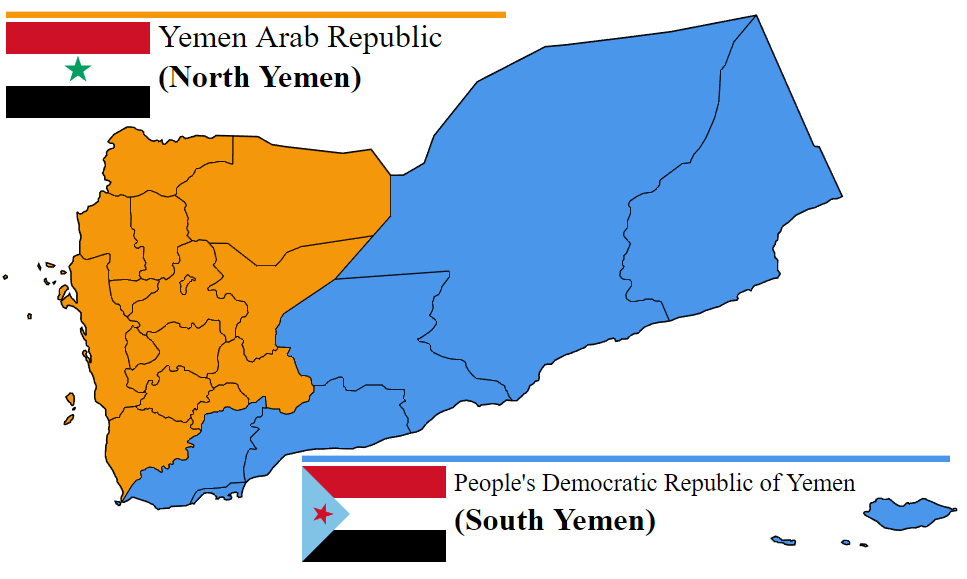
The state of Yemen was the creation of two separate units. One was the southern part originally known as the Aden Colony and the Eastern and Western Aden Protectorates under British rule. The northern part of the country had been under Ottoman rule until the end of the Ottoman Empire in 1918. From 1918 until 1962, it was ruled by Imams. In 1962, there was a military coup organized by officers who had been trained in Egypt and were influenced by Nasser’s views on Arab nationalism. The coup was followed by an eight-year-long civil war between the military forces called “republicans” and the forces of the Imam Bader. The republicans won, but the government was weak and unstable.
The south of the country after the British left took the name of the People’s Democratic Republic of Yemen. In 1990, the two segments of Yemen were united, and the Republic of Yemen was established. However, the euphoria which had existed at the start was short-lived. The people in the south had been promised that their lives would be bettered after unification. Life did not improve, and many in the south felt marginalized. Today, there is a strong sentiment in the south for separation and independence.
When the fighting in Yemen stops, the creation of appropriate forms of government will have to be found. The return to two separate states presents real difficulties as people have moved from their original home areas due to changing economic conditions and to the armed conflict. Yet a single centralized government also seems impossible. As Martin Dent points out, where there is strong identity politics, there must be forms of government that fill the gap between unity and independence. (3) There is a need for Track II efforts to discuss possible structures of government in Yemen.
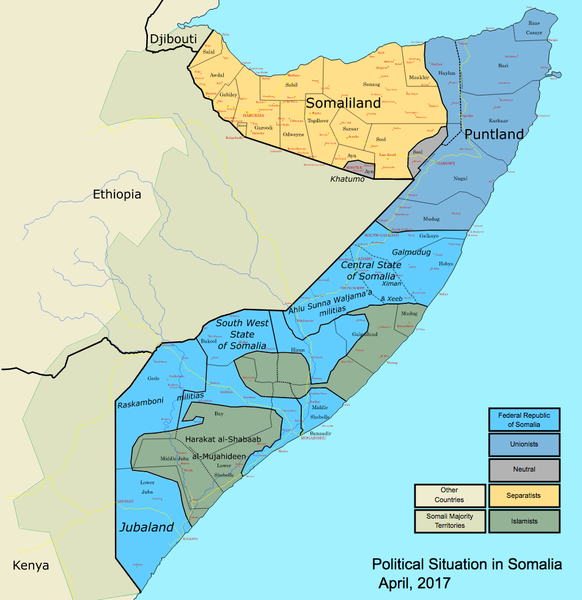
In Somalia, we have very similar conditions. The two Somali colonial areas, one under the control of Britain and the other under that of Italy were combined into one state in 1961. There had been a period of United Nations (UN) trusteeship after the end of the Second World War when the area of Italian colonial status had ended and before the two colonial territories were united. The political culture of the two territories was different. This impact of the colonial legacy was an element leading to the current situation. In January 1991, the military government of Siyad Barre was overthrown, and now different parts of the country demand independence, in particular Somaliland and Puntland, though their boundary claims overlap.
In addition to regional demands for independence, there is an armed Islamist movement, Al-Shabaab, which poses regional and international security issues which continue. Mediation efforts by the UN have not progressed. Again, Track II efforts may be helpful to find governmental structures able to provide autonomy without dividing the Somalia state into three or more independent states. (4) The Association of World Citizens stresses the need for creative thinking on the structure of a state, on the need for regional cooperation and a willingness to negotiate in good faith.
Notes
(1) Helen Lackner, Yemen in Crisis: Autocracy, Neo-Liberalism and the Disintegration of a State (London: Saqi Books, 2017, 330 pp.)
(2) Sarah G. Phillips, When There Was No Aid: War and Peace in Somaliland (Ithaca: Cornell University Press, 2020, 227 pp.)
(3) Martin J. Dent, Identity Politics: Filling the Gap Between Federalism and Independence (Aldershot: Ashgate Publishing, 2004, 232 pp.)
(4) Hurst Hannum, Autonomy, Sovereignty and Self-Determination: The Accommodation of Conflicting Rights (Philadelphia: University of Pennsylvania Press, 1990, 503 pp.)
Prof. René Wadlow is President of the Association of World Citizens.
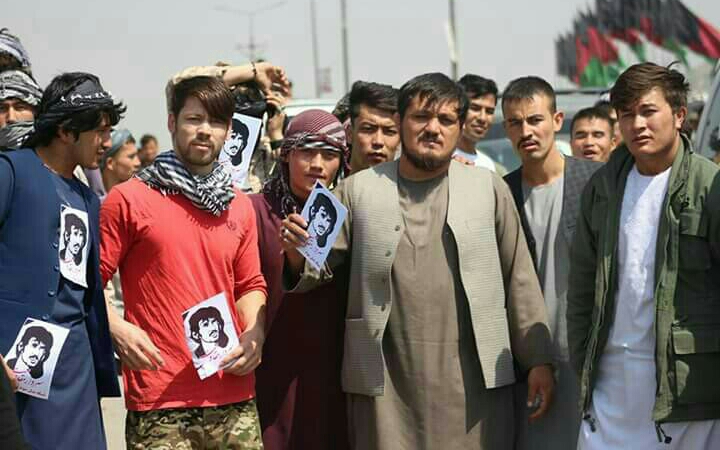
The Association of World Citizens (AWC) is strongly concerned by possible repression against the Hazara population in Afghanistan, repression of such an extent that it could be considered genocide. While it is still too early to know what the policies and practice of the Taliban toward minorities will be now, during the past Taliban rule (1996-2001) there was systematic discrimination against the Hazara and a number of massacres.
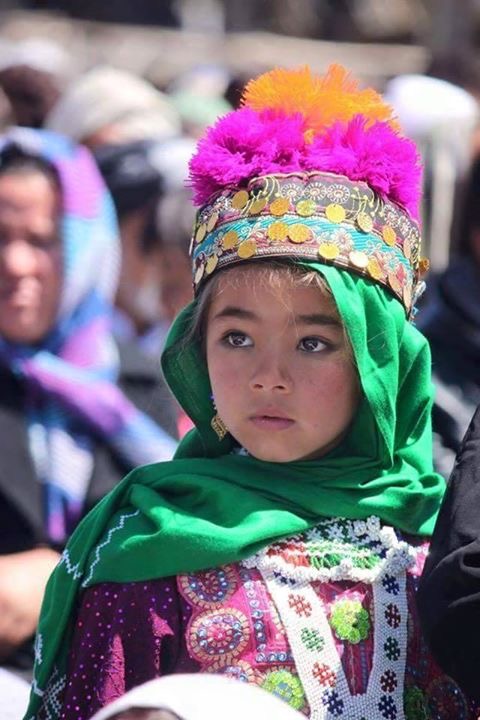
There are some three million Hazara whose home area is in the central mountainous core of Afghanistan, but a good number have migrated to Kabul, most holding unskilled labor positions in the city. The Hazara are largely Shi’a in religion but are considered as non-Muslim heretics or infidels by the Taliban as well as by members of the Islamic State in Khorasan (ISIS-K), now also an armed presence in Afghanistan.
In the past there was a genocidal period under the rule of Abdur Rahman Khan. During the 1891-1893 period, it is estimated that 60 percent of the Hazara were killed, and many others put into slavery-like conditions.
To understand fully the concern of the AWC for the Hazara, it is useful to recall Article II of the 1948 Convention against Genocide.
In the present Convention, genocide means any of the following acts committed with intent to destroy, in whole or in part, a national, ethnic, racial or religious group, as such:
* Killing members of the group; * Causing serious bodily or mental harm to members of the group; * Deliberately inflicting on the group conditions of life calculated to bring about the physical destruction in whole or in part; * Imposing measures intended to prevent births within the group; * Forcibly transferring children of the group to another group.
There have been repeated appeals to make the 1948 Genocide Convention operative as world law. The then United Nations Secretary-General, Kofi Annan, said in an address at UNESCO on December 8, 1998 “Many thought, no doubt, that the horrors of the Second World War – the camps, the cruelty, the exterminations, the Holocaust – could not happen again. And yet they have. In Cambodia, in Bosnia and Herzegovina, In Rwanda. Our time – this decade even – has shown us that man’s capacity for evil knows no limits. Genocide – the destruction of an entire people on the basis of ethnic or national origins – is now a word our out time too, a stark and haunting reminder of why our vigilance but be eternal.”
The 1948 Convention has an action article, Article VIII:
Any Contracting Party may call upon the competent organs of the United Nations to take such action under the Charter of the United Nations as they consider appropriate for the prevention and suppression of acts of genocide […]
Despite factual evidence of mass killings, some with the intent to destroy “in whole or in part”, no Contracting Party has ever called for any action under Article VIII. (1)
The criteria for mass killings to be considered genocide does not depend on the number of people killed or the percentage of the group destroyed but on the possibility of the destruction of the identity of a group. It is the identity of the Hazara and their religious base which is the key issue. Events need to be watched closely, and nongovernmental organizations must be prepared to take appropriate action.
Note (1) For a detailed study of the 1948 Convention and subsequent normative development see: William A. Schabas, Genocide in International Law (Cambridge University Press, 2000, 624 pp.)
Prof. René Wadlow is President of the Association of World Citizens.
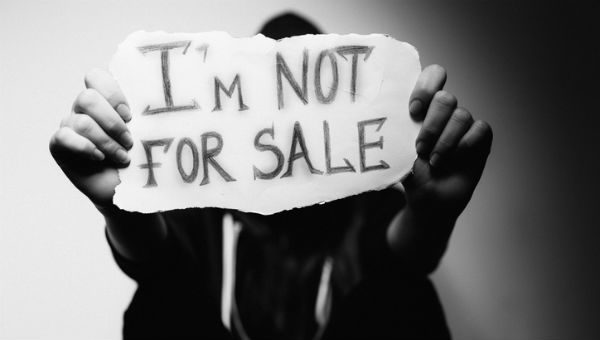
On July 30, there should be a worldwide concerted effort against trafficking in persons. The United Nations (UN) General Assembly in Resolution A/RES/68/192 in 2012 set out July 30 as a day to review and reaffirm the need for action against the criminal global networks dealing in trafficking of persons. The trafficking of human beings reveals the hunger of the global economy for human labor and the disrespect for human dignity. Drugs, guns, illegal immigration are the nightmare avenues of how the poor world becomes integrated into the global economy. These are intricate networks and are intertwined with interests in business and politics.
A recent UN report presented to the Commission on the Status of Women highlighted that human trafficking is one of the fastest growing criminal industries and one of the crucial human rights crises today.
From Himalayan villages to Eastern European cities – especially women and girls – are attracted by the prospects of a well-paid job as a domestic servant, waitress or factory worker. Traffickers recruit victims through fake advertisements, mail-order bride catalogues, casual acquaintances, and even family members. Children are trafficked to work in sweatshops, and men to work in the « three D jobs » – dirty, difficult and dangerous.
Despite clear international standards such as the UN Convention against Transnational Organized Crime and its Protocol to Prevent, Suppress and Punish Trafficking in Persons, Especially Women and Children, there is poor implementation, limited governmental infrastructure dedicated to the issue. There is also a tendency to criminalize the victims.
Since 2002, the UN Office on Drugs and Crime has collected information on trafficking in persons. The International Labor Organization, the World Health Organization – especially in the field of HIV/AIDS prevention – and the International Organization for Migration – all have anti-trafficking programs, but they have few «people on the ground» dealing directly with the issue.
Thus, real progress needs to be made through nongovernmental organizations (NGOs) such as the Association of World Citizens which has raised the issue in human rights bodies in Geneva. There are three aspects to this anti-trafficking effort. The first is to help build political will by giving accurate information to political leaders and the press. The other two aspects depend on the efforts of NGOs themselves. Such efforts call for increased cooperation among NGOs and capacity building.
The second aspect is research into the areas from which persons – especially children and women – are trafficked. These are usually the poorest parts of a country and among marginalized populations. Socio-economic and development projects must be directed to these areas so that there are realistic avenues for advancement.
The third aspect is psychological healing. Very often persons who have been trafficked have had a disrupted or violent family life. They may have a poor idea of their self-worth. The victim’s psychological health is often ignored by governments. Victims can suffer a strong psychological shock that disrupts their psychological integrity. Thus, it is important to create opportunities for individual and group healing, to give a spiritual dimention through teaching meditation and yoga. There is a need to create adult education facilities so that persons may continue a broken educational cycle.
We must not underestimate the difficulties and dangers which exist in the struggle against trafficking in persons nor the hard efforts which are needed for the psychological healing of victims. July 30 can be a rededication for our efforts.
Prof. René Wadlow is President of the Association of World Citizens.
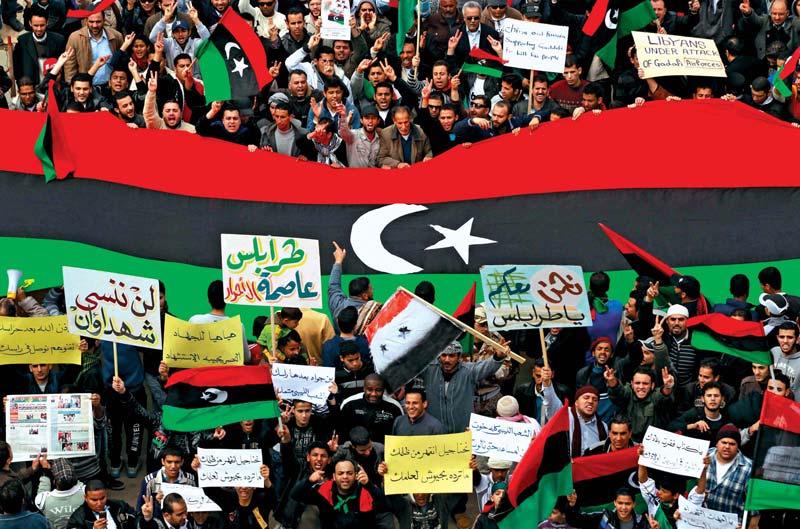
Was Libya ever a part of the 2011 Arab Spring? If the term defines solely the ouster of a dictator who had been there for decades, yes, it was. After 41 years of autocratic rule, Colonel Muammar Gaddafi was irreversibly overthrown. If the Arab Spring also means the transformation of nonviolent protests into all-out armed conflict, then again, Libya qualifies as a people’s revolution, following the path successfully taken by Tunisia, that ended up as a civil war between the Jamahiriya, ruled from Tripoli by Gaddafi, and the Qatar-backed National Transitional Council based in Benghazi. Ultimately, if it means frustration at the outcome of the fight, then Libya was indeed a part of the 2011 Arab Spring, remembering how unbearably long it took the rival factions there to create a Government of National Unity, after years of competition between two, sometimes three, would-be national leaders.
Another way that Libya – tragically – qualifies as part of the 2011 Arab Spring is the ever-growing phenomenon of harraga. In Algerian Arabic, harrag means “the one who burns something”, and in Algeria where French is an unofficial second language, overlooking a red light while driving a car is “brûler un feu rouge”, literally “burning a red light”. When harrag thus refers to anyone breaching a legal restriction, its plural harraga has come to mean “those who burn the border” – migrants who leave the country without permission, either from their home government or the authorities of the country they are traveling to, in both cases risking their very lives.
One reason the West reacted sometimes coolly to the end of decades-long dictatorships in North Africa was that, while in power, Ben Ali, Gaddafi, and Mubarak enforced strict regulations on migration to the northern bank of the Mediterranean, keeping their respective peoples away from both personal freedom and European border posts altogether. The fall of each of the three regimes meant the end of a controlled emigration that used to suit European needs nicely, and ten years later, one of the three countries stands out as the most graphic and tragic embodiment of the harraga phenomenon – Libya.
Yet Libyans do not make up the bulk of those vowing to reach Europe at any cost. Those vowing to reach Europe from Libya are migrants and refugees from other countries in Africa, with some foreign residents who had lived in Libya for many years but are now feeling insecure and want to move on abroad. Others still, coming from Niger, Chad, Sudan, Egypt, and Tunisia, do want to settle down in Libya. But for those whose destination is Europe, when failure does not come by drowning into the Mediterranean, it means a fate some would deem even worse.
Inhumanity in the name of the European Union
According to a report from the United Nations High Commissioner for Refugees (UNHCR), North Africa is now offering three routes for migration to Europe – the Western Route from Morocco into Spain, the Eastern Route from Turkey into Greece, and the Central Route from Libya into Italy. Unsurprisingly, the Central Route is the most active, preferred by many refugees and migrants. They come from West, East, and Central Africa, some of them fleeing extreme poverty back home and the others running from war and persecution. Although Europe has the oldest and best-functioning human rights court in the world, nostalgic as it is of its unenviable dictator friends in North Africa, it will not lift a finger to help these people yearning for the freedom and dignity that Europeans enjoy them every day.
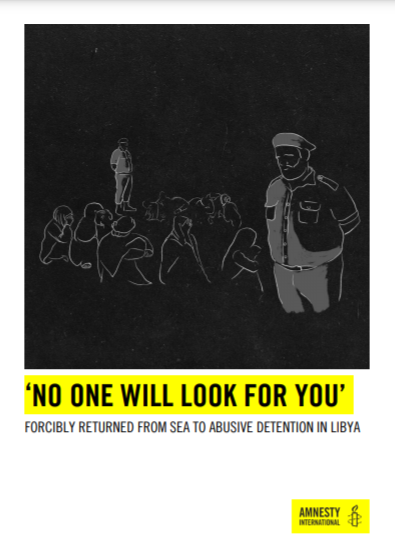
In a newly released report entitled ‘No One Will Look for You’: Forcibly Returned from Sea to Abusive Detention in Libya, Amnesty International explains how “men, women and children intercepted while crossing the Mediterranean Sea and forcibly returned to detention centers in Libya” get subjected to an array of human rights violations in detention centers, such as “torture and other ill-treatment, cruel and inhuman detention conditions, extortion and forced labor” as well as “invasive, humiliating and violent strip-searches”, when not rape.
The organization sheds light on the role played since 2020 by the Libyan Government’s Directorate for Combating Illegal Migration (DCIM) in sexual abuses against women.
But, in the words of Amnesty’s Deputy Director for the Middle East and North Africa, Diana Eltahawy, “The report also highlights the ongoing complicity of European states that have shamefully continued to enable and assist Libyan coastguards in capturing people at sea and forcibly returning them to the hellscape of detention in Libya, despite knowing full well the horrors they will endure.” Consequently, Amnesty urges “European states to suspend cooperation on migration and border control with Libya”.
Blocking unauthorized migration from North Africa to Europe was one thing, when many in Western countries deemed Arab peoples unable to sustain democracy, thus supporting dictators who both reined in their constituents at home and deterred them from seeking a better life, let alone freedom, abroad. Ten years later, as a stifled democracy proves unable to protect Tunisia from a deadly wave of Covid-19 and Egypt appears locked in an absolute monarchy in all but name, Libya has set a course on the abandonment of all standards of human decency, not just in the treatment of prisoners but in knowingly punishing people just for seeking a new life on the other side of the Mediterranean.
The European ideal betrayed
It is no secret that European leaders, however progressive and opposed to extreme right populists they claim to be, have long renounced any form of firmness toward these. No more dismissing the far right by comparing it to pre-World War II fascist movements; its trademark xenophobic rhetoric has now become trendy. Leaders who once blasted the extreme right can now be heard calling for tighter border controls, making life harder for those immigrants who do get admitted, and demoting asylum from an internationally recognized right to a temporary commodity granted at the pleasure of the state.
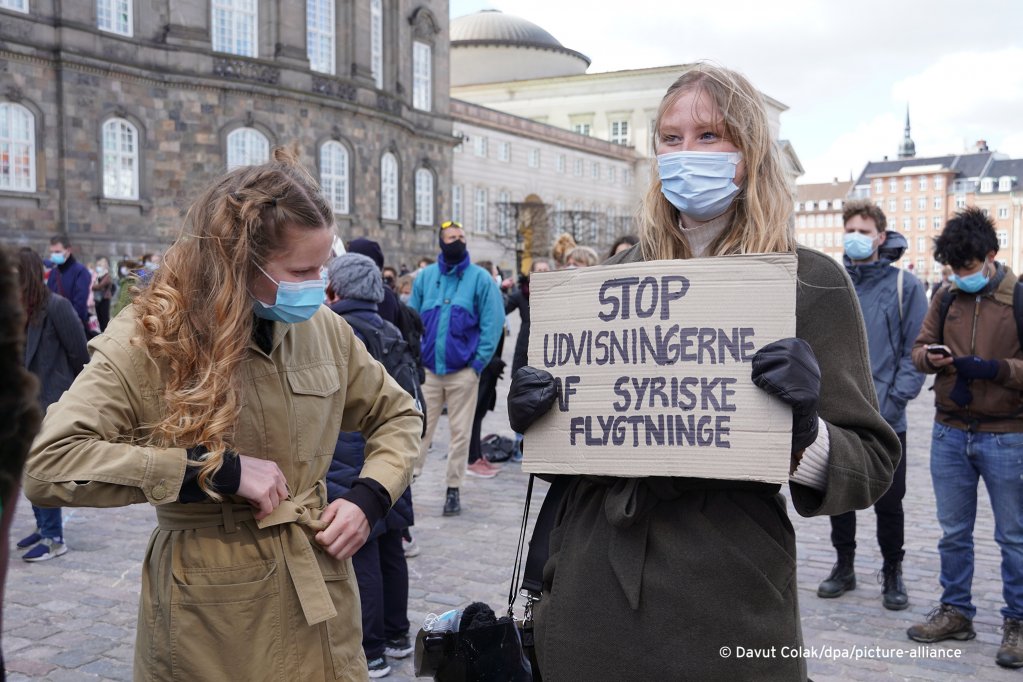
Denmark, once hailed as a model Scandinavian social democracy with a liberal line of thought, is now considering sending Syrian refugees back to their war-torn homeland and “outsourcing” other asylum-seekers to Rwanda, a distant central African country with no geographical, historical, or other ties to Denmark whatsoever. In Britain, Home Secretary Priti Patel has proposed a host of nonsensical, dangerous measures to keep undocumented migrants and asylum seekers from reaching the country, such as the creation of an offshore processing center in … Rwanda. Not the finest tributes to the scores of Rwandans trying to flee the ongoing genocide back in 1994 one might think of.
Once conservative, moderate, liberal, or progressive democrats, the leaders of Europe have now joined the extreme right if only in its crusade to spread an insane fear of millions of Arab and African Muslim migrants taking over Europe, replacing the European Convention on Human Rights with the Sharia, imposing the Islamic veil on all women, and flogging to death anyone who swallows a drop of alcohol. So much for the European dream of Konrad Adenauer and Winston Churchill, Frenchmen Jean Monnet and Robert Schuman, and Italians Alcide de Gasperi and Altiero Spinelli – the latter’s name being part also of the history of the World Citizen and World Federalist movements.
As the motto of the European Union (EU) shifts from “United in Diversity” to “Freedom within, Fortress without”, Libya stands out as the most graphic, horrendous illustration of EU duplicity in championing human values at home, especially when opposing a Donald Trump in the USA or brutal leaders in China and Nicaragua, while condoning the total loss of humanity in North Africa where Libyan government agents keep its borders safe from – imagined – hordes of invaders poised to feast on Europe’s riches and force an Al-Qaida- or ISIS-like reactionary vision of Islam on all Europeans. That too is a sign, possibly the most important one, that when it comes to migration, European leaders are now being guided by the extreme right’s ideology, pretending to use facts but being really based on fantasy.
Europe must continue to stand for hope
It is no fantasy that people are dying at sea while trying to reach Europe. It is no fantasy that others, also trying to reach Europe through the Mediterranean, are getting caught by the Libyan authorities and forcibly brought back to the country. It is no fantasy that, held in detention centers even though they have no crime to answer for, people are ill-treated, beaten, raped, all but killed, just because they tried to get to Europe. It is no fantasy that as many blatant violations of the European Convention on Human Rights are being committed while the EU, at best, turns a blind eye and, at worst, lends its support.
Regional integration as Europe has known it since World War II, including EU expansion after the end of the Warsaw Pact, cannot be allowed to result in such barbarity. Setting such a bad example will only be detrimental to the ongoing experiments toward regional integration in other parts of the world, obviously starting with Africa. Ultimately, the very idea of World Citizenship will be endangered too, should some raise the possibility of supranational integration, and accordingly global governance of any kind, leading to such brutal, inhuman conducts of that nature with literally nowhere to run.
Europe as we know it was born among the ruins of World War II. Neither its regional institutions nor its national governments, let alone its governmental partners overseas, can possibly let it drown on the shores of Libya, where its leaders from Rome up to Copenhagen are making the EU lose all honor, letting down both those in Libya hoping for a better future and their own citizens at home by nurturing them in fear when they should be taught pride, courage, and solidarity, both toward one another and with others in distress at the doorsteps of the Union.
Bernard J. Henry is the External Relations Officer of the Association of World Citizens.
Depuis un an et demi, la pandémie de Covid-19 ravage la terre entière. Le coronavirus ne connaît aucune frontière, il se moque des limites entre États-nations tracées par l’être humain, il frappe partout où il le peut, comme il veut, quand il veut. Dans nombre de pays, les mesures-barrières préconisées par l’Organisation mondiale de la Santé sont appliquées de manière stricte : port du masque, distanciation physique, lorsque ce ne sont pas confinement et couvre-feu. Dans d’autres pays, hélas, les dirigeants ont choisi, pour de pures raisons politiques, d’ignorer le danger, et dans de tels pays, le peuple l’a payé cher mais aussi, bien souvent, les chefs d’État eux-mêmes.
En Tunisie, la première vague du début d’année 2020, causée par la souche originelle de Wuhan, avait été gérée de manière raisonnable. Aujourd’hui, le variant Delta submerge le système de santé, dépourvu d’équipement et de personnel, jusqu’aux vaccins de tous types, créant ainsi une véritable catastrophe sanitaire nationale et offrant à la Tunisie le triste record du taux de mortalité lié à la Covid-19 sur tout le continent africain.
A travers le monde, Tunis a fait appel à sa diaspora. Celles du Canada, de Belgique et de France ont répondu présentes. Mais pour tout le soulagement que leur aide apporte au pays, leur seule intervention sera loin de suffire pour sauver la Tunisie de ce péril imminent.
Et quand bien même. Pour l’heure, l’aide apportée se concentre sur les grandes villes de la Tunisie, que ce soit Tunis la capitale ou Kairouan, Sousse, Hammamet, les grandes villes mais aussi celles que l’étranger connaît le mieux, celles que les touristes aimaient visiter avant la pandémie.
Le monde sait qu’il faut soigner la Tunisie qu’il connaît. C’est bien. A présent, il lui faut soigner aussi la Tunisie qu’on oublie.
Au premier rang des villes oubliées du secours, il y a Le Kef, cette ville de montagne adossée à l’Algérie. Déjà oubliée de Tunis depuis même l’ère Bourguiba, aujourd’hui, Le Kef se débat avec une situation sanitaire devenue intenable. Le seul hôpital de la ville est submergé de patients qu’il ne peut traiter, et face au variant Delta, les mesures de restriction devenues habituelles que sont confinement et couvre-feu ne suffiront pas.
Tant de la diaspora que des autorités sur place, une mobilisation en oxygène et en vaccins au moins égale à celle en faveur des grandes villes est indispensable au Kef. Recueillir de l’aide en masse est bien sûr essentiel, mais sans une répartition équitable, jamais cette aide ne sera suffisante. Ecarter une partie du pays de la solidarité internationale ne pourra qu’avoir des conséquences incalculables. Les blessures ainsi causées s’avéreront sans nul doute encore plus longues et difficiles à soigner que la pandémie. Déjà aux prises avec un héritage introuvable de la révolution de 2011, la Tunisie prend peut-être la direction d’un chaos qui aura raison y compris de la raison.
«Et quiconque sauve un seul homme, c’est comme s’il avait sauvé tous les hommes», dit le Coran. Les autorités politiques actuelles de la Tunisie sont venues au pouvoir en mettant l’Islam au cœur de leurs aspirations politiques. Pourquoi alors n’appliqueraient-elles pas ce principe ? Sauver tous les Tunisiens, n’est-ce pas d’abord sauver un seul Tunisien, quelle que soit la région du pays d’où il vient ?
Depuis le début de ce nouvel épisode de crise, les ambassades tunisiennes à travers le monde reçoivent et centralisent l’aide médicale et humanitaire. A présent, il appartient à leurs supérieurs à Tunis, à l’Etat dont ces diplomates tirent leurs ordres, de veiller à la bonne et due utilisation du soutien mondial à la Tunisie. Et ce soutien n’aura de valeur et d’efficacité que s’il n’oublie personne, notamment pas Le Kef, l’oubliée par excellence au cœur de sa montagne. S’il le chante avec ironie dans Noé, c’est au sens littéral que Tunis doit désormais entendre ces paroles de Julien Clerc :
«Il ne sauve rien, Celui qui ne sauve pas tout».
* * *
Prof. René Wadlow Président
Bernard J. Henry Officier des Relations Extérieures
Cherifa Maaoui Officier de Liaison, Afrique du Nord & Moyen-Orient
L’Association of World Citizens, qui s’emploie à mettre fin aux conflits armés par des négociations de bonne foi, adresse un Appel Urgent à toutes les parties pour mettre fin à la violence dans la région de Jérusalem et Gaza. Dans cette situation hautement inflammable, tout instant ouvre la voie à une montée du conflit. La violence peut entraîner une violence encore plus importante et s’étendre à d’autres endroits encore, une indication en étant les récentes violences dans la ville de Lod.
L’Association of World Citizens en appelle à toutes les parties afin de s’abstenir de toute action provocatrice. Comme le disait le Citoyen du Monde et psychologue Bruno Bettelheim, «La violence est le comportement de quelqu’un d’incapable d’imaginer d’autres solutions aux problèmes qui se présentent». En conséquence, l’Association of World Citizens en appelle à une pensée créatrice pour trouver de nouvelles approches en vue d’une vie en commun coopérative et harmonieuse entre Israéliens et Palestiniens.
Le Professeur René WADLOW est Président de l’Association of World Citizens.
The Association of World Citizens, devoted to ending armed conflicts through negotiations in good faith, addresses an Urgent Appeal to all parties to halt violence in the Jerusalem-Gaza area. In this highly inflammatory situation, there can be an escalation to the conflict at any point. Violence can lead to ever greater violence and can spread to other areas, an indication of which is the recent violence in the city of Lod.
The Association of World Citizens calls upon all parties to refrain from provocative action. As World Citizen and psychologist Bruno Bettelheim wrote, “Violence is the behavior of someone incapable of imagining other solutions to the problems at hand.” Therefore, the Association of World Citizens calls for creative thinking for new approaches to cooperative and harmonious living together of Israelis and Palestinians.
Prof. René Wadlow is President of the Association of World Citizens.
«Quand vous êtes blessé et abandonné sur les plaines d’Afghanistan, et que les femmes arrivent pour découper ce qu’il reste de vous, dépêchez-vous de rouler jusqu’à votre carabine, de vous faire sauter la cervelle et d’aller vers votre dieu comme un soldat», disait Rudyard Kipling, l’écrivain britannique dont le culte de la virilité, notamment militaire, transpire à travers son œuvre. En témoigne son poème «If», «Si …», traduit en français par André Maurois dans Les silences du colonel Bramble et parfois désigné par son vers final, «Tu seras un homme, mon fils».
Le même Kipling qui nous racontait, dans The Man Who Would Be King, en français L’homme qui voulut être roi, la fable de deux Anglais qui se jurent de découvrir le pays perdu du Kafiristan, niché quelque part entre Afghanistan et Pakistan, alors colonies britanniques. Ils y parviennent et, lors d’un affrontement avec des indigènes, un hasard fait que l’un des deux, Daniel Dravot, est subitement pris pour un dieu. Conduit à la capitale de ce pays rendu au culte d’Alexandre le Grand, il est proclamé fils du conquérant et couronné roi. Mais lorsqu’il épouse une jeune fille pour fonder sa dynastie, celle-ci le démasque. Dravot exécuté en public, son comparse supplicié puis libéré rentre en Inde en emportant sa tête encore ornée de la couronne.
L’histoire est fictive, mais le Kafiristan existe. Aujourd’hui le Nouristan, il est une province orientale de la République islamique d’Afghanistan, un pays où, loin des aventures viriles que rêvait Kipling, des femmes mènent une lutte quotidienne – une lutte pour la paix.
Vingt ans d’une paix introuvable
Depuis l’invasion soviétique de 1980, suivie de huit ans de combats entre régime communiste soutenu par Moscou et Mojahedin, combattants de la résistance – parmi lesquels se trouvait un groupe alors soutenu par les Etats-Unis, dénommé Al-Qaïda et commandé par un Saoudien du nom d’Osama bin Laden – le pays n’a jamais connu que la guerre, dont était sorti en 1996 l’ «Émirat islamique d’Afghanistan», créé par la milice islamiste des Talibans qui avait fait du même Osama bin Laden l’un de ses ministres, bien à l’abri pour lancer ses attaques terroristes contre son ancien allié américain le 11 septembre 2001. L’intervention militaire internationale qui avait ensuite mis fin à la folie meurtrière des Talibans n’a jamais engendré une paix durable.
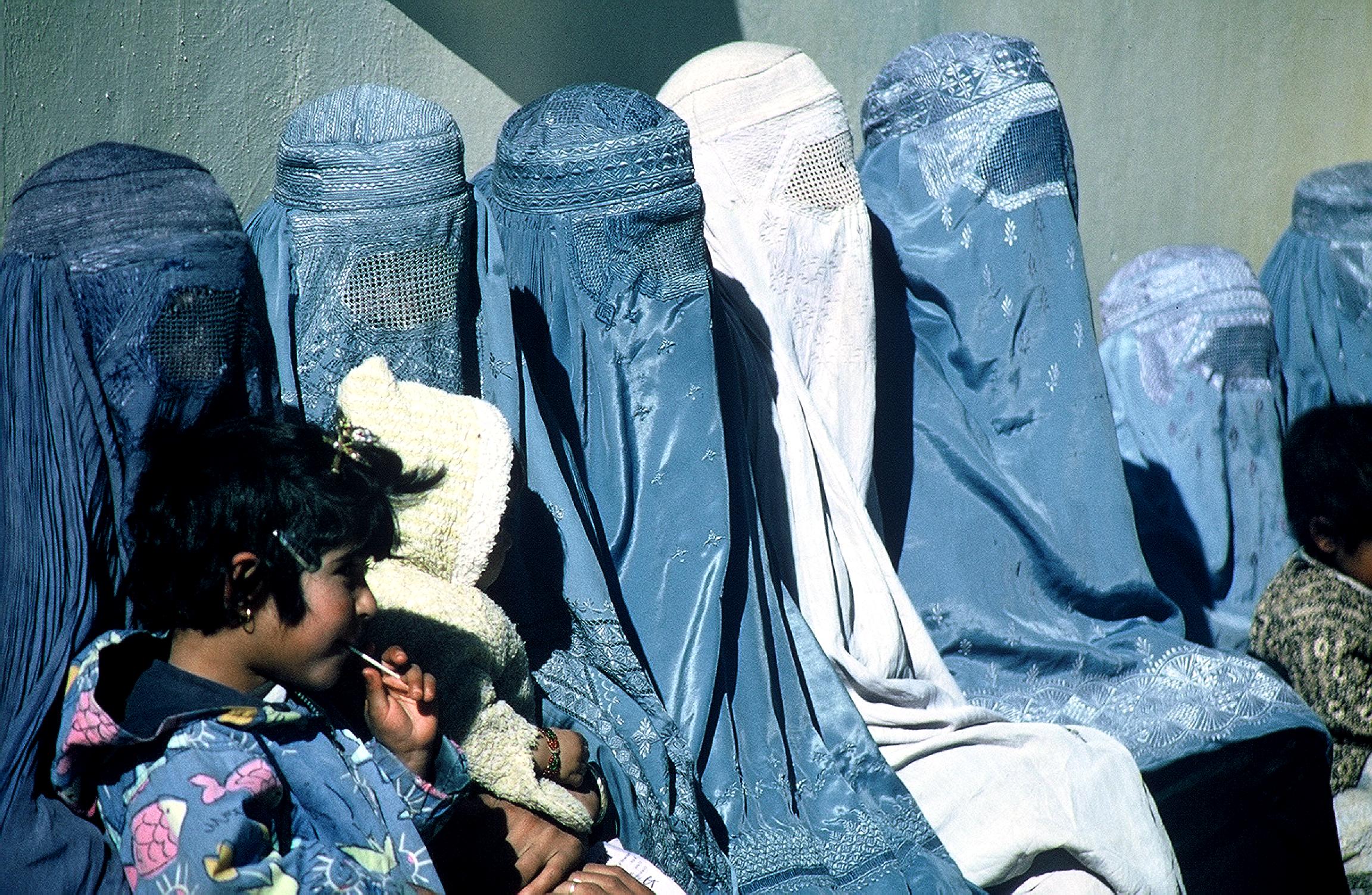
Comme le chante Pierre Perret, “Quand la femme est grillagée, Toutes les femmes sont outragées.” (C) USAID
En presque vingt ans, plusieurs initiatives ont été lancées sous les présidences successives de Hamid Karzai et Ashraf Ghani, mais l’obstination des Talibans a mis à néant tous les efforts. Après un traité signé en 2016 avec un autre mouvement islamiste armé, le Hezb-e Islami Gulbuddin, des pourparlers de paix avec les Talibans se sont enfin ouverts en septembre dernier à Doha, la capitale du Qatar. Mais les discussions piétinent. Malgré des propos lénifiants, les Talibans démontrent encore et toujours la même haine d’une partie bien ciblée de la population, contre laquelle ils avaient déchaîné du temps de leur «émirat» toute leur répression – les femmes.
Les puissances étrangères engagées en Afghanistan n’ont pas oublié les cinq années de ce que les Talibans voulaient le régime islamique «le plus rigide au monde», ni les femmes cloîtrées chez elles, autorisées à sortir seulement sous la burqa et, lorsqu’accusées d’adultère, lapidées. Pas de paix au prix d’un retour à cette époque, insiste-t-on à Doha. Parfait. Mais s’il n’est pas question d’une paix aux dépens des droits des femmes, pourquoi alors maintenir les Afghanes en dehors des pourparlers ?
Les droits des femmes, nerf de la guerre
Réduites au silence sous les Talibans, devenues comme fantômes sous leurs burqas, les femmes ont su depuis 2001 profiter de leur liberté retrouvée. Certes voilées en public comme leurs sœurs iraniennes, dans cette République islamique d’Afghanistan dont le nom rappelle celui du voisin de l’ouest, les Afghanes n’en ont pas moins su faire entrer le vent dans leurs voiles.
Comme le rappelle Amnesty International, elles sont avocates, médecins, magistrates, enseignantes, ingénieures, athlètes, militantes, politiciennes, journalistes, bureaucrates, entrepreneuses, policières, soldates. Et ce sont aujourd’hui 3 300 000 petites Afghanes qui sont scolarisées, se préparant à marcher dans les pas de leurs aînées.
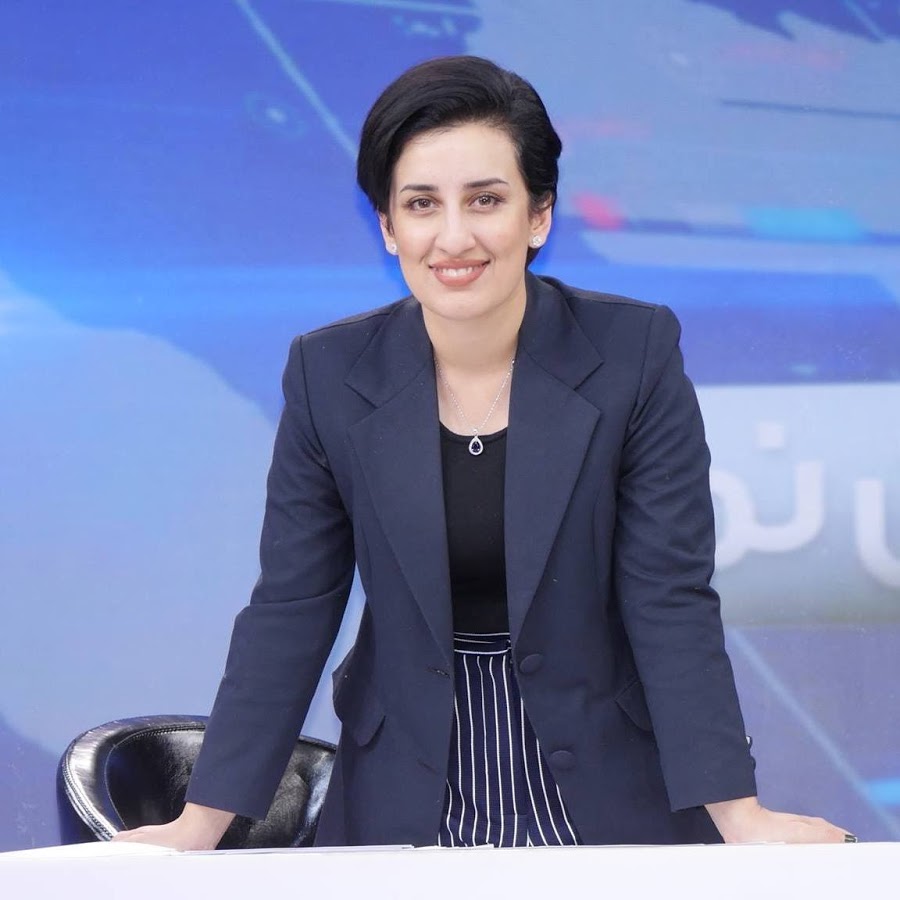
Et pourtant. La tentation existe pour Kaboul, du jour au lendemain, de décider que la paix avec l’irréductible ennemi taliban vaut bien de brûler les (re)conquêtes de ses citoyennes. Elles le savent. Farahnaz Forotan, journaliste de vingt-huit ans contrainte à l’exil car figurant sur une liste de personnes à abattre des Talibans, le sait mieux que toute autre. Pour dire le refus des Afghanes de voir leurs droits transformés en monnaie d’échange, elle a lancé la campagne MyRedLine (Ma ligne rouge) désignant la ligne à ne pas franchir à Doha.
Farahnaz Forotan
Dans l’État afghan, la paix s’écrit au masculin. Un Ministre d’État à la Paix a été nommé au sein du Gouvernement, auquel s’ajoute un Haut Conseil de la Réconciliation nationale dirigé par Abdullah Abdullah, ancien Ministre des Affaires Étrangères et candidat malheureux à la présidentielle de 2014. Pour l’équipe Ghani, la paix est une urgence, et qui dit urgence dit sacrifices. Les droits des femmes étant le nerf de la guerre, pour une paix qu’il faut obtenir à tout prix, le premier sacrifice sera de les brûler, craignent-elles légitimement de leurs propres autorités. Des mêmes hommes qui, salués voilà vingt ans comme les vainqueurs des Talibans, sont désormais prêts à de lourdes pertes à leur profit.
Et elles ont raison, car il est déjà un droit que le Gouvernement afghan leur a retiré en vue des pourparlers de paix – tout simplement, celui d’y participer. Impardonnable erreur.
Elles sauront faire la paix
Se croire habilité à toutes les concessions à l’ennemi parce que, l’ayant déjà vaincu une fois, l’on n’a pas réussi à le vaincre une seconde fois et qu’une paix doit être conclue d’urgence, un maréchal français l’avait déjà tenté, et depuis, son nom reste associé à la Shoah, même si, aujourd’hui comme hier, d’aucuns au sommet de l’Etat prônent une «patience malvenue», comme le chante Louis Chedid dans Anne, ma sœur Anne, envers le souvenir de l’inacceptable.
Si les hommes à la tête de l’Afghanistan sont prêts à emprunter ce même chemin, il leur faudra se souvenir que, pendant qu’entre leurs mains parlaient les armes, les femmes ont su mener leur propre lutte contre les Talibans, mais sans tuer ni blesser quiconque, luttant non pour le pouvoir mais pour le bien de toutes et tous, à commencer par les victimes les plus démunies des conflits armés, toujours et partout – les enfants.
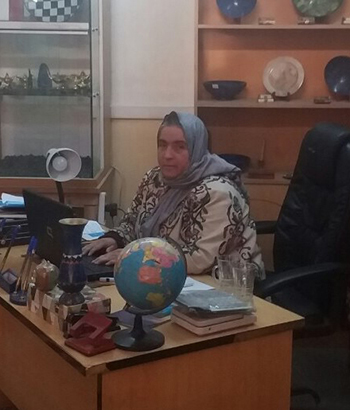
Ainsi d’Ayesha Aziz, enseignante et directrice d’école, membre du Hezb-e Islami identique aux Talibans dans les idées mais qui, historiquement plus pragmatique, a conclu la paix avec le Gouvernement afghan. Avec Ayesha Aziz parmi les membres de sa délégation.
Ayesha Aziz (C) USIP
Déployant des talents de négociation et de diplomatie que d’autres s’interdisent de voir du seul fait qu’elle est une femme, elle a réussi à obtenir des Talibans l’ouverture d’écoles pour filles, des écoles qu’elle finance par le biais d’une entreprise de raffinement de pierres semi-précieuses qu’elle a créée et où elle engage des femmes par centaines. S’appuyant sur «le respect, l’humour et l’Islam», Ayesha Aziz obtient des résultats spectaculaires auprès de l’implacable milice islamiste.
Pour elle, la paix doit passer par le dialogue entre les femmes, celles du camp Ghani et les Talibanes, ainsi que par les zones rurales plutôt que par le sommet de l’État.
Très bien, pourrait-on dire, mais tout cela reste au niveau national et la paix se construit également avec des partenaires internationaux ; malgré tout son mérite, Ayesha Aziz ne semble pas taillée pour avoir affaire à eux. Si l’on pense ainsi, qu’à cela ne tienne. Palwasha Kakar, elle, sait parler hors de l’Afghanistan la langue que les décideurs doivent entendre.
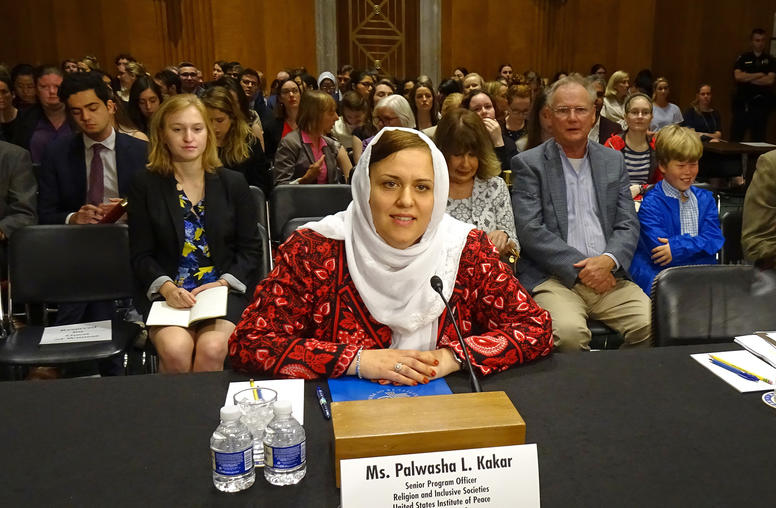
Palwasha Kakar, lors de son témoignage devant le Congrès des Etats-Unis (C) USIP
Responsable principale du Programme Religion et Sociétés inclusives à l’United States Institute of Peace (USIP) de Washington, Palwasha Kakar a consacré plus de onze ans de sa vie à l’inclusion des femmes, l’engagement pour la paix des dignitaires religieux, la gouvernance et l’éducation dans son Afghanistan natal. A l’USIP, elle applique une approche comparative sur les femmes, la religion et la construction de la paix au Pakistan, en Libye, en Syrie, en Irak et au Myanmar. Son inspiration, elle la tient de ses sœurs afghanes qui, utilisant le cadre religieux, ont su négocier avec les Talibans pour des cessez-le-feu locaux, des libérations d’otages et des écoles pour filles.
Appelée à témoigner en 2019 devant le Congrès des Etats-Unis, témoignage capital au vu de la présence de deux mille cinq cents soldats américains en Afghanistan, Palwasha Kakar a rappelé que les femmes étaient essentielles au succès et à la durabilité de tout processus de paix, des pourparlers jusqu’à la mise en œuvre des accords, et qu’elles exigeaient une paix protégeant leurs acquis depuis 2001.
Pour les élus américains qui aimeraient trop Kipling, ce fut le temps d’un autre rappel. «A travers l’histoire de l’Afghanistan, les femmes ont toujours fait partie des processus de paix couronnés de succès. Même si l’on accorde toute la gloire à [l’empereur] Ahmed Shah Durrani pour avoir créé l’État d’Afghanistan moderne en 1747, c’est la contribution de Nazo Ana [poétesse et écrivaine] à l’unification des tribus qui se combattaient jusqu’alors pour ensuite affronter les Perses en 1709 qui fut la cheville ouvrière de la fondation de l’État afghan, ce qui lui a valu le titre de ‘Mère de la Nation afghane’. Quand les Talibans furent chassés du pouvoir en 2001 par les troupes américaines et leurs alliés, les femmes ont pris toute leur part au succès de l’accord politique du processus de Bonn et à la rédaction de la constitution qui a donné dix-huit ans de gouvernement démocratique stable, alors même que se poursuivaient les attaques des Talibans qui n’avaient pas été inclus dans le processus de Bonn».
Jadis, sans une femme, pas d’Afghanistan. Aujourd’hui, sans les femmes, pas d’Afghanistan libre. Demain, sans les femmes, un Afghanistan en paix est inconcevable.
La paix des femmes, seul espoir de survie
Professionnelles, citoyennes, militantes – mais indignes de donner la paix à leur pays. A croire que les gouvernants afghans ont trop lu Kipling. Veulent-ils, à leur tour, être rois ? On le croirait pour peu, tant ils semblent craindre que, ceints de la couronne comme le fut Daniel Dravot de celle du Kafiristan, une femme censée les embrasser, mais refusant de se soumettre, ne les morde au sang et prouve que les faux dieux sont des mortels sans droit divin de régner.
Michael Caine (centre) et Sean Connery (droite) dans le film de John Huston L’Homme qui voulut être roi, d’après l’ouvrage de Rudyard Kipling, en 1975
Sans doute les femmes d’Afghanistan ne rêvent-elles pas d’être reines, laissant la futilité de ces fantasmes aux hommes pour se préoccuper de la vraie vie et de l’avenir. Mais lorsqu’il s’agit de rechercher la paix, juste et durable, impossible de ne pas penser qu’elles devraient être reines, autant que leurs compatriotes masculins se veulent rois, et pouvoir brandir leur sceptre face aux Talibans à Doha.
Blessé et abandonné sur les plaines d’Afghanistan, selon Kipling, il ne vous restait plus pour échapper à des femmes venues vous charcuter qu’à vous brûler la cervelle en un chevaleresque suicide. Sous les assauts des Talibans, c’est tout le peuple afghan qui git, blessé et abandonné, sur ses plaines rougies de sang. Voyant les femmes accourir pour le soigner et le relever, s’il leur prend la main, il saisit son ultime chance de survie. S’il choisit d’agripper son arme et se tirer une balle en refusant la paix des femmes, il voue son avenir à l’enfer.
Bernard J. Henry est Officier des Relations Extérieures de l’Association of World Citizens.
The 74 members of the Libya Political Dialogue Forum meeting in Geneva, Switzerland with the mediation of the United Nations, on February 5, 2021, announced the creation of a new executive authority for all of Libya. This interim unity government would lead the administration until national elections which are to be held on December 24, 2021. This interim executive authority has the mandate to fulfill the October 23, 2020 Ceasefire Agreement which calls for a permanent ceasefire and the withdrawal of all foreign fighters.
This new interim executive authority by its membership, tries to build a balance among the three geographic divisions of the country. It also tries to build on new faces which have been relatively not directly involved in the troubled situation since the 2011 end of the government of Muammar Qaddafi.
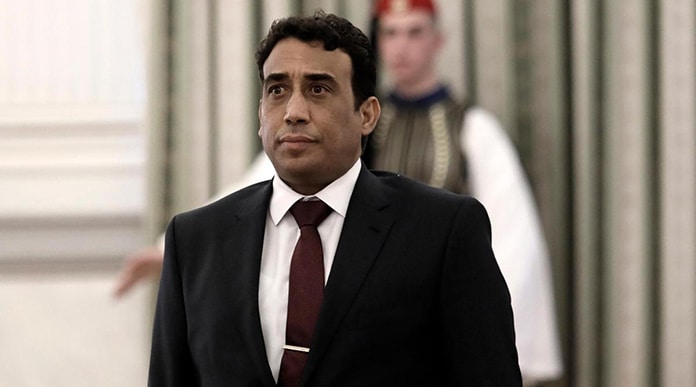
The new interim executive will have a three-person Presidency led by Mohammad Younes Memfi. He was born in 1958. He is an engineer and businessman from Misrata. He was educated in Canada and has not been directly involved in politics before. The other two members of the Presidency are Abdullah Hussein Al-Lafi, more involved in politics but not in the first ranks, and Mossa Al-Koni, an ethnic Tuareg from the south near the frontier with Mali. Abdul Hamid Mohammed Dbeibah will serve as Prime Minister under this new Presidency.
Mohammed Younes Memfi
There is still a long road ahead to create meaningful reconciliation among the divisions based on geography, tribal networks, and religious brotherhoods. At Independence in 1951, authority rested with King Sayyid Idris (1890-1983), the leader of an important Islamic Brotherhood who remained more concerned with religious reforms than with the structure of the government. (1)
When the military officers led by Colonel Muammar Qaddafi took power in a coup in September 1969, there was for a short time some discussion as to the forms that the government should take. Colonel Qaddafi wanted to do away with parliamentary government and representative elections in favor or people’s committees, a people’s congress and revolutionary committees – all held together by the ideological assumptions of his Third Universal Theory – a concept that embodied anti-imperialism, Arab unity, Islamic socialism and direct popular democracy. (2)
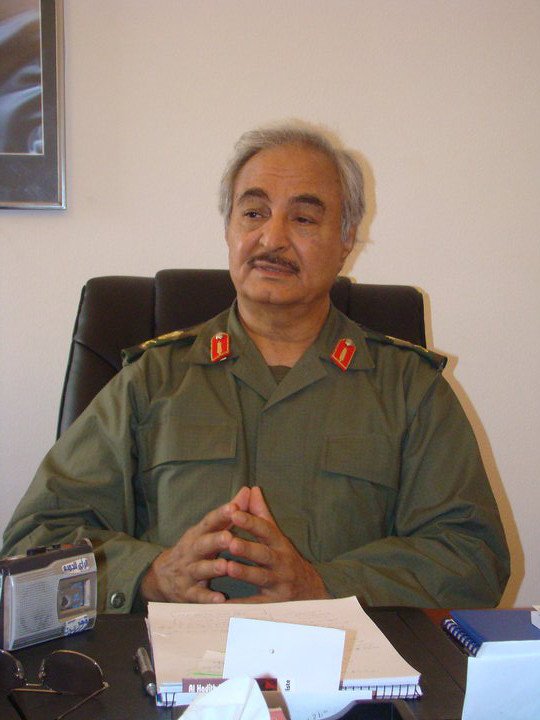
General Khalifa Haftar
Disagreements on the nature of the State had led to important divisions among the ruling circle, especially in 1975. However, all open discussions on the nature of the State, of the relations between State and society, of the place of tribes and of religious brotherhoods were considered subversive, in fact treason. In practice, but not in theory, decision-making was in the hands of Colonel Qaddafi, his family, friends, and tribal allies. (3)
Since the end of the Qaddafi government, the country has been largely divided into three unstable zones: The West with Tripoli as the main city, with a “Government of National Accord” led by Faiez Sarraj, an East around Benghazi, with the “National Libyan Army” under General Khalifa Haftar, and the south divided among many political, tribal factions.
However, both the West and the East contain different armed tribal groups, Islamic militias and armed groups linked to the exploitation of migrants, trafficking in arms and drugs. As the disorder dragged on, more and more outside States became involved to different degrees and in different ways: Russia, Turkey, Egypt, France, the USA and to some extent the African Union.
To what extent the new interim authority will be able to create public services, limit outside influences and create appropriate forms of government will have to be seen. Libya merits close attention.
Notes 1) For a useful analysis of Libyan governmental structures see J. Davis, Libyan Politics, Tribes and Revolution (London: I. B. Tauris, 1987) 2) See M. M. Ayoub, Islam and the Third Universal Theory: The religious thought of Muammar al Qadhdhafi (London: Kegan Pail, 1987) 3) See René Lemarchand (Ed), The Green and the Black, Qadhafi’s Politics in Africa (Bloomington: Indiana University Press, 1988)
Prof. René Wadlow is President of the Association of World Citizens.



 Association of World Citizens