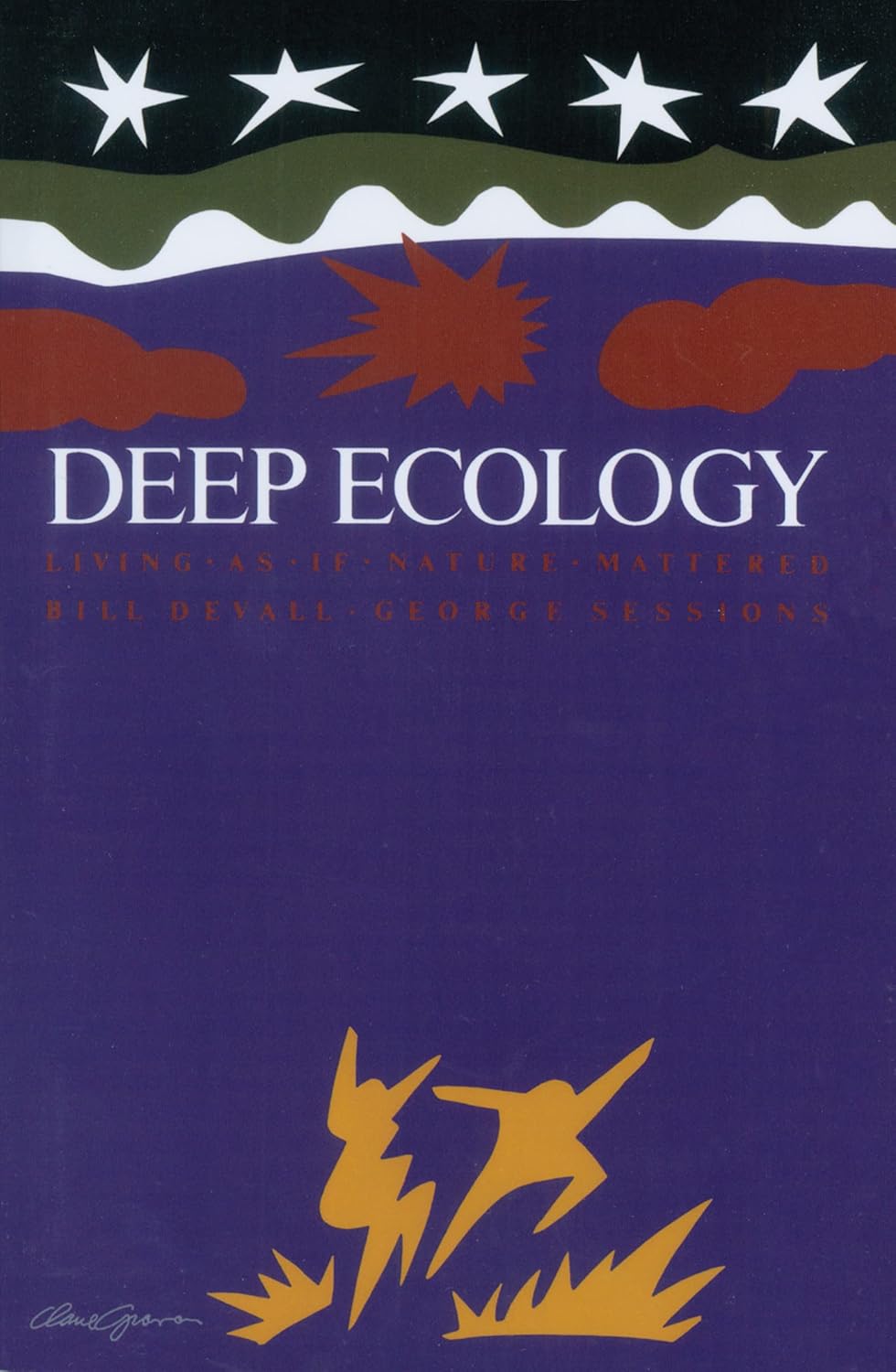
Bill Devall and George Sessions, Deep Ecology: Living as if Nature Mattered.
Layton, UT: Gibbs Smith, 1985, 267pp.
In his Small is Beautiful, Fritz Schumacher wrote, “In the affairs of men, there always appears to be a need for at least two things simultaneously, which on the face of it, seems to be incompatible and to exclude one another. We always need both freedom and order. We need the freedom of lots and lots of small, autonomous units, and, at the same time, the orderliness of large-scale, possibly global, unity and co-ordination.”
Likewise, there must be transformation both at the individual level as well as collective change. The two are closely linked. Only a whole and autonomous person can act, resist, walk away, and build something new. However, collective change is something more than the sum of individual changes. Collective change is a vision for a society. Thus, individual change and political action must go together.
One of the predicaments facing the emerging Green-ecology political movements is the need to gather enough people together to be a credible political force – which means general agreement upon a small number of basic options – while having a deep enough political philosophy so that people are not seduced by the current political parties using a few Green slogans. There is wide-spread support for reform environmentalism which aims to stop gross pollution, extensive despoliation of land, lakes, and seas, mistreatment of animals. But those who support such localized reforms may not see the need for a basic transformation of society and the system of values.
Yet we need planet-wide changes, for ecological awareness has shown us that the planet we live on is one inter-related system upon which we are all dependent. In order to survive, we must learn to work together to build a world beyond war, a society with sustainable development – which means sustainable agriculture and appropriate technology, wholistic approaches to education and health, a spiritual outlook based on reverence for life. Albert Schweitzer from his work in Africa re-launched the human-scale revolution by insisting that production ought to serve peoples’ real needs; that there must be a new relationship with nature; that solidarity must replace antagonism; and that there must be sane consumption and active individual participation in society.
The world as an interrelated system has come to be called the “Gaia hypothesis” after the work of James Lovelock and Lynn Margulies who wrote “We defined Gaia as a complex entity involving the earth’s biosphere, atmosphere, oceans and soil, the totality constituting a feedback or cybernetic system which seeks an optimal physical and chemical environment for life on this planet. Gaia remains a hypothesis, but much evidence suggests that many elements of this system act as the hypothesis predicts.” (Gaia is the first goddess of early Greek thought. From the void, neither born nor destroyed – what the Chinese call the Tao – Gaia danced forth and rolled herself into a spinning ball.)
Systems are integrated wholes whose properties cannot be reduced to those of smaller units. The systems approach emphasizes basic principles of organization. Thus, nature has an order, a pattern that as humans we need to understand, to respect, and to preserve. This order has intrinsic value and is the base of Life.
This book is an effort to outline the rich spiritual-religious-mystical component of the Green movements. The term “deep ecology” was coined in 1973 by Arne Naess, a social scientist and philosopher who has written widely on Mahatma Gandhi, nonviolence, and the Buddha. He wanted to describe the deeper more spiritual approach to nature exemplified by Rachel Carson and Aldo Leopold. This is a most useful analysis of Green values. The book should be widely used for discussion and political planning.
Prof. René Wadlow is President of the Association of World Citizens.
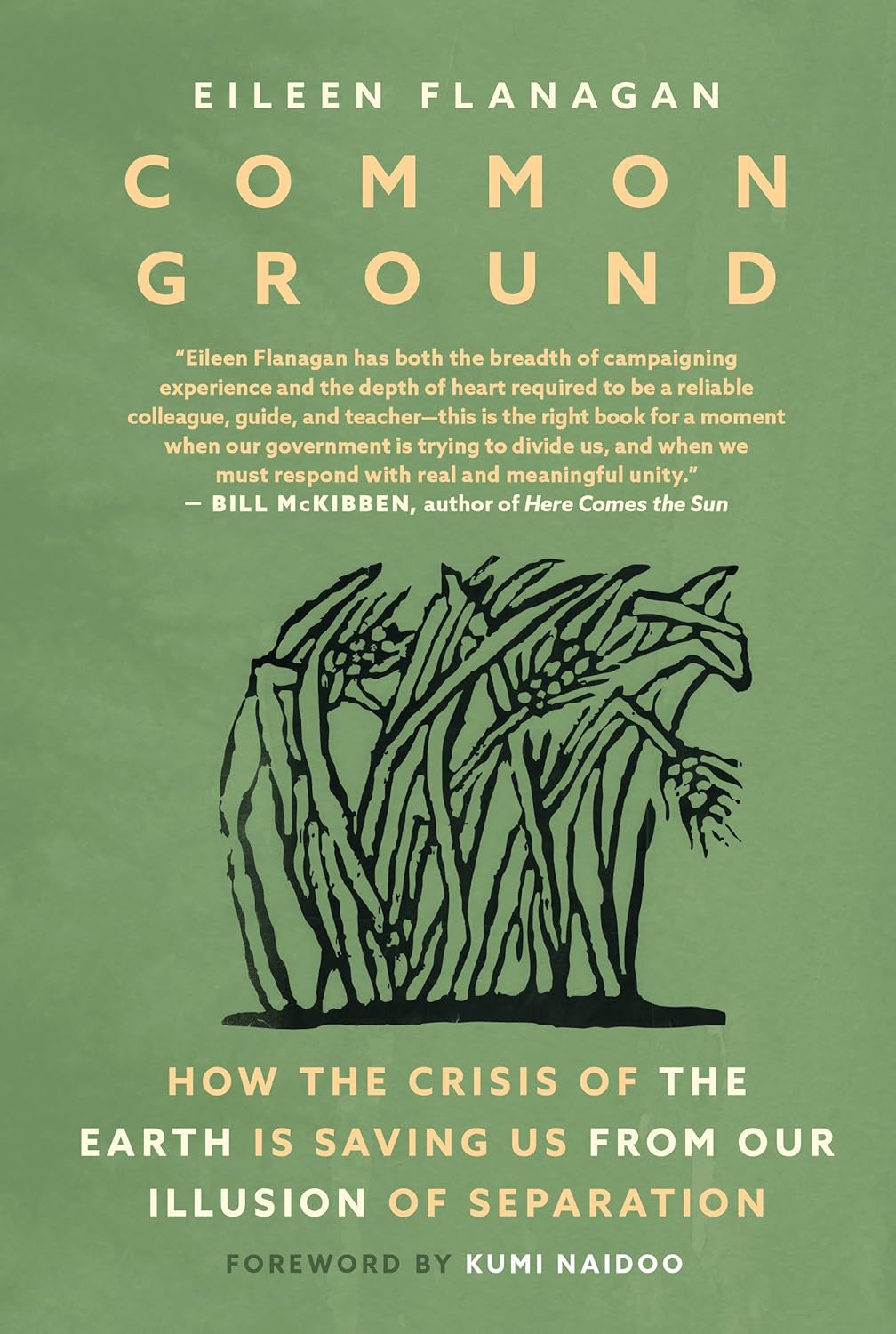
Common Ground tackles the consequences of climate change and the need for cooperative action by looking at issues of power, particularly the way power holders maintain control by deliberately and effectively dividing people. The events featured illustrate how the fossil fuel industry benefits from racial and class divisions. However, the emphasis is on examples of people joining forces across differences to protect water, air, and the environment.
Eileen Flanagan has been the Campaign Director of the Philadelphia-based Quaker Earth Action Team. She stresses that, today, we need to draw upon the wisdom of those who have navigated the “divide and conquer” tactics of those opposed to ecologically-sound policies. The Quaker Earth Action Team was founded in 2010 in part by George Lakey, the non-violent activist who gave examples of Quakers throughout history who put their bodies in the way of injustice, such as those who sailed across the Pacific in the 1950s to interrupt nuclear testing.
Today, we need to bring more people into action coalitions in order to make truly transformative change. This requires developing a sense of common purpose and overcoming a sentiment of separation. There is a need to stress a life-sustaining civilization based on an understanding of the interconnection of all life. As Eileen Flanagan writes, “Just as the crisis of the Earth has the potential to help us overcome our illusion of the separation from other species and other communities, it also has the potential to help us transcend the boundaries of nation-states. No one country can solve the climate crisis on its own.”
She shares her personal journey and her relations with community activists to form coalitions that make a difference – a useful book!
Prof. René Wadlow is President of the Association of World Citizens.
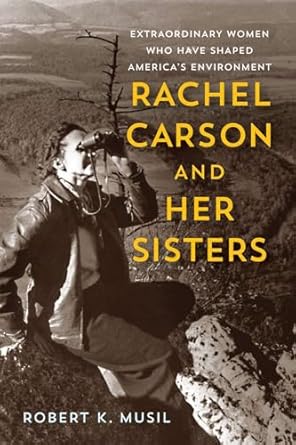
Robert K. Musil, Rachel Carson and Her Sisters: Extraordinary Women Who Have Shaped America’s Environment.
New Brunswick, NJ: Rutgers University Press, 2014
Despite the central role of women in the environmental movement, surprisingly little is known about them. Furthermore, what is known is usually limited to the work of Rachel Carson, whose powerful call to action, Silent Spring (1962), is widely credited with jump-starting the modern environmental movement. But, as shown by Robert Musil’s new book, Rachel Carson and Her Sisters, Carson is merely the most visible of numerous women who have had a powerful impact upon how Americans have viewed the natural environment and sought to preserve it.
Musil, who is senior fellow at the Center for Congressional and Presidential Studies at American University, first became intrigued with Carson’s life in 2007, when, 43 years after her death, rightwing talk show hosts launched vicious attacks upon her. “I wanted to know more about the roots of such venom,” he recalled. He soon “realized that there had been other Rachel Carsons long before she was born, and that many women have built on her legacy since her untimely death.”
Musil points out that, as the nineteenth century progressed, increasing numbers of American women obtained better education and the ability to travel, write, and take action. They hiked, explored, and botanized, while observing the encroachment of manufacturing and urban life on the countryside. Although restricted by gender discrimination from playing top roles in academia, the professions, and publishing, they nonetheless produced a flood of books, magazine articles, journals, and children’s stories, many of them about nature. In addition, Martha Maxwell began the development of natural history museums, while Susan Fenimore Cooper became active in the movement to stop the slaughter of birds for fashionable women’s hats.
Cooper, daughter of the famed American novelist, was immensely influential. Her book, Rural Hours (1850), a best-selling environmental work, underwent four decades of popular publication and revision, in the United States and overseas. Numerous very popular writings of hers followed. Fluent in three languages and often residing abroad, Cooper moved in the highest circles of intellectuals, scientists, and naturalists.
Other key activists included Graceanna Lewis (a popular ornithologist, as well as a painter); Ada Botsford Comstock (who spread nature study throughout the nation); Florence Merriam Bailey (an organizer of bird-lovers and the most eminent female naturalist writer and organizer of her time who was well-connected to the male-dominated worlds of science and Washington policy); Olive Thorne Miller (a children’s author and environmental educator); and Mary Hunter Austin (a well-known writer about nature but, also, a campaigner against the diversion of water resources to insatiable Los Angeles). By the twentieth century, a nationwide conservation movement had taken shape―one within which women played an important role.
Many of these women lived unorthodox lives. Maxwell, though a vegetarian, gathered her animal and bird specimens by shooting them with a rifle―something considered scandalous when done by women. Lewis was active in the Underground Railroad and the women’s suffrage movement. Bailey combined her ornithology with social work. Austin, a poet and mystic, wrote thirty books, was friends with Jack London, Upton Sinclair, and Willa Cather, and was active in the suffrage and birth control movements.
Their pioneering work was later supplemented by Ellen Swallow Richards and Alice Hamilton, who were keenly attuned to the growing industrial age in America and focused their attention on the plight of poor workers and urban landscapes.
Richards, who first introduced the concept of ecology to the United States, launched associations, founded disciplines, and pioneered health and environmental studies. The first American woman admitted to a high-level science institute of any kind, she performed brilliantly in her field of chemistry. She was also, Musil observes, “in effect, the founder of the American consumer, nutrition, health, and right-to-know movements.” In addition, Richards was a founder of what became the American Association of University Women and chaired its executive committee, authored numerous books, organized the scientific examination of food, and helped the Massachusetts legislature pass the nation’s first pure food laws. She completed the most comprehensive water quality survey in the nation, which sparked the state’s first water quality laws and sewage treatment, and led the campaign to expose the dangerous health conditions in Boston’s schools, thus stirring local and nationwide school reforms.
Hamilton, “the founder of occupational and environmental medicine in the United States,” was trained as a doctor. Employed at the Women’s Medical School of Northwestern University in Chicago, she went to live in Hull House, an institution that drew a number of women environmental activists into its orbit. Here she began to focus on occupational and environmental disease. In 1908, the Governor of Illinois appointed her as the chief medical investigator of a new nine-member commission to study industrial disease in the state. Turning up dramatic indications of lead poisoning, she spoke at numerous conferences and was invited by the U.S. Commissioner of Labor to conduct a nationwide study of the lead industry. A new state law regulating lead, the first in the nation, was passed in Illinois, and similar laws followed elsewhere. While continuing to expose industrial conditions, Hamilton became deeply involved in the peace movement during World War I, attending peace congresses and supporting peace plans developed by Jane Addams and the Women’s International League for Peace and Freedom. After the war, she joined the faculty of the Harvard Medical School as assistant professor of industrial medicine. Thriving in this role, Hamilton became the leading American expert on diseases caused by exposure to industrial pollutants, such as benzene, mercury, and lead.
Many women activists experienced substantial gender discrimination, and were passed over for appointments or denied admission to academic and other institutions. Richards was initially rejected for admission to MIT as a regular student and, despite her later outstanding record, was subsequently refused admission to its doctoral program. Offered a position at Johns Hopkins, Anna Baetjer was informed that it was contingent on promising not to marry. Hamilton was told, when hired at Harvard, that she would not be allowed to use the faculty club or to sit on the platform with male faculty at commencement.
Musil shows that, although Carson herself worked well with men, her deepest influences, relationships, networks and insights, her love of nature and science, her influential and political contacts, and her intimate personal support came from women. In the early 1940s, she and her associates were concerned about the possible toxic effects of DDT. But, when Reader’s Digest rejected her 1945 proposal to write an article on DDT’s dangers, she turned the direction of her freelance writing elsewhere, ultimately producing The Sea Around Us (1951), a best-seller that made her famous. Now financially secure, she left her job at the U.S. Fish and Wildlife Service to concentrate on writing. She worked closely with environmental activists in planning, researching, and writing Silent Spring and, together, they conducted an enormous publicity and organizing campaign for the book, which achieved their goal of alerting the public to the dangers of pesticides and securing government reform. Deeply committed to this cause, as well as to ending nuclear weapons testing, she continued to write Silent Spring, appear on television, and testify before Congress while she was dying of breast cancer.
After Carson’s death, women’s leadership in the environmental movement continued. Terry Tempest Williams, an environmental writer and antinuclear activist, relied, like Carson, on imagination, empathy, and science, and, Musil remarks, was her “metaphorical” and “spiritual daughter.” Another key writer and activist was Sandra Steingraber, who focused on environmental cancer. A poet and biologist, Steingraber played an important role in securing the Stockholm treaty of 1981, which banned persistent organic pollutants (such as pesticides)―a treaty that has yet to be ratified by the U.S. Senate. There was also Devra Davis―a passionate writer who argued that millions had died from modern industrial pollution, and more would in the future, unless remedial action was taken. Moreover, Theo Colborn, a former pharmacist and sheep rancher, became a leading environmental researcher, exposing how synthetic chemicals (such as PCBs) caused animal and human endocrine disruption.
Musil emphasizes the enormous corporate resistance to environmental safety. Although lead is a neurotoxin that lowers IQ and impairs mental performance, “the National Lead Company fought product labelling, not to mention bans; brought lawsuits; and finally, when the danger was undeniable,” blamed children and their families when children consumed lead paint chips. The DuPont Corporation squelched research showing the connection between the chemical dyes in its factories and cancer. The auto corporations battled against the Clean Air Act of 1970. There was also a sharp struggle over leaded gasoline, which had been an issue since the 1920s, when Standard Oil and the Ethyl Corporation “went to great lengths to keep industrial fatalities secret.” The Electric Power Research Institute (the industry group representing coal-fired utilities) hired researchers to challenge any evidence, methodology, or doubt about the hazards of burning coal. When Dow Chemical’s own research revealed that benzene was causing damage to chromosomes, the company pulled the plug on funding for the research. Also, industry fought fiercely―and successfully―every attempt to restrict, remove, or ban cancer-causing, arsenic-treated wood used for children’s playgrounds, outdoor decks, and picnic tables.
Hostile corporations also savagely attacked leading environmental activists. Mary Amdur, “the mother of smog research,” was not only fired and blocked from securing tenured employment, but directly threatened by thugs who demanded that she not deliver a talk to the American Industrial Hygiene Association on the ill effects of smog. (She gave it anyway.) Colborn had her M.A. thesis defense interfered with by the head of operations of a mining corporation, angered by the potential impact of her research. According to Musil, when her powerful book, Our Stolen Future, appeared in 1996, “industry, its PR men, and its political allies went berserk.”
Much the same happened to Carson. As Musil notes, when Silent Spring appeared, she was “immediately faced with an attack campaign orchestrated by the Manufacturing Chemists Association and its corporate allies like DuPont, Monsanto, Dow, and W.R. Grace. Publishers were threatened with lawsuits; public forums were created with doctors and scientists willing to attack Carson.” Monsanto even published a parody of her work. She was assailed as a “peace-nut,” as well as “denounced by critics as a spinster, unscientific, a pro-communist, and more.”
Musil contends that, despite the corporate assault on environmental activism, the environmental movement has grown into “the largest reform movement in American history.” In Washington, DC alone, there exist 34 national environmental organizations with an estimated twelve million dues-paying members, millions more electronic activists, and local chapters in every state in the nation. And women remain at the center of the campaign.
Thus, the struggle continues. Musil concludes that “those who pollute and plunder have huge resources at their command. They challenge serious science, real reform, and . . . block every reasonable effort to build a better, healthier environment for our children and generations yet to come.” Nevertheless, “their sway is slowly, steadily, being reduced over time by the determination of ordinary citizens. . . . We can draw inspiration and leadership from the long line of American women who somehow defied the cinched circumstances and enervated expectations for their gender to become extraordinary leaders of many kinds. They have brought us thus far,” and “we can start now down the path that they have set before us.”
People who want to learn more about this path can turn to Rachel Carson and Her Sisters for a richly detailed, documented, and eloquent history―a ground-breaking account of undaunted American women, determined to prevent environmental catastrophe.
In our current globalized world society, there is an increased role for politics without borders. Politics no longer stops at the water’s edge but must play an active role on the world stage. However, unlike politics at the national level which usually has a parliament at which the actors can recite their lines, the world has no world parliament as such. Thus, new and inventive ways must be found so that world public opinion can be heard and acted upon.
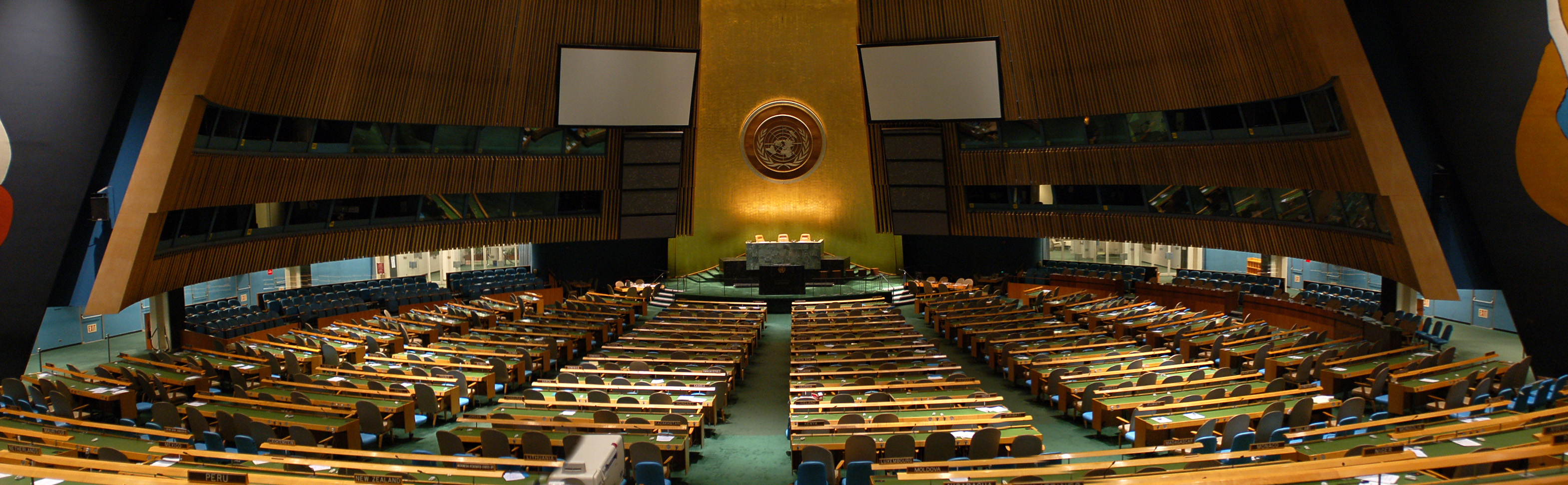
The United Nations (UN) General Assembly is the closest thing to a world parliament that we have today. However, all the official participants are diplomats appointed by their respective States – 195 member states. UN Secretariat members, the secretariat members of UN Specialized Agencies such as UNESCO and the ILO, are in the hallways or coffee shops to give advice. Secretariat members of the financial institutions such as the World Bank and the IMF are also there to give advice on costs and the limits of available funds. The representatives of Nongovernmental Organizations (NGO) in Consultative Status with the UN who can speak at sessions of the Economic and Social Council and the Human Rights Council cannot address the General Assembly directly. However, they are also in the coffee shops and may send documents to the UN missions of national governments.
(C) Jérôme Blum
Politics without borders requires finding ways to express views for action beyond the borders of individual countries. Today, most vital issues that touch the lives of many people go beyond the individual State: the consequences of climate change, the protection of biodiversity, the resolution of armed conflicts, the violations of human rights, and a more just world trade pattern. Thus we need to find ways of looking at the world with a global mind and an open heart. This perspective is an aim of world citizenship.
However, World Citizens are not yet so organized as to be able to impact political decisions at the UN and in enough individual States so as to have real influence. The policy papers and Appeals of the Association of World Citizens (AWC) are often read with interest by the government representatives to whom they are sent. However, the AWC is an NGO among many and does not have the number of staff as such international NGOs as Amnesty International, Human Rights Watch, and Greenpeace.
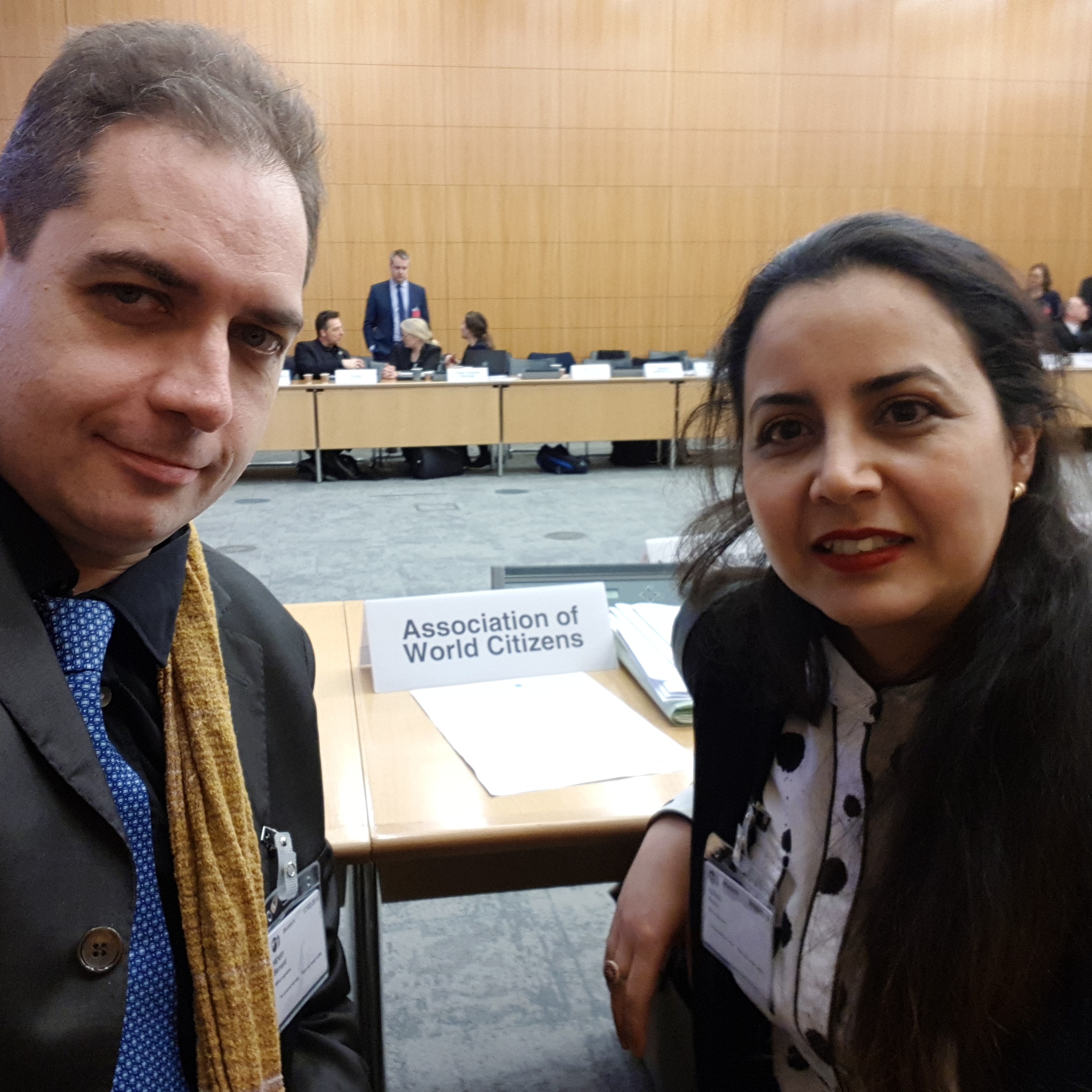
The First Officer and External Relations Officer, Bernard J. Henry, and the Legal and Mediation Officer, Attorney Noura Addad, representing the AWC at an OECD roundtable in March 2019 (C) Bernard J. Henry/AWC
We still need to find effective ways so that humanity can come together to solve global problems, that is, politics without borders. Prof. René Wadlow is President of the Association of World Citizens.
In the early hours of December 19, 2022, the delegates to the United Nations (UN) Convention on Biodiversity (COP 15) reached an agreement on a Biodiversity Framework after 12 days of intense negotiations. The theme of COP 15 was “Ecological Civilization: Building a shared future for all life on earth”. There were some 15,000 persons present during the meetings: government delegates, some 70 Nongovernmental Organizations (NGOs), academic research institutes and business companies. The global biodiversity framework, to be called the “Kunming-Montreal Framework”, sets out to protect at least 30 percent of the world’s land and water by 2030. Montreal, Canada, is the headquarters of the UN Secretariat of the Convention on Biodiversity, and Kunming is the city in the People’s Republic of China where the conference was to be held but was changed because of COVID 19 restrictions.
There is general agreement among specialists that world-wide there is a loss of biodiversity due to a number of factors such as increase in mono-culture agriculture, livestock grazing, the loss of forest lands through lumbering and firewood gathering, overuse of pesticides and the growth of urbanization. Many ecosystems are under stress and facing degradation. The tree and plant cover of the world have been taking increasing losses in almost all parts of the world. There is also the impact of climate change and a lack of rainfall in some parts of the world.
As with many UN conferences, a key issue of discussion is finance. The protection of biodiversity and the restoration of degraded areas costs money without necessarily bringing in new financial wealth. There is a Global Environment Facility which is called upon to manage increase funds.
It is hoped that NGOs can play a vital role at the international level on biodiversity protection. At the national level in many countries, NGOs have played an important role in the creation of national parks and protected areas. Can they play a vital role at the international level? While there are some long-standing international ecological organizations, none yet have been able to mobilize a wide international public opinion. However, what was new at Montreal was the concerted effort of women’s organizations to have a gender focus put into the Framework for the first time. They were successful, and the Framework states that the Framework should “ensure gender equality in the implementation of the Framework through a gender-responsive approach where all women and girls have equal opportunity and capacity to contribute to the objectives of the Convention, including by recognizing their equal rights and access to land and natural resources and their full, equitable, meaningful and informed participation and leadership at all levels of action, engagement, policy, and decision-making related to biodiversity.”
There is also a growing movement among young people for the safeguard of biodiversity who may watch closely at the ways the Framework leads to action. As Marco Lambertini, Director General of World Wildlife Fund International, said, “The agreement represents a major milestone for the conservation of our natural world, and biodiversity has never been so high on the political and business agenda, but it can be undermined by slow implementation and failure to mobilize the promised resources. Governments have chosen the rights side of history in Montreal, but history will judge us all if we don’t deliver on the promise made today.”
Prof. René Wadlow is President of the Association of World Citizens.
November 6 is set by the United Nations (UN) General Assembly in Resolution A/RES/56/4 as the International Day for Preventing the Exploitation of the Environment in War and Armed Conflict. Throughout history, in armed conflicts, water wells have been poisoned, crops set on fire, forests cut down, and animals killed to gain military advantage. Today, many armed conflicts have been linked to the exploitation of natural resources such as timber, diamonds, and fertile land and water.
The Association of World Citizens (AWC) has stressed that protection of the environment needs to be an important part of conflict prevention. The resource base that people depend upon for their livelihood needs to be safeguarded. Most recently, the AWC has highlighted the deliberate destruction of food-related resources in the armed conflict between the Ethiopian federal forces and the opposition movements in Tigray.
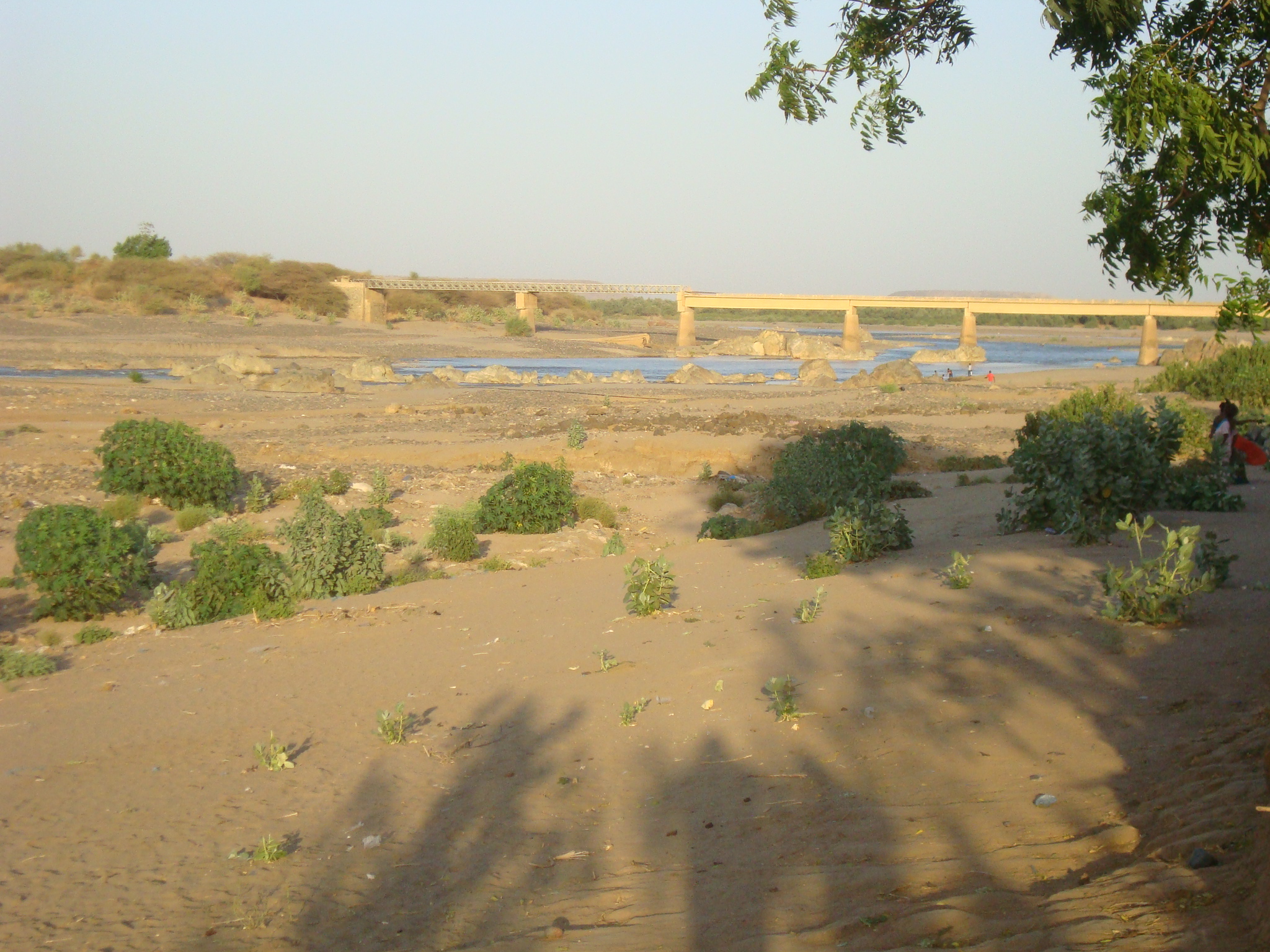
Humera in Tigray near the border with Sudan and Eritrea (C) Jnyssen
Since November 4, 2020, fighting has gone on in Tigray with the deliberate destruction of crops and agricultural infrastructures. UN-led humanitarian food relief was prevented from entering the area. Fortunately, at the start of November 2022, a ceasefire and a peace agreement facilitated by the African Union (AU) was signed in South Africa where the negotiations had been held. The AU has designated a team of 10 persons to follow up the process. However, the restoration of the agricultural infrastructure will be a lengthy process. It is not sure that all the factions involved will agree to the ceasefire. The situation merits a close watch.
There are currently other conflicts linked to natural resources, such as those in the Democratic Republic of Congo. The International Day must serve as a reminder, but efforts of protection need to be permanent. The AWC will continue its efforts.
Prof. René Wadlow is President of the Association of World Citizens.
Dans un premier temps, il nous semble important de faire un rappel de l’état des lieux environnemental dans lequel se trouvent la terre et ses ressources, en considérant les interactions entre l’humanité et les écosystèmes qui y vivent.
Selon le Rapport Planète Vivante de WWF (2020), les activités humaines ont amené à une diminution de 68% des populations mondiales de mammifères, d’oiseaux, de poissons, de reptiles et d’amphibiens en 50 ans.
En Europe, par exemple, l’Union Internationale pour la Conservation de la Nature (UICN) indique la disparition de 36 espèces entre 2015 et aujourd’hui, et plus de 11% sont menacées d’extinctions (dont 58% d’arbres endémiques et 40% de poissons d’eau douce).
En Afrique, ce sont 700 millions d’hectares de terres (soit plus de dix fois la surface de la France), qui ont été dégradées par la pression humaine, et ce en lien avec la désertification et le surpâturage (source : la Banque mondiale, 2016). Cette situation crée un cercle vicieux, qui amène à une urgence alimentaire, laquelle nécessite à son tour une exploitation excessive des arbres et une sur-utilisation des engrais et pesticides[1].
Au niveau mondial, le stock de poissons a reculé de 50% entre 1970 et 2010, les côtes africaines étant les plus pillées au monde, notamment par la Chine[2]. Il se pourrait que les stocks halieutiques exploités par les êtres humains déclinent jusqu’à disparaître en 2048, si l’on en croit les prévisions d’Isabelle Autissier, présidente de WWF-France (jusqu’en janvier 2021).
Quant aux villes, si elles n’occupent que 3% de la surface continentale mondiale[3], elles concentrent 55% de la population mondiale et consomment plus des deux tiers de la demande énergétique mondiale (source : Rapport de situation 2019 sur les énergies renouvelables dans les villes de l’ONU). Elles sont, par ailleurs, particulièrement vulnérables aux changements climatiques et aux catastrophes naturelles du fait, entre autres, de leur forte concentration humaine, tout en étant en partie les causes de ces aléas climatiques[4].
L’histoire de l’humanité est en train de se jouer, en notre défaveur à tous ; il n’y a pas de région, de pays ou de continent épargnés. Il y a une réelle urgence à s’en préoccuper, car si nous n’agissons pas, c’est notre propre espèce que nous mettons en péril.
Une des premières conséquences de ces désordres environnementaux est d’obliger, inexorablement, des populations à se déplacer.
Bien que l’histoire de l’humanité soit faite de migrations, ces dernières se multiplient fortement, depuis quelques années. Auparavant, c’était les guerres, les violences, maintenant, ce sont aussi les aléas climatiques qui poussent les êtres humains à quitter la terre qui les a vus grandir et qui leur a permis de construire leurs identifications fondamentales.
Nous savons que, d’une manière générale, toute migration, à laquelle s’ajoute celle due à l’environnement, provoque des perturbations socioculturelles énormes, autant pour ceux qui la subissent que pour ceux qui l’accueillent. Elle engendre des souffrances humaines indicibles qui questionnent et violentent notre humanité.
Lequel d’entre nous n’a pas encore, en mémoire, ces images insoutenables des migrants noyés gisants sur les plages, en particulier sur les deux rives de la Méditerranée ?
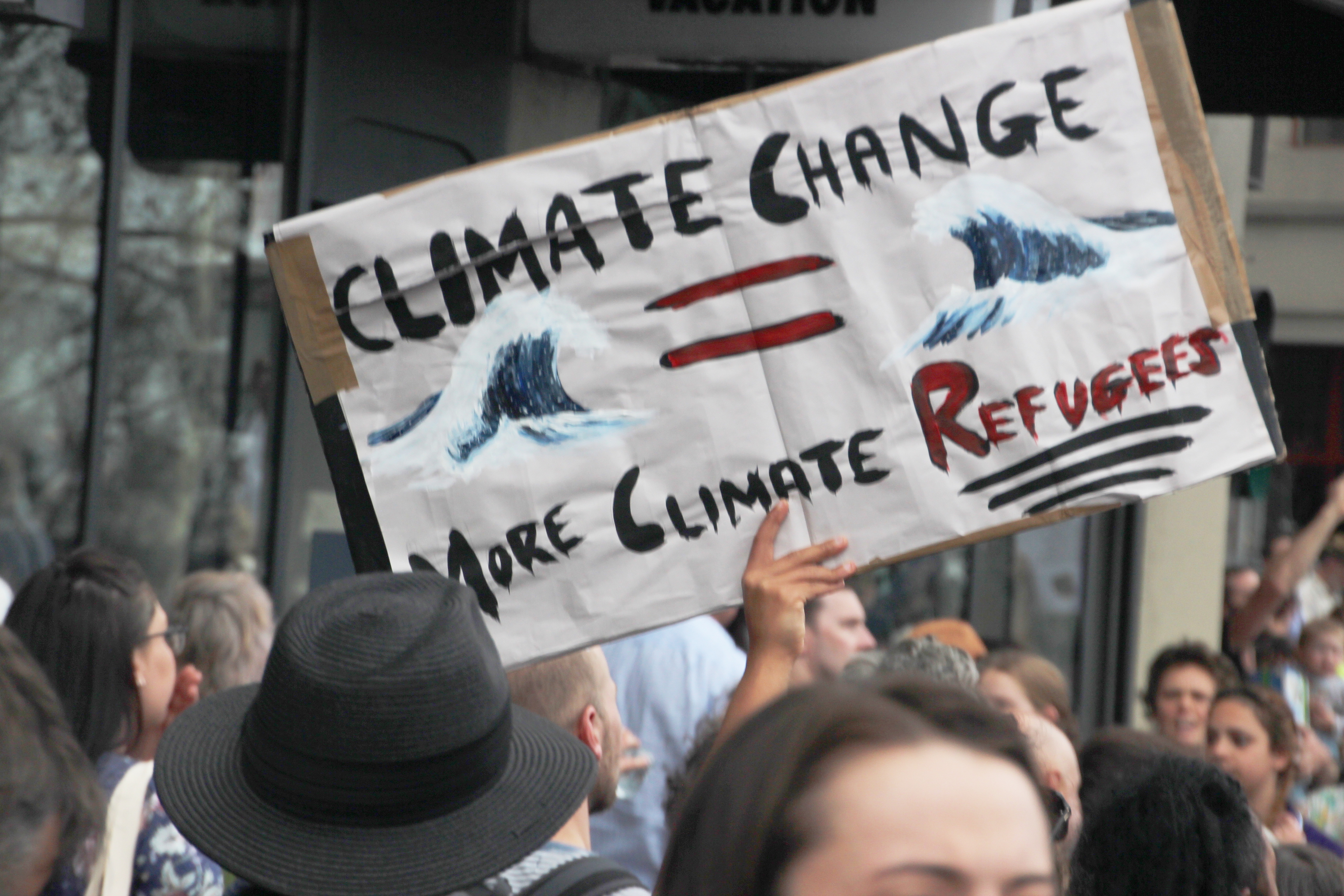
Parmi ces migrants, combien sont des réfugiés climatiques ? Nous n’avons pas encore assez d’études qui nous renseignent avec précision sur cette question, mais il est avéré qu’ils sont de plus en plus nombreux.
Pourtant, force est de constater que le sujet des réfugiés climatiques est le parent pauvre de la politique actuelle, le lien entre migration et réchauffement climatique faisant l’objet d’un silence assourdissant de la part de nos politiques. Pour autant, en 2013, un rapport du Conseil norvégien pour les réfugiés (NRC) fait état de 22 millions de personnes ayant été déplacées en raison de catastrophes naturelles, ce qui est trois fois plus élevé que le nombre des personnes fuyant un conflit.
Mais qui sont ces migrants, ces réfugiés de l’environnement ? Ce sont des personnes « qui sont forcées de quitter leur lieu de vie temporairement ou de façon permanente à cause d’une rupture environnementale (d’origine naturelle ou humaine) qui a mis en péril leur existence ou sérieusement affecté leurs conditions de vie »[5].
Alors comment sont catégorisés ces « réfugiés climatiques », appelés aussi « déplacés » ou « éco-migrants » ? Ils sont, d’emblée, intégrés aux seules catégories existantes: celles des « réfugiés économiques » ou des « réfugiés de la misère ». En effet, ils n’ont pas de statut juridique, car ils ne remplissent pas les critères de la Convention de Genève signée en 1951.
Cette dernière n’accorde l’assurance d’une protection aux réfugiés que dans certains cas, à savoir, « des situations de persécutions liées à la race, à la religion, à la nationalité, aux opinions politiques, ou à l’appartenance à certains groupes sociaux » (UNHCR).
De ce fait, les pays d’accueil, connus pour leur qualité de vie et leur sécurité, et vers lesquels se dirigent naturellement ces éco-migrants, ne disposent d’aucun budget pour recevoir ces derniers.
Selon le Rapport mondial sur le déplacement interne (2020) de l’ONG Internal Displacement Monitoring Center (IDMC), chaque année, plus de 20 millions de personnes qui sont déplacées, le sont pour cause de catastrophes naturelles, dont 86% de nature hydrométéorologique.
Alors, quels sont les changements environnementaux qui provoquent de tels flux migratoires ?
L’Ined (Institut national d’études démographiques) fait état de 3 phénomènes[6] principaux :
1) L’intensité accrue des catastrophes naturelles.
En effet, entre 1995 et 2015, plus de 600.000 personnes sont décédées du fait de ces catastrophes météorologiques. Plus de 4 milliards de personnes ont en été blessées, ou sont tombées dans une forte précarité à la suite de ces catastrophes. (Source : rapport du Bureau des Nations unies pour la réduction des risques de catastrophes)
2) La hausse du niveau des mers.
Elle risque de rendre inhabitables certaines zones basses à forte densité de population.
C’est le cas de nombreuses régions du Bangladesh[7], par exemple. Ce pays, tout comme l’Inde, a vu s’accroître ses problèmes socio-économiques et politiques en raison notamment du déplacement des Rohingyas, forcés de fuir le Myanmar.
3) La raréfaction des ressources hydriques, aussi appelée stress hydrique.
Elle engendre sécheresse et désertification. C’est notamment le cas des États du Sahel, où les modèles climatiques prédisent une aggravation de la sécheresse dans les années à venir. Cette situation a déjà été à l’origine de déplacements majeurs de populations et d’une perte importante du bétail dans cette région d’Afrique. Le bétail, rappelons-le, constitue la principale source de production agricole[8].
Par ailleurs, et depuis quelques années, on assiste à une augmentation des inondations meurtrières notamment en Afrique de l’Ouest. Ces évènements sont dus à différents phénomènes tels que le changement de l’usage des terres, la réduction des jachères, ou encore la déforestation et l’urbanisation. Tout ceci rend les sols incapables d’absorber les eaux diluviennes notamment dans la zone du Sahel[9].
Ainsi, en 2018, ce sont 250.000 Afghans qui ont dû fuir leurs villages en raison des fortes chaleurs, induisant une vulnérabilité extrême de cette population, déjà exposée aux conflits armés.
Selon un rapport du Conseil norvégien pour les réfugiés, « en 2013, les catastrophes naturelles ont fait presque trois fois plus de déplacés que les guerres » (INED) et 85% d’entre eux sontdes pays en développement.
Pour une grande partie de ces populations, c’est l’exode vers l’Occident, et particulièrement l’Europe, qui est le plus tentant et le plus tenté, dans l’espoir de vivre dignement, ou tout au moins de survivre …
Comment dès lors permettre à ces populations de vivre dans leurs territoires, d’y travailler et d’en utiliser les ressources ?
Certaines bonnes pratiques locales, simples d’accès, notamment pour les populations autochtones pourraient aider à lutter contre ces problématiques environnementales. Quelques-unes commencent d’ores et déjà à émerger et devraient faire, nous l’espérons, effet « boule de neige ».
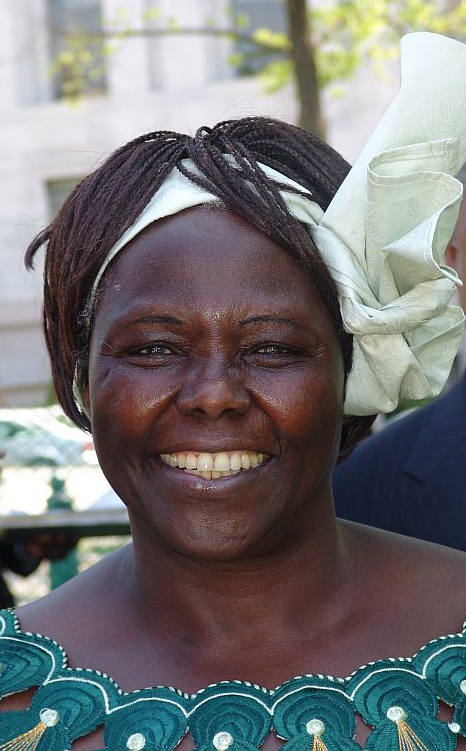
À titre d’exemple, citons le mouvement de la ceinture verte au Kenya (Green Belt Movement) qui a été lancé par la biologiste Wangari Maathai et qui encourage les femmes à planter des arbres, ce qui leur permet, à terme, d’améliorer leur niveau de vie.
En Mongolie, toute une muraille verte a également vu le jour, pour résister à l’avancée du désert de Gobi.
Au Burkina Faso, des paysans construisent des cuvettes en demi-lunes qui permettent de concentrer les précipitations et réduire le ruissellement[10].
Au Rajasthan, pour récupérer l’eau des moussons, recharger les nappes phréatiques et réalimenter les rivières, les paysans ont remis au goût du jour le « johad », une technique agricole ancestrale, qui consiste à collecter les eaux de pluie pendant la saison des moussons et les utiliser en les faisant filtrer dans le sous sol pendant la saison sèche[11].
Wangari Maathai
On peut aussi évoquer la transformation de la villa « ASSIE GAYE » au Sénégal en 2009-2010, qui s’est faite grâce à l’utilisation de matériaux locaux, comme la terre crue argileuse. Elle est alimentée en énergies renouvelables, grâce à un générateur éolien, un générateur photovoltaïque et un collecteur thermique. Ce qui en fait une maison durable, à la fois sur le plan écologique et économique[12].
Enfin, nous devons rappeler qu’il est indispensable pour l’humanité de relever le défi majeur de ces problématiques environnementales et humaines qui s’offrent à elle. Il nous faut intégrer tous les possibles en matière de changement climatique annoncés par les rapports du Groupe GIEC, dans le but d’y répondre.
Il serait ainsi plus urgent d’attribuer certains budgets étatiques à la prise en charge des réfugiés climatiques, plutôt que d’augmenter, par exemple, ceux inhérents à la défense et à l’armement.
Par ailleurs, la lutte contre le fléau de l’évasion fiscale pourrait, éventuellement, profiter à ces mêmes réfugiés et ainsi limiter la pression sur les pays d’origine ou encore sur les pays accueillant ces migrants.
Pour clôturer mon propos, j’emprunte un peu de sa sagesse à Wangari Maathai qui précise qu’« Aujourd’hui, nous affrontons un défi qui exige un renouvellement de notre mode de pensée, pour que l’humanité cesse de menacer le système qui assure sa propre survie. Nous sommes appelés à aider la terre à guérir ses blessures et, à guérir les nôtres – en fait, à embrasser la totalité de la création dans toute sa diversité, sa beauté et ses merveilles. »[13]
Nadia Belaala est architecte et ingénieure sociale, anciennement Officier du Développement durable de l’Association of World Citizens.
[5] Cournil, C. (2010). Les “réfugiés environnementaux” : enjeux et questionnements autour d’une catégorie émergente. Migrations Société, 2(2), 67-79. https://doi.org/10.3917/migra.128.0067
[7] Kholiquzzaman Ahmad, Q. (2006). Changement climatique, inondations et gestion des crues : le cas du Bangladesh. Hérodote, 2(2), 73-94. https://doi.org/10.3917/her.121.0073
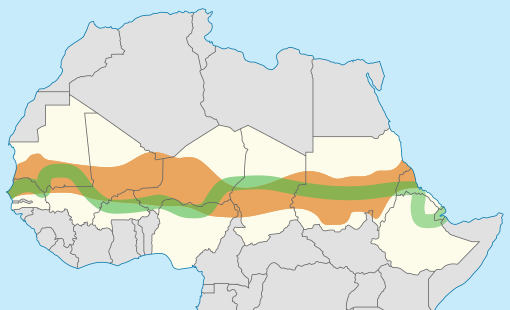
The States Parties to the United Nations-sponsored Treaty on Desertification met in Abidjan, Ivory Coast on May 9-20, 2022. The 197 member states agreed to an appeal to work more actively to prevent continuing desertification and to win back lands currently under great pressure. Because the conference was being held in Africa, much attention was given to the advances of the desert in the Sahel states and the possibility of building a “Green Wall” of trees to stop the advance.
The Green Wall of Sahel (C) Sevgart
The Treaty was designed to be the centerpiece of a massive worldwide effort to arrest the spread of deserts or desert-like conditions not only in Africa south of the Sahara but wherever such conditions encroached on the livelihood of those who lived in the desert or in its destructive path.
The destruction of land that was once productive does not stem from mysterious and remorseless forces of nature but from the actions of humans. Desertification is a social phenomenon. Humans are both the despoiler and the victims of the process.
Increasingly, populations are eking out a livelihood on dwindling land resources. Thus, there must be renewed and strong efforts for land regeneration. Desertification needs to be seen in a holistic way. If we see desertification only as aridity, we may miss areas of impact such as humid tropics. We need to consider the special problems of water-logging, salinity or alkalinity of irrigation systems that destroy land each year. Because desertification disturbs a region’s natural resource base, it promotes insecurity. Insecurity leads to strife. If allowed to degenerate, strife results in inter-clan feuding between cultivators and pastoralists, cross-border raiding, and military confrontation.
Earth is our common home, and therefore in the spirit of world citizenship, we must organize to protect it. It is up to all of us concerned with ecologically-sound development to draw awareness to the dangers of desertification and the promises of land renewal.
It is important to understand the way of life of those who live on the edge of deserts. Hsuan Tsang (623-664) is a symbol of such an effort at understanding. Hsuan Tsang crossed the harshest deserts, in particular the Takla Mahan, and the tallest mountains on his quest for the innermost heart of Reality. He travelled from China to India to spend two years at the Nalanda Monastery in what is now Bihar State in northern India to study and translate into Chinese certain important Buddhist sutras. He also studied the lives of the people he met, showing an openness to the cultures of others, especially those living on the edge of the desert regions he crossed.
Prof. René Wadlow is President of the Association of World Citizens.
Since the hungry billion in the world community believe that we can all eat if we set our common house in order, they believe also that it is unjust that some men die because it is too much trouble to arrange for them to live. Stringfellow Barr, Citizens of the World (1954)
World Food Day was set by the United Nations (UN) General Assembly for October 16, the date of the creation of the UN Food and Agriculture Organization (FAO) in Rome in 1945 building on a Food Institute in Rome which had been Part of the League of Nations network. The Preamble of the FAO Constitution states, “determined to promote the common welfare by furthering separate and collective action for the purpose of raising levels of nutrition and standards of living”. The Constitution stresses as one of its aims “contributing towards an expanding world economy and ensuring humanity’s freedom from hunger.” To achieve freedom from hunger for humanity, there is a need to eliminate poverty. The elimination of poverty must draw upon the ideas, skills and energies of whole societies and requires the cooperation of all States.
The UN Sustainable Development Goals (2015-2030) aims by 2030 to “Double the agricultural productivity and incomes of small-scale food producers, in particular women, indigenous peoples, family farmers, and fishers, including through secure and equal access to land, other productive resources and inputs, knowledge, financial services, markets, and non-farm resources.”
Yet as Lester Brown, the U. S. agricultural specialist, has written,
“We are cutting trees faster than they can be regenerated, overgrazing range lands and converting them into deserts, over-pumping aquifers, and draining rivers dry. On our crop lands, soil erosion exceeds new soil formation, slowly depriving the soil of its inherent fertility. We are taking fish from the oceans faster than they can reproduce.”
To counter these trends, we need awareness and vision which has living in harmony with Nature at its heart. Thus, we need political and social leadership to bring about the socio-economic changes needed.
There is a consensus that strong measures are needed to deal with worldwide growing food needs. These measures must be taken in a coordinated way with actions going from the local level of the individual farmer to the national level with new government policies to the world level with better coordinated activities through the UN System.
A central theme which citizens of the world have long stressed is that there needs to be a world food policy and that a world food policy is more than the sum of national food security programs. While the adoption of a national strategy to ensure food and nutrition security for all is essential, a focus on the formulation of national plans is clearly inadequate. There is a need for a world plan of action with focused attention to the role which the UN system must play if hunger is to be sharply reduced.
There is also a need to keep in mind local issues of food production, distribution, and food security. Attention needs to be given to cultural factors, the division of labor between women and men in agriculture and rural development, in marketing local food products, to the role of small farmers, to the role of landless agricultural labor and to land-holding patterns.
Fortunately, there is a growing awareness that an integrated, comprehensive approach is needed. World Citizens stress that solutions to poverty, hunger and climate change crisis require an agriculture that promotes producers’ livelihoods, knowledge, resiliency, health, and equitable gender relations, while enriching the natural environment and helping balance the carbon cycle. Such an integrated approach is a fundamental aspect of the world citizen approach to a solid world food policy.
Prof. René Wadlow is President of the Association of World Citizens.
La Colombie vivra-t-elle un jour en paix ? Les événements actuels, la révolte sociale contre un projet de taxation du Président Ivan Duque qui l’a depuis abandonné, n’incitent qu’au pessimisme, dans un pays déjà longuement marqué par le conflit entre le Gouvernement et la rébellion des Forces Armées Révolutionnaires de Colombie – Armée du Peuple (Fuerzas Armadas Revolucionarias de Colombia – Ejército del Pueblo ; FARC-EP) ainsi que par le narcoterrorisme des grands cartels de la drogue comme ceux de Cali et de Medellín. Aucune comparaison possible entre les trois, certes – mais seul le résultat compte.
Comme si déjà les affrontements entre êtres humains n’éprouvaient pas assez le pays, le Président Ivan Duque ouvre aujourd’hui un nouveau front, contre le dernier ennemi que devrait se donner quelque Etat que ce soit. Car la nouvelle ennemie de Bogota, c’est sa terre. Sa terre nourricière.
Coca veut-il toujours dire cocaïne ?
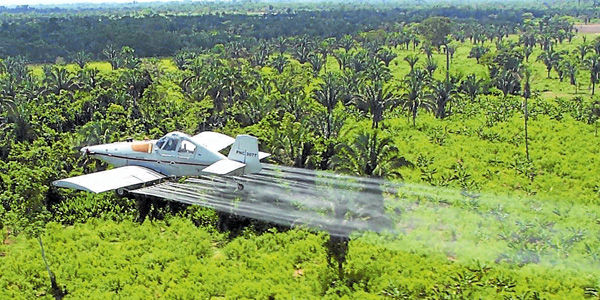
La déclaration de guerre, c’est le Décret 380, signé le 12 avril dernier par Ivan Duque et autorisant la reprise de la pulvérisation aérienne de glyphosate, herbicide produit au départ par la seule firme Monsanto sous la marque Roundup et dont le brevet appartient depuis 2000 au domaine public, pour l’éradication des cultures illicites. Sans surprise, c’est d’abord la coca qui est visée, et à travers elle, la culture de cocaïne. C’est oublier que cette plante, cultivée depuis plusieurs millénaires dans les Andes, représente bien davantage dans la culture locale.
Le mate de coca(C) Getty Images-iStockphoto
Jadis élément rituel des croyances incas de la Colombie jusqu’au Chili, toujours présentes dans les rites chamaniques, les feuilles de coca sont aujourd’hui consommées en infusion, le mate de coca. Elles sont riches en minéraux essentiels, en vitamines, en protéines et en fibres. Les âges leur ont aussi découvert des vertus médicinales contre le vertige, en anesthésiant, en analgésique ou en coagulant, leur taux élevé de calcium les ayant rendues tout aussi efficaces contre les fractures osseuses, parmi les nombreuses vertus que même la médecine moderne leur reconnaît.
C’est ainsi que la coca représentait, en 2012, 0,2% du Produit Intérieur Brut colombien. Mais de nos jours, pour Bogota, coca ne veut plus dire que cocaïne. Or, ce nom ne désigne pas forcément ce que l’on croit.
Sitôt le mot prononcé, «cocaïne» évoque une drogue dure. Or, ce n’est pas le sens premier du terme. La cocaïne est un alcaloïde, une substance parfaitement naturelle contenue dans les feuilles de coca. Elle est naturellement ingérée lorsque l’on consomme le mate ou, c’est son usage le plus courant, lorsque l’on en mâche les feuilles, comme le font les Andins depuis des milliers d’années. La coca agit ainsi comme un remède à la faim, la soif, la douleur ou la fatigue. Sous cette forme, elle ne crée aucune addiction.
Transformée en un produit stupéfiant, le chlorhydrate de cocaïne, puis «sniffée» en «rails», la cocaïne devient un psychotrope et crée une addiction particulièrement dangereuse sur le plan psychique. C’est là qu’elle devient une «culture illicite» car alimentant les économies des cartels mais aussi ceux de groupes paramilitaires, dont jadis les FARC-EP.
Le glyphosate de Monsanto, vendu sous la marque Roundup
Mais si la coca détient le problème, elle renferme aussi la solution. Pour les cocaïnomanes, la consommation des feuilles telles quelles, bénéfique et non addictive, offre un moyen de se désaccoutumer et guérir.
Bien que ne pouvant l’ignorer, pas plus qu’ignorer que de nombreuses communautés paysannes dépendent de la culture de la coca comme seul moyen d’existence, Bogota a décidé de l’éradiquer par la force, envoyant l’armée détruire cent trente mille hectares au risque même d’affamer sa population campesina et rallumer les feux mal éteints de la guerre civile.
Pour qui aurait cru que l’urgence sanitaire liée à la COVID-19, confinement compris comme dans tant d’autres pays du monde, aurait arrêté ou du moins suspendu les ambitions guerrières gouvernementales, comme la société civile colombienne qui demandait une suspension, peine perdue. Au moins sept départements colombiens ont vu l’armée mener pendant ce temps-là sa guerre à mort contre la coca. Une guerre d’autant plus inquiétante que le front en est proche, par trop proche, de celui de l’ancienne guerre contre les FARC-EP.
FARC-EP : Un accord de paix en danger
Dans les années 1980, dernière décennie de la Guerre Froide, donc du système international de Droits Humains antérieur à la Conférence de Vienne en 1993, plusieurs groupes d’opposition armés avaient été identifiés à travers le monde comme violateurs des Droits Humains au même titre que les gouvernements, parfois le gouvernement même qu’ils entendaient combattre. Parmi eux, les Khmers Rouges au Cambodge, le Parti des Travailleurs du Kurdistan (PKK) en Turquie, le Sentier Lumineux (Sendero Luminoso) au Pérou et, en Colombie, les FARC-EP.
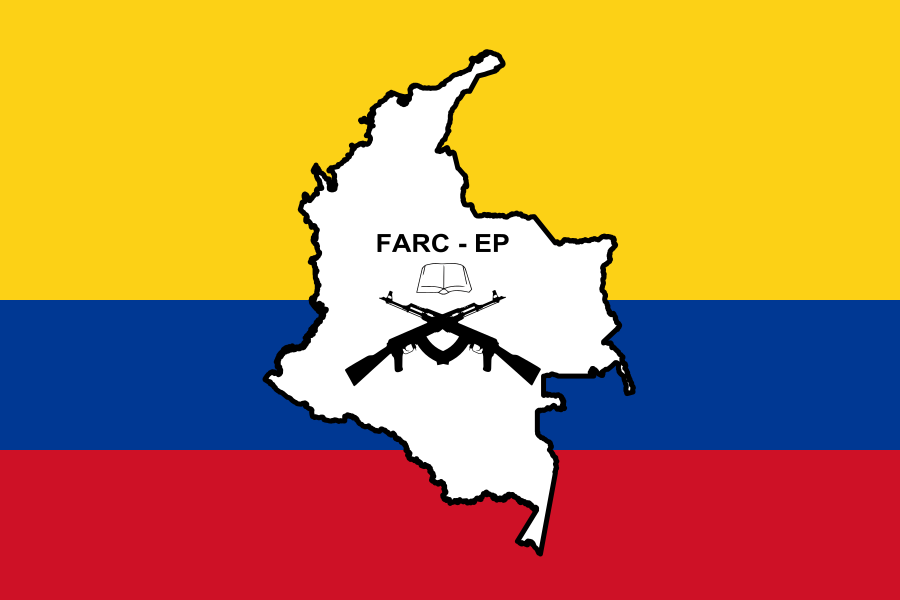
L’emblème des FARC-EP
Pur produit de la Guerre Froide, apparues en 1964, les FARC-EP présentaient une idéologie marxiste-léniniste, prônant un système agrarien et anti-impérialiste en Colombie. Composées de plusieurs dizaines de milliers d’hommes et de femmes, les FARC-EP usaient de techniques militaires variées mais aussi du terrorisme, à l’image de l’ETA au Pays basque espagnol qui les soutenait ouvertement. Leur économie de guerre se fondait sur l’extraction minière illégale, le racket économique, l’enlèvement contre rançon – ainsi de la Sénatrice Ingrid Betancourt en 2002, qui demeura leur otage jusqu’en 2008 – et le trafic de stupéfiants.
En mars 2008, le décès du leader des FARC-EP Manuel Marulanda Vélez marqua un tournant dans l’histoire du groupe armé. Les désertions se multiplièrent et, bien que poursuivant leurs attaques terroristes contre la police, l’armée et le secteur de l’énergie, des FARC-EP jadis redoutables apparurent désormais craintives et fatiguées.
Un processus de paix fut lancé qui aboutit, en juin 2016, à la signature d’un cessez-le-feu entre le Président Juan Manuel Santos et les FARC-EP à La Havane. En août, Santos annonça un accord de paix formel, qu’il soumit à référendum en octobre mais qui fut rejeté de peu par l’électorat. Le mois suivant, un accord révisé fut signé puis finalement ratifié. Un an après le cessez-le-feu, en juin 2017, les FARC-EP prononcèrent leur dissolution en tant que groupe armé, remettant leur armement aux équipes des Nations Unies sur place et devenant, comme le prévoyait l’accord de paix, un parti politique.
Quelques milliers d’irréductibles poursuivirent la lutte armée et le trafic de drogue. En août 2019, plusieurs leaders des anciennes FARC-EP annoncèrent à leur tour y revenir, bientôt mis hors d’état de nuire par les troupes colombiennes. L’accord de paix perdura donc, dont les quatre premiers points montraient une volonté concrète de combattre à la fois le conflit et ses causes originelles – une réforme rurale exhaustive, la participation politique des membres des anciennes FARC-EP, une fin définitive des affrontements et, en Point 4, une «solution aux drogues illicites».
Un rapport parlementaire colombien rendu l’an dernier montrait que, si la culture du coca était en recul, non moins de quinze mille hectares ayant été perdus en un an, celle de cocaïne connaissait en revanche un regain de 15%. Peu surprenant dans la mesure où les solutions prévues par l’accord de paix, l’éradication manuelle et la mise en place de cultures de substitution, ont été largement ignorées par les autorités. Écarter ainsi les accords conclus et les solutions de bon sens qui les composent, c’était offrir un boulevard aux tenants du glyphosate, parmi lesquels le Ministre de la Défense Carlos Holmes Trujillo, qui ont donc fini par l’emporter.
Outre la santé, l’économie et l’écosystème des communautés campesinas, et malgré la victoire militaire sur la tentative de résurgence armée d’une partie des FARC-EP, le glyphosate met donc bel et bien en danger y compris l’accord de paix lui-même, au mépris de l’ancien groupe armé et de ses efforts vers la paix, mais aussi des décisions judiciaires et, rien de moins, des recommandations internationales.
La justice colombienne et l’ONU l’avaient dit
Une première fois pourtant, la Colombie avait mis fin à la pulvérisation aérienne. En 2015, l’impact avéré de cette pratique sur l’environnement et les Droits Humains, notamment le droit à la santé, avait amené Bogota à renoncer à en faire usage. Deux ans plus tard, c’était la Cour constitutionnelle (Corte Constitucional) qui se saisissait du sujet et se prononçait en son Arrêt T-236-17.
Pour la juridiction suprême, le glyphosate était indubitablement une substance toxique à même d’entraîner diverses maladies, dont le cancer. Elle ordonnait ainsi que la pulvérisation aérienne ne soit utilisée qu’en dernier ressort, après l’échec de toute substitution volontaire ou éradication manuelle. Et surtout, la Cour, sortant du pur plan agricole ou scientifique, investissait aussi le champ politique en appelant le Gouvernement à résoudre le problème en tenant compte du Point 4 des Accords de Paix avec les FARC-EP. Mais faute d’application crédible des programmes de substitution volontaire, bien que ceux-ci soient un pilier des accords de paix, il leur a été préféré l’éradication forcée.
L’ONU elle-même s’en est indignée et le 17 décembre dernier, dix de ses experts indépendants écrivaient à Ivan Duque en lui demandant de renoncer à la pulvérisation aérienne, porteuse « d’énormes risques » pour l’environnement mais aussi d’une possible atteinte aux engagements internationaux colombiens en matière de Droits Humains. Appel donc resté lettre morte.
La pulvérisation aérienne au glyphosate en action
Sans paix avec la terre, aucune paix pour l’avenir
Avec Carlos Holmes Trujillo, la «ligne dure», sans mauvais jeu de mots sur la cocaïne au demeurant, a gagné. Qu’importe si, à cause d’elle, des Colombiens vont se trouver démunis, et/ou malades, qu’importe si l’écosystème se trouve irrémédiablement endommagé, qu’importe si la terre devient stérile. Leur guerre totale contre d’anciens ennemis qu’ils veulent soumis plus que partenaires a dégénéré en guerre contre la terre colombienne elle-même, la Pachamama, «Terre-Mère» comme la désigne la cosmogonie andine depuis des temps anciens où, déjà, l’on mâchait la coca.
A l’instar d’autres organisations non-gouvernementales, l’Association of World Citizens (AWC) a pris attache avec le Gouvernement colombien en demandant que le Président Ivan Duque renonce à la pulvérisation aérienne de glyphosate, au profit des solutions préconisées par l’accord de paix avec les FARC-EP, éradication manuelle et substitution volontaire, telles que les demande aussi la Cour constitutionnelle.
«A moins d’étendre le cercle de sa compassion à tout ce qui vit, l’homme ne pourra lui-même trouver la paix», disait Albert Schweitzer, auteur du concept de Révérence envers la Vie et lui-même référence naturelle de l’AWC. Le drame colombien du glyphosate illustre on ne peut mieux cette pensée. Heureusement, il n’est pas trop tard.
Bernard J. Henry est Officier des Relations Extérieures de l’Association of World Citizens.





 Association of World Citizens