The Official Blog of the

Archive for the ‘United Nations’ Category

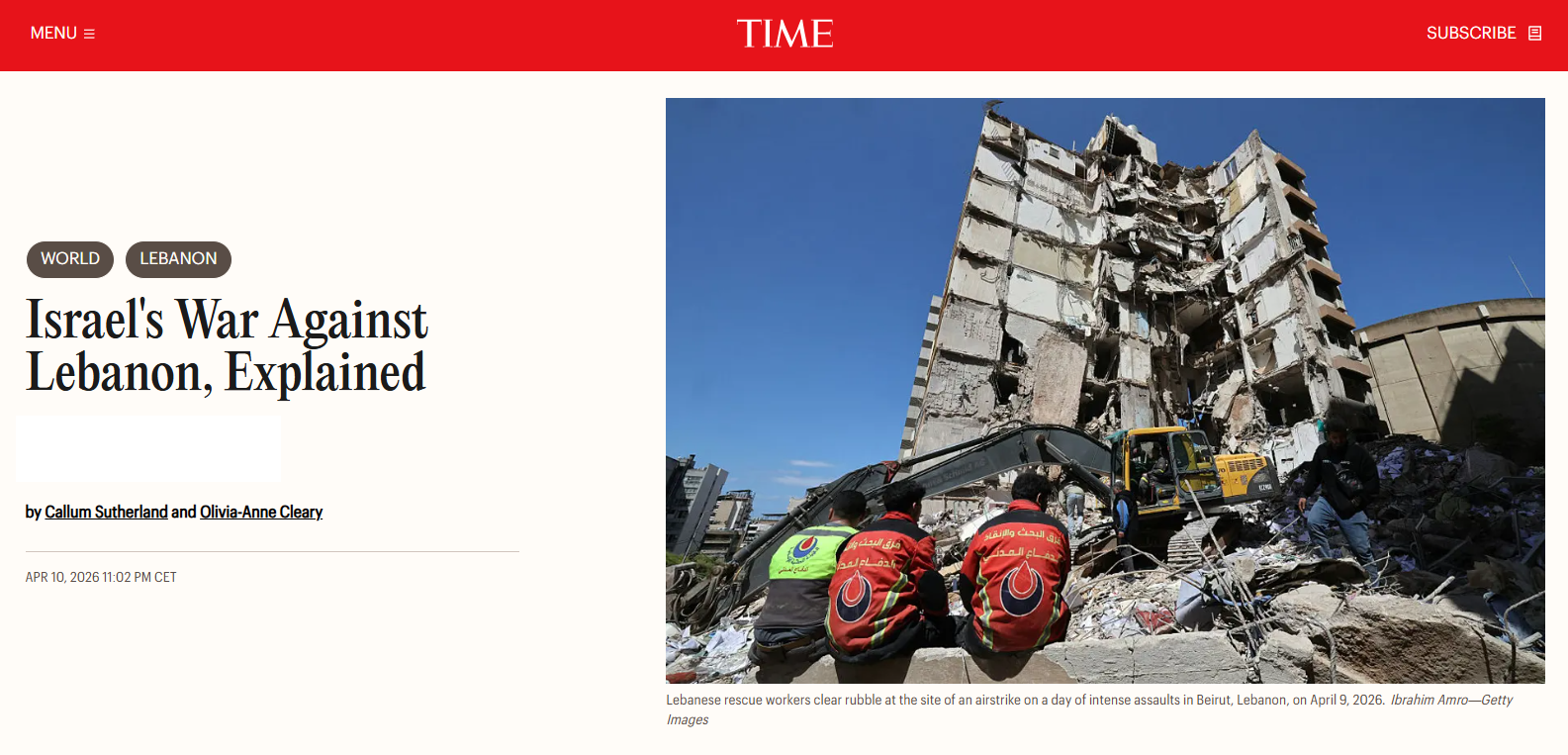
The AWC Calls for UN Action on Lebanon Conflict

In Being a World Citizen, Conflict Resolution, Current Events, Middle East & North Africa, NGOs, Nonviolence, Peacebuilding, Solidarity, The Search for Peace, Track II, United Nations, World Law on April 13, 2026 at 6:00 AM

By René Wadlow

The armed conflict in Lebanon is multidimensional and growing more violent as the conflict spreads to more areas of the country. Nongovernmental Organizations (NGOs) in Consultative Status with the United Nations (UN), such as the Association of World Citizens (AWC), are calling for speedy UN action to bring the fighting to a halt.

Israel’s current attacks in Lebanon against the armed militia Hezbollah are related to the United States (U.S.)-Israeli attacks against Iran, but they are separate from the U.S.-Iran negotiations that just took place in Pakistan. Hezbollah had fired rockets at Israel in support of Hamas. In the Gaza Strip, Hamas is also backed by the Iranian government.

Now in Lebanon, more than 1,000 persons have been killed and a million people displaced in a country of six million inhabitants. The Israeli attacks may be the beginning of an Israeli invasion and subsequent occupation of southern Lebanon.

The political-strategic situation in the wider Middle East is complex. In light of the dangers and uncertainties, NGOs are calling for action by the UN. There are some possibilities of UN mediation and good offices. We support these NGO calls for UN action.

Prof. René Wadlow is President of the Association of World Citizens.

Iran War: Peace Action Needed

In Being a World Citizen, Conflict Resolution, Cultural Bridges, Current Events, Humanitarian Law, International Justice, Middle East & North Africa, NGOs, Nonviolence, Peacebuilding, Solidarity, The Search for Peace, Track II, United Nations, United States, World Law on April 6, 2026 at 8:00 AM

By René Wadlow

Since the month-old United States (U.S.) and Israeli military attacks against the Islamic Republic of Iran began, the Association of World Citizens (AWC) has called for negotiations in good faith to bring the war to a halt. The war is destructive of life and property. From the very start, it has been in danger of spreading to other countries. There are real dangers of miscalculations by the military that will lead to deeper military escalation.

The AWC has stressed that the war is a violation of international law as structured in the Charter of the United Nations. The war has also led to violations of international humanitarian law as structured in the Geneva Conventions. There have been attacks on schools, health facilities, and essential economic infrastructure. The war has led to a large number of persons being displaced.

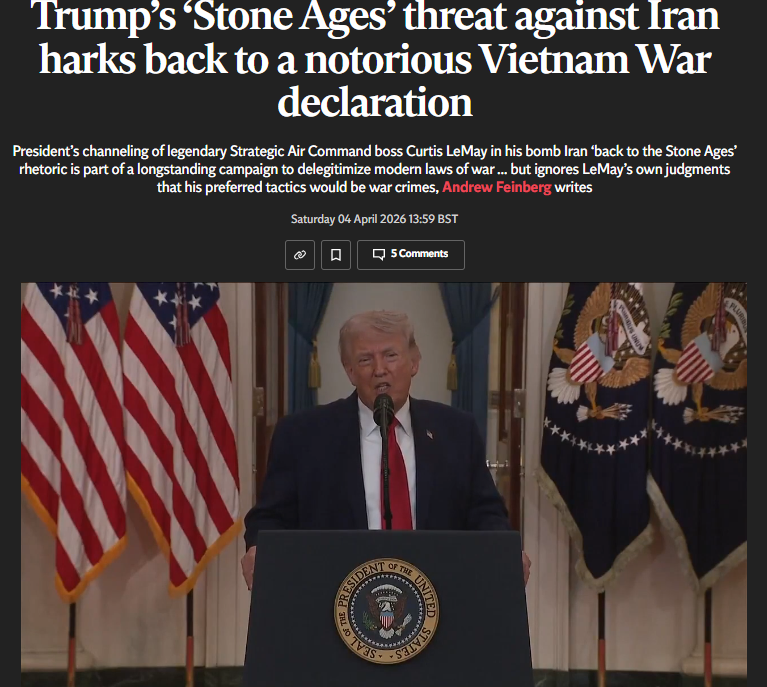
U.S. President Donald Trump has recently warned the Iranian authorities that the USA could bomb Iran “back to the Stone Age” if the Iranian authorities did not meet U.S. demands for an agreement. In reality, Iran and Persia before it had long left the Stone Age and made important contributions to world culture.

Thus, strong efforts must be made through both the United Nations and Nongovernmental Organizations such as AWC for an end to the armed conflict and the start of a harmonious regional society. Your help in these vital efforts is much appreciated.

Prof. René Wadlow is President of the Association of World Citizens.

Cooperative Peacebuilding Efforts Urgently Needed

In Being a World Citizen, Conflict Resolution, Cultural Bridges, Current Events, Humanitarian Law, NGOs, Nonviolence, Peacebuilding, Solidarity, The Search for Peace, Track II, United Nations, World Law on March 10, 2026 at 7:00 AM

By René Wadlow

At this time when there is armed conflict and strong political tensions in world society, broadly-based efforts are needed to develop a harmonious political culture based on world law. A political culture is a set of attitudes and beliefs which give order and meaning to a political process. Such a positive political culture is a product of both the collective history of a political system and the life histories of the members of that system.

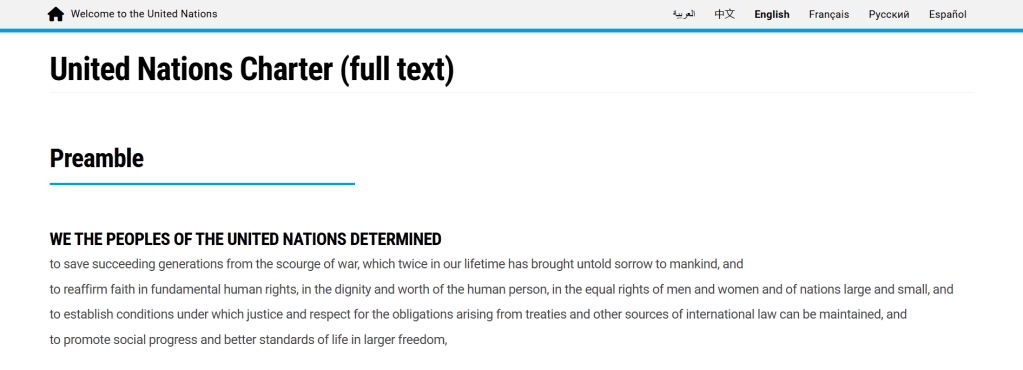
“To establish conditions under which justice and the respect for the obligations arising from treaties and other sources of international law can be maintained” is one of the four objectives of the United Nations (UN) as set out in the preamble to the Charter, firmly related to the three other aims: the prevention of war, respect for human rights, and social progress. The phrasing of the aims rightly stresses not the enactment of international law but rather the need to “establish conditions” under which justice and respect for international law is possible.

Respect for international law should place limitations upon the number of options open to a government in choosing how to carry out a policy in foreign affairs. The most fundamental limitation is the prohibition on using military action except in self-defense against aggression.

When abuse of State power, denial of human rights, corruption, and the absence of participation in decision-making are the daily routine, people look upon law as a method to establish justice. The rule of law at both the international and national level must be based on a social consensus.

Nongovernmental Organizations (NGOs) can play a vital role in developing this social consensus on the rule of law. NGOs have proven that they can respond effectively to the challenges faced by today’s world society. Thus, there is a growing role for NGOs within the UN system in the making and implementation of policies. NGOs are involved more than ever before in global policy-making and project implementation. They bring citizens’ concerns to governments and advocate specific policies.

Today, with armed violence ongoing in many parts of the world, cooperative peacebuilding efforts are urgently needed. NGOs are playing an increasing role in such peacebuilding efforts and must be encouraged.

Prof. René Wadlow is President of the Association of World Citizens.

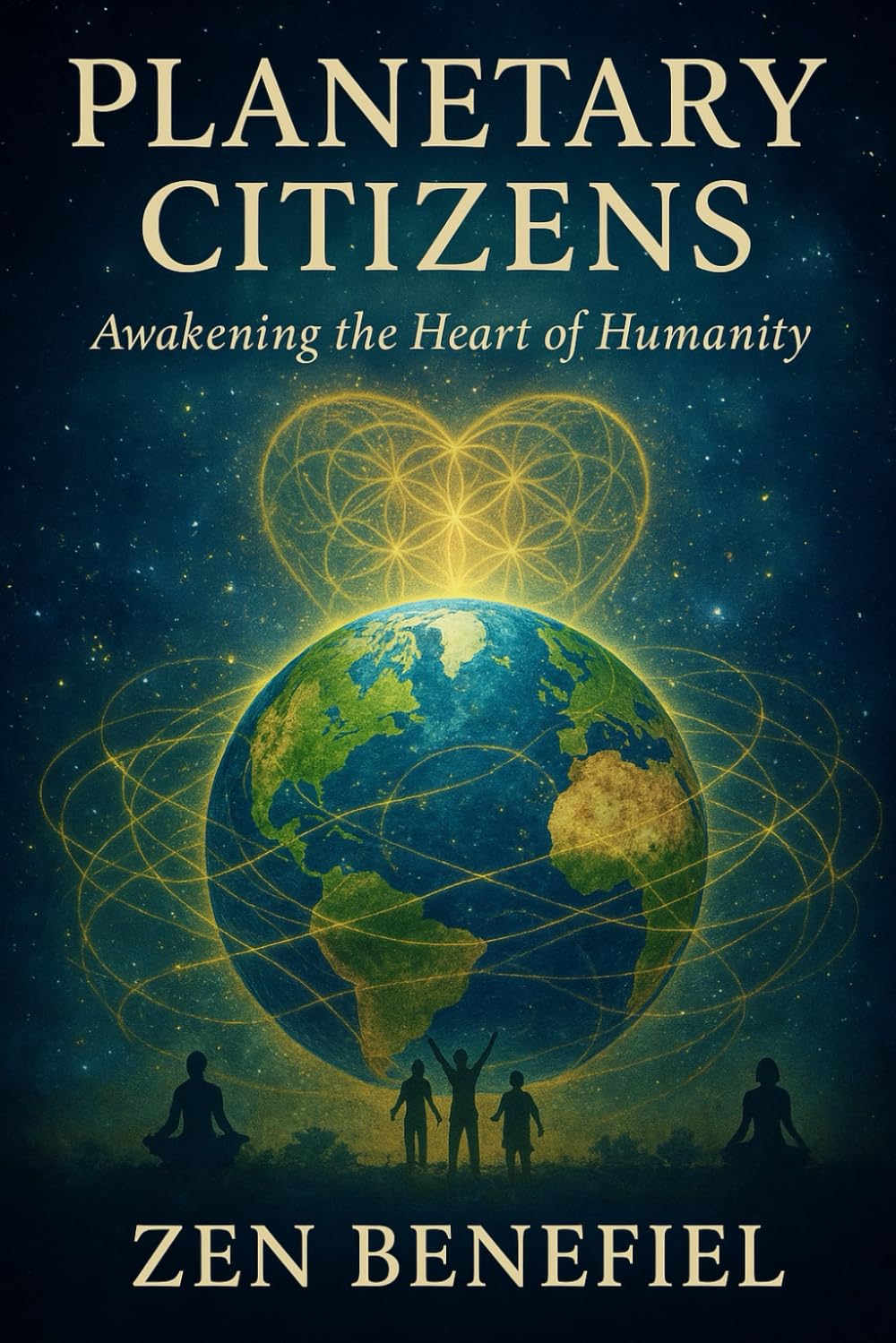
BOOK REVIEW: Zen Benefiel, “Planetary Citizens: Awakening the Heart of Humanity”

In Being a World Citizen, Book Review, Conflict Resolution, NGOs, Peacebuilding, Solidarity, The Search for Peace, United Nations on February 23, 2026 at 7:00 AM

By René Wadlow

Zen Benefiel, Planetary Citizens: Awakening the Heart of Humanity.

Chandler, AZ: Be The Dream Publishing, 2025, 126pp.

“I believe that the mark of the truly educated and imaginative person facing the twenty-first century is that he feels himself to be a Planetary Citizen.”

U Thant, former Secretary General, United Nations.

The current effort of Planetary Citizens is a reincarnation of a movement led by Donald Keys active from the mid-1970s to the mid-1980s. I was a member of the Planetary Citizens Advisory Board and Donald Keys was the United Nations (UN) editor for Transnational Perspectives, a journal I edited. Thus, Donald Keys and I were in close touch and cooperated on many projects.

The first objective of Planetary Citizens was to help people in as many countries as we could reach to cross the threshold of consciousness from a local and national perspective to the inclusive and global view required in this planetary era.

The office of Planetary Citizens in the Church Center for the UN, was directly across the street from the UN. The Center housed a good number of non-governmental organizations in consultative status with the UN. Thus, the focus of Planetary Citizens was on issues which were discussed at the UN in New York. Cooperation was close with other Nongovernmental Organizations (NGOs) such as the Baha’i UN Office which shared a vision of world unity. Planetary Citizen identity cards were issued to those who requested it and affirmed their responsibility to a just world society. Some 200,000 people joined the effort, 60,000 in Japan.

The major effort of Planetary Citizens was the preparation and then the holding of a major conference held in Toronto, Canada, in June 1983. Some 500 people gathered to draft the “Declaration on the World We Choose” facing the challenges of a world with violence, human rights violations and persistent poverty. The Declaration identified three aims:

1) Self-Realization: The opportunity for achieving the individual human potential and realizing the essential spiritual identity of each person giving rise to oneness with all life, the assumption of responsibility and initiative in a spirit of cooperation.

2) Human Community: There is a natural progression from self-realization to the creation of vibrant communities capable of demonstrating cooperation and stewardship.

3) A United World: A cooperative world order characterized by membership in the family of humanity and by global governance based on justice. A result will be true international security.

Unfortunately, soon after the Toronto Conference, Donald Keys became ill and was unable to continue in a leadership role. As with many NGOs, too much responsibility rested on one person. When he/she is no longer there, the organization becomes weak and can shut down. This is what took place with the first incarnation of Planetary Citizens. All its papers and reports are now in the Peace Library of Swarthmore College near Philadelphia.

Zen Benefiel has revived much of the thinking and spirit of the original Planetary Citizens. As he notes, “The path ahead is not easy. It will take courage, collaboration, and commitment.” There is a need for bridge-building among the many groups working for the well-being of the Earth. There is a need for new kinds of leadership that feels comfortable with networking and nurtures creativity in others.

We wish the new incarnation all the best in the effort to create a just global society.

Prof. René Wadlow is President of the Association of World Citizens.

World Day of Social Justice: Renewed Efforts Needed

In Being a World Citizen, Current Events, Human Development, Human Rights, NGOs, Nonviolence, Peacebuilding, Social Rights, Solidarity, The Search for Peace, United Nations on February 20, 2026 at 7:00 AM

By René Wadlow

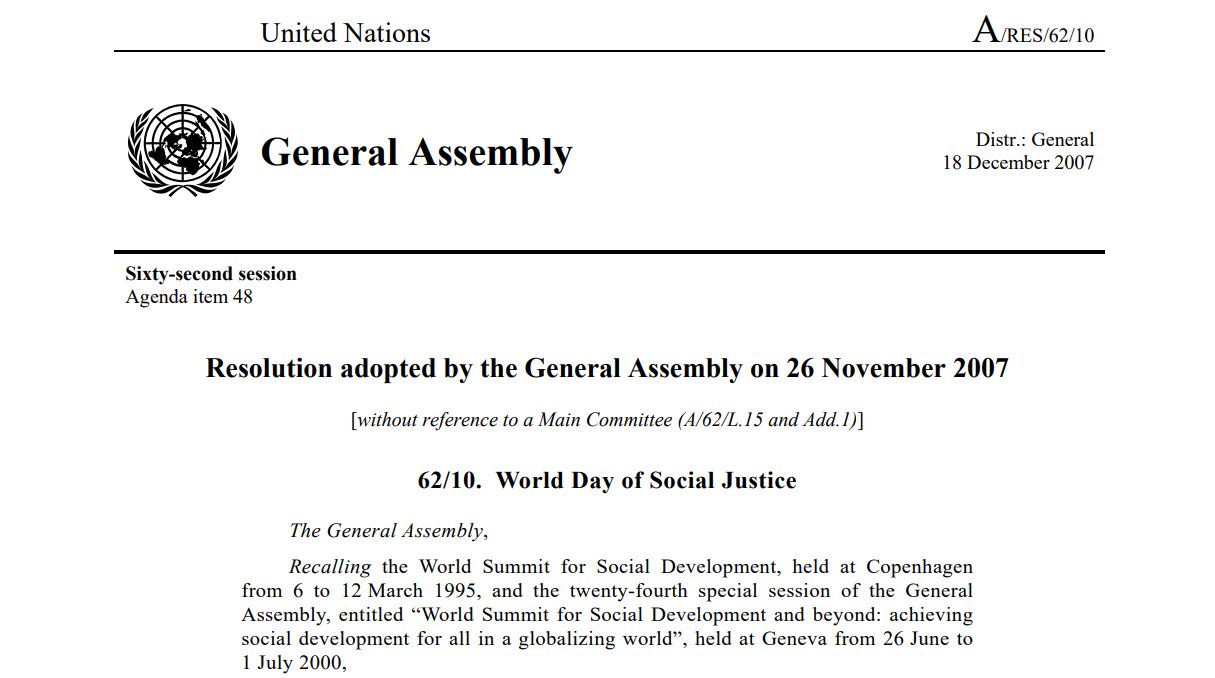
The United Nations (UN) General Assembly by Resolution 62/10 set February 20 of each year as the World Day of Social Justice. Today, as Citizens of the World, we can highlight world-wide gains in education, the reduction of extreme poverty, and the reduction of child labor.

Nevertheless, there are strong threats to social justice with inaction and apathy toward human misery. There is famine in parts of the world, armed conflicts, and uprooted and displaced populations.

The UN system is called upon to respond to these very diversified situations, often involving provisions of crucial direct aid to people in deep distress. At the national level, there is a need to place social justice at the core of policy making and to provide universal social protection.

A particular aspect of the lack of social protection is the fate of small rural farmers. There is an increasing amount of rural productive land that is falling under the control of urban elites, sometimes urban elites in other countries. Land ownership inevitably involves the distribution of power within a society. One answer to why the rural poor stay poor is that they are rarely well organized. The least powerful among the rural poor – the tenant farmers, the landless laborers, the members of tribal societies – are the least well organized, the most easily divided and blocked.

Thus, there is a need for renewed efforts for social justice carried out by persons with a long-range holistic vision able to see trends and the links between different social situations. There is a need for long-term cooperation among universities, religious groups, and Nongovernmental Organizations. The World Day of Social Justice is a time for a rededication for positive action.

Prof. René Wadlow is President of the Association of World Citizens.

Of related interest: Celebrating Social Justice: The People’s Revolution is On the March (February 22, 2015)

Child Soldiers in Colombia: Action Needed

In Being a World Citizen, Children's Rights, Conflict Resolution, Current Events, Human Rights, Humanitarian Law, Latin America, NGOs, Nonviolence, Peacebuilding, Solidarity, The Search for Peace, Track II, United Nations on February 18, 2026 at 8:00 AM

By René Wadlow

The Association of World Citizens (AWC) has worked actively in the United Nations (UN) human rights bodies against the use of child soldiers in armed conflicts. The Association has also made direct Appeals to governments and militias that use child soldiers.

During the Iran-Iraq war (1980-1985) tens of thousands of Iranian youth, tied into groups to prevent their escape, threw themselves onto barbed wire or walked straight into Iraqi mine fields and faced machine gun fire. In at least twenty-one armed conflicts in different parts of the world, child soldiers have been used.

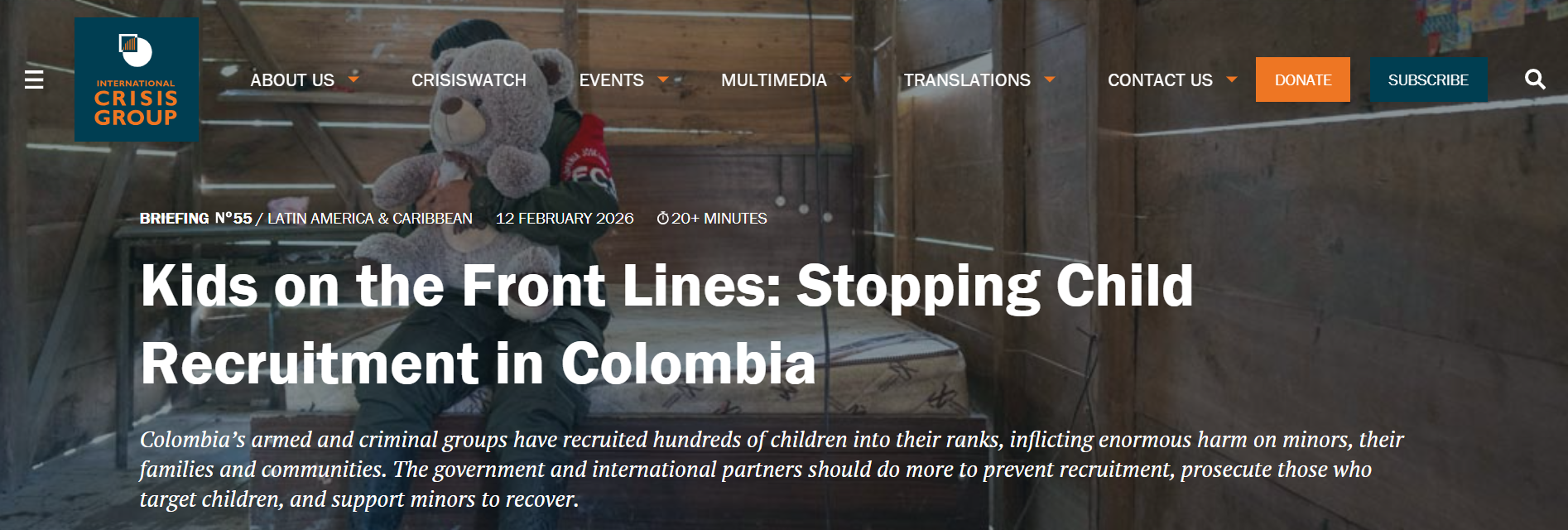
February 12 has been set by the UN General Assembly as the International Day Against the Use of Child Soldiers. Thus, the Association of World Citizens along with the International Crisis Group with its headquarters in Belgium focused on the use of youth by militias, often involved in the drug trade, in Colombia where youth are forced into militias. There had been in 2016 a ceasefire agreement between the government of Colombia and the Revolutionary Armed Forces of Colombia (FARC), the largest of the armed groups active in the country. This agreement has led many of those in the FARC ranks to be integrated into civil society. However, smaller armed groups have continued to be active. They are often involved in the drug trade as a way to finance their activities.

Thus, strong social action is needed, especially in those parts of the country inhabited by indigenous populations. Events in Venezuela also have an impact on Colombia and thus merit watching closely.

Prof. René Wadlow is President of the Association of World Citizens.

UN Focus on the Crushing of Iran Protests 

In Being a World Citizen, Current Events, Human Rights, Middle East & North Africa, NGOs, Nonviolence, Peacebuilding, Solidarity, The Search for Peace, United Nations, Women's Rights on January 26, 2026 at 7:41 AM

By René Wadlow

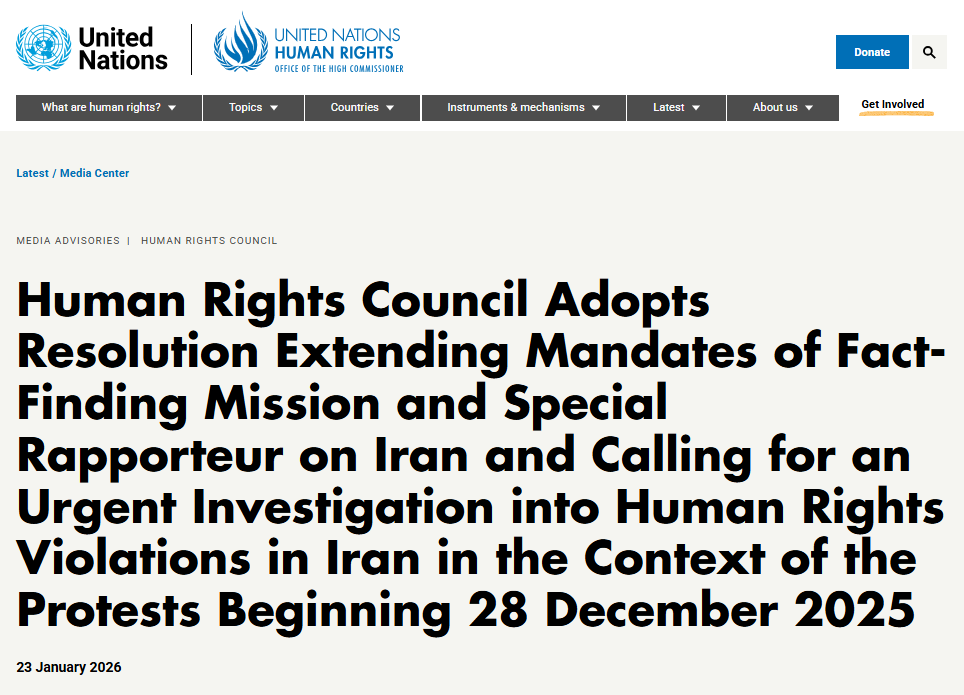
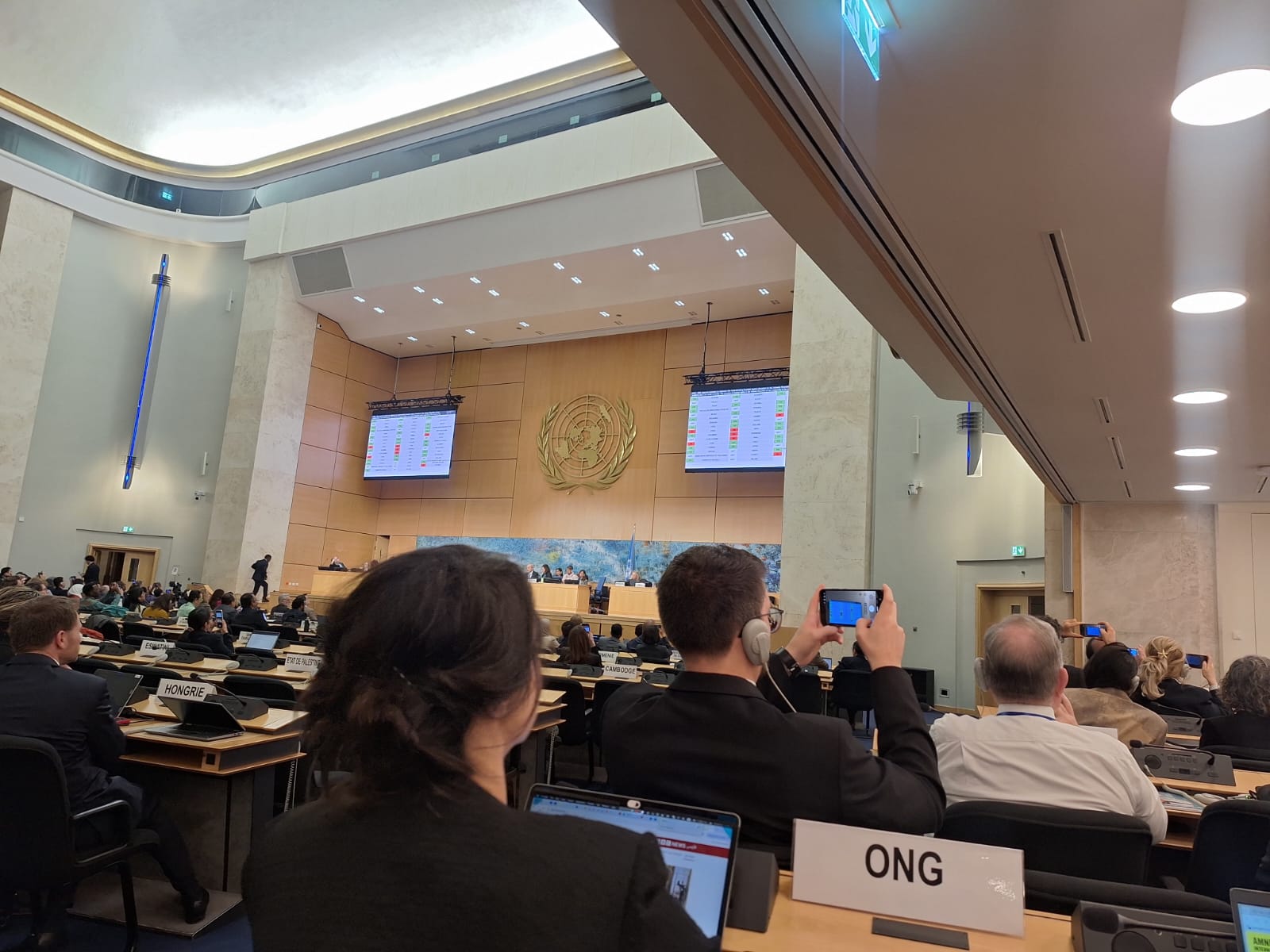
On January 23, 2026, the 47 members of the United Nations (UN) Human Rights Council met in Geneva, Switzerland in a Special Session devoted to the violent repression of protests in the Islamic Republic of Iran. The session began with a call by Volker Türk, UN High Commissioner for Human Rights, for the release of detainees, a halt to the implementation of death sentences, and the adoption of serious steps in response to human rights violations. He stressed that “these protests are the latest in a long line of heartfelt calls by the Iranian people for change, met by a long line of violent repression by the Iranian authorities”.

Ms. Mai Sato, the UN Special Rapporteur on Iran, highlighted the large number of protesters killed, including youth and children.  She called upon the authorities of Iran to act in compliance with international human rights standards. She voiced alarm about “the unprecedented scale of the violent crackdown on peaceful protesters by security forces”.

A number of government representatives noted the difficulties of following the current situation due to the cutting of the Internet and other forms of communication.

The Iranian Ambassador, Ali Bahreini, said that the Special Session of the Council had been “politicized” and that Iran rejected the discussion as “external interference in internal affairs”.

Iceland’s Ambassador, Einar Gunnarsson, presented the resolution of the Session saying that “the victims and survivors deserve truth, justice, and accountability”. The resolution which extends the mandate for two years of the UN Fact-Finding Mission, first established after the 2022 protests, was accepted with 25 States in favor, 7 against (China, India, Pakistan, Indonesia, Vietnam, Cuba, Iraq) and 14 abstentions.

From an NGO’s point of view (C) Assia Tanner/AWC

Assia Tanner, Representative for Diplomatic Relations at the Geneva Office of the Association of World Citizens (AWC), attended the session on our behalf. “Demonstrating is a human right, yet the regime has killed demonstrators and hanged innocent Iranians, resorting to the death penalty which is a serious human rights violation”, she reported. “The UN asked Iran to respect human rights, engage in dialogue, end the violence, and stop terrorizing the population. While The Netherlands called the Iranian regime a terrorist state, some Arab countries called for dialogue as they fear consequences from Tehran. Some African countries called for peaceful support instead of a formal condemnation.”

Nonetheless, the general feeling was definitely one of outrage. “In a session that lasted from 2PM to 6PM with no break whatsoever, all Council members were saying the same thing: Iran must be condemned”, Tanner added. “I felt they were holding the same discourse as all human rights organizations”.

Precisely, Nongovernmental Organizations (NGOs) now have the difficult task of calling on the Iranian government to stop arbitrary arrests, enforced disappearances, and extrajudicial killings. The situation in Iran must be watched as closely as possible and encouragement given to good faith negotiations.

Prof. René Wadlow is President of the Association of World Citizens.

UN System Weakened by U.S. Retreats

In Being a World Citizen, Conflict Resolution, Current Events, Human Rights, NGOs, Peacebuilding, Solidarity, The Search for Peace, Track II, United Nations, United States, Women's Rights, World Law on January 12, 2026 at 7:40 AM

By René Wadlow

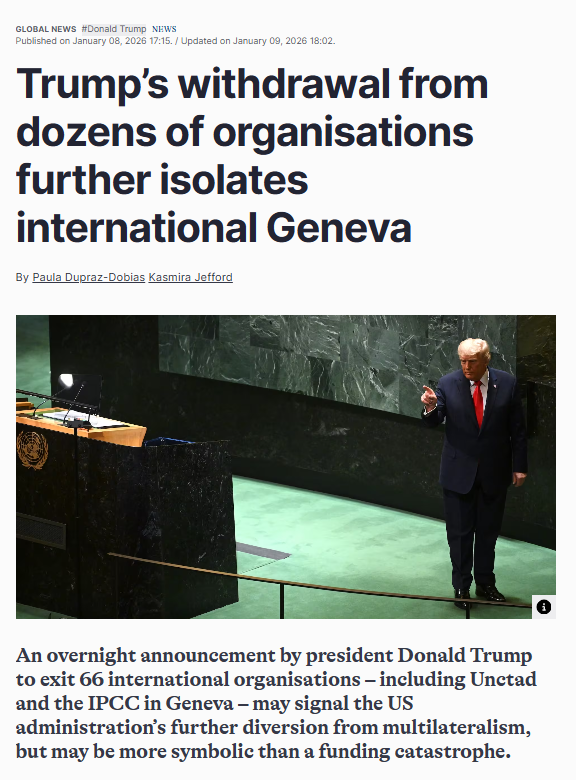
On January 7, 2026, the United States (U.S.) government announced that it was withdrawing from membership (and thus financial contribution) to 31 United Nations (UN) bodies and programs. According to U.S. Secretary of State Marco Rubio, these institutions and programs are “redundant in their scope, mismanaged, unnecessary, wasteful, poorly run and captured by the interests of actors advancing their own agendas contrary to our own.” He added, “Many of these bodies promote radical climate policies, global governance and ideological programs that conflict with U.S. sovereignty and economic strength.”

The U.S. withdrawal comes at a time when the UN as a whole (the 193 member States) is in the process of evaluating UN structures and programs (UN 80). The results of this evaluation should be presented later this year.

A good number of the programs from which the United States of America (USA) is withdrawing are based or have activities in Geneva, Switzerland. As an NGO representative to the UN in Geneva, I have interacted with many of these programs and the Secretariat members. At this time when there are real challenges in the world society, the withdrawal of the USA weakens the UN system as a whole. The representatives of Nongovernmental Organizations (NGOs) in consultative status will increase their activities so that the intellectual dynamics will not be weakened, but NGOs cannot fill the financial gap.

One of the bodies marked for withdrawal is the International Law Commission. A colleague from Egypt who taught international law at the University of Geneva was a leading member of the Commission and had a deep understanding of Middle East culture. Stronger respect for international law in the Middle East remains a real need.

Another institution is the Geneva-based International Trade Center where I had a good friend in the Secretariat. The Trade Center helped developing countries negotiate contracts with transnational corporations. These corporations usually have sophisticated lawyers to write contracts, not the case for many developing countries. Thus, the work of the Trade Center filled a real need.

The UN Institute for Training and Research has its headquarters in New York, but many of its activities were Geneva-based and so the Secretariat cooperated with Geneva-based NGOs. The same holds true for the UN University with headquarters in Japan but with many Geneva-based activities.

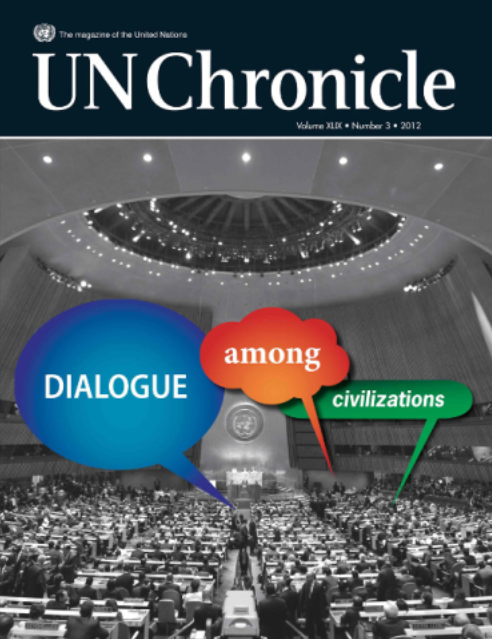
The USA is withdrawing from support for the Office of the Special Representative for Children in Armed Conflict, from the UN Entity for Gender Equality, and from the Special Representative on Sexual Violence in Conflict – all issues on which the Association of World Citizens has been active. The USA is leaving the UN Alliance of Civilizations at a time when cross-cultural understanding is a vital need.

Many of the UN activities which the USA is leaving have dedicated U.S. citizens in the Secretariat. I am not sure what their status will be once the withdrawal is complete.

The USA is also withdrawing from the UN Framework Convention on Climate Change, the key instrument on climate change issues. The consequences of climate change are being increasingly felt, and U.S. action would be needed.

As I noted, the representatives of NGOs will have to increase sharply their activities in the UN bodies and programs. The challenges facing us are heavy, and constructive action is urgently needed.

Prof. René Wadlow is President of the Association of World Citizens.

BOOK REVIEW: Jean Ziegler, “Destruction Massive: Géopolitique de la faim”

In Being a World Citizen, Book Review, Human Development, Human Rights, Latin America, Social Rights, Solidarity, Sustainable Development, The Search for Peace, United Nations on January 8, 2026 at 7:30 AM

By René Wadlow

Jean Ziegler, Destruction Massive: Géopolitique de la faim.

Paris: Editions du Seuil, 2011, 343pp.

Translated into English and published as

Jean Ziegler, Betting on Famine: Why the World Still Goes Hungry

New York: The New Press, 2013

The First Millennium Goals set in 2000 were to half poverty and hunger by 2015.

Hunger and malnutrition are major causes of deprivation and suffering. As there has been no rapid progress in reducing hunger, other goals, such as reduced child mortality and improved maternal health, have not been met either. Many years of empirical evidence point to the negative impact of hunger and malnutrition on health, education, and labor productivity.

The impact of hunger has been known for some time. Jean Ziegler pays tribute to the research and action of a mutual friend, Josue de Castro, Brazilian nutritionist and World Citizen.

De Castro had pointed out in the late 1930s that hunger in Brazil was not a fatality of nature but the result of unjust human structures. Thus, things could change with enlightened action by farmers with the help of enlightened governments. He helped to organize peasant leagues and was elected to the parliament of Brazil. He undertook visits and studies in other Latin American countries. These studies convinced him of the socio-economic causes of hunger and of their wide geopolitical impact. The Geopolitics of Hunger is de Castro’s most widely read book and serves as the subtitle of Jean Ziegler’s book as hunger remains a geopolitical issue, not simply a question of locally improved agricultural techniques.

De Castro had been the independent president of the Executive Council of the Food and Agriculture Organization (FAO) of the United Nations (UN) from 1952 to 1955, at which time the governments decided to abolish the post of independent president. The Executive Council has been chaired by national diplomats since. While at the FAO, de Castro was invited to look at agriculture in a good number of countries. He had created in 1957 a Nongovernmental Organization, World Campaign against Hunger (Association mondiale de lutte contre la faim), ASCOFAM from its title in French. He drew on persons active in the world citizen movement such as l’Abbé Pierre, René Dumont and Max Habicht.

When I arrived in Geneva to teach at the Graduate Institute of Development Studies in September 1963, de Castro was the Ambassador of Brazil to the UN in Geneva, and I went to see him shortly afterwards to discuss development issues. Then in April 1964, the military led by General Castelo Bianco took power in Brazil. Their right-wing and brutal dictatorship lasted from 1964 to 1985. De Castro was quickly replaced as Ambassador and moved to Paris to teach and work with NGOs on hunger and agricultural issues. I saw him a number of times in Paris. He died in Paris in September 1973, aged only 65, but he left a heritage of study and action on the power dynamics of hunger and agricultural policies. Jean Ziegler, a sociologist of African societies and for a good number of years a Socialist member of the Swiss parliament, was from 2000 to 2008 the UN Commission on Human Rights’ Special Rapporteur on the Right to Food. Much of the research for the book was carried out with his UN team but is presented in a fiery style not found in UN reports.

Increased action to improve rural life needs to be taken quickly. As the recent UN-sponsored Millennium Ecosystem Assessment states, “Human activity is putting such strain on the natural functions of Earth that the ability of the planet’s ecosystem to sustain future generations can no longer be taken for granted. It is becoming ever more apparent that human society has a rapidly shrinking window of opportunity to alter its path.”

However, as Ziegler points out, it is not general human activity that is causing a strain, but the human activities of the powerful, the pred$atory sharks and financial speculators. He stresses the dangers of the increasing use of ethanol and other biofuels, often without consideration of the impact of the production of biofuels on land use and food production.

Their use should be limited at present so that the consequences of their use can be studied and biofuels developed from non-food sources. Ziegler also stresses that there needs to be a detailed analysis and then action on the role of speculation in the rise of commodity prices.

Banks and hedge funds, having lost money in real estate mortgage packages, are now investing massively in commodities. For the moment, there is little governmental regulation of this speculation. There needs to be an analysis of these financial flows and their techniques of operation − the wide use of offshore banks and holdings − and their impact on the price of grains and other foods.

Ziegler also stresses relatively new dangers to a just world food system. In many developing countries, the urban elite have been buying farmland as an investment, not necessarily to increase agricultural production with improved techniques, but to resell later when prices go up. Ziegler also stresses the sale or long-term rent of agricultural lands, especially in Africa, to governments or State-related companies of the Arab Gulf States and China. Again, the land is often not used for current agricultural improvement but is held for future use or sale. Thus, rather than seeing land reform, we are seeing dangerous trends of an increasing number of landless agricultural workers.

Jean Ziegler highlights the need for cooperation among the UN system of agencies, national governments, non-governmental organizations, and the millions of food producers.

There is a need for swift, short-term measures to help people now suffering from lack of food and malnutrition due to high food prices, the systems of food distribution, and situations of violence. However, it is the longer-range and structural issues on which we must focus our attention. The world requires a holistic World Food Policy and a clear Plan of Action. A knowledge of the geopolitics of hunger is a necessary first step.

Prof. René Wadlow is President of the Association of World Citizens.

BOOK REVIEW: Metta Spencer, “The Russian Quest for Peace and Democracy”

In Being a World Citizen, Book Review, Conflict Resolution, Current Events, Democracy, Human Rights, NGOs, Nonviolence, Peacebuilding, Solidarity, The former Soviet Union, The Search for Peace, Track II, United Nations, United States on January 7, 2026 at 8:00 AM

By René Wadlow

Metta Spencer, The Russian Quest for Peace and Democracy.

New York: Lexington Books, 2010, 348pp.

With the violence and tensions in Ukraine and the reactions of the USA, Russia, and NATO, some writers have spoken of a “New Cold War”. Thus, it is useful to look at how civil society representatives helped to keep lines of communication open during the first Cold War (1945-1990), in particular how Gorbachev’s advancement of democracy and peaceful foreign relations was fostered by private conversations with members of international civil society and NGOs.

There is in the Agni Yoga teachings of Helena Roerich, to which Raisa Gorbachev was particularly devoted, a line which says, “Not the new is proclaimed but what is needed for the hour.” This idea became a guideline for Mikhail Gorbachev whose new thinking was not really new. Many of us had been saying the same thing for years before, but none of us was head of state.

Gorbachev’s September 1987 address to the United Nations (UN) General Assembly was a clear call for the rule of law both domestically and internationally. He recommended greater use of the International Court of Justice and that all states accept its compulsory jurisdiction. He called upon the permanent members of the Security Council to join in formulating guidelines to help lead the way. This was a renunciation of a sixty-year resistance to the World Court that the then Foreign Minister Maxim Litvinov − though an internationalist − had initiated in 1922 claiming that there could be no impartial arbitrator between the Soviet and the non-Soviet world saying, “Only an angel could be impartial in judging Russian affairs.”

Unfortunately, the United States (U.S.) State Department took the speech as a propaganda ploy to further embarrass the U.S. over the World Court’s Nicaragua litigation. Therefore, the U.S. delegation to the UN did everything it could to hinder discussion of giving the World Court a larger role and was successful in stopping any effort to expand compulsory jurisdiction.

Gorbachev did all he could to strengthen the peace-making role of the UN, leading to the successful completion of what had been seemingly endless negotiations at the Palais des Nations in Geneva concerning the Soviet intervention in Afghanistan, and the very difficult negotiations, also in Geneva, between Iraq and Iran to end their war.

Progress was also made on the Vietnamese occupation of Kampuchea (Cambodia) which led to the 1992 Paris Accord. This combination of deescalation in tensions and violence in the international area and significant steps in arms control was largely due to the leadership of Gorbachev. His seven years in power (1985-1991) left the world a safer place and Russia a more openly pluralistic society. However, the common ground on which he tried to stand was constantly eroded by forces he could not control, leaving him at the end with no place to stand.

Metta Spencer, Editor of Peace Magazine and professor emeritus of sociology at the University of Toronto tells some of this story, especially through interviews with persons in Gorbachev’s inner circle as well as other participants in the fast-changing scene. She has continued her interviewing so that persons also reflect on events and trends in post-Gorbachev Russia − the Yeltsin and early Putin years.

What is most helpful to those of us interested in citizen diplomacy and who were involved in talks with Soviets on arms control is her account on how discussions with members of the Soviet Academy of Sciences’ institutes, especially the USA/Canada Institute of Georgi Arbatov and the Institute for World Economy and International Relations (IMEMO) had an impact on Soviet decision-making. As Spencer notes, Gorbachev’s advancement of democracy and peaceful foreign relations was fostered by private conversations with members of international civil society. Among the Soviets who participated, some became Gorbachev’s chief advisors.

The ground for these discussions had started relatively early at the time of Nikita Khrushchev. The Pugwash meetings started in 1957, and the Dartmouth conferences led by Norman Cousins and Georgi Arbatov began in 1960.

Metta Spencer sets out clearly the core of her book. Democracy, human rights, and nonviolence are rarely reinvented independently by local citizens. Usually, they are imported from abroad and spread by personal contacts in international civil society, not by diplomats or rulers. That was the way it happened in the Soviet Union. This book describes how certain back-channel relationships with foreign peace researchers and activists influenced the Soviet Union’s brief democratization, its foreign policy and its military doctrine. She adds that transnational civil society or organizations are most helpful for they create heterogeneous relationships − those that tend to bridge society’s disparate elements. Such relationships inform and strengthen individuals who, in an authoritarian setting, face heavy pressures to conform.

Metta Spencer’s interviews with people well after the events, give a sense of necessary distance, of the strengths and weaknesses of movements and individuals.

Note

1) For a good overview of citizen diplomacy efforts with the Soviet Union, see the following listed by date of publication:

Gale Warner and Michael Shuman, Citizen Diplomats: Pathfinders in Soviet-American Relations − And How You Can Join Them (New York: Continuum, 1987)

David D. Newsom (Ed.), Private Diplomacy with the Soviet Union (Lanham, MD.: University Press of America, 1987)

Gale Warner, Invisible Threads: Independent Soviets Working for Global Awareness and Social Transformation (Washington, DC: Seven Locks Press, 1991)

Matthew Evangelista, Unarmed Forces: The Transnational Movement to End the Cold War (Ithaca, NY: Cornell University Press, 1999)

Prof. René Wadlow is President of the Association of World Citizens.