By René Wadlow
With the acute tensions and the danger of violence concerning Iran and the Strait of Hormuz, it is useful to recall that it was President Mohammad Khatami of the Islamic Republic of Iran who proposed that the United Nations (UN) proclaim an International Year for a Dialogue among Civilizations. President Khatami stressed, “It is incumbent on those who uphold peace in the world to work for dialogue among cultures, religions, and peoples. Fight ignorance with knowledge, dispel darkness with light, defeat the logic of war with the logic of peace.”
The aim of the International Year was to highlight knowledge of civilizations, their diversity, their uniqueness as well as their universality. The Year would build bridges between different ideologies, cultures, and religions to create common ground for creative discussions. The theme of Dialogue among Civilizations would draw in participation from Nongovernmental Organizations, universities, and museums. The Year was to build upon efforts already undertaken at UNESCO on understanding among cultures. Also, earlier in 2000, political leaders of Africa and Europe had sat together to promote cultural cooperation and to safeguard African cultural forms.
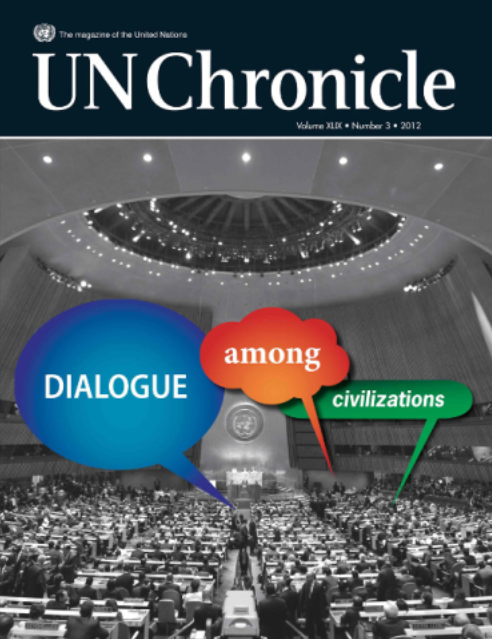
The UN General Assembly set the Year of Dialogue for 2001-2002. However, on September 11, 2001, New York City’s Twin Towers were hit by two hijacked planes. The United States- led “War on Terror” began. Dialogue among Civilizations was replaced by what the then UN Secretary-General, Kofi Annan, called “a sense of equality in vulnerability.”
Today, there are obvious tensions among States based in part on their cultures and values. The need for understanding and cooperation is great if we are not to descend a spiral of violence. Thus, we should see how the efforts for a dialogue among civilizations could be revived and this time, carried out.
Prof. René Wadlow is President of the Association of World Citizens.
 Association of World Citizens