Roar aloud, all of you The oppressed and exploited of the world Be you women or men, white or black, Hindus, Muslims, Christians, or Buddhists, Shatter the unequal systems of society.
Roar aloud, all of you The persecuted and downtrodden of the world, The deprived and helpless, both women and men, Know that without protest, Justice will never be yours.
Roar aloud, all of you The free-thinking, the youth of open minds, Establish humanity as the supreme virtue, Destroy all superstitions and the barriers of false religion.
Roar aloud, all of you The wise, the virtuous, the principled and idealistic, Break down the mountains of social divisions, Crush the arrogance of society, Ensure equal rights for all people.
Prosperina Sarkar, a native of Bangladesh, is a social worker, poet, and writer of books for children.
On October 21, 2024, prior to the meeting of the Indian leader, Narendra Modi, and the Chinese leader, Xi Jinping, the Indian Minister of Foreign Affairs, Subrahmanyam Juishankar, announced that an accord had been reached between Indian and Chinese authorities for a reduction of tensions along the 3,500-kilometer frontier between the two countries.
In 2020, there had been exchanges of fire between Indian and Chinese forces in the Tibet-Ladakh frontier area. There then seemed to be real possibilities that the violence would escalate. Thus, the Association of World Citizens (AWC) had made an Urgent Appeal, posted in July 2020 on its website and sent widely to contacts that might be helpful in reducing tensions. Today, the AWC is pleased with the new agreement and re-publishes its original 2020 Appeal.
* * *
Can Track II Efforts Reduce China-India Frontier Tensions?
July 3, 2020 at 7:52 AM
By René Wadlow
In a June 24, 2020 message to the Secretary General of the Shanghai Cooperation Organization, Mr. Vladimir Novov, the Association of World Citizens (AWC) expressed its active concern with the June 15 death of Indian and Chinese military in the Galwan River Valley in Ladakh on the India-China frontier and the possibility that the tensions will increase. While there have been brief discussions among Indian and Chinese authorities to prevent escalation, there have been no real negotiations. Negotiation is a basic political decision-making process, to facilitate compromise without loss of essential objectives.
The Indian Ministry of External Affairs said on June 25 that since early May, the Chinese have been amassing a large contingent of troops and arms along the Line of Actual Control (LAC). Also, within India, there has been a good deal of media attention, highly critical of China, given to the events. In addition, there have been calls for a boycott of Chinese goods, and some Chinese products have been removed from Indian shops. Both Indian and Chinese spokespersons have made references to the 1962 war during which some 2,000 persons were killed.
The AWC believes that there is a need for prompt measures as the India-China tensions add to existing tensions between the USA and China as well as boundary issues with Asian States in the South China Sea.
There may be a role for “Track II” nongovernmental efforts and exchanges. Track I is official government to government diplomacy among instructed representative of States, usually diplomats from the Foreign Ministry. However, governments have a range of officials on whom to call: intelligence agencies, the military, and “friends of the President” – trusted individuals within the executive entourage.
Track II efforts are organized through nongovernmental organizations and sometimes by academic institutions. Such efforts can entail informal, behind the scene communications that take place in the absence of formal communication channels. The term “Track II” was coined by the U. S. diplomat Joseph Montville in The Arrow and the Olive Branch: A Case for Track II Diplomacy.
Track II efforts have grown as there is increasing recognition that there is a tragic disjunction between the United Nations tension-reduction mandate and its ability to intervene in conflicts when called upon. As Adam Curle, experienced in Quaker mediation efforts has written “In general governments achieve their results because they have power to influence events, including the ability to reward or to punish. Paradoxically, the strength of civilian peacemakers resides specifically in their lack of power. They are neither feared nor courted for what they can do. Instead, they are trusted and so may sometimes be enabled to play a part in peacemaking denied to most official diplomats.”
Those involved in Track II efforts must, nevertheless, have ready access to governmental decision-makers and Track I diplomats. As the World Citizen and Quaker economist Kenneth Boulding in a little verse writes,
“When Track One will not do, We have to travel on Track Two But for results to be abiding, The Tracks must meet upon some siding”.
In the China-India frontier tensions, both sides must be convinced that there is a considerable sentiment for peace among their own supporters. In this conflict, which could slip into greater violence, there is an understandable tendency to look for short term answers. Yet there is also a need for some involved in Track II efforts to have an over-all integrated perspective for both short as well as long-term transformation. Thus, there needs to be a “pool” of people with experience, skills and the ability to move fast when the need or the opportunity is there?
We are sure that there are groups in India and China which can rise to meet this challenge.
Prof. René Wadlow is President of the Association of World Citizens.
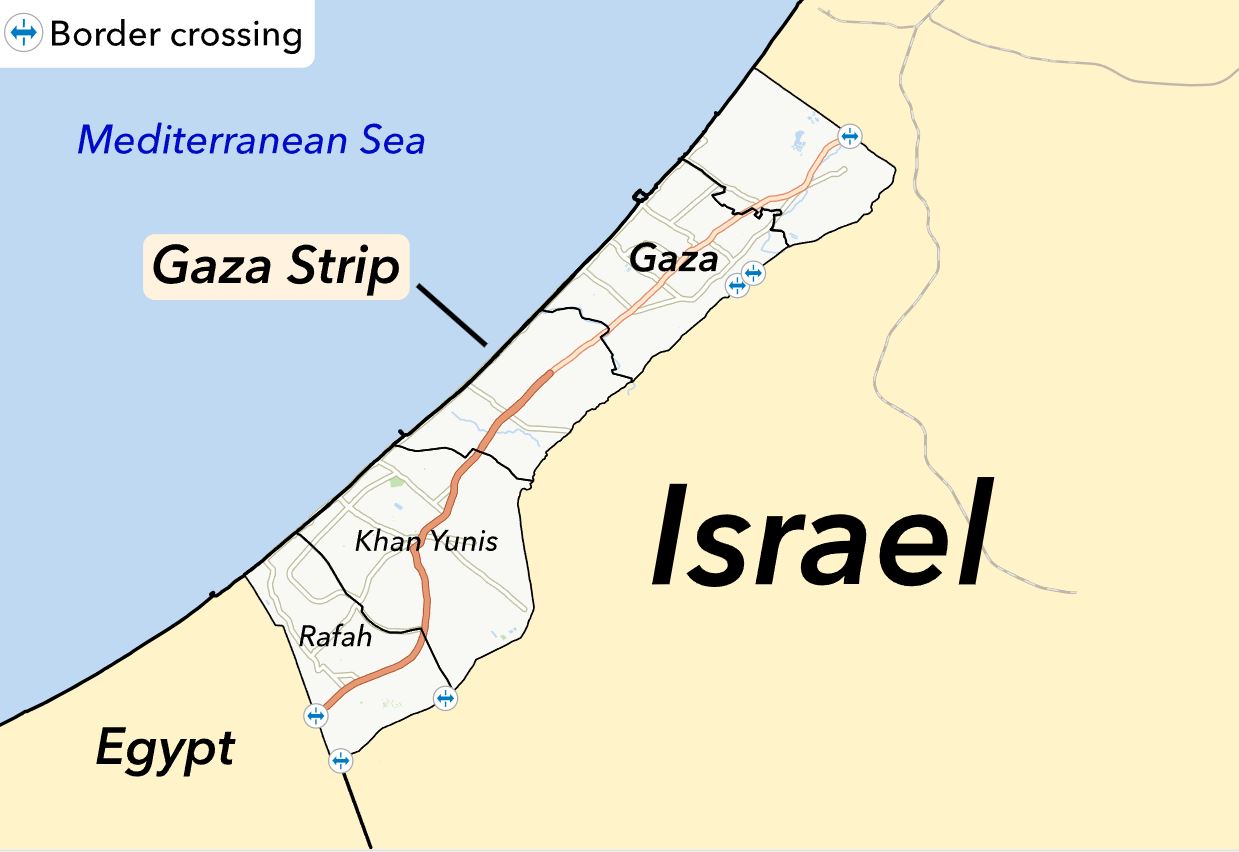
There is increasing discussion concerning the Gaza Strip, its relation to the West Bank, and “the day after” when there is a ceasefire, people return to their home area, and reconstruction begins. The Association of World Citizens (AWC) had proposed in a written text to the United Nations (UN) Human Rights Council (A/HRC/5-12/NGO /1, October 14, 2009) the creation of a Gaza Development Corporation, a strong, future-oriented positive vision influenced by the Tennessee Valley Authority (TVA) of the “New Deal” of the USA and a Jordan Valley Authority proposed in the early 1950s.
The AWC proposal had been first submitted to the representatives of governments and the UN Secretariat for an international funding conference for the Palestinian Authority held in Paris in December 2007. At the funding conference, the World Bank representative, much in the spirit of the AWC proposal, stressed the need to integrate an economically vigorous Palestine into the wider geographic context. Such a wider economic zone would include Israel, Palestine, Lebanon, Syria, and Jordan. The World Bank representative highlighted that prosperity depends on liberating the economic potential of the Palestinian refugees and their descendants.
(C) Isochrone
Unfortunately, the Gaza Development Corporation was not acted upon at the Paris funding meeting, nor in its follow up phase. Creating a framework and institutions to help the people of the Gaza Strip and the wider region will not be easy. However, difficult times call for political creativity. Thus, the AWC re-proposes for consideration the creation of a Gaza Development Corporation.
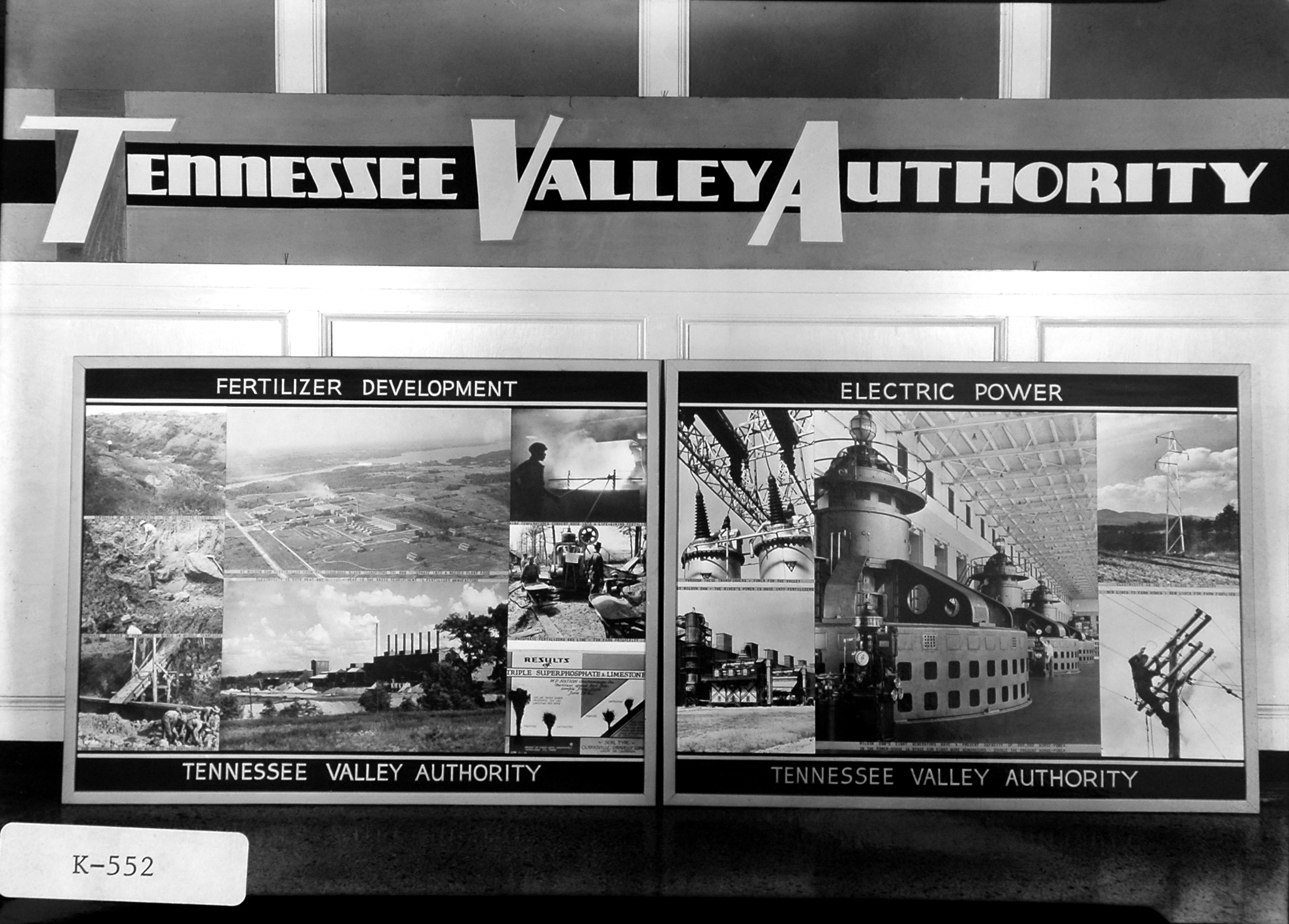
The TVA was created in May 1933 to help overcome the deep economic depression in the USA. President Franklin Roosevelt, in his message to Congress, suggested that the Authority should be a “corporation clothed with the power of Government but possessed of the flexibility and initiative of a private enterprise. It should be charged with the broadest duty of planning for the proper use, conservation and development of the natural resources of the Tennessee River drainage basin and its adjoining territory for the general social and economic welfare of the Nation… This in a true sense is a return to the spirit and vision of the pioneer. If we are successful here, we can march on, step by step, in the development of other great natural territorial units.”
(1935) Midsouth Fair Exhibit (C) Tennessee Valley Authority
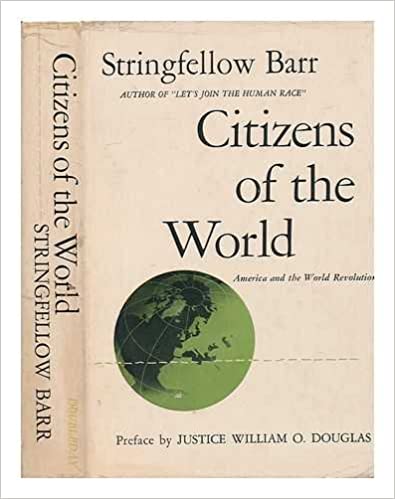
The central idea of the TVA was that it should do many things, all connected with each other. To do all these activities well, it had to be a public corporation, public because it served the public interest, a corporation rather than a government department, so that it could initiate the flexible, responsive management of a well-run private business. As Stringfellow Barr wrote in his book Citizens of the World (New York: Doubleday and Co, 1952, 285 pp), “The great triumph of the TVA was not the building of dams. Great dams had been built before. The greatest triumph was that it not only taught the Valley people but insisted on learning from them too. It respected persons.”
Strong socioeconomic structures are needed which can be maintained during periods of inevitable future tensions. As Jean Monnet, one of the fathers of the European Common Market has said, “Men take great decisions only when crisis stares them in the face.” Just as the first steps of the European Common Market had to overcome the deep wounds of the Second World War, so the situation in the Gaza Strip and the wider area needs to break the strong psychological barriers with cooperative economic measures from which many can benefit and negotiations in good faith”.
Prof. René Wadlow is President of the Association of World Citizens.
The armed conflicts in the Middle East: Israel-Palestine, Lebanon, Syria, Iraq, Iran, Yemen have led to increased violations of International Humanitarian Law. Medical facilities and medical personnel have been attacked; civilians have been targeted, educational facilities destroyed. Therefore, the Association of World Citizens (AWC) makes an urgent call for the respect of International Humanitarian Law. This must be a joint effort of governments and Nongovernmental Organizations.
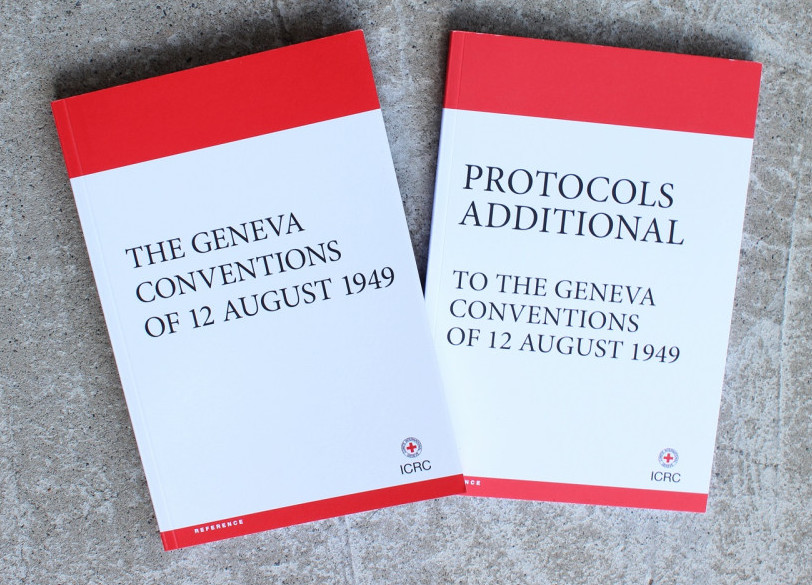
Regular military personnel of all countries are theoretically informed of the rules of the Geneva Conventions of August 12, 1949, and the Protocol Additional adopted in 1977.
When the 1949 Geneva Conventions were drafted and adopted, it was possible to spell out in considerable detail rules regarding prisoners of war and the protection of civilians, in particular Common Article 3 (so called because it is found in all four Conventions) provides that “each Party to the conflict shall be bound to apply, as a minimum, the following provisions: Persons taking no active part in the hostilities … shall in all circumstances be treated humanely without any adverse distinction founded on race, color, religion or faith, sex, birth or wealth, or any other similar criteria.”
The importance of Common Article 3 should not be underestimated. It sets out in straightforward terms important protections that all parties to a conflict must respect. In order to meet the need for additional protection, international humanitarian law has evolved to cover not only international armed conflict but also internal armed conflict. Today, international human rights standards are also considered part of international humanitarian law, thus providing additional protection for vulnerable population groups such as women, children, and minorities.
As situations of internal violence and strife proliferate, abuses committed by non-State actors, such as armed militias, are increasing concerns. Fundamental standards of international humanitarian law are intended to ensure the effective protection of human beings in all situations. The standards are clear. (1)
There are two major weaknesses in the effectiveness of international humanitarian law. The first is that many people do not know that it exists and that they are bound by its norms. Thus, there is an important role for greater promotional activities, the dissemination of information through general education, specific training of the military, outreach to armed militias, and cooperation with a wide range of nongovernmental organizations.
The second weakness is that violations of international humanitarian law are rarely punished. Governments too often tolerate these violations. Few soldiers are tried, or courtmartialed, for the violations of international humanitarian law. This weakness is even more true of nongovernmental militias and armed groups.
In fact, most violations of international humanitarian law are not actions of individual soldiers or militia members carried away by a sudden rush of anger, fear, a desire of revenge or a sudden sexual urge to rape a woman. Soldiers and militia members violating the norms of international humanitarian law are acting on orders of their commanders.
Thus, the only sold response is an act of conscience to refuse an order of a military or militia higher up and refuse to torture, to bomb a medical facility, to shoot a prisoner, to harm a child, and to rape a woman. Conscience, that inner voice which discerns what is right from wrong and encourages right action is the value on which we can build the defense of international humanitarian law. The defense of conscience to refuse unjust orders is a large task but a crucial action for moving toward a law-based world society.
Notes
(1) For useful guides to international humanitarian law see:
D. Schindler and J. Toman, The Laws of Armed Conflicts (Martinus Nihjoff Publishers, 1988)
H. McCoubrey and N.D. White, International Law and Armed Conflicts (Dartmouth Publishing Co., 1992)
Prof. René Wadlow is President of the Association of World Citizens.
October 7-8, 2024 will mark one year of armed conflict between Israeli forces and the Hamas militia – an armed conflict which grinds on and has spread.
On October 8, 2023, in light of the October 7 Hamas attack and the start of the Israeli response in the Gaza Strip, the Association of World Citizens called for five immediate steps that it hoped would create a climate of dialogue and the start of negotiations in good faith. The proposals were posted on the World Citizens’ website, sent to the Israeli Missions to the United Nations (UN) and to groups that might have avenues of communication with Hamas.
“As Citizens of the World, we call for a ceasefire in the Israeli-Palestinian armed conflict;
For the release of all hostages held by Hamas and other Palestinian groups;
For the release of all Palestinian prisoners held in Israeli jails, often under administrative detention without trial;
For preventing the extension of the conflict to the Lebanon frontier through negotiations with Hezbollah;
For preventing an increase in violence on the West Bank among Israeli settlers and Palestinian villages;
For the start of negotiations in good faith for a political solution that ensures freedom and the collective safety of Israelis and Palestinians.”
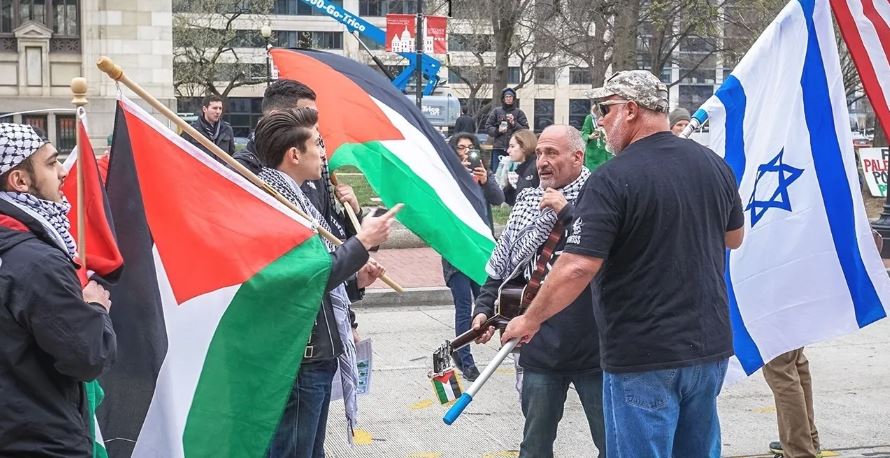
(C) Ted Eytan
A year later, the armed violence has increased: in Gaza with a high number of persons killed, wounded and displaced, on the West Bank, in Lebanon, has expanded to Iran and brought in elements of the conflict in Yemen.
There have been relevant resolutions of the UN General Assembly, of the International Court of Justice, and appeals for a ceasefire and negotiations from many Nongovernmental Organizations (NGOs).
Due to the spiraling growth of destruction, as NGOs we must continue and increase our efforts.
Prof. René Wadlow is President of the Association of World Citizens.
The Pact for the Future was accepted by the United Nations (UN) General Assembly in a three-stage process. The first stage was a nearly year-long drafting of the document with many small revisions in the 56 paragraphs setting out the goal of a renewed UN better able to guarantee peace and development. The second stage was a last moment motion by the Russian Federation which asked for a vote, finding some of the wording, especially on human rights, too strong. The Russian motion was put to a vote with 143 States voting for the text of the Pact, 15 abstentions, and 7 opposed (Russia, Belarus, North Korea, Iran, Syria, Sudan, and Nicaragua.)
After this vote, the President of the General Assembly called for a vote by acclamation. Everyone applauded, some more vigorously than others. Thus, the Pact was adopted by consensus.
The Pact should be seen as a springboard for action rather than as an end point. With the 193 UN members potentially involved in drafting the document, there was a need for compromises and general ideas rather than any new specific proposals. The Pact is a reaffirmation of the goals and processes of the UN system, but it also notes the need for constant renewal. In paragraph 6, the Pact states, “We recognize that the multilateral system and its institutions, with the United Nations and its Charter at the center, must be strengthened to keep pace with a changing world. They must be fit for the present and the future – effective and capable, prepared for the future, just, democratic, equitable and representative of today’s world, inclusive, interconnected and financially stable.”
Paragraph 9 states, “We also reaffirm that the three pillars of the United Nations – sustainable development – peace and security, and human rights – are equally important, interlinked and mutually reinforcing. We cannot have one without the others.”
In practice, it was easier to stress sustainable development since the 2030 Sustainable Development Goals had already been set out, through progress is very uneven. For peace and security, there are Articles 25 and 26 stating that, “We will advance the goal of a world free of nuclear weapons. We will uphold our disarmament obligations and commitments.” A culture of peace is mentioned in a number of places, but no specific steps are set out.
For two days prior to the governments’ discussion and voting on the Pact, there was what were called “Action Days” to which were invited Nongovernmental Organizations (NGOs), academics working on UN issues, and the representatives of business corporations involved in international trade. The two days were certainly a time for networking if not for “action”.
The Pact is a partially open door for UN cooperation with NGOs stating in a general way the “participation of relevant stakeholders in appropriate formats.” More specifically, the Pact calls to “Facilitate more structured, meaningful and inclusive engagement of nongovernmental organizations in consultative status with the Economic and Social Council in the activities of the Council in line with ECOSOC resolution 1996/21”. The door of the Pact was most open to youth calling for an increase in the representation of youth, which can only be via NGOs. We will have to see what, as NGO representatives, we can make of the partly open door.
Prof. René Wadlow is President of the Association of World Citizens.
Antonio Guterres, the United Nations (UN) Secretary General, said in his opening remarks to the UN General Assembly on September 24, 2024, “Gaza is a nonstop nightmare that threatens to take the entire region with it. Look no further than Lebanon. We should all be alarmed by the escalation. Lebanon is on the brink. The people of Lebanon – the people of Israel – and the people of the world – cannot afford Lebanon to become another Gaza.”
Lebanon may have already moved over the brink. Israeli strikes on Lebanon on September 23 killed at least 356 people and injured more than 1,200 others. Hezbollah deputy chief Naim Qassem has just said, “We have entered a new phase – an open-ended battle of reckoning.” Until now, Hezbollah has designed its attacks to stay below the threshold of a full-scale conflagration, but these deadly exchanges of fire carry a high risk of miscalculation, spiraling violence upward.
A rapid escalation in recent days, starting with the attack on Hezbollah members via booby-trapped pagers and walkie-talkies followed by Israeli bombardments, has raised the specter of a new phase in the conflict with a possible ground invasion by Israeli troops as in 1982 and 2006. There are fears that Iran could be drawn into the fighting. The new Iranian President, Masoud Pezeshkian, speaking at the UN General Assembly also on September 24, demanded a global response to the Lebanon situation, “not to allow Lebanon to become another Gaza.”
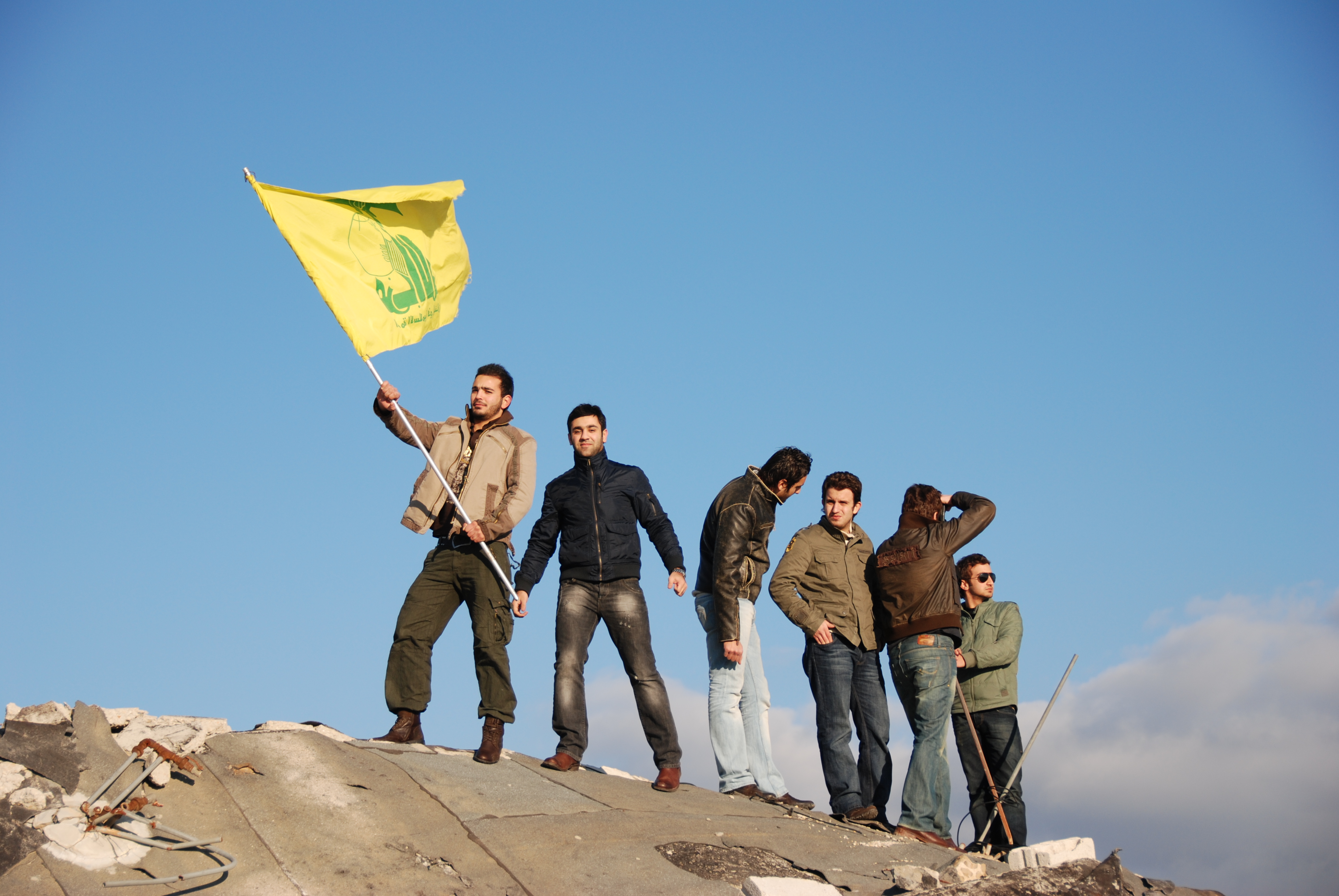
In 2007, young people from Beirut posing with a Hezbollah flag on the ruins of the Khiam prison formerly run by the pro-Israeli South Lebanon Army (C) Paul Keller
Hezbollah is supported by Iran but not fully under Iranian control. Hassan Nasrallah, the Secretary-General of Hezbollah, has in recent days made widely watched television talks attacking Israeli politics and indicating continuing Hezbollah support for the Palestinians in Gaza, saying that a ceasefire in Gaza was necessary before any negotiations with Hezbollah could take place. Since negotiations for a ceasefire in Gaza seem unlikely for the moment, Hezbollah’s current campaign is likely to continue. In addition, recent tensions in the West Bank between Israeli settlers, Israeli soldiers and Palestinians in settled villages have added more heat to the general tensions in the area.
The issue is what can be done now to prevent escalation and reduce tensions. A first step is to stress respect for international humanitarian law – often cited by the Association of World Citizens (AWC). Hospitals, medical facilities, educational institutions have been destroyed in the exchanges of fire. There is a need for resolute action on the violations of humanitarian law. Regular military personnel of all countries are theoretically informed of the Geneva Conventions of August 12, 1949 and the Protocol Additional adopted in 1977 in light of the experiences of the war in Vietnam. Today, international human rights standards are also considered part of international humanitarian law, thus providing additional protection for vulnerable population groups such as women, children and minorities.
A possible second phase is the “good offices” function of the UN Secretary-General. It is certain that the UN Secretariat is concerned, but their ability for action may be very limited.
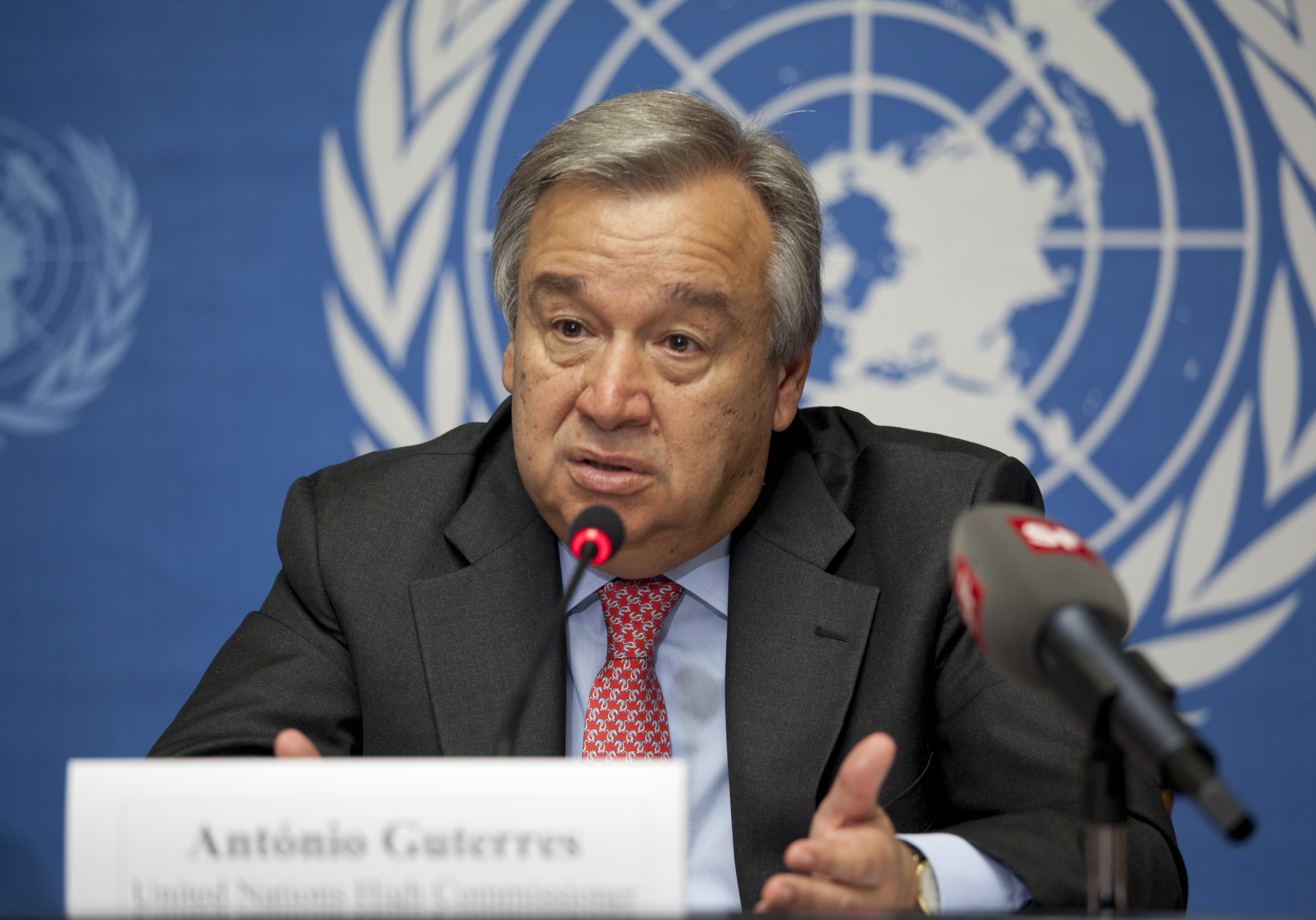
UN Secretary-General Antonio Guterres
It is not clear what governments at the UN can do. The Security Council has been blocked on many issues by the veto. The resolutions of the General Assembly are “recommendations” with little follow up in practice.
A 21-day ceasefire proposal has just been set out at the UN by France and the USA but rejected by Israel.
There may be some role for non-official mediation carried out by groups representing religious, academic, or charitable organizations. One advantage of non-official mediation is that all concerned are aware that such mediation is genuinely impartial seeking only a reduction of suffering caused by the conflicts. The disadvantage is that non-official mediators lack the resources, political, economic or military on which governmental mediators can draw.
It is certain that strong measures are needed to prevent escalation. Vision and creativity are important factors. The role of nongovernmental organizations in consultative status with the UN such as the AWC may be able to play a role in these dangerous times.
Prof. René Wadlow is President of the Association of World Citizens.
September 21 is the United Nations (UN) designated International Peace Day, set out in 1981 by a UN General Assembly resolution as being a day close to the start of the General Assembly. The Day is devoted to creating a culture of peace through dialogue in a spirit of mutual understanding and a consciousness of the unity of humanity. As the psychoanalyst Erick Fromm wrote, “I believe that the One World which is emerging can come into existence only if a new man comes into being – a man who has emerged from the archaic ties of blood and soil, who feels himself to be a Citizen of the World, whose loyalty is to the human race and to life.”
This year, September 21 is one of the two Action Days of the Summit for the Future being held at the UN in New York. We are all aware that in many parts of the world there is armed conflict, political rivalries and growing tensions. The current heavily State-centered approaches to world politics hampers the effectiveness of the UN and its Specialized Agencies. In these times of insecurity when many people feel uncertain about the future, when anxieties and fears are promoted and then exploited by political populists, old-fashioned nationalists and religious fundamentalists, we need to present a positive vision and to build bridges of understanding over the current divides of nationalism, ethnicity and social classes.
Today, the revolutionary character of our times is recognized by many observers. Those who live in the midst of swift social change confront the upheaval of their way of life. We are entering a period of change for which there are no blueprints. Therefore, it is essential that we learn to work together. We celebrate our similarities rather than our differences. Thus, on this Day of Peace, we are called to new levels of creativity and constructive action.
Prof. René Wadlow is President of the Association of World Citizens.
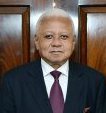
The United Nations (UN) Independent International Fact-Finding Mission for the Sudan chaired by Mohamed Chande Othman of Tanzania said, in its first Report of September 6, 2024, that Sudan’s warring parties, the Sudanese Armed Forces and the Rapid Support Forces as well as their respective militia allies, have committed an appalling range of human rights and international humanitarian law violations including indiscriminate airstrikes and shelling against civilians, schools, hospitals, and vital water services.
The current armed conflict which began on April 15, 2023 between two former allies is led, on the one side, by General Abdel Fattah Al Burham of the Sudanese Armed Forces and, on the other, by General Mohamed Hamdan Dagulo, known by his battle name of Hemedhi, of the Rapid Support Forces. The conflict, which has spread to 14 of the 18 provinces of Sudan, has killed and wounded tens of thousands of civilians, displaced nearly 8 million people and forced two million to flee to neighboring countries and beyond.
Mohamed Chamde Othman (C) U.S. Government
As the Fact-Finding Mission Report highlights, the warring parties targeted civilians through rape, sexual slavery and other forms of sexual violence, arbitrary arrest as well as torture and ill-treatment. Assaults have been carried out against ethnic minorities, in particular the Masalit in West Darfur.
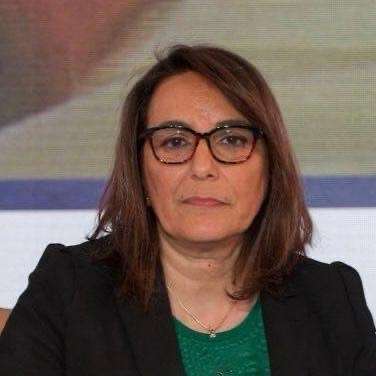
The Fact-Finding Mission, mandated by the Human Rights Council in October 2023, carried out a wide range of discussions and interviews. As the Expert Member of the Mission Mona Rishmawi said, “These findings should serve as a wakeup call to the international community to take decisive action to support survivors, their families and affected communities and hold perpetrators accountable. A comprehensive approach to transitional justice is vital for addressing the root causes of the conflict and ensuring accountability.”
Mona Rishmawi
Efforts for a ceasefire and the start of negotiations by the Personal Envoy for the Sudan of the UN Secretary-General have led to no advances. Thus, wider action is needed. Mohamed Othman has said, “The international community must support the Sudanese aspiration for an inclusive and representative civilian government that respects the rights of all citizens, fostering a path toward equality, justice and sustainable peace in Sudan.” In light of the many difficulties, he has called for sending UN peacekeeping forces to Sudan. “Given the failure of the warring parties to spare civilians, it is imperative that an independent and impartial force with a mandate to safeguard civilians be deployed without delay. The protection of the civilian population is paramount, and all parties must comply with their obligations under international law and immediately and unconditionally cease all attacks on the civilian population.”
As the deployment of an independent and impartial force depends on the UN Security Council the focus for action shifts from the Human Rights Council to the Security Council. We appeal for vitally needed action now.
Prof. René Wadlow is President of the Association of World Citizens.
LA AWC LLAMA A LAS AUTORIDADES DE NICARAGUA A DEROGAR LA PROHIBICIÓN ANUNCIADA DE 1.500 ORGANIZACIONES NO GUBERNAMENTALES
La Association of World Citizens (Asociación de Ciudadanos del Mundo; AWC) expresa su alarma al aprender que las autoridades de la República de Nicaragua anunciaron el 19 de agosto la prohibición de 1.500 organizaciones no gubernamentales (ONG), la mayoría de ellas organizaciones de beneficencia católicas romanas, aunque, lamentablemente, la medida también ha afectado a la Cruz Roja Nicaragüense.
Desde abril de 2018, el Gobierno encabezado por el Presidente Daniel Ortega ha adoptado un cariz abiertamente autoritario, tras las protestas cuya violenta represión, según las Naciones Unidas (ONU), ha dejado más de 300 muertos. En este contexto, casi todos los opositores políticos han sido encarcelados o forzados al exilio.
En cuanto a los grupos de la sociedad civil, esta última medida eleva a 5.000 el número de ONG prohibidas por las autoridades en los últimos seis años. Todos los grupos prohibidos han visto sus bienes confiscados por el Gobierno. Aunque la razón oficial esgrimida es que estas ONG no han declarado sus ingresos, la semana pasada se aprobó una normativa que obliga a las ONG a establecer “alianzas de asociación” con las autoridades, con lo que prácticamente se acaba su carácter “no gubernamental”.
La Oficina del Alto Comisionado de las Naciones Unidas para los Derechos Humanos ha pedido “a las autoridades nicaragüenses que dejen de imponer restricciones severas a los espacios cívicos y democráticos del país y que garanticen el respeto de los derechos humanos, de conformidad con las obligaciones internacionales de Nicaragua en materia de derechos humanos”.
La AWC respalda sin reservas este llamamiento, instando al Gobierno de Nicaragua a rescindir de inmediato su prohibición anunciada y a restablecer a todas las ONG ilegalizadas desde 2018 su estatus jurídico y financiero inicial, garantizando además que sean libres de operar como consideren conveniente, un requisito básico para cualquier país que pretenda defender el Estado de derecho.
 Association of World Citizens