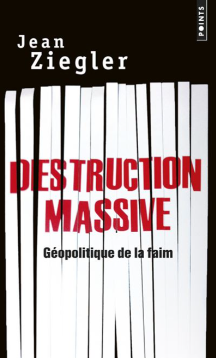
Jean Ziegler, Destruction Massive: Géopolitique de la faim.
Paris: Editions du Seuil, 2011, 343pp.
Translated into English and published as
Jean Ziegler, Betting on Famine: Why the World Still Goes Hungry
New York: The New Press, 2013
The First Millennium Goals set in 2000 were to half poverty and hunger by 2015.
Hunger and malnutrition are major causes of deprivation and suffering. As there has been no rapid progress in reducing hunger, other goals, such as reduced child mortality and improved maternal health, have not been met either. Many years of empirical evidence point to the negative impact of hunger and malnutrition on health, education, and labor productivity.
The impact of hunger has been known for some time. Jean Ziegler pays tribute to the research and action of a mutual friend, Josue de Castro, Brazilian nutritionist and World Citizen.
De Castro had pointed out in the late 1930s that hunger in Brazil was not a fatality of nature but the result of unjust human structures. Thus, things could change with enlightened action by farmers with the help of enlightened governments. He helped to organize peasant leagues and was elected to the parliament of Brazil. He undertook visits and studies in other Latin American countries. These studies convinced him of the socio-economic causes of hunger and of their wide geopolitical impact. The Geopolitics of Hunger is de Castro’s most widely read book and serves as the subtitle of Jean Ziegler’s book as hunger remains a geopolitical issue, not simply a question of locally improved agricultural techniques.
De Castro had been the independent president of the Executive Council of the Food and Agriculture Organization (FAO) of the United Nations (UN) from 1952 to 1955, at which time the governments decided to abolish the post of independent president. The Executive Council has been chaired by national diplomats since. While at the FAO, de Castro was invited to look at agriculture in a good number of countries. He had created in 1957 a Nongovernmental Organization, World Campaign against Hunger (Association mondiale de lutte contre la faim), ASCOFAM from its title in French. He drew on persons active in the world citizen movement such as l’Abbé Pierre, René Dumont and Max Habicht.
When I arrived in Geneva to teach at the Graduate Institute of Development Studies in September 1963, de Castro was the Ambassador of Brazil to the UN in Geneva, and I went to see him shortly afterwards to discuss development issues. Then in April 1964, the military led by General Castelo Bianco took power in Brazil. Their right-wing and brutal dictatorship lasted from 1964 to 1985. De Castro was quickly replaced as Ambassador and moved to Paris to teach and work with NGOs on hunger and agricultural issues. I saw him a number of times in Paris. He died in Paris in September 1973, aged only 65, but he left a heritage of study and action on the power dynamics of hunger and agricultural policies. Jean Ziegler, a sociologist of African societies and for a good number of years a Socialist member of the Swiss parliament, was from 2000 to 2008 the UN Commission on Human Rights’ Special Rapporteur on the Right to Food. Much of the research for the book was carried out with his UN team but is presented in a fiery style not found in UN reports.
Increased action to improve rural life needs to be taken quickly. As the recent UN-sponsored Millennium Ecosystem Assessment states, “Human activity is putting such strain on the natural functions of Earth that the ability of the planet’s ecosystem to sustain future generations can no longer be taken for granted. It is becoming ever more apparent that human society has a rapidly shrinking window of opportunity to alter its path.”
However, as Ziegler points out, it is not general human activity that is causing a strain, but the human activities of the powerful, the pred$atory sharks and financial speculators. He stresses the dangers of the increasing use of ethanol and other biofuels, often without consideration of the impact of the production of biofuels on land use and food production.
Their use should be limited at present so that the consequences of their use can be studied and biofuels developed from non-food sources. Ziegler also stresses that there needs to be a detailed analysis and then action on the role of speculation in the rise of commodity prices.
Banks and hedge funds, having lost money in real estate mortgage packages, are now investing massively in commodities. For the moment, there is little governmental regulation of this speculation. There needs to be an analysis of these financial flows and their techniques of operation − the wide use of offshore banks and holdings − and their impact on the price of grains and other foods.
Ziegler also stresses relatively new dangers to a just world food system. In many developing countries, the urban elite have been buying farmland as an investment, not necessarily to increase agricultural production with improved techniques, but to resell later when prices go up. Ziegler also stresses the sale or long-term rent of agricultural lands, especially in Africa, to governments or State-related companies of the Arab Gulf States and China. Again, the land is often not used for current agricultural improvement but is held for future use or sale. Thus, rather than seeing land reform, we are seeing dangerous trends of an increasing number of landless agricultural workers.
Jean Ziegler highlights the need for cooperation among the UN system of agencies, national governments, non-governmental organizations, and the millions of food producers.
There is a need for swift, short-term measures to help people now suffering from lack of food and malnutrition due to high food prices, the systems of food distribution, and situations of violence. However, it is the longer-range and structural issues on which we must focus our attention. The world requires a holistic World Food Policy and a clear Plan of Action. A knowledge of the geopolitics of hunger is a necessary first step.
Prof. René Wadlow is President of the Association of World Citizens.
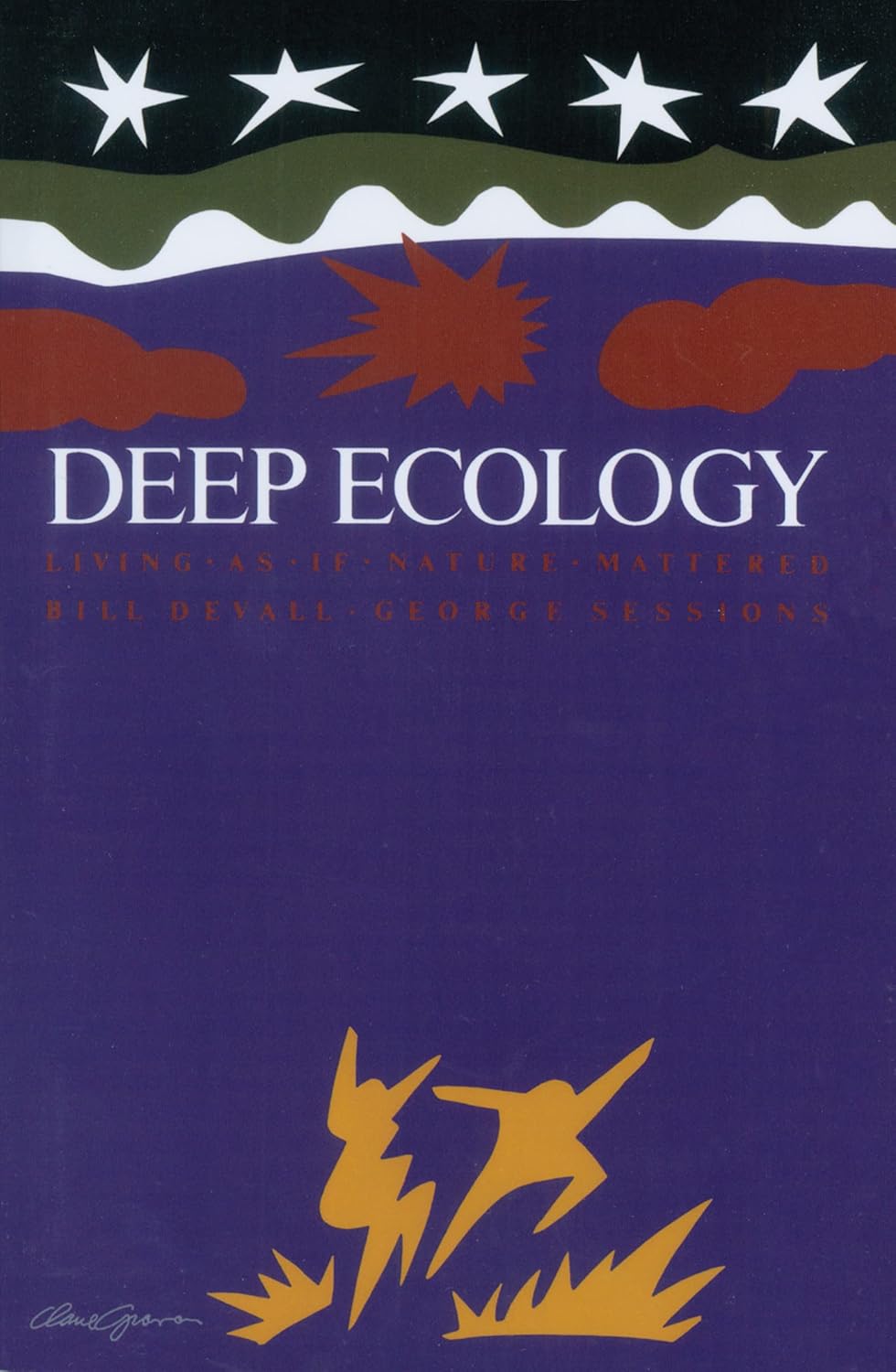
Bill Devall and George Sessions, Deep Ecology: Living as if Nature Mattered.
Layton, UT: Gibbs Smith, 1985, 267pp.
In his Small is Beautiful, Fritz Schumacher wrote, “In the affairs of men, there always appears to be a need for at least two things simultaneously, which on the face of it, seems to be incompatible and to exclude one another. We always need both freedom and order. We need the freedom of lots and lots of small, autonomous units, and, at the same time, the orderliness of large-scale, possibly global, unity and co-ordination.”
Likewise, there must be transformation both at the individual level as well as collective change. The two are closely linked. Only a whole and autonomous person can act, resist, walk away, and build something new. However, collective change is something more than the sum of individual changes. Collective change is a vision for a society. Thus, individual change and political action must go together.
One of the predicaments facing the emerging Green-ecology political movements is the need to gather enough people together to be a credible political force – which means general agreement upon a small number of basic options – while having a deep enough political philosophy so that people are not seduced by the current political parties using a few Green slogans. There is wide-spread support for reform environmentalism which aims to stop gross pollution, extensive despoliation of land, lakes, and seas, mistreatment of animals. But those who support such localized reforms may not see the need for a basic transformation of society and the system of values.
Yet we need planet-wide changes, for ecological awareness has shown us that the planet we live on is one inter-related system upon which we are all dependent. In order to survive, we must learn to work together to build a world beyond war, a society with sustainable development – which means sustainable agriculture and appropriate technology, wholistic approaches to education and health, a spiritual outlook based on reverence for life. Albert Schweitzer from his work in Africa re-launched the human-scale revolution by insisting that production ought to serve peoples’ real needs; that there must be a new relationship with nature; that solidarity must replace antagonism; and that there must be sane consumption and active individual participation in society.
The world as an interrelated system has come to be called the “Gaia hypothesis” after the work of James Lovelock and Lynn Margulies who wrote “We defined Gaia as a complex entity involving the earth’s biosphere, atmosphere, oceans and soil, the totality constituting a feedback or cybernetic system which seeks an optimal physical and chemical environment for life on this planet. Gaia remains a hypothesis, but much evidence suggests that many elements of this system act as the hypothesis predicts.” (Gaia is the first goddess of early Greek thought. From the void, neither born nor destroyed – what the Chinese call the Tao – Gaia danced forth and rolled herself into a spinning ball.)
Systems are integrated wholes whose properties cannot be reduced to those of smaller units. The systems approach emphasizes basic principles of organization. Thus, nature has an order, a pattern that as humans we need to understand, to respect, and to preserve. This order has intrinsic value and is the base of Life.
This book is an effort to outline the rich spiritual-religious-mystical component of the Green movements. The term “deep ecology” was coined in 1973 by Arne Naess, a social scientist and philosopher who has written widely on Mahatma Gandhi, nonviolence, and the Buddha. He wanted to describe the deeper more spiritual approach to nature exemplified by Rachel Carson and Aldo Leopold. This is a most useful analysis of Green values. The book should be widely used for discussion and political planning.
Prof. René Wadlow is President of the Association of World Citizens.
The United Nations (UN) Charter begins with the promising words “We the Peoples…”. However, thereafter the peoples’ voice fades and that of governments takes over. Yet today, Nongovernmental Organizations (NGOs) with consultative status with the UN play an effective role in shaping global policy. Many NGOs are transnational with members in different countries and cultures. This is one of their strengths and helps the UN to serve better all peoples.
For NGOs, there is a need to look outside the framework of the existing UN system to grasp the importance of new issues. This was the case in the late 1960s when some NGOs began to raise the issue of the environment and ecological protection before these issues were on the governmental agenda for action. Today, such an issue is the increasing amount of rural productive land that is falling under the control of urban elites, sometimes urban elites in other countries. Landownership inevitably deals with the distribution of power within a society. No development project, no matter how small or how technical, is without an impact on the distribution of power. A new well dug in a village is not simply an added social service. The new well calls into question the power of those who controlled access to water prior to digging the new well.
Although in many countries there are unions of agricultural workers, peasant leagues, agricultural cooperatives, and rural credit unions, it is nevertheless generally true that rural organizations have rarely achieved the degree of national power that has been reached by industrial workers’ unions.
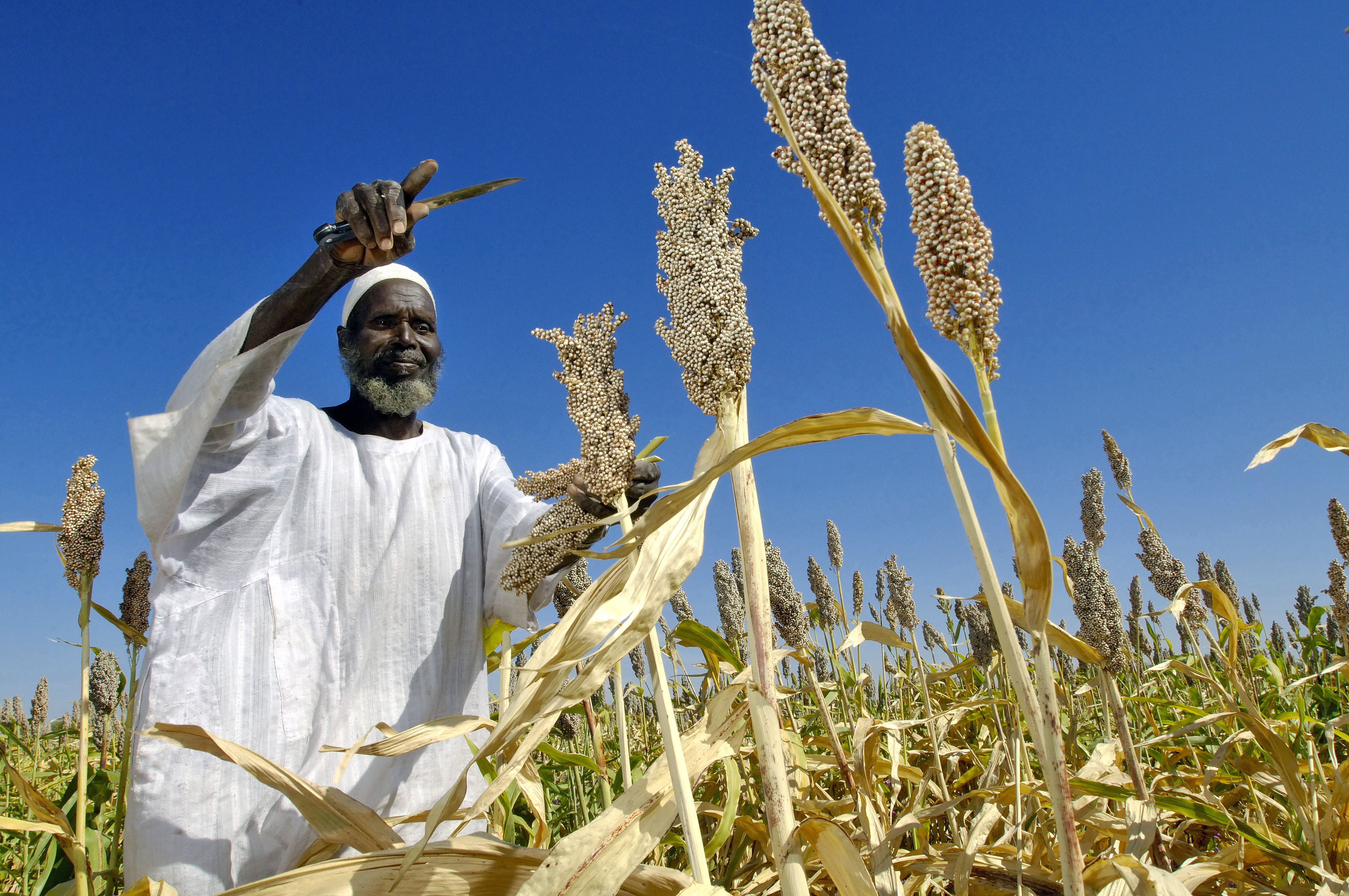
A Sudanese farmer harvesting sorghum plants from seeds donated by the Food and Agriculture Organization. (C) Fred Noy/UN Photo
One answer to why the rural poor stay poor is that they are rarely well organized. Especially the least powerful among the rural poor – the tenant farmers, the landless laborers, the untouchables, the members of tribal societies – are the least well organized, the most easily divided and blocked. The economic and political power structure in many countries does not encourage the active participation of small, marginal farmers and rural workers. If measures are not taken to facilitate the peaceful participation of the rural poor, it is likely that the rural poor will turn to armed violence.
It is true that nonviolent techniques have been used to organize the powerless in rural areas. One of the first actions of Mahatma Gandhi on his return to India from South Africa was to investigate and then mediate the struggle of the rural indigo pickers. Cesar Chavez was a leading advocate of nonviolence in his efforts to organize agricultural workers in the western United States. In Sri Lanka, the Sarvodaya movement has applied Buddhist values of compassion to construct a social and economic infrastructure based on a strong community spirit.
The role of the marginalized in rural areas is not a new problem but it is one that has not received the attention it deserves. NGOs can help to focus on the issue within the UN system and so advance reform measures.
Prof. René Wadlow is President of the Association of World Citizens.
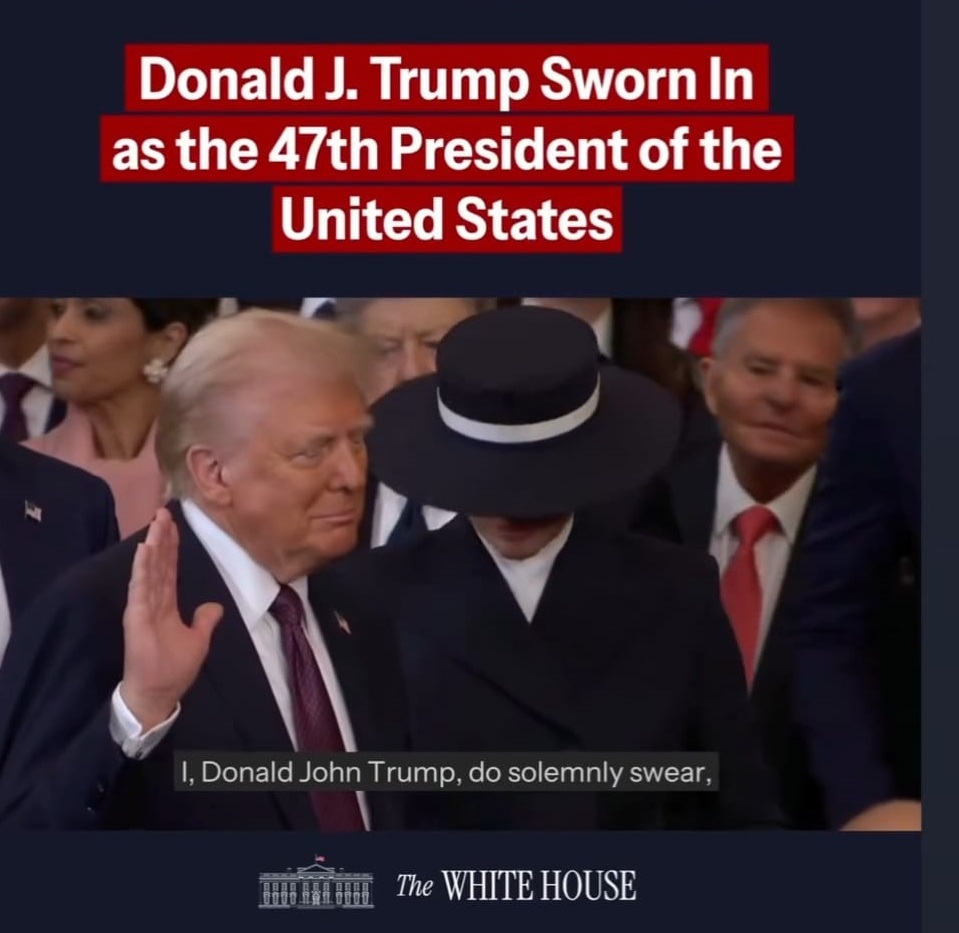
The January 20, 2025 inauguration of President Donald Trump has brought into sharp focus the turbulent and complex world society in which we live. As peacebuilders and citizens of the world, we face the same challenges as President Trump but with a different style and with far fewer resources at our command. We make plans but then are called to work for conflict resolution in unanticipated ways.
There are four policy challenges which face both President Trump and World Citizens: armed conflicts, currently ongoing and potential, persistent poverty in many areas, the erosion of international law and faith in multinational institutions, particularly the United Nations (UN), and the consequences of climate change.
The ongoing and potential armed conflicts are neither new nor unexpected. The Israeli-Palestinian tensions exist at least since 1936 and increased after the creation of the State of Israel. There may be some possibilities for negotiations in good faith. We must keep an eye open for possible actions.
Tensions with Iran are not new. The Soviet forces in part of Iran was the first conflict with which the UN had to deal in its early days. However, the rule by the Ayatollahs has made matters more complex.
The Russian-Ukrainian war grinds on with a large number of persons killed, wounded, and uprooted. Again, we must look to see if a ceasefire and negotiations are possible.
In Asia, the armed conflict in Myanmar between the military in power and the ethnic militias dates from the creation of the Burmese State at the end of the Second World War. A potential armed conflict between Mainland China and Taiwan dates from 1949 and the Nationalist government’s retreat to Taiwan. The potential armed conflict between the two Korean States dates from 1950 and the start of the Korean War.
The armed conflicts in Africa are no longer in the headlines, but they date from the early 1960s and the breakup of the European Empires: the Democratic Republic of Congo, Sudan, the States of the Sahel.
Thus, we all have a poor record of armed conflict prevention and mediation. Armed conflicts should remain at the top of both the governmental and nongovernmental agenda for action.
(C) U.S. Embassy France on Instagram
Persistent Poverty: Despite the UN Decades for Development, the Sustainable Development Goals, and Article 22 of the Universal Declaration of Human Rights which states that everyone is entitled to the economic, social, and cultural rights indispensable for his dignity and free development of his personality, persistent poverty exists in many parts of the world. One consequence of persistent poverty is migration from poorer to richer areas, both within countries and from poorer to richer States. Migration is a hotly debated issue in many countries, as right-wing nationalist groups make anti-migration their battle cry. Migration is likely to become an even more heated topic of debate as President Trump tries to carry out his proposal for a mass deportation of immigrants from the USA.
Linked to persistent poverty are trade issues and the protectionist trends in many countries. President Trump has proposed higher tariffs for good coming into the USA. This policy may set off tariff wars. Obviously to counter persistent poverty, world development policies must be improved – easier said than done!
The Erosion of International Law and Faith in Multinational Institutions: Armed conflicts and persistent poverty are closely related to the third issue: the receding United States (U.S.) involvement with the UN, the World Bank, the IMF, the World Court and other multinational organizations. Some of the foreign policy authorities appointed by President Trump are overtly critical of the UN and the International Criminal Court. There has already been an Executive Order to halt U.S. funding of the World Health Organization. However, there is no unifying vision of what a new world society would involve. The battle cry of “Make America Great Again”, if repeated by each State for itself, “Make Panama Great Again”, could be a loud concert but not conducive to positive decision making.
The Consequences of Climate Change: The fourth major group of issues concerns the consequences of climate change and the ways to lessen its impact. During the campaign for the presidency, Trump threatened to pull the USA out of the Paris Climate Agreement, and he has now signed an Executive Order doing so. The issue of climate change has been brought to the world agenda by scientists on the one hand, and by Nongovernmental Organizations and popular, often youth-led efforts, on the other hand. It is likely that these vital efforts related to climate change will continue despite climate policy resistance by some in the Trump administration.
President Trump said during his inaugural ceremony that “The Golden Age of America begins now… We stand on the verge of the four greatest years in American history.” We will have to watch closely and judge in four years. What is sure for peacebuilders and citizens of the world is that we stand on the verge of four more years of serious challenges. Thus, there is a need for cooperative and courageous action.
Prof. René Wadlow is President of the Association of World Citizens.
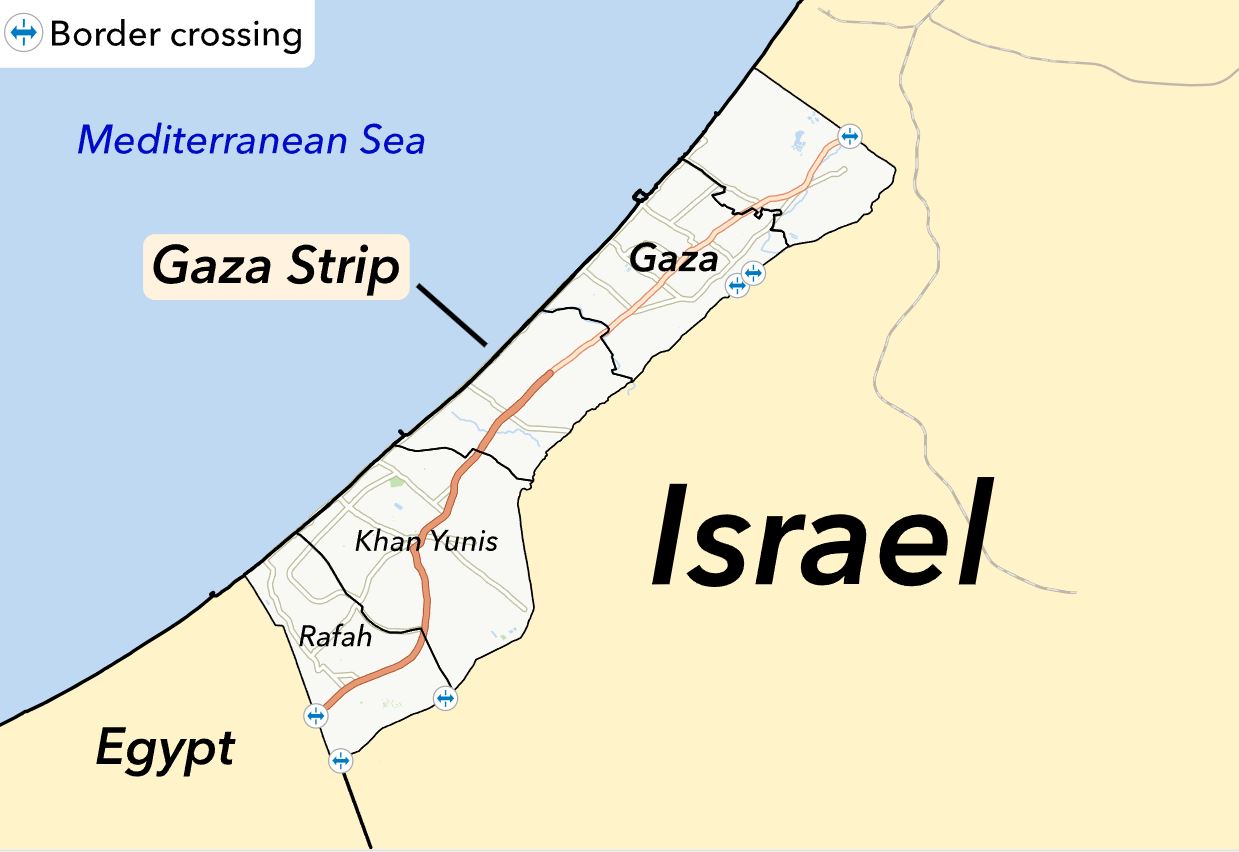
There is increasing discussion concerning the Gaza Strip, its relation to the West Bank, and “the day after” when there is a ceasefire, people return to their home area, and reconstruction begins. The Association of World Citizens (AWC) had proposed in a written text to the United Nations (UN) Human Rights Council (A/HRC/5-12/NGO /1, October 14, 2009) the creation of a Gaza Development Corporation, a strong, future-oriented positive vision influenced by the Tennessee Valley Authority (TVA) of the “New Deal” of the USA and a Jordan Valley Authority proposed in the early 1950s.
The AWC proposal had been first submitted to the representatives of governments and the UN Secretariat for an international funding conference for the Palestinian Authority held in Paris in December 2007. At the funding conference, the World Bank representative, much in the spirit of the AWC proposal, stressed the need to integrate an economically vigorous Palestine into the wider geographic context. Such a wider economic zone would include Israel, Palestine, Lebanon, Syria, and Jordan. The World Bank representative highlighted that prosperity depends on liberating the economic potential of the Palestinian refugees and their descendants.
(C) Isochrone
Unfortunately, the Gaza Development Corporation was not acted upon at the Paris funding meeting, nor in its follow up phase. Creating a framework and institutions to help the people of the Gaza Strip and the wider region will not be easy. However, difficult times call for political creativity. Thus, the AWC re-proposes for consideration the creation of a Gaza Development Corporation.
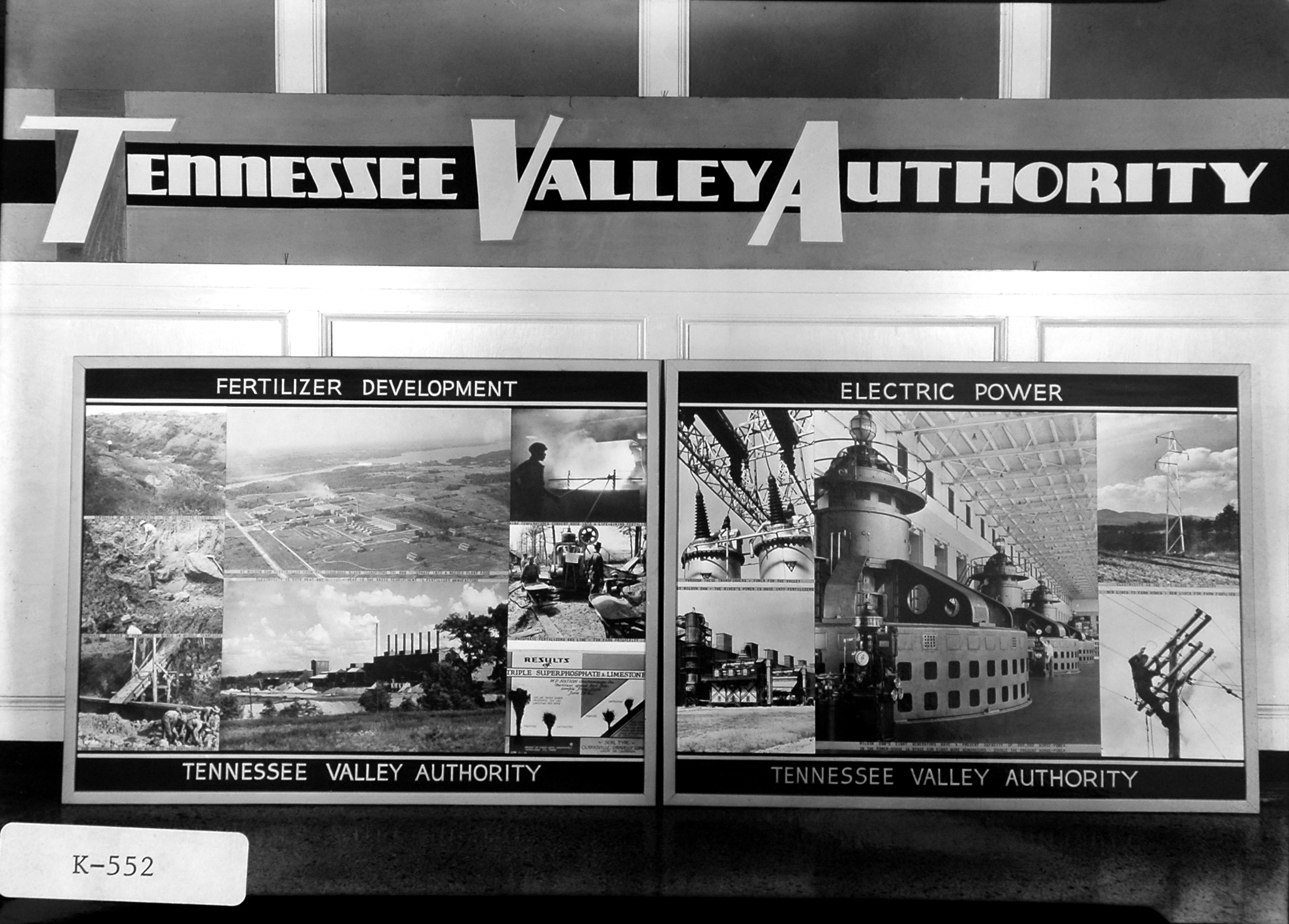
The TVA was created in May 1933 to help overcome the deep economic depression in the USA. President Franklin Roosevelt, in his message to Congress, suggested that the Authority should be a “corporation clothed with the power of Government but possessed of the flexibility and initiative of a private enterprise. It should be charged with the broadest duty of planning for the proper use, conservation and development of the natural resources of the Tennessee River drainage basin and its adjoining territory for the general social and economic welfare of the Nation… This in a true sense is a return to the spirit and vision of the pioneer. If we are successful here, we can march on, step by step, in the development of other great natural territorial units.”
(1935) Midsouth Fair Exhibit (C) Tennessee Valley Authority
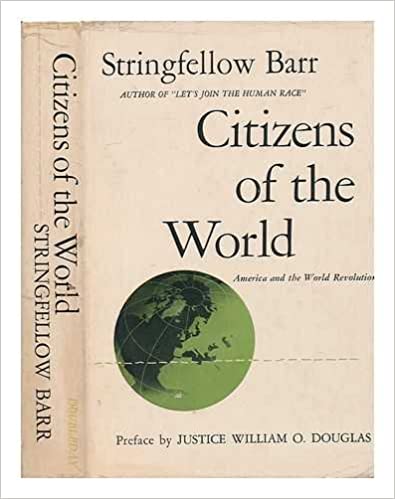
The central idea of the TVA was that it should do many things, all connected with each other. To do all these activities well, it had to be a public corporation, public because it served the public interest, a corporation rather than a government department, so that it could initiate the flexible, responsive management of a well-run private business. As Stringfellow Barr wrote in his book Citizens of the World (New York: Doubleday and Co, 1952, 285 pp), “The great triumph of the TVA was not the building of dams. Great dams had been built before. The greatest triumph was that it not only taught the Valley people but insisted on learning from them too. It respected persons.”
Strong socioeconomic structures are needed which can be maintained during periods of inevitable future tensions. As Jean Monnet, one of the fathers of the European Common Market has said, “Men take great decisions only when crisis stares them in the face.” Just as the first steps of the European Common Market had to overcome the deep wounds of the Second World War, so the situation in the Gaza Strip and the wider area needs to break the strong psychological barriers with cooperative economic measures from which many can benefit and negotiations in good faith”.
Prof. René Wadlow is President of the Association of World Citizens.
The Pact for the Future was accepted by the United Nations (UN) General Assembly in a three-stage process. The first stage was a nearly year-long drafting of the document with many small revisions in the 56 paragraphs setting out the goal of a renewed UN better able to guarantee peace and development. The second stage was a last moment motion by the Russian Federation which asked for a vote, finding some of the wording, especially on human rights, too strong. The Russian motion was put to a vote with 143 States voting for the text of the Pact, 15 abstentions, and 7 opposed (Russia, Belarus, North Korea, Iran, Syria, Sudan, and Nicaragua.)
After this vote, the President of the General Assembly called for a vote by acclamation. Everyone applauded, some more vigorously than others. Thus, the Pact was adopted by consensus.
The Pact should be seen as a springboard for action rather than as an end point. With the 193 UN members potentially involved in drafting the document, there was a need for compromises and general ideas rather than any new specific proposals. The Pact is a reaffirmation of the goals and processes of the UN system, but it also notes the need for constant renewal. In paragraph 6, the Pact states, “We recognize that the multilateral system and its institutions, with the United Nations and its Charter at the center, must be strengthened to keep pace with a changing world. They must be fit for the present and the future – effective and capable, prepared for the future, just, democratic, equitable and representative of today’s world, inclusive, interconnected and financially stable.”
Paragraph 9 states, “We also reaffirm that the three pillars of the United Nations – sustainable development – peace and security, and human rights – are equally important, interlinked and mutually reinforcing. We cannot have one without the others.”
In practice, it was easier to stress sustainable development since the 2030 Sustainable Development Goals had already been set out, through progress is very uneven. For peace and security, there are Articles 25 and 26 stating that, “We will advance the goal of a world free of nuclear weapons. We will uphold our disarmament obligations and commitments.” A culture of peace is mentioned in a number of places, but no specific steps are set out.
For two days prior to the governments’ discussion and voting on the Pact, there was what were called “Action Days” to which were invited Nongovernmental Organizations (NGOs), academics working on UN issues, and the representatives of business corporations involved in international trade. The two days were certainly a time for networking if not for “action”.
The Pact is a partially open door for UN cooperation with NGOs stating in a general way the “participation of relevant stakeholders in appropriate formats.” More specifically, the Pact calls to “Facilitate more structured, meaningful and inclusive engagement of nongovernmental organizations in consultative status with the Economic and Social Council in the activities of the Council in line with ECOSOC resolution 1996/21”. The door of the Pact was most open to youth calling for an increase in the representation of youth, which can only be via NGOs. We will have to see what, as NGO representatives, we can make of the partly open door.
Prof. René Wadlow is President of the Association of World Citizens.
In our current globalized world society, there is an increased role for politics without borders. Politics no longer stops at the water’s edge but must play an active role on the world stage. However, unlike politics at the national level which usually has a parliament at which the actors can recite their lines, the world has no world parliament as such. Thus, new and inventive ways must be found so that world public opinion can be heard and acted upon.
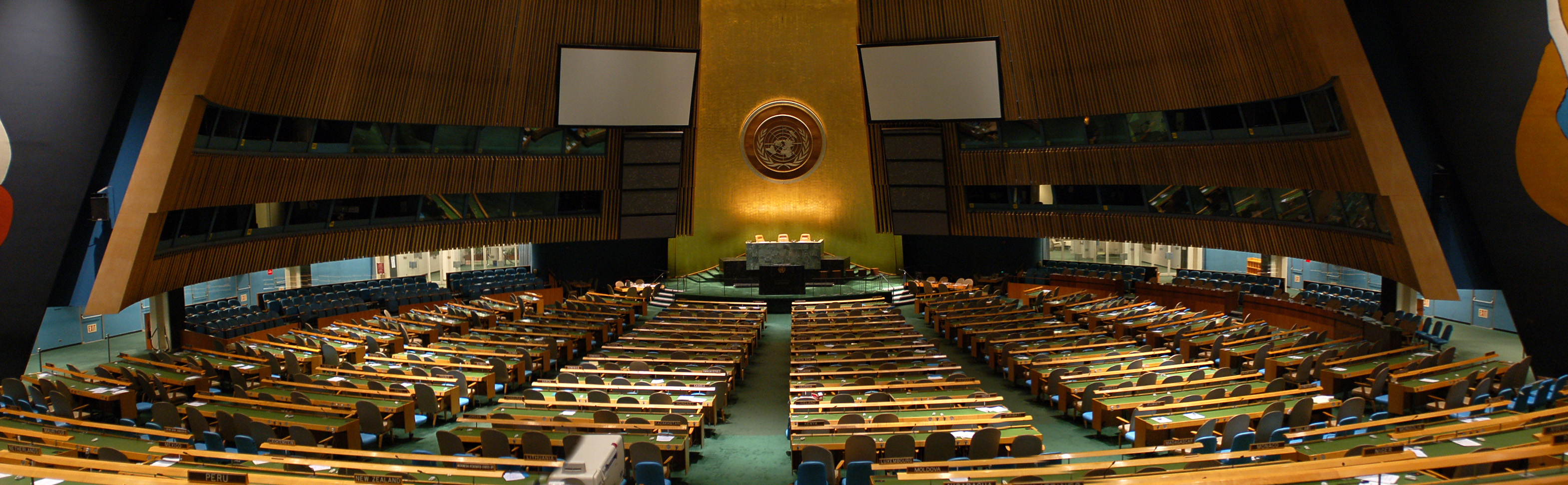
The United Nations (UN) General Assembly is the closest thing to a world parliament that we have today. However, all the official participants are diplomats appointed by their respective States – 195 member states. UN Secretariat members, the secretariat members of UN Specialized Agencies such as UNESCO and the ILO, are in the hallways or coffee shops to give advice. Secretariat members of the financial institutions such as the World Bank and the IMF are also there to give advice on costs and the limits of available funds. The representatives of Nongovernmental Organizations (NGO) in Consultative Status with the UN who can speak at sessions of the Economic and Social Council and the Human Rights Council cannot address the General Assembly directly. However, they are also in the coffee shops and may send documents to the UN missions of national governments.
(C) Jérôme Blum
Politics without borders requires finding ways to express views for action beyond the borders of individual countries. Today, most vital issues that touch the lives of many people go beyond the individual State: the consequences of climate change, the protection of biodiversity, the resolution of armed conflicts, the violations of human rights, and a more just world trade pattern. Thus we need to find ways of looking at the world with a global mind and an open heart. This perspective is an aim of world citizenship.
However, World Citizens are not yet so organized as to be able to impact political decisions at the UN and in enough individual States so as to have real influence. The policy papers and Appeals of the Association of World Citizens (AWC) are often read with interest by the government representatives to whom they are sent. However, the AWC is an NGO among many and does not have the number of staff as such international NGOs as Amnesty International, Human Rights Watch, and Greenpeace.
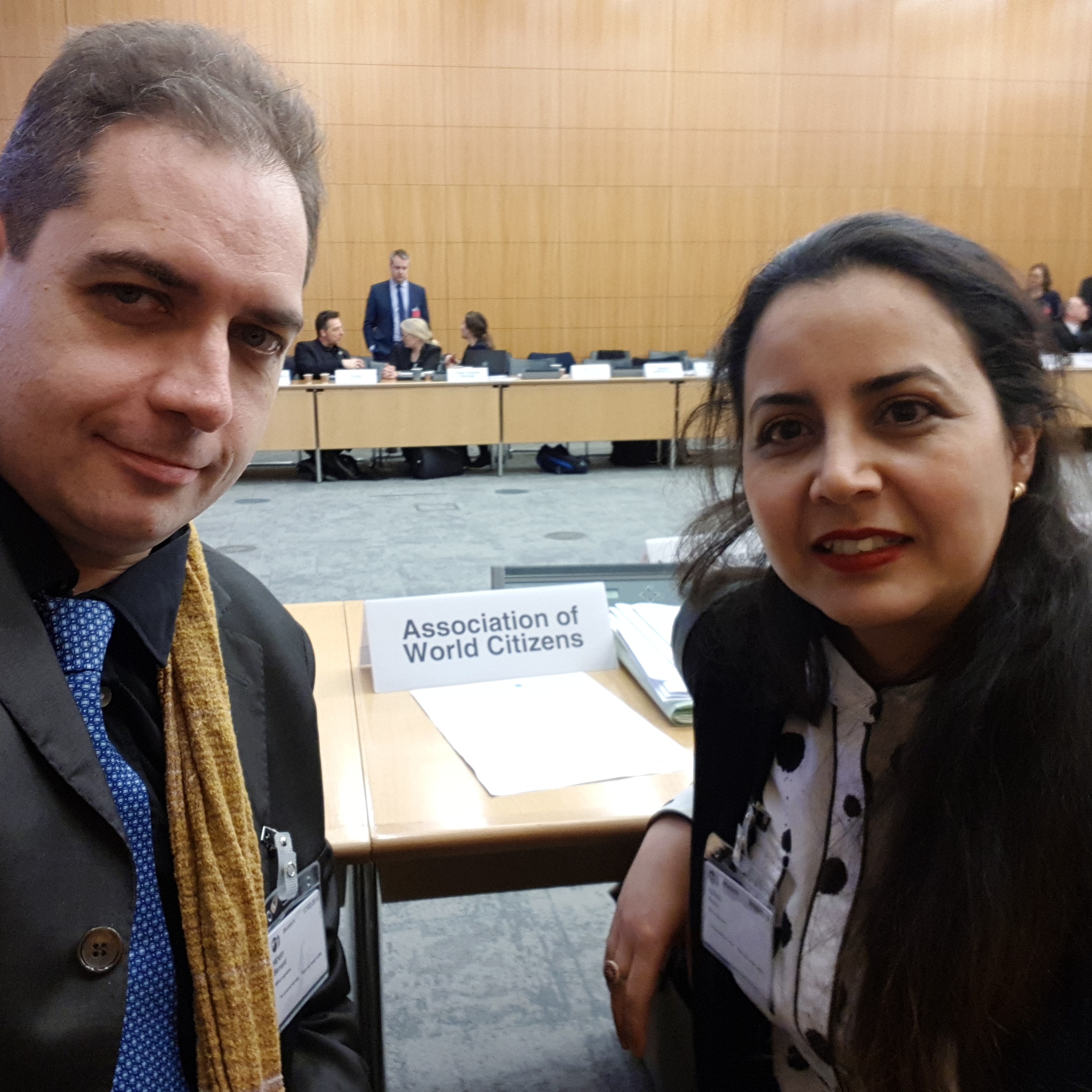
The First Officer and External Relations Officer, Bernard J. Henry, and the Legal and Mediation Officer, Attorney Noura Addad, representing the AWC at an OECD roundtable in March 2019 (C) Bernard J. Henry/AWC
We still need to find effective ways so that humanity can come together to solve global problems, that is, politics without borders. Prof. René Wadlow is President of the Association of World Citizens.
On May 23, the United Nations (UN) Security Council will hold a special briefing to address the issue of food insecurity under the chairmanship of Mr. Alain Berset, President of the Swiss Confederation. During May, the rotating chairmanship is held by Switzerland led by the Swiss Ambassador to the UN in New York, Ms. Pascale Baeriswyl. The meeting will have as background a May 3 report of the Food and Agriculture Organization (FAO) concerning early warning on areas facing acute food insecurity. The report highlights that some 250 million persons are living in this situation of acute food insecurity with the Democratic Republic of Congo leading the list with some 27 million persons due to armed violence and the breakdown of governmental structures. The Congo is followed by Ethiopia, largely due to fighting in the Tigray area. The war in Ukraine is also having a negative impact limiting production and export of food goods – a principal export of Ukraine. In addition to armed conflict, there is the growing impact of the consequences of climate change.
Today, cooperation on food insecurity is needed among the UN family of agencies, national governments, nongovernmental organizations, and the millions of food producers to respond to this food crisis. These measures will have to be taken in a holistic way with actions going from the local level of the individual farmer, the national level with new governmental policies, to measures at the multi-State regional level such as the European Union and the African Union, and at the world level with better coordinated action through the UN system.
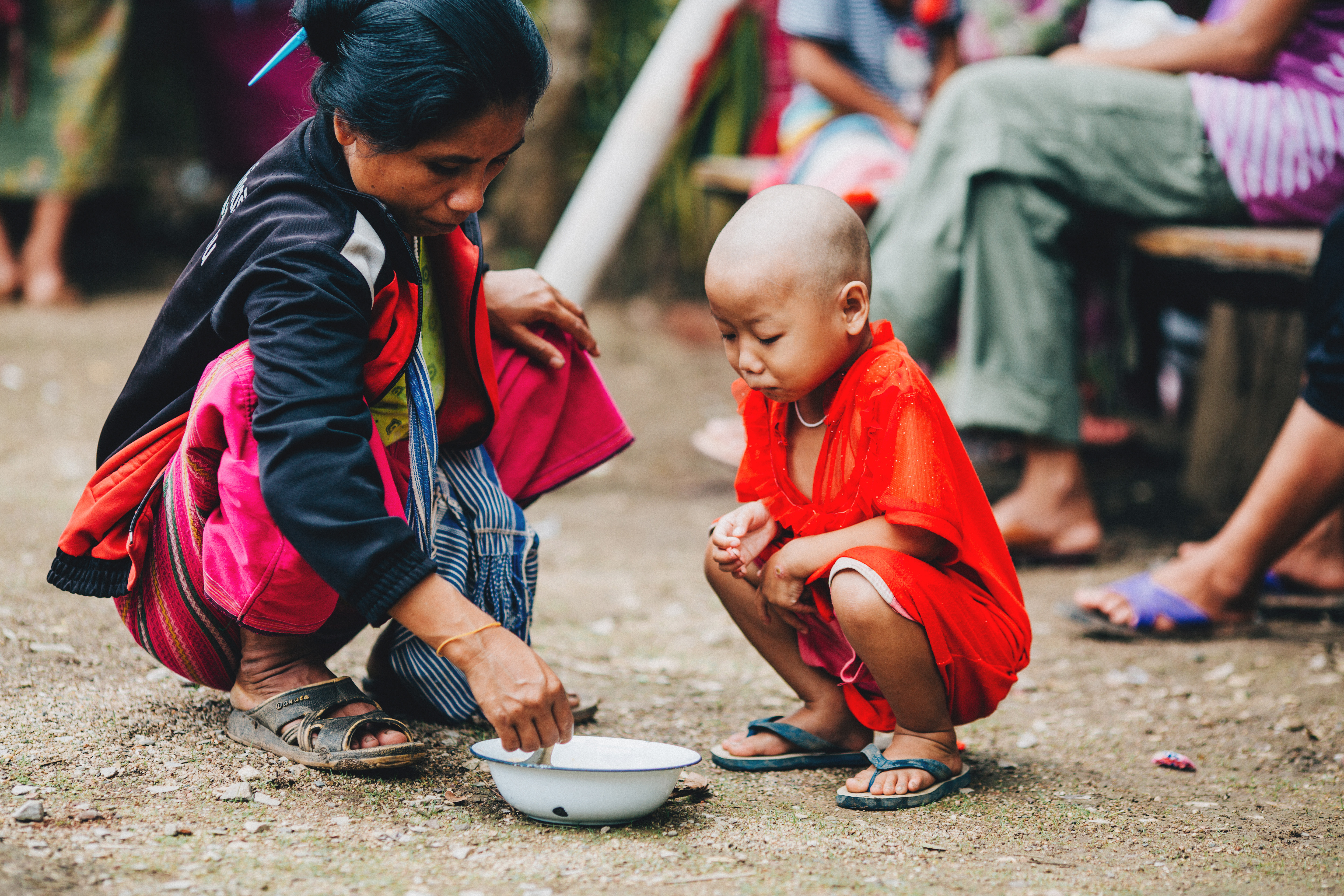
(C) Feed My Starving Children
There is a need for swift, short-term measures to help people now suffering from lack of food and malnutrition due to high food prices, inadequate distribution, and situations of violence. Such short-term action requires additional funding for the UN World Food Program and the release of national food stocks. However, it is on the longer-range and structural issues on which we must focus our attention.
The Association of World Citizens has taken a lead in the promotion of a coordinated world food policy with an emphasis on the small-scale farmer and a new awareness that humans are part of Nature with a special duty to care and respect for the Earth’s inter-related life-support system. As Stringfellow Barr wrote in Citizens of the World (1952), “Since the hungry in the world community believe that we can all eat if we set our common house in order, they believe also that it is unjust that some die because it is too much trouble to arrange for them to live.”
A central theme which Citizens of the World have long stressed is that there needs to be a world food policy and that such a world food policy is more than the sum of national food security programs. John Boyd Orr, the first Director General of the FAO, proposed a World Food Board to stabilize food prices and supplies. He resigned as Director General when the food board proposal was not accepted and then devoted much of his energy to the world citizen movement.
For World Citizens, the emphasis must be placed on creating a world food policy which draws upon improving local self-reliance while not creating nationalistic policies which harm neighbors. Food is a key aspect of deep structural issues in the world society and thus must be seen in a holistic framework. The briefing and debate of the UN Security Council may give us strong elements on which to promote a world food policy.
Prof. René Wadlow is President of the Association of World Citizens.
November 6 is set by the United Nations (UN) General Assembly in Resolution A/RES/56/4 as the International Day for Preventing the Exploitation of the Environment in War and Armed Conflict. Throughout history, in armed conflicts, water wells have been poisoned, crops set on fire, forests cut down, and animals killed to gain military advantage. Today, many armed conflicts have been linked to the exploitation of natural resources such as timber, diamonds, and fertile land and water.
The Association of World Citizens (AWC) has stressed that protection of the environment needs to be an important part of conflict prevention. The resource base that people depend upon for their livelihood needs to be safeguarded. Most recently, the AWC has highlighted the deliberate destruction of food-related resources in the armed conflict between the Ethiopian federal forces and the opposition movements in Tigray.
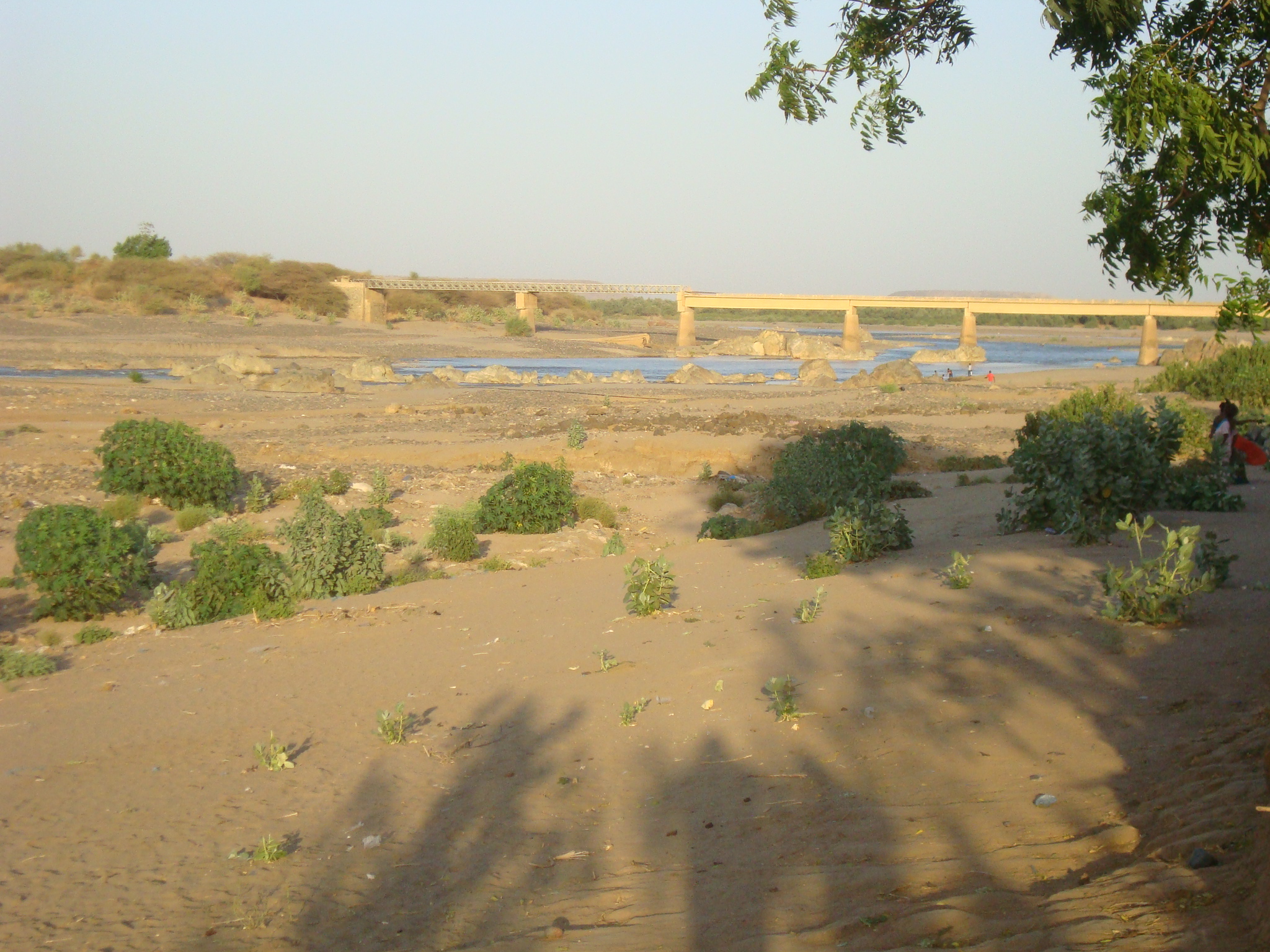
Humera in Tigray near the border with Sudan and Eritrea (C) Jnyssen
Since November 4, 2020, fighting has gone on in Tigray with the deliberate destruction of crops and agricultural infrastructures. UN-led humanitarian food relief was prevented from entering the area. Fortunately, at the start of November 2022, a ceasefire and a peace agreement facilitated by the African Union (AU) was signed in South Africa where the negotiations had been held. The AU has designated a team of 10 persons to follow up the process. However, the restoration of the agricultural infrastructure will be a lengthy process. It is not sure that all the factions involved will agree to the ceasefire. The situation merits a close watch.
There are currently other conflicts linked to natural resources, such as those in the Democratic Republic of Congo. The International Day must serve as a reminder, but efforts of protection need to be permanent. The AWC will continue its efforts.
Prof. René Wadlow is President of the Association of World Citizens.
Dans un premier temps, il nous semble important de faire un rappel de l’état des lieux environnemental dans lequel se trouvent la terre et ses ressources, en considérant les interactions entre l’humanité et les écosystèmes qui y vivent.
Selon le Rapport Planète Vivante de WWF (2020), les activités humaines ont amené à une diminution de 68% des populations mondiales de mammifères, d’oiseaux, de poissons, de reptiles et d’amphibiens en 50 ans.
En Europe, par exemple, l’Union Internationale pour la Conservation de la Nature (UICN) indique la disparition de 36 espèces entre 2015 et aujourd’hui, et plus de 11% sont menacées d’extinctions (dont 58% d’arbres endémiques et 40% de poissons d’eau douce).
En Afrique, ce sont 700 millions d’hectares de terres (soit plus de dix fois la surface de la France), qui ont été dégradées par la pression humaine, et ce en lien avec la désertification et le surpâturage (source : la Banque mondiale, 2016). Cette situation crée un cercle vicieux, qui amène à une urgence alimentaire, laquelle nécessite à son tour une exploitation excessive des arbres et une sur-utilisation des engrais et pesticides[1].
Au niveau mondial, le stock de poissons a reculé de 50% entre 1970 et 2010, les côtes africaines étant les plus pillées au monde, notamment par la Chine[2]. Il se pourrait que les stocks halieutiques exploités par les êtres humains déclinent jusqu’à disparaître en 2048, si l’on en croit les prévisions d’Isabelle Autissier, présidente de WWF-France (jusqu’en janvier 2021).
Quant aux villes, si elles n’occupent que 3% de la surface continentale mondiale[3], elles concentrent 55% de la population mondiale et consomment plus des deux tiers de la demande énergétique mondiale (source : Rapport de situation 2019 sur les énergies renouvelables dans les villes de l’ONU). Elles sont, par ailleurs, particulièrement vulnérables aux changements climatiques et aux catastrophes naturelles du fait, entre autres, de leur forte concentration humaine, tout en étant en partie les causes de ces aléas climatiques[4].
L’histoire de l’humanité est en train de se jouer, en notre défaveur à tous ; il n’y a pas de région, de pays ou de continent épargnés. Il y a une réelle urgence à s’en préoccuper, car si nous n’agissons pas, c’est notre propre espèce que nous mettons en péril.
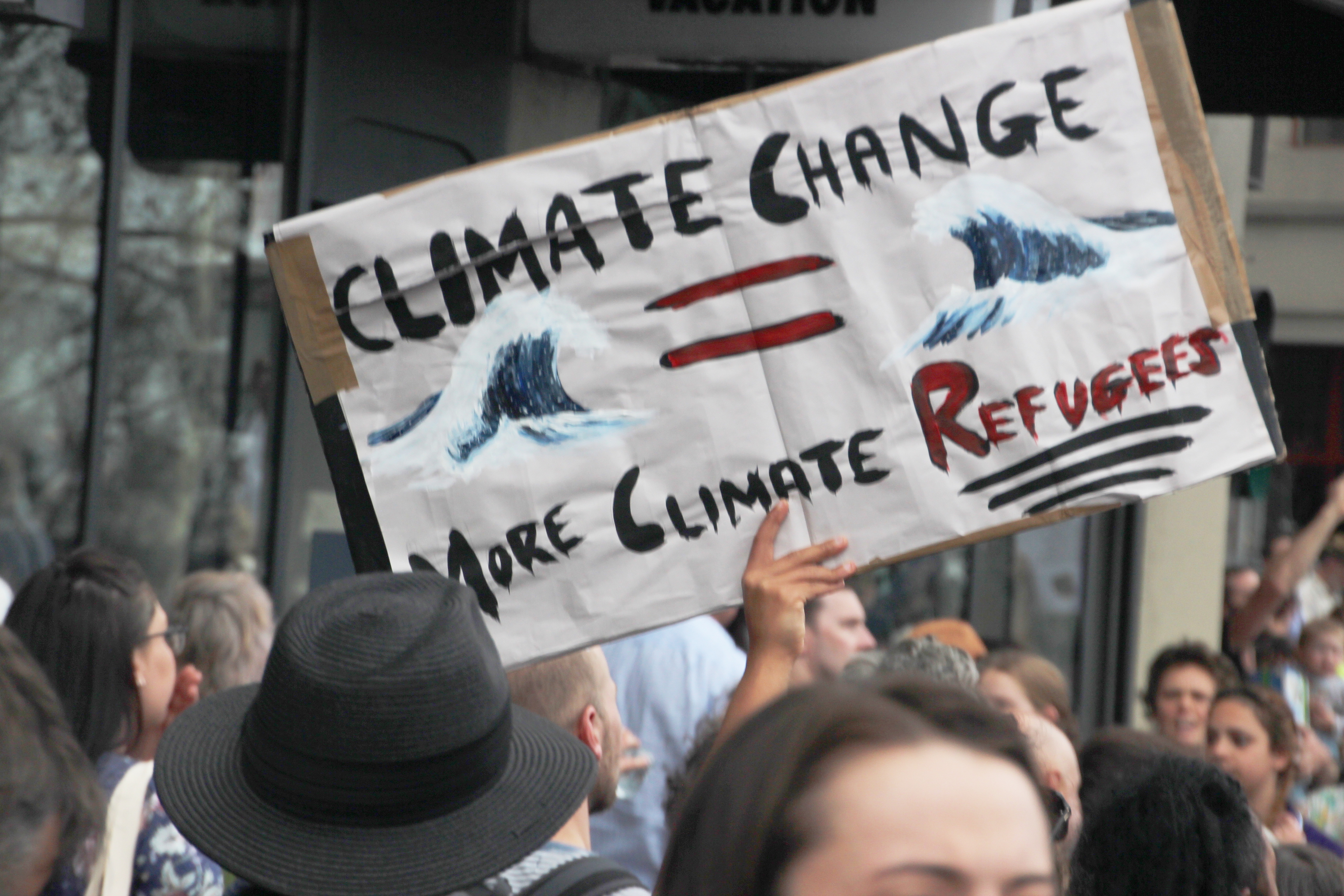
Une des premières conséquences de ces désordres environnementaux est d’obliger, inexorablement, des populations à se déplacer.
Bien que l’histoire de l’humanité soit faite de migrations, ces dernières se multiplient fortement, depuis quelques années. Auparavant, c’était les guerres, les violences, maintenant, ce sont aussi les aléas climatiques qui poussent les êtres humains à quitter la terre qui les a vus grandir et qui leur a permis de construire leurs identifications fondamentales.
Nous savons que, d’une manière générale, toute migration, à laquelle s’ajoute celle due à l’environnement, provoque des perturbations socioculturelles énormes, autant pour ceux qui la subissent que pour ceux qui l’accueillent. Elle engendre des souffrances humaines indicibles qui questionnent et violentent notre humanité.
Lequel d’entre nous n’a pas encore, en mémoire, ces images insoutenables des migrants noyés gisants sur les plages, en particulier sur les deux rives de la Méditerranée ?
Parmi ces migrants, combien sont des réfugiés climatiques ? Nous n’avons pas encore assez d’études qui nous renseignent avec précision sur cette question, mais il est avéré qu’ils sont de plus en plus nombreux.
Pourtant, force est de constater que le sujet des réfugiés climatiques est le parent pauvre de la politique actuelle, le lien entre migration et réchauffement climatique faisant l’objet d’un silence assourdissant de la part de nos politiques. Pour autant, en 2013, un rapport du Conseil norvégien pour les réfugiés (NRC) fait état de 22 millions de personnes ayant été déplacées en raison de catastrophes naturelles, ce qui est trois fois plus élevé que le nombre des personnes fuyant un conflit.
Mais qui sont ces migrants, ces réfugiés de l’environnement ? Ce sont des personnes « qui sont forcées de quitter leur lieu de vie temporairement ou de façon permanente à cause d’une rupture environnementale (d’origine naturelle ou humaine) qui a mis en péril leur existence ou sérieusement affecté leurs conditions de vie »[5].
Alors comment sont catégorisés ces « réfugiés climatiques », appelés aussi « déplacés » ou « éco-migrants » ? Ils sont, d’emblée, intégrés aux seules catégories existantes: celles des « réfugiés économiques » ou des « réfugiés de la misère ». En effet, ils n’ont pas de statut juridique, car ils ne remplissent pas les critères de la Convention de Genève signée en 1951.
Cette dernière n’accorde l’assurance d’une protection aux réfugiés que dans certains cas, à savoir, « des situations de persécutions liées à la race, à la religion, à la nationalité, aux opinions politiques, ou à l’appartenance à certains groupes sociaux » (UNHCR).
De ce fait, les pays d’accueil, connus pour leur qualité de vie et leur sécurité, et vers lesquels se dirigent naturellement ces éco-migrants, ne disposent d’aucun budget pour recevoir ces derniers.
Selon le Rapport mondial sur le déplacement interne (2020) de l’ONG Internal Displacement Monitoring Center (IDMC), chaque année, plus de 20 millions de personnes qui sont déplacées, le sont pour cause de catastrophes naturelles, dont 86% de nature hydrométéorologique.
Alors, quels sont les changements environnementaux qui provoquent de tels flux migratoires ?
L’Ined (Institut national d’études démographiques) fait état de 3 phénomènes[6] principaux :
1) L’intensité accrue des catastrophes naturelles.
En effet, entre 1995 et 2015, plus de 600.000 personnes sont décédées du fait de ces catastrophes météorologiques. Plus de 4 milliards de personnes ont en été blessées, ou sont tombées dans une forte précarité à la suite de ces catastrophes. (Source : rapport du Bureau des Nations unies pour la réduction des risques de catastrophes)
2) La hausse du niveau des mers.
Elle risque de rendre inhabitables certaines zones basses à forte densité de population.
C’est le cas de nombreuses régions du Bangladesh[7], par exemple. Ce pays, tout comme l’Inde, a vu s’accroître ses problèmes socio-économiques et politiques en raison notamment du déplacement des Rohingyas, forcés de fuir le Myanmar.
3) La raréfaction des ressources hydriques, aussi appelée stress hydrique.
Elle engendre sécheresse et désertification. C’est notamment le cas des États du Sahel, où les modèles climatiques prédisent une aggravation de la sécheresse dans les années à venir. Cette situation a déjà été à l’origine de déplacements majeurs de populations et d’une perte importante du bétail dans cette région d’Afrique. Le bétail, rappelons-le, constitue la principale source de production agricole[8].
Par ailleurs, et depuis quelques années, on assiste à une augmentation des inondations meurtrières notamment en Afrique de l’Ouest. Ces évènements sont dus à différents phénomènes tels que le changement de l’usage des terres, la réduction des jachères, ou encore la déforestation et l’urbanisation. Tout ceci rend les sols incapables d’absorber les eaux diluviennes notamment dans la zone du Sahel[9].
Ainsi, en 2018, ce sont 250.000 Afghans qui ont dû fuir leurs villages en raison des fortes chaleurs, induisant une vulnérabilité extrême de cette population, déjà exposée aux conflits armés.
Selon un rapport du Conseil norvégien pour les réfugiés, « en 2013, les catastrophes naturelles ont fait presque trois fois plus de déplacés que les guerres » (INED) et 85% d’entre eux sontdes pays en développement.
Pour une grande partie de ces populations, c’est l’exode vers l’Occident, et particulièrement l’Europe, qui est le plus tentant et le plus tenté, dans l’espoir de vivre dignement, ou tout au moins de survivre …
Comment dès lors permettre à ces populations de vivre dans leurs territoires, d’y travailler et d’en utiliser les ressources ?
Certaines bonnes pratiques locales, simples d’accès, notamment pour les populations autochtones pourraient aider à lutter contre ces problématiques environnementales. Quelques-unes commencent d’ores et déjà à émerger et devraient faire, nous l’espérons, effet « boule de neige ».
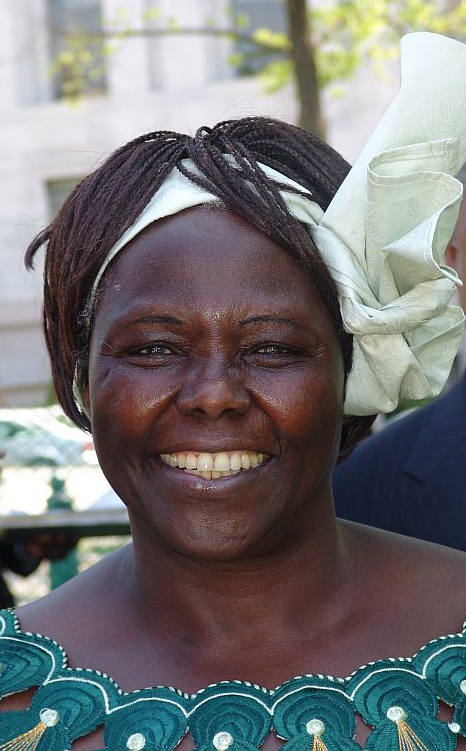
À titre d’exemple, citons le mouvement de la ceinture verte au Kenya (Green Belt Movement) qui a été lancé par la biologiste Wangari Maathai et qui encourage les femmes à planter des arbres, ce qui leur permet, à terme, d’améliorer leur niveau de vie.
En Mongolie, toute une muraille verte a également vu le jour, pour résister à l’avancée du désert de Gobi.
Au Burkina Faso, des paysans construisent des cuvettes en demi-lunes qui permettent de concentrer les précipitations et réduire le ruissellement[10].
Au Rajasthan, pour récupérer l’eau des moussons, recharger les nappes phréatiques et réalimenter les rivières, les paysans ont remis au goût du jour le « johad », une technique agricole ancestrale, qui consiste à collecter les eaux de pluie pendant la saison des moussons et les utiliser en les faisant filtrer dans le sous sol pendant la saison sèche[11].
Wangari Maathai
On peut aussi évoquer la transformation de la villa « ASSIE GAYE » au Sénégal en 2009-2010, qui s’est faite grâce à l’utilisation de matériaux locaux, comme la terre crue argileuse. Elle est alimentée en énergies renouvelables, grâce à un générateur éolien, un générateur photovoltaïque et un collecteur thermique. Ce qui en fait une maison durable, à la fois sur le plan écologique et économique[12].
Enfin, nous devons rappeler qu’il est indispensable pour l’humanité de relever le défi majeur de ces problématiques environnementales et humaines qui s’offrent à elle. Il nous faut intégrer tous les possibles en matière de changement climatique annoncés par les rapports du Groupe GIEC, dans le but d’y répondre.
Il serait ainsi plus urgent d’attribuer certains budgets étatiques à la prise en charge des réfugiés climatiques, plutôt que d’augmenter, par exemple, ceux inhérents à la défense et à l’armement.
Par ailleurs, la lutte contre le fléau de l’évasion fiscale pourrait, éventuellement, profiter à ces mêmes réfugiés et ainsi limiter la pression sur les pays d’origine ou encore sur les pays accueillant ces migrants.
Pour clôturer mon propos, j’emprunte un peu de sa sagesse à Wangari Maathai qui précise qu’« Aujourd’hui, nous affrontons un défi qui exige un renouvellement de notre mode de pensée, pour que l’humanité cesse de menacer le système qui assure sa propre survie. Nous sommes appelés à aider la terre à guérir ses blessures et, à guérir les nôtres – en fait, à embrasser la totalité de la création dans toute sa diversité, sa beauté et ses merveilles. »[13]
Nadia Belaala est architecte et ingénieure sociale, anciennement Officier du Développement durable de l’Association of World Citizens.
[5] Cournil, C. (2010). Les “réfugiés environnementaux” : enjeux et questionnements autour d’une catégorie émergente. Migrations Société, 2(2), 67-79. https://doi.org/10.3917/migra.128.0067
[7] Kholiquzzaman Ahmad, Q. (2006). Changement climatique, inondations et gestion des crues : le cas du Bangladesh. Hérodote, 2(2), 73-94. https://doi.org/10.3917/her.121.0073
 Association of World Citizens