War and armed violence are highly destructive of the lives of persons, but also of works of art and elements of cultural heritage. Knowledge and understanding of people’s past can help current inhabitants to develop their identity and to appreciate the value of their culture and heritage. Such knowledge and understanding enriches their lives and enables them to manage contemporary problems more successfully.
Since September 23, 2024, the armed conflict between the Israeli armed forces and the Hezbollah militia in Lebanon has led to increased air attacks by Israeli forces on different parts of Lebanon, resulting in deaths and the uprooting of a large number of people. Hezbollah had begun hostilities on October 8, 2023 by shelling Israeli positions in support of Hamas.
The Association of World Citizens (AWC) had called for a reduction of Israeli-Hezbollah tensions and has since called for a ceasefire and for the return of persons displaced in the areas on both sides of the Israel-Lebanon frontier. (See our Appeal of September 2024).
This AWC Appeal concerns the protection of cultural heritage as Israeli attacks have already harmed cultural heritage sites in Baalbek and Tyr as well as other culutral sites. Lebanon has a rich past going back to Biblical and Roman times.
After the Second World War, UNESCO had developed international conventions on the protection of cultural and educational bodies in time of armed conflict. The most important of these is the 1954 Hague Convention for the Protection of Cultural Property in the Event of Armed Conflict. The Hague Convention has been signed by a large number of States.
The 1954 Hague Convention builds on the Roerich Peace Pact first proposed by the Russian painter and champion of Asian culture, Nicholas Roerich. The Roerich Peace Pact was signed on April 15, 1935 by 21 States in a Pan American Union ceremony at the White House in Washington, D.C.
The Banner of Peace (Pax Cultura), as defined by the Roerich Pact of 1935 (C) Kwamikagami
At the signing, Henry A. Wallace, then United States (U.S.) Secretary of Agriculture and later Vice-President, said, “At no time has such an ideal been more needed. It is high time for the idealists who make the reality of tomorrow, to rally around such a symbol of international cultural unity. It is time that we appeal to that appreciation of beauty, science, education which runs across all national boundaries to strengthen all that we hold dear in our particular governments and customs. Its acceptance signifies the approach of a time when those who truly love their own nation will appreciate in addition the unique contributions of other nations and also do reverence to that common spiritual enterprise which draws together in one fellowship all artists, scientists, educators and truly religious of whatever faith. Thus we build a world civilization which places that which is fine in humanity above that which is low, sordid and mean, that which is hateful and grabbing.”
We still have efforts to make so that what is fine in humanity is above what is hateful and grabbing. The AWC strives so that a start will begin in Lebanon and spread to the wider Middle East.
Prof. René Wadlow is President of the Association of World Citizens.

Roar aloud, all of you The oppressed and exploited of the world Be you women or men, white or black, Hindus, Muslims, Christians, or Buddhists, Shatter the unequal systems of society.
Roar aloud, all of you The persecuted and downtrodden of the world, The deprived and helpless, both women and men, Know that without protest, Justice will never be yours.
Roar aloud, all of you The free-thinking, the youth of open minds, Establish humanity as the supreme virtue, Destroy all superstitions and the barriers of false religion.
Roar aloud, all of you The wise, the virtuous, the principled and idealistic, Break down the mountains of social divisions, Crush the arrogance of society, Ensure equal rights for all people.
Prosperina Sarkar, a native of Bangladesh, is a social worker, poet, and writer of books for children.
On October 21, 2024, prior to the meeting of the Indian leader, Narendra Modi, and the Chinese leader, Xi Jinping, the Indian Minister of Foreign Affairs, Subrahmanyam Juishankar, announced that an accord had been reached between Indian and Chinese authorities for a reduction of tensions along the 3,500-kilometer frontier between the two countries.
In 2020, there had been exchanges of fire between Indian and Chinese forces in the Tibet-Ladakh frontier area. There then seemed to be real possibilities that the violence would escalate. Thus, the Association of World Citizens (AWC) had made an Urgent Appeal, posted in July 2020 on its website and sent widely to contacts that might be helpful in reducing tensions. Today, the AWC is pleased with the new agreement and re-publishes its original 2020 Appeal.
* * *
Can Track II Efforts Reduce China-India Frontier Tensions?
July 3, 2020 at 7:52 AM
By René Wadlow
In a June 24, 2020 message to the Secretary General of the Shanghai Cooperation Organization, Mr. Vladimir Novov, the Association of World Citizens (AWC) expressed its active concern with the June 15 death of Indian and Chinese military in the Galwan River Valley in Ladakh on the India-China frontier and the possibility that the tensions will increase. While there have been brief discussions among Indian and Chinese authorities to prevent escalation, there have been no real negotiations. Negotiation is a basic political decision-making process, to facilitate compromise without loss of essential objectives.
The Indian Ministry of External Affairs said on June 25 that since early May, the Chinese have been amassing a large contingent of troops and arms along the Line of Actual Control (LAC). Also, within India, there has been a good deal of media attention, highly critical of China, given to the events. In addition, there have been calls for a boycott of Chinese goods, and some Chinese products have been removed from Indian shops. Both Indian and Chinese spokespersons have made references to the 1962 war during which some 2,000 persons were killed.
The AWC believes that there is a need for prompt measures as the India-China tensions add to existing tensions between the USA and China as well as boundary issues with Asian States in the South China Sea.
There may be a role for “Track II” nongovernmental efforts and exchanges. Track I is official government to government diplomacy among instructed representative of States, usually diplomats from the Foreign Ministry. However, governments have a range of officials on whom to call: intelligence agencies, the military, and “friends of the President” – trusted individuals within the executive entourage.
Track II efforts are organized through nongovernmental organizations and sometimes by academic institutions. Such efforts can entail informal, behind the scene communications that take place in the absence of formal communication channels. The term “Track II” was coined by the U. S. diplomat Joseph Montville in The Arrow and the Olive Branch: A Case for Track II Diplomacy.
Track II efforts have grown as there is increasing recognition that there is a tragic disjunction between the United Nations tension-reduction mandate and its ability to intervene in conflicts when called upon. As Adam Curle, experienced in Quaker mediation efforts has written “In general governments achieve their results because they have power to influence events, including the ability to reward or to punish. Paradoxically, the strength of civilian peacemakers resides specifically in their lack of power. They are neither feared nor courted for what they can do. Instead, they are trusted and so may sometimes be enabled to play a part in peacemaking denied to most official diplomats.”
Those involved in Track II efforts must, nevertheless, have ready access to governmental decision-makers and Track I diplomats. As the World Citizen and Quaker economist Kenneth Boulding in a little verse writes,
“When Track One will not do, We have to travel on Track Two But for results to be abiding, The Tracks must meet upon some siding”.
In the China-India frontier tensions, both sides must be convinced that there is a considerable sentiment for peace among their own supporters. In this conflict, which could slip into greater violence, there is an understandable tendency to look for short term answers. Yet there is also a need for some involved in Track II efforts to have an over-all integrated perspective for both short as well as long-term transformation. Thus, there needs to be a “pool” of people with experience, skills and the ability to move fast when the need or the opportunity is there?
We are sure that there are groups in India and China which can rise to meet this challenge.
Prof. René Wadlow is President of the Association of World Citizens.
The Pact for the Future was accepted by the United Nations (UN) General Assembly in a three-stage process. The first stage was a nearly year-long drafting of the document with many small revisions in the 56 paragraphs setting out the goal of a renewed UN better able to guarantee peace and development. The second stage was a last moment motion by the Russian Federation which asked for a vote, finding some of the wording, especially on human rights, too strong. The Russian motion was put to a vote with 143 States voting for the text of the Pact, 15 abstentions, and 7 opposed (Russia, Belarus, North Korea, Iran, Syria, Sudan, and Nicaragua.)
After this vote, the President of the General Assembly called for a vote by acclamation. Everyone applauded, some more vigorously than others. Thus, the Pact was adopted by consensus.
The Pact should be seen as a springboard for action rather than as an end point. With the 193 UN members potentially involved in drafting the document, there was a need for compromises and general ideas rather than any new specific proposals. The Pact is a reaffirmation of the goals and processes of the UN system, but it also notes the need for constant renewal. In paragraph 6, the Pact states, “We recognize that the multilateral system and its institutions, with the United Nations and its Charter at the center, must be strengthened to keep pace with a changing world. They must be fit for the present and the future – effective and capable, prepared for the future, just, democratic, equitable and representative of today’s world, inclusive, interconnected and financially stable.”
Paragraph 9 states, “We also reaffirm that the three pillars of the United Nations – sustainable development – peace and security, and human rights – are equally important, interlinked and mutually reinforcing. We cannot have one without the others.”
In practice, it was easier to stress sustainable development since the 2030 Sustainable Development Goals had already been set out, through progress is very uneven. For peace and security, there are Articles 25 and 26 stating that, “We will advance the goal of a world free of nuclear weapons. We will uphold our disarmament obligations and commitments.” A culture of peace is mentioned in a number of places, but no specific steps are set out.
For two days prior to the governments’ discussion and voting on the Pact, there was what were called “Action Days” to which were invited Nongovernmental Organizations (NGOs), academics working on UN issues, and the representatives of business corporations involved in international trade. The two days were certainly a time for networking if not for “action”.
The Pact is a partially open door for UN cooperation with NGOs stating in a general way the “participation of relevant stakeholders in appropriate formats.” More specifically, the Pact calls to “Facilitate more structured, meaningful and inclusive engagement of nongovernmental organizations in consultative status with the Economic and Social Council in the activities of the Council in line with ECOSOC resolution 1996/21”. The door of the Pact was most open to youth calling for an increase in the representation of youth, which can only be via NGOs. We will have to see what, as NGO representatives, we can make of the partly open door.
Prof. René Wadlow is President of the Association of World Citizens.
In our current globalized world society, there is an increased role for politics without borders. Politics no longer stops at the water’s edge but must play an active role on the world stage. However, unlike politics at the national level which usually has a parliament at which the actors can recite their lines, the world has no world parliament as such. Thus, new and inventive ways must be found so that world public opinion can be heard and acted upon.
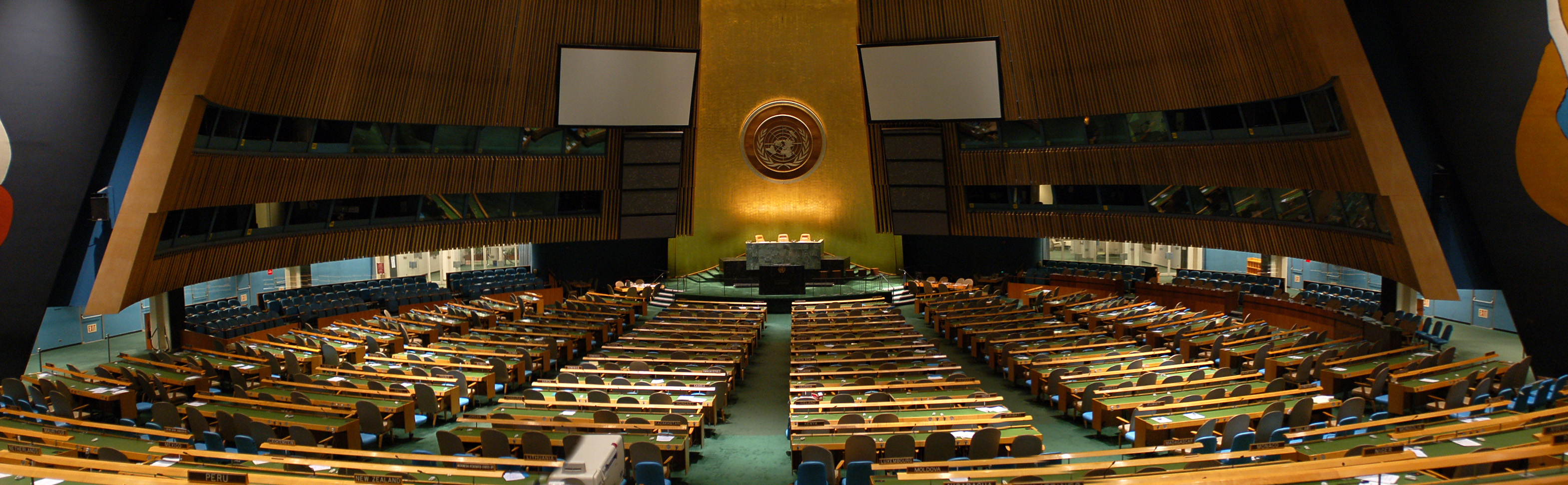
The United Nations (UN) General Assembly is the closest thing to a world parliament that we have today. However, all the official participants are diplomats appointed by their respective States – 195 member states. UN Secretariat members, the secretariat members of UN Specialized Agencies such as UNESCO and the ILO, are in the hallways or coffee shops to give advice. Secretariat members of the financial institutions such as the World Bank and the IMF are also there to give advice on costs and the limits of available funds. The representatives of Nongovernmental Organizations (NGO) in Consultative Status with the UN who can speak at sessions of the Economic and Social Council and the Human Rights Council cannot address the General Assembly directly. However, they are also in the coffee shops and may send documents to the UN missions of national governments.
(C) Jérôme Blum
Politics without borders requires finding ways to express views for action beyond the borders of individual countries. Today, most vital issues that touch the lives of many people go beyond the individual State: the consequences of climate change, the protection of biodiversity, the resolution of armed conflicts, the violations of human rights, and a more just world trade pattern. Thus we need to find ways of looking at the world with a global mind and an open heart. This perspective is an aim of world citizenship.
However, World Citizens are not yet so organized as to be able to impact political decisions at the UN and in enough individual States so as to have real influence. The policy papers and Appeals of the Association of World Citizens (AWC) are often read with interest by the government representatives to whom they are sent. However, the AWC is an NGO among many and does not have the number of staff as such international NGOs as Amnesty International, Human Rights Watch, and Greenpeace.
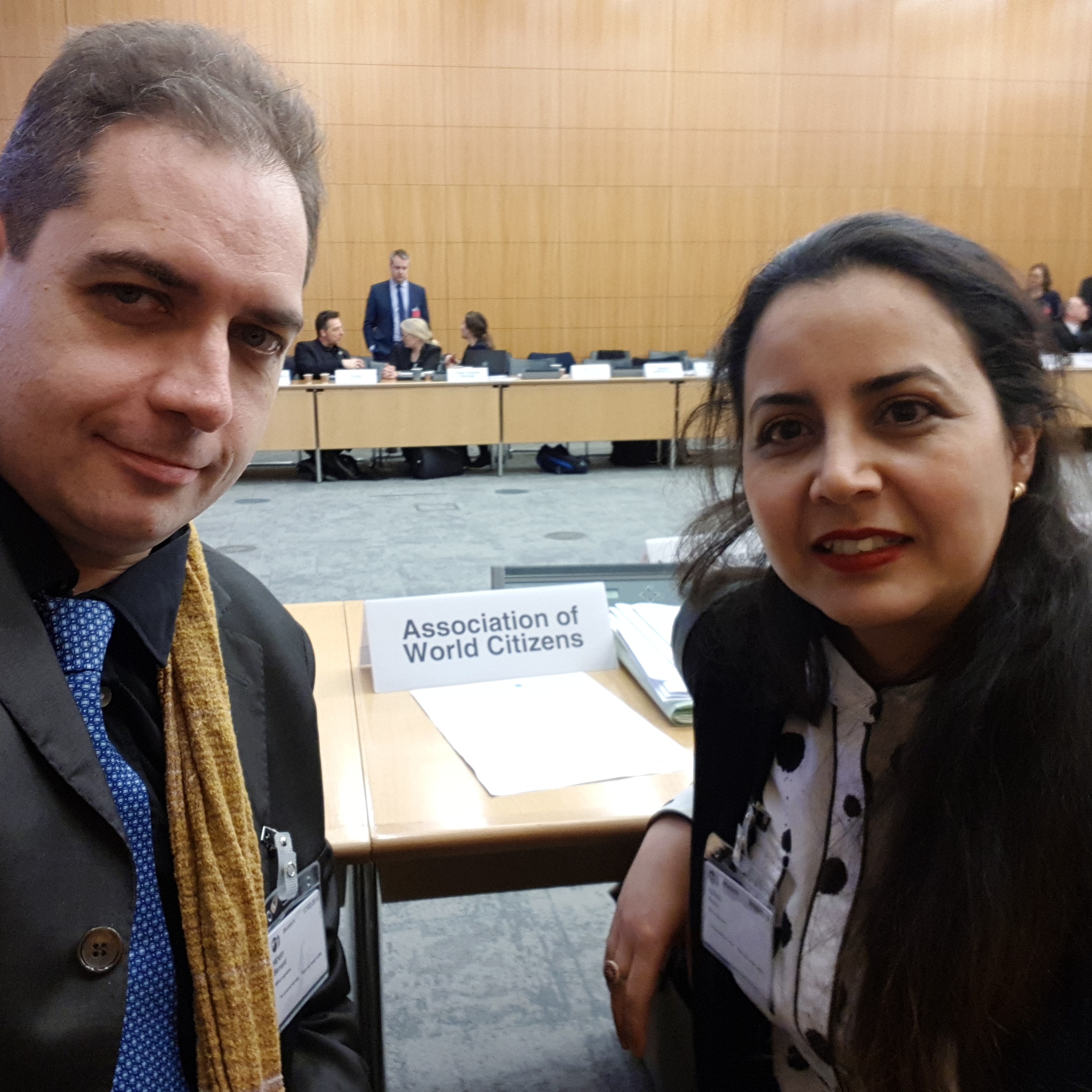
The First Officer and External Relations Officer, Bernard J. Henry, and the Legal and Mediation Officer, Attorney Noura Addad, representing the AWC at an OECD roundtable in March 2019 (C) Bernard J. Henry/AWC
We still need to find effective ways so that humanity can come together to solve global problems, that is, politics without borders. Prof. René Wadlow is President of the Association of World Citizens.
War and armed violence are highly destructive of the lives of persons, but also of works of art and elements of cultural heritage. The war in Ukraine has highlighted the destructive power of war in a dramatic way. Thus, this May 18, “International Museum Day”, we outline some of the ways in which UNESCO is working to protect the cultural heritage in Ukraine in time of war.
May 18 has been designated by UNESCO as the International Day of Museums to highlight the role that museums play in preserving beauty, culture, and history. Museums come in all sizes and are often related to institutions of learning and libraries. Increasingly, churches and centers of worship have taken on the character of museums as people visit them for their artistic value, even they do not share the faith of those who built them.
Knowledge and understanding of a people’s past can help current inhabitants to develop and sustain identity and to appreciate the value of their own culture and heritage. This knowledge and understanding enriches their lives. It enables them to manage contemporary problems more successfully.
It is widely believed in Ukraine that one of the chief aims of the Russian armed intervention is to eliminate all traces of a separate Ukrainian culture, to highlight a common Russian motherland. In order to do this, there is a deliberate destruction of cultural heritage and a looting of museums, churches, and libraries in areas when under Russian military control. Museums, libraries, and churches elsewhere in Ukraine have been targeted by Russian artillery attacks.
After the Second World War, UNESCO had developed international conventions on the protection of cultural and educational bodies in times of conflict. The most important of these is the 1954 Hague Convention for the Protection of Cultural Property in the Event of Armed Conflict. The Hague Convention has been signed by a large number of States including the USSR to which both the Russian Federation and Ukraine are bound.
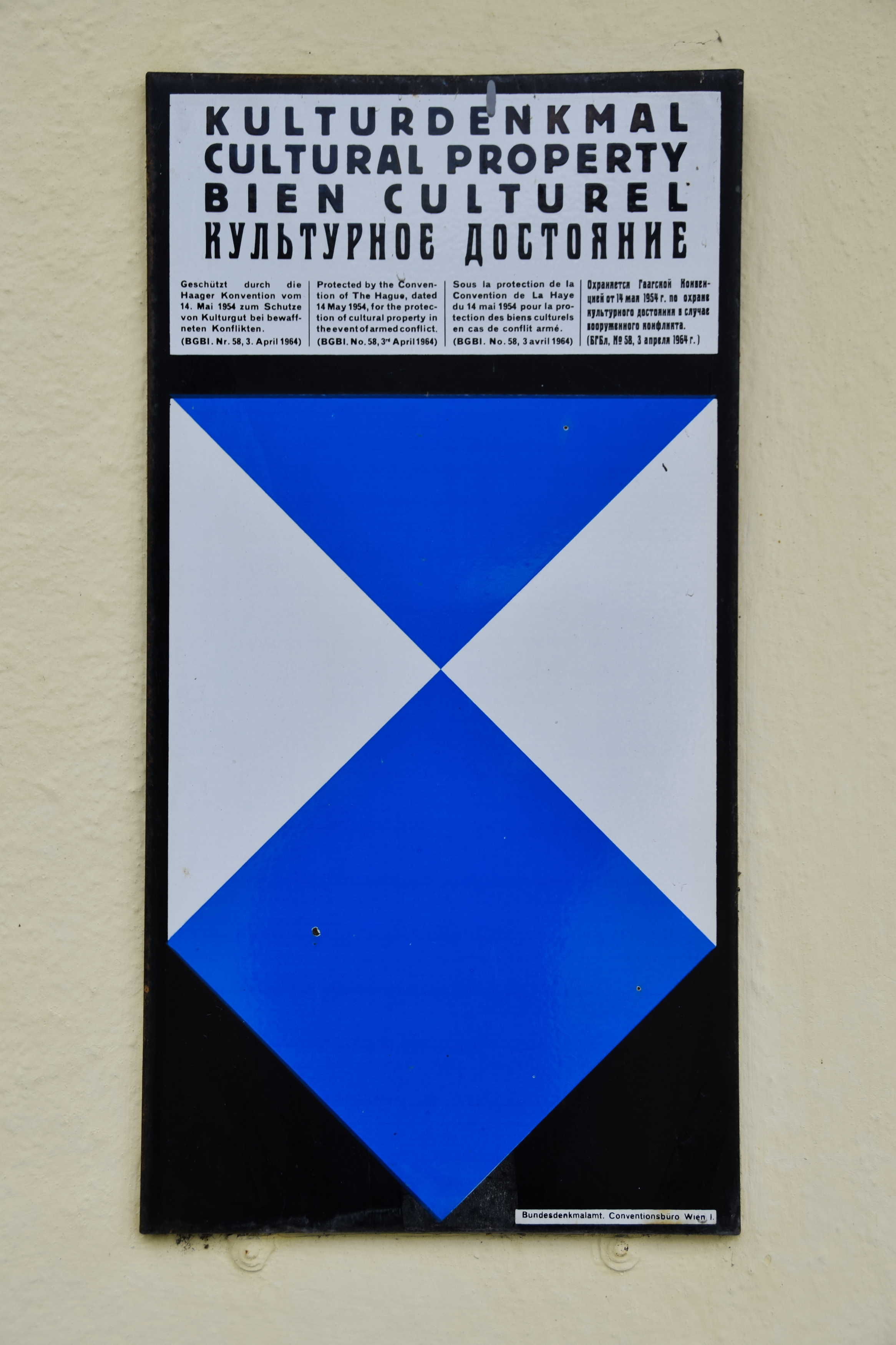
A Blue Shield in Vienna, Austria (C) Mosbatho, CC BY 4.0
UNESCO has designed a Blue Shield as a symbol of a protected site. Audrey Azoulay, Director-General of UNESCO, has brought a number of these Blue Shields herself to Ukraine to highlight UNESCO’s vital efforts.
The 1954 Hague Convention builds on the efforts of the Roerich Peace Pact signed on April 15, 1935 by 21 States in a Pan-American Union ceremony at the White House in Washington, D.C. In addition to the Latin American States of the Pan American Union, the following States also signed: Kingdom of Albania, Kingdom of Belgium, Republic of China, Republic of Czechoslovakia, Republic of Greece, Irish Free State, Empire of Japan, Republic of Lithuania, Kingdom of Persia, Republic of Poland, Republic of Portugal, Republic of Spain, Confederation of Switzerland, Kingdom of Yugoslavia.
At the signing, Henry A. Wallace, then U.S. Secretary of Agriculture and later Vice-President, said, “At no time has such an ideal been more needed. It is high time for the idealists who make the reality of tomorrow, to rally around such a symbol of international cultural unity. It is time that we appeal to that appreciation of beauty, science, education which runs across all national boundaries to strengthen all that we hold dear in our particular governments and customs. Its acceptance signifies the approach of a time when those who truly love their own nation will appreciate in addition the unique contributions of other nations and also do reverence to that common spiritual enterprise which draws together in one fellowship all artists, scientists, educators and truly religious of whatever faith. Thus we build a world civilization which places that which is fine in humanity above that which is low, sordid and mean, that which is hateful and grabbing.”
We still have efforts to make so that what is fine in humanity is above what is hateful and grabbing. However, the road signs set out the direction clearly.
Prof. René Wadlow is President of the Association of World Citizens.
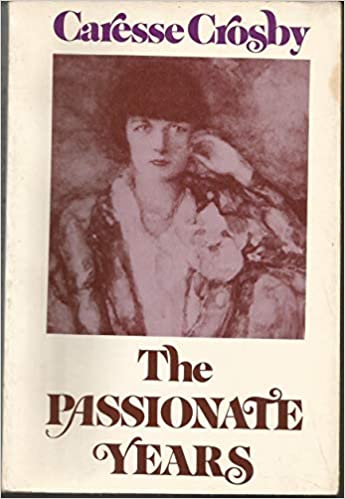
Caresse Crosby (April 20, 1891 – January 24, 1970) was one of the more colorful figures of the early world citizens movement, heading the World Citizen Information Center in Washington, D. C. Her autobiography The Passionate Years was first published in 1953 and more recently republished by the Southern Illinois University Press in 1968. The Southern Illinois University Library holds her papers.
Most of The Passionate Years concerns Caresse Crosby’s life in Paris as the publisher of the Black Sun Press, at the center of the United States (U. S.) writers living in Paris in the 1920s – what has been called the Lost Generation – Ernest Hemingway, Ezra Pound, F. Scott Fitzgerald, Archibald MacLeish. She had moved to Paris in 1922 from Boston with her then husband, Harry Crosby. Harry Crosby was a nephew of J. P. Morgan, the banker. Harry had a short-term job at the Paris branch of the Morgan Bank, but he was not interested in banking and had a reasonable income from a trust fund. Thus, he started a small publishing house to publish in fine but limited editions books of his own poems and those of his friends. Harry Crosby was always preoccupied with the idea of death, having seen it closely as a medical worker in France during the last part of the First World War. Hence the name of Black Sun, a symbol of death overcoming the light of the Sun for the publishing house. On a trip back to New York in 1929 in what may have been a suicide pact, Harry Crosby first shot a woman friend and then himself with her in his arms. (1)
Caresse stayed on in Paris to continue the Black Sun publishing house, opening it also to French writers she liked such as Antoine de Saint-Exupéry. In 1936, seeing the clouds of tensions growing in Europe, she moved back to the USA, living in New York City and Washington, D. C. It was at this time that she began promoting the idea of world citizenship to counter the narrow nationalism she had seen firsthand in visits to Italy and Germany.
Right at the end of the Second World War, she wanted to create a Center for World Peace at Delphi, Greece – a place of inspiration from the Greek gods. However, the Greek Government still weak from the German occupation and the anti-Communist civil war did not want such a center with an ideology that it did not understand. The Greek Government refused the visas. Caresse then moved the idea to Cyprus and created the World Man Center with a geodesic dome designed by Buckminster Fuller, who had become her lover at the time. Cyprus, then under British control, was somewhat out of the way for the sort of visiting writers, painters, and intellectuals that Caresse usually attracted. Thus, she bought a castle north of Rome, the Castello di Rocca Sinibalda, and established an artists’ colony for young artists. She divided her time between this Rome area and her New York and Washington quarters.
For Caresse Crosby, World Citizenship was an aesthetic rather than a political concept, but she did plant seeds in the minds of people largely untouched by geopolitical considerations.
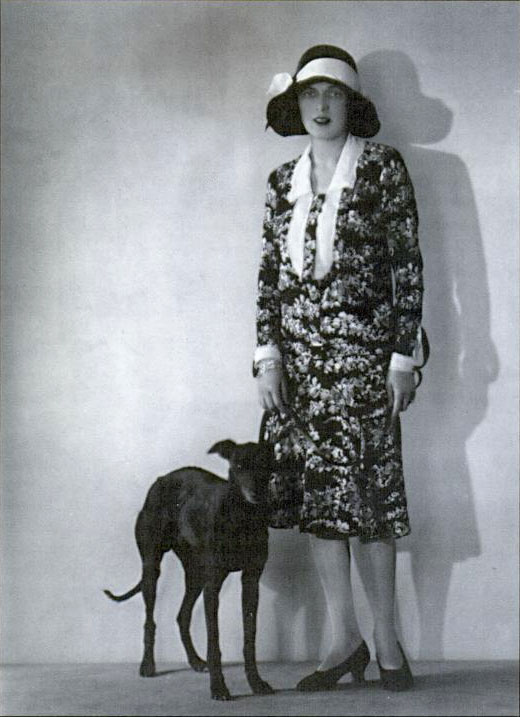
Caresse Crosby and her whippet, Clytoris (1922, author unknown)
1) See Geoffrey Wolff, Black Sun: The Brief Transit and Violent Eclipse of Harry Crosby (New York: New York Review of Books, 2003).
Prof. René Wadlow is President of the Association of World Citizens.
The Human Rights Council, building on the earlier practice of the United Nations (UN) Commission on Human Rights, has a number of Special Rapporteurs devoted to certain themes – usually specific violations of human rights – or to specific countries. These Special Rapporteurs are independent experts selected by the Council. They usually report their findings at each session of the Council. When violations concern more than one issue, there can be joint Reports to the Council or joint Appeals to a government. Such a collective Appeal to the government of Pakistan sent on October 26, 2022 was made public on January 15, 2023.
The joint Appeal by six Special Rapporteurs concerned the sequence of rape of young women, forced conversion to Islam, followed by marriage to the rapist. The Appeal was led by the Special Rapporteur on Freedom of Religion or Belief, the Special Rapporteur on Sexual Exploitation of Children, the Special Rapporteur on Violence against Women and Girls, and the Special Rapporteur on Trafficking in Persons, especially Women and Children. The subject of the Appeal is not new, having been raised previously by Nongovernmental Organizations (NGOs), including by the Association of World Citizens (AWC).
However, the Appeal by the Special Rapporteurs clearly identifies a systemic problem on which the Pakistani government has failed to act. The girls raped are usually minors under 18 years of age and belong to Hindu and Christian minorities of the country, often rural and poor. Most Christians in Pakistan are converts from low caste or “untouchables” (Dalit) Hindus. Seeing no future within the Hindu-influenced caste system, they converted to Christianity which has no caste structure. Most of the Pakistani Hindus and Christians are illiterate and have little or no political influence.
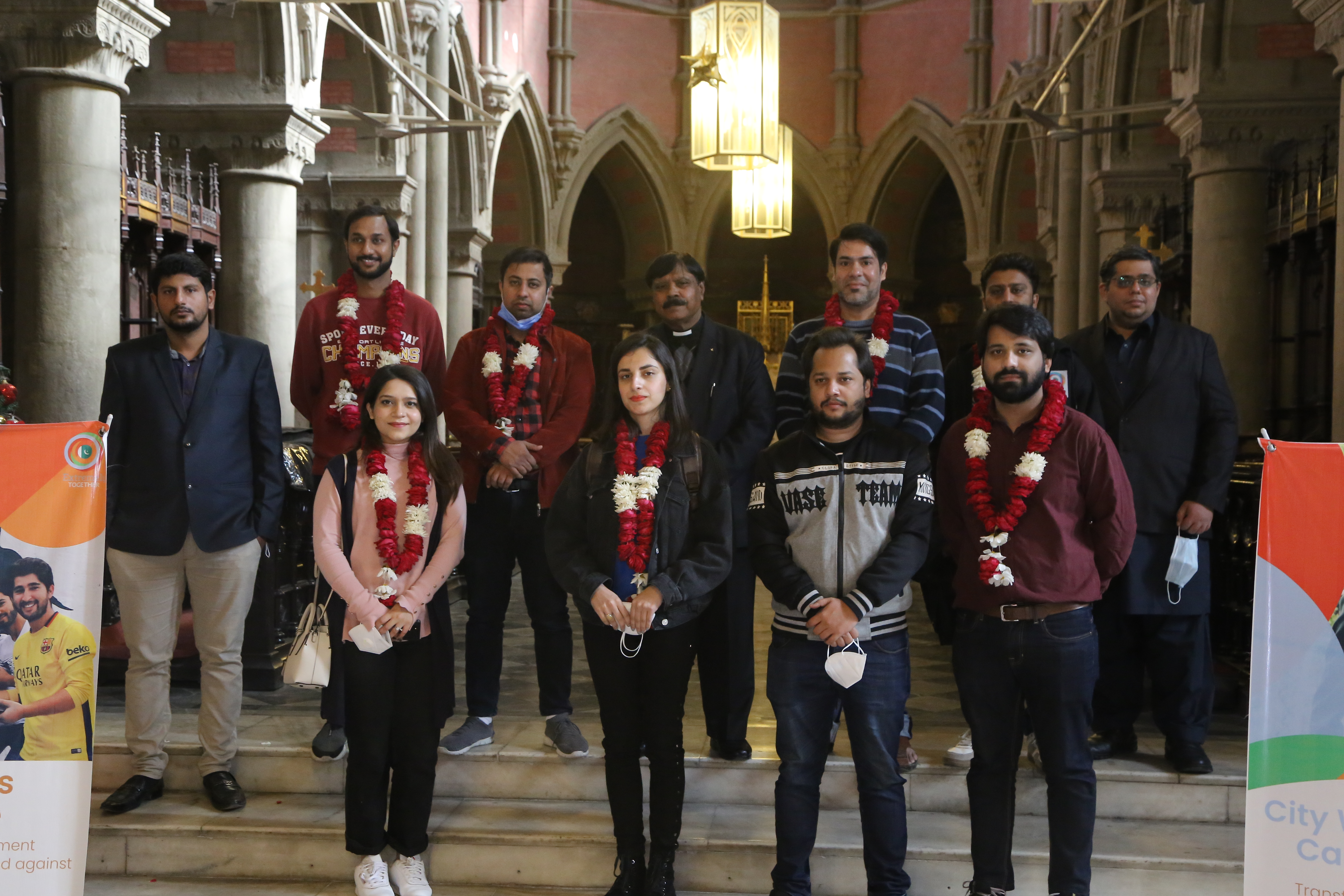
A peace tour arranged by different social activists and minority rights activists in Lahore, Pakistan, with the participation of Muslim, Christian and Hindu youth. (C) RedMiNote
The Pakistani police and the court employees are agents of these human rights violations. Illiterate parents sign with a thumbprint document that they do not understand and are then filled in by the police to attest that the girl is older than 18, the legal age for marriage. If the girl or her family agrees to the marriage with the rapist, the rapist cannot be arrested and tried for the rape. As the practice takes place usually in rural areas, there are few if any NGOs to take up the specific cases. Urbanized Christian groups in Pakistan have made some protests of the practice but are often unaware of the specific rural cases.
NGOs have brought evidence of the practice to the attention of the Geneva-based Special Rapporteurs. When a human rights violation is given to the UN human rights secretariat, it is sent on to the Geneva-based Ambassador of the country mentioned. The Ambassador may not reply at all or more usually will reply saying that the facts are incorrect or deliberately misleading. However, as in the Pakistani case, the evidence piles up. In this current situation, there is, two months ago, a newly appointed High Commissioner for Human Rights, Volker Turk, formerly UN Undersecretary-General for Policy. The Special Rapporteurs may have wanted to see how he will act on violations of a powerful country. The situation in Pakistan merits close watching.
Prof. René Wadlow is President of the Association of World Citizens.
Seeing with eyes that are gender aware, women tend to make connections between the oppression that is the ostensible cause of conflict (ethnic or national oppression) in the light of another cross-cutting one: that of gender regime. Feminist work tends to represent war as a continuum of violence from the bedroom to the battlefield, traversing our bodies and our sense of self. We glimpse this more readily because as women we have seen that ‘the home’ itself is not the haven it is cracked up to be. Why, if it is a refuge, do so many women have to escape it to “refuges”? And we recognize, with Virginia Woolf, that ‘the public and private worlds are inseparably connected: that the tyrannies and servilities of one are the tyrannies and servilities of the other.
Cynthia Cockburn, Negotiating Gender and National Identities
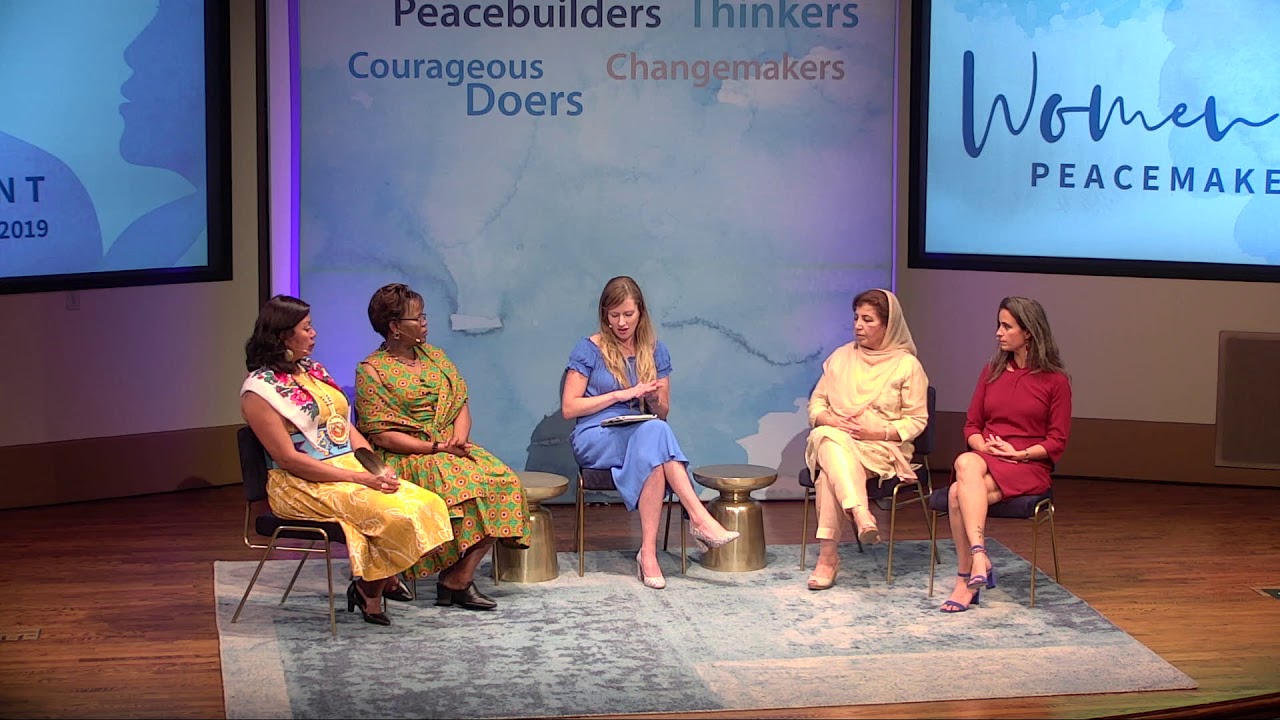
October 31 is the anniversary of the United Nations (UN) Security Council Resolution 1325 which calls for full and equal participation of women in conflict prevention, peace processes, and peacebuilding, thus creating opportunities for women to become fully involved in governance and leadership. This historic Security Council resolution 1325 of October 31, 2000 provides a mandate to incorporate gender perspectives in all areas of peace support. Its adoption is part of a process within the UN system through its World Conferences on Women in Mexico City (1975), in Copenhagen (1980), in Nairobi (1985), in Beijing (1995), and at a special session of the UN General Assembly to study progress five years after Beijing (2000).
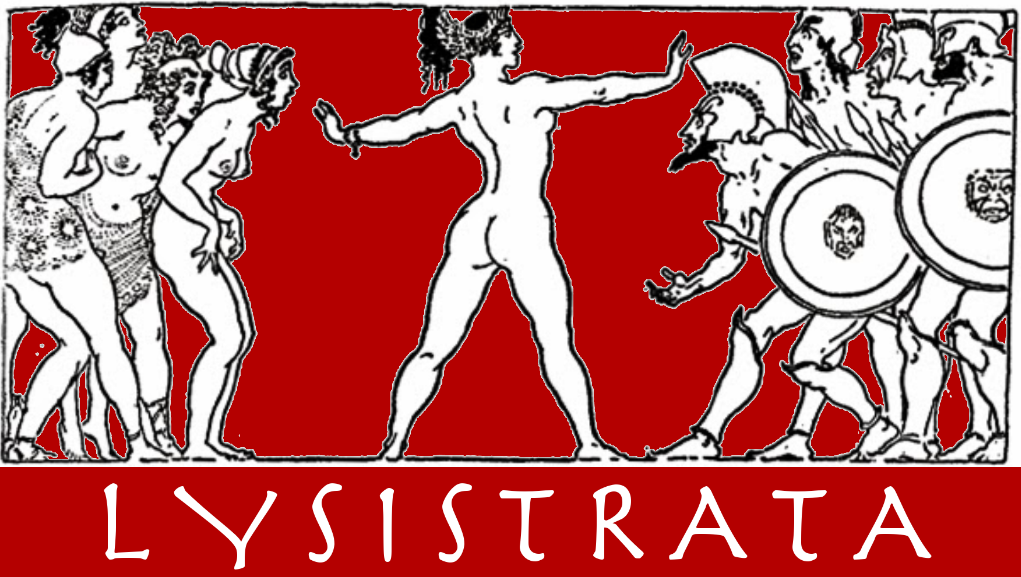
Since 2000, there have been no radical changes as a result of Resolution 1325, but the goal has been articulated and accepted. Now women must learn to take hold of and generate political power if they are to gain an equal role in peace-making. They must be willing to try new avenues and new approaches as symbolized by the actions of Lysistrata.
Lysistrata, immortalized by Aristophanes, mobilized women on both sides of the Athenian-Spartan War for a sexual strike in order to force men to end hostilities and avert mutual annihilation. In this, Lysistrata and her co-strikers were forerunners of the American humanistic psychologist Abraham Maslow who proposed a hierarchy of needs: water, food, shelter, and sexual relations being the foundation (see Abraham Maslow, The Farther Reaches of Human Nature). Maslow is important for conflict resolution work because he stresses dealing directly with identifiable needs in ways that are clearly understood by all parties and with which they are willing to deal at the same time.
Addressing each person’s underlying needs means that one moves toward solutions that acknowledge and value those needs rather than denying them. To probe below the surface requires redirecting the energy towards asking “What are your real needs here? What interests need to be serviced in this situation?” The answers to such questions significantly alter the agenda and provide a real point of entry into the negotiation process.
It is always difficult to find a point of entry into a conflict. An entry point is a subject on which people are willing to discuss because they sense the importance of the subject and all sides feel that “the time is ripe” to deal with the issue. The art of conflict resolution is highly dependent on the ability to get to the right depth of understanding and intervention into the conflict. All conflicts have many layers. If one starts off too deeply, one can get bogged down in philosophical discussions about the meaning of life. However, one can also get thrown off track by focusing on too superficial an issue on which there is relatively quick agreement. When such relatively quick agreement is followed by blockage on more essential questions, there can be a feeling of betrayal.
Since Lysistrata, women, individually and in groups, have played a critical role in the struggle for justice and peace in all societies. However, when real negotiations begin, women are often relegated to the sidelines. However, a gender perspective on peace, disarmament, and conflict resolution entails a conscious and open process of examining how women and men participate in and are affected by conflict differently. It requires ensuring that the perspectives, experiences and needs of both women and men are addressed and met in peace-building activities. Today, conflicts reach everywhere. How do these conflicts affect people in the society — women and men, girls and boys, the elderly and the young, the rich and poor, the urban and the rural?
There has been a growing awareness that women and children are not just victims of violent conflict and wars −’collateral damage’ − but they are chosen targets. Conflicts such as those in Rwanda, the former Yugoslavia and the Democratic Republic of Congo have served to bring the issue of rape and other sexual atrocities as deliberate tools of war to the forefront of international attention. Such violations must be properly documented, the perpetrators brought to justice, and victims provided with criminal and civil redress.
I would stress three elements which seem to me to be the ‘gender’ contribution to conflict transformation efforts:
1) The first is in the domain of analysis, the contribution of the knowledge of gender relations as indicators of power. Uncovering gender differences in a given society will lead to an understanding of power relations in general in that society, and to the illumination of contradictions and injustices inherent in those relations.
2) The second contribution is to make us more fully aware of the role of women in specific conflict situations. Women should not only be seen as victims of war: they are often significantly involved in taking initiatives to promote peace. Some writers have stressed that there is an essential link between women, motherhood and non-violence, arguing that those engaged in mothering work have distinct motives for rejecting war which run in tandem with their ability to resolve conflicts non-violently. Others reject this position of a gender bias toward peace and stress rather that the same continuum of non-violence to violence is found among women as among men. In practice, it is never all women nor all men who are involved in peace-making efforts. Sometimes, it is only a few, especially at the start of peace-making efforts. The basic question is how best to use the talents, energies, and networks of both women and men for efforts at conflict resolution.
3) The third contribution of a gender approach with its emphasis on the social construction of roles is to draw our attention to a detailed analysis of the socialization process in a given society. Transforming gender relations requires an understanding of the socialization process of boys and girls, of the constraints and motivations which create gender relations. Thus, there is a need to look at patterns of socialization, potential incitements to violence in childhood training patterns, and socially-approved ways of dealing with violence.
The Association of World Citizens has stressed that it is important to have women directly involved in peace-making processes. The strategies women have adapted to get to the negotiating table are testimony to their ingenuity, patience, and determination. Solidarity and organization are crucial elements. The path may yet be long, but the direction is set.
Prof. René Wadlow is President of the Association of World Citizens.
October 2 is the United Nations (UN) General Assembly-designated Day of Nonviolence chosen as October 2 is the birth anniversary of Mahatma Gandhi.
Mahatma Gandhi, shortly after finishing his legal studies in England, went to South Africa and began working with Indian laborers, victims of discrimination. He looked for a term understandable to a largely English-speaking population to explain his efforts. “Passive resistance” was the most widely used term and had been used by Leo Tolstoy and others. However, Gandhi found the word “passive” misleading. There did exist a Hindu term, ahinsa – a meaning non- and hinsa, violence. The term was basically unknown among White South Africans, largely uninterested in Indian philosophical thought.
Gandhi wrote to a friend from his legal studies days in England, Edward Maitland. Maitland and Anna Kingsford were the leaders of the Esoteric Christian Union and the leaders of the London Lodge of the Theosophical Society. Maitland introduced Gandhi to the writings of the American New Thought writer Ralph Waldo Trine. Trine was a New Englander and his parents named him after Emerson. His best-known work from which Gandhi took the term for his actions in South Africa is In Tune with the Infinite or Fullness of Peace Power and Plenty. (1)
Trine uses the term “soul force” which Gandhi then used for his work in South Africa. Once back in India, Gandhi wanted an Indian rather than an English expression, and he coined the term satyagraha − holding on to truth: satya as Truth in a cosmic sense is an oft-used Hindu term while “soul” would need some explaining to Indian followers.
All of Trine’s writings contained the same message: soul force could be acquired by making oneself one with God, who was immanent, through love and service to one’s fellow men. The Christ Trine followed was one familiar to Gandhi − the supreme spiritual exemplar who showed men the way to union with their divine essence. Trine promised that the true seeker, fearless and forgetful of self-interest, will be so filled with the power of God working through him that “as he goes here and there, he can continually send out influences of the most potent and powerful nature that will reach the uttermost parts of the world.”
For Trine, thought was the way that a person came into tune with the Infinite. “Each is building his own world. We both build from within, and we attract from without. Thought is the force with which we build, for thoughts are forces. Like builds like and like attracts like. In the degree that thought is spiritualized does it become more subtle and powerful in its workings. This spiritualizing is in accordance with law and is within the power of all.
“Everything is first worked out in the unseen before it is manifested in the seen, in the ideal before it is realized in the real, in the spiritual before it shows forth in the material. The realm of the unseen is the realm of cause. The realm of the seen is the realm of effect. The nature of effect is always determined and conditioned by the nature of its cause.”
Thus, for Mahatma Gandhi, before a nonviolent action or campaign, there was a long period of spiritual preparation of both him and his close co-workers. Prayer, fasting, and meditation were used in order to focus the force of the soul, to visualize a positive outcome and to develop harmlessness to those opposed.
Another theme which Trine stressed and Gandhi constantly used in his efforts to build bridges between Hindus and Muslims was that there was a basic core common to all religions. Gandhi wrote “There is a golden thread that runs through every religion in the world. There is a golden thread that runs through the lives and the teachings of all the prophets, seers, sages, and saviors in the world’s history, through the lives of all men and women of truly great and lasting power. The great central fact of the universe is that the spirit of infinite life and power is back of all, manifests itself in and through all. This spirit of infinite life and power that is back of all is what I call God. I care not what term you may use, be it Kindly Light, Providence, the Over-Soul, Omnipotence or whatever term may be most convenient, so long as we are agreed in regard to the great central fact itself.”
Note:
(1) R.W. Trine, In Tune with the Infinite (New York: Whitecombe and Tombs, 1899, 175 pp.)
Prof. René Wadlow is President of the Association of World Citizens.