The Official Blog of the

Archive for the ‘Children’s Rights’ Category

Citizens of the World Strive Against Rape as a Weapon of War

In Africa, Being a World Citizen, Children's Rights, Current Events, Europe, Human Rights, Humanitarian Law, International Justice, NGOs, Peacebuilding, Solidarity, Sudan, The Balkan Wars, The Search for Peace, Track II, United Nations, War Crimes, Women's Rights, World Law on March 8, 2025 at 6:45 PM

By René Wadlow

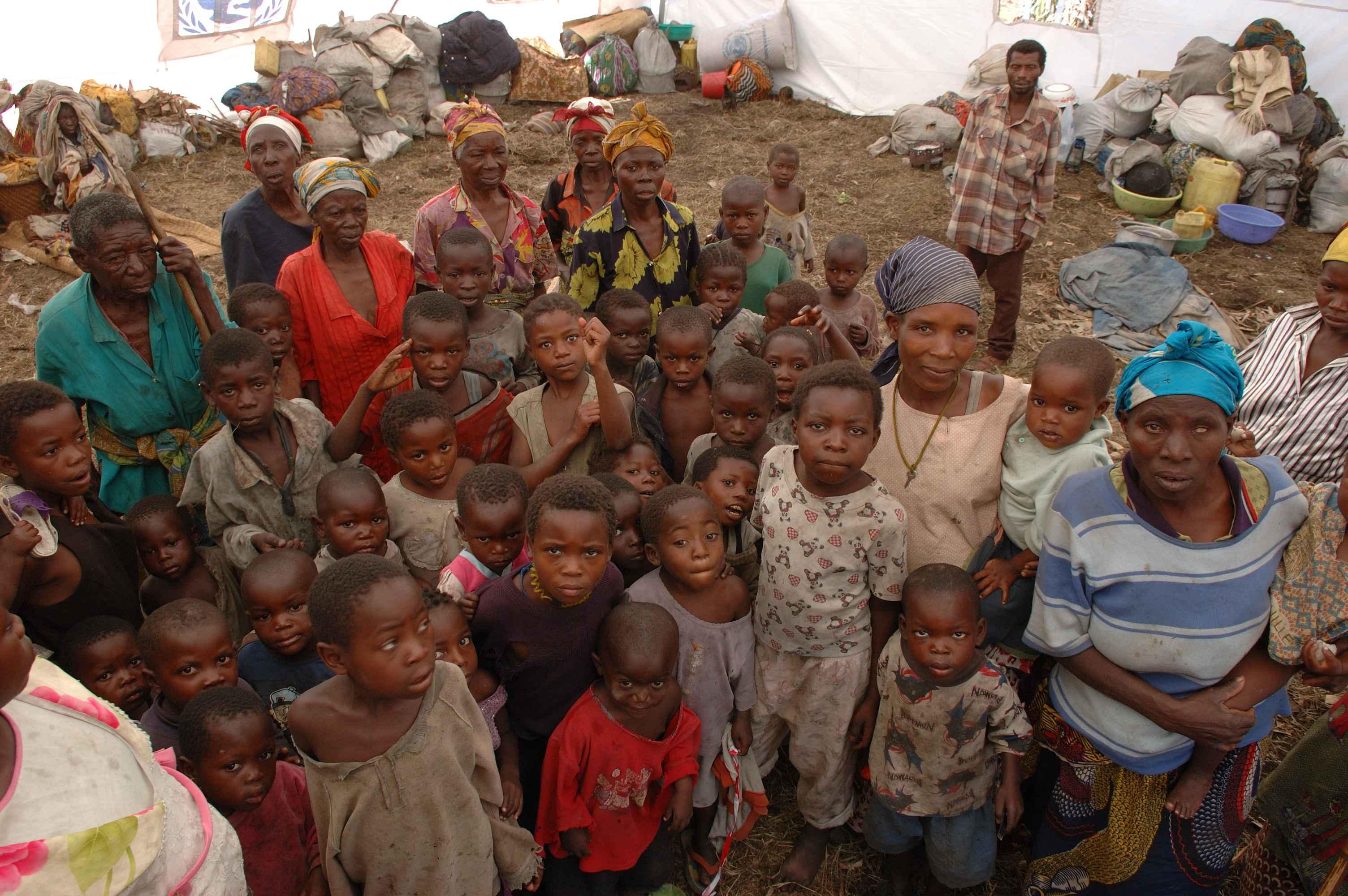
On March 6, 2025, the United Nations (UN) Children’s Fund (UNICEF) warned that many children in the conflicts among militias in Sudan are at risk of rape and other forms of sexual violence which are being used as weapons of war. In November 2024, the Association of World Citizens (AWC) had highlighted that rape was being used as a weapon of war in the Sudan conflicts and that strong counter measures are needed.

As Meredeth Turshen and Clotilde Twagiramariya point out in their book What Women Do in Wartime: Gender and Conflict in Africa (London: Zed Press, 1998),

“There are numerous types of rape. Rape is committed to boast the soldiers’ morale, to feed soldiers’ hatred of the enemy, their sense of superiority, and to keep them fighting; rape is one kind of war booty; women are raped because war intensifies men’s sense of entitlement, superiority, avidity and social license to rape; rape is a weapon of war used to spread political terror; rape can destabilize a society and break its resistance; rape is a form of torture; gang rapes in public terrorize and silence women and force them to flee homes, families and communities; rape targets women because they keep the civilian population functioning and are essential to its social and physical continuity; rape is used in ethnic cleansing; it is designed to drive women from their homes or destroy the possibility of reproduction; genocidal rape treats women as reproductive vessels to make them bear babies of the rapists’ nationality, ethnicity, race or religion, and genocidal rape aggravates women’s terror and future stigma, producing a class of outcast mothers and children – this is rape committed with consciousness of how unacceptable a raped woman is to the patriarchal community and to herself. This list combines individual and group motives with obedience to military command; in doing so, it gives a political context to violence against women, and it is this political context that needs to be incorporated in the social response to rape.”

The AWC first raised the issue of rape as a weapon of war in the UN Commission on Human Rights in March 2001 after the judgement of the International Criminal Tribunal for the Former Yugoslavia (ICTY) maintained that there can be no time limitation on bringing an accused to trial. The Tribunal also reinforced the possibility of universal jurisdiction – that a person can be tried not only by his national court but by any court claiming universal jurisdiction and where the accused is present.

As Citizens of the World, we need to have a peace-building approach which asks: How does a political conflict degenerate into pervasive mass violence, generating new crises and new forms of violent conflict in the future? Even after a war ends, the effects of sexual violence continue in the form of unwanted pregnancies, sexually transmitted infections, discrimination and ostracizing of victims and often lasting psychological damage. Thus, we must ask how a community pulls itself out from the cycle of violence and creates new attitudes to promote human dignity and develop new institutions of conflict resolution.

Prof. René Wadlow is President of the Association of World Citizens.

March 8, International Women’s Day: To Snap Every Yoke

In Being a World Citizen, Children's Rights, Human Rights, International Justice, Modern slavery, NGOs, Social Rights, Solidarity, United Nations, Women's Rights, World Law on March 8, 2025 at 8:00 AM

By René Wadlow

“Is not this what I require of you … to snap every yoke and set free those who have been crushed?”

Isaiah, 58 v 6

There are many ways that we are held in chains as individuals through our own desires and habits. There are also many ways that society keeps others in chains. Our task is to help snap the individual bonds of slavery through our efforts at self-liberation and self-realization. To break the chains that society creates, we must work together cooperatively.

Slavery today, as in the past, can have one or more of the following characteristics: A slave is forced to work though mental or physical threat. The person is owned or controlled by an “employer” usually through mental or physical abuse and threats. The person is dehumanized by being treated as a commodity and bought and sold as if property. There are also restrictions placed on a person’s freedom of movement and kept isolated from those who might help to break the chains.

(C) Bernard J. Henry/AWC

Women are often the victims of diverse forms of servitude, and International Women’s Day is an appropriate time to analyze patterns and our efforts to liberate. Here we can look at four categories through there are often links among them.

A first category is debt bondage, especially practiced in South Asia. It is estimated that there are some 20 million people held in debt bondage throughout the world, even though debt bondage is forbidden by the Supplementary Convention of 1956 on the Abolition of Slavery, the Slave Trade and Institutions and Practices Similar to Slavery. Debt bondage is largely a rural practice, and local government officials and police often overlook its consequences. The debt is usually contracted in an emergency such as sickness or to cover expenses between harvests. However, often the person making the debt from money lenders or richer farmers cannot read and, therefore, has no idea of what “rates of interest” means, nor do they know when they have worked off the debt. It is often a child or younger member of the family who is “given” to work to pay off the debt. The debt is often never considered to have been paid and will go from one generation to the next.

Child labor is a second and related category of contemporary slavery. The International Labor Organization (ILO) estimates that there are some 180 million youth aged between 5 and 17 years old who are in the worst forms of child labor – work that is hazardous to their mental and physical health. The ILO Convention of 1999 (N° 182) is devoted to the “Worst Forms of Child Labor.” Translating these ILO efforts to the local workplace is a large job and needs to be done with care as some families depend heavily on income from children’s work.

Early and forced marriage is a third category of contemporary slavery. This form is often overlooked or excused as “custom” for it is usually carried out by the families themselves. In many societies, marriage is an alliance between families with elements of social control over wealth, power, and the sexuality of women as the motive. Women and girls are married without choice and often forced into lives of servitude. Because the girl child is seen in some communities as having lower priority, she is often denied access to such basic necessities as education which could ultimately protect her from exploitation.

A fourth category is human trafficking, often linked to prostitution which is the fastest-growing means by which people are enslaved today. Women, children and men are coerced and deceived by traffickers who promise work and good pay in areas far from their family and community. The reality is usually a harsh contrast. People are forced through the threat and use of violence to work against their will. Trafficking in persons is often carried out by groups which also traffic guns, drugs and pornography. These groups are willing to kill to keep their trade growing and often corrupt local officials and police.

Thus, on this International Women’s Day, we need to evaluate closely the challenges which face us within global society and to set out clearly the steps which must be undertaken for equality and justice.

Also available on our Official Blog:

March 8: Women and the People’s Revolution (2011)

March 8 – International Day of Women: Women as Peacemakers (2012)

March 8, 2015: International Women’s Day – Balance of Yin and Yang

March 8: Start of the Russian Revolution (2017)

The Spiritual and Socialist Start of International Women’s Day (2019)

Prof. René Wadlow is President of the Association of World Citizens.

Child Soldiers: From International Norms to Local Practice

In Africa, Being a World Citizen, Children's Rights, Conflict Resolution, Current Events, Human Rights, Humanitarian Law, International Justice, NGOs, Peacebuilding, Solidarity, The Search for Peace, Track II, United Nations, War Crimes, World Law on February 28, 2025 at 10:00 AM

By René Wadlow

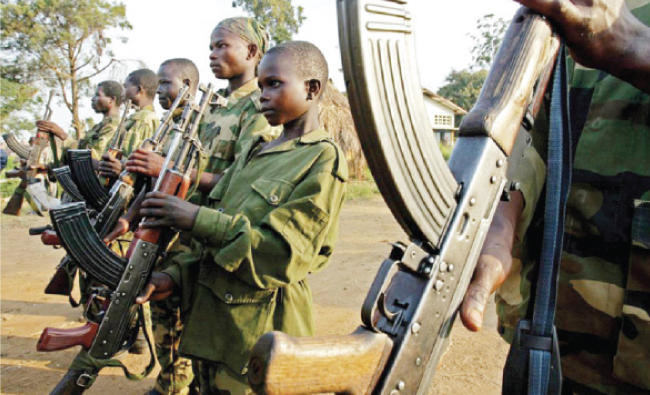
The conquest of the city of Goma, North-Kivu, a city of two million people in the Democratic Republic of Congo in November-December 2024, followed by the conquest by the same forces of Bukavu, the capital of South-Kivu in January-February 2025, a city of one million persons, has brought to attention the use of “child soldiers”, very young people mobilized to kill and destroy. The armed forces, the regular Army of the Democratic Republic of Congo, not having been paid in some time, faded away and left the fighting largely to militias organized along clanic or ethnic lines. There are real possibilities that the fighting will spread to Rwanda and Burundi, perhaps even Uganda.

The issue of child soldiers had gained attention in the ethnic-based fighting in Liberia. Young people had also been used in fighting in Colombia, South America. Child soldiers were often accused of sexual abuse, and there were difficulties in reintegrating the youth in their home villages when the fighting stopped.

Nongovernmental Organizations (NGOs) active in Geneva in the United Nations’ (UN’s) human rights bodies felt that action was needed on the issue of child soldiers and began to organize on the issue. In practice, what gives NGOs their influence is not what an individual NGO can do alone but what they can do collectively. “Networking” is a key method of progress. NGOs make networks which facilitate the trans-national movement of norms and information. Such networks tend to be temporary and highly personalized. However, at the UN, they are bound together in a common desire to protect the planet and advance the welfare of humanity.

In 1979 a Special Working Group on the Rights of the Child was created under the chairmanship of the Polish representative, the legal specialist Adam Lopatka. Government and NGO representatives worked together from 1979 to 1988 for one week each year in Geneva. There was a core group, including the Association of World Citizens (AWC), which worked steadily together. Representatives of the International Committee of the Red Cross and the International Labor Organization were brought into the sessions.

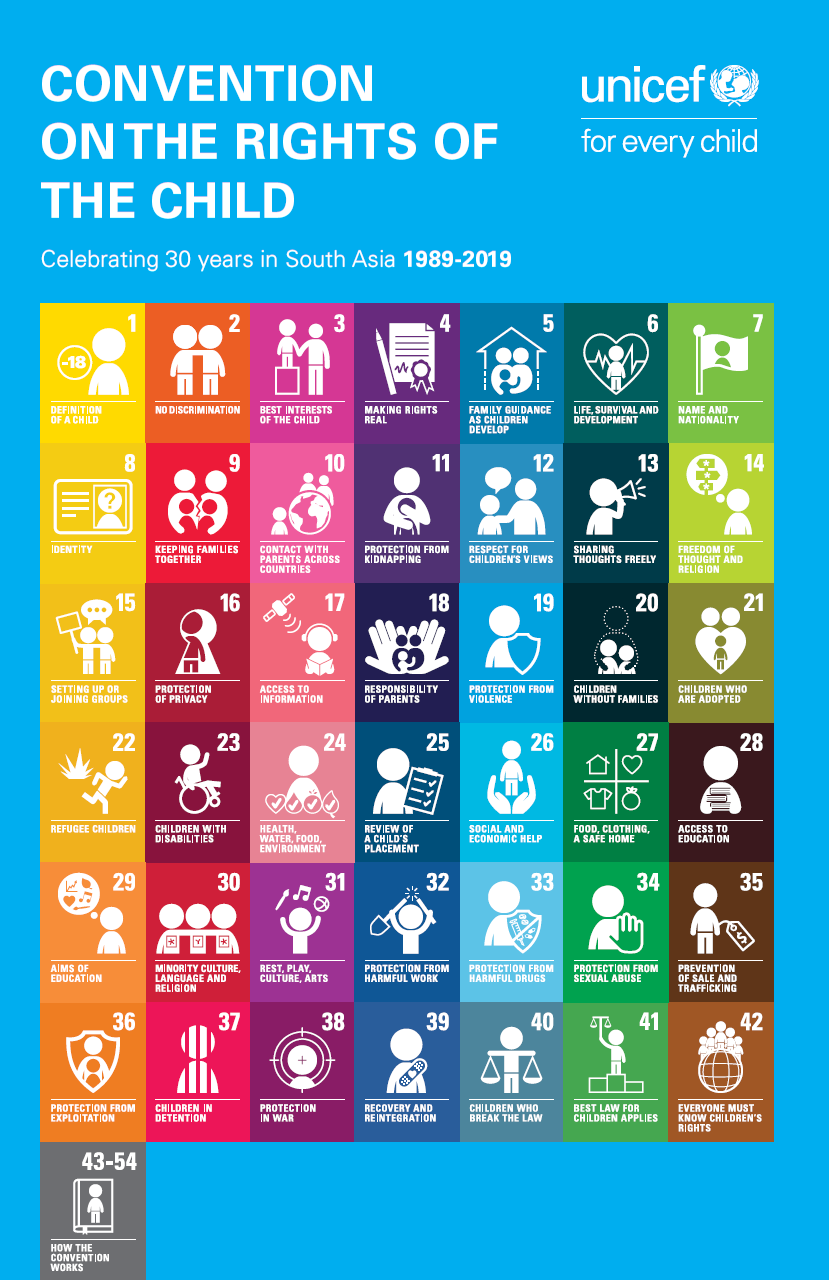
The Working Group managed to come to a consensus on a final version in time for the UN General Assembly to adopt the Convention on the Rights of the Child on November 20, 1989. By creating a common legal framework of world law, the Convention on the Rights of the Child has increased levels of government accountability, bringing about legislative and institutional reforms and increasing international cooperation. As James P. Grant, then UNICEF’s Executive Director, said at the time, “Transcending its detailed provisions, the Convention on the Rights of the Child embodies the fundamental principle that the lives and the normal development of children should have first call on society’s concerns and capacities and that children should be able to depend upon that commitment in good times and bad, in normal times and in times of emergency, in times of peace and in times of war, in times of prosperity and in times of recession.”

The Convention of the Rights of the Child has an important provision banning the recruitment and use in hostilities of persons under 15 years of age. The same provision has been placed in the Rome Statute creating the International Criminal Court. These international legal standards are tools which can be used. It is difficult to reach out to the armed militias active in Congo. However, we must try, as Citizens of the World, to make world law known and put into practice.

Prof. René Wadlow is President of the Association of World Citizens.

رابطة مواطني العالم تدعو السلطات العراقية لسحب مشروع قانونها الذي يسمح بزواج الفتيات بعمر 9 سنوات

In Being a World Citizen, Children's Rights, Current Events, Human Rights, Middle East & North Africa, NGOs, Solidarity, United Nations, Women's Rights, World Law on August 11, 2024 at 1:37 PM

مواطنو العالم يطالبون السلطات العراقية بسحب مشروع قانونها الذي يسمح بزواج الفتيات بعمر 9 سنوات

The AWC Calls on the Authorities of Iraq to Withdraw Their Draft Law Allowing the Marriage of 9-Year-Old Girls

In Being a World Citizen, Children's Rights, Current Events, Democracy, Human Rights, Middle East & North Africa, NGOs, Solidarity, United Nations, Women's Rights, World Law on August 11, 2024 at 11:55 AM

WORLD CITIZENS CALL ON THE AUTHORITIES OF IRAQ TO WITHDRAW THEIR DRAFT LAW ALLOWING THE MARRIAGE OF 9-YEAR-OLD GIRLS

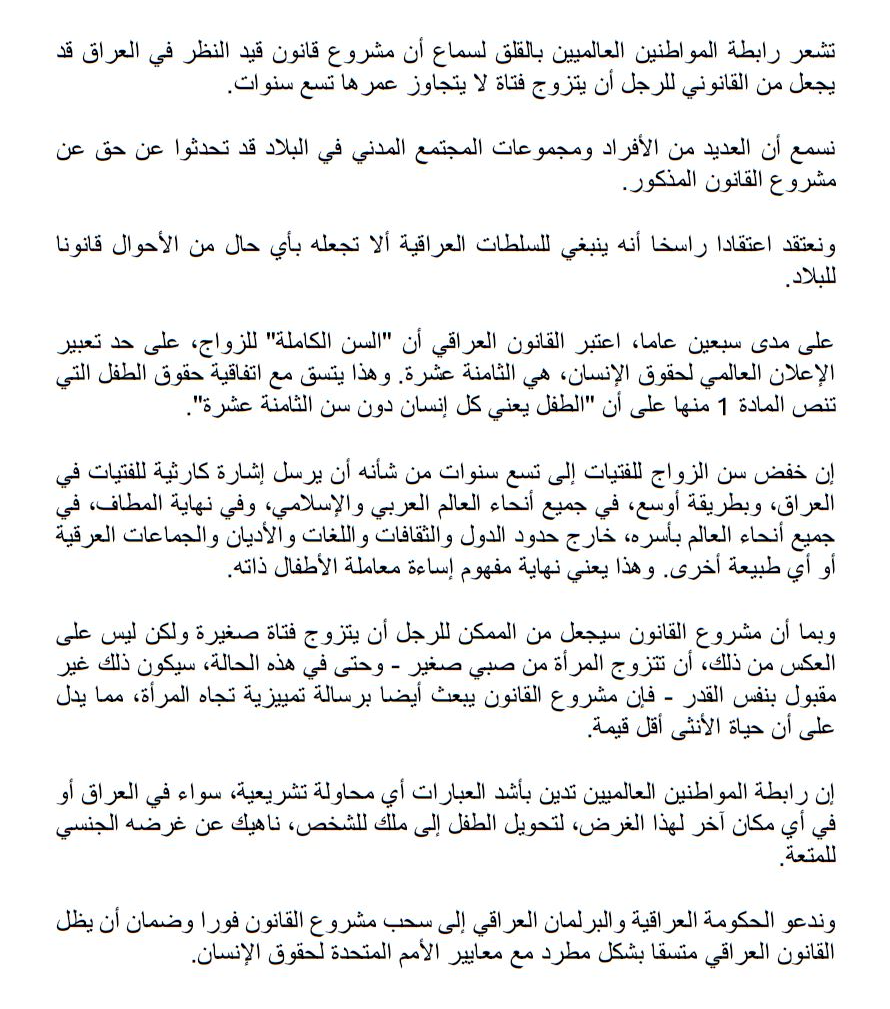
The AWC is alarmed to hear that a draft law under consideration in Iraq may make it legal for a man to marry a girl as young as nine.

We hear many individuals and civil society groups in the country have rightly spoken out about the said draft law.

We firmly believe the Iraqi authorities should by no means make it the law of the land.

For seventy years, Iraqi law has considered the “full age” for marriage, in the very words of the Universal Declaration of Human Rights, to be eighteen. That is consistent with the Convention on the Rights of Child under whose Article 1 “a child means every human being below the age of eighteen years”.

Lowering the marriageable age for girls to nine would send a disastrous signal for girls in Iraq and, in a broader manner, throughout the entire Arab and Muslim world and, ultimately, throughout the entire world, beyond the borders of states, cultures, languages, religions, ethnic groups or of any other nature. It would mean the end of the very notion of child abuse.

Since the draft law would make it possible for a man to marry a young girl but not, conversely, for a woman to marry a young boy – and, even then, it would only be equally condemnable – the draft law also sends a discriminatory message toward women, signifying that a female life is of lesser value.

The AWC condemns in the strongest terms any legislative attempt, whether in Iraq or anywhere else for this purpose, to turn a child into a person’s property, let alone their sexual object of pleasure.

We hereby call on the Iraqi Government and Parliament to immediately withdraw the draft bill and ensure that Iraqi law remains steadily consistent with UN human rights standards.

Convention on the Rights of the Child: The Vital Role of NGOs

In Being a World Citizen, Children's Rights, Human Rights, NGOs, Solidarity, The Search for Peace, Track II, United Nations, World Law on November 20, 2022 at 9:07 AM

By René Wadlow

When the Convention on the Rights of the Child was unanimously adopted by the United Nations General Assembly on November 20, 1989, governments took a major step forward in establishing a framework of world law to protect the basic dignity and rights of children in all parts of the world. Thus, on 20 November, we remember with gratitude those who worked to develop the concepts and reality of the Rights of the Child but also to measure the tasks that are before us, especially as members of nongovernmental organizations (NGOs). This universal framework is based on the principle that each child should have the possibility to develop into an active and responsible member of society. The way in which a society treats its children reflects not only its qualities of compassion and protective caring, but also its sense of justice, its commitment to the future and its urge to better the human condition for continuing generations.

The effort to create a legal framework for the welfare of the child began early in the League of Nations efforts with the Geneva Declaration of the Rights of the Child of 1924 which was largely based on a text written by the then newly established NGO “Save the Children International Union”. Child welfare has always been a prime example of cooperative efforts among governments, scholars highlighting the conditions of children, and NGOs working actively in the field. The Geneva Declaration served as the basis for the UN General Assembly resolution on the Declaration of the Rights of the Child adopted also on November 20, 1959. The 1959 Declaration was followed with more specific provisions of the Declaration on Social and Legal Principles relating to the Protection and Welfare of Children, the UN Standard Minimum Rules for the Administration of Juvenile Justice, and the Declaration on the Protection of Women and Children in Emergency and Armed Conflict.

In 1978, some representatives of both governments and NGOs in the UN human rights circles in Geneva felt that it was time to bring together these different declarations and provisions into a single text that would have the legal force of a UN convention. The Polish delegation to the UN Commission on Human Rights took the lead in this effort, but some governments felt that the different declarations needed to be closely reviewed and measured against changing realities. Thus, a Special Working Group on the Rights of the Child was created in 1979 under the chairmanship of the Polish representative, the legal specialist Adam Lopatka. Government and NGO representatives worked together from 1979 to 1988 for a week each year. There was a core group, including the Association of World Citizens (AWC), which worked steadily and represented a wide range of different beliefs, values and traditions, as well as a wide range of socio-economic realities.

As a result of serious discussions, the Convention covers a wide range of human rights which can be summarized as the three “Ps”: provision, protection, and participation. Each child has the right to be provided with certain things and services, such as a name and a nationality, to health care and education. Each child has a right to be protected from certain acts such as torture, exploitation, arbitrary detention, and unwarranted removal from parental care. Each child has a right to participate in decisions affecting their lives as well as in community life.

The Working Group managed to come to a consensus on the final version in time for the General Assembly to adopt it on November 20, 1989, the anniversary date of the Declaration. The Convention on the Rights of the Child is meant to provide guidance for governments to review national legislation and policies in their child-related initiatives. It is by examining national law and policy and the effectiveness of government structures and mechanisms that progress can be measured. The Convention also provides a framework of goals for the vital activities of NGOs. NGOs work on two lines simultaneously: to remind governments of their obligations through approaches to ministries, elected officials and the media and to undertake their own operational efforts.

To help governments to fulfill their obligations and to review national practices, a Committee on the Rights of the Child was created as called for in article 43 of the Convention. The Committee is composed of 10 independent experts elected for a four-year term by the States which have ratified the Convention. The Committee usually meets three times a year for a month each time in Geneva to review and discuss reports submitted by governments, once every four years. The sessions of the Committee are largely carried out in a non-confrontational dialogue with an emphasis on “unmet needs”. The discussion usually lasts six to nine hours for each country. The Committee members have received information and suggestions from NGOs in advance. The Committee members ask many questions and, based on the government’s responses, make suggestions for improving the promotion and protection of children’s rights in the country.

By creating a common legal framework of world law, the Convention on the Rights of the Child has increased levels of governmental accountability, bringing about legislative and institutional reforms, and increasing international cooperation. As James P. Grant, then UNICEF’s Executive Director, said, “Transcending its detailed provisions, the Convention on the Rights of the Child embodies the fundamental principle that the lives and the normal development of children should have first call on society’s concerns and capacities and that children should be able to depend upon the commitment in good times and in bad, in normal times and in times of emergency, in times of peace and in times of war, in times of prosperity and in times of recession.

(C) UNICEF ROSA

Prof. René Wadlow is President of the Association of World Citizens.

We, Disabled People, the Global Uncontacted Tribe

In Being a World Citizen, Children's Rights, Conflict Resolution, Democracy, Disabled people, Human Development, Human Rights, Social Rights, Solidarity, United Nations on December 3, 2018 at 8:09 AM

By Bernard J. Henry

What is an “uncontacted tribe”? Come on, you’ve heard of them. These are native communities living in their traditional forest or island habitat, following their millennia-old, nature-based lifestyle and refusing contact with the outside world. Since Jair Bolsonaro, the far-right candidate for the presidency of Brazil, won the election on October 28, the future of Brazilian uncontacted tribes lies in the balance as Bolsonaro pledged during his campaign to have all these tribes wiped out.

One would assume that an uncontacted tribe is logically a people living in one single place, not a group scattered throughout the world, thus being more appropriately called an “uncontacted diaspora”, although the expression wouldn’t make much sense. If that’s what you think, then, think again.

This world of ours is indeed home to a global uncontacted tribe. The tribe has a name – disabled people. And I happen to be one of them. You may be glad that you’re not.

The Real Wretched of the Earth

If you have the firm belief that you could never live with a single one of your rights being violated or not properly implemented, then, indeed, be glad you’re not of our own. Disabled people, currently one billion people making up 15 per cent of the world’s population,are the largest minority in the world and, indignantly enough, the category of human beings whose rights are the most blatantly ignored and violated.

Poverty hits us hard, as, according to the World Health Organization (WHO), eighty per cent of persons with disabilities live in developing countries and studies by the Organization for Economic Cooperation and Development (OECD) show that disability rates are significantly higher among groups with lower educational attainment in OECD member states. Among the world’s poorest people, says the World Bank, 20 percent have some form of disability and their communities view them as the most disadvantaged.

Disability doesn’t even spare women and children. A 2004 survey in Orissa, India, found that virtually all the women and girls with disabilities were beaten at home, 25 per cent of women with intellectual disabilities had been raped and 6 per cent of women with disabilities had been forcibly sterilized. The United Nations Children’s Fund (UNICEF) reports that 30 per cent of street youths are in some way disabled. Mortality for disabled children may be as high as 80 per cent in countries where underage mortality has, overall, decreased below 20 per cent, says the United Kingdom’s Department for International Development, adding that, in some cases, it seems as if children are being “weeded out”. Due to malnutrition, diseases, child labor and other causes, disabled children in developing countries are projected to increase over the next thirty years.

When not faced with ignorance, as the OECD says an average 19 per cent of less educated people have disabilities, compared to 11 per cent among the better educated, we must cope with the consequences of armed conflict and violence. The WHO estimates that, for every child killed in warfare, three are injured and left with a permanent form of disability. In some countries, up to a quarter of disabilities result from injuries and violence.

While local uncontacted tribes strive to keep away from “civilization”, we, the global uncontacted tribe, try to fit in but get pushed back by everyone, everywhere. Being a global tribe, the issues we face can rightly be called global issues. But seldom are found global solutions, let alone sought to begin with.

A Global People with No Global Rights

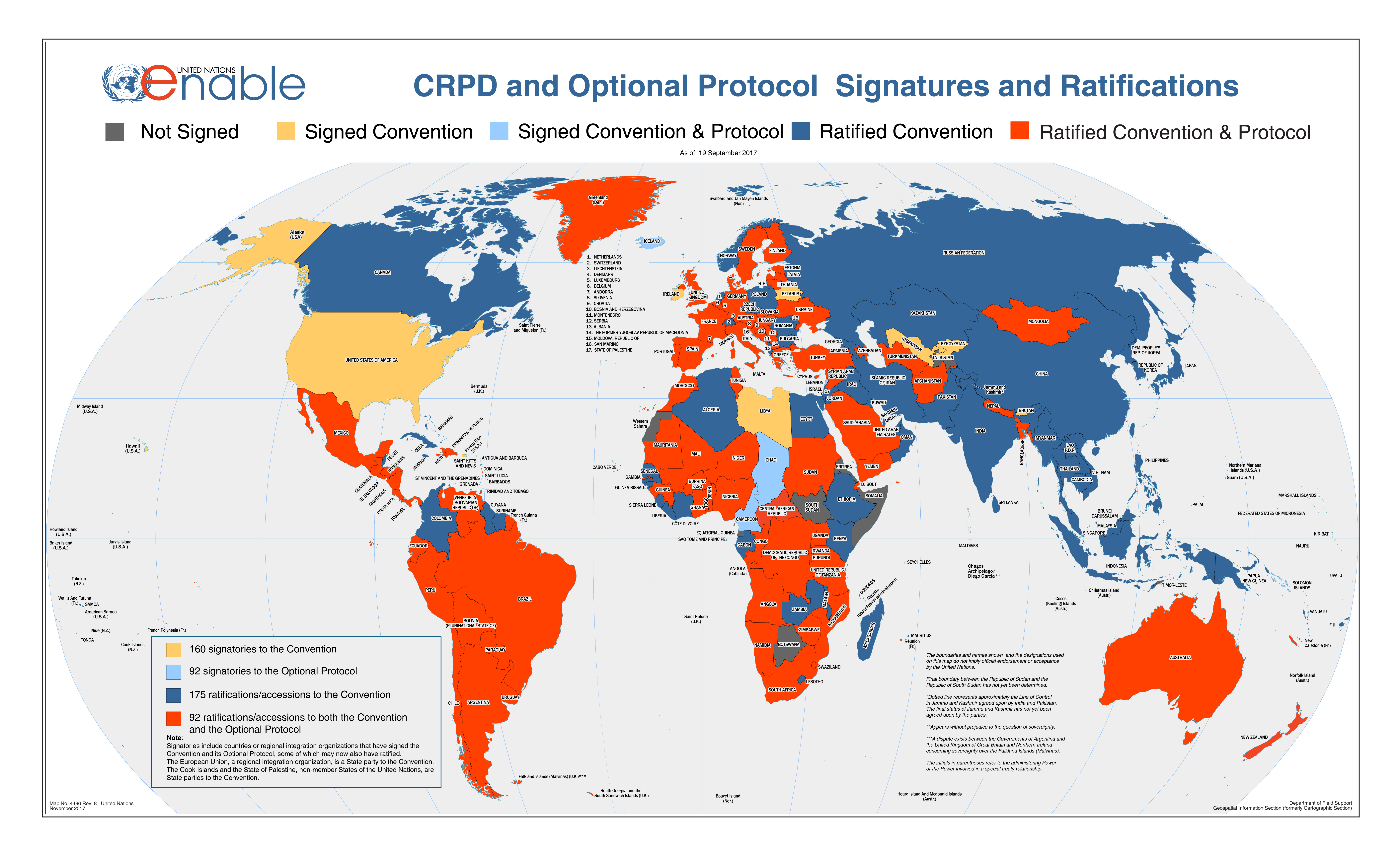
It wasn’t until 2006 that a billion inhabitants of planet Earth saw their rights formally enshrined in a binding treaty – the Convention on the Rights of Persons with Disabilities, signed on March 30, 2007. The Convention came into force on May 3, 2008 and, to date, 177 countries are States Parties. A specifically-dedicated United Nations (UN) agency, UN Enable, is tasked to ensure that the Convention is respected and enforced throughout the world. And even obtaining that didn’t come easy.

In 2004, the U. S. Administration, then led by President George W. Bush and at odds with much of the world over the Iraq war, opposed the Convention with all its might and argued that national laws within individual countries would always be better than a world treaty. Save that only 45 countries have anti-discrimination and other disability-specific laws, whose background varies heavily from country to country and makes it impossible to have a common global pattern of law emerge from domestic legislation.

In the U. S., disabled people were part of the civil rights movement in the 1960s, which landed them laws granting formal rights binding on federal, state, and local government and courts. By contrast, in France, disabled people started to gain specific rights after World War I, when so many veterans returned from the battlefield with injuries for life, needing either specific welfare pensions or assistance in finding a job. In the latter case, French disabled people had to wait until 1975 for a broader law, which was itself succeeded only in 2005 by a more thorough law, in both instances thanks to the determination of one man – Jacques Chirac, who was Prime Minister in 1975 and President in 2005, and whose daughter Laurence, who died in 2016, was gravely disabled. France is a State Party to the Convention, while the U. S. is only a signatory.

The Convention does not allow UN Enable to recognize and register persons as disabled people in the absence of a national framework, in the style of UNHCR which registers refugees in those countries without a national asylum agency. A shameful instance of national sovereignty without the limitations that would guarantee the greater good for everyone. Making us, disabled people, even more of a global uncontacted tribe.

We Are World Citizens – Sometimes World Leaders, Too

Are we doomed to remain forever global outcasts, a global uncontacted tribe as no one wants to contact us, at least without being judgmental and paternalistic toward us? Can we ever fit into society? To borrow a quote from Mark Twain, some of us “did not know it was impossible, so they did it”. And their names may just astound you.

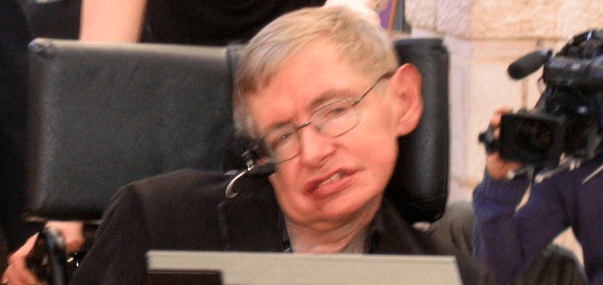
Stephen Hawking, the British theoretical physicist. John Nash, the American mathematician, whose life inspired the movie A Beautiful Mind. Vincent Van Gogh. Ludwig van Beethoven. Frida Kahlo. Tom Cruise. Robin Williams. Stevie Wonder. Ladyhawke, the New Zealand singer and musician who became world famous in 2008 with her worldwide hit Paris is Burning. To name but a few.

Others still made it to top government posts. Joaquin Balaguer, former President of the Dominican Republic. Wolfgang Schaüble, several times a Federal Minister and now Speaker of Germany’s Federal Assembly (Bundestag). Gordon Brown, former Prime Minister of the United Kingdom. In the United States, Robert Dole, a longtime Senator from Kansas and the Republican presidential candidate in 1996, as well as his recently-deceased fellow Senator and former Republican presidential nominee John McCain of Arizona – and, most importantly, two former Presidents, both Democrats, Woodrow Wilson and Franklin Delano Roosevelt, no less.

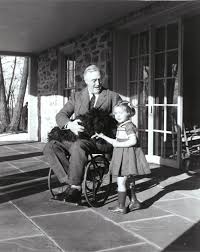
The latter won four presidential elections, got his country out of a major economic and social crisis, won World War II and created the United Nations – having done all that from a wheelchair. For an uncontacted tribe, we may not be deemed a completely useless portion of the world’s population.

Don’t Look at Our Name – Look at Our Selves

Even the name “disabled people”, coined by the non-disabled to refer to us, seems to have become more than this world can bear. Some are now using the name “differently abled”, at the very risk of stressing how different we are while we need to be recognized for our specificities but also for our similarities to the so-called “able” people. What’s in a name? Too much.

Disabled people need to be considered for what they are – people forced to live with a disability that requires special attention from society, while each of them retains his or her own self, skills and, unlike what our name suggests, abilities.

December 3 was proclaimed International Day of Disabled Persons in 1992, through UN General Assembly Resolution 47/3. Every year, the same question is asked of the people of the world: Why are you so afraid of the global uncontacted tribe? What makes you think they cannot be but a burden to society? Wouldn’t it be better for both you and them if you would only choose a more inclusive lifestyle that creates equal opportunities, regardless of (dis)ability?

And the world continues to wonder. It sees the global uncontacted tribe. It talks to us. But it uses a language we cannot understand, for its words cannot convey our own thoughts. And uncontacted we remain.

If you really want to contact us, just start by realizing that what you call “disability” originates in your own minds. We, the global uncontacted tribe, hold fortunes in knowledge and experience, different from yours. Please let us help you make this world a better place.

Bernard J. Henry is the External Relations Officer of the Association of World Citizens.

Maître Najet Laabidi de nouveau visée par les autorités tunisiennes

In Being a World Citizen, Children's Rights, Current Events, Disabled people, Human Rights, International Justice, Middle East & North Africa, NGOs, Social Rights, Solidarity, United Nations, World Law on March 18, 2018 at 7:29 AM

Par Bernard Henry

Si l’on juge un pays sur la manière dont il traite les personnes handicapées, alors la Tunisie a besoin d’un bon avocat. Et si l’on juge un pays au respect que les pouvoirs publics accordent aux avocats, alors la terre du Jasmin semble en chute libre vers l’indéfendable.

Une fois de plus, l’avocate tunisienne Najet Laabidi, poursuivie depuis 2011 pour avoir voulu représenter ses clients comme il est naturel pour un avocat, est dans le collimateur. Et cette fois, l’injustice est plus criante encore, car les clients que l’on veut l’empêcher de représenter sont, comment le comprendre, des personnes handicapées.

Enfants autistes, elles les maltraitent

Dans un courrier du 8 mars à la Rapporteuse spéciale de l’ONU sur les Droits des Personnes handicapées, Catalina Devandas-Aguilar, le Comité de Soutien de l’Affaire des Enfants autistes violentés et de Défense des Droits des Enfants/Personnes Autistes/Handicapé(e)s sonne l’alarme sur les faits dont il tire son nom, des faits remontant à février dernier seulement et qui, dans une Tunisie qui ne cesse de s’éloigner des espoirs de la révolution qui ouvrit en 2011 le « printemps arabe », sonnent comme un implacable constat d’échec – et un déchirant appel au secours.

« Le 17 février 2018, » écrit le Comité, « une vidéo a été mise en ligne sur les réseaux sociaux présentant des actes de violence (de maltraitance) d’enfants autistes dans un centre privé de prise en charge et d’éducation spécialisée à Tunis. » Sur cet enregistrement, réalisé par un employé du centre, l’on voit trois enfants se faire agresser par deux éducatrices du même centre.

La politique prise en défaut …

Les réactions n’ont pas tardé. Le 19 février, le Chef du Gouvernement tunisien affirmait son indignation, ordonnant une prise en charge psychologique immédiate pour les enfants du centre. Les premières consultations débutèrent le 6 mars.

Du côté des autres ministres, les suites furent moins reluisantes. Ministère de la Femme, de la Famille et de l’Enfance, Ministère des Affaires Sociales et Ministère de l’Education se jetèrent la patate chaude, chacun niant que le centre relève de sa juridiction. Et pour cause. En Tunisie, les centres pour enfants ou personnes handicapées sont gérées par des associations, elles-mêmes affiliées au Ministère des Affaires Sociales. Au mieux. Car le centre ne possède qu’un simple statut d’école privée, avec agrément du Ministère de l’Education, et n’abrite aucun professionnel qualifié pour la prise en charge des enfants autistes ou des personnes handicapées.

Côté grand public enfin, ce n’est pas la publicité qui a manqué à la vidéo, pas plus que les débats, à la radio, à la télévision et ailleurs. Débats où les enfants autistes ne trouvent pas que des défenseurs. C’est ainsi qu’un intervenant est allé jusqu’à justifier les violences, qu’il qualifiait d’ «intervention thérapeutique scientifique reconnue dans le cas des enfants autistes» …

Capture d'écran 2018-03-17 19.36.43.png

Avec l’affaire relayée y compris dans les médias internationaux, le scandale a de loin dépassé les seules frontières de la Tunisie. (Capture d’écran)

Mais l’essentiel de la population a bel et bien pris parti pour les enfants victimes, les familles d’enfants autistes et personnes handicapées, les Défenseurs des Droits Humains, les juristes et les organisations de personnes handicapées ayant été au premier rang de l’indignation générale.

Créé dans la foulée, le Comité de Soutien de l’Affaire des Enfants autistes violentés et de Défense des Droits des Enfants/Personnes Autistes/Handicapé(e)s appela au rassemblement devant la Présidence du Gouvernement. Le 20 février, à l’issue de la manifestation, des représentants du comité rencontrèrent des officiels gouvernementaux, auxquels ils rappelèrent les annonces du Chef du Gouvernement. Leurs exigences étaient simples et claires – des solutions pour les enfants du centre qui avaient dû, suite au scandale, être ramenés dans leurs familles, et des mesures à moyen et long terme pour que jamais de tels faits ne se reproduisent.

Des politiques mis au pied du mur entendaient enfin une légitime colère.

… Et le droit en déshérence

Dans tout Etat se voulant un Etat de droit, qui dit violences avérées dit procédure pénale. Au moins sur ce point, la Tunisie ne déçoit pas. Enfin, pas tout de suite.

Devant les plaintes déposées contre le centre et sa directrice par les parents des jeunes victimes, pour les besoins de l’instruction, l’une des éducatrices est en détention mais l’autre, ainsi que la directrice, ont été relâchées sous contrôle judiciaire. Malgré la gravité des faits, le centre lui-même n’a pas été fermé.

Plus incompréhensible encore, plusieurs parents des pensionnaires du centre ont pris la défense de la directrice et affirmé son innocence. Incompréhensible, certes – si l’on oublie que ces mêmes parents bénéficient d’une prise en charge de leurs enfants entièrement gratuite, là où le centre facture 700 à 900 dinars tunisiens, soit 230 à 300 euros, chaque mois. Une directrice «chèrement» défendue donc.

Et dont les soutiens ne s’arrêtent pas à des parents-clients, puisque, le 5 mars, la Commission parlementaire de la Santé et des Affaires sociales la recevait en tant que représentante d’une association sur l’autisme et porte-parole … Des centres pour enfants autistes. Rencontre diffusée le soir même au JT. Une conception bien singulière de l’exemplarité.

Elle porte plainte au nom des témoins, les gendarmes portent plainte contre elle

A l’horreur de la situation et au mépris du droit qui l’entoure, il fallait bien que viennent s’ajouter des manœuvres d’intimidation envers une avocate défendant les Droits Humains. Et il fallait que cette avocate soit, une fois encore, Najet Laabidi.

«En France, on laisse au repos ceux qui allument les incendies et on persécute ceux qui sonnent le tocsin», notait Chamfort en son temps. Apparemment une malheureuse exportation française vers la Tunisie, puisque, le 7 mars, l’auteure de la vidéo montrant les deux éducatrices «à l’œuvre» contre les enfants autistes a été retenue sans justification, et en violation de la loi, au poste de Garde nationale, la gendarmerie tunisienne, pour un supplément d’enquête à son endroit. Et à ses côtés, également retenue sans ménagement, se trouvait son avocate, Maître Najet Laabidi.

A ce jour, les deux témoins sont harcelés, sans que la maréchaussée tunisienne s’en inquiète outre mesure. Quant à Najet Laabidi, qui a déposé plainte en leur nom pour ces abus et s’en est ouverte dans la presse, elle aussi fait l’objet d’une plainte, déposée contre elle par la Garde nationale de Ben Arous et qui lui a valu une convocation devant le Procureur général de la Cour d’appel.
fidh.png

Pour qui en douterait, il en faudra pourtant bien plus pour faire baisser la garde à Najet Laabidi, qui réaffirme sans ambiguïté sa détermination dans ce qui est, pour elle, bien plus qu’un dossier d’avocat. «Pour moi, lutter pour les droits des enfants autistes, lutter pour un Etat de droit, un Etat de bonne gouvernance, c’est une obligation, un rêve, jamais je ne renoncerai. Même si l’on continue à m’intimider, par des poursuites judiciaires ou par d’autres moyens, je continuerai mon combat.»

Personnes handicapées et avocats, deux luttes du droit mondial

Jadis garde-frontière officieuse des Etats européens, en renversant son tyran et en déjouant ainsi tous les pronostics des « orientalistes » occidentaux, la Tunisie a acquis une aura toute nouvelle à travers le monde. Mais en s’inscrivant ainsi en faux contre deux luttes mondiales de Droits Humains, le pays risque de se voir bientôt décrire, une nouvelle fois, moins selon sa victoire contre l’arbitraire que selon son désolant retour vers la répression.

Car, oui, les droits des personnes handicapées sont une lutte mondiale de Droits Humains, l’ONU ne les ayant d’ailleurs jamais considérés autrement, là où le grand public les aurait vus bien plus comme une question relevant de la santé ou des affaires sociales. L’adoption en 2006 de la Convention internationale relative aux Droits des Personnes handicapées en est la meilleure preuve, ainsi que la création d’une agence spécialisée des Nations Unies consacrée au handicap, UN Enable.

Depuis bien plus longtemps encore, l’ONU consacre les droits des avocats, à travers les Principes de Base relatifs au Rôle du Barreau adoptés en 1990 et qui, pour n’être pas contraignants envers les Etats, n’en sont pas moins, à l’instar de tout le droit international, des dispositions dont aucune violation n’est sans conséquence, interne ou externe, sur le plan politique.

L’on voit donc mal comment et pourquoi une Tunisie passée contre toute attente à un despotisme clanique à un Etat bâti sur le souvenir des martyrs Mohamed Bouazizi, Chokri Belaïd et Mohamed Brahmi pourrait vouloir à présent devenir, aux yeux du monde, un Etat handiphobe et qui n’a – décidément – que mépris pour ses avocats.

C’est ce qui se passerait si les enfants du centre n’obtenaient pas justice, et si, plus encore, Najet Laabidi continuait à être harcelée, en lien avec cette affaire ou sur quelque autre sujet. Même en étant capables de s’attendre à tout, y compris à une bonne surprise, c’est en tout cas plus que les Citoyen(ne)s du Monde laisseront jamais passer.

Bernard Henry est Officier des Relations Extérieures de l’Association of World Citizens.
 

Human Rights: Government Failures, NGO Need to Organize!

In Being a World Citizen, Children's Rights, Democracy, Fighting Racism, Human Rights, Humanitarian Law, International Justice, NGOs, Religious Freedom, Social Rights, Solidarity, The Search for Peace, United Nations, War Crimes, Women's Rights, World Law on March 4, 2018 at 10:08 PM

By René Wadlow

In his final address to the Human Rights Council on February 26, 2018, United Nations (UN) High Commissioner for Human Rights Prince Zeid Ra’ad Al Hussein decried the “pernicious use of the veto” by permanent members of the UN Security Council – the USA, Russia, and China in particular – to block any unity of action to reduce the extreme suffering of innocent people in “the most prolific slaughterhouse of humans in recent times.”

However, it is not only the veto in the Security Council which prevents governments from acting. There is a widespread failure of governments to act. “Time and again, my office and I have brought to the attention of the international community violations of human rights which should have served as a trigger for preventive action. Time and again, there has been minimal action.”

He continued by mentioning States in which armed conflicts were the framework for constant human rights violations, including the fundamental right to life: Syria, Yemen, Myanmar, and the Democratic Republic of Congo.

United_Nations_High_Commissioner_for_Human_Rights_(21509596784)_(cropped)

He highlighted the growing wave of narrow nationalism promoted by political parties and in some cases by the leaders of government. “Xenophobes and racists in Europe are casting off any sense of embarrassment – like Hungary’s Viktor Orban who earlier this month said ‘We do not want our color…to be mixed in with others’ “

He concluded with a warning and an encouragement to action. “It is accumulating unresolved human rights violations which will spark the conflicts that can break the world…For the worst offenders’ disregard and contempt for human rights will be the eventual undoing of all of us. This we cannot allow to happen.”

In the light of the use of the veto in the UN Security Council and the realpolitik considerations of States in general, it is the task of nongovernmental organizations (NGO) to promote the resolution of armed conflicts through negotiations in good faith and the respect of humanitarian international law while the armed conflicts go on. NGOs must work so that universal human rights are the basis of society at all times.

In order to carry out these crucial tasks, NGOs must become stronger, have greater access to the media, increase their networks to more countries, and develop greater cooperation among themselves. These challenges require a wise use of current resources and efforts to increase them. There is a need to increase cooperation with universities and other academic institutions for background information and analysis. Government representatives always look for factual errors in NGO presentations as a way to discredit the whole presentation. Dialogue with the representatives of governments must be continued and, if possible, made more regular. States will continue to be important agents in the world society, and we must try to be in contact even when government actions are unreasonable, even criminal.

Cooperation among NGOs will facilitate an outreach to more sectors of the world society. Often a specific NGO will reach a particular milieu – religious, geographic, professional, social class. By cooperation a wider audience can be reached, and techniques for positive action set out.

As the UN High Commissioner for Human Rights stressed armed violence, systematic repression, waves of hate and xenophobia are strong today, and there is a real danger that they will grow. To meet these negative challenges, we who uphold the unity of the human family must organize ever-more effectively.

Prof. René Wadlow is President of the Association of World Citizens.

Let My Children Go: World Efforts to Eliminate the Worst Forms of Child Labor

In Being a World Citizen, Children's Rights, Human Development, Human Rights, International Justice, NGOs, Social Rights, Solidarity, The Search for Peace, United Nations, Women's Rights on June 11, 2017 at 12:10 AM

LET MY CHILDREN GO: WORLD EFFORTS TO ELIMINATE THE WORST FORMS OF CHILD LABOR

By René Wadlow

June 12 is a red-letter day on the United Nations (UN) agenda of events as the World Day Against Child Labor. It marks the June 12 arrival in 1998 of hundreds of children in Geneva, part of the Global March against Child Labor that had crossed a hundred countries to present their plight to the International Labor Organization (ILO).

“We are hurting, and you can help us” was their message to the assembled International Labor Conference which meets each year in Geneva in June. One year later, in June, the ILO had drafted ILO Convention N° 182 on Child Labor which 165 States have now ratified — the fastest ratification rate in the ILO’s history.

_52521_cambodiamarch300

ILO Convention N°182 sets out in article 3 the worst forms of child Labor to be banned:

  1. All forms of slavery or practices similar to slavery, such as the sale and trafficking of children, debt bondage and serfdom and forced or compulsory Labor, including forced or compulsory recruitment of children for use in armed conflict;
  2. The use, procuring or offering of a child for prostitution, for the production of pornography or for pornographic performances;
  3. The use, procuring or offering of a child for illicit activities, in particular for the production and trafficking of drugs as defined in the relevant international treaties;
  4. Work which, by its nature or the circumstances in which it is carried out, is likely to harm the health, safety or morals of children.

The Convention is supplemented by a Recommendation: the Worst Forms of Child Labor Recommendation N° 1999, which provisions should be applied in conjunction with the Convention: “Program of Action (article 6): Among other issues, the situation of the girl child and the problem of hidden work situations in which girls are at special risk are explicitly mentioned; Hazardous work (article 3(d)): In determining the types of hazardous work, consideration should be given, inter alia, to work which exposes children to physical, psychological or sexual abuse.

ILO_Geneva

The ILO building in Geneva, Switzerland

The ILO is the only UN organization with a tripartite structure, governments, trade unions and employer associations are all full and equal members. Non-governmental organizations (NGOs) within the UN system as a whole played an important role in highlighting children working in circumstances that put their physical, mental and social development at risk, children working in situations where they are exploited, mistreated and denied the basic rights of a human being. Today, millions of children, especially those living in extreme poverty, have no choice but to accept exploitative employment to ensure their own and their family’s survival. However, the ILO is the UN agency most directly related to conditions of work. Thus, the ILO has often been an avenue for ‘unheard voices’ to be heard, usually through the trade union representatives; more rarely the employer representatives have played a progressive role.

Child Labor and the increasing cross-frontier flow of child Labor did not have a high profile on the long agenda of pressing Labor issues until the end of the 1990s. At the start of the 1990s, there was only one full-time ILO staff member assigned to child Labor issues; now there are 450, 90 percent in the field.

Child_labor_in_Africa

Child Labor was often hidden behind the real and non-exploitative help that children bring to family farms. However, such help often keeps children out of school and thus outside the possibility of joining the modern sector of the economy. The ILO estimates that of some 200 million Child Laborers in the world, some 70 percent are in agriculture, 10 percent in industry/mines and the others in trade and services — often as domestics or street vendors in urban areas. Globally, Asia accounts for the largest number of child workers — 122 million, Sub-Saharan Africa, 50 million, and Latin America and the Caribbean, 6 million. Young people under 18 make up almost half of humanity, a half which is virtually powerless in relation to the other half. To ensure the well-being of children and adolescents in light of this imbalance of power, we must identify attitudes and practices which cause invisibility.

Statistics are only one aspect of the story. It is important to look at what type of work is done and for whom. The image of the child helping his parents on the farm can hide wide-spread bonded Labor in Asia. Children are ‘farmed out’ to others for repayment of a debt with interest. As the interest rates are too high, the debt is never paid off and ‘bonded Labor’ is another term for a form of slavery.

In Africa, children can live at great distances from their home, working for others with no family ties and thus no restraints on the demands for work. Girls are particularly disadvantaged as they often undertake household chores following work in the fields. Schooling for such children can be non-existent or uneven at best. There is often a lack of rural schools and teachers. Rural school attendance is variable even where children are not forced to work. Thus, there is a need for better coordination between resources and initiatives for rural education and the elimination of exploitative child Labor.

Child_labor_in_a_Pakistan_Shop

There is still a long way to go to eliminate exploitative child Labor. Much child Labor is in what is commonly called the non-formal sector of the economy where there are no trade unions. Child Labor is often related to conditions of extreme poverty and to sectors of the society where both adults and children are marginalized such as many tribal societies in Asia, or the Roma in Europe or migrant workers in general.

In addition to the worst forms of exploitative child Labor, there is the broad issue of youth training and employment. The challenges ahead are very much a youth challenge. The world will need to create millions of new jobs over the next decade in order to provide employment for the millions of new entrants into the Labor market in addition to creating jobs for the millions of currently unemployed or underemployed youth.

There needs to be worldwide Labor market policies that provide social protection measures, better training for an ever-changing work scene. World Citizens support the demands of decent work for all. We need to cooperate to build economies and societies where young persons participate fully in the present and the future.

Prof. René Wadlow is President and a Representative to the United Nations –Geneva of the Association of World Citizens.