The Official Blog of the

Archive for the ‘Book Review’ Category

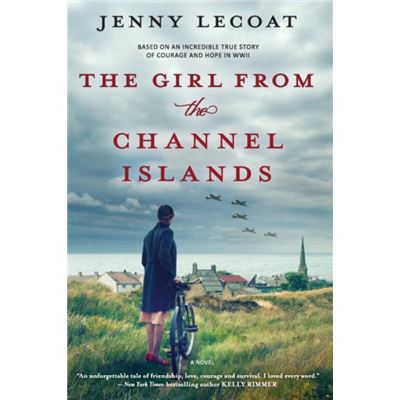
BOOK REVIEW: Jenny Lecoat, “The Girl from the Channel Islands”

In Antisemitism, Being a World Citizen, Book Review, Europe, Fighting Racism, Human Rights, Literature, Middle East & North Africa, Solidarity, Spirituality, War Crimes, World Law on January 5, 2026 at 8:00 AM

By Raphael Cohen-Almagor

Jenny Lecoat, The Girl from the Channel Islands.
New York: Graydon House, 2021, 304pp.

It is hard to stay human when wolves rule your world. It is harder still to hold on to your values when those very values might cost you your life. Most people, when faced with terror and deprivation, bend to the wind of fear. Compassion becomes a luxury, conscience an inconvenience. They retreat into the narrow shelter of survival.

But now and then, there are exceptions—rare, luminous moments when the human spirit refuses to break. Jenny Lecoat’s Hedy’s War tells one such story: a story of love and courage that endures amid the ruins of occupied Europe.

The novel is based on true events that unfolded on the island of Jersey during the Nazi occupation. Hedy, a Jewish woman who fled Vienna in search of safety, finds herself trapped once more under Nazi rule, this time on British soil. The irony is cruel, almost unbearable. And yet, against all odds, kindness finds her.

Anton, a man the regime calls Aryan, sees beyond race and propaganda. To him, Hedy is not an enemy or an inferior being but a friend—someone worth risking his life for. Dorothea, a local Jersey woman, shares his instinctive decency. She befriends Hedy not out of ideology but from an uncalculated sense of humanity, a natural warmth that refuses to be extinguished by fear.

Then comes Kurt, a German officer, who is drawn to Hedy’s quiet strength and beauty without knowing her origins. When the truth is revealed, he feels betrayed not by her identity, but by the lie their world demands they live. He rejects the Nazi myth of blood and purity, and instead chooses love—a dangerous, almost impossible act in his position.

Together, these three—Anton, Dorothea, and Kurt—form a fragile circle of protection around Hedy. They risk everything for her, defying a regime built on suspicion and cruelty. That she survived at all is a miracle; that she did so because of their compassion is a testament to the stubborn endurance of the human heart.

Hedy’s War is, above all, a story about moral clarity in an age of confusion. It reminds us that decency can survive even in the shadow of atrocity, that friendship and love can outlast the machinery of hate.

Hedy’s story is rare—precisely because most did not act this way. Most looked away, stayed silent, survived by doing nothing. But this book honours those who did not. It pays tribute to the small, unrecorded acts of goodness that saved lives, and to the few who kept their humanity when the world around them had lost its soul.

Jenny Lecoat captures, with quiet strength, the moral choices of ordinary people confronted by extraordinary evil. Her novel reminds us that even in an age of darkness, there were those who defied hatred, who chose decency over obedience, and love over fear. Lecoat writes with restraint and grace, allowing the quiet heroism of her characters to shine through the fog of occupation.

A moving and deeply humane story of courage, compassion, and moral integrity sustained against impossible odds.

Dorothea Weber who hid Hedwig Bercu from German forces occupying Jersey was posthumously awarded the “Righteous Among the Nations” honour for showing “extraordinary courage” during the holocaust.

The True Story Behind Hedy’s War

Hedwig Bercu (1919–2018) was an Austrian Jewish woman who fled Vienna after the Nazi annexation in 1938. She found refuge on the British island of Jersey, hoping to rebuild her life far from persecution. But in 1940, the Nazis invaded the Channel Islands—the only British territory they would occupy during the war.

Hedwig, known to her friends as Hedy, was trapped once more under Nazi rule. She worked as a translator for the German authorities, her fluency in languages allowing her a precarious survival. When her Jewish identity was discovered, she faced arrest and likely deportation to a concentration camp.

It was then that Dorothea Le Brocq (later Weber), a young local woman who worked with her, chose to act. Defying the occupation authorities, Dorothea and her future husband, Anton Weber, a German soldier disillusioned with the regime, hid Hedy in their home in St Helier. For eighteen months, the couple risked their lives daily to protect her.

Several accounts also identify Kurt Newmann, a German officer stationed on the island, as a further — and deeply complicating — presence. Reportedly drawn to Hedy’s intelligence and dignity, Newmann rejected the racial doctrines he was ordered to enforce. His attitude, whether motivated by conscience, love, or both, ultimately translated into intervention at critical moments: misdirecting inquiries, softening official scrutiny, and risking censure for showing leniency. Where many officers obeyed doctrine, Newmann’s conduct — as reported — helped enlarge the circle of protection around Hedy.

Hedy lived in a secret space within their house, emerging only at night. Neighbours suspected nothing. Dorothea and Kurt brought her food and company, while Anton used his position within the occupying forces to divert attention and suspicion. Their courage was not just an act of resistance—it was an act of profound humanity.

When liberation finally came in 1945, Hedy survived, against all odds. Her story remained largely untold for decades, overshadowed by the larger tragedy of the Holocaust. But her survival, thanks to Dorothea and Anton, stands as one of the Channel Islands’ most remarkable accounts of friendship and moral courage under occupation.

In 2016, Yad Vashem recognised Dorothea Weber as Righteous Among the Nations for saving Hedy Bercu—a belated but deeply deserved honour.

Jenny Lecoat’s novel Hedy’s War (2020) fictionalises this true story, capturing its emotional depth and moral resonance. Lecoat herself grew up in Jersey, the daughter of islanders who lived through the occupation, giving her account both intimacy and authenticity.

Prof. Raphael Cohen-Almagor is an Israeli-British academic.

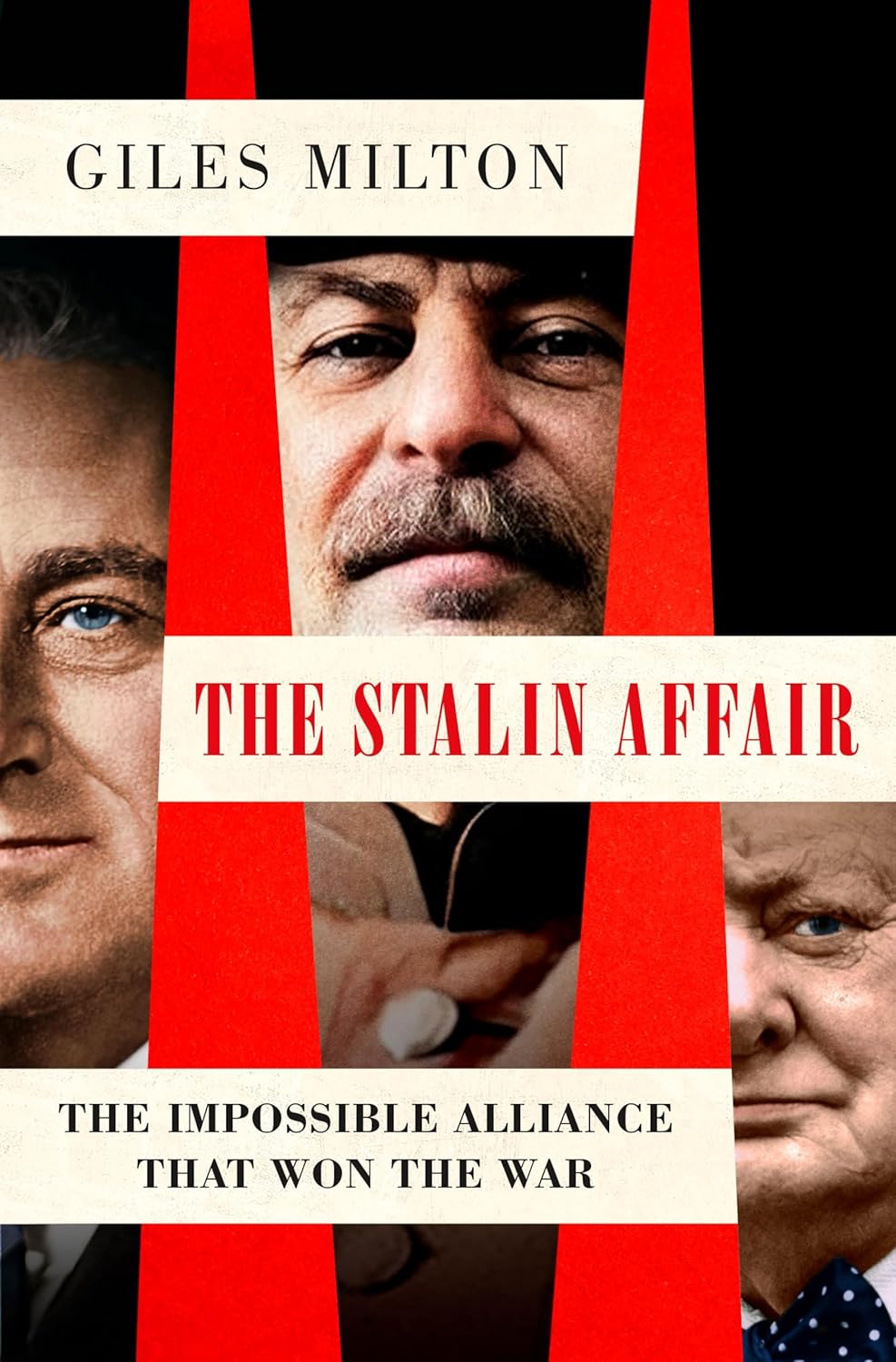
BOOK REVIEW: Giles Milton, “The Stalin Affair: The Impossible Alliance That Won the War”

In Being a World Citizen, Book Review, Democracy, Europe, Fighting Racism, The former Soviet Union on January 5, 2026 at 8:00 AM

By Raphael Cohen-Almagor

Giles Milton, The Stalin Affair: The Impossible Alliance That Won the War.
New York: Henry Holt and Co., 2024, 336pp.

This is a gripping narrative of the uneasy partnership between Churchill, Roosevelt and Stalin during World War II. Drawing on unpublished diaries, letters, and secret reports, Milton reveals how a diverse cast of diplomats and political figures—including U.S. billionaire envoy W. Averell Harriman, his charming daughter Kathy and Archibald “Archie” Clark Kerr, the British ambassador to the Soviet Union—worked to manage Stalin’s volatile temperament and secure Soviet cooperation against Hitler.

The book explores how Churchill, despite his deep mistrust of Stalin, recognized the strategic necessity of alliance after Hitler’s invasion of the Soviet Union. It also details the internal resistance in both Britain and the U.S., where many preferred isolationism or hoped the two dictators would destroy each other. The turning point came with Japan’s attack on Pearl Harbor and Hitler’s declaration of war on the United States, forcing a reluctant unity.

The book is filled with many small stories, impressions, romantic affairs and anecdotes that shed light on historic events and on the personalities of the three leaders who came together to fight Nazism – Churchill out of conviction, Stalin as a result of Hitler’s betrayal, and Roosevelt due to the Japanese surprise attack on the American navy in Hawaii. The colourful descriptions are captivating. Of particular interest is the story of Churchill’s “naughty document”. Officially known as the Percentages Agreement, this informal pact was struck between Winston Churchill and Joseph Stalin during the Fourth Moscow Conference in October 1944. On a simple scrap of paper, Churchill proposed dividing postwar influence in Eastern Europe by percentages—essentially carving up the region into spheres of control. The document suggested to divide post-war countries between the Soviet Union and Britain, behind Roosevelt’s back. The countries and percentages were: Romania: 90% Soviet, 10% others; Greece: 90% British (in accord with the U.S.), 10% Soviet; Yugoslavia: 50/50; Hungary: 50/50, and Bulgaria: 75% Soviet, 25% others. Churchill famously referred to it as his “naughty document” because he knew how blunt and imperialistic it appeared. He even remarked that the Americans would be “shocked” by its crudeness. Stalin reportedly ticked the paper in approval, and the agreement was honoured in some cases—most notably in Greece, where Britain retained dominant influence even during civil unrest. The document was later published in Churchill’s memoirs and has since become a symbol of the realpolitik that shaped the postwar order.

Milton paints vivid scenes of nervous negotiations, clashing personalities, festive dinners and the fragile diplomacy that held the alliance together long enough to defeat Nazi Germany—though it ultimately could not survive the postwar tense reality. The book offers both sweeping historical insight and intimate character studies, making it a compelling read for anyone interested in the political complexities behind wartime strategy.

Prof. Raphael Cohen-Almagor is an Israeli-British academic.

BOOK REVIEW: Camilla Reeve (Ed.) & Esme Edwards (Ed.), “So Many Unavoidable Journeys”

In Being a World Citizen, Book Review, Current Events, Human Rights, Migration, NGOs, Refugees, Solidarity, The Search for Peace, Track II, United Nations on January 5, 2026 at 8:00 AM

By René Wadlow

Camilla Reeve (Ed.) & Esme Edwards (Ed.), So Many Unavoidable Journeys.
London: Palewell Press, 2025, 125pp.

This collection devoted to the stories of migrants is “dedicated to all those who facing impossible conditions in their home, or ejected from it by hostile action, dare to seek a new place to live.” To become a migrant is never an easy choice but a profoundly sad and complex one. Migration becomes a central focus of one’s life story.

Some of the life stories cover relatively known ground. There is an account of five women who had been jailed in Evin Prison in Iran. The repression in Iran, especially of women, has become known both in Iran and outside. The repression has led to a wide-spread protest movement in Iran, known by its motto “Woman-Life-Freedom.”

Other situations are less known. There was the repression of ethnic minorities in Bhutan in the early 1990s with persons fleeing, or being deported, to Nepal which was also in turmoil. The Association of World Citizens had raised the Bhutan situation in the United Nations (UN) human rights bodies in Geneva. Pingala Dhital, who writes on the Bhutan-Nepal case, stresses the positive actions of the staff of the Geneva-based International Organization for Migration and the UN High Commissioner for Refugees.

Palewell Press is based in London. Thus, there are moving accounts of migrants from Iraq and Palestine, adapting to London life and the British structure of education.

As the South African Jan Christian Smuts wrote at the end of the First World War, “There is no doubt that Mankind is once more on the move. The very foundations have been shakened and loosened, and things are again fluid. The tents have been struck and the great caravan of Humanity is once more on the march.” Migration, chosen or forced by violence or the consequences of climate change has become a prime focus for governments and Nongovernmental Organizations. This collection catches some of the spirit of these transformations.

Prof. René Wadlow is President of the Association of World Citizens.

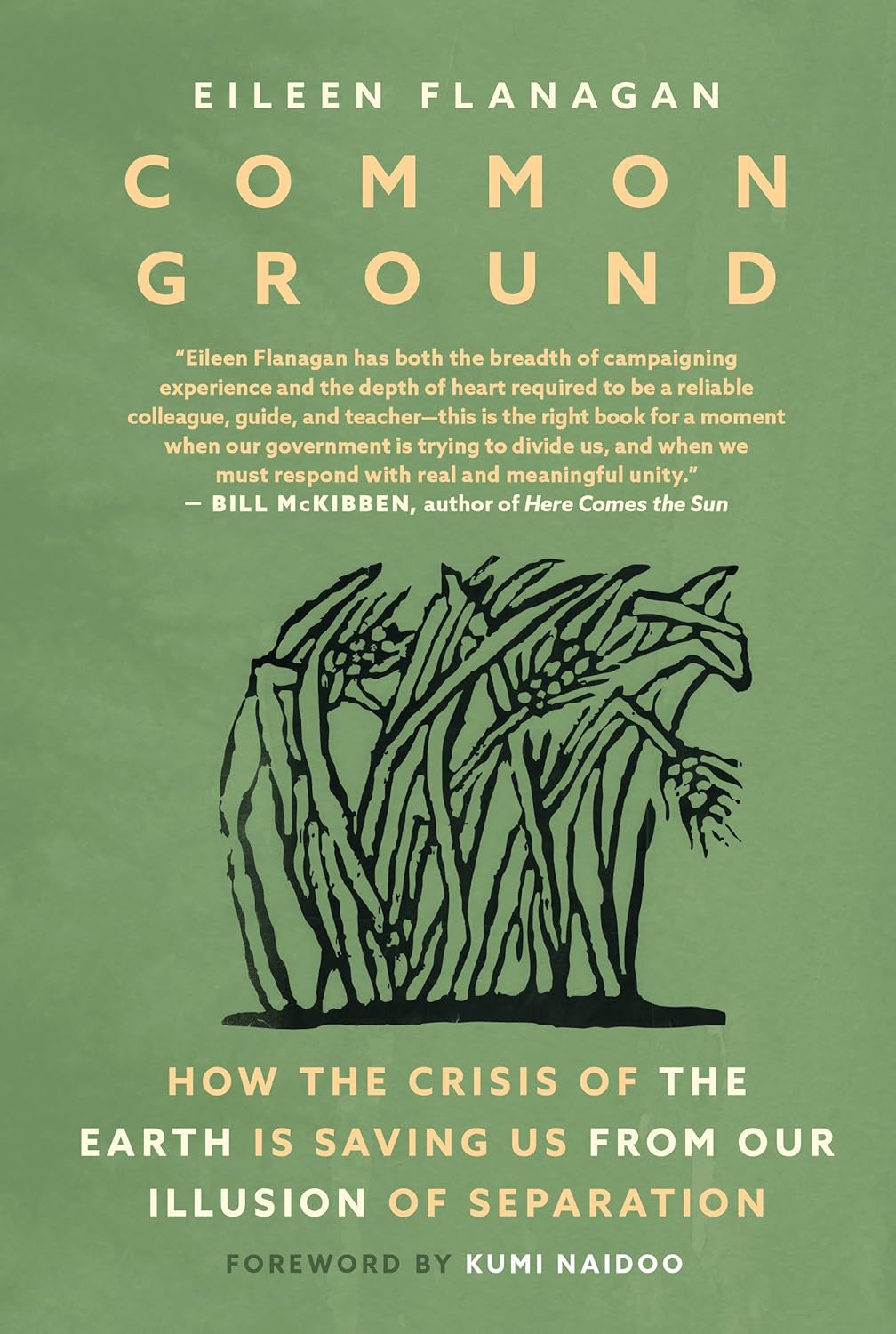
BOOK REVIEW: Eileen Flanagan, “Common Ground”

In Being a World Citizen, Book Review, Conflict Resolution, Environmental protection, Human Development, Nonviolence, Peacebuilding, Solidarity, The Search for Peace on December 7, 2025 at 6:50 PM

By René Wadlow

Eileen Flanagan, Common Ground.

New York: Seven Stories Press, 2025, 326pp.

Common Ground tackles the consequences of climate change and the need for cooperative action by looking at issues of power, particularly the way power holders maintain control by deliberately and effectively dividing people. The events featured illustrate how the fossil fuel industry benefits from racial and class divisions. However, the emphasis is on examples of people joining forces across differences to protect water, air, and the environment.

Eileen Flanagan has been the Campaign Director of the Philadelphia-based Quaker Earth Action Team. She stresses that, today, we need to draw upon the wisdom of those who have navigated the “divide and conquer” tactics of those opposed to ecologically-sound policies. The Quaker Earth Action Team was founded in 2010 in part by George Lakey, the non-violent activist who gave examples of Quakers throughout history who put their bodies in the way of injustice, such as those who sailed across the Pacific in the 1950s to interrupt nuclear testing.

Today, we need to bring more people into action coalitions in order to make truly transformative change. This requires developing a sense of common purpose and overcoming a sentiment of separation. There is a need to stress a life-sustaining civilization based on an understanding of the interconnection of all life. As Eileen Flanagan writes, “Just as the crisis of the Earth has the potential to help us overcome our illusion of the separation from other species and other communities, it also has the potential to help us transcend the boundaries of nation-states. No one country can solve the climate crisis on its own.”

She shares her personal journey and her relations with community activists to form coalitions that make a difference – a useful book!

Prof. René Wadlow is President of the Association of World Citizens.

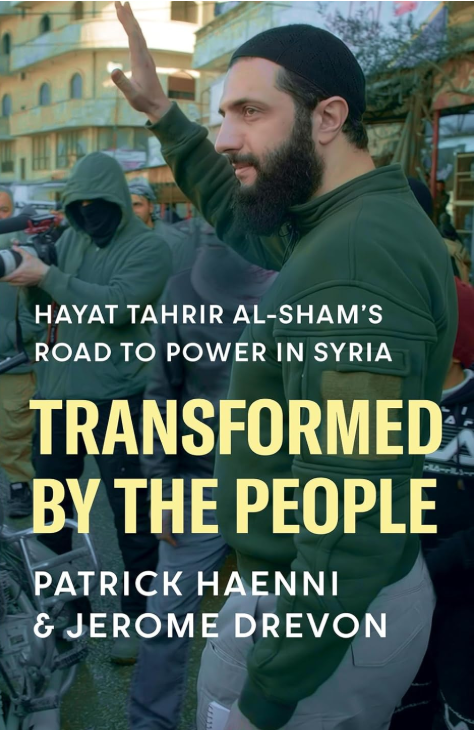
BOOK REVIEW: Patrick Haenni and Jerome Drevon, “Transformed by the People: Hayat Tahrir Al-Sham’s Road to Power in Syria”

In Book Review, Conflict Resolution, Current Events, Middle East & North Africa, Peacebuilding, Solidarity, Syria, The Search for Peace on November 24, 2025 at 8:00 AM

By René Wadlow

Patrick Haenni and Jerome Drevon,

Transformed by the People: Hayat Tahrir Al-Sham’s Road to Power in Syria.

London: C.Hurst and Co, 2025, 331pp.

In December 2024, Ahmad al-Sharaa (formerly known by his battle name of Abu Muhammad al-Jolani) and his armed militia, Hayat Tahrir Al-Sham (HTS), took control of most of Syria. Bashar al-Assad and his close circle left for Moscow on December 8, 2024 after nearly fourteen years of destructive civil war. A convergence of disorganization, low morale in the al-Assad forces, and international disengagement as Russia was focused on Ukraine ultimately facilitated the takeover of Damascus by Ahmad al-Sharaa.

Earlier, between 2016 and 2024, al-Sharaa and the HTS had been in control of Idlib, a rural province in northwest Syria. There, the HTS clamped down on its more radical commanders, severed ties with global jihad movements, and created the Salvation Government to administer the province. Important local figures and Islamist actors unconnected to HTS continued to pursue their own agendas.

In Idlib, the HTS was faced with many aspects of governance as there were many different factions, ideological, religious and professional present. This response to the local social and religious environment – what can be called a process of localization – modified deeply the HTS, “transformed by the people”, the title of the book. Now the process of localization must be applied to the whole of Syria – a more complex challenge than in Idlib. The authors deal in detail with the policies put in place in Idlib and the difficulties faced.

Now, al-Sharaa faces the strong presence of the Alawites – some 15 percent of the population – a religious-ethnic group of which the al-Assad family were members. There have been revenge killings against the Alawites, some of whom have fled to Lebanon and Turkey. In addition to the Alawites, there is an active Druze community – some three percent of the population – also a religious-ethnic movement. There is also a Christian community. Christians make up about ten percent of the population with significant communities in Damascus, Aleppo, Homs and Latakia.

In addition to the strong ethnic-religious communities which must be integrated into a new Syrian society, there are women who represent at least half of the population. Over the past decade, Syrian women sought to integrate into the new power structures as they emerged in different parts of the country. There was also a distinct feminist mobilization aimed at the empowerment of individuals in all aspects of life. Western Nongovernmental Organizations provided training sessions and workshops for women. Women still play a minor role in public life. They hold few positions within administrative and policy circles. The role of women is an issue to be watched closely.

The authors have highlighted the crucial issues in this period of transition. Their book is a useful guide to fast-moving events and will be of real use to all who wish to influence events in Syria in a positive direction.

Prof. René Wadlow is President of the Association of World Citizens.

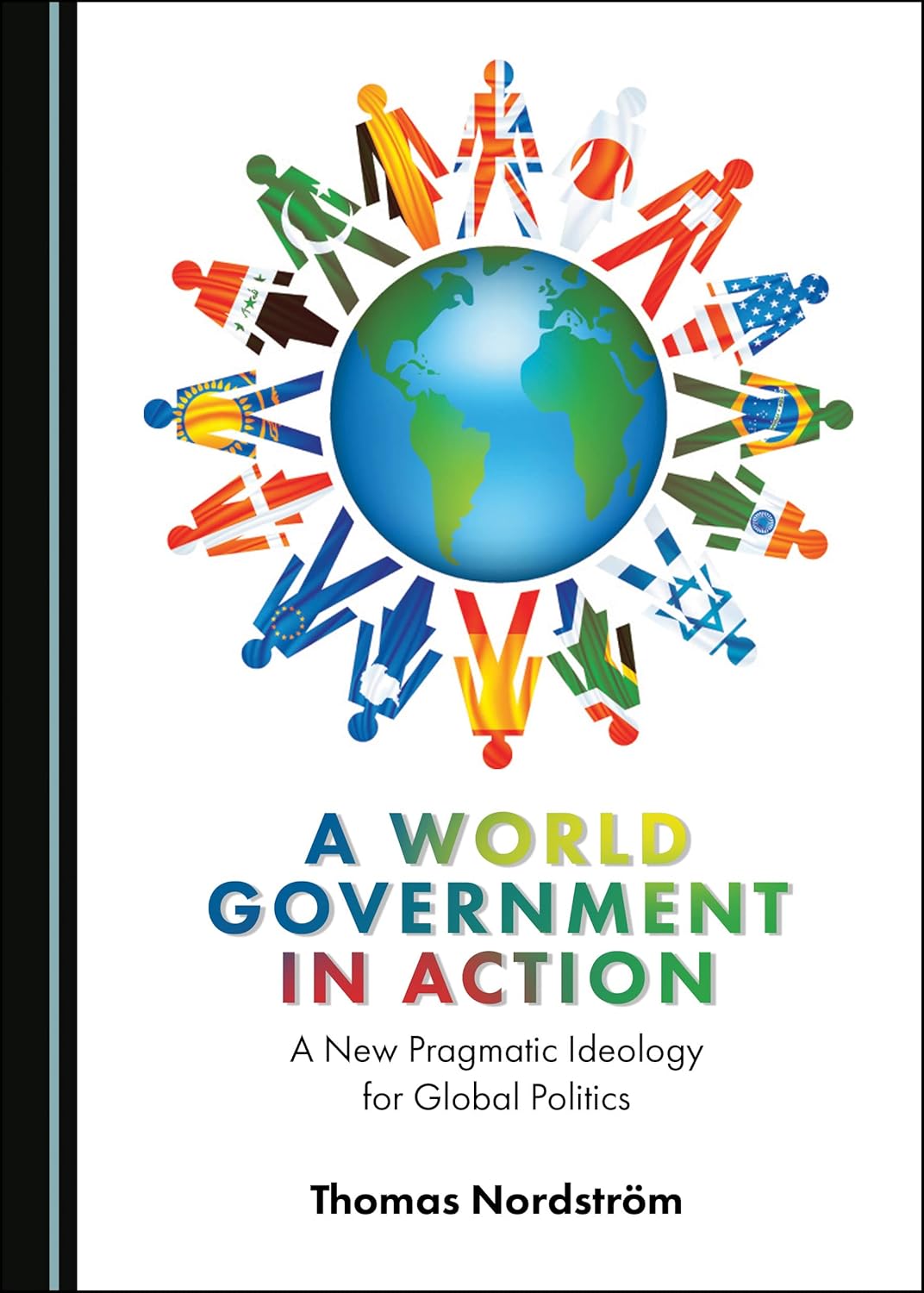
BOOK REVIEW: Thomas Nordström, “A World Government in Action”

In Being a World Citizen, Book Review, Conflict Resolution, Cultural Bridges, Democracy, Human Development, Human Rights, International Justice, NGOs, Nonviolence, Peacebuilding, Solidarity, The Search for Peace, Track II, United Nations, Women's Rights, World Law on September 8, 2025 at 7:00 PM

By René Wadlow

Thomas Nordström, A World Government in Action.

Newcastle upon Tyne: Cambridge Scholars Publishing, 2020, 147pp.

Thomas Nordström has written a useful book which more accurately should have been called “The Need for a World Government in Action”. He outlines many of the challenges facing the world society and stresses that the United Nations (UN) does not have the authority or the power to deal with these challenges adequately. The challenges are interrelated and thus must be faced in an interrelated way. Thus, climate change has an impact on land use which has an impact on food production. To improve food production, there must be better education on food issues as well as greater equality among women and men, as, in many countries, women play a major role in food production, food preparation, and food conservation.

As governments and UN Secretariat members become aware of an issue, the issue is taken up in one or another of the UN Specialized Agencies – FAO, WHO, ILO, UNESCO, or a new program is created: the Environment Program, or different programs on the issue of women. Today, within the halls of the UN there are negotiations for a Global Pact on the Environment and for the creation of a World Environment Organization which would be stronger than the existing UN Environment Program. Such a Global Pact for the Environment would clarify important environmental principles and relations between the existing treaties on the environment which have been negotiated separately.

In the UN, the international agenda reflects the growing influence of nongovernmental organizations (NGOs) and the scientific community in shaping policy. We see this vividly in the discussions on the impact of climate change. The distinction that used to be made between national and international questions has almost entirely vanished. NGOs must be able to provide possible avenues of action based on an effective theoretical analysis that acknowledges the complexity of the international environment.

Governments cannot at the same time boost expenditure on armaments and deal effectively with ecological deterioration and the consequences of climate change. Militarization has contributed to the neglect of other pressing issues, such as shrinking forests, erosion of soils and falling water tables. Militarization draws energy and efforts away from constructive action to deal with common problems. Militarization creates rigidity at the center of world politics as well as brittleness which leads to regional conflicts and civil wars. This political paralysis is both a cause and a result of the rigidity and the brittleness of current international politics. Opportunities are missed for building upon the more positive elements of a particular situation.

What is often called “complex emergencies” – a combination of political and social disintegration that includes armed conflicts, ethnic violence, state collapse, warlordism, refugee flows and famine – have become one of the most pressing humanitarian issues of our time. Today’s violent conflicts are often rooted in a mix of exclusion, inequality, mismanagement of natural resources, corruption, and the frustrations that accompany a lack of jobs and opportunities. Lack of opportunities sows the seeds of instability and violence.

As Nordström points out, behind all the current armed conflicts, there is the presence in a small number of countries of nuclear weapons. If they were used, the level of destruction would be great. Although nuclear disarmament was on the agenda of the UN General Assembly from its start, there has been little progress on nuclear disarmament issues.

As World Citizen and former President of India S. Radhakrishnan has written, “To survive we need a revolution in our thoughts and outlook. From the alter of the past we should take the living fire and not the dead ashes. Let us remember the past, be alive to the present and create the future with courage in our hearts and faith in ourselves.” The great challenge which humanity faces today is to leave behind the culture of violence in which we find ourselves and move rapidly to a culture of peace and solidarity. We can achieve this historic task by casting aside our ancient nationalistic and social prejudices and begin to think and act as responsible Citizens of the World. Nordström sets out some of the guideposts.

Prof. René Wadlow is President of the Association of World Citizens.

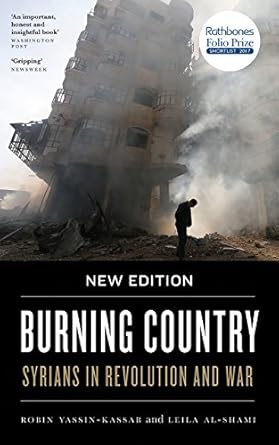
BOOK REVIEW: Robin Yassin-Kassab and Leila Al-Shami, “Burning Country – Syrians in Revolution and War”

In Being a World Citizen, Book Review, Conflict Resolution, Cultural Bridges, Current Events, Democracy, Human Rights, International Justice, Middle East & North Africa, NGOs, Peacebuilding, Solidarity, Syria, The Search for Peace, Track II, United Nations, War Crimes, World Law on September 1, 2025 at 6:00 AM

Robin Yassin-Kassab and Leila Al-Shami, Burning Country – Syrians in Revolution and War.

London, Pluto Press, 2016, 262pp.

Although this overview of Syrian society was written before the January 2025 flight of Bashar al-Assad to Moscow and the coming to power of Ahmed al-Sharaa as “interim” President, the book is a useful guide to many of the current issues in Syria today.

As Khalil Gibran wrote in The Garden of the Prophet, thinking of his home country, Lebanon, but it can also be said of the neighboring Syria, “Pity the nation divided into fragments, each fragment deeming itself a nation.” The fragments, ethnic and religious to which are added deep social divisions, make common action difficult. The Druze, the Alaouites, the Kurds, all play an important role but are often fearful of each other. Some of the Alaouites have fled to Lebanon. At the same time, there is a slow return of Syrians who have been in exile in Turkey and western Europe – especially Germany.

The divisions were made deeper by the years of violent conflict against the government of Bashar al-Assad which began in March 2011 with youth-led demonstrations appealing for a Syrian republic based on equality of citizenship, the rule of law, respect for human rights, and political pluralism.

After some months of non-violent protests, members of the military deserted, taking their weapons with them. The Syrian conflict became militarized. A host of armed militias were formed, often hostile to each other.

From late 2013 to February 2014, there were negotiations for a ceasefire held at the United Nations (UN), Geneva. Representatives of the Association of World Citizens (AWC) met with the Ambassador to the UN of Syria, as well as with the representatives of different Syrian factions who had come to Geneva. Unfortunately, Syrian politics has been that of “winner takes all” with little spirit of compromise or agreed-upon steps for the public good. The AWC called for a broad coming together of individuals who believe in non-violence, equality of women and men, ecologically-sound development, and cooperative action for the common good. The need to work together for an orderly creation of the government and the development of a just and pluralistic Syrian society is still with us.

Robin Yassin-Kassab’s book is a useful guide to the forces that must come together and cooperate today.

Prof. René Wadlow is President of the Association of World Citizens.

BOOK REVIEW: Helen Lackner, “Yemen in Crisis: Devastating Conflict, Fragile Hope”

In Being a World Citizen, Book Review, Conflict Resolution, Current Events, Human Rights, Humanitarian Law, Middle East & North Africa, NGOs, Peacebuilding, Solidarity, The Search for Peace, Track II, United Nations, War Crimes, World Law on August 30, 2025 at 6:00 PM

By René Wadlow

Helen Lackner, Yemen in Crisis: Devastating Conflict, Fragile Hope.

London, Saqi Books, 2023, 413pp.

In this incisive analysis, Helen Lackner highlights the ongoing armed conflict which threatens the survival of the Yemeni people. An internationalized civil war which started in 2015 has caused chaos, poverty, and in many areas extreme hunger. The external intervention led by Saudi Arabia and the United Arab Emirates in an operation called “Desert Storm” worsened the instability and fragmentation. Efforts by the United Nations to mediate the conflict, especially by meetings in Geneva, have been frustrated by the obduracy of the warring parties.

The Association of World Citizens (AWC) has been concerned with constitutional developments in Yemen since the 2011 change of government. While the constitutional form of the state structure depends on the will of the people of Yemen (provided that they can express themselves freely), the AWC has proposed consideration of con-federal forms of government which maintain cooperation within a decentralized framework. In 2014, a committee appointed by the then President, Abdrabbuh Mansour Hadi, had proposed a six-region federation as the political structure for Yemen.

Until 1990, Yemen was two separate states: the People’s Democratic Yemen in the south with Aden as the capital, and the Yemen Arab Republic in the north with Sana’a as the capital. In 1990, the two united to become the Republic of Yemen.

However, the union of the two states did not create a working unity. Fairly quickly there was a fracturing of Yemen into different spheres of influence. There were struggles for power and the creation of rival militias. Although tribes remain a fundamental aspect of Yemeni society, there developed new social forces with a greater role of youth and a growth of urban life as people moved from the countryside into cities. A small educated group, often including women, started to play a larger role.

With the 2015 outbreak of armed violence, the divisions have grown. Fundamentalist Islamic groups have been created. There has been a vast destruction of infrastructure as schools, medical facilities, and shops, and small industry has been targeted for destruction. Today, the Ansar Allah Movement, often called the Houthis, controls the capital Sana’a and the port city of Hudaydah. Much of the rest of the country is under the control of microgroups. There is a large displacement of people. The rivalry for regional power between Saudi Arabia and Iran colors the situation. As Helen Lackner writes, hope for peace is fragile. There are human rights violations on a massive scale by all the parties. The 27 million Yemenis live under a dark sky.

Prof. René Wadlow is President of the Association of World Citizens.

BOOK REVIEW: Karine Martin, “Monastic Daoism Transformed: The Fate of the Thunder Drum Lineage”

In Asia, Book Review, Cultural Bridges, Human Rights, Religious Freedom, Spirituality on August 14, 2025 at 6:20 AM

By René Wadlow

Karine Martin, Monastic Daoism Transformed: The Fate of the Thunder Drum Lineage.

Three Pines Press, 2025, 177pp.

Karine Martin, author of this useful overview of the Chinese Government’s attitude toward Daoist clergy, was able to travel widely in China, visiting more than 100 Daoist temples, especially those of the Thunder Drum lineage to which she belongs.

Since 2017, there has been a Chinese government policy called “Sinicization” in keeping with Xi Jinping’s Thought on Socialism with Chinese Characteristics for a New Era.

Sinicization requires all religious organizations to modify their doctrines and activities so that they match what is considered Han Chinese culture. Authorities have removed crosses from Christian churches and demolished minarets from Islamic mosques. Clergy from all religions are required to attend indoctrination courses on a regular basis. Chinese governments, both Nationalist and Communist, officially recognized five religions: Daoism, Buddhism, Islam, Catholicism and Protestantism.

Some religious groups are considered subversive and are outlawed and their members persecuted such as Falun Gong. During the “Cultural Revolution” (1966 to 1976, ending with the death of Chairman Mao Zedong), religion as such was considered to be one of the “four olds” to be destroyed. Churches and temples were closed. In Tibet, there was widespread destruction of temples. Monks were forced into civilian life. Today, the current policy is to keep religious organizations but to make sure that they do not slip out of control.

As Karine Martin writes,

“Everywhere I went, I found temples in a state of decline and disarray. There were no devotees, much fewer clergy, and minimal activities. Buildings were in disrepair, and there was very little renovation and construction. The overall atmosphere was one of desolation and despair… Temple websites – so strongly developed just a decade ago – now only speak about Xi Jinping Thought and ways of complying with government guidelines… Since all clergy were forced to rejoin secular society during the Cultural Revolution, many got married and had children yet later returned to their monasteries. The marriages often continued, if at long distance, allowing priests to fulfill their spiritual calling while yet having families. Now this is no longer possible, and monks either have to leave the monastery or produce a document that they have obtained a divorce and are properly celebrate.”

Karine Martin has written a very complete picture of monastic Daoism, a development of her Ph.D. thesis based on field observations. However, there is a cultural Daoism which colors Chinese life, its folk religious practices with village shrines – all difficult to control. Daoism places much emphasis on dreams during which the dreamer encounters immortals and advanced masters. Dreams are by their nature difficult to control from outside. The interpretation of the dream is also individual. Dreams can also lead to forms of deep personal meditation in order to understand the significance of the dreams.

Daoism also stresses good health and long life. Deep breathing, massages, herbal remedies and yoga-style movements such as Taijjiquan and Qigong can be carried out without belonging to a Daoist organization.

Daoism also places an emphasis on the appreciation of nature, especially mountains, rivers, forests and well-structured gardens. An ecological concern is growing in China without a specific link to organized Daoism.

While the government may try to control organized Daoist organizations, its cultural manifestations are ever slipping out of control and may one day be manifested in political terms.

Prof. René Wadlow is President of the Association of World Citizens.

BOOK REVIEW: E.G. Vallianatos, “Fear in the Countryside: The Control of Agricultural Resources in the Poor Countries by Nonpeasant Elites”

In Being a World Citizen, Book Review, Human Rights, Social Rights, Solidarity, United Nations, World Law on August 12, 2025 at 9:01 PM

By René Wadlow

E.G. Vallianatos, Fear in the Countryside: The Control of Agricultural Resources in the Poor Countries by Nonpeasant Elites.

Cambridge. MA: Ballenger Publishing Co. 1976, 180pp.

E.G. Vallianatos, a former member of the United Nations (UN) Secretariat, shows the connection between the lack of power and the lack of productivity. He highlights that most economic and political power in developing countries is concentrated in urban areas. Agrarian structures and access to essential resources often do not favor the majority of rural people, especially the poorest groups. Policies on development priorities and allocation of resources and services often help the politically powerful urban sector. An increasing amount of rural productive land is falling under the control of urban elites.

One answer to why the rural poor stay poor is that they rarely are well organized so as to be able to participate meaningfully in decision-making. Especially the least powerful among the rural poor – the tenant farmers, the landless laborers, members of tribal societies – are the least well organized, the most easily divided and blocked.

Social change is inevitably a challenge to the status quo. No development project, no matter how small or how technical, is without an impact on the distribution of power. A new well dug in a village is not simply an added social service. The new well calls into question the power of those who controlled the access to water prior to digging the new well.

If measures are not taken to facilitate the peaceful participation of the rural poor, it is likely that the rural poor will turn to armed violence, thus creating fear in the countryside. Non-violent techniques have been used to organize the powerless in rural areas. One of the first efforts of Mahatma Gandhi on his return to India from South Africa was to investigate and then mediate in the struggle of the indigo pickers. Cesar Chavez in the USA was a leading advocate of non-violence in his efforts to organize agricultural workers. The Sarvodoya Movement in Sri Lanka has applied the Buddhist values of compassion to construct a social and economic infrastructure based on a strong community spirit. There is a need to study the wide range of situations and the opportunities for constructive action.

Prof. René Wadlow is President of the Association of World Citizens.