The Official Blog of the

Archive for 2026|Yearly archive page

BOOK REVIEW: Metta Spencer, “The Russian Quest for Peace and Democracy”

In Being a World Citizen, Book Review, Conflict Resolution, Current Events, Democracy, Human Rights, NGOs, Nonviolence, Peacebuilding, Solidarity, The former Soviet Union, The Search for Peace, Track II, United Nations, United States on January 7, 2026 at 8:00 AM

By René Wadlow

Metta Spencer, The Russian Quest for Peace and Democracy.

New York: Lexington Books, 2010, 348pp.

With the violence and tensions in Ukraine and the reactions of the USA, Russia, and NATO, some writers have spoken of a “New Cold War”. Thus, it is useful to look at how civil society representatives helped to keep lines of communication open during the first Cold War (1945-1990), in particular how Gorbachev’s advancement of democracy and peaceful foreign relations was fostered by private conversations with members of international civil society and NGOs.

There is in the Agni Yoga teachings of Helena Roerich, to which Raisa Gorbachev was particularly devoted, a line which says, “Not the new is proclaimed but what is needed for the hour.” This idea became a guideline for Mikhail Gorbachev whose new thinking was not really new. Many of us had been saying the same thing for years before, but none of us was head of state.

Gorbachev’s September 1987 address to the United Nations (UN) General Assembly was a clear call for the rule of law both domestically and internationally. He recommended greater use of the International Court of Justice and that all states accept its compulsory jurisdiction. He called upon the permanent members of the Security Council to join in formulating guidelines to help lead the way. This was a renunciation of a sixty-year resistance to the World Court that the then Foreign Minister Maxim Litvinov − though an internationalist − had initiated in 1922 claiming that there could be no impartial arbitrator between the Soviet and the non-Soviet world saying, “Only an angel could be impartial in judging Russian affairs.”

Unfortunately, the United States (U.S.) State Department took the speech as a propaganda ploy to further embarrass the U.S. over the World Court’s Nicaragua litigation. Therefore, the U.S. delegation to the UN did everything it could to hinder discussion of giving the World Court a larger role and was successful in stopping any effort to expand compulsory jurisdiction.

Gorbachev did all he could to strengthen the peace-making role of the UN, leading to the successful completion of what had been seemingly endless negotiations at the Palais des Nations in Geneva concerning the Soviet intervention in Afghanistan, and the very difficult negotiations, also in Geneva, between Iraq and Iran to end their war.

Progress was also made on the Vietnamese occupation of Kampuchea (Cambodia) which led to the 1992 Paris Accord. This combination of deescalation in tensions and violence in the international area and significant steps in arms control was largely due to the leadership of Gorbachev. His seven years in power (1985-1991) left the world a safer place and Russia a more openly pluralistic society. However, the common ground on which he tried to stand was constantly eroded by forces he could not control, leaving him at the end with no place to stand.

Metta Spencer, Editor of Peace Magazine and professor emeritus of sociology at the University of Toronto tells some of this story, especially through interviews with persons in Gorbachev’s inner circle as well as other participants in the fast-changing scene. She has continued her interviewing so that persons also reflect on events and trends in post-Gorbachev Russia − the Yeltsin and early Putin years.

What is most helpful to those of us interested in citizen diplomacy and who were involved in talks with Soviets on arms control is her account on how discussions with members of the Soviet Academy of Sciences’ institutes, especially the USA/Canada Institute of Georgi Arbatov and the Institute for World Economy and International Relations (IMEMO) had an impact on Soviet decision-making. As Spencer notes, Gorbachev’s advancement of democracy and peaceful foreign relations was fostered by private conversations with members of international civil society. Among the Soviets who participated, some became Gorbachev’s chief advisors.

The ground for these discussions had started relatively early at the time of Nikita Khrushchev. The Pugwash meetings started in 1957, and the Dartmouth conferences led by Norman Cousins and Georgi Arbatov began in 1960.

Metta Spencer sets out clearly the core of her book. Democracy, human rights, and nonviolence are rarely reinvented independently by local citizens. Usually, they are imported from abroad and spread by personal contacts in international civil society, not by diplomats or rulers. That was the way it happened in the Soviet Union. This book describes how certain back-channel relationships with foreign peace researchers and activists influenced the Soviet Union’s brief democratization, its foreign policy and its military doctrine. She adds that transnational civil society or organizations are most helpful for they create heterogeneous relationships − those that tend to bridge society’s disparate elements. Such relationships inform and strengthen individuals who, in an authoritarian setting, face heavy pressures to conform.

Metta Spencer’s interviews with people well after the events, give a sense of necessary distance, of the strengths and weaknesses of movements and individuals.

Note

1) For a good overview of citizen diplomacy efforts with the Soviet Union, see the following listed by date of publication:

Gale Warner and Michael Shuman, Citizen Diplomats: Pathfinders in Soviet-American Relations − And How You Can Join Them (New York: Continuum, 1987)

David D. Newsom (Ed.), Private Diplomacy with the Soviet Union (Lanham, MD.: University Press of America, 1987)

Gale Warner, Invisible Threads: Independent Soviets Working for Global Awareness and Social Transformation (Washington, DC: Seven Locks Press, 1991)

Matthew Evangelista, Unarmed Forces: The Transnational Movement to End the Cold War (Ithaca, NY: Cornell University Press, 1999)

Prof. René Wadlow is President of the Association of World Citizens.
Iran: Dark Clouds, Future Uncertain

In Being a World Citizen, Conflict Resolution, Current Events, Democracy, Human Rights, Middle East & North Africa, NGOs, Nonviolence, Peacebuilding, Social Rights, Solidarity, The Search for Peace, United States on January 7, 2026 at 7:30 AM

By René Wadlow

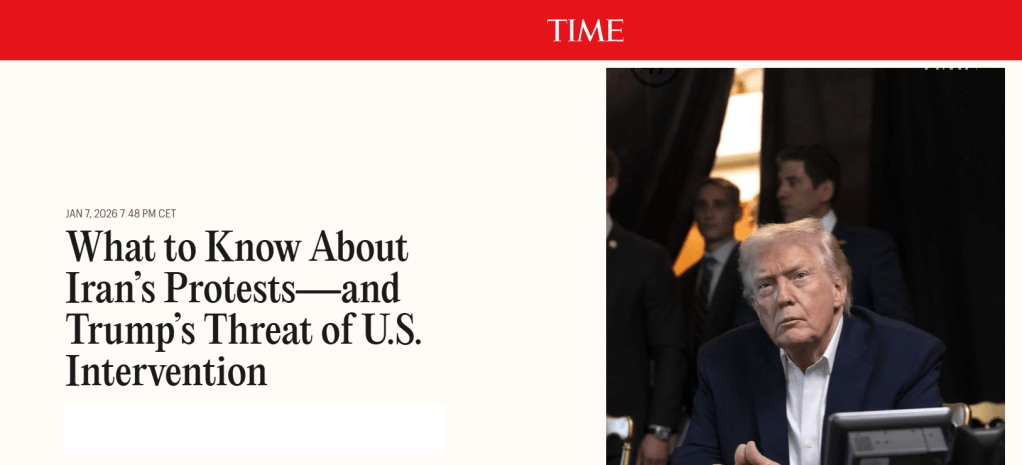
Since the “12-day war” of Israel and the USA last June, Iran has been a powder keg with unresolved political tensions, deepening economic turmoil, and rising domestic dissent. With the start of 2026, the keg has exploded. Protests have started in some 32 cities and larger towns throughout the country.

The protests were first focused on economic issues symbolized by the sharp collapse of the rial, the national money, and the inflation exceeding 40 percent. These dynamics have turned the bazaaris – the merchants – traditionally a more conservative social group, into key participants in the protests. Economic hardship has become a daily experience for a wide segment of the population.

Although the protests began with economic demands, reports from across the country indicate that slogans have increasingly shifted toward explicitly political and anti-governmental messages, including chants directed at the Iranian leadership and the political system as a whole. Universities have once again emerged as key protest centers with action by both students and professors.

The government led by President Masoud Pezeshkian has promised economic reforms, but there is no protest leadership with which to negotiate. The security forces have increased repression with a large number of people arrested. A number of persons have been killed. Funerals for the protesters killed have become occasions for additional protests. The repression has led the United States (U.S.) President, Donald Trump, to say, “If Iran violently kills peaceful protesters, which is their custom, the United States of America will come to their rescue. We are locked and loaded and ready to go.”

The U.S. threats in the Iran situation are very unhelpful. It is time to unlock and unload. Rather, the Association of World Citizens calls on the Iranian authorities to cease immediately the use of force against peaceful protesters and to release those arbitrarily detained. This will create space for genuine dialogue and the needed reforms for economic justice.

Prof. René Wadlow is President of the Association of World Citizens.
BOOK REVIEW: David Cortright, “Peace: A History of Movements and Ideas”

In Being a World Citizen, Book Review, Conflict Resolution, Current Events, Europe, NGOs, Peacebuilding, Solidarity, The Search for Peace, Track II on January 6, 2026 at 8:00 AM

By René Wadlow

David Cortright, Peace: A History of Movements and Ideas

Cambridge: Cambridge University Press, 2008, 376pp.

Peacemaking has always been an art rather than a science. As with painting, there is a pallet with a range of colors, and it is up to the artist to know how to combine these colors, sometimes in pure form and at other times mixed together to paint a picture, sometimes of a peaceful field and at other times a scene of revolt. David Cortright, Director of Policy Studies at Notre Dame’s Kroc Institute for International Peace Studies and an activist especially on nuclear arms issues, has set out a clear and up-to-date history of the ideas and movements that make up the colors on the peace pallet. While the book has been out for some time, I review it now as a first-rate overview of peace efforts and ideologies.

As with colors in art, there are a limited number of ideas which can be used, sometimes alone and sometimes in combinations. Likewise, there are a limited number of people in the peace brigades, and they are usually found in different campaigns, often the same people in different uniforms. Open conflicts provide us with test cases of how ideas concerning peace and conflict resolution can be put together, and we see how the peace brigades will form themselves to meet the challenge.

Cartright gives us a good overview of the development of nineteenth century peace societies. They were born in the USA and England from the success of collective action against slavery and the slave trade. If the age-old institution of slavery could be abolished by a combination of law, religious concern and changing public opinion, could not war be abolished in the same way? Religious-motivated action, work to influence public opinion, and legal restraints on war have continued to be the chief colors of the peace pallet.

The Hague Peace Conferences of 1899 and 1907 were milestones in the development of world law, of faith in the power of mandatory arbitration, and for the need of world courts. The Hague legal spirit was most prominently displayed slightly later by President Woodrow Wilson who had long espoused arbitration, the strengthening of international law and multilateral cooperation. The League of Nations and the United Nations are the embodiment of the Wilsonian vision. As H.G. Wells wrote in The Shape of Things to Come, “For a brief interval Wilson stood alone for humankind…in that brief interval there was a very extraordinary and significant wave of response to him throughout the earth.”

Wilson remains the ‘father figure’ of peace through law and multilateral governmental action just as Mahatma Gandhi does for nonviolent action. As Martin Luther King Jr. wrote, “Gandhi was probably the first person in history to lift the love ethic of Jesus above mere interaction between individuals to a powerful and effective social force on a large scale.”

Peace efforts require images for a complex set of ideas, and Wilson and Gandhi provide that image of the heroes of peace. Wilson and Gandhi represent the two steady sources of inspiration for peace workers — those working for the rule of law and human rights and those working to translate religious insights into political action. It is not always easy to get the two traditions to work together.

As Cortright notes, “In May 1999, nearly 10,000 peace advocates from around the world gathered in Holland for the Hague Appeal for Peace, one of the largest citizen peace conferences in history…The 1999 Hague Appeal was intended to launch a new era of citizen-initiated peacemaking. As preparations for the conference took place, however, NATO forces launched a bombing campaign against Serbia to force its withdrawal from Kosovo. While the official conference proceedings unfolded, hundreds of activists gathered in basement conference rooms for impromptu sessions to debate the pros and cons of NATO intervention. It was a heated discussion in which colleagues who had worked together for disarmament in the 1980s found themselves on opposite sides of the question of intervention in Kosovo”.

Today, as the conflicts in Syria and Iraq, as well as with the Islamic State (ISIS) terrorist group, grow in intensity and spill over to influence Turkey and Lebanon, we face many of the same issues that faced peace workers in the conflicts of former Yugoslavia: what are the sources of legitimate government and when does a government cease to be legitimate? Is there really a ‘duty to protect’ and when does this duty become only a cover for power politics as usual? How do peace workers act in “far-away places” in which both legal and moral issues are not clear.

Peace remains a painting in process; the colors are often the same, the shapes painted change. David Cortright has given us a good history, but there are no ‘how to’ guides for action.

Prof. René Wadlow is President of the Association of World Citizens.
BOOK REVIEW: William Bloom, “The Power of the New Spirituality”

In Asia, Being a World Citizen, Book Review, Cultural Bridges, Human Development, Nonviolence, Solidarity, Spirituality, The Search for Peace on January 6, 2026 at 8:00 AM

By René Wadlow

William Bloom, The Power of the New Spirituality.

Wheaton, Illinois: Quest Books, 2012, 248pp.

William Bloom who combines a long-standing interest in New Age approaches to spirituality with an identity focus in international relations (1), has written “We are in changing times. Our culture and technology are continually transforming, and the intellectual certainties of the last few hundred years are no longer secure…It is our need to find a new authenticity in our spiritual lives — to bring back fully into our consciousness — the sacred dimension of life, but we want to do this in a way that honours personal freedom and personal growth. In essence, then, we are turning to the teachings and experiences of what is called the ageless wisdom, but we are doing so with completely new attitudes”.

A key element of our changing culture is that we are discarding old religious forms and re-creating our spiritual and sacred world. Creative new attitudes, practices, and forms have been an emphasis of William Bloom. (2) As he writes, “As a teacher and author I often feel conflicted: on the one hand, I want to inspire and encourage people about their innate goodness and the wonders of creation; on the other hand, I do not want to support naiveté about the human condition. We are magnificent beings with cosmic consciousness, and yet at the same time we are also insecure and can do harm.

“Yet the current emergence and creation of a new culture is not always an easy process. It feels as if everything is being created anew. At the same time, we know that we are working with dimensions which have always been and which always shall be.”

The basis of many New Age approaches is that we live in a vast field of energy. Vibrations and atmospheres can move like waves through this field to impact others. Our thoughts, feelings and actions can cooperate with this vitality, energy and consciousness for our development and to benefit others. We find this use of energy fields in many schools of spiritual healing such as reiki, in yoga and martial arts. (3)

William Bloom sets out a three-step process for deepening and expanding our awareness, developing our hearts, and building a just, creative and benevolent world. He sets out some core skills.

The first is centering — a calm awareness, an integration of body, mind and spirit. This is best done through silent meditation, but some find music or ritual helpful. “Whatever works for you” is basically his approach. This is an approach called “mindfulness” in some Buddhist traditions and can also be helped by breathing exercises and other techniques.

The second step is to focus the heart on compassion. Visualization is one approach, such as visualizing ever wider circles of persons or places held within the field of compassion. Focusing on the Sacred Heart of Jesus is used in certain Catholic traditions.

The third step is to direct the energy field so that it is of service to others. When we are centered and heart-focused, with an encouraging psychological attitude, we create a vibration that is supportive for those around us and can be a positive influence in the wider world.

William Bloom has written a clear and helpful presentation for personal fulfillment and service to humanity.

Notes:

1) William Bloom, Personal Identity, National Identity and International Relations (Cambridge: Cambridge University Press, 1993)
2) William Bloom, First Steps: An Introduction to Spiritual Practice (Forres, Scotland: Findhorn Press, 1993)
3) Barbara Ann Brennan, Hands of Light: Guide to Healing Through the Human Energy Field (New York: Bantam, 1990)

Prof. René Wadlow is President of the Association of World Citizens.
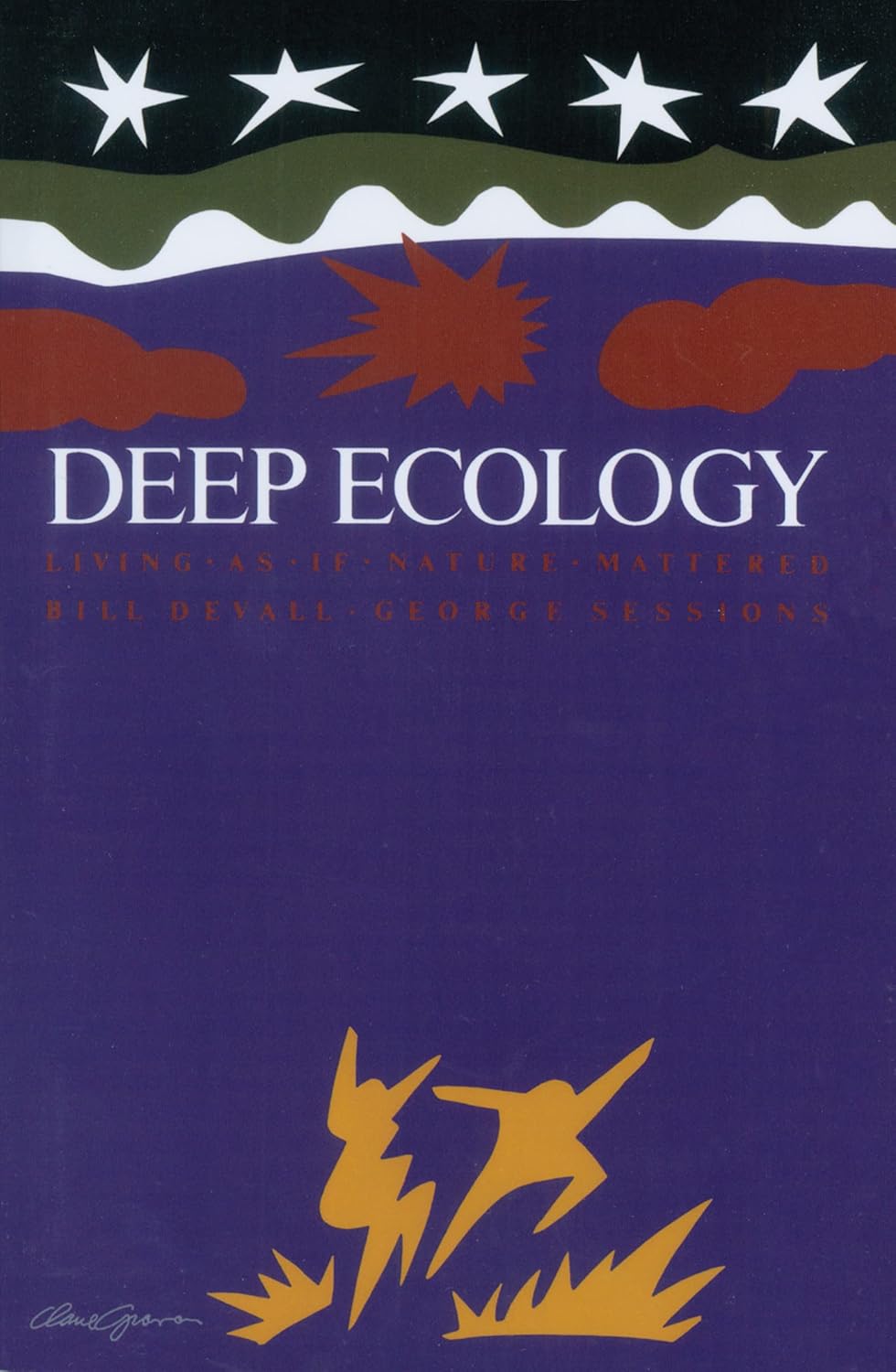
BOOK REVIEW: Bill Devall and George Sessions, “Deep Ecology: Living as if Nature Mattered”

In Being a World Citizen, Book Review, Environmental protection, Human Development, Nonviolence, Peacebuilding, Solidarity, Sustainable Development, The Search for Peace on January 6, 2026 at 8:00 AM

By René Wadlow

Bill Devall and George Sessions, Deep Ecology: Living as if Nature Mattered.

Layton, UT: Gibbs Smith, 1985, 267pp.

In his Small is Beautiful, Fritz Schumacher wrote, “In the affairs of men, there always appears to be a need for at least two things simultaneously, which on the face of it, seems to be incompatible and to exclude one another. We always need both freedom and order. We need the freedom of lots and lots of small, autonomous units, and, at the same time, the orderliness of large-scale, possibly global, unity and co-ordination.”

Likewise, there must be transformation both at the individual level as well as collective change. The two are closely linked. Only a whole and autonomous person can act, resist, walk away, and build something new. However, collective change is something more than the sum of individual changes. Collective change is a vision for a society. Thus, individual change and political action must go together.

One of the predicaments facing the emerging Green-ecology political movements is the need to gather enough people together to be a credible political force – which means general agreement upon a small number of basic options – while having a deep enough political philosophy so that people are not seduced by the current political parties using a few Green slogans. There is wide-spread support for reform environmentalism which aims to stop gross pollution, extensive despoliation of land, lakes, and seas, mistreatment of animals. But those who support such localized reforms may not see the need for a basic transformation of society and the system of values.

Yet we need planet-wide changes, for ecological awareness has shown us that the planet we live on is one inter-related system upon which we are all dependent. In order to survive, we must learn to work together to build a world beyond war, a society with sustainable development – which means sustainable agriculture and appropriate technology, wholistic approaches to education and health, a spiritual outlook based on reverence for life. Albert Schweitzer from his work in Africa re-launched the human-scale revolution by insisting that production ought to serve peoples’ real needs; that there must be a new relationship with nature; that solidarity must replace antagonism; and that there must be sane consumption and active individual participation in society.

The world as an interrelated system has come to be called the “Gaia hypothesis” after the work of James Lovelock and Lynn Margulies who wrote “We defined Gaia as a complex entity involving the earth’s biosphere, atmosphere, oceans and soil, the totality constituting a feedback or cybernetic system which seeks an optimal physical and chemical environment for life on this planet. Gaia remains a hypothesis, but much evidence suggests that many elements of this system act as the hypothesis predicts.” (Gaia is the first goddess of early Greek thought. From the void, neither born nor destroyed – what the Chinese call the Tao – Gaia danced forth and rolled herself into a spinning ball.)

Systems are integrated wholes whose properties cannot be reduced to those of smaller units. The systems approach emphasizes basic principles of organization. Thus, nature has an order, a pattern that as humans we need to understand, to respect, and to preserve. This order has intrinsic value and is the base of Life.

This book is an effort to outline the rich spiritual-religious-mystical component of the Green movements. The term “deep ecology” was coined in 1973 by Arne Naess, a social scientist and philosopher who has written widely on Mahatma Gandhi, nonviolence, and the Buddha. He wanted to describe the deeper more spiritual approach to nature exemplified by Rachel Carson and Aldo Leopold. This is a most useful analysis of Green values. The book should be widely used for discussion and political planning.

Prof. René Wadlow is President of the Association of World Citizens.
Protection of Children in Armed Conflict: Action Needed

In Africa, Being a World Citizen, Children's Rights, Conflict Resolution, Current Events, Human Rights, Humanitarian Law, NGOs, Nonviolence, Peacebuilding, Refugees, Solidarity, The Search for Peace, Track II, United Nations on January 6, 2026 at 8:00 AM

By René Wadlow

The recent armed conflicts in Darfur, Sudan, the Gaza Strip, and in the Democratic Republic of Congo have highlighted the fate of children caught in such armed conflicts. In addition to the children deliberately massacred or caught in the crossfire, many more have been deprived of their physical, mental, and emotional needs by the armed conflict. Children can be specifically targeted in strategies to eliminate the next generation. Children, especially girls, have been made the targets of sexual abuse and gender-based violence.

This brutal reality has been exacerbated by the changes in the nature of armed conflicts. Today’s conflicts are often internal, fought by multiple semi-autonomous armed groups within existing State boundaries. The international law of war governing Inter-State conflicts fought by regular armies is routinely ignored. Often the village has become the battlefield and the civilian population the primary victim.

Displaced children in North Kivu, 2007 (C) Julien Harneis

At the heart of this social disintegration is a crisis of values. Perhaps the most fundamental loss a society can suffer is the collapse of its value system. Many societies exposed to protracted armed conflicts have seen their community values radically undermined or shattered altogether. This loss has given rise to an ethical vacuum, a setting in which international standards are ignored with impunity and where local value systems have dissolved.

The world society has an obligation to focus attention on the plight of children. The Association of World Citizens (AWC) has worked to raise greater governmental and public awareness of the need for protection of children in times of armed conflict. The Convention on the Rights of the Child calls for the protection of children’s right to life, education, health, and other fundamental needs. Thus, the international standards are in place. Our task is to see that they are put into practice. Positive action is needed. This is a policy goal for 2026 of the AWC.

Prof. René Wadlow is President of the Association of World Citizens.
BOOK REVIEW: Baolin Wu and Jessica Riley, “Eye of Heaven”

In Asia, Book Review, Nonviolence, Spirituality, The Search for Peace on January 6, 2026 at 8:00 AM

By René Wadlow

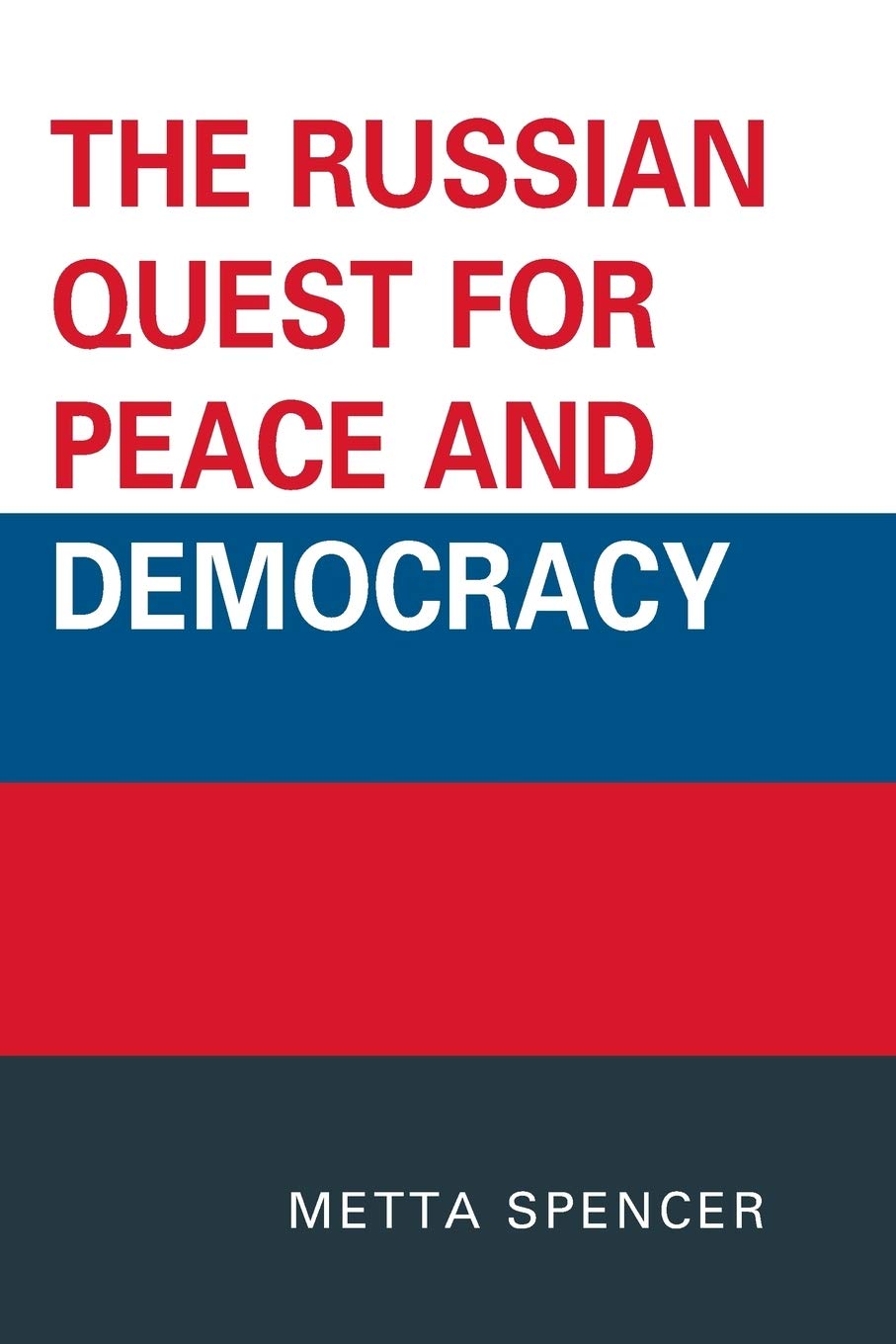
Baolin Wu and Jessica Riley, Eye of Heaven.
St. Petersburg, Florida: Three Pines Press, 2025, 107pp.

The subtitle of this book is The Daoist Secret for Opening the Third Eye. The Third Eye is a path to awareness. Opening the third eye frees one’s mind from certain limitations. This is the reason that in Daoism the third eye is often referred to as the Eye of Heaven (The title of the book). One finds the same approach in Hinduism, where the third eye, placed just above the other two, is one of the seven main chakras, energy centers in the body, symbolized as a turning wheel. In Buddhism, the third eye represents the eye of consciousness and wisdom. The third eye is widely developed in Tibetan Buddhism where it represents the Gate of Heaven.

Dr.. Baolin Wu entered the Daoist White Cloud Monastery in Beijing as a young boy and was trained there in Daoist medical practice, especially acupuncture as well as in spiritual practices. The White Cloud Monastery is a highly respected center for the study of Daoist philosophy and medicine. He worked for many years in a hospital in Beijing and emigrated to the USA in 1990. The information on spiritual practices in the book comes from Dr. Baolin Wu. Jessica Riley is one of his current students in California, and the English style of the book is hers.

Throughout Chinese history, philosophical and spiritual beliefs have often been related to healing. Some of the Daoist schools emphasize internal alchemy, often as a way to reach longevity. Internal alchemy helps one to become aware of sexual energy and how to circulate, balance, preserve and reuse the energy so as to heal.

The book provides illustrated qigong exercises useful for relaxation but which are also preparation for the opening of the third eye. Work on the third eye and the higher states of consciousness is usually done with a master Daoist. Thus the book is no substitute for efforts with an advanced Daoist practitioner. However, it is a good introduction to the approach and its role in Chinese culture.

Prof. René Wadlow is President of the Association of World Citizens.
Light for the New Year

In Being a World Citizen, Cultural Bridges, Peacebuilding, Solidarity, Spirituality, The Search for Peace on January 5, 2026 at 8:00 AM

By René Wadlow

There is a tale of a Rabbi who enters into a discussion with his students about the night. He asks them, “When can one know that the night has ended and the day has begun?”. One student suggests, “When you can tell the difference between a sheep and a dog.” Another student suggests, “When you can see the difference between an olive tree and a fig tree”. “No”, replies the Rabbi, “It is the moment when you can look at a face never seen before and recognize the stranger as a brother or sister. Until that moment, no matter how bright the day, it is still night.”

In much of the world, it is still night. In 2026, the greatest challenge facing the world society is to release the enormous financial, technical, and human resources still used for military and narrow nationalist goals for ecologically-sound development. These resources will be provided only as more persons develop a profound sense of responsibility for the fate of the planet and for the well-being of the entire human family. We seek to develop a sustainable and just world. If we work together, 2026 can be a strong light for the world.

Prof. René Wadlow is President of the Association of World Citizens.
BOOK REVIEW: Camilla Reeve (Ed.) & Esme Edwards (Ed.), “So Many Unavoidable Journeys”

In Human Rights, Current Events, Solidarity, The Search for Peace, United Nations, Being a World Citizen, Migration, Refugees, NGOs, Track II, Book Review on January 5, 2026 at 8:00 AM

By René Wadlow

Camilla Reeve (Ed.) & Esme Edwards (Ed.), So Many Unavoidable Journeys.
London: Palewell Press, 2025, 125pp.

This collection devoted to the stories of migrants is “dedicated to all those who facing impossible conditions in their home, or ejected from it by hostile action, dare to seek a new place to live.” To become a migrant is never an easy choice but a profoundly sad and complex one. Migration becomes a central focus of one’s life story.

Some of the life stories cover relatively known ground. There is an account of five women who had been jailed in Evin Prison in Iran. The repression in Iran, especially of women, has become known both in Iran and outside. The repression has led to a wide-spread protest movement in Iran, known by its motto “Woman-Life-Freedom.”

Other situations are less known. There was the repression of ethnic minorities in Bhutan in the early 1990s with persons fleeing, or being deported, to Nepal which was also in turmoil. The Association of World Citizens had raised the Bhutan situation in the United Nations (UN) human rights bodies in Geneva. Pingala Dhital, who writes on the Bhutan-Nepal case, stresses the positive actions of the staff of the Geneva-based International Organization for Migration and the UN High Commissioner for Refugees.

Palewell Press is based in London. Thus, there are moving accounts of migrants from Iraq and Palestine, adapting to London life and the British structure of education.

As the South African Jan Christian Smuts wrote at the end of the First World War, “There is no doubt that Mankind is once more on the move. The very foundations have been shakened and loosened, and things are again fluid. The tents have been struck and the great caravan of Humanity is once more on the march.” Migration, chosen or forced by violence or the consequences of climate change has become a prime focus for governments and Nongovernmental Organizations. This collection catches some of the spirit of these transformations.

Prof. René Wadlow is President of the Association of World Citizens.
BOOK REVIEW: Giles Milton, “The Stalin Affair: The Impossible Alliance That Won the War”

In Being a World Citizen, Book Review, Democracy, Europe, Fighting Racism, The former Soviet Union on January 5, 2026 at 8:00 AM

By Raphael Cohen-Almagor

Giles Milton, The Stalin Affair: The Impossible Alliance That Won the War.
New York: Henry Holt and Co., 2024, 336pp.

This is a gripping narrative of the uneasy partnership between Churchill, Roosevelt and Stalin during World War II. Drawing on unpublished diaries, letters, and secret reports, Milton reveals how a diverse cast of diplomats and political figures—including U.S. billionaire envoy W. Averell Harriman, his charming daughter Kathy and Archibald “Archie” Clark Kerr, the British ambassador to the Soviet Union—worked to manage Stalin’s volatile temperament and secure Soviet cooperation against Hitler.

The book explores how Churchill, despite his deep mistrust of Stalin, recognized the strategic necessity of alliance after Hitler’s invasion of the Soviet Union. It also details the internal resistance in both Britain and the U.S., where many preferred isolationism or hoped the two dictators would destroy each other. The turning point came with Japan’s attack on Pearl Harbor and Hitler’s declaration of war on the United States, forcing a reluctant unity.

The book is filled with many small stories, impressions, romantic affairs and anecdotes that shed light on historic events and on the personalities of the three leaders who came together to fight Nazism – Churchill out of conviction, Stalin as a result of Hitler’s betrayal, and Roosevelt due to the Japanese surprise attack on the American navy in Hawaii. The colourful descriptions are captivating. Of particular interest is the story of Churchill’s “naughty document”. Officially known as the Percentages Agreement, this informal pact was struck between Winston Churchill and Joseph Stalin during the Fourth Moscow Conference in October 1944. On a simple scrap of paper, Churchill proposed dividing postwar influence in Eastern Europe by percentages—essentially carving up the region into spheres of control. The document suggested to divide post-war countries between the Soviet Union and Britain, behind Roosevelt’s back. The countries and percentages were: Romania: 90% Soviet, 10% others; Greece: 90% British (in accord with the U.S.), 10% Soviet; Yugoslavia: 50/50; Hungary: 50/50, and Bulgaria: 75% Soviet, 25% others. Churchill famously referred to it as his “naughty document” because he knew how blunt and imperialistic it appeared. He even remarked that the Americans would be “shocked” by its crudeness. Stalin reportedly ticked the paper in approval, and the agreement was honoured in some cases—most notably in Greece, where Britain retained dominant influence even during civil unrest. The document was later published in Churchill’s memoirs and has since become a symbol of the realpolitik that shaped the postwar order.

Milton paints vivid scenes of nervous negotiations, clashing personalities, festive dinners and the fragile diplomacy that held the alliance together long enough to defeat Nazi Germany—though it ultimately could not survive the postwar tense reality. The book offers both sweeping historical insight and intimate character studies, making it a compelling read for anyone interested in the political complexities behind wartime strategy.

Prof. Raphael Cohen-Almagor is an Israeli-British academic.