The Official Blog of the

Archive for the ‘World Law’ Category

UN System Weakened by U.S. Retreats

In Human Rights, Current Events, Solidarity, Women's Rights, Conflict Resolution, The Search for Peace, United Nations, World Law, Being a World Citizen, United States, NGOs, Track II, Peacebuilding on January 12, 2026 at 7:40 AM

By René Wadlow

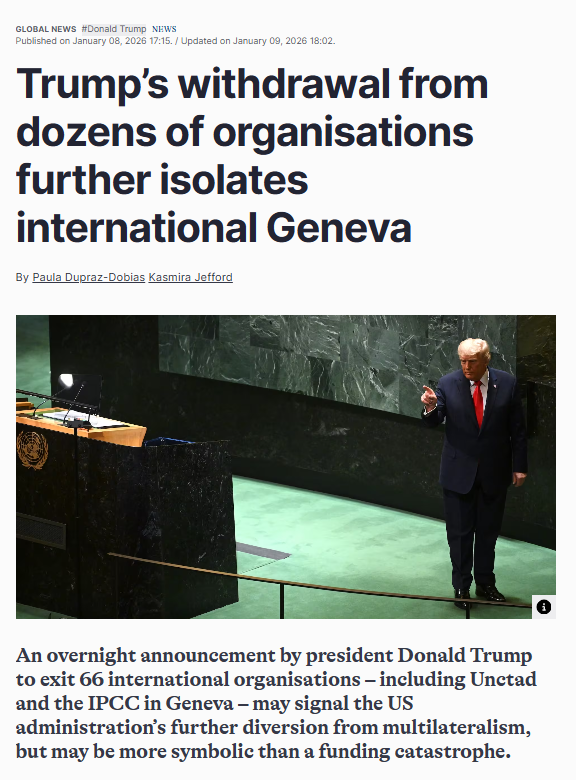
On January 7, 2026, the United States (U.S.) government announced that it was withdrawing from membership (and thus financial contribution) to 31 United Nations (UN) bodies and programs. According to U.S. Secretary of State Marco Rubio, these institutions and programs are “redundant in their scope, mismanaged, unnecessary, wasteful, poorly run and captured by the interests of actors advancing their own agendas contrary to our own.” He added, “Many of these bodies promote radical climate policies, global governance and ideological programs that conflict with U.S. sovereignty and economic strength.”

The U.S. withdrawal comes at a time when the UN as a whole (the 193 member States) is in the process of evaluating UN structures and programs (UN 80). The results of this evaluation should be presented later this year.

A good number of the programs from which the United States of America (USA) is withdrawing are based or have activities in Geneva, Switzerland. As an NGO representative to the UN in Geneva, I have interacted with many of these programs and the Secretariat members. At this time when there are real challenges in the world society, the withdrawal of the USA weakens the UN system as a whole. The representatives of Nongovernmental Organizations (NGOs) in consultative status will increase their activities so that the intellectual dynamics will not be weakened, but NGOs cannot fill the financial gap.

One of the bodies marked for withdrawal is the International Law Commission. A colleague from Egypt who taught international law at the University of Geneva was a leading member of the Commission and had a deep understanding of Middle East culture. Stronger respect for international law in the Middle East remains a real need.

Another institution is the Geneva-based International Trade Center where I had a good friend in the Secretariat. The Trade Center helped developing countries negotiate contracts with transnational corporations. These corporations usually have sophisticated lawyers to write contracts, not the case for many developing countries. Thus, the work of the Trade Center filled a real need.

The UN Institute for Training and Research has its headquarters in New York, but many of its activities were Geneva-based and so the Secretariat cooperated with Geneva-based NGOs. The same holds true for the UN University with headquarters in Japan but with many Geneva-based activities.

The USA is withdrawing from support for the Office of the Special Representative for Children in Armed Conflict, from the UN Entity for Gender Equality, and from the Special Representative on Sexual Violence in Conflict – all issues on which the Association of World Citizens has been active. The USA is leaving the UN Alliance of Civilizations at a time when cross-cultural understanding is a vital need.

Many of the UN activities which the USA is leaving have dedicated U.S. citizens in the Secretariat. I am not sure what their status will be once the withdrawal is complete.

The USA is also withdrawing from the UN Framework Convention on Climate Change, the key instrument on climate change issues. The consequences of climate change are being increasingly felt, and U.S. action would be needed.

As I noted, the representatives of NGOs will have to increase sharply their activities in the UN bodies and programs. The challenges facing us are heavy, and constructive action is urgently needed.

Prof. René Wadlow is President of the Association of World Citizens.

BOOK REVIEW: Jenny Lecoat, “The Girl from the Channel Islands”

In Antisemitism, Being a World Citizen, Book Review, Europe, Fighting Racism, Human Rights, Literature, Middle East & North Africa, Solidarity, Spirituality, War Crimes, World Law on January 5, 2026 at 8:00 AM

By Raphael Cohen-Almagor

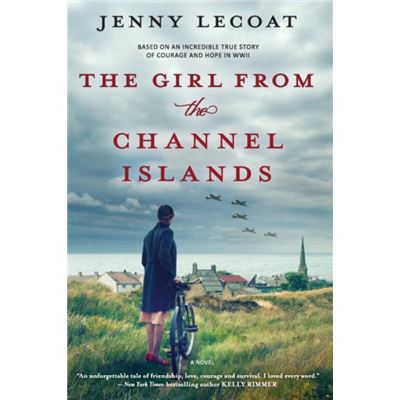
Jenny Lecoat, The Girl from the Channel Islands.
New York: Graydon House, 2021, 304pp.

It is hard to stay human when wolves rule your world. It is harder still to hold on to your values when those very values might cost you your life. Most people, when faced with terror and deprivation, bend to the wind of fear. Compassion becomes a luxury, conscience an inconvenience. They retreat into the narrow shelter of survival.

But now and then, there are exceptions—rare, luminous moments when the human spirit refuses to break. Jenny Lecoat’s Hedy’s War tells one such story: a story of love and courage that endures amid the ruins of occupied Europe.

The novel is based on true events that unfolded on the island of Jersey during the Nazi occupation. Hedy, a Jewish woman who fled Vienna in search of safety, finds herself trapped once more under Nazi rule, this time on British soil. The irony is cruel, almost unbearable. And yet, against all odds, kindness finds her.

Anton, a man the regime calls Aryan, sees beyond race and propaganda. To him, Hedy is not an enemy or an inferior being but a friend—someone worth risking his life for. Dorothea, a local Jersey woman, shares his instinctive decency. She befriends Hedy not out of ideology but from an uncalculated sense of humanity, a natural warmth that refuses to be extinguished by fear.

Then comes Kurt, a German officer, who is drawn to Hedy’s quiet strength and beauty without knowing her origins. When the truth is revealed, he feels betrayed not by her identity, but by the lie their world demands they live. He rejects the Nazi myth of blood and purity, and instead chooses love—a dangerous, almost impossible act in his position.

Together, these three—Anton, Dorothea, and Kurt—form a fragile circle of protection around Hedy. They risk everything for her, defying a regime built on suspicion and cruelty. That she survived at all is a miracle; that she did so because of their compassion is a testament to the stubborn endurance of the human heart.

Hedy’s War is, above all, a story about moral clarity in an age of confusion. It reminds us that decency can survive even in the shadow of atrocity, that friendship and love can outlast the machinery of hate.

Hedy’s story is rare—precisely because most did not act this way. Most looked away, stayed silent, survived by doing nothing. But this book honours those who did not. It pays tribute to the small, unrecorded acts of goodness that saved lives, and to the few who kept their humanity when the world around them had lost its soul.

Jenny Lecoat captures, with quiet strength, the moral choices of ordinary people confronted by extraordinary evil. Her novel reminds us that even in an age of darkness, there were those who defied hatred, who chose decency over obedience, and love over fear. Lecoat writes with restraint and grace, allowing the quiet heroism of her characters to shine through the fog of occupation.

A moving and deeply humane story of courage, compassion, and moral integrity sustained against impossible odds.

Dorothea Weber who hid Hedwig Bercu from German forces occupying Jersey was posthumously awarded the “Righteous Among the Nations” honour for showing “extraordinary courage” during the holocaust.

The True Story Behind Hedy’s War

Hedwig Bercu (1919–2018) was an Austrian Jewish woman who fled Vienna after the Nazi annexation in 1938. She found refuge on the British island of Jersey, hoping to rebuild her life far from persecution. But in 1940, the Nazis invaded the Channel Islands—the only British territory they would occupy during the war.

Hedwig, known to her friends as Hedy, was trapped once more under Nazi rule. She worked as a translator for the German authorities, her fluency in languages allowing her a precarious survival. When her Jewish identity was discovered, she faced arrest and likely deportation to a concentration camp.

It was then that Dorothea Le Brocq (later Weber), a young local woman who worked with her, chose to act. Defying the occupation authorities, Dorothea and her future husband, Anton Weber, a German soldier disillusioned with the regime, hid Hedy in their home in St Helier. For eighteen months, the couple risked their lives daily to protect her.

Several accounts also identify Kurt Newmann, a German officer stationed on the island, as a further — and deeply complicating — presence. Reportedly drawn to Hedy’s intelligence and dignity, Newmann rejected the racial doctrines he was ordered to enforce. His attitude, whether motivated by conscience, love, or both, ultimately translated into intervention at critical moments: misdirecting inquiries, softening official scrutiny, and risking censure for showing leniency. Where many officers obeyed doctrine, Newmann’s conduct — as reported — helped enlarge the circle of protection around Hedy.

Hedy lived in a secret space within their house, emerging only at night. Neighbours suspected nothing. Dorothea and Kurt brought her food and company, while Anton used his position within the occupying forces to divert attention and suspicion. Their courage was not just an act of resistance—it was an act of profound humanity.

When liberation finally came in 1945, Hedy survived, against all odds. Her story remained largely untold for decades, overshadowed by the larger tragedy of the Holocaust. But her survival, thanks to Dorothea and Anton, stands as one of the Channel Islands’ most remarkable accounts of friendship and moral courage under occupation.

In 2016, Yad Vashem recognised Dorothea Weber as Righteous Among the Nations for saving Hedy Bercu—a belated but deeply deserved honour.

Jenny Lecoat’s novel Hedy’s War (2020) fictionalises this true story, capturing its emotional depth and moral resonance. Lecoat herself grew up in Jersey, the daughter of islanders who lived through the occupation, giving her account both intimacy and authenticity.

Prof. Raphael Cohen-Almagor is an Israeli-British academic.
Thailand-Cambodia: Urgent Ceasefire Needed

In Asia, Being a World Citizen, Conflict Resolution, Cultural Bridges, Current Events, International Justice, NGOs, Nonviolence, Peacebuilding, Solidarity, Spirituality, The Search for Peace, Track II, United Nations, United States, World Law on December 10, 2025 at 7:00 PM

By René Wadlow

The Association of World Citizens (AWC) calls for an urgent ceasefire in the renewed armed conflict between Thailand and Cambodia which flared up again on December 8, 2025 with the Thai military launching airstrikes on Cambodia.

A ceasefire had been agreed to in July 2025 in negotiations led by U.S. mediators. There is a 500-mile frontier between the two countries. The frontier was drawn when Cambodia was under French rule. Thailand contests the frontier lines.

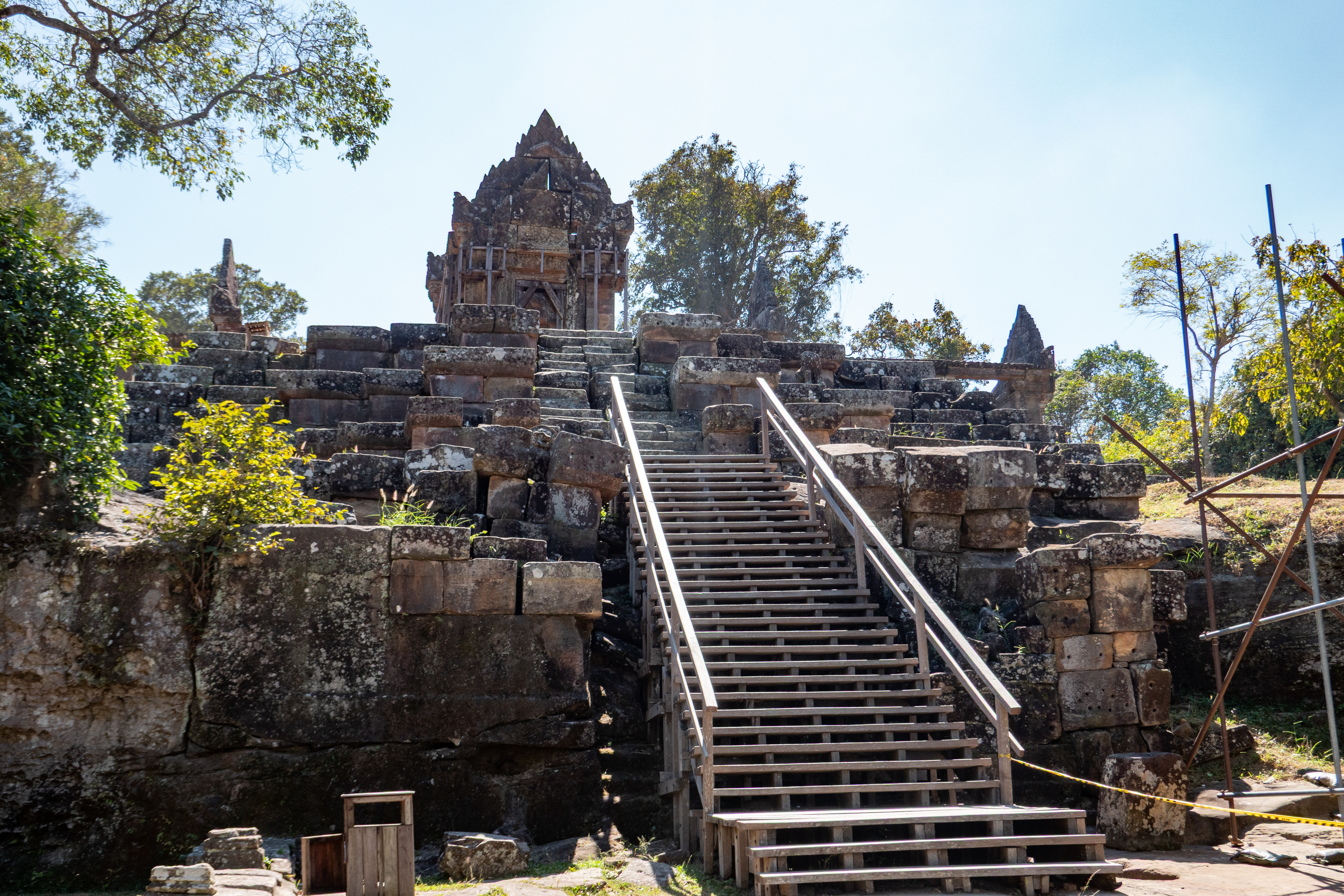
Prasat Preah Vihear, the temple claimed by both Thailand and Cambodia (C) PsamatheM

The decades-long dispute has already displaced many persons on both sides of the frontier. The frontier area on both sides has a large number of landmines planted making the whole area unsafe. The disputed area contains a Buddhist temple which should be a symbol of peace and harmony but is now a factor in the dispute.

The AWC stresses that urgent measures of conflict resolution should be undertaken. Nongovernmental Organizations may be able to play a positive role in such efforts. Contacts should be undertaken now.

Prof. René Wadlow is President of the Association of World Citizens.

Renewed Appeal for Mediation in Sudan Civil War

In Africa, Being a World Citizen, Conflict Resolution, Current Events, Human Rights, Humanitarian Law, International Justice, NGOs, Peacebuilding, Solidarity, Sudan, The Search for Peace, Track II, United Nations, War Crimes, World Law on November 3, 2025 at 7:45 AM

By René Wadlow

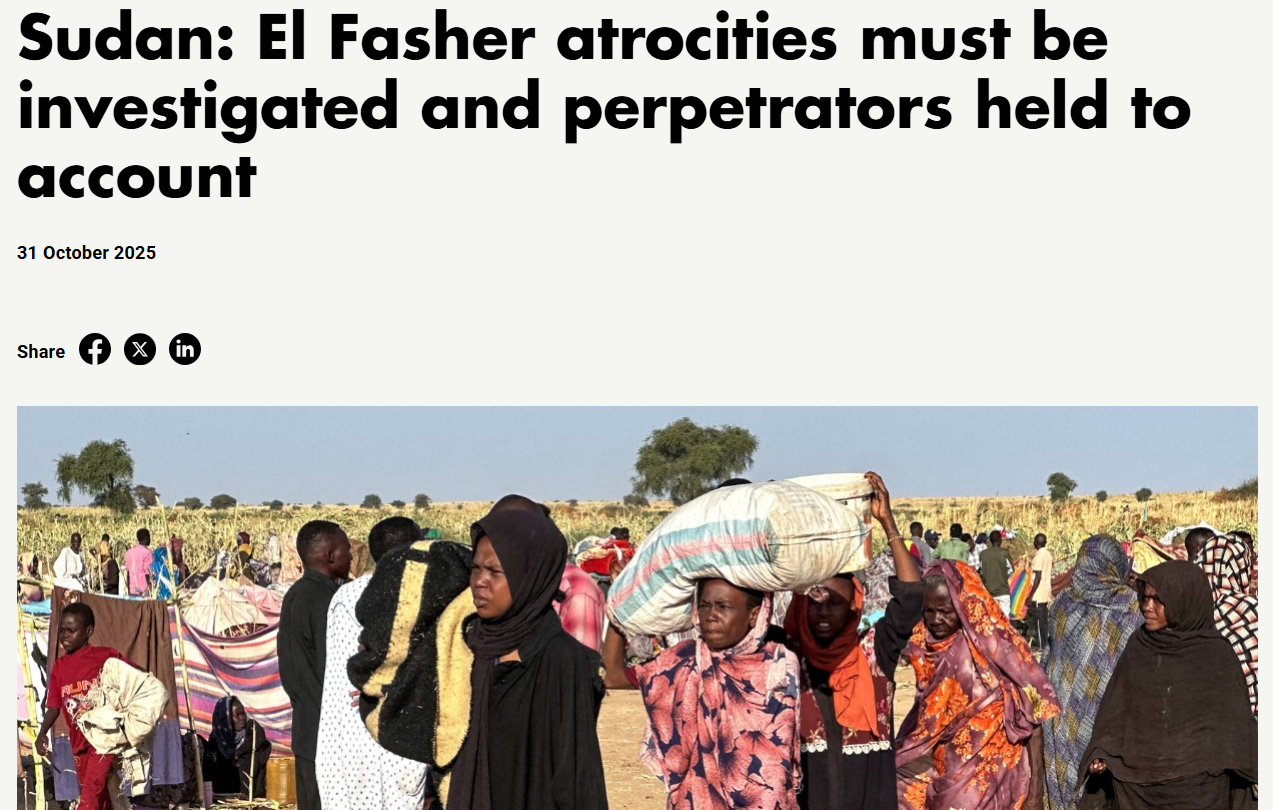
In response to the reports of mass killings earlier this month, including persons in hospital beds in El-Fasher, Sudan, by members of the Rapid Support Forces (RSF), the Association of World Citizens (AWC) has called for strong UN efforts to mediate an end to the civil war in Sudan.

A civil war has gone on since April 2023 in Sudan between the Rapid Support Forces led by General Mohamed Hamdan, known by his battle name of Hemedti, and the Sudanese Armed Forces then led by General Abdul Fattah al-Burham. Each of the two generals has created local militias which rob, torture, rape, and create conditions of disorder.  Many of these militias use child soldiers in violation of UN treaties on the protection of children.  The civil war has led to some 150,000 persons killed and 10 million displaced.

The capture of El-Fasher came after more than 500 days of siege. Already on June 13, 2024, the UN Security Council called for an end to the siege of El-Fasher, capital of the North Darfur Province of Sudan. The Council requested all parties to enable lifesaving aid to enter El-Fasher, the center of the most vicious fighting in the province. Unfortunately, the Security Council appeal fell on deaf ears.

The AWC does not underestimate the difficulties of mediation to end the Sudan Civil War.  There has been armed conflict in Sudan since the eve of independence in the mid-1950s. These conflicts were organized along ethnic and religious lines. The conflicts led to the creation of a new state, South Sudan, where tensions are also strong.

Mediation efforts should be carried out under UN responsibility. However, Nongovernmental Organizations (NGOs) may play a positive role.

Mediation is about men and women, and the attitudes that make for conflict between them. The attempt to bring about a change in understanding will include continual interpretation of what the others are saying, explanations of their attitudes, and exposure of false rumors – roles which NGOs can play.

Prof. René Wadlow is President of the Association of World Citizens.

Crucial Middle East Negotiations: A Ray of Hope at Last?

In Being a World Citizen, Conflict Resolution, Current Events, Humanitarian Law, Middle East & North Africa, NGOs, Nonviolence, Peacebuilding, Solidarity, The Search for Peace, Track II, United Nations, United States, War Crimes, World Law on October 13, 2025 at 7:00 AM

By René Wadlow

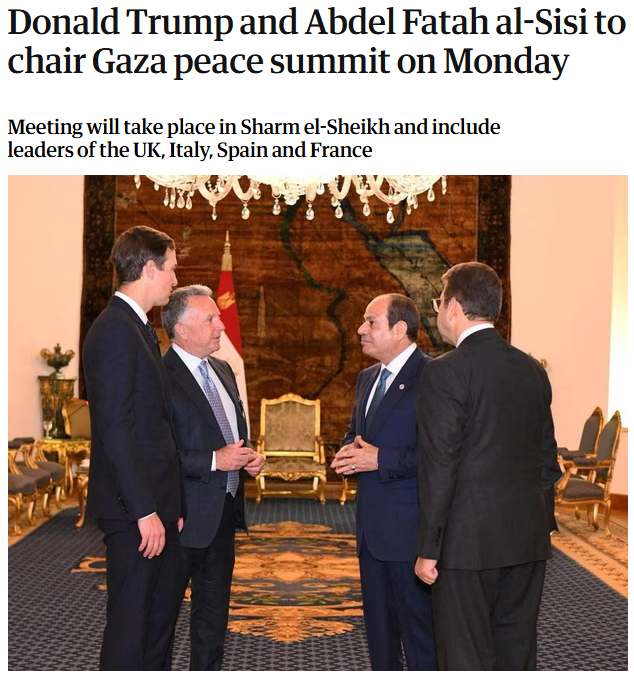
Close attention needs to be focused on the deadly and destructive conflict in the Gaza Strip and the multi-party negotiations being held in the Egyptian city of Sharm El-Sheikh. The elite of Middle East diplomacy are in Sharm El-Sheikh these days, including Steve Withoff and Jared Kushner from the USA, the Israeli Strategic Affairs Minister Ron Derner, Khalil Al-Hayya, the head of the Hamas negotiation team, and Mohammed Al-Hindi of the Palestinian Islamic Jihad which holds some of the 20 living Israeli hostages.

The exchange of Israeli hostages – 20 living and the bodies of 28 who have died – and some 2,000 Palestinian prisoners held in Israeli jails and army camps is the first order of business. The exchange should take place on Monday, October 13. President Donald Trump should go first to Israel and then Egypt on Monday to start multi-party negotiations with implications for the wider Middle East.

The negotiations are being held against a politically unstable situation in Israel and the USA where in both there are deep divisions among political parties. The armed conflict in the Gaza Strip could start again with “We tried negotiations and they failed” as a battle theme.

As the representatives of UN Consultative Status NGO, we must see how we can build on these advances toward a stable peace. There is much at stake, and we must be ready to take action.

Prof. René Wadlow is President of the Association of World Citizens.

Gaza Strip Peace Plan: Making Peace Without Peacemakers?

In Being a World Citizen, Conflict Resolution, Current Events, Humanitarian Law, Middle East & North Africa, NGOs, Nonviolence, Peacebuilding, Solidarity, The Search for Peace, Track II, United Nations, United States, World Law on October 6, 2025 at 7:00 PM

By René Wadlow

(An earlier version of this piece was published on Transcend Media Service.)

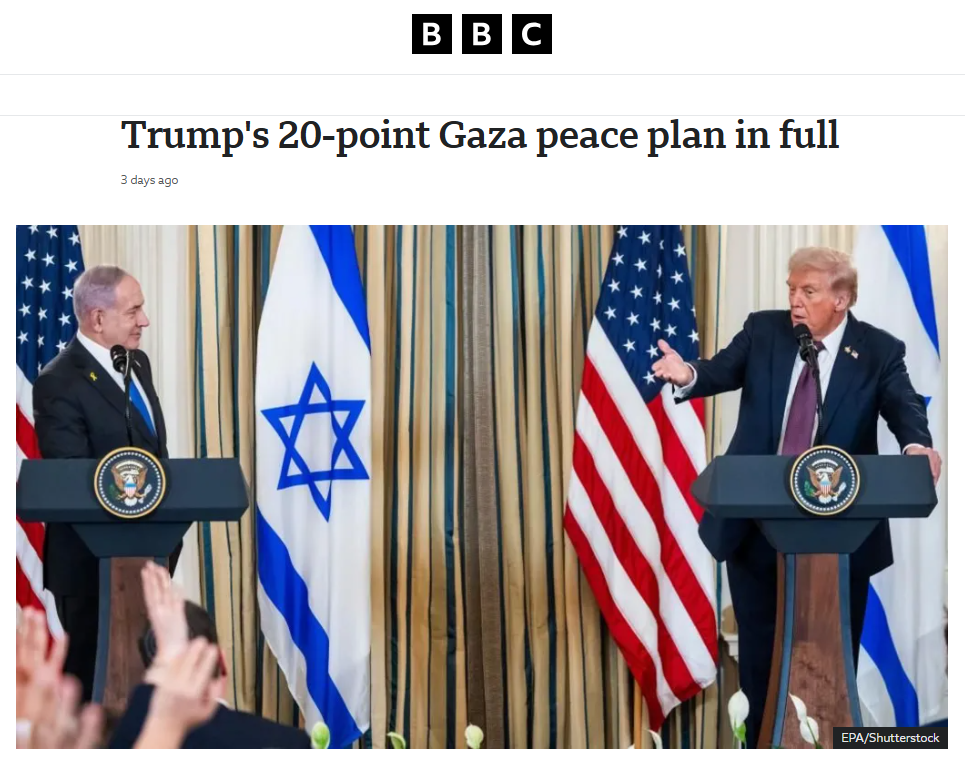
On September 29, 2025, United States (U.S.) President Donald Trump presented his 20-point Peace Plan for the Gaza Strip which sets out a ceasefire, a release of hostages held by the Palestinian Islamic Resistance Movement (Hamas) and its armed allies, a dismantling of Hamas’ military structures, the withdrawal of Israeli troops, and the creation of an international “Board of Peace” to supervise the administration of the Gaza Strip with President Trump as chair and former British Prime Minister Tony Blair as the chief administrator. Relief supplies to meet human needs would be facilitated. The plan concerns only the Gaza Strip and does not deal directly with the West Bank where tensions are strong.

The plan has been presented to the Israeli Prime Minister, Benyamin Netanyahu who was in Washington, D.C. and to Arab leaders who were at the United Nations in New York. The plan has been given to Hamas’ leaders through intermediaries, but Hamas’ leadership has been severely weakened by deaths. Thus, it is not clear how decision-making will be done by Hamas. The plan has also been presented to the Palestinian Authority (PA) in Ramallah, led by Mahmoud Abbas, but the PA would play no part in the Gaza Strip’s future. The plan is being widely discussed, but no official decisions have been announced.

The Gaza Peace Plan has some of the approach of the Transcend proposals (1) with, in addition, the possibility of violence if the Gaza Peace Plan is not carried out. Threats of violence are not among Transcend’s tools. One of the distinctive aspects of Transcend and the broader peace research movement is to present specific proposals for transcending current conflicts through an analysis of the roots of the conflict, the dangers if the conflict continues as it is going, and then the measures to take. (2) The Israeli-Palestinian conflict is one which presents dangers to the whole region if creative actions are not taken very soon. We must act now. We cannot wait for President Trump to do it for us.

Notes:

(1) Transcend Media Service, “The Time Has Arrived for a Comprehensive Middle East Peace”, Jeffrey D. Sachs and Sybil Fares, July 7, 2025.
(2) See:
Johan Galtung, The True Worlds (New York/The Free Press/1980/469pp)
John Paul Lederach, Preparing for Peace (Syracuse, NY/Syracuse University Press/1995/133pp)

Prof. René Wadlow is President of the Association of World Citizens.

The Spirit of Woman, Life and Liberty Continues

In Being a World Citizen, Current Events, Human Rights, Middle East & North Africa, Solidarity, Women's Rights, World Law on September 23, 2025 at 6:55 AM

By René Wadlow

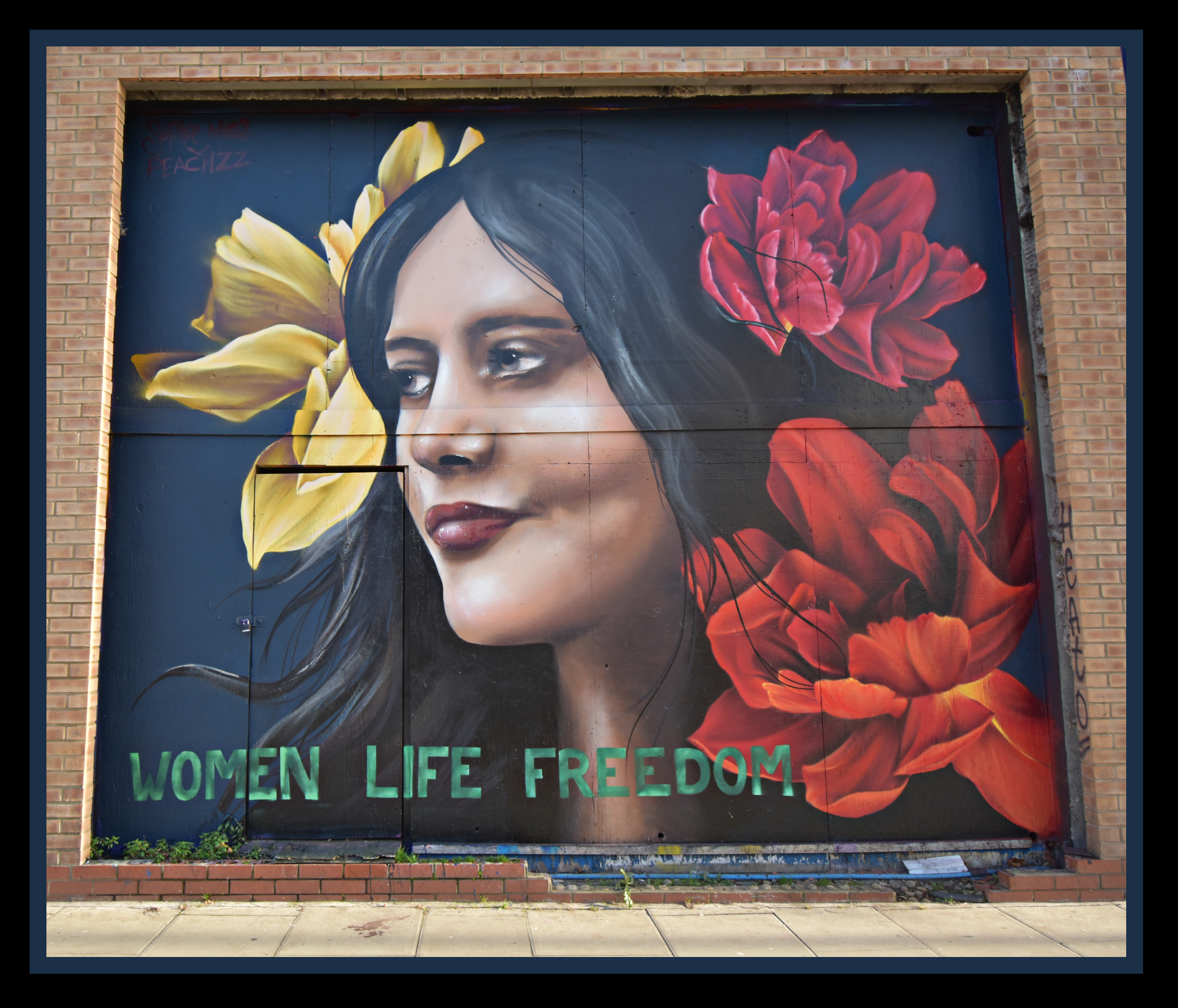
Three years have passed since protests began in Iran at the announcement of the death in police custody of 22-year-old Mahsa (Jina) Amini, having been arrested by the “morality police” for having some of her hair beyond the hijab (veil). She was an ethnic Kurd. The protests began on September 3, 2022 in the Kurdish areas of Iran but soon spread to all ethnic groups and to many parts of the country.

Women have been a central focus of the social policy of the Iranian Islamic government. Even before coming to power in 1979, Ayatollah Khomeini from his exile in France had said that the overly great liberty of women was a chief obstacle to his policies. Repressive policies against women with compulsory veiling laws were quickly put into place once he came into power.

On Mare Street in Hackney, London, UK, a Mahsa Jina Amini mural painted by artist Sophie Mess in collaboration with Peachzz. (C) Loco Steve

“Woman, Life, Liberty” became the battle cry of the 2022 protests, and the refusal to have a hijab was the external symbol of the protests. Although the protests were harshly repressed, the Iranian people’s courage could not be silenced. Since 2022, Iranian society has been significantly modified. There is an increased defiance of women who refuse to wear the mandatory hijab in public. Unveiled women are seen walking through stores and banks. Government leaders have appeared on posters with unveiled women as “martyrs” killed in the recent bombing by Israel and the USA.

There are some policymakers in the government of President Masoud Pezeshkian who cautiously propose reforms while hardliners double down on restrictions, and people are arrested, accused of “propaganda against the state”. The many socioeconomic currents present in Iran today merit being watched closely.

Prof. René Wadlow is President of the Association of World Citizens.

NGO Cooperation for a Stronger United Nations

In Being a World Citizen, Conflict Resolution, Current Events, NGOs, Peacebuilding, Solidarity, The Search for Peace, Track II, United Nations, World Law on September 20, 2025 at 12:00 PM

By René Wadlow

As the 2025 United Nations (UN) General Assembly continues, there is a need for a greater input of Nongovernmental Organizations (NGOs). There are some 6,400 NGOs in consultative status with the UN. Many, however, have consultative status with the UN only to strengthen their standing at the national level. The number of NGOs which engage actively in the UN procedures is much smaller. Some deal with specific UN Specialized Agencies such as UNESCO, the ILO, and the FAO.

Others, such as the Association of World Citizens (AWC), are active on a wider range of issues, especially those with representatives active at the UN in New York and Geneva. It is among this smaller number of NGOs that active measures for cooperation need to be undertaken.

A leading role of the UN since its establishment has been to lay the foundations for a culture of peace with respect for human rights, and economic and social development. There needs to be innovation, responses to new challenges, and a role for intellectual leadership to give a sense of direction. There should be forged from the varied, often contradictory views of governments, a sense of common purpose.

NGOs can help to provide a sense of direction and ways for the pursuit of common interests. The UN must look outward and work with renewed vigor. This is also true for NGOs. Cooperation among NGOs has been growing. Now, faced with strong challenges in the world society, efforts for NGO cooperation are a vital need.

Prof. René Wadlow is President of the Association of World Citizens.

BOOK REVIEW: Thomas Nordström, “A World Government in Action”

In Being a World Citizen, Book Review, Conflict Resolution, Cultural Bridges, Democracy, Human Development, Human Rights, International Justice, NGOs, Nonviolence, Peacebuilding, Solidarity, The Search for Peace, Track II, United Nations, Women's Rights, World Law on September 8, 2025 at 7:00 PM

By René Wadlow

Thomas Nordström, A World Government in Action.

Newcastle upon Tyne: Cambridge Scholars Publishing, 2020, 147pp.

Thomas Nordström has written a useful book which more accurately should have been called “The Need for a World Government in Action”. He outlines many of the challenges facing the world society and stresses that the United Nations (UN) does not have the authority or the power to deal with these challenges adequately. The challenges are interrelated and thus must be faced in an interrelated way. Thus, climate change has an impact on land use which has an impact on food production. To improve food production, there must be better education on food issues as well as greater equality among women and men, as, in many countries, women play a major role in food production, food preparation, and food conservation.

As governments and UN Secretariat members become aware of an issue, the issue is taken up in one or another of the UN Specialized Agencies – FAO, WHO, ILO, UNESCO, or a new program is created: the Environment Program, or different programs on the issue of women. Today, within the halls of the UN there are negotiations for a Global Pact on the Environment and for the creation of a World Environment Organization which would be stronger than the existing UN Environment Program. Such a Global Pact for the Environment would clarify important environmental principles and relations between the existing treaties on the environment which have been negotiated separately.

In the UN, the international agenda reflects the growing influence of nongovernmental organizations (NGOs) and the scientific community in shaping policy. We see this vividly in the discussions on the impact of climate change. The distinction that used to be made between national and international questions has almost entirely vanished. NGOs must be able to provide possible avenues of action based on an effective theoretical analysis that acknowledges the complexity of the international environment.

Governments cannot at the same time boost expenditure on armaments and deal effectively with ecological deterioration and the consequences of climate change. Militarization has contributed to the neglect of other pressing issues, such as shrinking forests, erosion of soils and falling water tables. Militarization draws energy and efforts away from constructive action to deal with common problems. Militarization creates rigidity at the center of world politics as well as brittleness which leads to regional conflicts and civil wars. This political paralysis is both a cause and a result of the rigidity and the brittleness of current international politics. Opportunities are missed for building upon the more positive elements of a particular situation.

What is often called “complex emergencies” – a combination of political and social disintegration that includes armed conflicts, ethnic violence, state collapse, warlordism, refugee flows and famine – have become one of the most pressing humanitarian issues of our time. Today’s violent conflicts are often rooted in a mix of exclusion, inequality, mismanagement of natural resources, corruption, and the frustrations that accompany a lack of jobs and opportunities. Lack of opportunities sows the seeds of instability and violence.

As Nordström points out, behind all the current armed conflicts, there is the presence in a small number of countries of nuclear weapons. If they were used, the level of destruction would be great. Although nuclear disarmament was on the agenda of the UN General Assembly from its start, there has been little progress on nuclear disarmament issues.

As World Citizen and former President of India S. Radhakrishnan has written, “To survive we need a revolution in our thoughts and outlook. From the alter of the past we should take the living fire and not the dead ashes. Let us remember the past, be alive to the present and create the future with courage in our hearts and faith in ourselves.” The great challenge which humanity faces today is to leave behind the culture of violence in which we find ourselves and move rapidly to a culture of peace and solidarity. We can achieve this historic task by casting aside our ancient nationalistic and social prejudices and begin to think and act as responsible Citizens of the World. Nordström sets out some of the guideposts.

Prof. René Wadlow is President of the Association of World Citizens.

Albert Schweitzer: Respect for Life Against Nuclear Death

In Africa, Being a World Citizen, Conflict Resolution, Human Rights, Nonviolence, Nuclear weapons, Peacebuilding, The Search for Peace, World Law on September 8, 2025 at 7:00 PM

By René Wadlow

Civilization is made up of four ideals: the ideal of the individual; the ideal of social and political organization; the ideal of spiritual and religious organization; the ideal of humanity as a whole. On the basis of these four ideals, thought tries conclusions with progress.

Albert Schweitzer, The Philosophy of Civilization

Albert Schweitzer was concerned with the ways that these four ideals of civilization are developed into a harmonious whole. Late in his life, when I knew him in the early 1960s, he was most concerned with the ideal of humanity as a whole.

He had come out strongly against nuclear weapons, weapons which were the opposite of respect for life which was the foundation of his ethical values. (1) “Man can hardly recognize the devils of his creation. Let me give you a definition of ethics. It is good to maintain and further life. It is bad to damage and destroy life. By having reverence for life, we enter into a spiritual relation with the world. By practicing respect for life, we become of the human family and our good, deep and alive.”

For Schweitzer, our sense of unity of the human family and our obligation to future generations was threatened as never before in the two World Wars that he had seen. I had been active since the mid-1950s in efforts to ban testing of nuclear weapons in the atmosphere – a focus of anti-nuclear efforts at the time. I had also worked with the world citizen Norman Cousins who had visited Lambaréné and had written a lively book on his exchanges with Schweitzer. (2) Thus I was well received by Schweitzer at his hospital in Lambaréné; and we had useful discussions. I was working for the Ministry of Education at the time and was at the Protestant Secondary School which was a mile down the Ogowe River from the hospital.

René Wadlow and Albert Schweitzer (C) René Wadlow (personal archives)

It was Norman Cousins, active in disarmament efforts in the USA, who urged Schweitzer to speak out against nuclear weapons. Schweitzer had been awarded the Nobel Peace Prize for his humanitarian efforts in Africa. Thus, he came into ever greater contact with people working for peace. However, he was reluctant to make statements on issues on which he was not expert. As he said to Cousins, “All my life, I have carefully stayed away from making pronouncements on public matters. Groups would come to me for statements or I would be asked to sign joint letters or the press would ask me for my views on certain political questions. And always I would feel forced to say no.” However, he went on “The world needs a system of enforceable law to prevent aggression and deal with the threats to the peace, but the important thing to do is to make a start somewhere…I think maybe the place to take hold is with the matter of nuclear testing…If a ban on nuclear testing can be put into effect then perhaps the stage can be set for other and broader measures related to peace.

Schweitzer’s 1958 appeal Peace or Atomic War was an important contribution to the growing protests against nuclear testing and their fallout of radiation. On October 16, 1963, the Treaty Banning Nuclear Weapons Tests in the Atmosphere, in Outer Space and Under Water (more commonly called the Partial Test Ban) came into force.

Today, we still need those other and broader measures related to peace and for a constant affirmation of respect for life.

Prof. René Wadlow is President of the Association of World Citizens.

Notes

1) See Albert Schweitzer, Peace or Atomic War (New York: Henry Holt, 1958)

2) See Norman Cousins, Dr Schweitzer of Lambaréné (New York: Harper and Brothers, 1960)