The Official Blog of the

Archive for the ‘War Crimes’ Category

Renewed Appeal for Mediation in Sudan Civil War

In Africa, Being a World Citizen, Conflict Resolution, Current Events, Human Rights, Humanitarian Law, International Justice, NGOs, Peacebuilding, Solidarity, Sudan, The Search for Peace, Track II, United Nations, War Crimes, World Law on November 3, 2025 at 7:45 AM

By René Wadlow

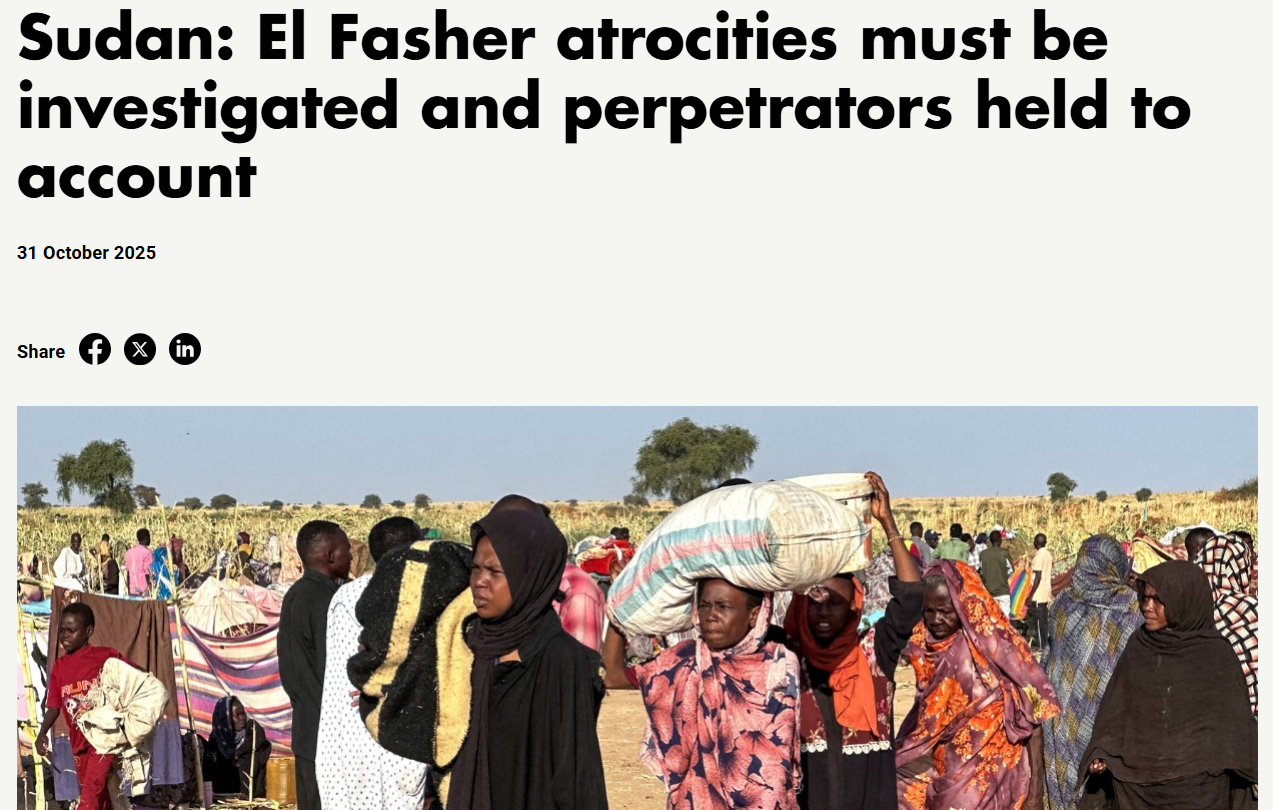
In response to the reports of mass killings earlier this month, including persons in hospital beds in El-Fasher, Sudan, by members of the Rapid Support Forces (RSF), the Association of World Citizens (AWC) has called for strong UN efforts to mediate an end to the civil war in Sudan.

A civil war has gone on since April 2023 in Sudan between the Rapid Support Forces led by General Mohamed Hamdan, known by his battle name of Hemedti, and the Sudanese Armed Forces then led by General Abdul Fattah al-Burham. Each of the two generals has created local militias which rob, torture, rape, and create conditions of disorder.  Many of these militias use child soldiers in violation of UN treaties on the protection of children.  The civil war has led to some 150,000 persons killed and 10 million displaced.

The capture of El-Fasher came after more than 500 days of siege. Already on June 13, 2024, the UN Security Council called for an end to the siege of El-Fasher, capital of the North Darfur Province of Sudan. The Council requested all parties to enable lifesaving aid to enter El-Fasher, the center of the most vicious fighting in the province. Unfortunately, the Security Council appeal fell on deaf ears.

The AWC does not underestimate the difficulties of mediation to end the Sudan Civil War.  There has been armed conflict in Sudan since the eve of independence in the mid-1950s. These conflicts were organized along ethnic and religious lines. The conflicts led to the creation of a new state, South Sudan, where tensions are also strong.

Mediation efforts should be carried out under UN responsibility. However, Nongovernmental Organizations (NGOs) may play a positive role.

Mediation is about men and women, and the attitudes that make for conflict between them. The attempt to bring about a change in understanding will include continual interpretation of what the others are saying, explanations of their attitudes, and exposure of false rumors – roles which NGOs can play.

Prof. René Wadlow is President of the Association of World Citizens.

Crucial Middle East Negotiations: A Ray of Hope at Last?

In Being a World Citizen, Conflict Resolution, Current Events, Humanitarian Law, Middle East & North Africa, NGOs, Nonviolence, Peacebuilding, Solidarity, The Search for Peace, Track II, United Nations, United States, War Crimes, World Law on October 13, 2025 at 7:00 AM

By René Wadlow

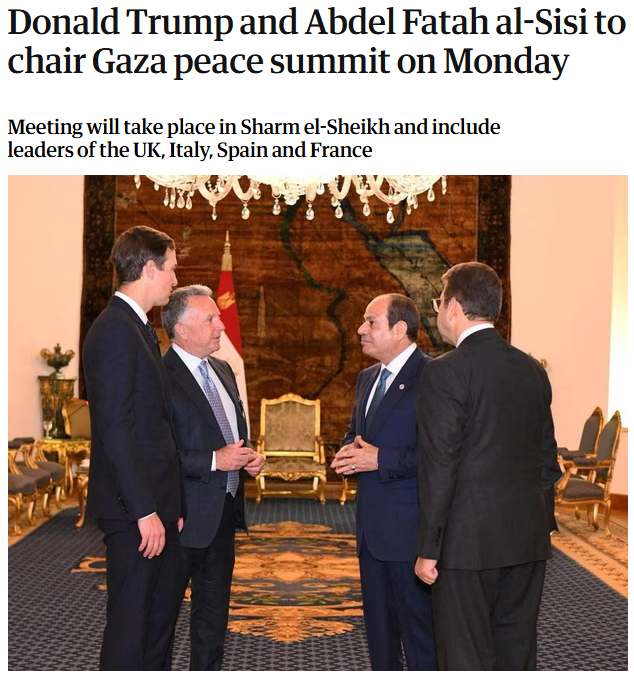
Close attention needs to be focused on the deadly and destructive conflict in the Gaza Strip and the multi-party negotiations being held in the Egyptian city of Sharm El-Sheikh. The elite of Middle East diplomacy are in Sharm El-Sheikh these days, including Steve Withoff and Jared Kushner from the USA, the Israeli Strategic Affairs Minister Ron Derner, Khalil Al-Hayya, the head of the Hamas negotiation team, and Mohammed Al-Hindi of the Palestinian Islamic Jihad which holds some of the 20 living Israeli hostages.

The exchange of Israeli hostages – 20 living and the bodies of 28 who have died – and some 2,000 Palestinian prisoners held in Israeli jails and army camps is the first order of business. The exchange should take place on Monday, October 13. President Donald Trump should go first to Israel and then Egypt on Monday to start multi-party negotiations with implications for the wider Middle East.

The negotiations are being held against a politically unstable situation in Israel and the USA where in both there are deep divisions among political parties. The armed conflict in the Gaza Strip could start again with “We tried negotiations and they failed” as a battle theme.

As the representatives of UN Consultative Status NGO, we must see how we can build on these advances toward a stable peace. There is much at stake, and we must be ready to take action.

Prof. René Wadlow is President of the Association of World Citizens.

BOOK REVIEW: Robin Yassin-Kassab and Leila Al-Shami, “Burning Country – Syrians in Revolution and War”

In Being a World Citizen, Book Review, Conflict Resolution, Cultural Bridges, Current Events, Democracy, Human Rights, International Justice, Middle East & North Africa, NGOs, Peacebuilding, Solidarity, Syria, The Search for Peace, Track II, United Nations, War Crimes, World Law on September 1, 2025 at 6:00 AM

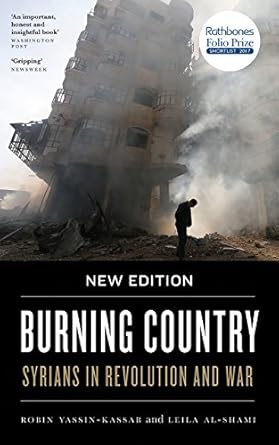
Robin Yassin-Kassab and Leila Al-Shami, Burning Country – Syrians in Revolution and War.

London, Pluto Press, 2016, 262pp.

Although this overview of Syrian society was written before the January 2025 flight of Bashar al-Assad to Moscow and the coming to power of Ahmed al-Sharaa as “interim” President, the book is a useful guide to many of the current issues in Syria today.

As Khalil Gibran wrote in The Garden of the Prophet, thinking of his home country, Lebanon, but it can also be said of the neighboring Syria, “Pity the nation divided into fragments, each fragment deeming itself a nation.” The fragments, ethnic and religious to which are added deep social divisions, make common action difficult. The Druze, the Alaouites, the Kurds, all play an important role but are often fearful of each other. Some of the Alaouites have fled to Lebanon. At the same time, there is a slow return of Syrians who have been in exile in Turkey and western Europe – especially Germany.

The divisions were made deeper by the years of violent conflict against the government of Bashar al-Assad which began in March 2011 with youth-led demonstrations appealing for a Syrian republic based on equality of citizenship, the rule of law, respect for human rights, and political pluralism.

After some months of non-violent protests, members of the military deserted, taking their weapons with them. The Syrian conflict became militarized. A host of armed militias were formed, often hostile to each other.

From late 2013 to February 2014, there were negotiations for a ceasefire held at the United Nations (UN), Geneva. Representatives of the Association of World Citizens (AWC) met with the Ambassador to the UN of Syria, as well as with the representatives of different Syrian factions who had come to Geneva. Unfortunately, Syrian politics has been that of “winner takes all” with little spirit of compromise or agreed-upon steps for the public good. The AWC called for a broad coming together of individuals who believe in non-violence, equality of women and men, ecologically-sound development, and cooperative action for the common good. The need to work together for an orderly creation of the government and the development of a just and pluralistic Syrian society is still with us.

Robin Yassin-Kassab’s book is a useful guide to the forces that must come together and cooperate today.

Prof. René Wadlow is President of the Association of World Citizens.

BOOK REVIEW: Helen Lackner, “Yemen in Crisis: Devastating Conflict, Fragile Hope”

In Being a World Citizen, Book Review, Conflict Resolution, Current Events, Human Rights, Humanitarian Law, Middle East & North Africa, NGOs, Peacebuilding, Solidarity, The Search for Peace, Track II, United Nations, War Crimes, World Law on August 30, 2025 at 6:00 PM

By René Wadlow

Helen Lackner, Yemen in Crisis: Devastating Conflict, Fragile Hope.

London, Saqi Books, 2023, 413pp.

In this incisive analysis, Helen Lackner highlights the ongoing armed conflict which threatens the survival of the Yemeni people. An internationalized civil war which started in 2015 has caused chaos, poverty, and in many areas extreme hunger. The external intervention led by Saudi Arabia and the United Arab Emirates in an operation called “Desert Storm” worsened the instability and fragmentation. Efforts by the United Nations to mediate the conflict, especially by meetings in Geneva, have been frustrated by the obduracy of the warring parties.

The Association of World Citizens (AWC) has been concerned with constitutional developments in Yemen since the 2011 change of government. While the constitutional form of the state structure depends on the will of the people of Yemen (provided that they can express themselves freely), the AWC has proposed consideration of con-federal forms of government which maintain cooperation within a decentralized framework. In 2014, a committee appointed by the then President, Abdrabbuh Mansour Hadi, had proposed a six-region federation as the political structure for Yemen.

Until 1990, Yemen was two separate states: the People’s Democratic Yemen in the south with Aden as the capital, and the Yemen Arab Republic in the north with Sana’a as the capital. In 1990, the two united to become the Republic of Yemen.

However, the union of the two states did not create a working unity. Fairly quickly there was a fracturing of Yemen into different spheres of influence. There were struggles for power and the creation of rival militias. Although tribes remain a fundamental aspect of Yemeni society, there developed new social forces with a greater role of youth and a growth of urban life as people moved from the countryside into cities. A small educated group, often including women, started to play a larger role.

With the 2015 outbreak of armed violence, the divisions have grown. Fundamentalist Islamic groups have been created. There has been a vast destruction of infrastructure as schools, medical facilities, and shops, and small industry has been targeted for destruction. Today, the Ansar Allah Movement, often called the Houthis, controls the capital Sana’a and the port city of Hudaydah. Much of the rest of the country is under the control of microgroups. There is a large displacement of people. The rivalry for regional power between Saudi Arabia and Iran colors the situation. As Helen Lackner writes, hope for peace is fragile. There are human rights violations on a massive scale by all the parties. The 27 million Yemenis live under a dark sky.

Prof. René Wadlow is President of the Association of World Citizens.

Gaza: Famine Spreads

In Being a World Citizen, Conflict Resolution, Current Events, Human Rights, Humanitarian Law, International Justice, Middle East & North Africa, NGOs, Peacebuilding, Solidarity, The Search for Peace, Track II, United Nations, War Crimes, World Law on August 24, 2025 at 12:30 PM

By René Wadlow

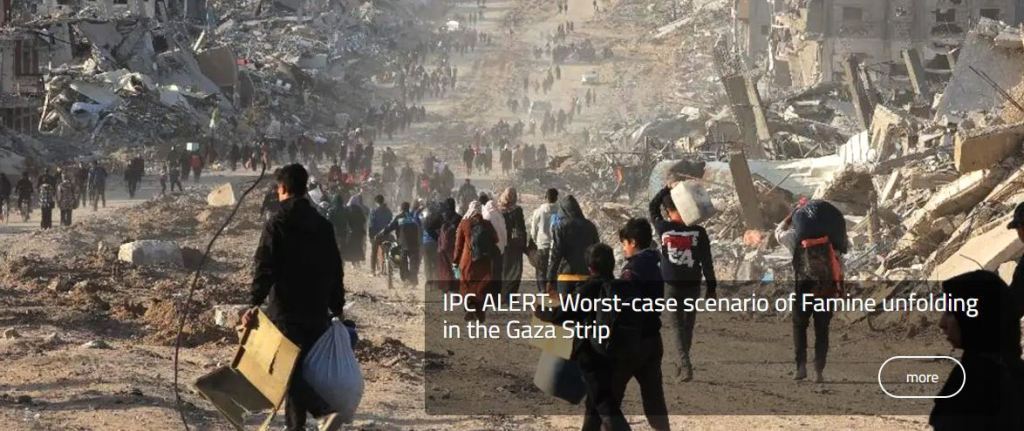
On August 22, 2025, the United Nations (UN)-related Integrated Food Security Phase Classification (IPC) highlighted that famine conditions were taking place in Gaza City and that famine is expected to spread to other parts of the Gaza Strip in the coming weeks if improvements in food supply are not made.

The IPC Report stresses that for over 90% of the children under two years old, the lack of healthy food hinders the children’s immunity and development. The scarcity also impacts pregnant and breastfeeding women, compromising the health of both mother and child. Many healthcare facilities in the Gaza Strip have been destroyed, making care for children difficult and often impossible.

The IPC report comes just as the Israeli military prepares for a full-scale takeover of Gaza City, the epicenter of the famine. When the takeover begins, it will be even harder for civilians to access the food they need to survive. Many people will be forced to move, which many persons in Gaza have already done several times.

Famine in Gaza is the result of deliberate obstruction of food and life-saving aid. There are ample food supplies at the Gaza Strip frontier ready to enter. However, the Israeli authorities have not permitted sufficient aid to enter the Gaza Strip. The basic humanitarian needs of those living in the Gaza Strip are not being met.

The Association of World Citizens is among the many Nongovernmental Organizations and aid groups which have called for a radical modification of Israeli policy so that basic needs can be met. Such radical modifications will require negotiations in good faith. The IPC report is a strong addition to these calls for positive action.

Prof. René Wadlow is President of the Association of World Citizens.

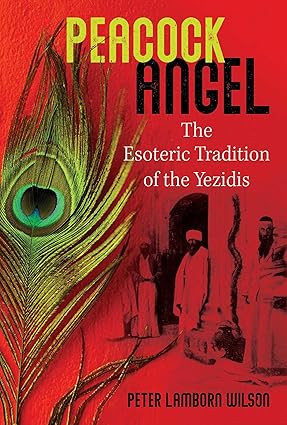
BOOK REVIEW: Peter L. Wilson, “Peacock Angel: The Esoteric Tradition of the Yezidis”

In Being a World Citizen, Book Review, Conflict Resolution, Cultural Bridges, Human Rights, Humanitarian Law, International Justice, Middle East & North Africa, Modern slavery, Peacebuilding, Refugees, Religious Freedom, Solidarity, Spirituality, Syria, The Search for Peace, United Nations, War Crimes, Women's Rights, World Law on August 4, 2025 at 5:55 PM

By René Wadlow

Peter L. Wilson, Peacock Angel: The Esoteric Tradition of the Yezidis.

Rochester, VT, Inner Traditions, 2022, 272pp.

Peter Wilson, a specialist on the Middle East, has written a useful book on the religious framework of the Yezidis as seen by someone outside the Yezidi faith. A Yezidi website has been established by Yezidis living in Nebraska, USA: https://yeziditruth.org.

The yearly Sakharov Prize for Freedom of Thought awarded by the European Parliament was given on October 27, 2016 to Nadia Murad who is also the co-laureate of the 2018 Nobel Peace Prize. She had been taken captive by the forces of the Islamic State in Iraq and Syria (ISIS) in August 2014 and then sold into sexual slavery and forced marriage. She was able to escape with the help of a compassionate Muslim family and went to Germany as a refugee. She has become a spokesperson for the Yezidi, especially Yezidi women.

There are some 500,000 Yezidis, a Kurdish-speaking religious community living in northern Iraq. There were also some 200,000 Yezidis among the Kurds of Türkiye, but nearly all have migrated to Western Europe, primarily Germany as well as to Australia, Canada, and the USA.

There are also some Yezidi among Kurds living in Syria, Iran and Armenia. The Yezidis do not convert people. Thus, the religion continues only through birth into the community.

The structure of the Yezidi religious system is Zoroastrian, a faith born in Persia proclaiming that two great cosmic forces, that of light and good and that of darkness and evil are in constant battle. Humans are called upon to help light overcome darkness.

However, the strict dualistic thinking of Zoroastrianism was modified by another Persian prophet, Mani of Ctesiphon in the third century of the Common Era. Mani tried to create a synthesis of religious teachings that were increasingly coming into contact through travel and trade: Buddhism and Hinduism from India, Jewish and Christian thought, Hellenistic Gnostic philosophy from Egypt and Greece as well as many small belief systems.

Mani kept the Zoroastrian dualism as the most easily understood intellectual framework, though giving it a somewhat more Taoist (yin/yang) flexibility, Mani having traveled to China. He developed the idea of the progression of the soul by individual effort through reincarnation. Unfortunately, only the dualistic Zoroastrian framework is still attached to Mani’s name – Manichaeism. This is somewhat ironic as it was the Zoroastrian Magi who had him put to death as a dangerous rival.

Within the Mani-Zoroastrian framework, the Yezidi added the presence of angels who are to help humans in the constant battle for light and good, in particular Melek Tawsi, the peacock angel. Although there are angels in Islam, angels that one does not know could well be demons. Thus, the Yezidis are regularly accused of being “demon worshipers”.

The Yezidis have always been looked down upon by both their Muslim and Christian neighbors as “pagans”. The government of Saddam Hussein was opposed to the Yezidis not so much for their religious beliefs but rather because some Yezidis played important roles in the Kurdish community, seen as largely opposed to the government. The Yezidi community is still in socio-economic difficulty given the instability of the situation in Iraq.

Peter Wilson has written a useful introduction to this little-known faith.

Prof. René Wadlow is President of the Association of World Citizens.

The Power of Conscience

In Being a World Citizen, Conflict Resolution, Current Events, Human Rights, Humanitarian Law, Middle East & North Africa, NGOs, Solidarity, The Search for Peace, War Crimes, World Law on May 4, 2025 at 12:00 PM

By René Wadlow

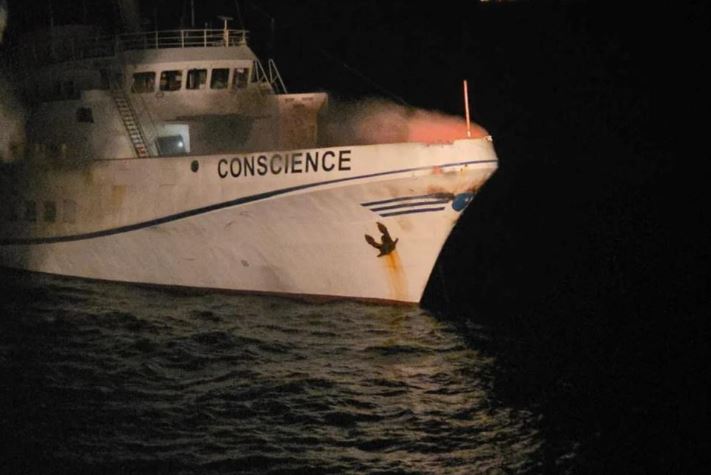
On May 2, 2025, a ship carrying food and medical supplies for the Gaza Strip organized by the Freedom Flotilla Coalition was attacked by drones in international waters near Malta. The ship was badly damaged and its cargo lost. The ship was appropriately called The Conscience.

Conscience is that inner voice which helps each person to know right from wrong. Every thought and deed has an ethical significance and consequence – what is called in Indian thought Karma. Conscience, this perception of choice between right and wrong, is within each person as a clear guide. A sensitive conscience speaks with a voice of authority so that one can act positively and with justice.

Conscience under attack (C) The Malta Independent

Nonviolent action to protect civilians and to call attention to crucial situations is being increasingly used. There are real dangers involved. In 2010, a similar humanitarian aid ship of the Freedom Flotilla Coalition was attacked by Israeli forces in international waters. Ten persons were killed and many wounded.

Today, many of us have called for the end to the Israeli blockade of supplies to the Gaza Strip, a blockade which began again after the end of a ceasefire on March 18, 2025. Families are struggling to meet their most basic needs of food and medicine. We need to develop creative and positive avenues of action.

(C) Seven Sisters Collective/Instagram

Prof. René Wadlow is President of the Association of World Citizens.

Syria: Creating a Framework for Cooperative Action

In Being a World Citizen, Conflict Resolution, Cultural Bridges, Current Events, Democracy, Human Rights, Middle East & North Africa, NGOs, Nonviolence, Peacebuilding, Solidarity, Syria, The Search for Peace, Track II, United Nations, War Crimes, World Law on March 26, 2025 at 7:00 AM

By René Wadlow

Recent violence and growing tensions along religious, ethnic and social class lines in Syria have highlighted the need to create a framework for cooperation among civil society groups. The Peacebuilding Section of the United Nations (UN) Secretariat was created because of the difficulties of creating a peaceful and just society after a period of armed conflict. It has been noted that violence often starts up again if strong measures of reconciliation and cooperative action are not undertaken as soon as the armed conflict ends. A spirit of revenge is often present, especially among those who consider themselves as victims. Thus, there needs to an interweaving of economic improvement with social reconciliation and the creation of trust among factions.

The long, multi-layered conflict in Syria from 2011 to the departure of Bashar al-Assad in December 2024 had increased tensions among groups, but the tensions were already there, clashing over values and interests. “Pity the nation divided into fragments, each fragment deeming itself a nation” wrote Khalil Gibran in The Garden of the Prophet thinking about his home country Lebanon, but it can also be said of neighboring Syria.

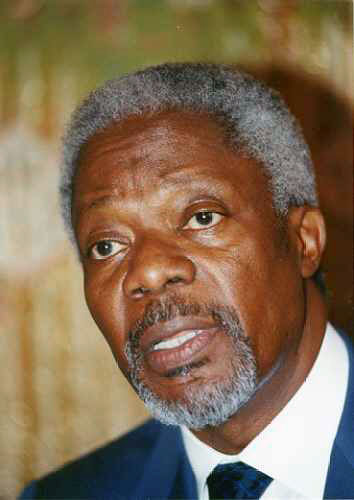
External countries had quickly stepped into the armed conflict after 2011 projecting their rivalries onto Syria and jockeying for regional preeminence. Syrian civil society members had cooperated during the efforts of mediation during the early years of the conflict. The first mediator was Mr. Kofi Annan as the joint envoy of the UN and the League of Arab States in February 2012.

Kofi Annan (C) Magyar ENSZ Társaság

Kofi Annan, a former UN Secretary General, had spent his entire career in the UN system and was a seasoned mediator. From his discussions and observations, he proposed first steps based on a ceasefire with effective UN supervision, a release of arbitrarily detained persons, increased humanitarian aid, and freedom of association within Syria. The implementation of his proposals did not follow, and he resigned his mandate on August 2, 2012.

I knew somewhat Kofi Annan and knew better some members of his staff. I also knew fairly well the Secretary General of the League of Arab States Nabil al-Araby, a longtime Ambassador of Egypt to the UN in Geneva. Thus, on behalf of the Association of World Citizens (AWC), I became involved with the armed conflict in Syria.

I had discussions with Dr. Faysal Khabbaz Hamouri, the Ambassador of Syria to the UN in Geneva, to see what issues might be negotiable and if an agenda could be fixed. I also had discussions with Syrian Nongovernmental Organization (NGO) members who had come to Geneva because of the negotiations. NGO representatives, such as I for the AWC, have no standing as official mediators but can play some role through their contacts with diplomats and UN Secretariat members. From these discussions, I came to realize how deeply divided was the Syrian community involved in the political aspects of the armed conflict. There were no public negotiations in Geneva after 2015. In September 2015, Russian military troops started their heavy support of the al-Assad government.

Today, it is difficult to know what those of us who are not Syrians and who are outside of Syria can do to help build a society of social cohesion in Syria. The wider Middle East is filled with violence and tensions among Israelis and Palestinians, in Lebanon, Yemen and Iran. We have to keep our spirits open for new possibilities of positive action.


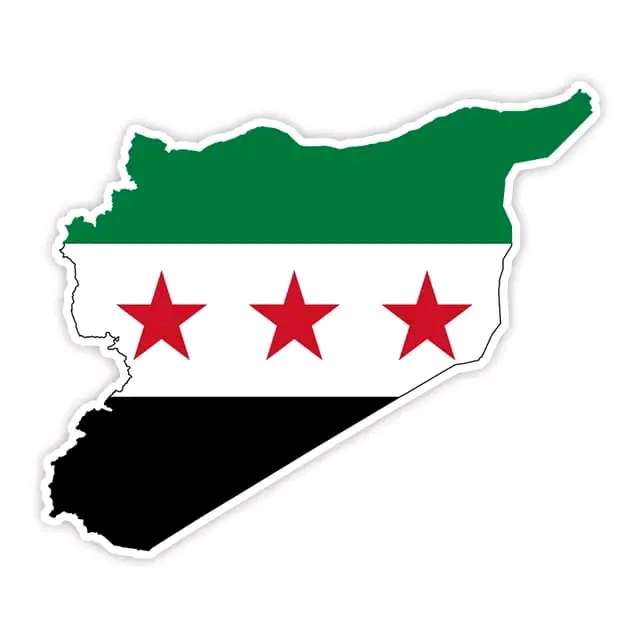
(C) Khaled Fozan

Prof. René Wadlow is President of the Association of World Citizens.

Track Two: After the End of the Gaza Ceasefire, Are Negotiations Possible?

In Being a World Citizen, Conflict Resolution, Cultural Bridges, Current Events, Human Rights, Humanitarian Law, International Justice, Middle East & North Africa, NGOs, Solidarity, The Search for Peace, Track II, United Nations, War Crimes, World Law on March 20, 2025 at 7:45 AM

By René Wadlow

On March 18, 2025, Israeli airstrikes across the Gaza Strip killed over 400 Palestinians, including women and children, and wounding more than 500, ending a ceasefire which had begun on January 19, 2025.

Prime Minister Benjamin Netanyahu resumed the fighting pointing to Hamas’s unwillingness to release the remaining hostages. He has long insisted that attacks on the Gaza Strip would continue until Hamas is destroyed. He has indicated that the March attack was only the beginning. Some analysts see renewed combat as imminent with the conditions of life in the Gaza Strip, already bad, getting worse. Violence among Palestinians and Israeli Jewish settlers on the West Bank also seems to be growing. In such a negative atmosphere, are negotiations possible?

With no progress in government-led talks, are Track Two discussions a way to advance?

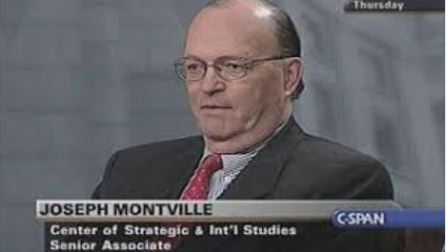
The phrase “Track Two” was coined in 1982 by Joseph Montville of the United States (U.S.) Foreign Service Institute to describe methods of diplomacy that are outside the formal diplomatic system but with people in middle-level-leadership positions who have skills of negotiation and compromise. Track Two provides a type of flexibility not available in formal governmental settings. Track Two are discussions held by non-officials of conflicting parties in an effort to clarify outstanding disputes and to explore the options for resolving them in settings that are less sensitive, less structured, and with less media attention than those associated with official negotiations. The non-officials involved usually include scholars, senior journalists, former government officials, retired military officers, and businesspeople. Depending on the aims and the styles of these meetings, the profile and expertise of Track Two participants will differ.

Joseph Montville (C) C-SPAN

With governmental negotiations at a standstill, the Association of World Citizens (AWC) has suggested the possibility of Track Two efforts to see on what issues negotiations might be possible. As an earlier AWC proposal stated,

When the very terrain of history is shifting beneath our feet, we must transform old diplomatic methods to serve new diplomatic purposes. Building peace in today’s conflicts call for long-term commitment to establishing an infrastructure calling upon all level of society to draw on the resources of compromise and reconciliation from within the society and maximizing the contributions from outside. There is no facile optimism as to what can be done when the United Nations and governments fail to act positively. However, we can strive to keep channels of communication open.

The role of Track Two dialogues can be modest. The goal is not to change the basic views or philosophies of the participants. The goal is that the decisions of participants on crucial issues will be made with finer perceptions of the views and intentions of others.

National political leaders often have a short attention span for issues unless there are strong domestic reasons for remaining involved. Therefore, World Citizens need a longer-range vision and must be willing to take measures which do not give immediate results. However, each effort helps to build an infrastructure of people used to discussion and clear communication. For World Citizens, Track Two approaches are infused with a vision of the good society with an emphasis on human development, and a broadly-based civil society.

Prof. René Wadlow is President of the Association of World Citizens.

Of related interest:

Citizens of the World Strive Against Rape as a Weapon of War

In Africa, Being a World Citizen, Children's Rights, Current Events, Europe, Human Rights, Humanitarian Law, International Justice, NGOs, Peacebuilding, Solidarity, Sudan, The Balkan Wars, The Search for Peace, Track II, United Nations, War Crimes, Women's Rights, World Law on March 8, 2025 at 6:45 PM

By René Wadlow

On March 6, 2025, the United Nations (UN) Children’s Fund (UNICEF) warned that many children in the conflicts among militias in Sudan are at risk of rape and other forms of sexual violence which are being used as weapons of war. In November 2024, the Association of World Citizens (AWC) had highlighted that rape was being used as a weapon of war in the Sudan conflicts and that strong counter measures are needed.

As Meredeth Turshen and Clotilde Twagiramariya point out in their book What Women Do in Wartime: Gender and Conflict in Africa (London: Zed Press, 1998),

“There are numerous types of rape. Rape is committed to boast the soldiers’ morale, to feed soldiers’ hatred of the enemy, their sense of superiority, and to keep them fighting; rape is one kind of war booty; women are raped because war intensifies men’s sense of entitlement, superiority, avidity and social license to rape; rape is a weapon of war used to spread political terror; rape can destabilize a society and break its resistance; rape is a form of torture; gang rapes in public terrorize and silence women and force them to flee homes, families and communities; rape targets women because they keep the civilian population functioning and are essential to its social and physical continuity; rape is used in ethnic cleansing; it is designed to drive women from their homes or destroy the possibility of reproduction; genocidal rape treats women as reproductive vessels to make them bear babies of the rapists’ nationality, ethnicity, race or religion, and genocidal rape aggravates women’s terror and future stigma, producing a class of outcast mothers and children – this is rape committed with consciousness of how unacceptable a raped woman is to the patriarchal community and to herself. This list combines individual and group motives with obedience to military command; in doing so, it gives a political context to violence against women, and it is this political context that needs to be incorporated in the social response to rape.”

The AWC first raised the issue of rape as a weapon of war in the UN Commission on Human Rights in March 2001 after the judgement of the International Criminal Tribunal for the Former Yugoslavia (ICTY) maintained that there can be no time limitation on bringing an accused to trial. The Tribunal also reinforced the possibility of universal jurisdiction – that a person can be tried not only by his national court but by any court claiming universal jurisdiction and where the accused is present.

As Citizens of the World, we need to have a peace-building approach which asks: How does a political conflict degenerate into pervasive mass violence, generating new crises and new forms of violent conflict in the future? Even after a war ends, the effects of sexual violence continue in the form of unwanted pregnancies, sexually transmitted infections, discrimination and ostracizing of victims and often lasting psychological damage. Thus, we must ask how a community pulls itself out from the cycle of violence and creates new attitudes to promote human dignity and develop new institutions of conflict resolution.

Prof. René Wadlow is President of the Association of World Citizens.