The Official Blog of the

Archive for the ‘The Search for Peace’ Category

COMMUNIQUE DE PRESSE – 2017-11-17-21-30-FRA

In Being a World Citizen, Conflict Resolution, Current Events, Human Rights, Humanitarian Law, International Justice, Middle East & North Africa, Press release, Solidarity, The Search for Peace, United Nations, War Crimes, World Law on November 17, 2017 at 8:24 PM

-- Logo 2017 --

COMMUNIQUE DE PRESSE


Paris, le 17 novembre 2017


LES CITOYENS DU MONDE APPELLENT LA FEDERATION DE RUSSIE

A CESSER DE FERMER LES YEUX

SUR L’UTILISATION D’ARMES CHIMIQUES EN SYRIE


L’Association of World Citizens (AWC) est profondément déçue du veto opposé par la Fédération de Russie au renouvellement par le Conseil de Sécurité de l’ONU du mandat du Mécanisme Commun d’Enquête sur les armes chimiques en Syrie.

L’AWC soutient fortement depuis le départ la nécessité d’enquêtes internationales sur l’utilisation d’armes interdites par le droit mondial.

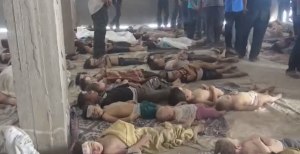
Un rapport de l’ONU publié en octobre établit la responsabilité des forces armées de la République arabe syrienne, notoirement soutenues par la force militaire russe, dans l’attaque au gaz sarin contre Khan Cheikhoun en avril dernier.

Les armes chimiques sont prohibées en vertu du droit humanitaire international et leur utilisation par quelque partie que ce soit dans le conflit syrien constitue donc un crime de guerre, susceptible d’être jugé comme tel par la Cour pénale internationale, les tribunaux nationaux ou toute institution ad hoc qui viendrait à être créée à cette fin.

L’AWC appelle la Fédération de Russie, le Conseil de Sécurité de l’ONU, et tous les Etats membres de l’ONU à apporter leur plein soutien aux enquêtes existantes et à mener sur l’utilisation d’armes illégales en Syrie, au premier rang desquelles les armes chimiques.

PRESS RELEASE – 2017-11-17-21-30-ENG

In Being a World Citizen, Conflict Resolution, Current Events, Human Rights, Humanitarian Law, International Justice, Middle East & North Africa, Press release, Solidarity, The Search for Peace, United Nations, War Crimes, World Law on November 17, 2017 at 8:24 PM

-- Logo 2017 --

PRESS RELEASE


Paris, November 17, 2017


WORLD CITIZENS CALL ON THE RUSSIAN FEDERATION

TO STOP CONDONING THE USE OF CHEMICAL WEAPONS IN SYRIA


The Association of World Citizens (AWC) is deeply disappointed by the veto opposed by the Russian Federation to a renewal by the United Nations (UN) Security Council of the mandate of the Joint Investigative Mechanism on chemical weapons in Syria.

The AWC has strongly supported the need for international investigations on the use of weapons prohibited by world law.

A UN report released in October established the responsibility of the armed forces of the Syrian Arab Republic, known to be backed by the Russian military, in the sarin gas attack on Khan Sheikhoun last April.

Chemical weapons are prohibited under international humanitarian law and their use by whichever party to the Syrian conflict is thus a war crime, liable to be tried as such by the International Criminal Court, national courts, or whatever ad hoc institution may be created to that end in the future.

The AWC calls on the Russian Federation, the UN Security Council, and all UN Member States to bring their full support to investigations on the use of illegal weapons in Syria, starting with chemical weapons.

– 30 –

Women as Peacemakers

In Being a World Citizen, Conflict Resolution, Human Rights, Solidarity, The Search for Peace, United Nations, Women's Rights, World Law on October 31, 2017 at 9:31 PM

By René Wadlow

“Seeing with eyes that are gender aware, women tend to make connections between the oppression that is the ostensible cause of conflict (ethnic or national oppression) in the light of another cross-cutting one: that of gender regime. Feminist work tends to represent war as a continuum of violence from the bedroom to the battlefield, traversing our bodies and our sense of self. We glimpse this more readily because as women we have seen that ‘the home’ itself is not the haven it is cracked up to be. Why, if it is a refuge, do so many women have to escape it to ‘refuges’? And we recognize, with Virginia Woolf, that ‘the public and private worlds are inseparably connected: that the tyrannies and servilities of one are the tyrannies and servilities of the other.”

Cynthia Cockburn, Negotiating Gender and National Identities.

October 31 is the anniversary of United Nations (UN) Security Council Resolution 1325 which calls for full and equal participation of women in conflict prevention, peace processes, and peace-building, thus creating opportunities for women to become fully involved in governance and leadership. This historic Security Council resolution 1325 of October 31, 2000 provides a mandate to incorporate gender perspectives in all areas of peace support. Its adoption is part of a process within the UN system through its World Conferences on Women in Mexico City (1975), in Copenhagen (1980), in Nairobi (1985), in Beijing (1995), and at a special session of the U.N. General Assembly to study progress five years after Beijing (2000).

CRNHH1CUcAACJaw.jpg

Since 2000, there have been no radical changes as a result of Resolution 1325, but the goal has been articulated and accepted. Now women must learn to take hold of and generate political power if they are to gain an equal role in peace-making. They must be willing to try new avenues and new approaches as symbolized by the actions of Lysistrata.

Lysistrata, immortalized by Aristophanes, mobilized women on both sides of the Athenian-Spartan War for a sexual strike in order to force men to end hostilities and avert mutual annihilation. In this, Lysistrata and her co-strikers were forerunners of the American humanistic psychologist Abraham Maslow who proposed a hierarchy of needs: water, food, shelter, and sexual relations being the foundation. (See Abraham Maslow The Farther Reaches of Human Nature) Maslow is important for conflict resolution work because he stresses dealing directly with identifiable needs in ways that are clearly understood by all parties and with which they are willing to deal at the same time.

image_lysistrata_0.png

Addressing each person’s underlying needs means that one moves toward solutions that acknowledge and value those needs rather than denying them. To probe below the surface requires redirecting the energy towards asking ‘what are your real needs here? What interests need to be serviced in this situation?’ The answers to such questions significantly alter the agenda and provide a real point of entry into the negotiation process.

It is always difficult to find a point of entry into a conflict. An entry point is a subject on which people are willing to discuss because they sense the importance of the subject and all sides feel that ‘the time is ripe’ to deal with the issue. The art of conflict resolution is highly dependent on the ability to get to the right depth of understanding and intervention into the conflict. All conflicts have many layers. If one starts off too deeply, one can get bogged down in philosophical discussions about the meaning of life. However, one can also get thrown off track by focusing on too superficial an issue on which there is relatively quick agreement. When such relatively quick agreement is followed by blockage on more essential questions, there can be a feeling of betrayal.

Since Lysistrata, women, individually and in groups, have played a critical role in the struggle for justice and peace in all societies. However, when real negotiations begin, women are often relegated to the sidelines. However, a gender perspective on peace, disarmament, and conflict resolution entails a conscious and open process of examining how women and men participate in and are affected by conflict differently. It requires ensuring that the perspectives, experiences and needs of both women and men are addressed and met in peace-building activities. Today, conflicts reach everywhere. How do these conflicts affect people in the society — women and men, girls and boys, the elderly and the young, the rich and poor, the urban and the rural?

There has been a growing awareness that women and children are not just victims of violent conflict and wars − ‘collateral damage’ − but they are chosen targets. Conflicts such as those in Rwanda, the former Yugoslavia and the Democratic Republic of Congo have served to bring the issue of rape and other sexual atrocities as deliberate tools of war to the forefront of international attention. Such violations must be properly documented, the perpetrators brought to justice, and victims provided with criminal and civil redress.

I would stress three elements which seem to me to be the ‘gender’ contribution to conflict transformation efforts:

1) The first is in the domain of analysis, the contribution of the knowledge of gender relations as indicators of power. Uncovering gender differences in a given society will lead to an understanding of power relations in general in that society, and to the illumination of contradictions and injustices inherent in those relations.

2) The second contribution is to make us more fully aware of the role of women in specific conflict situations. Women should not only be seen as victims of war: they are often significantly involved in taking initiatives to promote peace. Some writers have stressed that there is an essential link between women, motherhood and non-violence, arguing that those engaged in mothering work have distinct motives for rejecting war which run in tandem with their ability to resolve conflicts non-violently. Others reject this position of a gender bias toward peace and stress rather that the same continuum of non-violence to violence is found among women as among men. In practice, it is never all women nor all men who are involved in peace-making efforts. Sometimes, it is only a few, especially at the start of peace-making efforts. The basic question is how best to use the talents, energies, and networks of both women and men for efforts at conflict resolution.

3) The third contribution of a gender approach with its emphasis on the social construction of roles is to draw our attention to a detailed analysis of the socialization process in a given society. Transforming gender relations requires an understanding of the socialization process of boys and girls, of the constraints and motivations which create gender relations. Thus, there is a need to look at patterns of socialization, potential incitements to violence in childhood training patterns, and socially-approved ways of dealing with violence.

The Association of World Citizens has stressed that it is important to have women directly involved in peace-making processes. The strategies women have adapted to get to the negotiating table are testimony to their ingenuity, patience and determination. Solidarity and organization are crucial elements. The path may yet be long, but the direction is set.

Prof. René Wadlow is President of the Association of World Citizens.

Increased Korean Tensions: Time for Concerted Nongovernmental Efforts

In Asia, Conflict Resolution, Current Events, Korean Peninsula, NGOs, The Search for Peace, Track II, United Nations, World Law on October 1, 2017 at 9:35 AM

By René Wadlow

An escalation of verbal exchanges between the Presidents of the USA and North Korea, missile flights over Japan, United States (U. S.) war planes close to the sea frontier of North Korea – one can hardly think of additional ways that governments can increase tensions short of an armed attack which probably all governments want to avoid. But there are always dangers of events slipping out of control. The Security Council of the United Nations (UN) has voted to tighten economic sanctions on North Korea. However, to date, sanctions have diminished the socio-economic conditions of the majority without modifying government policy.

For the moment, we look in vain for enlightened governmental leadership. The appeals for calm by the Chinese authorities have not been followed by specific proposals for actions to decrease tensions.

kor01_400_01

The one positive sign which may help to change the political atmosphere both for governmental negotiations and for Track II (nongovernmental) discussions is the large number of States which have signed the Treaty on the Prohibition of Nuclear Weapons on 20 September, the first day that the Treaty was open for signature. Signature is the first step in the process of ratification. As a light in the darkness, the Holy See (the Vatican) both signed and ratified the Treaty at the same time. Guyana and Thailand also signed and ratified the Treaty, the three first ratifications of the 50 needed for the Treaty to come into force.

The Vatican leads by moral example; its Swiss Guard army is only lightly armed. The Holy See, although a State, is a bridge to the world of nongovernmental organizations (NGO). The torch of action must now be taken up by a wider range of organizations than those, which had been in the lead for the abolition of nuclear weapons. The strength of “one-issue” NGOs is that its message is clear. This was seen in the earlier efforts to ban a single category of weapons: land mines, chemical weapons, cluster munitions and the long-running efforts on nuclear weapons.

Some of us have long worked on the abolition of nuclear weapons. I recall as a university student in the early 1950s, I would cross Albert Einstein who liked to walk from his office to his home. I would say “Good evening, Professor Einstein”, and he would reply “Good evening, young man”. I knew that he had developed some theories, which I did not understand but that were somehow related to atomic energy. I was happy that we were both against atomic bombs under the slogan “One World or None!”.

Kim_Jong_Un_Makes_Statement_(2017)

The current Treaty on the Prohibition of Nuclear Weapons did not grow from the usual arms control negotiations, such as the Treaty on the Non-Proliferation of Nuclear Weapons or the chemical weapons ban, both of which were negotiated in Geneva, both over a 10-year period. The Nuclear Weapons ban was largely negotiated elsewhere, Vienna and New York, in the humanitarian law tradition of banning weapons that cause unnecessary suffering, such as the ban on napalm after its wide use in the Vietnam War. The contribution of both “ban-the-bomb” groups and the humanitarian organizations such as the International Committee of the Red Cross was great in reaching the successful outcome.

Thus, today, there is a need for a coming together of nongovernmental organizations who are primarily focused on the resolution of armed conflicts such as the International Crisis Group, International Alert, and the Association of World Citizens (AWC) with those groups concerned with the abolition of nuclear weapons. The current Korean tensions are based on the development of nuclear weapons and missile systems and the pressures and threats to prevent their development.

One proposal which seems to me to be a common ground on which many could cooperate has been called a “double-freeze” – a freeze on North Korea’s nuclear-weapon and missile programs with a reciprocal freeze on the yearly U. S.-South Korea war exercises and a progressive reduction of U. S. troops stationed in South Korea and elsewhere in Asia, especially Japan.

Ban the bomb.jpg

There are also proposals for economic cooperation, greater meetings among separated family members, and cultural exchanges. However, given the heat of the current saber rattling, the “double-freeze” proposal seems to be the one that addresses most directly the security situation. We need to build on this common ground.

Prof. René Wadlow is President of the Association of World Citizens.

The Hidden Stakes of the Independence Vote in Iraqi Kurdistan

In Conflict Resolution, Current Events, Democracy, Middle East & North Africa, The Search for Peace on September 19, 2017 at 10:06 PM

By Bernard J. Henry

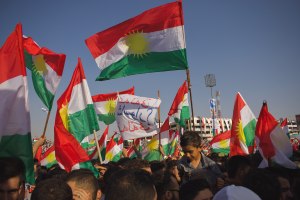
A new nation may soon emerge in the Middle East. A nation that has been in the hearts and minds of its people for centuries, but nowhere to be found in geography textbooks or diplomatic directories. A nation named Kurdistan, carved out of what is currently the autonomous northernmost part of Iraq.

On September 25, all native Kurdistanis – people born in Iraqi Kurdistan, whether they are Kurds or from the area’s solid ethnic minorities – will have to answer a question asked by the President of the Kurdish Regional Government, Massoud Barzani: “Do you want the Kurdistan region and the Kurdistani areas outside the region’s administration to become an independent state?”.

Yet behind the possibility of a “Kurdexit” driving the region away from the federal government in Baghdad, there may be more to the vote than meets the eye.

Capture d'écran 2017-09-19 23.15.13

In green on this map, Iraqi Kurdistan

1280px-Flag_of_Kurdistan.svg

The Kurdish flag

Seeking independence – from dissent at home?

Since 2014, the ruling Kurdish Democratic Party (KDP) of President Massoud Barzani and its archrival, the leftist Patriotic Union of Kurdistan (PUK) once led by former Iraqi President Jalal Talabani, have been at odds with a third contender for leadership – Gorran, “Change” in Kurdish, a center-left movement that spawned from rejection of the two main parties’ policies.

Barzani

Massoud Barzani

Barzani, who had reneged on leaving his post and reluctantly agreed in the end, cited the rise of Da’esh, the “Islamic State”, to maintain himself in power. Created in 2009, Gorran quickly secured a blocking majority in parliament, forcing the election of one of its members as speaker as well as many concessions from Barzani, who appeared too eager to push back the PUK and along with it any attempt to remove him from power.

When the referendum was announced, Gorran immediately voiced opposition, not out of heartfelt rejection of independence and die-hard loyalty to Iraq but because Barzani was felt as using the issue to stifle any debate on domestic issues, whether with Gorran or the PUK.

“Most of those voters who will say no will not be rejecting independence, but really telling Barzani they want a fair presidential election first,” comments Emran Mensour, a Kurdish lawyer from Syria living in exile in Paris. “The political feud between Barzani and Talabani stops where independence is at stake. But domestically, rivalry never stops.” Even though breaches have since appeared within Gorran and some members have started voicing support for the referendum, the party apparatus continues to stand up to Barzani.

With an estimated 80% of likely voters supporting independence, Gorran appears unlikely to block Barzani’s plans. But the party has made its point and the President of a future independent Kurdistan will know that (s)he must reckon with the third force.

Minding the “big brothers”

Already struggling with dissent at home, alienating others beyond borders is the last thing Barzani needs. In a September 10 official message, the Kurdistani leader called on referendum campaigners to observe the “spirit of brotherhood that binds the people of Kurdistan with the Iraqi people”. He had no choice as the debate on independence is spilling over to neighboring countries, especially Iran and Turkey, the “big brothers” the Shi’a majority in Iraq and the Turkmen minority in Kurdistan look to, respectively.

The Iraqi government and most Iraqi political parties have spoken out against the referendum, as have the governments of Iran, Syria, and Turkey, Ankara’s opposition being echoed in Kurdistan proper by a Turkmen party, the Iraqi Turkmen Front. Understandably, the three countries besides Iraq on whose national territory historic Kurdistan spreads cannot live with the thought that “their” own Kurds may choose independence someday, if only by joining a former Iraqi Kurdistan turned independent. Even then, the main issue will not be with either of the “big brothers”.

Emran_Mensour

Emran Mensour

“Kurds in all four countries are not bound together with the same strength,” Emran Mensour comments. “There is a strong bond between the Kurds of Iraq and Syria”, the former being now organized in a self-declared autonomous entity, Rojava – the Kurdish for “west” –, led by the Syrian branch of Turkey’s Marxist-Leninist Kurdish Workers Party (PKK).

Like its Iraqi counterpart, Rojava has been at the forefront of the military struggle against Da’esh, while also antagonizing the Syrian opposition forces and thus becoming an objective ally of the Damascus regime. Yet Barzani’s paternalistic style of leadership hardly matches the democratic confederal structure of Rojava, at least on paper, and an alliance or a merger between the two looks the least probable outcome of a successful independence vote.

Short-circuiting a “Shi’a crescent”

If not the creation of a greater, mightier Kurdistan, another stake of the referendum is the influence of Shi’a Muslims in an area whose politics have been dictated predominantly by Sunni leaders. “If Assad should remain in power in Syria,” Mensour adds, “he and his counterparts in Iran and Iraq would be able to form a ‘Shi’a crescent’ in the Middle East, obviously a scary thought for every Sunni country in the region”.

No wonder both King Abdullah of Jordan and Israeli Prime Minister Benyamin Netanyahu – none the keener about an independence referendum in Palestine – have expressed support for the vote.

King_Abdullah_portrait

King Abdullah of Jordan

As for Turkey, the main Sunni power west of Iraq, though its President turned autocrat, Reçep Tayyip Erdogan, recently tried to sway King Abdullah, the monarch held firm. Now it is uncertain that Ankara, in business with Iraqi Kurdistan through an oil deal struck outside of Baghdad’s authority, will have the leverage, let alone the will, to resist an independent Kurdistan on the long run. Especially if Erdogan should decide to durably play (the former) Iraqi Kurdistan against the PKK at the helm in Rojava.

More than independence

If any region in the world knows that independence does not guarantee freedom, let alone stability, the Middle East does.

On September 25, Kurdistanis will have to decide on a lot more than independence or not. Should the vote be positive, the ball will be in the court of a world that has shunned peace and human dignity in the Middle East for much too long.

Bernard J. Henry is the External Relations Officer of the Association of World Citizens.

As South Sudan Disintegrates, People Move

In Africa, Being a World Citizen, Conflict Resolution, Current Events, Human Rights, Humanitarian Law, Migration, NGOs, Refugees, Solidarity, The Search for Peace, United Nations, World Law on August 28, 2017 at 8:09 PM

By René Wadlow

In an August 17, 2017 call for urgent support, the Office of the United Nations High Commissioner for Refugees (UNHCR) stated “Over the past 12 months, an average of 1,800 South Sudanese have been arriving in Uganda every day. In addition to the million in Uganda, a million or more South Sudanese are being hosted by Sudan, Ethiopia, Kenya, the Democratic Republic of the Congo and Central African Republic. More than 85 per cent of the refugees who have arrived in Uganda are women and children, below age 18 years… Recent arrivals continue to speak of barbaric violence with armed groups reportedly burning down houses with civilians inside, people being killed in front of family members, sexual assaults of women and girls, and kidnapping of boys for forced conscription…Since December 2013, when South Sudan’s crisis erupted in Juba, more than two million South Sudanese have fled to neighboring countries while another two million people are estimated to be internally displaced.”

Working_with_UNHCR_to_help_refugees_in_South_Sudan_(6972528722)

With the disappearance of any form of government administration in South Sudan, the country finds itself in what can be called ‘anarchy without anarchists’. There are some school buildings without teachers or students, some medical buildings without personnel or medicine; there are some soldiers but who are not paid and so ‘live off the land’. There are armed bands more or less organized on a tribal basis, but tribal organization has long been weakened beyond repair. All that is left is hatred of other tribal groups. Different United Nations (UN) bodies are active in the country, including a large and costly ‘peacekeeping mission’ (MINUSS), but the UN has so far refused to create a ‘trusteeship’ to try to administer the country. Thus, there are basically only services of the High Commissioner for Refugees, the World Food Program distributing food but very inadequate to meet the food needs, and UNICEF providing some services to woman and children. There is no UN administration of the country as a whole as there is a fiction that a government continues to exist. The same holds true for any form of ‘trusteeship’ by the African Union.

South Sudan has always been more anarchy than administration. During the British colonial period, the areas of South Sudan were administered from Uganda rather than from Khartoum as transportation from the North was always difficult. (1) The independence of Sudan and the start of the civil war came at the same time in 1956. There was a ten-year break in the civil, North-South, war 1972-1983, at which time the war took up again from 1983 to 2005. After 2005, a southern regional government was set up with, in theory, an administration which remained very thin or non-existent outside of the capital Juba and a few larger towns. The churches, mostly Protestant but also some Catholic, provided education and medical services.

South_Sudan_Independence

The bitterness of the civil war period was so great that it was felt by many that a unified Sudan was not possible. In 2011, a referendum was held in South Sudan on its future, and there was a massive vote for independence. The Association of World Citizens was one of the nongovernmental organizations invited by the Government of Sudan to monitor the referendum, and we had sent a five-person team. I thought that full independence rather than a form of con-federation was a mistake and that the future would be difficult. However, I did not foresee how difficult it would be.

Now it is difficult to see what can be done. There is only the fiction of a government and no over-all leadership of the armed bands. There are no recognized leaders to carry out negotiations. The churches are the only trans-tribal institutions, though the membership of local churches are usually drawn from a single tribal/ethnic group. There may be times, if one follows Aristotle’s cycle of types of government, when anarchy will give rise to demands for strong leadership, but there are no signs of it yet. For the moment, moving to another country seems like the best hope.

*******************************************

Note:

(1) See the two-volume history of the administration of Sudan:

M. W. Daly, Empire on the Nile: The Anglo-Egyptian Sudan 1898-1934 (Cambridge: Cambridge University Press, 1986)

M. W. Daly, Imperial Sudan: The Anglo-Egyptian Condominium 1934-1956 (Cambridge: Cambridge University Press, 1991)

*******************************************

Prof. René Wadlow is President of the Association of World Citizens.

World Humanitarian Day

In Being a World Citizen, Human Rights, Humanitarian Law, International Justice, NGOs, The Search for Peace, United Nations, War Crimes, World Law on August 21, 2017 at 7:10 PM

By René Wadlow

In memory of Sergio Vieira de Mello (1948-2003)

hum01_400

The United Nations (UN) General Assembly has designated August 19 as “World Humanitarian Day” but celebrated this Monday, August 21, to pay tribute to aid workers in humanitarian service in difficult and often dangerous conditions.  August 19 was designated in memory of the bombing on August 19, 2003 of the UN office building in Baghdad, Iraq in which Sergio Vieira de Mello, UN High Commissioner for Human Rights and at the time Special Representative of the UN Secretary General was killed along with 21 UN staff members. Over 200 UN employees were injured. The exact circumstances of the attack are not known, and why United States (U. S.) and UN security around the building was not tighter is still not clear. A truck with explosives was able to dive next to the building and then blew itself up.

Sergio de Mello had spent his UN career in humanitarian efforts, often with the Office of the High Commissioner for Refugees and at other times as Special Representative of the UN Secretary General. As an NGO representative to the UN in Geneva and active on human rights issues, I knew him during his short 2002-2003 tenure as High Commissioner for Human Rights. Many of us had high hopes that his dynamism, relative youth (he was 54) and wide experience in conflict resolution efforts would provide new possibilities for human rights efforts. His death along with the death of others who had been Geneva-based was a stark reminder of the risks that exist for all engaged in humanitarian and conflict resolution work.

art_14823.jpg

Currently, the risks and dangers are not just memories but are daily news. On May 3, 2016, the UN Security Council unanimously adopted Resolution 2286 calling for greater protection for health care institutions and personnel in light of recent attacks against hospitals and clinics in Syria, Iraq, Yemen, South Sudan, Democratic Republic of Congo, and Afghanistan.  These attacks on medical facilities are too frequent to be considered “collateral damage.” The attacks indicate a dangerous trend of non-compliance with world law by both State and non- State agents.  The protection of medical personnel and the treatment of all the wounded − both allies and enemies − goes back to the start of humanitarian law and the first Red Cross Conventions.

The Association of World Citizens (AWC) has stressed the need for accountability, including by investigation of alleged violations of the laws of war.  The grave violations by the Islamic State (ISIS) must be protest by as wide a coalition of concerned voices as possible. There is a real danger that as ISIS disintegrates and no longer controls as much territory, it will increase terrorist actions. However, ISIS is not the only group which has violated humanitarian international law.  Government forces such as those of Saudi Arabia fighting in Yemen have attacked medical facilities and civilian targets.

The laws of war, now more often called humanitarian, international law, have two wings, one dealing with the treatment of medical personnel in armed conflict situations, the military wounded, prisoners of war, and the protection of civilians. This wing is represented by the Geneva (Red Cross) Conventions. The second wing, often called The Hague Conventions limit or ban outright the use of certain categories of weapons. These efforts began at The Hague with the 1900 peace conferences and have continued even if the more recent limitations on land mines, cluster weapons and chemical weapons have been negotiated elsewhere.

hum02_400.jpg

The ban on the use of weapons are binding only on States which have ratified the convention. Thus the current use of USA-made cluster weapons in Yemen by the Saudi Arabia-led coalition is, in a narrow sense, legal as the USA, Saudi Arabia and Yemen have not signed the cluster weapon ban. The AWC was one of the NGOs leading the campaign against cluster weapons. My position is that when a large number of States ratify a convention (which is the case for the cluster-weapons ban) then the convention becomes world law and so must be followed by all States and non-State actors even if they have not signed or ratified the convention. The same holds true for the use of land mines currently being widely used by ISIS in Syria and Iraq.

The current situation concerning refugees and internally-displaced persons can also be considered as part of humanitarian law.  Thus, those working with refugees and the displaced within their country are also to be honored by the World Humanitarian Day.  To prevent and alleviate human suffering, to protect life and health and to ensure respect for the human person − these are the core values of humanitarian international law.

There needs to be a wide public support in the defense of humanitarian international law so that violations can be reduced. The time for action is now.

Prof. René Wadlow is President of the Association of World Citizens.
Korean Tensions: Confidence-building Measures Needed

In Asia, Conflict Resolution, Current Events, Humanitarian Law, NGOs, The Search for Peace, Track II, United Nations on August 15, 2017 at 9:00 AM

By René Wadlow

In a May 12, 2017 article “Korea: Back from the Brink, Small Steps Forward” I hoped that the May 9 election of Moon Jae-in as President of the Republic of Korea may have applied the brakes to a dangerous increase in tensions between the two Korean States, the USA, China, Japan and Russia. I thought that “there may be a possibility of small steps that build confidence between the two Koreas and that do not overly worry the USA and China who watch events closely and who may do more than watch … It is unlikely that any progress will be made in the foreseeable future concerning denuclearization of the Korean Peninsula or unification. Small steps are probably the ‘order of the day’. However, Track II – informal discussions which are not negotiations but a clarification of possible common interests and areas of joint action – can be helpful.”

Track II efforts have not been on a scale to quell tensions over North Korea’s nuclear weapons and missile advances, and the saber rattling of governments has done nothing to reduce tensions. “Fire and fury like the world has never seen” is probably not the vocabulary that leads to negotiations. Nor is an editorial in the Chinese government English-language newspaper Global Times which quotes a spokesperson saying, “If the US and South Korea carry out strikes and try to overthrow the North Korean regime and change the political pattern of the Korea Peninsula, China will prevent them from doing so”.

1028111184_d35cc51c6b_b

It is hard to know how seriously to take the saber rattling, but the sound is loud enough and the sabers are sharp enough that calmer spirits need to propose confidence-building measures. The Association of World Citizens had proposed to the then Secretary-General of the United Nations, Ban Ki-moon to have a U.N.-led conference to transform the Korean War Armistice of 1953 into a Korean Peace Treaty. Such a Peace Treaty would confirm the international legitimacy of the two Korean States while not preventing at a later date a con-federation or other form of re-unification. Such a conference and Peace Treaty could play an important role in reducing regional tensions. However, such a conference would require a good deal of negotiations as all conditions would have to be agreed upon in advance. Diplomatic conferences “bless” efforts made before in private. A successful diplomatic conference rarely starts from zero.

Another avenue of confidence-building measures is what the University of Illinois psychology professor Charles Osgood called GRIT – Graduated Reciprocation in Tension Reduction. He recommended an incremental series of conciliatory unilateral initiatives. They should be varied in nature, announced ahead of time without bargaining and continued only in response to comparable actions from the other party – a sort of “arms race in reverse”. Unilateral initiatives should, whenever possible, take advantage of mutual self-interest, mutual self-restraints and opportunities for cooperative enterprise.

As Osgood wrote, “The real problem is not the unavailability of actions that meet the criterion of mutual self-interest, but rather the psychological block against seeing them that way. The operation of psycho-logic on both sides makes it difficult for us to see anything that is good for them as being anything other than bad for ourselves. This is the familiar ‘if they are for it, we must be against it’ mechanism”. (1)

7587227518_2d72888f5c_b

Osgood directed his proposals for dealing with tension reduction so as to ease fear, foster more circumspect decisions in which many alternatives are considered, and modify the perceptual biases that fan the flames of distrust and suspicion. The most favorable feature of the GRIT approaches that it offers a means whereby one party can take the initiative in international relations rather than constantly reacting to the acts of others.

Such GRIT efforts were carried out concerning Korea in the early 1990s between Presidents George H. W. Bush and Kim Il-sung but rarely since. Currently, the governments of Russia and China have proposed a GRIT-type proposal of a “double freeze” – a temporary freeze on North Korea’s nuclear and missile tests in return for a sharp reduction of US military presence in South Korea.

A “double freeze” may be too large a shift at this stage. In my article, I had proposed such steps as increased family contacts, cultural exchanges, increased food aid to the Democratic People’s Republic, a lessening of economic sanctions and an increase in trade.

There is a need to halt the automatic reaction to every provocation, and to “test the waters” for a reduction of tensions. Real negotiations may take some time to put into place, but GRIT-type unilateral measures are a possibility worth trying.

******************************************

Note

(1) Charles E. Osgood, An Alternative to War or Surrender (Urbana, IL: University of Illinois Press, 1962).

******************************************

Prof. René Wadlow is President of the Association of World Citizens.
Rapid Ratification Needed of the Treaty on the Prohibition of Nuclear Weapons

In Asia, Being a World Citizen, Conflict Resolution, Environmental protection, Human Development, Human Rights, Humanitarian Law, Solidarity, The Search for Peace, United Nations, War Crimes, World Law on July 19, 2017 at 10:53 AM

RAPID RATIFICATION NEEDED OF THE TREATY ON THE PROHIBITION OF NUCLEAR WEAPONS
By René Wadlow

On July 7, 2017, at the United Nations in New York, a Treaty on the Prohibition of Nuclear Weapons was voted by 122 Member States, one Member State, the Netherlands, voted against, and one Member State, Singapore, abstained. The People’s Republic of Korea (North Korea) was the only nuclear-weapon State to take part in the Treaty Conference and to vote in favor of its adoption. The other nuclear-weapon States did not participate in the drafting of the Treaty.

Immediately after the positive vote, the delegations of the USA, the United Kingdom, and France issued a joint press statement saying that “This initiative clearly disregards the realities of the international security environment… This treaty offers no solution to the grave threat posed by North Korea’s nuclear program, nor does it address other security challenges that made nuclear deterrence necessary.”

Article I of the Treaty sets out its basic intention: to prohibit all activities involving nuclear weapons including to develop, test, produce, manufacture, acquire, possess or stockpile nuclear weapons and to use, threaten to use, transfer, station, install or deploy these weapons.

Ban

The Treaty will be open for signature and thus the start of the process of ratification at the start of the United Nations (UN) General Assembly on September 20, 2017. 50 ratifications are necessary for the Treaty to come into force. September 21 is the World Day for Peace, set by the UN General Assembly in 1981. The theme this year is “Together for Peace: Respect, Safety and Dignity for All”.

The Association of World Citizens (AWC) believes that signing the Treaty on the Prohibition of Nuclear Weapons would be a most appropriate way to mark the Day of Peace and its theme “Together for Peace”. The AWC warmly welcomes the Treaty and expresses its deep appreciation to the UN Secretariat, the delegates of the Member States, and fellow non-governmental organization representatives who have worked to achieve this common goal, an important step toward a world free of the threats posed by nuclear weapons.

World Citizens were among those who called for the abolition of nuclear weapons shortly after their first use on Japan, and many Japanese world citizens have constantly participated in efforts toward their abolition.

Hiroshima_aftermath

On August 6, 1945, an atomic bomb was dropped on the Japanese city of Hiroshima. That was the first ever nuclear attack in U. S., Japanese, and world history. Around 250,000 people were killed in that bomb attack alone. (C) U. S. Navy Public Affairs Resources Website

World Citizens have also stressed that the abolition of nuclear weapons is part of a larger effort of disarmament and the peaceful settlement of disputes. At each 5-year review of the Treaty on the Non-Proliferation of Nuclear Weapons (NPT), World Citizens have stressed that Article VI of the NPT has not been fulfilled by the nuclear-weapon States. Article VI says that “Each of the Parties to the Treaty undertakes to pursue negotiations in good faith on effective measures relating to cessation of the nuclear arms race at an early date and to nuclear disarmament, and on a treaty on general and complete disarmament under strict and effective international control.” Unfortunately, the issue of general and complete disarmament and forms of verification and control are no longer topics on the world agenda.

The Treaty on the Prohibition of Nuclear Weapons follows what has been called The Hague Law tradition of the banning of weapons because of their humanitarian consequences, a tradition first stressed in Saint-Petersburg in 1868 and which was at the heart of the two peace conferences of The Hague in 1899 and 1907. This tradition has led to the ban on poison gas by the 1925 Geneva Protocol as well as the more recent bans on chemical weapons, biological weapons, anti-personnel land mines, and cluster munitions. A conference of UN Member States was held in Vienna, Austria on the Humanitarian Consequences of Nuclear Weapons which brought up-to-date the many reports and studies on the impact of the use of nuclear weapons on humans and Nature. Thus the emphasis of the negotiations on the Treaty concerned more humanitarian consequences rather than arms control issues.

World Citizens have always stressed that the abolition of nuclear weapons and other disarmament measures must be accompanied by efforts to strengthen world institutions that can skillfully address conflicts as early as possible. Acting together, all States and peoples can help to define a dynamic vision and program for achieving global security that is realistic and achievable. Progress toward a cosmopolitan, humanist world society requires the development of effective norms, procedures and institutions.

Thus, the start of a speedy ratification procedure of the Treaty on the Prohibition of Nuclear Weapons on September 21, Day of Peace, would be a sign to the peoples of the world that there is at the world level a vision of this crucial step toward a world of peace and justice.

Prof. René Wadlow is President of the Association of World Citizens.

June 21: A Day of Balance and Harmony

In Being a World Citizen, The Search for Peace on June 21, 2017 at 8:43 AM

JUNE 21: A DAY OF BALANCE AND HARMONY

By René Wadlow


Our earth is a small star in the great universe

Yet of it we can make, if we choose, a planet

Unvexed by war, untroubled by hunger or fear,

Undivided by senseless distinctions of race, color, or theory.

-Stephen Vincent Bennet.

sun01_400_06

The twenty-first day of June, the Summer Solstice, is in many cultures the cosmic symbol of balance and harmony: balance between light and dark, between the universal and the local, between giving and receiving, between women and men, and between our inner and outer worlds. History records humanity’s preoccupation with the sun’s annual cycle. Sites such as Stonehenge in England are thought to have been erected specifically to trace the path of the sun through the heavens.

The sun has always had symbolic meaning. As that most ancient Sanskrit prayer, the Gayatri tells us, the sun is a disc of golden light giving sustenance to the universe, and Plato used the image of the sun to represent the idea of the One, the Good. In the age of the Old Kingdom in ancient Egypt, the concept of harmony, order, and balance were personified by the goddess Ma’at, the winged woman who replicated on earth, the celestial balance of order and beauty.

egyptian-goddess-maat

There is an old tradition attributed to Hermes Trismegistus and the Emerald Tablet which says, “That which is below is like that which is above, and that which is above is like that which is below.” Thus, the cosmic growth of light should be reflected in our lives in greater light, greater awareness, greater understanding.

June 21 is a day of recognition of the world-wide increase of light which destroys ignorance. It is a day in which we celebrate illumination as it dispels darkness. It is a day during which we can all recognize the growth of greater consciousness and concern for the common good. Therefore, the Association of World Citizens stresses cooperation and visions of a better future. Harmony and balance include tolerance, acceptance, equality and forgiveness of past pains and conflicts.

Due to the efforts of those with a world vision, people throughout the world are recognizing their responsibility to each other and are attempting to revolve ancient and entrenched global problems. Today, we see a new spirit of cooperation as we move toward a cosmopolitan, humanist world society. We see a growing spirit of forgiveness, reconciliation, and dialogue. We are one human race, and we inhabit one world. Therefore, we must see the world with global eyes, understand the world with a global mind, and love the world with a global heart.

cloud-143152_960_720

Prof. René Wadlow is President of the Association of World Citizens.