The Official Blog of the

Archive for the ‘NGOs’ Category

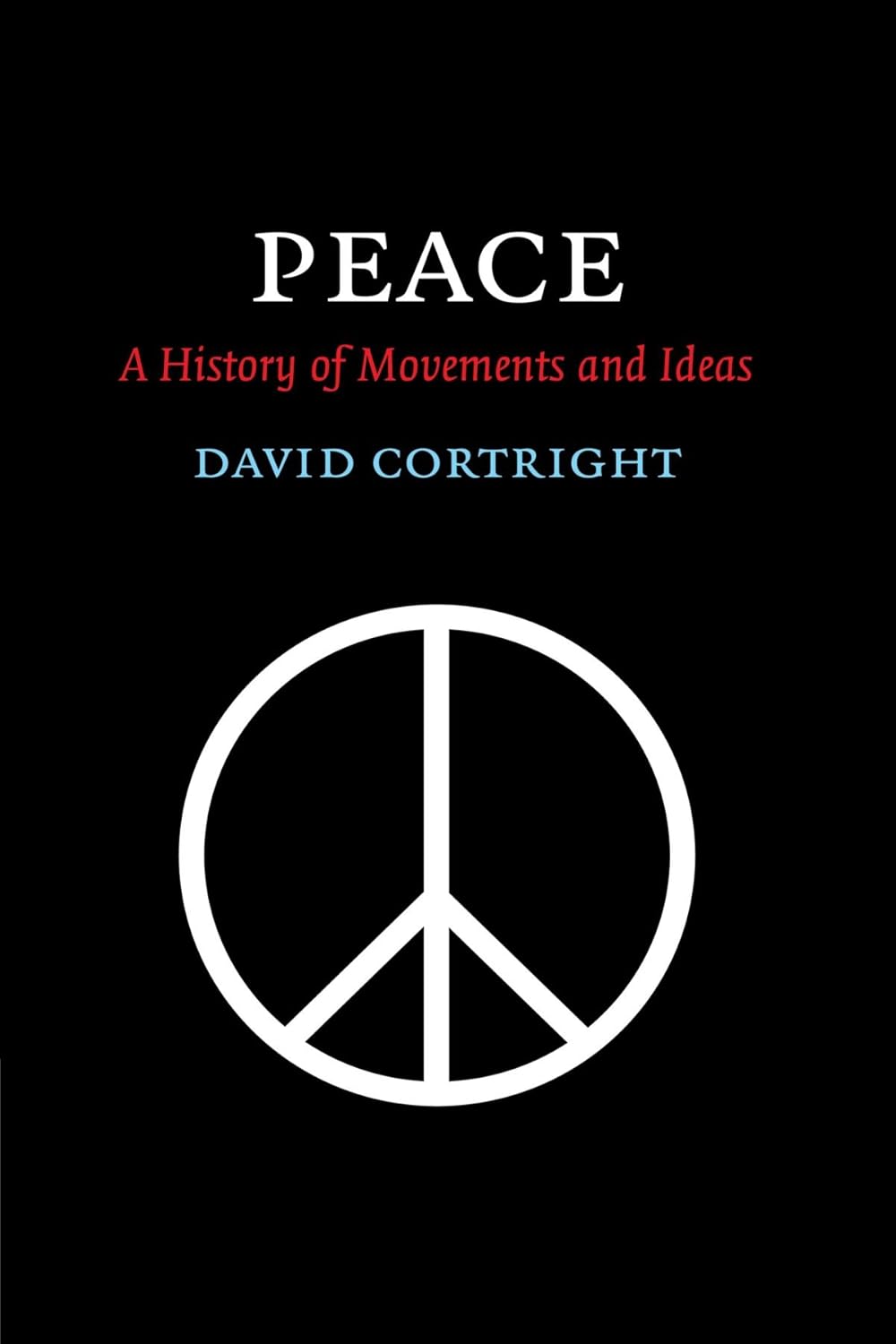
BOOK REVIEW: David Cortright, “Peace: A History of Movements and Ideas”

In Being a World Citizen, Book Review, Conflict Resolution, Current Events, Europe, NGOs, Peacebuilding, Solidarity, The Search for Peace, Track II on January 6, 2026 at 8:00 AM

By René Wadlow

David Cortright, Peace: A History of Movements and Ideas

Cambridge: Cambridge University Press, 2008, 376pp.

Peacemaking has always been an art rather than a science. As with painting, there is a pallet with a range of colors, and it is up to the artist to know how to combine these colors, sometimes in pure form and at other times mixed together to paint a picture, sometimes of a peaceful field and at other times a scene of revolt. David Cortright, Director of Policy Studies at Notre Dame’s Kroc Institute for International Peace Studies and an activist especially on nuclear arms issues, has set out a clear and up-to-date history of the ideas and movements that make up the colors on the peace pallet. While the book has been out for some time, I review it now as a first-rate overview of peace efforts and ideologies.

As with colors in art, there are a limited number of ideas which can be used, sometimes alone and sometimes in combinations. Likewise, there are a limited number of people in the peace brigades, and they are usually found in different campaigns, often the same people in different uniforms. Open conflicts provide us with test cases of how ideas concerning peace and conflict resolution can be put together, and we see how the peace brigades will form themselves to meet the challenge.

Cartright gives us a good overview of the development of nineteenth century peace societies. They were born in the USA and England from the success of collective action against slavery and the slave trade. If the age-old institution of slavery could be abolished by a combination of law, religious concern and changing public opinion, could not war be abolished in the same way? Religious-motivated action, work to influence public opinion, and legal restraints on war have continued to be the chief colors of the peace pallet.

The Hague Peace Conferences of 1899 and 1907 were milestones in the development of world law, of faith in the power of mandatory arbitration, and for the need of world courts. The Hague legal spirit was most prominently displayed slightly later by President Woodrow Wilson who had long espoused arbitration, the strengthening of international law and multilateral cooperation. The League of Nations and the United Nations are the embodiment of the Wilsonian vision. As H.G. Wells wrote in The Shape of Things to Come, “For a brief interval Wilson stood alone for humankind…in that brief interval there was a very extraordinary and significant wave of response to him throughout the earth.”

Wilson remains the ‘father figure’ of peace through law and multilateral governmental action just as Mahatma Gandhi does for nonviolent action. As Martin Luther King Jr. wrote, “Gandhi was probably the first person in history to lift the love ethic of Jesus above mere interaction between individuals to a powerful and effective social force on a large scale.”

Peace efforts require images for a complex set of ideas, and Wilson and Gandhi provide that image of the heroes of peace. Wilson and Gandhi represent the two steady sources of inspiration for peace workers — those working for the rule of law and human rights and those working to translate religious insights into political action. It is not always easy to get the two traditions to work together.

As Cortright notes, “In May 1999, nearly 10,000 peace advocates from around the world gathered in Holland for the Hague Appeal for Peace, one of the largest citizen peace conferences in history…The 1999 Hague Appeal was intended to launch a new era of citizen-initiated peacemaking. As preparations for the conference took place, however, NATO forces launched a bombing campaign against Serbia to force its withdrawal from Kosovo. While the official conference proceedings unfolded, hundreds of activists gathered in basement conference rooms for impromptu sessions to debate the pros and cons of NATO intervention. It was a heated discussion in which colleagues who had worked together for disarmament in the 1980s found themselves on opposite sides of the question of intervention in Kosovo”.

Today, as the conflicts in Syria and Iraq, as well as with the Islamic State (ISIS) terrorist group, grow in intensity and spill over to influence Turkey and Lebanon, we face many of the same issues that faced peace workers in the conflicts of former Yugoslavia: what are the sources of legitimate government and when does a government cease to be legitimate? Is there really a ‘duty to protect’ and when does this duty become only a cover for power politics as usual? How do peace workers act in “far-away places” in which both legal and moral issues are not clear.

Peace remains a painting in process; the colors are often the same, the shapes painted change. David Cortright has given us a good history, but there are no ‘how to’ guides for action.

Prof. René Wadlow is President of the Association of World Citizens.

RECENSION (BOOK REVIEW IN FRENCH) : Ghita El Khyari, «La Négociatrice»

In Being a World Citizen, Book Review, Conflict Resolution, Current Events, Middle East & North Africa, NGOs, Peacebuilding, Solidarity, Syria, The Search for Peace, Track II, UKRAINE, United Nations on January 5, 2026 at 8:00 AM

Par Bernard J. Henry

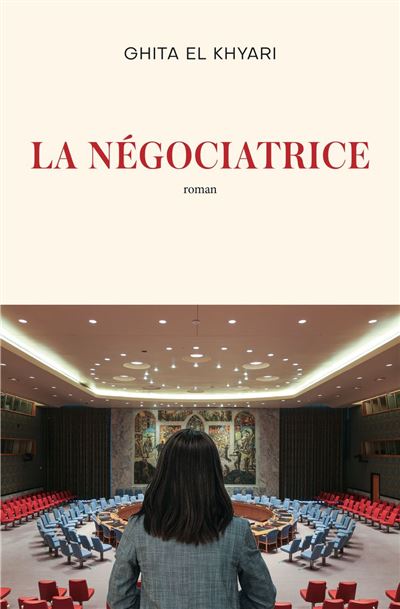
Ghita el Khyari, La Négociatrice.
Publishdrive Incorporated, 2025, 267 pp.

Peut-il y avoir pire manière de commencer une recension qu’en jugeant le livre dont l’on va parler rien qu’à sa couverture ? Non, bien entendu. Alors, autant faire le contraire et ne pas se gêner. Quand on tombe sur un livre comme La Négociatrice, ce n’est pas seulement le principe qui le commande mais, plus encore, le besoin impérieux de prévenir la lectrice ou le lecteur de l’erreur terrible qu’elle ou il commettrait en s’arrêtant à ce que laisse penser sa couverture. Et pourtant … 

Dès l’abord, le ton est donné : une jeune femme brune fait face à la salle vide du Conseil de Sécurité des Nations Unies, comme se demandant que faire lorsque les représentants permanents des Etats membres seront là, eux dont le vote – ou le veto – est pour tout projet onusien une question de vie ou de mort. La Négociatrice, c’est donc potentiellement L’Interprète de Sydney Pollack, incarnée par Nicole Kidman, ou Keira Knightley dans Official Secrets de Gavin Hood en 2019, traductrice confrontée à un dilemme à la Mordechai Vanunu en ce début d’année 2003 où Etats-Unis et Grande-Bretagne s’apprêtent à attaquer l’Irak de Saddam Hussein sous prétexte de la détention par le pays d’armes nucléaires prohibées. Mais, justement, voilà pourquoi il ne faut jamais juger un livre à sa couverture.

Non, La Négociatrice n’est pas film d’espionnage sous forme de roman. Dans une uchronie, puisqu’il s’agit de la Syrie sous les Assad qui n’existe plus depuis le 8 décembre 2024 et la libération aussi inattendue qu’inespérée du pays, il va être question d’ouvrir enfin une fenêtre pour la réconciliation nationale. Et La Négociatrice, c’est Alya Nasser, fonctionnaire des Nations Unies que le communiqué officiel annonçant sa nomination présente ainsi :

«Madame Nasser apporte à ce poste des années d’expérience politique et diplomatique, pour avoir servi aussi bien au sein de son gouvernement qu’à l’ONU.

Madame Nasser a occupé plusieurs fonctions au sein de l’organisation, ayant notamment été Coordonnatrice spéciale pour le Liban et Représentante adjointe du Programme des Nations Unies pour le Développement en Afghanistan.

Madame Nasser est née à Paris en 1976. Elle est diplômée de Sciences Po Paris et de l’université de Harvard».

Une annonce plus vraie que les vraies, et ce n’est pas hasard. L’auteure, Ghita el Khyari, n’est pas juste une romancière bien informée ou qui aura avant d’écrire, selon l’expression consacrée depuis la pandémie de Covid-19, «fait ses recherches». Ce milieu de la diplomatie et des relations internationales, c’est le sien depuis vingt ans. Après avoir effectué la majeure partie de sa carrière à l’ONU et servi dans de nombreux pays, elle a voulu prendre une pause et quitté son poste pour revenir à des envies jusqu’alors délaissées, à commencer par l’écriture. Et s’il est vrai que le fruit ne tombe jamais loin de l’arbre, alors La Négociatrice est le pur fruit de son arbre, ni trop sucré comme du Sidney Sheldon, ni trop salé comme du John Le Carré, le récit pur et vrai, bien que fictif, d’une mission diplomatique risquée.

Alya Nasser n’est jamais vraiment menacée par les uns ou les autres dans sa mission en Syrie, sa pire ennemie s’avérant être l’invasion de l’Ukraine par la Russie en février 2022 qui éloigne le regard de la communauté internationale de la Syrie exsangue. Risquée, la mission ne l’est pourtant pas moins, les dangers venant de ce que le grand public ne peut pas percevoir dans ce milieu diplomatique international, ce milieu qui, comme le souligne l’auteure, reste encore méconnu et qu’elle entend nous présenter, ainsi que les personnes qui l’habitent.

Trop souvent encore, ce milieu n’existe souvent dans l’esprit du grand public que par la caricature, celle d’un milieu fermé de privilégiés où l’on gagne des fortunes en se faisant plaisir. Je me demande quant à moi quel genre de plaisir a pu éprouver Sergio Vieira de Mello, l’Emissaire spécial du Secrétaire général des Nations Unies en Irak, également Haut Commissaire des Nations Unies pour les Droits Humains, lorsqu’il a été assassiné lors de l’attentat terroriste contre l’Hôtel Canal à Bagdad du 19 août 2003, ou bien quelle pensée il a eu, en se voyant mourir, pour ce qu’il ne pourrait pas faire de son salaire à la fin du mois. Les clichés ont la vie dure, et l’on aime toujours tant soi-même haïr ce que l’on rêverait dans le même temps de voir ses enfants devenir, soutien financier assuré pour ses vieux jours à la clé.

Alya Nasser n’est pas une demi-déesse invincible, pas plus qu’une pauvre victime d’un système où, même dans le monde de l’après-MeToo, les femmes peinent encore à percer le plafond de verre et, quand bien même elles y parviennent comme Francesca Albanese, Représentante spéciale des Nations Unies sur les Territoires palestiniens, en paient le prix fort – au sens strict du terme.

Passionnée par son travail, idéaliste libérale – au sens de l’école du même nom des relations internationales, en bonne onusienne qu’elle est – Alya Nasser veut arriver à ses fins, quitte à perdre de vue les moyens au profit de la fin. Non par arrivisme, mais parce que le récit la trouve alors qu’elle a déjà commis l’irréparable. Elle s’est oubliée.

Alya a oublié qu’elle était une femme, dans un milieu professionnel où redescend encore trop lentement la testostérone. Alors même qu’un épisode MeToo impliquant son supérieur direct lui-même vient brutalement le lui rappeler, elle doit affronter l’idée qu’elle n’a pas su gérer les liens féminins les plus importants de son existence, avec sa mère qui n’en peut plus de souffrir en silence dans son couple, sa meilleure amie et ancienne camarade de fac qui ne parvient plus à réconcilier carrière professionnelle et vie de famille, mais aussi, plus tragiquement encore, avec sa petite nièce qu’elle adore sans pourtant l’avoir jamais trop vue, cette petite fille qui lui met devant les yeux l’enfant qu’elle, en revanche, ne pourra jamais avoir, celui que la biologie lui refuse et ne pourrait venir que par adoption.

Au masculin, Alya affronte aussi Gabriel, son ancien compagnon qu’elle croise ici et là, qui l’abandonne à son sort dans un aéroport italien puis refait surface un jour en lui proposant d’adopter ensemble un enfant – trop peu, trop tard. Et encore, il n’est pas pour elle l’homme le plus dangereux. Celui-là s’appelle Alexeï, jeune diplomate russe aisé, charmeur, qui lui apparaît d’abord tel un démon venu torpiller sa mission – pour protéger le régime Assad affidé de Moscou – puis s’installe dans sa vie comme un ange interdit, dans une relation amoureuse intermittente et contre-nature à laquelle se raccroche une Alya épuisée de solitude, plombée par un alcoolisme qui va et vient, mais voulant mener à bien sa mission au risque même de laisser sans le voir son désarroi prendre la barre.

Sans rien divulgâcher, pas de happy end dans La Négociatrice, mais un petit coup de main de la chance, ou d’autre chose pour qui y croit, qui évite à Alya le pire sans pour autant lui offrir le meilleur. Disons, peut-être pas tout de suite. Et toujours, tout au long de la lecture du roman, ce désir de prendre la main d’Alya, de lui offrir une épaule où se blottir, de lui dire combien elle se trompe et de la ramener à la raison, sans certitude d’y parvenir.

A l’Association of World Citizens (AWC) également, la négociation joue un rôle central, comme tout ce qui forme le peacebuilding. Bien entendu, les organisations non-gouvernementales (ONG) comme la nôtre ne sont jamais sujettes aux mêmes attentes que l’ONU, la Ligue arabe ou quelque autre organisme interétatique que ce soit. Désormais majoritaires – j’ai moi-même largement œuvré pour cela – parmi nos Officiers et Représentants, les femmes servant dans nos rangs ne connaissent pas les pressions professionnelles et familiales d’une Alya, même si le milieu de la diplomatie internationale n’est pas moins clément envers les opératrices non-gouvernementales pour lesquelles être une femme demeure, comme dans tant d’autres milieux, une quasi-disqualification d’office.

J’hésite à leur demander à toutes de lire La Négociatrice, en particulier aux plus jeunes d’entre elles qui rêvent peut-être un jour de franchir le pas entre notre ONG et la diplomatie (inter)gouvernementale. J’hésite parce que, comme le vit Alya dans le récit, la destination est pour moi claire mais le trajet, tout à coup, plus tellement. A moins que, bien sûr, la vraie raison n’en soit que seule la vérité blesse, et qu’un ouvrage que l’on hésite à partager soit précisément celui que l’on doit mettre entre toutes les mains, surtout celles de jeunes femmes que l’on prend le risque de dissuader, car, tout à propos, ce risque marche avec l’espoir – et la chance – de leur donner au contraire l’envie d’affronter des obstacles qui, là où une diplomate uchronique trébuche, seront pour elles les pierres à collectionner quand on les leur jette car c’est le début d’un piédestal, comme le disait Hector Berlioz.

Je pense donc que je vais le leur recommander. Par chance, il convient à tous les budgets.

Bernard J. Henry est Officier des Relations Extérieures de l’Association of World Citizens.
BOOK REVIEW: Camilla Reeve (Ed.) & Esme Edwards (Ed.), “So Many Unavoidable Journeys”

In Being a World Citizen, Book Review, Current Events, Human Rights, Migration, NGOs, Refugees, Solidarity, The Search for Peace, Track II, United Nations on January 5, 2026 at 8:00 AM

By René Wadlow

Camilla Reeve (Ed.) & Esme Edwards (Ed.), So Many Unavoidable Journeys.
London: Palewell Press, 2025, 125pp.

This collection devoted to the stories of migrants is “dedicated to all those who facing impossible conditions in their home, or ejected from it by hostile action, dare to seek a new place to live.” To become a migrant is never an easy choice but a profoundly sad and complex one. Migration becomes a central focus of one’s life story.

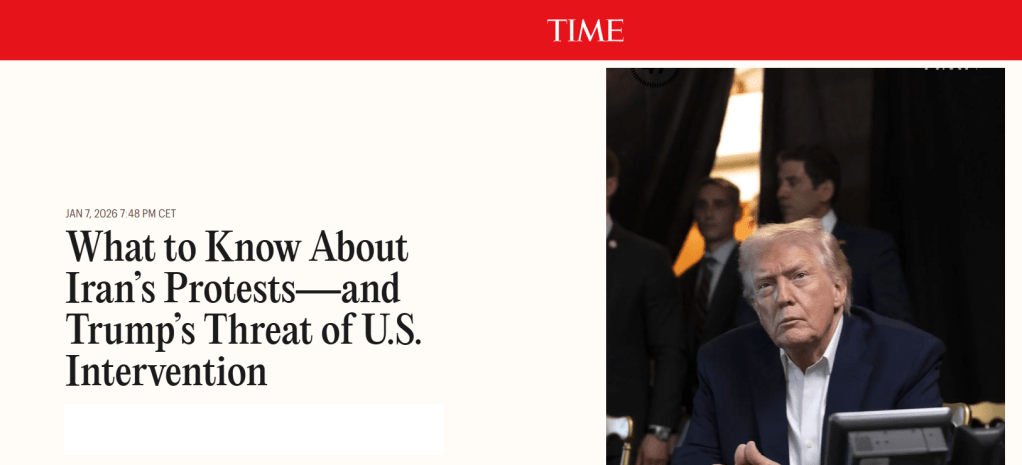
Some of the life stories cover relatively known ground. There is an account of five women who had been jailed in Evin Prison in Iran. The repression in Iran, especially of women, has become known both in Iran and outside. The repression has led to a wide-spread protest movement in Iran, known by its motto “Woman-Life-Freedom.”

Other situations are less known. There was the repression of ethnic minorities in Bhutan in the early 1990s with persons fleeing, or being deported, to Nepal which was also in turmoil. The Association of World Citizens had raised the Bhutan situation in the United Nations (UN) human rights bodies in Geneva. Pingala Dhital, who writes on the Bhutan-Nepal case, stresses the positive actions of the staff of the Geneva-based International Organization for Migration and the UN High Commissioner for Refugees.

Palewell Press is based in London. Thus, there are moving accounts of migrants from Iraq and Palestine, adapting to London life and the British structure of education.

As the South African Jan Christian Smuts wrote at the end of the First World War, “There is no doubt that Mankind is once more on the move. The very foundations have been shakened and loosened, and things are again fluid. The tents have been struck and the great caravan of Humanity is once more on the march.” Migration, chosen or forced by violence or the consequences of climate change has become a prime focus for governments and Nongovernmental Organizations. This collection catches some of the spirit of these transformations.

Prof. René Wadlow is President of the Association of World Citizens.
Thailand-Cambodia: Urgent Ceasefire Needed

In Asia, Being a World Citizen, Conflict Resolution, Cultural Bridges, Current Events, International Justice, NGOs, Nonviolence, Peacebuilding, Solidarity, Spirituality, The Search for Peace, Track II, United Nations, United States, World Law on December 10, 2025 at 7:00 PM

By René Wadlow

The Association of World Citizens (AWC) calls for an urgent ceasefire in the renewed armed conflict between Thailand and Cambodia which flared up again on December 8, 2025 with the Thai military launching airstrikes on Cambodia.

A ceasefire had been agreed to in July 2025 in negotiations led by U.S. mediators. There is a 500-mile frontier between the two countries. The frontier was drawn when Cambodia was under French rule. Thailand contests the frontier lines.

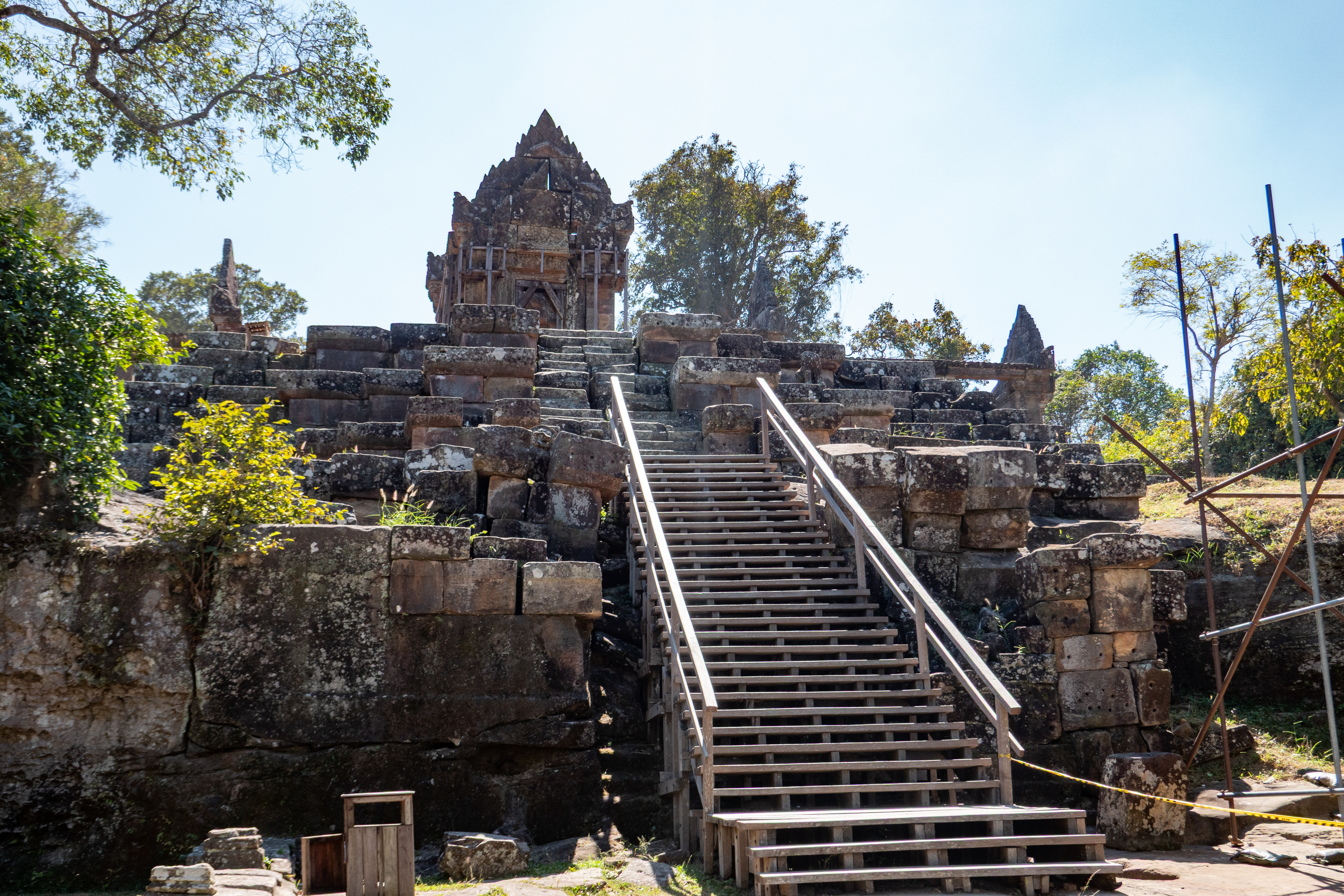
Prasat Preah Vihear, the temple claimed by both Thailand and Cambodia (C) PsamatheM

The decades-long dispute has already displaced many persons on both sides of the frontier. The frontier area on both sides has a large number of landmines planted making the whole area unsafe. The disputed area contains a Buddhist temple which should be a symbol of peace and harmony but is now a factor in the dispute.

The AWC stresses that urgent measures of conflict resolution should be undertaken. Nongovernmental Organizations may be able to play a positive role in such efforts. Contacts should be undertaken now.

Prof. René Wadlow is President of the Association of World Citizens.

Renewed Appeal for Mediation in Sudan Civil War

In Africa, Being a World Citizen, Conflict Resolution, Current Events, Human Rights, Humanitarian Law, International Justice, NGOs, Peacebuilding, Solidarity, Sudan, The Search for Peace, Track II, United Nations, War Crimes, World Law on November 3, 2025 at 7:45 AM

By René Wadlow

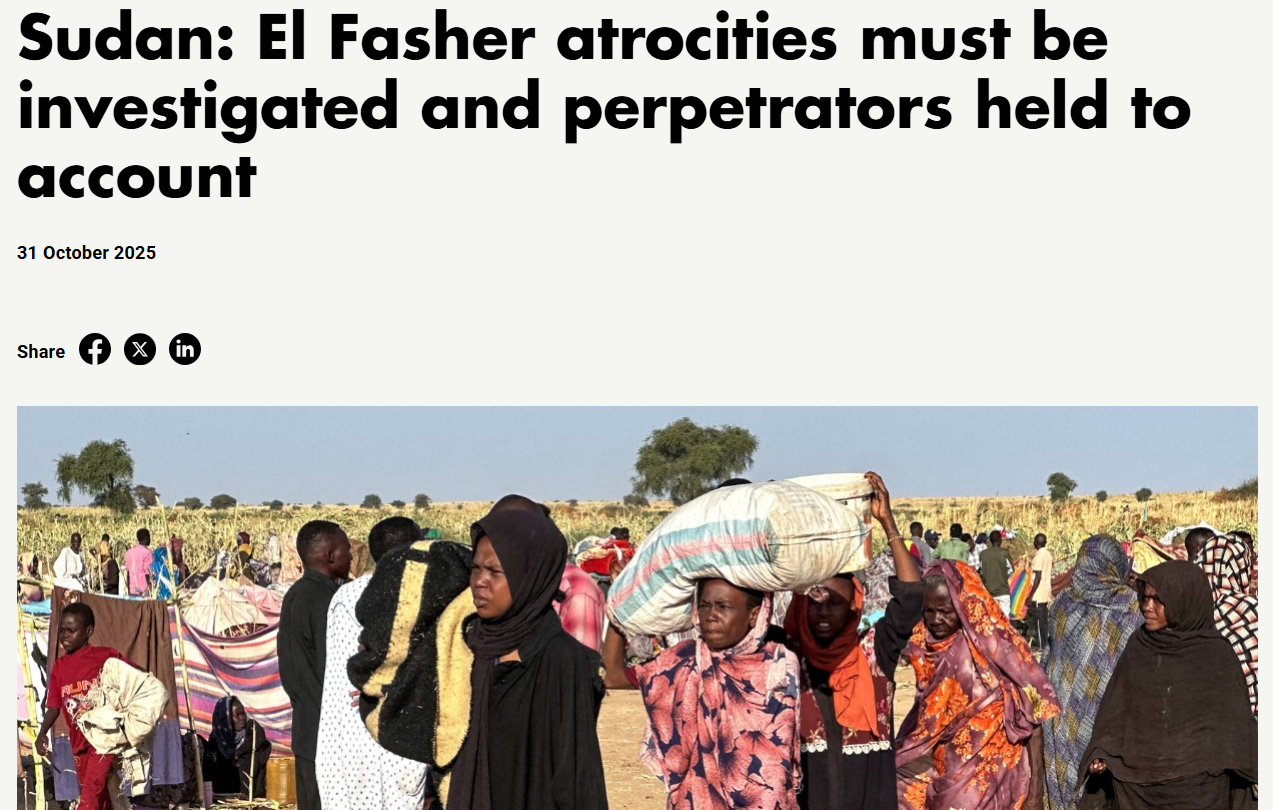
In response to the reports of mass killings earlier this month, including persons in hospital beds in El-Fasher, Sudan, by members of the Rapid Support Forces (RSF), the Association of World Citizens (AWC) has called for strong UN efforts to mediate an end to the civil war in Sudan.

A civil war has gone on since April 2023 in Sudan between the Rapid Support Forces led by General Mohamed Hamdan, known by his battle name of Hemedti, and the Sudanese Armed Forces then led by General Abdul Fattah al-Burham. Each of the two generals has created local militias which rob, torture, rape, and create conditions of disorder.  Many of these militias use child soldiers in violation of UN treaties on the protection of children.  The civil war has led to some 150,000 persons killed and 10 million displaced.

The capture of El-Fasher came after more than 500 days of siege. Already on June 13, 2024, the UN Security Council called for an end to the siege of El-Fasher, capital of the North Darfur Province of Sudan. The Council requested all parties to enable lifesaving aid to enter El-Fasher, the center of the most vicious fighting in the province. Unfortunately, the Security Council appeal fell on deaf ears.

The AWC does not underestimate the difficulties of mediation to end the Sudan Civil War.  There has been armed conflict in Sudan since the eve of independence in the mid-1950s. These conflicts were organized along ethnic and religious lines. The conflicts led to the creation of a new state, South Sudan, where tensions are also strong.

Mediation efforts should be carried out under UN responsibility. However, Nongovernmental Organizations (NGOs) may play a positive role.

Mediation is about men and women, and the attitudes that make for conflict between them. The attempt to bring about a change in understanding will include continual interpretation of what the others are saying, explanations of their attitudes, and exposure of false rumors – roles which NGOs can play.

Prof. René Wadlow is President of the Association of World Citizens.

The Impact of Nonviolent Accompaniment

In Being a World Citizen, Conflict Resolution, Human Rights, Latin America, Middle East & North Africa, NGOs, Nonviolence, Peacebuilding, Solidarity, The Search for Peace, United Nations on October 21, 2025 at 7:00 AM

By René Wadlow

Third-party nonviolent intervention is the physical presence of a third party into an area of conflict in such a way as to reduce the level of violence. Accompaniment of persons in danger was developed as a technique in the early 1980s by Peace Brigades International (PBI), which I represented in Geneva, especially in contacts with persons at the United Nations. PBI sent volunteers, mostly from the USA, to El Salvador and Guatemala.

Later, in 1989, during a wave of killing of lawyers in Sri Lanka, the Sri Lankan bar association invited PBI to send a team there to accompany lawyers. The protective accompaniment worked so well that PBI was asked to extend its work to labor organizers and journalists, also under danger.

Similar forms of protective accompaniment have been organized by two largely Christian organizations to work with Palestinians. One is the World Council of Churches, based in Geneva, which began a program in 2002. Since then, some 2,000 volunteers from 21 countries have spent three months in Israel to accompany children going to school or persons passing through multiple check points.

The second organization is the Christian Peacemaker Teams (CPT), closely related to the Mennonite church in Canada and the USA, working in the Hebron area since 1995, a mixed Palestinian and Israeli community. When active, they have a red hat which is a clear identification.

CPT have also worked in other parts of Israel with mixed communities. Allies from other countries send messages and emails to Israeli officials in support of the Teams’ efforts. The team uses videos to highlight tense situations, often associated with house demolitions. The Peacemaker Teams have developed good working relations with Israeli human rights organizations such as Rabbis for Human Rights. The team members are often arrested by the Israeli police and spend time in Israeli jails with prisoners who are not used to nonviolent activists.

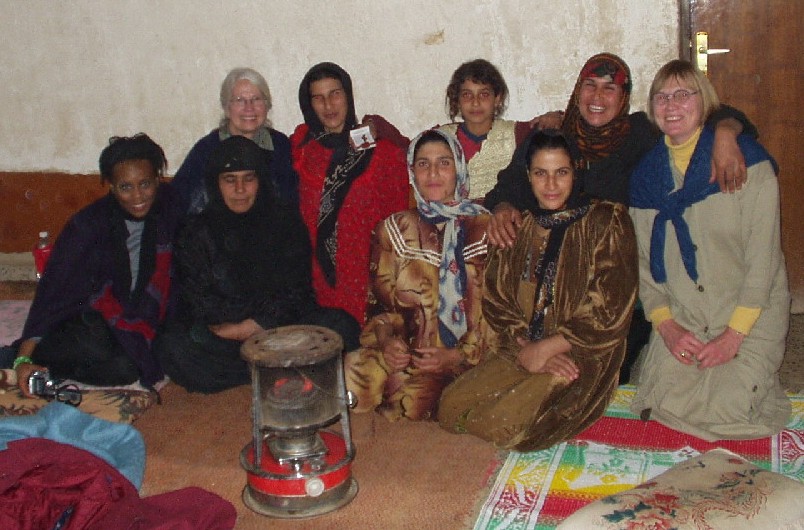
Photograph of Abu Hishma village and residents by the Christian Peacemaker Teams (C) CPT

As one Christian Peacemaker, Wendy Lehman, wrote, “Intellectually, I knew there were good reasons to risk arrest when doing nonviolent direct action. Many activists view it as an effective way to draw attention to injustice. Others argue that if you are doing what you believe is right – defending someone from being beaten by soldiers, participating in a public vigil, or standing up for a rightful landowner – arrest may occur ‘organically’ out of the situation.”

Developing the skills needed for nonviolent accompaniment is crucial. Volunteers need awareness and skills to be able to act judiciously and have an impact. They must be able to observe, evaluate and make decisions. They can be facilitators – one who helps a group reach a common decision, often with consensus decision-making and participatory management.

To keep a clear focused attention in the middle of violence, hate and confusion requires inner calm. There are techniques, often developed in spiritual training, to be able to stay calm and focused in times of confusion. There are also ways of developing an inner vitality so that one’s vital energy is not drained away by the presence of hostile persons. Such techniques are usually related to increasing the flow of subtle energies within the body, techniques taught in yoga, in certain breathing exercises, and in meditation. In a more secular spirit, the International Committee of the Red Cross has been working on stress reduction techniques for Red Cross workers in tension situations.

The current situation in Israel, while there are positive currents, is one of continuing tensions. Thus, there will be a need for nonviolent accompaniment.

Prof. René Wadlow is President of the Association of World Citizens.

Growing Concern on U.S.-Venezuela Tensions

In Being a World Citizen, Conflict Resolution, Current Events, Latin America, NGOs, Peacebuilding, Solidarity, The Search for Peace, Track II on October 19, 2025 at 7:00 AM

By René Wadlow

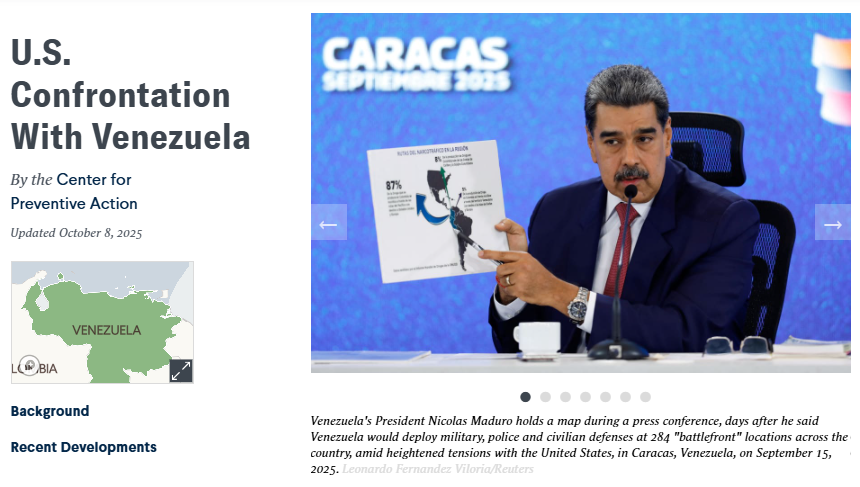
On October 15, 2025, the Foreign Ministers of the Non-Aligned Movement issued a statement of solidarity with Venezuela at their meeting in Uganda, the current chair of the Non-Aligned Movement. Voices of alarm, especially that of the Venezuelan External Relations Minister Yvan Gil, have also been heard at the United Nations (UN) General Assembly currently in session in New York.

Tensions between the United States (U.S.) administration led by Donald Trump and the Venezuelan government led by Nicolas Maduro have been growing. U.S. war ships have moved closer to the coast of Venezuela where they have sunk small speed boats suspected of transporting drugs. 27 people on these small speed boats have been killed despite growing questions over the legality of striking these boats under international law. Under the international rules that govern armed conflict, you cannot target civilians unless they are actually engaged in hostilities against you.

In addition to the conflict on the Caribbean, President Trump publicly stated that the Central Intelligence Agency (CIA) has been authorized to carry out covert operations within Venezuela. As the CIA operates within many countries without public authorization, the publicity concerning CIA efforts within Venezuela increases the tensions. The awarding of the 2025 Nobel Peace Prize to Ms. Maria Corina Machado, a 58-year-old Venezuelan opposition leader living in Venezuela but in hiding, has drawn wide public attention to Venezuela.

The Venezuelan government which was already a repressive regime as concerns human rights, on September 30, 2025 proclaimed what in practice is a “state of emergency” for the first time, giving the government very broad powers to act. There is increasing discussion on whether the U.S. government is planning for regime change in Venezuela.

The Association of World Citizens believes that urgent peacebuilding measures must be undertaken to reduce tensions between the two countries so that peaceful relations are restored. There can be Track Two, informal discussions organized by Nongovernmental Organizations to see on what issues there can be useful negotiations. There may be possibilities for mediation on the part of Latin American governments so that peaceful and stable socioeconomic structures can be developed.

Time for positive action is now before greater tensions develop.

Prof. René Wadlow is President of the Association of World Citizens.

Crucial Middle East Negotiations: A Ray of Hope at Last?

In Being a World Citizen, Conflict Resolution, Current Events, Humanitarian Law, Middle East & North Africa, NGOs, Nonviolence, Peacebuilding, Solidarity, The Search for Peace, Track II, United Nations, United States, War Crimes, World Law on October 13, 2025 at 7:00 AM

By René Wadlow

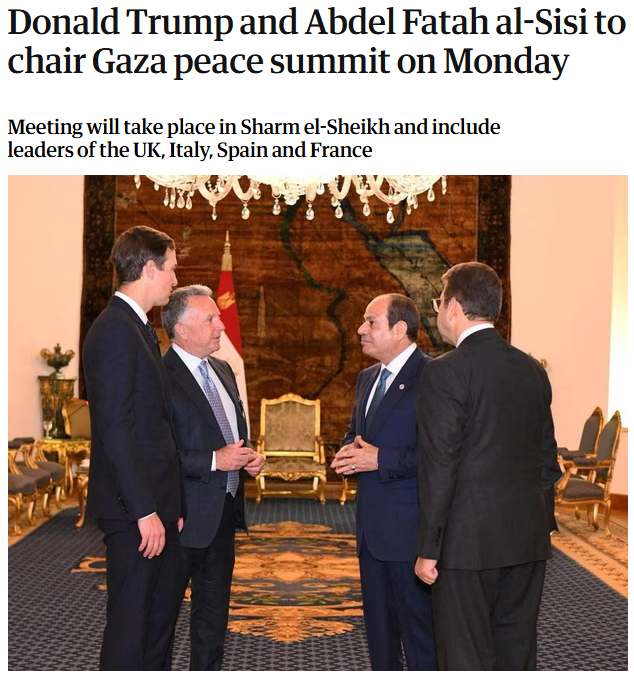
Close attention needs to be focused on the deadly and destructive conflict in the Gaza Strip and the multi-party negotiations being held in the Egyptian city of Sharm El-Sheikh. The elite of Middle East diplomacy are in Sharm El-Sheikh these days, including Steve Withoff and Jared Kushner from the USA, the Israeli Strategic Affairs Minister Ron Derner, Khalil Al-Hayya, the head of the Hamas negotiation team, and Mohammed Al-Hindi of the Palestinian Islamic Jihad which holds some of the 20 living Israeli hostages.

The exchange of Israeli hostages – 20 living and the bodies of 28 who have died – and some 2,000 Palestinian prisoners held in Israeli jails and army camps is the first order of business. The exchange should take place on Monday, October 13. President Donald Trump should go first to Israel and then Egypt on Monday to start multi-party negotiations with implications for the wider Middle East.

The negotiations are being held against a politically unstable situation in Israel and the USA where in both there are deep divisions among political parties. The armed conflict in the Gaza Strip could start again with “We tried negotiations and they failed” as a battle theme.

As the representatives of UN Consultative Status NGO, we must see how we can build on these advances toward a stable peace. There is much at stake, and we must be ready to take action.

Prof. René Wadlow is President of the Association of World Citizens.

Gaza Strip Peace Plan: Making Peace Without Peacemakers?

In Being a World Citizen, Conflict Resolution, Current Events, Humanitarian Law, Middle East & North Africa, NGOs, Nonviolence, Peacebuilding, Solidarity, The Search for Peace, Track II, United Nations, United States, World Law on October 6, 2025 at 7:00 PM

By René Wadlow

(An earlier version of this piece was published on Transcend Media Service.)

On September 29, 2025, United States (U.S.) President Donald Trump presented his 20-point Peace Plan for the Gaza Strip which sets out a ceasefire, a release of hostages held by the Palestinian Islamic Resistance Movement (Hamas) and its armed allies, a dismantling of Hamas’ military structures, the withdrawal of Israeli troops, and the creation of an international “Board of Peace” to supervise the administration of the Gaza Strip with President Trump as chair and former British Prime Minister Tony Blair as the chief administrator. Relief supplies to meet human needs would be facilitated. The plan concerns only the Gaza Strip and does not deal directly with the West Bank where tensions are strong.

The plan has been presented to the Israeli Prime Minister, Benyamin Netanyahu who was in Washington, D.C. and to Arab leaders who were at the United Nations in New York. The plan has been given to Hamas’ leaders through intermediaries, but Hamas’ leadership has been severely weakened by deaths. Thus, it is not clear how decision-making will be done by Hamas. The plan has also been presented to the Palestinian Authority (PA) in Ramallah, led by Mahmoud Abbas, but the PA would play no part in the Gaza Strip’s future. The plan is being widely discussed, but no official decisions have been announced.

The Gaza Peace Plan has some of the approach of the Transcend proposals (1) with, in addition, the possibility of violence if the Gaza Peace Plan is not carried out. Threats of violence are not among Transcend’s tools. One of the distinctive aspects of Transcend and the broader peace research movement is to present specific proposals for transcending current conflicts through an analysis of the roots of the conflict, the dangers if the conflict continues as it is going, and then the measures to take. (2) The Israeli-Palestinian conflict is one which presents dangers to the whole region if creative actions are not taken very soon. We must act now. We cannot wait for President Trump to do it for us.

Notes:

(1) Transcend Media Service, “The Time Has Arrived for a Comprehensive Middle East Peace”, Jeffrey D. Sachs and Sybil Fares, July 7, 2025.
(2) See:
Johan Galtung, The True Worlds (New York/The Free Press/1980/469pp)
John Paul Lederach, Preparing for Peace (Syracuse, NY/Syracuse University Press/1995/133pp)

Prof. René Wadlow is President of the Association of World Citizens.

NGO Cooperation for a Stronger United Nations

In Being a World Citizen, Conflict Resolution, Current Events, NGOs, Peacebuilding, Solidarity, The Search for Peace, Track II, United Nations, World Law on September 20, 2025 at 12:00 PM

By René Wadlow

As the 2025 United Nations (UN) General Assembly continues, there is a need for a greater input of Nongovernmental Organizations (NGOs). There are some 6,400 NGOs in consultative status with the UN. Many, however, have consultative status with the UN only to strengthen their standing at the national level. The number of NGOs which engage actively in the UN procedures is much smaller. Some deal with specific UN Specialized Agencies such as UNESCO, the ILO, and the FAO.

Others, such as the Association of World Citizens (AWC), are active on a wider range of issues, especially those with representatives active at the UN in New York and Geneva. It is among this smaller number of NGOs that active measures for cooperation need to be undertaken.

A leading role of the UN since its establishment has been to lay the foundations for a culture of peace with respect for human rights, and economic and social development. There needs to be innovation, responses to new challenges, and a role for intellectual leadership to give a sense of direction. There should be forged from the varied, often contradictory views of governments, a sense of common purpose.

NGOs can help to provide a sense of direction and ways for the pursuit of common interests. The UN must look outward and work with renewed vigor. This is also true for NGOs. Cooperation among NGOs has been growing. Now, faced with strong challenges in the world society, efforts for NGO cooperation are a vital need.

Prof. René Wadlow is President of the Association of World Citizens.