The Official Blog of the

Archive for the ‘NGOs’ Category

Thailand-Cambodia: Urgent Ceasefire Needed

In Asia, Being a World Citizen, Conflict Resolution, Cultural Bridges, Current Events, International Justice, NGOs, Nonviolence, Peacebuilding, Solidarity, Spirituality, The Search for Peace, Track II, United Nations, United States, World Law on December 10, 2025 at 7:00 PM

By René Wadlow

The Association of World Citizens (AWC) calls for an urgent ceasefire in the renewed armed conflict between Thailand and Cambodia which flared up again on December 8, 2025 with the Thai military launching airstrikes on Cambodia.

A ceasefire had been agreed to in July 2025 in negotiations led by U.S. mediators. There is a 500-mile frontier between the two countries. The frontier was drawn when Cambodia was under French rule. Thailand contests the frontier lines.

Prasat Preah Vihear, the temple claimed by both Thailand and Cambodia (C) PsamatheM

The decades-long dispute has already displaced many persons on both sides of the frontier. The frontier area on both sides has a large number of landmines planted making the whole area unsafe. The disputed area contains a Buddhist temple which should be a symbol of peace and harmony but is now a factor in the dispute.

The AWC stresses that urgent measures of conflict resolution should be undertaken. Nongovernmental Organizations may be able to play a positive role in such efforts. Contacts should be undertaken now.

Prof. René Wadlow is President of the Association of World Citizens.
Renewed Appeal for Mediation in Sudan Civil War

In Africa, Being a World Citizen, Conflict Resolution, Current Events, Human Rights, Humanitarian Law, International Justice, NGOs, Peacebuilding, Solidarity, Sudan, The Search for Peace, Track II, United Nations, War Crimes, World Law on November 3, 2025 at 7:45 AM

By René Wadlow

In response to the reports of mass killings earlier this month, including persons in hospital beds in El-Fasher, Sudan, by members of the Rapid Support Forces (RSF), the Association of World Citizens (AWC) has called for strong UN efforts to mediate an end to the civil war in Sudan.

A civil war has gone on since April 2023 in Sudan between the Rapid Support Forces led by General Mohamed Hamdan, known by his battle name of Hemedti, and the Sudanese Armed Forces then led by General Abdul Fattah al-Burham. Each of the two generals has created local militias which rob, torture, rape, and create conditions of disorder.  Many of these militias use child soldiers in violation of UN treaties on the protection of children.  The civil war has led to some 150,000 persons killed and 10 million displaced.

The capture of El-Fasher came after more than 500 days of siege. Already on June 13, 2024, the UN Security Council called for an end to the siege of El-Fasher, capital of the North Darfur Province of Sudan. The Council requested all parties to enable lifesaving aid to enter El-Fasher, the center of the most vicious fighting in the province. Unfortunately, the Security Council appeal fell on deaf ears.

The AWC does not underestimate the difficulties of mediation to end the Sudan Civil War.  There has been armed conflict in Sudan since the eve of independence in the mid-1950s. These conflicts were organized along ethnic and religious lines. The conflicts led to the creation of a new state, South Sudan, where tensions are also strong.

Mediation efforts should be carried out under UN responsibility. However, Nongovernmental Organizations (NGOs) may play a positive role.

Mediation is about men and women, and the attitudes that make for conflict between them. The attempt to bring about a change in understanding will include continual interpretation of what the others are saying, explanations of their attitudes, and exposure of false rumors – roles which NGOs can play.

Prof. René Wadlow is President of the Association of World Citizens.
The Impact of Nonviolent Accompaniment

In Being a World Citizen, Conflict Resolution, Human Rights, Latin America, Middle East & North Africa, NGOs, Nonviolence, Peacebuilding, Solidarity, The Search for Peace, United Nations on October 21, 2025 at 7:00 AM

By René Wadlow

Third-party nonviolent intervention is the physical presence of a third party into an area of conflict in such a way as to reduce the level of violence. Accompaniment of persons in danger was developed as a technique in the early 1980s by Peace Brigades International (PBI), which I represented in Geneva, especially in contacts with persons at the United Nations. PBI sent volunteers, mostly from the USA, to El Salvador and Guatemala.

Later, in 1989, during a wave of killing of lawyers in Sri Lanka, the Sri Lankan bar association invited PBI to send a team there to accompany lawyers. The protective accompaniment worked so well that PBI was asked to extend its work to labor organizers and journalists, also under danger.

Similar forms of protective accompaniment have been organized by two largely Christian organizations to work with Palestinians. One is the World Council of Churches, based in Geneva, which began a program in 2002. Since then, some 2,000 volunteers from 21 countries have spent three months in Israel to accompany children going to school or persons passing through multiple check points.

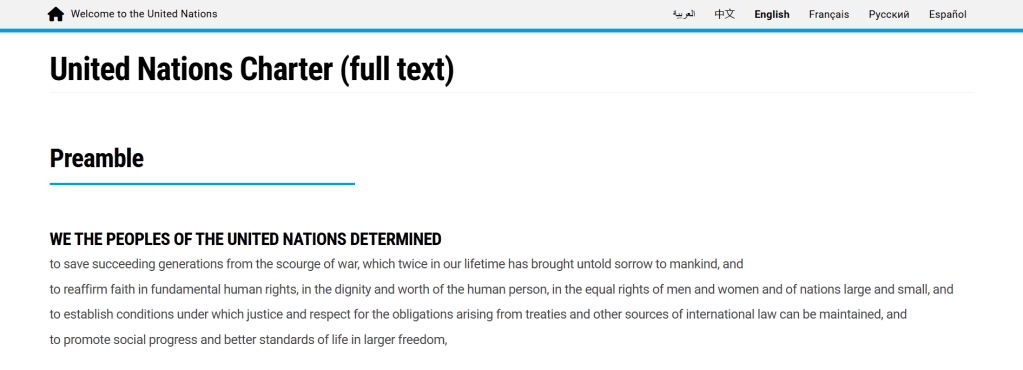
The second organization is the Christian Peacemaker Teams (CPT), closely related to the Mennonite church in Canada and the USA, working in the Hebron area since 1995, a mixed Palestinian and Israeli community. When active, they have a red hat which is a clear identification.

CPT have also worked in other parts of Israel with mixed communities. Allies from other countries send messages and emails to Israeli officials in support of the Teams’ efforts. The team uses videos to highlight tense situations, often associated with house demolitions. The Peacemaker Teams have developed good working relations with Israeli human rights organizations such as Rabbis for Human Rights. The team members are often arrested by the Israeli police and spend time in Israeli jails with prisoners who are not used to nonviolent activists.

Photograph of Abu Hishma village and residents by the Christian Peacemaker Teams (C) CPT

As one Christian Peacemaker, Wendy Lehman, wrote, “Intellectually, I knew there were good reasons to risk arrest when doing nonviolent direct action. Many activists view it as an effective way to draw attention to injustice. Others argue that if you are doing what you believe is right – defending someone from being beaten by soldiers, participating in a public vigil, or standing up for a rightful landowner – arrest may occur ‘organically’ out of the situation.”

Developing the skills needed for nonviolent accompaniment is crucial. Volunteers need awareness and skills to be able to act judiciously and have an impact. They must be able to observe, evaluate and make decisions. They can be facilitators – one who helps a group reach a common decision, often with consensus decision-making and participatory management.

To keep a clear focused attention in the middle of violence, hate and confusion requires inner calm. There are techniques, often developed in spiritual training, to be able to stay calm and focused in times of confusion. There are also ways of developing an inner vitality so that one’s vital energy is not drained away by the presence of hostile persons. Such techniques are usually related to increasing the flow of subtle energies within the body, techniques taught in yoga, in certain breathing exercises, and in meditation. In a more secular spirit, the International Committee of the Red Cross has been working on stress reduction techniques for Red Cross workers in tension situations.

The current situation in Israel, while there are positive currents, is one of continuing tensions. Thus, there will be a need for nonviolent accompaniment.

Prof. René Wadlow is President of the Association of World Citizens.
Growing Concern on U.S.-Venezuela Tensions

In Being a World Citizen, Conflict Resolution, Current Events, Latin America, NGOs, Peacebuilding, Solidarity, The Search for Peace, Track II on October 19, 2025 at 7:00 AM

By René Wadlow

On October 15, 2025, the Foreign Ministers of the Non-Aligned Movement issued a statement of solidarity with Venezuela at their meeting in Uganda, the current chair of the Non-Aligned Movement. Voices of alarm, especially that of the Venezuelan External Relations Minister Yvan Gil, have also been heard at the United Nations (UN) General Assembly currently in session in New York.

Tensions between the United States (U.S.) administration led by Donald Trump and the Venezuelan government led by Nicolas Maduro have been growing. U.S. war ships have moved closer to the coast of Venezuela where they have sunk small speed boats suspected of transporting drugs. 27 people on these small speed boats have been killed despite growing questions over the legality of striking these boats under international law. Under the international rules that govern armed conflict, you cannot target civilians unless they are actually engaged in hostilities against you.

In addition to the conflict on the Caribbean, President Trump publicly stated that the Central Intelligence Agency (CIA) has been authorized to carry out covert operations within Venezuela. As the CIA operates within many countries without public authorization, the publicity concerning CIA efforts within Venezuela increases the tensions. The awarding of the 2025 Nobel Peace Prize to Ms. Maria Corina Machado, a 58-year-old Venezuelan opposition leader living in Venezuela but in hiding, has drawn wide public attention to Venezuela.

The Venezuelan government which was already a repressive regime as concerns human rights, on September 30, 2025 proclaimed what in practice is a “state of emergency” for the first time, giving the government very broad powers to act. There is increasing discussion on whether the U.S. government is planning for regime change in Venezuela.

The Association of World Citizens believes that urgent peacebuilding measures must be undertaken to reduce tensions between the two countries so that peaceful relations are restored. There can be Track Two, informal discussions organized by Nongovernmental Organizations to see on what issues there can be useful negotiations. There may be possibilities for mediation on the part of Latin American governments so that peaceful and stable socioeconomic structures can be developed.

Time for positive action is now before greater tensions develop.

Prof. René Wadlow is President of the Association of World Citizens.
Crucial Middle East Negotiations: A Ray of Hope at Last?

In Being a World Citizen, Conflict Resolution, Current Events, Humanitarian Law, Middle East & North Africa, NGOs, Nonviolence, Peacebuilding, Solidarity, The Search for Peace, Track II, United Nations, United States, War Crimes, World Law on October 13, 2025 at 7:00 AM

By René Wadlow

Close attention needs to be focused on the deadly and destructive conflict in the Gaza Strip and the multi-party negotiations being held in the Egyptian city of Sharm El-Sheikh. The elite of Middle East diplomacy are in Sharm El-Sheikh these days, including Steve Withoff and Jared Kushner from the USA, the Israeli Strategic Affairs Minister Ron Derner, Khalil Al-Hayya, the head of the Hamas negotiation team, and Mohammed Al-Hindi of the Palestinian Islamic Jihad which holds some of the 20 living Israeli hostages.

The exchange of Israeli hostages – 20 living and the bodies of 28 who have died – and some 2,000 Palestinian prisoners held in Israeli jails and army camps is the first order of business. The exchange should take place on Monday, October 13. President Donald Trump should go first to Israel and then Egypt on Monday to start multi-party negotiations with implications for the wider Middle East.

The negotiations are being held against a politically unstable situation in Israel and the USA where in both there are deep divisions among political parties. The armed conflict in the Gaza Strip could start again with “We tried negotiations and they failed” as a battle theme.

As the representatives of UN Consultative Status NGO, we must see how we can build on these advances toward a stable peace. There is much at stake, and we must be ready to take action.

Prof. René Wadlow is President of the Association of World Citizens.
Gaza Strip Peace Plan: Making Peace Without Peacemakers?

In Being a World Citizen, Conflict Resolution, Current Events, Humanitarian Law, Middle East & North Africa, NGOs, Nonviolence, Peacebuilding, Solidarity, The Search for Peace, Track II, United Nations, United States, World Law on October 6, 2025 at 7:00 PM

By René Wadlow

(An earlier version of this piece was published on Transcend Media Service.)

On September 29, 2025, United States (U.S.) President Donald Trump presented his 20-point Peace Plan for the Gaza Strip which sets out a ceasefire, a release of hostages held by the Palestinian Islamic Resistance Movement (Hamas) and its armed allies, a dismantling of Hamas’ military structures, the withdrawal of Israeli troops, and the creation of an international “Board of Peace” to supervise the administration of the Gaza Strip with President Trump as chair and former British Prime Minister Tony Blair as the chief administrator. Relief supplies to meet human needs would be facilitated. The plan concerns only the Gaza Strip and does not deal directly with the West Bank where tensions are strong.

The plan has been presented to the Israeli Prime Minister, Benyamin Netanyahu who was in Washington, D.C. and to Arab leaders who were at the United Nations in New York. The plan has been given to Hamas’ leaders through intermediaries, but Hamas’ leadership has been severely weakened by deaths. Thus, it is not clear how decision-making will be done by Hamas. The plan has also been presented to the Palestinian Authority (PA) in Ramallah, led by Mahmoud Abbas, but the PA would play no part in the Gaza Strip’s future. The plan is being widely discussed, but no official decisions have been announced.

The Gaza Peace Plan has some of the approach of the Transcend proposals (1) with, in addition, the possibility of violence if the Gaza Peace Plan is not carried out. Threats of violence are not among Transcend’s tools. One of the distinctive aspects of Transcend and the broader peace research movement is to present specific proposals for transcending current conflicts through an analysis of the roots of the conflict, the dangers if the conflict continues as it is going, and then the measures to take. (2) The Israeli-Palestinian conflict is one which presents dangers to the whole region if creative actions are not taken very soon. We must act now. We cannot wait for President Trump to do it for us.

Notes:

(1) Transcend Media Service, “The Time Has Arrived for a Comprehensive Middle East Peace”, Jeffrey D. Sachs and Sybil Fares, July 7, 2025.
(2) See:
Johan Galtung, The True Worlds (New York/The Free Press/1980/469pp)
John Paul Lederach, Preparing for Peace (Syracuse, NY/Syracuse University Press/1995/133pp)

Prof. René Wadlow is President of the Association of World Citizens.
NGO Cooperation for a Stronger United Nations

In Being a World Citizen, Conflict Resolution, Current Events, NGOs, Peacebuilding, Solidarity, The Search for Peace, Track II, United Nations, World Law on September 20, 2025 at 12:00 PM

By René Wadlow

As the 2025 United Nations (UN) General Assembly continues, there is a need for a greater input of Nongovernmental Organizations (NGOs). There are some 6,400 NGOs in consultative status with the UN. Many, however, have consultative status with the UN only to strengthen their standing at the national level. The number of NGOs which engage actively in the UN procedures is much smaller. Some deal with specific UN Specialized Agencies such as UNESCO, the ILO, and the FAO.

Others, such as the Association of World Citizens (AWC), are active on a wider range of issues, especially those with representatives active at the UN in New York and Geneva. It is among this smaller number of NGOs that active measures for cooperation need to be undertaken.

A leading role of the UN since its establishment has been to lay the foundations for a culture of peace with respect for human rights, and economic and social development. There needs to be innovation, responses to new challenges, and a role for intellectual leadership to give a sense of direction. There should be forged from the varied, often contradictory views of governments, a sense of common purpose.

NGOs can help to provide a sense of direction and ways for the pursuit of common interests. The UN must look outward and work with renewed vigor. This is also true for NGOs. Cooperation among NGOs has been growing. Now, faced with strong challenges in the world society, efforts for NGO cooperation are a vital need.

Prof. René Wadlow is President of the Association of World Citizens.
BOOK REVIEW: Thomas Nordström, “A World Government in Action”

In Being a World Citizen, Book Review, Conflict Resolution, Cultural Bridges, Democracy, Human Development, Human Rights, International Justice, NGOs, Nonviolence, Peacebuilding, Solidarity, The Search for Peace, Track II, United Nations, Women's Rights, World Law on September 8, 2025 at 7:00 PM

By René Wadlow

Thomas Nordström, A World Government in Action.

Newcastle upon Tyne: Cambridge Scholars Publishing, 2020, 147pp.

Thomas Nordström has written a useful book which more accurately should have been called “The Need for a World Government in Action”. He outlines many of the challenges facing the world society and stresses that the United Nations (UN) does not have the authority or the power to deal with these challenges adequately. The challenges are interrelated and thus must be faced in an interrelated way. Thus, climate change has an impact on land use which has an impact on food production. To improve food production, there must be better education on food issues as well as greater equality among women and men, as, in many countries, women play a major role in food production, food preparation, and food conservation.

As governments and UN Secretariat members become aware of an issue, the issue is taken up in one or another of the UN Specialized Agencies – FAO, WHO, ILO, UNESCO, or a new program is created: the Environment Program, or different programs on the issue of women. Today, within the halls of the UN there are negotiations for a Global Pact on the Environment and for the creation of a World Environment Organization which would be stronger than the existing UN Environment Program. Such a Global Pact for the Environment would clarify important environmental principles and relations between the existing treaties on the environment which have been negotiated separately.

In the UN, the international agenda reflects the growing influence of nongovernmental organizations (NGOs) and the scientific community in shaping policy. We see this vividly in the discussions on the impact of climate change. The distinction that used to be made between national and international questions has almost entirely vanished. NGOs must be able to provide possible avenues of action based on an effective theoretical analysis that acknowledges the complexity of the international environment.

Governments cannot at the same time boost expenditure on armaments and deal effectively with ecological deterioration and the consequences of climate change. Militarization has contributed to the neglect of other pressing issues, such as shrinking forests, erosion of soils and falling water tables. Militarization draws energy and efforts away from constructive action to deal with common problems. Militarization creates rigidity at the center of world politics as well as brittleness which leads to regional conflicts and civil wars. This political paralysis is both a cause and a result of the rigidity and the brittleness of current international politics. Opportunities are missed for building upon the more positive elements of a particular situation.

What is often called “complex emergencies” – a combination of political and social disintegration that includes armed conflicts, ethnic violence, state collapse, warlordism, refugee flows and famine – have become one of the most pressing humanitarian issues of our time. Today’s violent conflicts are often rooted in a mix of exclusion, inequality, mismanagement of natural resources, corruption, and the frustrations that accompany a lack of jobs and opportunities. Lack of opportunities sows the seeds of instability and violence.

As Nordström points out, behind all the current armed conflicts, there is the presence in a small number of countries of nuclear weapons. If they were used, the level of destruction would be great. Although nuclear disarmament was on the agenda of the UN General Assembly from its start, there has been little progress on nuclear disarmament issues.

As World Citizen and former President of India S. Radhakrishnan has written, “To survive we need a revolution in our thoughts and outlook. From the alter of the past we should take the living fire and not the dead ashes. Let us remember the past, be alive to the present and create the future with courage in our hearts and faith in ourselves.” The great challenge which humanity faces today is to leave behind the culture of violence in which we find ourselves and move rapidly to a culture of peace and solidarity. We can achieve this historic task by casting aside our ancient nationalistic and social prejudices and begin to think and act as responsible Citizens of the World. Nordström sets out some of the guideposts.

Prof. René Wadlow is President of the Association of World Citizens.
BOOK REVIEW: Robin Yassin-Kassab and Leila Al-Shami, “Burning Country – Syrians in Revolution and War”

In Being a World Citizen, Book Review, Conflict Resolution, Cultural Bridges, Current Events, Democracy, Human Rights, International Justice, Middle East & North Africa, NGOs, Peacebuilding, Solidarity, Syria, The Search for Peace, Track II, United Nations, War Crimes, World Law on September 1, 2025 at 6:00 AM

Robin Yassin-Kassab and Leila Al-Shami, Burning Country – Syrians in Revolution and War.

London, Pluto Press, 2016, 262pp.

Although this overview of Syrian society was written before the January 2025 flight of Bashar al-Assad to Moscow and the coming to power of Ahmed al-Sharaa as “interim” President, the book is a useful guide to many of the current issues in Syria today.

As Khalil Gibran wrote in The Garden of the Prophet, thinking of his home country, Lebanon, but it can also be said of the neighboring Syria, “Pity the nation divided into fragments, each fragment deeming itself a nation.” The fragments, ethnic and religious to which are added deep social divisions, make common action difficult. The Druze, the Alaouites, the Kurds, all play an important role but are often fearful of each other. Some of the Alaouites have fled to Lebanon. At the same time, there is a slow return of Syrians who have been in exile in Turkey and western Europe – especially Germany.

The divisions were made deeper by the years of violent conflict against the government of Bashar al-Assad which began in March 2011 with youth-led demonstrations appealing for a Syrian republic based on equality of citizenship, the rule of law, respect for human rights, and political pluralism.

After some months of non-violent protests, members of the military deserted, taking their weapons with them. The Syrian conflict became militarized. A host of armed militias were formed, often hostile to each other.

From late 2013 to February 2014, there were negotiations for a ceasefire held at the United Nations (UN), Geneva. Representatives of the Association of World Citizens (AWC) met with the Ambassador to the UN of Syria, as well as with the representatives of different Syrian factions who had come to Geneva. Unfortunately, Syrian politics has been that of “winner takes all” with little spirit of compromise or agreed-upon steps for the public good. The AWC called for a broad coming together of individuals who believe in non-violence, equality of women and men, ecologically-sound development, and cooperative action for the common good. The need to work together for an orderly creation of the government and the development of a just and pluralistic Syrian society is still with us.

Robin Yassin-Kassab’s book is a useful guide to the forces that must come together and cooperate today.

Prof. René Wadlow is President of the Association of World Citizens.
BOOK REVIEW: Helen Lackner, “Yemen in Crisis: Devastating Conflict, Fragile Hope”

In Being a World Citizen, Book Review, Conflict Resolution, Current Events, Human Rights, Humanitarian Law, Middle East & North Africa, NGOs, Peacebuilding, Solidarity, The Search for Peace, Track II, United Nations, War Crimes, World Law on August 30, 2025 at 6:00 PM

By René Wadlow

Helen Lackner, Yemen in Crisis: Devastating Conflict, Fragile Hope.

London, Saqi Books, 2023, 413pp.

In this incisive analysis, Helen Lackner highlights the ongoing armed conflict which threatens the survival of the Yemeni people. An internationalized civil war which started in 2015 has caused chaos, poverty, and in many areas extreme hunger. The external intervention led by Saudi Arabia and the United Arab Emirates in an operation called “Desert Storm” worsened the instability and fragmentation. Efforts by the United Nations to mediate the conflict, especially by meetings in Geneva, have been frustrated by the obduracy of the warring parties.

The Association of World Citizens (AWC) has been concerned with constitutional developments in Yemen since the 2011 change of government. While the constitutional form of the state structure depends on the will of the people of Yemen (provided that they can express themselves freely), the AWC has proposed consideration of con-federal forms of government which maintain cooperation within a decentralized framework. In 2014, a committee appointed by the then President, Abdrabbuh Mansour Hadi, had proposed a six-region federation as the political structure for Yemen.

Until 1990, Yemen was two separate states: the People’s Democratic Yemen in the south with Aden as the capital, and the Yemen Arab Republic in the north with Sana’a as the capital. In 1990, the two united to become the Republic of Yemen.

However, the union of the two states did not create a working unity. Fairly quickly there was a fracturing of Yemen into different spheres of influence. There were struggles for power and the creation of rival militias. Although tribes remain a fundamental aspect of Yemeni society, there developed new social forces with a greater role of youth and a growth of urban life as people moved from the countryside into cities. A small educated group, often including women, started to play a larger role.

With the 2015 outbreak of armed violence, the divisions have grown. Fundamentalist Islamic groups have been created. There has been a vast destruction of infrastructure as schools, medical facilities, and shops, and small industry has been targeted for destruction. Today, the Ansar Allah Movement, often called the Houthis, controls the capital Sana’a and the port city of Hudaydah. Much of the rest of the country is under the control of microgroups. There is a large displacement of people. The rivalry for regional power between Saudi Arabia and Iran colors the situation. As Helen Lackner writes, hope for peace is fragile. There are human rights violations on a massive scale by all the parties. The 27 million Yemenis live under a dark sky.

Prof. René Wadlow is President of the Association of World Citizens.