Karim Khan, chief prosecutor for the International Criminal Court (ICC), on May 20, 2024 announced that he had formally applied for arrest warrants for leaders of the Israeli government and the political and military leaders of the Islamic Resistance Movement (Hamas) for war crimes and crimes against humanity as set out in the Rome Statute which created the ICC. The Israeli leaders are Prime Minister Benjamin Netanyahu, Defense Minister Yoav Gallant, and the Israeli Defense Force (IDF) Chief of Staff, General Herzi Halevi. The Hamas leaders are Yahya Sinwar, head of Hamas since 2017, Mohammed Diab Ibrahim Al-Masri, the Commander-in-Chief of the Al-Assam Brigades – the military arm of Hamas, and Ismail Haniyeh, head of Hamas’s Political Bureau based in Doha, Qatar.
The Israelis are accused of violations of international humanitarian law including starvation as a method of war including the denial of humanitarian relief supplies and deliberately targeting civilians. The Hamas leaders are said to be individually criminally responsible for the killing of Israeli civilians on October 7, 2023 and the taking of hostages.
(C) International Criminal Court
Karim Khan stated in an interview at the time of the announcement of the arrest warrants, “We must collectively demonstrate that international humanitarian law, the foundational baseline for human conduct during conflict, applies to all individuals and applies equally across the situations addressed by my Office and the Court. This is how we will prove, tangibly, that the lives of all human beings have equal value.”
The application for arrest warrants is the first step. The warrants must be approved by a panel of ICC judges which oversee such decisions. Israel is not a party to the Rome Statute of the ICC, but Palestine accepted its jurisdiction in 2015. The legal aspect of the next steps is complicated and need to be followed closely.
The Association of World Citizens has stressed that all elements of international humanitarian law must be safeguarded and charges of war crimes investigated.
Prof. René Wadlow is President of the Association of World Citizens.
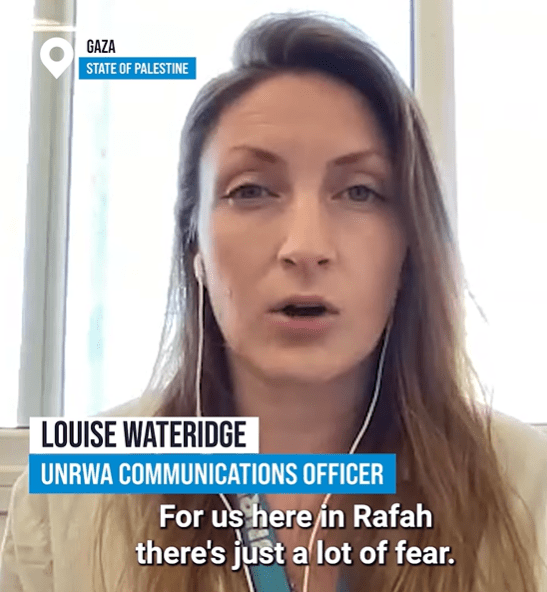
“I am disturbed and distressed by the renewed military activity in Rafah by the Israeli Defense Forces. Make no mistake – a full-scale assault on Rafah would be a human catastrophe,”
United Nations (UN) Secretary-General Antonio Guterres told reporters on May 7, 2024. The UN Office for the Coordination of Humanitarian Affairs reported that more than 35,000 Palestinians have been killed in the Gaza Strip, some 78,000 have suffered injuries, and nearly 2 million have been internally displaced. The number is rising as the ground invasion of Rafah begins.
(C) UN Geneva on Instagram
The UN Human Rights Council Special Rapporteurs have painted a grim picture of the disproportionate level of suffering experienced by girls and especially pregnant women in Gaza. “The treatment of pregnant and lactating women continues to be appalling with the direct bombardment of hospitals and the deliberate denial of access to health care facilities by Israeli snipers, combined with the lack of beds and medical resources placing an estimated 50,000 pregnant Palestinian women and 20,000 newborn babies at unimaginable risk.”
Many of these military actions are in direct violation of International Humanitarian Law as set out in the Geneva Conventions of August 12, 1949 and the Protocol Additional adopted in 1977. In order to meet new situations, International Humanitarian Law (IHL) has evolved to cover not only international armed conflicts but also internal armed conflicts. IHL prohibits the indiscriminate killing of civilians, the holding of hostages, and the destruction of medical and educational infrastructure.
The Association of World Citizens stresses the importance of IHL as a vital part of world law that will replace unilateral actions by States based on narrow domestic political considerations. The standards of IHL require political will if they are to function effectively. Thus, nongovernmental action on the Gaza Strip armed conflict is urgently needed.
Prof. René Wadlow is President of the Association of World Citizens.
Increasing numbers of people in countries around the world have been forced from their homes by armed conflicts and systematic violations of human rights. Those who cross internationally recognized borders are considered refugees and are relatively protected by the refugee conventions signed by most states. The 1951 Convention Relating to the Status of Refugees and its 1967 protocol give the United Nations (UN) High Commissioner for Refugees an international legal basis to ensure the protection of refugees.
However, those who are displaced within a country as is the case currently for many in the Gaza Strip and in Ukraine are not protected by the international refugee conventions. Thus, displacement within a State poses a challenge to develop international norms and ways to address the consequences of displacement and the possibility to reintegrate their homes, though in the case of Gaza many of the homes have been destroyed.
Refugees from Ukraine arrive in Poland (C) European Union
Armed conflicts within States often reflect a crisis of identity within the State. This can occur when a State becomes monopolized by a dominant group to the exclusion or marginalization of other groups. There is a need to provide protection and assistance to the uprooted. The UN High Commissioner for Refugees has been able to act in some cases as has been true also for the International Committee of the Red Cross (ICRC) which is mandated to protect civilians in war zones. The obligation to assist populations in immediate danger of starvation is largely recognized, and the UN World Food Program has been able to act. In some cases, nongovernmental humanitarian agencies have been able to be active. However, each situation requires new negotiations and results differ.
Thus, what is essential is that there be predictable responses in situations of internal displacement and that attention be paid not only to material assistance but also to the human rights of those displaced. To be effective, strategies to address mass displacement need to be broad and comprehensive. There is a need for political initiatives that seek to resolve the conflicts as the consequences often involve neighboring countries. Efforts must engage local groups, national institutions, and Nongovernmental Organizations (NGOs) to prevent situations that lead to persons being uprooted. As the representatives of NGOs, we have an opportunity to discuss with other NGOs the most appropriate next steps for action.
Prof. René Wadlow is President of the Association of World Citizens.
On April 7, 2024, Paul Kagame, President of Rwanda, lit the memorial flame of the monument to the victims of the 1994 genocide during which some 800,000 persons, mostly ethnic Tutsi, were killed. In 1994, Paul Kagame was the head of a Tutsi-led militia, the Rwanda Patriotic Front, which put an end to the massacres in Rwanda. Many of the Hutu-led governmental forces of 1994 fled to what is today the Democratic Republic of Congo, where there were already established Hutu communities. Ethnic-tribal frontiers do not follow the same frontiers as those created by the colonial powers.
During the colonial period and also since independence, when speaking of Rwandan politics, politics was described as a struggle between Tutsi and Hutu. However, the conflictual cleavages were more complicated. There were a good number of “mixed marriages” between Tutsi and Hutu. Nevertheless, in times of tension, political leaders played upon the Hutu-Tutsi divide.
In 1994, as soon as Kagame’s forces took control of the capital, Kigali, he declared himself president and has held power since. His emphasis has been on economic stability, the development of tourism and the creation of an effective civil service. Because of the 1994 genocide, Rwanda has received a good deal of foreign aid and support. However, some 70 percent of the population are still in the rural areas and farm small plots of land.
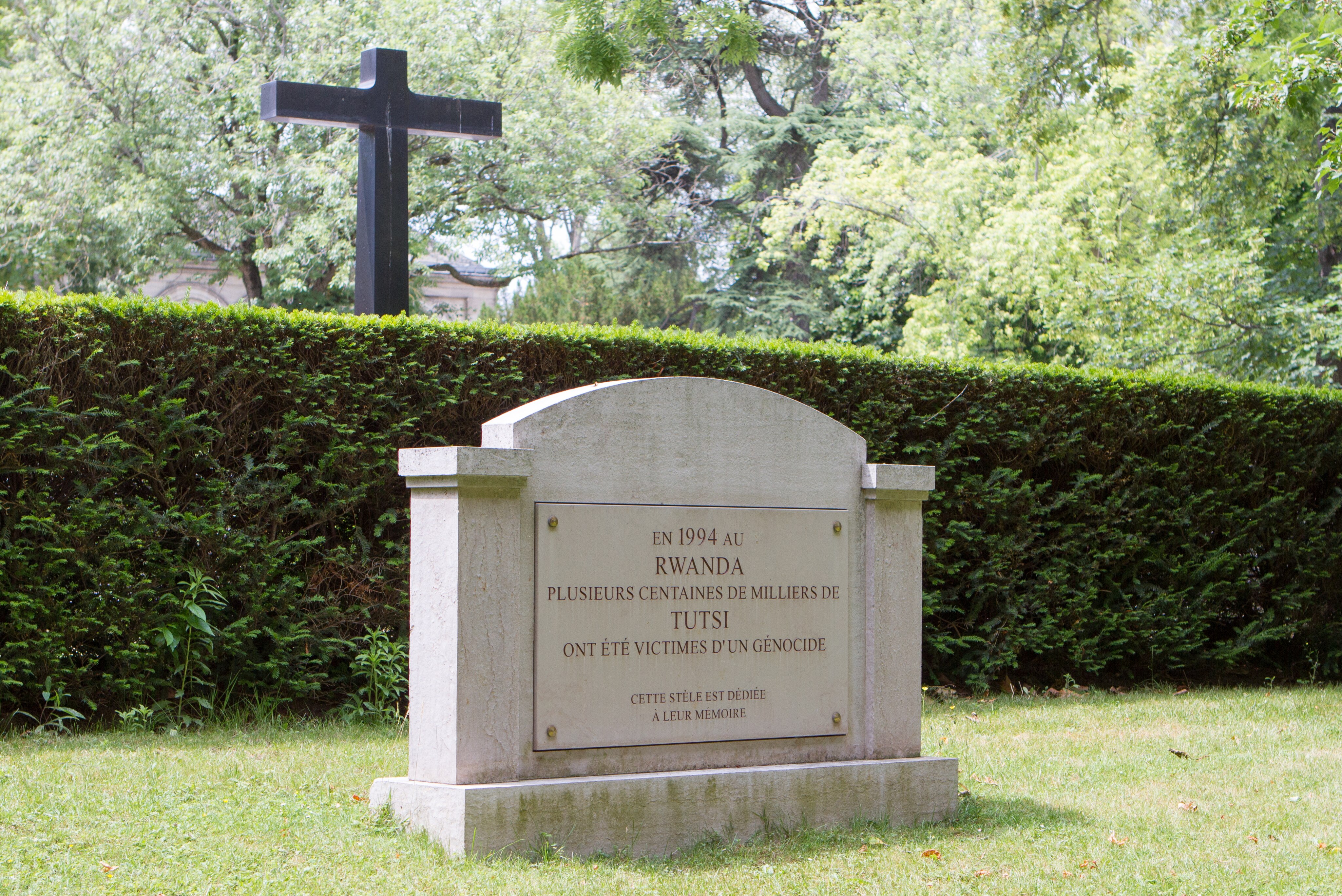
A symbolic tombstone in memory of the Tutsi victims of the Rwandan genocide at the Père Lachaise cemetery in Paris, France (C) Pierre-Yves Beaudouin / Wikimedia Commons / CC BY-SA 4.0
The entry of Hutu militias into the Democratic Republic of Congo when defeated in Rwanda added to an already complicated situation in the administrative provinces of North and South Kivu. In mid-1994, more than one million Rwandan Hutu refugees poured into the Kivus. Many of these Hutu were still armed; among them were the “génocidaires” who, a couple of months earlier, were killing Tutsi and moderate Hutu. The “génocidaires” continued to kill Tutsi living in the Congo, many of whom had migrated there in the eighteenth century.
The people in eastern Congo have lived together for several centuries and had developed techniques of conflict resolution especially between the two chief agricultural lifestyles – that of agriculture and that of cattle herding. The Hutu were farmers and the Tutsi cattle raisers. However, a desire of others to control the wealth of the area – rich in gold, tin, and tropical timber – overburdened the local techniques of conflict resolution and opened the door to new negative forces interested only in making money and gaining political power. The inability to deal with land tenure and land use issues, the lack of social services and socio-economic development created the conditions which led to multiple forms of violence.
Land tenure issues have always been complex. Land is often thought of as belonging to the ethnic community and is given to clans or to individuals for their use, sometimes for a given period, sometimes for several lifetimes if the land is cultivated. The rules of land tenure often differ from one ethnic group to another even a small distance apart. Traditionally clan chiefs would be called upon to settle land disputes. However, with the large displacement of people, land disputes have become more frequent, and clan chiefs have often disappeared or lost their function as judges.
Into this disorder, in 1999, the United Nations (UN) sent peacekeepers but there was no peace to keep. The UN Stabilization Mission in the Democratic Republic of Congo (MONUSCO) was the largest of the UN peacekeeping forces, currently some 2,000 military, 180 police, and 400 civilian administrators.
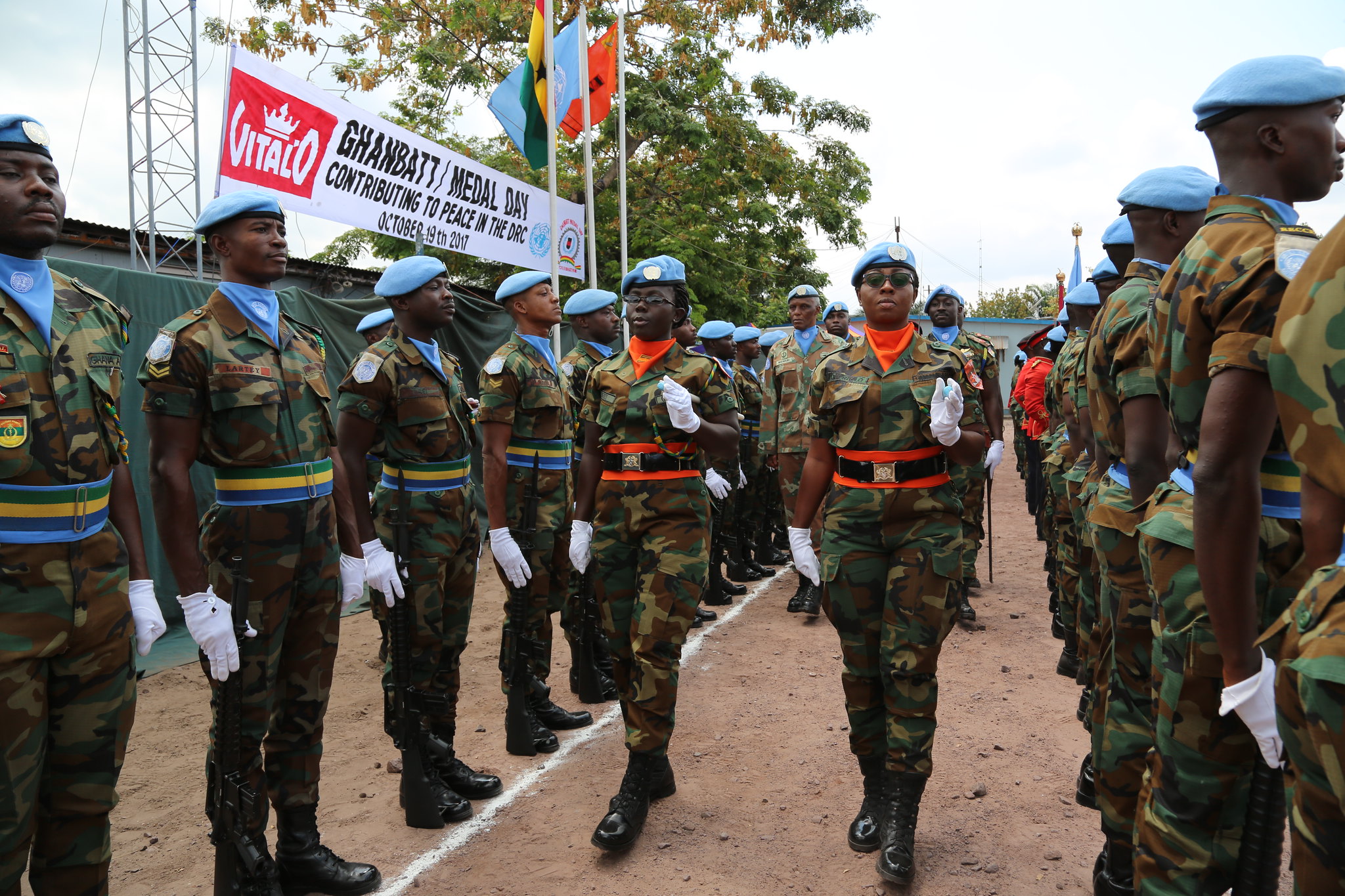
Troops with the Ghanaian Battalion of MONUSCO marking their medal presentation day in Kinshasa on October 19, 2017 (C) MONUSCO Photos
The States which have provided the bulk of the UN forces in the Congo – India, Pakistan, Bangladesh, and Nepal – have other worries and few cultural affinities. Thus, these States have made no large effort to call world attention to the eastern Congo and to the very difficult situation the soldiers face. UN troops are not trained to deal with complex cultural issues – especially land tenure and land use issues which are the chief causes of the conflicts.
Thus, there is a popular frustration at the ineffectiveness. The troops are popularly called “tourists” who only watch what is going on. Despite the UN troops, there have been large-scale occurrences of violation of human rights and humanitarian law by all the many parties in the conflict with massive displacement of population, plundering of villages, systematic rape of women, summary executions and the use of child soldiers. Thus, the newly elected President, Felix Tshisekedi, has asked the UN to remove all its troops by the end of 2024. Troops are currently being removed.
One of some 200 armed groups in eastern Congo, the M23, is said to be backed by Rwanda, although the Rwanda government denies this. Today, there is a security vacuum, and the military of the Democratic Republic of Congo will have difficulty to create stable socioeconomic structures. Thus, the 1994 genocide is a stark reminder that violence has long range consequences.
Prof. René Wadlow is President of the Association of World Citizens.
The United Nations (UN) has recently drawn attention to situations of acute hunger in areas where there is armed conflict. Stephane Dujarric, the UN Spokesperson, stated that, in Sudan, there were 18 million people facing acute food insecurity with alarming reports of child deaths related to malnutrition. Sudan has been the victim of a year-long armed conflict between the leaders of the regular army and its rival, the Rapid Support Force. This conflict has been particularly acute in the Darfur Province which has been the scene of violence and massive displacement of population since 2004.
In Ethiopia, where there has been fighting, especially in the Tigray Province between the forces of the government and Tigray militias, there is widespread hunger. Many people have been displaced by the fighting, and thus food crops have not been planted. International relief efforts have been hindered by the disorganization of all governmental services and corruption. The hunger situation is also acute in Gezira Province, usually a “breadbasket” area of food crops.
The situation in the Gaza Strip has been front page news since October 8, 2023, when the bombing of the Strip began in the armed conflict between Israelis and Palestinians. The delivery of food aid has been a central issue of international concern. However, hunger persists and its consequences deepen. The economic and social infrastructure of the Gaza Strip has been largely destroyed and will take a long time to rebuild even when, and if, a political administration is reestablished. Beth Bechdol, Associate Director of the UN Food and Agriculture Organization (FAO) has said that the speed and degree of the food crisis in the Gaza Strip is unprecedented.
These examples, to which others could be added such as the eastern zones of the Democratic Republic of Congo, are an indication of the need to combine conflict resolution efforts with food support and other forms of relief. As long as violence continues, relief can only be uneven and temporary. Too often, as within the UN system, conflict resolution efforts and food relief are separated and not sufficiently coordinated. A holistic vision is necessary and combined efforts undertaken.
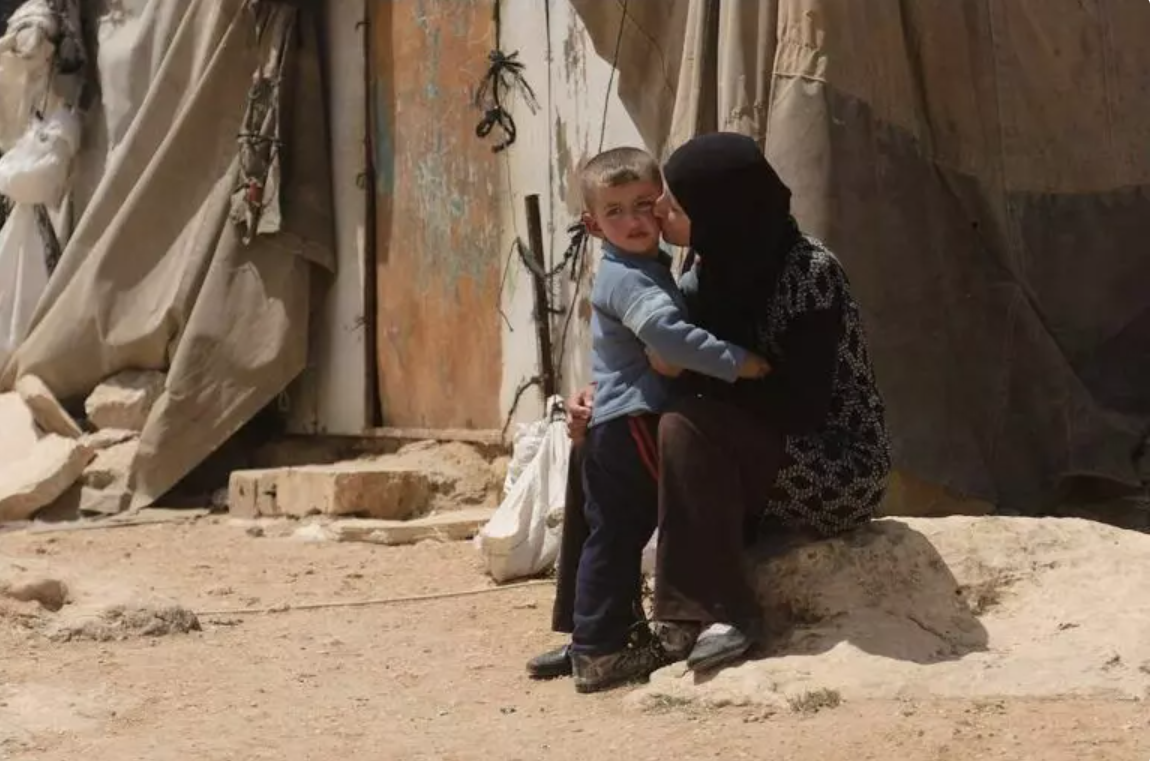
A Palestinian woman and her child facing starvation in northern Gaza (C) Libertinus
Prof. René Wadlow is President of the Association of World Citizens.
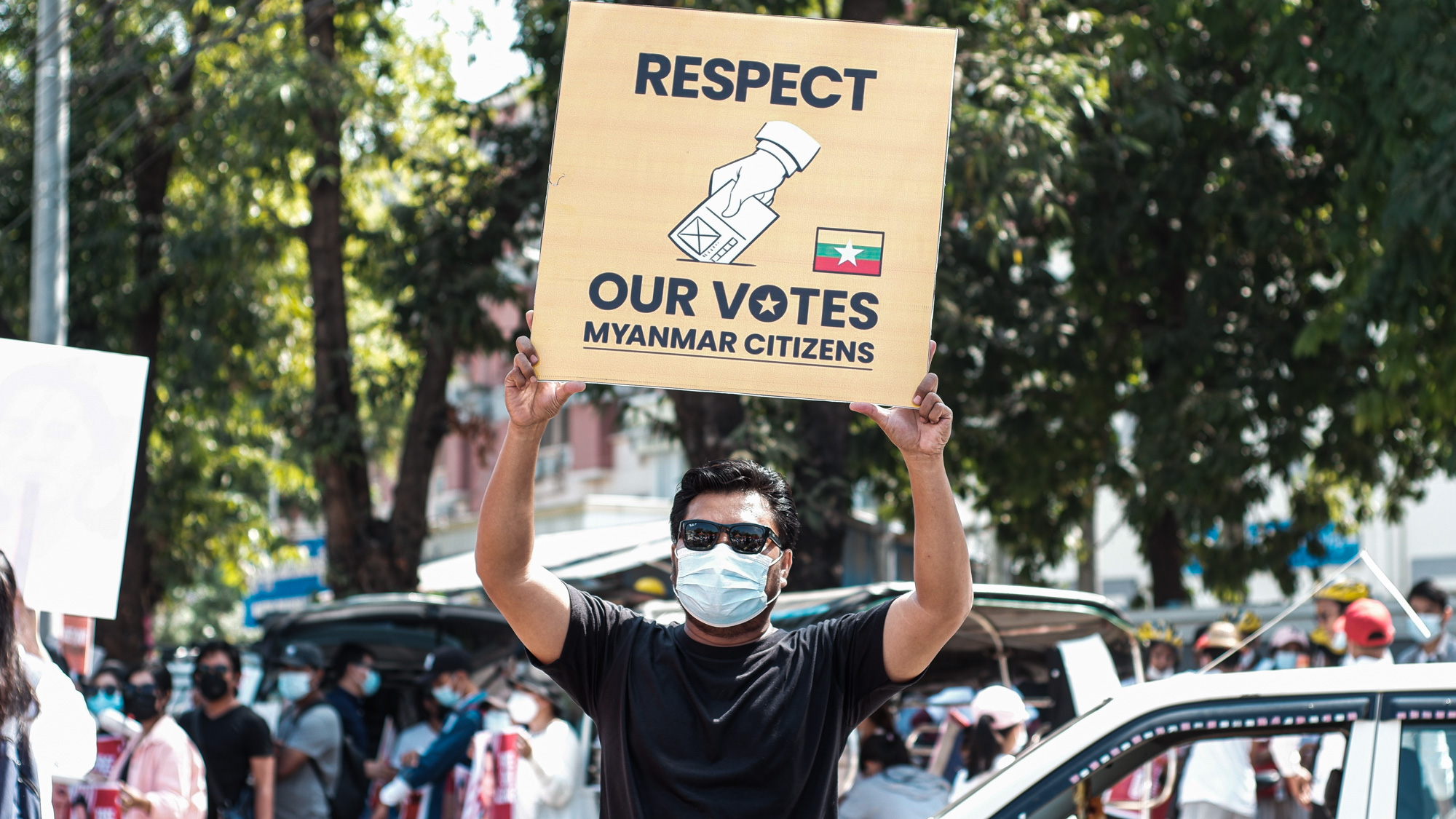
February 1 marks the anniversary of the military coup which overthrew the government of Aung San Suu Kyi in 2021. She was in practice the leader of the government but could not take the title of “President”. An earlier military junta had passed a law with her in mind saying that a person married to a foreigner could not become president. Aung San Suu Kyi had married a British anthropologist, Michael Aris, a specialist on Tibet who died in 1989 of cancer. Aung San Suu Kyi represented a new spirit – partly because she had lived most of her life outside Burma and was not linked to existing political compromises.
On February 14, 2021, a protest in Myanmar against the military coup (C) MgHla
Her father, Aung San, who died when Aung San Suu Kyi was two years old, was one of the original “Thirty Comrades” – student nationalists who were inspired by Second World War Japanese propaganda which appealed for a common Asian struggle against Western imperialism. Aung San went to Tokyo to assist the Japanese conquest of Burma. However, by 1944, the “Thirty Comrades” had decided that the Japanese were not liberators, that the occupation of Burma was carried out for Japanese rather than Burmese aims, and that the Japanese might lose the war. In the last year of the war, the “Thirty Comrades” cooperated with Lord Mountbatten.
Thus, on January 27, 1947, British Prime Minister Clement Attlee and Aung San signed an agreement for full independence of Burma within a year. On July 19, 1947, Aung San was assassinated by a political rival. He became a legend of Burmese independence.
Aung San Suu Kyi was educated in India (where her mother served as ambassador of Burma) and at Oxford University. She only returned to Burma in 1988 to take care of her dying mother. Her dynamism, combined with the legend of her father, led her to being named secretary of the National League for Democracy.
On June 14, 2012, Aung San Suu Kyi welcomed at the International Labor Organization’s premises in Geneva (C) Violaine Martin/UN Geneva
Since the military junta has taken power, it has intensified the struggle against the ethnic minorities – the Mon, Kachen, Karen, Shan, Wa, the Arakan Muslims, and others. The ethnic minorities represent some 40 percent of the population, the Burmese, some 60 percent. However, population statistics are not based on real population surveys. Decades of self-imposed isolation, fabricated statistics and an absence of social and economic research have left even the authorities without an accurate appreciation of the distribution of the population. The military have destroyed villages along the frontiers with China, India, Thailand, and Bangladesh.
While we are critical of the military government and their repressive policies, we must not idealize the forces of the ethnic insurgencies. In 1992-1993, I was involved in getting the National Council of the Union of Burma created by the insurgencies and democratic Burmese who had taken refuge in the ethnic minority zones to sign the Geneva Conventions of August 12, 1947 and the protocols additional which provide the basic rules of international humanitarian law in armed conflict. The Union President, General Saw Bo Myn of the Karen National Union, and the three Vice Presidents signed in January 1993. While the signature is symbolic – only governments may sign the Geneva conventions – the signature was widely noted and led the Myanmar government to sign the conventions which they had always refused to do until then. The signature led to a mutual release of war prisoners – but not to a formal exchange as the two sides in the conflict refused direct contact at the time.
Burma, now renamed Myanmar after 1988, faces two basic and related issues: the installation of democratic government and a constitutional system which allows autonomy to the minority peoples. Both tasks are difficult. There is little democratic tradition or ethos upon which to structure a democratic government. While a federal or con-federal system would be the most suited for a multi-ethnic state, what leadership exists both in the junta and the insurgencies is motivated by personal and clan-centered interests. The leaders recruit allies similarly motivated. Only peace will allow new leadership to emerge with broader motivations and allow all citizens to participate in a renewed political process.
Prof. René Wadlow is President of the Association of World Citizens.
With the armed conflict in the Gaza Strip continuing to increase the number of dead, wounded, and displaced and the danger of the conflict spreading to other areas of the Middle East, renewed efforts of conflict resolution need to be made. The United Nations (UN) has been active especially in relief efforts, and many Nongovernmental Organizations (NGOs) have expressed their concern. NGOs have also been active in relief efforts. However, the inadequate amount of relief supplies that enter the Gaza Strip limits the impact of nongovernmental activity.
From the start of the Gaza conflict more than 100 days ago, NGOs such as the Association of World Citizens have been highlighting positive steps on the path to negotiations. They have stressed four major steps:
1) An immediate ceasefire;
2) Release of hostages held by Hamas and other Palestinian armed groups, release of Palestinian prisoners held in Israeli jails – often under administrative detention without trial;
3) Preventing the extension of the conflict to Lebanon’s frontier through negotiations with Hezbollah;
4) Preventing an increase in violence in the West Bank between Israeli settlers and Palestinian villages.
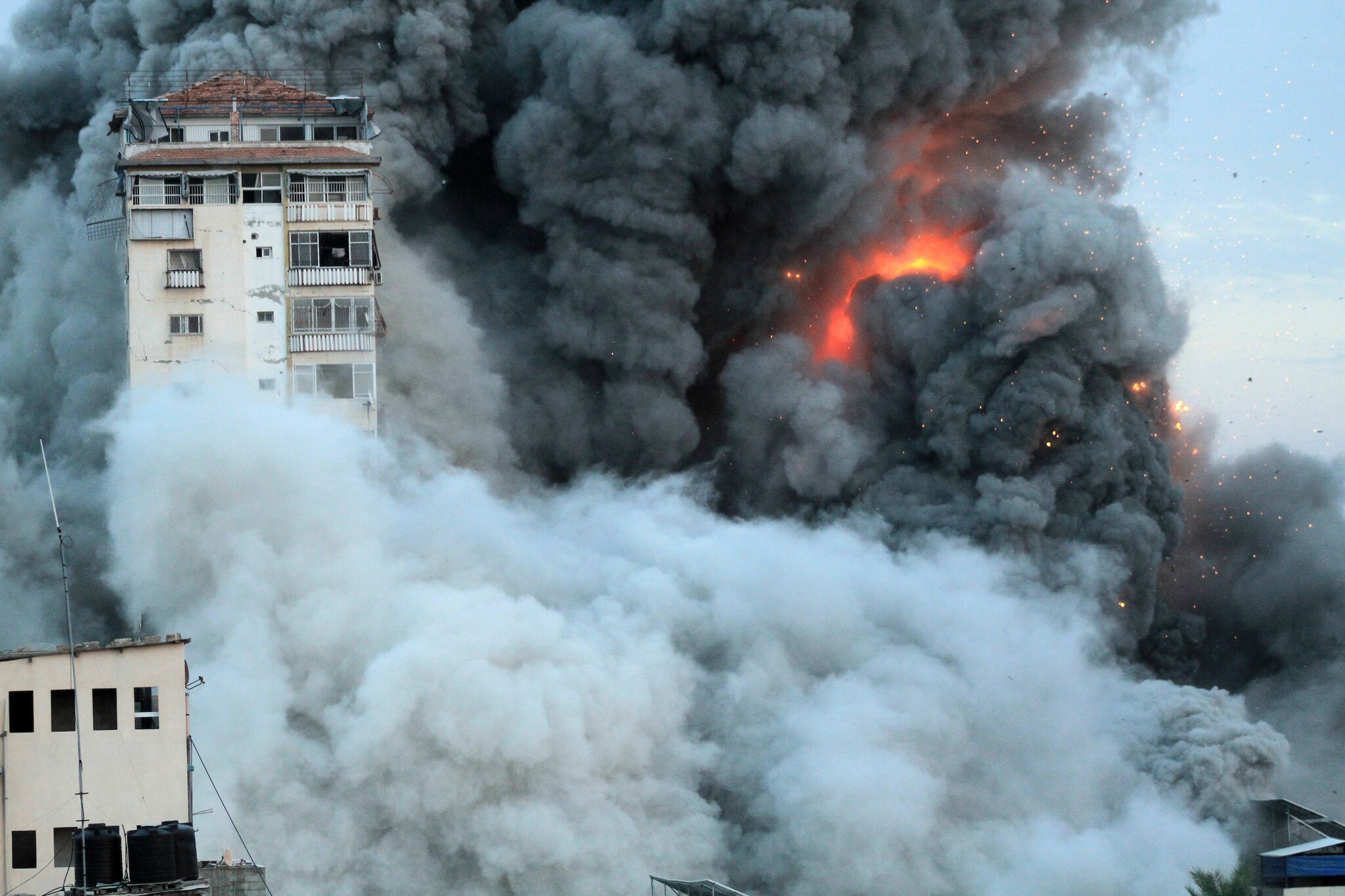
In October 2023, a building destroyed in Gaza (C) Ali Hamad/APAimages
The start of hearings on the charge of genocide at the International Court of Justice has added international attention to the Gaza Strip situation and more broadly to the Israel-Palestine drama.
The need for conflict resolution action is great. The proposals of NGOs hold a light of hope.
Prof. René Wadlow is President of the Association of World Citizens.
The Association of World Citizens (AWC) first raised the issue of the use of sexual torture in time of violent conflicts in the United Nations (UN) Commission on Human Rights in March 2001, citing the judgement of the International Criminal Tribunal for the former Yugoslavia, which maintained that there can be no time limitations on bringing the accused to trial.
The AWC presentation highlighted sexual violence in the conflicts in what is today the Democratic Republic of Congo, formerly Zaire. Conflict related sexual violence refers to rape, sexual slavery, forced prostitution, forced abortion and other ways to humiliate. To the best of my knowledge, no person in Zaire/DRC was tried. Awareness building and enforcement measures develop slowly.
The UN Human Rights Council, the current incarnation of what was once the Commission on Human Rights, has developed a pattern of having Special Rapporteurs on specific topics or countries. The Special Rapporteur is not a UN or a national civil servant and is not paid, though work-related expenses are covered and UN Secretariat help is given. This independence, it is hoped, gives greater freedom to speak out. There has been a Special Rapporteur on Torture nearly from the start of Special Rapporteurs.
The current Special Rapporteur on Torture is Prof. Alice Jill Edwards, originally from Australia and now an academic research fellow in Geneva. She has worked in the past both for the UN and for Nongovernmental Organizations (NGOs). She has worked with rape victims in Bosnia-Herzegovina and has long argued that rape should qualify as a form of torture.
She was recently in Ukraine, a first mission in time of war. As she said,
“We are living in an era of war, and we have lost the art of mediation, compromise and acceptance of each other.”
While her findings have not yet been presented, she gave an overview of persons met and situations faced. She was concerned with the use of torture both by Russian military and by Ukrainian military and police. From her interviews in Ukraine, she holds that it is Russian state policy to use torture for military ends – whether to obtain intelligence, to humiliate and debase the enemy, and to keep the community in a state of fear.
The Ukrainian military and police are also willing to use torture on Russian prisoners of war as well as on alleged collaborators – Ukrainians who would have helped the Russian forces in different ways or who had administered areas that came under Russian control.
There are also NGO representatives who are collecting information, but many victims of torture have been traumatized and recalling accurately specific events is often difficult.
It is difficult to know what the state of justice will be once the armed conflict ends. In many cases, there is a reluctance to bring perpetrators to trial in order not to “open fresh wounds”. It is a vital issue that we must follow closely.
Prof. René Wadlow is President of the Association of World Citizens.
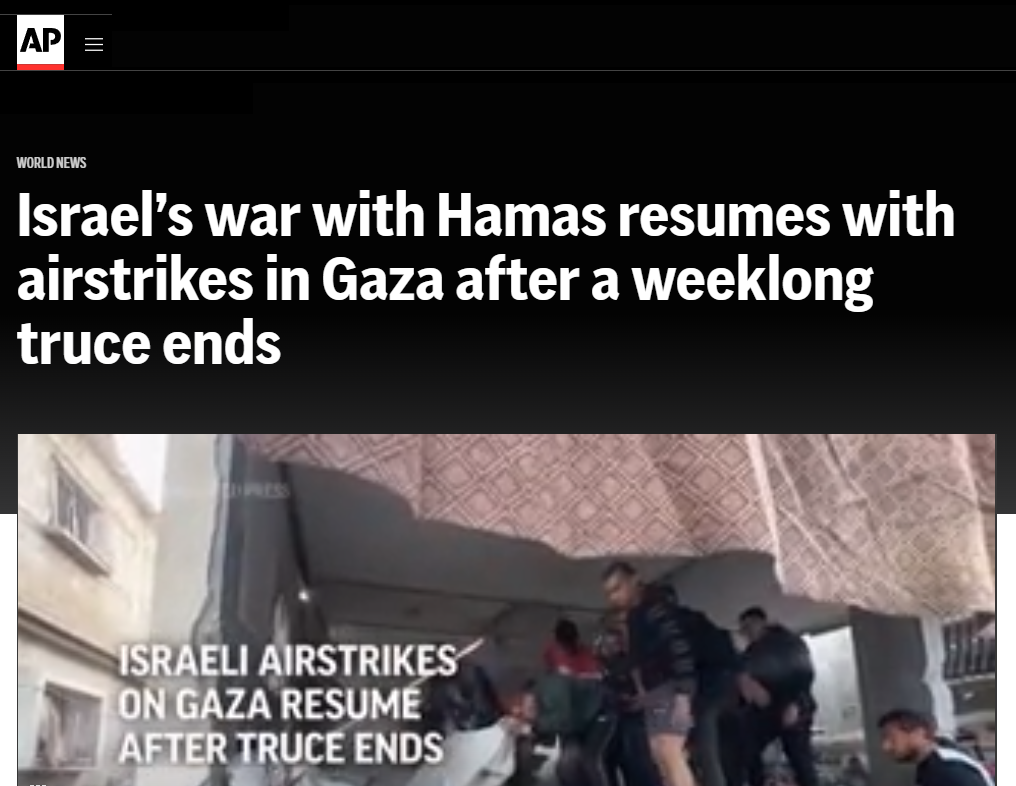
On Friday, December 1, 2023, with Hamas firing rockets into Tel Aviv and Israeli forces renewing airstrikes on the Gaza Strip, the “humanitarian pause” in the Gaza fighting came to an end.
Martin Griffiths, head of the United Nations (UN) Office for the Coordination of Humanitarian Affairs, said, “Over the past seven days, hostages were released, families were reunited, and more patients received some medical care. The volume of aid into and across Gaza increased… Now, in a matter of hours, scores were reportedly killed and injured. Families were told to evacuate again. Hopes were dashed. Almost two months into the fighting, the children, women, and men of Gaza are all terrified. They have nowhere safe to go and very little to survive on. They live surrounded by disease, destruction and death. This is unacceptable… We need the fighting to stop.”
Thus, we see the need for increased mediation among groups and governments to maintain international humanitarian law and human rights standards. The taking of hostages is a violation of international humanitarian law. Therefore, the International Committee of the Red Cross which is the chief organization to maintain international humanitarian law was directly involved in the release of the hostages. Many of the Palestinian persons in Israeli prisons have not had fair trials – in some cases no trials at all only administrative detention – in violation of international human rights provisions.
There is a need for more go-betweens, third-party mediators who can help to overcome barriers and to start negotiations. Mediation is an effort to change perceptions of both the nature of the conflict and the nature of the enemy. There is a need to lessen misconceptions and exaggerated fears. Small realistic steps must be taken on the long road to stable peace.
Currently, there are real dangers that the violence will increase on the frontier with Lebanon and in the West Bank area between Israeli settlers and Palestinians. An increasing number of people are being displaced, adding to the vast number of people uprooted in the Gaza Strip.
The pain and suffering already undergone should be an increased motivation for strong efforts for peace and justice. The negotiations which led to the “pauses” and the exchanges were largely carried out by the representatives of a few governments, Qatar, Egypt, and the USA. There is a potential role for nongovernmental efforts. We must cooperate on such possibilities by exchanging information and possible contacts. There may be ways of increasing the nongovernmental efforts of mediation through “pilot projects”. The times require strong and coordinated efforts.
Prof. Rene Wadlow is President of the Association of World Citizens.
Calls from both governments and nongovernmental organizations (NGOs) for a ceasefire in the Hamas-Israel armed conflict having not been acted upon. Attention is now centered on a potential Israeli military land invasion of the Gaza Strip. Attacks from the air have already been very destructive of civilian institutions. Many persons have had their homes destroyed and have taken shelter in schools and other public buildings. There are signs that the situation will grow more violent. There are no negotiations in sight.
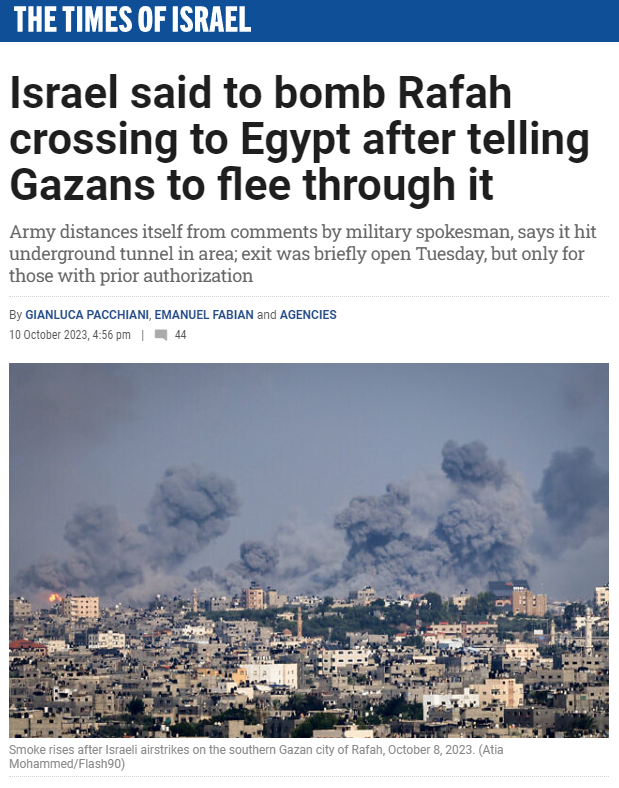
Thus, many people living in Gaza would want to leave and find safety. Passage to Israel is impossible; the frontier is now blocked, and the Israeli government considers all those living in Gaza as potential enemies. Thus, the only frontier post open is that of Rafah, leading to the Egyptian territory of Sinai. However, for the moment, the Egyptian government, fearing a mass exodus, refuses to open the Rafah post to a large number of people.
Some Palestinians fear that if there is a mass migration to Sinai, that would be a form of “ethnic cleansing” of Gaza. The population would then be replaced by Israelis. On a more positive note, potentially, the Rafah crossing could be used to bring in humanitarian supplies for Gaza collected in Egypt and elsewhere.
At this point, there should be governmental and NGO appeals to the Egyptian government to open the Rafah post to a large number of people. Facilities to meet the needs of refugees should be prepared. It is unlikely that people will spend 40 years in Sinai waiting to enter the promised land. However, current security is vital, and negotiations for longer-range conflict settlements need to start.
Prof. René Wadlow is President of the Association of World Citizens.



 Association of World Citizens