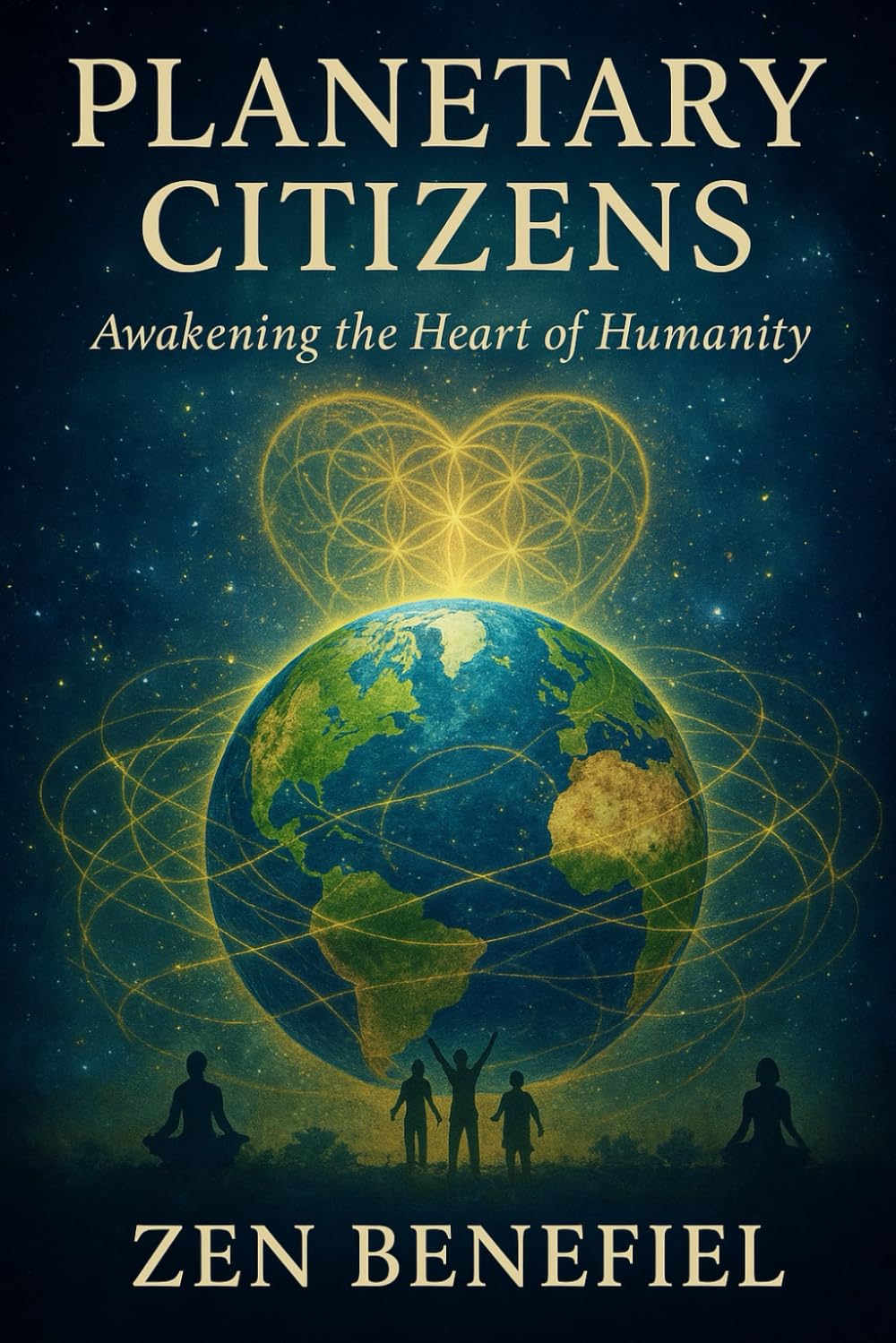
Zen Benefiel, Planetary Citizens: Awakening the Heart of Humanity.
Chandler, AZ: Be The Dream Publishing, 2025, 126pp.
“I believe that the mark of the truly educated and imaginative person facing the twenty-first century is that he feels himself to be a Planetary Citizen.”
U Thant, former Secretary General, United Nations.
The current effort of Planetary Citizens is a reincarnation of a movement led by Donald Keys active from the mid-1970s to the mid-1980s. I was a member of the Planetary Citizens Advisory Board and Donald Keys was the United Nations (UN) editor for Transnational Perspectives, a journal I edited. Thus, Donald Keys and I were in close touch and cooperated on many projects.
The first objective of Planetary Citizens was to help people in as many countries as we could reach to cross the threshold of consciousness from a local and national perspective to the inclusive and global view required in this planetary era.
The office of Planetary Citizens in the Church Center for the UN, was directly across the street from the UN. The Center housed a good number of non-governmental organizations in consultative status with the UN. Thus, the focus of Planetary Citizens was on issues which were discussed at the UN in New York. Cooperation was close with other Nongovernmental Organizations (NGOs) such as the Baha’i UN Office which shared a vision of world unity. Planetary Citizen identity cards were issued to those who requested it and affirmed their responsibility to a just world society. Some 200,000 people joined the effort, 60,000 in Japan.
The major effort of Planetary Citizens was the preparation and then the holding of a major conference held in Toronto, Canada, in June 1983. Some 500 people gathered to draft the “Declaration on the World We Choose” facing the challenges of a world with violence, human rights violations and persistent poverty. The Declaration identified three aims:
1) Self-Realization: The opportunity for achieving the individual human potential and realizing the essential spiritual identity of each person giving rise to oneness with all life, the assumption of responsibility and initiative in a spirit of cooperation.
2) Human Community: There is a natural progression from self-realization to the creation of vibrant communities capable of demonstrating cooperation and stewardship.
3) A United World: A cooperative world order characterized by membership in the family of humanity and by global governance based on justice. A result will be true international security.
Unfortunately, soon after the Toronto Conference, Donald Keys became ill and was unable to continue in a leadership role. As with many NGOs, too much responsibility rested on one person. When he/she is no longer there, the organization becomes weak and can shut down. This is what took place with the first incarnation of Planetary Citizens. All its papers and reports are now in the Peace Library of Swarthmore College near Philadelphia.
Zen Benefiel has revived much of the thinking and spirit of the original Planetary Citizens. As he notes, “The path ahead is not easy. It will take courage, collaboration, and commitment.” There is a need for bridge-building among the many groups working for the well-being of the Earth. There is a need for new kinds of leadership that feels comfortable with networking and nurtures creativity in others.
We wish the new incarnation all the best in the effort to create a just global society.
Prof. René Wadlow is President of the Association of World Citizens.
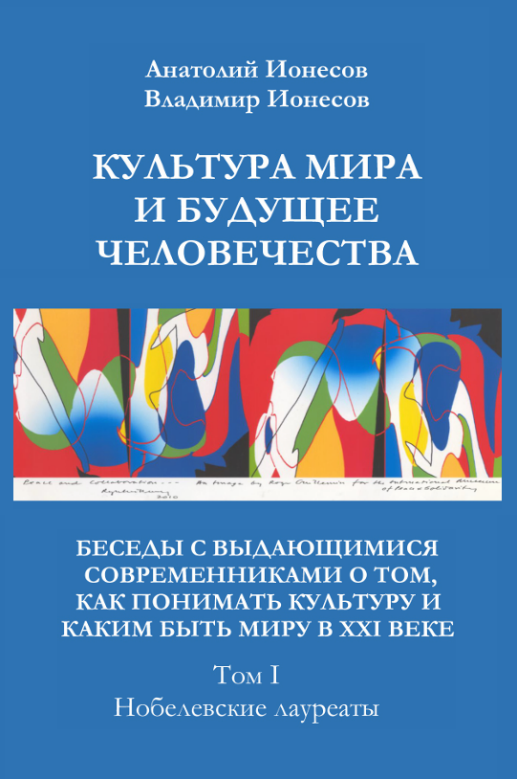
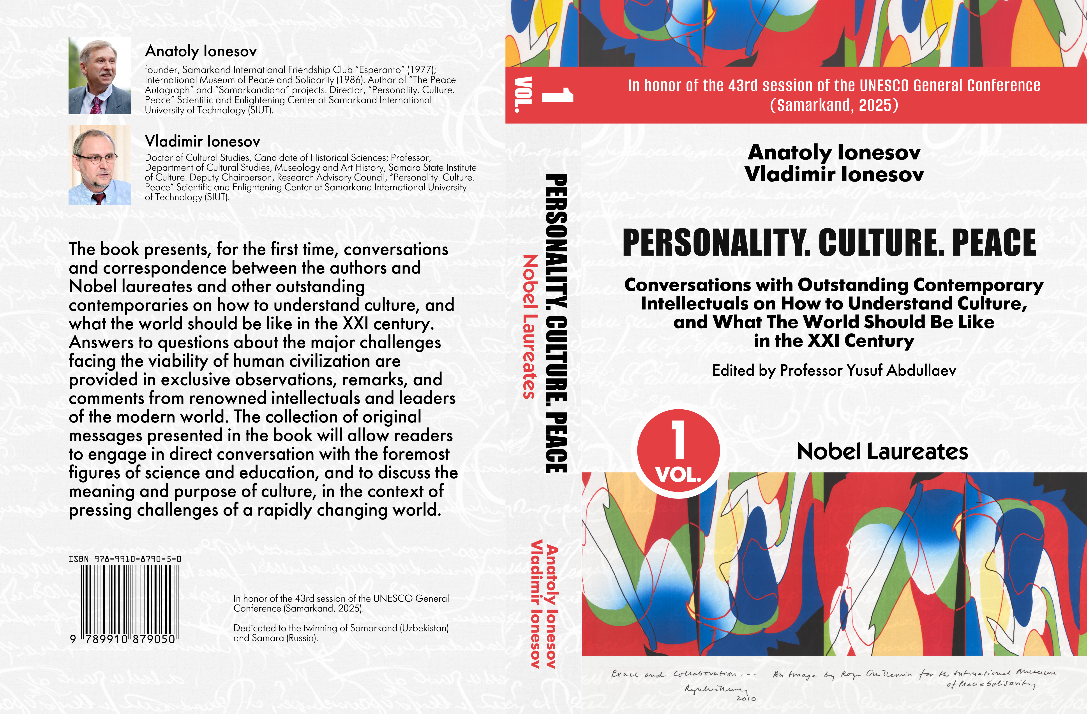
Anatoly I. Ionesov & Vladimir I. Ionesov, The Culture of Peace and the Future of Humankind: Conversations with Outstanding Contemporary Intellectuals on How to Understand Culture, and What the World Should Be Like in the 21st Century
Vol. I-IV. [Volume I. Nobel Laureates]
Samara-Samarkand: Samara Scientific Center, 2025. 500 p.
The real essence of life is not in what it has,
But in what one believes there should be.
Iosif A. Brodsky (1940-1996)
This new book by Anatoly and Vladimir Ionesov contains and presents in four volumes the authors’ extensive materials on the culture of peace and citizen diplomacy, formed on the basis of direct conversation, correspondence, meetings and idea exchanges with outstanding intellectuals of our time. For 40 years, the authors have developed and maintained a dialogue with recognized global leaders in science, education, art, business, politics and sports. This has resulted in a diverse collection of unique written messages and tangible artifacts that have been designed as an International Archives of the Culture of Peace.
The Samarkand International Friendship Club “Esperanto” (Uzbekistan) and the Samara Society for Cultural Studies “Artefact – Cultural Diversity” (Russia), both led by the authors of this publication, created this archive through the organizations’ long-term activities. On the Samarkand site, the International Museum of Peace and Solidarity (1986) was established, and the Peace Autograph Project was initiated; while on the second – Samara city site, the project “Culture of Peace Personalities: People Who Changed the World” (1994) was conceived, launched and implemented. The latter was in direct dialogue on pressing issues of the philosophy of peacemaking and the viability of modern civilization with recognized experts in the field.
Thanks to these joint projects and other types of partnership activities, it was possible to include the two sister cities – Samarkand, the ancient pearl of the East, and Samara, the ‘Space Capital’ of Russia, in the dialogue with the wider world. Through correspondence, interviews, meetings, conversations, creative projects, scientific connections, educational exchange, and other cultural practices of citizen diplomacy, communication was established with contemporaries who, through their ideas, visions, achievements, and professional experience, showed how life can be changed for the better. The authors, using the example of these personalities, their spoken or written word, proposed thoughts, insightful intuition and skillfully embodied deeds, sought to testify to unique examples of personal selfless devotion in culture. And, thereby, convey their main message: any individual may cope with the challenges of the changing world if he or she relies on knowledge, creativity, morality, humanism and free thinking.
At different stages of the project, participants in dialogue with the authors included thousands of individuals. Their visions for solving the most pressing challenges help to better understand how to build and promote a culture of peace, a philosophy of nonviolence and tolerance in the multicultural diversity of humankind. This way we discussed multiple problems the world is facing today with the people who have probably managed to implement those principles into life most fully.
The participants in the direct conversation were a variety of personalities from a Nobel Prize laureate to a simple teacher of a provincial school, from an outstanding politician to an ordinary citizen, from a famous preacher to an inconspicuous volunteer, from a professional traveler and explorer to an ordinary wanderer and creator. Each of them has their own view of the world, their own visions, interests, values, preferences. Their answers to questions, remarks and comments are unequal, as are their biographies and professional activities. In short, they are as varied as life itself.
The materials included in each volume of this publication are divided into two main sections 1. Answers to Questions, Letters and Reflections and 2. Remarks, Comments, Greetings, and two Appendices. The personal messages are placed in alphabetical order without chronological sequence. Each separate block consists of three parts: information about the person, a photo with an autograph or gift inscription, and the text of the reply. All correspondence is represented by original texts – personal messages addressed to the authors in Samarkand or Samara. The Appendix provides a consolidated list of Nobel Prize laureates who have sent their feedback (messages, etc.) to the authors and a small photo chronicle.
The first volume consists of replies, letters, remarks and comments of 72 Nobel Prize laureates representing 20 countries of the world (Argentina, Belgium, Great Britain, East Timor (Timor Leste), China (territory of Tibet), Egypt, Finland, France, Germany, India, Ireland, Japan, Mexico, Nigeria, Netherlands, Russia, former USSR, South Africa, Switzerland, USA). All the authors of the messages placed in the book are arranged in alphabetical order.
Our interlocutors are distinguished intellectuals in the field of scientific research whose works have changed the world for the better through revolutionary inventions and major contributions to the culture and development of society. Among the intellectual leaders of our time included in this volume who have shared with the authors their visions on how to understand culture and what the world should be like in the twenty-first century are Nobel Prize laureates in Chemistry (19), Physics (15), Physiology or Medicine (11), Economics (7), Literature (4), and for promoting world Peace (16).
The authors of the book are grateful to their distinguished interlocutors, who, in addition to answering questions, have also kindly provided the texts of their articles and other materials as expanded commentary on a given topic for translation and inclusion in this edition.
The book concludes with a list of all Nobel laureates who responded to the dialogue with the authors, including the names of those whose comments and greetings, although not included in this edition, have become an important and inspiring part of the project.
In total, responses were received from 253 Nobelists in six fields (including three scientists who were awarded this prize twice): 49 laureates in chemistry, 68 – in physics, 63 – in physiology or medicine, 30 – in economics, 13 – in literature and 30 participants of the project were awarded the Nobel Peace Prize.
It should be noted that the “Culture of Peace Personalities” project, launched and implemented by the authors, inspired the creation and suggested the name of the newly established “Personality. Culture. Peace” Scientific and Enlightening Center at Samarkand International University of Technology (SIUT). It is gratifying that it was the Center that became the main venue for the completion of such a significant book project.
The authors consider this publication as another step in strengthening partnership and twinning between Samarkand and Samara. They hope that their work will contribute to the development of not only the two sister cities, but also of the Commonwealth of Independent States (CIS). In this regard, it is noteworthy that by the decision of the CIS Council of Heads of State, Samarkand has acquired another landmark status for itself – becoming the cultural capital of the Commonwealth in 2024.
When the first volume was ready to go to press, the authors of the book received a message from a Canadian scientist, Nobel Laureate in Physics (2015) Arthur B. McDonald (b. 1943). It contained remarkable words that insightfully reflect the main idea behind this publication: “The openness and international cooperation between basic scientists seeking and understanding of the world we live in can be a model for everyone and a direction for world peace”. – Arthur B. McDonald, March 23, 2023, Canada.
It remains to be hoped that an interested reader, within the dialogue space with the authors and participants of this edition, will find useful answers to pressing questions and gain clarity on complex issues in the current agenda of our turbulent times.
Anatoly Ionesov, founder, Samarkand International Friendship Club “Esperanto” (1977); International Museum of Peace and Solidarity (1986). Author of “The Peace Autograph” and “Samarkandiana” projects. Director, “Personality. Culture. Peace” Scientific and Enlightening Center of Samarkand International University of Technology (SIUT).
Vladimir Ionesov, Doctor of Cultural Studies, Candidate of Historical Sciences; Professor, Department of Cultural Studies, Museology and Art History, Samara State Institute of Culture. Developer of the concept of cultural transformation and models of civilization viability in transition. Full member of the European Academy of Sciences and Arts. Deputy Chairperson, Research Advisory Council, “Personality. Culture. Peace” Scientific and Enlightening Center of Samarkand International University of Technology (SIUT).
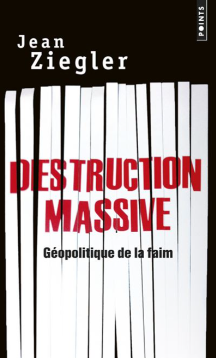
Jean Ziegler, Destruction Massive: Géopolitique de la faim.
Paris: Editions du Seuil, 2011, 343pp.
Translated into English and published as
Jean Ziegler, Betting on Famine: Why the World Still Goes Hungry
New York: The New Press, 2013
The First Millennium Goals set in 2000 were to half poverty and hunger by 2015.
Hunger and malnutrition are major causes of deprivation and suffering. As there has been no rapid progress in reducing hunger, other goals, such as reduced child mortality and improved maternal health, have not been met either. Many years of empirical evidence point to the negative impact of hunger and malnutrition on health, education, and labor productivity.
The impact of hunger has been known for some time. Jean Ziegler pays tribute to the research and action of a mutual friend, Josue de Castro, Brazilian nutritionist and World Citizen.
De Castro had pointed out in the late 1930s that hunger in Brazil was not a fatality of nature but the result of unjust human structures. Thus, things could change with enlightened action by farmers with the help of enlightened governments. He helped to organize peasant leagues and was elected to the parliament of Brazil. He undertook visits and studies in other Latin American countries. These studies convinced him of the socio-economic causes of hunger and of their wide geopolitical impact. The Geopolitics of Hunger is de Castro’s most widely read book and serves as the subtitle of Jean Ziegler’s book as hunger remains a geopolitical issue, not simply a question of locally improved agricultural techniques.
De Castro had been the independent president of the Executive Council of the Food and Agriculture Organization (FAO) of the United Nations (UN) from 1952 to 1955, at which time the governments decided to abolish the post of independent president. The Executive Council has been chaired by national diplomats since. While at the FAO, de Castro was invited to look at agriculture in a good number of countries. He had created in 1957 a Nongovernmental Organization, World Campaign against Hunger (Association mondiale de lutte contre la faim), ASCOFAM from its title in French. He drew on persons active in the world citizen movement such as l’Abbé Pierre, René Dumont and Max Habicht.
When I arrived in Geneva to teach at the Graduate Institute of Development Studies in September 1963, de Castro was the Ambassador of Brazil to the UN in Geneva, and I went to see him shortly afterwards to discuss development issues. Then in April 1964, the military led by General Castelo Bianco took power in Brazil. Their right-wing and brutal dictatorship lasted from 1964 to 1985. De Castro was quickly replaced as Ambassador and moved to Paris to teach and work with NGOs on hunger and agricultural issues. I saw him a number of times in Paris. He died in Paris in September 1973, aged only 65, but he left a heritage of study and action on the power dynamics of hunger and agricultural policies. Jean Ziegler, a sociologist of African societies and for a good number of years a Socialist member of the Swiss parliament, was from 2000 to 2008 the UN Commission on Human Rights’ Special Rapporteur on the Right to Food. Much of the research for the book was carried out with his UN team but is presented in a fiery style not found in UN reports.
Increased action to improve rural life needs to be taken quickly. As the recent UN-sponsored Millennium Ecosystem Assessment states, “Human activity is putting such strain on the natural functions of Earth that the ability of the planet’s ecosystem to sustain future generations can no longer be taken for granted. It is becoming ever more apparent that human society has a rapidly shrinking window of opportunity to alter its path.”
However, as Ziegler points out, it is not general human activity that is causing a strain, but the human activities of the powerful, the pred$atory sharks and financial speculators. He stresses the dangers of the increasing use of ethanol and other biofuels, often without consideration of the impact of the production of biofuels on land use and food production.
Their use should be limited at present so that the consequences of their use can be studied and biofuels developed from non-food sources. Ziegler also stresses that there needs to be a detailed analysis and then action on the role of speculation in the rise of commodity prices.
Banks and hedge funds, having lost money in real estate mortgage packages, are now investing massively in commodities. For the moment, there is little governmental regulation of this speculation. There needs to be an analysis of these financial flows and their techniques of operation − the wide use of offshore banks and holdings − and their impact on the price of grains and other foods.
Ziegler also stresses relatively new dangers to a just world food system. In many developing countries, the urban elite have been buying farmland as an investment, not necessarily to increase agricultural production with improved techniques, but to resell later when prices go up. Ziegler also stresses the sale or long-term rent of agricultural lands, especially in Africa, to governments or State-related companies of the Arab Gulf States and China. Again, the land is often not used for current agricultural improvement but is held for future use or sale. Thus, rather than seeing land reform, we are seeing dangerous trends of an increasing number of landless agricultural workers.
Jean Ziegler highlights the need for cooperation among the UN system of agencies, national governments, non-governmental organizations, and the millions of food producers.
There is a need for swift, short-term measures to help people now suffering from lack of food and malnutrition due to high food prices, the systems of food distribution, and situations of violence. However, it is the longer-range and structural issues on which we must focus our attention. The world requires a holistic World Food Policy and a clear Plan of Action. A knowledge of the geopolitics of hunger is a necessary first step.
Prof. René Wadlow is President of the Association of World Citizens.
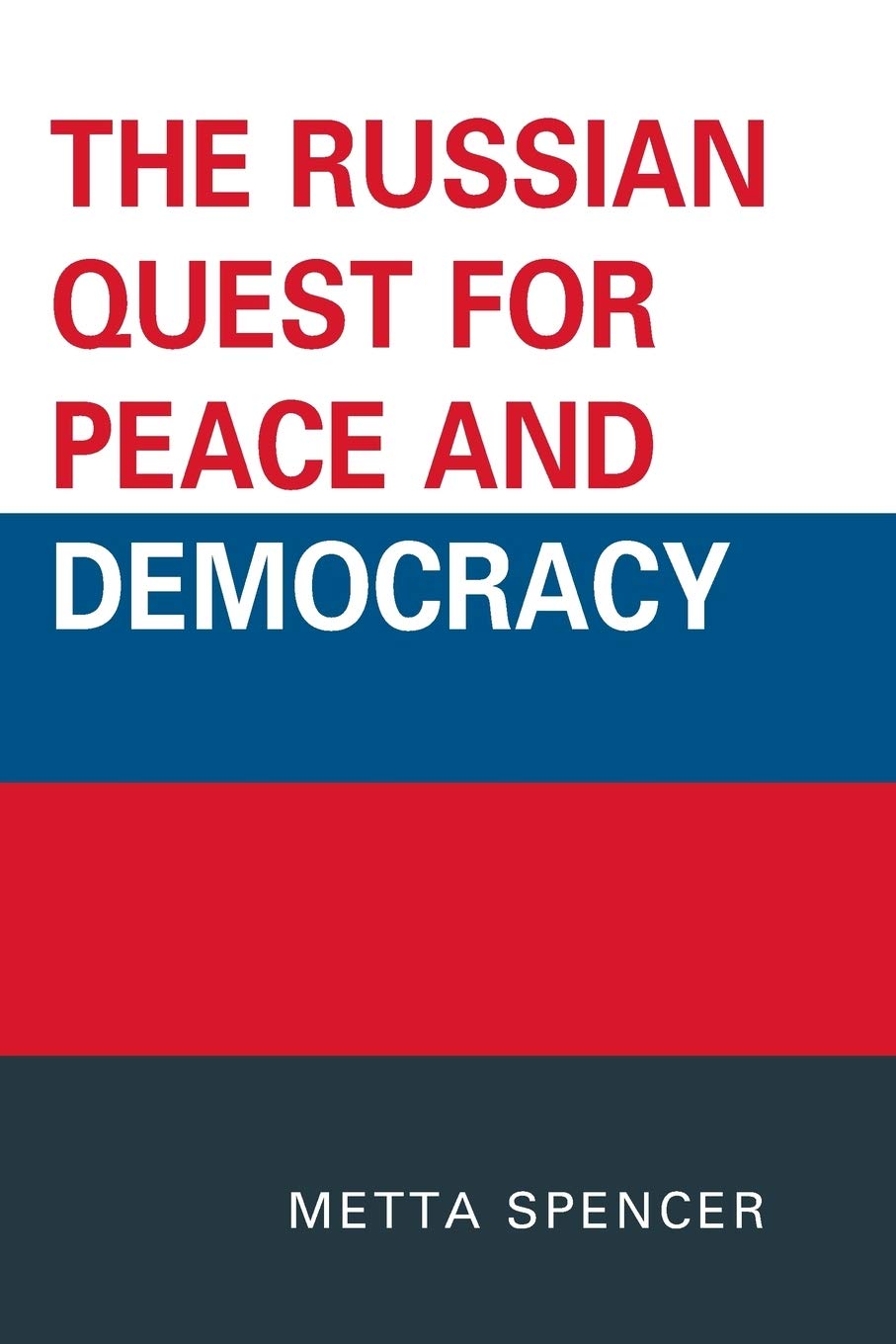
Metta Spencer, The Russian Quest for Peace and Democracy.
New York: Lexington Books, 2010, 348pp.
With the violence and tensions in Ukraine and the reactions of the USA, Russia, and NATO, some writers have spoken of a “New Cold War”. Thus, it is useful to look at how civil society representatives helped to keep lines of communication open during the first Cold War (1945-1990), in particular how Gorbachev’s advancement of democracy and peaceful foreign relations was fostered by private conversations with members of international civil society and NGOs.
There is in the Agni Yoga teachings of Helena Roerich, to which Raisa Gorbachev was particularly devoted, a line which says, “Not the new is proclaimed but what is needed for the hour.” This idea became a guideline for Mikhail Gorbachev whose new thinking was not really new. Many of us had been saying the same thing for years before, but none of us was head of state.
Gorbachev’s September 1987 address to the United Nations (UN) General Assembly was a clear call for the rule of law both domestically and internationally. He recommended greater use of the International Court of Justice and that all states accept its compulsory jurisdiction. He called upon the permanent members of the Security Council to join in formulating guidelines to help lead the way. This was a renunciation of a sixty-year resistance to the World Court that the then Foreign Minister Maxim Litvinov − though an internationalist − had initiated in 1922 claiming that there could be no impartial arbitrator between the Soviet and the non-Soviet world saying, “Only an angel could be impartial in judging Russian affairs.”
Unfortunately, the United States (U.S.) State Department took the speech as a propaganda ploy to further embarrass the U.S. over the World Court’s Nicaragua litigation. Therefore, the U.S. delegation to the UN did everything it could to hinder discussion of giving the World Court a larger role and was successful in stopping any effort to expand compulsory jurisdiction.
Gorbachev did all he could to strengthen the peace-making role of the UN, leading to the successful completion of what had been seemingly endless negotiations at the Palais des Nations in Geneva concerning the Soviet intervention in Afghanistan, and the very difficult negotiations, also in Geneva, between Iraq and Iran to end their war.
Progress was also made on the Vietnamese occupation of Kampuchea (Cambodia) which led to the 1992 Paris Accord. This combination of deescalation in tensions and violence in the international area and significant steps in arms control was largely due to the leadership of Gorbachev. His seven years in power (1985-1991) left the world a safer place and Russia a more openly pluralistic society. However, the common ground on which he tried to stand was constantly eroded by forces he could not control, leaving him at the end with no place to stand.
Metta Spencer, Editor of Peace Magazine and professor emeritus of sociology at the University of Toronto tells some of this story, especially through interviews with persons in Gorbachev’s inner circle as well as other participants in the fast-changing scene. She has continued her interviewing so that persons also reflect on events and trends in post-Gorbachev Russia − the Yeltsin and early Putin years.
What is most helpful to those of us interested in citizen diplomacy and who were involved in talks with Soviets on arms control is her account on how discussions with members of the Soviet Academy of Sciences’ institutes, especially the USA/Canada Institute of Georgi Arbatov and the Institute for World Economy and International Relations (IMEMO) had an impact on Soviet decision-making. As Spencer notes, Gorbachev’s advancement of democracy and peaceful foreign relations was fostered by private conversations with members of international civil society. Among the Soviets who participated, some became Gorbachev’s chief advisors.
The ground for these discussions had started relatively early at the time of Nikita Khrushchev. The Pugwash meetings started in 1957, and the Dartmouth conferences led by Norman Cousins and Georgi Arbatov began in 1960.
Metta Spencer sets out clearly the core of her book. Democracy, human rights, and nonviolence are rarely reinvented independently by local citizens. Usually, they are imported from abroad and spread by personal contacts in international civil society, not by diplomats or rulers. That was the way it happened in the Soviet Union. This book describes how certain back-channel relationships with foreign peace researchers and activists influenced the Soviet Union’s brief democratization, its foreign policy and its military doctrine. She adds that transnational civil society or organizations are most helpful for they create heterogeneous relationships − those that tend to bridge society’s disparate elements. Such relationships inform and strengthen individuals who, in an authoritarian setting, face heavy pressures to conform.
Metta Spencer’s interviews with people well after the events, give a sense of necessary distance, of the strengths and weaknesses of movements and individuals.
Note
1) For a good overview of citizen diplomacy efforts with the Soviet Union, see the following listed by date of publication:
Gale Warner and Michael Shuman, Citizen Diplomats: Pathfinders in Soviet-American Relations − And How You Can Join Them (New York: Continuum, 1987)
David D. Newsom (Ed.), Private Diplomacy with the Soviet Union (Lanham, MD.: University Press of America, 1987)
Gale Warner, Invisible Threads: Independent Soviets Working for Global Awareness and Social Transformation (Washington, DC: Seven Locks Press, 1991)
Matthew Evangelista, Unarmed Forces: The Transnational Movement to End the Cold War (Ithaca, NY: Cornell University Press, 1999)
Prof. René Wadlow is President of the Association of World Citizens.
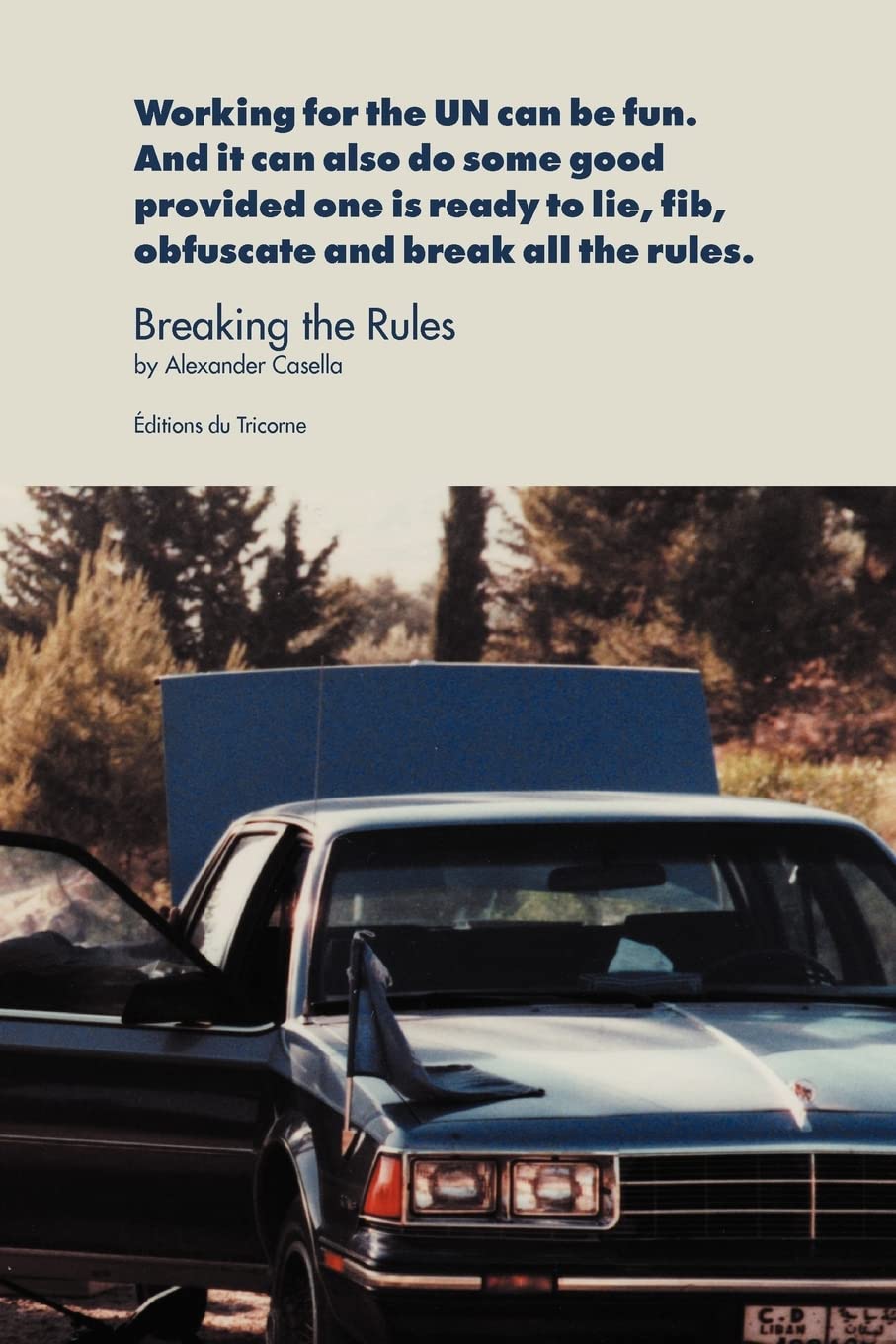
Alexander Casella, Breaking the Rules: Working for the UN can be fun. And it can also do some good provided one is ready to lie, fib, obfuscate and break all the rules.
Geneva: Editions du Tricorne, 2011, 368pp.
Alexander Casella has written a lively account of his years first as a journalist for the Journal de Genève covering events in Vietnam and China and then as a staff member of the Office of the United Nations (UN) High Commissioner for Refugees dealing largely with Indochina with short stays in other trouble spots – Beirut and Albania after the Serbia-Kosovo conflict. He has kept his journalist ability to paint word portraits of colleagues and Vietnamese and Chinese officials.
Thus, he writes, “During the twenty years that I spent in the cut-throat world of humanitarian action, from Hanoi to Beirut to Bangkok to Hong Kong, the humanitarians I encountered included more than their share of the self-righteous, the unimaginative and the careerist. And as for the philanthropic organizations they served in, while these were certainly doing some good they were also spending an inordinate amount of time stabbing each other in the back as they vied for visibility and a larger slice of the public’s money. To my mind, the worst of the lot were to be found among the so-called advocates, those who had made it their mission to preach rather than to act. Vain, arrogant, self-obsessed and with human rights violations as their daily bread they would on occasion not hesitate to fabricate fodder in the race to appear more proactive than their competitors.”
Casella jumps over his years as a student at the University of Geneva and his Ph.D. studies at the Geneva Graduate Institute for International Studies where he might have seen some backstabbing and also his years as a journalist where all his colleagues were not necessarily imaginative and selfless. However, his emphasis is on his years with the Office of the High Commissioner for Refugees (UNHCR).
He began with UNHCR early in 1973 at a particularly critical moment in the history of the United States (U.S.) war in Vietnam. The High Commissioner was the atypical Prince Sadruddin Aga Khan who had a particular interest in Vietnam. He was the son of the Aga Khan, who as a delegate of India had been for a year the President of the Council of the League of Nations as well as the head of the Ismaili branch of Shia Muslims. Thus, Sadruddin grew up in a diplomatic milieu, studied at Harvard where he made U.S. friends and contacts and had personal money which let him do things without checking with UNHCR accountants. Sadruddin also had a large château on the edge of the Lake of Geneva where he could invite people to whom he wished to speak informally. For Casella, all the following High Commissioners who came from national politics or the International Committee of the Red Cross had less style, fewer doors that opened at the sound of the name, and followed more closely bureaucratic rules.
Breaking the Rules gives the book its title and somewhat its theme. But there is a difference between the rules and the spirit of the rules. The rules are set for an organization whose headquarters are in Geneva and where following rules in the narrow sense is part of the city s culture. Thus, to give an example Casella uses, if you want to buy a ton of cement to build something in Geneva, you need to summit three estimates from three different companies to get an O.K. In Geneva, you can get three estimates in a hurry. But Casella wanted a ton of cement in Hanoi, which had to be shipped from China. There were not three companies in competition. So he bought cement from the one company available. Casella had a good local Vietnamese assistant so he did not pay too much.
As with much national diplomacy, UN organizations have to obfuscate while knowing the real situation. Thus, in the early days when North Vietnam was not a member of the UN, the UNHCR had to deal with what was called the North Vietnamese Red Cross though in practice the people were from the Foreign Ministry. That also happened with the boat people issue of Vietnamese landing in other Asian countries. Some boat people could not be granted refugee status and agreements had to be reached on their return to Vietnam with a government agreement not to prosecute for illegal exit. The negotiations were difficult. Some things had to be made very clear; other things left vague. People known earlier reappear in different categories. You need a good memory.
A main difference between being part of a national diplomatic service and a UN agency, is that in a national service, although people have different temperaments, they share a common culture while in the UN, people come from different cultural backgrounds. Thus when Madame Ogata became High Commissioner “however well she spoke English, she still had the mindset of a Japanese and there was no getting away from it…The stern-looking woman who received me that evening at six did not move from her desk as I was ushered into her office and did not seem particularly pleased to see me either.”
Another difference is the need to raise funds to carry out activities. While most of the bureaucratic functions of UNHCR are covered by a regular budget, activities on behalf of refugees in the field must be covered by special donations, usually from rich countries. Thus, there is a need to sell programs and not to offend the leaders of states who donate funds. There must be as few waves as possible and no reports of financial mismanagement.
Thus, the need at times to whitewash events, to make complicated situations look simpler, to have regional representation of staff and yet somehow to weave the mosaic into one operational entity. Casella has written a realistic picture of UNHCR both in Geneva and Asia – a welcome addition to the small body of writings of firsthand experiences.
Prof. René Wadlow is President of the Association of World Citizens.
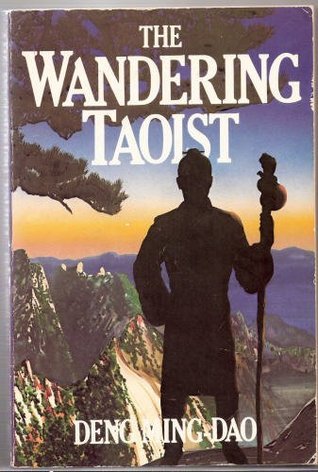
Deng Ming-Dao, The Wandering Taoist. New York: Harper and Row, 1986, 240pp.
This is a biography of Kwan Saihung, a Chinese Taoist ascetic master written by an American student of his in martial arts and Taoist training. Kwan Saihung was trained in a leading Taoist monastery in China in the 1930s. He left the monastery to fight the Japanese during the late 1930s. After the Communist victory in the civil war, he arrived in California where he teaches Chinese martial arts – many of which are related to Taoist philosophy.
Although Taoist sages usually speak little of themselves – the personality and outward events of life being of less importance than one’s relations to nature and the permanent patterns of life – Deng Ming-Dao has pieced together a chronological description of Kwan Saihung’s early life and training from conversations with the master. Most of the book is recounted in conversational style, which makes for pleasant reading.
“All that matters to a Taoist is that one is in harmony with nature. In one’s character, one is like heaven and earth, as orderly as the four seasons. The book Tao Te Ching clearly states that when things reach the pinnacle of their strength, they begin to grow old. (1) Therefore excessive strength is contrary to Tao. What is contrary to Tao will come to a speedy end. Thus one seeks not to build up one’s own power but to unite with the Tao. Things change but the laws underlying change remain unchanging. If one understands these laws and regulates one’s actions in conformity with them, one can then turn everything to one’s advantage.”
(1) See Arthus Waley, The Way and its Power: A Study of the Tao Te Ching (New York, Grove Press, 1958, 260pp)
Prof. René Wadlow is President of the Association of World Citizens.
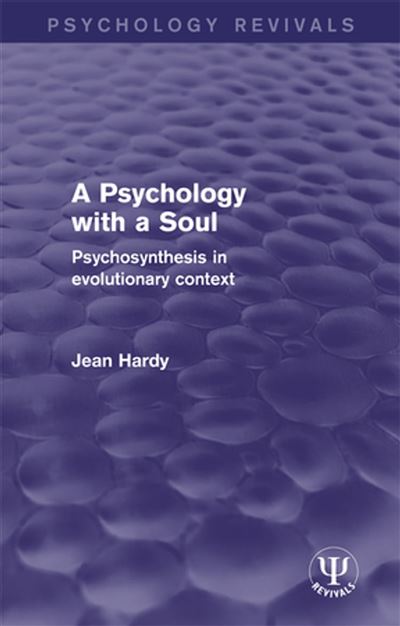
This is a book on the psychosynthesis system of psychotherapy developed by Roberto Assagioli.
Roberto Assagioli (1888-1974) set out a path to the Higher Self with the power of the will. Roberto Assagioli was a close coworker of both Sigmund Freud and Carl Gustav Jung. In 1910, he broke from the Freudian approach and began to develop his own psycho-spiritual model which he called psychosynthesis. He was closer in approach to Jung, but as the first translator of Freud’s writings into Italian, he is often cited as the introducer of Freudian thought into Italy.
Roberto Assagioli was an Italian psychiatrist and humanist.
A short presentation of Assagioli’s view is that “I am what I will to be”. In a sense, the individual does not have a will: rather he is a will, a directing energy, that has taken human form as an individual. The individual will-force is in some way identical to the universal will-force. Assagioli who had studied Asian thought highlighted the Chinese sage becoming one with the universal energy – the Tao.
As the individual will starts on its path toward the Higher Self, it must drop off images of its earlier self formed by experiences, memories, feelings and images of the past. Some of these self-images and experiences have been repressed and stored in the subconscious. Thus, in many cases, there is a first task of self-discovery of past experiences and emotions stored in the subconscious. Only when this is done can one deal with the current self-images and emotions which make up the current personality.
The process of dropping off current self-images Assagioli calls “disidentification”. Disidentification is needed so that a new identity emerges, one that is capable of accepting and integrating in a harmonious synthesis all the earlier emotions, thoughts, and experiences. This is why Assagioli called his approach “psychosynthesis”. It is this fresh, new personality, which Assagioli termed the “I” that can set out on the road to develop the Higher Self. This inner journey is not always easy. There is a progressive examination of the contents of the field of consciousness and the functions of the psyche. This involves a progressive movement through the preconscious, the subconscious and culminating with the higher conscious. Assagioli writes, “Spiritual development is a long and arduous journey, an adventure through strange lands full of surprises, difficulties and even dangers. It involves a drastic transmutation of the ‘normal’ elements of the personality, an awakening of potentialities hitherto dormant, a raising of consciousness to new realms, and a functioning along a new inner dimension”.
Along the way to the Higher Self, the will can be strengthened by what Assagioli calls “transpersonal experiences” and what Abraham Maslow calls “Peak Experiences”. Such experiences help to stimulate the drive toward the Higher Self. However, some of these transpersonal experiences can be short-lived and ephemeral unless they are grounded through meditation and techniques of visualization of oneself as already functioning as the Higher Self.
These techniques of creating an identity as being the Higher Self are one of the outstanding features of psychosynthesis. However, after 1936, his work became increasingly difficult both because of the growing antisemitism under Nazi German pressure on Italy and because his humanitarian activities aroused hostility from the Italian Fascist government. In 1940 he was arrested and kept in solitary confinement for a month and then kept under strict police surveillance. In 1943, he was again actively persecuted and forced to hide in remote mountain villages. He narrowly escaped twice from the Nazi soldiers who had destroyed his family’s home with dynamite.
After 1945, he increased his contacts with a wide group of spiritual thinkers from different traditions. However, his aim remained finding approaches to wholeness, realizing the full human potential, transcending contradictions and achieving enlightenment.
Prof. René Wadlow is President of the Association of World Citizens.
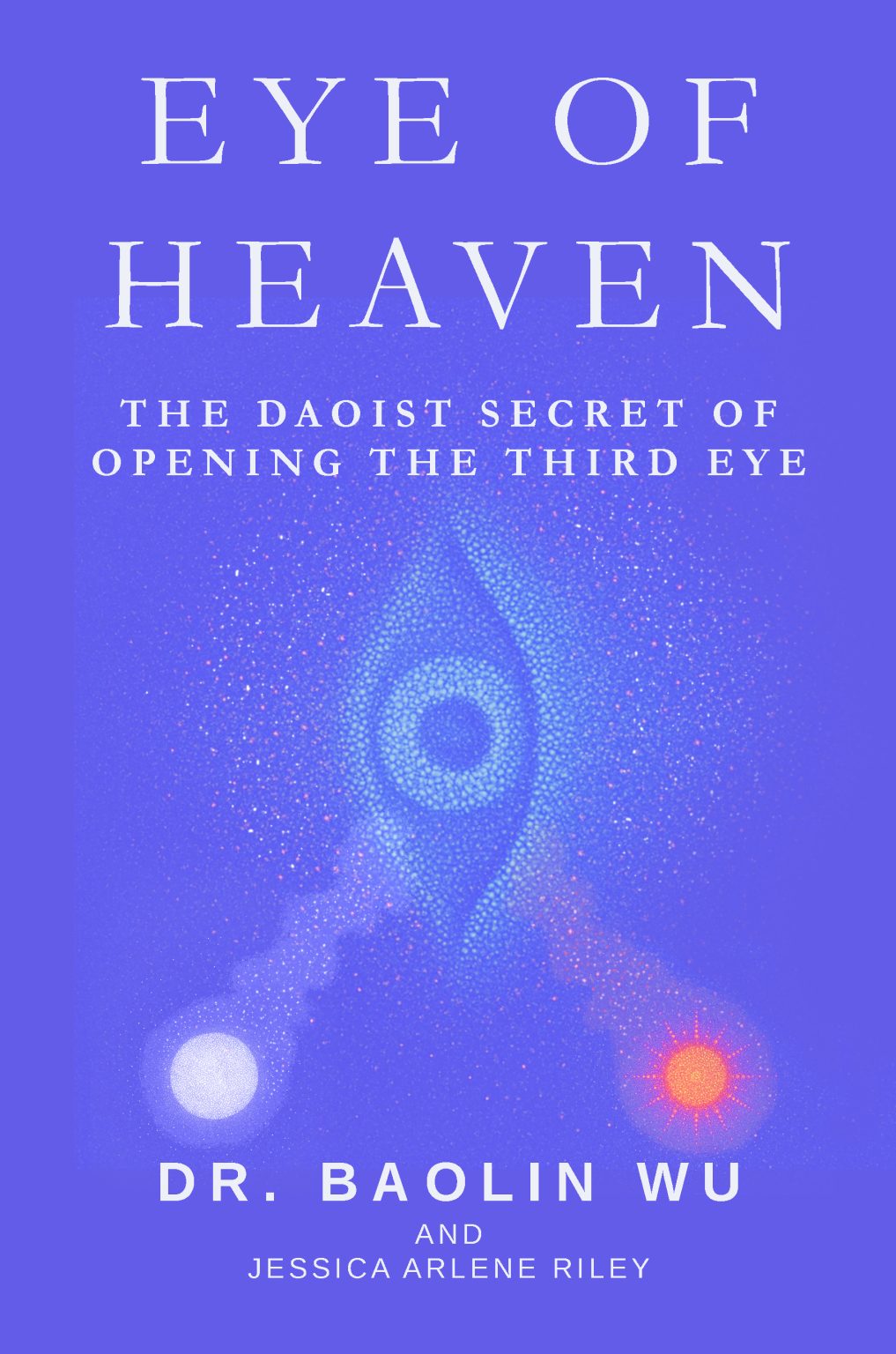
Baolin Wu and Jessica Riley, Eye of Heaven. St. Petersburg, Florida: Three Pines Press, 2025, 107pp.
The subtitle of this book is The Daoist Secret for Opening the Third Eye. The Third Eye is a path to awareness. Opening the third eye frees one’s mind from certain limitations. This is the reason that in Daoism the third eye is often referred to as the Eye of Heaven (The title of the book). One finds the same approach in Hinduism, where the third eye, placed just above the other two, is one of the seven main chakras, energy centers in the body, symbolized as a turning wheel. In Buddhism, the third eye represents the eye of consciousness and wisdom. The third eye is widely developed in Tibetan Buddhism where it represents the Gate of Heaven.
Dr.. Baolin Wu entered the Daoist White Cloud Monastery in Beijing as a young boy and was trained there in Daoist medical practice, especially acupuncture as well as in spiritual practices. The White Cloud Monastery is a highly respected center for the study of Daoist philosophy and medicine. He worked for many years in a hospital in Beijing and emigrated to the USA in 1990. The information on spiritual practices in the book comes from Dr. Baolin Wu. Jessica Riley is one of his current students in California, and the English style of the book is hers.
Throughout Chinese history, philosophical and spiritual beliefs have often been related to healing. Some of the Daoist schools emphasize internal alchemy, often as a way to reach longevity. Internal alchemy helps one to become aware of sexual energy and how to circulate, balance, preserve and reuse the energy so as to heal.
The book provides illustrated qigong exercises useful for relaxation but which are also preparation for the opening of the third eye. Work on the third eye and the higher states of consciousness is usually done with a master Daoist. Thus the book is no substitute for efforts with an advanced Daoist practitioner. However, it is a good introduction to the approach and its role in Chinese culture.
Prof. René Wadlow is President of the Association of World Citizens.
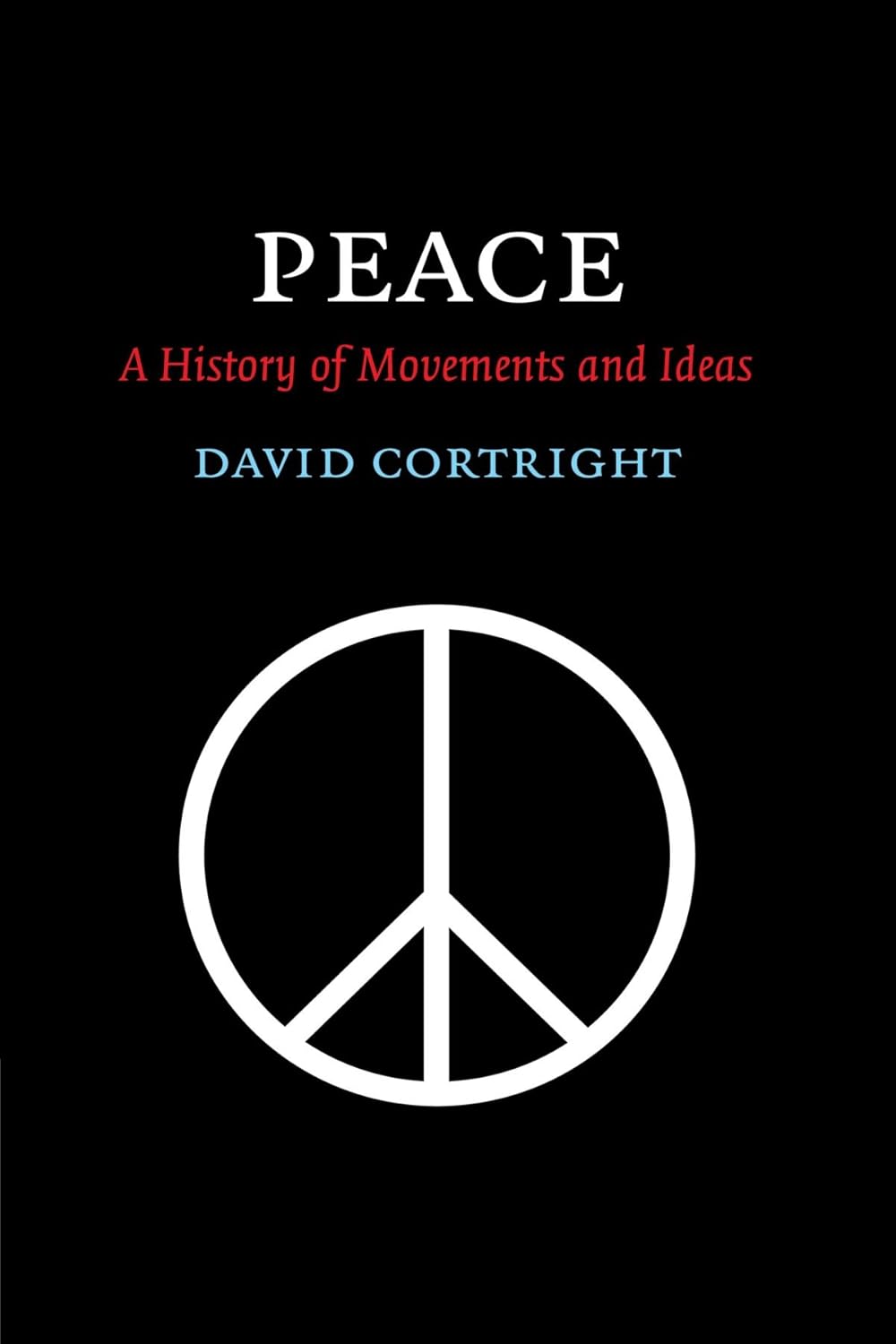
David Cortright, Peace: A History of Movements and Ideas
Cambridge: Cambridge University Press, 2008, 376pp.
Peacemaking has always been an art rather than a science. As with painting, there is a pallet with a range of colors, and it is up to the artist to know how to combine these colors, sometimes in pure form and at other times mixed together to paint a picture, sometimes of a peaceful field and at other times a scene of revolt. David Cortright, Director of Policy Studies at Notre Dame’s Kroc Institute for International Peace Studies and an activist especially on nuclear arms issues, has set out a clear and up-to-date history of the ideas and movements that make up the colors on the peace pallet. While the book has been out for some time, I review it now as a first-rate overview of peace efforts and ideologies.
As with colors in art, there are a limited number of ideas which can be used, sometimes alone and sometimes in combinations. Likewise, there are a limited number of people in the peace brigades, and they are usually found in different campaigns, often the same people in different uniforms. Open conflicts provide us with test cases of how ideas concerning peace and conflict resolution can be put together, and we see how the peace brigades will form themselves to meet the challenge.
Cartright gives us a good overview of the development of nineteenth century peace societies. They were born in the USA and England from the success of collective action against slavery and the slave trade. If the age-old institution of slavery could be abolished by a combination of law, religious concern and changing public opinion, could not war be abolished in the same way? Religious-motivated action, work to influence public opinion, and legal restraints on war have continued to be the chief colors of the peace pallet.
The Hague Peace Conferences of 1899 and 1907 were milestones in the development of world law, of faith in the power of mandatory arbitration, and for the need of world courts. The Hague legal spirit was most prominently displayed slightly later by President Woodrow Wilson who had long espoused arbitration, the strengthening of international law and multilateral cooperation. The League of Nations and the United Nations are the embodiment of the Wilsonian vision. As H.G. Wells wrote in The Shape of Things to Come, “For a brief interval Wilson stood alone for humankind…in that brief interval there was a very extraordinary and significant wave of response to him throughout the earth.”
Wilson remains the ‘father figure’ of peace through law and multilateral governmental action just as Mahatma Gandhi does for nonviolent action. As Martin Luther King Jr. wrote, “Gandhi was probably the first person in history to lift the love ethic of Jesus above mere interaction between individuals to a powerful and effective social force on a large scale.”
Peace efforts require images for a complex set of ideas, and Wilson and Gandhi provide that image of the heroes of peace. Wilson and Gandhi represent the two steady sources of inspiration for peace workers — those working for the rule of law and human rights and those working to translate religious insights into political action. It is not always easy to get the two traditions to work together.
As Cortright notes, “In May 1999, nearly 10,000 peace advocates from around the world gathered in Holland for the Hague Appeal for Peace, one of the largest citizen peace conferences in history…The 1999 Hague Appeal was intended to launch a new era of citizen-initiated peacemaking. As preparations for the conference took place, however, NATO forces launched a bombing campaign against Serbia to force its withdrawal from Kosovo. While the official conference proceedings unfolded, hundreds of activists gathered in basement conference rooms for impromptu sessions to debate the pros and cons of NATO intervention. It was a heated discussion in which colleagues who had worked together for disarmament in the 1980s found themselves on opposite sides of the question of intervention in Kosovo”.
Today, as the conflicts in Syria and Iraq, as well as with the Islamic State (ISIS) terrorist group, grow in intensity and spill over to influence Turkey and Lebanon, we face many of the same issues that faced peace workers in the conflicts of former Yugoslavia: what are the sources of legitimate government and when does a government cease to be legitimate? Is there really a ‘duty to protect’ and when does this duty become only a cover for power politics as usual? How do peace workers act in “far-away places” in which both legal and moral issues are not clear.
Peace remains a painting in process; the colors are often the same, the shapes painted change. David Cortright has given us a good history, but there are no ‘how to’ guides for action.
Prof. René Wadlow is President of the Association of World Citizens.
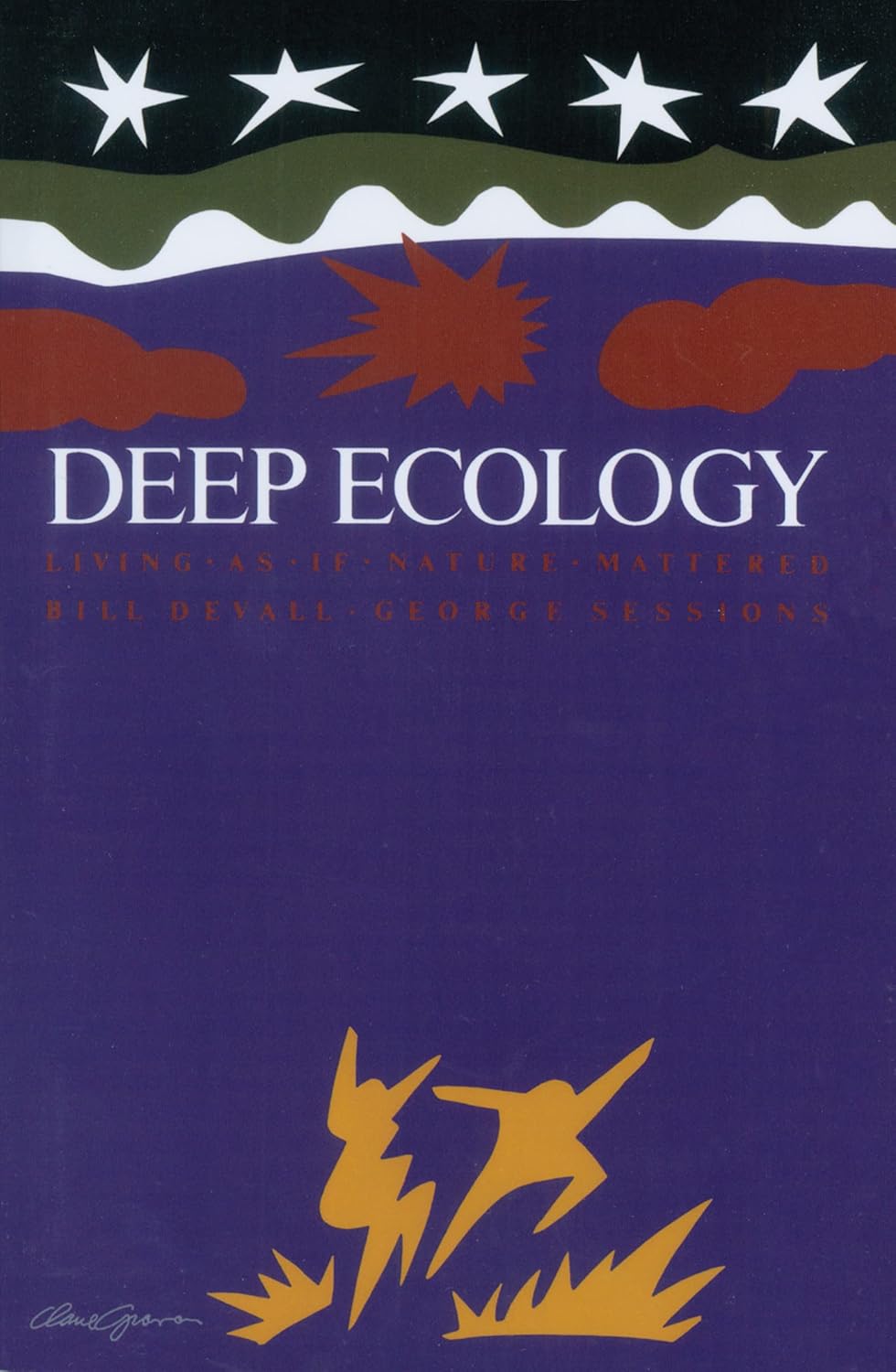
Bill Devall and George Sessions, Deep Ecology: Living as if Nature Mattered.
Layton, UT: Gibbs Smith, 1985, 267pp.
In his Small is Beautiful, Fritz Schumacher wrote, “In the affairs of men, there always appears to be a need for at least two things simultaneously, which on the face of it, seems to be incompatible and to exclude one another. We always need both freedom and order. We need the freedom of lots and lots of small, autonomous units, and, at the same time, the orderliness of large-scale, possibly global, unity and co-ordination.”
Likewise, there must be transformation both at the individual level as well as collective change. The two are closely linked. Only a whole and autonomous person can act, resist, walk away, and build something new. However, collective change is something more than the sum of individual changes. Collective change is a vision for a society. Thus, individual change and political action must go together.
One of the predicaments facing the emerging Green-ecology political movements is the need to gather enough people together to be a credible political force – which means general agreement upon a small number of basic options – while having a deep enough political philosophy so that people are not seduced by the current political parties using a few Green slogans. There is wide-spread support for reform environmentalism which aims to stop gross pollution, extensive despoliation of land, lakes, and seas, mistreatment of animals. But those who support such localized reforms may not see the need for a basic transformation of society and the system of values.
Yet we need planet-wide changes, for ecological awareness has shown us that the planet we live on is one inter-related system upon which we are all dependent. In order to survive, we must learn to work together to build a world beyond war, a society with sustainable development – which means sustainable agriculture and appropriate technology, wholistic approaches to education and health, a spiritual outlook based on reverence for life. Albert Schweitzer from his work in Africa re-launched the human-scale revolution by insisting that production ought to serve peoples’ real needs; that there must be a new relationship with nature; that solidarity must replace antagonism; and that there must be sane consumption and active individual participation in society.
The world as an interrelated system has come to be called the “Gaia hypothesis” after the work of James Lovelock and Lynn Margulies who wrote “We defined Gaia as a complex entity involving the earth’s biosphere, atmosphere, oceans and soil, the totality constituting a feedback or cybernetic system which seeks an optimal physical and chemical environment for life on this planet. Gaia remains a hypothesis, but much evidence suggests that many elements of this system act as the hypothesis predicts.” (Gaia is the first goddess of early Greek thought. From the void, neither born nor destroyed – what the Chinese call the Tao – Gaia danced forth and rolled herself into a spinning ball.)
Systems are integrated wholes whose properties cannot be reduced to those of smaller units. The systems approach emphasizes basic principles of organization. Thus, nature has an order, a pattern that as humans we need to understand, to respect, and to preserve. This order has intrinsic value and is the base of Life.
This book is an effort to outline the rich spiritual-religious-mystical component of the Green movements. The term “deep ecology” was coined in 1973 by Arne Naess, a social scientist and philosopher who has written widely on Mahatma Gandhi, nonviolence, and the Buddha. He wanted to describe the deeper more spiritual approach to nature exemplified by Rachel Carson and Aldo Leopold. This is a most useful analysis of Green values. The book should be widely used for discussion and political planning.
Prof. René Wadlow is President of the Association of World Citizens.
 Association of World Citizens