LES CITOYENS DU MONDE APPELLENT A UNE FIN IMMEDIATE
DES HOSTILITES ENTRE ISRAEL ET LE HAMAS
ET A UN EFFORT VERITABLE DE CONSTRUCTION DE LA PAIX
POUR LE MOYEN-ORIENT
L’AWC, Organisation Non-Gouvernementale dotée du Statut Consultatif auprès de l’ONU et active à ce titre au sein du Conseil des Droits de l’Homme, est profondément alarmée de la dernière flambée de violence entre les milices armées du Mouvement de la Résistance islamique palestinien (Hamas) et les Forces de Défense israéliennes (Tsahal). Plus encore, nous sommes consternés des conséquences des attaques délibérées, perpétrées par les deux côtés, contre les droits des civils en Israël et dans la Bande de Gaza.
Depuis les attaques lancées par ses forces au petit matin du 7 octobre, le Hamas prend pour cible des civils en Israël, étant allé jusqu’à capturer des citoyens israéliens, tant civils que soldats de Tsahal, pour les garder en otage. La cause légitime d’un peuple privé de longue date de sa propre terre, cause que même l’ONU reconnaît comme légitime sur le plan international, ne saurait être servie dans la dignité par de telles méthodes qui s’inscrivent en faux contre le droit international.
Le gouvernement actuel d’Israël n’a fait que repousser les limites du mépris pour ce même droit international, à travers des déclarations et mesures répétées et insistantes visant à la discrimination systématique contre le peuple palestinien dans les Territoires palestiniens occupés (TPO). A l’intérieur même des frontières internationalement reconnues d’Israël, le gouvernement israélien actuel a également semé les graines de la discorde et de l’affrontement politique en tentant d’amoindrir les prérogatives du pouvoir judiciaire et, ce faisant, de mettre fin à la tradition de démocratie épaulée de contrepouvoirs qui est celle d’Israël.
Cette conduite mal inspirée s’avère nuisible tant au peuple palestinien qu’aux citoyens d’Israël. Elle crée à présent un chaos nouveau dans la région qui revient, selon les termes du Chapitre VII de la Charte des Nations Unies, à une menace contre la paix et la sécurité internationales. La situation risque de s’aggraver encore maintenant que le Hezbollah, notoirement soutenu par l’Iran, vient en dépit de toute sagesse de rejoindre le combat depuis le sud du Liban.
Une fois de plus, les droits des civils en Israël et dans la Bande de Gaza sont réduits à l’état de victimes de la haine et de la violence qu’ont déchaîné les deux côtés en l’absence d’un effort international, faisant cruellement défaut mais se voyant constamment refusé, pour résoudre le conflit du Moyen-Orient en s’attaquant à ses causes premières mêmes, au nombre desquelles l’exigence de justice qui est celle du peuple palestinien et le besoin de sécurité qui est celui de l’Etat d’Israël.
En conséquence, l’AWC réitère son appel à la fin immédiate des hostilités en Israël et dans la Bande de Gaza. Nous appelons également à la libération de toute personne, qu’il s’agisse d’un civil ou d’un militaire, prise en otage par le Hamas.
Nous en appelons de surcroît à la communauté internationale pour enfin entreprendre un effort authentique de construction de la paix en Israël et dans les TPO, ce en prenant pleinement en compte les causes premières du conflit et en faisant droit comme il convient à la légitime revendication du peuple palestinien pour la justice ainsi qu’à la revendication tout aussi légitime du peuple israélien pour la sécurité.
AND FOR A GENUINE PEACEBUILDING EFFORT IN THE MIDDLE EAST
The AWC, a Nongovernmental Organization in Consultative Status with the United Nations (UN) and accredited with the UN Human Rights Council, is deeply alarmed at the latest flare of violence between the armed militias of the Palestinian Islamic Resistance Movement (Hamas) and the Israeli Defense Force (IDF). Most importantly, we are appalled at the consequences of the deliberate attacks from both sides on the rights of civilians in Israel and the Gaza Strip.
Since the attacks launched by its forces in the early morning of October 7, Hamas has been targeting civilians in Israel, even capturing Israeli citizens, both civilians and IDF soldiers, to keep them as hostages. The legitimate cause of a people long deprived of their own land, a cause that even the UN recognizes as internationally legitimate, cannot be served in dignity by such methods that run counter to international law.
The current government of Israel has been constantly pushing the limits of disregard for the same international law, through repeated and insistent statements and practices aiming at systematic discrimination against the Palestinian people in the Occupied Palestinian Territory (OPT). Within the internationally recognized borders of the State of Israel, the current Israeli Government has also sowed the seeds of discord and political strife by trying to lessen the powers of the judicial branch and, in so doing, to end Israel’s tradition of democracy with checks and balances.
This misguided conduct has proved harmful to both the Palestinian people and the citizenry of Israel. It is now creating new chaos in the region amounting to, in the very words of Chapter VII of the UN Charter, a threat to international peace and security. The situation could get even worse as Hezbollah, notoriously backed by Iran, has now unwisely joined the fight from South Lebanon.
Once more, the rights of civilians in Israel and the Gaza Strip are falling victim to the hatred and violence unleashed by both sides in the absence of a badly needed but constantly denied international effort to tackle the Middle East conflict right from its root causes, including the Palestinian people’s demand for justice and the State of Israel’s need for security.
Consequently, the AWC reiterates its call for an immediate end to hostilities in Israel and the Gaza Strip. We also call for the release of every person, civilian or military, taken hostage by Hamas.
We further urge the international community to finally undertake a genuine peacebuilding effort in Israel and the OPT by addressing the root causes of the conflict and duly acting on the legitimate claim of the Palestinian people for justice and the equally legitimate claim of the Israeli people for security.
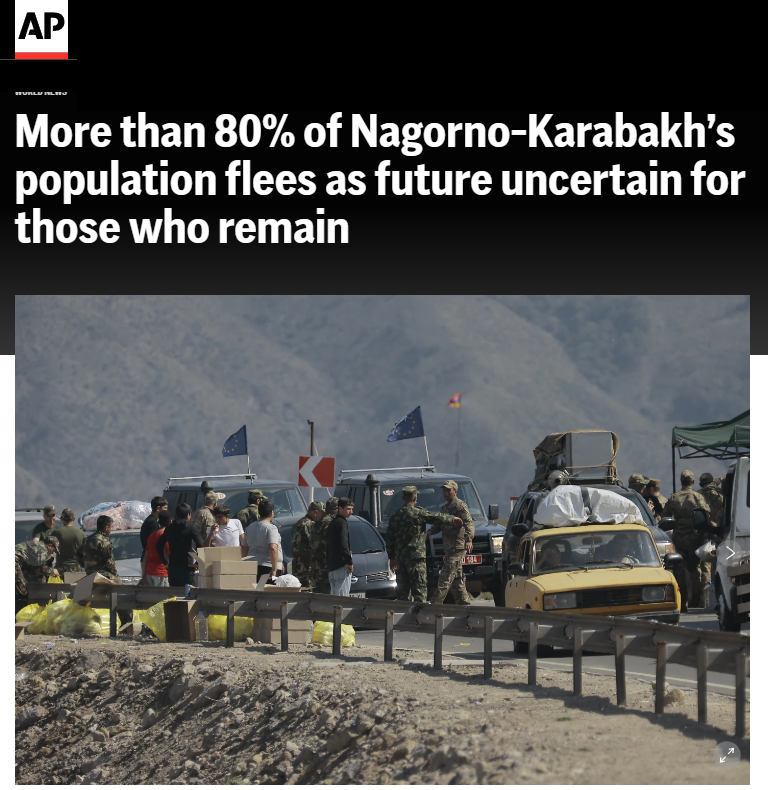
Recent events in Nagorno-Karabakh in the conflict between Azerbaijan and Armenia have raised the issue of possible genocide and the role that the 1948 Convention on Genocide may play.
Genocide is the most extreme consequence of racial discrimination and ethnic hatred. Genocide has as its aim the destruction, wholly or in part, of a national, ethnic, racial, or religious group as such. The term was proposed by the legal scholar Raphael Lemkin, drawing on the Greek genos (people or tribe) and the Latin –cide (to kill) (1). The policies and war crimes of the Nazi German government were foremost on the minds of those who drafted the Genocide Convention, but the policy was not limited to the Nazis (2).
The Genocide Convention is a landmark in the efforts to develop a system of universally accepted standards which promote an equitable world order for all members of the human family to live in dignity. Four articles are at the heart of this Convention and are here quoted in full to understand the process of implementation proposed by the Association of World Citizens (AWC), especially of the need for an improved early warning system.
Article I
In the present Convention, genocide means any of the following acts committed with intent to destroy, in whole or in part, a national, ethnical, racial or religious group, as such:
(a) Killing members of the group; (b) Causing serious bodily or mental harm to members of the group; (c) Deliberately inflicting on the group conditions of life calculated to bring about its physical destruction in whole or in part; (d) Imposing measures intended to prevent births within the group; (e) Forcibly transferring children of the group to another group.
Unlike most humanitarian international law which sets out standards but does not establish punishment, Article III sets out that the following acts shall be punishable:
(a) Genocide; (b) Conspiracy to commit genocide; (c) Direct and public incitement to commit genocide; (d) Attempt to commit genocide; (e) Complicity in genocide
Article IV
Persons committing genocide or any of the other acts enumerated in article III shall be punished, whether they are constitutionally responsible rulers, public officials or private individuals.
Article VIII
Any Contracting Party may call upon the competent organs of the United Nations to take such action under the Charter of the United Nations as they consider appropriate for the prevention and suppression of acts of genocide or any of the other acts enumerated in article III.
Numerous reports have reached the Secretariat of the United Nations (UN) of actual, or potential, situations of genocide: mass killings; cases of slavery and slavery-like practices, in many instances with a strong racial, ethnic, and religious connotation — with children as the main victims, in the sense of article II (b) and (c). Despite factual evidence of these genocides and mass killings as in Sudan, the former Yugoslavia, Rwanda, Burundi, the Democratic Republic of Congo, Sierra Leone and in other places, no Contracting Party to the Genocide Convention has called for any action under article VIII of the Convention.
As Mr. Nicodème Ruhashyankiko of the Sub-Commission on Prevention of Discrimination and Protection of Minorities wrote in his study of proposed mechanisms for the study of information on genocide and genocidal practices “A number of allegations of genocide have been made since the adoption of the 1948 Convention. In the absence of a prompt investigation of these allegations by an impartial body, it has not been possible to determine whether they were well-founded. Either they have given rise to sterile controversy or, because of the political circumstances, nothing further has been heard about them.”
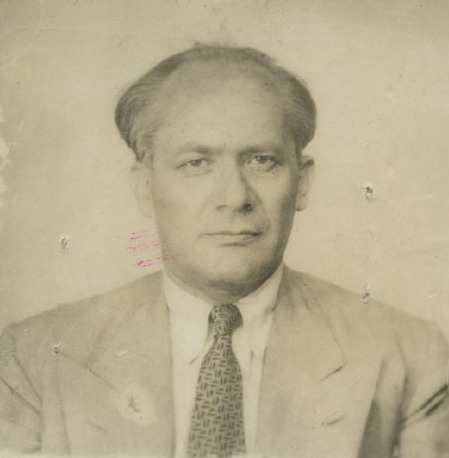
Raphael Lemkin
Yet the need for speedy preventive measures has been repeatedly underlined by UN Officials. On December 8, 1998, in his address at UNESCO, UN Secretary-General Kofi Annan said “Many thought, no doubt, that the horrors of the Second World War — the camps, the cruelty, the exterminations, the Holocaust — could not happen again. And yet they have, in Cambodia, in Bosnia and Herzegovina, In Rwanda. Our time — this decade even — has shown us that man’s capacity for evil knows no limits. Genocide — the destruction of an entire people on the basis of ethnic or national origins — is now a word of our time, too, a stark and haunting reminder of why our vigilance must be eternal.”
In her address Translating words into action to the UN General Assembly on December 10, 1998, the then High Commissioner for Human Rights, Ms. Mary Robinson, declared “The international community’s record in responding to, let alone preventing, gross human rights abuses does not give grounds for encouragement. Genocide is the most flagrant abuse of human rights imaginable. Genocide was vivid in the minds of those who framed the Universal Declaration, working as they did in the aftermath of the Second World War. The slogan then was ‘never again’. Yet genocide and mass killing have happened again — and have happened before the eyes of us all — in Rwanda, Cambodia, the former Yugoslavia and other parts of the globe.”
We need to heed the early warning signs of genocide. Officially directed massacres of civilians of whatever numbers cannot be tolerated, for the organizers of genocide must not believe that more widespread killing will be ignored. Yet killing is not the only warning sign. The Convention drafters, recalling the radio addresses of Hitler and the constant flow of words and images, set out as punishable acts “direct and public incitement to commit genocide”. The Genocide Convention, in its provisions concerning public incitement, sets the limits of political discourse. It is well documented that public incitement — whether by Governments or certain non-governmental actors, including political movements — to discriminate against, to separate forcibly, to deport or physically eliminate large categories of the population of a given State, or the population of a State in its entirety, just because they belong to certain racial, ethnic, or religious groups, sooner or later leads to war. It is also evident that, at the present time, in a globalized world, even local conflicts have a direct impact on international peace and security in general. Therefore, the Genocide Convention is also a constant reminder of the need to moderate political discourse, especially constant and repeated accusations against a religious, ethnic, and social category of persons. Had this been done in Rwanda, with regard to the Radio Mille Collines, perhaps that premeditated and announced genocide could have been avoided or mitigated.
For the UN to be effective in the prevention of genocide, there needs to be an authoritative body which can investigate and monitor a situation well in advance of the outbreak of violence. As has been noted, any Party to the Genocide Convention (and most States are Parties) can bring evidence to the UN Security Council, but none has. In the light of repeated failures and due to pressure from nongovernmental organizations, the Secretary-General has named an individual advisor on genocide to the UN Secretariat. However, he is one advisor among many, and there is no public access to the information that he may receive.
Therefore, a relevant existing body must be strengthened to be able to deal with the first signs of tensions, especially ‘direct and public incitement to commit genocide.” The Committee for the Elimination of Racial Discrimination (CERD) created to monitor the 1965 International Convention on the Elimination of All Forms of Racial Discrimination would be the appropriate body to strengthen, especially by increasing its resources and the number of UN Secretariat members which service the CERD. Through its urgent procedure mechanisms, CERD has the possibility of taking early-warning measures aimed at preventing existing strife from escalating into conflicts, and to respond to problems requiring immediate attention. A stronger CERD more able to investigate fully situations should mark the world’s commitment to the high standards of world law set out in the Genocide Convention.
Notes
1) Raphael Lemkin. Axis Rule in Occupied Europe (Washington: Carnegie Endowment for World Peace, 1944).
2) For a good overview, see: Samantha Power. A Problem from Hell: America and the Age of Genocide (New York: Basic Books, 2002)
3) William Schabas, Genocide in International Law (Cambridge: Cambridge University Press, 2000)
4) E/CN.4/Sub.2/1778/416, Para 614
Prof. René Wadlow is President of the Association of World Citizens.
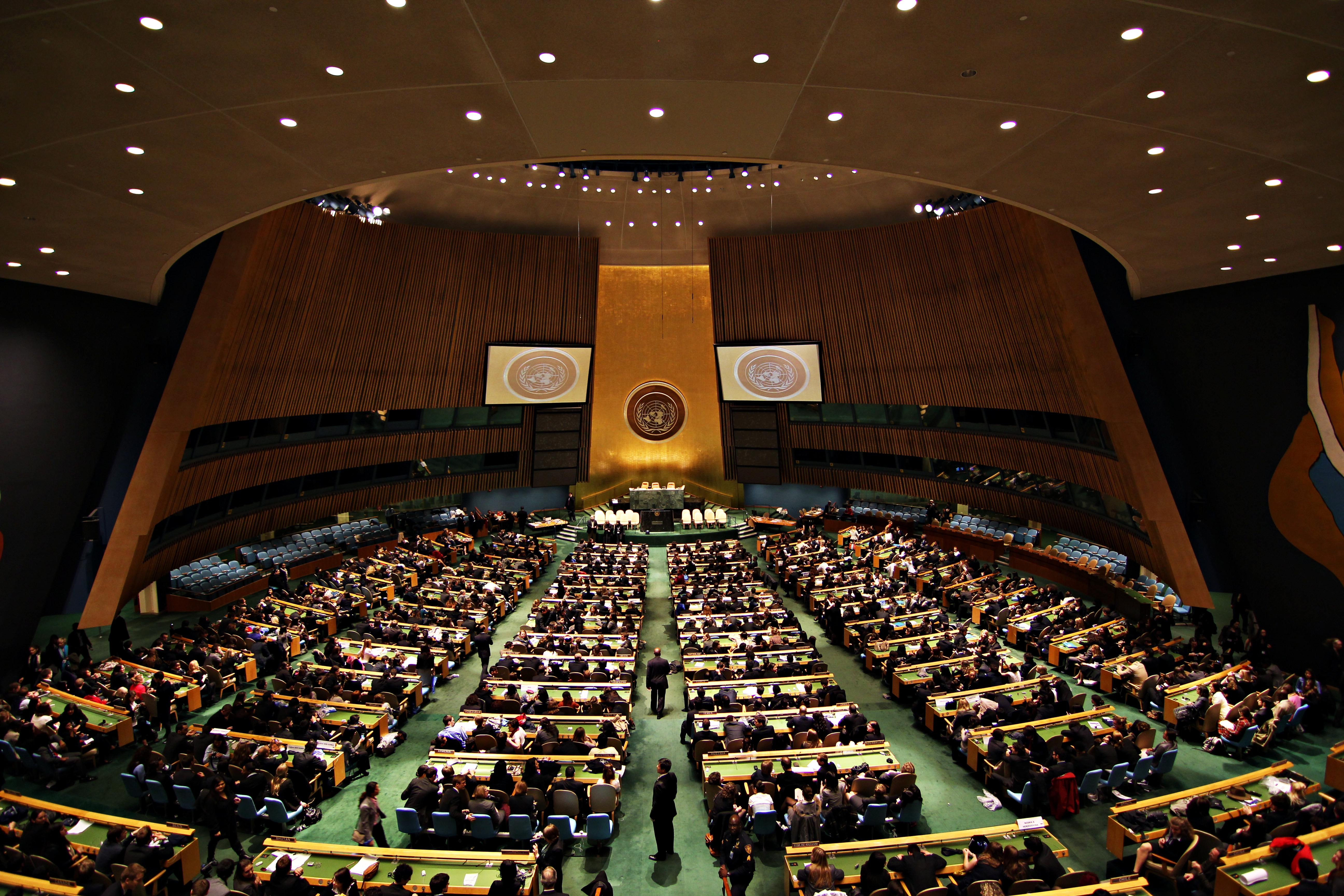
With the United Nations (UN) General Assembly starting on September 19, there is a good deal of reflection among governments and Nongovernmental Organizations (NGOs) as to the effectiveness of the UN to meet the challenges facing the world community.
In 1992, the then Secretary-General, Boutros Boutros-Ghali, outlined a post-Cold War Agenda for Peace. He built his Agenda on four key pillars for UN action: Preventive Diplomacy, Peacemaking, Peacekeeping, and Post-conflict Peacebuilding. Today, these four pillars remain the heart of UN action. What is new from 1992 is the increased role of NGOs and potentially of the international business community, both in preventive diplomacy and post-conflict peacebuilding.
Preventive diplomacy is the more important and requires creative action when there are signs of tensions which can develop into armed conflict unless preventive measures are taken on a variety of fronts. There were at least four months of protests and nonviolent efforts in Syria before the armed violence and counterviolence exploded. This period might have been used to see if needed reforms could be put into place.
(C) Basil D. Soufi/GPA Photo Archive
Likewise, signs of growing tensions between the Russian Federation and Ukraine were visible to many prior to the Russian attack. There had been the “Normandy Effort” – Russia, Ukraine, France, and Germany. There was no visible UN leadership and few NGO efforts to build on this mediation effort to create new constitutional structures within Ukraine.
Today, there are other tension situations that require preventive action: India-China frontier disputes, South China Sea delimitation issues, China-Taiwan tensions, increasing tensions within Myanmar which are already violent but can easily spread if things continue as they are going, the struggle for power in Sudan, and increased Israeli-Palestinian tensions.
For NGOs concerned with peacemaking, there is a need to create mediation teams which can act quickly and have already developed avenues of communication with the authorities, media, and significant actors in those countries where tensions are growing. The winds of violence usually give signs before they are full blown. Creative preventive diplomacy is urgently needed.
Prof. René Wadlow is President of the Association of World Citizens.
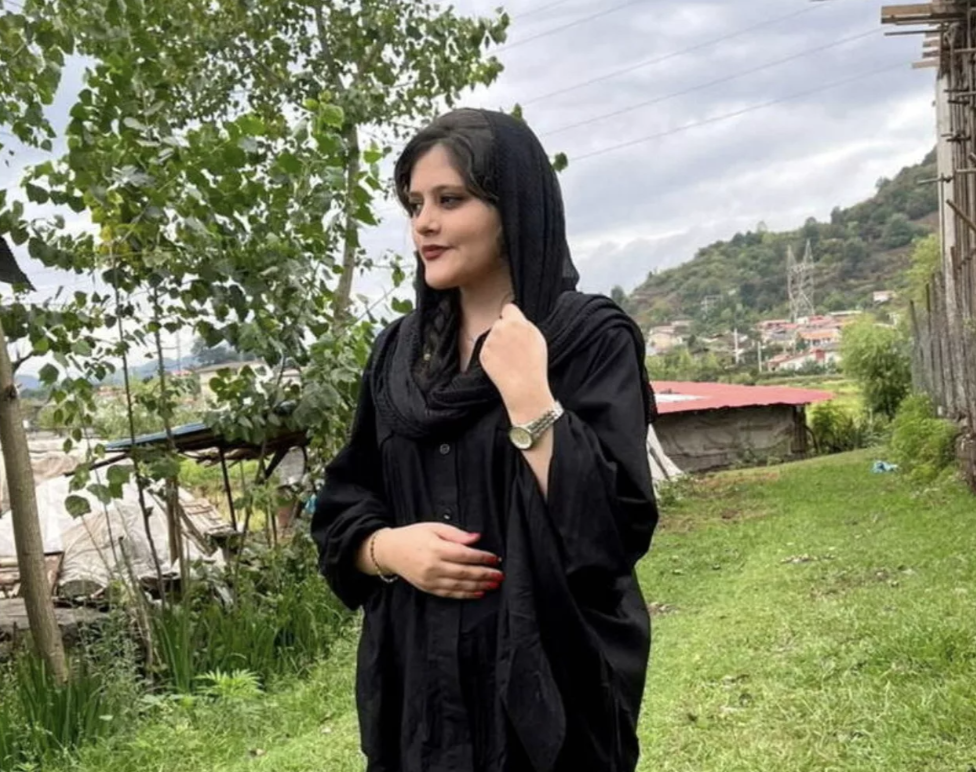
Repression of protests in Iran continues. A wave of protests swept across the country in the wake of the September 2022 death in custody of 22-year-old Mahsa Jina Animi, an ethnic Kurd and Sunni Muslim. It is estimated that the Iranian security forces have killed over 500 protesters and arrested some 20,000 persons of all ethnic and religious backgrounds.
In response to the State-led violence, on November 24, 2022, the United Nations (UN) Human Rights Council created the International Independent Fact-Finding Mission on the Islamic Republic of Iran with the chairmanship of Sera Hossain of Bangladesh.
Mahsa Amini
One aspect of the repression of protests is that religious leaders of the Sunni Muslim communities, especially in Iran’s Sistan and Baluchistan province and in the Kurdish provinces, are being increasingly targeted by the Islamic Republic’s authorities for arrest and imprisonment because of their peaceful criticism of the repression of protests. Iran is a majority Shia Muslim country, and Shiism is the official religion of the State.
Religious minorities include Sunni Muslims, Christians, Baha’is, Zoroastrians, Jews, and the Gonabadi Sufi community. Religious and ethnic identities in Iran often overlap. The Association of World Citizens (AWC) has repeatedly appealed to UN human rights bodies concerning the discrimination and repression of persons of the Baha’i faith.
Another aspect of the repression of protests has been the public hanging of some protesters. The AWC has repeatedly called upon governments for a moratorium on executions with a view of abolishing the death penalty – a penalty that extensive research has shown has little or no impact on the level of crime and too often opens doors to judicial errors and injustices.
The UN International Independent Fact-Finding Mission on the Islamic Republic of Iran has called on Nongovernmental Organizations for direct information. The broader community of NGOs needs to keep public attention focused on events in Iran.
Prof. René Wadlow is President of the Association of World Citizens.
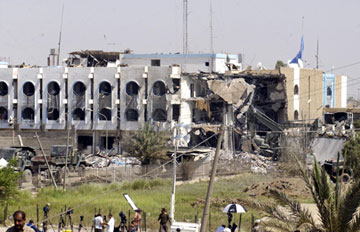
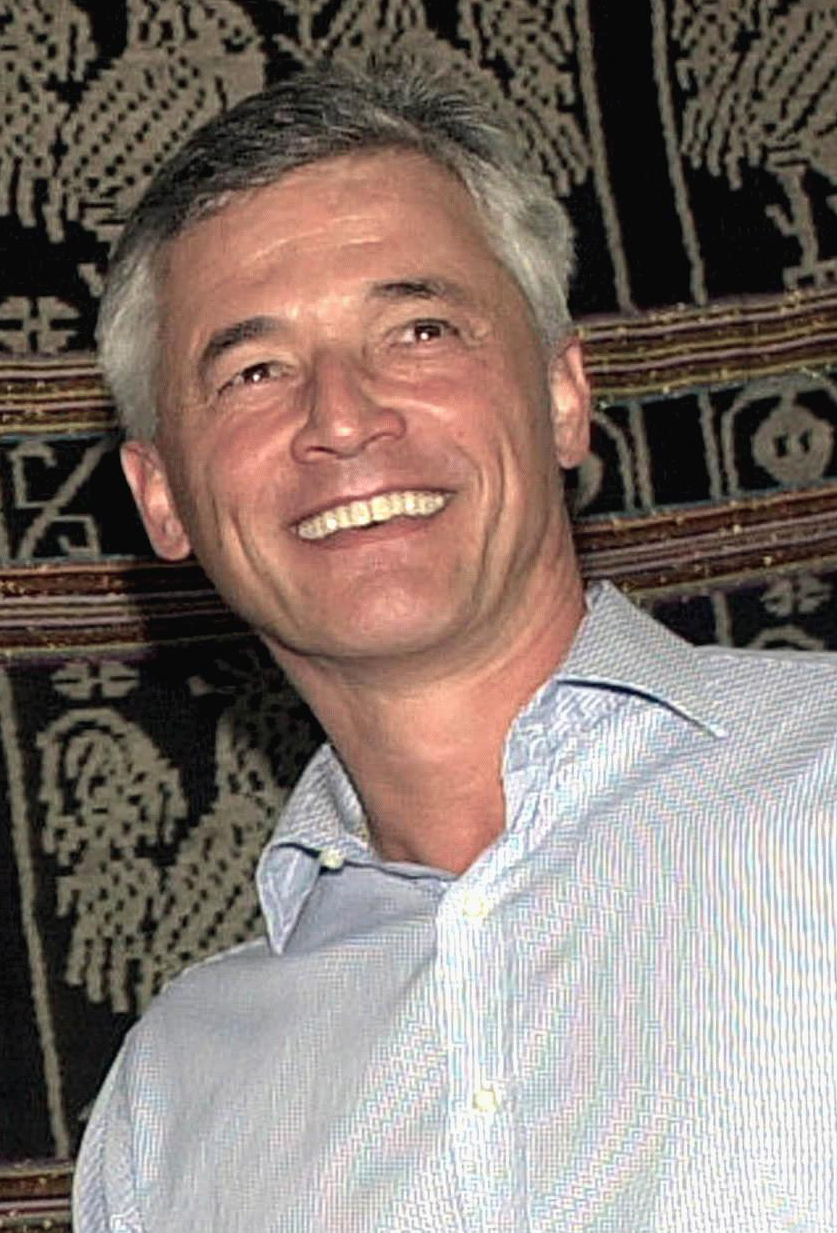
The United Nations (UN) General Assembly has designated August 19 as “World Humanitarian Day” to pay tribute to aid workers in humanitarian service in difficult and often dangerous conditions. August 19 was designated in memory of the August 19, 2003 bombing of the UN office building in Baghdad, Iraq in which Sergio Vieira de Mello, United Nations (UN) High Commissioner for Human Rights and, at the time, Special Representative of the UN Secretary General was killed along with 21 UN staff members. Over 200 UN employees were injured. The exact circumstances of the attack are not known, and why USA and UN security around the building was not tighter is still not clear. A truck with explosives was able to dive next to the building and then blew itself up.
Sergio Vieira de Mello had spent his UN career in humanitarian efforts, often with the Office of the High Commissioner for Refugees and at other times as Special Representative of the UN Secretary General. As a Nongovernmental Organization’s (NGO’s) representative to the UN in Geneva and active on human rights issues, I knew him during his short 2002-2003 tenure as High Commissioner for Human Rights. Many of us had high hopes that his dynamism, relative youth – he was 54 – and wide experience in conflict resolution efforts would provide new possibilities for human rights efforts. His death along with the death of others who had been Geneva-based was a stark reminder of the risks that exist for all engaged in humanitarian and conflict resolution work.
This year, the risks and dangers are not just memories but are daily news. On May 3, 2016, the UN Security Council unanimously adopted Resolution 2286 calling for greater protection for health care institutions and personnel considering recent attacks against hospitals and clinics in Syria, Iraq, Yemen, South Sudan, Democratic Republic of Congo, and Afghanistan. These attacks on medical facilities are too frequent to be considered “collateral damage.” The attacks indicate a dangerous trend of non-compliance with world law by both State and non- State agents. The protection of medical personnel and the treatment of all the wounded − both allies and enemies − goes back to the start of humanitarian law.
The Association of World Citizens (AWC) has stressed the need for accountability, including by investigation of alleged violations of the laws of war. The grave violations by the Islamic State in Iraq and al-Sham (ISIS) must be countered by as wide a coalition of concerned voices as possible. There is a real danger that as ISIS disintegrates and no longer controls as much territory, it will increase terrorist actions.
The laws of war, now more often called humanitarian law, have two wings, one dealing with the treatment of medical personnel in armed conflict situations, the military wounded, prisoners of war, and the protection of civilians. This wing is represented by the Geneva (Red Cross) Conventions. The second wing, often called The Hague Conventions limit or ban outright the use of certain categories of weapons. These efforts began at The Hague with the 1900 peace conferences and have continued even if the more recent limitations on land mines, cluster weapons and chemical weapons have been negotiated elsewhere.
Sergio Vieira de Mello (C) Wilson Dias/ABr
The ban on the use of weapons is binding only on States which have ratified the convention. Thus, the current use of United States (U.S.)-made cluster weapons in Yemen by the Saudi Arabia-led coalition is, in a narrow sense, legal as the USA, Saudi Arabia and Yemen have not signed the cluster weapon ban. The AWC was one of the NGOs leading the campaign against cluster weapons. My position is that when a large number of States ratify a convention, as is the case with the cluster-weapons ban, then the convention becomes world law and so must be followed by all States and non-State actors even if they have not signed or ratified the convention. The same holds true for the use of land mines currently being widely used by ISIS in Syria and Iraq.
The current situation concerning refugees and internally displaced persons can also be considered as part of humanitarian law. Therefore, those working with refugees and the displaced within their country are also to be honored by the World Humanitarian Day. To prevent and alleviate human suffering, to protect life and health and to ensure respect for the human person − these are the core values of humanitarian law.
There needs to be a wide public outcry in the defense of humanitarian law so that violations can be reduced. The time for action is now.
Prof. René Wadlow is President of the Association of World Citizens.
Currently, there is at the highest foreign policy-making level in the USA a debate concerning the United States (U.S.) sending cluster bombs to Ukraine to support the ongoing counteroffensive. The Ukraine military forces have used most of the cluster bombs they had. It would take a good bit of time to manufacture new cluster weapons. Hence the request for cluster munitions from the U.S.A. However, cluster weapons have been outlawed by a Cluster Weapons Convention signed by many states.
In a remarkable combination of civil society pressure and leadership from a small number of progressive states, a strong ban on the use, manufacture and stocking of cluster bombs was agreed by 111 countries in Dublin, Ireland on May 30, 2008. However, bright sunshine casts a dark shadow. In this case, the dark shadow is the fact that the major makers and users of cluster munitions were deliberately absent from the agreement: Brazil, China, India, Israel, Pakistan, Russia, and the U.S.A.
As arms negotiations at the United Nations (UN) go, the cluster bomb ban has been swift. They began in Oslo, Norway in February 2007 and were often called the “Oslo Process.” The negotiations were a justified reaction to their wide use by Israel in Lebanon during the July-August 2006 conflict. The UN Mine Action Coordination Center working in southern Lebanon reported that their density there is higher than in Kosovo and Iraq, especially in built-up areas, posing a constant threat to hundreds of thousands of people as well as to UN peacemakers. It is estimated that one million cluster bombs were fired in south Lebanon during the 34 days of war, many during the last two days of war when a ceasefire was a real possibility. The Hezbollah militia also shot rockets with cluster bombs into northern Israel.
Cluster munitions are warheads that scatter scores of smaller bombs. Many of these sub-munitions fail to detonate on impact, leaving them scattered on the ground, ready to kill and maim when disturbed or handled. Reports from humanitarian organizations have shown that civilians make up the vast majority of the victims of cluster bombs, especially children attracted by their small size and often bright colors.
The failure rate of cluster munitions is high, ranging from 30 to 80 per cent. But “failure” may be the wrong word. They may, in fact, be designed to kill later. The large number of unexploded cluster bombs means that farmlands and forests cannot be used or used with great danger. Most people killed and wounded by cluster bombs in the 21 conflicts where they have been used are civilians, often young. Such persons often suffer severe injuries such as loss of limbs and loss of sight. It is difficult to resume work or schooling.
Discussions on a ban on cluster weapons had begun in 1979 during the negotiations in Geneva which led to the 1980 “Convention on Prohibition on the Use of Certain Conventional Weapons which May be Deemed to be Excessively Injurious or to Have Indiscriminate Effects.” The indiscriminate impact of cluster bombs was raised by the representative of the Quaker United Nations Office in Geneva and by myself for the Association of World Citizens. My Nongovernmental Organization text of August 1979 “Anti-Personnel Fragmentation Weapons” called for a ban based on the 1868 St. Petersbourg Declaration and recommended the creation of “permanent verification and dispute-settlement procedures which may investigate all charges of the use of prohibited weapons whether in inter-State or internal conflicts and that such a permanent body include a consultative committee of experts who could begin their work without a prior resolution of the UN Security Council.”
At the start of the review conference of the “Convention on Prohibition on the Use of Certain Conventional Weapons” then UN Secretary-General Kofi Annan called for a freeze on the transfer of cluster munitions – the heart of the current debate on U.S. transfers of cluster weapons to Ukraine.
There was little public outcry at the use by Ukrainian forces of cluster weapons since they were fighting against a stronger enemy. However, the debate in the U.S.A. may raise the awareness of the use of cluster weapons and lead to respect for the aim of the cluster weapon ban.
Prof. René Wadlow is President of the Association of World Citizens.
The armed conflict in the eastern area of the Democratic Republic of Congo (RDC) on the frontier with Rwanda seems to be growing worse and is impacting in a negative way the lives of people. The current fighting adds to the insecurity of the area and has virtually stopped cross-frontier activities largely done by women small traders. As a result, the price of existing food supplies has increased greatly, and shortages are to be feared.
The current armed conflict is among a Tutsi-led militia, the Mouvement du 23 Mars (M23), the forces of the RDC government and different ethnic militias. The President of the RDC, Felix Tshisekedi, sponsored the creation of local militias to help government soldiers, but the government does not control these militias. The United Nations (UN) Stabilization Mission in the Congo (MONUSCO) which has been in the RDC since 1999 is the largest UN peacekeeping force with some 15,000 members. However, it has been unable to halt the fighting or to protect civilians. In fact, the area of conflict has grown and engendered a catastrophic humanitarian crisis, causing the displacement of more than one million civilians in North Kivu Province. The M23 has recently launched attempts to win allies in South Kivu Province, in particular the armed group Twirwaneko, with the objective of opening a front in South Kivu.
The government of Rwanda has become increasingly involved in the Kivu conflict with direct intervention by the Rwanda Defense Force (RDF) and, despite a theoretical UN sponsored arms embargo, with weapons and other military equipment. The M23 is also fighting against the Forces démocratiques de Libération du Rwanda (FDLR) a Hutu-led group hostile to the government of Rwanda.
Recent attacks by M23 on populations associated with, or presumed to support the FDLR, have grown. Incidents of rape, including gang rape, by M23 combatants are prevalent but are not limited to the M23. The armed conflict is colored by a tense political situation with general elections, most significantly a presidential election, scheduled for December 2023.
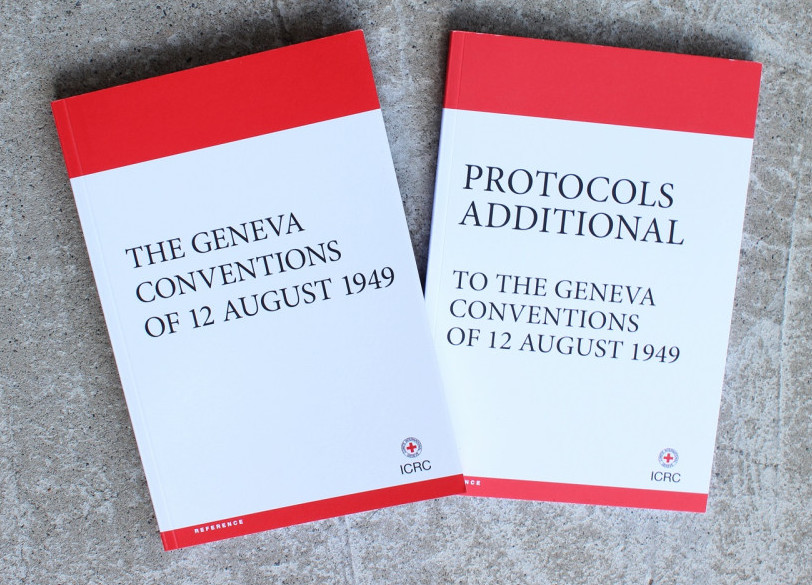
The increased violence indicates the need for local non-governmental peacebuilding efforts which can be also facilitated by international nongovernmental organizations (NGOs). There is also a greater need to build respect for International Humanitarian Law (IHL). When the framework of current IHL as drafted in the 1948 Geneva Conventions in light of the experiences of World War II, the focus was upon the actions of national armies. Today, much violence and strife is due to non-State actors and armed militias such as those in the RDC.
There are two major weaknesses in the effectiveness of IHL. (1) The first is that many people do not know that it exists and that they are bound by its norms. Thus, there is an important role for greater educational activities, the dissemination of information to the wider public, specific training of the military, outreach to armed militias, and cooperation with a wide range of NGOs.
The second weakness is that those violating IHL are rarely punished. Few soldiers are tried or court-martialed. This weakness is even more true for non-state militias and armed groups. There is yet much to do for the realization of the rule of law.
Note
1) For useful guides to International Humanitarian Law see:
D. Schindler and J. Toman, The Laws of Armed Conflict (Martinus Nihjoff Publishers, 1988)
H. McCoubrey and N.D. White, International Law and Armed Conflict (Dartmouth Publishing Co. 1992)
Prof. René Wadlow is President of the Association of World Citizens.
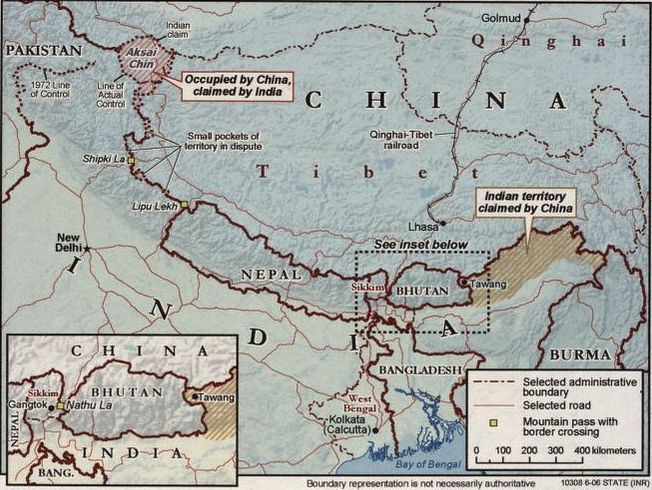
There has been a constant buildup of military forces by the governments of both India and China along their common frontiers. The Indian province of Arunachal Pradesh (called Zangman by the Chinese) with Itanagar as its capital is claimed by the Chinese. The frontier was drawn in 1914 and is called the McMahon Line. The frontier dispute led to the October-November 1962 India-China armed conflict with important consequences especially for Indian foreign-policy making.
In recent years there have been flashes of tension along the Line of Actual Control (LAC) as the military of both China and India have built new roads and observation posts along the LAC. Such tensions could grow as the relative political power of India and China grows and takes the form of a struggle for power. Currently there are no public negotiations between the Chinese and Indian governments. India, this year, is the chair of the G20 grouping of states. The Indian government has organized a number of G20 seminars on different issues in a number of Indian cities. However, for the moment, China has not sent representatives to these seminars.
The Association of World Citizens (AWC) has expressed its active concern with these tensions on the India-China frontier and the possibility that the tensions will increase. With the lack of formal India-China negotiations, the AWC raises the possibility of strong Track Two discussions.
The term Track Two was coined by the U.S. diplomat Joseph Montville in his book The Arrow and the Olive Branch. Track Two discussions are organized by nongovernmental organizations often with the help of academic institutions. Track Two discussions among non-officials of conflicting parties aim to clarify outstanding disputes and see on what issues negotiations might progress.
As Adam Curle, experienced in Quaker mediation efforts, has written, “In general, governments achieve their results because they have power to influence events, including the ability to reward or to punish. Paradoxically, the strength of civilian peacemaking resides specifically in their lack of power. They are neither feared nor courted for what they can do. Instead, they are trusted and so may sometimes be enabled to play a part in peacemaking denied to more official diplomats.”
Adam Curle
Thus, it will be important to follow as closely as possible the results of the G20 seminars in India and then build upon them in a Track Two pattern. Concerning the China-India frontier issues, both governments must be convinced that there is a considerable desire for peace among their citizens. There is also a need for some involved in Track Two efforts to have an integrated perspective of peacebuilding techniques and a long-term view of possibilities for transforming political relations.
Prof. René Wadlow is President of the Association of World Citizens.
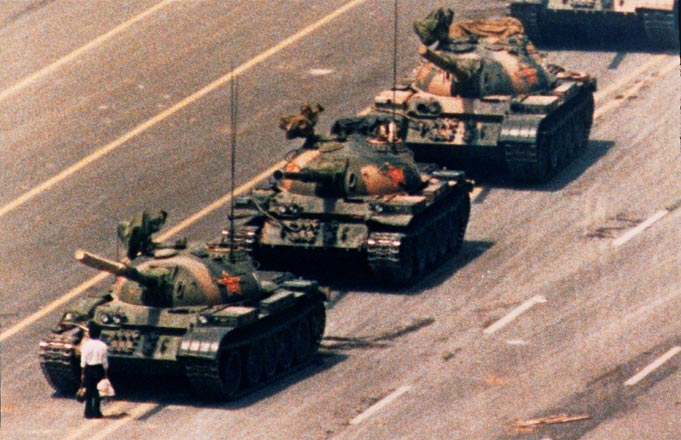
June 4 makes the security forces in China somewhat uneasy, especially in Hong Kong where, in the past, there were large memorial meetings to remind people of June 4, 1989, when the military and police moved against those who had been protesting publicly for over a month. Students from colleges and universities in China’s capital initiated protests after the death of the former General Secretary of the Communist Party, Hu Yaobang, on April 15, 1989 who was considered a liberal reformer. The movement then spread over a number of weeks to most of the major cities. Students made numerous demands, among them were calls for an end to government corruption, increased funding for education, and freedom of the press. As the movement went on, students were increasingly joined by industrial workers.
There were differences of opinion within the ruling government circle as to how to deal with the protests. As the protests continued, there was more and more international media attention, especially as there were an increasing number of journalists in Beijing in advance of the visit of the Soviet leader, Mikhail Gorbachev, with a large delegation of Soviet officials.
(C) Jeff Widener/Associated Press
Students and intellectuals started writing petitions setting out demands that were signed by more and more people. The decentralized structure of power and decision-making among groups in Tienanmen Square allowed for tactical innovation as each group was free to act as it desired and stress the symbols it wanted. Thus, art school students created the Goddess of Democracy, largely based on the Statue of Liberty in New York harbor. The growth in support for the student-led protests led the more anti-reformist faction in the government to order a crackdown by the military and the police. The tanks started to move into Tiananmen Square.
Since June 1989 there have been reforms within China – what we might call “democratization from below” but without large scale, highly visible public protests. ‘Stability’ and ‘harmony’ have been the stated government policy aims, colored by the breakup of the Soviet Union and fundamental changes in Eastern Europe. So, democratization needs to proceed quietly and gradually. Such democratization requires long-term vision and skillful leadership. Democratization is basically linked to individualization, to an ever-larger number of people thinking for themselves, creating their own lifestyles and ‘thinking outside the box’. It can be a slow process and repressive forces within the government watch events closely. However, it is likely that the direction of individualism is set and cannot be reversed.
Prof. René Wadlow is President of the Association of World Citizens.
 Association of World Citizens
