The Official Blog of the

Archive for the ‘Sudan’ Category

Renewed Appeal for Mediation in Sudan Civil War

In Africa, Being a World Citizen, Conflict Resolution, Current Events, Human Rights, Humanitarian Law, International Justice, NGOs, Peacebuilding, Solidarity, Sudan, The Search for Peace, Track II, United Nations, War Crimes, World Law on November 3, 2025 at 7:45 AM

By René Wadlow

In response to the reports of mass killings earlier this month, including persons in hospital beds in El-Fasher, Sudan, by members of the Rapid Support Forces (RSF), the Association of World Citizens (AWC) has called for strong UN efforts to mediate an end to the civil war in Sudan.

A civil war has gone on since April 2023 in Sudan between the Rapid Support Forces led by General Mohamed Hamdan, known by his battle name of Hemedti, and the Sudanese Armed Forces then led by General Abdul Fattah al-Burham. Each of the two generals has created local militias which rob, torture, rape, and create conditions of disorder.  Many of these militias use child soldiers in violation of UN treaties on the protection of children.  The civil war has led to some 150,000 persons killed and 10 million displaced.
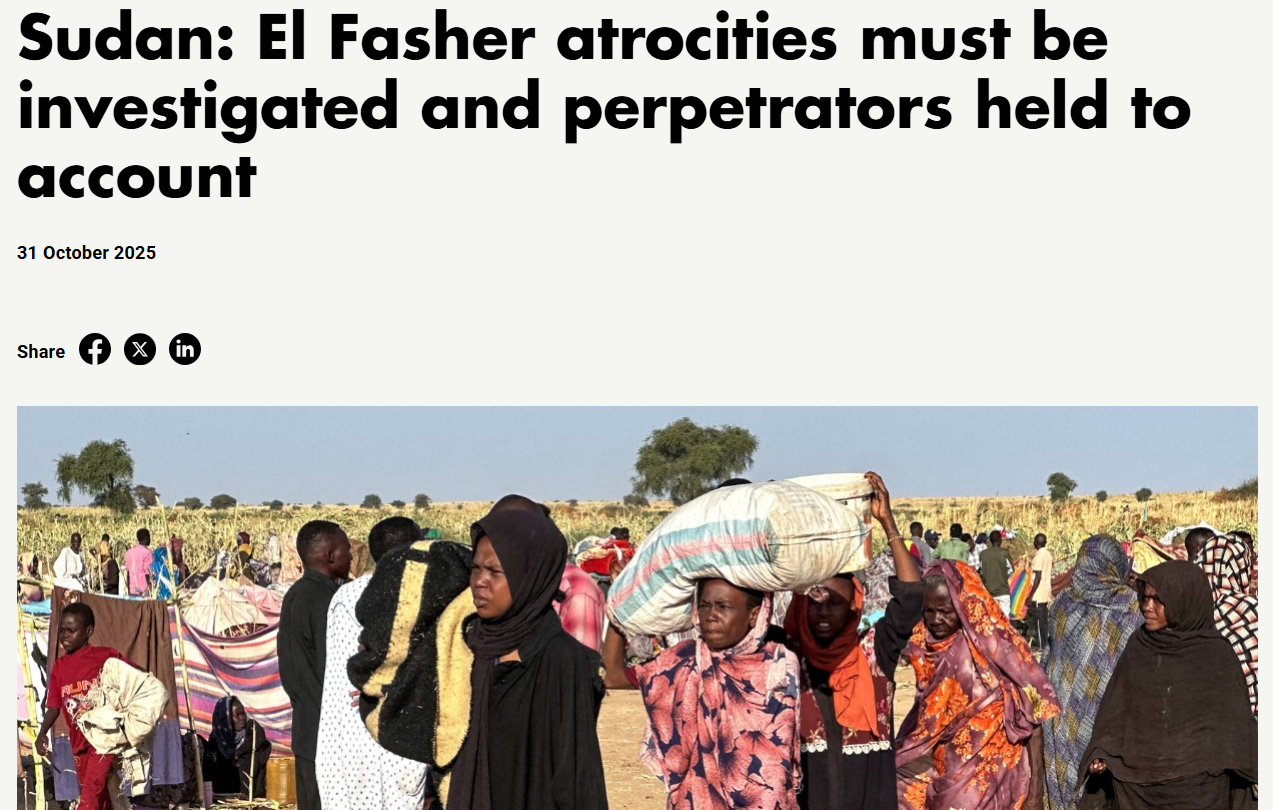
The capture of El-Fasher came after more than 500 days of siege. Already on June 13, 2024, the UN Security Council called for an end to the siege of El-Fasher, capital of the North Darfur Province of Sudan. The Council requested all parties to enable lifesaving aid to enter El-Fasher, the center of the most vicious fighting in the province. Unfortunately, the Security Council appeal fell on deaf ears.

The AWC does not underestimate the difficulties of mediation to end the Sudan Civil War.  There has been armed conflict in Sudan since the eve of independence in the mid-1950s. These conflicts were organized along ethnic and religious lines. The conflicts led to the creation of a new state, South Sudan, where tensions are also strong.

Mediation efforts should be carried out under UN responsibility. However, Nongovernmental Organizations (NGOs) may play a positive role.

Mediation is about men and women, and the attitudes that make for conflict between them. The attempt to bring about a change in understanding will include continual interpretation of what the others are saying, explanations of their attitudes, and exposure of false rumors – roles which NGOs can play.

Prof. René Wadlow is President of the Association of World Citizens.
Citizens of the World Strive Against Rape as a Weapon of War

In Africa, Being a World Citizen, Children's Rights, Current Events, Europe, Human Rights, Humanitarian Law, International Justice, NGOs, Peacebuilding, Solidarity, Sudan, The Balkan Wars, The Search for Peace, Track II, United Nations, War Crimes, Women's Rights, World Law on March 8, 2025 at 6:45 PM

By René Wadlow

On March 6, 2025, the United Nations (UN) Children’s Fund (UNICEF) warned that many children in the conflicts among militias in Sudan are at risk of rape and other forms of sexual violence which are being used as weapons of war. In November 2024, the Association of World Citizens (AWC) had highlighted that rape was being used as a weapon of war in the Sudan conflicts and that strong counter measures are needed.

As Meredeth Turshen and Clotilde Twagiramariya point out in their book What Women Do in Wartime: Gender and Conflict in Africa (London: Zed Press, 1998),

“There are numerous types of rape. Rape is committed to boast the soldiers’ morale, to feed soldiers’ hatred of the enemy, their sense of superiority, and to keep them fighting; rape is one kind of war booty; women are raped because war intensifies men’s sense of entitlement, superiority, avidity and social license to rape; rape is a weapon of war used to spread political terror; rape can destabilize a society and break its resistance; rape is a form of torture; gang rapes in public terrorize and silence women and force them to flee homes, families and communities; rape targets women because they keep the civilian population functioning and are essential to its social and physical continuity; rape is used in ethnic cleansing; it is designed to drive women from their homes or destroy the possibility of reproduction; genocidal rape treats women as reproductive vessels to make them bear babies of the rapists’ nationality, ethnicity, race or religion, and genocidal rape aggravates women’s terror and future stigma, producing a class of outcast mothers and children – this is rape committed with consciousness of how unacceptable a raped woman is to the patriarchal community and to herself. This list combines individual and group motives with obedience to military command; in doing so, it gives a political context to violence against women, and it is this political context that needs to be incorporated in the social response to rape.”

The AWC first raised the issue of rape as a weapon of war in the UN Commission on Human Rights in March 2001 after the judgement of the International Criminal Tribunal for the Former Yugoslavia (ICTY) maintained that there can be no time limitation on bringing an accused to trial. The Tribunal also reinforced the possibility of universal jurisdiction – that a person can be tried not only by his national court but by any court claiming universal jurisdiction and where the accused is present.

As Citizens of the World, we need to have a peace-building approach which asks: How does a political conflict degenerate into pervasive mass violence, generating new crises and new forms of violent conflict in the future? Even after a war ends, the effects of sexual violence continue in the form of unwanted pregnancies, sexually transmitted infections, discrimination and ostracizing of victims and often lasting psychological damage. Thus, we must ask how a community pulls itself out from the cycle of violence and creates new attitudes to promote human dignity and develop new institutions of conflict resolution.

Prof. René Wadlow is President of the Association of World Citizens.
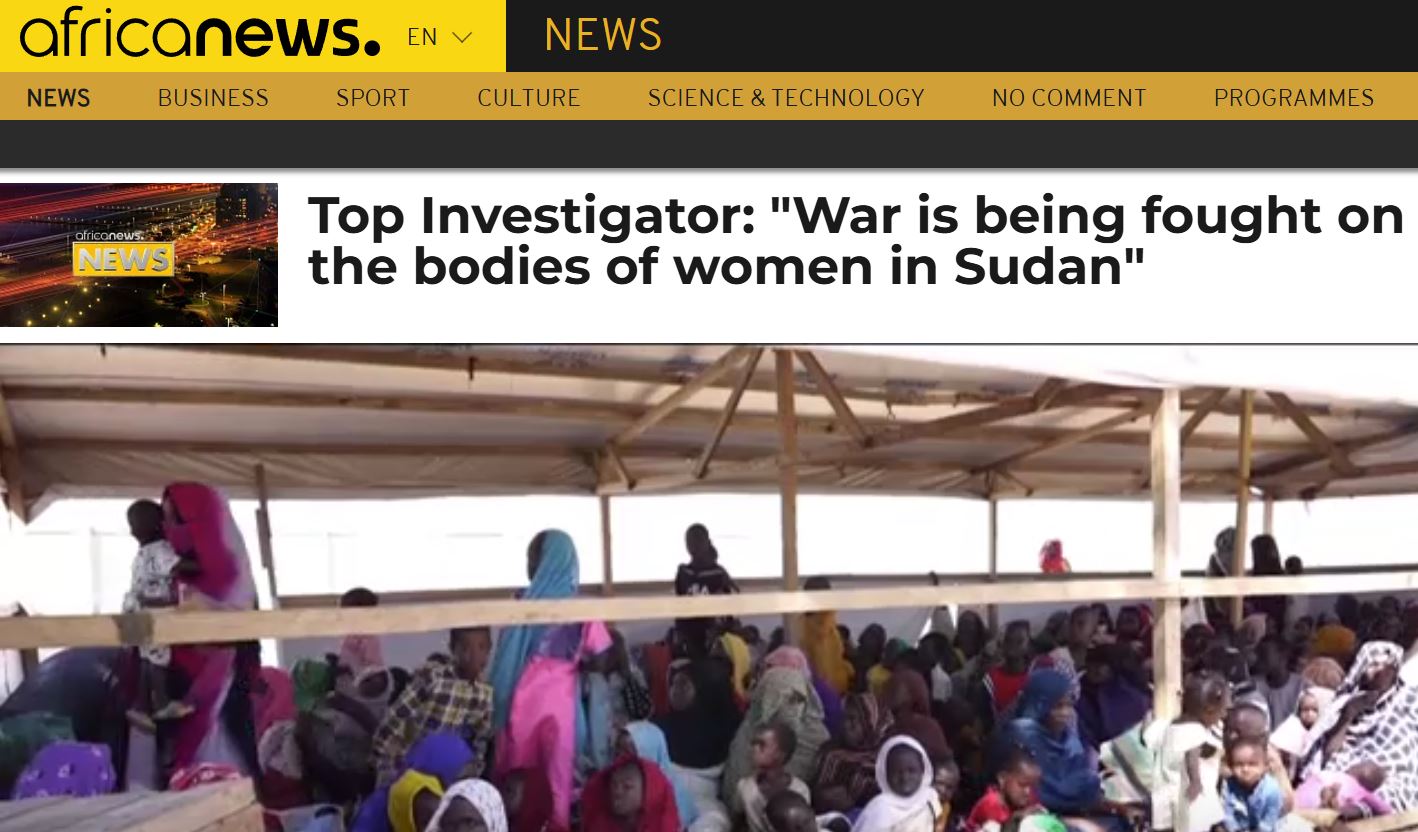
Rape as a Weapon of War in Sudan: Counter Measures Needed

In Africa, Being a World Citizen, Conflict Resolution, Current Events, Human Rights, Humanitarian Law, International Justice, Modern slavery, NGOs, Refugees, Solidarity, Sudan, The Search for Peace, Track II, United Nations, War Crimes, World Law on November 25, 2024 at 8:00 AM

By René Wadlow

Sudan’s armed conflict which began on April 15, 2023 is between two former allies. On one side is General Abdel Fattah Al Burham of the Sudanese Armed Forces; on the other side is General Mohamed Hamdan Dagulo, known by his battle name of Hemedhi of the Rapid Support Forces. The conflict, which has spread to 14 of the 18 provinces of Sudan, has killed and wounded tens of thousands of civilians, displaced nearly 8 million people, and forced over two million to flee to neighboring countries. The agriculture of the country is disorganized, and many people face acute hunger.

There has been an appalling range of human rights and international humanitarian law violations including indiscriminate airstrikes and shelling against civilians, hospitals, and vital water services. The warring parties and their respective militia allies have made rape a weapon of war and have organized markets where women are sold for sexual slavery.

Rape harms not only the woman raped but also the whole family system. Often, the husband repudiates his wife. The whole family may scorn her. In a country where “the family” is a wide circle of people, the repudiated woman has few people to whom to turn for support. As was done by the “Islamic State” (IS, or Da’esh) in Iraq and Syria, sexual slave markets have been created where women are bought or exchanged.

So far, efforts by the United Nations (UN) and regional governments for a ceasefire and negotiations have not led to constructive action. Thus, the conflictual situation requires close cooperation among UN agencies, humanitarian and peace Nongovernmental Organizations.

Prof. René Wadlow is President of the Association of World Citizens.
United Nations Calls for Action on Sudan Crisis

In Africa, Being a World Citizen, Conflict Resolution, Current Events, Human Rights, Humanitarian Law, International Justice, Solidarity, Sudan, The Search for Peace, United Nations, War Crimes, World Law on September 9, 2024 at 6:00 AM

By René Wadlow

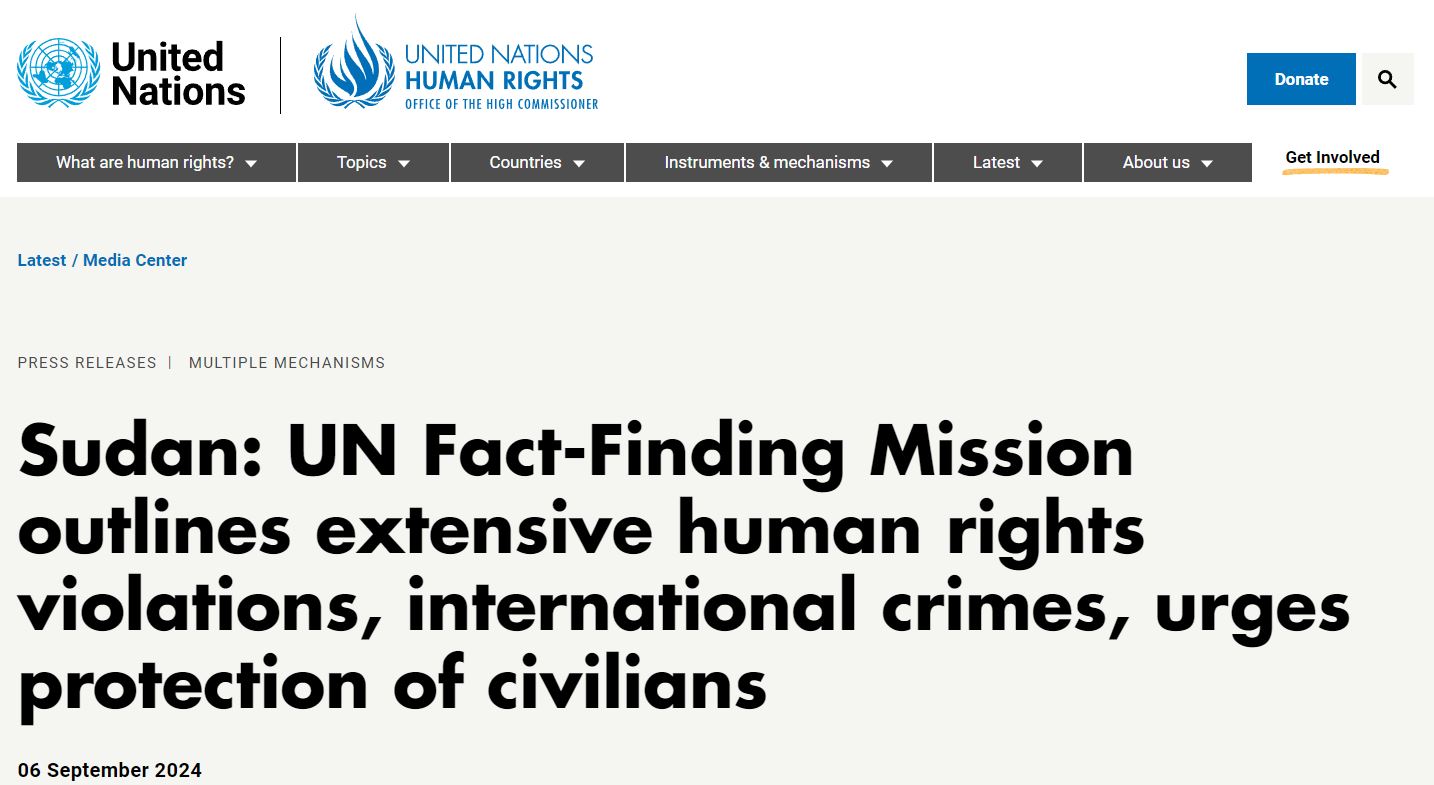
The United Nations (UN) Independent International Fact-Finding Mission for the Sudan chaired by Mohamed Chande Othman of Tanzania said, in its first Report of September 6, 2024, that Sudan’s warring parties, the Sudanese Armed Forces and the Rapid Support Forces as well as their respective militia allies, have committed an appalling range of human rights and international humanitarian law violations including indiscriminate airstrikes and shelling against civilians, schools, hospitals, and vital water services.

The current armed conflict which began on April 15, 2023 between two former allies is led, on the one side, by General Abdel Fattah Al Burham of the Sudanese Armed Forces and, on the other, by General Mohamed Hamdan Dagulo, known by his battle name of Hemedhi, of the Rapid Support Forces. The conflict, which has spread to 14 of the 18 provinces of Sudan, has killed and wounded tens of thousands of civilians, displaced nearly 8 million people and forced two million to flee to neighboring countries and beyond.

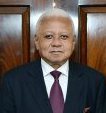
Mohamed Chamde Othman (C) U.S. Government

As the Fact-Finding Mission Report highlights, the warring parties targeted civilians through rape, sexual slavery and other forms of sexual violence, arbitrary arrest as well as torture and ill-treatment. Assaults have been carried out against ethnic minorities, in particular the Masalit in West Darfur.

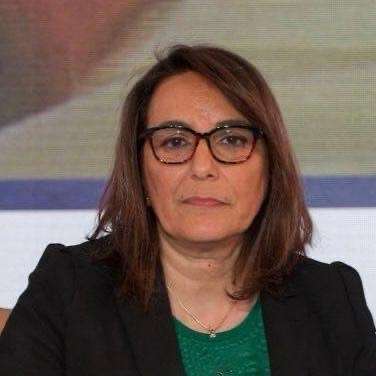
The Fact-Finding Mission, mandated by the Human Rights Council in October 2023, carried out a wide range of discussions and interviews. As the Expert Member of the Mission Mona Rishmawi said, “These findings should serve as a wakeup call to the international community to take decisive action to support survivors, their families and affected communities and hold perpetrators accountable. A comprehensive approach to transitional justice is vital for addressing the root causes of the conflict and ensuring accountability.”

Mona Rishmawi

Efforts for a ceasefire and the start of negotiations by the Personal Envoy for the Sudan of the UN Secretary-General have led to no advances. Thus, wider action is needed. Mohamed Othman has said, “The international community must support the Sudanese aspiration for an inclusive and representative civilian government that respects the rights of all citizens, fostering a path toward equality, justice and sustainable peace in Sudan.” In light of the many difficulties, he has called for sending UN peacekeeping forces to Sudan. “Given the failure of the warring parties to spare civilians, it is imperative that an independent and impartial force with a mandate to safeguard civilians be deployed without delay. The protection of the civilian population is paramount, and all parties must comply with their obligations under international law and immediately and unconditionally cease all attacks on the civilian population.”

As the deployment of an independent and impartial force depends on the UN Security Council the focus for action shifts from the Human Rights Council to the Security Council. We appeal for vitally needed action now.

Prof. René Wadlow is President of the Association of World Citizens.
Sudan Conflict Grows Worse as UN Security Council Appeals Fall on Deaf Ears

In Africa, Being a World Citizen, Conflict Resolution, Current Events, Human Rights, Humanitarian Law, Middle East & North Africa, NGOs, Refugees, Spirituality, Sudan, The Search for Peace, Track II, United Nations, War Crimes on June 17, 2024 at 6:00 AM

By René Wadlow

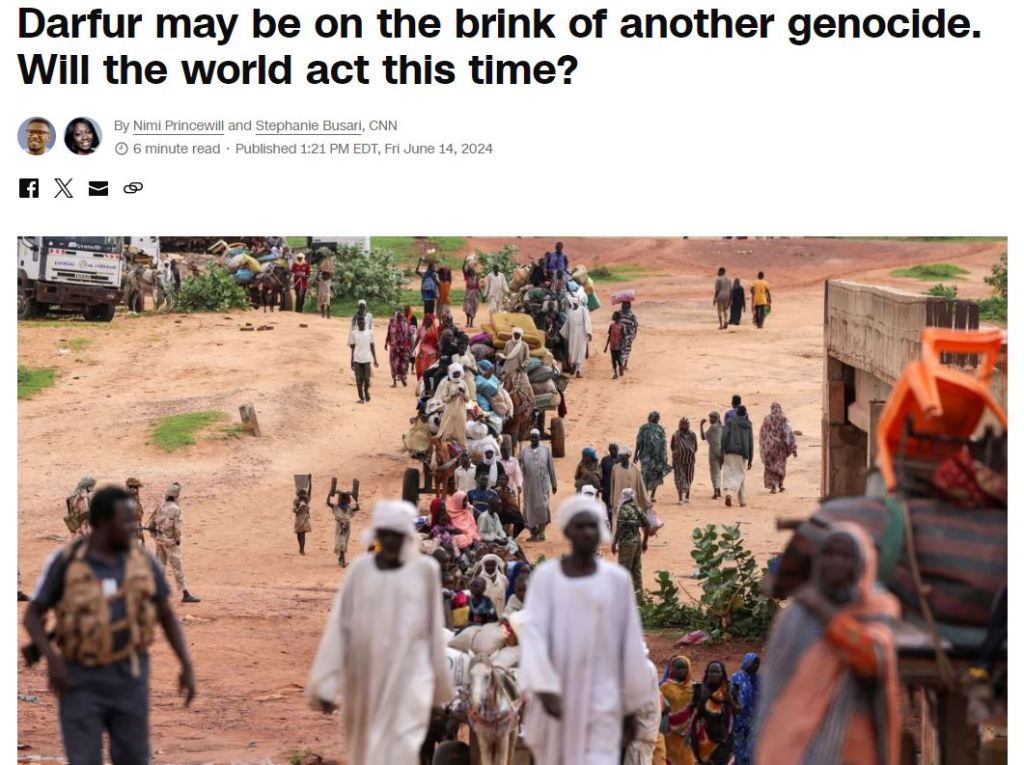
On June 13, 2024, the United Nations (UN) Security Council called for an end to the siege on El Fasher, the capital of the North Darfur Province of Sudan. The Council requested all parties to enable lifesaving aid to enter the city of El Fasher, the center of the most vicious fighting. The brutality of the fighting makes it impossible for aid workers to enter the city.

The civil war has gone on since April 2023 between the Rapid Support Forces led by General Mohamed Hamdan, known by his battle name of Hemedti, and the Sudanese Armed Forces led by General Abdul Fattah al-Burham. The fighting has led to some 15,000 persons being killed and 8 million displaced. The agriculture in the country is disorganized, and many people face acute hunger and, in some areas, famine.

Each of the two generals has created local militias which rob, torture, rape, and create conditions of disorder. Many of the militias use child soldiers in violation of UN treaties on the protection of children. Each of the two generals has opened the door to foreign fighters. There are Russian mercenaries which had been under the control of the Russian Wagner Group who had been fighting in Mali, Chad, Niger, and the Central African Republic. There are Ukrainian mercenaries who have come to fight the Russians.

It is difficult to understand the intensity of the current divisions represented by the two generals who had once been allies. The current divisions do not follow earlier fault lines in Sudan.

(C) Cable News Network

On behalf of the Association of World Citizens (AWC), I had been the first to raise in the UN Commission on Human Rights in 2004 the violent conditions in Darfur, Sudan, having been informed by a member of the UN Secretariat who was leaving the country and who could not speak out for himself. The violent conditions in Darfur were largely based on ethnic divisions linked to lifestyle differences between settled agriculturalists and cattle herders. There were also aspects of political divisions at the national level.

We kept in close contact with the Sudanese Mission to the UN in Geneva. Thus, the AWC was invited to be observers in the referendum which led to the creation of the State of South Sudan. The World Citizens had sent a team of observers.

Today, the suffering is real. Enlightened action is necessary. The conflictual situation requires close cooperation among humanitarian and peace nongovernmental organizations to see what is possible.

Prof. René Wadlow is President of the Association of World Citizens.
For a historic background on Darfur, see Julie Flint and Alex de Wall, Darfur: A Short History of a Long War (London: Zed Books, 2005).

Needed Action Against World Hunger: The Consequences of Armed Conflict

In Africa, Being a World Citizen, Conflict Resolution, Current Events, Human Rights, Humanitarian Law, Middle East & North Africa, Solidarity, Sudan, The Search for Peace, United Nations, World Law on April 2, 2024 at 6:00 AM

By René Wadlow

The United Nations (UN) has recently drawn attention to situations of acute hunger in areas where there is armed conflict. Stephane Dujarric, the UN Spokesperson, stated that, in Sudan, there were 18 million people facing acute food insecurity with alarming reports of child deaths related to malnutrition. Sudan has been the victim of a year-long armed conflict between the leaders of the regular army and its rival, the Rapid Support Force. This conflict has been particularly acute in the Darfur Province which has been the scene of violence and massive displacement of population since 2004.

In Ethiopia, where there has been fighting, especially in the Tigray Province between the forces of the government and Tigray militias, there is widespread hunger. Many people have been displaced by the fighting, and thus food crops have not been planted. International relief efforts have been hindered by the disorganization of all governmental services and corruption. The hunger situation is also acute in Gezira Province, usually a “breadbasket” area of food crops.

The situation in the Gaza Strip has been front page news since October 8, 2023, when the bombing of the Strip began in the armed conflict between Israelis and Palestinians. The delivery of food aid has been a central issue of international concern. However, hunger persists and its consequences deepen. The economic and social infrastructure of the Gaza Strip has been largely destroyed and will take a long time to rebuild even when, and if, a political administration is reestablished. Beth Bechdol, Associate Director of the UN Food and Agriculture Organization (FAO) has said that the speed and degree of the food crisis in the Gaza Strip is unprecedented.

These examples, to which others could be added such as the eastern zones of the Democratic Republic of Congo, are an indication of the need to combine conflict resolution efforts with food support and other forms of relief. As long as violence continues, relief can only be uneven and temporary. Too often, as within the UN system, conflict resolution efforts and food relief are separated and not sufficiently coordinated. A holistic vision is necessary and combined efforts undertaken.

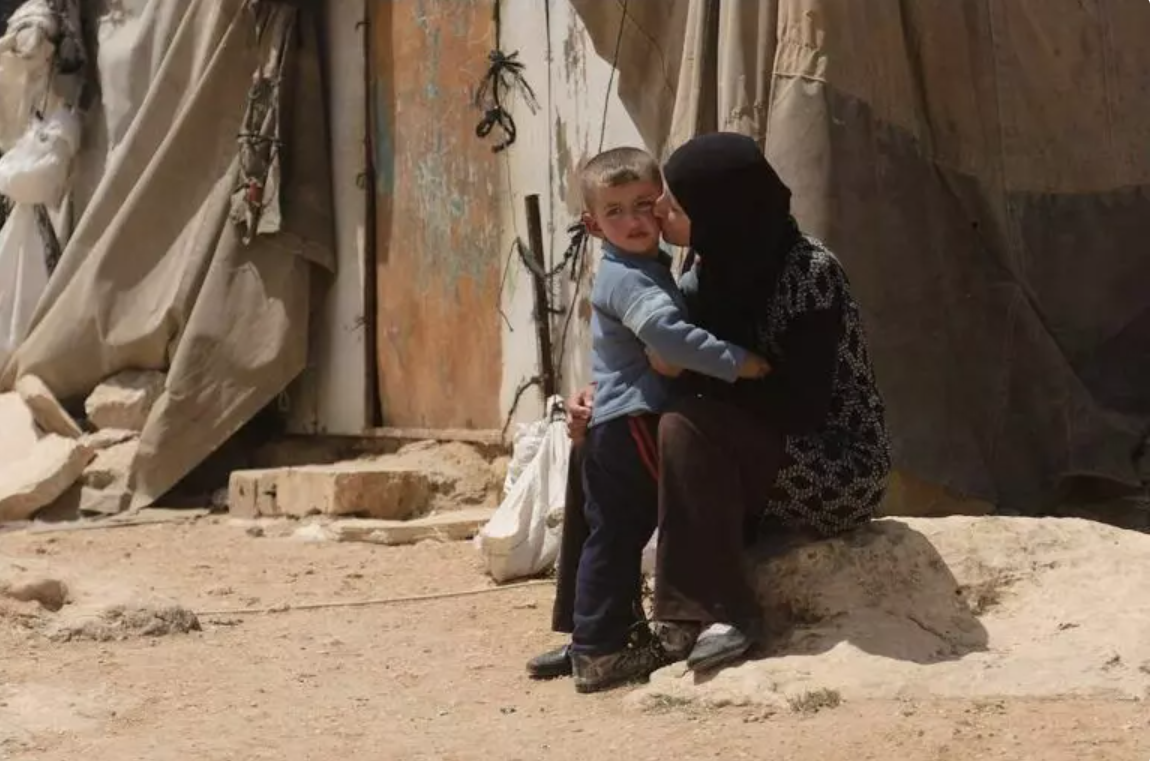
A Palestinian woman and her child facing starvation in northern Gaza (C) Libertinus

Prof. René Wadlow is President of the Association of World Citizens.
The AWC Reiterates its Appeal for Immediate Action to End the Fighting and Bring Relief to Populations at Risk in Ethiopia

In Africa, Being a World Citizen, Conflict Resolution, Current Events, Human Rights, Humanitarian Law, NGOs, Solidarity, Sudan, The Search for Peace, Track II, United Nations, World Law on September 14, 2021 at 8:46 PM

By René Wadlow

The Association of World Citizens (AWC) now reiterates its Appeal to the parties in the armed conflict in Ethiopia for negotiations in good faith to end the fighting and to deal with the deep consequences of the conflict, especially the widespread hunger. Mark Lowcock, the United Nations (UN) Undersecretary-General for Humanitarian Affairs, has warned that nearly five million of the six million population of the Tigray Province needed food assistance and the number grows as fighting spreads to other regions.

Shortly after fighting began on November 3, 2020, the AWC, knowing the fragile nature of the confederation of provinces which make up the Ethiopian state, had made a first Appeal for negotiations in good faith, although information on the fighting was very limited. Journalists were prevented from going to Tigray as were most humanitarian nongovernmental organizations (NGOs). However by February, enough information had been gathered from refugee sources for Amnesty International to present a first report on the extent of human rights violations, with multiple credible and widely corroborated reports of widespread atrocities involving mass killings, rapes and the abduction of civilians.

The fighting in Tigray becomes more complex each day as Ethiopian Defense Forces, Eritrean Defense Forces and ethnic militias face Tigrayan forces. There is a buildup of Sudanese government forces on the Ethiopian-Sudan border and refugees flee into Sudan. The whole Horn of Africa already fragile is in danger of greater destabilization.

For the moment all efforts for mediation proposed by the UN or the African Union have been refused by the Ethiopian central government. The former officials of Tigray Province have fled and it is not clear who is in a position to negotiate for the Tigray factions were negotiations to be undertaken. There may be possibilities for non-governmental initiatives. Hence the reiteration of our AWC Appeal.

Prof. René Wadlow is President of the Association of World Citizens.
Ethiopia: Storm Clouds Getting Darker

In Africa, Being a World Citizen, Conflict Resolution, Current Events, Democracy, NGOs, Refugees, Solidarity, Sudan, The Search for Peace on January 24, 2021 at 8:20 PM

By René Wadlow

In an earlier article on the armed conflict in Ethiopia “Storm Clouds Gather Over Ethiopia” I agreed with other observers of the situation that one knows when an armed conflict starts but not when it ends. There is always a real danger that violence spreads to other parts of the country and that neighboring States get involved. Now both dangers have taken form in Ethiopia.

Ethiopia is a federal republic structured on the basis of 10 states or provinces. The provinces have the name of the major ethnic group within that province. However, no province is populated exclusively by one ethnic group. Through history and economic development people have moved to areas beyond their original “homeland”. However, people from a “foreign” ethnic group can be made to feel as “second class citizens”, and there may be violence used against them in times of tensions.

A neighborhood in Tigray

Thus, in the far west of Ethiopia, there is a small province called Benishangul-Gumuz, named after two ethnic groups, the Berta and the Gamuz. However, there are three other ethnic groups which also consider the area as their “homeland”. The area has good farmland and is a major producer of vegetables. Thus, Amhara farmers from the larger neighboring Amhara province have progressively settled in Benishangul-Gumuz. Tensions over land use has grown between the Amhara farmers and the dominant Gumuz. At the same time that the federal government forces were moving into the Tigray province, Gumuz militias attacked the Amhara settlers. The federal government sent in troops to restore order, but troops can not deal with the basic issues of ethnic-based tensions and disputes over land ownership which is often collective rather than individual. Thus, the tensions and violence in Tigray and Benishangul-Gumuz provinces may spread to other provinces as well.

In addition to the dangers of violence spreading to other provinces, there is a real danger that neighboring Sudan will get involved. The Ethiopian federal government’s military action within Tigray province has caused an exodus of some 50,000 persons across the frontier into Sudan. A smaller number have crossed the frontier into South Sudan.

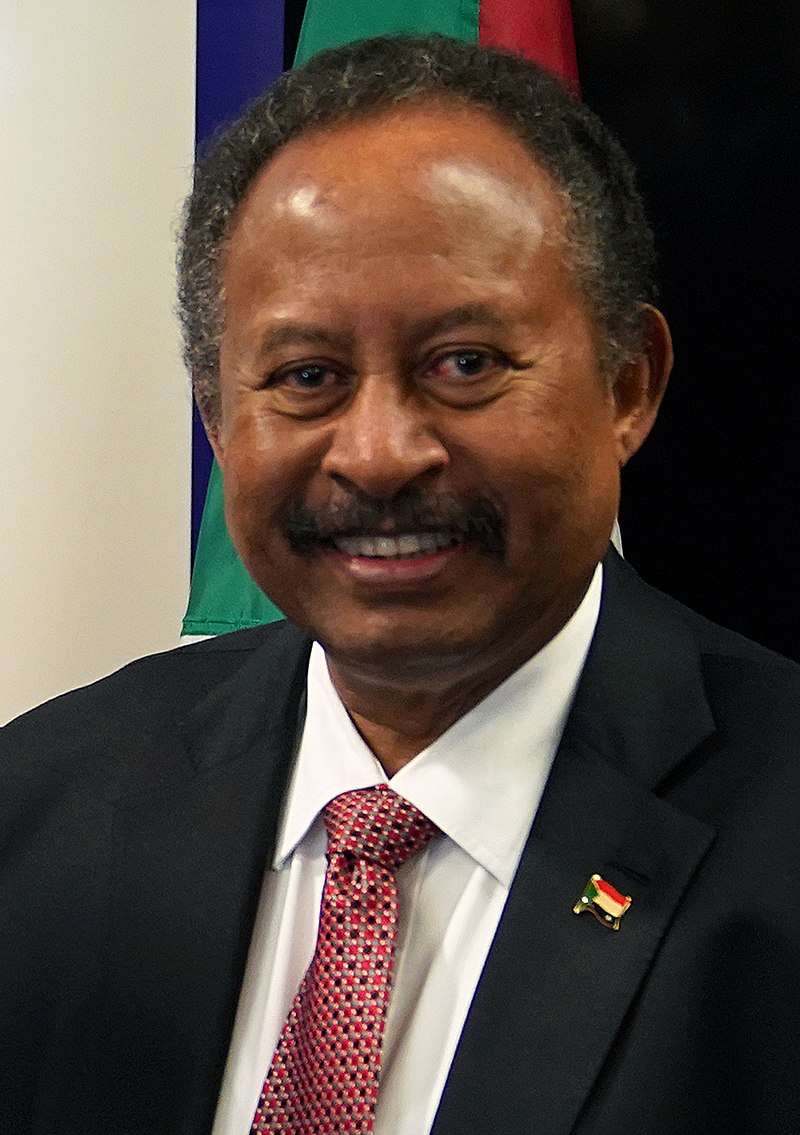
Abdallah Hamdok

The Sudanese government in far-away Khartoum has been preoccupied with restructuring itself after the 30 years of governance by Omar al-Bashir came to an end in April 2019. However, the entry of a large number of refugees from Tigray must have pushed some in the Sudanese government to look at maps to see where all this trouble was going on. They saw that part of the trouble was near the Al-Fashaga triangle, a small area but of rich farmland largely farmed by Ethiopian farmers. However, Al-Fashaga is within the territory of Sudan, set by the British-Egyptian condominium in 1902 and 1907.

The Ethiopian settlers in Al-Fashaga had created self-protection militias without a relation to the Ethiopian central army. However, with the the current Ethiopian army near Al-Fashaga, the Sudanese government is rushing tanks and troops to the area. The acting Prime Minister of Sudan, Abdallah Hamdok, has publicly reaffirmed Sudanese ownership of the area. While it is difficult to have accurate reporting from Al-Fashaga, some nongovernmental organizations working with refugees in Sudan near the frontier have warned of possible fighting and increased tensions. There are real possibilities of the storm clouds getting darker.

Note:

An earlier article on the same subject from Prof. René Wadlow: Storm Clouds Gather Over Ethiopia.

Prof. René Wadlow is President of the Association of World Citizens.
PRESS RELEASE – 20200909/Sudan/Human Rights

In Africa, Being a World Citizen, Current Events, Democracy, Human Rights, Middle East & North Africa, Press release, Solidarity, Sudan, World Law on September 8, 2020 at 11:06 AM

PRESS RELEASE

Paris, September 9, 2020

*

HALA KHALID ABUGROUN, A LAWYER

AND WOMAN HUMAN RIGHTS DEFENDER UNDER THREAT:

TIME FOR SUDAN TO MAKE THE RIGHT CHOICES AT LAST

*

In an Appeal to the authorities of the transitional government of Sudan, the Association of World Citizens (AWC) highlighted the present situation of Ms Hala Khalid Abugroun, Attorney at Law, a Woman Human Rights Defender. Attorney Abugroun is a member of the “No to Women’s Oppression” initiative which wishes to set out strong guidelines for the society in transition. Attorney Abugroun and colleagues have been harassed and threatened by members of the still powerful National Intelligence and Security Services (NISS).

The AWC stresses that the United Nations (UN) is the main instrument for the community of States to guide life in common, according to standards which all have accepted in agreeing to the UN Charter and according also to the provisions of world law. Among these provisions are the Declaration on Human Rights Defenders, adopted by the UN General Assembly in Resolution 53/144 and the Resolution on Protecting Human Rights Defenders adopted by the UN Human Rights Council on March 15, 2013.

The AWC understands that the Sudan is in a transition process toward a more law-based society. A historic decision has already been made to separate religion and state, ending an improper political use of private belief to repressive ends which spanned some three decades. This is the right time to make the right choices in terms of international human rights commitments too.

Therefore, the AWC urges the Sudanese Government to ratify the Convention against Torture and Other Cruel, Inhuman or Degrading Treatment or Punishment. Such a move would help Sudan to develop measures to guarantee the physical and psychological integrity of all persons.

There also has to be an immediate, thorough, and impartial investigation into the threats against and harassment of Attorney Hala Khalid Abugroun with a view to bringing those responsible to justice consistently with international standards.

Sudan’s Recovery Crippled by U.S. Sanctions Policy

In Africa, Being a World Citizen, Conflict Resolution, Current Events, Human Rights, Middle East & North Africa, NGOs, Solidarity, Sudan, The Search for Peace, Track II, United Nations, World Law on June 15, 2020 at 8:54 PM

By René Wadlow


Economic recovery from decades of stagnation and misuse of resources during the 30-year dictatorship of Omar al-Bashir is critical for Sudan’s civilian-led transitional government.

Since August 2019, Sudan has been led by a Council made up of six civilians and five members of the military with a cabinet of liberal civilian administrators headed by Prime Minister Abdallah Hamdok, a former economist with the United Nations (UN). Elections are scheduled for next year, time for civil society to organize.

Sudan

However, chronic economic problems could lead elements in the armed forces to assert further their influence even without trying to take power. Sudan faces deep economic challenges. There is a backlog of domestic needs. The consequences of the creation of a separate State of South Sudan are still not resolved. The armed conflicts in the Darfur provinces, while not as active as earlier, still exist. Real economic development in Darfur is stopped.

The Association of World Citizens (AWC) was the first nongovernmental organization to raise the Darfur conflicts in the UN Commission on Human Rights in early 2004. Since then, our Association has striven to have negotiations in good faith to resolve the issues. However, the original opposition alliances have broken down into smaller, tribal-based groups and no real negotiations have been able to be held.

A strong obstacle to Sudan’s economic development is the continued United States (U. S.) economic sanctions which impact trade and investment. The U. S. sanctions policy prevents loans from international institutions such as the World Bank. The U. S. still lists Sudan as a “State sponsor of terrorism”. Sudan in an earlier period did house violent Islamist movements which carried out attacks in other countries such as the attack on the U. S. Embassy in Kenya. However, the violent Islamist groups were not “sponsored” by the government of Sudan.

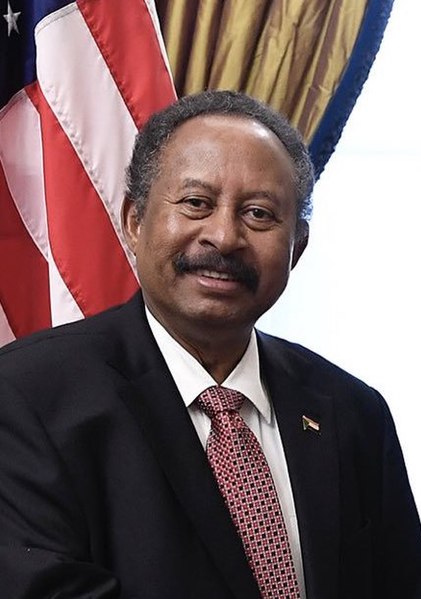
421px-Prime_Minister_Abdalla_Hamdok

Prime Minister Abdallah Hamdok of Sudan

Prime Minister Abdallah Hamdok in his address to the UN General Assembly said that these U. S. sanctions “have played havoc on our people causing them untold misery of all types and forms. We, in the transitional government call on the United States of America to take Sudan off the list of State Sponsors of Terrorism.”

Such a realistic request is a necessary first step toward the creation of a stable Sudan which should be able to play a positive role in an unstable part of the world. The AWC will continue its efforts for a Sudan in which all can play a positive role.

Prof. René Wadlow is President of the Association of World Citizens.