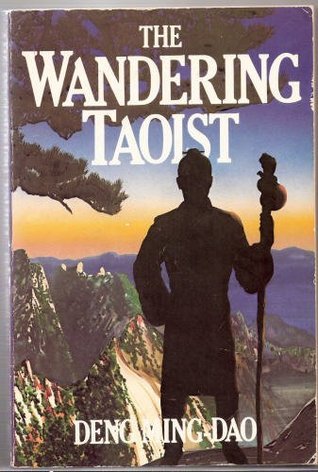
Deng Ming-Dao, The Wandering Taoist. New York: Harper and Row, 1986, 240pp.
This is a biography of Kwan Saihung, a Chinese Taoist ascetic master written by an American student of his in martial arts and Taoist training. Kwan Saihung was trained in a leading Taoist monastery in China in the 1930s. He left the monastery to fight the Japanese during the late 1930s. After the Communist victory in the civil war, he arrived in California where he teaches Chinese martial arts – many of which are related to Taoist philosophy.
Although Taoist sages usually speak little of themselves – the personality and outward events of life being of less importance than one’s relations to nature and the permanent patterns of life – Deng Ming-Dao has pieced together a chronological description of Kwan Saihung’s early life and training from conversations with the master. Most of the book is recounted in conversational style, which makes for pleasant reading.
“All that matters to a Taoist is that one is in harmony with nature. In one’s character, one is like heaven and earth, as orderly as the four seasons. The book Tao Te Ching clearly states that when things reach the pinnacle of their strength, they begin to grow old. (1) Therefore excessive strength is contrary to Tao. What is contrary to Tao will come to a speedy end. Thus one seeks not to build up one’s own power but to unite with the Tao. Things change but the laws underlying change remain unchanging. If one understands these laws and regulates one’s actions in conformity with them, one can then turn everything to one’s advantage.”
(1) See Arthus Waley, The Way and its Power: A Study of the Tao Te Ching (New York, Grove Press, 1958, 260pp)
Prof. René Wadlow is President of the Association of World Citizens.
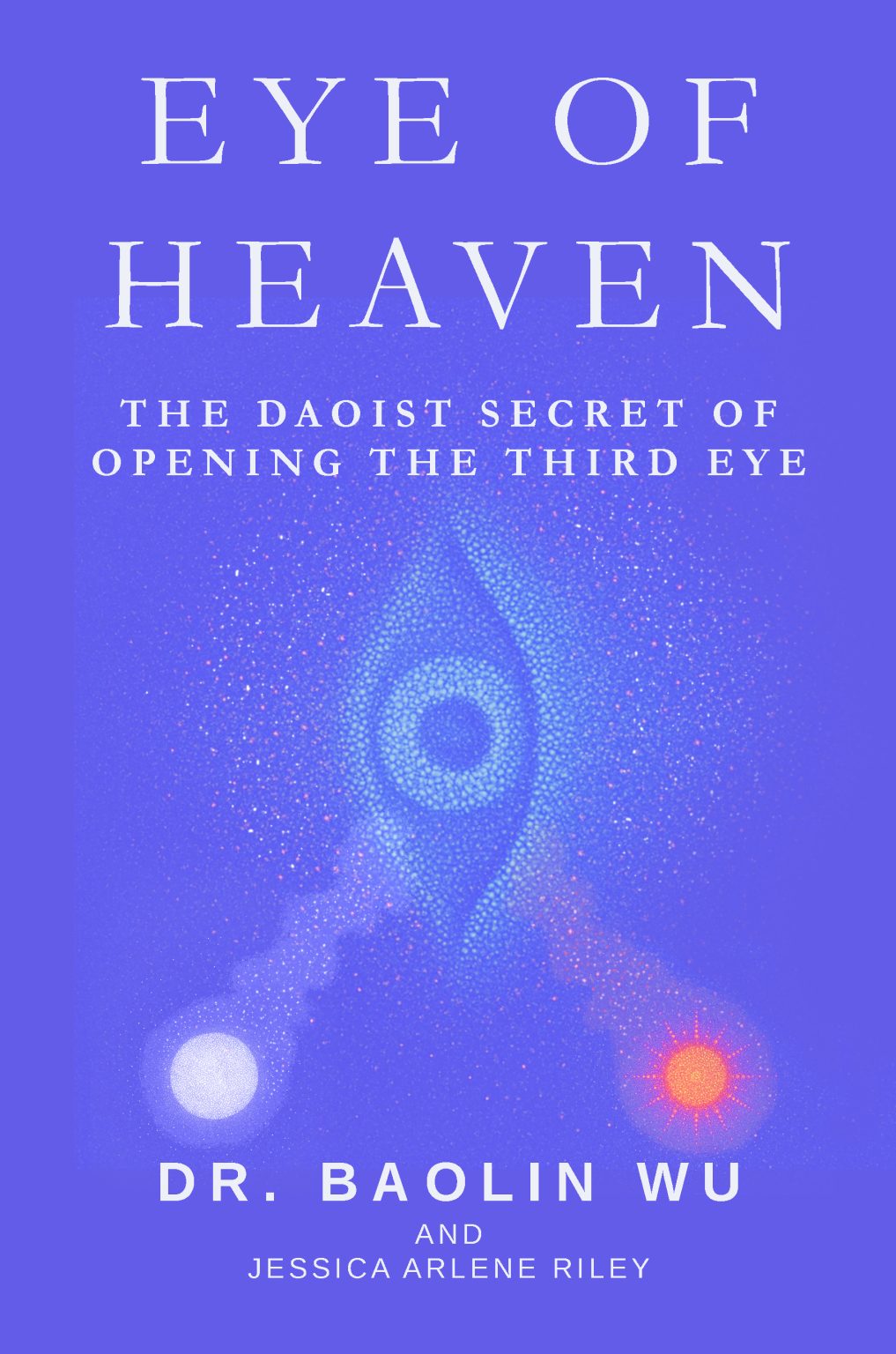
Baolin Wu and Jessica Riley, Eye of Heaven. St. Petersburg, Florida: Three Pines Press, 2025, 107pp.
The subtitle of this book is The Daoist Secret for Opening the Third Eye. The Third Eye is a path to awareness. Opening the third eye frees one’s mind from certain limitations. This is the reason that in Daoism the third eye is often referred to as the Eye of Heaven (The title of the book). One finds the same approach in Hinduism, where the third eye, placed just above the other two, is one of the seven main chakras, energy centers in the body, symbolized as a turning wheel. In Buddhism, the third eye represents the eye of consciousness and wisdom. The third eye is widely developed in Tibetan Buddhism where it represents the Gate of Heaven.
Dr.. Baolin Wu entered the Daoist White Cloud Monastery in Beijing as a young boy and was trained there in Daoist medical practice, especially acupuncture as well as in spiritual practices. The White Cloud Monastery is a highly respected center for the study of Daoist philosophy and medicine. He worked for many years in a hospital in Beijing and emigrated to the USA in 1990. The information on spiritual practices in the book comes from Dr. Baolin Wu. Jessica Riley is one of his current students in California, and the English style of the book is hers.
Throughout Chinese history, philosophical and spiritual beliefs have often been related to healing. Some of the Daoist schools emphasize internal alchemy, often as a way to reach longevity. Internal alchemy helps one to become aware of sexual energy and how to circulate, balance, preserve and reuse the energy so as to heal.
The book provides illustrated qigong exercises useful for relaxation but which are also preparation for the opening of the third eye. Work on the third eye and the higher states of consciousness is usually done with a master Daoist. Thus the book is no substitute for efforts with an advanced Daoist practitioner. However, it is a good introduction to the approach and its role in Chinese culture.
Prof. René Wadlow is President of the Association of World Citizens.
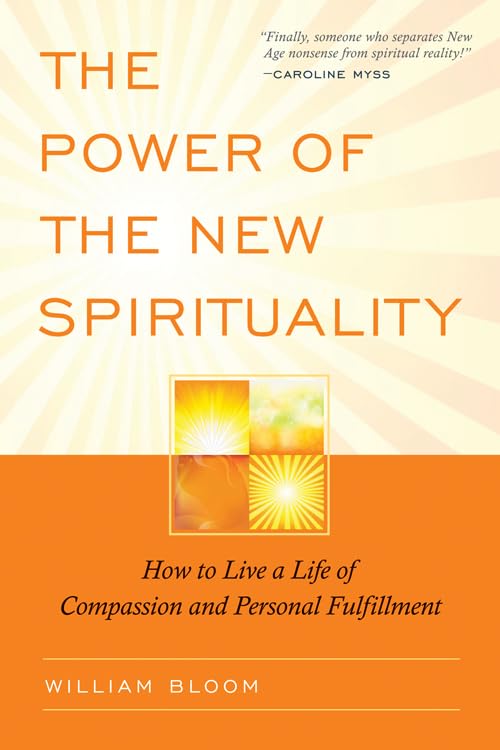
William Bloom who combines a long-standing interest in New Age approaches to spirituality with an identity focus in international relations (1), has written “We are in changing times. Our culture and technology are continually transforming, and the intellectual certainties of the last few hundred years are no longer secure…It is our need to find a new authenticity in our spiritual lives — to bring back fully into our consciousness — the sacred dimension of life, but we want to do this in a way that honours personal freedom and personal growth. In essence, then, we are turning to the teachings and experiences of what is called the ageless wisdom, but we are doing so with completely new attitudes”.
A key element of our changing culture is that we are discarding old religious forms and re-creating our spiritual and sacred world. Creative new attitudes, practices, and forms have been an emphasis of William Bloom. (2) As he writes, “As a teacher and author I often feel conflicted: on the one hand, I want to inspire and encourage people about their innate goodness and the wonders of creation; on the other hand, I do not want to support naiveté about the human condition. We are magnificent beings with cosmic consciousness, and yet at the same time we are also insecure and can do harm.
“Yet the current emergence and creation of a new culture is not always an easy process. It feels as if everything is being created anew. At the same time, we know that we are working with dimensions which have always been and which always shall be.”
The basis of many New Age approaches is that we live in a vast field of energy. Vibrations and atmospheres can move like waves through this field to impact others. Our thoughts, feelings and actions can cooperate with this vitality, energy and consciousness for our development and to benefit others. We find this use of energy fields in many schools of spiritual healing such as reiki, in yoga and martial arts. (3)
William Bloom sets out a three-step process for deepening and expanding our awareness, developing our hearts, and building a just, creative and benevolent world. He sets out some core skills.
The first is centering — a calm awareness, an integration of body, mind and spirit. This is best done through silent meditation, but some find music or ritual helpful. “Whatever works for you” is basically his approach. This is an approach called “mindfulness” in some Buddhist traditions and can also be helped by breathing exercises and other techniques.
The second step is to focus the heart on compassion. Visualization is one approach, such as visualizing ever wider circles of persons or places held within the field of compassion. Focusing on the Sacred Heart of Jesus is used in certain Catholic traditions.
The third step is to direct the energy field so that it is of service to others. When we are centered and heart-focused, with an encouraging psychological attitude, we create a vibration that is supportive for those around us and can be a positive influence in the wider world.
William Bloom has written a clear and helpful presentation for personal fulfillment and service to humanity.
Notes:
1) William Bloom, Personal Identity, National Identity and International Relations (Cambridge: Cambridge University Press, 1993) 2) William Bloom, First Steps: An Introduction to Spiritual Practice (Forres, Scotland: Findhorn Press, 1993) 3) Barbara Ann Brennan, Hands of Light: Guide to Healing Through the Human Energy Field (New York: Bantam, 1990)
Prof. René Wadlow is President of the Association of World Citizens.
There is a tale of a Rabbi who enters into a discussion with his students about the night. He asks them, “When can one know that the night has ended and the day has begun?”. One student suggests, “When you can tell the difference between a sheep and a dog.” Another student suggests, “When you can see the difference between an olive tree and a fig tree”. “No”, replies the Rabbi, “It is the moment when you can look at a face never seen before and recognize the stranger as a brother or sister. Until that moment, no matter how bright the day, it is still night.”
In much of the world, it is still night. In 2026, the greatest challenge facing the world society is to release the enormous financial, technical, and human resources still used for military and narrow nationalist goals for ecologically-sound development. These resources will be provided only as more persons develop a profound sense of responsibility for the fate of the planet and for the well-being of the entire human family. We seek to develop a sustainable and just world. If we work together, 2026 can be a strong light for the world.
Prof. René Wadlow is President of the Association of World Citizens.
Jenny Lecoat, The Girl from the Channel Islands. New York: Graydon House, 2021, 304pp.
It is hard to stay human when wolves rule your world. It is harder still to hold on to your values when those very values might cost you your life. Most people, when faced with terror and deprivation, bend to the wind of fear. Compassion becomes a luxury, conscience an inconvenience. They retreat into the narrow shelter of survival.
But now and then, there are exceptions—rare, luminous moments when the human spirit refuses to break. Jenny Lecoat’s Hedy’s War tells one such story: a story of love and courage that endures amid the ruins of occupied Europe.
The novel is based on true events that unfolded on the island of Jersey during the Nazi occupation. Hedy, a Jewish woman who fled Vienna in search of safety, finds herself trapped once more under Nazi rule, this time on British soil. The irony is cruel, almost unbearable. And yet, against all odds, kindness finds her.
Anton, a man the regime calls Aryan, sees beyond race and propaganda. To him, Hedy is not an enemy or an inferior being but a friend—someone worth risking his life for. Dorothea, a local Jersey woman, shares his instinctive decency. She befriends Hedy not out of ideology but from an uncalculated sense of humanity, a natural warmth that refuses to be extinguished by fear.
Then comes Kurt, a German officer, who is drawn to Hedy’s quiet strength and beauty without knowing her origins. When the truth is revealed, he feels betrayed not by her identity, but by the lie their world demands they live. He rejects the Nazi myth of blood and purity, and instead chooses love—a dangerous, almost impossible act in his position.
Together, these three—Anton, Dorothea, and Kurt—form a fragile circle of protection around Hedy. They risk everything for her, defying a regime built on suspicion and cruelty. That she survived at all is a miracle; that she did so because of their compassion is a testament to the stubborn endurance of the human heart.
Hedy’s War is, above all, a story about moral clarity in an age of confusion. It reminds us that decency can survive even in the shadow of atrocity, that friendship and love can outlast the machinery of hate.
Hedy’s story is rare—precisely because most did not act this way. Most looked away, stayed silent, survived by doing nothing. But this book honours those who did not. It pays tribute to the small, unrecorded acts of goodness that saved lives, and to the few who kept their humanity when the world around them had lost its soul.
Jenny Lecoat captures, with quiet strength, the moral choices of ordinary people confronted by extraordinary evil. Her novel reminds us that even in an age of darkness, there were those who defied hatred, who chose decency over obedience, and love over fear. Lecoat writes with restraint and grace, allowing the quiet heroism of her characters to shine through the fog of occupation.
A moving and deeply humane story of courage, compassion, and moral integrity sustained against impossible odds.
Dorothea Weber who hid Hedwig Bercu from German forces occupying Jersey was posthumously awarded the “Righteous Among the Nations” honour for showing “extraordinary courage” during the holocaust.
The True Story Behind Hedy’s War
Hedwig Bercu (1919–2018) was an Austrian Jewish woman who fled Vienna after the Nazi annexation in 1938. She found refuge on the British island of Jersey, hoping to rebuild her life far from persecution. But in 1940, the Nazis invaded the Channel Islands—the only British territory they would occupy during the war.
Hedwig, known to her friends as Hedy, was trapped once more under Nazi rule. She worked as a translator for the German authorities, her fluency in languages allowing her a precarious survival. When her Jewish identity was discovered, she faced arrest and likely deportation to a concentration camp.
It was then that Dorothea Le Brocq (later Weber), a young local woman who worked with her, chose to act. Defying the occupation authorities, Dorothea and her future husband, Anton Weber, a German soldier disillusioned with the regime, hid Hedy in their home in St Helier. For eighteen months, the couple risked their lives daily to protect her.
Several accounts also identify Kurt Newmann, a German officer stationed on the island, as a further — and deeply complicating — presence. Reportedly drawn to Hedy’s intelligence and dignity, Newmann rejected the racial doctrines he was ordered to enforce. His attitude, whether motivated by conscience, love, or both, ultimately translated into intervention at critical moments: misdirecting inquiries, softening official scrutiny, and risking censure for showing leniency. Where many officers obeyed doctrine, Newmann’s conduct — as reported — helped enlarge the circle of protection around Hedy.
Hedy lived in a secret space within their house, emerging only at night. Neighbours suspected nothing. Dorothea and Kurt brought her food and company, while Anton used his position within the occupying forces to divert attention and suspicion. Their courage was not just an act of resistance—it was an act of profound humanity.
When liberation finally came in 1945, Hedy survived, against all odds. Her story remained largely untold for decades, overshadowed by the larger tragedy of the Holocaust. But her survival, thanks to Dorothea and Anton, stands as one of the Channel Islands’ most remarkable accounts of friendship and moral courage under occupation.
In 2016, Yad Vashem recognised Dorothea Weber as Righteous Among the Nations for saving Hedy Bercu—a belated but deeply deserved honour.
Jenny Lecoat’s novel Hedy’s War (2020) fictionalises this true story, capturing its emotional depth and moral resonance. Lecoat herself grew up in Jersey, the daughter of islanders who lived through the occupation, giving her account both intimacy and authenticity.
Prof. Raphael Cohen-Almagor is an Israeli-British academic.
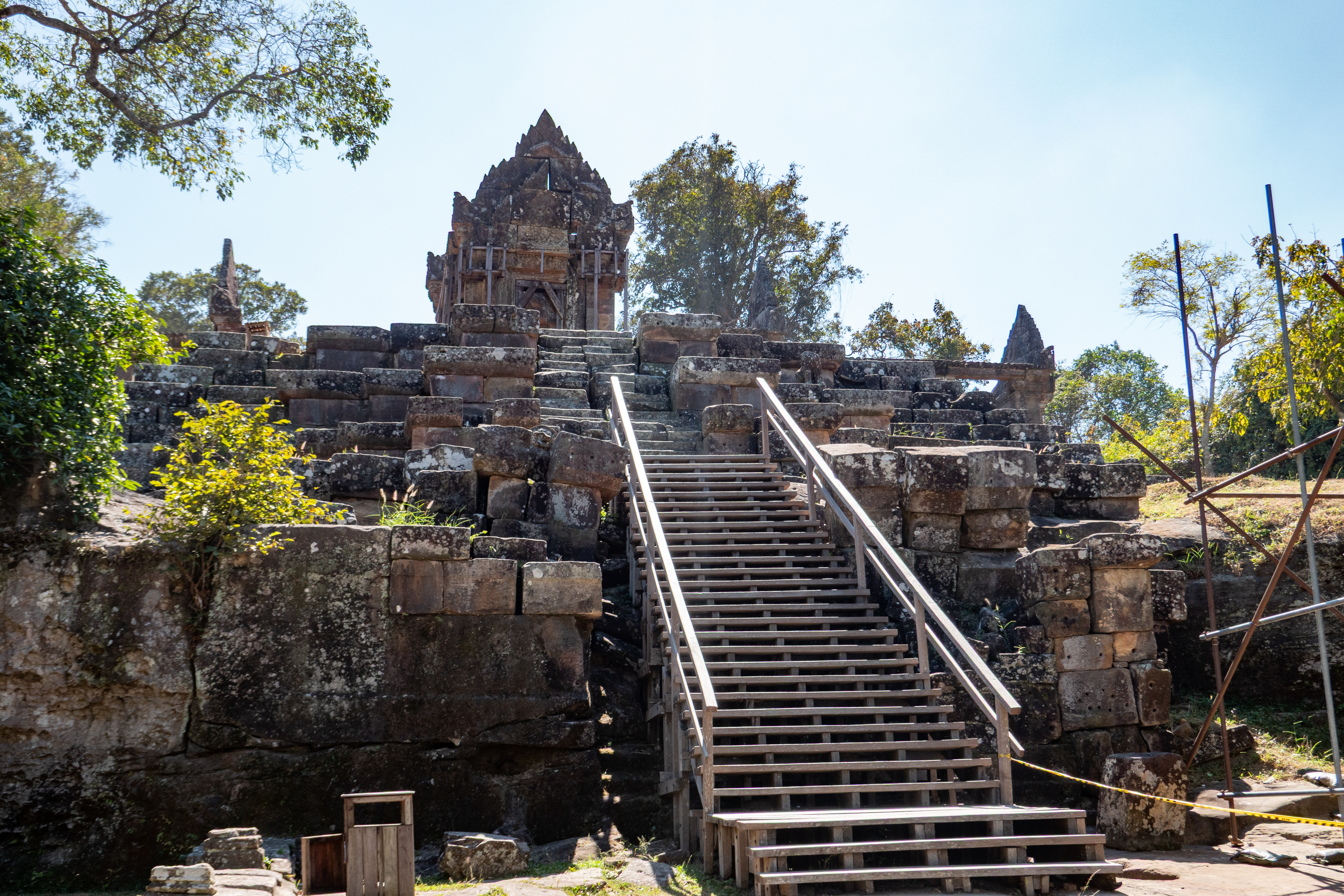
The Association of World Citizens (AWC) calls for an urgent ceasefire in the renewed armed conflict between Thailand and Cambodia which flared up again on December 8, 2025 with the Thai military launching airstrikes on Cambodia.
A ceasefire had been agreed to in July 2025 in negotiations led by U.S. mediators. There is a 500-mile frontier between the two countries. The frontier was drawn when Cambodia was under French rule. Thailand contests the frontier lines.
Prasat Preah Vihear, the temple claimed by both Thailand and Cambodia (C) PsamatheM
The decades-long dispute has already displaced many persons on both sides of the frontier. The frontier area on both sides has a large number of landmines planted making the whole area unsafe. The disputed area contains a Buddhist temple which should be a symbol of peace and harmony but is now a factor in the dispute.
The AWC stresses that urgent measures of conflict resolution should be undertaken. Nongovernmental Organizations may be able to play a positive role in such efforts. Contacts should be undertaken now.
Prof. René Wadlow is President of the Association of World Citizens.
C’est ce que chantait Guy Béart en 1968, alors que la révolte politique grondait en France et ailleurs. Au départ inspiré pour sa chanson La vérité par l’une des premières anecdotes sur le dopage dans le cyclisme, Béart a élargi sa chanson à l’assassinat de John F. Kennedy, à la répression des écrivains en URSS et même au calvaire de Jésus-Christ, rendant hommage aux victimes du refus de la liberté d’expression et, in fine, se mettant lui-même en scène en tant que victime potentielle des «murmures» et des «tomates mûres» de son public qu’il voyait déjà, à son tour, l’exécuter ! Heureusement non, pas plus qu’après Les couleurs du temps l’année passée, chanson qui est pour moi un hymne personnel.
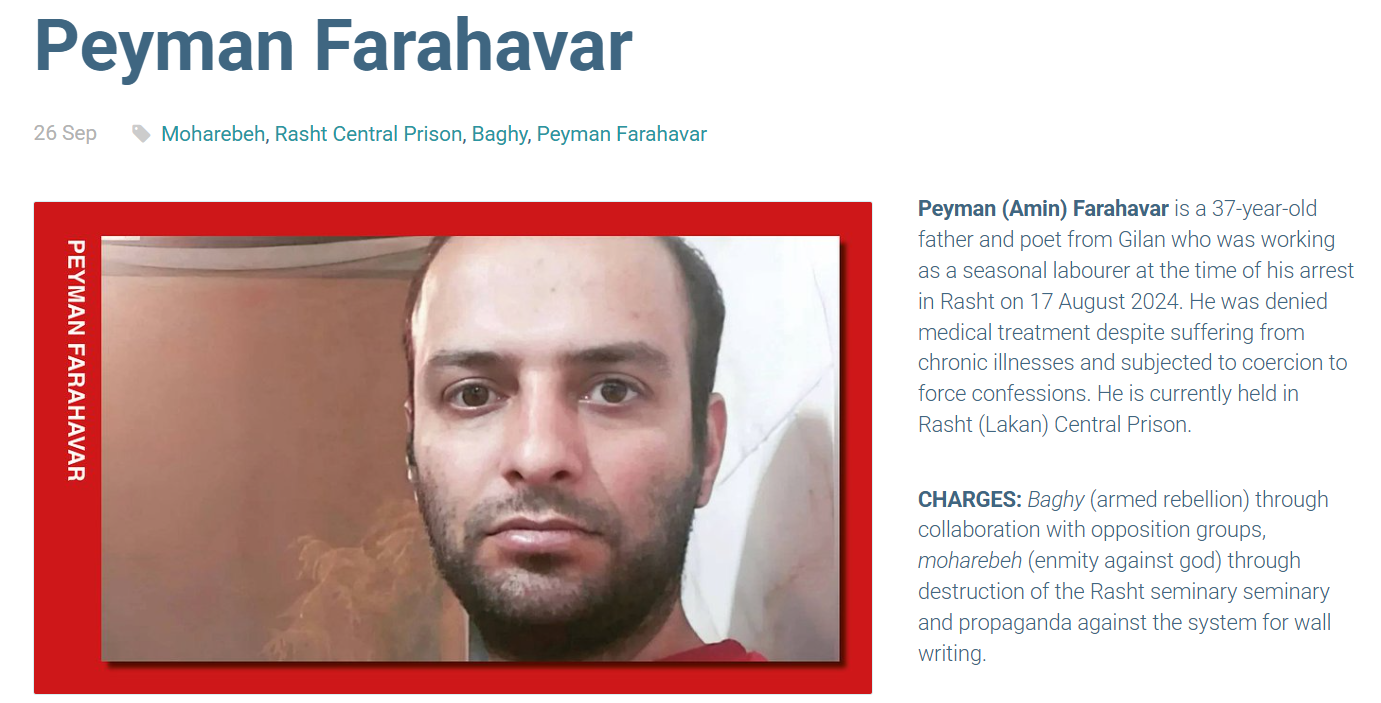
Aujourd’hui hélas, les autorités de l’Iran, où l’assassinat de la jeune Masha Jina Amini par les Gardiens de la Révolutions (Pasdaran) en septembre 2022 a fait naître des revendications de liberté sous le slogan «Femme, Vie, Liberté» qui, même réprimées, ne se sont jamais tues, semblent avoir pris ce refrain de Guy Béart au pied de la lettre puisqu’elles entendent précisément exécuter un poète, Peyman Farahavar.
De la part de la théocratie chiite de Téhéran, rivale par excellence de celle sunnite d’Arabie saoudite qui est aussi pour elle une solide concurrente en termes de violations des Droits Humains, rien de bien surprenant, certes. Qui croit tirer son pouvoir politique de la parole divine n’admet aucune œuvre de l’esprit humain. Pourtant, Peyman Farahavar a bien d’autres raisons, en fait toutes les raisons, de déplaire au régime des mollahs.
(C) Iran Human Rights
Trop croyant pour devenir théocrate
Quand une idéologie de libération fonde un système politique qui, lui-même, évolue ou plutôt dégénère en dictature, il y a toujours des gens qui, même soutenant le système, s’accrochent aux idéaux et aux principes de la libération rêvée en croyant les pérenniser par leur adhésion à l’institution. Certains resteront fidèles au système quoi qu’il arrive, persuadés de pouvoir le changer de l’intérieur par leur seule intégrité – et bien souvent voués à rester déçus –, tandis que d’autres, poussés au bout du dégoût, le quitteront s’ils le peuvent. Dans la défunte Tchécoslovaquie, un Alexander Dubček rêvant d’un «communisme à visage humain» avait tôt fait d’irriter les tenants moscovites d’un communisme répressif, puis de voir s’abattre sur son Printemps de Prague, en plein cœur de l’été, l’hiver des chars.
Promis à un avenir de mollah réprimant lui aussi son peuple, au nom d’un chiisme vidé de sa substance pour devenir l’instrument pérenne du totalitarisme, Peyman Farahavar s’y est refusé. Aux yeux du pouvoir de Téhéran, première faute.
A trente-sept ans, Peyman Farahavar, également prénommé Amin, originaire de la province de Gilan bordée par la Mer Caspienne et voisine de l’Azerbaïdjan, n’a pas toujours été le primeur de rue et père de famille comme tant d’autres qu’il est aujourd’hui. Comme le révèle IranWire, il était au départ séminariste. Comme son gouvernement, il avait fait de la religion et du culte des martyrs de la révolution islamique les piliers de sa vie. A la ville, il portait les robes des dignitaires chiites que la République islamique érige en aristocratie. A cette différence près que Peyman Farahavar, religieux dans l’âme, ne voyait pas le chiisme comme un instrument d’oppression.
Ecœuré par la manière dont les autorités de Téhéran avaient transformé la religion et la mémoire de la révolution en un «business», il s’était défroqué et avait abandonné sa vie cléricale pour devenir vendeur de rue, primeur spécialiste des fruits, travaillant chaque jour avec son frère pour gagner sa vie et nourrir son petit garçon de dix ans.
Il fustigeait désormais sans concession ces autorités qu’il en était venu à détester, s’opposant farouchement à l’oppression du peuple qu’il reprochait à ces gens auxquels son parcours le vouait au départ à ressembler. La robe des mollahs était devenue pour lui symbole de cette oppression. Pour lui, plus question de la porter encore, et l’enlever voulait dire rejeter non pas la religion, mais le régime qui se faisait oppresseur en son nom.
Devenu voix des sans-voix, Peyman Farahavar criblait sur ses réseaux sociaux «la supériorité autoproclamée du clergé chiite en Iran», ainsi que l’exploitation par le gouvernement «du sang et de la religion des martyrs». Il s’était indigné publiquement du sort de la jeune Mardak Maryaneh, jeune fille de seize ans qui, arrêtée et détenue, s’était suicidée après sa libération.
La prison, Peyman Farahavar allait la découvrir lui-même en mai 2022, avant que l’Iran ne résonne du slogan «Femme, Vie, Liberté». Arrêté une nouvelle fois le 18 août 2024 à Racht, capitale du Gilan, Peyman Farahavar fut détenu vingt-six jours au secret avant d’être transféré à la Section de sécurité de la Prison de Lakan, toujours à Racht. Avant même sa condamnation à mort, il allait bientôt être arraché violemment au monde des vivants.
Une poésie belle et forte à mourir
Dans des prisons iraniennes dont la réputation de barbarie n’est plus à faire, encore moins à ignorer, Peyman Farahavar n’avait aucune chance d’échapper au sort le plus barbare, dont les autorités, pénitentiaires et autres, comptaient sur le fait qu’il demeure aussi le sort le plus ignoré. Par bonheur, pari perdu.
Les sources d’IranWire évoquent des tortures si extrêmes qu’un jour, Peyman Farahavar en a perdu connaissance pendant vingt-quatre heures, mais aussi des saignements gastro-intestinaux persistants, des dérèglements lymphatiques provoquant des furoncles douloureux sur tout le corps, et pas le moindre traitement médical qu’il se voit constamment refuser. Au-delà du corps, l’esprit et le cœur souffrent aussi, de l’absence d’un fils auquel il n’est jamais permis de voir son père, ce qui serait voulu, poursuit IranWire, par une ex-belle-famille vindicative adossée aux Gardiens de la Révolution.
A bien y réfléchir, pourquoi les autorités ménageraient-elles Peyman Farahavar alors que, tout au contraire, elles s’acharnent sur lui pour des aveux ? A coups de «graves tortures psychologiques et physiques», elles exigent qu’il avoue. Avouer ? Mais quoi, au juste ? Qu’il aurait, comme l’en accusent les autorités, déclenché un incendie volontaire sur un chantier ? En pareil cas, Peyman Farahavar n’aurait pas été autant interrogé sur ses écrits, littérale obsession de ses geôliers.
«Le crayon sera sa clé, les feuilles son issue», chantait la regrettée Teri Moise dans Les poèmes de Michelle, son hommage aux enfants travailleurs en un temps où l’on n’en parlait encore que peu. Les Gardiens de la Révolution islamique, redoutables miliciens théocrates de Téhéran, ont bien compris que c’est aussi le cas de Peyman Farahavar, insupportablement libre même dans sa cellule, puisqu’ils se sont employés à détruire ses carnets de notes où figuraient ses poèmes, même lisibles de ses seuls codétenus, car c’était apparemment déjà trop.
Vivant de peu, suivi par seulement quelques centaines de personnes sur Instagram, Peyman Farahavar n’en a pas moins fait suffisamment peur à l’Etat, comme le relève IranWire, pour se retrouver frappé d’une peine de mort. Ces fameux Gardiens de la Révolution, il leur avait fait un sort dans un poème que l’un de ses anciens codétenus décrit comme «très implacable et très beau», lui qui se souvient de Peyman Farahavar comme d’un poète doué pour la satire contestataire et, surtout, pour l’improvisation, à tel point qu’il suffisait d ’ «attiser» en lui la verve poétique pour qu’elle explose en bouquets de vers subversifs d’un savoureux vitriol.
Rien ni personne n’était épargné parmi ce qui révoltait l’ancien mollah en devenir. Incendiaire, oui, il l’était sur la corruption enracinée dans les institutions, les questions liées à l’environnement, mais aussi la fierté culturelle de la population du Gilan. Peyman Farahavar fustigeait les ventes, devenues monnaie courante, de terres agricoles du Gilan à des Iraniens d’autres parties du pays, ainsi que le gaspillage des ressources naturelles de la province par les sociétés immobilières. Jaloux de son identité provinciale, il proclamait son admiration pour les héros locaux, dont Mirza Kuchik Khan, homme politique et chef militaire du début du vingtième siècle. Voix des sans-voix, remarque encore IranWire, Peyman Farahavar portait celle d’un peuple oublié, celle des pauvres, celle des villageois dont la souffrance n’intéressait pas Téhéran.
Pour les mollahs, voilà bien de quoi vouloir exécuter un poète, la peine prononcée contre Peyman Farahavar ayant été confirmée y compris par la Cour suprême iranienne le 24 septembre.
Ecrivez sa liberté
«A quoi sert une chanson si elle est désarmée ?», demandait Julien Clerc en 1993 dans Utile, citant une expression chilienne, «La chanson sans armes ne sert à rien, la chanson sans balles n’affronte pas le fusil». La chanson, Maurice Druon y voyait la «forme moderne de la poésie», bien que la forme traditionnelle n’ait jamais cessé d’exister. Dix ans avant Julien Clerc, Daniel Balavoine évoquait la torture d’un poète dans Frappe avec ta tête. Neuf ans auparavant encore, Michel Delpech ouvrait la voie en unissant poésie et chanson dans Rimbaud chanterait, imaginant un Arthur Rimbaud ayant vécu à cette époque et qui, là où le dix-neuvième siècle l’a vu poète, aurait été chanteur, «lui, l’homme fou, l’ami, le déserteur».
A quoi servait à Guy Béart de chanter La vérité en 1968 ? Les étudiants français en révolte contre le système savaient tout au moins à quoi leur servait la chanson, qu’ils entonnaient parfois dans leurs meetings face à un pouvoir politique en lequel ils voyaient un ultime censeur.
Aujourd’hui, le poète qui a «dit la vérité» se nomme Peyman Farahavar, et dans une illustration insupportablement littérale des vers de Guy Béart, Téhéran entend l’exécuter, sous des motifs fantoches, pour sa seule poésie. Une poésie qui n’a pas besoin de dire à quoi elle sert, car les actes parlent, comme les mots dérangent.
Même pour qui n’est pas poète, un langage poli et un ton décidé suffisent pour dire non au massacre d’un innocent. Il y a toujours une ambassade iranienne, ou bien une mission auprès des Nations Unies à New York, Genève ou Vienne, dans le pire des cas une délégation permanente à l’UNESCO, à contacter. Il serait dommage de priver d’un tel soutien Peyman Farahavar, ainsi que de s’en priver soi-même lorsque l’on peut écrire et dire la vérité sans craindre d’être, comme Téhéran le lui promet, exécuté.
Bernard J. Henry est Officier des Relations Extérieures de l’Association of World Citizens.
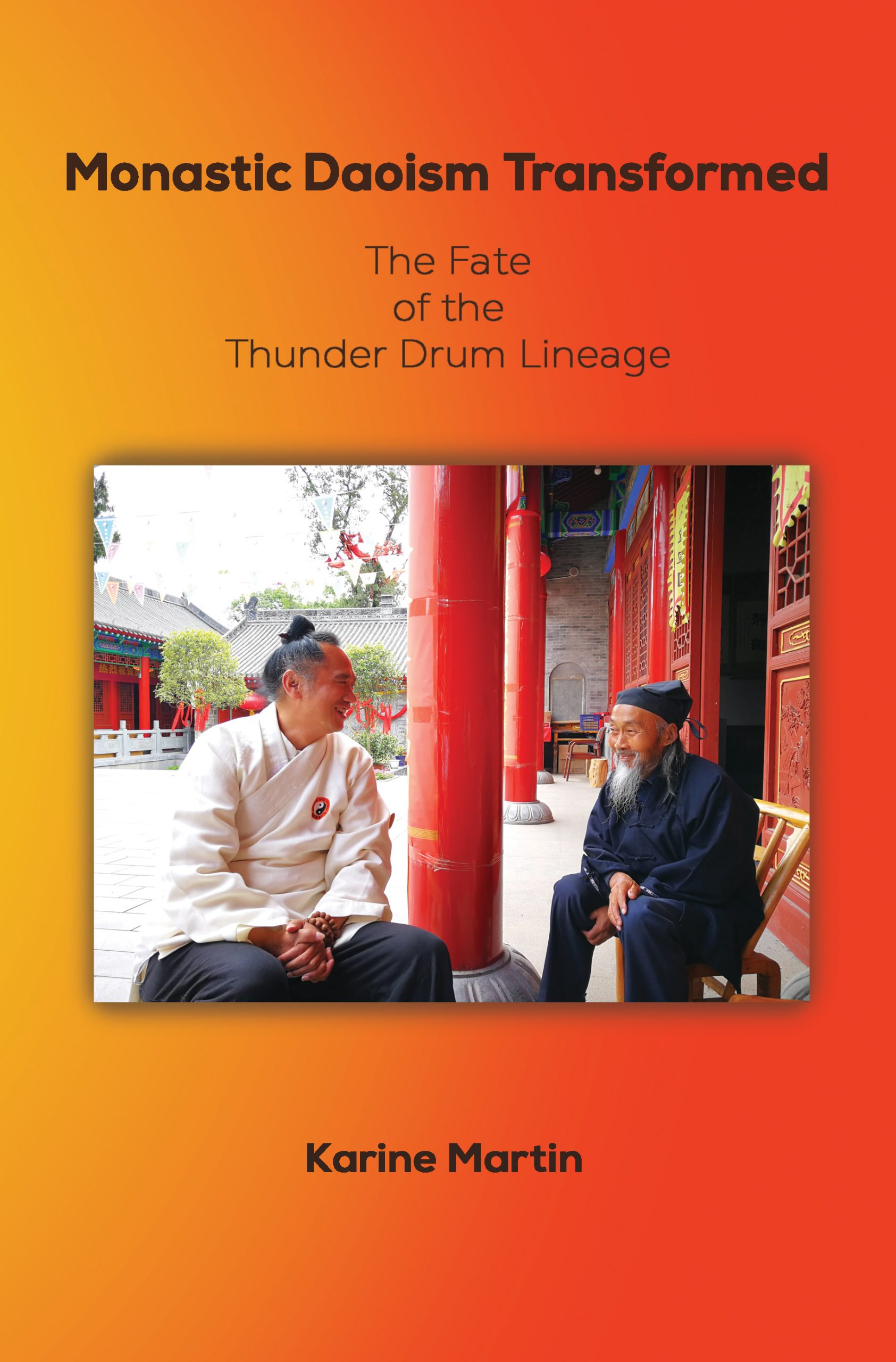
Karine Martin, Monastic Daoism Transformed: The Fate of the Thunder Drum Lineage.
Three Pines Press, 2025, 177pp.
Karine Martin, author of this useful overview of the Chinese Government’s attitude toward Daoist clergy, was able to travel widely in China, visiting more than 100 Daoist temples, especially those of the Thunder Drum lineage to which she belongs.
Since 2017, there has been a Chinese government policy called “Sinicization” in keeping with Xi Jinping’s Thought on Socialism with Chinese Characteristics for a New Era.
Sinicization requires all religious organizations to modify their doctrines and activities so that they match what is considered Han Chinese culture. Authorities have removed crosses from Christian churches and demolished minarets from Islamic mosques. Clergy from all religions are required to attend indoctrination courses on a regular basis. Chinese governments, both Nationalist and Communist, officially recognized five religions: Daoism, Buddhism, Islam, Catholicism and Protestantism.
Some religious groups are considered subversive and are outlawed and their members persecuted such as Falun Gong. During the “Cultural Revolution” (1966 to 1976, ending with the death of Chairman Mao Zedong), religion as such was considered to be one of the “four olds” to be destroyed. Churches and temples were closed. In Tibet, there was widespread destruction of temples. Monks were forced into civilian life. Today, the current policy is to keep religious organizations but to make sure that they do not slip out of control.
As Karine Martin writes,
“Everywhere I went, I found temples in a state of decline and disarray. There were no devotees, much fewer clergy, and minimal activities. Buildings were in disrepair, and there was very little renovation and construction. The overall atmosphere was one of desolation and despair… Temple websites – so strongly developed just a decade ago – now only speak about Xi Jinping Thought and ways of complying with government guidelines… Since all clergy were forced to rejoin secular society during the Cultural Revolution, many got married and had children yet later returned to their monasteries. The marriages often continued, if at long distance, allowing priests to fulfill their spiritual calling while yet having families. Now this is no longer possible, and monks either have to leave the monastery or produce a document that they have obtained a divorce and are properly celebrate.”
Karine Martin has written a very complete picture of monastic Daoism, a development of her Ph.D. thesis based on field observations. However, there is a cultural Daoism which colors Chinese life, its folk religious practices with village shrines – all difficult to control. Daoism places much emphasis on dreams during which the dreamer encounters immortals and advanced masters. Dreams are by their nature difficult to control from outside. The interpretation of the dream is also individual. Dreams can also lead to forms of deep personal meditation in order to understand the significance of the dreams.
Daoism also stresses good health and long life. Deep breathing, massages, herbal remedies and yoga-style movements such as Taijjiquan and Qigong can be carried out without belonging to a Daoist organization.
Daoism also places an emphasis on the appreciation of nature, especially mountains, rivers, forests and well-structured gardens. An ecological concern is growing in China without a specific link to organized Daoism.
While the government may try to control organized Daoist organizations, its cultural manifestations are ever slipping out of control and may one day be manifested in political terms.
Prof. René Wadlow is President of the Association of World Citizens.
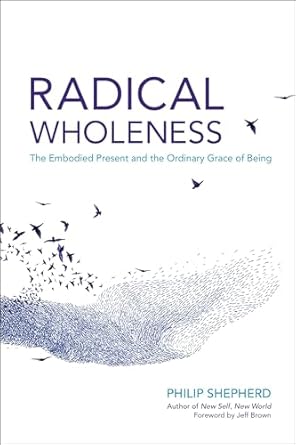
Philip Shepherd, Radical Wholeness: The Embodied Present and the Ordinary Grace of Being.
Berkeley: North Atlantic Books, 2017, 328 pp.
By Sarah Stewart-Brown
Philip Shepherd is unusual; at the age of 18, he relinquished a place to read physics at the University of Toronto, took a cheap flight to London, bought himself a bike and pedalled to Japan. For a year or more, he lived outside, sleeping rough, attuning to the natural world and the different cultures he passed through. What made him go was clarity that there was something wrong with the values, habits and behaviours of the culture he had grown up in, and what made him head for Japan was an experience of Noh Theatre – a timeless, deeply spiritual style of acting.
He returned home with an ability to see the way the Western world’s view of the meaning of life blinds and binds us; in particular, the way we have valued the contribution or our ‘head centres’ over those of our ‘belly centres’ and ‘masculine’ attributes and aptitudes over ‘feminine’. Together with an ability to experience the world through the body, this gave him a radically different view of reality, one in which the wholeness and interconnectedness of everything was a given. He calls this ability Holosapience. Working as an actor and carpenter, raising his family in Toronto, he devoured books, spoke with many wise people and developed workshops in which he experimented with ways to pass on the abilities he had honed for himself.
This book, published in 2017 when he was in his 60s, is his second. It sets out his thesis and his solutions including some of the key practices of his workshops. His first book New Self, New World describes the journey to Japan and his discoveries in more detail. Philip’s thesis is that people who grow up in the Western world learn to live in their heads, prioritising cognitive intelligence over intelligence experienced in the body, exalting autonomy, independence, objectivity and the scientific method, and valuing knowledge over experience. He quotes the anthropologist who studied the Anlo Ewe peoples of West Africa because they seemed to be describing abilities Philip had developed on his journey. Teaching their children to ‘feel, feel at flesh inside’ they experience themselves as porous, feeling the world passing through them and changing them from moment to moment.
Such experiences reveal the essential fallacy of independence.
He goes on to describe the ways in which severing ourselves from the body’s intelligences has led us down paths that are destructive to life, ours and that of ‘all our relations’ a term indigenous Americans use to refer to the non-human world. His understanding of embodiment is different from that offered by other ‘embodiment’ teachers who invite us to ‘listen to the body’ and often to ‘direct the breath into the belly’. This, Philip would say, is not compatible with wholeness because it requires a separate part to be doing the listening and interpreting what it hears, and taking charge of the breath. Embodiment, he says, enables us to listen to the world through the body, attuning ourselves to the world through the body’s sensitivity and intelligence. We don’t develop this ability by doing, but by surrendering to the essential fluidity of the present. Embodiment enables self-knowledge, a world-centred, experiential understanding of self which promotes a sense of wonder, ease and humility, in contrast to objective knowledge which promotes a self-centred sense of accomplishment, power and entitlement.
Philip recognises that individuals may be born with different sensitivities with the implication that we may have different abilities, but he suggests that we can’t have too much sensitivity. The issue with sensitivity is reactivity. If we are able to receive and experience the world without reactivity, all sensitivity is valuable. So in learning to experience radical wholeness we need, he says, to develop the capacity to integrate the neuromuscular contractions and psychological defences from which the ego derives, so that we can receive and experience without reactivity. The pathway involves breathwork, learning to allow breath that moves the back and sides and is initiated by a release of the pelvic floor. It involves the experience of rest, where the opposite of rest is not movement but internal conflict. It teaches the development of receptivity in a world where doing is valued and receiving is not. And it involves the capacity to integrate contractions, defences and reactivity by becoming grounded.
Philip’s work, unlike other embodiment practices, goes beyond the belly centre (Hara, Tonden, Dan Tien or Kath of the spiritual traditions) and shines a light on the perineum, the small circular muscle at the centre of the pelvic floor, as the powerhouse of integration. His workshops show participants how to enable the energies of contraction to soften, dropping down to the pelvic bowl, and ultimately to the perineum and the feet. Key practices are described. Written with fluidity and clarity this book is inspirational and a delight to read.
Sarah Stewart-Brown is an Emeritus Professor of Public Health at University of Warwick.
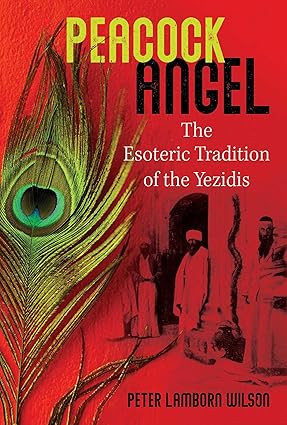
Peter L. Wilson, Peacock Angel: The Esoteric Tradition of the Yezidis.
Rochester, VT, Inner Traditions, 2022, 272pp.
Peter Wilson, a specialist on the Middle East, has written a useful book on the religious framework of the Yezidis as seen by someone outside the Yezidi faith. A Yezidi website has been established by Yezidis living in Nebraska, USA: https://yeziditruth.org.
The yearly Sakharov Prize for Freedom of Thought awarded by the European Parliament was given on October 27, 2016 to Nadia Murad who is also the co-laureate of the 2018 Nobel Peace Prize. She had been taken captive by the forces of the Islamic State in Iraq and Syria (ISIS) in August 2014 and then sold into sexual slavery and forced marriage. She was able to escape with the help of a compassionate Muslim family and went to Germany as a refugee. She has become a spokesperson for the Yezidi, especially Yezidi women.
There are some 500,000 Yezidis, a Kurdish-speaking religious community living in northern Iraq. There were also some 200,000 Yezidis among the Kurds of Türkiye, but nearly all have migrated to Western Europe, primarily Germany as well as to Australia, Canada, and the USA.
There are also some Yezidi among Kurds living in Syria, Iran and Armenia. The Yezidis do not convert people. Thus, the religion continues only through birth into the community.
The structure of the Yezidi religious system is Zoroastrian, a faith born in Persia proclaiming that two great cosmic forces, that of light and good and that of darkness and evil are in constant battle. Humans are called upon to help light overcome darkness.
However, the strict dualistic thinking of Zoroastrianism was modified by another Persian prophet, Mani of Ctesiphon in the third century of the Common Era. Mani tried to create a synthesis of religious teachings that were increasingly coming into contact through travel and trade: Buddhism and Hinduism from India, Jewish and Christian thought, Hellenistic Gnostic philosophy from Egypt and Greece as well as many small belief systems.
Mani kept the Zoroastrian dualism as the most easily understood intellectual framework, though giving it a somewhat more Taoist (yin/yang) flexibility, Mani having traveled to China. He developed the idea of the progression of the soul by individual effort through reincarnation. Unfortunately, only the dualistic Zoroastrian framework is still attached to Mani’s name – Manichaeism. This is somewhat ironic as it was the Zoroastrian Magi who had him put to death as a dangerous rival.
Within the Mani-Zoroastrian framework, the Yezidi added the presence of angels who are to help humans in the constant battle for light and good, in particular Melek Tawsi, the peacock angel. Although there are angels in Islam, angels that one does not know could well be demons. Thus, the Yezidis are regularly accused of being “demon worshipers”.
The Yezidis have always been looked down upon by both their Muslim and Christian neighbors as “pagans”. The government of Saddam Hussein was opposed to the Yezidis not so much for their religious beliefs but rather because some Yezidis played important roles in the Kurdish community, seen as largely opposed to the government. The Yezidi community is still in socio-economic difficulty given the instability of the situation in Iraq.
Peter Wilson has written a useful introduction to this little-known faith.
Prof. René Wadlow is President of the Association of World Citizens.

 Association of World Citizens