The Association of World Citizens (AWC) calls upon the military authorities of Pakistan and Afghanistan to uphold international humanitarian law, in particular the protection of medical and health installations.
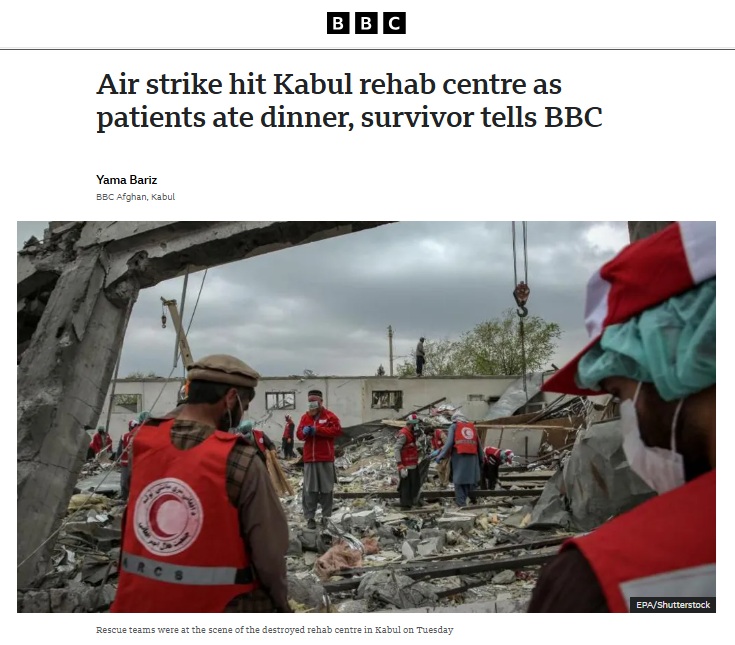
More than 400 people were killed and at least 265 others were injured in a Pakistani airstrike on a drug rehabilitation center, Camp Phoenix, in Kabul, Afghanistan on March 15, 2026. Camp Phoenix, known locally as Omid Camp – Camp of Hope – has been for over a decade a drug treatment center. Afghanistan has a good number of people who have become dependent on the use of drugs. Thus, the drug treatment center meets a real need.
Pakistan declared war on Afghanistan in late February 2026 for harboring Pakistani Taliban, a militant group which has repeatedly attacked Pakistani security forces. Over the past three weeks, Pakistani forces have hit Afghan military installations, residential areas, and civilian infrastructures, including more than 20 health care facilities. Afghan troops have responded with drone strikes and border raids. For the moment, a negotiated end to the armed conflict seems unlikely. Violence may expand.
Thus, there is a need to uphold international humanitarian law, of which the protection of medical centers and medical workers is a core element. The AWC welcomes others who also facilitate international humanitarian law in these critical times.
Prof. René Wadlow is President of the Association of World Citizens.
A new phase of tensions between the USA and the Islamic Republic of Iran is unfolding, shaped by external military pressure from the USA and internal, political, and economic instability within Iran. Iranian security forces’ lethal response to demonstrations with civilian deaths and mass arrests has further eroded public trust in the Iranian leadership.
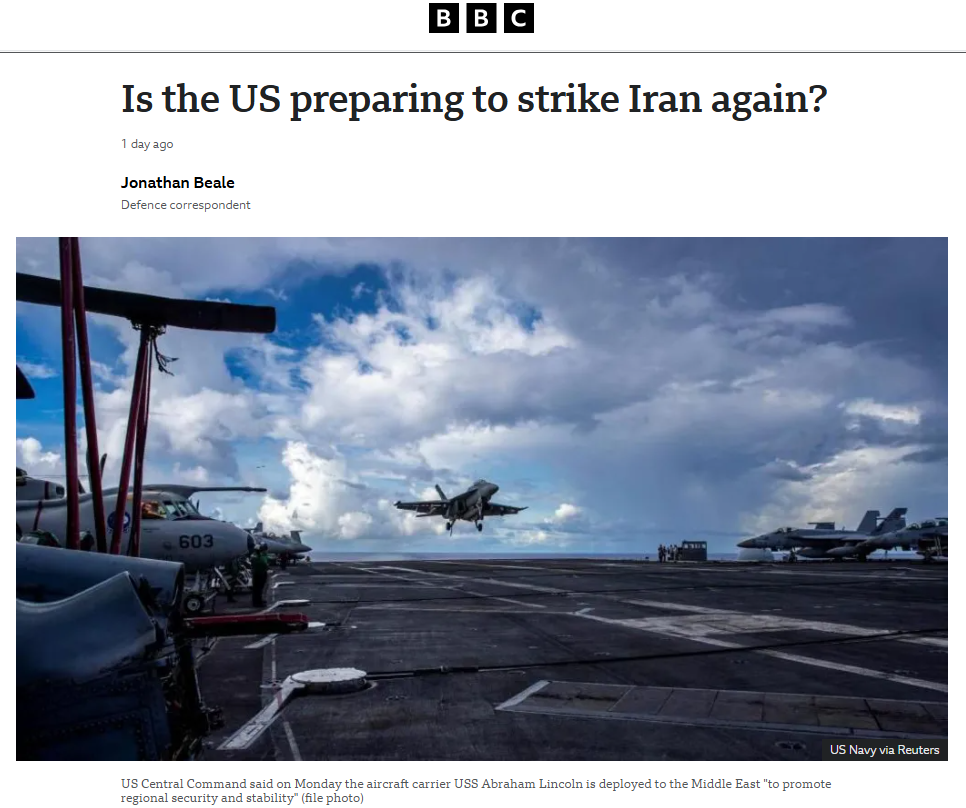
United States (U.S.) President Donald Trump has announced that an armada led by the aircraft carrier Abraham Lincoln is moving toward Iran. The U.S. Air Force has reported that its exercises across the Middle East indicates its readiness and escalation dominance. Tehran can retaliate with missile strikes – alone or through proxies – against U.S. bases in the Middle East. The situation is unstable and thus vulnerable to accidents and miscalculations.
It is said that indirect mediation efforts are being undertaken by diplomats from Türkiye, Egypt, and Qatar. The next few days may be crucial. Nongovernmental organizations may have a role to play in encouraging negotiations in good faith.
Prof. René Wadlow is President of the Association of World Citizens.
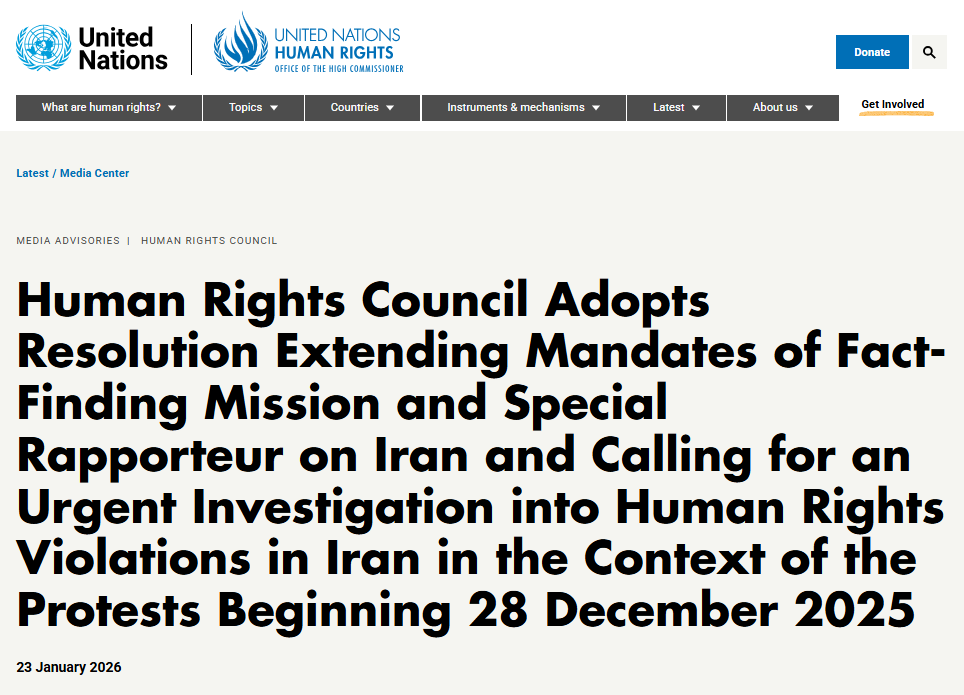
On January 23, 2026, the 47 members of the United Nations (UN) Human Rights Council met in Geneva, Switzerland in a Special Session devoted to the violent repression of protests in the Islamic Republic of Iran. The session began with a call by Volker Türk, UN High Commissioner for Human Rights, for the release of detainees, a halt to the implementation of death sentences, and the adoption of serious steps in response to human rights violations. He stressed that “these protests are the latest in a long line of heartfelt calls by the Iranian people for change, met by a long line of violent repression by the Iranian authorities”.
Ms. Mai Sato, the UN Special Rapporteur on Iran, highlighted the large number of protesters killed, including youth and children. She called upon the authorities of Iran to act in compliance with international human rights standards. She voiced alarm about “the unprecedented scale of the violent crackdown on peaceful protesters by security forces”.
A number of government representatives noted the difficulties of following the current situation due to the cutting of the Internet and other forms of communication.
The Iranian Ambassador, Ali Bahreini, said that the Special Session of the Council had been “politicized” and that Iran rejected the discussion as “external interference in internal affairs”.
Iceland’s Ambassador, Einar Gunnarsson, presented the resolution of the Session saying that “the victims and survivors deserve truth, justice, and accountability”. The resolution which extends the mandate for two years of the UN Fact-Finding Mission, first established after the 2022 protests, was accepted with 25 States in favor, 7 against (China, India, Pakistan, Indonesia, Vietnam, Cuba, Iraq) and 14 abstentions.
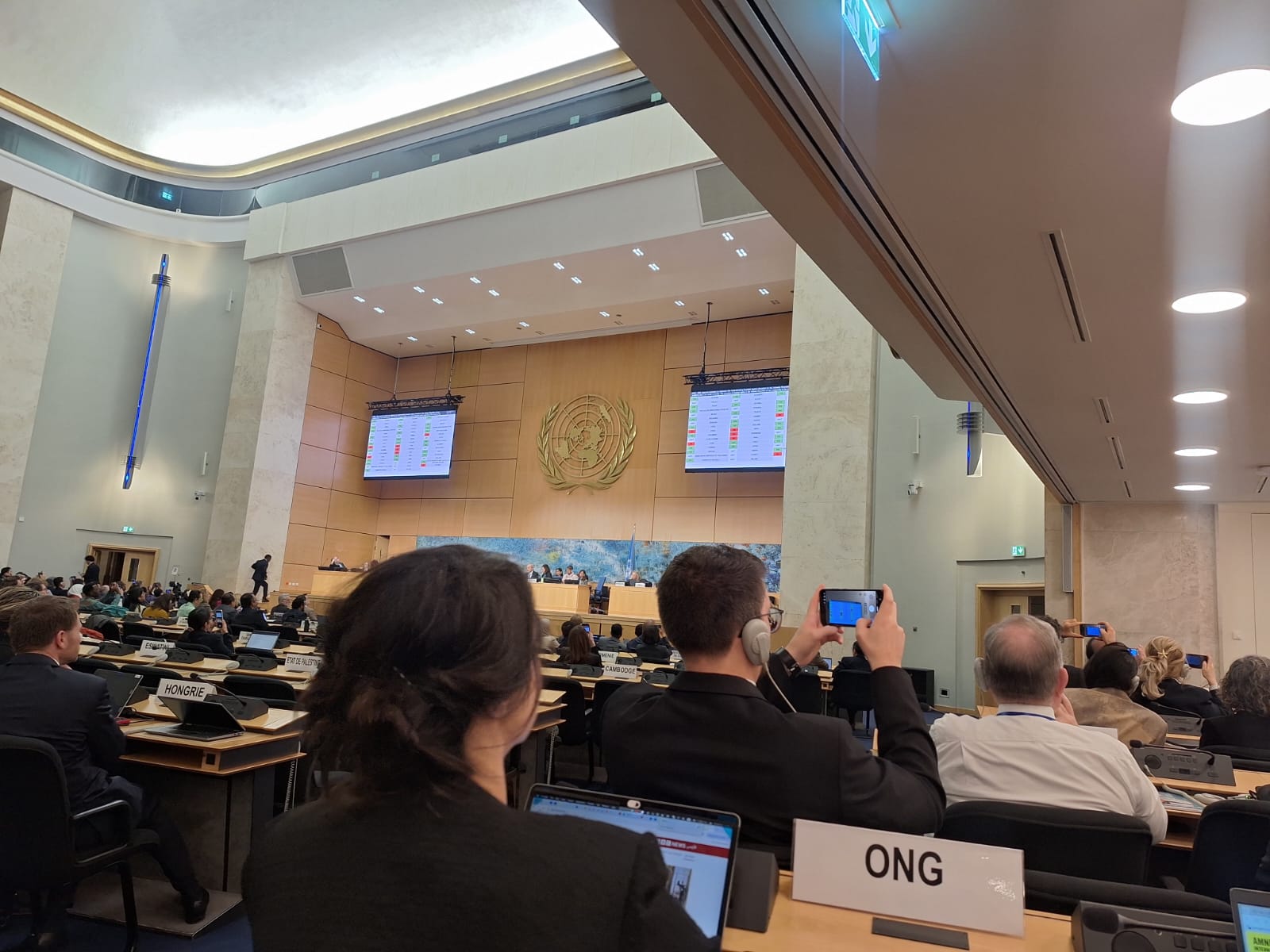
From an NGO’s point of view (C) Assia Tanner/AWC
Assia Tanner, Representative for Diplomatic Relations at the Geneva Office of the Association of World Citizens (AWC), attended the session on our behalf. “Demonstrating is a human right, yet the regime has killed demonstrators and hanged innocent Iranians, resorting to the death penalty which is a serious human rights violation”, she reported. “The UN asked Iran to respect human rights, engage in dialogue, end the violence, and stop terrorizing the population. While The Netherlands called the Iranian regime a terrorist state, some Arab countries called for dialogue as they fear consequences from Tehran. Some African countries called for peaceful support instead of a formal condemnation.”
Nonetheless, the general feeling was definitely one of outrage. “In a session that lasted from 2PM to 6PM with no break whatsoever, all Council members were saying the same thing: Iran must be condemned”, Tanner added. “I felt they were holding the same discourse as all human rights organizations”.
Precisely, Nongovernmental Organizations (NGOs) now have the difficult task of calling on the Iranian government to stop arbitrary arrests, enforced disappearances, and extrajudicial killings. The situation in Iran must be watched as closely as possible and encouragement given to good faith negotiations.
Prof. René Wadlow is President of the Association of World Citizens.
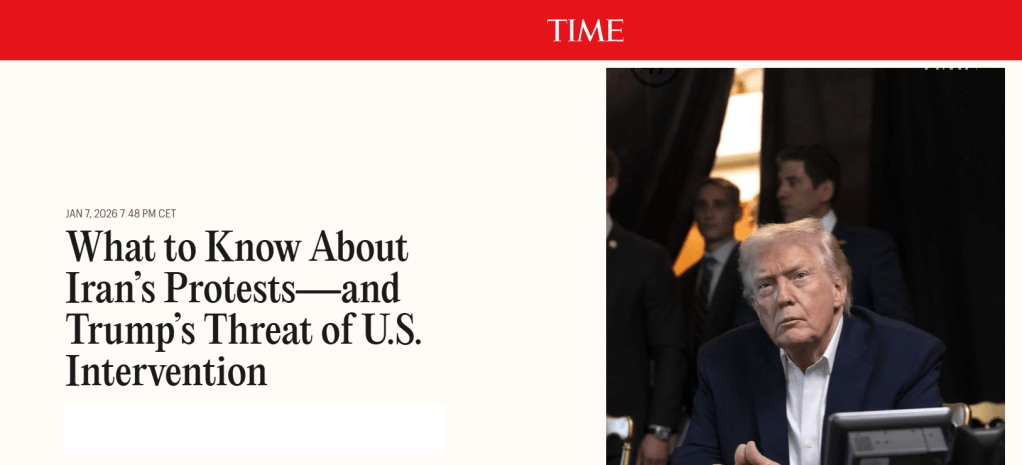
Since the “12-day war” of Israel and the USA last June, Iran has been a powder keg with unresolved political tensions, deepening economic turmoil, and rising domestic dissent. With the start of 2026, the keg has exploded. Protests have started in some 32 cities and larger towns throughout the country.
The protests were first focused on economic issues symbolized by the sharp collapse of the rial, the national money, and the inflation exceeding 40 percent. These dynamics have turned the bazaaris – the merchants – traditionally a more conservative social group, into key participants in the protests. Economic hardship has become a daily experience for a wide segment of the population.
Although the protests began with economic demands, reports from across the country indicate that slogans have increasingly shifted toward explicitly political and antigovernmental messages, including chants directed at the Iranian leadership and the political system as a whole. Universities have once again emerged as key protest centers with action by both students and professors.
The government led by President Masoud Pezeshkian has promised economic reforms, but there is no protest leadership with which to negotiate. The security forces have increased repression with a large number of people arrested. A number of persons have been killed. Funerals for the protesters killed have become occasions for additional protests. The repression has led the United States (U.S.) President, Donald Trump, to say, “If Iran violently kills peaceful protesters, which is their custom, the United States of America will come to their rescue. We are locked and loaded and ready to go.”
The U.S. threats in the Iran situation are very unhelpful. It is time to unlock and unload. Rather, the Association of World Citizens calls on the Iranian authorities to cease immediately the use of force against peaceful protesters and to release those arbitrarily detained. This will create space for genuine dialogue and the needed reforms for economic justice.
Prof. René Wadlow is President of the Association of World Citizens.
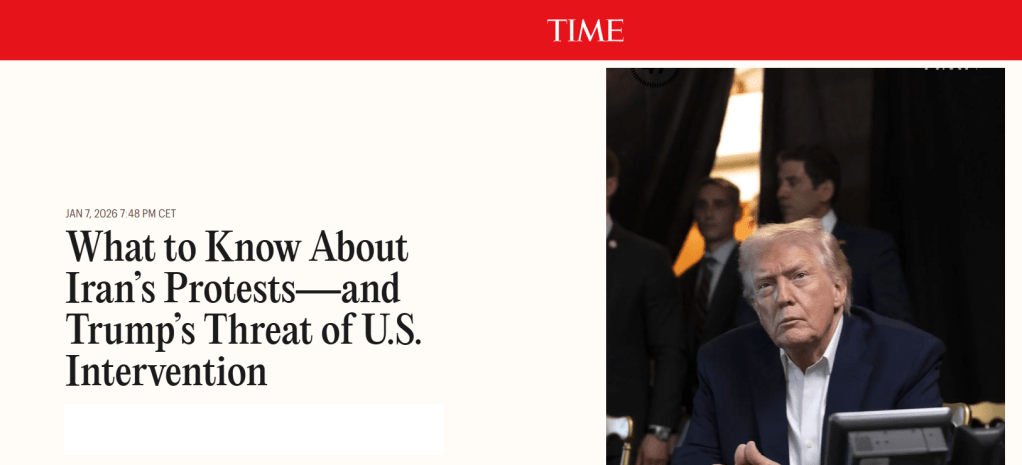
Since the “12-day war” of Israel and the USA last June, Iran has been a powder keg with unresolved political tensions, deepening economic turmoil, and rising domestic dissent. With the start of 2026, the keg has exploded. Protests have started in some 32 cities and larger towns throughout the country.
The protests were first focused on economic issues symbolized by the sharp collapse of the rial, the national money, and the inflation exceeding 40 percent. These dynamics have turned the bazaaris – the merchants – traditionally a more conservative social group, into key participants in the protests. Economic hardship has become a daily experience for a wide segment of the population.
Although the protests began with economic demands, reports from across the country indicate that slogans have increasingly shifted toward explicitly political and anti-governmental messages, including chants directed at the Iranian leadership and the political system as a whole. Universities have once again emerged as key protest centers with action by both students and professors.
The government led by President Masoud Pezeshkian has promised economic reforms, but there is no protest leadership with which to negotiate. The security forces have increased repression with a large number of people arrested. A number of persons have been killed. Funerals for the protesters killed have become occasions for additional protests. The repression has led the United States (U.S.) President, Donald Trump, to say, “If Iran violently kills peaceful protesters, which is their custom, the United States of America will come to their rescue. We are locked and loaded and ready to go.”
The U.S. threats in the Iran situation are very unhelpful. It is time to unlock and unload. Rather, the Association of World Citizens calls on the Iranian authorities to cease immediately the use of force against peaceful protesters and to release those arbitrarily detained. This will create space for genuine dialogue and the needed reforms for economic justice.
Prof. René Wadlow is President of the Association of World Citizens.
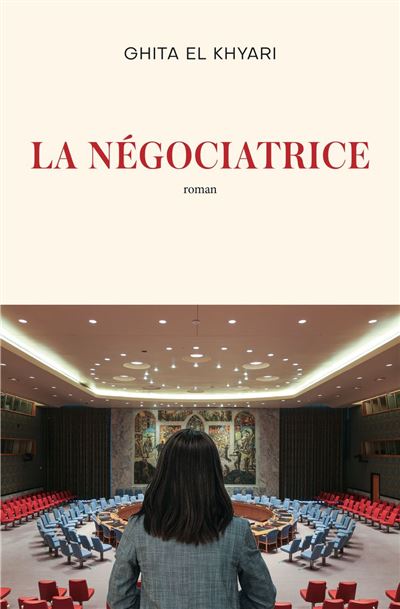
Ghita el Khyari, La Négociatrice. Publishdrive Incorporated, 2025, 267 pp.
Peut-il y avoir pire manière de commencer une recension qu’en jugeant le livre dont l’on va parler rien qu’à sa couverture ? Non, bien entendu. Alors, autant faire le contraire et ne pas se gêner. Quand on tombe sur un livre comme La Négociatrice, ce n’est pas seulement le principe qui le commande mais, plus encore, le besoin impérieux de prévenir la lectrice ou le lecteur de l’erreur terrible qu’elle ou il commettrait en s’arrêtant à ce que laisse penser sa couverture. Et pourtant …
Dès l’abord, le ton est donné : une jeune femme brune fait face à la salle vide du Conseil de Sécurité des Nations Unies, comme se demandant que faire lorsque les représentants permanents des Etats membres seront là, eux dont le vote – ou le veto – est pour tout projet onusien une question de vie ou de mort. La Négociatrice, c’est donc potentiellement L’Interprète de Sydney Pollack, incarnée par Nicole Kidman, ou Keira Knightley dans Official Secrets de Gavin Hood en 2019, traductrice confrontée à un dilemme à la Mordechai Vanunu en ce début d’année 2003 où Etats-Unis et Grande-Bretagne s’apprêtent à attaquer l’Irak de Saddam Hussein sous prétexte de la détention par le pays d’armes nucléaires prohibées. Mais, justement, voilà pourquoi il ne faut jamais juger un livre à sa couverture.
Non, La Négociatrice n’est pas film d’espionnage sous forme de roman. Dans une uchronie, puisqu’il s’agit de la Syrie sous les Assad qui n’existe plus depuis le 8 décembre 2024 et la libération aussi inattendue qu’inespérée du pays, il va être question d’ouvrir enfin une fenêtre pour la réconciliation nationale. Et La Négociatrice, c’est Alya Nasser, fonctionnaire des Nations Unies que le communiqué officiel annonçant sa nomination présente ainsi :
«Madame Nasser apporte à ce poste des années d’expérience politique et diplomatique, pour avoir servi aussi bien au sein de son gouvernement qu’à l’ONU.
Madame Nasser a occupé plusieurs fonctions au sein de l’organisation, ayant notamment été Coordonnatrice spéciale pour le Liban et Représentante adjointe du Programme des Nations Unies pour le Développement en Afghanistan.
Madame Nasser est née à Paris en 1976. Elle est diplômée de Sciences Po Paris et de l’université de Harvard».
Une annonce plus vraie que les vraies, et ce n’est pas hasard. L’auteure, Ghita el Khyari, n’est pas juste une romancière bien informée ou qui aura avant d’écrire, selon l’expression consacrée depuis la pandémie de Covid-19, «fait ses recherches». Ce milieu de la diplomatie et des relations internationales, c’est le sien depuis vingt ans. Après avoir effectué la majeure partie de sa carrière à l’ONU et servi dans de nombreux pays, elle a voulu prendre une pause et quitté son poste pour revenir à des envies jusqu’alors délaissées, à commencer par l’écriture. Et s’il est vrai que le fruit ne tombe jamais loin de l’arbre, alors La Négociatrice est le pur fruit de son arbre, ni trop sucré comme du Sidney Sheldon, ni trop salé comme du John Le Carré, le récit pur et vrai, bien que fictif, d’une mission diplomatique risquée.
Alya Nasser n’est jamais vraiment menacée par les uns ou les autres dans sa mission en Syrie, sa pire ennemie s’avérant être l’invasion de l’Ukraine par la Russie en février 2022 qui éloigne le regard de la communauté internationale de la Syrie exsangue. Risquée, la mission ne l’est pourtant pas moins, les dangers venant de ce que le grand public ne peut pas percevoir dans ce milieu diplomatique international, ce milieu qui, comme le souligne l’auteure, reste encore méconnu et qu’elle entend nous présenter, ainsi que les personnes qui l’habitent.
Trop souvent encore, ce milieu n’existe souvent dans l’esprit du grand public que par la caricature, celle d’un milieu fermé de privilégiés où l’on gagne des fortunes en se faisant plaisir. Je me demande quant à moi quel genre de plaisir a pu éprouver Sergio Vieira de Mello, l’Emissaire spécial du Secrétaire général des Nations Unies en Irak, également Haut Commissaire des Nations Unies pour les Droits Humains, lorsqu’il a été assassiné lors de l’attentat terroriste contre l’Hôtel Canal à Bagdad du 19 août 2003, ou bien quelle pensée il a eu, en se voyant mourir, pour ce qu’il ne pourrait pas faire de son salaire à la fin du mois. Les clichés ont la vie dure, et l’on aime toujours tant soi-même haïr ce que l’on rêverait dans le même temps de voir ses enfants devenir, soutien financier assuré pour ses vieux jours à la clé.
Alya Nasser n’est pas une demi-déesse invincible, pas plus qu’une pauvre victime d’un système où, même dans le monde de l’après-MeToo, les femmes peinent encore à percer le plafond de verre et, quand bien même elles y parviennent comme Francesca Albanese, Représentante spéciale des Nations Unies sur les Territoires palestiniens, en paient le prix fort – au sens strict du terme.
Passionnée par son travail, idéaliste libérale – au sens de l’école du même nom des relations internationales, en bonne onusienne qu’elle est – Alya Nasser veut arriver à ses fins, quitte à perdre de vue les moyens au profit de la fin. Non par arrivisme, mais parce que le récit la trouve alors qu’elle a déjà commis l’irréparable. Elle s’est oubliée.
Alya a oublié qu’elle était une femme, dans un milieu professionnel où redescend encore trop lentement la testostérone. Alors même qu’un épisode MeToo impliquant son supérieur direct lui-même vient brutalement le lui rappeler, elle doit affronter l’idée qu’elle n’a pas su gérer les liens féminins les plus importants de son existence, avec sa mère qui n’en peut plus de souffrir en silence dans son couple, sa meilleure amie et ancienne camarade de fac qui ne parvient plus à réconcilier carrière professionnelle et vie de famille, mais aussi, plus tragiquement encore, avec sa petite nièce qu’elle adore sans pourtant l’avoir jamais trop vue, cette petite fille qui lui met devant les yeux l’enfant qu’elle, en revanche, ne pourra jamais avoir, celui que la biologie lui refuse et ne pourrait venir que par adoption.
Au masculin, Alya affronte aussi Gabriel, son ancien compagnon qu’elle croise ici et là, qui l’abandonne à son sort dans un aéroport italien puis refait surface un jour en lui proposant d’adopter ensemble un enfant – trop peu, trop tard. Et encore, il n’est pas pour elle l’homme le plus dangereux. Celui-là s’appelle Alexeï, jeune diplomate russe aisé, charmeur, qui lui apparaît d’abord tel un démon venu torpiller sa mission – pour protéger le régime Assad affidé de Moscou – puis s’installe dans sa vie comme un ange interdit, dans une relation amoureuse intermittente et contre-nature à laquelle se raccroche une Alya épuisée de solitude, plombée par un alcoolisme qui va et vient, mais voulant mener à bien sa mission au risque même de laisser sans le voir son désarroi prendre la barre.
Sans rien divulgâcher, pas de happy end dans La Négociatrice, mais un petit coup de main de la chance, ou d’autre chose pour qui y croit, qui évite à Alya le pire sans pour autant lui offrir le meilleur. Disons, peut-être pas tout de suite. Et toujours, tout au long de la lecture du roman, ce désir de prendre la main d’Alya, de lui offrir une épaule où se blottir, de lui dire combien elle se trompe et de la ramener à la raison, sans certitude d’y parvenir.
A l’Association of World Citizens (AWC) également, la négociation joue un rôle central, comme tout ce qui forme le peacebuilding. Bien entendu, les organisations non-gouvernementales (ONG) comme la nôtre ne sont jamais sujettes aux mêmes attentes que l’ONU, la Ligue arabe ou quelque autre organisme interétatique que ce soit. Désormais majoritaires – j’ai moi-même largement œuvré pour cela – parmi nos Officiers et Représentants, les femmes servant dans nos rangs ne connaissent pas les pressions professionnelles et familiales d’une Alya, même si le milieu de la diplomatie internationale n’est pas moins clément envers les opératrices non-gouvernementales pour lesquelles être une femme demeure, comme dans tant d’autres milieux, une quasi-disqualification d’office.
J’hésite à leur demander à toutes de lire La Négociatrice, en particulier aux plus jeunes d’entre elles qui rêvent peut-être un jour de franchir le pas entre notre ONG et la diplomatie (inter)gouvernementale. J’hésite parce que, comme le vit Alya dans le récit, la destination est pour moi claire mais le trajet, tout à coup, plus tellement. A moins que, bien sûr, la vraie raison n’en soit que seule la vérité blesse, et qu’un ouvrage que l’on hésite à partager soit précisément celui que l’on doit mettre entre toutes les mains, surtout celles de jeunes femmes que l’on prend le risque de dissuader, car, tout à propos, ce risque marche avec l’espoir – et la chance – de leur donner au contraire l’envie d’affronter des obstacles qui, là où une diplomate uchronique trébuche, seront pour elles les pierres à collectionner quand on les leur jette car c’est le début d’un piédestal, comme le disait Hector Berlioz.
Je pense donc que je vais le leur recommander. Par chance, il convient à tous les budgets.
Bernard J. Henry est Officier des Relations Extérieures de l’Association of World Citizens.
Jenny Lecoat, The Girl from the Channel Islands. New York: Graydon House, 2021, 304pp.
It is hard to stay human when wolves rule your world. It is harder still to hold on to your values when those very values might cost you your life. Most people, when faced with terror and deprivation, bend to the wind of fear. Compassion becomes a luxury, conscience an inconvenience. They retreat into the narrow shelter of survival.
But now and then, there are exceptions—rare, luminous moments when the human spirit refuses to break. Jenny Lecoat’s Hedy’s War tells one such story: a story of love and courage that endures amid the ruins of occupied Europe.
The novel is based on true events that unfolded on the island of Jersey during the Nazi occupation. Hedy, a Jewish woman who fled Vienna in search of safety, finds herself trapped once more under Nazi rule, this time on British soil. The irony is cruel, almost unbearable. And yet, against all odds, kindness finds her.
Anton, a man the regime calls Aryan, sees beyond race and propaganda. To him, Hedy is not an enemy or an inferior being but a friend—someone worth risking his life for. Dorothea, a local Jersey woman, shares his instinctive decency. She befriends Hedy not out of ideology but from an uncalculated sense of humanity, a natural warmth that refuses to be extinguished by fear.
Then comes Kurt, a German officer, who is drawn to Hedy’s quiet strength and beauty without knowing her origins. When the truth is revealed, he feels betrayed not by her identity, but by the lie their world demands they live. He rejects the Nazi myth of blood and purity, and instead chooses love—a dangerous, almost impossible act in his position.
Together, these three—Anton, Dorothea, and Kurt—form a fragile circle of protection around Hedy. They risk everything for her, defying a regime built on suspicion and cruelty. That she survived at all is a miracle; that she did so because of their compassion is a testament to the stubborn endurance of the human heart.
Hedy’s War is, above all, a story about moral clarity in an age of confusion. It reminds us that decency can survive even in the shadow of atrocity, that friendship and love can outlast the machinery of hate.
Hedy’s story is rare—precisely because most did not act this way. Most looked away, stayed silent, survived by doing nothing. But this book honours those who did not. It pays tribute to the small, unrecorded acts of goodness that saved lives, and to the few who kept their humanity when the world around them had lost its soul.
Jenny Lecoat captures, with quiet strength, the moral choices of ordinary people confronted by extraordinary evil. Her novel reminds us that even in an age of darkness, there were those who defied hatred, who chose decency over obedience, and love over fear. Lecoat writes with restraint and grace, allowing the quiet heroism of her characters to shine through the fog of occupation.
A moving and deeply humane story of courage, compassion, and moral integrity sustained against impossible odds.
Dorothea Weber who hid Hedwig Bercu from German forces occupying Jersey was posthumously awarded the “Righteous Among the Nations” honour for showing “extraordinary courage” during the holocaust.
The True Story Behind Hedy’s War
Hedwig Bercu (1919–2018) was an Austrian Jewish woman who fled Vienna after the Nazi annexation in 1938. She found refuge on the British island of Jersey, hoping to rebuild her life far from persecution. But in 1940, the Nazis invaded the Channel Islands—the only British territory they would occupy during the war.
Hedwig, known to her friends as Hedy, was trapped once more under Nazi rule. She worked as a translator for the German authorities, her fluency in languages allowing her a precarious survival. When her Jewish identity was discovered, she faced arrest and likely deportation to a concentration camp.
It was then that Dorothea Le Brocq (later Weber), a young local woman who worked with her, chose to act. Defying the occupation authorities, Dorothea and her future husband, Anton Weber, a German soldier disillusioned with the regime, hid Hedy in their home in St Helier. For eighteen months, the couple risked their lives daily to protect her.
Several accounts also identify Kurt Newmann, a German officer stationed on the island, as a further — and deeply complicating — presence. Reportedly drawn to Hedy’s intelligence and dignity, Newmann rejected the racial doctrines he was ordered to enforce. His attitude, whether motivated by conscience, love, or both, ultimately translated into intervention at critical moments: misdirecting inquiries, softening official scrutiny, and risking censure for showing leniency. Where many officers obeyed doctrine, Newmann’s conduct — as reported — helped enlarge the circle of protection around Hedy.
Hedy lived in a secret space within their house, emerging only at night. Neighbours suspected nothing. Dorothea and Kurt brought her food and company, while Anton used his position within the occupying forces to divert attention and suspicion. Their courage was not just an act of resistance—it was an act of profound humanity.
When liberation finally came in 1945, Hedy survived, against all odds. Her story remained largely untold for decades, overshadowed by the larger tragedy of the Holocaust. But her survival, thanks to Dorothea and Anton, stands as one of the Channel Islands’ most remarkable accounts of friendship and moral courage under occupation.
In 2016, Yad Vashem recognised Dorothea Weber as Righteous Among the Nations for saving Hedy Bercu—a belated but deeply deserved honour.
Jenny Lecoat’s novel Hedy’s War (2020) fictionalises this true story, capturing its emotional depth and moral resonance. Lecoat herself grew up in Jersey, the daughter of islanders who lived through the occupation, giving her account both intimacy and authenticity.
Prof. Raphael Cohen-Almagor is an Israeli-British academic.
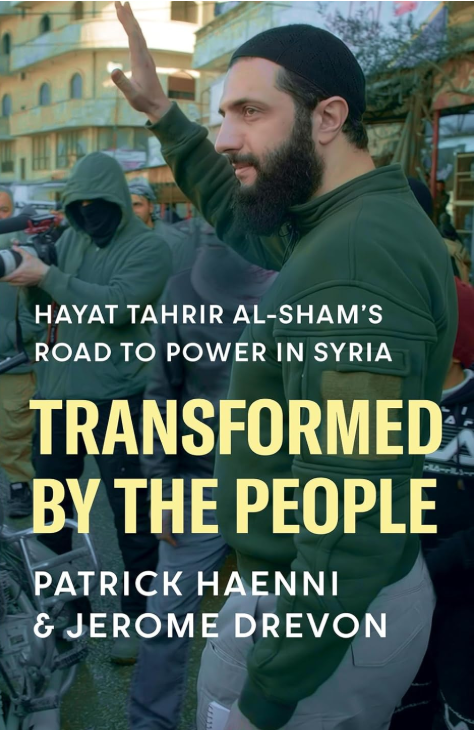
Transformed by the People: Hayat Tahrir Al-Sham’s Road to Power in Syria.
London: C.Hurst and Co, 2025, 331pp.
In December 2024, Ahmad al-Sharaa (formerly known by his battle name of Abu Muhammad al-Jolani) and his armed militia, Hayat Tahrir Al-Sham (HTS), took control of most of Syria. Bashar al-Assad and his close circle left for Moscow on December 8, 2024 after nearly fourteen years of destructive civil war. A convergence of disorganization, low morale in the al-Assad forces, and international disengagement as Russia was focused on Ukraine ultimately facilitated the takeover of Damascus by Ahmad al-Sharaa.
Earlier, between 2016 and 2024, al-Sharaa and the HTS had been in control of Idlib, a rural province in northwest Syria. There, the HTS clamped down on its more radical commanders, severed ties with global jihad movements, and created the Salvation Government to administer the province. Important local figures and Islamist actors unconnected to HTS continued to pursue their own agendas.
In Idlib, the HTS was faced with many aspects of governance as there were many different factions, ideological, religious and professional present. This response to the local social and religious environment – what can be called a process of localization – modified deeply the HTS, “transformed by the people”, the title of the book. Now the process of localization must be applied to the whole of Syria – a more complex challenge than in Idlib. The authors deal in detail with the policies put in place in Idlib and the difficulties faced.
Now, al-Sharaa faces the strong presence of the Alawites – some 15 percent of the population – a religious-ethnic group of which the al-Assad family were members. There have been revenge killings against the Alawites, some of whom have fled to Lebanon and Turkey. In addition to the Alawites, there is an active Druze community – some three percent of the population – also a religious-ethnic movement. There is also a Christian community. Christians make up about ten percent of the population with significant communities in Damascus, Aleppo, Homs and Latakia.
In addition to the strong ethnic-religious communities which must be integrated into a new Syrian society, there are women who represent at least half of the population. Over the past decade, Syrian women sought to integrate into the new power structures as they emerged in different parts of the country. There was also a distinct feminist mobilization aimed at the empowerment of individuals in all aspects of life. Western Nongovernmental Organizations provided training sessions and workshops for women. Women still play a minor role in public life. They hold few positions within administrative and policy circles. The role of women is an issue to be watched closely.
The authors have highlighted the crucial issues in this period of transition. Their book is a useful guide to fast-moving events and will be of real use to all who wish to influence events in Syria in a positive direction.
Prof. René Wadlow is President of the Association of World Citizens.
Third-party nonviolent intervention is the physical presence of a third party into an area of conflict in such a way as to reduce the level of violence. Accompaniment of persons in danger was developed as a technique in the early 1980s by Peace Brigades International (PBI), which I represented in Geneva, especially in contacts with persons at the United Nations. PBI sent volunteers, mostly from the USA, to El Salvador and Guatemala.
Later, in 1989, during a wave of killing of lawyers in Sri Lanka, the Sri Lankan bar association invited PBI to send a team there to accompany lawyers. The protective accompaniment worked so well that PBI was asked to extend its work to labor organizers and journalists, also under danger.
Similar forms of protective accompaniment have been organized by two largely Christian organizations to work with Palestinians. One is the World Council of Churches, based in Geneva, which began a program in 2002. Since then, some 2,000 volunteers from 21 countries have spent three months in Israel to accompany children going to school or persons passing through multiple check points.
The second organization is the Christian Peacemaker Teams (CPT), closely related to the Mennonite church in Canada and the USA, working in the Hebron area since 1995, a mixed Palestinian and Israeli community. When active, they have a red hat which is a clear identification.
CPT have also worked in other parts of Israel with mixed communities. Allies from other countries send messages and emails to Israeli officials in support of the Teams’ efforts. The team uses videos to highlight tense situations, often associated with house demolitions. The Peacemaker Teams have developed good working relations with Israeli human rights organizations such as Rabbis for Human Rights. The team members are often arrested by the Israeli police and spend time in Israeli jails with prisoners who are not used to nonviolent activists.
Photograph of Abu Hishma village and residents by the Christian Peacemaker Teams (C) CPT
As one Christian Peacemaker, Wendy Lehman, wrote, “Intellectually, I knew there were good reasons to risk arrest when doing nonviolent direct action. Many activists view it as an effective way to draw attention to injustice. Others argue that if you are doing what you believe is right – defending someone from being beaten by soldiers, participating in a public vigil, or standing up for a rightful landowner – arrest may occur ‘organically’ out of the situation.”
Developing the skills needed for nonviolent accompaniment is crucial. Volunteers need awareness and skills to be able to act judiciously and have an impact. They must be able to observe, evaluate and make decisions. They can be facilitators – one who helps a group reach a common decision, often with consensus decision-making and participatory management.
To keep a clear focused attention in the middle of violence, hate and confusion requires inner calm. There are techniques, often developed in spiritual training, to be able to stay calm and focused in times of confusion. There are also ways of developing an inner vitality so that one’s vital energy is not drained away by the presence of hostile persons. Such techniques are usually related to increasing the flow of subtle energies within the body, techniques taught in yoga, in certain breathing exercises, and in meditation. In a more secular spirit, the International Committee of the Red Cross has been working on stress reduction techniques for Red Cross workers in tension situations.
The current situation in Israel, while there are positive currents, is one of continuing tensions. Thus, there will be a need for nonviolent accompaniment.
Prof. René Wadlow is President of the Association of World Citizens.
C’est ce que chantait Guy Béart en 1968, alors que la révolte politique grondait en France et ailleurs. Au départ inspiré pour sa chanson La vérité par l’une des premières anecdotes sur le dopage dans le cyclisme, Béart a élargi sa chanson à l’assassinat de John F. Kennedy, à la répression des écrivains en URSS et même au calvaire de Jésus-Christ, rendant hommage aux victimes du refus de la liberté d’expression et, in fine, se mettant lui-même en scène en tant que victime potentielle des «murmures» et des «tomates mûres» de son public qu’il voyait déjà, à son tour, l’exécuter ! Heureusement non, pas plus qu’après Les couleurs du temps l’année passée, chanson qui est pour moi un hymne personnel.
Aujourd’hui hélas, les autorités de l’Iran, où l’assassinat de la jeune Masha Jina Amini par les Gardiens de la Révolutions (Pasdaran) en septembre 2022 a fait naître des revendications de liberté sous le slogan «Femme, Vie, Liberté» qui, même réprimées, ne se sont jamais tues, semblent avoir pris ce refrain de Guy Béart au pied de la lettre puisqu’elles entendent précisément exécuter un poète, Peyman Farahavar.
De la part de la théocratie chiite de Téhéran, rivale par excellence de celle sunnite d’Arabie saoudite qui est aussi pour elle une solide concurrente en termes de violations des Droits Humains, rien de bien surprenant, certes. Qui croit tirer son pouvoir politique de la parole divine n’admet aucune œuvre de l’esprit humain. Pourtant, Peyman Farahavar a bien d’autres raisons, en fait toutes les raisons, de déplaire au régime des mollahs.
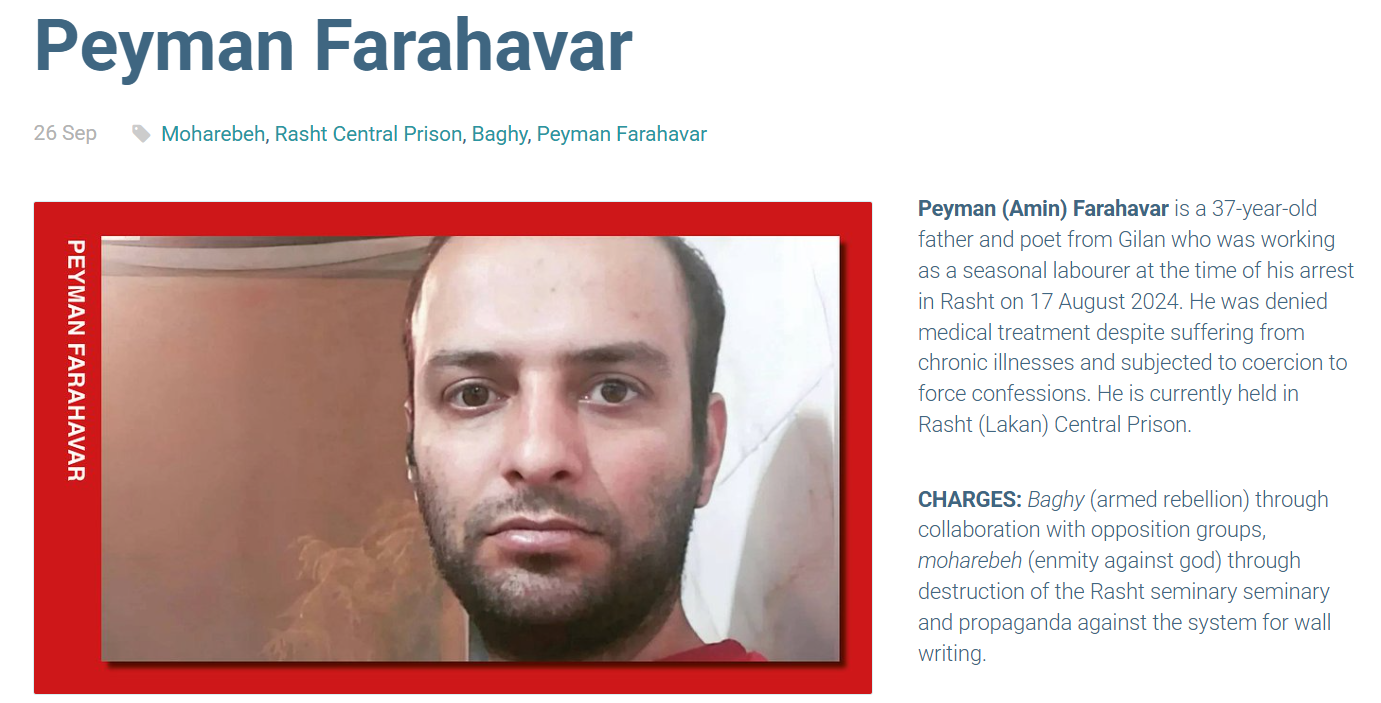
(C) Iran Human Rights
Trop croyant pour devenir théocrate
Quand une idéologie de libération fonde un système politique qui, lui-même, évolue ou plutôt dégénère en dictature, il y a toujours des gens qui, même soutenant le système, s’accrochent aux idéaux et aux principes de la libération rêvée en croyant les pérenniser par leur adhésion à l’institution. Certains resteront fidèles au système quoi qu’il arrive, persuadés de pouvoir le changer de l’intérieur par leur seule intégrité – et bien souvent voués à rester déçus –, tandis que d’autres, poussés au bout du dégoût, le quitteront s’ils le peuvent. Dans la défunte Tchécoslovaquie, un Alexander Dubček rêvant d’un «communisme à visage humain» avait tôt fait d’irriter les tenants moscovites d’un communisme répressif, puis de voir s’abattre sur son Printemps de Prague, en plein cœur de l’été, l’hiver des chars.
Promis à un avenir de mollah réprimant lui aussi son peuple, au nom d’un chiisme vidé de sa substance pour devenir l’instrument pérenne du totalitarisme, Peyman Farahavar s’y est refusé. Aux yeux du pouvoir de Téhéran, première faute.
A trente-sept ans, Peyman Farahavar, également prénommé Amin, originaire de la province de Gilan bordée par la Mer Caspienne et voisine de l’Azerbaïdjan, n’a pas toujours été le primeur de rue et père de famille comme tant d’autres qu’il est aujourd’hui. Comme le révèle IranWire, il était au départ séminariste. Comme son gouvernement, il avait fait de la religion et du culte des martyrs de la révolution islamique les piliers de sa vie. A la ville, il portait les robes des dignitaires chiites que la République islamique érige en aristocratie. A cette différence près que Peyman Farahavar, religieux dans l’âme, ne voyait pas le chiisme comme un instrument d’oppression.
Ecœuré par la manière dont les autorités de Téhéran avaient transformé la religion et la mémoire de la révolution en un «business», il s’était défroqué et avait abandonné sa vie cléricale pour devenir vendeur de rue, primeur spécialiste des fruits, travaillant chaque jour avec son frère pour gagner sa vie et nourrir son petit garçon de dix ans.
Il fustigeait désormais sans concession ces autorités qu’il en était venu à détester, s’opposant farouchement à l’oppression du peuple qu’il reprochait à ces gens auxquels son parcours le vouait au départ à ressembler. La robe des mollahs était devenue pour lui symbole de cette oppression. Pour lui, plus question de la porter encore, et l’enlever voulait dire rejeter non pas la religion, mais le régime qui se faisait oppresseur en son nom.
Devenu voix des sans-voix, Peyman Farahavar criblait sur ses réseaux sociaux «la supériorité autoproclamée du clergé chiite en Iran», ainsi que l’exploitation par le gouvernement «du sang et de la religion des martyrs». Il s’était indigné publiquement du sort de la jeune Mardak Maryaneh, jeune fille de seize ans qui, arrêtée et détenue, s’était suicidée après sa libération.
La prison, Peyman Farahavar allait la découvrir lui-même en mai 2022, avant que l’Iran ne résonne du slogan «Femme, Vie, Liberté». Arrêté une nouvelle fois le 18 août 2024 à Racht, capitale du Gilan, Peyman Farahavar fut détenu vingt-six jours au secret avant d’être transféré à la Section de sécurité de la Prison de Lakan, toujours à Racht. Avant même sa condamnation à mort, il allait bientôt être arraché violemment au monde des vivants.
Une poésie belle et forte à mourir
Dans des prisons iraniennes dont la réputation de barbarie n’est plus à faire, encore moins à ignorer, Peyman Farahavar n’avait aucune chance d’échapper au sort le plus barbare, dont les autorités, pénitentiaires et autres, comptaient sur le fait qu’il demeure aussi le sort le plus ignoré. Par bonheur, pari perdu.
Les sources d’IranWire évoquent des tortures si extrêmes qu’un jour, Peyman Farahavar en a perdu connaissance pendant vingt-quatre heures, mais aussi des saignements gastro-intestinaux persistants, des dérèglements lymphatiques provoquant des furoncles douloureux sur tout le corps, et pas le moindre traitement médical qu’il se voit constamment refuser. Au-delà du corps, l’esprit et le cœur souffrent aussi, de l’absence d’un fils auquel il n’est jamais permis de voir son père, ce qui serait voulu, poursuit IranWire, par une ex-belle-famille vindicative adossée aux Gardiens de la Révolution.
A bien y réfléchir, pourquoi les autorités ménageraient-elles Peyman Farahavar alors que, tout au contraire, elles s’acharnent sur lui pour des aveux ? A coups de «graves tortures psychologiques et physiques», elles exigent qu’il avoue. Avouer ? Mais quoi, au juste ? Qu’il aurait, comme l’en accusent les autorités, déclenché un incendie volontaire sur un chantier ? En pareil cas, Peyman Farahavar n’aurait pas été autant interrogé sur ses écrits, littérale obsession de ses geôliers.
«Le crayon sera sa clé, les feuilles son issue», chantait la regrettée Teri Moise dans Les poèmes de Michelle, son hommage aux enfants travailleurs en un temps où l’on n’en parlait encore que peu. Les Gardiens de la Révolution islamique, redoutables miliciens théocrates de Téhéran, ont bien compris que c’est aussi le cas de Peyman Farahavar, insupportablement libre même dans sa cellule, puisqu’ils se sont employés à détruire ses carnets de notes où figuraient ses poèmes, même lisibles de ses seuls codétenus, car c’était apparemment déjà trop.
Vivant de peu, suivi par seulement quelques centaines de personnes sur Instagram, Peyman Farahavar n’en a pas moins fait suffisamment peur à l’Etat, comme le relève IranWire, pour se retrouver frappé d’une peine de mort. Ces fameux Gardiens de la Révolution, il leur avait fait un sort dans un poème que l’un de ses anciens codétenus décrit comme «très implacable et très beau», lui qui se souvient de Peyman Farahavar comme d’un poète doué pour la satire contestataire et, surtout, pour l’improvisation, à tel point qu’il suffisait d ’ «attiser» en lui la verve poétique pour qu’elle explose en bouquets de vers subversifs d’un savoureux vitriol.
Rien ni personne n’était épargné parmi ce qui révoltait l’ancien mollah en devenir. Incendiaire, oui, il l’était sur la corruption enracinée dans les institutions, les questions liées à l’environnement, mais aussi la fierté culturelle de la population du Gilan. Peyman Farahavar fustigeait les ventes, devenues monnaie courante, de terres agricoles du Gilan à des Iraniens d’autres parties du pays, ainsi que le gaspillage des ressources naturelles de la province par les sociétés immobilières. Jaloux de son identité provinciale, il proclamait son admiration pour les héros locaux, dont Mirza Kuchik Khan, homme politique et chef militaire du début du vingtième siècle. Voix des sans-voix, remarque encore IranWire, Peyman Farahavar portait celle d’un peuple oublié, celle des pauvres, celle des villageois dont la souffrance n’intéressait pas Téhéran.
Pour les mollahs, voilà bien de quoi vouloir exécuter un poète, la peine prononcée contre Peyman Farahavar ayant été confirmée y compris par la Cour suprême iranienne le 24 septembre.
Ecrivez sa liberté
«A quoi sert une chanson si elle est désarmée ?», demandait Julien Clerc en 1993 dans Utile, citant une expression chilienne, «La chanson sans armes ne sert à rien, la chanson sans balles n’affronte pas le fusil». La chanson, Maurice Druon y voyait la «forme moderne de la poésie», bien que la forme traditionnelle n’ait jamais cessé d’exister. Dix ans avant Julien Clerc, Daniel Balavoine évoquait la torture d’un poète dans Frappe avec ta tête. Neuf ans auparavant encore, Michel Delpech ouvrait la voie en unissant poésie et chanson dans Rimbaud chanterait, imaginant un Arthur Rimbaud ayant vécu à cette époque et qui, là où le dix-neuvième siècle l’a vu poète, aurait été chanteur, «lui, l’homme fou, l’ami, le déserteur».
A quoi servait à Guy Béart de chanter La vérité en 1968 ? Les étudiants français en révolte contre le système savaient tout au moins à quoi leur servait la chanson, qu’ils entonnaient parfois dans leurs meetings face à un pouvoir politique en lequel ils voyaient un ultime censeur.
Aujourd’hui, le poète qui a «dit la vérité» se nomme Peyman Farahavar, et dans une illustration insupportablement littérale des vers de Guy Béart, Téhéran entend l’exécuter, sous des motifs fantoches, pour sa seule poésie. Une poésie qui n’a pas besoin de dire à quoi elle sert, car les actes parlent, comme les mots dérangent.
Même pour qui n’est pas poète, un langage poli et un ton décidé suffisent pour dire non au massacre d’un innocent. Il y a toujours une ambassade iranienne, ou bien une mission auprès des Nations Unies à New York, Genève ou Vienne, dans le pire des cas une délégation permanente à l’UNESCO, à contacter. Il serait dommage de priver d’un tel soutien Peyman Farahavar, ainsi que de s’en priver soi-même lorsque l’on peut écrire et dire la vérité sans craindre d’être, comme Téhéran le lui promet, exécuté.
Bernard J. Henry est Officier des Relations Extérieures de l’Association of World Citizens.

 Association of World Citizens