The Official Blog of the

Archive for the ‘Human Rights’ Category

The Association of World Citizens Promotes Knowledge and Skills for World Citizenship

In Being a World Citizen, Human Rights, Solidarity, The Search for Peace, United Nations, World Law on February 10, 2013 at 4:16 PM

THE ASSOCIATION OF WORLD CITIZENS PROMOTES KNOWLEDGE AND SKILLS FOR WORLD CITIZENSHIP

By René Wadlow


The Association of World Citizens (AWC) stresses that our oneness with humanity and our acceptance of the whole planet as our home involves a process of change both in the attitudes of individuals and in the policies of States. Humanity is clearly moving toward participation in the emerging World Society. An awareness of the emerging World Society and preparation for full and active participation in the emerging World Society is a necessary element of education at all levels, from primary schools, through university and adult education.


The AWC stresses that a World Citizen is one:

Aware of the wider world and who:

–  has a sense of his or her role as a world citizen;

–   respects and values diversity;

–   has an understanding of how the world works economically, politically, socially, culturally, technologically and environmentally;

–   is outraged by social injustice;

–   is willing to act to make the world a more equitable and sustainable place;

–   participates in and contributes to the community at a range of levels from the local to the global.


The AWC believes that World Citizenship is based on rights, responsibility and action.


The rights and freedoms are set out by the Universal Declaration of Human Rights and related human rights conventions such as the International Covenant on Economic, Social and Cultural Rights, the International Covenant on Civil and Political Rights, the Convention on the Rights of the Child, and the Convention for the Elimination of All Forms of Discrimination Against Women. These United Nations (UN)-sponsored human rights treaties are the basis of world law which deals directly with individuals and not just with States.

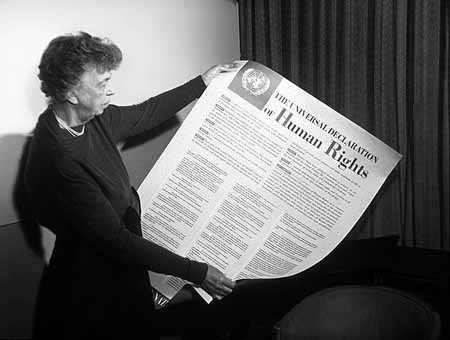
The Universal Declaration of Human Rights, adopted by the UN General Assembly in 1948, is truly the building block of World Citizenship.

The Universal Declaration of Human Rights, adopted by the UN General Assembly in 1948, is truly the most important building block of World Citizenship.

In most cases, there are procedures that exist for the redress of violations of these rights at the national, regional, and UN levels. These rights should enable all persons to participate effectively in national, regional and the world society.


The idea of responsibility has been often discussed within the UN, but it has been impossible to set out agreed-upon obligations. Rather, a sense of responsibility toward the Planet and toward others is left to the individual’s conscience and moral sense. Nevertheless, a sense of responsibility, an ethical concern for social justice, and the dignity of humanity is central to the values of a world citizen.


Action is at the heart of the attitude of a vibrant world citizen. Action must be based on three pillars: knowledge, analysis and skills.

Knowledge: Background knowledge, a sense of modern history, of world trends, and issues of ecologically-sound development is fundamental. As one can never know everything about issues that require action, one needs to know where to find information and to evaluate its quality for the actions one wants to undertake.

Analysis: It is important to be able to analyse current trends and events, to place events in their context, to understand the power relations expressed in an event. One needs to try to understand if an event is a “one-time only” occurrence or if it is part of a series, an on-going process, if it is a local event or if it is likely to happen in other parts of the world as well.

Analysis is closely related to motivation. If from one’s analysis, one sees a possibility for creative action alone or with others, one will often act. If from analysis, it seems that little can be done as an individual, then one can urge a government to act. The degree of personal involvement will usually depend on the results of the analysis of a situation.

Skills: Political skills are needed to make an effective world citizen. A wide range of skills is useful such as negotiation, lobbying, networking, campaigning, letter writing, communications technology and preparing for demonstrations. These are all essential skills to join with others for a strong world citizen voice in world politics. Some of these skills can be taught by those having more experience, for experience is the best teacher. It is by networking to new individuals and groups that one learns the potentials and limits of networking.


In our period of rapid social and political change, the past cannot provide an accurate guide to the future. Anticipation and adaptability, foresight and flexibility, innovation and intuition, become increasingly essential tools for creative political action.


Prof. René Wadlow is President of the Association of World Citizens.

L’AWC DEMANDE VÉRITÉ ET JUSTICE POUR CHOKRI BELAÏD

In Conflict Resolution, Current Events, Democracy, Human Rights, Middle East & North Africa, The Search for Peace, World Law on February 6, 2013 at 3:39 PM

awc-un-geneva-logo

COMMUNIQUE


Genève, Mercredi 6 Février 2013


L’AWC DEMANDE VERITE ET JUSTICE APRES L’ASSASSINAT

DU DIRIGEANT POLITIQUE CHOKRI BELAÏD EN TUNISIE

L’Association of World Citizens (AWC), organisation non-gouvernementale internationale œuvrant pour le respect de l’Etat de droit et le dialogue politique dans les Etats en crise ou en conflit armé, s’indigne de l’assassinat de Maître Chokri Belaïd, avocat tunisien, Secrétaire général du Mouvement des Patriotes démocrates et ancien membre de la Haute instance pour la Réalisation des Objectifs de la Révolution, de la Réforme politique et de la Transition démocratique en Tunisie.

Qui que l’on prenne pour cible, l’assassinat n’est jamais admissible dans une démocratie. Négation ultime de l’état de droit en politique, il est l’arme exclusive de ceux qui voudraient faire prévaloir l’ordre de la terreur et la loi du plus fort.

L’AWC appelle instamment les autorités tunisiennes à diligenter une enquête indépendante, impartiale et exhaustive sur le meurtre de Maître Chokri Belaïd, enquête dont les résultats devront être sans faute rendus publics et qui devra aboutir sans faiblesse à la comparution des responsables devant la justice, selon toutes les normes de droit international en la matière.

La violence vient de frapper en Tunisie. Il faut maintenant l’empêcher de triompher.

* * *

Supporting Young Syrians who Say “Stop the Killing!”

In Conflict Resolution, Current Events, Human Rights, Middle East & North Africa, Solidarity, The Search for Peace, United Nations, World Law on May 26, 2012 at 3:07 PM

SUPPORTING YOUNG SYRIANS WHO SAY “STOP THE KILLING!”

By René Wadlow

 Image

In early May 2012, there were particularly deadly explosions in Damascus, the capital of Syria, an escalation of a conflict which began over a year ago with nonviolent protests but which spilled over into violence, refugee displacements, and ever deeper division among the people of Syria.

For the moment, the efforts of the League of Arab States and the United Nations have not been able to establish good-faith negotiations or even a permanent ceasefire. Therefore a group of young nonviolent Syrians have created a movement “Stop the Killing,” not related to a political party or a confessional religious group, but which wishes to unite those of good will to stop the violence and to develop a society in which all can contribute.

Therefore, we who are outside Syria, send our support and willingness to cooperate.

I believe in you, and I believe in your destiny.

I believe that you have inherited from your forefathers an ancient dream, a song, a prophecy which you can proudly lay as a gift of gratitude to  those working for a just resolution of the current conflicts.

I believe that it is in you to be good citizens.

And what is it to be a good citizen?

It is to acknowledge the other person’s rights before asserting your own, but always to be conscious of your own.

It is to be free in word and deed but it is to know that your freedom is subject to the other person’s freedom.

It is to know that killing will never bring a society of justice and harmony. A just and nonviolent society is the fruit of wisdom and love. Therefore let love, human and frail, command the coming day.


Rene Wadlow, a member of the Fellowship of Reconciliation and of its Task Force on the Middle East, is President and Chief Representative to the United Nations Office at Geneva of the Association of World Citizens.

March 8 – International Day of Women: Women as Peacemakers

In Conflict Resolution, Human Rights, The Search for Peace, United Nations, Women's Rights, World Law on March 7, 2012 at 10:37 PM

MARCH 8 – INTERNATIONAL DAY OF WOMEN:

WOMEN AS PEACEMAKERS

By René Wadlow


It is only when women start to organize in large numbers that we become a political force, and begin to move towards the possibility of a truly democratic society in which every human being can be brave, responsible, thinking and diligent in the struggle to live at once freely and unselfishly.


March 8 is the International Day of Women first proposed by Clara Zetkin (1857-1933) at the Second International Conference of Socialist Women in Copenhagen in 1911.  Zetkin, who had lived some years in Paris and active in women’s movements there was building on the 1889 International Congress for Feminine Works and Institutions held in Paris under the leadership of Ana de Walska. De Walska was part of the circle of young Russian and Polish intellectuals in Paris around Gerard Encausse, a spiritual writer who wrote under the pen name of Papus. For this turn-of-the-century spiritual milieu influenced by Indian and Chinese thought, ‘feminine’ and ‘masculine’ were related to the Chinese terms of Yin and Yang. Men and women alike have these psychological characteristics. ‘Feminine’ characteristics or values include intuitive, nurturing, caring, sensitive, relational traits, while ‘masculine’ are rational, dominant, assertive, analytical and hierarchical.

Clara Zetkin (1857-1933), a woman who changed the world.

As individual persons, men and women alike can achieve a state of wholeness, of balance between the Yin and Yang.  However, in practice ‘masculine’ refers to men and ‘feminine’ to women.  Thus, some feminists identify the male psyche as the prime cause of the subordination of women around the world.  Men are seen as having nearly a genetic coding that leads them to ‘seize’ power, to institutionalize that power through patriarchal societal structures and to buttress the power with masculine values and culture.

One of the best-known symbols of a woman as peacemaker is Lysistrata, immortalized by Aristophanes, who mobilized women on both sides of the Athenian-Spartan War for a sexual strike in order to force men to end hostilities and avert mutual annihilation.  In this, Lysistrata and her co-strikers were forerunners of the American humanistic psychologist Abraham Maslow who proposed a hierarchy of needs: water, food, shelter, and sexual relations being the foundation. (See Abraham Maslow The Farther Reaches of Human Nature) Maslow is important for conflict resolution work because he stresses dealing directly with identifiable needs in ways that are clearly understood by all parties and with which they are willing to deal at the same time.

Addressing each person’s underlying needs means you move toward solutions that acknowledge and value those needs rather than denying them.  To probe below the surface requires redirecting the energy towards asking ‘what are your real needs here? What interests need to be serviced in this situation?’ The answers to such questions significantly alter the agenda and provide a real point of entry into the negotiation process.

It is always difficult to find a point of entry into a conflict, that is, a subject on which people are willing to discuss because they sense the importance of the subject and all sides feel that ‘the time is ripe’ to deal with the issue.  The art of conflict resolution is highly dependent on the ability to get to the right depth of understanding and intervention into the conflict.  All conflicts have many layers.  If one starts off too deeply, one can get bogged down in philosophical discussions about the meaning of life. However, one can also get thrown off track by focusing on too superficial an issue on which there is relatively quick agreement.  When such relatively quick agreement is followed by blockage on more essential questions, there can be a feeling of betrayal.

Lysistrata's message to the "men at war" from Athens and Sparta was clear as could be: No peace, no sex!

Since Lysistrata, women, individually and in groups, have played a critical role in the struggle for justice and peace in all societies. However, when real negotiations begin, women are often relegated to the sidelines.  However a gender perspective on peace, disarmament, and conflict resolution entails a conscious and open process of examining how women and men participate in and are affected by conflict differently.  It requires ensuring that the perspectives, experiences and needs of both women and men are addressed and met in peace-building activities.  Today, conflicts reach everywhere.  How do these conflicts affect people in the society — women and men, girls and boys, the elderly and the young, the rich and poor, the urban and the rural?

I would stress three elements which seem to me to be the ‘gender’ contribution to conflict transformation efforts:

1) The first is in the domain of analysis, the contribution of the knowledge of gender relations as indicators of power. Uncovering gender differences in a given society will lead to an understanding of power relations in general in that society, and to the illumination of contradictions and injustices inherent in those relations.

2) The second contribution is to make us more fully aware of the role of women in specific conflict situations.  Women should not only be seen as victims of war: they are often significantly involved in taking initiatives to promote peace.  Some writers have stressed that there is an essential link between women, motherhood and non-violence, arguing that those engaged in mothering work have distinct motives for rejecting war which run in tandem with their ability to resolve conflicts non-violently. Others reject this position of a gender bias toward peace and stress rather that the same continuum of non-violence to violence is found among women as among men.  In practice, it is never all women or all men who are involved in peace-making efforts.  Sometimes, it is only a few, especially at the start of peace-making efforts.  The basic question is how best to use the talents, energies, and networks of both women and men for efforts at conflict resolution.

3) The third contribution of a gender approach with its emphasis on the social construction of roles is to draw our attention to a detailed analysis of the   socialization process in a given society.  Transforming gender relations requires an understanding of the socialization process of boys and girls, of the constraints and motivations which create gender relations. Thus, there is a need to look at patterns of socialization, potential incitements to violence in childhood training patterns, and socially-approved ways of dealing with violence.

Former Chilean President Michelle Bachelet, now the Executive Director of UN Women, addressing a meeting of the UN Security Council marking the 10th anniversary of landmark resolution 1325 on women, peace and security (October 26, 2010).

Awareness that there can be ‘blind spots’ in men’s visions is slowly dawning in high government circles.  The U.N. Security Council, at the strong urging of non-governmental organizations (NGOs), on October 31, 2000 issued Resolution 1325 which calls for full and equal participation of women in conflict prevention, peace processes, and peace-building, thus creating opportunities for women to become fully involved in governance and leadership.  This historic Security Council resolution 1325 provides a mandate to incorporate gender perspectives in all areas of peace support.  Its adoption is part of a process within the UN system through its World Conferences on Women in Mexico City (1975), in Copenhagen (1980), in Nairobi (1985), in Beijing (1995), and at a special session of the U.N. General Assembly to study progress five years after Beijing (2000).

There is growing recognition that it is important to have women in politics, in decision-making processes and in leadership positions. The strategies women have adapted to get to the negotiating table are testimony to their ingenuity, patience and determination. Solidarity and organization are crucial elements.   March 8: International Day of Women is a reminder of the steps taken and the distance yet to be covered.


René Wadlow is President and Chief Representative to the United Nations Office at Geneva of the Association of World Citizens.

World Citizens Call for Urgent Action to End Human Trafficking — a Modern-Day Slave Trade

In Human Rights, Women's Rights, World Law on January 11, 2012 at 9:05 PM

WORLD CITIZENS CALL FOR URGENT ACTION TO END HUMAN TRAFFICKING — A MODERN-DAY SLAVE TRADE

 By René Wadlow

January 11 was in some countries a “National Day of Awareness on Human Trafficking”. While ‘awareness’ is always a first step, it is action that is needed as was underlined by the Association of World Citizens in a message to the Chairman of the United Nations (UN) Human Rights Council. The recent increase in the scope, intensity and sophistication of trafficking of human beings around the world threatens the safety of citizens everywhere and hinders countries in their social, economic, and cultural development.

The smuggling of migrants and the trafficking of human beings for prostitution and slave labor have become two of the fastest growing worldwide problems of recent years.  From Himalayan villages to Eastern European cities — especially women and girls — are attracted by the prospects of a well-paid job as a domestic servant, waitress or factory worker. Traffickers recruit victims through fake advertisements, mail-order bride catalogues, casual acquaintances, and even family members.

However, trafficking in human beings is not confined to the “sex industry”.  Children are trafficked to work in sweatshops and men to work in the “three Ds jobs” — dirty, difficult, and dangerous.  The lack of economic, political and social structures providing women with equal job opportunities has also contributed to the feminization of poverty, which in turn has given rise to the feminization of migration, as women leave their homes to look for viable economic solutions. In addition, political instability, militarism, civil unrest, internal armed conflicts and natural catastrophes increase women’s vulnerability and can contribute to the development of trafficking.

Trafficking impacts the lives of millions of people — those trafficked and their family members — especially from poorer countries or the poor sections of countries.  Trafficking of persons has become a multi-billion dollar business and ranks right after the trade in drugs and guns. Trafficking is often an activity of organized crime.  In some cases, it is the same organization which deals in drugs, guns and people.  In other cases, there is a “division of labor”, but the groups are usually in contact.

Thus drugs, guns, illegal immigration — these form a nightmare vision of the dark side of globalization with untold human costs. Human trafficking affects women, men and children in their deepest being. It strikes at what is most precious in them: their dignity and their value as individuals.  Trafficked persons experience painful and traumatizing situations which can be with them for the rest of their lives. From recruitment to exploitation, they lose their identity and desperately struggle against a situation that reduces them to objects.

The Association of World Citizens stresses that the fight against human trafficking must be waged in a global and multidimensional way by the UN, regional intergovernmental organizations, by national governments and by non-governmental organizations so that countries of origin, transit and destination develop cooperative strategies and practical action against trade in human beings.  One of the foundations of cooperation is mutual trust. When mutual trust is established, cooperation becomes a natural way to act.

As trafficking in people is more often tolerated by the law enforcement agencies than drugs or guns, there has been a shift of criminal organizations toward trafficking in people.  116 governments have signed a UN-promoted 2000 Protocol to Prevent, Suppress and Punish Trafficking, Especially Women and Children which entered into force in December 2003. However, trafficking in persons is often not a priority for national governments.  Some countries which are important links in the trade of persons such as India, Pakistan, and Japan have not yet signed.

For many governments, trafficking is considered a question of illegal migration, and there is relatively little (in some cases no) consideration of the problems of the individual being trafficked.  Human concern for those caught in the web is a prime contribution of non-governmental organizations.  Concern for physical and mental health is crucial.  There is also an obvious need to deal with the issues which have created these pools of people from which traffickers can draw.  The large number of refugees from Iraq — over two million in Jordan and Syria — await better political and economic conditions in Iraq so they can return home.

Thus, one of the aspects of trafficking in which non-governmental organizations can play a crucial role is the psychological healing of the victims. Unfortunately, the victim’s psychological health is often ignored by governments.  Victims often suffer a strong psychological shock that disrupts their psychological integrity.  The result is a lack of self-esteem after having experienced such traumatizing events.

Within the Association of World Citizens we must not underestimate the difficulties and dangers which exist in the struggle against trafficking in persons nor the hard efforts which are needed for the psychological healing of victims.  However, as World Citizens, we have the opportunity of dealing with a crucial world issue.


René Wadlow is President and Chief Representative to the United Nations Office at Geneva of the Association of World Citizens.

Pour les avocats chinois, “Défense de défendre” …

In Asia, Democracy, Human Rights, World Law on August 14, 2011 at 3:23 PM

POUR LES AVOCATS CHINOIS, « DEFENSE DE DEFENDRE » …

Par Bernard Henry


« La première chose à faire, c’est de tuer tous les avocats ! »

C’est le conseil que donnait un sinistre personnage du nom de Dick le Boucher, dans la pièce de Shakespeare Henri VI[i] (en fait la seconde partie, supposément écrite en 1591), à un autre personnage de la pièce, Jack Cade, qui se rêvait en tyran d’Angleterre. Ayant réellement existé, Jack Cade fut en réalité le meneur d’une révolte populaire dans le Kent en 1450, alors que régnait en Angleterre le fameux roi dont le nom donne son titre à la pièce.

En tout cas, si le Jack Cade que nous dépeint le Barde reçoit ce sinistre conseil de Dick le Boucher, c’est que ce dernier entend lui indiquer la meilleure manière de tuer dans l’œuf toute tentative de contestation et, surtout, toute persistance d’idées subversives dans l’Angleterre sur laquelle Jack Cade régnerait en maître absolu. Dans certaines parties de l’Empire britannique tel qu’il a existé après la mort de Shakespeare, c’est un conseil que d’aucuns auraient peut-être aimé suivre, s’ils n’avaient pas eu tant à craindre de la réaction de leur propre peuple et, à coup sûr, d’un reste du monde indigné.

Dans l’Inde britannique des lendemains de la Seconde Guerre Mondiale, c’est ainsi un Mohandas Gandhi, avocat qui avait fait ses premières armes dans l’Afrique du Sud également britannique de l’époque, qui a conduit à la victoire le mouvement non-violent pour l’indépendance. En l’occurrence, sa mort fut le fait non des Britanniques mais d’un extrémiste hindou, qui jugeait le Mahatma, la « grande âme » en sanskrit, trop conciliant envers les Musulmans indiens qui, emmenés par Ali Jinnah, revendiquaient un Etat indépendant portant le nom de Pakistan.

Pour l’ « Union sud-africaine » britannique, lorsque les politiques d’apartheid, terme afrikaans signifiant « développement séparé », furent mises en place en 1948 sous le gouvernement du Premier Ministre Daniel Malan, l’indépendance en 1961 signifia également le départ du Commonwealth, où la politique raciste de Prétoria était réprouvée de manière unanime. Là encore, c’est un avocat qui devint le symbole international de la résistance. Il se nommait Nelson Rolihlahla Mandela.

Condamné le 12 juin 1964 à la prison à vie, Nelson Mandela fut libéré en février 1990 à l’initiative du Président Frederik Willem de Klerk. Après la légalisation de son parti, le Congrès national africain (African National Congress, ANC), il continua la lutte jusqu’à débarrasser définitivement l’Afrique du Sud de l’apartheid avec la disparition en 1992 des dernières lois de ségrégation. En 1993, Nelson Mandela et Frederik Willem de Klerk reçurent conjointement le Prix Nobel de la Paix, et le 10 mai 1994, lors des toutes premières élections démocratiques et multiraciales en Afrique du Sud, Mandela devint le premier Président noir du pays.

Si le conseil de Dick le Boucher avait été suivi par Lord Mountbatten lorsqu’il était vice-roi et gouverneur général des Indes, ou par Charles Robberts Swart, le premier Président de l’Afrique du Sud indépendante, l’histoire des deux pays, ainsi que celle du monde, en eût été bouleversée …

Mohandas Gandhi, le futur Mahatma, et Nelson Mandela, premier Président noir de l’Afrique du Sud. Deux avocats de profession qui se sont faits ceux de leurs peuples opprimés et qui, contre toute attente, les ont libérés.

C’est sans doute aussi l’avis des dirigeants de la République populaire de Chine, le plus grand pays au monde à conserver de nos jours une structure de gouvernement communiste, ayant dans le même temps adopté, à l’instar de ses « petits frères » cubain et vietnamien, l’économie capitaliste et le commerce avec les pays occidentaux, seule la Corée du Nord de Kim jong-il conservant un pur système stalinien digne des pires heures du vingtième siècle.

En faisant passer, de 1978 à 1989, son économie planifiée de type soviétique à un « socialisme de marché », Beijing a su éviter le piège dans lequel était tombée l’Union soviétique, son vieux rival à l’intérieur du monde communiste, en s’excluant durablement des grands contrats internationaux, même la perestroika mise en œuvre par Mikhaïl Gorbatchev à son accession au pouvoir en 1985 n’ayant pu enrayer le déclin du pays fondateur du « socialisme scientifique » et sa disparition pure et simple en 1991.

Ayant survécu en tant qu’Etat socialiste, fût-ce au prix de l’évolution de son système économique vers ce capitalisme qu’elle maudissait sous l’ère Mao, la Chine est ainsi devenue la deuxième puissance économique au monde, étant depuis 2001 membre de l’Organisation mondiale du Commerce. Pour autant, elle est loin d’être devenue le deuxième pays le plus libre du monde, le Parti communiste chinois gardant la haute main sur la société, fort de ses quatre-vingt millions de membres qui font de lui la plus grande organisation politique de toute la planète, et surtout, l’absence totale de droits liés au travail, garante des coûts de production ridiculement bas qui ont fait de la Chine la destination vedette de la délocalisation à partir des années 1990, allant de pair avec le mépris le plus complet des droits civils et politiques. Et comme l’on peut s’y attendre, les avocats chinois en savent quelque chose.

Après la victoire dans la guerre civile chinoise, à l’issue de vingt ans de combats, des communistes de Mao Zedong contre les nationalistes de Tchang Kaï-chek qui devaient ne garder, sous protection américaine, que l’île de Taiwan, la profession d’avocat fut l’une des victimes du raidissement du régime, échaudé par le soulèvement hongrois contre l’occupation soviétique en 1956. L’année suivante, le barreau fut purement et simplement supprimé, avant d’être reconstitué peu à peu dans les années qui suivirent, même si les avocats chinois durent attendre la fin de l’avènement du « socialisme de marché » pour retrouver un statut tant soit peu comparable à celui de leurs confrères du reste du monde, à travers une loi promulguée en 1989 par le Ministère de la Justice chinois en ce sens[ii].

Shanghai, mégapole de plus de 23 millions d’habitants, symbole par excellence d’une Chine qui s’est ouverte au capitalisme occidental tout en conservant un système politique répressif hérité des dictatures communistes du vingtième siècle.

Aujourd’hui, un niveau d’études de droit supérieur à trois ans suffit pour être avocat en Chine. Un concours national unique a été institué en 2002, à l’issue duquel le candidat chanceux doit demander et obtenir du Ministère de la Justice, une première fois puis chaque année, une « licence d’exercice » de la profession d’avocat.

Mais attention. Quand on est avocat en Chine, l’on n’a pas seulement pour mission, aux termes de la loi, « la protection des intérêts légaux de ses clients, la protection de l’application de la loi et la protection de la justice et de l’équité sociales », aux termes mêmes d’un avocat chinois[iii]. L’on est aussi tenu, « à travers l’exercice de sa profession, de participer à la marche vers la réalisation de l’Etat de droit socialiste et de protéger la justice sociale ». Autrement dit, pour l’avocat qui entreprend de défendre une notion du droit autre que celle officielle voulue par l’Etat, gare …

Comme le rappelait Amnesty International le 30 juin dernier[iv], à l’instar du soulèvement de Budapest qui avait poussé Mao à « tuer tous les avocats » au pur plan administratif, le régime chinois d’aujourd’hui, craignant une « Révolution du Jasmin » à la manière de celle de janvier dernier en Tunisie, a bien fait comprendre à tous ceux qui contestent tant soit peu dans le pays, avocats compris, qu’il ne fallait pas y compter.

L’organisation précise ainsi, en ce qui concerne la « licence d’exercice » que tout avocat doit solliciter puis obtenir du Gouvernement chaque année, que celle-ci repose sur une « évaluation annuelle » sans véritable fondement juridique, laquelle est effectuée par les autorités locales, les avocats exerçant à titre individuel étant quant à eux « évalués » par des « associations d’avocats » se prétendant indépendantes et ayant en réalité bien peu à voir en la matière avec les barreaux des pays occidentaux. Sans surprise, les rares avocats, parmi les deux cent quatre mille que compte la Chine, qui osent prendre des affaires dites « sensibles », à savoir, défendre des Défenseurs des Droits de l’Homme (DDH) ou l’être eux-mêmes, échouent largement plus que la moyenne à cette « évaluation » et voient leur licence révoquée ou au mieux suspendue. Quand bien même un avocat passe outre et continue de défendre de tels dossiers, ce sont les autorités qui passent outre les normes internationales de Droits de l’Homme …  Et la loi chinoise proprement dite.

Toute l’horreur de la peine de mort en Chine, l’Etat qui exécute le plus au monde.

Avant même que l’onde de choc du départ de Zine el Abidine Ben Ali n’ait atteint Beijing, la Chine avait d’ores et déjà introduit, au cours des deux dernières années, des réglementations interdisant aux avocats d’accepter certains types de dossiers, de faire quelque commentaire que ce soit auprès des médias sur leurs dossiers en cours ou, plus impensable encore, de contester des irrégularités commises par les tribunaux. Même si de telles réglementations sont on ne peut plus contraires aux Principes de Base des Nations Unies relatifs au Rôle du Barreau, dont l’Article 18 dispose que « les avocats ne doivent pas être assimilés à leurs clients ou à la cause de leurs clients du fait de l’exercice de leurs fonctions », l’avocat chinois qui s’avise de préférer ce droit international insolent à l’ordre du « droit socialiste » est voué à le payer cher.

Pour les membres de groupes religieux non officiels, tels que le mouvement spirituel Falun Gong, ou encore les protestataires dans les régions autonomes bouddhiste du Tibet et musulmane du Xinjiang, il n’a jamais été aussi difficile d’être défendu en justice, de même que pour ceux qui se prennent à dire publiquement qu’ils trouvent insuffisante ou inadaptée la réaction des autorités aux récentes catastrophes naturelles ou aux questions liées à la sécurité alimentaire. Pour d’autres, déjà vulnérables de manière traditionnelle, la défense est devenue tout simplement un mot vide de tout sens. Ainsi des citoyens emprisonnés de manière arbitraire, voire soumis à la torture en détention, et de ceux qui, dans ce pays qui exécute à tour de bras, risquent la peine de mort, souvent sur la base d’aveux arrachés par la torture en amont.

Amnesty International cite ainsi les cas de cinq avocats DDH particulièrement visés.

Gao Zhisheng, qui défendait des membres de Falun Gong et traitait des dossiers de peine de mort, a « disparu » depuis plus d’un an. Auparavant, il avait déjà été détenu « au secret » et torturé plus d’une fois depuis 2006.

Tang Jingling, exerçant à Guangdong, province du sud frontalière de Hong Kong, a « disparu » quant à lui le 22 février dernier. Ses amis pensant qu’il se trouve dans un centre gouvernemental de formation à Panyu, l’un de ses confrères tenta de s’en assurer ; mais il fut menacé, passé à tabac et finalement contraint d’y renoncer. Tang Jingling défendait des travailleurs emprisonnés pour avoir protesté contre leurs conditions de travail déplorables, et en dépit du refus des autorités de lui renouveler sa licence, il prodiguait des conseils juridiques aux personnes vulnérables, en particulier aux travailleurs migrants.

Liu Shihui, avocat exerçant à Guangzhou, ville jadis connue sous le nom de Canton, également dans le Guangdong, et travaillant sur des dossiers de tortures et de décès en garde à vue, fut sévèrement battu le 20 février dernier alors qu’il se rendait à une manifestation de protestation inspirée par la Révolution du Jasmin en Tunisie. Le 25, il « disparut », puis il fut en fin de compte amené de force le 12 juin par les autorités à sa résidence située dans la Région autonome de Mongolie intérieure, où il demeure à ce jour assigné à résidence.

Tang Jitian est, depuis le 5 mars dernier, lui aussi assigné à résidence après avoir « disparu » le 16 février. En 2009, lui et d’autres avocats de Beijing avaient mis en cause publiquement la légalité de l’ « évaluation annuelle », et en mai 2010, après qu’il avait défendu un adepte de Falun Gong, sa licence lui avait été retirée de manière permanente.

Ni Yulan a été à plusieurs reprises arrêtée et torturée pour avoir défendu des résidents de Beijing expulsés de force de leurs maisons en vue des Jeux Olympiques de Beijing en 2008. Sa propre maison a été détruite et elle a été radiée du Barreau, elle qui déjà, en 2002, avait été torturée de manière si violente en détention qu’elle utilise désormais un fauteuil roulant.

Avant même la parution du rapport d’Amnesty, le Bureau de Représentation auprès de l’Office des Nations Unies à Genève de l’Association of World Citizens avait interpellé les autorités chinoises sur le cas d’un avocat DDH, en situation de handicap comme l’est Ni Yulan mais qui n’est pas pour autant, loin de là, privé de ses facultés d’homme de loi.

Non-voyant, Chen Guangcheng est un juriste autodidacte qui a appris le droit en braille. Persécuté de longue date par les autorités de Linyi, dans la province orientale du Shandong – pour la petite histoire, patrie de Confucius –, pour avoir défendu la cause des femmes que le Gouvernement force à avorter, que ce soit en vertu de la politique traditionnelle chinoise de l’enfant unique ou pour empêcher la naissance de filles au profit de bébés de sexe masculin, il avait été incarcéré quatre années durant avant d’être libéré le 9 septembre 2010. Mais c’était pour être placé, ainsi que sa famille, sous un strict régime d’assignation à résidence.

Une vidéo tournée clandestinement, quelques dix semaines après le début de son assignation à résidence, puis sortie de Chine et mise en ligne le 9 février dernier par l’organisation China Aid, basée aux Etats-Unis, montre Chen Guangcheng relatant en détail les mauvais traitements dont lui et sa famille sont victimes au quotidien. « Je suis sorti d’une petite prison, mais c’était pour entrer dans une encore plus grande », confie l’avocat, désormais cantonné à une maison qu’il décrit comme observée vingt-quatre heures sur vingt-quatre par trois équipes de vingt-deux personnes en tout, qui espionnent sa famille et empêchent quiconque de quitter les lieux. Seule la mère de Chen Guangcheng, qui est âgée, peut sortir pour aller faire les courses. Pas de ligne téléphonique fixe, et un brouilleur empêche tout appel entrant ou sortant sur téléphone portable. Que l’on ne tente pas pour autant d’aller voir Chen Guangcheng en personne, car sitôt que l’on entre dans le village où se trouve la maison qui lui sert désormais de geôle, l’on se voit sommé de rebrousser chemin, puis molesté si l’on s’obstine.

De même que Gao Zhisheng, Chen Guangcheng est un pilier du mouvement des « avocats aux pieds nus » qui entreprennent de défendre des victimes d’atteintes aux Droits de l’Homme en se référant à la loi chinoise même – le suprême affront à un système où un avocat est censé être, tout au contraire, un militant politique aux ordres du parti dirigeant. C’est dans ce même mouvement que s’inscrit Hu Jia, avocat converti au bouddhisme tibétain depuis les événements de Tienanmen en 1989, militant écologiste et de la lutte contre le SIDA depuis le début des années 1990 et lauréat en 2008 du Prix Sakharov pour les Droits de l’Homme décerné par le Parlement européen.

Hu Jia, Gao Zhisheng et Chen Guangcheng, les trois figures de proue du mouvement des “avocats aux pieds nus”. Bravant chaque jour la dictature, ils luttent pour que le mot “droit”, au singulier comme au pluriel, prenne en Chine tout son sens.

On n’en est pas si loin, du « tuer tous les avocats » que préconisait Dick le Boucher sous la plume de Shakespeare. De la part d’un Etat qui frappe ainsi ses avocats jusque dans leur chair, l’on pense toutefois moins, s’agissant d’une œuvre de Shakespeare, à Henri VI qu’à La Tempête, pièce dans laquelle Miranda, fille de Prospero, le duc de Milan, emploie l’expression « brave new world » dont Aldous Huxley fera au vingtième siècle le titre original anglais de son Meilleur des mondes. Dans l’« Etat mondial » que le roman d’Huxley a pour cadre, un Etat futuriste aseptisé et totalitaire, idolâtrant Henry Ford et la production industrielle, et où le bonheur quotidien se crée par la consommation d’un sorbet euphorisant, il n’y a pas de conflits, ni militaires ni juridiques, car tout simplement pas de libertés publiques au départ. Dès lors, quel besoin d’avocats ? C’est bien à cela que Hu Jintao et ses proches semblent aujourd’hui rêver pour leur pays, trop heureux qu’ils sont de voir les crises économiques successives dans les démocraties occidentales leur permettre de vanter leur modèle, car ayant racheté pour partie les dettes publiques des Etats concernés et s’offrant ainsi le luxe de faire la leçon y compris aux Etats-Unis, démocratie dépensière à bout de souffle mais qui, au moins, respecte un principe aussi fondamental pour l’état de droit que l’est l’indépendance des avocats, fondamentale à l’état de droit, et plus encore, à la démocratie.

Défendre un justiciable, c’est toujours remettre en question l’application d’une loi écrite, tout en s’appuyant soi-même, ce qui n’est pas la moindre des ironies, sur une autre loi écrite. Dans une « société démocratique » aux termes de la Déclaration universelle des Droits de l’Homme, le travail de l’avocat, par la création de la jurisprudence, nourrit le droit et l’enrichit, contribuant ainsi à son évolution dont il est indispensable qu’elle suive celle de la société. Avant que le Ministre de la Justice français Robert Badinter ne demande à l’Assemblée nationale « l’abolition de la peine de mort en France » le 17 septembre 1981, l’avocat Robert Badinter n’avait pas été sans plaider dans le procès de Claude Buffet et Roger Bontems, alors que ces deux hommes encouraient la peine de mort pour avoir effectué une prise d’otages dans une prison où ils étaient détenus. Et ils furent en effet exécutés en 1972.

En Chine, l’avocat, censé être un auxiliaire de justice, ne doit être pour les autorités qu’un auxiliaire politique et commercial, politique car il doit mettre en œuvre le « droit socialiste » voulu par Beijing, et commercial car les seuls clients honorables pour lui sont les hommes d’affaires, chinois et étrangers, qui assurent la réussite d’un système où politique et économie se contredisent en permanence.

L’avocate française Gisèle Halimi déclarait récemment : « Dans notre profession, on considère qu’il n’y a pas d’indéfendable ». Le Gouvernement chinois a pourtant instauré ce principe dans son droit interne. Tant qu’il laissera ces dispositions perdurer, aux yeux des avocats de Chine et du monde entier, il se rendra, ainsi que son système politico-économique schizophrène, indéfendable.


Bernard Henry est Officier de Presse du Bureau de Représentation auprès de l’Office des Nations Unies à Genève de l’Association of World Citizens.


[i] Acte IV, Scène 2.

[ii] « Etre avocat en Chine », Maître Mathieu Boyer, in Revue du commerce international.

[iii] « Le rôle de l’avocat chinois dans la pratique judiciaire », Maître Xia ShanSheng, Ambassade de France en Chine (http://www.ambafrance-cn.org/Le-role-de-l-avocat-dans-le-systeme-judiciaire-En-Chine.html).

Syria: Reforms and Mediation

In Current Events, Democracy, Human Rights, Middle East & North Africa, World Law on July 3, 2011 at 6:49 PM

SYRIA: REFORMS AND MEDIATION

By René Wadlow

Hope has never trickled down. It has always sprung up.

Studs Terkel

The situation in Syria seems to have reached a critical turning point. There is a possibility that popular protests continue as they have since mid-March and that they continue to be met by military and police violence in violation of the spirit and letter of humanitarian international law. The Syrian army and militias have responded to unarmed nonviolent demonstrations with disproportionate force. Humanitarian international law has as its base the Martens Clause named after the legal advisor of the Russian Czar at the time of the Hague Peace Conferences. The clause is included in the Preamble to the 1899 Hague Convention. It is taken up again in Article 3, common to the four Geneva Conventions of August 12, 1949. The Martens Clause states that “the means that can be used to injure an enemy are not unlimited” but must meet the test of ‘proportionality’ meaning that every resort to armed force be limited to what is necessary for meeting military objectives. The shooting of unarmed demonstrators does not meet the test of proportionality.

For several months, the Syrian people have been sending a clear message to President Bashar al-Assad: The time has come for him to step aside.

However, there seems to be a real possibility of negotiations between the government led by President Bashar al-Assad and members of different opposition groups. President Assad, after two months of silence during which time demonstrations spread and repression increased on June 20 has called for a “national dialog” that could usher in changes. However, there were few specifics as to what topics such a national dialog would cover.

Many opposition leaders consider the proposal as a bid for more time during which arrests continue and over 1,000 persons have been killed in response to non-violent demonstrations. Moreover, it is not clear that the leaders of the longstanding but divided leadership of opposition groups are in control of the demonstrators. As in Tunisia and Egypt, Syrian demonstrators are young, come from an increasingly educated middle class and are influenced by the spirit of the ‘Arab Spring’ rather than by the ideology of the historic opposition groups.

As a sign that the proposal for a national dialog was real, the government allowed a meeting on June 27 in Damascus of some opposition figures. Those who met stressed that they did not claim to speak for all the demonstrators, and not all open opposition figures attended. In addition there are opposition figures in exile, and those in hiding fearful of arrest. There are also, no doubt, those who are waiting to see which way the wind blows. President Assad has spoken of starting the national dialog on July 12, but it is not clear who will attend and how representative they will be.

The savagery of the Damascus regime in suppressing dissent knows no boundaries. President Assad will resort even to heavy military force to silence his own people.

Civil society participation — religious, education, labor, women, cultural and media — is crucial to build public support for a real national dialog and to broaden constituencies for peace. A national dialog is merely the beginning of a deep reordering of the political and economic structures and relationships among elements of the society. There is a need for continual adjustments to adapt to new developments. There also needs to be quick post-agreement benefits to give people a stake in the readjustment process and to reduce the capacity of spoilers.

In some conflict situations, external mediators from the United Nations, national governments or nongovernmental organizations have played a useful role. Currently, the situation seems to have reached a stalemate when neither the government nor the protesters can resolve the crisis on their own terms. There are few signs that the government is open to external mediators, but with refugees from Syria going to Turkey, there is a real danger that the conflict will take on trans-frontier dimensions. A real national dialog could set out a framework for reforms which have been promised in the past but which never came to birth. As a result, sentiments have hardened, and trust has been lost. As external but concerned parties, we should encourage a broadly-based national dialog as a first important step on the road to reform.

René Wadlow is Senior Vice President and Chief Representative to the United Nations Office at Geneva of the Association of World Citizens.

World Citizens Call for a Halt to Armed Violence against the Kachin and to Facilitate the Return of Kachin Refugees from China to Burma

In Asia, Conflict Resolution, Human Rights on June 22, 2011 at 10:23 PM

WORLD CITIZENS CALL FOR A HALT TO ARMED VIOLENCE AGAINST THE KACHIN AND TO FACILITATE THE RETURN OF KACHIN REFUGEES FROM CHINA TO BURMA

On June 20, the United Nations-designated World Day for Refugees, the Association of World Citizens appealed to the Government of Myanmar (Burma) to halt the new round of violence against the Kachin national minority.  The fighting erupted on June 9, 2011 and has already led to thousands of persons being displaced and others fleeing as refugees into China. Such a halt would be in keeping with President Thein Sein’s March 2011 inaugural address to the newly elected Parliament where he said that the door for peace is open.

In a separate Appeal to the Ambassador of the People’s Republic of China, René Wadlow, Senior Vice President and Chief Representative to the United Nations (UN), Geneva of the Association of World Citizens, called upon China to help in mediating the conflict between the Myanmar military and the armed insurgency, the Kachin Independence Army.  Until calm and security is re-established in the Kachin and Northern Shan States of Myanmar, refugees should be granted refuge in China.

China, after many years of support for the communist-led Kachin insurgency, stopped its aid at some point in the 1980s, cutting off the supply lines through China.  The communist leadership of the Kachin was then replaced by less ideological and more ethnic-nationalist leaders. The Chinese government saw its interest in supporting the Myanmar government, and China has become the chief trading partner of Myanmar. Thus China is well placed to play a mediation role.

The Kachin are originally from Tibet and have migrated into Burma and the Yunnan Province of China over the last 200 years.  Thus the Kachin have fellow ethnic members who care for them when they cross the frontier into Yunnan.  However, the Chinese government does not like refugees, having less control over them.  Thus it would be in the interest of China to help restore security in Kachin State which since March has its own State Parliament.

There have been on-and-off cease-fire agreements between the Myanmar government and most of the national minority armed insurgencies.  The most recent cease-fire agreement with the Kachin dates from 1994, and thus world citizens can call for the application of the 1994 accord.

The reasons for the current outbreak of armed violence are unclear.  As Edith Mirante wrote in her account of the insurgencies in Burma “This was a terrible, filthy war.  There was nothing cool or little about it.  There was no rationale, no justification for its having gone on for so long.  Apparently wars didn’t have expiration dates like milk cartons.  Sometimes they just didn’t end.” (Edith Mirante, Burmese Looking Glass (New York: Grove Press, 1993, p116).

Myanmar faces two basic and related issues: the installation of democratic government and a constitutional system which allows autonomy to the national minorities.  Both tasks are difficult.  There is little democratic tradition or ethos upon which to structure a democratic government.  The majority of the seats in the newly-elected national Parliament is held by serving military officers or by officers who “retired” so they could run for Parliament as civilians.  Likewise there is little “national vision” or pluralistic leadership among the national minorities. What leadership exists both in the national government and among the ethnic minorities is often motivated by personal and clanic interests, and leaders recruit allies similarly motivated. Only peace will allow new leadership to emerge with broader motivations and allow all citizens to participate freely in a renewed political process.

Therefore, there needs to be an immediate cessation of hostilities and then efforts to strengthen the processes of the newly created Kachin Parliament.

The Ambassadors of Myanmar and China were assured that the Association of World Citizens will continue to follow the situation closely and was ready to help in whatever way a non-governmental organization could be of use.

Let My Children Go: World Efforts to Eliminate the Worst Forms of Child Labor

In Children's Rights, Human Development, Human Rights, Solidarity, World Law on June 11, 2011 at 11:52 PM

LET MY CHILDREN GO:

WORLD EFFORTS TO ELIMINATE THE WORST FORMS OF CHILD LABOR

By René Wadlow


June 12 is a red letter day on the United Nations (UN) agenda of events as the World Day against Child Labor. It marks the June arrival in 1998 of hundreds of children in Geneva, part of the Global March against Child Labor that had crossed 100 countries to present their plight to the International Labor Organization (ILO).

“We are hurting, and you can help us” was their message to the assembled International Labor Conference which meets each year in Geneva in June. One year later, in June, the ILO had drafted ILO Convention N° 182 on child labor which 165 States have now ratified — the fastest ratification rate in the ILO’s 89-year history.

The ILO is the only UN organization with a tripartite structure, governments, trade unions and employer associations are all full and equal members. All the other UN bodies are governments-only with non-governmental organizations (NGOs) playing a “fifth wheel” role. Yet NGOs within the UN system as a whole played an important role in highlighting children working in circumstances that put their physical, mental and social development at risk, children working in situations where they are exploited, mistreated and denied the basic rights of a human being. Today, millions of children, especially those living in extreme poverty, have no choice but to accept exploitive employment to ensure their own and their family’s survival. However, the ILO is the UN agency most directly related to conditions of work. Thus the ILO has often been an avenue for ‘unheard voices’ to be heard, usually through the trade union representatives; more rarely the employer representatives have played a progressive role.

The flag of the International Labor Organization.

Child labor and the increasing cross-frontier flow of child labor did not have a high profile on the long agenda of pressing labor issues until the end of the 1990s. At the start of the 1990s, there was only one full-time ILO staff member assigned to child labor issues; now there are 450, 90 percent in the field.

Child labor was often hidden behind the real and non-exploitive help that children bring to family farms. However, such help often keeps children out of school and thus outside the possibility of joining the modern sector of the economy. The ILO estimates that of the some 200 million child laborers in the world, some 70 percent are in agriculture, 10 percent in industry/mines and the others in trade and services — often as domestics or street vendors in urban areas. Globally, Asia accounts for the largest number of child workers — 122 million, Sub-Saharan Africa, 50 million, and Latin America and the Caribbean, 6 million. Young people under 18 make up almost half of humanity, a half which is virtually powerless in relation to the other half. To ensure the well-being of children and adolescents in light of this imbalance of power, we must identify attitudes and practices which cause invisibility.

The grim faces of child labor: In El Salvador, a 4-year-old girl and her 6-year-old brother working to fill coal bags.

But statistics are only one aspect of the story. It is important to look at what type of work is done and for whom. The image of the child helping his parents on the farm can hide wide-spread bonded labor in Asia. Children are ‘farmed out’ to others for repayment of a debt with interest. As the interest rates are too high, the debt is never paid off and ‘bonded labour’ is another term for a form of slavery.

In Africa, children can live at great distances from their home, working for others with no family ties and thus no restraints on the demands for work. Girls are particularly disadvantaged as they often undertake household chores following work in the fields. Schooling for such children can be non-existent or uneven at best. There is often a lack of rural schools and teachers. Rural school attendance is variable even where children are not forced to work. Thus, there is a need for better coordination between resources and initiatives for rural education and the elimination of exploitive child labor.

There is still a long way to go to eliminate exploitive child labor. Much child labor is in what is commonly called the non-formal sector of the economy where there are no trade unions. Child labor is often related to conditions of extreme poverty and to sectors of the society where both adults and children are marginalized such as many tribal societies in Asia, or the Roma in Europe or migrant workers in general.

Thus, the task of both governments and NGOs is to understand better the scope of exploitive child labor, its causes, the possibility of short-term protection of children and the longer-range efforts to overcome exclusion and poverty.


René Wadlow is Senior Vice President and Chief Representative to the United Nations Office at Geneva of the Association of World Citizens.

Femmes en Arabie Saoudite: Quand Dieu punit la moitié du ciel

In Current Events, Human Rights, Middle East & North Africa, Women's Rights, World Law on June 9, 2011 at 7:58 PM

FEMMES EN ARABIE SAOUDITE:

QUAND DIEU PUNIT LA MOITIE DU CIEL

Par Bernard Henry


Le 31 mai et le 1er juin derniers, à travers deux appels signés par son Officier de Presse, le Bureau de Représentation auprès de l’Office des Nations Unies à Genève de l’Association of World Citizens (AWC) a interpellé le gouvernement d’Arabie Saoudite au sujet des droits des femmes, que la monarchie saoudienne n’a jamais vraiment reconnus et dont l’absence devient de plus en plus pénalisante pour les femmes du pays.

Et pour cause – contrairement à la plupart des pays du monde, du moins ceux où il existe une religion officielle, a fortiori quand il s’agit de l’Islam, le « royaume wahhabite », ainsi nommé parce qu’il consacre la doctrine de l’Islam développée au dix-huitième siècle par Mohammed ibn Abd el-Wahhâb, lequel souhaitait ramener l’Islam à sa « pureté d’origine » et rejetait du fait toute tradition extérieure au Coran, considère son territoire tout entier comme une mosquée, prohibant en conséquence tout autre culte que le culte musulman, et encore, tel que le conçoit l’Etat saoudien uniquement.

En règle générale, l’Islam sunnite se désolidarise du wahhabisme qu’il estime sectaire et extrémiste. Ainsi des Talibans d’Afghanistan, dont l’ « Emirat islamique » ne fut reconnu que par trois pays au monde – les Emirats Arabes Unis, le Pakistan et, bien sûr, l’Arabie Saoudite, qui s’était retrouvée à ce sujet en confrontation directe avec l’Iran de Mohammed Khatami, l’Iran chiite pour lequel les Talibans étaient des « fossiles » du sunnisme.

Une minorité chiite existe toutefois en Arabie Saoudite, et parfois, comme ici, des heurts ont lieu avec la majorité wahhabite qui tolère mal l'existence sur le sol saoudien d'une communauté religieuse, même musulmane, autre que la sienne.

Que l’on n’aille pas y voir pour autant une quelconque intention de l’AWC de s’acharner contre l’Arabie Saoudite en particulier. Les droits des femmes sont l’un des sujets qui sont pour nous les plus importants en matière de Droits de l’Homme, et nous avons interpellé dans ce cadre les gouvernements de pays aussi éloignés les uns des autres, tant géographiquement que culturellement, que le Canada, le Paraguay, l’Afrique du Sud, la Guinée-Conakry, la Belgique, l’Afghanistan, l’Australie et bien d’autres encore. Mais force est de constater qu’un système saoudien bien particulier, mêlant droit et religion – et encore, religion prise dans un sens outrageusement littéral et rétrograde – ne favorise guère le changement, celui que l’on doit pourtant bien entreprendre sitôt que l’on réalise le caractère essentiel du respect des droits des femmes si l’on veut que le pays que l’on dirige puisse connaître et la paix civile et le progrès social, l’un comme l’autre étant impossibles quand les femmes sont tenues en état d’infériorité, une infériorité qui atteint aujourd’hui les confins de l’absurde et devient du fait, pour les Saoudiennes, un poids de plus en plus lourd à porter.

La première question que nous avons donc soulevée auprès des autorités saoudiennes est celle de la tutelle masculine.

Celle-ci s’applique aux femmes saoudiennes quel que soit leur âge, mais les plus touchées sont indéniablement les jeunes femmes, car elles ne peuvent prétendre étudier sans l’accord préalable d’un tuteur masculin reconnu par la loi. Par ce système, une jeune femme peut être privée d’études à tous les niveaux, y compris dans le supérieur, et si elle ne l’est pas, elle ne peut choisir sa discipline universitaire sans l’accord de son tuteur. Quand bien même il lui est généreusement accordé d’aller à l’université, des restrictions de mouvement lui sont imposées lorsqu’elle s’y trouve, des restrictions qui font que, même en cas de maladie, elle ne peut quitter les lieux. Et s’il n’y avait que les étudiantes à être visées …  Même les enseignantes, pendant les heures de cours, sont soumises à la séquestration, leurs élèves (féminines) ne pouvant elles-mêmes sortir que si un tuteur masculin ou un conducteur désigné est venu les chercher.

Une femme en Arabie Saoudite doit constamment porter le voile, ainsi qu'une longue robe noire couvrante dénommée l'abaya.

Et de toute façon, avant de rentrer chez elles, qu’ont-elles bien pu étudier ? Ce à quoi leur tuteur masculin a consenti, certes. Mais pas l’ingénierie, l’architecture ou les sciences politiques, car dans le système saoudien, qui n’est pas mixte, aucun programme universitaire public n’existe dans ces domaines pour les femmes, tous les autres n’étant offerts que dans une qualité, et en quantité, inférieure à celle dont profitent leurs homologues mâles. Cela touche tant les infrastructures, les cours étant proposés dans des bâtiments délabrés, que les équipements pédagogiques, les bibliothèques réservées aux femmes étant sous-équipées et les bibliothèques mixtes ne leur étant que d’un accès limité. Certaines universités saoudiennes vont jusqu’à ne pas s’embarrasser de telles contingences en n’admettant pas du tout les femmes dans leurs effectifs.

Alors, bien sûr, certaines envisageront d’aller étudier à l’étranger – mais alors, il faudra vraiment que leurs parents en aient les moyens. Pour celles qui devront d’abord obtenir une bourse gouvernementale, le Ministère de l’Education exigera qu’un tuteur masculin signe un formulaire d’autorisation puis accompagne l’intéressée sur place, après quoi celle-ci devra se soumettre à un suivi régulier par l’attaché culturel de l’ambassade saoudienne de sa tutelle masculine, et au moindre écart, c’est la révocation de la bourse et le retour direct en Arabie Saoudite.

Les instances des Nations Unies en charge des droits des femmes en ont déjà maintes fois fait grief à Riyad qui, pour l’instant, a toujours fait la sourde oreille. Nous l’avons nous-mêmes rappelé au Roi Abdullah, dont nous verrons bien ce qu’il en fait. Mais déjà, pour éviter que, comme toujours depuis l’an dernier, nos lettres ne nous reviennent non ouvertes car refusées par la Cour royale et les ministères saoudiens, cette fois, nous avons tout envoyé par fax …

Il n'est toutefois pas rare de voir des femmes en voile intégral ...

Il en est de même pour la seconde question que nous avons abordée, celle-là étant vraiment une question d’actualité, au sens fort du terme.

Le 22 mai dernier, une Saoudienne du nom de Manal Al-Sharif a été arrêtée au volant d’une voiture à 4H du matin, puis remise en liberté sous caution avant que la police ne revienne l’arrêter à minuit le lendemain, cette fois à son domicile. De quoi Manal Al-Sharif s’était-elle rendue coupable au volant ? D’un excès de vitesse ? De conduite en état d’ivresse ? Quel délit routier grave avait-elle bien pu commettre pour se trouver à ce point dans le collimateur des autorités ? Tout simple. Manal était au volant, à savoir qu’elle conduisait une voiture, et ça, pour une femme en Arabie Saoudite, c’est un délit. Ou plus exactement, c’est contraire à la religion …

Mais comment, me direz-vous, peut-il exister des préceptes religieux musulmans concernant la conduite automobile puisque, lorsque l’Islam est apparu au 7ème siècle, l’automobile était loin d’exister ? Ca n’a pas gêné un imam saoudien, qui a cru bon de préciser en 1990 – au demeurant année de l’arrivée massive de troupes occidentales en Arabie Saoudite suite à l’invasion du Koweït par l’Irak de Saddam Hussein, et avec lesdites troupes de femmes soldats – que selon lui, Dieu considérait qu’une femme qui conduit une voiture était une pécheresse, rien que ça.

Dans sa fatwa, édit religieux qui n’a en théorie aucune valeur juridique, mais c’est sans compter sur l’omniprésence intrusive de la doctrine wahhabite dans le droit saoudien, le Cheikh Abdel Aziz Bin Abdallah Bin Baz nous explique ainsi, à peine immodeste, ce que le dieu de l’Islam aurait dit à Mahomet si les voitures avaient existé lorsque le Coran fut révélé à ce dernier:

« […] La question de la conduite des automobiles par les femmes. Il est connu que ceci constitue une source d’indéniables vices, inter alia, la khilwa [rencontre en privé entre un homme et une femme] interdite par la loi et l’abandon du hijab. Cela concerne aussi les rencontres entre des femmes et des hommes sans que les précautions nécessaires soient prises. Cela pourrait aussi conduire à des actes haraam [impies] et c’est pourquoi ce fut interdit. La pure Chari’a interdit également les moyens qui conduisent à la commission d’actes de nature impie et considère de tels actes haraam en eux-mêmes …  Ainsi, la pure Chari’a a proscrit toutes les voies menant au vice …  La conduite automobile féminine est l’un des moyens qui mènent à cela et c’est en soi une évidence. »

Le système judiciaire saoudien ignore totalement les Droits de l'Homme. Ici, une sentence de flagellation est exécutée en public.

Le problème, c’est que, d’une part, notre imam ne nous explique en rien le lien entre ces délires et la Chari’a qu’il invoque, ni a fortiori avec le Coran, et que, d’autre part, aucun pays musulman au monde n’a repris cette interprétation arriérée et fantasmatique des textes saints, l’Arabie Saoudite étant le seul pays au monde, toutes traditions juridiques confondues, où les femmes n’aient pas le droit de conduire une voiture.

Là encore, l’ONU a donné de la voix. Le Comité sur l’Elimination de la Discrimination contre les Femmes et le Groupe de Travail du Conseil des Droits de l’Homme pour la Revue périodique universelle ont appelé à l’unisson le royaume wahhabite à mettre fin à cette pratique, jusqu’ici à nul effet pourtant. Quant à Manal Al-Sharif, elle fut finalement libérée le 30 mai …  Mais ne peut toujours pas conduire un véhicule, ni elle ni quelque Saoudienne que ce soit.

Reste à voir maintenant si le Ministre saoudien de la Justice écoutera plus volontiers l’AWC que les instances des Nations Unies, sachant que nos fax lui sont bien parvenus et espérant qu’il n’a pas donné ordre à son personnel de jeter tout de suite tout envoi portant notre emblème, à défaut de pouvoir le refuser comme une lettre.

Après sa libération, Manal Al-Sharif retrouve son fils. Son acte de bravoure a suscité l'admiration de par le monde et chez de nombreuses Saoudiennes qui s'identifient à sa cause.

Dans leur bestseller de 2010, La moitié du ciel (en anglais, Half the Sky), Nicholas Kristof et Sheryl Wudunn, grands reporters au New York Times, lauréats du Prix Pulitzer, nous parlent des fléaux qui s’abattent sur les femmes de par le monde, tels que l’esclavage sexuel, les « crimes d’honneur », les mutilations génitales et les viols. « La moitié du ciel », c’est ce que représentent selon eux les femmes, qui constituent certes, ici sur la Terre, la moitié la plus importante de l’humanité, ne serait-ce qu’en termes purement numéraires.

Or, en regardant cette Arabie Saoudite où l’homme, non tant ici l’être humain que l’individu mâle, interprète la parole de Dieu comme étant de nature uniquement punitive, le fait de naître femme étant en lui-même une offense, l’on ne peut s’empêcher de se demander si l’on n’est pas sur une terre où, pour sainte que la veuille le « Gardien des Deux Saintes Mosquées » qu’est le Roi d’Arabie Saoudite, à tout instant et en tout lieu, Dieu punit la moitié du ciel …

Que c’est avoir mal, ou trop peu, lu le Coran que de faire ainsi. Lorsque l’Arabie Saoudite soutenait l’insensé régime taliban d’Afghanistan, même les Emirats Arabes Unis et le Pakistan qui faisaient de même n’en exigeaient pas tant de leurs ressortissantes. C’est dire.

Que l’Arabie Saoudite se considère tout entière comme une mosquée, cela ne concerne pas l’AWC, trop attachée pour y trouver à redire au droit des peuples à disposer d’eux-mêmes. Que l’Etat saoudien en prenne prétexte pour violer les droits fondamentaux de son peuple, là, en revanche, nous ne pouvons l’admettre. Et a fortiori, qu’il invoque la parole divine pour opprimer les femmes¸ autant le peuple saoudien ne sera jamais notre ennemi, autant, de ce seul fait, son gouvernement peut être assuré quant à lui que, tant qu’il continuera de le faire ou de le laisser faire, il ne sera jamais notre ami. Et sachant quelle bonne écoute nous est accordée au sein de l’ONU, c’est bien dommage pour lui.


Bernard Henry est Officier de Presse du Bureau de Représentation auprès de l’Office des Nations Unies à Genève de l’Association of World Citizens.