The Official Blog of the

Archive for the ‘Europe’ Category

Immigration, Detention, Control

In Being a World Citizen, Conflict Resolution, Current Events, Europe, Human Rights, Middle East & North Africa, Migration, Refugees, Solidarity, The Search for Peace, United Nations, World Law on December 18, 2016 at 9:56 AM

IMMIGRATION, DETENTION, CONTROL

By René Wadlow

Migrants_1.jpg

If I were another on the road, I wouldn’t have looked back. I’d have said what one traveler says to another: Hello stranger, wake up your guitar! Let’s postpone our tomorrow to lengthen our road and widen our space, so that we may be rescued from our story together.


– Mahmoud Darwish, Palestinian poet.


By creating special observance days, the United Nations (UN) tries to promote international awareness and action on specific issues. Thus February 6 is International Day of Zero Tolerance to Female Genital Mutilation and March 20 is International Day of Happiness. May 2 highlights an issue we do not think about often: World Tuna Day. December 18 has been designated as the International Migrants Day, but even without a special day, migrants and refugees have become worldwide issues leading to political debate, especially in Europe and the USA.

Asylum seekers and immigrants with low level of education are often seen as a “burden”, not only for “Fortress Europe” but also for first reception countries. Thus, today’s borders function as a filter, separating the “wanted” – that is, migrants who can be used – from the “unwanted”. The filter serves to separate those that get in from those who are pushed back.

migrants_3

The filter serves to distort refugee flows. Because unaccompanied minors are more protected by law or policy and are often not deported, there are an increasing number of unaccompanied minors separated from the rest of the family and facing very uncertain futures, especially as concerns education.

There have been some efforts to provide for educational facilities, but most often for students already at the university level. In September 2014, the German Foreign Minister, Frank-Walter Steinmeier, announced the establishment of a special scholarship program for refugees from Syria saying “We cannot allow the Syrian conflict to engender a lost generation. It is particularly young Syrians who will play a crucial role in rebuilding their country and deciding the future as soon as this terrible conflict is over. We want to help give this young generation a future perspective.” Since then there are many signs of a lost Syrian generation, especially for those in the neighboring countries of Jordan, Turkey and Lebanon.

The filter also increases the trafficking of people by organized bands who quickly learn the ways of going around a filter. The trafficking of women and children for the sexual industries occurs in all parts of the world, but increases in areas with armed conflicts. Women in war zones are forced into sex slavery by combatant forces or sold to international gangs. Even without commercial trafficking, there has been a sharp increase in early marriage among Syrian refugee girls in Jordan, marriage being one of the few ways to cope economically and socially.

Migrants_2.jpg

The systemic failures and bureaucratic delays that characterize government reception systems have left many migrants and refugees in a legal “limbo” in which migrants remain trapped, contributing to processes of alienation. There is obviously a need for cooperation and some coordination among States of origin, transit and destination – more easily said than done.

Fortunately, nongovernmental organizations (NGOs) have tried to meet the challenges of migrant and refugee flows, often being able to draw upon the spontaneous goodwill of people. However, there are real limits to what NGOs can do, especially on longer-term issues. There is an obvious need to resolve the different armed conflicts through negotiations in good faith. There is also an obvious need to increase development efforts in those countries from which economic migration is a strong motivation. There is also a need to reverse environmental damage with ecologically-sound development programs.

090525-N-4774B-032

December 18 should serve as a time when we look with compassion at the fate of migrants, refugees and the internally displaced. It is especially a time when we must plan and increase resources for creative action.

Prof. René Wadlow is the President of the Association of World Citizens.

World Citizens Demand an End to All Hostile Maneuvers Toward Amnesty International in Russia

In Being a World Citizen, Current Events, Democracy, Europe, Human Rights, International Justice, Solidarity, The former Soviet Union, United Nations, World Law on November 4, 2016 at 9:20 AM

-- AWC-UN Geneva Logo --

WORLD CITIZENS DEMAND AN END TO ALL HOSTILE MANEUVERS
TOWARD AMNESTY INTERNATIONAL IN RUSSIA

The Association of World Citizens (AWC) is concerned that the headquarters of the Russian Section of Amnesty International, based in Moscow, have been sealed off by the local authorities and the staff have been barred from accessing the premises.

Although the Russian authorities have contended that the rent for the Amnesty headquarters was overdue, the organization has proved that this contention was unfounded, thus demonstrating that the sealing is an unwarranted move and a violation of Amnesty International’s rights as an organization of Human Rights Defenders in line with the provisions of Resolution 53/144 of the United Nations (UN) General Assembly.

Compliance with international human rights standards can never harm the stability – political, administrative or other, of a given society, only improve it by establishing firm legal, political, and moral norms that every citizen can both claim in defense of their own rights and use to defend the rights of others when necessary.

The AWC calls on the authorities of the Russian Federation and the City of Moscow to restore free access to the headquarters of Amnesty International Russia for its staff, volunteers, members and anyone else who may wish to visit with the consent of the Amnesty leadership there.

Heavy Fog Blocks England’s View of the World

In Being a World Citizen, Cultural Bridges, Current Events, Europe, The Search for Peace on October 7, 2016 at 9:26 AM

HEAVY FOG BLOCKS ENGLAND’S VIEW OF THE WORLD

By René Wadlow

In her recent address to the Annual Conference of the Conservative Party, Theresa May, the new British Prime Minister, said in speaking of the world economy and the role of transnational corporations, “If you are a citizen of the world, you are a citizen of nowhere.” As a World Citizen, I would say that the reverse is true: If you are a citizen of the world, you are a citizen of everywhere and so are concerned with the dignity and well-being of each person in the world.

theresa_may

If only the British Prime Minister could remember the words of her fellow Briton Thomas Paine, “The World is my country, all mankind are my brethren, and to do good is my religion” …

Therefore we must be concerned with the well-being of all the English and even their Prime Minister. It is true that the recent vote on leaving the European Union indicated that a heavy fog prevents some English from seeing the Continent. Small towns and rural areas, marginal to world economic currents, voted more heavily to leave the EU while the larger cities, especially(y London, a key player in the world economic system, voted to remain. There have been half-serious propositions that London could join the EU as a “city-State” perhaps to be followed by Geneva for the same reasons.

bremain

One can participate in a world-oriented economic system without necessarily feeling that one is a world citizen just as one can walk in the woods without feeling the beauty of Nature or the majesty of the growth of the trees. World citizenship as living in harmony with Nature is a question of values held in the mind and emotions centered in the heart.

sadiq_khan

Sadiq Khan, the recently-elected Mayor of London, claims that “London is Open”. But if the British capital wants to remain an “open” place, sooner or later it may have to go its own way and leave the UK.

As citizens of the world, our high endeavor is to develop free human beings who are able themselves to impart purpose and direction to their lives. The need for imagination, a sense of truth, and a feeling of responsibility – these three forces are at the very core of our efforts. Therefore, there is a need to strengthen our inner spiritual life and at the same time to plan in a realistic way the methods we can use to improve the emerging world society.

It is likely that the fog will lift, and people living in England will see that there is land beyond the waters and that we are all bound together with a sense of responsibility for the world but also with joy in our common humanity.

Prof. René Wadlow is President of the Association of World Citizens.
World Policy for Migrants and Refugees

In Africa, Being a World Citizen, Conflict Resolution, Current Events, Democracy, Europe, Fighting Racism, Human Rights, Middle East & North Africa, Solidarity, The Search for Peace, United Nations, World Law on October 4, 2016 at 7:26 PM

WORLD POLICY FOR MIGRANTS AND REFUGEES
By René Wadlow

«There is no doubt that Mankind is once more on the move. The very foundations have been shaken and loosened, and things are again fluid. The tents have been struck, and the great caravan of Humanity is once more on the march.»

Jan Christian Smuts at the end of the 1914-1918 World War.

On September 19, 2016, the United Nations (UN) General Assembly held a one-day Summit on “Addressing Large Movements of Refugees and Migrants”, a complex of issues which have become important and emotional issues in many countries. The UN Department of Economic and Social Affairs (DESA) published a report on international migration indicating that there are some 244 million migrants, some 76 million live in Europe, 75 million in Asia, 54 million in North America and others in the Middle East, Latin America and the Pacific, especially Australia and New Zealand. In addition, there are some 24 million refugees – people who have crossed State frontiers fleeing armed conflict and repression as well as some 40 million internally-displaced persons within their own country. Acute poverty, armed conflicts, population growth and high unemployment levels provide the incentives for people to move, while easier communications and transport are the means.

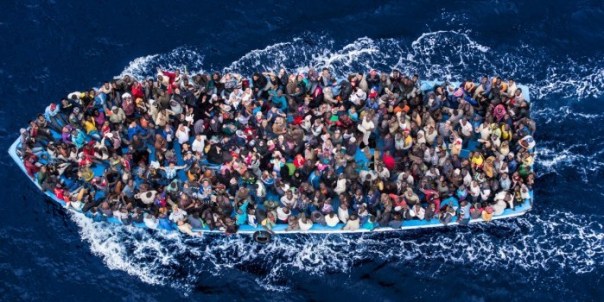
However, as we have seen with the many who have died in the Mediterranean Sea, people will take great risks to migrate. Thus, there is an urgent need to take away the monopoly of the life and death of refugees from the hands of mafias and traffickers and to create an effective world policy for migrants and refugees.

UNGA

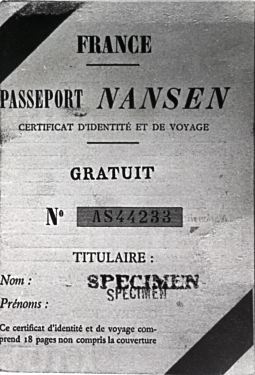
This is the third time that the major governments of the world have tried to deal in an organized way with migration and refugees. The first was within the League of Nations in the 1920s. The 1914-1918 World War and the 1917 Russian Revolution had created a large number of refugees and “stateless” persons – citizens of the former Russian, Ottoman, and Austro-Hungarian Empires. These people had no passports or valid identity documents. The League of Nations created a League identity document – the Nansen Passport – which gave some relief to the “stateless” and brought international attention to their conditions. The Nansen Passport, however, became overshadowed in the mid-1930 when people – in particular Jews – fled from Germany-Austria and were refused resettlement.

nansenpassport

The second international effort was as a result of the experiences of the 1939-1945 Second World War and the large number of refugees and displaced. Under UN leadership was created the 1951 Geneva Convention on the Status of Refugees. In addition, the UN Office of the High Commissioner for Refugees, originally created as a temporary body, was made a permanent UN agency in recognition of the continuing nature of refugee issues.

The current third international effort is largely a result of the flow of refugees and migrants toward Europe during 2015-2016. The disorganized and very uneven response of European governments and the European Union to this flow has indicated that governments are unprepared to deal with such massive movements of people. Nongovernmental organizations (NGOs) have not been able to deal adequately with this large number of persons despite many good-will efforts. Moreover, certain European political movements and political parties have used the refugee issue to promote narrow nationalist and sometimes racist policies. Even a much smaller flow of refugees to the USA has provoked very mixed reactions – few of them welcoming.

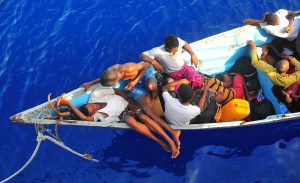
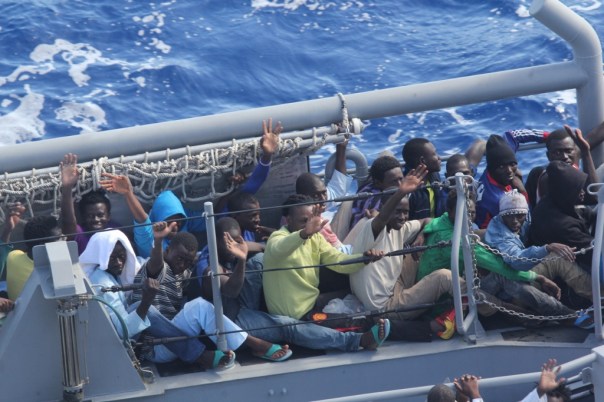
Distressed persons wave after being transferred to a Maltese patrol vessel.

The September 19 Summit is a first step toward creating a functioning world policy for migrants and refugees. The Summit is not an end in itself but follows a pattern of UN awareness-building conferences on the environment, population, food, urbanization and other world issues. The impact of UN conferences has been greatest when there are preexisting popular movements led by NGOs which have in part sensitized people to the issue. The two UN conferences which have had the most lasting consequences were the 1972 Stockholm conference on the environment and the 1975 International Year of Women and its Mexico conference. The environment conference was held at a time of growing popular concern with the harm to the environment symbolized by the widely-read book of Rachel Carson Silent Spring. The 1975 women’s conference came at a time when in Western Europe and the USA there was a strong “women’s lib” movement and active discussion on questions of equality and gender.

Migration and refugee issues do not have a well-organized NGO structure highlighting these issues. However human rights NGOs have stressed the fate of refugees and migrants as well as human rights violations in the countries from which they fled. There is also some cooperation among relief NGOs which provide direct help to refugees and migrants such as those from Syria and Iraq living in Turkey, Jordan, Lebanon and those going to Greece and Italy.

The Summit’s Declaration is very general, and some observers have been disappointed with the lack of specific measures. However, we can welcome the spirit of the Summit Declaration with its emphasis on cooperative action, a humane sense of sharing the responsibilities for refugees and migrants and on seeking root causes of migration and refugee flows. What is needed now are strong NGO efforts to remind constantly government authorities of the seriousness of the issues and the need for collective action. Refugees and migrants are not a temporary “emergency” but part of a continuing aspect of the emerging world society. Thus there is a need to develop a world policy and strong institutions for migrants and refugees.

Prof. René Wadlow is President of the Association of World Citizens.
Building on the UN Summit to Address Large Movements of Refugees and Migrants

In Being a World Citizen, Children's Rights, Conflict Resolution, Current Events, Democracy, Europe, Fighting Racism, Human Rights, Social Rights, Solidarity, The Search for Peace, United Nations, Women's Rights, World Law on September 20, 2016 at 6:58 PM

BUILDING ON THE UN SUMMIT TO ADDRESS LARGE MOVEMENTS OF REFUGEES AND MIGRANTS

By René Wadlow

awc-un-geneva-logo

On September 19, 2016, the United Nations (UN) General Assembly held a one-day Summit on “Addressing Large Movements of Refugees and Migrants”, a complex of issues which have become important and emotional issues in many countries. Restrictive migration policies deny many migrants the possibility of acquiring a regular migrant status, and as a result, the migrants end up being in an irregular or undocumented situation in the receiving country and can be exposed to exploitation and serious violations of human rights.

Citizens of the world have been actively concerned with the issues of migrants, refugees, the “stateless” and those displaced by armed conflicts within their own country. Thus we welcome the spirit of the Summit Declaration with its emphasis on cooperative action, a humane sense of sharing the responsibilities for refugees and migrants and on seeking root causes of migration and refugee flows. There are three issues mentioned in the Summit Declaration which merit follow up action among the UN Secretariat, world citizens and other non-governmental organizations:

1) The migration of youth;

2) The strong link between migration, refugee flows, and improving the structures for the resolution of armed conflicts;

3) Developing further cooperation among non-governmental organizations for the protection and integration of refugees and migrants.

The Migration of Youth

Youth leave their country of birth to seek a better life and also to escape war, poverty, and misfortune. We should add to an analysis of trans-frontier youth migration a very large number of youth who leave their home villages to migrate toward cities within their own country. Without accurate information and analysis of both internal and trans-frontier migration of youth, it is difficult to develop appropriate policies for employment, housing, education and health care of young migrants and refugees. It is estimated that there are some 10 million refugee children, and most are not in school.

Studies have noted an increasing feminization of trans-frontier migration in which the female migrant moves abroad as a wage earner, especially as a domestic worker rather than as an accompanying family member. Migrant domestic workers are often exposed to abuse, exploitation and discrimination based on gender, ethnicity and occupation. Domestic workers are often underpaid, their working conditions poor and sometimes dangerous. Their bargaining power is severely limited. Thus, there is a need to develop legally enforceable contracts of employment, setting out minimum wages, maximum hours of work and responsibilities.

The Association of World Citizens recommends that there be in the follow ups to the Summit, a special focus on youth, their needs as well as possibilities for positive actions by youth.

The strong link between migration, refugee flows, and improving the structures for the resolution of armed conflicts

The UN General Assembly which follows immediately the Migration-Refugee Summit is facing the need for action on a large number of armed conflicts in which Member States are involved. In some of these conflicts the UN has provided mediators; in others, UN peacekeepers are present. In nearly all these armed conflicts, there have been internally-displaced persons as well as trans-frontier refugees. Therefore, there is an urgent need to review the linkages between armed conflict and refugee flows. There needs to be a realistic examination as to why some of these armed conflicts have lasted as long as they have and why negotiations in good faith have not been undertaken or have not led to the resolution of these armed conflicts. Such reflections must aim at improvements of structures and procedures.

Developing further cooperation among nongovernmental organizations for the protection and integration of refugees and migrants

We welcome the emphasis in the Summit Declaration on the important role that nongovernmental organizations (NGOs) play in providing direct services to refugees and migrants. NGOs also lobby government authorities on migration legislation and develop public awareness campaigns. The Summit has stressed the need to focus on future policies taking into account climate change and the growing globalization of trade, finance, and economic activities. Thus, there needs to be strong cooperation among the UN and its Agencies, national governments, and NGOs to deal more adequately with current challenges and to plan for the future. Inclusive structures for such cooperation are needed.

Prof. René Wadlow is President of the Association of World Citizens.
Turkey, the Death Penalty, and Human Dignity

In Being a World Citizen, Current Events, Democracy, Europe, Human Rights, International Justice, Middle East & North Africa, Solidarity, United Nations, World Law on July 19, 2016 at 4:07 PM

TURKEY, THE DEATH PENALTY, AND HUMAN DIGNITY

By René Wadlow

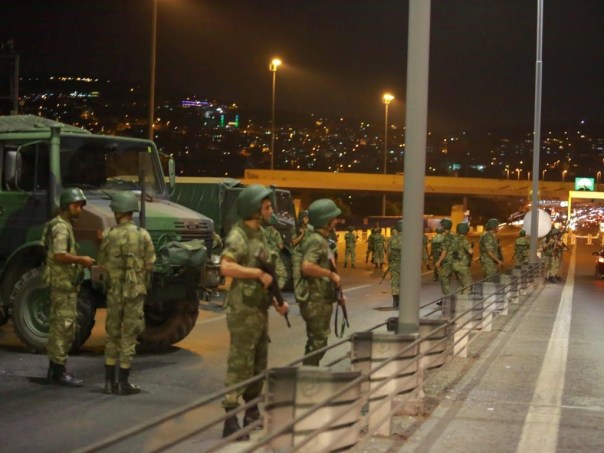
In the aftermath of the failed military coup of July 15-16, 2016 in Turkey, there have been calls at the highest levels of political authority to restore the death penalty.

The Association of World Citizens (AWC) has a consistent policy of opposition to the death penalty, in statements to the United Nations (UN) human rights bodies as well as in direct appeals to governments.

Turkey

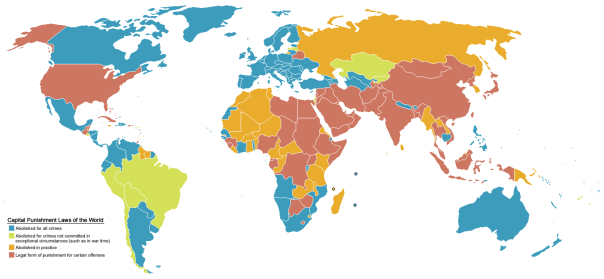
Since the end of World War II, there has been a gradual abolition of the death penalty due to the rather obvious recognition that putting a person to death is not justice. Moreover, on practical grounds, the death penalty has little impact on the rate of crime in a country. A number of States have a death penalty for those involved in the drug trade. To the extent that the drug trade can be estimated statistically, the death penalty has no measurable impact on the trade − a trade usually linked to economic or geopolitical factors.

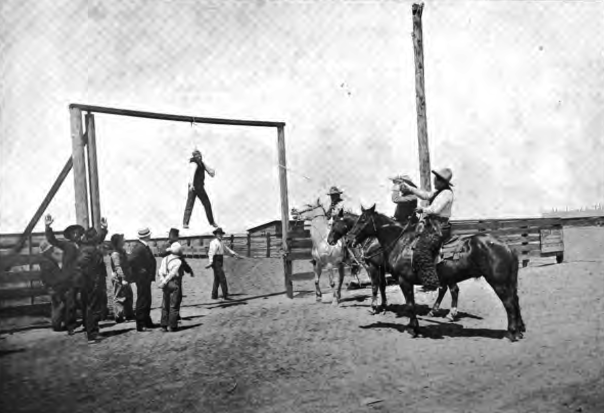
Horse_thief_hanging

The AWC is opposed to all organized killings by State agents. In addition to State-sponsored official executions, usually carried out publicly or at least with official observers, a good number of countries have State-sponsored “death squads” − persons affiliated to the police or to intelligence agencies who kill “in the dark of the night” − unofficially. These deaths avoid a trial which might attract attention or even a “not guilty” decision. A shot in the back of the head is faster. The number of “targeted killings” has grown. In many cases, the bodies of those killed are destroyed and so death is supposed but not proved, as has been the case of students protesting in Mexico. USA assassinations with drones has also been highlighted both in the UN human rights bodies and domestically. However, the drone “strikes” continue, and there is very little legislative opposition.

Death_Penalty_World_Map

A good deal of recent concern had been expressed on the death sentence in Saudi Arabia pronounced against Ali al−Nimr found guilty “of going out to a number of marches, demonstrations, and gatherings against the state and repeating some chants against the state” when he was 15 years old. He was to die by crucifixion. There is perhaps some chance of a change of penalty due to more historically-minded Saudis. The most widely known person crucified is Jesus. As the Roman count records have been lost, we have only the account written by his friends who stressed that he was innocent of the crimes for which he was condemned. His crucifixion has taken on cosmic dimensions. “Are you washed in the blood of the Lamb?” The Saudis try to avoid some of the Jesus parallel by beheading the person before putting the rest of the body on the cross, but the image of the crucified as innocent is wide spread.

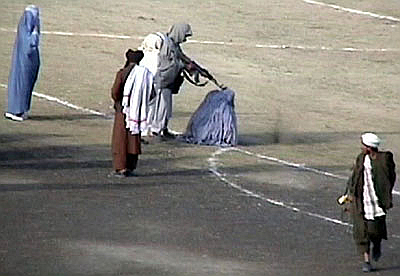
Taliban_execute_Zarmeena_in_Kabul_in1999_RAWA

Thus, the AWC stresses the importance of human dignity. Our efforts against executions need to be addressed both to governments and to those state-like non-governmental armed groups such as ISIS in Syria and Iraq. The abolition of executions and the corresponding valuation of human life are necessary steps in developing a just world society.

Prof. René Wadlow is President of the Association of World Citizens.
International Day of Migrants: Need for a UN-led World Conference on Migration and Refugee Flows

In Being a World Citizen, Conflict Resolution, Current Events, Europe, Fighting Racism, Human Rights, Solidarity, The Search for Peace, United Nations, World Law on December 18, 2015 at 9:52 AM

INTERNATIONAL DAY OF MIGRANTS: NEED FOR A UN-LED WORLD CONFERENCE ON MIGRATION AND REFUGEE FLOWS

By René Wadlow

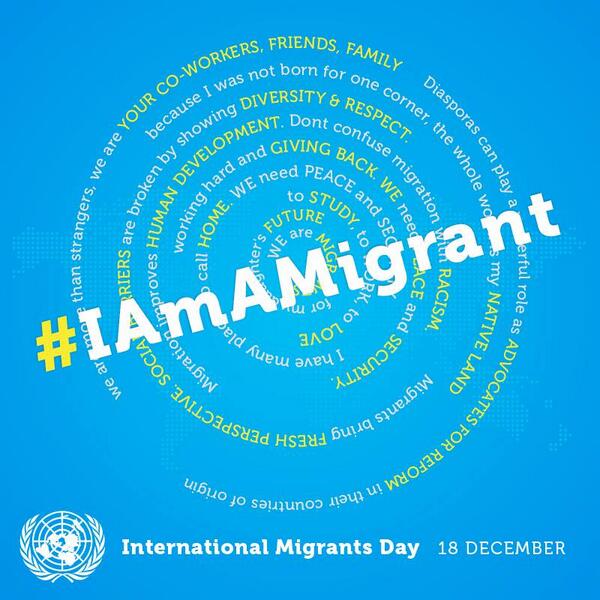
I am a migrant.jpg

December 18 was set by the United Nations (UN) General Assembly to call attention to the role of migrants in the world society. The date was chosen to mark the creation of the UN-negotiated International Convention on the Rights of All Migrant Workers and Members of their Families. The aim of the Convention was to insure that migrants and their families would continue to be covered by the human rights standards set out in the Universal Declaration of Human Rights, the Covenants, and other human rights treaties. In practice, migrants are often “between two chairs” − no longer of concern to the State they have left and not yet covered by the human rights laws of the State to which they have gone.

Ratifications of the Convention have been slow with a good number of governments making reservations that generally weaken the impact of the Convention. In 2004, a commission of independent experts was set up to study the reports to the UN of governments on the application of the Convention − a commission that is part of the Human Rights Treaty Body System. Reports from each government party to the Convention are to be filed once every four years. However, the discussions within the Migration Treaty Body and its subsequent report attract the attention of only a small number of people. However, the discussion deals with the report of only one government at a time while migration is always a multi-State issue and can have worldwide implications.

Moreover, many States consider that earlier International Labor Organization conventions deal adequately with migrant rights and see no need to sign a new convention.

Citizens of the world have stressed that the global aspects of migration flows have an impact on all countries. The changing nature of the world’s economies modify migration patterns, and there is a need to plan for migration as the result of possible environmental-climate changes.

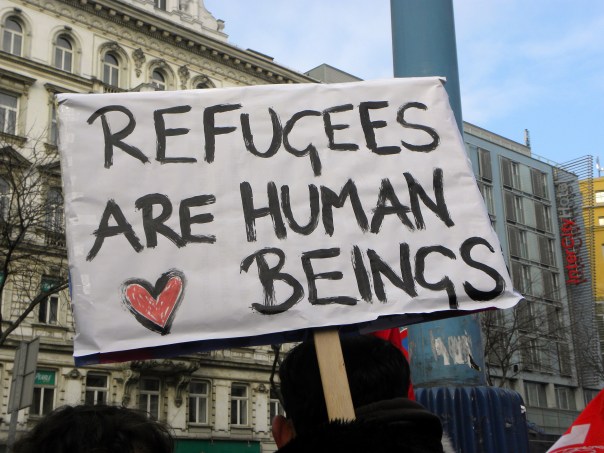
The refugees.jpeg

The current flow of migrants and refugees to Europe has become a high profile political issue. Many migrants come from areas caught up in armed conflict: Syria, Iraq, Yemen, Afghanistan, Somalia. The leaders of the European Union (EU) have been divided and unsure in their responses. Local solidarity networks that offer food, shelter, and medical care are overwhelmed. Political debates over how to deal with the refugees have become heated, usually with more heat than light. The immediacy of the refugee exodus requires our attention, our compassion, and our sense of organization.

EU officials have met frequently to discuss how to deal with the migrant-refugee flow, but a common policy has so far been impossible to establish. At a popular level, there have been expressions of fear of migrants, of possible terrorists among them, and a rejection of their cultures. These popular currents, often increased by right-wing political parties make decisions all the more difficult to take. An exaggerated sense of threat fuels anti-immigration sentiments and creases a climate of intolerance and xenophobia.

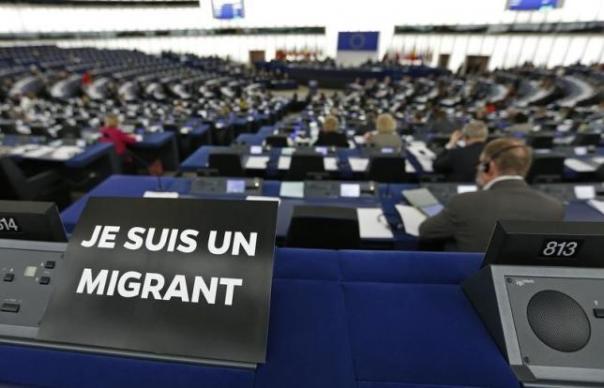
Je suis un migrant.jpg

Therefore, the Association of World Citizens, which is in consultative status with the UN, is calling for a UN-led world conference on migration and refugee issues, following earlier UN world conferences on the environment, food, housing, women, population, youth, human rights and other world issues. The pattern of such UN-led world conferences usually follows a common pattern: encouragement of research and data collection by UN agencies, national governments, nongovernmental organizations (NGOs), and academic institutions. Then regional meetings are held to study the regional dimensions of the issue. The regional conferences are followed by the world conference of government representatives with the participation of NGO delegates of organizations which hold consultative status. Usually there is also a parallel NGO conference with a wider range of NGOs present, especially those active at the local or national level. From such a world conference a plan of action is set to influence action by UN agencies, national governments, and NGOs.

Only a UN-led conference with adequate research and prior discussions can meet the challenges of worldwide migration and continuing refugee flows. There is a need to look at both short-term emergency humanitarian measures and at longer-range migration patterns, especially at potential climate modification impact. A UN-led world conference on migration can highlight possible trends and especially start to build networks of cooperation to meet this world challenge.

Prof. René Wadlow is President and a representative to the United Nations Office at Geneva of the Association of World Citizens.
OSCE: Strains and Renewal in the Security Community

In Being a World Citizen, Conflict Resolution, Current Events, Democracy, Europe, Human Development, Human Rights, The Balkan Wars, The former Soviet Union, The Search for Peace, World Law on August 2, 2015 at 9:29 AM

OSCE: STRAINS AND RENEWAL IN THE SECURITY COMMUNITY

By René Wadlow

On August 1, 2015, the Helsinki Final Act, the birth certificate of the Organization for Security and Cooperation in Europe (OSCE) turned 40. The Final Act signed in Helsinki’s Finlandia Hall was the result of three years of nearly continuous negotiations among government representatives meeting for the most part in Geneva, Switzerland as well as years of promotion of better East-West relations by non-governmental peace builders.

Basically, one can date the planting of the seeds that grew into the OSCE as 1968 in two cities: Paris and Prague. The student-led demonstrations in Paris which sent shock waves to other university centers from California to Berlin showed that under a cover of calm, there was a river of demands and desires for a new life, a more cooperative and creative way of life.

In Prague, the Prague Spring of internal reforms and demands for a freer European society was met by the tanks of the Soviet Union and the Warsaw Pact in August. Yet some far-sighted individuals saw that 1968 was a turning point in European history and that there could be no return to the 1945 divisions of two Europes with the Berlin Wall as the symbol of that division. Thus, in small circles, there were those who started asking “Where do we go from here?”

A Security Community: A Halfway House

In 1957, Karl W. Deutsch (1912-1992) published an important study, Political Community and the North Atlantic Area (Princeton University Press). Karl Deutsch was born to a German-speaking family in Prague in what was then the Austro-Hungarian Empire. His family was active in socialist party politics and became strongly anti-Nazi. Seeing what might happen, Deutsch and his wife left Prague in 1939 for the USA where he became a leading political science-international relations professor. I knew Karl Deutsch in the mid-1950s when I was a university student at Princeton, and he was associated with a Center on International Organization at Princeton. It was there that he was developing his ideas on types of integration among peoples and States and that he coined the term “security community” to mean a group of people “believing that they had come to agreement on at least one point that common social problems must and can be resolved by processes of peaceful change.” For Deutsch, the concept of a security community could be applied to people coming together to form a State: His approach was much used in the 1960s in the study of “nation building” especially of post-colonial African States. A “security community” could also be a stage in relations among States as the term has become common in OSCE thinking. For Deutsch, a security community was a necessary halfway house before the creation of a State or a multi-State federation. Deutsch stressed the need for certain core values which created a sense of mutual identity and loyalty leading to self-restraint and good-faith negotiations to settle disputes.

Core values established and quickly disappeared

During the negotiations leading to the Helsinki Final Act, a set of 10 core values or commitments were set out, sometimes called the OSCE Decalogue after the “Ten Commandments”. “Sovereign equality, respect for the rights inherent in sovereignty and non-intervention in internal affairs” set the framework as well as the limitations of any efforts toward a supranational institution. The two other related core values were “the territorial integrity of States and the inviolability of frontiers.”

The core values were not so much “values” as a reflection of the status quo of the Cold War years. By the time that the Charter of Paris for a New Europe was signed in November 1990, marking the formal end of the Cold War, “territorial integrity and the inviolability of frontiers” as values had disappeared.

The 1990s saw the breakup of two major European federations − that of Yugoslavia and the USSR. Most of the work of the OSCE has been devoted to the consequences of these two breakups. Yugoslavia broke into nearly all the pieces that it could with a few exceptions. I had been asked to help support the independence of Sandzak, a largely Muslim area in Serbia and part of Montenegro. I declined, having thought at the time that with a few modifications the Yugoslav federation could be kept together. I was wrong, and the OSCE is still confronted by tensions in Kosovo, renewed tensions in Macedonia, an unlikely form of government in Bosnia and Herzegovina as well as social issues of trafficking in persons, arms, drugs and uncontrolled migration.

The breakup of the Soviet Union has led to a full agenda of OSCE activities. The republics of the Soviet Union had been designed by Joseph Stalin, then Commissioner for Nationalities so that each republic could not become an independent State but would have to look to the central government for security and socio-economic development. Each Soviet republic had minority populations though each was given the name of the majority or dominant ethnic group called a “nationality”.

With the breakup of the Soviet Union, there have been recurrent issues involving the degree of autonomy of geographic space and the role of minorities. The conflict in Nagorno-Karabakh had already started before the breakup, but continues to this day with its load of refugees, displaced persons and the calmer but unlikely twin, the Nakhchivan Autonomous Republic. Moldova and Transdniestria remain a “frozen conflict” with a 1992 ceasefire agreement. The armed conflicts in Chechnya and violence in Dagestan highlighted conflicts within the Russian Federation. The 2008 “Guns of August” conflict over South Ossetia between Russia and Georgia showed that autonomy issues could slip out of control and have Europe-wide consequences.

(C) Sadankomitea

(C) Sadankomitea

A Cloudy Cristal Ball

Predictions, especially about the future, are always difficult. In 2013, the OSCE Chairperson-in-Office, the then Minister for Foreign Affairs of Ukraine, Leonid Kazhara, said “We wish to contribute to the establishment of the Euro-Atlantic and Eurasian security community free of dividing lines, conflicts, spheres of influence and zones with different levels of security … There is a pressing need to, first of all, change our mindsets from confrontational thinking to a cooperative approach. I am confident that Ukraine, with its rich history, huge cultural heritage and clear European aspirations is well placed for carrying out this mission.”

Today, Ukraine’s rich history has a new chapter, recreating old dividing lines and spheres of influence. The shift in “ownership” of Crimea indicates that “territorial integrity of States” is a relative commitment. The large number of persons going to Russia as refugees and to west Ukraine as internally-displaced persons recalls the bad days of displacement of the Second World War. NATO has dangerously over-reacted to events in Ukraine.

It is not clear that the current leaders of the 57 governments of the OSCE have the wisdom or skills to lead to a renewal of the Security Community. Yet when one looks at the photos of the government leaders who did sign the Helsinki Final Act 40 years ago, there are few faces indicating wisdom or diplomatic skills so perhaps all is not lost today. Very likely, as in the period between the events of 1968 and the start of government negotiations in 1972, there will need to be nongovernmental voices setting out new ideas and creating bridges between people.

Prof. René Wadlow is President and Chief Representative to the United Nations Office at Geneva of the Association of World Citizens.
Lettre du Président et des Officiers de l’AWC au Président de la République française

In Current Events, Europe, Human Rights, Solidarity on January 7, 2015 at 5:21 PM

LETTRE DU PRÉSIDENT ET DES OFFICIERS DE L’AWC AU PRÉSIDENT DE LA RÉPUBLIQUE FRANÇAISE

awc-un-geneva-logo

Monsieur François HOLLANDE
Président de la République française
Palais de l’Elysée
55 rue du Faubourg Saint-Honoré
75008 PARIS

Le 7 janvier 2015

Monsieur le Président de la République,

L’Association of World Citizens (ci-après, l’AWC) vous exprime sa profonde tristesse et son indignation quant à l’attentat terroriste qui a touché ce matin les locaux du journal Charlie Hebdo à Paris, tuant deux fonctionnaires de la Police nationale ainsi que dix membres du personnel de Charlie Hebdo, parmi lesquels le journaliste Bernard MARIS ainsi que les dessinateurs humoristiques Cabu, Charb, Tignous et Wolinski.

Il est inadmissible que quiconque s’en prenne, pour quelque raison que ce soit, à des civils désarmés et en particulier à des journalistes qui tentent de faire leur travail.

Nous tenons à assurer le Gouvernement et le peuple français de la plus entière solidarité et de l’indéfectible soutien moral de notre association face à cet attaque terroriste.

Il ressort par ailleurs des informations dont nous disposons que les auteurs de cet attentat auraient crié des propos à connotation islamiste. Dès lors, eu égard au climat de tension extrême régnant dans votre pays en raison des déclarations et écrits hostiles à la communauté musulmane de certains écrivains et polémistes français au cours des dernières semaines, l’AWC ne peut que craindre le pire quant aux risques, réels et présents, d’amalgames et de représailles à l’’encontre des Français(e)s et ressortissant(e)s étrangers(ères) de confession musulmane, ce qui serait là encore inacceptable.

Nous appelons les autorités françaises à veiller en permanence à la protection de la population contre de tels risques, nul n’étant jamais coupable sur la seule foi de sa religion et l’idéologie politique islamiste ne pouvant quand bien même être confondue avec l’Islam qui est une importante religion mondiale.

En vous souhaitant ainsi qu’au peuple français tout le courage nécessaire face à cette épreuve tragique,

Nous vous prions de croire, Monsieur le Président de la République, en l’assurance de notre très haute considération.

Prof. René WADLOW
Président

Bernard HENRY
Officier des Relations extérieures

Cherifa MAAOUI
Officier de Liaison,
Afrique du Nord & Moyen-Orient

Noura ADDAD, Avocat
Officier juridique

December 18: International Migrants Day

In Africa, Asia, Being a World Citizen, Current Events, Environmental protection, Europe, Fighting Racism, Human Development, Human Rights, Middle East & North Africa, Solidarity, United Nations, World Law on December 17, 2014 at 11:33 PM

DECEMBER 18: INTERNATIONAL MIGRANTS DAY
By René Wadlow


“Let us make migration work for the benefit of migrants and countries alike. We owe this to the millions of migrants who, through their courage, vitality and dreams, help make our societies more prosperous, resilient and diverse.”

Ban Ki-moon, Secretary-General of the United Nations.


In December 2000, the United Nations (UN) General Assembly proclaimed December 18 as the International Migrants Day. The day was chosen to highlight that on a December 18, the UN had adopted the International Convention on the Protection of the Rights of All Migrants Workers and Members of Their Families. Although migration to and from countries is a worldwide flow of people, only 42 countries, basically Latin American, North and West African, Indonesia and the Philippines, have ratified the Convention. The Convention created a Committee on Migrant Workers which meets in Geneva to review once every four years a report of the Convention members on their application of the Convention. The Convention also created a mechanism by which the Committee could receive individual complaints. Only three States have ratified this individual complaints mechanism: Mexico, Guatemala and Uruguay.

Today, there are some 232 million persons who reside and work outside their country of birth. The reasons for migration are diverse − most often economic, but also refugees from armed conflicts and oppression, and increasingly what are called “ecological refugees” − persons who leave their home area due to changing environmental conditions: drought, floods, rising sea levels etc. Global warming may increase the number of these ecological refugees.

After war, persecution, and poverty, a new danger is now driving people away from their homes in their millions – climate change. (C) Tck Tck Tck

After war, persecution, and poverty, a new danger is now driving people away from their homes in their millions – climate change. (C) Tck Tck Tck

Although migration is an important issue with a multitude of consequences in both countries of origin and destination, the Committee on Migrant Workers, a group of experts who function in their individual capacity and not as representatives of the State of which they are citizens, has a low profile among what are called “UN Treaty Bodies” – the committees which review the reports of States which have ratified UN human rights conventions such as the International Covenant on Civil and Political Rights or the International Covenant on Economic, Social and Cultural Rights.

Since the great majority of States receiving migrants − Western Europe and North America – have not ratified the Convention on Migrant Workers, other ways have to be found within the UN system to look at migration issues. Thus has been created outside the UN system but in close cooperation with the UN, the Global Forum on Migration and Development and the Global Migration Group to address the opportunities and challenges of international migration. Within the UN, there was the recent, October 2013 “High-level Dialogue on International Migration and Development”.

In 2013 the Conservative-led Government of the United Kingdom publicly called on undocumented migrants to “go home or face arrest”, a move that was basically inhumane and completely out of place. ( (C) Socialist Party of Great Britain)

In 2013 the Conservative-led Government of the United Kingdom publicly called on undocumented migrants to “go home or face arrest”, a move that was basically inhumane and completely out of place. (C) Socialist Party of Great Britain)

The Governments at the Dialogue unanimously adopted a Declaration (A/68/L.5) calling for greater cooperation to address the challenges of irregular migration and to facilitate safe, orderly and regular migration. The Declaration also emphasized the need to respect the human rights of migrants and to promote international labor standards. The Declaration strongly condemns manifestations of racism and intolerance and stresses the need to improve public perceptions of migrants.

UN conferences and such dialogues or forums serve as a magnet, pulling Governments to agree to higher ideals and standards collectively than they would proclaim individually. This is not only hypocrisy − though there is certainly an element of hypocrisy as Governments have no plans to put these aims into practice. Rather it is a sort of “collective unconscious” of Government representatives who have a vision of an emerging world society based on justice and peace.


In 2010 two French singers, Stanislas and Mike Ibrahim, released a song entitled “Tu verras en France” (“You’ll see in France”). In this song, the two young men call for attention to the situation of migrants who leave their home countries hoping to find a better life in France but end up undocumented and living in extreme poverty, constantly having to run from the police if they don’t want to end up in jail or sent back to their country of origin.


The role of nongovernmental organizations is to remind constantly Government representatives that it is they who have written the text and voted for it without voicing reservations. Numerous States which ratified the International Convention on Migrant Workers made reservations limiting the application of the Convention on their territory. Thus, the Declaration of the High-level Dialogue was not written by the Association of World Citizens but by Government diplomats.

The Declaration is a strong text and covers most of the important issues, including human mobility as a key factor for sustainable development, the role of women and girls who represent nearly half of all migrants, the need to protect the rights of migrant children and the role of remittances to families.

The Declaration merits to be better known and widely quoted in the on-going discussions and debates on migration policies and practices.

Prof. René Wadlow is President of the Association of World Citizens.