The Official Blog of the

Archive for the ‘Conflict Resolution’ Category

BOOK REVIEW: Peter L. Wilson, “Peacock Angel: The Esoteric Tradition of the Yezidis”

In Being a World Citizen, Book Review, Conflict Resolution, Cultural Bridges, Human Rights, Humanitarian Law, International Justice, Middle East & North Africa, Modern slavery, Peacebuilding, Refugees, Religious Freedom, Solidarity, Spirituality, Syria, The Search for Peace, United Nations, War Crimes, Women's Rights, World Law on August 4, 2025 at 5:55 PM

By René Wadlow

Peter L. Wilson, Peacock Angel: The Esoteric Tradition of the Yezidis.

Rochester, VT, Inner Traditions, 2022, 272pp.

Peter Wilson, a specialist on the Middle East, has written a useful book on the religious framework of the Yezidis as seen by someone outside the Yezidi faith. A Yezidi website has been established by Yezidis living in Nebraska, USA: https://yeziditruth.org.

The yearly Sakharov Prize for Freedom of Thought awarded by the European Parliament was given on October 27, 2016 to Nadia Murad who is also the co-laureate of the 2018 Nobel Peace Prize. She had been taken captive by the forces of the Islamic State in Iraq and Syria (ISIS) in August 2014 and then sold into sexual slavery and forced marriage. She was able to escape with the help of a compassionate Muslim family and went to Germany as a refugee. She has become a spokesperson for the Yezidi, especially Yezidi women.

There are some 500,000 Yezidis, a Kurdish-speaking religious community living in northern Iraq. There were also some 200,000 Yezidis among the Kurds of Türkiye, but nearly all have migrated to Western Europe, primarily Germany as well as to Australia, Canada, and the USA.

There are also some Yezidi among Kurds living in Syria, Iran and Armenia. The Yezidis do not convert people. Thus, the religion continues only through birth into the community.

The structure of the Yezidi religious system is Zoroastrian, a faith born in Persia proclaiming that two great cosmic forces, that of light and good and that of darkness and evil are in constant battle. Humans are called upon to help light overcome darkness.

However, the strict dualistic thinking of Zoroastrianism was modified by another Persian prophet, Mani of Ctesiphon in the third century of the Common Era. Mani tried to create a synthesis of religious teachings that were increasingly coming into contact through travel and trade: Buddhism and Hinduism from India, Jewish and Christian thought, Hellenistic Gnostic philosophy from Egypt and Greece as well as many small belief systems.

Mani kept the Zoroastrian dualism as the most easily understood intellectual framework, though giving it a somewhat more Taoist (yin/yang) flexibility, Mani having traveled to China. He developed the idea of the progression of the soul by individual effort through reincarnation. Unfortunately, only the dualistic Zoroastrian framework is still attached to Mani’s name – Manichaeism. This is somewhat ironic as it was the Zoroastrian Magi who had him put to death as a dangerous rival.

Within the Mani-Zoroastrian framework, the Yezidi added the presence of angels who are to help humans in the constant battle for light and good, in particular Melek Tawsi, the peacock angel. Although there are angels in Islam, angels that one does not know could well be demons. Thus, the Yezidis are regularly accused of being “demon worshipers”.

The Yezidis have always been looked down upon by both their Muslim and Christian neighbors as “pagans”. The government of Saddam Hussein was opposed to the Yezidis not so much for their religious beliefs but rather because some Yezidis played important roles in the Kurdish community, seen as largely opposed to the government. The Yezidi community is still in socio-economic difficulty given the instability of the situation in Iraq.

Peter Wilson has written a useful introduction to this little-known faith.

Prof. René Wadlow is President of the Association of World Citizens.

BOOK REVIEW: Samuel Zipp, “The Idealist: Wendell Willkie’s Wartime Quest to Build One World”

In Being a World Citizen, Book Review, Conflict Resolution, Democracy, Peacebuilding, Solidarity, The Search for Peace, United States, World Law on August 4, 2025 at 6:40 AM

By Lawrence Wittner

Samuel Zipp, The Idealist: Wendell Willkie’s Wartime Quest to Build One World.

Cambridge, MA: Belknap Press of Harvard University Press, 2020

Wendell Willkie – successful lawyer and businessman, as well as a defeated candidate for U.S. President on the Republican Party ticket in 1940 – is a largely forgotten figure today. But, as Samuel Zipp reminds us, Willkie was extremely influential during World War II, when he launched a popular campaign for “global interdependence” or, as it became known, “One World.”

In this beautifully written and well researched book, Zipp, Professor of American Studies at Brown University, points out that, unlike the conservatives and isolationists in his party, Willkie was a liberal who had backed Woodrow Wilson’s call for a League of Nations, advocated racial equality, and usually supported President Franklin D. Roosevelt’s policy of collective security.

Indeed, with World War II well underway, he and Roosevelt hatched a plan to have Willkie embark on a worldwide goodwill tour, by aircraft, from August to October 1942. This well-publicized venture was designed to demonstrate America’s political unity in wartime, foster support for the Allied powers, and provide a source of information on governmental and public opinion abroad.

Willkie – an informal, garrulous, likeable individual with a common touch – not only had great success along these lines, but was powerfully influenced by what he saw. Appalled by imperialism and racism and impressed by the demand for freedom of colonized or subordinate people in Africa, the Middle East and Asia, Willkie returned, as Zipp notes, convinced of the need to get Americans “to see the wider world through the lens of fraternity and cooperation.” He hoped to convince them that their independence “would require a new form of interdependence with the world,” one in harmony with “global desires for an end to empire and a guarantee of self-determination.”

Back in the United States, Willkie embarked on a round of interviews, speeches, and articles along these lines, capped off by the publication of an immensely popular book, One World. With sales topping 1.6 million copies by July, some observers called it the best-selling book in U.S. history. Furthermore, that June over 100 newspapers in the United States and abroad, with a combined circulation of over seven million readers, ran an abridged version in their pages. Using his celebrity status to assail both “narrow nationalism” and “imperialism,” Willkie produced what Zipp calls “a fleeting moment,” when he “showed the country an alternative possible future.”

But the moment passed. Nationalists and imperialists began to criticize this vision, the Republican Party repudiated his leadership, and, in October 1944, Willkie – only 52 years of age – died of a heart attack. Although, after the atomic bombing of Japan, world federalist and nuclear disarmament groups adopted “One World or None” as their slogan, the idea of egalitarian global interdependence gradually lost favor, despite its occasional revival by environmentalists and others.

Even so, Zipp concludes, Willkie’s “diagnosis of the value of global interdependence has never been more prescient,” while “his warnings about the perils of racially charged ‘narrow nationalism’ have never been more indispensable.”

Lawrence Wittner (http://lawrenceswittner.com) is Professor of History Emeritus at SUNY/Albany.

BOOK REVIEW: Allen Pietrobon, “Norman Cousins: Peacemaker in the Atomic Age”

In Being a World Citizen, Book Review, Conflict Resolution, Nuclear weapons, Peacebuilding, Solidarity, The Search for Peace, World Law on July 31, 2025 at 7:00 AM

By Lawrence Wittner

Allen Pietrobon, Norman Cousins: Peacemaker in the Atomic Age.

Baltimore: Johns Hopkins University Press, 2022

Although Norman Cousins was a major figure in U.S. and world affairs during his lifetime (1915-1990), this is the first book-length biography of that extraordinary individual.

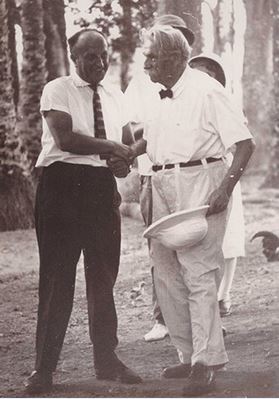
The book, written by Allen Pietrobon, an Assistant Professor of Global Affairs at Trinity Washington University, argues that, unlike many peace activists during the Cold War, Cousins had “an enormous impact on domestic politics and international relations.” The key to this impact, Pietrobon observes, was Cousins’s role, for 35 years, as editor of the Saturday Review, which he built into the third most popular public affairs magazine in the United States, with a circulation of 650,000. This role enabled him to have a significant impact upon public opinion and, also, to build up a network of connections with prominent individuals, including Adlai Stevenson, Nikita Khrushchev, Pope John XXIII, Albert Schweitzer, Norman Thomas, Jawaharlal Nehru, John F. Kennedy, Martin Luther King, Jr., and many more.

According to Pietrobon, the atomic bombing of Japan set the course for Cousins’s peace advocacy. That bombing, Cousins wrote in Modern Man Is Obsolete, “marked the violent death of one stage in man’s history and the beginning of another.” It meant that war, which had persisted throughout human history, finally had to be ended, for, given the advent of nuclear weapons, the alternative was global suicide. And war could only be ended, Cousins maintained, by establishing a world government.

Naturally, then, Cousins, gravitated toward aiding victims of the atomic bombing, promoting world federalism (for example, leading United World Federalists and, later, the World Federalist Association), founding and co-chairing the National Committee for a Sane Nuclear Policy (SANE), brokering the Partial Test Ban Treaty of 1963, and improving East-West relations. In addition, he sought to end the wars in Vietnam and Biafra and, from 1948 to 1964, gave an estimated 2,100 speeches for peace. He also worked to assist victims of Nazi “medical experiments,” prepared speeches for U.S. presidential candidates and presidents, and from 1940 to 1964 alone, published just under 600 editorials and wrote or edited ten books.

In compiling this excellent account of Cousins’ busy and productive life, Pietrobon has drawn upon Cousins’s lengthy correspondence (located at UCLA), his extensive published writings, interviews with his daughters, and relevant manuscript materials at U.S. presidential libraries, the German Federal Archives, and Princeton University.

Although Pietrobon has done an outstanding job of pulling together many facets of Cousins’s extraordinary career and grounding them in the relevant sources, some areas would have benefited from further exploration. For example, Cousins was probably the most important figure in the history of SANE and of the U.S. branch of the world federalist movement. And yet his role in many of SANE’s internal operations―including its ordeal over the role of Communists in its ranks―is not examined. Nor, for that matter, is his presidency of the World Federalist Association from 1976 to 1990.

Overall, though, readers will learn much from this fine study of one of the most prominent figures in the 20th century peace movement.

Lawrence Wittner (http://lawrenceswittner.com) is Professor of History Emeritus at SUNY/Albany.

BOOK REVIEW: Lesley M. M. Blume, “Fallout: The Hiroshima Cover-up and the Reporter Who Revealed It to the World”

In Being a World Citizen, Book Review, Conflict Resolution, Nonviolence, Nuclear weapons, Peacebuilding, Solidarity, The Search for Peace, World Law on July 29, 2025 at 4:00 PM

By Lawrence Wittner

Lesley M. M. Blume, Fallout: The Hiroshima Cover-up and the Reporter Who Revealed It to the World.

New York: Simon & Schuster, 2020

In this crisply-written, well-researched book, Lesley Blume, a journalist and biographer, tells the fascinating story of the background to John Hersey’s pathbreaking article, “Hiroshima,” and of its extraordinary impact upon the world.

In 1945, although only 30 years of age, Hersey was a very prominent war correspondent for Time magazine—a key part of publisher Henry Luce’s magazine empire—and living in the fast lane. That year, he won the Pulitzer Prize for his novel, A Bell for Adano, which had already been adapted into a movie and a Broadway play. Born the son of missionaries in China, Hersey had been educated at upper class, elite institutions, including the Hotchkiss School, Yale, and Cambridge. During the war, Hersey’s wife, Frances Ann, a former lover of young Lieutenant John F. Kennedy, arranged for the three of them to get together over dinner. Kennedy impressed Hersey with the story of how he saved his surviving crew members after a Japanese destroyer rammed his boat, PT-109. This led to a dramatic article by Hersey on the subject—one rejected by the Luce publications but published by the New Yorker. The article launched Kennedy on his political career and, as it turned out, provided Hersey with the bridge to a new employer – the one that sent him on his historic mission to Japan.

Blume reveals that, at the time of the U.S. atomic bombing of Hiroshima, Hersey felt a sense of despair—not for the bombing’s victims, but for the future of the world. He was even more disturbed by the atomic bombing of Nagasaki only three days later, which he considered a “totally criminal” action that led to tens of thousands of unnecessary deaths.

Most Americans at the time did not share Hersey’s misgivings about the atomic bombings. A Gallup poll taken on August 8, 1945 found that 85 percent of American respondents expressed their support for “using the new atomic bomb on Japanese cities.”

Blume shows very well how this approval of the atomic bombing was enhanced by U.S. government officials and the very compliant mass communications media. Working together, they celebrated the power of the new American weapon that, supposedly, had brought the war to an end, by producing articles lauding the bombing mission and pictures of destroyed buildings. What was omitted was the human devastation, the horror of what the atomic bombing had done physically and psychologically to an almost entirely civilian population—the flesh roasted off bodies, the eyeballs melting, the terrible desperation of mothers digging with their hands through the charred rubble for their dying children.

The strange new radiation sickness produced by the bombing was either denied or explained away as of no consequence. “Japanese reports of death from radioactive effects of atomic bombing are pure propaganda,” General Leslie Groves, the head of the Manhattan Project, told the New York Times. Later, when, it was no longer possible to deny the existence of radiation sickness, Groves told a Congressional committee that it was actually “a very pleasant way to die.”

When it came to handling the communications media, U.S. government officials had some powerful tools at their disposal. In Japan, General Douglas MacArthur, the supreme commander of the U.S. occupation regime, saw to it that strict U.S. military censorship was imposed on the Japanese press and other forms of publication, which were banned from discussing the atomic bombing. As for foreign newspaper correspondents (including Americans), they needed permission from the occupation authorities to enter Japan, to travel within Japan, to remain in Japan, and even to obtain food in Japan. American journalists were taken on carefully controlled junkets to Hiroshima, after which they were told to downplay any unpleasant details of what they had seen there.

In September 1945, U.S. newspaper and magazine editors received a letter from the U.S. War Department, on behalf of President Harry Truman, asking them to restrict information in their publications about the atomic bomb. If they planned to do any publishing in this area of concern, they were to submit the articles to the War Department for review.

Among the recipients of this warning were Harold Ross, the founder and editor of the New Yorker, and William Shawn, the deputy editor of that publication. The New Yorker, originally founded as a humor magazine, was designed by Ross to cater to urban sophisticates and covered the world of nightclubs and chorus girls. But, with the advent of the Second World War, Ross decided to scrap the hijinks flavor of the magazine and begin to publish some serious journalism.

As a result, Hersey began to gravitate into the New Yorker’s orbit. Hersey was frustrated with his job at Time magazine, which either rarely printed his articles or rewrote them atrociously. At one point, he angrily told publisher Henry Luce that there was as much truthful reporting in Time magazine as in Pravda. In July 1945, Hersey finally quit his job with Time. Then, late that fall, he sat down with William Shawn of the New Yorker to discuss some ideas he had for articles, one of them about Hiroshima.

Hersey had concluded that the mass media had missed the real story of the Hiroshima bombing. And the result was that the American people were becoming accustomed to the idea of a nuclear future, with the atomic bomb as an acceptable weapon of war. Appalled by what he had seen in the Second World War—from the firebombing of cities to the Nazi concentration camps—Hersey was horrified by what he called “the depravity of man,” which, he felt, rested upon the dehumanization of others. Against this backdrop, Hersey and Shawn concluded that he should try to enter Japan and report on what had really happened there.

Getting into Japan would not be easy. The U.S. Occupation authorities exercised near-total control over who could enter the stricken nation, keeping close tabs on all journalists who applied to do so, including records on their whereabouts, their political views, and their attitudes toward the occupation. Nearly every day, General MacArthur received briefings about the current press corps, with summaries of their articles. Furthermore, once admitted, journalists needed permission to travel anywhere within the country, and were allotted only limited time for these forays.

Even so, Hersey had a number of things going for him. During the war, he was a very patriotic reporter. He had written glowing profiles about rank-and-file U.S. soldiers, as well as a book (Men on Bataan) that provided a flattering portrait of General MacArthur. This fact certainly served Hersey well, for the general was a consummate egotist. Apparently as a consequence, Hersey received authorization to visit Japan.

En route there in the spring of 1946, Hersey spent some time in China, where, on board a U.S. warship, he came down with the flu. While convalescing, he read Thornton Wilder’s Pulitzer Prize-winning novel, The Bridge of San Luis Rey, which tracked the different lives of five people in Peru who were killed when a bridge upon which they stood collapsed. Hersey and Shawn had already decided that he should tell the story of the Hiroshima bombing from the victims’ point of view. But Hersey now realized that Wilder’s book had given him a particularly poignant, engrossing way of telling a complicated story. Practically everyone could identify with a group of regular people going about their daily routines as catastrophe suddenly struck them.

Hersey arrived in Tokyo on May 24, 1946, and two days later, received permission to travel to Hiroshima, with his time in that city limited to 14 days.

Entering Hiroshima, Hersey was stunned by the damage he saw. In Blume’s words, there were “miles of jagged misery and three-dimensional evidence that humans—after centuries of contriving increasingly efficient ways to exterminate masses of other humans—had finally invented the means with which to decimate their entire civilization.” Now there existed what one reporter called “teeming jungles of dwelling places . . . in a welter of ashes and rubble.” As residents attempted to clear the ground to build new homes, they uncovered masses of bodies and severed limbs. A cleanup campaign in one district of the city alone at about that time unearthed a thousand corpses. Meanwhile, the city’s surviving population was starving, with constant new deaths from burns, other dreadful wounds, and radiation poisoning.

Given the time limitations of his permit, Hersey had to work fast. And he did, interviewing dozens of survivors, although he eventually narrowed down his cast of characters to six of them.

Departing from Hiroshima’s nightmare of destruction, Hersey returned to the United States to prepare the story that was to run in the New Yorker to commemorate the atomic bombing. He decided that the article would have to read like a novel. “Journalism allows its readers to witness history,” he later remarked. “Fiction gives readers the opportunity to live it.” His goal was “to have the reader enter into the characters, become the characters, and suffer with them.”

When Hersey produced a sprawling 30,000 word draft, the New Yorker’s editors at first planned to publish it in serialized form. But Shawn decided that running it this way wouldn’t do, for the story would lose its pace and impact. Rather than have Hersey reduce the article to a short report, Shawn had a daring idea. Why not run the entire article in one issue of the magazine, with everything else—the “Talk of the Town” pieces, the fiction, the other articles and profiles, and the urbane cartoons—banished from the issue?

Ross, Shawn, and Hersey now sequestered themselves in a small room at the New Yorker’s headquarters, furiously editing Hersey’s massive article. Ross and Shawn decided to keep the explosive forthcoming issue a top secret from the magazine’s staff. Indeed, the staff were kept busy working on a “dummy” issue that they thought would be going to press. Contributors to that issue were baffled when they didn’t receive proofs for their articles and accompanying artwork. Nor were the New Yorker’s advertisers told what was about to happen. As Blume remarks: “The makers of Chesterfield cigarettes, Perma-Lift brassieres, Lux toilet soap, and Old Overholt rye whiskey would just have to find out along with everyone else in the world that their ads would be run alongside Hersey’s grisly story of nuclear apocalypse.”

However, things don’t always proceed as smoothly as planned. On August 1, 1946, President Truman signed into law the Atomic Energy Act, which established a “restricted” standard for “all data concerning the manufacture or utilization of atomic weapons.” Anyone who disseminated that data “with any reason to believe that such data” could be used to harm the United States could face substantial fines and imprisonment. Furthermore, if it could be proved that the individual was attempting to “injure the United States,” he or she could “be punished by death or imprisonment for life.”

In these new circumstances, what should Ross, Shawn, and Hersey do? They could kill the story, water it down, or run it and risk severe legal action against them. After agonizing over their options, they decided to submit Hersey’s article to the War Department—and, specifically, to General Groves—for clearance.

Why did they take that approach? Blume speculates that the New Yorker team thought that Groves might insist upon removing any technical information from the article while leaving the account of the sufferings of the Japanese intact. After all, Groves believed that the Japanese deserved what had happened to them, and could not imagine that other Americans might disagree. Furthermore, the article, by underscoring the effectiveness of the atomic bombing of Japan, bolstered his case that the war had come to an end because of his weapon. Finally, Groves was keenly committed to maintaining U.S. nuclear supremacy in the world, and he believed that an article that led Americans to fear nuclear attacks by other nations would foster support for a U.S. nuclear buildup.

The gamble paid off. Although Groves did demand changes, these were minor and did not affect the accounts by the survivors.

On August 29, 1946, copies of the “Hiroshima” edition of the New Yorker arrived on newsstands and in mailboxes across the United States, and it quickly created an enormous sensation, particularly in the mass media. Editors from more than thirty states applied to excerpt portions of the article, and newspapers from across the nation ran front-page banner stories and urgent editorials about its revelations. Correspondence from every region of the United States poured into the New Yorker’s office. A large number of readers expressed pity for the victims of the bombing. But an even greater number expressed deep fear about what the advent of nuclear war meant for the survival of the human race.

Of course, not all readers approved of Hersey’s report on the atomic bombing. Some reacted by canceling their subscriptions to the New Yorker. Others assailed the article as antipatriotic, Communist propaganda, designed to undermine the United States. Still others dismissed it as pro-Japanese propaganda or, as one reader remarked, written “in very bad taste.”

Some newspapers denounced it. The New York Daily News derided it as a stunt and “propaganda aimed at persuading us to stop making atom bombs . . . and to give our technical bomb secrets away . . . to Russia.” Not surprisingly, Henry Luce was infuriated that his former star journalist had achieved such an enormous success writing for a rival publication, and had Hersey’s portrait removed from Time Inc.’s gallery of honor.

Despite the criticism, “Hiroshima” continued to attract enormous attention in the mass media. The ABC Radio Network did a reading of the lengthy article over four nights, with no acting, no music, no special effects, and no commercials. “This chronicle of suffering and destruction,” it announced, was being “broadcast as a warning that what happened to the people of Hiroshima could next happen anywhere.” After the broadcasts, the network’s telephone switchboards were swamped by callers, and the program was judged to have received the highest rating of any public interest broadcast that had ever occurred. The BBC also broadcast an adaptation of “Hiroshima,” while some 500 U.S. radio stations reported on the article in the days following its release.

In the United States, the Alfred Knopf publishing house came out with the article in book form, which was quickly promoted by the Book-of-the-Month Club as “destined to be the most widely read book of our generation.” Ultimately, Hiroshima sold millions of copies in nations around the world. By the late fall of 1946, the rather modest and retiring Hersey, who had gone into hiding after the article’s publication to avoid interviews, was rated as one of the “Ten Outstanding Celebrities of 1946,” along with General Dwight Eisenhower and singer Bing Crosby.

For U.S. government officials, reasonably content with past public support for the atomic bombing and a nuclear-armed future, Hersey’s success in reaching the public with his disturbing account of nuclear war confronted them with a genuine challenge. For the most part, U.S. officials recognized that they had what Blume calls “a serious post-`Hiroshima’ image problem.”

Behind the scenes, James B. Conant, the top scientist in the Manhattan Project, joined President Truman in badgering Henry Stimson, the former U.S. Secretary of War, to produce a defense of the atomic bombing. Provided with an advance copy of the article, to be published in Harper’s, Conant told Stimson that it was just what was needed, for they could not have allowed “the propaganda against the use of the atomic bomb . . . to go unchecked.”

Although the New Yorker’s editors sought to arrange for publication of the book version of “Hiroshima” in the Soviet Union, this proved impossible. Instead, Soviet authorities banned the book in their nation. Pravda fiercely assailed Hersey, claiming that “Hiroshima” was nothing more than an American scare tactic, a fiction that “relishes the torments of six people after the explosion of the atomic bomb.” Another Soviet publication called Hersey an American spy who embodied his country’s militarism and had helped to inflict upon the world a “propaganda of aggression, strongly reminiscent of similar manifestations in Nazi Germany.”

Ironically, the Soviet attack upon Hersey didn’t make him any more acceptable to the U.S. government. In 1950, FBI director J. Edgar Hoover assigned FBI field agents to research, monitor, and interview Hersey, on whom the Bureau had already opened a file. During the FBI interview with Hersey, agents questioned him closely about his trip to Hiroshima.

Not surprisingly, U.S. occupation authorities did their best to ban the appearance of “Hiroshima” in Japan. Hersey’s six protagonists had to wait months before they could finally read the article, which was smuggled to them. In fact, some of Hersey’s characters were not aware that they had been included in the story or that the article had even been written until they received the contraband copies. MacArthur managed to block publication of the book in Japan for years until, after intervention by the Authors’ League of America, he finally relented. It appeared in April 1949, and immediately became a best-seller.

Hersey, still a young man at the time, lived on for decades thereafter, writing numerous books, mostly works of fiction, and teaching at Yale. He continued to be deeply concerned about the fate of a nuclear-armed world—proud of his part in stirring up resistance to nuclear war and, thereby, helping to prevent it.

The conclusion drawn by Blume in this book is much like Hersey’s. As she writes, “Graphically showing what nuclear warfare does to humans, `Hiroshima’ has played a major role in preventing nuclear war since the end of World War II.”

A secondary theme in the book is the role of a free press. Blume observes that “Hersey and his New Yorker editors created `Hiroshima’ in the belief that journalists must hold accountable those in power. They saw a free press as essential to the survival of democracy.” She does, too.

Overall, Blume’s book would provide the basis for a very inspiring movie, for at its core is something many Americans admire: action taken by a few people who triumph against all odds.

But the actual history is somewhat more complicated. Even before the publication of “Hiroshima,” a significant number of people were deeply disturbed by the atomic bombing of Japan. For some, especially pacifists, the bombing was a moral atrocity. An even larger group feared that the advent of nuclear weapons portended the destruction of the world. Traditional pacifist organizations, newly-formed atomic scientist groups, and a rapidly-growing world government movement launched a dramatic antinuclear campaign in the late 1940s around the slogan, “One World or None.” Curiously, this uprising against nuclear weapons is almost entirely absent from Blume’s book.

Even so, Blume has written a very illuminating, interesting, and important work—one that reminds us that daring, committed individuals can help to create a better world.

Lawrence Wittner (http://lawrenceswittner.com) is Professor of History Emeritus at SUNY/Albany.

BOOK REVIEW: Lawrence S. Wittner, “Working for Peace and Justice”

In Being a World Citizen, Book Review, Conflict Resolution, Nonviolence, Nuclear weapons, Peacebuilding, Solidarity, The Search for Peace, United Nations, World Law on July 28, 2025 at 8:15 PM

By René Wadlow

Lawrence S. Wittner, Working for Peace and Justice

Knoxville, TN/University of Tennessee Press, 2012, 268pp.

Laurence Wittner has written a very moving account of his efforts as an activist for peace and social justice. At this present time, when such efforts are very necessary, the memoir is a guideline for concerted efforts, both the joys and the difficulties.

Wittner was largely based at the State University of New York at Albany, which is the administrative capital of New York, home of the governor, although New York City has a much larger population and is a center of economic, cultural, and political power.

In the fall of 2005, his long-time activity in the peace movement combined with his books on anti-nuclear weapons such as Struggle Against the Bomb and Toward Nuclear Abolition, both published by Stanford University Press) led to his election to the national board of Peace Action, the largest, broadly based United States (U.S.) peace organization with some 100,000 members. Thus, he writes on activities at the local level, mostly Albany, as well as at the national level with the factionalism and sectarianism that have often characterized Left movements such as democratic socialism in which Wittner was active.

Yet, as he writes, “Over the course of history, there are heartening indications that people of goodwill and determination have made headway in pulling humanity out of the nightmare of ignorance, superstition, slavery, tyranny, exploitation and militarism that has characterized the past. In my own lifetime I have seen courageous people topple dictatorships, shatter systems of racial oppression, roll back corporate domination, bring an end to unjust wars and avert a nuclear holocaust. And I am confident that efforts to extend human progress will continue.”

Progress requires organizing, persistence, and a sense of community with those with whom one is working. For Wittner, music was an important activist tool; he played the guitar and often performed songs at political meetings.

There is much to be done to create a harmonious world society, and Working for Peace and Justice sets out important paths of action.

Prof. René Wadlow is President of the Association of World Citizens.

Thailand-Cambodia: Good Faith Negotiations Needed

In Asia, Being a World Citizen, Conflict Resolution, Current Events, NGOs, Nonviolence, Peacebuilding, Solidarity, The Search for Peace, Track II, United Nations, World Law on July 26, 2025 at 9:50 AM

THAILAND-CAMBODIA: GOOD FAITH NEGOTIATIONS NEEDED

The Association of World Citizens (AWC) expresses deep concern over the rising political tensions and military clashes between Thailand and Cambodia which has led to a large displacement of civilians from the border areas.

On July 24, 2025, Cambodian forces launched artillery attacks on civilian targets in Thai territory, and Thailand responded with airstrikes on Cambodia. Landmines have been set in the contested border areas. The AWC has long been active against the use of landmines. This escalation of Thai-Cambodian tensions risks a destabilization of both governments and societies.

Therefore, the AWC calls for an immediate ceasefire and the start of negotiations in good faith.

Prof. René Wadlow, President of the Association of World Citizens

South Sudan: Continued Disintegration

In Africa, Being a World Citizen, Conflict Resolution, Current Events, Humanitarian Law, NGOs, Solidarity, The Search for Peace, Track II, United Nations, World Law on June 5, 2025 at 11:00 AM

By René Wadlow

On May 23, 2025, the United Nations (UN) High Commissioner for Human Rights, Volker Türk, gave a stark warning about the rapidly deteriorating human rights situation in the state of South Sudan. He stated that, “The escalating hostilities in South Sudan portend a real risk of further exacerbating the already dire human rights and humanitarian situation.” It is estimated that some 125,000 persons have been displaced within the country between March and mid-April 2025. In addition, there are refugees present fleeing the armed conflict in the state of Sudan. South Sudan is filled with arms from the long years of civil war: 1956-1972 and 1982-2005 between the north – largely Muslim and Arabized and the south which followed traditional tribal religions with southern leaders largely Christian. In 2011, there was a referendum in which southern Sudan voted to become the independent state of South Sudan. The Association of World Citizens was among the Nongovernmental Organizations (NGOs) observing the independence referendum.

Since independence, political life has been structured by the tensions between the President, Salva Kiir, and the Vice-president, Rick Machar. There was an armed conflict between the two from December 2013 and August 2015 in which many persons were killed. There were multiple violations of international humanitarian law and human rights abuses. In addition to the forces under the control of the two political leaders, there are a host of armed militias usually based on ethnic-clanic structures.

In July 2016, internally displaced persons in Juba, the capital of South Sudan, relocating to a cleaner, drier location across town, under the protection of the United Nations Mission in South Sudan (UNMISS).
(C) Isaac Billy/UN Photo

The UN and the African Union have made efforts to reach peace agreements among the parties, but the provisions of the peace agreements have not been put into practice. There is a lack of trust on all sides. It is difficult to see how progress can be made given the intensity of the resentments. There is no doubt a need for new leadership, but there are no signs of any leaders leaving the scene. Elections are not in the style of the country. South Sudan is a situation which merits observation and reconciliation efforts when possible.

Prof. René Wadlow is President of the Association of World Citizens.

India-Pakistan Ceasefire: Negotiations Now Needed

In Asia, Being a World Citizen, Conflict Resolution, Current Events, NGOs, Nonviolence, Nuclear weapons, Peacebuilding, Solidarity, The Search for Peace, Track II, United Nations, World Law on May 13, 2025 at 7:30 AM

By René Wadlow

After the April 22 attack and death of 26 Indian tourists at Pahalgam in the Indian-administered area of Kashmir, tensions between India and Pakistan grew quickly. Pakistan was accused by India of backing the terrorists who had carried out the attack – a charge which Pakistan denied. Prime Minister Narendra Modi gave the Indian military “complete operational freedom”. A combination of bellicose rhetoric, domestic pressures, and political agitation led to daily exchanges of armed fire, and the shooting down of Indian jet fighters. The frontiers between the two countries were closed and diplomats withdrawn. The dangers of escalation between the two nuclear-armed countries were obvious to many.

Fortunately, outside voices called for an immediate ceasefire: U.S. President Donald Trump and his Secretary of State Marco Rubio, Antonio Guterres, Secretary-General of the United Nations (UN), and some member governments of the UN Security Council which met in closed session, as well as a good number of Nongovernmental Organizations (NGOs) involved in conflict resolution efforts such as the International Peace Bureau and the Association of World Citizens (AWC). One must now strive so that the ceasefire will hold.

The next step is to facilitate negotiations between the Indian and Pakistani governments. A first step is to create a number of confidence-building measures so that the ceasefire holds. Then there is a need to develop longer-range negotiations. There are a good number of outstanding issues, such as Kashmir, which go back to the founding of the two countries.

It may be that the current steps back from the nuclear brink will drive home the need for serious negotiations. NGOs in both India and Pakistan may help to see on what issues progress may be made. Those of us on the outside must do all we can to facilitate creative dialogue between Indians and Pakistanis.

Prof. René Wadlow is President of the Association of World Citizens.

The Power of Conscience

In Being a World Citizen, Conflict Resolution, Current Events, Human Rights, Humanitarian Law, Middle East & North Africa, NGOs, Solidarity, The Search for Peace, War Crimes, World Law on May 4, 2025 at 12:00 PM

By René Wadlow

On May 2, 2025, a ship carrying food and medical supplies for the Gaza Strip organized by the Freedom Flotilla Coalition was attacked by drones in international waters near Malta. The ship was badly damaged and its cargo lost. The ship was appropriately called The Conscience.

Conscience is that inner voice which helps each person to know right from wrong. Every thought and deed has an ethical significance and consequence – what is called in Indian thought Karma. Conscience, this perception of choice between right and wrong, is within each person as a clear guide. A sensitive conscience speaks with a voice of authority so that one can act positively and with justice.

Conscience under attack (C) The Malta Independent

Nonviolent action to protect civilians and to call attention to crucial situations is being increasingly used. There are real dangers involved. In 2010, a similar humanitarian aid ship of the Freedom Flotilla Coalition was attacked by Israeli forces in international waters. Ten persons were killed and many wounded.

Today, many of us have called for the end to the Israeli blockade of supplies to the Gaza Strip, a blockade which began again after the end of a ceasefire on March 18, 2025. Families are struggling to meet their most basic needs of food and medicine. We need to develop creative and positive avenues of action.

(C) Seven Sisters Collective/Instagram

Prof. René Wadlow is President of the Association of World Citizens.

Kashmir Attack Creates Increased India-Pakistan Tensions: Track Two Measures Needed

In Asia, Being a World Citizen, Conflict Resolution, Current Events, NGOs, Nonviolence, Peacebuilding, Solidarity, The Search for Peace, Track II, United Nations, World Law on April 29, 2025 at 7:00 AM

By René Wadlow

On April 22, 2025, four gunmen killed 26 people and injured others in the Kashmir tourist center of Pahalgam, Kashmir, India. The Resistance Front claimed responsibility for the Pahalgam attack, but the group is little known. Indian officials have blamed Pakistan as being behind the attackers saying that Pakistan has a fundamentally criminal disposition in its deep state membership. Pakistan is host to Islamic militants that carry out terrorist raids in India but does not necessarily control them.

As a result of the Pahalgam attack, India has closed its border crossings into Pakistan and suspended India’s 1960 Water Treaty with Pakistan. Anti-Pakistan protests have erupted in India’s capital New Delhi and in several other cities raising fears that anti-Muslim sentiment will grow in India. Pakistan responded by closing its border crossings with India and closed its air space to Indian aircraft.

In 2019, India modified the special self-governing status of Jammu and Kashmir, and security measures have been very tight since. Nevertheless, Kashmir is an important location for tourism within India. Within 48 hours, 90 percent of the tourists in Kashmir left – a blow to farmers who sold their food to tourists and to handicraft makers. The image of a young bride sitting beside her husband’s lifeless body has been viewed multiple times and is fixed into the Indian national consciousness as the symbol of the drama.

As tensions within Jammu and Kashmir have led to armed conflicts between India and Pakistan in the past, the governments of Russia, China, Saudi Arabia and Iran have offered their good offices as mediators. On April 25, Abbas Araghchi, the Iranian Foreign Minister, said that both India and Pakistan are “brother nations” and that Iran was prepared to play a mediation role.

A ‘Beating of Retreat’ ceremony in Wagha, Pakistan, just next to India, on December 5, 2010. (C) Koshy Koshy

It may be that the governments of Russia, China, Saudi Arabia, and Iran are all too involved with advancing their own political interests in world politics to be taken as neutral mediators. Nevertheless, the India-Pakistan tensions are very dangerous and may easily grow worse if steps to reduce tensions are not taken very soon.

As Citizens of the World, we are particularly called to help create a climate for negotiations in good faith and to reduce tensions. Therefore, we need to use our worldwide links in a creative way to reduce tensions. We devote ourselves to the safeguard, restoration, and construction of peace through dialogue, cooperation and reconciliation.

One approach in which World Citizens participate is called Track Two. Track One is official government-to-government diplomacy among instructed representatives of the State although there can be “back channels” and informal contacts among the representatives of governments. Track Two consists of discussions held among non-officials of conflicting parties in an effort to clarify outstanding disputes and to explore the options for resolving them in settings that are less sensitive and often less structured and with less media attention than those associated with official negotiations. Those involved in Track Two talks usually include scholars, senior journalists, former government officials and businesspeople. Depending on the aims and styles of these meetings, the profile of Track Two participants will differ.

The specific purposes of Track Two talks vary, but they are all related to reducing tensions. By informing their respective publics, participants, may indirectly contribute to the formation of new priorities and policies.

Track Two is not the end of the story for insights gained must be incorporated into the positions of government negotiators. There is a little verse by the Quaker economist Kenneth Boulding who participated in many Track Two efforts,

When Track One will not do,
We have to travel on Track Two.
But for results to be abiding,
The Tracks must meet upon some siding.

Today, discussions among Nongovernmental Organizations with avenues of communication to Indian and Pakistani officials should begin now. Time may be in short supply.

Prof. René Wadlow is President of the Association of World Citizens.