The Official Blog of the

Archive for 2025|Yearly archive page

Gaza Strip Peace Plan: Making Peace Without Peacemakers?

In Being a World Citizen, Conflict Resolution, Current Events, Humanitarian Law, Middle East & North Africa, NGOs, Nonviolence, Peacebuilding, Solidarity, The Search for Peace, Track II, United Nations, United States, World Law on October 6, 2025 at 7:00 PM

By René Wadlow

(An earlier version of this piece was published on Transcend Media Service.)

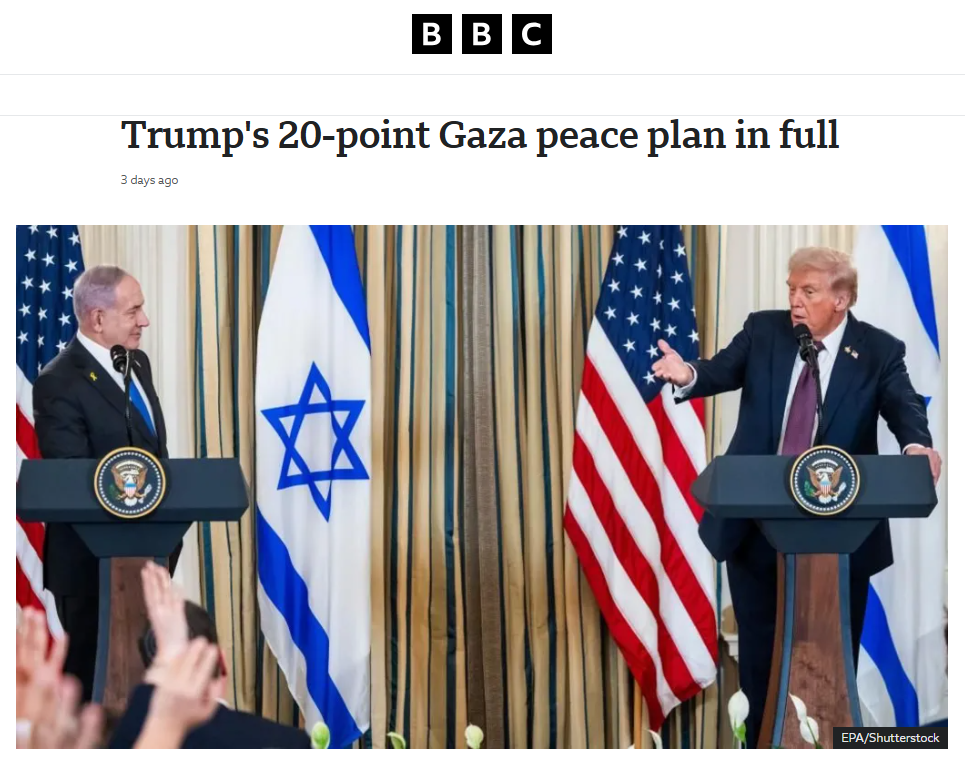
On September 29, 2025, United States (U.S.) President Donald Trump presented his 20-point Peace Plan for the Gaza Strip which sets out a ceasefire, a release of hostages held by the Palestinian Islamic Resistance Movement (Hamas) and its armed allies, a dismantling of Hamas’ military structures, the withdrawal of Israeli troops, and the creation of an international “Board of Peace” to supervise the administration of the Gaza Strip with President Trump as chair and former British Prime Minister Tony Blair as the chief administrator. Relief supplies to meet human needs would be facilitated. The plan concerns only the Gaza Strip and does not deal directly with the West Bank where tensions are strong.

The plan has been presented to the Israeli Prime Minister, Benyamin Netanyahu who was in Washington, D.C. and to Arab leaders who were at the United Nations in New York. The plan has been given to Hamas’ leaders through intermediaries, but Hamas’ leadership has been severely weakened by deaths. Thus, it is not clear how decision-making will be done by Hamas. The plan has also been presented to the Palestinian Authority (PA) in Ramallah, led by Mahmoud Abbas, but the PA would play no part in the Gaza Strip’s future. The plan is being widely discussed, but no official decisions have been announced.
The Gaza Peace Plan has some of the approach of the Transcend proposals (1) with, in addition, the possibility of violence if the Gaza Peace Plan is not carried out. Threats of violence are not among Transcend’s tools. One of the distinctive aspects of Transcend and the broader peace research movement is to present specific proposals for transcending current conflicts through an analysis of the roots of the conflict, the dangers if the conflict continues as it is going, and then the measures to take. (2) The Israeli-Palestinian conflict is one which presents dangers to the whole region if creative actions are not taken very soon. We must act now. We cannot wait for President Trump to do it for us.

Notes:

(1) Transcend Media Service, “The Time Has Arrived for a Comprehensive Middle East Peace”, Jeffrey D. Sachs and Sybil Fares, July 7, 2025.
(2) See:
Johan Galtung, The True Worlds (New York/The Free Press/1980/469pp)
John Paul Lederach, Preparing for Peace (Syracuse, NY/Syracuse University Press/1995/133pp)

Prof. René Wadlow is President of the Association of World Citizens.
The Spirit of Woman, Life and Liberty Continues

In Being a World Citizen, Current Events, Human Rights, Middle East & North Africa, Solidarity, Women's Rights, World Law on September 23, 2025 at 6:55 AM

By René Wadlow

Three years have passed since protests began in Iran at the announcement of the death in police custody of 22-year-old Mahsa (Jina) Amini, having been arrested by the “morality police” for having some of her hair beyond the hijab (veil). She was an ethnic Kurd. The protests began on September 3, 2022 in the Kurdish areas of Iran but soon spread to all ethnic groups and to many parts of the country.

Women have been a central focus of the social policy of the Iranian Islamic government. Even before coming to power in 1979, Ayatollah Khomeini from his exile in France had said that the overly great liberty of women was a chief obstacle to his policies. Repressive policies against women with compulsory veiling laws were quickly put into place once he came into power.

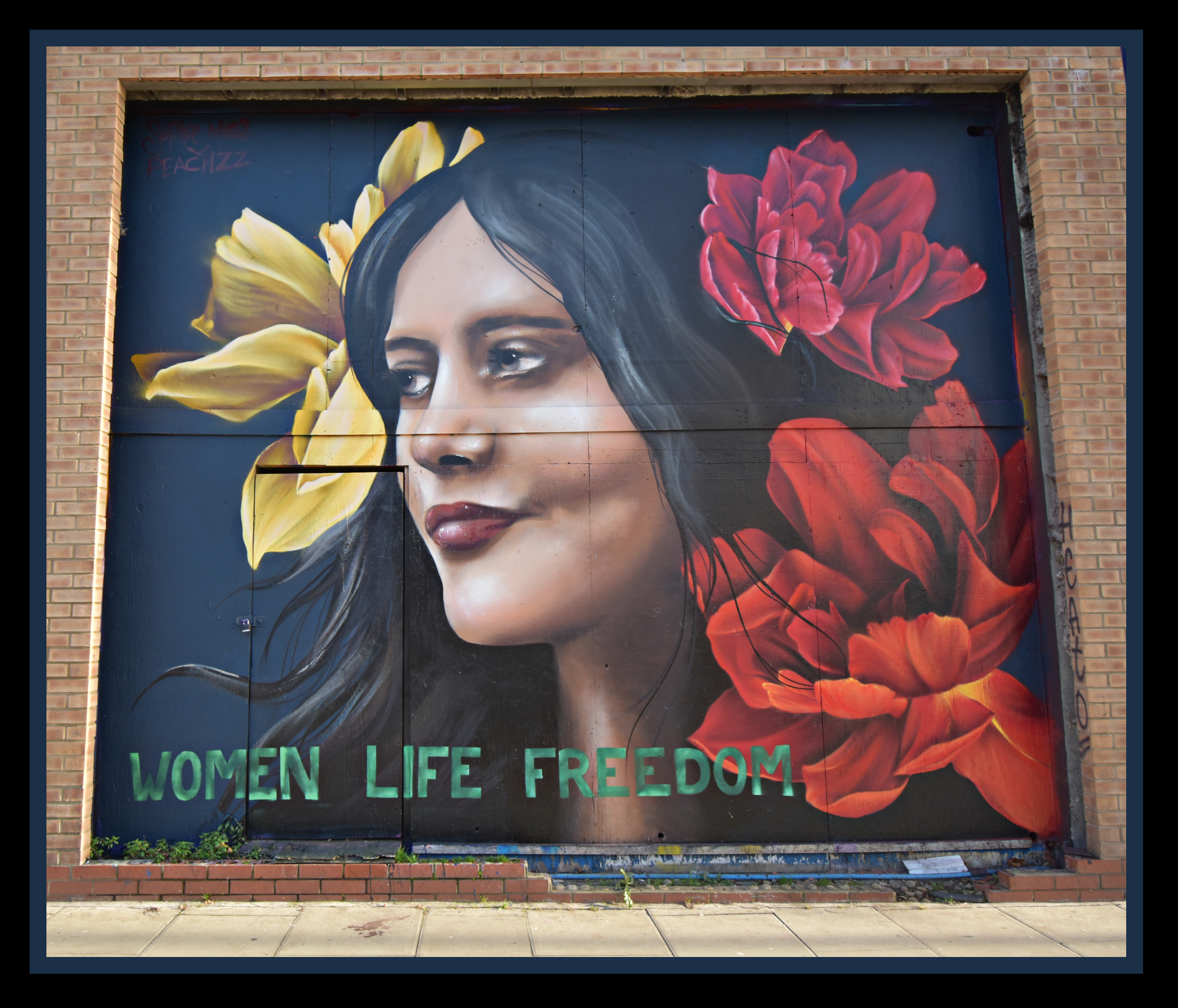
On Mare Street in Hackney, London, UK, a Mahsa Jina Amini mural painted by artist Sophie Mess in collaboration with Peachzz. (C) Loco Steve

“Woman, Life, Liberty” became the battle cry of the 2022 protests, and the refusal to have a hijab was the external symbol of the protests. Although the protests were harshly repressed, the Iranian people’s courage could not be silenced. Since 2022, Iranian society has been significantly modified. There is an increased defiance of women who refuse to wear the mandatory hijab in public. Unveiled women are seen walking through stores and banks. Government leaders have appeared on posters with unveiled women as “martyrs” killed in the recent bombing by Israel and the USA.

There are some policymakers in the government of President Masoud Pezeshkian who cautiously propose reforms while hardliners double down on restrictions, and people are arrested, accused of “propaganda against the state”. The many socioeconomic currents present in Iran today merit being watched closely.

Prof. René Wadlow is President of the Association of World Citizens.
NGO Cooperation for a Stronger United Nations

In Being a World Citizen, Conflict Resolution, Current Events, NGOs, Peacebuilding, Solidarity, The Search for Peace, Track II, United Nations, World Law on September 20, 2025 at 12:00 PM

By René Wadlow

As the 2025 United Nations (UN) General Assembly continues, there is a need for a greater input of Nongovernmental Organizations (NGOs). There are some 6,400 NGOs in consultative status with the UN. Many, however, have consultative status with the UN only to strengthen their standing at the national level. The number of NGOs which engage actively in the UN procedures is much smaller. Some deal with specific UN Specialized Agencies such as UNESCO, the ILO, and the FAO.

Others, such as the Association of World Citizens (AWC), are active on a wider range of issues, especially those with representatives active at the UN in New York and Geneva. It is among this smaller number of NGOs that active measures for cooperation need to be undertaken.

A leading role of the UN since its establishment has been to lay the foundations for a culture of peace with respect for human rights, and economic and social development. There needs to be innovation, responses to new challenges, and a role for intellectual leadership to give a sense of direction. There should be forged from the varied, often contradictory views of governments, a sense of common purpose.

NGOs can help to provide a sense of direction and ways for the pursuit of common interests. The UN must look outward and work with renewed vigor. This is also true for NGOs. Cooperation among NGOs has been growing. Now, faced with strong challenges in the world society, efforts for NGO cooperation are a vital need.

Prof. René Wadlow is President of the Association of World Citizens.
Albert Schweitzer: Respect for Life Against Nuclear Death

In Africa, Being a World Citizen, Conflict Resolution, Human Rights, Nonviolence, Nuclear weapons, Peacebuilding, The Search for Peace, World Law on September 8, 2025 at 7:00 PM

By René Wadlow

Civilization is made up of four ideals: the ideal of the individual; the ideal of social and political organization; the ideal of spiritual and religious organization; the ideal of humanity as a whole. On the basis of these four ideals, thought tries conclusions with progress.

Albert Schweitzer, The Philosophy of Civilization

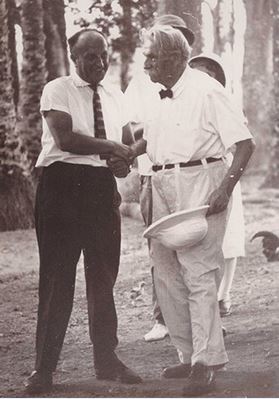
Albert Schweitzer was concerned with the ways that these four ideals of civilization are developed into a harmonious whole. Late in his life, when I knew him in the early 1960s, he was most concerned with the ideal of humanity as a whole.

He had come out strongly against nuclear weapons, weapons which were the opposite of respect for life which was the foundation of his ethical values. (1) “Man can hardly recognize the devils of his creation. Let me give you a definition of ethics. It is good to maintain and further life. It is bad to damage and destroy life. By having reverence for life, we enter into a spiritual relation with the world. By practicing respect for life, we become of the human family and our good, deep and alive.”

For Schweitzer, our sense of unity of the human family and our obligation to future generations was threatened as never before in the two World Wars that he had seen. I had been active since the mid-1950s in efforts to ban testing of nuclear weapons in the atmosphere – a focus of anti-nuclear efforts at the time. I had also worked with the world citizen Norman Cousins who had visited Lambaréné and had written a lively book on his exchanges with Schweitzer. (2) Thus I was well received by Schweitzer at his hospital in Lambaréné; and we had useful discussions. I was working for the Ministry of Education at the time and was at the Protestant Secondary School which was a mile down the Ogowe River from the hospital.

René Wadlow and Albert Schweitzer (C) René Wadlow (personal archives)

It was Norman Cousins, active in disarmament efforts in the USA, who urged Schweitzer to speak out against nuclear weapons. Schweitzer had been awarded the Nobel Peace Prize for his humanitarian efforts in Africa. Thus, he came into ever greater contact with people working for peace. However, he was reluctant to make statements on issues on which he was not expert. As he said to Cousins, “All my life, I have carefully stayed away from making pronouncements on public matters. Groups would come to me for statements or I would be asked to sign joint letters or the press would ask me for my views on certain political questions. And always I would feel forced to say no.” However, he went on “The world needs a system of enforceable law to prevent aggression and deal with the threats to the peace, but the important thing to do is to make a start somewhere…I think maybe the place to take hold is with the matter of nuclear testing…If a ban on nuclear testing can be put into effect then perhaps the stage can be set for other and broader measures related to peace.

Schweitzer’s 1958 appeal Peace or Atomic War was an important contribution to the growing protests against nuclear testing and their fallout of radiation. On October 16, 1963, the Treaty Banning Nuclear Weapons Tests in the Atmosphere, in Outer Space and Under Water (more commonly called the Partial Test Ban) came into force.

Today, we still need those other and broader measures related to peace and for a constant affirmation of respect for life.

Prof. René Wadlow is President of the Association of World Citizens.
Notes

1) See Albert Schweitzer, Peace or Atomic War (New York: Henry Holt, 1958)

2) See Norman Cousins, Dr Schweitzer of Lambaréné (New York: Harper and Brothers, 1960)

BOOK REVIEW: Thomas Nordström, “A World Government in Action”

In Being a World Citizen, Book Review, Conflict Resolution, Cultural Bridges, Democracy, Human Development, Human Rights, International Justice, NGOs, Nonviolence, Peacebuilding, Solidarity, The Search for Peace, Track II, United Nations, Women's Rights, World Law on September 8, 2025 at 7:00 PM

By René Wadlow

Thomas Nordström, A World Government in Action.

Newcastle upon Tyne: Cambridge Scholars Publishing, 2020, 147pp.

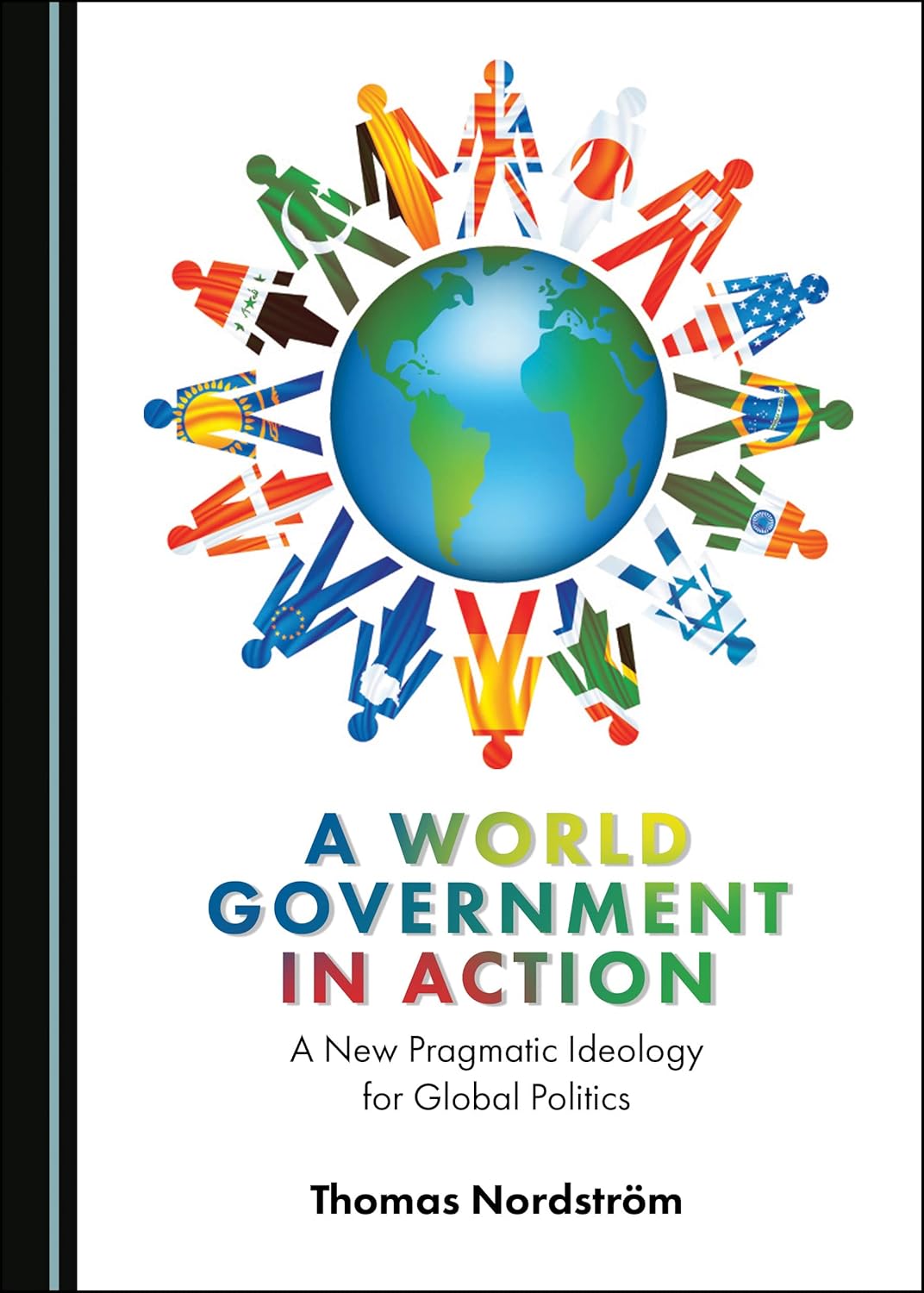
Thomas Nordström has written a useful book which more accurately should have been called “The Need for a World Government in Action”. He outlines many of the challenges facing the world society and stresses that the United Nations (UN) does not have the authority or the power to deal with these challenges adequately. The challenges are interrelated and thus must be faced in an interrelated way. Thus, climate change has an impact on land use which has an impact on food production. To improve food production, there must be better education on food issues as well as greater equality among women and men, as, in many countries, women play a major role in food production, food preparation, and food conservation.

As governments and UN Secretariat members become aware of an issue, the issue is taken up in one or another of the UN Specialized Agencies – FAO, WHO, ILO, UNESCO, or a new program is created: the Environment Program, or different programs on the issue of women. Today, within the halls of the UN there are negotiations for a Global Pact on the Environment and for the creation of a World Environment Organization which would be stronger than the existing UN Environment Program. Such a Global Pact for the Environment would clarify important environmental principles and relations between the existing treaties on the environment which have been negotiated separately.

In the UN, the international agenda reflects the growing influence of nongovernmental organizations (NGOs) and the scientific community in shaping policy. We see this vividly in the discussions on the impact of climate change. The distinction that used to be made between national and international questions has almost entirely vanished. NGOs must be able to provide possible avenues of action based on an effective theoretical analysis that acknowledges the complexity of the international environment.

Governments cannot at the same time boost expenditure on armaments and deal effectively with ecological deterioration and the consequences of climate change. Militarization has contributed to the neglect of other pressing issues, such as shrinking forests, erosion of soils and falling water tables. Militarization draws energy and efforts away from constructive action to deal with common problems. Militarization creates rigidity at the center of world politics as well as brittleness which leads to regional conflicts and civil wars. This political paralysis is both a cause and a result of the rigidity and the brittleness of current international politics. Opportunities are missed for building upon the more positive elements of a particular situation.

What is often called “complex emergencies” – a combination of political and social disintegration that includes armed conflicts, ethnic violence, state collapse, warlordism, refugee flows and famine – have become one of the most pressing humanitarian issues of our time. Today’s violent conflicts are often rooted in a mix of exclusion, inequality, mismanagement of natural resources, corruption, and the frustrations that accompany a lack of jobs and opportunities. Lack of opportunities sows the seeds of instability and violence.

As Nordström points out, behind all the current armed conflicts, there is the presence in a small number of countries of nuclear weapons. If they were used, the level of destruction would be great. Although nuclear disarmament was on the agenda of the UN General Assembly from its start, there has been little progress on nuclear disarmament issues.

As World Citizen and former President of India S. Radhakrishnan has written, “To survive we need a revolution in our thoughts and outlook. From the alter of the past we should take the living fire and not the dead ashes. Let us remember the past, be alive to the present and create the future with courage in our hearts and faith in ourselves.” The great challenge which humanity faces today is to leave behind the culture of violence in which we find ourselves and move rapidly to a culture of peace and solidarity. We can achieve this historic task by casting aside our ancient nationalistic and social prejudices and begin to think and act as responsible Citizens of the World. Nordström sets out some of the guideposts.

Prof. René Wadlow is President of the Association of World Citizens.
BOOK REVIEW: Robin Yassin-Kassab and Leila Al-Shami, “Burning Country – Syrians in Revolution and War”

In Being a World Citizen, Book Review, Conflict Resolution, Cultural Bridges, Current Events, Democracy, Human Rights, International Justice, Middle East & North Africa, NGOs, Peacebuilding, Solidarity, Syria, The Search for Peace, Track II, United Nations, War Crimes, World Law on September 1, 2025 at 6:00 AM

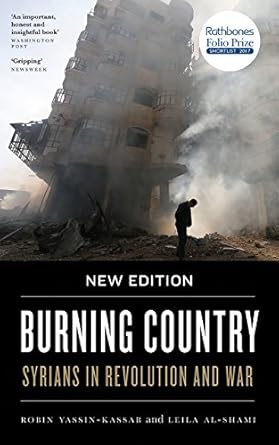
Robin Yassin-Kassab and Leila Al-Shami, Burning Country – Syrians in Revolution and War.

London, Pluto Press, 2016, 262pp.

Although this overview of Syrian society was written before the January 2025 flight of Bashar al-Assad to Moscow and the coming to power of Ahmed al-Sharaa as “interim” President, the book is a useful guide to many of the current issues in Syria today.

As Khalil Gibran wrote in The Garden of the Prophet, thinking of his home country, Lebanon, but it can also be said of the neighboring Syria, “Pity the nation divided into fragments, each fragment deeming itself a nation.” The fragments, ethnic and religious to which are added deep social divisions, make common action difficult. The Druze, the Alaouites, the Kurds, all play an important role but are often fearful of each other. Some of the Alaouites have fled to Lebanon. At the same time, there is a slow return of Syrians who have been in exile in Turkey and western Europe – especially Germany.

The divisions were made deeper by the years of violent conflict against the government of Bashar al-Assad which began in March 2011 with youth-led demonstrations appealing for a Syrian republic based on equality of citizenship, the rule of law, respect for human rights, and political pluralism.

After some months of non-violent protests, members of the military deserted, taking their weapons with them. The Syrian conflict became militarized. A host of armed militias were formed, often hostile to each other.

From late 2013 to February 2014, there were negotiations for a ceasefire held at the United Nations (UN), Geneva. Representatives of the Association of World Citizens (AWC) met with the Ambassador to the UN of Syria, as well as with the representatives of different Syrian factions who had come to Geneva. Unfortunately, Syrian politics has been that of “winner takes all” with little spirit of compromise or agreed-upon steps for the public good. The AWC called for a broad coming together of individuals who believe in non-violence, equality of women and men, ecologically-sound development, and cooperative action for the common good. The need to work together for an orderly creation of the government and the development of a just and pluralistic Syrian society is still with us.

Robin Yassin-Kassab’s book is a useful guide to the forces that must come together and cooperate today.

Prof. René Wadlow is President of the Association of World Citizens.

BOOK REVIEW: Helen Lackner, “Yemen in Crisis: Devastating Conflict, Fragile Hope”

In Being a World Citizen, Book Review, Conflict Resolution, Current Events, Human Rights, Humanitarian Law, Middle East & North Africa, NGOs, Peacebuilding, Solidarity, The Search for Peace, Track II, United Nations, War Crimes, World Law on August 30, 2025 at 6:00 PM

By René Wadlow

Helen Lackner, Yemen in Crisis: Devastating Conflict, Fragile Hope.

London, Saqi Books, 2023, 413pp.

In this incisive analysis, Helen Lackner highlights the ongoing armed conflict which threatens the survival of the Yemeni people. An internationalized civil war which started in 2015 has caused chaos, poverty, and in many areas extreme hunger. The external intervention led by Saudi Arabia and the United Arab Emirates in an operation called “Desert Storm” worsened the instability and fragmentation. Efforts by the United Nations to mediate the conflict, especially by meetings in Geneva, have been frustrated by the obduracy of the warring parties.

The Association of World Citizens (AWC) has been concerned with constitutional developments in Yemen since the 2011 change of government. While the constitutional form of the state structure depends on the will of the people of Yemen (provided that they can express themselves freely), the AWC has proposed consideration of con-federal forms of government which maintain cooperation within a decentralized framework. In 2014, a committee appointed by the then President, Abdrabbuh Mansour Hadi, had proposed a six-region federation as the political structure for Yemen.

Until 1990, Yemen was two separate states: the People’s Democratic Yemen in the south with Aden as the capital, and the Yemen Arab Republic in the north with Sana’a as the capital. In 1990, the two united to become the Republic of Yemen.

However, the union of the two states did not create a working unity. Fairly quickly there was a fracturing of Yemen into different spheres of influence. There were struggles for power and the creation of rival militias. Although tribes remain a fundamental aspect of Yemeni society, there developed new social forces with a greater role of youth and a growth of urban life as people moved from the countryside into cities. A small educated group, often including women, started to play a larger role.

With the 2015 outbreak of armed violence, the divisions have grown. Fundamentalist Islamic groups have been created. There has been a vast destruction of infrastructure as schools, medical facilities, and shops, and small industry has been targeted for destruction. Today, the Ansar Allah Movement, often called the Houthis, controls the capital Sana’a and the port city of Hudaydah. Much of the rest of the country is under the control of microgroups. There is a large displacement of people. The rivalry for regional power between Saudi Arabia and Iran colors the situation. As Helen Lackner writes, hope for peace is fragile. There are human rights violations on a massive scale by all the parties. The 27 million Yemenis live under a dark sky.

Prof. René Wadlow is President of the Association of World Citizens.
Helsinki Process: Need for Renewal

In Being a World Citizen, Conflict Resolution, Current Events, Europe, Human Rights, NGOs, OSCE, Peacebuilding, Solidarity, The former Soviet Union, The Search for Peace, Track II, UKRAINE, World Law on August 28, 2025 at 6:00 PM

By René Wadlow

The difficulties to begin negotiations on an end to the Russia-Ukraine armed conflict has highlighted the need for a renewal of the Helsinki process of Pan-European dialogue and action. The Helsinki process which began in 1973 led over time to the creation of the Organization for Security and Cooperation in Europe (OSCE).

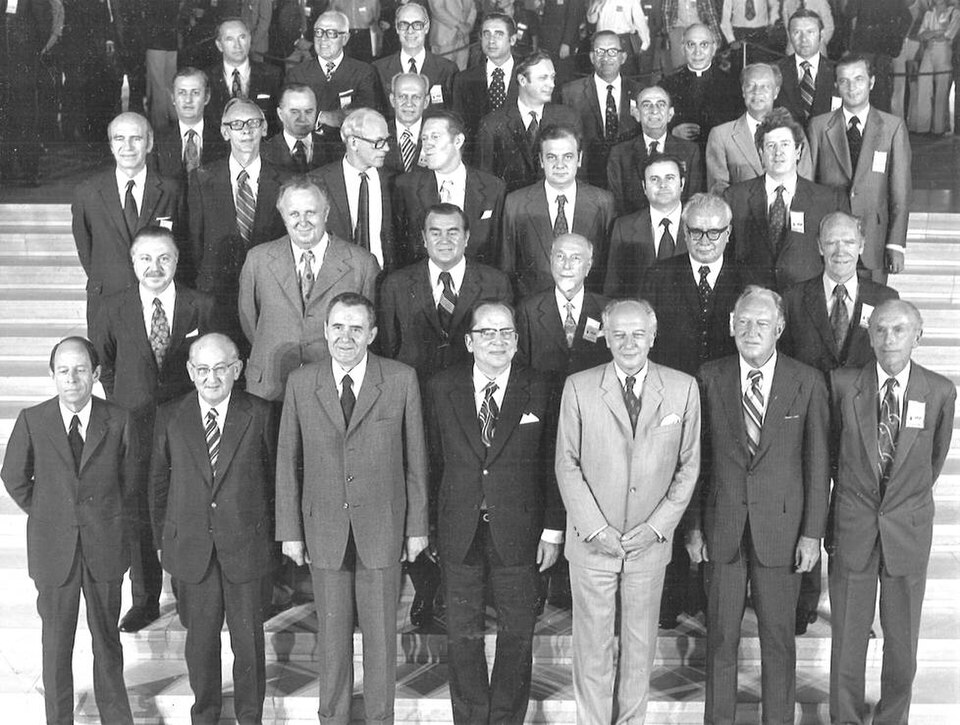
Government leaders met in Helsinki in July 1973, sensing a need for some form of permanent discussion on European security issues beyond the ad hoc meetings among some states, which was then the current pattern. From September 1973 to July 1975, the discussion on structures and efforts to be undertaken moved to Geneva and was carried out by diplomats stationed there. Although the representatives of Nongovernmental Organizations (NGOs) were not asked to participate, many of us who were NGO representatives to the United Nations in Geneva knew the European diplomats involved and were able to make suggestions as to the priorities – human rights and arms control.

The foreign ministers taking part in the CSCE conference in Helsinki in 1973 (C) Pentti Koskinen

In August 1975, the Geneva discussions terminated, the government leaders met again in Helsinki and signed the Helsinki Agreement. Relatively quickly, a series of meetings on crucial topics was organized, often in Geneva. NGO representatives were invited to participate and played an important role in developing confidence-building measures.

Although there were tensions among OSCE states in the past such as the Soviet intervention in Afghanistan in 1979 and the martial law crackdown in Poland, the divisions were never as strong as they are today, linked to the Russia-Ukraine conflict. The OSCE has been weakened, and some see a death sentence in a near future. Thus, there is a need for a renewal of the OSCE and a revival of the Helsinki spirit. Non-governmental organizations may have to take a lead, given the current governmental divisions.

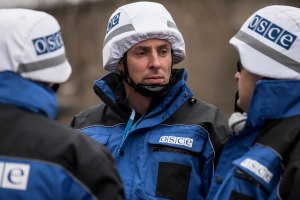
Members of the OSCE’s Special Monitoring Mission deployed in eastern Ukraine (C) OSCE Special Monitoring Mission to Ukraine

In the 1980s, NGOs had played an important role in “détente from below” in creating opportunities for discussions among activists from Eastern and Western Europe. Today we must find avenues of action to meet the current complex and dangerous situation. Representatives of the Association of World Citizens have participated in meetings of the OSCE and will be active in this renewal process.

Prof. René Wadlow is President of the Association of World Citizens.
Gaza: Famine Spreads

In Being a World Citizen, Conflict Resolution, Current Events, Human Rights, Humanitarian Law, International Justice, Middle East & North Africa, NGOs, Peacebuilding, Solidarity, The Search for Peace, Track II, United Nations, War Crimes, World Law on August 24, 2025 at 12:30 PM

By René Wadlow

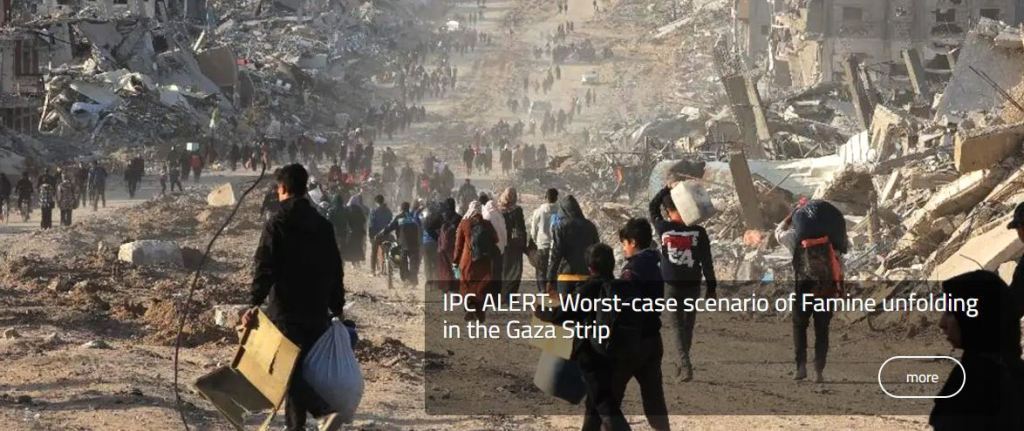
On August 22, 2025, the United Nations (UN)-related Integrated Food Security Phase Classification (IPC) highlighted that famine conditions were taking place in Gaza City and that famine is expected to spread to other parts of the Gaza Strip in the coming weeks if improvements in food supply are not made.

The IPC Report stresses that for over 90% of the children under two years old, the lack of healthy food hinders the children’s immunity and development. The scarcity also impacts pregnant and breastfeeding women, compromising the health of both mother and child. Many healthcare facilities in the Gaza Strip have been destroyed, making care for children difficult and often impossible.

The IPC report comes just as the Israeli military prepares for a full-scale takeover of Gaza City, the epicenter of the famine. When the takeover begins, it will be even harder for civilians to access the food they need to survive. Many people will be forced to move, which many persons in Gaza have already done several times.

Famine in Gaza is the result of deliberate obstruction of food and life-saving aid. There are ample food supplies at the Gaza Strip frontier ready to enter. However, the Israeli authorities have not permitted sufficient aid to enter the Gaza Strip. The basic humanitarian needs of those living in the Gaza Strip are not being met.

The Association of World Citizens is among the many Nongovernmental Organizations and aid groups which have called for a radical modification of Israeli policy so that basic needs can be met. Such radical modifications will require negotiations in good faith. The IPC report is a strong addition to these calls for positive action.

Prof. René Wadlow is President of the Association of World Citizens.
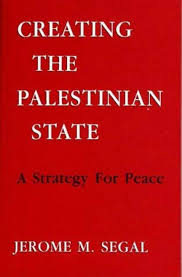
BOOK REVIEW: Jerome M. Segal, “Creating the Palestinian State: A Strategy for Peace”

In Conflict Resolution, Cultural Bridges, Current Events, Middle East & North Africa, Peacebuilding, Solidarity, The Search for Peace, United Nations on August 17, 2025 at 1:10 PM

By René Wadlow

Jerome M. Segal, Creating The Palestinian State: A Strategy for Peace.

Chicago,IL: Laurence Hill Books, 1989, 177pp.

At this time when clashes among Israelis and Palestinians have been growing in intensity with an impact on neighboring countries, new attitudes and approaches are needed. Several Western European countries have announced that they will recognize a Palestinian state during the 2025 United Nations General Assembly in New York. Thus, it is useful to review an early presentation of the need for a Palestinian state.

Jerome Segal was a research scholar at the Institute for Philosophy and Public Policy at the University of Maryland in the USA. He writes, “My efforts have been directed towards the creation of a Palestinian state, not primarily as an end in itself, but as a component part of the two-state solution. The two-state solution is, in my estimation, the only basis for a stable peace in the Middle East… It cannot be done by the Palestinians alone… It can only occur if there is broad support from all who seek peace along the lines of the two-state solution.”

For Segal, a Palestinian state would be a state without an army, on the model of Costa Rica. A Palestinian state would work effectively to prevent terrorism and attacks against Israeli structures. It would declare that the State of Palestine offers peace to all its neighboring states and looks forward to mutual cooperation for the common good of all.

The Association of World Citizens (AWC) has been concerned with the development of appropriate constitutional structures as a vital aspect of peacebuilding. The AWC emphasis has been placed on the possibilities of con-federalism, autonomy within a decentralized state, and trans-frontier cooperation. We will continue to follow Israeli-Palestinian events closely.

Prof. René Wadlow is President of the Association of World Citizens.