The Official Blog of the

Archive for August, 2025|Monthly archive page

BOOK REVIEW: Helen Lackner, “Yemen in Crisis: Devastating Conflict, Fragile Hope”

In Being a World Citizen, Book Review, Conflict Resolution, Current Events, Human Rights, Humanitarian Law, Middle East & North Africa, NGOs, Peacebuilding, Solidarity, The Search for Peace, Track II, United Nations, War Crimes, World Law on August 30, 2025 at 6:00 PM

By René Wadlow

Helen Lackner, Yemen in Crisis: Devastating Conflict, Fragile Hope.

London, Saqi Books, 2023, 413pp.

In this incisive analysis, Helen Lackner highlights the ongoing armed conflict which threatens the survival of the Yemeni people. An internationalized civil war which started in 2015 has caused chaos, poverty, and in many areas extreme hunger. The external intervention led by Saudi Arabia and the United Arab Emirates in an operation called “Desert Storm” worsened the instability and fragmentation. Efforts by the United Nations to mediate the conflict, especially by meetings in Geneva, have been frustrated by the obduracy of the warring parties.

The Association of World Citizens (AWC) has been concerned with constitutional developments in Yemen since the 2011 change of government. While the constitutional form of the state structure depends on the will of the people of Yemen (provided that they can express themselves freely), the AWC has proposed consideration of con-federal forms of government which maintain cooperation within a decentralized framework. In 2014, a committee appointed by the then President, Abdrabbuh Mansour Hadi, had proposed a six-region federation as the political structure for Yemen.

Until 1990, Yemen was two separate states: the People’s Democratic Yemen in the south with Aden as the capital, and the Yemen Arab Republic in the north with Sana’a as the capital. In 1990, the two united to become the Republic of Yemen.

However, the union of the two states did not create a working unity. Fairly quickly there was a fracturing of Yemen into different spheres of influence. There were struggles for power and the creation of rival militias. Although tribes remain a fundamental aspect of Yemeni society, there developed new social forces with a greater role of youth and a growth of urban life as people moved from the countryside into cities. A small educated group, often including women, started to play a larger role.

With the 2015 outbreak of armed violence, the divisions have grown. Fundamentalist Islamic groups have been created. There has been a vast destruction of infrastructure as schools, medical facilities, and shops, and small industry has been targeted for destruction. Today, the Ansar Allah Movement, often called the Houthis, controls the capital Sana’a and the port city of Hudaydah. Much of the rest of the country is under the control of microgroups. There is a large displacement of people. The rivalry for regional power between Saudi Arabia and Iran colors the situation. As Helen Lackner writes, hope for peace is fragile. There are human rights violations on a massive scale by all the parties. The 27 million Yemenis live under a dark sky.

Prof. René Wadlow is President of the Association of World Citizens.

Helsinki Process: Need for Renewal

In Being a World Citizen, Conflict Resolution, Current Events, Europe, Human Rights, NGOs, OSCE, Peacebuilding, Solidarity, The former Soviet Union, The Search for Peace, Track II, UKRAINE, World Law on August 28, 2025 at 6:00 PM

By René Wadlow

The difficulties to begin negotiations on an end to the Russia-Ukraine armed conflict has highlighted the need for a renewal of the Helsinki process of Pan-European dialogue and action. The Helsinki process which began in 1973 led over time to the creation of the Organization for Security and Cooperation in Europe (OSCE).

Government leaders met in Helsinki in July 1973, sensing a need for some form of permanent discussion on European security issues beyond the ad hoc meetings among some states, which was then the current pattern. From September 1973 to July 1975, the discussion on structures and efforts to be undertaken moved to Geneva and was carried out by diplomats stationed there. Although the representatives of Nongovernmental Organizations (NGOs) were not asked to participate, many of us who were NGO representatives to the United Nations in Geneva knew the European diplomats involved and were able to make suggestions as to the priorities – human rights and arms control.

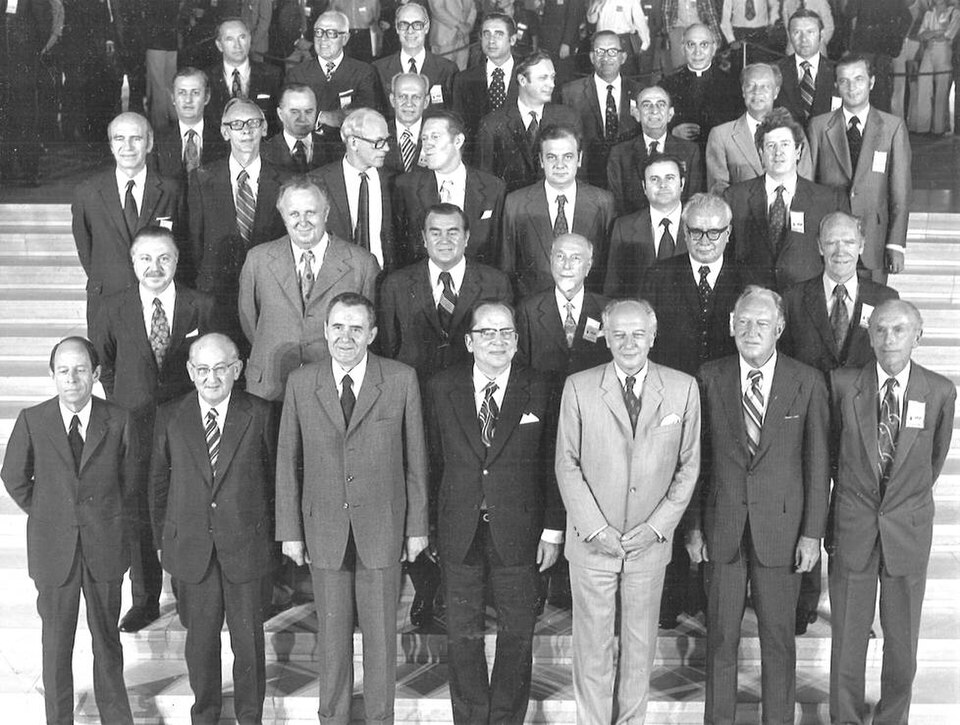
The foreign ministers taking part in the CSCE conference in Helsinki in 1973 (C) Pentti Koskinen

In August 1975, the Geneva discussions terminated, the government leaders met again in Helsinki and signed the Helsinki Agreement. Relatively quickly, a series of meetings on crucial topics was organized, often in Geneva. NGO representatives were invited to participate and played an important role in developing confidence-building measures.

Although there were tensions among OSCE states in the past such as the Soviet intervention in Afghanistan in 1979 and the martial law crackdown in Poland, the divisions were never as strong as they are today, linked to the Russia-Ukraine conflict. The OSCE has been weakened, and some see a death sentence in a near future. Thus, there is a need for a renewal of the OSCE and a revival of the Helsinki spirit. Non-governmental organizations may have to take a lead, given the current governmental divisions.

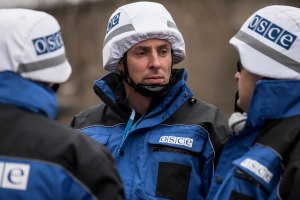
Members of the OSCE’s Special Monitoring Mission deployed in eastern Ukraine (C) OSCE Special Monitoring Mission to Ukraine

In the 1980s, NGOs had played an important role in “détente from below” in creating opportunities for discussions among activists from Eastern and Western Europe. Today we must find avenues of action to meet the current complex and dangerous situation. Representatives of the Association of World Citizens have participated in meetings of the OSCE and will be active in this renewal process.

Prof. René Wadlow is President of the Association of World Citizens.

Gaza: Famine Spreads

In Being a World Citizen, Conflict Resolution, Current Events, Human Rights, Humanitarian Law, International Justice, Middle East & North Africa, NGOs, Peacebuilding, Solidarity, The Search for Peace, Track II, United Nations, War Crimes, World Law on August 24, 2025 at 12:30 PM

By René Wadlow

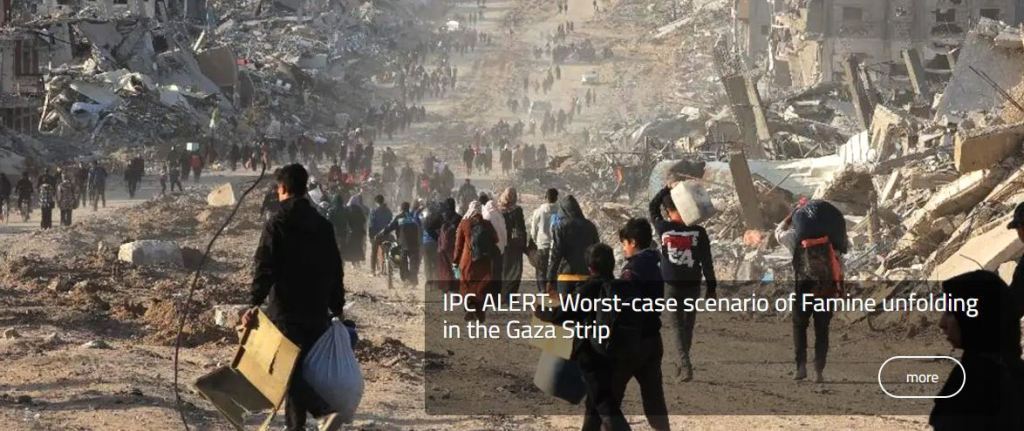
On August 22, 2025, the United Nations (UN)-related Integrated Food Security Phase Classification (IPC) highlighted that famine conditions were taking place in Gaza City and that famine is expected to spread to other parts of the Gaza Strip in the coming weeks if improvements in food supply are not made.

The IPC Report stresses that for over 90% of the children under two years old, the lack of healthy food hinders the children’s immunity and development. The scarcity also impacts pregnant and breastfeeding women, compromising the health of both mother and child. Many healthcare facilities in the Gaza Strip have been destroyed, making care for children difficult and often impossible.

The IPC report comes just as the Israeli military prepares for a full-scale takeover of Gaza City, the epicenter of the famine. When the takeover begins, it will be even harder for civilians to access the food they need to survive. Many people will be forced to move, which many persons in Gaza have already done several times.

Famine in Gaza is the result of deliberate obstruction of food and life-saving aid. There are ample food supplies at the Gaza Strip frontier ready to enter. However, the Israeli authorities have not permitted sufficient aid to enter the Gaza Strip. The basic humanitarian needs of those living in the Gaza Strip are not being met.

The Association of World Citizens is among the many Nongovernmental Organizations and aid groups which have called for a radical modification of Israeli policy so that basic needs can be met. Such radical modifications will require negotiations in good faith. The IPC report is a strong addition to these calls for positive action.

Prof. René Wadlow is President of the Association of World Citizens.

BOOK REVIEW: Jerome M. Segal, “Creating the Palestinian State: A Strategy for Peace”

In Conflict Resolution, Cultural Bridges, Current Events, Middle East & North Africa, Peacebuilding, Solidarity, The Search for Peace, United Nations on August 17, 2025 at 1:10 PM

By René Wadlow

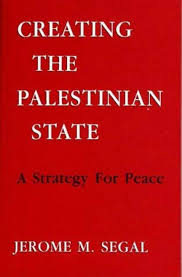
Jerome M. Segal, Creating The Palestinian State: A Strategy for Peace.

Chicago,IL: Laurence Hill Books, 1989, 177pp.

At this time when clashes among Israelis and Palestinians have been growing in intensity with an impact on neighboring countries, new attitudes and approaches are needed. Several Western European countries have announced that they will recognize a Palestinian state during the 2025 United Nations General Assembly in New York. Thus, it is useful to review an early presentation of the need for a Palestinian state.

Jerome Segal was a research scholar at the Institute for Philosophy and Public Policy at the University of Maryland in the USA. He writes, “My efforts have been directed towards the creation of a Palestinian state, not primarily as an end in itself, but as a component part of the two-state solution. The two-state solution is, in my estimation, the only basis for a stable peace in the Middle East… It cannot be done by the Palestinians alone… It can only occur if there is broad support from all who seek peace along the lines of the two-state solution.”

For Segal, a Palestinian state would be a state without an army, on the model of Costa Rica. A Palestinian state would work effectively to prevent terrorism and attacks against Israeli structures. It would declare that the State of Palestine offers peace to all its neighboring states and looks forward to mutual cooperation for the common good of all.

The Association of World Citizens (AWC) has been concerned with the development of appropriate constitutional structures as a vital aspect of peacebuilding. The AWC emphasis has been placed on the possibilities of con-federalism, autonomy within a decentralized state, and trans-frontier cooperation. We will continue to follow Israeli-Palestinian events closely.

Prof. René Wadlow is President of the Association of World Citizens.

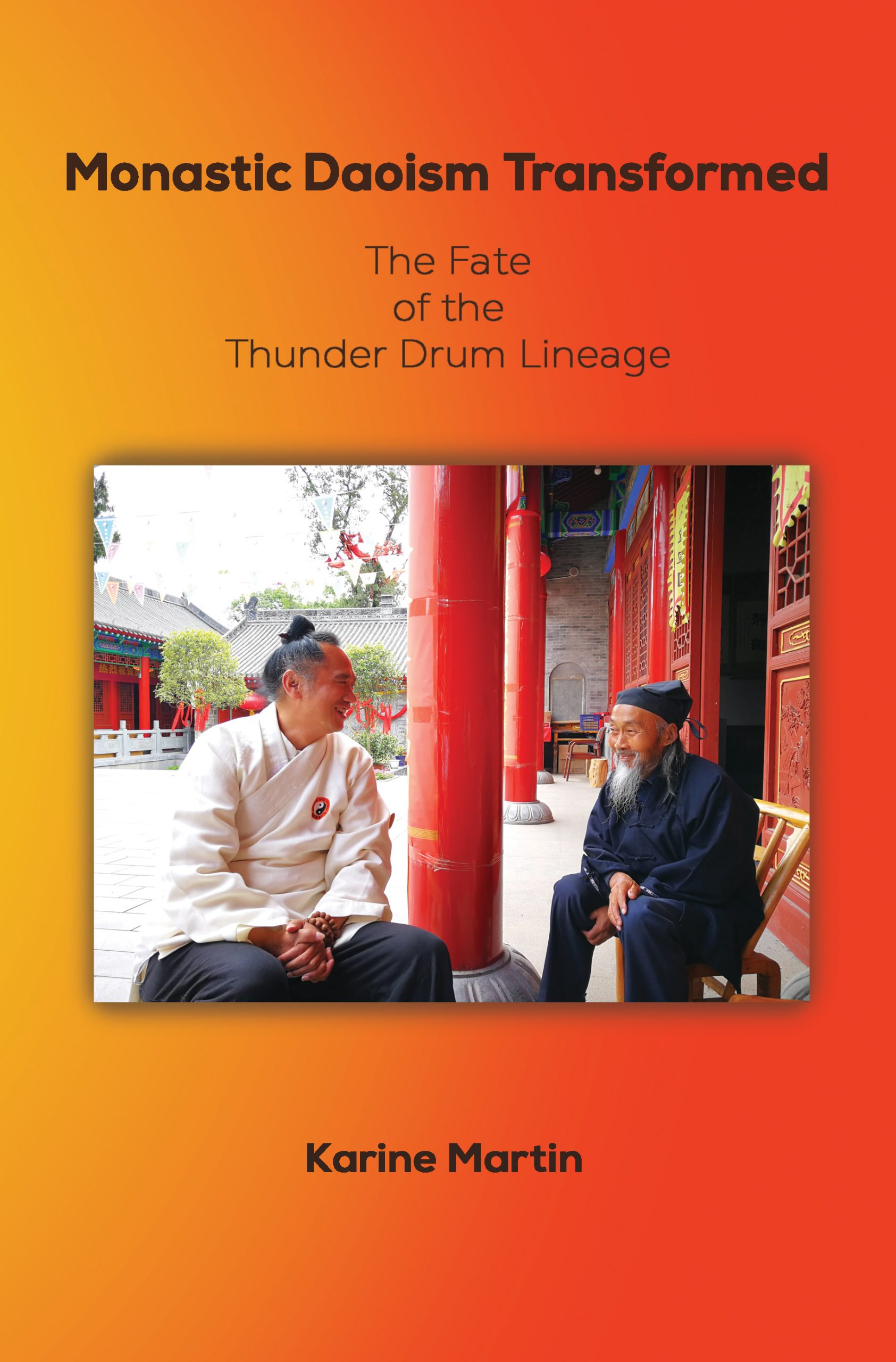
BOOK REVIEW: Karine Martin, “Monastic Daoism Transformed: The Fate of the Thunder Drum Lineage”

In Asia, Book Review, Cultural Bridges, Human Rights, Religious Freedom, Spirituality on August 14, 2025 at 6:20 AM

By René Wadlow

Karine Martin, Monastic Daoism Transformed: The Fate of the Thunder Drum Lineage.

Three Pines Press, 2025, 177pp.

Karine Martin, author of this useful overview of the Chinese Government’s attitude toward Daoist clergy, was able to travel widely in China, visiting more than 100 Daoist temples, especially those of the Thunder Drum lineage to which she belongs.

Since 2017, there has been a Chinese government policy called “Sinicization” in keeping with Xi Jinping’s Thought on Socialism with Chinese Characteristics for a New Era.

Sinicization requires all religious organizations to modify their doctrines and activities so that they match what is considered Han Chinese culture. Authorities have removed crosses from Christian churches and demolished minarets from Islamic mosques. Clergy from all religions are required to attend indoctrination courses on a regular basis. Chinese governments, both Nationalist and Communist, officially recognized five religions: Daoism, Buddhism, Islam, Catholicism and Protestantism.

Some religious groups are considered subversive and are outlawed and their members persecuted such as Falun Gong. During the “Cultural Revolution” (1966 to 1976, ending with the death of Chairman Mao Zedong), religion as such was considered to be one of the “four olds” to be destroyed. Churches and temples were closed. In Tibet, there was widespread destruction of temples. Monks were forced into civilian life. Today, the current policy is to keep religious organizations but to make sure that they do not slip out of control.

As Karine Martin writes,

“Everywhere I went, I found temples in a state of decline and disarray. There were no devotees, much fewer clergy, and minimal activities. Buildings were in disrepair, and there was very little renovation and construction. The overall atmosphere was one of desolation and despair… Temple websites – so strongly developed just a decade ago – now only speak about Xi Jinping Thought and ways of complying with government guidelines… Since all clergy were forced to rejoin secular society during the Cultural Revolution, many got married and had children yet later returned to their monasteries. The marriages often continued, if at long distance, allowing priests to fulfill their spiritual calling while yet having families. Now this is no longer possible, and monks either have to leave the monastery or produce a document that they have obtained a divorce and are properly celebrate.”

Karine Martin has written a very complete picture of monastic Daoism, a development of her Ph.D. thesis based on field observations. However, there is a cultural Daoism which colors Chinese life, its folk religious practices with village shrines – all difficult to control. Daoism places much emphasis on dreams during which the dreamer encounters immortals and advanced masters. Dreams are by their nature difficult to control from outside. The interpretation of the dream is also individual. Dreams can also lead to forms of deep personal meditation in order to understand the significance of the dreams.

Daoism also stresses good health and long life. Deep breathing, massages, herbal remedies and yoga-style movements such as Taijjiquan and Qigong can be carried out without belonging to a Daoist organization.

Daoism also places an emphasis on the appreciation of nature, especially mountains, rivers, forests and well-structured gardens. An ecological concern is growing in China without a specific link to organized Daoism.

While the government may try to control organized Daoist organizations, its cultural manifestations are ever slipping out of control and may one day be manifested in political terms.

Prof. René Wadlow is President of the Association of World Citizens.

BOOK REVIEW: E.G. Vallianatos, “Fear in the Countryside: The Control of Agricultural Resources in the Poor Countries by Nonpeasant Elites”

In Being a World Citizen, Book Review, Human Rights, Social Rights, Solidarity, United Nations, World Law on August 12, 2025 at 9:01 PM

By René Wadlow

E.G. Vallianatos, Fear in the Countryside: The Control of Agricultural Resources in the Poor Countries by Nonpeasant Elites.

Cambridge. MA: Ballenger Publishing Co. 1976, 180pp.

E.G. Vallianatos, a former member of the United Nations (UN) Secretariat, shows the connection between the lack of power and the lack of productivity. He highlights that most economic and political power in developing countries is concentrated in urban areas. Agrarian structures and access to essential resources often do not favor the majority of rural people, especially the poorest groups. Policies on development priorities and allocation of resources and services often help the politically powerful urban sector. An increasing amount of rural productive land is falling under the control of urban elites.

One answer to why the rural poor stay poor is that they rarely are well organized so as to be able to participate meaningfully in decision-making. Especially the least powerful among the rural poor – the tenant farmers, the landless laborers, members of tribal societies – are the least well organized, the most easily divided and blocked.

Social change is inevitably a challenge to the status quo. No development project, no matter how small or how technical, is without an impact on the distribution of power. A new well dug in a village is not simply an added social service. The new well calls into question the power of those who controlled the access to water prior to digging the new well.

If measures are not taken to facilitate the peaceful participation of the rural poor, it is likely that the rural poor will turn to armed violence, thus creating fear in the countryside. Non-violent techniques have been used to organize the powerless in rural areas. One of the first efforts of Mahatma Gandhi on his return to India from South Africa was to investigate and then mediate in the struggle of the indigo pickers. Cesar Chavez in the USA was a leading advocate of non-violence in his efforts to organize agricultural workers. The Sarvodoya Movement in Sri Lanka has applied the Buddhist values of compassion to construct a social and economic infrastructure based on a strong community spirit. There is a need to study the wide range of situations and the opportunities for constructive action.

Prof. René Wadlow is President of the Association of World Citizens.

Stronger Track Two Networks Needed

In Being a World Citizen, Conflict Resolution, NGOs, Nonviolence, Peacebuilding, Solidarity, The Search for Peace, Track II, United Nations, United States on August 5, 2025 at 5:45 PM

By René Wadlow

The continuing armed conflicts in Ukraine and the Gaza Strip, increased tensions between Mainland China and Taiwan with the lack of any formal governmental negotiations forces us to ask if more can be done on the part of Nongovernmental Organizations (NGOs) to encourage negotiations in good faith.

Governmental efforts, bilateral or within the United Nations (UN) can be called Track One. Track One diplomacy is official government negotiations with the backup resources of government research and intelligence agencies. There can also be Track One “back channels” of informal or unofficial contacts.

Track Two diplomacy is a non-official effort usually by an NGO or an academic institution. The use of non-official mediators is also increasing as awareness grows that there is a tragic disjuncture between the UN mandate to keep peace and its inability to intervene in conflicts within a State – often confrontations between armed groups and government forces and sometimes among different armed groups.

Track Two talks are discussions held by non-officials of conflicting parties in an attempt to clarify outstanding disputes and to explore the options for resolving them in settings that are less sensitive than those associated with formal negotiations. The participants usually include scholars, senior journalists, former government officials and former military officers. They should be in close contact with national leaders and decision-makers. The purposes of Track Two talks vary, but they are all related to reducing tensions. Much depends on the caliber and dedication of the participants and their relations with governmental leadership.

Citizens of the World were involved in one of the earliest continuing Track Two efforts. In 1959 President Eisenhower asked the world citizen Norman Cousins, editor of the New York-based journal The Saturday Review of Literature, if there were some way that could be arranged to get private Soviet and United States (U.S.) citizens together to discuss U.S.-Soviet relations.

The first meeting was held at Dartmouth College and became known as the Dartmouth Conferences held in many different places in the USA. David Rockefeller, chief of the Chase Manhattan Bank, whose name as a capitalist was known by most Soviets, was one of the active participants. Rockefeller and his family had many contacts with U.S. intellectuals and scholars on whom they could call to participate in the Dartmouth meetings.

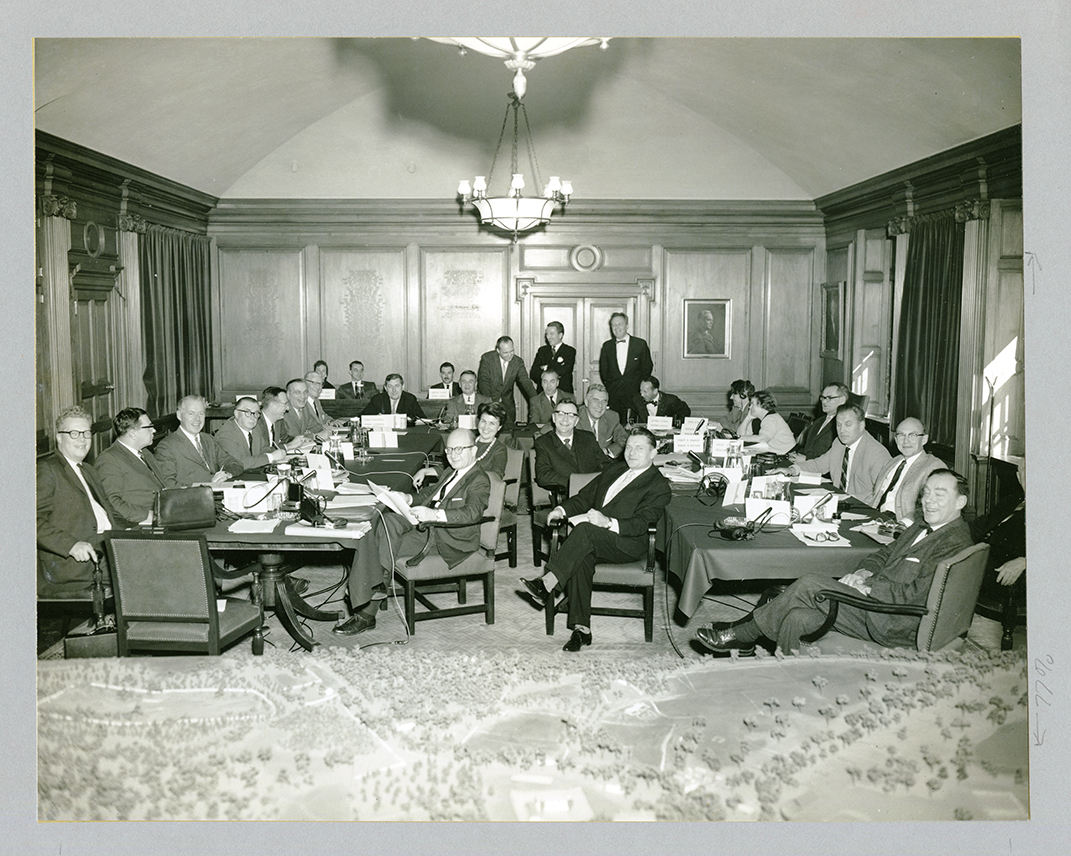
A Russian-American Conference, Dartmouth Group, October 1962 (C) Phillips Academy Archives and Special Collections, CC BY-SA 2.0

As Kenneth Boulding, a Quaker economist who often participated in Track Two efforts wrote:

“When Track One will not do,

We have to travel on Track Two.

But for results to be abiding,

The Tracks must meet upon some siding.” (1)

Note:

1) Quoted in John W. McDonald with Noa Zanolli, The Shifting Grounds of Conflict and Peacebuilding (Lanham, MD: Lexington Books, 2008, 241 pp)

Prof. René Wadlow is President of the Association of World Citizens.

BOOK REVIEW: A. Fonseca Pimentel, “Democratic World Government and the United Nations”

In Being a World Citizen, Book Review, Conflict Resolution, NGOs, Peacebuilding, Solidarity, The Search for Peace, Track II, United Nations, World Law on August 5, 2025 at 7:00 AM

By René Wadlow

A. Fonseca Pimentel, Democratic World Government and the United Nations.
Brasilia, Escopa Editions, 1980, 158pp.

The United Nations (UN) was created in the spirit of world citizenship (“We the Peoples…”). The history of the UN can be seen as the development of world citizen values and world law. The world community is in a period of vast transformation being brought about by powerful economic, political, and cultural agents to cope with the challenges of growing interdependence among all peoples and the growing impact of people on the natural environment.

Structures of world law are needed to provide a framework for this transformation. The UN General Assembly has proclaimed the standards of international law such as the Universal Declaration of Human Rights (1948) which has become the world standard and guide for both regional and national human rights law. Such declarations are part of a trend of building and strengthening a world peace structure composed of world law and intergovernmental institutions which command such general acceptance that resort to world law will replace unilateral actions of States based on narrow domestic political considerations. Governments, business corporations, and transnational social movements are increasingly convinced that they all possess a stake in an orderly world society which can be endangered by the use of force.

However, as Pimentel points out, an orderly world society is not a world society without change. No rule of law is possible without sufficient methods for solving grievances.

Fonseca Pimentel was a Brazilian scholar and economist with long experience in public administration and as a UN advisor on administrative reforms. As he notes, “The dilemma facing the United Nations is to find a way to go further on the road to world citizenship.” At this time when there is armed violence in many parts of the world and consistent violations of human rights, he sets out the challenges clearly.

Prof. René Wadlow is President of the Association of World Citizens.

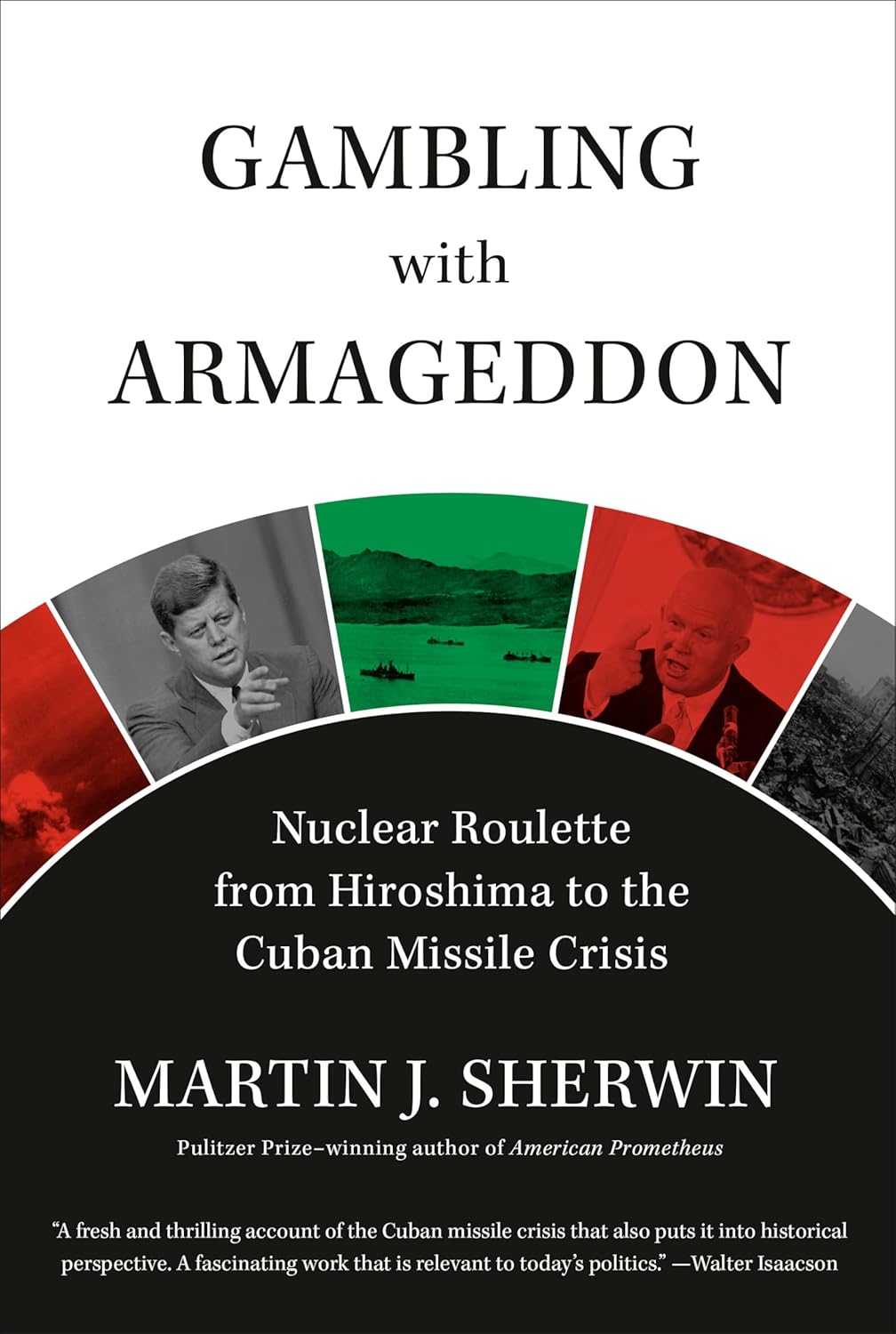
BOOK REVIEW: Martin J. Sherwin, “Gambling with Armageddon: Nuclear Roulette from Hiroshima to the Cuban Missile Crisis”

In Being a World Citizen, Book Review, Conflict Resolution, Nuclear weapons, Peacebuilding, Solidarity, The Search for Peace on August 5, 2025 at 7:00 AM

By Lawrence Wittner

Martin J. Sherwin, Gambling with Armageddon: Nuclear Roulette from Hiroshima to the Cuban Missile Crisis.

New York: Vintage Books, 2020.

The development and the deployment of nuclear weapons are usually based on the assumption that they enhance national security. But, in fact, as this powerful study of nuclear policy convincingly demonstrates, nuclear weapons move nations toward the brink of destruction.

The basis for this conclusion is the post-World War II nuclear arms race and, especially, the Cuban missile crisis of October 1962. At the height of the crisis, top officials from the governments of the United States and the Soviet Union narrowly avoided annihilating a substantial portion of the human race by what former U.S. Secretary of State Dean Acheson, an important participant in the events, called “plain dumb luck.”

The author of this cautionary account, Martin Sherwin, who died shortly after its publication, was certainly well-qualified to tell this chilling story. A professor of history at George Mason University, Sherwin was the author of the influential A World Destroyed: Hiroshima and Its Legacies and the co-author, with Kai Bird, of American Prometheus: The Triumph and Tragedy of J. Robert Oppenheimer, which, in 2006, won the Pulitzer Prize for biography. Perhaps the key factor in generating these three scholarly works was Sherwin’s service as a U.S. Navy junior intelligence officer who was ordered to present top secret war plans to his commander during the Cuban missile crisis.

In Gambling with Armageddon, Sherwin shows deftly how nuclear weapons gradually became a key part of international relations. Although Harry Truman favored some limitations on the integration of these weapons into U.S. national security strategy, his successor, Dwight Eisenhower, significantly expanded their role. According to the Eisenhower administration’s NSC 162/2, the U.S. government would henceforth “consider nuclear weapons as available for use as other munitions.” At Eisenhower’s direction, Sherwin notes, “nuclear weapons were no longer an element of American military power; they were its primary instrument.”

Sherwin adds that, although the major purpose of the new U.S. “massive retaliation” strategy “was to frighten Soviet leaders and stymie their ambitions,” its “principal result . . . was to establish a blueprint for Nikita Khrushchev to create his own ‘nuclear brinkmanship.’” John F. Kennedy’s early approach to U.S. national security policy – supplementing U.S. nuclear superiority with additional conventional military forces and sponsoring a CIA-directed invasion of Cuba – merely bolstered Khrushchev’s determination to contest U.S. power in world affairs. Consequently, resumption of Soviet nuclear weapons testing and a Soviet-American crisis over Berlin followed.

Indeed, dismayed by U.S. nuclear superiority and feeling disrespected by the U.S. government, Khrushchev decided to secretly deploy medium- and intermediate-range ballistic nuclear missiles in Cuba. As Sherwin observes, the Soviet leader sought thereby “to protect Cuba, to even the balance of nuclear weapons and nuclear fear, and to reinforce his leverage to resolve the West Berlin problem.” Assuming that the missiles would not be noticed until their deployment was completed, Khrushchev thought that the Kennedy administration, faced with a fait accompli, would have no choice but to accept them. Khrushchev was certainly not expecting a nuclear war.

But that is what nearly occurred. In the aftermath of the U.S. government’s discovery of the missile deployment in Cuba, the Joint Chiefs of Staff demanded the bombing and invasion of the island and were supported by most members of ExComm, an ad hoc group of Kennedy’s top advisors during the crisis. At the time, they did not realize that the Soviet government had already succeeded in delivering 164 nuclear warheads to Cuba and, therefore, that a substantial number of the ballistic missiles on the island were already operational. Also, the 42,000 Soviet troops in Cuba were armed with tactical nuclear weapons and had been given authorization to use them to repel an invasion. As Fidel Castro later remarked: “It goes without saying that in the event of an invasion, we would have had nuclear war.”

Initially, among all of Kennedy’s advisors, only Adlai Stevenson, the U.S. ambassador to the United Nations, suggested employing a political means – rather than a military one – to secure the removal of the missiles. Although Kennedy personally disliked Stevenson, he recognized the wisdom of his UN ambassador’s approach and gradually began to adopt his ideas. “The question really is,” the president told his hawkish advisors, “what action we take which lessens the chance of a nuclear exchange, which obviously is the final failure.” Therefore, Kennedy tempered his initial impulse to order rapid military action and, instead, adopted a plan for a naval blockade (“quarantine”) of Cuba, thereby halting the arrival of additional Soviet missiles and creating time for negotiations with Khrushchev for removal of the missiles already deployed.

U.S. military leaders, among other ostensible “wise men,” were appalled by what they considered the weakness of the blockade plan, though partially appeased by Kennedy’s assurances that, if it failed to secure the desired results within a seven-day period, a massive U.S. military attack on the island would follow. Indeed, as Sherwin reveals, at the beginning of October, before the discovery of the missiles, the U.S. Joint Chiefs of Staff were already planning for an invasion of Cuba and looking for an excuse to justify it.

Even though Khrushchev, like Kennedy, regarded the blockade as a useful opportunity to negotiate key issues, they quickly lost control of the volatile situation.

For example, U.S. military officers took the U.S.-Soviet confrontation to new heights. Acting on his own initiative, General Thomas Power, the head of the U.S. Strategic Air Command, advanced its nuclear forces to DEFCON 2, just one step short of nuclear war – the only occasion when that level of nuclear alert was ever instituted. He also broadcast the U.S. alert level “in the clear,” ensuring that the Russians would intercept it. They did, and promptly raised their nuclear alert level to the same status.

In addition, few participants in the crisis seemed to know exactly what should be done if a Soviet ship did not respect the U.S. blockade of Cuba. Should the U.S. Navy demand to board it? Fire upon it? Furthermore, at Castro’s orders, a Soviet surface-to-air battery in Cuba shot down an American U-2 surveillance flight, killing the pilot. Khrushchev was apoplectic at the provocative action, while the Kennedy administration faced the quandary of how to respond to it.

A particularly dangerous incident occurred in the Sargasso Sea, near Cuba. To bolster the Soviet defense of Cuba, four Soviet submarines, each armed with a torpedo housing a 15-kiloton nuclear warhead, had been dispatched to the island. After a long, harrowing trip through unusually stormy seas, these vessels were badly battered when they arrived off Cuba. Cut off from communication with Moscow, their crews had no idea whether the United States and the Soviet Union were already at war.

All they did know was that a fleet of U.S. naval warships and warplanes was apparently attacking one of the stricken Soviet submarines, using the unorthodox (and unauthorized) tactic of forcing it to surface by flinging hand grenades into its vicinity. One of the Soviet crew members recalled that “it felt like you were sitting in a metal barrel while somebody is constantly blasting with a sledgehammer.” Given the depletion of the submarine’s batteries and the tropical waters, temperatures ranged in the submarine between 113 and 149 degrees Fahrenheit. The air was foul, fresh water was in short supply, and crew members were reportedly “dropping like dominoes.” Unhinged by the insufferable conditions below deck and convinced that his submarine was under attack, the vessel’s captain ordered his weapons officer to assemble the nuclear torpedo for action. “We’re gonna blast them now!” he screamed. We will die, but we will sink them all―we will not become the shame of the fleet.”

At this point, though, Captain Vasily Arkhipov, a young Soviet brigade chief of staff who had been randomly assigned to the submarine, intervened. Calming the distraught captain, he eventually convinced him that the apparent military attack, plus subsequent machine gun fire from U.S. Navy aircraft, probably constituted no more than a demand to surface. And so they did. Arkhipov’s action, Sherwin notes, saved not only the lives of the submarine crew, “but also the lives of thousands of U.S. sailors and millions of innocent civilians who would have been killed in the nuclear exchanges that certainly would have followed from the destruction” that the “nuclear torpedo would have wreaked upon those U.S. Navy vessels.”

Meanwhile, recognizing that the situation was fast slipping out of their hands, Kennedy and Khrushchev did some tense but serious bargaining. Ultimately, they agreed that Khrushchev would remove the missiles, while Kennedy would issue a public pledge not to invade Cuba. Moreover, Kennedy would remove U.S. nuclear missiles from Turkey – reciprocal action that made sense to both men, although, for political reasons, Kennedy insisted on keeping the missile swap a secret. Thus, the missile crisis ended with a diplomatic solution.

Ironically, continued secrecy about the Cuba-Turkey missile swap, combined with illusions of smooth Kennedy administration calibrations of power spun by ExComm participants and the mass communications media, led to a long-term, comforting, and triumphalist picture of the missile crisis. Consequently, most Americans ended up with the impression that Kennedy stood firm in his demands, while Khrushchev “blinked.” It was a hawkish “lesson” – and a false one. As Sherwin points out, “the real lesson of the Cuban missile crisis . . . is that nuclear armaments create the perils they are deployed to prevent, but are of little use in resolving them.”

Although numerous books have been written about the Cuban missile crisis, Gambling with Armageddon ranks as the best of them. Factually detailed, clearly and dramatically written, and grounded in massive research, it is a work of enormous power and erudition. As such, it represents an outstanding achievement by one of the pre-eminent U.S. historians.

Like Sherwin’s other works, Gambling with Armageddon also grapples with one of the world’s major problems: the prospect of nuclear annihilation. At the least, it reveals that, while nuclear weapons exist, the world remains in peril. On a deeper level, it suggests the need to move beyond considerations of national security to international security, including the abolition of nuclear weapons and the peaceful resolution of conflict among nations.

Securing these goals might necessitate a long journey, but Sherwin’s writings remind us that, to safeguard human survival, there’s really no alternative to pressing forward with it.

Lawrence Wittner (http://lawrenceswittner.com) is Professor of History Emeritus at SUNY/Albany.

BOOK REVIEW: Philip Shepherd, “Radical Wholeness: The Embodied Present and the Ordinary Grace of Being”

In Arts, Being a World Citizen, Book Review, Cultural Bridges, Solidarity, Spirituality, The Search for Peace on August 5, 2025 at 7:00 AM

Philip Shepherd, Radical Wholeness: The Embodied Present and the Ordinary Grace of Being.

Berkeley: North Atlantic Books, 2017, 328 pp.

By Sarah Stewart-Brown

Philip Shepherd is unusual; at the age of 18, he relinquished a place to read physics at the University of Toronto, took a cheap flight to London, bought himself a bike and pedalled to Japan. For a year or more, he lived outside, sleeping rough, attuning to the natural world and the different cultures he passed through. What made him go was clarity that there was something wrong with the values, habits and behaviours of the culture he had grown up in, and what made him head for Japan was an experience of Noh Theatre – a timeless, deeply spiritual style of acting.

He returned home with an ability to see the way the Western world’s view of the meaning of life blinds and binds us; in particular, the way we have valued the contribution or our ‘head centres’ over those of our ‘belly centres’ and ‘masculine’ attributes and aptitudes over ‘feminine’. Together with an ability to experience the world through the body, this gave him a radically different view of reality, one in which the wholeness and interconnectedness of everything was a given. He calls this ability Holosapience. Working as an actor and carpenter, raising his family in Toronto, he devoured books, spoke with many wise people and developed workshops in which he experimented with ways to pass on the abilities he had honed for himself.

This book, published in 2017 when he was in his 60s, is his second. It sets out his thesis and his solutions including some of the key practices of his workshops. His first book New Self, New World describes the journey to Japan and his discoveries in more detail. Philip’s thesis is that people who grow up in the Western world learn to live in their heads, prioritising cognitive intelligence over intelligence experienced in the body, exalting autonomy, independence, objectivity and the scientific method, and valuing knowledge over experience. He quotes the anthropologist who studied the Anlo Ewe peoples of West Africa because they seemed to be describing abilities Philip had developed on his journey. Teaching their children to ‘feel, feel at flesh inside’ they experience themselves as porous, feeling the world passing through them and changing them from moment to moment.

Such experiences reveal the essential fallacy of independence.

He goes on to describe the ways in which severing ourselves from the body’s intelligences has led us down paths that are destructive to life, ours and that of ‘all our relations’ a term indigenous Americans use to refer to the non-human world. His understanding of embodiment is different from that offered by other ‘embodiment’ teachers who invite us to ‘listen to the body’ and often to ‘direct the breath into the belly’. This, Philip would say, is not compatible with wholeness because it requires a separate part to be doing the listening and interpreting what it hears, and taking charge of the breath. Embodiment, he says, enables us to listen to the world through the body, attuning ourselves to the world through the body’s sensitivity and intelligence. We don’t develop this ability by doing, but by surrendering to the essential fluidity of the present. Embodiment enables self-knowledge, a world-centred, experiential understanding of self which promotes a sense of wonder, ease and humility, in contrast to objective knowledge which promotes a self-centred sense of accomplishment, power and entitlement.

Philip recognises that individuals may be born with different sensitivities with the implication that we may have different abilities, but he suggests that we can’t have too much sensitivity. The issue with sensitivity is reactivity. If we are able to receive and experience the world without reactivity, all sensitivity is valuable. So in learning to experience radical wholeness we need, he says, to develop the capacity to integrate the neuromuscular contractions and psychological defences from which the ego derives, so that we can receive and experience without reactivity. The pathway involves breathwork, learning to allow breath that moves the back and sides and is initiated by a release of the pelvic floor. It involves the experience of rest, where the opposite of rest is not movement but internal conflict. It teaches the development of receptivity in a world where doing is valued and receiving is not. And it involves the capacity to integrate contractions, defences and reactivity by becoming grounded.

Philip’s work, unlike other embodiment practices, goes beyond the belly centre (Hara, Tonden, Dan Tien or Kath of the spiritual traditions) and shines a light on the perineum, the small circular muscle at the centre of the pelvic floor, as the powerhouse of integration. His workshops show participants how to enable the energies of contraction to soften, dropping down to the pelvic bowl, and ultimately to the perineum and the feet. Key practices are described. Written with fluidity and clarity this book is inspirational and a delight to read.

Sarah Stewart-Brown is an Emeritus Professor of Public Health at University of Warwick.