The Official Blog of the

Archive for the ‘Solidarity’ Category

Gaza: Famine Spreads

In Being a World Citizen, Conflict Resolution, Current Events, Human Rights, Humanitarian Law, International Justice, Middle East & North Africa, NGOs, Peacebuilding, Solidarity, The Search for Peace, Track II, United Nations, War Crimes, World Law on August 24, 2025 at 12:30 PM

By René Wadlow

On August 22, 2025, the United Nations (UN)-related Integrated Food Security Phase Classification (IPC) highlighted that famine conditions were taking place in Gaza City and that famine is expected to spread to other parts of the Gaza Strip in the coming weeks if improvements in food supply are not made.

The IPC Report stresses that for over 90% of the children under two years old, the lack of healthy food hinders the children’s immunity and development. The scarcity also impacts pregnant and breastfeeding women, compromising the health of both mother and child. Many healthcare facilities in the Gaza Strip have been destroyed, making care for children difficult and often impossible.

The IPC report comes just as the Israeli military prepares for a full-scale takeover of Gaza City, the epicenter of the famine. When the takeover begins, it will be even harder for civilians to access the food they need to survive. Many people will be forced to move, which many persons in Gaza have already done several times.

Famine in Gaza is the result of deliberate obstruction of food and life-saving aid. There are ample food supplies at the Gaza Strip frontier ready to enter. However, the Israeli authorities have not permitted sufficient aid to enter the Gaza Strip. The basic humanitarian needs of those living in the Gaza Strip are not being met.

The Association of World Citizens is among the many Nongovernmental Organizations and aid groups which have called for a radical modification of Israeli policy so that basic needs can be met. Such radical modifications will require negotiations in good faith. The IPC report is a strong addition to these calls for positive action.

Prof. René Wadlow is President of the Association of World Citizens.
BOOK REVIEW: Jerome M. Segal, “Creating the Palestinian State: A Strategy for Peace”

In Conflict Resolution, Cultural Bridges, Current Events, Middle East & North Africa, Peacebuilding, Solidarity, The Search for Peace, United Nations on August 17, 2025 at 1:10 PM

By René Wadlow

Jerome M. Segal, Creating The Palestinian State: A Strategy for Peace.

Chicago,IL: Laurence Hill Books, 1989, 177pp.

At this time when clashes among Israelis and Palestinians have been growing in intensity with an impact on neighboring countries, new attitudes and approaches are needed. Several Western European countries have announced that they will recognize a Palestinian state during the 2025 United Nations General Assembly in New York. Thus, it is useful to review an early presentation of the need for a Palestinian state.

Jerome Segal was a research scholar at the Institute for Philosophy and Public Policy at the University of Maryland in the USA. He writes, “My efforts have been directed towards the creation of a Palestinian state, not primarily as an end in itself, but as a component part of the two-state solution. The two-state solution is, in my estimation, the only basis for a stable peace in the Middle East… It cannot be done by the Palestinians alone… It can only occur if there is broad support from all who seek peace along the lines of the two-state solution.”

For Segal, a Palestinian state would be a state without an army, on the model of Costa Rica. A Palestinian state would work effectively to prevent terrorism and attacks against Israeli structures. It would declare that the State of Palestine offers peace to all its neighboring states and looks forward to mutual cooperation for the common good of all.

The Association of World Citizens (AWC) has been concerned with the development of appropriate constitutional structures as a vital aspect of peacebuilding. The AWC emphasis has been placed on the possibilities of con-federalism, autonomy within a decentralized state, and trans-frontier cooperation. We will continue to follow Israeli-Palestinian events closely.

Prof. René Wadlow is President of the Association of World Citizens.

BOOK REVIEW: E.G. Vallianatos, “Fear in the Countryside: The Control of Agricultural Resources in the Poor Countries by Nonpeasant Elites”

In Being a World Citizen, Book Review, Human Rights, Social Rights, Solidarity, United Nations, World Law on August 12, 2025 at 9:01 PM

By René Wadlow

E.G. Vallianatos, Fear in the Countryside: The Control of Agricultural Resources in the Poor Countries by Nonpeasant Elites.

Cambridge. MA: Ballenger Publishing Co. 1976, 180pp.

E.G. Vallianatos, a former member of the United Nations (UN) Secretariat, shows the connection between the lack of power and the lack of productivity. He highlights that most economic and political power in developing countries is concentrated in urban areas. Agrarian structures and access to essential resources often do not favor the majority of rural people, especially the poorest groups. Policies on development priorities and allocation of resources and services often help the politically powerful urban sector. An increasing amount of rural productive land is falling under the control of urban elites.

One answer to why the rural poor stay poor is that they rarely are well organized so as to be able to participate meaningfully in decision-making. Especially the least powerful among the rural poor – the tenant farmers, the landless laborers, members of tribal societies – are the least well organized, the most easily divided and blocked.

Social change is inevitably a challenge to the status quo. No development project, no matter how small or how technical, is without an impact on the distribution of power. A new well dug in a village is not simply an added social service. The new well calls into question the power of those who controlled the access to water prior to digging the new well.

If measures are not taken to facilitate the peaceful participation of the rural poor, it is likely that the rural poor will turn to armed violence, thus creating fear in the countryside. Non-violent techniques have been used to organize the powerless in rural areas. One of the first efforts of Mahatma Gandhi on his return to India from South Africa was to investigate and then mediate in the struggle of the indigo pickers. Cesar Chavez in the USA was a leading advocate of non-violence in his efforts to organize agricultural workers. The Sarvodoya Movement in Sri Lanka has applied the Buddhist values of compassion to construct a social and economic infrastructure based on a strong community spirit. There is a need to study the wide range of situations and the opportunities for constructive action.

Prof. René Wadlow is President of the Association of World Citizens.

Stronger Track Two Networks Needed

In Being a World Citizen, Conflict Resolution, NGOs, Nonviolence, Peacebuilding, Solidarity, The Search for Peace, Track II, United Nations, United States on August 5, 2025 at 5:45 PM

By René Wadlow

The continuing armed conflicts in Ukraine and the Gaza Strip, increased tensions between Mainland China and Taiwan with the lack of any formal governmental negotiations forces us to ask if more can be done on the part of Nongovernmental Organizations (NGOs) to encourage negotiations in good faith.

Governmental efforts, bilateral or within the United Nations (UN) can be called Track One. Track One diplomacy is official government negotiations with the backup resources of government research and intelligence agencies. There can also be Track One “back channels” of informal or unofficial contacts.

Track Two diplomacy is a non-official effort usually by an NGO or an academic institution. The use of non-official mediators is also increasing as awareness grows that there is a tragic disjuncture between the UN mandate to keep peace and its inability to intervene in conflicts within a State – often confrontations between armed groups and government forces and sometimes among different armed groups.

Track Two talks are discussions held by non-officials of conflicting parties in an attempt to clarify outstanding disputes and to explore the options for resolving them in settings that are less sensitive than those associated with formal negotiations. The participants usually include scholars, senior journalists, former government officials and former military officers. They should be in close contact with national leaders and decision-makers. The purposes of Track Two talks vary, but they are all related to reducing tensions. Much depends on the caliber and dedication of the participants and their relations with governmental leadership.

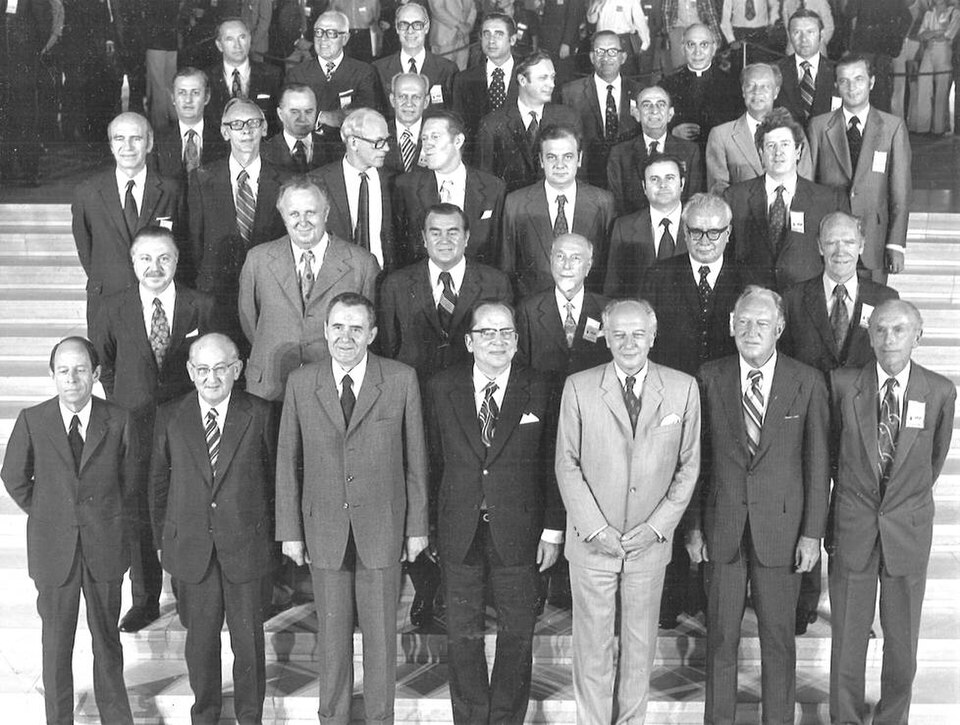
Citizens of the World were involved in one of the earliest continuing Track Two efforts. In 1959 President Eisenhower asked the world citizen Norman Cousins, editor of the New York-based journal The Saturday Review of Literature, if there were some way that could be arranged to get private Soviet and United States (U.S.) citizens together to discuss U.S.-Soviet relations.

The first meeting was held at Dartmouth College and became known as the Dartmouth Conferences held in many different places in the USA. David Rockefeller, chief of the Chase Manhattan Bank, whose name as a capitalist was known by most Soviets, was one of the active participants. Rockefeller and his family had many contacts with U.S. intellectuals and scholars on whom they could call to participate in the Dartmouth meetings.

A Russian-American Conference, Dartmouth Group, October 1962 (C) Phillips Academy Archives and Special Collections, CC BY-SA 2.0

As Kenneth Boulding, a Quaker economist who often participated in Track Two efforts wrote:

“When Track One will not do,

We have to travel on Track Two.

But for results to be abiding,

The Tracks must meet upon some siding.” (1)

Note:

1) Quoted in John W. McDonald with Noa Zanolli, The Shifting Grounds of Conflict and Peacebuilding (Lanham, MD: Lexington Books, 2008, 241 pp)

Prof. René Wadlow is President of the Association of World Citizens.

BOOK REVIEW: Philip Shepherd, “Radical Wholeness: The Embodied Present and the Ordinary Grace of Being”

In Arts, Being a World Citizen, Book Review, Cultural Bridges, Solidarity, Spirituality, The Search for Peace on August 5, 2025 at 7:00 AM

Philip Shepherd, Radical Wholeness: The Embodied Present and the Ordinary Grace of Being.

Berkeley: North Atlantic Books, 2017, 328 pp.

By Sarah Stewart-Brown

Philip Shepherd is unusual; at the age of 18, he relinquished a place to read physics at the University of Toronto, took a cheap flight to London, bought himself a bike and pedalled to Japan. For a year or more, he lived outside, sleeping rough, attuning to the natural world and the different cultures he passed through. What made him go was clarity that there was something wrong with the values, habits and behaviours of the culture he had grown up in, and what made him head for Japan was an experience of Noh Theatre – a timeless, deeply spiritual style of acting.

He returned home with an ability to see the way the Western world’s view of the meaning of life blinds and binds us; in particular, the way we have valued the contribution or our ‘head centres’ over those of our ‘belly centres’ and ‘masculine’ attributes and aptitudes over ‘feminine’. Together with an ability to experience the world through the body, this gave him a radically different view of reality, one in which the wholeness and interconnectedness of everything was a given. He calls this ability Holosapience. Working as an actor and carpenter, raising his family in Toronto, he devoured books, spoke with many wise people and developed workshops in which he experimented with ways to pass on the abilities he had honed for himself.

This book, published in 2017 when he was in his 60s, is his second. It sets out his thesis and his solutions including some of the key practices of his workshops. His first book New Self, New World describes the journey to Japan and his discoveries in more detail. Philip’s thesis is that people who grow up in the Western world learn to live in their heads, prioritising cognitive intelligence over intelligence experienced in the body, exalting autonomy, independence, objectivity and the scientific method, and valuing knowledge over experience. He quotes the anthropologist who studied the Anlo Ewe peoples of West Africa because they seemed to be describing abilities Philip had developed on his journey. Teaching their children to ‘feel, feel at flesh inside’ they experience themselves as porous, feeling the world passing through them and changing them from moment to moment.

Such experiences reveal the essential fallacy of independence.

He goes on to describe the ways in which severing ourselves from the body’s intelligences has led us down paths that are destructive to life, ours and that of ‘all our relations’ a term indigenous Americans use to refer to the non-human world. His understanding of embodiment is different from that offered by other ‘embodiment’ teachers who invite us to ‘listen to the body’ and often to ‘direct the breath into the belly’. This, Philip would say, is not compatible with wholeness because it requires a separate part to be doing the listening and interpreting what it hears, and taking charge of the breath. Embodiment, he says, enables us to listen to the world through the body, attuning ourselves to the world through the body’s sensitivity and intelligence. We don’t develop this ability by doing, but by surrendering to the essential fluidity of the present. Embodiment enables self-knowledge, a world-centred, experiential understanding of self which promotes a sense of wonder, ease and humility, in contrast to objective knowledge which promotes a self-centred sense of accomplishment, power and entitlement.

Philip recognises that individuals may be born with different sensitivities with the implication that we may have different abilities, but he suggests that we can’t have too much sensitivity. The issue with sensitivity is reactivity. If we are able to receive and experience the world without reactivity, all sensitivity is valuable. So in learning to experience radical wholeness we need, he says, to develop the capacity to integrate the neuromuscular contractions and psychological defences from which the ego derives, so that we can receive and experience without reactivity. The pathway involves breathwork, learning to allow breath that moves the back and sides and is initiated by a release of the pelvic floor. It involves the experience of rest, where the opposite of rest is not movement but internal conflict. It teaches the development of receptivity in a world where doing is valued and receiving is not. And it involves the capacity to integrate contractions, defences and reactivity by becoming grounded.

Philip’s work, unlike other embodiment practices, goes beyond the belly centre (Hara, Tonden, Dan Tien or Kath of the spiritual traditions) and shines a light on the perineum, the small circular muscle at the centre of the pelvic floor, as the powerhouse of integration. His workshops show participants how to enable the energies of contraction to soften, dropping down to the pelvic bowl, and ultimately to the perineum and the feet. Key practices are described. Written with fluidity and clarity this book is inspirational and a delight to read.

Sarah Stewart-Brown is an Emeritus Professor of Public Health at University of Warwick.

BOOK REVIEW: Martin J. Sherwin, “Gambling with Armageddon: Nuclear Roulette from Hiroshima to the Cuban Missile Crisis”

In Being a World Citizen, Book Review, Conflict Resolution, Nuclear weapons, Peacebuilding, Solidarity, The Search for Peace on August 5, 2025 at 7:00 AM

By Lawrence Wittner

Martin J. Sherwin, Gambling with Armageddon: Nuclear Roulette from Hiroshima to the Cuban Missile Crisis.

New York: Vintage Books, 2020.

The development and the deployment of nuclear weapons are usually based on the assumption that they enhance national security. But, in fact, as this powerful study of nuclear policy convincingly demonstrates, nuclear weapons move nations toward the brink of destruction.

The basis for this conclusion is the post-World War II nuclear arms race and, especially, the Cuban missile crisis of October 1962. At the height of the crisis, top officials from the governments of the United States and the Soviet Union narrowly avoided annihilating a substantial portion of the human race by what former U.S. Secretary of State Dean Acheson, an important participant in the events, called “plain dumb luck.”

The author of this cautionary account, Martin Sherwin, who died shortly after its publication, was certainly well-qualified to tell this chilling story. A professor of history at George Mason University, Sherwin was the author of the influential A World Destroyed: Hiroshima and Its Legacies and the co-author, with Kai Bird, of American Prometheus: The Triumph and Tragedy of J. Robert Oppenheimer, which, in 2006, won the Pulitzer Prize for biography. Perhaps the key factor in generating these three scholarly works was Sherwin’s service as a U.S. Navy junior intelligence officer who was ordered to present top secret war plans to his commander during the Cuban missile crisis.

In Gambling with Armageddon, Sherwin shows deftly how nuclear weapons gradually became a key part of international relations. Although Harry Truman favored some limitations on the integration of these weapons into U.S. national security strategy, his successor, Dwight Eisenhower, significantly expanded their role. According to the Eisenhower administration’s NSC 162/2, the U.S. government would henceforth “consider nuclear weapons as available for use as other munitions.” At Eisenhower’s direction, Sherwin notes, “nuclear weapons were no longer an element of American military power; they were its primary instrument.”

Sherwin adds that, although the major purpose of the new U.S. “massive retaliation” strategy “was to frighten Soviet leaders and stymie their ambitions,” its “principal result . . . was to establish a blueprint for Nikita Khrushchev to create his own ‘nuclear brinkmanship.’” John F. Kennedy’s early approach to U.S. national security policy – supplementing U.S. nuclear superiority with additional conventional military forces and sponsoring a CIA-directed invasion of Cuba – merely bolstered Khrushchev’s determination to contest U.S. power in world affairs. Consequently, resumption of Soviet nuclear weapons testing and a Soviet-American crisis over Berlin followed.

Indeed, dismayed by U.S. nuclear superiority and feeling disrespected by the U.S. government, Khrushchev decided to secretly deploy medium- and intermediate-range ballistic nuclear missiles in Cuba. As Sherwin observes, the Soviet leader sought thereby “to protect Cuba, to even the balance of nuclear weapons and nuclear fear, and to reinforce his leverage to resolve the West Berlin problem.” Assuming that the missiles would not be noticed until their deployment was completed, Khrushchev thought that the Kennedy administration, faced with a fait accompli, would have no choice but to accept them. Khrushchev was certainly not expecting a nuclear war.

But that is what nearly occurred. In the aftermath of the U.S. government’s discovery of the missile deployment in Cuba, the Joint Chiefs of Staff demanded the bombing and invasion of the island and were supported by most members of ExComm, an ad hoc group of Kennedy’s top advisors during the crisis. At the time, they did not realize that the Soviet government had already succeeded in delivering 164 nuclear warheads to Cuba and, therefore, that a substantial number of the ballistic missiles on the island were already operational. Also, the 42,000 Soviet troops in Cuba were armed with tactical nuclear weapons and had been given authorization to use them to repel an invasion. As Fidel Castro later remarked: “It goes without saying that in the event of an invasion, we would have had nuclear war.”

Initially, among all of Kennedy’s advisors, only Adlai Stevenson, the U.S. ambassador to the United Nations, suggested employing a political means – rather than a military one – to secure the removal of the missiles. Although Kennedy personally disliked Stevenson, he recognized the wisdom of his UN ambassador’s approach and gradually began to adopt his ideas. “The question really is,” the president told his hawkish advisors, “what action we take which lessens the chance of a nuclear exchange, which obviously is the final failure.” Therefore, Kennedy tempered his initial impulse to order rapid military action and, instead, adopted a plan for a naval blockade (“quarantine”) of Cuba, thereby halting the arrival of additional Soviet missiles and creating time for negotiations with Khrushchev for removal of the missiles already deployed.

U.S. military leaders, among other ostensible “wise men,” were appalled by what they considered the weakness of the blockade plan, though partially appeased by Kennedy’s assurances that, if it failed to secure the desired results within a seven-day period, a massive U.S. military attack on the island would follow. Indeed, as Sherwin reveals, at the beginning of October, before the discovery of the missiles, the U.S. Joint Chiefs of Staff were already planning for an invasion of Cuba and looking for an excuse to justify it.

Even though Khrushchev, like Kennedy, regarded the blockade as a useful opportunity to negotiate key issues, they quickly lost control of the volatile situation.

For example, U.S. military officers took the U.S.-Soviet confrontation to new heights. Acting on his own initiative, General Thomas Power, the head of the U.S. Strategic Air Command, advanced its nuclear forces to DEFCON 2, just one step short of nuclear war – the only occasion when that level of nuclear alert was ever instituted. He also broadcast the U.S. alert level “in the clear,” ensuring that the Russians would intercept it. They did, and promptly raised their nuclear alert level to the same status.

In addition, few participants in the crisis seemed to know exactly what should be done if a Soviet ship did not respect the U.S. blockade of Cuba. Should the U.S. Navy demand to board it? Fire upon it? Furthermore, at Castro’s orders, a Soviet surface-to-air battery in Cuba shot down an American U-2 surveillance flight, killing the pilot. Khrushchev was apoplectic at the provocative action, while the Kennedy administration faced the quandary of how to respond to it.

A particularly dangerous incident occurred in the Sargasso Sea, near Cuba. To bolster the Soviet defense of Cuba, four Soviet submarines, each armed with a torpedo housing a 15-kiloton nuclear warhead, had been dispatched to the island. After a long, harrowing trip through unusually stormy seas, these vessels were badly battered when they arrived off Cuba. Cut off from communication with Moscow, their crews had no idea whether the United States and the Soviet Union were already at war.

All they did know was that a fleet of U.S. naval warships and warplanes was apparently attacking one of the stricken Soviet submarines, using the unorthodox (and unauthorized) tactic of forcing it to surface by flinging hand grenades into its vicinity. One of the Soviet crew members recalled that “it felt like you were sitting in a metal barrel while somebody is constantly blasting with a sledgehammer.” Given the depletion of the submarine’s batteries and the tropical waters, temperatures ranged in the submarine between 113 and 149 degrees Fahrenheit. The air was foul, fresh water was in short supply, and crew members were reportedly “dropping like dominoes.” Unhinged by the insufferable conditions below deck and convinced that his submarine was under attack, the vessel’s captain ordered his weapons officer to assemble the nuclear torpedo for action. “We’re gonna blast them now!” he screamed. We will die, but we will sink them all―we will not become the shame of the fleet.”

At this point, though, Captain Vasily Arkhipov, a young Soviet brigade chief of staff who had been randomly assigned to the submarine, intervened. Calming the distraught captain, he eventually convinced him that the apparent military attack, plus subsequent machine gun fire from U.S. Navy aircraft, probably constituted no more than a demand to surface. And so they did. Arkhipov’s action, Sherwin notes, saved not only the lives of the submarine crew, “but also the lives of thousands of U.S. sailors and millions of innocent civilians who would have been killed in the nuclear exchanges that certainly would have followed from the destruction” that the “nuclear torpedo would have wreaked upon those U.S. Navy vessels.”

Meanwhile, recognizing that the situation was fast slipping out of their hands, Kennedy and Khrushchev did some tense but serious bargaining. Ultimately, they agreed that Khrushchev would remove the missiles, while Kennedy would issue a public pledge not to invade Cuba. Moreover, Kennedy would remove U.S. nuclear missiles from Turkey – reciprocal action that made sense to both men, although, for political reasons, Kennedy insisted on keeping the missile swap a secret. Thus, the missile crisis ended with a diplomatic solution.

Ironically, continued secrecy about the Cuba-Turkey missile swap, combined with illusions of smooth Kennedy administration calibrations of power spun by ExComm participants and the mass communications media, led to a long-term, comforting, and triumphalist picture of the missile crisis. Consequently, most Americans ended up with the impression that Kennedy stood firm in his demands, while Khrushchev “blinked.” It was a hawkish “lesson” – and a false one. As Sherwin points out, “the real lesson of the Cuban missile crisis . . . is that nuclear armaments create the perils they are deployed to prevent, but are of little use in resolving them.”

Although numerous books have been written about the Cuban missile crisis, Gambling with Armageddon ranks as the best of them. Factually detailed, clearly and dramatically written, and grounded in massive research, it is a work of enormous power and erudition. As such, it represents an outstanding achievement by one of the pre-eminent U.S. historians.

Like Sherwin’s other works, Gambling with Armageddon also grapples with one of the world’s major problems: the prospect of nuclear annihilation. At the least, it reveals that, while nuclear weapons exist, the world remains in peril. On a deeper level, it suggests the need to move beyond considerations of national security to international security, including the abolition of nuclear weapons and the peaceful resolution of conflict among nations.

Securing these goals might necessitate a long journey, but Sherwin’s writings remind us that, to safeguard human survival, there’s really no alternative to pressing forward with it.

Lawrence Wittner (http://lawrenceswittner.com) is Professor of History Emeritus at SUNY/Albany.

BOOK REVIEW: A. Fonseca Pimentel, “Democratic World Government and the United Nations”

In Being a World Citizen, Book Review, Conflict Resolution, NGOs, Peacebuilding, Solidarity, The Search for Peace, Track II, United Nations, World Law on August 5, 2025 at 7:00 AM

By René Wadlow

A. Fonseca Pimentel, Democratic World Government and the United Nations.
Brasilia, Escopa Editions, 1980, 158pp.

The United Nations (UN) was created in the spirit of world citizenship (“We the Peoples…”). The history of the UN can be seen as the development of world citizen values and world law. The world community is in a period of vast transformation being brought about by powerful economic, political, and cultural agents to cope with the challenges of growing interdependence among all peoples and the growing impact of people on the natural environment.

Structures of world law are needed to provide a framework for this transformation. The UN General Assembly has proclaimed the standards of international law such as the Universal Declaration of Human Rights (1948) which has become the world standard and guide for both regional and national human rights law. Such declarations are part of a trend of building and strengthening a world peace structure composed of world law and intergovernmental institutions which command such general acceptance that resort to world law will replace unilateral actions of States based on narrow domestic political considerations. Governments, business corporations, and transnational social movements are increasingly convinced that they all possess a stake in an orderly world society which can be endangered by the use of force.

However, as Pimentel points out, an orderly world society is not a world society without change. No rule of law is possible without sufficient methods for solving grievances.

Fonseca Pimentel was a Brazilian scholar and economist with long experience in public administration and as a UN advisor on administrative reforms. As he notes, “The dilemma facing the United Nations is to find a way to go further on the road to world citizenship.” At this time when there is armed violence in many parts of the world and consistent violations of human rights, he sets out the challenges clearly.

Prof. René Wadlow is President of the Association of World Citizens.

BOOK REVIEW: Peter L. Wilson, “Peacock Angel: The Esoteric Tradition of the Yezidis”

In Being a World Citizen, Book Review, Conflict Resolution, Cultural Bridges, Human Rights, Humanitarian Law, International Justice, Middle East & North Africa, Modern slavery, Peacebuilding, Refugees, Religious Freedom, Solidarity, Spirituality, Syria, The Search for Peace, United Nations, War Crimes, Women's Rights, World Law on August 4, 2025 at 5:55 PM

By René Wadlow

Peter L. Wilson, Peacock Angel: The Esoteric Tradition of the Yezidis.

Rochester, VT, Inner Traditions, 2022, 272pp.

Peter Wilson, a specialist on the Middle East, has written a useful book on the religious framework of the Yezidis as seen by someone outside the Yezidi faith. A Yezidi website has been established by Yezidis living in Nebraska, USA: https://yeziditruth.org.

The yearly Sakharov Prize for Freedom of Thought awarded by the European Parliament was given on October 27, 2016 to Nadia Murad who is also the co-laureate of the 2018 Nobel Peace Prize. She had been taken captive by the forces of the Islamic State in Iraq and Syria (ISIS) in August 2014 and then sold into sexual slavery and forced marriage. She was able to escape with the help of a compassionate Muslim family and went to Germany as a refugee. She has become a spokesperson for the Yezidi, especially Yezidi women.

There are some 500,000 Yezidis, a Kurdish-speaking religious community living in northern Iraq. There were also some 200,000 Yezidis among the Kurds of Türkiye, but nearly all have migrated to Western Europe, primarily Germany as well as to Australia, Canada, and the USA.

There are also some Yezidi among Kurds living in Syria, Iran and Armenia. The Yezidis do not convert people. Thus, the religion continues only through birth into the community.

The structure of the Yezidi religious system is Zoroastrian, a faith born in Persia proclaiming that two great cosmic forces, that of light and good and that of darkness and evil are in constant battle. Humans are called upon to help light overcome darkness.

However, the strict dualistic thinking of Zoroastrianism was modified by another Persian prophet, Mani of Ctesiphon in the third century of the Common Era. Mani tried to create a synthesis of religious teachings that were increasingly coming into contact through travel and trade: Buddhism and Hinduism from India, Jewish and Christian thought, Hellenistic Gnostic philosophy from Egypt and Greece as well as many small belief systems.

Mani kept the Zoroastrian dualism as the most easily understood intellectual framework, though giving it a somewhat more Taoist (yin/yang) flexibility, Mani having traveled to China. He developed the idea of the progression of the soul by individual effort through reincarnation. Unfortunately, only the dualistic Zoroastrian framework is still attached to Mani’s name – Manichaeism. This is somewhat ironic as it was the Zoroastrian Magi who had him put to death as a dangerous rival.

Within the Mani-Zoroastrian framework, the Yezidi added the presence of angels who are to help humans in the constant battle for light and good, in particular Melek Tawsi, the peacock angel. Although there are angels in Islam, angels that one does not know could well be demons. Thus, the Yezidis are regularly accused of being “demon worshipers”.

The Yezidis have always been looked down upon by both their Muslim and Christian neighbors as “pagans”. The government of Saddam Hussein was opposed to the Yezidis not so much for their religious beliefs but rather because some Yezidis played important roles in the Kurdish community, seen as largely opposed to the government. The Yezidi community is still in socio-economic difficulty given the instability of the situation in Iraq.

Peter Wilson has written a useful introduction to this little-known faith.

Prof. René Wadlow is President of the Association of World Citizens.

BOOK REVIEW: Samuel Zipp, “The Idealist: Wendell Willkie’s Wartime Quest to Build One World”

In Being a World Citizen, Book Review, Conflict Resolution, Democracy, Peacebuilding, Solidarity, The Search for Peace, United States, World Law on August 4, 2025 at 6:40 AM

By Lawrence Wittner

Samuel Zipp, The Idealist: Wendell Willkie’s Wartime Quest to Build One World.

Cambridge, MA: Belknap Press of Harvard University Press, 2020

Wendell Willkie – successful lawyer and businessman, as well as a defeated candidate for U.S. President on the Republican Party ticket in 1940 – is a largely forgotten figure today. But, as Samuel Zipp reminds us, Willkie was extremely influential during World War II, when he launched a popular campaign for “global interdependence” or, as it became known, “One World.”

In this beautifully written and well researched book, Zipp, Professor of American Studies at Brown University, points out that, unlike the conservatives and isolationists in his party, Willkie was a liberal who had backed Woodrow Wilson’s call for a League of Nations, advocated racial equality, and usually supported President Franklin D. Roosevelt’s policy of collective security.

Indeed, with World War II well underway, he and Roosevelt hatched a plan to have Willkie embark on a worldwide goodwill tour, by aircraft, from August to October 1942. This well-publicized venture was designed to demonstrate America’s political unity in wartime, foster support for the Allied powers, and provide a source of information on governmental and public opinion abroad.

Willkie – an informal, garrulous, likeable individual with a common touch – not only had great success along these lines, but was powerfully influenced by what he saw. Appalled by imperialism and racism and impressed by the demand for freedom of colonized or subordinate people in Africa, the Middle East and Asia, Willkie returned, as Zipp notes, convinced of the need to get Americans “to see the wider world through the lens of fraternity and cooperation.” He hoped to convince them that their independence “would require a new form of interdependence with the world,” one in harmony with “global desires for an end to empire and a guarantee of self-determination.”

Back in the United States, Willkie embarked on a round of interviews, speeches, and articles along these lines, capped off by the publication of an immensely popular book, One World. With sales topping 1.6 million copies by July, some observers called it the best-selling book in U.S. history. Furthermore, that June over 100 newspapers in the United States and abroad, with a combined circulation of over seven million readers, ran an abridged version in their pages. Using his celebrity status to assail both “narrow nationalism” and “imperialism,” Willkie produced what Zipp calls “a fleeting moment,” when he “showed the country an alternative possible future.”

But the moment passed. Nationalists and imperialists began to criticize this vision, the Republican Party repudiated his leadership, and, in October 1944, Willkie – only 52 years of age – died of a heart attack. Although, after the atomic bombing of Japan, world federalist and nuclear disarmament groups adopted “One World or None” as their slogan, the idea of egalitarian global interdependence gradually lost favor, despite its occasional revival by environmentalists and others.

Even so, Zipp concludes, Willkie’s “diagnosis of the value of global interdependence has never been more prescient,” while “his warnings about the perils of racially charged ‘narrow nationalism’ have never been more indispensable.”

Lawrence Wittner (http://lawrenceswittner.com) is Professor of History Emeritus at SUNY/Albany.

BOOK REVIEW: Robert K. Musil, “Rachel Carson and Her Sisters: Extraordinary Women Who Have Shaped America’s Environment”

In Book Review, Environmental protection, Human Rights, Literature, Solidarity, Women's Rights on July 31, 2025 at 7:00 AM

By Lawrence Wittner

Robert K. Musil, Rachel Carson and Her Sisters: Extraordinary Women Who Have Shaped America’s Environment.

New Brunswick, NJ: Rutgers University Press, 2014

Despite the central role of women in the environmental movement, surprisingly little is known about them. Furthermore, what is known is usually limited to the work of Rachel Carson, whose powerful call to action, Silent Spring (1962), is widely credited with jump-starting the modern environmental movement. But, as shown by Robert Musil’s new book, Rachel Carson and Her Sisters, Carson is merely the most visible of numerous women who have had a powerful impact upon how Americans have viewed the natural environment and sought to preserve it.

Musil, who is senior fellow at the Center for Congressional and Presidential Studies at American University, first became intrigued with Carson’s life in 2007, when, 43 years after her death, rightwing talk show hosts launched vicious attacks upon her. “I wanted to know more about the roots of such venom,” he recalled. He soon “realized that there had been other Rachel Carsons long before she was born, and that many women have built on her legacy since her untimely death.”

Musil points out that, as the nineteenth century progressed, increasing numbers of American women obtained better education and the ability to travel, write, and take action. They hiked, explored, and botanized, while observing the encroachment of manufacturing and urban life on the countryside. Although restricted by gender discrimination from playing top roles in academia, the professions, and publishing, they nonetheless produced a flood of books, magazine articles, journals, and children’s stories, many of them about nature. In addition, Martha Maxwell began the development of natural history museums, while Susan Fenimore Cooper became active in the movement to stop the slaughter of birds for fashionable women’s hats.

Cooper, daughter of the famed American novelist, was immensely influential. Her book, Rural Hours (1850), a best-selling environmental work, underwent four decades of popular publication and revision, in the United States and overseas. Numerous very popular writings of hers followed. Fluent in three languages and often residing abroad, Cooper moved in the highest circles of intellectuals, scientists, and naturalists.

Other key activists included Graceanna Lewis (a popular ornithologist, as well as a painter); Ada Botsford Comstock (who spread nature study throughout the nation); Florence Merriam Bailey (an organizer of bird-lovers and the most eminent female naturalist writer and organizer of her time who was well-connected to the male-dominated worlds of science and Washington policy); Olive Thorne Miller (a children’s author and environmental educator); and Mary Hunter Austin (a well-known writer about nature but, also, a campaigner against the diversion of water resources to insatiable Los Angeles). By the twentieth century, a nationwide conservation movement had taken shape―one within which women played an important role.

Many of these women lived unorthodox lives. Maxwell, though a vegetarian, gathered her animal and bird specimens by shooting them with a rifle―something considered scandalous when done by women. Lewis was active in the Underground Railroad and the women’s suffrage movement. Bailey combined her ornithology with social work. Austin, a poet and mystic, wrote thirty books, was friends with Jack London, Upton Sinclair, and Willa Cather, and was active in the suffrage and birth control movements.

Their pioneering work was later supplemented by Ellen Swallow Richards and Alice Hamilton, who were keenly attuned to the growing industrial age in America and focused their attention on the plight of poor workers and urban landscapes.

Richards, who first introduced the concept of ecology to the United States, launched associations, founded disciplines, and pioneered health and environmental studies. The first American woman admitted to a high-level science institute of any kind, she performed brilliantly in her field of chemistry. She was also, Musil observes, “in effect, the founder of the American consumer, nutrition, health, and right-to-know movements.” In addition, Richards was a founder of what became the American Association of University Women and chaired its executive committee, authored numerous books, organized the scientific examination of food, and helped the Massachusetts legislature pass the nation’s first pure food laws. She completed the most comprehensive water quality survey in the nation, which sparked the state’s first water quality laws and sewage treatment, and led the campaign to expose the dangerous health conditions in Boston’s schools, thus stirring local and nationwide school reforms.

Hamilton, “the founder of occupational and environmental medicine in the United States,” was trained as a doctor. Employed at the Women’s Medical School of Northwestern University in Chicago, she went to live in Hull House, an institution that drew a number of women environmental activists into its orbit. Here she began to focus on occupational and environmental disease. In 1908, the Governor of Illinois appointed her as the chief medical investigator of a new nine-member commission to study industrial disease in the state. Turning up dramatic indications of lead poisoning, she spoke at numerous conferences and was invited by the U.S. Commissioner of Labor to conduct a nationwide study of the lead industry. A new state law regulating lead, the first in the nation, was passed in Illinois, and similar laws followed elsewhere. While continuing to expose industrial conditions, Hamilton became deeply involved in the peace movement during World War I, attending peace congresses and supporting peace plans developed by Jane Addams and the Women’s International League for Peace and Freedom. After the war, she joined the faculty of the Harvard Medical School as assistant professor of industrial medicine. Thriving in this role, Hamilton became the leading American expert on diseases caused by exposure to industrial pollutants, such as benzene, mercury, and lead.

Many women activists experienced substantial gender discrimination, and were passed over for appointments or denied admission to academic and other institutions. Richards was initially rejected for admission to MIT as a regular student and, despite her later outstanding record, was subsequently refused admission to its doctoral program. Offered a position at Johns Hopkins, Anna Baetjer was informed that it was contingent on promising not to marry. Hamilton was told, when hired at Harvard, that she would not be allowed to use the faculty club or to sit on the platform with male faculty at commencement.

Musil shows that, although Carson herself worked well with men, her deepest influences, relationships, networks and insights, her love of nature and science, her influential and political contacts, and her intimate personal support came from women. In the early 1940s, she and her associates were concerned about the possible toxic effects of DDT. But, when Reader’s Digest rejected her 1945 proposal to write an article on DDT’s dangers, she turned the direction of her freelance writing elsewhere, ultimately producing The Sea Around Us (1951), a best-seller that made her famous. Now financially secure, she left her job at the U.S. Fish and Wildlife Service to concentrate on writing. She worked closely with environmental activists in planning, researching, and writing Silent Spring and, together, they conducted an enormous publicity and organizing campaign for the book, which achieved their goal of alerting the public to the dangers of pesticides and securing government reform. Deeply committed to this cause, as well as to ending nuclear weapons testing, she continued to write Silent Spring, appear on television, and testify before Congress while she was dying of breast cancer.

After Carson’s death, women’s leadership in the environmental movement continued. Terry Tempest Williams, an environmental writer and antinuclear activist, relied, like Carson, on imagination, empathy, and science, and, Musil remarks, was her “metaphorical” and “spiritual daughter.” Another key writer and activist was Sandra Steingraber, who focused on environmental cancer. A poet and biologist, Steingraber played an important role in securing the Stockholm treaty of 1981, which banned persistent organic pollutants (such as pesticides)―a treaty that has yet to be ratified by the U.S. Senate. There was also Devra Davis―a passionate writer who argued that millions had died from modern industrial pollution, and more would in the future, unless remedial action was taken. Moreover, Theo Colborn, a former pharmacist and sheep rancher, became a leading environmental researcher, exposing how synthetic chemicals (such as PCBs) caused animal and human endocrine disruption.

Musil emphasizes the enormous corporate resistance to environmental safety. Although lead is a neurotoxin that lowers IQ and impairs mental performance, “the National Lead Company fought product labelling, not to mention bans; brought lawsuits; and finally, when the danger was undeniable,” blamed children and their families when children consumed lead paint chips. The DuPont Corporation squelched research showing the connection between the chemical dyes in its factories and cancer. The auto corporations battled against the Clean Air Act of 1970. There was also a sharp struggle over leaded gasoline, which had been an issue since the 1920s, when Standard Oil and the Ethyl Corporation “went to great lengths to keep industrial fatalities secret.” The Electric Power Research Institute (the industry group representing coal-fired utilities) hired researchers to challenge any evidence, methodology, or doubt about the hazards of burning coal. When Dow Chemical’s own research revealed that benzene was causing damage to chromosomes, the company pulled the plug on funding for the research. Also, industry fought fiercely―and successfully―every attempt to restrict, remove, or ban cancer-causing, arsenic-treated wood used for children’s playgrounds, outdoor decks, and picnic tables.

Hostile corporations also savagely attacked leading environmental activists. Mary Amdur, “the mother of smog research,” was not only fired and blocked from securing tenured employment, but directly threatened by thugs who demanded that she not deliver a talk to the American Industrial Hygiene Association on the ill effects of smog. (She gave it anyway.) Colborn had her M.A. thesis defense interfered with by the head of operations of a mining corporation, angered by the potential impact of her research. According to Musil, when her powerful book, Our Stolen Future, appeared in 1996, “industry, its PR men, and its political allies went berserk.”

Much the same happened to Carson. As Musil notes, when Silent Spring appeared, she was “immediately faced with an attack campaign orchestrated by the Manufacturing Chemists Association and its corporate allies like DuPont, Monsanto, Dow, and W.R. Grace. Publishers were threatened with lawsuits; public forums were created with doctors and scientists willing to attack Carson.” Monsanto even published a parody of her work. She was assailed as a “peace-nut,” as well as “denounced by critics as a spinster, unscientific, a pro-communist, and more.”

Musil contends that, despite the corporate assault on environmental activism, the environmental movement has grown into “the largest reform movement in American history.” In Washington, DC alone, there exist 34 national environmental organizations with an estimated twelve million dues-paying members, millions more electronic activists, and local chapters in every state in the nation. And women remain at the center of the campaign.

Thus, the struggle continues. Musil concludes that “those who pollute and plunder have huge resources at their command. They challenge serious science, real reform, and . . . block every reasonable effort to build a better, healthier environment for our children and generations yet to come.” Nevertheless, “their sway is slowly, steadily, being reduced over time by the determination of ordinary citizens. . . . We can draw inspiration and leadership from the long line of American women who somehow defied the cinched circumstances and enervated expectations for their gender to become extraordinary leaders of many kinds. They have brought us thus far,” and “we can start now down the path that they have set before us.”

People who want to learn more about this path can turn to Rachel Carson and Her Sisters for a richly detailed, documented, and eloquent history―a ground-breaking account of undaunted American women, determined to prevent environmental catastrophe.

Lawrence Wittner (http://lawrenceswittner.com) is Professor of History Emeritus at SUNY/Albany.