The Official Blog of the

Archive for the ‘Human Development’ Category

December 18: International Migrants Day

In Africa, Asia, Being a World Citizen, Current Events, Environmental protection, Europe, Fighting Racism, Human Development, Human Rights, Middle East & North Africa, Solidarity, United Nations, World Law on December 17, 2014 at 11:33 PM

DECEMBER 18: INTERNATIONAL MIGRANTS DAY
By René Wadlow


“Let us make migration work for the benefit of migrants and countries alike. We owe this to the millions of migrants who, through their courage, vitality and dreams, help make our societies more prosperous, resilient and diverse.”

Ban Ki-moon, Secretary-General of the United Nations.


In December 2000, the United Nations (UN) General Assembly proclaimed December 18 as the International Migrants Day. The day was chosen to highlight that on a December 18, the UN had adopted the International Convention on the Protection of the Rights of All Migrants Workers and Members of Their Families. Although migration to and from countries is a worldwide flow of people, only 42 countries, basically Latin American, North and West African, Indonesia and the Philippines, have ratified the Convention. The Convention created a Committee on Migrant Workers which meets in Geneva to review once every four years a report of the Convention members on their application of the Convention. The Convention also created a mechanism by which the Committee could receive individual complaints. Only three States have ratified this individual complaints mechanism: Mexico, Guatemala and Uruguay.

Today, there are some 232 million persons who reside and work outside their country of birth. The reasons for migration are diverse − most often economic, but also refugees from armed conflicts and oppression, and increasingly what are called “ecological refugees” − persons who leave their home area due to changing environmental conditions: drought, floods, rising sea levels etc. Global warming may increase the number of these ecological refugees.
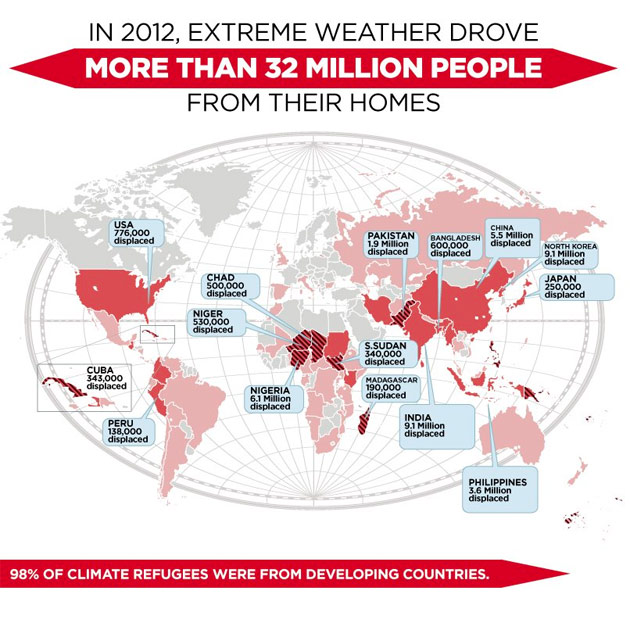
After war, persecution, and poverty, a new danger is now driving people away from their homes in their millions – climate change. (C) Tck Tck Tck

After war, persecution, and poverty, a new danger is now driving people away from their homes in their millions – climate change. (C) Tck Tck Tck

Although migration is an important issue with a multitude of consequences in both countries of origin and destination, the Committee on Migrant Workers, a group of experts who function in their individual capacity and not as representatives of the State of which they are citizens, has a low profile among what are called “UN Treaty Bodies” – the committees which review the reports of States which have ratified UN human rights conventions such as the International Covenant on Civil and Political Rights or the International Covenant on Economic, Social and Cultural Rights.

Since the great majority of States receiving migrants − Western Europe and North America – have not ratified the Convention on Migrant Workers, other ways have to be found within the UN system to look at migration issues. Thus has been created outside the UN system but in close cooperation with the UN, the Global Forum on Migration and Development and the Global Migration Group to address the opportunities and challenges of international migration. Within the UN, there was the recent, October 2013 “High-level Dialogue on International Migration and Development”.

In 2013 the Conservative-led Government of the United Kingdom publicly called on undocumented migrants to “go home or face arrest”, a move that was basically inhumane and completely out of place. ( (C) Socialist Party of Great Britain)

In 2013 the Conservative-led Government of the United Kingdom publicly called on undocumented migrants to “go home or face arrest”, a move that was basically inhumane and completely out of place. (C) Socialist Party of Great Britain)

The Governments at the Dialogue unanimously adopted a Declaration (A/68/L.5) calling for greater cooperation to address the challenges of irregular migration and to facilitate safe, orderly and regular migration. The Declaration also emphasized the need to respect the human rights of migrants and to promote international labor standards. The Declaration strongly condemns manifestations of racism and intolerance and stresses the need to improve public perceptions of migrants.

UN conferences and such dialogues or forums serve as a magnet, pulling Governments to agree to higher ideals and standards collectively than they would proclaim individually. This is not only hypocrisy − though there is certainly an element of hypocrisy as Governments have no plans to put these aims into practice. Rather it is a sort of “collective unconscious” of Government representatives who have a vision of an emerging world society based on justice and peace.


In 2010 two French singers, Stanislas and Mike Ibrahim, released a song entitled “Tu verras en France” (“You’ll see in France”). In this song, the two young men call for attention to the situation of migrants who leave their home countries hoping to find a better life in France but end up undocumented and living in extreme poverty, constantly having to run from the police if they don’t want to end up in jail or sent back to their country of origin.


The role of nongovernmental organizations is to remind constantly Government representatives that it is they who have written the text and voted for it without voicing reservations. Numerous States which ratified the International Convention on Migrant Workers made reservations limiting the application of the Convention on their territory. Thus, the Declaration of the High-level Dialogue was not written by the Association of World Citizens but by Government diplomats.

The Declaration is a strong text and covers most of the important issues, including human mobility as a key factor for sustainable development, the role of women and girls who represent nearly half of all migrants, the need to protect the rights of migrant children and the role of remittances to families.

The Declaration merits to be better known and widely quoted in the on-going discussions and debates on migration policies and practices.

Prof. René Wadlow is President of the Association of World Citizens.
“A Living Thing is Born”

In Being a World Citizen, Conflict Resolution, Human Development, International Justice, The Search for Peace, United Nations, World Law on November 15, 2014 at 4:18 PM

“A LIVING THING IS BORN”
by René Wadlow


November 15, 1920 – The First Assembly of the League of Nations, Geneva


“A general association of nations must be formed under specific covenants for the purpose of affording mutual guarantees of political independence and territorial integrity to great and small States alike.” President Woodrow Wilson. The last of the fourteen points in which he set out in January 1918 the Allied war aims.

November 15 marks the anniversary of the first session of the Assembly of the League of Nations. Representatives of 44 States entered La Salle de la Réformation in central Geneva. The Salle had been built originally as a meeting place for Protestant refugees from France and Italy who needed a place of worship and a place for discussions and welfare. In the large hall, there was Léon Bourgeois, the oldest delegate and a long-time French worker for peace. Ignace Paderewski headed the Polish delegation in a room where he had given piano concerts. There was Lord Robert Cecil, who with Jan Christian Smuts of South Africa was a principle author of the League Covenant. There were delegates from South Africa and India which had “dominion status” but were not yet fully independent.

Significant were the countries not represented: the USA, the USSR, Germany, Austria and Hungary − all of whom had participated in parts of the First World War. Woodrow Wilson had welcomed the birth of the League of Nations: “A living thing is born.” Unfortunately, the League ran into difficulties from the start. The United States refused to join; too long a time elapsed before Germany was admitted or the USSR asked to join. The legacy of the First World War, codified in the Versailles Treaty, upset both the political and economic climate: huge reparations due by Germany, the payment of large debts by the Allies to the US, monetary collapse in several countries and economic protectionism rampant. All this contributed to the Great Depression of the 1930s.

The greatest trouble, however, was the mentality of the officials in national foreign ministries and war offices who were thinking in terms of the balance of power and who could not bring themselves to face new challenges. Nor was there among the general public a sense of global citizenship, of world loyalty which might have influenced government leaders in a more positive direction. Even today, as Brian Urquhart has said of the United Nations (UN), “There has yet to emerge, on the international scene, a great combined popular constituency to insist on the necessity of a respected central order and an orderly process of law and the keeping of peace.” However, there were real contributions of the League to the development of world institutions. The UN’s structure is that of the League − only the names have been changed: The League Assembly became the General Assembly, the League Council became the Security Council, the Mandates Commission became the Trusteeship Council.

A crucial contribution was the creation of an impartial civil service responsible only to the head of the organization under the obligation not to accept instructions from any government or outside authority. The League created a high quality staff under the direction of the first Secretary-General, Sir Eric Drummond, who served from the start until 1933.

The League also provided the starting point for future work on refugees, drug control, health and agriculture through its close cooperation with the International Institute of Agriculture set up in Rome. The International Labor Organization functioned alongside the League, its budget being voted by the League Assembly.

Looking back, we can mark the progress not only of the institutions but also the persons who shape them. A new breed of international civil servants are evolving within world organizations and non-governmental organizations active within the UN system to make this earth a true home for humanity. They have dedicated themselves to the same tasks that the League began but left unfinished.

Prof. René Wadlow is President of the Association of World Citizens.

The Open Conspiracy for Peace

In Being a World Citizen, Conflict Resolution, Human Development, Introductory, The Search for Peace on September 21, 2014 at 2:26 AM

THE OPEN CONSPIRACY FOR PEACE

By René Wadlow

Behind the short-sighted governments that divide and mismanage human affairs, a real force for world unity and order exists and grows.”

H. G. Wells, A Short History of the World, 1943.

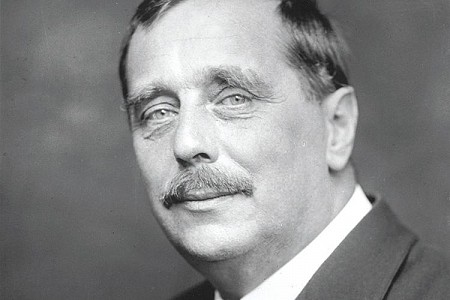
September 21 is the United Nations (UN)-designated World Day of Peace. It is also the anniversary of the birth of Herbert George Wells, usually known as just H. G. Wells.[i]

From the publication of The Time Machine in 1895 to his death in 1946, Wells ‘bestrode his world like a colossus’. He was a creator of modern science fiction, a pioneer of women’s rights (though he treated some badly in his many love affairs), a journalist, historian and novelist. Above all, he was a social thinker devoted to peace and a stable world order. It is this last aspect of his writing that makes his birth anniversary and the World Day of Peace appropriate.[ii]

Wells first studied biology under Thomas H. Huxley, the leading Darwinian of Victorian times, and came to see the ethical principles underlying humanity’s social systems as being rooted in the evolutionary process and therefore having the potential for onward development. Just as there was one major factor in biological progress − natural selection − so in social progress, there was one major factor − the quality of enlightened thought.

As he wrote, “However urgent things may seem, a great mental renascence must precede any effectual reorganization of the world. A systematic development and a systematic application of the sciences of human relationship, of personal and group psychology, of financial and economic sciences, and of education − sciences still in their infancy − is required. Narrow and obsolete, dead and dying moral and political ideas have to be replaced by a clearer and simpler conception of the common origins and destinies of our kind.”

"If we don't end war, war will end us." H. G. Wells.

“If we don’t end war, war will end us.”
H. G. Wells.

Wells was critical of democracy as being too slow and always tending toward the middle of the road on important issues. In 1928, he tried to alert to new dangers and possibilities by proposing an “open conspiracy” − an elite group of pioneer world citizens who would organize to move humanity forward[iii]. The Open Conspiracy was his organizing manual for the diverse constituencies of globally-minded citizens to bring sanity to the organizing of human affairs.

Wells clearly foresaw the need for a re-organization of the economic affairs of humanity. “Certain things, the ocean, the air, rare wild animals must be the collective property of all humankind and cannot be altogether safe until they are so regarded and until some concrete body exists to exercise these proprietary rights … the raw material of the earth should be for all.”

Some progress has been made in the identification of endangered species, and a variety of international conventions have at least slowed the despoliation of an amount of our natural heritage. Yet the ongoing destruction of forests, over-exploitation of the oceans as well as other signs of the environmental crisis are constant reminders of how much distance is left to travel.

Wells was harshly critical of Marxist theory and of the Communist rule of Stalin in the USSR. Thus he contrasts his “open conspiracy” with the closed conspiracies and vanguard approach of Lenin whom he had met in 1920. He was also highly opposed to Fascism and its closed conspiracies. The “open conspiracy” is a project for every manner of person once an individual has developed a ‘world consciousness’, though Wells was himself very Eurocentric in his world outlook.

He summed up his views as a race between education for world citizenship and catastrophe − a task or bold and creative minds.

Prof. René Wadlow is President of the Association of World Citizens.
[i] For a detailed biography see: David Lodge, A Man of Parts (New York, Viking, 436pp.)

[ii] For an overview of his political thinking see: John S. Partington. Building Cosmopolis: The Political thought of H.G. Wells Aldershot: Ashgate, 2003)

[iii] The Open Conspiracy was first published in 1928 and slightly revised published in 1933. The 1933 edition is republished much more recently with a strong introduction and notes in W. Warren Wagar. The Open Conspiracy/H.G. Wells on World Revolution (Westport, CT: Praeger Publishers, 151pp.).

Tribal Societies: Survival and Transformations

In Being a World Citizen, Cultural Bridges, Current Events, Environmental protection, Foundations for the New Humanism, Human Development, Human Rights, International Justice, Solidarity, The Search for Peace, United Nations, World Law on August 9, 2014 at 10:46 AM

TRIBAL SOCIETIES: SURVIVAL AND TRANSFORMATIONS

by René Wadlow


August 9 has been chosen by the UN General Assembly as the International Day of the World’s Indigenous Peoples.

As Paulo Freire has written, “While both humanization and dehumanization are real alternatives, only the first is man’s vocation. This vocation is constantly negated. It is hindered by injustice, exploitation, oppression, and the violence of the oppressors; it is affirmed by the yearning of the oppressed for freedom and justice, and by their struggle to recover their lost humanity.”

The world society is filled with many different types of collective actors: clans, tribes, castes, ethnic groups, cities, races, social classes, religious organizations, nation-states, multi-state alliances for military or economic goals, transnational corporations and associations. Each is the creation of individuals who have grouped together − or have been grouped together − to achieve goals considered common to the group’s members. All such collective groups have techniques to socialize new members to share the common values, to accept the ideology and beliefs of the tribe, the nation-state or the association. This socialization process goes so deeply that a person’s sense of identity becomes associated with these collective identity, the school, the army, the church, the political process and institutions − each propose a sense of group purpose.

Yet none of these groups is static and unchanging. Even clans and tribes whose members often consider that they have a common ancestor do, in fact, change. Tribes merge and divide; new identities are formed; new ancestors are created to justify the new groupings.

Some types of collective belonging are more easily left than others. One can move relatively easily from a city and take on the character, the values and the goals of a new city. Social mobility can produce changes in social class, and even caste lines become blurred. Persons change nationality or acquire new nationalities as frontiers are modified. Race is less easily changed but definitions of what constitutes a race do change. Ethnic identity is often associated with birth, but parents can belong to different ethnic communities, although the child is usually raised as belonging to the more dominant group. However the socialization process of group identity goes to the level of sub-conscious behavior and is not easily set aside.

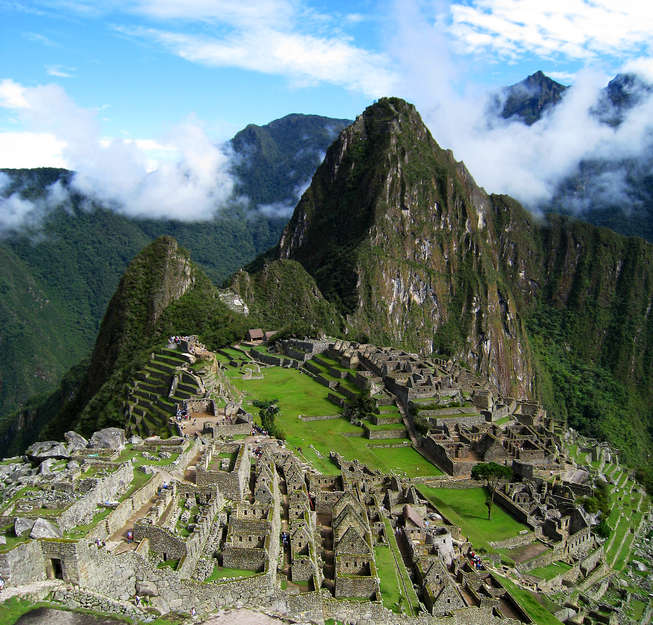
In Peru, some tribes remain uncontacted. Some live no more than 100 kms from the legendary mountain site of Machu Picchu. Today, however, the future of these tribes who live in the heartland of the ancient Inca Empire is threatened by a gas project. (C) Survival International

In Peru, some tribes remain uncontacted. Some live no more than 100 kms from the legendary mountain site of Machu Picchu. Today, however, the future of these tribes who live in the heartland of the ancient Inca Empire is threatened by a gas project. (C) Survival International

Today the nation-state claims to be the dominant collective association − setting the boundaries of loyalty and identity. The State claims the right to set out the major collective goals and values. Through laws, the State claims the right to set out the rules by which other collective entities may pursue their goals; through taxation the State draws the resources to further the goals it has set, and the State claims to have the only legitimate use of violence to punish those who break the laws and rules it has set.

There have always been tensions between these collective groups for their spheres of goal-setting and value-setting have overlapped. Thus there have been tensions between religious organizations and the State as to who should set what goals and the means to achieve these goals. There have also been tensions between economic classes and the State when it was felt that the State was dominated by another economic class who used its power within State institutions not for the good of all but only to advance class interests. The same is true of other collective units − races or ethnic groups − excluded from power within State institutions.

Today in many parts of the world those most excluded from power within State institutions are people living in alternative structures of authority, goal-setting and rule-making: persons living in tribal societies.

Tribal societies predated most of today’s nation-state. A tribal society usually has all the same functions as the nation-state: it sets out membership, loyalties, common goals and rules of behavior. It has sanctions against those breaking the laws of the tribe and has − or had − the monopoly of the legitimacy of using violence against those breaking the laws. Tribes are, in fact, more realistically “nation-states” if one defines nation as a common language, a common history and a common will to act together.

Thus because the tribal society is the closest in function to that of the nation-state, it is also the most feared. Tribes are institutions with whom it is difficult to compromise because they have the same pretensions as the State. It is relatively easy for a government to offer higher wages to the industrial worker or higher prices to the farmer as these social classes do not claim to carry out an alternative way the functions of the State. It is more of a challenge to the State’s image of its role to allow tribal societies to set out a land policy or fishing rights or trans-frontier trading rights because these activities conflict directly with the functions that the government has set for itself.

Thus there has been a long history of the State destroying alternative institutions of governance on its territory. The nation-states of Europe were built upon the ruins of feudal institutions; much of Asia on the destruction of local rulers. We see the pattern today as we watch traditional chiefs in Africa lose their authority to the heads of State and the military. In the Americas, many of the indigenous tribal societies were destroyed. Others were pushed into areas that those who controlled the government did not want − the “reservations” of the USA and Canada.

In Latin America and Asia, there is still active struggle going on between those trying to preserve their tribal institutions and homelands and the State which claims complete authority over all its territory and who often wished to put new settlers on tribal lands.

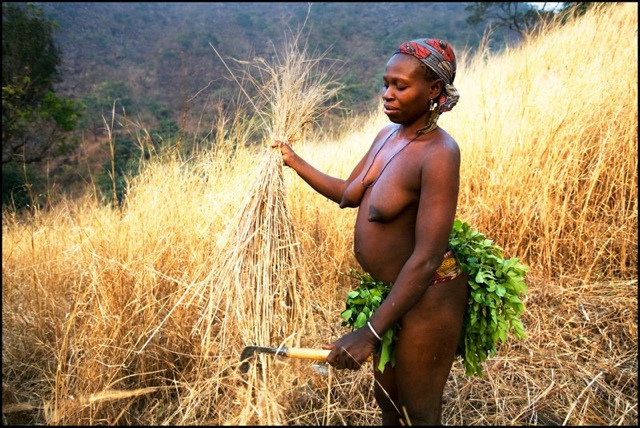
A Koma tribe woman at her farm. Alantika Mountain, Cameroon. (C) Middle Africa The Koma people are indigenous hill-dwelling people occupying the Alantika Mountains in northern Adamawa State, Nigeria and in Northern Cameroon (Faro National Park), near the border with Adamawa State.

A Koma tribe woman at her farm. Alantika Mountain, Cameroon. (C) Middle Africa
The Koma people are indigenous hill-dwelling people living in the Alantika Mountains in northern Adamawa State, Nigeria and in Northern Cameroon (Faro National Park), near the border with Adamawa State.

The amount of violence and suffering is considerable. Slowly, the fate of tribal societies has come to the attention of the United Nations (UN). The UN was set up to facilitate relations among nation-states. However, because wide-spread violations of individual rights had been one of the consequences of the Second World War, a Universal Declaration of Human Rights was drafted and proclaimed by the UN General Assembly in December 1948. The aim of the Declaration is to stress the rights of the individual − a natural consequence of the philosophy of the drafters. The rights of collective bodies which the drafters knew were also protected: trade unions, churches, professional associations. However tribal societies were not particularly thought of as one sees by reading the drafting negotiations. Thus, the Universal Declaration protects the rights of all individuals − including, of course, individuals living in tribal societies − but there is no direct recognition of the functions of tribal societies.

Thus for many years, indigenous and tribal peoples were the forgotten stepchildren of the UN system dealing with human rights. Yet they needed protection at least as much as those on whom the political limelight had focused. The situation began to change with the publication by the International Labor Organization’s study Indigenous Peoples: Living and working conditions of aboriginal populations in independent countries (1953). This was followed by the study by Jose Martinez Cobo Study of the Problem of Discrimination Against Indigenous Populations of the UN Commission on Human Rights (1986). While the Cobo study was being written, a Working Group on Indigenous Populations was set up under the then-existing Sub-Commission on Prevention of Discrimination and Protection of Minorities under the dynamic leadership of Erica-Irene Daes.

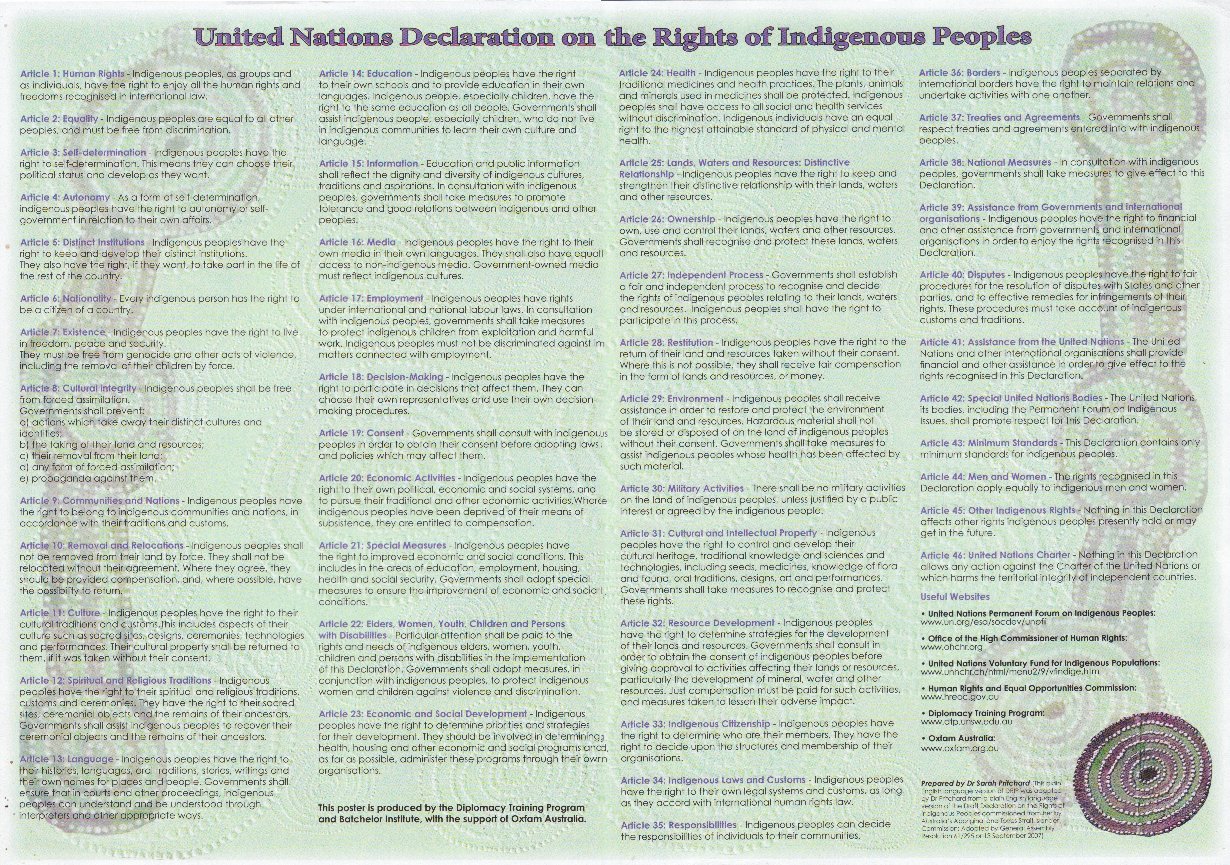
The United Nations Declaration on the Rights of Indigenous Peoples, a document that was long awaited by indigenous peoples and their defenders throughout the world.

The United Nations Declaration on the Rights of Indigenous Peoples, a document that was long awaited by indigenous peoples and their defenders throughout the world.

From the Working Group, with a good deal of interaction with the representatives of Nongovernmental Organizations and tribal groups came a United Nations Declaration on the Rights of Indigenous Peoples (A61/295) in 2007 after some 20 years of efforts. The Declaration sets out a useful framework for action. A UN Permanent Forum on Indigenous Issues has been created and meets once a year in New York. Conditions “on the ground” change slowly but there is now a UN institutions where issues can be raised. It is still the task of non-government organizations and tribal groups to continue to draw attention and to seek cooperation with governments.

See the useful Making the Declaration Work published by the International Work Group for Indigenous Affairs (Copenhagen) available on their website: www.iwgia.org.


********************************************************************


Prof. René Wadlow is President of the Association of World Citizens.
Attack on Gaza: Letter to the President of the UN Security Council

In Anticolonialism, Conflict Resolution, Cultural Bridges, Current Events, Human Development, Human Rights, International Justice, Middle East & North Africa, Solidarity, The Search for Peace, United Nations, War Crimes, World Law on July 15, 2014 at 7:24 PM

-- AWC-UN Geneva Logo --

ASSOCIATION OF WORLD CITIZENS

THE EXTERNAL RELATIONS DESK


July 14, 2014


H. E. Mr. Eugène-Richard Gasana

Ambassador, Permanent Representative

of the Republic of Rwanda

to the United Nations

President of the United Nations Security Council


Excellency:

The Association of World Citizens (AWC), a Nongovernmental Organization in Consultative Status with the United Nations Economic and Social Council (ECOSOC), has been concerned with the status of Gaza as well as the broader Israel-Palestine context.

The current manifestations of violence are part of a recurrent cycle of violence and counter-violence with which You are familiar.

The AWC believes that there must be a sharp break in this pattern of violence by creating institutions of security, development, and cooperation. Such a break requires more than the ceasefire proposed by the Security Council. The Association believes that longer-lasting measures must be undertaken that will allow new patterns of understanding and cooperation to be established.

In an earlier United Nations (UN) discussion of Gaza tensions, the AWC had proposed in a written statement to the Human Rights Council, “Human Rights in Gaza: Need for a Special Focus and Specific Policy Recommendations” (A/HRC/S-12/NGO-1, October 14, 2009; see attached copy) that a Gaza Development Authority be created – a transnational economic effort that would bring together the skills, knowledge and finance from Gaza, Israel, the Palestinian Authority on the West Bank, and Egypt to create conditions which would facilitate the entry of other partners.

Our proposal was obviously inspired by the Tennessee Valley Authority (TVA) of the “New Deal” in the USA. The TVA was a path-making measure to overcome the deep economic depression of the 1930s in the USA and the difficulties of cooperative action across state frontiers in the federal structure of the USA.

Today, the deep divisions in the Israel-Palestine area require more than economic measures – although economy and raising the standards of living remain important elements. Today, there should be a structure that provides security as well as economic advancement.

Therefore, the AWC would like to propose the creation of an International Temporary Transition Administration for Gaza that would promote security, stabilization, economic development, and institution building. Such a Transitional Administration would be limited in time from the start, perhaps five years.

Unlike the earlier UN Trusteeship agreements which followed upon the League of Nations mandate pattern, the Gaza Transitional Authority would welcome civil society cooperation from outside the area.

Such a Transitional Administration cannot be imposed. We believe that the Members of the Security Council can raise the possibility publicly, request a UN Secretariat study on what such a Transitional Administration would require, and encourage’ discussion among those most directly involved.

As Jean Monnet, one of the fathers of the European Common Market, had said, “Men take great decisions only when crisis stares them in the face.” We believe that the current violence is such a time of crisis. Our hope is that the Members of the Security Council are prepared to take great decisions.

Please accept, Excellency, the assurance of our highest consideration.


Prof. René Wadlow

President


Bernard Henry

External Relations Officer


World Citizens Highlight 2013 as the International Year of Water Cooperation

In Environmental protection, Human Development, Solidarity, United Nations, World Law on January 6, 2013 at 11:32 PM

WORLD CITIZENS HIGHLIGHT 2013 AS THE INTERNATIONAL YEAR OF WATER COOPERATION

By René Wadlow


The United Nations (UN) General Assembly by Resolution A/RES/65/154 has declared 2013 as the UN International Year of Water Cooperation with UNESCO as the lead agency for the Year. The objective of this International Year is to raise awareness both on the potential for increased cooperation and on the challenges facing water management in the light of the increase in demand for water access, allocation and services. The Year should build on the momentum created at the UN Conference on Sustainable Development (Rio plus 20) in which the Association of World Citizens played an active role.

The Association of World Citizens (AWC) has in the past stressed the important role of trans-boundary lake and river basins, including reservoirs of fresh water that move silently below the borders in underground aquifers. While there is much trans-frontier cooperation among States to which we can justly point as “Best Practices”, there are also trans-frontier tensions related to access to fresh water.

There are conflicts at the national level concerning the use of water in urban areas and water for irrigation within rural areas. The main causes of urban water conflicts are characterized by complex socio-economic and institutional issues related to urban water management. The debates about public water services versus private water suppliers are frequently associated with conflicts over water price and affordability. Likewise, the issue of centralization verses decentralization of water utilities is also discussed in the framework of institutional aspects of urban water management. A critical and interdisciplinary examination of the socio-economic and institutional aspects of national water management is important and one in which both government and civil society needs to be involved.


A Jewish proverb says, "No water, no life". Who wants to live a dried-up planet?

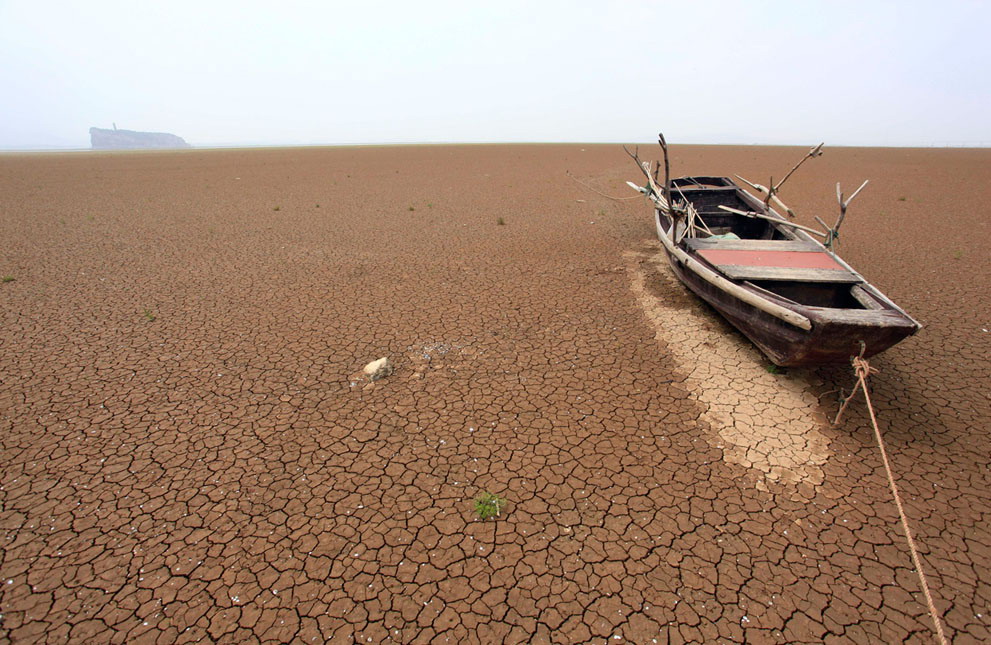
As the Jewish proverb goes, “No water, no life”. Who wants to live on a dried-up planet?


However, it is on trans-frontier cooperation that the AWC will put its emphasis as the dangers of trans-boundary conflicts over water use, the creation of dams, and modification of river courses are real world issues in which world citizens have a role to play.

In one of the early presentations of world citizen proposals on economic issues, Stringfellow Barr called attention to the multi-purpose efforts of the Tennessee Valley Authority (TVA) for water management, farming and industrial development. Citizens of the World (New York: Doubleday, 1952, 285pp.) Barr cited Herman Finer’s analysis The TVA: Lessons for International Application published by the ILO then displaced from Geneva by the Second World War (Montreal: International Labor Office, 1944). The TVA was proposed as a possible model for an Indus River Valley Authority and a Jordan Valley Authority. Both the Middle East and Asia continue to present real challenges for trans-frontier water management. The Association of World Citizens will propose during 2013 new avenues for action and multi-State cooperation.


Prof. René Wadlow is President of the Association of World Citizens.
World Citizens Call for Protection of Timbuktu, UNESCO Cultural Heritage Site and Center of Trans-Saharan Cultural History

In Africa, Conflict Resolution, Current Events, Human Development, The Search for Peace, World Law on April 8, 2012 at 8:47 PM

WORLD CITIZENS CALL FOR PROTECTION OF TIMBUKTU,

UNESCO CULTURAL HERITAGE SITE

AND CENTER OF TRANS-SAHARAN CULTURAL HISTORY


By René Wadlow


In an April 8, 2012 Appeal to Irina Bokova, Director-General of the United Nations Educational, Scientific and Cultural Organization (UNESCO), René Wadlow, President of the Association of World Citizens (AWC), welcomed UNESCO’s speedy effort to prevent damage to Timbuktu and called for negotiations between the Mouvement national de libération de l’Azawad (MNLA) and the Ansar Dine, a rival Tuareg group currently holding separate parts of the historic city.  The MNLA, led by its Secretary-General Bilal Ag Cherif, is the larger group and focuses on the creation of an independent state, Azawad, comprising northern Mali and possibly part of the Tuareg-inhabited area of northern Niger.

Ansar Dine, a smaller faction, is led by Ag Ghaley. It claims to want to create an Islamic state within all of Mali. Within or alongside Ansar Dine are Islamists from Algeria and Mauritania and probably other countries.  Some had been fighting in Libya and are heavily armed.  The aim of moving south toward non-Tuareg areas is, no doubt, unrealistic as Ansar Dine has no support in the more densely-populated south, inhabited by Bambara and Malenke ethnic groups. However, there could be an armed struggle for power between the MNLA and Ansar Dine in which the fragile, backed mud building of Timbuktu could be destroyed or badly damaged.

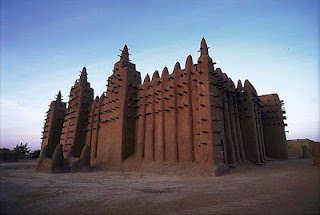
Timbuktu, a jewel of African culture and history, stands proud and tall in the desert sands of Mali.

While Timbuktu was once a metaphor for the middle of nowhere, it was an important city for the trans-Sahara trade from about 800 until 1591 when Moroccan troops destroyed the then Songhai Empire of Mali and Portugal and others developed a sea-going trade that largely replaced the trans-Sahara trade. (1). During the time that trade flourished, scholars and religious preachers were attracted to Timbuktu and Gao, the other trans-Sahara “port” and learning was highly developed.

The protection of Timbuktu’s cultural wealth may depend a good deal on the role of non-governmental organizations to facilitate negotiations between the MNLA the Ansar Dine and possible other armed groups. For the moment, the political situation in Mali is confused, and the protection of cultural sites in Timbuktu must not rank very high on the list of priorities.

From March 22 until April 6, 2012, a military group of young officers had taken control of government buildings in Bamako claiming that the government of President Amadou Touré was incompetent in the struggle against the Tuareg.  The coup was more or less led by Captain Amadou Sanogo, who had been trained by the United States (U. S.) Marine Corps, but Sanogo was probably acting on his own and not on behalf of the U. S. Marines.  The negative reaction to the coup was speedy.  Led by France, the former colonial power, the United Nations Security Council decided on April 4 to issue a President’s Statement (less strong than a resolution but on which all states must be in agreement) calling for a restoration of the civilian government.  It is not likely that the civilian-led government of President Touré will be restored.  Touré was himself a former general who had come to power in a coup, then governed in a fairly democratic way but without making many socio-economic advances.  The country now faces a food crisis due in part to drought and in part to the lack of improvements in the agricultural production and distribution system.

While the UN Security Council was meeting, the 15-member Economic Organization of West African States (ECOWAS) also met, calling for a return to a civilian government and closing the frontiers.  During the ECOWAS meeting, it was decided to activate the Anti-Terrorism Centre which is located at Tamanarasset in south Algeria and to place some 2000 soldiers on alert. Captain Amadou Sanogo saw the “handwriting on the wall” and agreed to turn over the government to the President of the National Assembly who is the constitutional replacement when the President is absent.

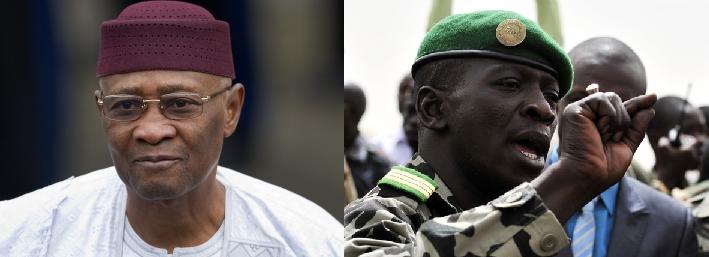
President Amadou Touré of Mali (left) and his rival, Captain Amadou Sanogo of the Mali military (right).

The states in the UN Security Council and in ECOWAS refused to recognize the creation of the Tuareg state of Azawad, so it is unlikely that they will provide any mediators to negotiate between MNLA and Ansar Dime or to facilitate the protection of historic sites. There is on the part of many governments a dislike of carving up existing countries in order to create new states. It took fighting from 1982 to 2005 for there to be an agreement to create the new state of South Sudan and for other African states to agree to the division.

The military in Bamako do not seem organized or willing to die to retake northern Mali, especially since most of the Mali military are from the Bambara ethnic group with little attachment to northern Mali in any case.

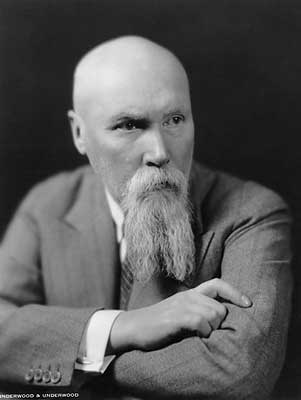
Much of the initiative for the protection of educational and cultural institutions has come from the NGO world and world-mined artists. Early efforts were undertaken by Nicholas Roerich (1874-1947) a Russian and world citizen.  Nicholas Roerich had lived through the First World War and the Russian Revolution and saw how armed conflict can destroy works of art and cultural institutions.  For Roerich, such institutions were irreplaceable and their destruction was a loss for all humanity.  Thus, he worked for the protection of works of art and institutions of culture in times of armed conflict. He envisaged a universally-accepted symbol that could be placed on educational institutions in the way that a red cross had become a widely-recognized symbol to protect medical institutions and medical workers.  Roerich proposed a “Banner of Peace” — three red circles representing the past, present, and future — that could be placed upon institutions and sites of culture and education to protect them in times of conflict.

Roerich mobilized artists and intellectuals in the 1920s for the establishment of this Banner of Peace.  Henry A. Wallace, the US Secretary of Agriculture and later Vice-President was an admirer of Roerich and helped to have an official treaty introducing the Banner of Peace — the Roerich Peace Pact — signed at the White House on April 15, 1935 by 21 States in a Pan-American Union ceremony. At the signing, Henry Wallace on behalf of the USA said “At no time has such an ideal been more needed. It is high time for the idealists who make the reality of tomorrow, to rally around such a symbol of beauty, science, education which runs across all national boundaries to strengthen all that we hold dear in our particular governments and customs. Its acceptance signifies the approach of a time when those who truly love their own nation will appreciate in addition the unique contribution of other nations and also do reverence to that common spiritual enterprise which draws together in one fellowship all artists, scientists, educators and truly religious of whatever faith.”

Nicolas Roerich (1874-1947), the man who opened the drive to make protection of works of art a full-fledged part of the law of armed conflict.

After the Second World War, UNESCO has continued the effort, and there have been additional conventions on the protection of cultural and educational bodies in times of conflict.  The most important is the 1954 Hague Convention for the Protection of Cultural Property in the Event of Armed Conflict. The spirit of the Hague Convention is clear and the protection of cultural and educational institutions should be a priority in conflicts among States or in civil wars even if no State recognizes Azawad.

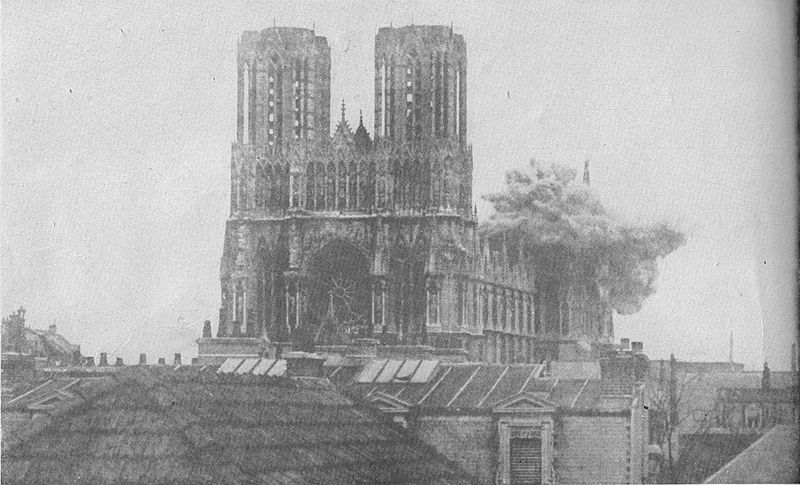
Therefore we, as World Citizens, all have a duty to articulate more clearly the crucial link among human rights standards, humanitarian law, and world law to protect educational and cultural institutions in times of conflict.  As Nicholas Roerich said in a presentation of his Pact “The world is striving toward peace in many ways, and everyone realizes in his heart that this constructive work is a true prophesy of the New Era.  We deplore the loss of libraries of Louvain and Oviedo and the irreplaceable beauty of the Cathedral of Rheims.  We remember the beautiful treasures of private collections which were lost during world calamities.  But we do not want to inscribe on these deeds any words of hatred. Let us simply say: Destroyed by human ignorance — rebuilt by human hope.

In 1914, a shell explosion at the Cathedral of Rheims in the early times of World War I.
Almost a century later, can the world possibly let Timbuktu become a "casualty of war" too?


René Wadlow is President and Chief Representative to the United Nations Office at Geneva of the Association of World Citizens.
 

(1)   See  Raymond Mauny Tableau géographique de l’Ouest africain au Moyen Age (Dakar, IFAN, 1961, 587 pp.)

In English : Horace Miner, The primitive city of Timbuctoo (Princeton: Princeton University Press, 1953, 297pp.)

Kunlabora Spirito kaj Ĝiaj Multaj Elmontriĝoj

In AWC Esperanto Division, Environmental protection, Human Development, Solidarity, The Search for Peace, United Nations, World Law on January 25, 2012 at 10:20 PM

KUNLABORA SPIRITO KAJ ĜIAJ MULTAJ ELMONTRIĜOJ

de René Wadlow

esperantigite de Bernard Henry


La Ĝenerala Asembleo de Unuiĝintaj Nacioj (UN), en ĝia Rezolucio A/RES/64/136, konsekris 2012 kiel Internacia Jaro por Kooperativoj, celante antaŭenmeti la larĝan rolon kiun kooperativoj ludas en ekologiema disvolvo kaj malapliigo de malriĉeco. Kiel diris UN-Ĝeneralsekretario Ban Ki-moon, “Kooperativoj estas rememorigilo al la internacia komunumo, ke eblas ja celi al kaj ekonomia kaj sociala respondeco”. La kooperativa movado ludas larĝan rolon en ambaŭ la produkado kaj la disdono de komercaĵoj kaj servoj tra la mondo. Kvankam malpli videblaj ol private posedataj, transnaciaj korporacioj (kiuj havas larĝajn reklambuĝetojn kaj tiel igas siajn komercaĵojn neĉirkaŭpaseblaj), kooperativoj estas grava parto de la monda ekonomio kaj meritas la atenton kiun la UN-jaro kapablas alporti (1).

Tamen, malantaŭ kooperativoj de produkado kaj disdono, loĝas unuavice “Kunlabora Spirito” kiu elmontriĝas laŭ multegaj manieroj, kiuj estas ĉiuj bazitaj sur kunlaboro sed ne ĉiuj nomiĝas “kooperativo”. Kunlabora Spirito substrekas renoviĝon, kunlaboron, mutualan helpon, kaj komunecon kiel “tagordo” je la surloka, nacia, kaj monda niveloj. Kunlaboro estas nepra neceso por la venontaj paŝoj en homa evoluo.

Kunlabora Spirito aperas en multaj formoj. Homoj tra la mondo pli kaj pli ekkonscias, ke ĉiuj el ni estas interligitaj kun aliaj personoj, per la aero kiujn ni spiras kaj akvosistemoj, la grundo kaj ĉiuj vivoformoj. Ju pli ni povas plipovigi unu la alian por ekflori sen noci al aliaj, des pli ni kreas mondan kunlaboran socion. Tial ĉiu ago de la individuo – aŭ neago – povas havi forserĉajn konsekvencojn ambaŭ por ĉiuj homoj en la mondo kaj por la naturmedio je kiu ni ĉiuj dependas.

Kunlabora Spirito evidentiĝas en la kreskaj zorgoj de Verda – ekologiema – Ekonomio. Eŭropo subtenas komercan kaj kunlaboran disvolvon de karbonmalpliigaj teknologioj kun miksaĵo de registara investado, impostosenpezoj, pruntedonoj kaj leĝoj. Ekzistas agnoskata neceso ŝirmi la naturmedion, investi en puran energion kaj krei daŭripovajn laborpostenojn, sed multo restas por fari en la tuta mondo.

Tra la mondo, ni ĉiuj estas enirantaj periodon de ŝanĝiĝo por kiu estas neniaj antaŭplanoj. Tial nepras ke ni scipovu kunan laboron. La formoj de kunlabora agado fontas el historiaj cirkonstancoj, surloka kulturo, kaj ekologiaj kondiĉoj. Tamen ekzistas komuna zorgo pri kunlabora uzo de naturvivrimedoj, komercaĵoj kaj servoj. Kunlabora agado loĝas en la koro de la ekonomia kaj politika alturno al mondnivela disvolvo de vivrimedoj kaj pli bona vivokvalito.

Ekzistas multaj formoj tradiciaj de kunlaboro, de mutuala helpo en periodoj de manko. 2012 devas utili kiel ŝanco alrigardi la multajn manierojn laŭ kiuj Kunlabora Spirito elmontriĝas en la mondo. Tial 2012 devas esti nia ĉefa interesocentro koncerne al la plifortigo de la konvinkoforto de Kunlabora Spirito.


(1)  Bv vidi la UN-retejon pri la Jaro: http://social.un.org/coopyear


Prof. René Wadlow estas Prezidanto kaj Ĉefreprezentanto ĉe UN en Ĝenevo de la Asocio de la Mondcivitanoj.

Bernard Henry estas la Oficisto pri Eksteraj Rilatoj de la Oficejo ĉe UN en Ĝenevo kaj la Ĝenerala Direktoro de la Esperanto-sekcio de la Asocio de la Mondcivitanoj.

The Cooperative Spirit and its Many Manifestations

In Human Development, Solidarity, The Search for Peace, United Nations, World Law on January 25, 2012 at 10:07 PM

THE COOPERATIVE SPIRIT AND ITS MANY MANIFESTATIONS

By René Wadlow


The United Nations (UN) General Assembly in Resolution A/RES/64/136 has designated 2012 as the International Year of Cooperatives in order to highlight the large role that cooperatives can play in ecologically-sound development and poverty reduction.  As Secretary-General Ban Ki-moon said “Cooperatives are a reminder to the international community that it is possible to pursue both economic viability and social responsibility.”  The cooperative movement plays a large role in both the production and the distribution of goods and services worldwide.  Although less visible than privately-owned trans-national corporations (which have large advertising budgets so their products become household names) cooperatives are an important part of the world economy and merit the attention that the UN Year may provide (1)

However, behind production and distribution cooperatives, there is first a “Cooperative Spirit”, and it manifests itself in a multitude of ways, all of which are based on cooperation but not all are called “cooperatives”. The Cooperative Spirit stresses renewal, cooperation, mutual help, and community as the ‘order of the day’ at the local, national, and world levels.  Cooperation is an absolute necessity for the next steps in human evolution.

The Cooperative Spirit takes many forms. People throughout the world are increasingly realizing that each of us is interconnected with every other person through the air we breathe and the systems of water, soils and life in all its forms.  The more we can empower one another to flourish without harming others, the more we create a cooperative world society. Therefore every action taken by an individual — or not taken — can have far-reaching consequences both for all the people of the world and upon the environment on which we all depend.

This Cooperative Spirit manifests itself in the growing concerns with a Green — ecologically-sound — Economy.  Europe has encouraged commercial and cooperative development of carbon-reducing technologies with a mix of government investment, tax facilities, loans and laws.  There is a recognized need to protect the environment, to invest in clean energy and to create lasting jobs, but much more needs to be done worldwide.

Throughout the world, we are all entering a period of change for which there is no blueprint.  Therefore it is essential that we learn to work together cooperatively.  Cooperative action takes its forms due to historical circumstances, local culture, and ecological conditions.  However, there is a common concern with the cooperative use of resources, goods and services.  Cooperative action is at the heart of an economic and political shift toward a worldwide development of livelihoods and greater quality of life.

There are many traditional forms of cooperation, of mutual help in times of need. 2012 should serve as an opportunity to look at the many ways in which the Cooperative Spirit manifests itself in the world. Thus 2012 can be our focus to strengthen the impact of the Cooperative Spirit.

(1)   See the UN website for the Year: http://social.un.org/coopyear


René Wadlow is President and Chief Representative to the United Nations, Geneva, of the Association of World Citizens.
June 17: A UN Emphasis on the Wise Use of Dry Lands

In Africa, Environmental protection, Human Development, Solidarity on June 17, 2011 at 7:30 PM

JUNE 17 : A UN EMPHASIS ON THE WISE USE OF DRY LANDS

By René Wadlow

 
The World Day to Combat Desertification, June 17 each year, was proclaimed by the United Nations (UN) General Assembly in resolution A/RES/49/1995. The day has been observed since 1995. However United Nations efforts on Desertification began in 1977 with the UN Conference on Desertification held in Nairobi. The desertification conference was convened by the UN General Assembly in the midst of a series of catastrophic droughts in the Sudano-Sahelian region of Africa. The conference was designed to be the centerpiece of a massive worldwide attack to arrest the spread of deserts or desert-like conditions not only in Africa south of the Sahara but wherever such conditions encroached on the livelihood of those who lived in the desert or in their destructive path. The history of the conference is vividly recalled by James Walls in his book Land, Men and Sand (New York: Macmillan, 1980).

At the conference, there was a call for the mobilization of human and financial resources to hold and then push back the advancing desert. “Attack” may have been the wrong word and “mobilization” too military a metaphor for the very inadequate measures taken later in the Sudano-Sahelian area. Today, in 2011, there are real possibilities of famine in West and East Africa on the edges of the desert. Niger and Mali and parts of Senegal and Chad in the Sahel belt are facing the consequences of serious drought as are parts of northern Kenya and Somalia.

The most dramatic case is that of Darfur, Sudan which partakes of the Sahel drought but which also faces a war in which the conflicts between pastoralists and settled agriculturalists have become politicized. It is estimated that 300,000 have been killed since the start of the war late in 2003. Some two and a half million people have been uprooted. The agricultural infrastructure of homes, barns and wells has been deliberately destroyed. It will be difficult and costly to repair this destruction. The Darfur conflict highlights the need for a broader approach to the analysis and interpretation of active and potential armed conflicts in the Sahel region. This analysis needs to take into consideration the impact of environmental scarcity and climate variation in complex situations.

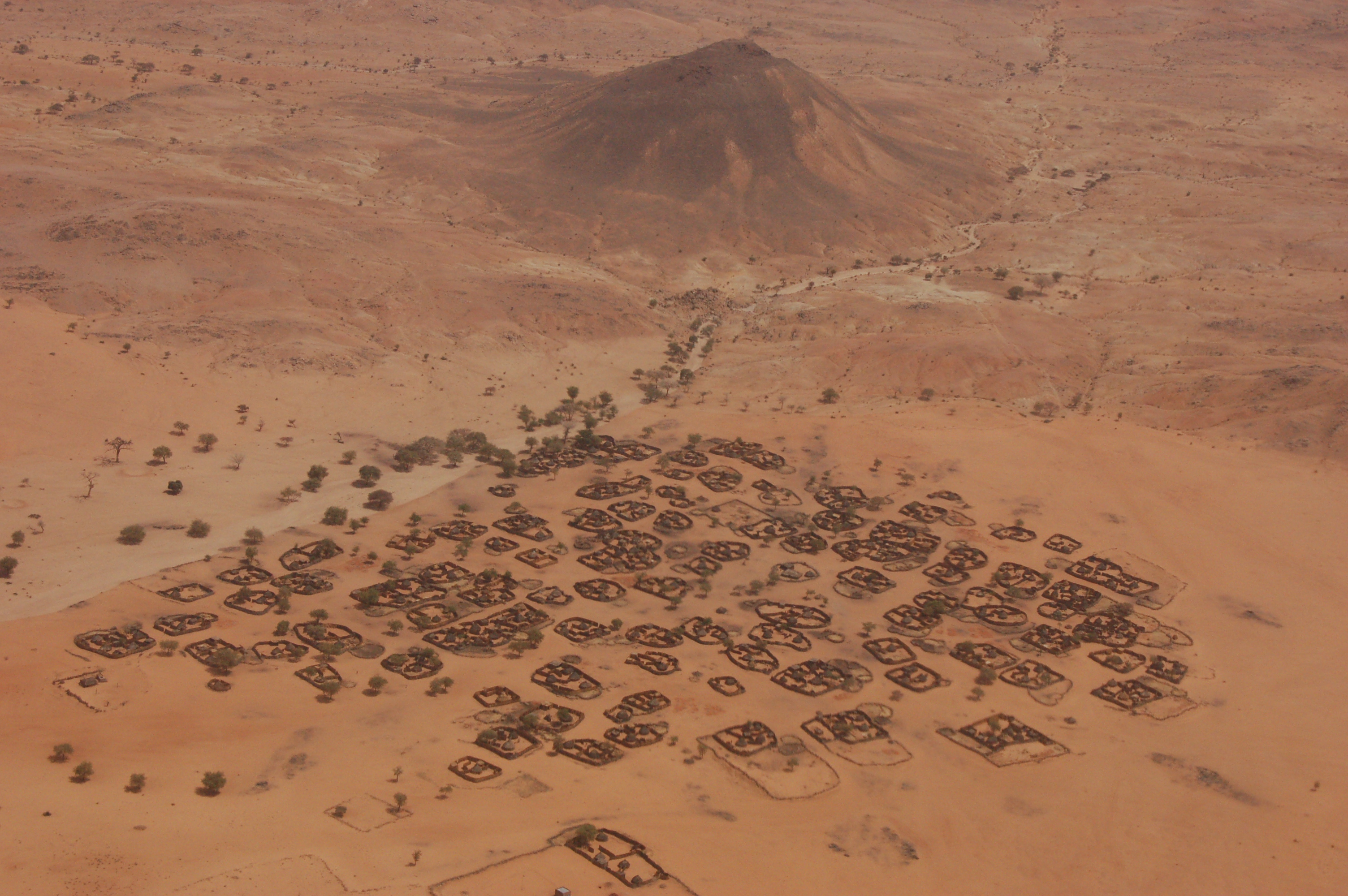
A settlement in the semi-desert north of El Fasher, Northern Darfur.

Earth is our common home, and therefore all, as world citizens, must organize to protect it. It is up to all of us concerned with ecologically-sound development to draw awareness to both the dangers and the promises of deserts. What is the core of the desertification process? The destruction of land that was once productive does not stem from mysterious and remorseless forces of nature but from the actions of humans. Desertification is a social phenomenon. The causes of dry land degradation include overgrazing, deforestation, agricultural mismanagement, fuel wood over-consumption, and industry and urbanization. Thus, by preventing land degradation and improving agricultural practices, action to combat desertification can lead to increased agricultural productivity and alleviate poverty. Humans are both the despoiler and the victim of the process. Increasingly, populations are eking out a livelihood on a dwindling resource, hemmed in by encroaching plantations and sedentary agriculturalists, by towns and roads. Pressure of population upon resources leads to tensions which can burst into violence as we see in Darfur and which spilled over into eastern Chad.

Desertification needs to be seen in a holistic way. If we see desertification only as aridity, we may miss areas of impact such as the humid tropics. We need to consider the special problems of water-logging, salinity or alkalinity of irrigation systems that destroy land each year. The value of UN-designated Days is the creation of a process of identifying major clusters of problems, bringing the best minds to bear on them so as to have a scientific and social substratum on which common political will can be found and from which action will follow.

Desertification is a plague that upsets the traditional balance between people, their habitat, and the socio-economic systems by which they live. Because desertification disturbs a region’s natural resource base, it promotes insecurity. Insecurity leads to strife. If allowed to degenerate, strife results in inter-clan feuding, civil war, cross-border raiding and military confrontation. Yet dry land communities have great resources that can be put to fighting poverty and desertification, provided they are properly empowered and supported.

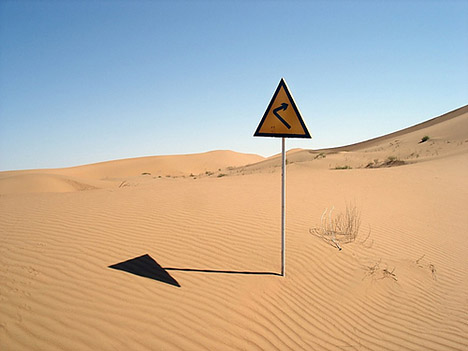
In China, desertification spreads 1,300 square miles per year.

Only with a lessening of insecurity can cultivators and pastoralists living in or near deserts turn their attention to adapting traditional systems. There can be no reversion to purely traditional systems. But for insecurity to abate, a lengthy process of conciliation must begin and forms of conflict resolution strengthened. People must be encouraged to understand that diversity is a crucial element of ecologically-sound development. Judicious resource management breeds security and an improved quality of life for everyone. We can see what efforts can be made to encourage reforestation and to slow the unwanted advances of deserts.

The contrast between widespread rural poverty and environmental degradation, on the one land, and the opportunities which can be created on a small scale through community empowerment, access to groundwater and sustainable land management, defines the ideals of the Day. The Day is not about fighting deserts, it is about reversing land degradation trends, improving living conditions and alleviating poverty in rural dry lands. Thus, the World Day to Combat Desertification can be a Day during which we can learn more of the lives of the people in and on the edge of the deserts.

Even trees can grow in the desert ... A sign of hope indeed. Now let's act on it.

Deserts can also have a positive image. There is a significant role in the literature and mythology of spirituality — the 40 years in the desert before entering the “Promised Land” of Israel, the 40 days in the desert before starting his mission for Jesus, the life in the desert of the early Christian church fathers. Today, there are an increasing number of spiritual retreats in the desert chosen for its silence and for the essential nature of the landscape. Thus, during this Day our emphasis must not be on “combat” but on wise and ecologically-sound use of dry lands.

René Wadlow is Senior Vice President and Chief Representative to the United Nations Office at Geneva of the Association of World Citizens.