The Official Blog of the

Archive for the ‘Europe’ Category

1914 : Aurait-on pu tenir en laisse les chiens de guerre ?

In Being a World Citizen, Conflict Resolution, Europe, The Search for Peace, World Law on July 14, 2014 at 10:14 PM

1914 : AURAIT-ON PU TENIR EN LAISSE LES CHIENS DE GUERRE ?

Par René Wadlow


Depuis 1890, l’éventualité d’une guerre flottait dans l’air, lorsqu’Otto von Bismarck fut remplacé au poste de Chancelier de Prusse. Il avait su faire preuve de fermeté au milieu du complexe d’alliances formé entre les puissances européennes et tenté de garder la Prusse hors d’aventures coloniales en Afrique qui n’auraient fait qu’accroître encore les rivalités avec la France et la Grande-Bretagne. Mais le jeune Kaiser, Guillaume II, le destitua en mars 1890. Le Kaiser ne fut pas long à se mettre à dos la Russie et à alarmer la Grande-Bretagne, en encourageant des ambitions coloniales et navales inédites, de telle sorte que, venue l’année 1914, la carte politique du monde était devenue pour l’essentiel une carte des possessions coloniales, des protectorats et des sphères d’influence économique des Grandes Puissances qui dominaient la scène internationale.

Les guerres de 1912 et 1913 dans les Balkans avaient montré que des guerres demeuraient possible, mais la plupart des dirigeants des Grandes Puissances avaient le sentiment qu’ils étaient en mesure de maintenir le statu quo à travers la diplomatie et au moyen de conférences. Dans La Grande Illusion (1908), Norman Angell avait mis au jour la futilité de la guerre d’un point de vue économique. Et pourtant, les nuages continuaient de s’amonceler, annonçant l’orage.

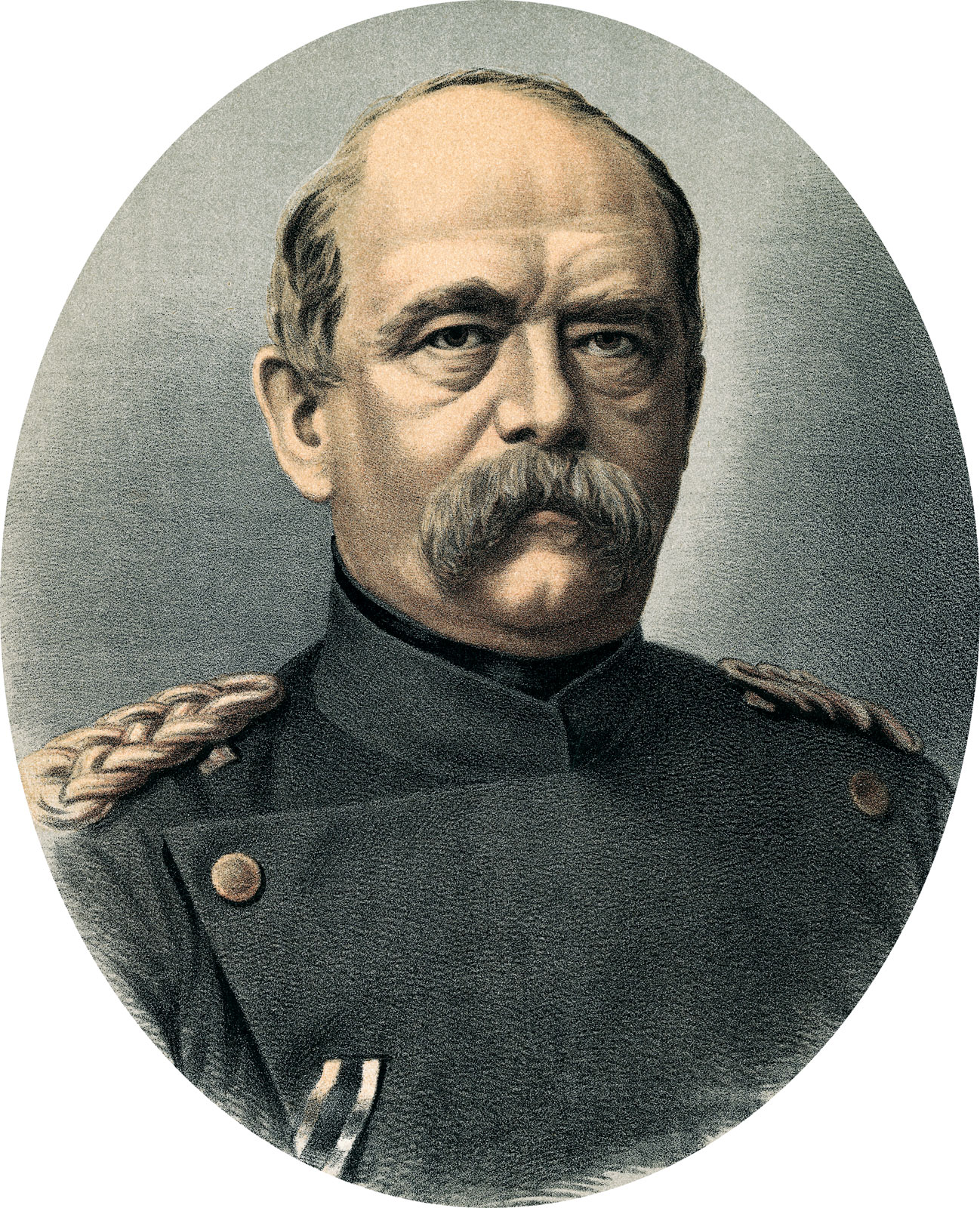
Otto Eduard Leopold von Bismarck (1815-1898), le premier chef de gouvernement de l'Empire allemand.

Otto Eduard Leopold von Bismarck (1815-1898), le premier chef de gouvernement de l’Empire allemand.

Si les dirigeants des Puissances Européennes étaient voués à aller de crise en crise, jusqu’à déclencher in fine une guerre, n’était-il rien que le peuple aurait pu faire pour enrayer les aspirations irréconciliables des gouvernements ? Un espoir que l’on avait à l’époque était que le mouvement ouvrier, mené par les socialistes, refuserait de faire la guerre à la classe ouvrière d’autres Etats. Depuis 1900, la croissance industrielle avait conduit à la création d’un mouvement ouvrier dans la plupart des pays hautement industrialisés – l’Allemagne, l’Angleterre, la France. Un lien entre ces mouvements aurait-il pu empêcher la guerre ?

Le 29 juin 1914, le Bureau de l’Internationale socialiste se réunit à Bruxelles sous la bannière « Guerre à la Guerre ! », avec des dirigeants socialistes d’Angleterre, de France, d’Allemagne et de Belgique. Les deux personnalités qui s’en détachaient étaient Keir Hardie, de Grande-Bretagne, et venant de France, Jean Jaurès.

Jean Jaurès (1859-1914) avait d’abord été professeur de philosophie, ancien élève de l’Ecole normale supérieure, l’institution française d’élite qui forme les enseignants des dernières années du second cycle et ceux des universités. Jaurès avait été le condisciple d’Henri Bergson, qui serait connu par la suite comme le plus grand philosophe de son temps. Jaurès avait été élu au Parlement français alors qu’il n’était âgé que de vingt-six ans ; en 1893, il avait défendu des mineurs du charbon dans sa circonscription du sud-ouest, dans le Tarn, et s’était ainsi forgé une réputation au niveau national.

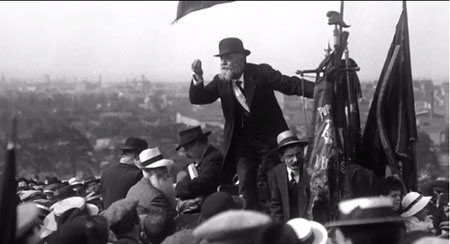
Jean Jaurès (1859-1914), ici au Pré Saint-Gervais (France) lors d'un meeting en 1913. L'homme politique avait été également le fondateur de la Ligue française des Droits de l'Homme et du journal L'Humanité.

Jean Jaurès (1859-1914), ici au Pré Saint-Gervais (France) lors d’un meeting en 1913.
L’homme politique avait été également le fondateur de la Ligue française des Droits de l’Homme et du journal L’Humanité.

Jaurès était un orateur hors pair, mû par un esprit humaniste dénué de tout dogmatisme, lequel allait l’amener à s’exprimer lors de meetings à travers tout le pays. N’étant en rien dogmatique, il avait la faculté de fédérer divers courants de pensée du réformisme social au sein d’un parti socialiste relativement unifié.

De plus en plus, l’incarnation à l’étranger du socialisme français, c’était Jaurès. Etudiant, il avait écrit sur les penseurs allemands, en particulier Fichte et Hegel, ce qui lui conférait une aisance particulière dans ses contacts avec les socialistes allemands.

L’idée d’une « grève générale internationale » au moment d’une éventuelle déclaration de guerre était l’une des idées en discussion dans les cercles socialistes en Angleterre. Cependant, aucun plan d’action formel n’avait été établi. Nombreux étaient les socialistes qui acceptaient l’esprit nationaliste étroit de leurs pays respectifs.

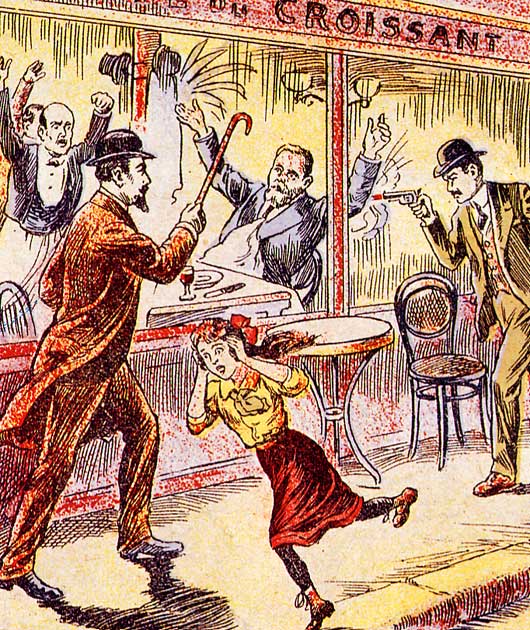
Deux jours après un meeting à Bruxelles, le 31 juillet 1914, de retour à Paris, assis dans un café, Jaurès fut abattu par un homme qui se disait nationaliste. Dans le style d’écriture violent de cette époque, les journaux de droite avaient appelé depuis un certain temps à la mort de Jaurès. Auparavant, Jaurès avait défendu le Capitaine Alfred Dreyfus, à l’occasion de ce qui avait été une ligne de fracture majeure dans la vie politique française, ce qui lui avait valu de nombreuses inimitiés à droite. Jaurès avait dit de Dreyfus qu’il était « un témoignage vivant des mensonges de l’armée, de la couardise politique, des crimes de l’autorité ».

Illustration de l'époque. Le 31 juillet 1914, Raoul Villain, âgé de vingt-neuf ans, tire sur Jaurès qui succombe à une hémorragie cérébrale.

Illustration de l’époque.
Le 31 juillet 1914, Raoul Villain, âgé de vingt-neuf ans, tire sur Jaurès qui succombe presque aussitôt à une hémorragie cérébrale.

Quelles qu’en aient été les motivations, le meurtre de Jaurès eut pour effet de réduire au silence une voix qui aurait pu porter dans l’appel à la retenue et à la raison, alors que les gouvernements se précipitaient vers une guerre qui n’avait de fondement que la peur qu’entretenait chacun de voir le camp adverse modifier les rapports de force irrémédiablement en sa propre faveur.


Le Professeur René Wadlow est Président et de l’Association of World Citizens.

Ukraine: The Dogs of the Cold War are Awakened

In Being a World Citizen, Conflict Resolution, Current Events, Democracy, Europe, Human Rights, International Justice, The former Soviet Union, The Search for Peace, United Nations, World Law on June 12, 2014 at 9:11 PM

UKRAINE: THE DOGS OF THE COLD WAR ARE AWAKENED

By René Wadlow


“Cry Havoc! And let slip the dogs of war!”

William Shakespeare, Julius Caesar


The dogs of the Cold War (1945-1990) had largely fallen asleep after the 1990 Summit Conference of the Organization for Security and Cooperation in Europe (OSCE) in Paris had put a formal end to the European aspects of the Cold War. A New Europe was the slogan of both governments and non-governmental currents that had been working for a Europe without its East-West divisions symbolized by the Berlin Wall.

Many of us had been involved in the April 1980 European Nuclear Disarmament Appeal, often shortened to END, of which the English historian E.P. Thompson was a leading spokesman. Mient Jan Faber of the Dutch Inter-Church Peace Council was the link to those working within church/religious groups on the same lines. Obviously, the level of arms − and thus disarmament − was not the only aspect of the moves necessary to move beyond the Cold War embodied in bureaucratic, and military-industrial forms.

There was a necessary ‘healing process’ − a need to remove the barbed wire in people’s minds and hearts.

The hope was that moving beyond the Cold War would become a citizens’ search for common projects, bringing together widening constituencies in a direct discourse beyond Cold War agendas and the media’s framing of the debates.

Many of us met in Prague in what was still Czechoslovakia in October 1990 for the creation of the Helsinki Citizens’ Assembly with an aim of a democratic integration of Europe. Vaclav Havel who had become Head of State spoke to the opening session on the power of acting from principle guided by our consciences to build a thoroughly new Europe undivided into blocs.

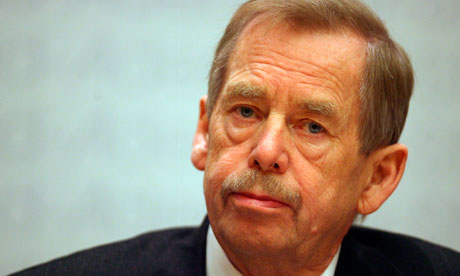
Vaclav Havel (1936-2011), the Czechoslovakian dissident playwright who in 1989 led the country's 'Velvet Revolution', eventually becoming President of Czechoslovakia. From 1992 to 2003 Havel was President of the Czech Republic after Czechoslovakia was eventually dissolved.

Vaclav Havel (1936-2011), the Czechoslovakian dissident playwright who in 1989 led the country’s ‘Velvet Revolution’, eventually becoming President of Czechoslovakia. From 1992 to 2003 Havel was President of the Czech Republic after Czechoslovakia was dissolved. (C) John Macdougall/AFP/Getty Images

“Helsinki Citizens” had been chosen by the organizers as the name because Helsinki had been the city which saw the formal start of the governmental process in 1975 leading first to a certain stabilization of the European Cold War structure and progressively to tension-reduction under the title of “détente”. Since much of the governmental detente seemed to be aimed only at making a more stable status quo, citizen activists spoke of “detente from below”, as going beyond the current structures.

The visions of a better world differed among peace, green, and human rights groups. However all agreed that the future forms of Europe was beyond the current status quo.

I had gone to Prague already concerned with ethnic-nationalities tensions. These tensions were colored by the Cold War but also had non-Cold War roots as seen in the Nagorno-Karabakh conflict within the then USSR. Through contacts in Geneva, I had become concerned by Nagorno-Karabakh and thought that good faith negotiations could lead to a resolution of the conflict. I was also concerned with the growing tensions in Yugoslavia. My paper read at the Prague conference “Future of Europe” was published in the Belgrade Review of International Affairs in December 1990.

Since 1990, the conflicts linked to the breakup of Yugoslavia, and the conflicts of Abkhazia-South Ossetia-Georgia, and Transnistra-Moldova all confirm my analysis that the key problem of our time is the manifestation of narrow nationalism. This narrow nationalist ideology must be countered by a strong cosmopolitan-world citizen ideology and practice.

The hope at Prague in 1990 was to build a pan-European movement participating in public debates, offering opinions and discussing alternatives in each country but also able to come together and act in a conflict resolution way in times of strong tensions and armed conflicts. There were a few efforts of the Helsinki groups during the Yugoslav conflicts, but they were not coordinated nor of massive size. I had participated in some of these undertakings at the UN in Geneva when the conference on Yugoslavia was in session there.

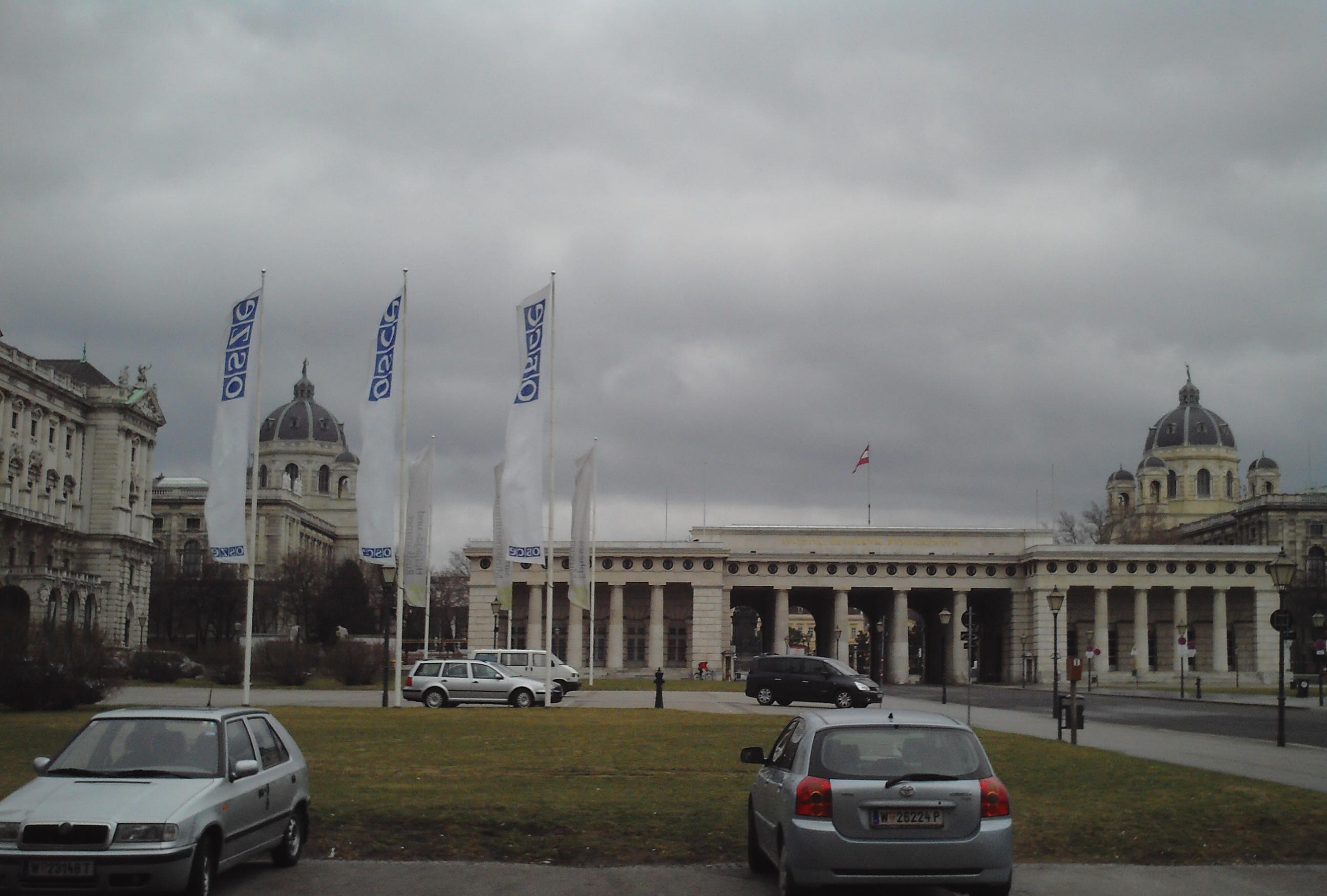
The Hofburg Palace in Vienna, Austria, which houses the Headquarters of the Organization for Security and Cooperation in Europe. (C) Bernard Henry

The Hofburg Palace in Vienna, Austria, which houses the Headquarters of the Organization for Security and Cooperation in Europe. (C) Bernard Henry/AWC

Since 1990, we have seen the rise in some European countries of hard line nationalist groups − often Right wing and some with Neo-Fascist aspects. This rise was illustrated by the May 25, 2014 elections to the European Parliament. The entry of an additional number of narrow nationalists will not have much impact on the way the European Parliament operates, but it will give the nationalists a media platform and a degree of legitimacy in their home country. There has not been a significant rise in cosmopolitan-world citizen movements, although cosmopolitanism as an intellectual framework has become increasingly common.

Without a well-organized movement of pan-European peace-green-human rights movements, “Europe from Below” has been unable to act in the Ukraine crisis. Individual governments, in particular Russia and the USA, have taken a highly visible role. The media in both countries dusted off the Cold War vocabulary and political analysis.

Talk of a “New Cold War” has been common. The OSCE − with Switzerland as President for 2014 − has called for restraint and negotiations. There has been no equivalent “high profile” efforts on the part of non-governmental groups. Today, there is no Vaclav Havel to serve as a bridge of respect among both governments and non-governmental movements. Certainly, the dogs of the Cold War have awakened to remind us that they are still there. In addition, new nationalist, and authoritarian tendencies are emerging. Although these nationalist movements are sometimes led by comic figures, they need to be taken seriously.

Counter voices also need to awaken, and the ability for nongovernmental conflict resolution groups to act must be strengthened.


Prof. René Wadlow is President of the Association of World Citizens.

Ukraine: What Future for ‘Self-Rule’?

In Conflict Resolution, Current Events, Europe, The former Soviet Union, The Search for Peace on May 24, 2014 at 7:59 PM

UKRAINE: WHAT FUTURE FOR “SELF-RULE”?

By René Wadlow


On the eve of the election for President in Ukraine, the heated tensions among factions within the country and between the Russian Federation, the European Union (EU) and the USA seem to be cooling. Talk of a new ‘Cold War’, of economic sanctions, of Russian or NATO imperialism is lessening. More rational discussion on the structures of the Ukrainian State and its relations with other countries now seems possible.

Ukraine faces real internal problems: political, economic and social. There is a need for dialogue, trust-building, and reconciliation within the country − all stepping stones to stable internal peace. The earlier situation in Ukraine did not lend itself to calm considerations of basic orientations or for compromises.

In an April 15 report, the Office of the United Nations (UN) High Commissioner for Human Rights had warned that “Misinformation, propaganda and incitement to hatred need be urgently countered in Ukraine to avoid further escalation of tensions in the country… It is critical for the Government to prioritize respect for diversity, inclusiveness and equal participation of all − including minorities in Ukraine.”

One possibility of lowering tensions on a longer-term basis is to start serious discussions on a federal-decentralized government structure that would not divide the country but would foster local and regional autonomy. World Citizens who have a long history of reflection on federalist approaches as elements of conflict resolution have warned against simplified concepts in the Ukraine discussions. Federalism is not a first step to the disintegration of the Ukraine. But it is not a “magic solution” either.

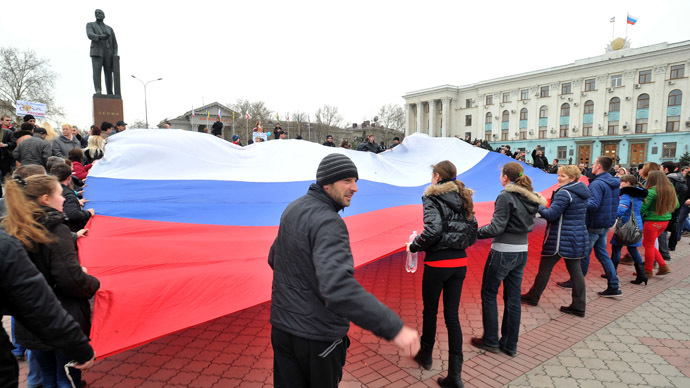
When Ukraine declared independence from the Soviet Union in late 1991 the country's Russian community did not have any objections. However, since the eviction of President Viktor Yanukovych in February 2014, oddly enough, many of Ukraine's Russians have risen up against Kiev and demanded reunification with Russia. (C) (AFP / Genya Savilov)

When Ukraine declared independence from the Soviet Union in late 1991 the country’s Russian community did not express any objections. However, since the eviction of President Viktor Yanukovych in February 2014, oddly enough, many of Ukraine’s Russians have risen up against Kiev and demanded reunification with Russia. (C) (AFP / Genya Savilov)

Factions in eastern Ukraine decided to hold a referendum on Sunday 11 May in a hastily organized way, with little if any public debate on the consequences of the referendum and strong pressure to vote “yes” on the only option presented. The central government, the EU and the USA have all indicated that they considered the referendum and its results as not valid − in fact, illegal. President Vladimir Putin of the Russian Federation had suggested on the eve of the referendum that it be postponed or not held. However, after the referendum, the Russian government indicated that the referendum showed the “will of the people” and that Russia would abide by the results.

The referendum was organized in only part of eastern Ukraine, in what is newly proclaimed as the Donetsk People’s Republic and the Luhansk People’s Republic. The question posed concerned “yes” or “no” on the Russian word samostoyatelnost which can be translated as “self rule”. Since there had been no real public discussion, the term could mean − and did mean − different things to different people − everything from greater autonomy within the existing constitution of Ukraine but with a greater recognition of Russian language and culture, autonomy within a to-be-created new Ukrainian federation, an independent state along the lines of Abkhazia, formerly part of neighboring Georgia, or a willingness to join the Russian Federation on the model of Crimea. People were discouraged from voting “no” and few did.

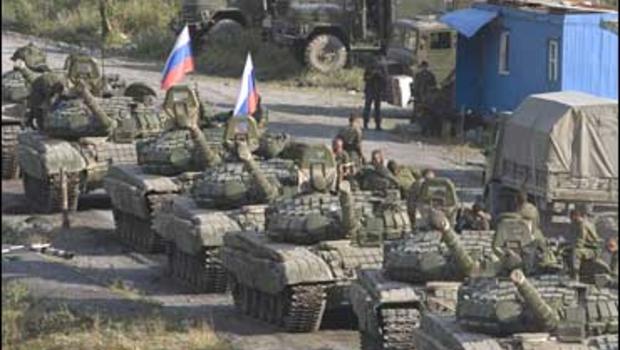
Since Russia invaded Georgia in 2008, leading to the declaration of independence of the two Georgian provinces of Abkhazia and South Ossetia as separate republics, Moscow has made all efforts to assert regional leadership and pressure all neighboring countries into recognizing local Russians as its own nationals. (AP Photo/Mikhail Metzel)

Since Russia’s invasion of Georgia in 2008, leading to the declaration of independence of the two Georgian provinces of Abkhazia and South Ossetia as separate republics, Moscow has exerted substantial political and military pressure to assert regional leadership over Russians both at home and abroad and have all neighboring countries recognize local Russians as Moscow’s own nationals. (AP Photo/Mikhail Metzel)

Thus one possible model for the Donetsk and Luthansk People’s Republics are the states created earlier in Republics at the time of the breakup of the Soviet Union: Abkhazia and South Ossetia in Georgia, Transnistra in Moldova, Nagorno-Karabagh still torn between Armenia and Azerbaijan, and the ill-fated Chechen Republic. One reason that President Putin suggested not having a referendum in Ukraine may have been his fears that the pattern of holding an unauthorized referendum would spread. There are a good number of peoples in Russia who are unhappy with the current constitutional status of their area and could look to creating a referendum to express their wishes. “You know where things start but not where they end.”[i]

With the lowering of tensions, the options of creating an independent State on the model of Transnistra or of integration into Russia on the Crimea pattern seems to be ever less likely. Thus the option of greater autonomy under the existing constitution by Parliamentary action seems the more likely, though there may be demands for a constitutional convention and the institutionalizing of autonomy in a new constitution.

The Ukraine crisis showed how easily the dogs of Cold War can be awakened from their sleep. The military, intelligence services and ad hoc armed groups are never far away. While many of us who had worked for better relations between the USA-USSR, NATO-Warsaw Pact during the 1960-1990 period have often gone on to other conflict resolution issues such as the conflicts in the wider Middle East and Africa, the Ukraine events point out dramatically that there is still work to do in Europe.


Prof. René Wadlow is President and Chief Representative to the United Nations in Geneva of the Association of World Citizens.
 

[i] For a useful and detailed history of the creation and current status of Abkhazia and South Ossetia see: George Hewitt Discordant Neighbors: A Reassessment of the Georgian-Abkhazian and Georgian-South Ossetian Conflicts (Leiden-Boston: Brill, 2013, 389pp.)

World Citizens Welcome Serious Considerations of Federalist Government Structures for Ukraine, but Warn Against Simplified Concepts

In Conflict Resolution, Cultural Bridges, Current Events, Europe, The former Soviet Union, The Search for Peace on April 16, 2014 at 2:22 PM

WORLD CITIZENS WELCOME SERIOUS CONSIDERATIONS OF FEDERALIST GOVERNMENT STRUCTURES FOR UKRAINE, BUT WARN AGAINST SIMPLIFIED CONCEPTS

-- AWC-UN Geneva Logo --

The Association of World Citizens (AWC), in an April 14, 2014 message to the Secretary-General of the Organization for Security and Cooperation in Europe (OSCE), welcomed the serious consideration of federalist government structures for Ukraine being proposed both by the current President of Ukraine in an April 13 statement and by the authorities of the Russian Federation.

As Professor René Wadlow, President of the AWC, pointed out in the message, such proposals can have a positive impact to lessen the growing tensions both within Ukraine and among the Russian Federation, Ukraine, and the European Union. The President recalled that World Citizens have always stressed that government structures should be as close as possible to the people so that their views can have a direct impact on government decisions. Federalist forms of government can facilitate the balance between the need for larger government units for policy making and units close to local communities so that those impacted are able to influence policy.

The current tensions, first within the Ukraine, followed by the change of status of Crimea and its integration into the Russian Federation, the massing of Russian troops on the Ukraine frontier with Russia, and the violent demonstrations within parts of Ukraine have created the most serious European tensions since the conflicts related to the breakup of the Yugoslav federation.

Efforts of both governments and nongovernmental organizations (NGOs) must be undertaken to lessen tensions and to create opportunities for creative dialogue. Proposals for new governmental forms within Ukraine offer a possibility for such creative dialogue.

The current tensions in Ukraine highlight two crucial political and economic orientations possible for Ukraine. On one side, there is a growing but not clearly defined revival of an economic and strategic zone with the Russian Federation as the main motor. This possible “Eurasian Customs Union” could include Russia, Belarus, Kazakhstan, Armenia, Azerbaijan and perhaps Moldova and Ukraine. Such a Eurasian association would probably develop into more than a common market. However, the full structure and tasks of such a Eurasian association have not been fully discussed publicly.

On the other side is the European Union (EU) with which Ukraine has already some treaty agreements. The refusal by the then President of Ukraine, Viktor Yanukovich, to sign a more detailed plan of action with the EU was the reason or a pretext for the start of the massive demonstrations in Kiev.

The current situation in Ukraine does not lead itself to calm considerations of basic orientations or for compromises. Both the EU and Russian diplomacy will weigh in the Ukraine decisions, and the USA and Chinese diplomacy is not likely to be absent.

World Citizens who have a long history of reflection on federalist approaches, warn against simplified concepts in the Ukraine discussions. Federalism is not a first-step to the disintegration of the Ukraine. But it is not a “magic solution” either. Government structures are closely related to the aims which people wish to achieve. The aims of the Ukrainians are multiple. Dialogue and open discussion is needed so that these aims are seen more clearly and then structures created to facilitate these aims. Those outside Ukraine, both governments and NGOs must facilitate discussions of aims and structures so that common interests may be found and current tensions reduced.

The day that Ukraine ended the Cold War

In Current Events, Democracy, Europe, The former Soviet Union on December 14, 2013 at 10:38 AM

THE DAY THAT UKRAINE ENDED THE COLD WAR

By Bernard Henry

Along with Thailand, Ukraine has gotten the attention of the world’s media due to the nonviolent demonstrations for democracy in its capital lately. The Ukrainian President, Viktor Yanukovych, once Ukraine’s Prime Minister under authoritarian leader Leonid Kuchma, has come under fire for turning his back on the European Union and favoring instead closer ties with Moscow.

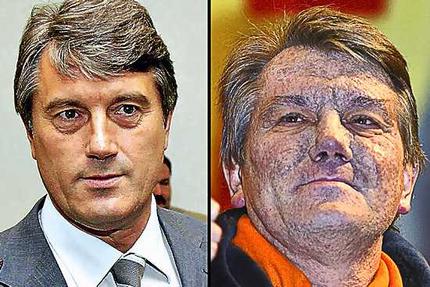
In 2004 Yanukovych had been opposed in the presidential ballot by Viktor Yushchenko, who had previously been Prime Minister too as the leader of an opposition alliance. With his face ravaged by an attempt at dioxin poisoning by agents of the Kuchma regime, Yushchenko was defeated at the polls but persistent allegations of fraud in favor of the Yanukovych camp prompted the Ukrainian people to take to the streets in what became known as the Orange Revolution. After an unprecedented three rounds of vote, Yushchenko finally won the presidency by a slight margin. Sworn in as President in January 2005, Yushchenko gradually turned his presidency into a mere sequence of revenge against both his opponents and his Orange Revolution allies, such as his iconic one-time Prime Minister Yulia Tymoshenko. Eventually, it was Yanukovych who got his revenge when in 2010 Yushchenko was shut out in the first round of the presidential election and Yanukovych won.

Seeing the country caught in such a vicious circle of political authoritarianism and uprising would almost make the world forget that, twenty-two years ago, it was the President of Ukraine who put the last nail in the coffin of the Soviet Union, thus ending the Cold War for good.

After the Orange Revolution took to power the opponent Viktor Yushchenko, who had barely escaped with his life after a dioxin poisoning attempt, Ukraine had a chance to make history once again.  Unfortunately, the one-time dissident turned authoritarian and rendered his own victory without purpose, so much so that he too was evicted from power by his own people.

After the Orange Revolution took to power the opponent Viktor Yushchenko, who had barely escaped with his life after a dioxin poisoning attempt, Ukraine had a chance to make history once more.
Unfortunately, the one-time dissident turned authoritarian and rendered his own victory without purpose, so much so that his own people eventually had to evict him from power too.

In December 1991 Ukraine was a republic within the Union of Soviet of Socialist Republics, therefore not a sovereign state – although, oddly enough, Ukraine and Bielorussia, known today as Belarus, did have a seat at the United Nations alongside the Soviet seat. After the coup in August that year in which Communist hardliners almost removed reformist President Mikhail Gorbachev from power, the Union as its people had known it thus far found itself considerably weakened in many aspects.

Soon after the failed coup, the very communist system started to crumble. Article 6 of the Soviet Constitution, which made the Communist Party the central element of the state, was abolished. Gorbachev himself resigned from the Party, thus becoming the first-ever non-communist leader of a Soviet Union which was now down from fifteen to twelve republics. And that was only a beginning.

Gorbachev, who in December 1990 had violently repressed the declarations of independence of the three Baltic republics – Lithuania, Latvia, and Estonia, granted immediate independence to the three states which had been invaded by the Soviet Union during World War II. As for similar claims coming from others, though, Gorbachev stated clearly that those would never be granted.

On the contrary, Gorbachev was adamant that his very own plans for the country should be implemented come what may. Yet apart from the Muslim republics of the south, such as Kazakhstan, Azerbaijan and Uzbekistan, no one in the Union was supporting Gorbachev any longer. Russia’s President, Boris Yeltsin, who had risen to glory by leading the resistance against the August coup, was emerging of a natural leader of the breakaway movement.

Gorbachev had been campaigning for a “Treaty of the Union” which was to completely redesign the Soviet Union, very much in line with the perestroika (inner transformation) which he had advocated since his accession to power in 1985 after the death of Konstantin Chernyenko. With the treaty in force, the twelve republics were to become all but independent, the USSR becoming more like a confederation with little central powers left. No wonder the old guard didn’t like it. But now that his enemies were no longer a threat Gorbachev was determined to push for a wide adoption of the Treaty.

To achieve this goal, Gorbachev knew that without Russia on his side now, he desperately needed the support of the Soviet Union’s second leading republic – Ukraine, where a presidential election was planned for December 5. In the once single-party state that the Soviet Union had been, several candidates were now allowed to run for president in each of the republics. The Ukrainian election would see several rival factions compete for the presidency, among which the communist hardliners, Gorbachev’s own camp, and the chairman of Ukraine’s Supreme Soviet, Leonid Kravchuk. After the August coup Kravchuk, aged 57, had resigned from the Communist Party and declared Ukraine independent from the Soviet Union. Along with Yeltsin and Bielorussia’s President, Stanislaw Chukchievich, Kravchuk was ready to declare the death of the Soviet Union. Yet Gorbachev still hoped that Kravchuk would, if elected, sign the Treaty of the Union and have Ukraine rejoin a widely-reformed Soviet Union.

On December 5, 1991 Kravchuk won the election and immediately dozed Gorbachev’s hopes by stating that he would not sign the Treaty of the Union and Ukraine was now a sovereign state for good. Three days later Yeltsin, Chukchievich, and Kravchuk signed the Belavezha Accords, declaring the Soviet Union dissolved and replacing it with a Commonwealth of Independent States (CIS).

With a Union now comprised only by the southern Muslim republics, although the leaders of many of them had actually supported the failed coup against him, Gorbachev was forced to admit that the country he hoped to reform had now just died. On December 21 the Communist Party of the Soviet Union was banned and on December 25 Gorbachev resigned from the Soviet presidency, adding in a live television address that the Soviet Union had “ceased to exist as a subject of international law”. The Minsk-based CIS took over and Russia was recognized abroad as the legitimate successor to the Soviet Union.

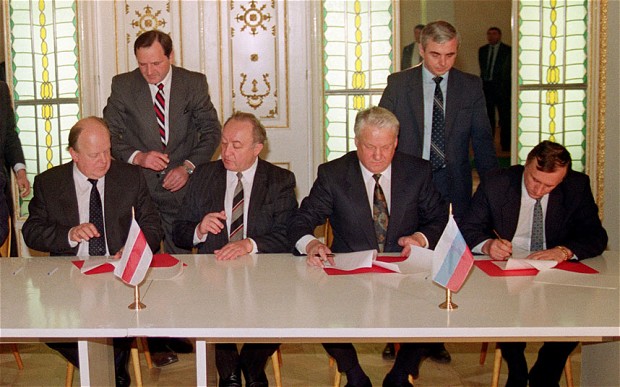
On December 8, 1991 Presidents Chukchievich of Bielorussia, Yeltsin of Russia, and Kravchuk of Ukraine (not pictured) signed the Belavezha Accords which effectively put an end to the existence of the Soviet Union and replaced it with the Commonwealth of Independent States. If it hadn't been for Ukraine and President Kravchuk, none of this would have been possible.

On December 8, 1991 Presidents Chukchievich of Bielorussia, Yeltsin of Russia, and Kravchuk of Ukraine (not pictured) signed the Belavezha Accords which effectively put an end to the existence of the Soviet Union and replaced it with the Commonwealth of Independent States, thus formally ending the Cold War.
If it hadn’t been for Ukraine and President Kravchuk none of this would have been possible.

Had Ukraine decided instead to support Gorbachev and sign the Treaty of the Union, history could have taken quite a different turn. Several leaders of the southern Muslim republics, such as Uzbekistan’s Islam Karimov, had supported the August 1991 coup against Gorbachev. Had he been forced to do with a downgraded union with several regional leaders openly seeking a return to the Stalin-era ways, Gorbachev likely would not have stood a second coup or a rally of hardliner leaders against him, leaving a weakened newly-independent Russia and its allies in Bielorussia and the Baltic republics hardly armed enough to face a nine-member Union poised to restore the old order by any means necessary.

As Ukraine grapples once again with democracy and rights issues today, its leaders on both sides certainly ought to take pride if only in this one thing – it is their country that saved the world from a possible Third World War, nuclear or not, by making it possible for Russia and its supporters to put an end to a Soviet Union which had failed to meet the challenges of history.

Bernard Henry is External Relations Officer of the Representative Office to the United Nations in Geneva of the Association of World Citizens.
The Violation of the Human Rights of Persons Considered as “Non-Citizens”

In Current Events, Democracy, Europe, Human Rights, World Law on August 8, 2013 at 11:39 AM

THE VIOLATION OF THE HUMAN RIGHTS OF PERSONS CONSIDERED AS “NON-CITIZENS”

By René Wadlow

The Association of World Citizens (AWC) is particularly concerned with the violation by some States of the human rights of ethnic, linguistic or religious minorities by depriving them of citizenship and considering them as “non-citizens”.  This measure deprives such persons of the ability to use avenues of redress open to citizens such as voting, holding public office and often public employment.  Other avenues may also be closed off and forms of discrimination and marginalization can take place.

The AWC has raised with government officials and other non-governmental organizations the issue of non-citizenship of many Kurds in Syria.  Recently some 250,000 Kurds have been granted Syrian citizenship, largely as a measure to gain support by the government in the civil war there.  However, the status and degree of autonomy of the Kurdish population remains an issue in the war.

The AWC has also raised the issue of the non-citizenship status of the Rohingya, a Muslim minority, largely of Bengali origin, in Myanmar (Burma). There has been violence against the Rohingya causing many to flee to Bangladesh and elsewhere.  The violence against the Rohingya is an obstacle on the path to greater democracy and the rule of law within Myanmar.

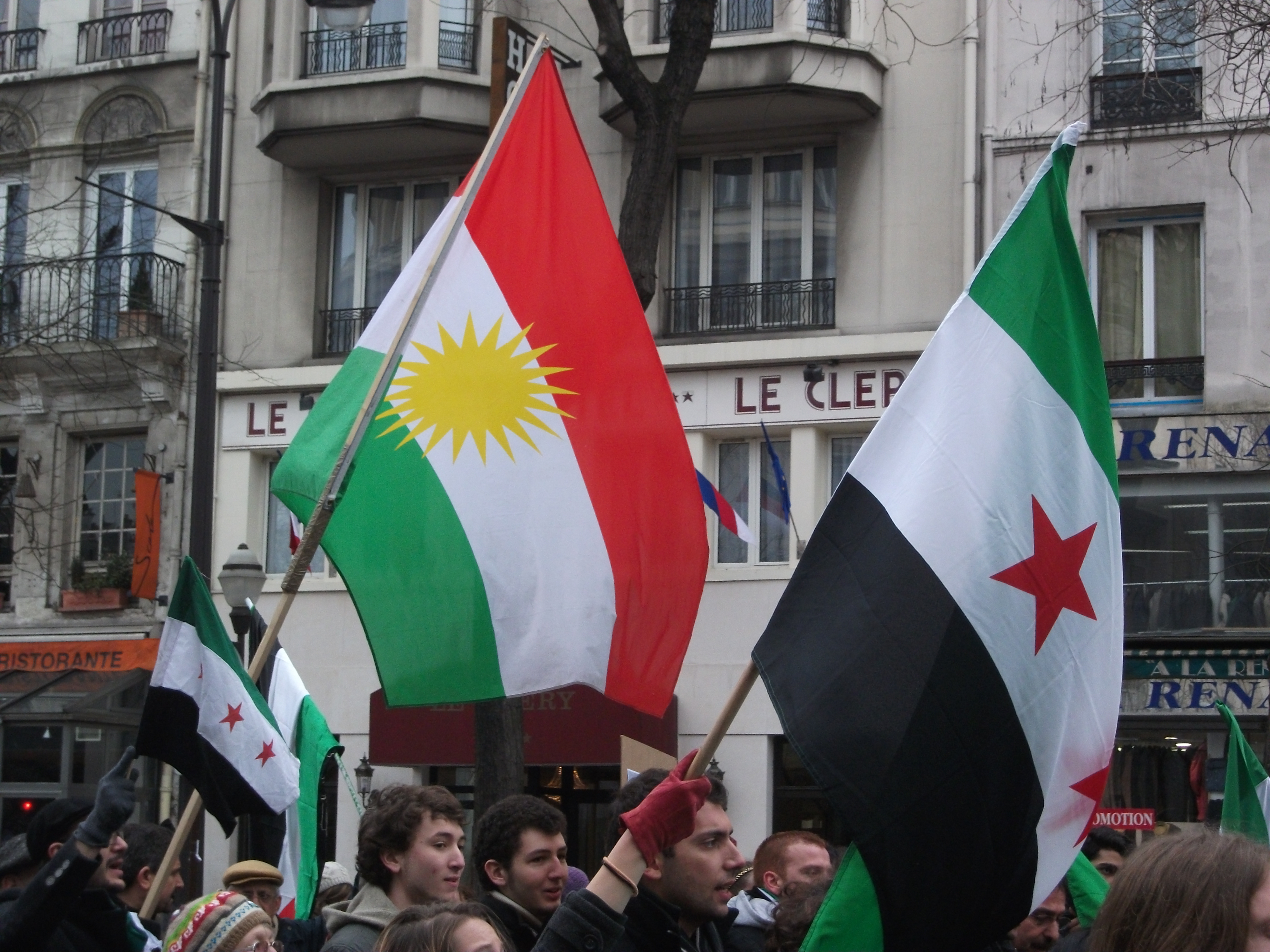
The flag of the Kurdish people, whose rights are largely unrecognized in all four countries of the Middle East where native Kurds can be found, alongside that of the Syrian opposition movement during a March 2013 demonstration in Paris, France.

The flag of the Kurdish people, whose rights are largely ignored in all four countries of the Middle East where native Kurds can be found, alongside that of the Syrian opposition movement during a March 2013 demonstration in Paris, France.

The AWC now wishes to highlight the non-citizen status of persons usually referred to as “Russians” within Latvia. This issue has been addressed previously by European institutions such as the Organization for Security and Cooperation in Europe (OSCE) and the Council of Europe.

However, the AWC believes that the human rights and rule-of-law principles are of a universal character and so deserve a response from world citizens including those outside Europe.  A petition has been created by the Non-Citizen Association of Latvia.  Signing the petition can be a measure of support, and the AWC will study other avenues of action, especially through the United Nations.

During the period when Latvia was incorporated into the USSR, a large number of ethnic Russians as well as Belarusians, Ukrainians, Roma and others migrated to work and live in the Baltic States, including Latvia.

With the Latvia Declaration of independence in May 1990, the Latvian Parliament passed a resolution “On the Renewal of the Rights of Citizens of the Republic of Latvia and Fundamental Principles of Naturalization” which in practice divided the residents of Latvia into two major categories: Latvian citizens, approximately two thirds and Latvian non-citizens, approximately one third.

While a certain amount of resentment against non-Latvians in 1990 could be expected, the resentment has, over 20 years later, hardened into structural discrimination.

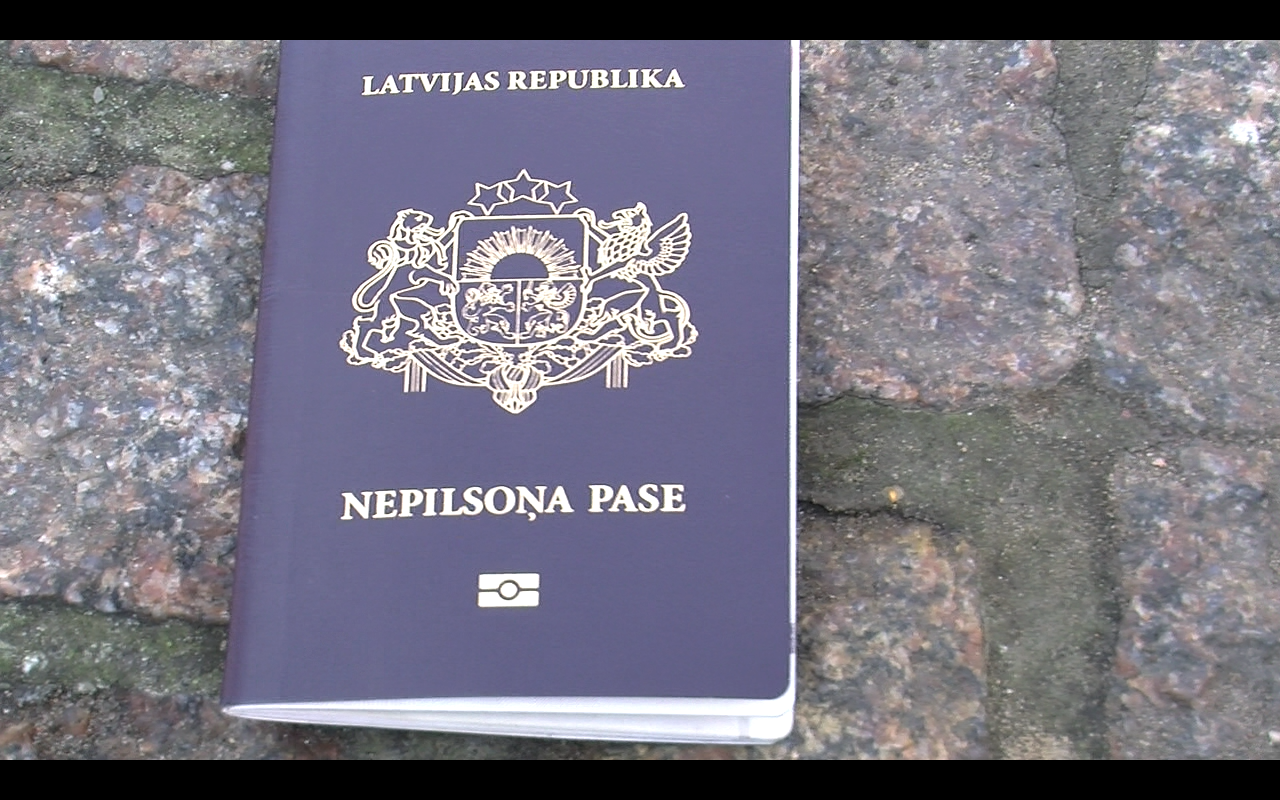
The "Non-Citizen Passport" the Republic of Latvia issues to those Latvians whose citizenship rights it arbitrarily refuses to recognize.

The “Non-Citizen Passport” issued by the Republic of Latvia to those Latvians whose citizenship rights it keeps arbitrarily refusing to recognize.

Therefore, Citizens of the World structured in the AWC call upon the Parliament of Latvia to reform its citizenship laws to allow presently “stateless citizens” to participate fully in civic and social society. The petition open for signatures is found on www.noncitizens.eu. I am among the early signers.

René Wadlow is President and Chief Representative to the United Nations Office at Geneva of the Association of World Citizens.