The Official Blog of the

Archive for the ‘Democracy’ Category

OSCE: Strains and Renewal in the Security Community

In Being a World Citizen, Conflict Resolution, Current Events, Democracy, Europe, Human Development, Human Rights, The Balkan Wars, The former Soviet Union, The Search for Peace, World Law on August 2, 2015 at 9:29 AM

OSCE: STRAINS AND RENEWAL IN THE SECURITY COMMUNITY

By René Wadlow

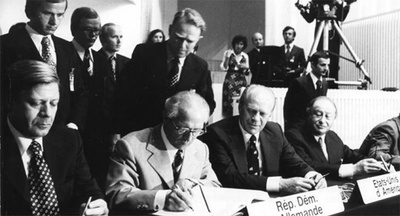
On August 1, 2015, the Helsinki Final Act, the birth certificate of the Organization for Security and Cooperation in Europe (OSCE) turned 40. The Final Act signed in Helsinki’s Finlandia Hall was the result of three years of nearly continuous negotiations among government representatives meeting for the most part in Geneva, Switzerland as well as years of promotion of better East-West relations by non-governmental peace builders.

Basically, one can date the planting of the seeds that grew into the OSCE as 1968 in two cities: Paris and Prague. The student-led demonstrations in Paris which sent shock waves to other university centers from California to Berlin showed that under a cover of calm, there was a river of demands and desires for a new life, a more cooperative and creative way of life.

In Prague, the Prague Spring of internal reforms and demands for a freer European society was met by the tanks of the Soviet Union and the Warsaw Pact in August. Yet some far-sighted individuals saw that 1968 was a turning point in European history and that there could be no return to the 1945 divisions of two Europes with the Berlin Wall as the symbol of that division. Thus, in small circles, there were those who started asking “Where do we go from here?”
A Security Community: A Halfway House

In 1957, Karl W. Deutsch (1912-1992) published an important study, Political Community and the North Atlantic Area (Princeton University Press). Karl Deutsch was born to a German-speaking family in Prague in what was then the Austro-Hungarian Empire. His family was active in socialist party politics and became strongly anti-Nazi. Seeing what might happen, Deutsch and his wife left Prague in 1939 for the USA where he became a leading political science-international relations professor. I knew Karl Deutsch in the mid-1950s when I was a university student at Princeton, and he was associated with a Center on International Organization at Princeton. It was there that he was developing his ideas on types of integration among peoples and States and that he coined the term “security community” to mean a group of people “believing that they had come to agreement on at least one point that common social problems must and can be resolved by processes of peaceful change.” For Deutsch, the concept of a security community could be applied to people coming together to form a State: His approach was much used in the 1960s in the study of “nation building” especially of post-colonial African States. A “security community” could also be a stage in relations among States as the term has become common in OSCE thinking. For Deutsch, a security community was a necessary halfway house before the creation of a State or a multi-State federation. Deutsch stressed the need for certain core values which created a sense of mutual identity and loyalty leading to self-restraint and good-faith negotiations to settle disputes.
Core values established and quickly disappeared

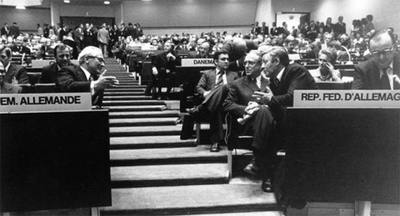
During the negotiations leading to the Helsinki Final Act, a set of 10 core values or commitments were set out, sometimes called the OSCE Decalogue after the “Ten Commandments”. “Sovereign equality, respect for the rights inherent in sovereignty and non-intervention in internal affairs” set the framework as well as the limitations of any efforts toward a supranational institution. The two other related core values were “the territorial integrity of States and the inviolability of frontiers.”

The core values were not so much “values” as a reflection of the status quo of the Cold War years. By the time that the Charter of Paris for a New Europe was signed in November 1990, marking the formal end of the Cold War, “territorial integrity and the inviolability of frontiers” as values had disappeared.

The 1990s saw the breakup of two major European federations − that of Yugoslavia and the USSR. Most of the work of the OSCE has been devoted to the consequences of these two breakups. Yugoslavia broke into nearly all the pieces that it could with a few exceptions. I had been asked to help support the independence of Sandzak, a largely Muslim area in Serbia and part of Montenegro. I declined, having thought at the time that with a few modifications the Yugoslav federation could be kept together. I was wrong, and the OSCE is still confronted by tensions in Kosovo, renewed tensions in Macedonia, an unlikely form of government in Bosnia and Herzegovina as well as social issues of trafficking in persons, arms, drugs and uncontrolled migration.

The breakup of the Soviet Union has led to a full agenda of OSCE activities. The republics of the Soviet Union had been designed by Joseph Stalin, then Commissioner for Nationalities so that each republic could not become an independent State but would have to look to the central government for security and socio-economic development. Each Soviet republic had minority populations though each was given the name of the majority or dominant ethnic group called a “nationality”.

With the breakup of the Soviet Union, there have been recurrent issues involving the degree of autonomy of geographic space and the role of minorities. The conflict in Nagorno-Karabakh had already started before the breakup, but continues to this day with its load of refugees, displaced persons and the calmer but unlikely twin, the Nakhchivan Autonomous Republic. Moldova and Transdniestria remain a “frozen conflict” with a 1992 ceasefire agreement. The armed conflicts in Chechnya and violence in Dagestan highlighted conflicts within the Russian Federation. The 2008 “Guns of August” conflict over South Ossetia between Russia and Georgia showed that autonomy issues could slip out of control and have Europe-wide consequences.

(C) Sadankomitea

(C) Sadankomitea

A Cloudy Cristal Ball

Predictions, especially about the future, are always difficult. In 2013, the OSCE Chairperson-in-Office, the then Minister for Foreign Affairs of Ukraine, Leonid Kazhara, said “We wish to contribute to the establishment of the Euro-Atlantic and Eurasian security community free of dividing lines, conflicts, spheres of influence and zones with different levels of security … There is a pressing need to, first of all, change our mindsets from confrontational thinking to a cooperative approach. I am confident that Ukraine, with its rich history, huge cultural heritage and clear European aspirations is well placed for carrying out this mission.”

Today, Ukraine’s rich history has a new chapter, recreating old dividing lines and spheres of influence. The shift in “ownership” of Crimea indicates that “territorial integrity of States” is a relative commitment. The large number of persons going to Russia as refugees and to west Ukraine as internally-displaced persons recalls the bad days of displacement of the Second World War. NATO has dangerously over-reacted to events in Ukraine.

It is not clear that the current leaders of the 57 governments of the OSCE have the wisdom or skills to lead to a renewal of the Security Community. Yet when one looks at the photos of the government leaders who did sign the Helsinki Final Act 40 years ago, there are few faces indicating wisdom or diplomatic skills so perhaps all is not lost today. Very likely, as in the period between the events of 1968 and the start of government negotiations in 1972, there will need to be nongovernmental voices setting out new ideas and creating bridges between people.

Prof. René Wadlow is President and Chief Representative to the United Nations Office at Geneva of the Association of World Citizens.
UN Fact-finding Report: The Yazidis of Iraq

In Children's Rights, Conflict Resolution, Current Events, Democracy, Human Rights, International Justice, Middle East & North Africa, Religious Freedom, Solidarity on March 21, 2015 at 9:17 PM

UN FACT-FINDING REPORT: THE YAZIDIS OF IRAQ

By René Wadlow

On Thursday, March 19, 2015, the United Nations (UN) investigative team on human rights violations in Iraq led by Ms. Suki Nagra raised accusations of genocide and war crimes against the Islamic State (ISIS) citing evidence that ISIS sought to “destroy the Yazidi as a group” − the definition of genocide in the 1948 Genocide Convention which has become a core element of World Law. The fact-finding group of members of the Secretariat of the Office of the UN High Commissioner for Human Rights had been established by a Special Session of the Human Rights Council in September 2014. (See article ‘World Law Advanced by UN Special Session of the Human Rights Council on Human Rights Violations in Iraq’)

The report to the current session of the Human Rights Council included testimony from Yazidi men who had survived massacres by shielding themselves behind the bodies of men who had already been killed. “It was quite clear that attacks against them were not just spontaneous or happened out of the blue; they were clearly orchestrated. Witnesses consistently reported that orders were coming through, by telephone in many cases, about what to do with them. There was a clear chain of command”.  Ms. Nagra reported to the Human Rights Council. (On the Yazidis as a religious community, see the article ‘Iraq: Yazidis’ Genocide?’)

The report also detailed evidence that Yazidi women and girls were abducted and sold into slavery as spoils of war in violation of some of the oldest standards of world law against slavery developed by the League of Nations and continued by the UN. There were also repeated cases of rape. The use of rape as a weapon of war has become of increasing concern to both the UN human rights bodies and to NGOs.

As the Association of World Citizens’ (AWC) written Statement to the Iraq Special Session stressed, “The Association of World Citizens believes that world law as developed by the United Nations applies not only to the governments of Member States but also to individuals and non-governmental organizations. The ISIS has not been recognized as a State and is not a member of the UN. Nevertheless, the Association of World Citizens is convinced that the terms of the Declaration on the Elimination of All Forms of Intolerance and Discrimination Based on Religion or Belief adopted by the General Assembly on 25 November 1981 applies to the ISIS.”

Citizens of the World stress the need for world law and certain common values among all the States and peoples of the world. We are one humanity with a shared destiny. The challenge before us requires inclusive ethical values. Such values must be based on a sense of common responsibility for both present and future generations.

Prof. René Wadlow is President and Chief Representative to the United Nations Office at Geneva of the Association of World Citizens.

March 8, 2015: International Women’s Day – Balance of Yin and Yang

In Being a World Citizen, Current Events, Democracy, Human Development, Human Rights, International Justice, Social Rights, Solidarity on March 7, 2015 at 9:48 AM

MARCH 8, 2015: INTERNATIONAL WOMEN’S DAY – BALANCE OF YIN AND YANG

By René Wadlow

It is only when women start to organize in large numbers that women become a political force, and begin to move towards the possibility of a truly democratic society in which every human being can be brave, responsible, thinking and diligent in the struggle to live at once freely and unselfishly.

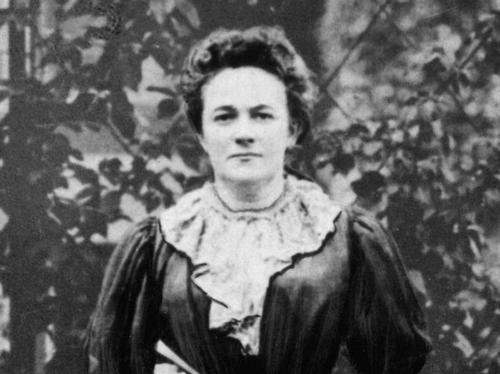
March 8 is the International Day of Women and thus a time to analyze the specific role of women in local, national and world society. International Women’s Day was first proposed by Clara Zetlin (1857-1933) at the Second International Conference of Socialist Women in Copenhagen in 1911. Later, she served as a socialist-communist member of the German Parliament during the Weimar Republic which existed from 1920 to 1933 when Hitler came to power.

Zetkin had lived some years in Paris and was active in women’s movements there who were building on the 1889 International Congress for Feminine Works and Institutions held in Paris under the leadership of Ana de Walska. De Walska was part of the circle of young Russian and Polish intellectuals in Paris around Gerard Encausse (1865-1916), a spiritual writer who wrote under the pen name of Papus and edited a journal L’Initiation (1). Papus stressed the need for world peace and was particularly active on the human rights of Armenians.

Clara Zetkin (1857-1933), the initiator of International Women's Day.

Clara Zetkin (1857-1933), the initiator of International Women’s Day.

This turn-of-the-century spiritual milieu was influenced by Indian and Chinese thought. Translations of fundamental Asian philosophical texts were increasingly known in an educated public. ‘Feminine’ and ‘masculine’ were related to the Chinese terms of Yin and Yang − not opposed but in a harmonic balance. Men and women alike have the Yin and Yang psychological characteristics. ‘Feminine’ characteristics or values include intuitive, nurturing, caring, sensitive and relational traits. ‘Masculine’ traits are rational, assertive and analytical.

As individual persons, men and women alike can achieve a state of wholeness, of balance between the Yin and Yang. However, in practice, ‘masculine’ refers to men and ‘feminine’ to women. Thus, some feminists identify the male psyche as the prime cause of the subordination of women around the world. Men are seen as having nearly a genetic coding that leads them to ‘seize’ power, to institutionalize that power through patriarchal societal structures and to buttress that power with masculine values and culture.

Thus Clara Zetkin saw the need to call attention in a forceful way to the role that women as women play in society and the many obstacles which men place in their way. She made her proposal in 1911 and today March 8 is widely observed.

Women, individually and in groups, have played a critical role in the struggle for justice and peace in all societies. However, when real negotiations start to pull a community out from a cycle of violence, women are often relegated to the sidelines. There is a need to organize so that women are at the negotiating table to present their ingenuity, patience and determination.

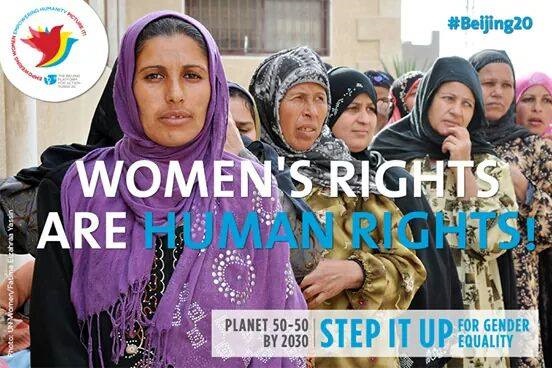
The emerging world society has been slow to address the problem of injustice to women, because it has lacked a consensus on sex-based inequality as an urgent issue of political justice. The outrages suffered every day by millions of women − domestic violence, child sexual abuse, child marriage, inequality before the law, poverty and lack of dignity − are not uniformly regarded as ignominious and seen as human rights abuses.

Solidarity and organization are crucial elements to create sustainable ways of living in which all categories of people are encouraged to contribute. March 8, 2015 is a reminder of the positive steps taken but also the distance yet to be covered.

Prof. René Wadlow is President and Chief Representative to the United Nations Office at Geneva of the Association of World Citizens.
(1) See the biography by Marie-Sophie André and Christophe Beaufils, Papus.

Celebrating Social Justice: The People’s Revolution is On the March

In Being a World Citizen, Democracy, Human Development, Human Rights, Middle East & North Africa, Social Rights, Solidarity on February 22, 2015 at 4:45 PM

CELEBRATING SOCIAL JUSTICE: THE PEOPLE’S REVOLUTION IS ON THE MARCH

By René Wadlow

Social Justice

The United Nations (UN) General Assembly, on the initiative of Nurbch Jeenbrev, the Ambassador of Kyrgyzstan to the UN in New York, has proclaimed February as the “World Day of Social Justice”.

The World Day of Social Justice gives us an opportunity to take stock of how we can work together – the whole year round – at the local, national and global level on policy and action to achieve the goals set out in the resolution of “solidarity, harmony and equality within and among states.”

As the resolution states, “Social development and social justice are indispensable for the achievement and maintenance of peace and security within and among nations, and that in turn, social development and social justice cannot be attained in the absence of peace and security or in the absence of respect for all human rights and fundamental freedoms.”

The Preamble to the UN Charter makes social justice one of the chief aims of the organization using the more common expression of that time “social progress”. The Preamble calls for efforts to “promote social progress and better standards of life in larger freedom.”

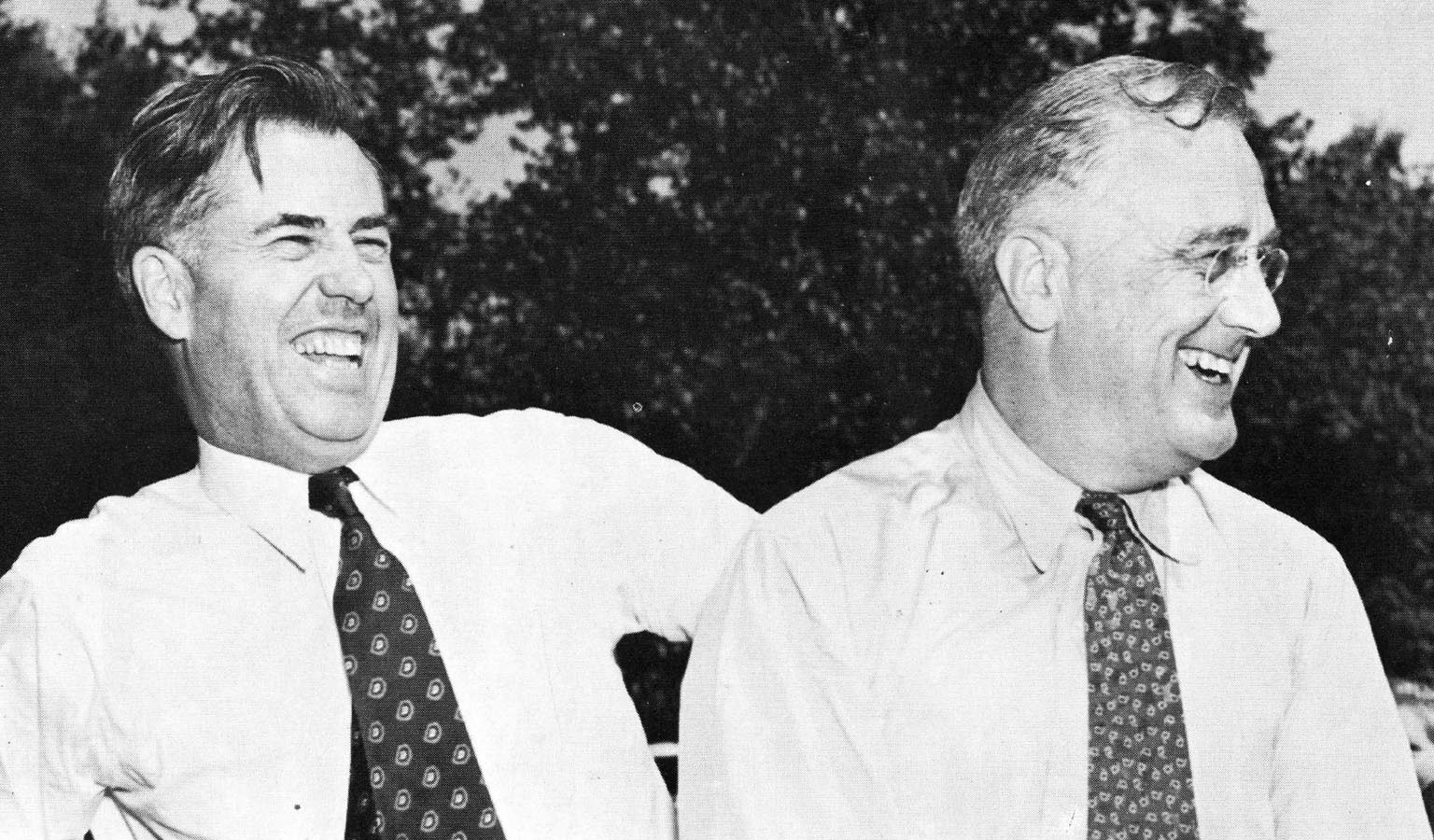
The United States (U. S.) representatives who worked on the draft of the UN Charter were strongly influenced in their views of social progress by the “New Deal” legislation of President Roosevelt and its philosophy as it had been set out by his Vice-President Henry A. Wallace in 1942 when he set out the U. S. war aims. Wallace’s speech was the first time that the war aims of a country were not stated in terms of “national interest” and limited to the demands that had produced the start of the war.

Wallace, who had first been the Secretary of Agriculture and who had to deal with the severe depression facing U. S. agriculture, was proposing a world-wide New Deal based on the cooperative action of all of humanity. Wallace said “The people’s revolution is on the march. When the freedom-loving people march — when the farmers have an opportunity to buy land at reasonable prices and to see the produce of their land through their own organizations, when workers have the opportunity to form unions and bargain through them collectively, and when the children of all the people have an opportunity to attend schools which teach them truths of the real world in which they live — when these opportunities are open to everyone, then the world moves straight ahead…The people are on the march toward ever fuller freedom, toward manifesting here on earth the dignity that is in every human soul.”

Henry A. Wallace (left), Vice-President of the United States from 1941 to 1945. After the third and final reelection of Franklin Delano Roosevelt (right) to the presidency in 1944, Wallace was succeeded by Harry S. Truman, who himself succeeded Roosevelt as President of the United States after Roosevelt died on April 12, 1945.

Henry A. Wallace (left), Vice-President of the United States from 1941 to 1945. After the third and final reelection of Franklin Delano Roosevelt (right) to the presidency in 1944, Wallace was succeeded by Harry S. Truman, who himself succeeded Roosevelt as President of the United States after Roosevelt died on April 12, 1945.

The People’s Revolution found its expression in the cry of the Tunisian uprising — Work-Liberty-Dignity. Today in the demands of “Work-Liberty-Dignity” we hear the demands of farmers to own land under sure conditions, to receive a fair price for their crops as well as the right to organize to protect their interests. We hear the crises of industrial and urban workers to be able to organize and to have their work appreciated for its full value. We hear the demands of students and the young for an education that opens minds and prepares for meaningful work.

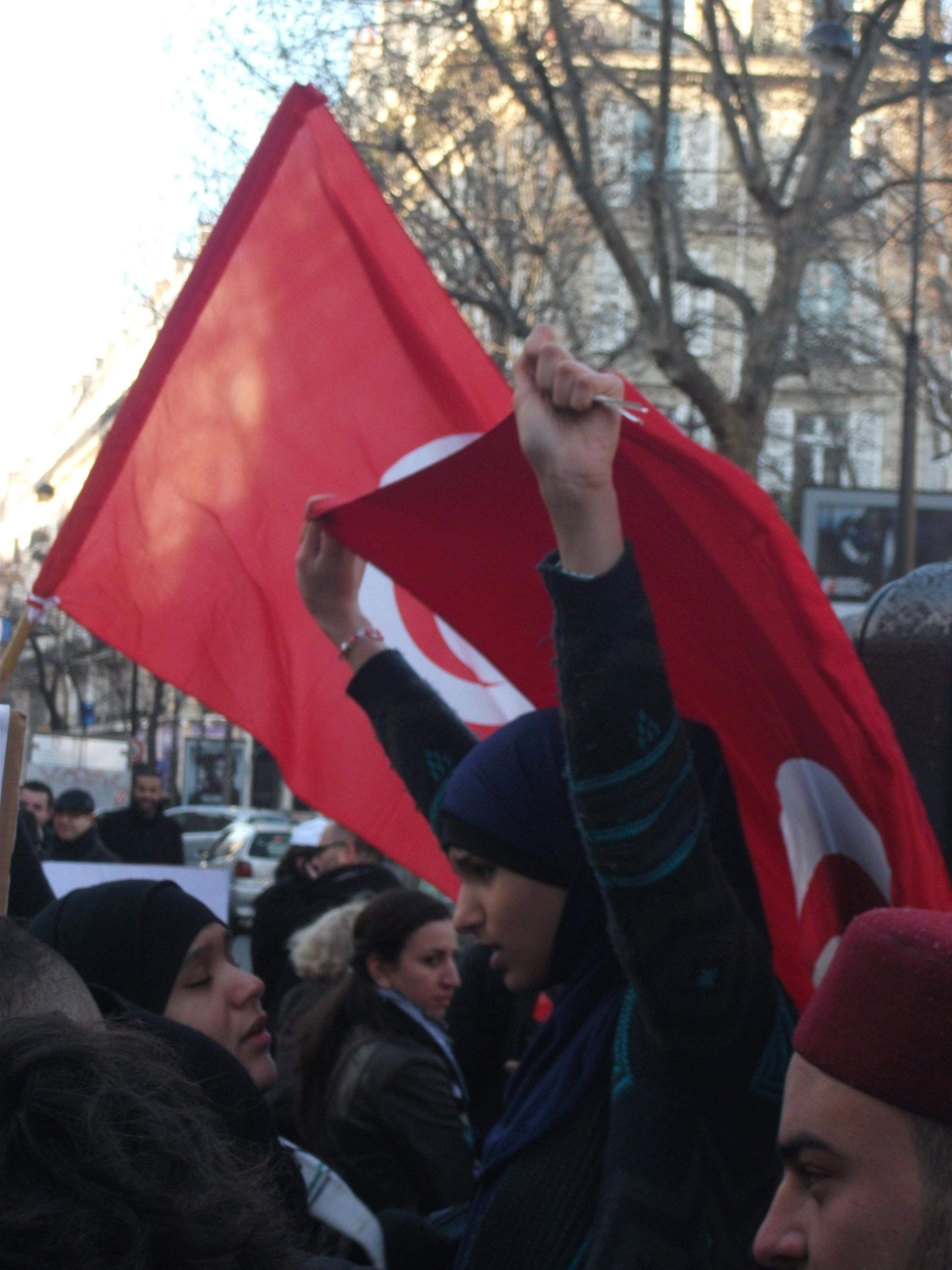
A Tunisian demonstrator in Paris, France, as the Tunisian community there celebrated the first anniversary of the revolution on January 14, 2012. (C) Bernard J. Henry/AWC

A Tunisian demonstrator in Paris, France as Tunisians living there were celebrating the first anniversary of their revolution on January 14, 2012. (C) Bernard J. Henry/AWC

The people’s revolution is on the march. While the forces of the status quo are still strong and often heavily armed, the energy has shifted from the rulers to the people. The concept of Social Justice has articulated and focused deep demands for liberty, jobs, and dignity. The people’s revolution is not that of an elite willing to replace the existing ruling elite. The people’s revolution is a wave of all moving together, with deep currents below the surface. The tide moves with only a few visible waves but the collective demands for social justice and dignity is what makes the difference between the people’s revolution and a military coup. This is the true meaning of the World Day of Social Justice.

“For the wretched of the earth,
There is a flame that never dies,
Even the darkest night will end
And the sun will rise.”

Les Miserables, “Do You Hear the People Sing – Epilogue”.

In 2011, as the Tunisian and Egyptian revolutions were underway, the AWC adopted this song as its unofficial anthem.

* * *

Prof. René Wadlow is President and Chief Representative to the United Nations in Geneva of the Association of World Citizens.
Boko Haram: The Long Shadow of Usman dan Fodio

In Africa, Being a World Citizen, Current Events, Democracy, Human Rights, Middle East & North Africa, Religious Freedom on February 13, 2015 at 9:58 PM

BOKO HARAM: THE LONG SHADOW OF USMAN DAN FODIO

By René Wadlow

There has been growing concern with the activities of Boko Haram in northeast Nigeria and its spillover into northern Cameroon, Niger, and in the Lake Chad area. There has been a recent conference of the African Union on the issue, and military units from Chad, Cameroon and Niger are linking up with the Nigerian army to counter the growing power of the organization and its possible links with the Islamic State (ISIS) in Iraq-Syria. The practice of forced marriage, the slavery of women and girls, and arbitrary killing – including beheading – has led many to flee the area. This has resulted in a large number of displaced people, often living in difficult situations.

Boko Haram is not the first militant, anti-establishment Islamic movement in northern Nigeria and northern Cameroon. In the early 1980s, an Islamic sect, the Yan Tatsine unleashed an armed insurrection against the Nigerian security forces, especially in the Kano area. The revolts were led (or at least influenced by) a wandering preacher, Mohammed Marwa Maitatsine. Maitatsine was a nickname added to the family name of Marwa. The nickname originated from the Hausa word “tsini” meaning “to damn”. While preaching, he would name his enemies and their lifestyle and end with the phrase ‘Allah ta tsini” (May God damn you), thus the name “the one who damns”. Maitatsine, like Boko Haram, damned all those who enjoyed Western consumer goods, automobiles, radio, watches, and especially Western education, which was an avenue to these goods.

As with Boko Haram, there were ideological, economic and social aspects to the movement as well as reactions to the brutality of the Nigerian army’s efforts to weaken or destroy the movement. In the case of Mohammed Marwa, his control of territory was largely limited to the city of Kano, and he was killed by Nigerian security forces relatively quickly after the start of the armed attacks of his movement. However, the socio-economic conditions which led to the rise of his movement have continued and have produced smaller and less violent currents until the creation around 2002 of Boko Haram, first as a sect closed in on itself in an isolated area of Borno State in northeast Nigeria, and then for the last four years as an armed insurgency holding an ever-larger territory − or at least creating insecurity in ever larger areas.

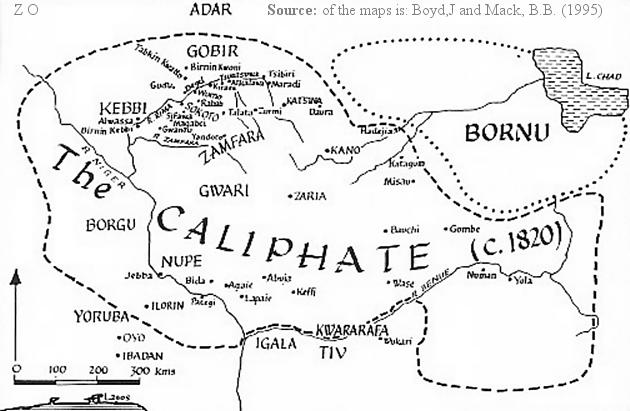
For the current leader of Boko Haram, Abubaka Shekau, as well as for others in the movement, Usman dan Fodio (also written as Usuman) and his 1804-1808 jihad is the model to be followed. Although radically different in many ways, Boko Haram is part of the long shadow of Usman dan Fodio and the creation of the Sokoto Caliphate, the largest state in West Africa in the nineteenth century. Toyin Falola describes the background to the jihad:

“The background to the jihad was a crisis in the Hausa states and Islamic leaders’ resort to Islam to reform society. During the eighteenth century, Hausa society witnessed conflicts between one state and another, between Muslims and non-Muslims, between rich and poor. The states were heterogeneous and highly developed with established kingships, talented Islamic scholars and jurists. Succession disputes were endemic while ambition for political domination was common. Gofir state in the northwest emerged as a dominant power, but not without costly and ruthless wars. Merchants and kings grew wealthy, and their ostentatious living displeased the poor and devout Muslims. Methods of wealth accumulation involved corruption and unjust treatment of the poor. Taxes and levies could be excessive, demand for free labor ruinous, enslavement was common and conscription for military service was indiscriminate. The practice of Islam was not always strict: many were Muslims only in name, traditional religion was synthesized with Islam in a way that displeased devout preachers and only a small minority committed itself to spreading the religion”. (1)

Dan Fodio (1754-1817) was a Peul (plu. Fulani) and thus a member of a minority within the largely Hausa area. However, the Fulani are found throughout West Africa. Prior to 1800, there had been a gradual influx of Fulani into northern Nigeria, a migration which had spread over several centuries and which involved people who were ethnically and linguistically distinct from the Hausa. During the earlier migratory phases, they were largely pastoral herdsmen but increasingly they settled in Hausa towns.

As an educated Peul, dan Fodio felt excluded from political power as did other Fulani. The jihad and the distribution of power that followed led to the Sokoto Caliphate − a sort of unified theocracy. Old Hausa dynasties were replaced by new local leaders, mainly Fulani emirs. The caliphate was headed by a sultan, based in Sokoto, while local emirates were governed by an emir. The appointment of each emir had to be ratified by the sultan. Thus was created a Fulani-Hausa political area with elements still in place today.

Dan Fodio, often referred to as Shehu, was an educated preacher who gathered around him students who became the core of his jihad army. Dan Fodio knew the history of Islam and wanted to recreate the Muslim community of the time of the first four Caliphs, thought of as the ‘Golden Age of Islam’. He thus broke down the existing Hausa state system of some 15 separate states into a loosely organized Fulani-Hausa confederation of some 30 emirates with loyalty beyond the clan and the traditional ruler within the embrace of a common religion.

The Sokoto Caliphate, which spanned much of the northern halves of today's nations of Nigeria and Cameroon.

The Sokoto Caliphate, which spanned much of the northern halves of today’s nations of Nigeria and Cameroon.

Two features tended to characterize the emirate system. First, there was virtually no distinction between religious and political authority. The emir possessed both. Second, politics was conducted in an essentially despotic fashion. The common man was subservient to the emir and was dependent on his benevolence. The Fulani jihad fell short of establishing the just Islamic theocracy it had purported to create. Many saw the jihad as a road to power rather than to the purity of religious practice.

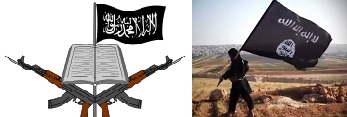
Boko Haram has kept the use of flags and flag bearers from Dan Fodio’s jihad as well as the arbitrary killing and indiscriminate marauding. In Boko Haram, there seem to be few Islamic scholars in their ranks, but there do seem to be some who have been to Islamic schools. The future from today is very uncertain. It is unlikely that there is a “military answer.”

Neither Boko Haram nor ISIS/Daesh should be confused with the Islamic faith. These two militant groups give Islam a bad name and do not speak for the world's Muslims.

Neither Boko Haram nor ISIS/Daesh should be confused with the Islamic faith in any way. These two militant groups do not speak for the world’s Muslims and only give Islam a bad name.

Changes in socio-economic conditions are likely to take a long time. From a distance, it is difficult to see how good faith negotiations can be carried out between governments and Boko Haram. Long shadows can last for centuries, but we must keep trying to see how negotiations can be carried out and if non-governmental organizations can play an intermediary role.

Prof. René Wadlow is President and Chief Representative to the United Nations, Geneva of the Association of World Citizens.
(1) Toyin Falola.The History of Nigeria (Westport, CT: Greenwood Press, 1999, p. 35)

UN Progress on Sexual Orientation Issues: A Long Road Still Ahead

In Being a World Citizen, Current Events, Democracy, Human Rights, International Justice, Solidarity, World Law on September 28, 2014 at 12:35 AM

UN PROGRESS ON SEXUAL ORIENTATION ISSUES: A LONG ROAD STILL AHEAD

By René Wadlow


On the last day of the current session of the United Nations (UN) Human Rights Council in Geneva, September 26, 2014, the Council approved a resolution condemning discrimination based on sexual orientation and gender identity stating:

Expressing grave concern at acts of violence and discrimination, in all regions of the world, committed against individuals because of their sexual orientation and gender identity.

Welcoming positive developments at the international, regional and national levels in the fight against violence and discrimination based on sexual orientation and gender equality.”

This is, for the Human Rights Council, a strong resolution on which to build a wave of support for respect of gender equality and the rights of lesbian, gay, bisexual and transgender (LGBT) in the current UN terminology. There had been an earlier resolution of the Council in June 2011, but it was weaker and with fewer countries voting in favor.

The resolution was hotly discussed by the government representatives in private − the reason why the vote came up only on the last day. The opponents made great efforts, offering complicated procedural moves and proposing seven meaningless amendments each of which required a vote, in the hope that time would run out and the session would close on time so the members could have a last drink together in the restaurant on the top floor of the Palais des Nations. However, the resolution moved forward.

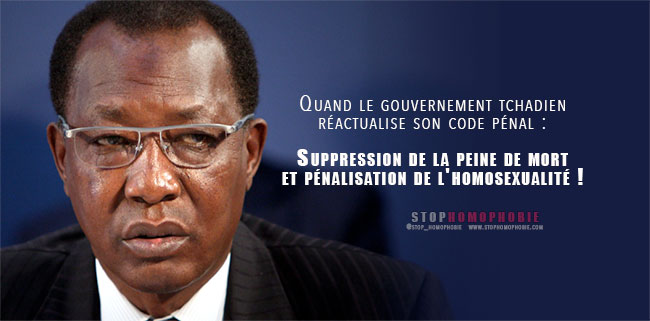
In a most welcome move to amend its penal code, the African nation of Chad announced but it was abolishing the death penalty. Unfortunately, the same move to amend the penal code also includes a disappointing penalization of homosexuality. (C) Stop Homophobie

In a most welcome move to amend its penal code, the African nation of Chad recently announced that it was abolishing the death penalty.
Unfortunately, the same move to amend the penal code also includes a disappointing penalization of homosexuality.
(C) Stop Homophobie

There are 47 Member States in the Council elected within regional groups. Many more States attend the session as Observer States, with the right to speak but not vote. Some Observer States are there because they are interested in human rights; most are there to reply, if they are attacked, especially by representatives of nongovernmental organizations in consultative status, such as the Association of World Citizens.
The vote was 25 in favor, 14 against, 7 abstentions, and the representative of the African State of Benin left the room so he would not have to vote at all. It is important to analyze the composition of the vote to see allies to strengthen, opponents to change, and abstentions to act.

Interestingly, the lead on the resolution was taken by South American countries which have a large Roman Catholic population. In the past Latin American countries were hostile or uninterested, a reflection of Catholic sexual policy. Now with a new Pope from Latin America and his less condemning attitude, Latin American countries could play an active, positive role. Brazil, Chile, Colombia and Uruguay took the lead, and the other Latin American members voted for: Argentina, Costa Rica, Cuba, Mexico, Peru and Venezuela. Western Europe voted for, and more surprisingly, four Asian States: Japan, Philippines, South Korea, and Vietnam.

Opposition came from African States: Botswana, Cote d’Ivoire, Ethiopia, Gabon, Kenya, joined by North African and Middle East States: Algeria, Kuwait, Morocco, Saudi Arabia, United Arab Emirates, and Asian States with a large Muslim population: Indonesia, Maldives, and Pakistan. The Russian Federation also voted no, a reflection of the current policy there, especially voiced by its President.

Among the States which abstained are two key Asian States where efforts must be made systematically for change: China and India. Four African States also abstained, not giving into strong pressure to have a unified African bloc: Burkina Faso, Congo, Namibia, and Sierra Leone, and as mentioned, Benin left the room so as not to vote at all. Since individual African States have little influence, they try to vote together as a bloc which gives them some power. That four African States were willing to leave the negative bloc is an important sign of progress, but they are hardly in the “yes” group as yet.

The resolution also calls for an update on a 2012 study on discrimination based on sexual orientation. The updated study means that the issue will be automatically on the 2015 Human Rights Council agenda.

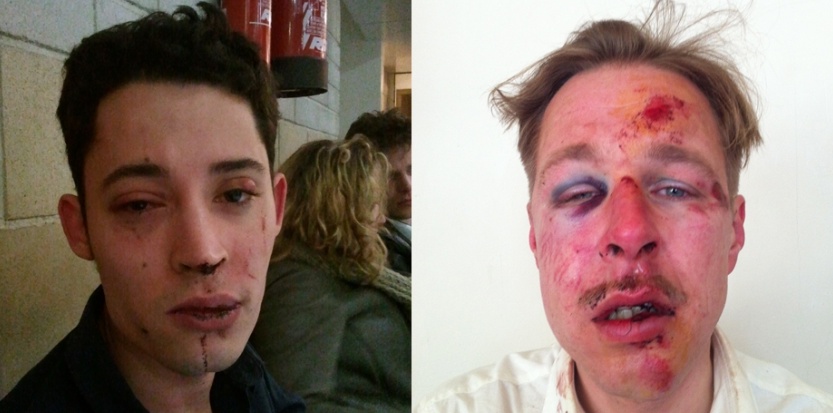
On April 7, 2013 Wilfred de Bruijn and Olivier Couderc, a young homosexual couple living in Paris, were savagely attacked on the street on homophobic grounds as they were going home late at night. Since the newly-elected Socialist Party parliamentary majority had begun examining a bill on same-sex marriage in late 2012, French President François Hollande and his government had faced demonstrations, sometimes violent, by opponents to gay rights who wanted them to drop the bill. The attack on Wilfred and Olivier resulted in national outrage and the opponents to the government-proposed bill were widely blamed for it.  Eventually, on May 17, 2013 the French Parliament went ahead and did pass the law extending the right to marriage to same-sex couples.

On April 7, 2013 Wilfred de Bruijn and Olivier Couderc, a young homosexual couple living in Paris, were savagely attacked on the street on homophobic grounds as they were going home late at night.
Since the newly-elected Socialist Party parliamentary majority had begun examining a bill on same-sex marriage in late 2012, French President François Hollande and his government had faced demonstrations, sometimes violent, by opponents to gay rights who wanted them to drop the bill.
The attack on Wilfred and Olivier resulted in national outrage and the opponents to the government-proposed bill were widely blamed for it.
Eventually, on May 17, 2013 the French Parliament went ahead and did pass the law extending the right to marriage to same-sex couples.

Nongovernmental work must start now to influence governments for the 2015 sessions. To the extent possible, articles in the press in India and China would be useful. China, India and Russia have influence in the Human Rights Council, both because of the size of the States but also the good quality of their representatives who are often very skillful in tactical techniques to delay action. The African States have prejudices but no real ideological position, and so some progress may be made there. The Islamic States will be the most difficult to swing given the power of conservative religious leaders in many Muslim countries. Latin American governments should be thanked or their efforts, especially as there could be a conservative Catholic backlash in some countries once people learn of their governments’ initiatives. It must be said that the media in most countries do not focus on the resolutions of the UN Human Rights Council. Thus when a conservative, activist minority learns about the resolution, they may mobilize to change the policy of the Latin American States.

There is still a long road ahead for real respect for sexual orientation efforts. As most UN human rights resolutions, the emphasis is put on non-discrimination and anti-violence. I think that the policy of the Association of World Citizens must stress a positive approach of respect for each individual and creating a society in which each person can fulfill potentials.


Prof. René Wadlow is President of the Association of World Citizens.
Iraq: What does one do with the broken pieces?

In Anticolonialism, Conflict Resolution, Cultural Bridges, Current Events, Democracy, Human Rights, Middle East & North Africa, The Search for Peace, United Nations, War Crimes, World Law on June 23, 2014 at 9:31 PM

IRAQ: WHAT DOES ONE DO WITH THE BROKEN PIECES?

By René Wadlow


There is the legendary sign in shops selling china and porcelain “Do not touch; If you break it, you buy it”. The same sign should have been hung at the entry to Baghdad rather than portraits of Saddam Hussein. With Iraq in armed confusion as sectors of the country change side, and the Iraqi government seems incapable of an adequate response other than to call for military help, as concerned world citizens we must ask ourselves “What can we do?”

The forces of the Islamic State of Iraq and Syria (ISIS) have broken down a wall on the frontier between Iraq and Syria as a symbol of abolishing national frontiers to be replaced by a community of the Islamic faithful − the umma. In some ways, we are back to the early days of the post-World War One period when France and England tried to re-structure that part of the Ottoman Empire that is now Iraq, Syria, Lebanon, Israel-Palestine, Jordan, Turkey and an ill-defined Kurdistan.


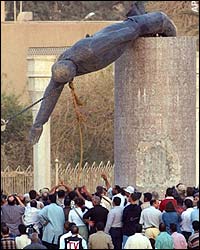
In March 2003 an international "coalition" led by the United States attacked Iraq in violation of international law and overthrew the country's dictator, Saddam Hussein. The problem is that, having acted without prior permission from the Security Council, the "coalition" was never able to garner support from the international community and build a real, stable democracy in Iraq. As a result, a significant part of the country is now in the hands of radical Islamist fighters.

In March 2003 an international “coalition” led by the United States attacked Iraq in violation of international law and overthrew the country’s dictator, Saddam Hussein. The problem is that, having acted without prior permission from the Security Council, the “coalition” was never able to garner support from the international community and build a real, stable democracy in Iraq. As a result, a significant part of the country is now in the hands of radical Islamist fighters.


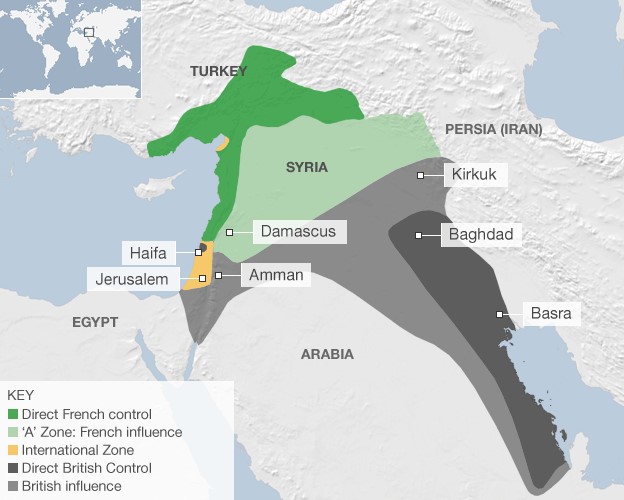
During 1915, Sir Mark Sykes, a Tory Member of Parliament and a specialist on  Turkish affairs and Francois Georges-Picot, a French political figure with strong links to colonial factions in the French Senate negotiated how to re-structure the Ottoman Empire to the benefit of England and France. Although these were considered “secret negotiations” Sykes reported to Lord Kitchener, the War Minister, and Picot had joined the French Foreign Ministry as war service. However, both operated largely as “free agents”. Today Sykes and Picot are recalled for no other achievement than their talent in dividing. The agreement between them was signed in January 1916 but kept in a draw until the war was over. In April 1920 at San Remo, France and England made the divisions official.

History has moved on, but dividing and re-structuring remains the order of the day. The political structures of Israel-Palestine as one state, two states, or one state and occupied territories have confronted the best of mediators − and less talented mediators as well. With the war in Syria continuing, there have been suggestions to divide − or federate − the state into three parts: an Alawite-Shi’ite area, a Sunni area, and a Kurdish area. The same divisions had been suggested for Iraq earlier and are again being discussed in the light of the ISIS advances: a Shi’ite area in the south, Kurds in the north − already largely independent − and Sunnis in the Middle. Lebanon, although not a federal state, is largely structured on sectarian-geographic divisions.


In 1916 the Sykes-Picot agreement carved the Middle East into two "spheres of influence", one British, the other French, plus two zones of direct control by either of the colonial powers.

In 1916 the Sykes-Picot agreement carved the Middle East into two “spheres of influence”, one British, the other French, plus two zones of direct control by either of the colonial powers.


Constitution-making under duress is not the best way of doing things. Forced federalism presents even more difficulties than creating a federal state when people are not fighting each other. We have seen the difficulties of proposing federal structures for Ukraine, federalism seen by some as a prelude to the disintegration of the state. The difficulties in the wider Middle East are even greater, as we have three states directly involved: Iraq, Syria, Turkey with a well-organized and armed Kurdish community in Iraq and parts of Syria.

The Kurds had expected that a Kurdistan would be recognized after World War One. The issue was raised at a conference to set Middle East frontiers held in June 1923 in Lausanne. The failure of the Kurds to achieve their goal for independence and the forced inclusion of their mountainous homeland within the then newly created states of Iraq, Syria and Turkey caused resentment and unrest. All the Kurds received in 1923 was a pledge to respect minority rights. By 1924, the Turkish government had banned all Kurdish schools, organizations, publications, and religious Sufi brotherhoods. In 1925, there was the first of the Kurdish revolts in Turkey, which, on-and-off, continue to today.


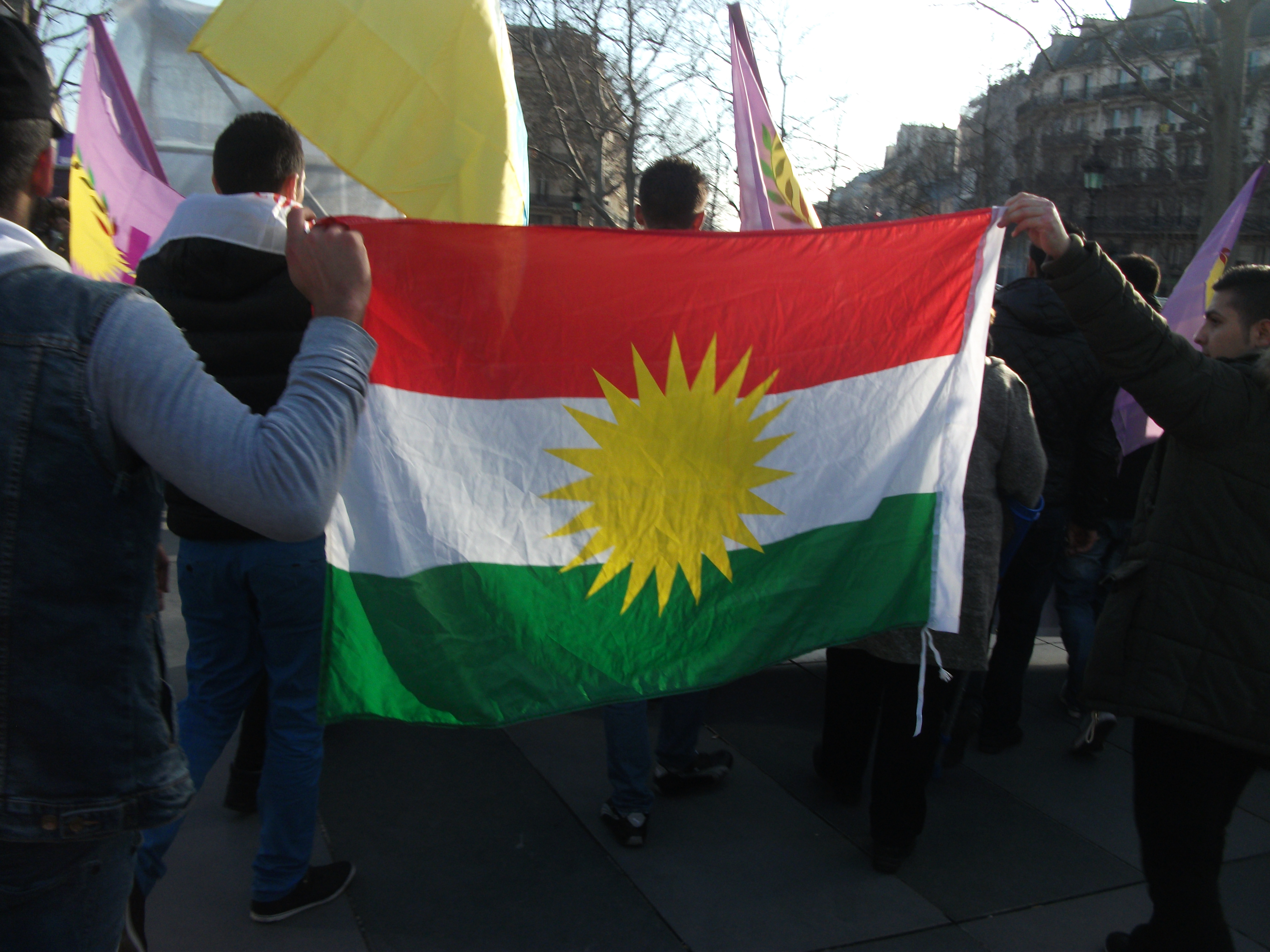
The flag of the Kurdish people, a people without a nation, a people without a land, to whom the promises of history ring hollow today more than they ever have. (C) Bernard J. Henry/AWC

The flag of the Kurdish people, a people without a nation, a people without a land, to whom the promises of history ring hollow today more than they ever have. (C) Bernard J. Henry/AWC


As outsiders but as specialists in federal forms of government, is there anything which we can do to be helpful? Maps are deceptive, and what is drawn as Shi’ite, Sunni and Kurdish area in Iraq and Syria have, in fact, mixed populations. Nor are religious-sectarian divisions the only lines of fracture.

Nevertheless, discussions among Syrians, Iraqis, Turks, Iranians and outside specialists on forms of government may be of greater use than sending Special Forces as ‘intelligence’ specialists. Such discussions will not be easy to organize or to facilitate but in a period of constitutional disorder and flux, such efforts are necessary.


Prof. René Wadlow is President of the Association of World Citizens.
Ukraine: The Dogs of the Cold War are Awakened

In Being a World Citizen, Conflict Resolution, Current Events, Democracy, Europe, Human Rights, International Justice, The former Soviet Union, The Search for Peace, United Nations, World Law on June 12, 2014 at 9:11 PM

UKRAINE: THE DOGS OF THE COLD WAR ARE AWAKENED

By René Wadlow


“Cry Havoc! And let slip the dogs of war!”

William Shakespeare, Julius Caesar


The dogs of the Cold War (1945-1990) had largely fallen asleep after the 1990 Summit Conference of the Organization for Security and Cooperation in Europe (OSCE) in Paris had put a formal end to the European aspects of the Cold War. A New Europe was the slogan of both governments and non-governmental currents that had been working for a Europe without its East-West divisions symbolized by the Berlin Wall.

Many of us had been involved in the April 1980 European Nuclear Disarmament Appeal, often shortened to END, of which the English historian E.P. Thompson was a leading spokesman. Mient Jan Faber of the Dutch Inter-Church Peace Council was the link to those working within church/religious groups on the same lines. Obviously, the level of arms − and thus disarmament − was not the only aspect of the moves necessary to move beyond the Cold War embodied in bureaucratic, and military-industrial forms.

There was a necessary ‘healing process’ − a need to remove the barbed wire in people’s minds and hearts.

The hope was that moving beyond the Cold War would become a citizens’ search for common projects, bringing together widening constituencies in a direct discourse beyond Cold War agendas and the media’s framing of the debates.

Many of us met in Prague in what was still Czechoslovakia in October 1990 for the creation of the Helsinki Citizens’ Assembly with an aim of a democratic integration of Europe. Vaclav Havel who had become Head of State spoke to the opening session on the power of acting from principle guided by our consciences to build a thoroughly new Europe undivided into blocs.

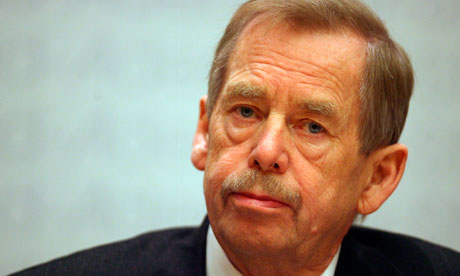
Vaclav Havel (1936-2011), the Czechoslovakian dissident playwright who in 1989 led the country's 'Velvet Revolution', eventually becoming President of Czechoslovakia. From 1992 to 2003 Havel was President of the Czech Republic after Czechoslovakia was eventually dissolved.

Vaclav Havel (1936-2011), the Czechoslovakian dissident playwright who in 1989 led the country’s ‘Velvet Revolution’, eventually becoming President of Czechoslovakia. From 1992 to 2003 Havel was President of the Czech Republic after Czechoslovakia was dissolved. (C) John Macdougall/AFP/Getty Images

“Helsinki Citizens” had been chosen by the organizers as the name because Helsinki had been the city which saw the formal start of the governmental process in 1975 leading first to a certain stabilization of the European Cold War structure and progressively to tension-reduction under the title of “détente”. Since much of the governmental detente seemed to be aimed only at making a more stable status quo, citizen activists spoke of “detente from below”, as going beyond the current structures.

The visions of a better world differed among peace, green, and human rights groups. However all agreed that the future forms of Europe was beyond the current status quo.

I had gone to Prague already concerned with ethnic-nationalities tensions. These tensions were colored by the Cold War but also had non-Cold War roots as seen in the Nagorno-Karabakh conflict within the then USSR. Through contacts in Geneva, I had become concerned by Nagorno-Karabakh and thought that good faith negotiations could lead to a resolution of the conflict. I was also concerned with the growing tensions in Yugoslavia. My paper read at the Prague conference “Future of Europe” was published in the Belgrade Review of International Affairs in December 1990.

Since 1990, the conflicts linked to the breakup of Yugoslavia, and the conflicts of Abkhazia-South Ossetia-Georgia, and Transnistra-Moldova all confirm my analysis that the key problem of our time is the manifestation of narrow nationalism. This narrow nationalist ideology must be countered by a strong cosmopolitan-world citizen ideology and practice.

The hope at Prague in 1990 was to build a pan-European movement participating in public debates, offering opinions and discussing alternatives in each country but also able to come together and act in a conflict resolution way in times of strong tensions and armed conflicts. There were a few efforts of the Helsinki groups during the Yugoslav conflicts, but they were not coordinated nor of massive size. I had participated in some of these undertakings at the UN in Geneva when the conference on Yugoslavia was in session there.

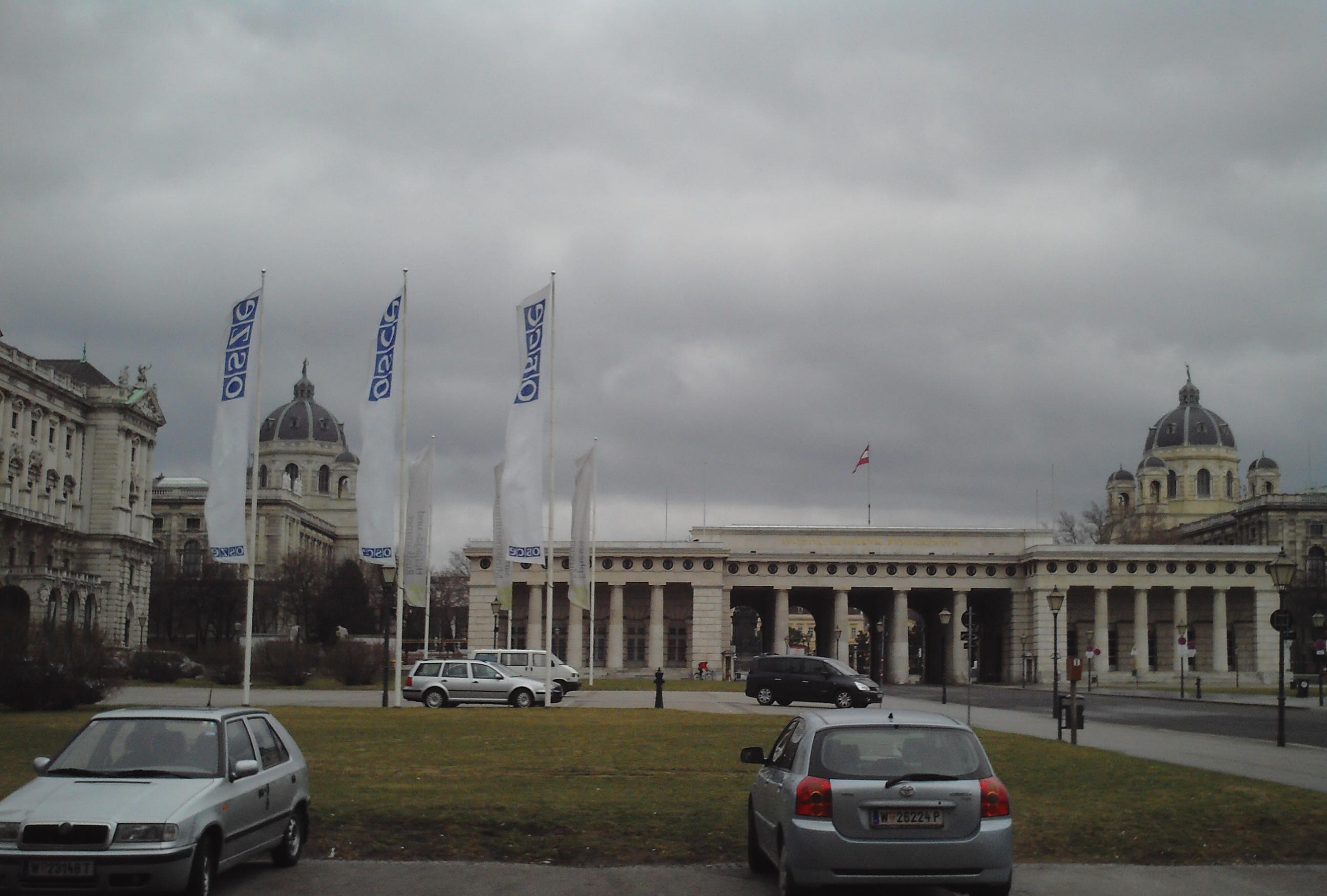
The Hofburg Palace in Vienna, Austria, which houses the Headquarters of the Organization for Security and Cooperation in Europe. (C) Bernard Henry

The Hofburg Palace in Vienna, Austria, which houses the Headquarters of the Organization for Security and Cooperation in Europe. (C) Bernard Henry/AWC

Since 1990, we have seen the rise in some European countries of hard line nationalist groups − often Right wing and some with Neo-Fascist aspects. This rise was illustrated by the May 25, 2014 elections to the European Parliament. The entry of an additional number of narrow nationalists will not have much impact on the way the European Parliament operates, but it will give the nationalists a media platform and a degree of legitimacy in their home country. There has not been a significant rise in cosmopolitan-world citizen movements, although cosmopolitanism as an intellectual framework has become increasingly common.

Without a well-organized movement of pan-European peace-green-human rights movements, “Europe from Below” has been unable to act in the Ukraine crisis. Individual governments, in particular Russia and the USA, have taken a highly visible role. The media in both countries dusted off the Cold War vocabulary and political analysis.

Talk of a “New Cold War” has been common. The OSCE − with Switzerland as President for 2014 − has called for restraint and negotiations. There has been no equivalent “high profile” efforts on the part of non-governmental groups. Today, there is no Vaclav Havel to serve as a bridge of respect among both governments and non-governmental movements. Certainly, the dogs of the Cold War have awakened to remind us that they are still there. In addition, new nationalist, and authoritarian tendencies are emerging. Although these nationalist movements are sometimes led by comic figures, they need to be taken seriously.

Counter voices also need to awaken, and the ability for nongovernmental conflict resolution groups to act must be strengthened.


Prof. René Wadlow is President of the Association of World Citizens.
Rencontre avec Ali ETMAN, jeune révolutionnaire égyptien que la France veut expulser

In Being a World Citizen, Current Events, Democracy, Human Rights, Middle East & North Africa, Solidarity on April 29, 2014 at 5:30 PM

Sur la chaîne Dailymotion de l’AWC :

Bernard HENRY, Officier des Relations extérieures du Bureau de Représentation auprès de l’Office des Nations Unies à Genève de l’AWC, donne la parole à Ali ETMAN, jeune militant de la révolution égyptienne en France que les autorités françaises veulent expulser parce qu’il a pris part à une protestation publique devant l’Ambassade d’Egypte en France.

Rencontre avec Ali ETMAN, jeune révolutionnaire égyptien que la France veut expulser

Les Citoyens du Monde Refusent l’Expulsion de Jeunes Militants Égyptiens par la France

In Being a World Citizen, Current Events, Democracy, Human Rights, Middle East & North Africa, Solidarity, World Law on March 28, 2014 at 7:25 PM

-- AWC-UN Geneva Logo --

LES CITOYENS DU MONDE REFUSENT L’EXPULSION DE JEUNES MILITANTS ÉGYPTIENS PAR LA FRANCE

L’Association of World Citizens, Organisation Non-Gouvernementale dotée du Statut Consultatif aux Nations Unies et accréditée auprès du Conseil des Droits de l’Homme, appelle le Gouvernement de la République française à honorer la tradition historique et constitutionnelle de la France en renonçant à toute poursuite, pénale ou administrative, contre les jeunes Egyptiens qui ont été arrêtés le 25 janvier dernier après avoir protesté pacifiquement devant l’Ambassade d’Egypte à Paris.

Depuis 1948 et les débuts de notre mouvement, nous, Citoyens du Monde, avons toujours œuvré pour le respect des Droits de l’Homme pour toutes et tous, au-delà de toutes les frontières, qu’elles soient nationales, politiques, religieuses ou autres.

Avant les révolutions arabes, le mot « frontière » était un symbole des régimes en place en Tunisie, en Egypte et ailleurs. Assumant un rôle de gardes-frontières pour des pays occidentaux qui n’étaient pas pressés d’accueillir des migrants en provenance d’Afrique du Nord, les régimes répressifs obligeaient souvent celles et ceux qui n’avaient d’autre choix que de fuir la misère, ou la persécution, souvent les deux, à « brûler » les frontières, à devenir ce que la langue arabe appelle « harraga », une personne qui « brûle » la frontière de son pays, et avec, toute sa vie passée.

Aujourd’hui, la décision des autorités françaises de renvoyer en Egypte des jeunes gens qui, ici en France, ne cherchaient qu’à faire usage de la liberté d’expression que consacrent tant la Constitution française que les engagements internationaux de la France en matière de Droits de l’Homme est incompréhensible. Nous voulons que les frontières ne soient pas des murs pour les migrants, mais pour ce qui est du respect des Droits de l’Homme, nous refusons que les frontières nationales ne s’ouvrent, comme c’est apparemment le cas ici, que pour laisser entrer la répression.

En voyant nos différentes structures – associations, syndicats, partis politiques et autres, unir ainsi leurs forces aujourd’hui, nous sommes certains que le Gouvernement de la France finira par nous entendre et par se montrer digne des valeurs de respect des normes universelles de Droits de l’Homme qui sont celles de ce pays, ces normes universelles qui, avec l’adoption de la Déclaration universelle des Droits de l’Homme au Palais de Chaillot, ont pris naissance en 1948 ici même, à Paris.

Professeur René WADLOW, Président

Bernard HENRY, Officier des Relations Extérieures du Bureau de Représentation auprès de l’ONU à Genève

http://www.worldcitizensunited.orghttp://www.awcungeneva.comawcungeneva@yahoo.fr