WORLD CITIZENS CALLON THE AUTHORITIES OF IRAQ TO WITHDRAW THEIR DRAFT LAW ALLOWING THE MARRIAGE OF 9-YEAR-OLD GIRLS
The AWC is alarmed to hear that a draft law under consideration in Iraq may make it legal for a man to marry a girl as young as nine.
We hear many individuals and civil society groups in the country have rightly spoken out about the said draft law.
We firmly believe the Iraqi authorities should by no means make it the law of the land.
For seventy years, Iraqi law has considered the “full age” for marriage, in the very words of the Universal Declaration of Human Rights, to be eighteen. That is consistent with the Convention on the Rights of Child under whose Article 1 “a child means every human being below the age of eighteen years”.
Lowering the marriageable age for girls to nine would send a disastrous signal for girls in Iraq and, in a broader manner, throughout the entire Arab and Muslim world and, ultimately, throughout the entire world, beyond the borders of states, cultures, languages, religions, ethnic groups or of any other nature. It would mean the end of the very notion of child abuse.
Since the draft law would make it possible for a man to marry a young girl but not, conversely, for a woman to marry a young boy – and, even then, it would only be equally condemnable – the draft law also sends a discriminatory message toward women, signifying that a female life is of lesser value.
The AWC condemns in the strongest terms any legislative attempt, whether in Iraq or anywhere else for this purpose, to turn a child into a person’s property, let alone their sexual object of pleasure.
We hereby call on the Iraqi Government and Parliament to immediately withdraw the draft bill and ensure that Iraqi law remains steadily consistent with UN human rights standards.
Government representatives and some Nongovernmental Organizations (NGOs) are participating from July 22 to August 2, 2024 in Geneva, Switzerland in the Preparatory Session for the Review Conference on the Treaty on the Nonproliferation of Nuclear Weapons. As the political and strategic situation in the world can evolve over time, the Treaty on the Nonproliferation of Nuclear Weapons (NPT) had as one of its provisions (Article VIII) that a review conference be held every five years to judge the situation and to see if new elements should be added. At the end of each Review a “Chairman’s Statement” must be agreed upon by all the States present.
The NPT, which had taken 10 years to negotiate, was proclaimed in 1970, and the first Review Conference was held in Geneva in 1975. As the Review Conference was a meeting of the States Party to the Treaty and not a regular United Nations (UN) disarmament negotiation, NGO representatives had more opportunity for interaction with governments. NGO texts were considered as “official documents” and were printed and distributed by the conference secretariat. I was asked to chair the group of NGO participants, which I did both in 1975 and 1980. As a result of my chairing the NGOs at the 1975 Review, I was invited to Moscow to discuss with Soviet military and arms control specialists. I have remained concerned with the issues ever since.
Each Review Conference has been concerned with the three fundamental aspects of the Treaty: non-proliferation, promotion of the peaceful uses of nuclear energy, and the disarmament initiatives of the five nuclear-weapon States when the Treaty was signed: the USA, USSR, the United Kingdom, France, and China as set out in Article VI.
To make matters more complicated but politically realistic, the policies of nuclear-weapon States which have not signed the NPT – India, Pakistan, Israel, North Korea – color the discussions of each Review. Iran is a State Party to the NPT, but questions have been raised about the effectiveness of the control of the International Atomic Energy Agency (IAEA) on Iran’s peaceful nuclear activities and if nuclear material is being enriched to weapon-production levels.
The nuclear weapons of Israel and their meaning for Middle East policies have long been “an elephant in the room” – too large not to notice but too dangerous to deal with if anything else in the Review process is to be done. In 1995, there was an annex to the final Chairman’s Statement of the Review proposing that a conference on a potential nuclear-weapon-free Middle East should be called. In practice, “the time was never ripe”, but the concept is still there.
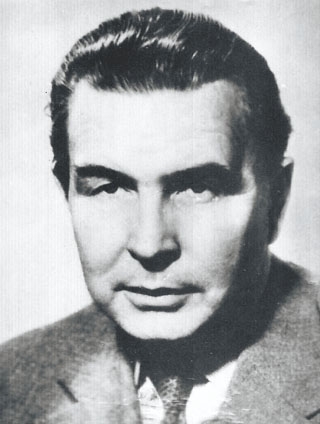
The concept of nuclear-weapon-free zones has been an important concept in disarmament and regional conflict-reduction efforts. A nuclear-weapon-free zone was first suggested by the Polish Foreign Minister, Adam Rapacki, at the UN General Assembly in October 1957 – just a year after the crushing of the uprising in Hungary. The crushing of the Hungarian revolt by Soviet troops and the unrest among Polish workers at the same time showed that the East-West equilibrium in Central Europe was unstable with both the Soviet Union and the USA in possession of nuclear weapons, and perhaps a willingness to use them if the political situation became radically unstable. The Rapacki Plan, as it became known, called for the denuclearization of East and West Germany, Czechoslovakia and Poland.
The Plan went through several variants which included its extension to cover reduction of armed forces and armaments, and as a preliminary step, a freeze on nuclear weapons in the area. The Rapacki Plan was opposed by the NATO powers, in part because it recognized the legitimacy of the East German State. It was not until 1970 and the start of what became the 1975 Helsinki Conference on Security and Cooperation in Europe (CSCE) that serious negotiations on troop levels and weapons in Europe began. While the Rapacki Plan never led to negotiations on nuclear-weapon policies in Europe, it had the merit of restarting East-West discussions which were then at a dead point after the Hungarian uprising.
Adam Rapacki
The first nuclear-weapon-free zone to be negotiated – the Treaty of Tlatelolco – was a direct aftermath of the Cuban missile crisis of October 1962. It is hard to know how close to a nuclear exchange between the USA and the USSR the Cuban missile crisis was. It was close enough so that Latin American leaders were moved to action. While Latin America was not an area in which military confrontation was as stark as in Europe, the Cuban missile crisis was a warning that you did not need to have standing armies facing each other for there to be danger.
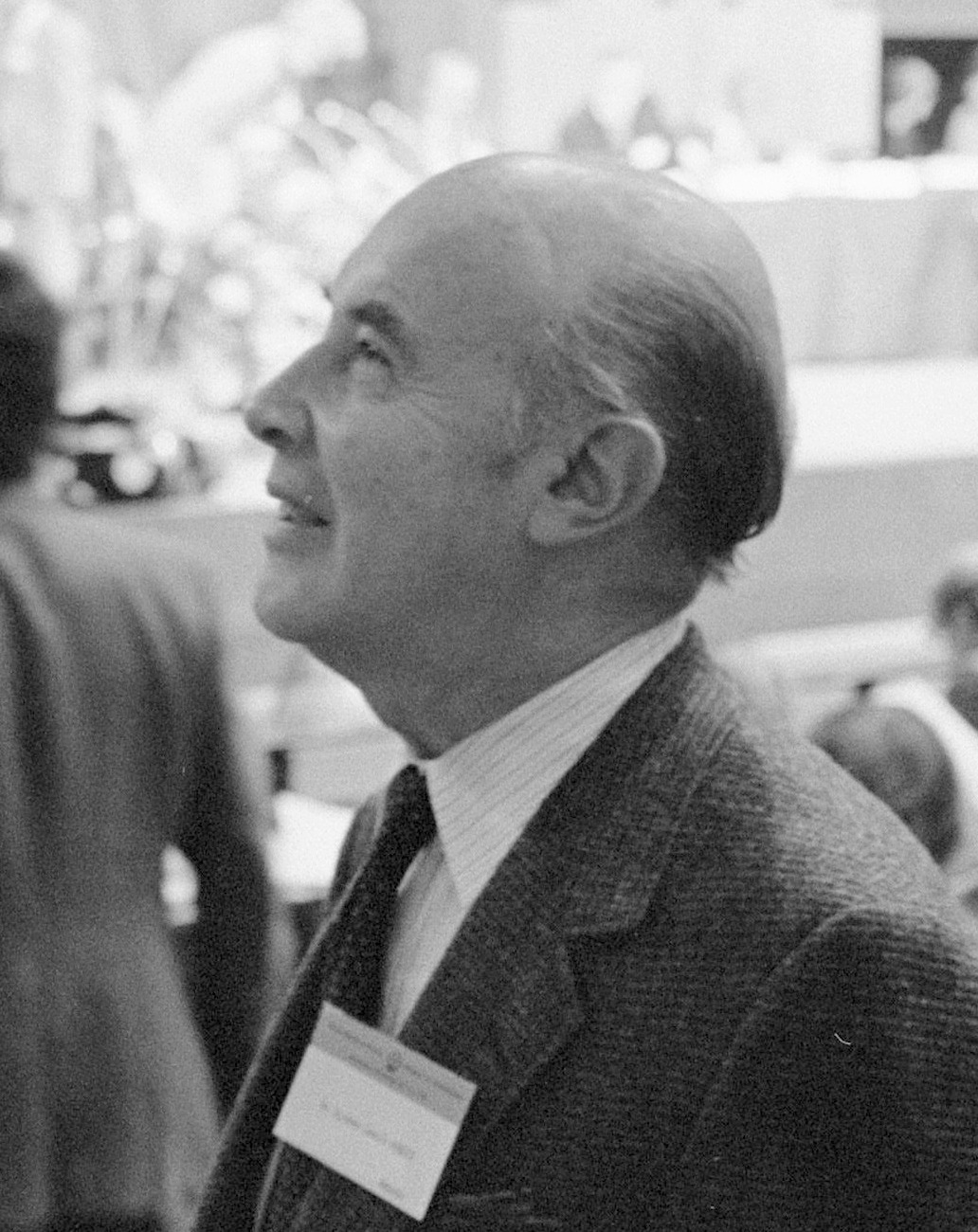
Mexico, under the leadership of Ambassador Alfonso Garcia-Robles at the UN, began immediately to call for a denuclearization of Latin America. There were a series of conferences, and in February 1067 the Treaty for the Prohibition of Nuclear Weapons in Latin America was signed at Tlatelolco, Mexico. For a major arms control treaty, the Tlatelolco was negotiated in a short time, due partly to the fear inspired by the Cuban missile crisis but especially to the energy and persistence of Garcia-Robles and the expert advice of William Epstein, the UN’s Director of Disarmament Affairs. The Treaty established a permanent and effective system of control which contains a number of novel and pioneering elements as well as a body to supervise the Treaty.
Alfonso Garcia Robles (C) Marcel Antonisse
On September 8, 2006, the five States of Central Asia – Kazakhstan, Kyrgyzstan, Uzbekistan, Tajikistan, and Turkmenistan – signed a treaty establishing a nuclear-weapon-free zone. The treaty aims at reducing the risk of nuclear proliferation and nuclear-armed terrorism. The treaty bans the production, acquisition, deployment of nuclear weapons and their components as well as nuclear explosives. Importantly, the treaty bans the transportation of nuclear weapons as both Russia and the USA have established military airbases in Central Asia where nuclear weapons could have been placed in times of crisis in Asia.
Superman is not coming to rid the world of nuclear weapons. World Citizens need to take the problem to UN delegates by themselves. Or own Quest for Peace deserves a happy ending too.
It is an unfortunate aspect of world politics that constructive, institution-building action is usually undertaken only because of a crisis. Perhaps the growing pressures in the Middle East could lead to concerted leadership for a Middle East nuclear-weapon-free zone. The IAEA has the technical knowledge for putting such a zone in place. Now there needs to be leadership from within the Middle East as well as from the broader international community. There are urgent needs for new common security approaches.
Prof. René Wadlow is President of the Association of World Citizens.
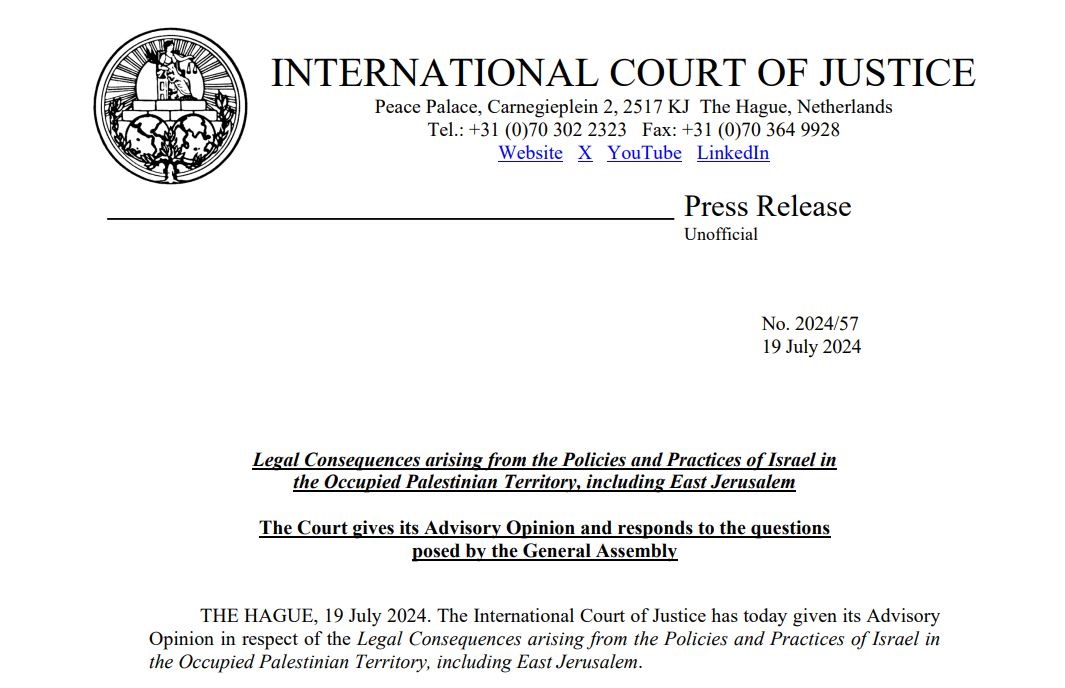
At a time when Palestinians in the Occupied West Bank and the Gaza Strip are under violent tensions, on July 19, the International Court of Justice (the World Court), published an Advisory Opinion, “Legal Consequences Arising from Policies and Practices of Israel in the Occupied Palestinian Territory Including East Jerusalem”. The request for an Advisory Opinion came from the United Nations (UN) General Assembly in 2023. The drafting by the World Court judges followed the oral hearings in February 2024 of the representatives of 50 States, the written statement of the Israeli authorities, and a voluminous dossier submitted by the UN Secretary-General on UN investigations and peacemaking efforts.
The international law framework concerns the standards set for the administration of occupied territories and the duties of an occupying power. The Advisory Opinion sets out the legal consequences for Israel, the legal consequences for other States, and the legal consequences for the UN.
(C) International Court of Justice
The Advisory Opinion does not offer new information. Nongovernmental Organizations (NGO), both in Israel and internationally, have documented in sad detail much of the violence against Palestinians, the destruction of homes by Israeli military forces, the increased presence of Israeli settlers in the West Bank, and many other forms of discrimination. The World Court considers this information reliable, and the information can serve as the basis of its deliberation without asking for new investigations.
The question which is now open is “What will be the consequences of the Advisory Opinion?” The World Court has no enforcement provisions for its decisions. The impact of the World Court depends for the most part on what national governments decide to do and on what pressure NGOs can develop. The tensions in the wider Middle East are real, and the Advisory Opinion may provide an impetus for action. The Association of World Citizens is devoted to strengthening international law and will follow these efforts with strong interest.
Prof. René Wadlow is President of the Association of World Citizens.
On June 15, 2024, Russian Federation Foreign Minister Sergey Lavrov stated that “Russia will not view Western European countries as possible partners for at least one generation. The acute phase of the military-political confrontation with the West continues and is in full swing.” He was echoed in an interview by Deputy Foreign Minister Sergey Ryabkov who said that NATO is “a group in which we feel not an ounce of trust, which triggers political and even emotional rejection in Moscow.”
It is likely that the two Sergeys express a view held by many governmental decision-makers in Moscow. Where they are wrong is that the world cannot wait for one generation to reestablish a Europe-wide security zone but most start now. Given current governmental preoccupations, it is likely that nongovernmental organizations must take the lead.
In the 1960s, the idea of a European security conference was launched by the USSR followed in 1966 by a proposal of the Warsaw Pact Organization. After a good deal of discussion and some modifications of policies, especially the West German Ostpolitik, it was decided to convene a Conference on Security and Cooperation in Europe. At the invitation of the Finnish government, multilateral preparatory talks began near Helsinki in November 1972. There were numerous preparatory aspects, especially the subjects of such a conference.
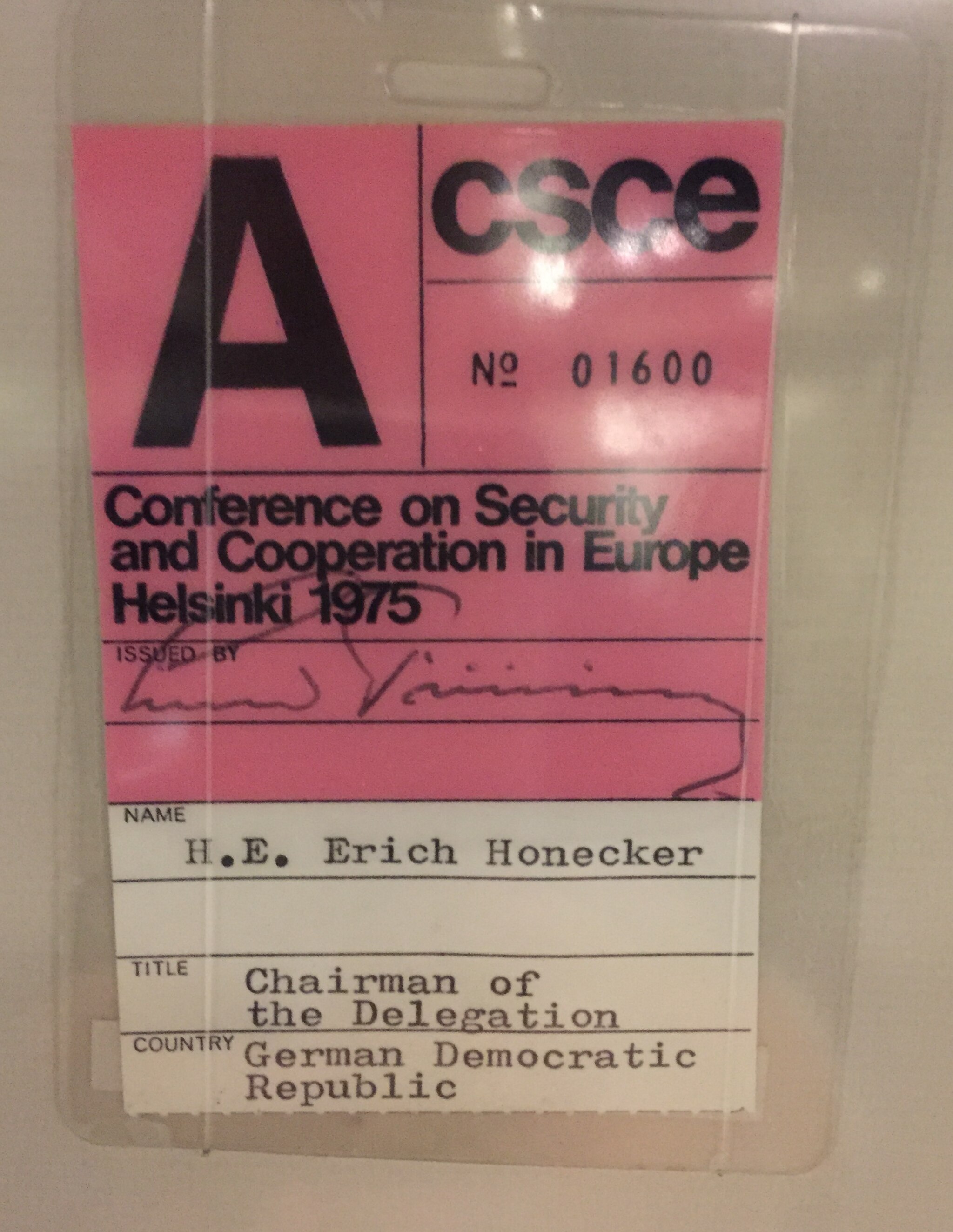
The admission card to the Conference for Security and Cooperation Meeting in Helsinki for Erich Honecker, the hardline Communist ruler of East Germany from 1971 to 1989 (C) Wikimedia Commons-HajjiBaba
Thus, the main issues of the conference were transferred for negotiation to Geneva, Switzerland to be undertaken by experts. During this period of negotiations in Geneva, nongovernmental organization (NGO) representatives in Geneva who were known for their activities at the United Nations (UN) were able to present proposals for possible consideration. The Association of World Citizens (AWC) was particularly active in presenting ideas on the resolution of conflicts and the possible use of arbitration as an appropriate means of dispute settlement. The Helsinki process later created an arbitration body in Geneva, but it is little used. The Association was also active with other NGOs in what was called the “human dimension” of the Helsinki agreement. The conference had deliberately not used a human rights vocabulary. The extensive participation of nongovernmental representatives is recognized in the text of the Final Act and encouraged to continue. The results of the Geneva negotiations led to the signature of the Final Act in Helsinki on August 1, 1975.
Today, it is likely that the Russia-Ukraine conflict starting with the 2014 annexation of Crimea has ended the effectiveness of the Organization for Security and Cooperation in Europe (OSCE). Thus, in many ways, we are “back to square one” in the organization of a Europe-wide security zone with many more States to be involved due to the breakup of the Soviet Union and Yugoslavia. There is also the issue of what has been called “The Phantom Republics”: Abkhazia and South Ossetia in Georgia, Transnistria in Moldova, Kosovo, formerly part of Serbia, and the disputed Donetsk and Luhansk People’s Republics in Ukraine. These are “ministates” economically fragile, potentially manipulated by more powerful States but which will not be reintegrated into their former State even if granted significant autonomy.
There is a rich heritage of efforts made within the OSCE. However, the OSCE has also very real limitations. It has a tight budget and a lack of specialized personnel. Much of the staff are diplomats seconded from national governments. This results in a high turnover of staff and a lack of primary loyalty to the organization. Nevertheless, the OSCE has been able to respond to situations which were not foreseen at its creation. Much of the future depends on the attitude of the Russian Federation which at present seems negative. New avenues are likely to be needed, and NGOs may again be able to play positive roles.
Prof. René Wadlow is President of the Association of World Citizens.
On June 13, 2024, the United Nations (UN) Security Council called for an end to the siege on El Fasher, the capital of the North Darfur Province of Sudan. The Council requested all parties to enable lifesaving aid to enter the city of El Fasher, the center of the most vicious fighting. The brutality of the fighting makes it impossible for aid workers to enter the city.
The civil war has gone on since April 2023 between the Rapid Support Forces led by General Mohamed Hamdan, known by his battle name of Hemedti, and the Sudanese Armed Forces led by General Abdul Fattah al-Burham. The fighting has led to some 15,000 persons being killed and 8 million displaced. The agriculture in the country is disorganized, and many people face acute hunger and, in some areas, famine.
Each of the two generals has created local militias which rob, torture, rape, and create conditions of disorder. Many of the militias use child soldiers in violation of UN treaties on the protection of children. Each of the two generals has opened the door to foreign fighters. There are Russian mercenaries which had been under the control of the Russian Wagner Group who had been fighting in Mali, Chad, Niger, and the Central African Republic. There are Ukrainian mercenaries who have come to fight the Russians.
It is difficult to understand the intensity of the current divisions represented by the two generals who had once been allies. The current divisions do not follow earlier fault lines in Sudan.
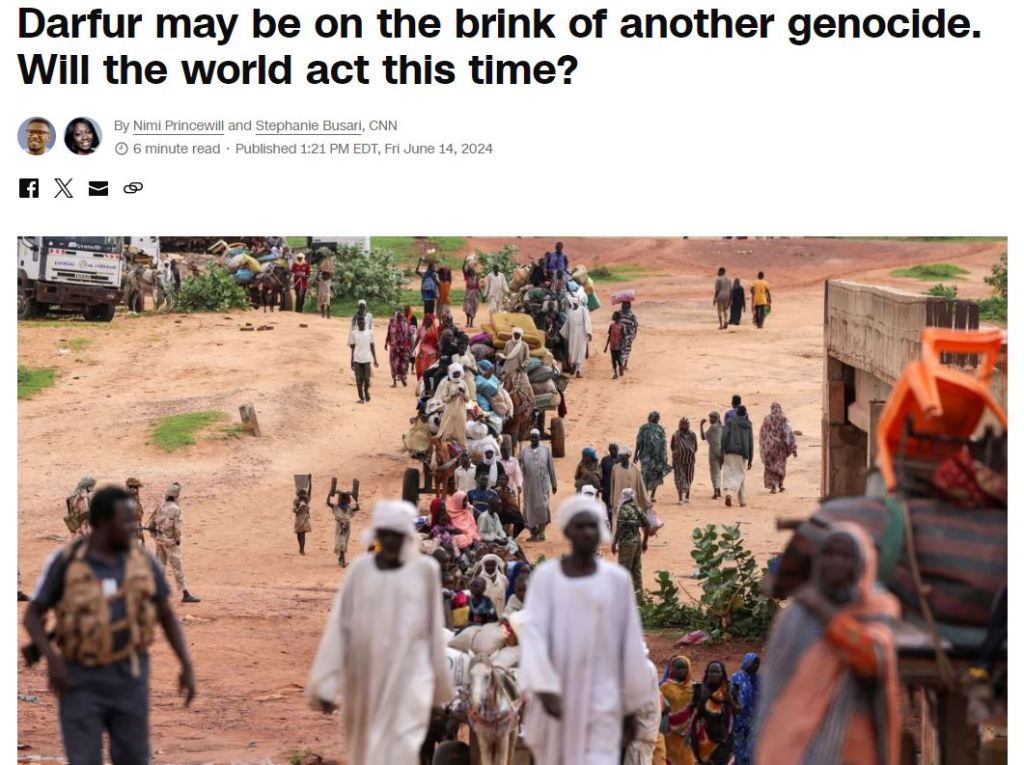
(C) Cable News Network
On behalf of the Association of World Citizens (AWC), I had been the first to raise in the UN Commission on Human Rights in 2004 the violent conditions in Darfur, Sudan, having been informed by a member of the UN Secretariat who was leaving the country and who could not speak out for himself. The violent conditions in Darfur were largely based on ethnic divisions linked to lifestyle differences between settled agriculturalists and cattle herders. There were also aspects of political divisions at the national level.
We kept in close contact with the Sudanese Mission to the UN in Geneva. Thus, the AWC was invited to be observers in the referendum which led to the creation of the State of South Sudan. The World Citizens had sent a team of observers.
Today, the suffering is real. Enlightened action is necessary. The conflictual situation requires close cooperation among humanitarian and peace nongovernmental organizations to see what is possible.
Prof. René Wadlow is President of the Association of World Citizens.
For a historic background on Darfur, see Julie Flint and Alex de Wall, Darfur: A Short History of a Long War (London: Zed Books, 2005).
On June 6, 2024, United Nations (U.N.) Secretary-General Antonio Guterres called for an urgent ceasefire in the armed conflict on the Lebanese frontier between the armed forces of Israel and the armed militia within Lebanon of Hezbollah. Clashes between Hezbollah and the Israeli military along the Israel-Lebanon border have recently increased in scope in terms of both the territory under fire and the weapons used. Already 100,000 Israelis and an equal number of Lebanese have been forced to flee their home. UNIFIL – the U.N. peacekeeping forces in southern Lebanon – has not been able to prevent this escalation.
The Nongovernmental Organization (NGO) Human Rights Watch, in a new report called Lebanon: Israel’s White Phosphorous Use Risks Civilian Harm, stated that white phosphorous, which poses a high risk of burns and long suffering, was used by Israeli forces in at least 17 towns in southern Lebanon since October 2023. Amnesty International has also documented the use of white phosphorous in southern Lebanon. In addition, Lebanon’s Ministry of Public Health says that the white phosphorous attacks have caused hundreds of forest fires in Lebanon.
An end to the armed conflict in the Gaza Strip remains the key to ending the hostilities between Hezbollah and the Israeli military. Hezbollah has stated that a ceasefire in the Gaza Strip is a precondition for stopping its attacks. Currently, there are discussions among Egyptian, Qatari, and U.S. mediators on a ceasefire with phases. The U.S. proposals were set out by U.S. President Biden on May 31, 2024, but progress is very uncertain.
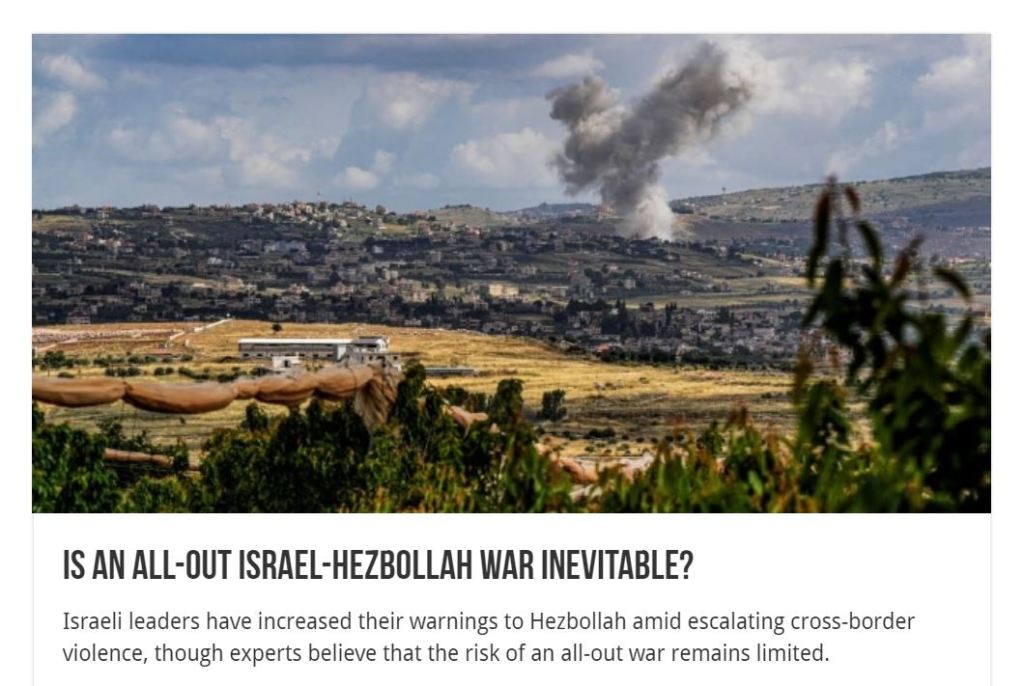
(C) Daily Star Lebanon
A Gaza Strip ceasefire, while necessary, is only a first step in the process needed of negotiations in good faith among Israelis and Palestinians. On October 8, 2023, in light of the October 7, 2023 Hamas attacks on Israeli settlements, the Association of World Citizens (AWC) had stated,
“As Citizens of the World, we call for a ceasefire in the Israeli-Palestinian armed conflict:
– for the release of all hostages held by Hamas and other Palestinian groups;
– for the release of Palestinian prisoners held in Israeli jails, often under administrative detention without trial;
– for preventing the extension of the conflict to the frontier of Lebanon through negotiations with Hezbollah;
– for preventing an increase in violence on the West Bank among Israeli settlers and Palestinian villages;
– for the start of negotiations in good faith for a political solution that ensures freedom and the collective safety of Israelis and Palestinians.”
The AWC believes that these proposals can build on a pool of shared values, create a climate of dialogue and trust, and set the stage for a new political reality.
Prof. René Wadlow is President of the Association of World Citizens.
The founder of the Baha’i faith Baha’u’llah wrote,
“The world of humanity is possessed of two wings, the male and the female. So long as these two wings are not equivalent in strength, the bird will not fly.”
It is likely that the Taliban leaders of Afghanistan have not read Baha’i texts. In fact, when the Taliban were first in power from 1996-2001 and again now from August 2021, they have arrested, tortured and summarily executed members of minority religions such as the Hazara population who are Shia and members of Sufi orders.
However, it is against women and girls in general that the Taliban have systematically implemented restrictive policies and practices that deny women and girls their human rights. Over 50 repressive edicts and decrees address women and girls to limit employment possibilities and access to education and health care. Protests have been suppressed. Women’s rights activists have faced targeted killings, enforced disappearances, incommunicado detention, and other forms of harassment. In March 2024 the Taliban authorities announced that they will revive public stoning and flogging women to death on charges of adultery.
It is not clear what outside pressure can be brought on the Afghan government to modify its policies toward women and girls. The governments of China and Russia seem to have developed closer relations with the Taliban authorities. However, it is unlikely that the Chinese or Russian government will raise human rights violations. Thus, we must see what influence nongovernmental organizations can have. It is clear that economic and social development is clearly hindered by current Taliban policies and practices. Without equality, the birds will not fly.
Prof. René Wadlow is the President of the Association of World Citizens.
Karim Khan, chief prosecutor for the International Criminal Court (ICC), on May 20, 2024 announced that he had formally applied for arrest warrants for leaders of the Israeli government and the political and military leaders of the Islamic Resistance Movement (Hamas) for war crimes and crimes against humanity as set out in the Rome Statute which created the ICC. The Israeli leaders are Prime Minister Benjamin Netanyahu, Defense Minister Yoav Gallant, and the Israeli Defense Force (IDF) Chief of Staff, General Herzi Halevi. The Hamas leaders are Yahya Sinwar, head of Hamas since 2017, Mohammed Diab Ibrahim Al-Masri, the Commander-in-Chief of the Al-Assam Brigades – the military arm of Hamas, and Ismail Haniyeh, head of Hamas’s Political Bureau based in Doha, Qatar.
The Israelis are accused of violations of international humanitarian law including starvation as a method of war including the denial of humanitarian relief supplies and deliberately targeting civilians. The Hamas leaders are said to be individually criminally responsible for the killing of Israeli civilians on October 7, 2023 and the taking of hostages.
(C) International Criminal Court
Karim Khan stated in an interview at the time of the announcement of the arrest warrants, “We must collectively demonstrate that international humanitarian law, the foundational baseline for human conduct during conflict, applies to all individuals and applies equally across the situations addressed by my Office and the Court. This is how we will prove, tangibly, that the lives of all human beings have equal value.”
The application for arrest warrants is the first step. The warrants must be approved by a panel of ICC judges which oversee such decisions. Israel is not a party to the Rome Statute of the ICC, but Palestine accepted its jurisdiction in 2015. The legal aspect of the next steps is complicated and need to be followed closely.
The Association of World Citizens has stressed that all elements of international humanitarian law must be safeguarded and charges of war crimes investigated.
Prof. René Wadlow is President of the Association of World Citizens.
Despite strong protests from Georgian Nongovernmental Organizations (NGOs) and street protests for three weeks in the capital Tbilisi, the Georgian Parliament adopted on May 14, 2024 the controversial law on “foreign influence”. The vote was 84 in favor and 30 opposed. The law is likely to be vetoed by the Georgian President, Salomé Zourabichvili, a former French diplomat, but there are probably enough favorable votes in the Parliament to override the veto.
The law is very close to a similar law of 2012 in the Russian Federation used to hinder NGOs often considered to be “enemy agents” voicing opposition to the government. The law obliges NGOs and media to publish all financing from foreign governments, foundations, and individuals if it amounts to 20 or more percent of the funds of the organization. The law has been strongly opposed by officials of the European Union and the United States. Georgia has a candidate status for joining the European Union.
(C) Euronews
The former Prime Minister and leader of the Georgian Dream Party in power for the last 12 years, Bidzina Ivanichvili, has attacked those opposed to the law as “people without a country” – a term used in the Soviet Union in the 1930s. He has been playing with a fear among some in power in Georgia that NGOs with foreign funding could create a “color revolution” to overthrow the government as was done elsewhere.
In the days prior to the vote, there was strong government pressure against journalists and NGO representatives, some being beaten and many threatened by telephone calls. As Citizens of the World concerned with the role of NGOs and freedom of the press, we need to watch developments in Georgia closely.
Prof. René Wadlow is President of the Association of World Citizens.
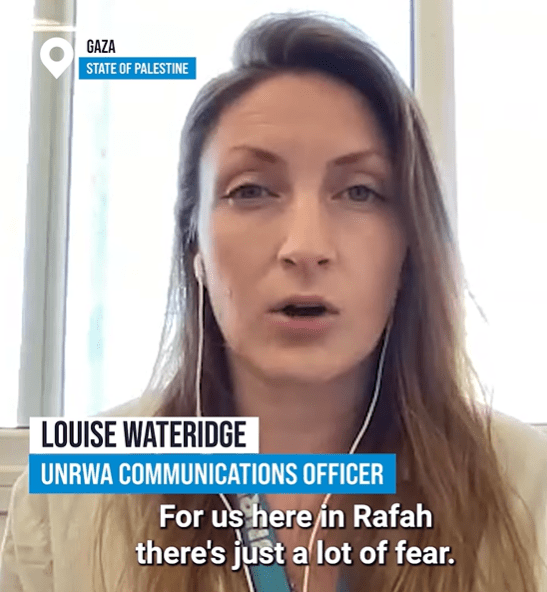
“I am disturbed and distressed by the renewed military activity in Rafah by the Israeli Defense Forces. Make no mistake – a full-scale assault on Rafah would be a human catastrophe,”
United Nations (UN) Secretary-General Antonio Guterres told reporters on May 7, 2024. The UN Office for the Coordination of Humanitarian Affairs reported that more than 35,000 Palestinians have been killed in the Gaza Strip, some 78,000 have suffered injuries, and nearly 2 million have been internally displaced. The number is rising as the ground invasion of Rafah begins.
(C) UN Geneva on Instagram
The UN Human Rights Council Special Rapporteurs have painted a grim picture of the disproportionate level of suffering experienced by girls and especially pregnant women in Gaza. “The treatment of pregnant and lactating women continues to be appalling with the direct bombardment of hospitals and the deliberate denial of access to health care facilities by Israeli snipers, combined with the lack of beds and medical resources placing an estimated 50,000 pregnant Palestinian women and 20,000 newborn babies at unimaginable risk.”
Many of these military actions are in direct violation of International Humanitarian Law as set out in the Geneva Conventions of August 12, 1949 and the Protocol Additional adopted in 1977. In order to meet new situations, International Humanitarian Law (IHL) has evolved to cover not only international armed conflicts but also internal armed conflicts. IHL prohibits the indiscriminate killing of civilians, the holding of hostages, and the destruction of medical and educational infrastructure.
The Association of World Citizens stresses the importance of IHL as a vital part of world law that will replace unilateral actions by States based on narrow domestic political considerations. The standards of IHL require political will if they are to function effectively. Thus, nongovernmental action on the Gaza Strip armed conflict is urgently needed.
Prof. René Wadlow is President of the Association of World Citizens.



 Association of World Citizens