The Official Blog of the

Archive for the ‘Current Events’ Category

World Citizens Welcome Serious Considerations of Federalist Government Structures for Ukraine, but Warn Against Simplified Concepts

In Conflict Resolution, Cultural Bridges, Current Events, Europe, The former Soviet Union, The Search for Peace on April 16, 2014 at 2:22 PM

WORLD CITIZENS WELCOME SERIOUS CONSIDERATIONS OF FEDERALIST GOVERNMENT STRUCTURES FOR UKRAINE, BUT WARN AGAINST SIMPLIFIED CONCEPTS

-- AWC-UN Geneva Logo --

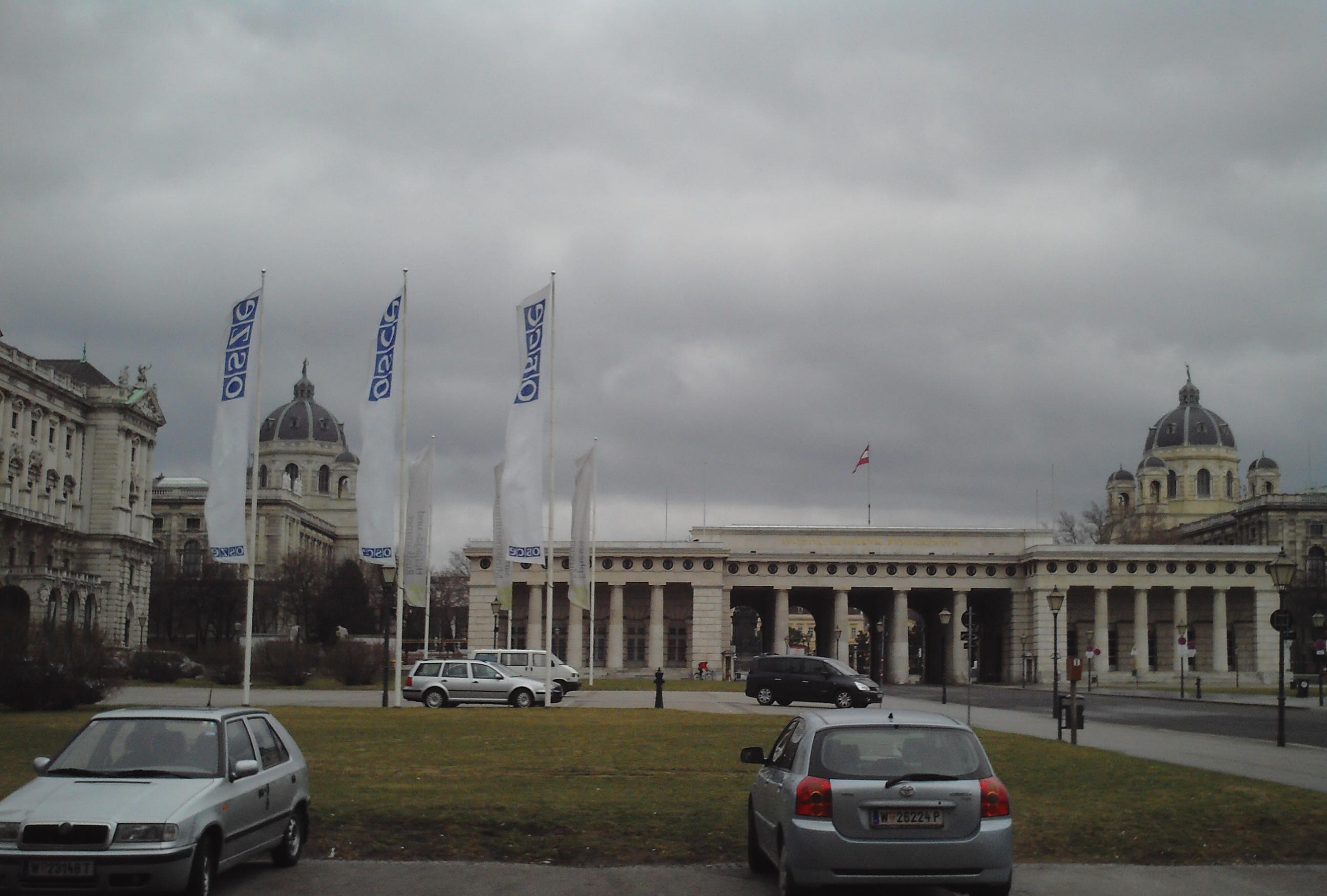
The Association of World Citizens (AWC), in an April 14, 2014 message to the Secretary-General of the Organization for Security and Cooperation in Europe (OSCE), welcomed the serious consideration of federalist government structures for Ukraine being proposed both by the current President of Ukraine in an April 13 statement and by the authorities of the Russian Federation.

As Professor René Wadlow, President of the AWC, pointed out in the message, such proposals can have a positive impact to lessen the growing tensions both within Ukraine and among the Russian Federation, Ukraine, and the European Union. The President recalled that World Citizens have always stressed that government structures should be as close as possible to the people so that their views can have a direct impact on government decisions. Federalist forms of government can facilitate the balance between the need for larger government units for policy making and units close to local communities so that those impacted are able to influence policy.

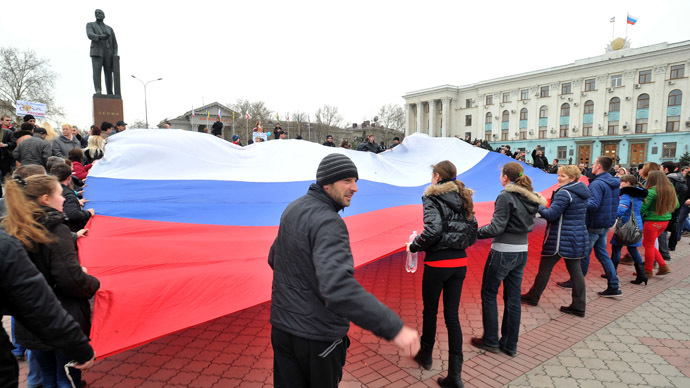
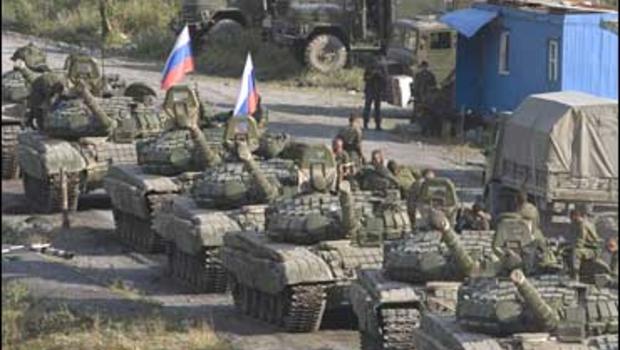
The current tensions, first within the Ukraine, followed by the change of status of Crimea and its integration into the Russian Federation, the massing of Russian troops on the Ukraine frontier with Russia, and the violent demonstrations within parts of Ukraine have created the most serious European tensions since the conflicts related to the breakup of the Yugoslav federation.

Efforts of both governments and nongovernmental organizations (NGOs) must be undertaken to lessen tensions and to create opportunities for creative dialogue. Proposals for new governmental forms within Ukraine offer a possibility for such creative dialogue.

The current tensions in Ukraine highlight two crucial political and economic orientations possible for Ukraine. On one side, there is a growing but not clearly defined revival of an economic and strategic zone with the Russian Federation as the main motor. This possible “Eurasian Customs Union” could include Russia, Belarus, Kazakhstan, Armenia, Azerbaijan and perhaps Moldova and Ukraine. Such a Eurasian association would probably develop into more than a common market. However, the full structure and tasks of such a Eurasian association have not been fully discussed publicly.

On the other side is the European Union (EU) with which Ukraine has already some treaty agreements. The refusal by the then President of Ukraine, Viktor Yanukovich, to sign a more detailed plan of action with the EU was the reason or a pretext for the start of the massive demonstrations in Kiev.

The current situation in Ukraine does not lead itself to calm considerations of basic orientations or for compromises. Both the EU and Russian diplomacy will weigh in the Ukraine decisions, and the USA and Chinese diplomacy is not likely to be absent.

World Citizens who have a long history of reflection on federalist approaches, warn against simplified concepts in the Ukraine discussions. Federalism is not a first-step to the disintegration of the Ukraine. But it is not a “magic solution” either. Government structures are closely related to the aims which people wish to achieve. The aims of the Ukrainians are multiple. Dialogue and open discussion is needed so that these aims are seen more clearly and then structures created to facilitate these aims. Those outside Ukraine, both governments and NGOs must facilitate discussions of aims and structures so that common interests may be found and current tensions reduced.

Les Citoyens du Monde Refusent l’Expulsion de Jeunes Militants Égyptiens par la France

In Being a World Citizen, Current Events, Democracy, Human Rights, Middle East & North Africa, Solidarity, World Law on March 28, 2014 at 7:25 PM

-- AWC-UN Geneva Logo --

LES CITOYENS DU MONDE REFUSENT L’EXPULSION DE JEUNES MILITANTS ÉGYPTIENS PAR LA FRANCE

L’Association of World Citizens, Organisation Non-Gouvernementale dotée du Statut Consultatif aux Nations Unies et accréditée auprès du Conseil des Droits de l’Homme, appelle le Gouvernement de la République française à honorer la tradition historique et constitutionnelle de la France en renonçant à toute poursuite, pénale ou administrative, contre les jeunes Egyptiens qui ont été arrêtés le 25 janvier dernier après avoir protesté pacifiquement devant l’Ambassade d’Egypte à Paris.

Depuis 1948 et les débuts de notre mouvement, nous, Citoyens du Monde, avons toujours œuvré pour le respect des Droits de l’Homme pour toutes et tous, au-delà de toutes les frontières, qu’elles soient nationales, politiques, religieuses ou autres.

Avant les révolutions arabes, le mot « frontière » était un symbole des régimes en place en Tunisie, en Egypte et ailleurs. Assumant un rôle de gardes-frontières pour des pays occidentaux qui n’étaient pas pressés d’accueillir des migrants en provenance d’Afrique du Nord, les régimes répressifs obligeaient souvent celles et ceux qui n’avaient d’autre choix que de fuir la misère, ou la persécution, souvent les deux, à « brûler » les frontières, à devenir ce que la langue arabe appelle « harraga », une personne qui « brûle » la frontière de son pays, et avec, toute sa vie passée.

Aujourd’hui, la décision des autorités françaises de renvoyer en Egypte des jeunes gens qui, ici en France, ne cherchaient qu’à faire usage de la liberté d’expression que consacrent tant la Constitution française que les engagements internationaux de la France en matière de Droits de l’Homme est incompréhensible. Nous voulons que les frontières ne soient pas des murs pour les migrants, mais pour ce qui est du respect des Droits de l’Homme, nous refusons que les frontières nationales ne s’ouvrent, comme c’est apparemment le cas ici, que pour laisser entrer la répression.

En voyant nos différentes structures – associations, syndicats, partis politiques et autres, unir ainsi leurs forces aujourd’hui, nous sommes certains que le Gouvernement de la France finira par nous entendre et par se montrer digne des valeurs de respect des normes universelles de Droits de l’Homme qui sont celles de ce pays, ces normes universelles qui, avec l’adoption de la Déclaration universelle des Droits de l’Homme au Palais de Chaillot, ont pris naissance en 1948 ici même, à Paris.

Professeur René WADLOW, Président

Bernard HENRY, Officier des Relations Extérieures du Bureau de Représentation auprès de l’ONU à Genève

http://www.worldcitizensunited.orghttp://www.awcungeneva.comawcungeneva@yahoo.fr

World Citizens, Opposed to the Death Penalty, Question the Egyptian Government’s Sentencing to Death 528 People in a Mass Trial

In Current Events, Human Rights, International Justice, Middle East & North Africa, Uncategorized, World Law on March 25, 2014 at 5:51 PM

-- AWC-UN Geneva Logo --

WORLD CITIZENS, STRONGLY OPPOSED TO THE DEATH PENALTY, QUESTION THE EGYPTIAN GOVERNMENT’S SENTENCING TO DEATH 528 PEOPLE IN A SHORT MASS TRIAL

In a March 26, 2014 message to the Acting President of Egypt and to the United Nations High Commissioner for Human Rights, Prof. René Wadlow, President of the Association of World Citizens (AWC), stated that the mass trial of Muslim Brotherhood members accused of the murder of a police officer and terrorist acts during the August 2013 protests was an insult to the Spirit of Justice and a violation of the rule of law.

The AWC has repeatedly called upon governments to declare a moratorium on executions with a view to abolishing the death penalty – a penalty that extensive research has shown has little or no impact on the level of violent crime and too often opens the door to judicial errors and injustice.

The speed of the two-day trial during which defense lawyers were not able to develop their arguments is unprecedented and points to the political motivations of the current military-influenced Government.

There is a possibility to appeal the verdict, but the timing and modalities are unclear. There are some 1,200 Muslim Brotherhood supporters awaiting trial, and this trial in the Minya Criminal Count does not indicate a rule of law but rather of revenge and a desire to inspire fear of possible Government action.

The verdict now goes to Egypt’s Grand Mufti, a religious authority, for approval or rejection. It is not clear on what basis religious authorities review and make decisions on what are essentially secular trials. In practice, death sentences in Egypt are often handed down, but few have been carried out in recent years. The aims of the trials and the sentences are political: to show that death is a real possibility if one “steps out of line”.

Such a misuse of the court system undermines trust in the legal order and is in violation of the spirit and provisions of human rights law.

The AWC is devoted to the universal application of human rights law which includes fair trials and the right to adequate defense. Therefore, the AWC calls upon the Government of Egypt to revise this court case by a speedy appeal procedure and to see that the subsequent trials concerning Muslim Brotherhood members or supporters of former President Mohammed Morsi are carried out in conformity with established international norms.

Libérez Razan Zaïtouneh !

In Current Events, Human Rights, International Justice, Middle East & North Africa, United Nations, War Crimes, World Law on December 19, 2013 at 1:44 PM

-- AWC-UN Geneva Logo --

LES CITOYENS DU MONDE APPELLENT A LA LIBÉRATION IMMÉDIATE DE MAÎTRE RAZAN ZAITOUNEH ET TROIS AUTRES DÉFENSEURS DES DROITS DE L’HOMME CAPTURÉS AVEC ELLE DANS LA SYRIE EN GUERRE

Paris & Genève, le 19 décembre 2013

L’Association of World Citizens (AWC) appelle à la libération immédiate de Madame Razan Zaïtouneh, avocate syrienne des Droits de l’Homme, et de trois autres Défenseurs des Droits de l’Homme (DDH) – Monsieur Wael Hamada, Monsieur Nazem Hamadi et Madame Samira Khalil – qui ont été enlevés avec elle par des inconnus voici dix jours.

Le 9 décembre 2013, ces quatre DDH ont été capturés par des hommes masqués et armés puis conduits en un endroit inconnu, depuis les locaux du Centre pour la Documentation des Violations des Droits de l’Homme en Syrie situé à Douma.

Madame Razan Zaïtouneh défend sans relâche les droits des prisonniers politiques en Syrie. Quand la révolution, qui était au départ non-violente, a éclaté en 2011, elle a fondé les « comités locaux de coordination ». Cette même année, elle a été la lauréate du Prix Anna Politkovskaïa « RAW (Reach of Women) in WAR ».

Active également en tant que journaliste, Madame Razan Zaitouneh observe et informe sur les crimes de guerre et les atteintes aux Droits de l’Homme en Syrie. Dans le courant de cette année, le Prix « International Women of Courage » lui a été décerné pour son travail et ses efforts remarquables.

Depuis le 9 décembre, personne n’a revendiqué l’enlèvement, qui a eu lieu dans une zone où toutes les parties au conflit sont représentées et il est donc impossible de savoir avec certitude pour le compte de qui œuvraient les ravisseurs.

La seule certitude en la matière est que, qui qu’ils soient, les kidnappeurs ont commis un crime de guerre par l’enlèvement délibéré de civils dans un contexte de conflit armé, particulièrement s’agissant de DDH qui sont protégés de manière spéciale par le droit international des Droits de l’Homme.

En conséquence, l’AWC exige la libération immédiate de ces quatre DDH syriens.

Release Razan Zaitouneh!

In Current Events, Human Rights, International Justice, Middle East & North Africa, Uncategorized, United Nations, War Crimes, World Law on December 19, 2013 at 1:37 PM

-- AWC-UN Geneva Logo --

CITIZENS OF THE WORLD CALL FOR THE RELEASE OF ATTORNEY RAZAN ZAITOUNEH AND OTHER HUMAN RIGHTS DEFENDERS CAPTURED IN WAR-TORN SYRIA

Paris & Geneva, December 19, 2013

The Association of World Citizens (AWC) calls for the immediate release of Ms. Razan Zaitouneh, a Syrian human rights lawyer, and three other Human Rights Defenders (HRDs) – Mr. Wael Hamada, Mr. Nazem Hamadi, and Ms. Samira Khalil, who were kidnapped by unknown assailants ten days ago.

On December 9, 2013, the four HRDs were abducted by masked armed men and taken to unknown whereabouts from the premises of the Center for Documenting Human Rights Violations in Syria, located in Douma.

Ms. Razan Zaitouneh has tirelessly defended the rights of political prisoners in Syria. When the revolution, initially a nonviolent one, started in 2011 she founded the “local coordination committees”. That year she received the Anna Politkovskaya award “RAW (Reach All Women) in WAR”.

Also active as a journalist, Ms. Razan Zaitouneh has been monitoring and reporting war crimes and human rights violations in Syria. Earlier this year she received the International Women of Courage Award for her outstanding work and efforts.

Since December 9 no one has claimed responsibility for the abduction, which took place in a zone where all parties to the conflict are represented, making it impossible to know for sure who the kidnappers were working for.

The one thing we know for sure is that, whoever they are, the kidnappers committed a war crime by deliberately abducting civilians in a context of armed conflict, especially HRDs who are specially protected under international human rights law.

Consequently, the AWC demands the immediate release of the four Syrian HRDs.

The day that Ukraine ended the Cold War

In Current Events, Democracy, Europe, The former Soviet Union on December 14, 2013 at 10:38 AM

THE DAY THAT UKRAINE ENDED THE COLD WAR

By Bernard Henry

Along with Thailand, Ukraine has gotten the attention of the world’s media due to the nonviolent demonstrations for democracy in its capital lately. The Ukrainian President, Viktor Yanukovych, once Ukraine’s Prime Minister under authoritarian leader Leonid Kuchma, has come under fire for turning his back on the European Union and favoring instead closer ties with Moscow.

In 2004 Yanukovych had been opposed in the presidential ballot by Viktor Yushchenko, who had previously been Prime Minister too as the leader of an opposition alliance. With his face ravaged by an attempt at dioxin poisoning by agents of the Kuchma regime, Yushchenko was defeated at the polls but persistent allegations of fraud in favor of the Yanukovych camp prompted the Ukrainian people to take to the streets in what became known as the Orange Revolution. After an unprecedented three rounds of vote, Yushchenko finally won the presidency by a slight margin. Sworn in as President in January 2005, Yushchenko gradually turned his presidency into a mere sequence of revenge against both his opponents and his Orange Revolution allies, such as his iconic one-time Prime Minister Yulia Tymoshenko. Eventually, it was Yanukovych who got his revenge when in 2010 Yushchenko was shut out in the first round of the presidential election and Yanukovych won.

Seeing the country caught in such a vicious circle of political authoritarianism and uprising would almost make the world forget that, twenty-two years ago, it was the President of Ukraine who put the last nail in the coffin of the Soviet Union, thus ending the Cold War for good.

After the Orange Revolution took to power the opponent Viktor Yushchenko, who had barely escaped with his life after a dioxin poisoning attempt, Ukraine had a chance to make history once again.  Unfortunately, the one-time dissident turned authoritarian and rendered his own victory without purpose, so much so that he too was evicted from power by his own people.

After the Orange Revolution took to power the opponent Viktor Yushchenko, who had barely escaped with his life after a dioxin poisoning attempt, Ukraine had a chance to make history once more.
Unfortunately, the one-time dissident turned authoritarian and rendered his own victory without purpose, so much so that his own people eventually had to evict him from power too.

In December 1991 Ukraine was a republic within the Union of Soviet of Socialist Republics, therefore not a sovereign state – although, oddly enough, Ukraine and Bielorussia, known today as Belarus, did have a seat at the United Nations alongside the Soviet seat. After the coup in August that year in which Communist hardliners almost removed reformist President Mikhail Gorbachev from power, the Union as its people had known it thus far found itself considerably weakened in many aspects.

Soon after the failed coup, the very communist system started to crumble. Article 6 of the Soviet Constitution, which made the Communist Party the central element of the state, was abolished. Gorbachev himself resigned from the Party, thus becoming the first-ever non-communist leader of a Soviet Union which was now down from fifteen to twelve republics. And that was only a beginning.

Gorbachev, who in December 1990 had violently repressed the declarations of independence of the three Baltic republics – Lithuania, Latvia, and Estonia, granted immediate independence to the three states which had been invaded by the Soviet Union during World War II. As for similar claims coming from others, though, Gorbachev stated clearly that those would never be granted.

On the contrary, Gorbachev was adamant that his very own plans for the country should be implemented come what may. Yet apart from the Muslim republics of the south, such as Kazakhstan, Azerbaijan and Uzbekistan, no one in the Union was supporting Gorbachev any longer. Russia’s President, Boris Yeltsin, who had risen to glory by leading the resistance against the August coup, was emerging of a natural leader of the breakaway movement.

Gorbachev had been campaigning for a “Treaty of the Union” which was to completely redesign the Soviet Union, very much in line with the perestroika (inner transformation) which he had advocated since his accession to power in 1985 after the death of Konstantin Chernyenko. With the treaty in force, the twelve republics were to become all but independent, the USSR becoming more like a confederation with little central powers left. No wonder the old guard didn’t like it. But now that his enemies were no longer a threat Gorbachev was determined to push for a wide adoption of the Treaty.

To achieve this goal, Gorbachev knew that without Russia on his side now, he desperately needed the support of the Soviet Union’s second leading republic – Ukraine, where a presidential election was planned for December 5. In the once single-party state that the Soviet Union had been, several candidates were now allowed to run for president in each of the republics. The Ukrainian election would see several rival factions compete for the presidency, among which the communist hardliners, Gorbachev’s own camp, and the chairman of Ukraine’s Supreme Soviet, Leonid Kravchuk. After the August coup Kravchuk, aged 57, had resigned from the Communist Party and declared Ukraine independent from the Soviet Union. Along with Yeltsin and Bielorussia’s President, Stanislaw Chukchievich, Kravchuk was ready to declare the death of the Soviet Union. Yet Gorbachev still hoped that Kravchuk would, if elected, sign the Treaty of the Union and have Ukraine rejoin a widely-reformed Soviet Union.

On December 5, 1991 Kravchuk won the election and immediately dozed Gorbachev’s hopes by stating that he would not sign the Treaty of the Union and Ukraine was now a sovereign state for good. Three days later Yeltsin, Chukchievich, and Kravchuk signed the Belavezha Accords, declaring the Soviet Union dissolved and replacing it with a Commonwealth of Independent States (CIS).

With a Union now comprised only by the southern Muslim republics, although the leaders of many of them had actually supported the failed coup against him, Gorbachev was forced to admit that the country he hoped to reform had now just died. On December 21 the Communist Party of the Soviet Union was banned and on December 25 Gorbachev resigned from the Soviet presidency, adding in a live television address that the Soviet Union had “ceased to exist as a subject of international law”. The Minsk-based CIS took over and Russia was recognized abroad as the legitimate successor to the Soviet Union.

On December 8, 1991 Presidents Chukchievich of Bielorussia, Yeltsin of Russia, and Kravchuk of Ukraine (not pictured) signed the Belavezha Accords which effectively put an end to the existence of the Soviet Union and replaced it with the Commonwealth of Independent States. If it hadn't been for Ukraine and President Kravchuk, none of this would have been possible.

On December 8, 1991 Presidents Chukchievich of Bielorussia, Yeltsin of Russia, and Kravchuk of Ukraine (not pictured) signed the Belavezha Accords which effectively put an end to the existence of the Soviet Union and replaced it with the Commonwealth of Independent States, thus formally ending the Cold War.
If it hadn’t been for Ukraine and President Kravchuk none of this would have been possible.

Had Ukraine decided instead to support Gorbachev and sign the Treaty of the Union, history could have taken quite a different turn. Several leaders of the southern Muslim republics, such as Uzbekistan’s Islam Karimov, had supported the August 1991 coup against Gorbachev. Had he been forced to do with a downgraded union with several regional leaders openly seeking a return to the Stalin-era ways, Gorbachev likely would not have stood a second coup or a rally of hardliner leaders against him, leaving a weakened newly-independent Russia and its allies in Bielorussia and the Baltic republics hardly armed enough to face a nine-member Union poised to restore the old order by any means necessary.

As Ukraine grapples once again with democracy and rights issues today, its leaders on both sides certainly ought to take pride if only in this one thing – it is their country that saved the world from a possible Third World War, nuclear or not, by making it possible for Russia and its supporters to put an end to a Soviet Union which had failed to meet the challenges of history.

Bernard Henry is External Relations Officer of the Representative Office to the United Nations in Geneva of the Association of World Citizens.
Nelson Mandela and the Struggle for Universal Human Rights

In Africa, Anticolonialism, Being a World Citizen, Current Events, Fighting Racism, Human Rights, International Justice, The Search for Peace, Uncategorized, World Law on December 10, 2013 at 12:43 PM

NELSON MANDELA AND THE STRUGGLE FOR UNIVERSAL HUMAN RIGHTS

By René Wadlow


It is appropriate that a major part of the commemoration for Nelson Mandela should fall on December 10, the anniversary of the Universal Declaration of Human Rights. Mandela was both a major actor in developing human rights in South Africa and a symbol of the worldwide struggle for the respect of human rights.  Pressure from human rights groups worldwide played an important part in his release from prison in 1990 as well as bringing an end to the deeply entrenched system of apartheid that enforced racial segregation in every aspect of South African life.

The efforts on the part of the Afrikaner-led National Party Government to enforce apartheid and to prevent opposition had led to many violations of human rights in South Africa: limits on press and expression, on the freedom of association, and the right to fair trial. Therefore, the dismantling of the apartheid system was a necessary pre-requisite for the establishment of the rule of law and respect for human rights.

Nelson Mandela led the efforts to end apartheid, a victory without the blood bath that so many had predicted and feared. He led on the path of constructive reconciliation and an inclusive society.

There is still much to do to develop equality of opportunity in South African society.  Years of discrimination, of lack of education and training, of lack of access to resources leave deep structural divides.  However, much has been undertaken, and South Africa has the potential to be an economic and political leader in Africa.

Nelson Mandela is an example of courage and conviction to secure human rights, both in his own country and worldwide, an example of the long and continuing efforts needed for human freedom.

Prof. René Wadlow is President and Chief Representative to the United Nations Office at Geneva of the Association of World Citizens.
 

5583290-la-sante-de-nelson-mandela-s-ameliore-selon-la-presidence

J’étais là

In Being a World Citizen, Current Events, Fighting Racism, Human Rights, Solidarity on December 2, 2013 at 11:24 AM

J’ETAIS LA

Par Bernard Henry

Samedi 30 novembre 2013. Me voici de retour chez moi à Suresnes. Je viens de participer à la Grande Marche contre le Racisme organisée à Paris par un certain nombre d’associations, dont Amnesty International avec laquelle j’ai moi-même marché.

On nous avait dit de ne pas aller marcher à Paris, car cette marche ne serait qu’une manœuvre de diversion du Parti Socialiste pour cacher les mauvais résultats de l’action du Gouvernement. On nous avait encore dit, du côté du Front National et des islamistes, extrêmes qui comme toujours se rejoignent, qu’il était « inutile » d’aller ainsi marcher – comme quoi il est toujours « utile », en tout état de cause, de se demander à qui profite le crime, en l’occurrence le racisme.

Moi-même, j’étais sollicité pour deux autres événements aujourd’hui, et avec la marche, cela m’en faisait trois parmi lesquels il me fallait choisir.

Je n’ai pas choisi, tout au long de mon existence, de subir des injures et des attaques sur le fait que je sois handicapé, ou que je sois juif, ou que je sois d’origine étrangère (du côté maternel, ce qui explique mon nom français car seul mon père l’était). Celle que j’aime, ses enfants d’une précédente union et nombre de mes ami(e)s n’ont pas choisi non plus de subir les mêmes choses parce que leur peau est plus mate, leur nom plus difficile à prononcer et leur appétit mis entre parenthèses en journée pendant un mois chaque été.

De même, Christiane Taubira, Ministre de la Justice, Garde des Sceaux, ne s’est vue laisser aucun choix lorsque d’aucuns l’ont comparée à un animal parce qu’elle a la peau noire, si courageux de leurs idées qu’ils ont parfois envoyé le faire à leur place leurs enfants dont ils ont ainsi pollué l’esprit. Même les Nations Unies ont condamné ces attaques contre elle[i].

Dans l’émission Envoyé Spécial de France 2, une candidate investie pour les prochaines municipales par le Front National, parti français d’extrême droite, a montré avec fierté un odieux montage photo de sa composition dans lequel elle compare la Ministre française de la Justice à un singe parce qu’elle est de couleur noire.

Dans l’émission Envoyé Spécial de France 2, une candidate investie pour les prochaines municipales par le Front National, parti français d’extrême droite, a montré avec fierté un odieux montage photo de sa composition dans lequel elle compare la Ministre française de la Justice à un singe parce qu’elle est de couleur noire.

Il n’était donc qu’un seul endroit où je pouvais et devais me trouver aujourd’hui, et cet endroit, c’était l’espace qui sépare la Place de la République de la Place de la Bastille à Paris, cet espace qui a accueilli la Grande Marche contre le Racisme.

Abraham Lincoln, le Président des Etats-Unis qui a aboli l’esclavage dans son pays, ayant payé de sa vie son courage politique, a dit un jour : « On peut tromper quelques personnes pendant quelques temps ; on peut tromper tout le monde pendant quelques temps ; mais on ne peut pas tromper tout le monde tout le temps ».

En matière de lutte contre le racisme, Lincoln reste une référence dans l’histoire américaine et mondiale. Si les Etats-Unis ont cessé de prendre pour acquis qu’un être humain pouvait être la propriété d’un autre en raison de sa seule couleur de peau, c’est grâce à lui.

Dans l’opinion publique française, les discours racistes ont acquis au cours des derniers mois une popularité inquiétante. Mais la résistance existe et n’a pas peur de s’afficher.

Dans l’opinion publique française, les discours racistes ont acquis au cours des derniers mois une popularité inquiétante. Mais la résistance existe et n’a pas peur de s’afficher.

Aujourd’hui, la France connaît à nouveau, comme avant la Seconde Guerre Mondiale puis dans les années 1950, une montée de l’insanité raciste et des agressions envers celles et ceux qui ne ressemblent pas à la majorité. La Grande Marche contre le Racisme de cet après-midi a démontré que la population n’était pas unanime, loin s’en faut, à suivre ce mouvement de folie.

Elle réagit. Nous réagissons, toutes et tous ensemble. Nous disons non au racisme, non à la fatalité historique qui vouerait la France à la haine de l’autre. Mais pour capital qu’il était d’y prendre part, cette marche n’est en tout et pour tout qu’un instant. Elle n’est pas une finalité.

C’est chaque jour qu’il faut agir, c’est ensemble qu’il faut agir. C’est ainsi que les tenants de la haine comme instrument politique finiront par comprendre que leurs intrigues ne seront pas couronnées de succès.

C’est ce qu’avait compris, cent ans après Lincoln aux Etats-Unis, Martin Luther King, lui aussi assassiné parce qu’il voulait mettre fin au racisme dans son pays. Le Révérend savait combien l’inaction, le renoncement, le fatalisme étaient nuisibles à la lutte contre le sectarisme et l’injustice. Parmi ses nombreuses maximes passées à la postérité, il y a celle-ci :

« A la fin, nous nous souviendrons non pas des mots de nos ennemis, mais des silences de nos amis. »

« On ne peut pas continuer comme ça », ai-je entendu Geneviève Garrigos, Présidente d’Amnesty International France, déclarer à une journaliste de BFM TV. J’étais là. Je l’ai entendue le dire à deux mètres de moi. J’étais là, quand d’autres l’auront entendue plus tard à la télévision. Si par bonheur, Geneviève les a convaincus, qu’ils passent à l’action à leur tour, sans quoi encore plus tard, peut-être, sera trop tard.

Bernard Henry est Officier des Relations Extérieures du Bureau de Représentation auprès de l’Office des Nations Unies à Genève de l’Association of World Citizens.


The UN and the Disappearing State of the Central African Republic

In Africa, Anticolonialism, Conflict Resolution, Current Events, Democracy, Human Rights, International Justice, The Search for Peace, United Nations, War Crimes, World Law on November 22, 2013 at 10:36 AM

THE UN AND THE DISAPPEARING STATE OF THE CENTRAL AFRICAN REPUBLIC

By René Wadlow

In a November 19, 2013 statement to the United Nations (UN) Security Council, the Secretary General, Mr. Ban Ki-moon, warned that communal violence in the Central African Republic (CAR) was spiraling out of control and backed the possibility of an armed UN peacekeeping force to complement the civilian UN staff, the Integrated Peacebuilding Office in the Central African Republic (BINUCA).

The UN faces a double task in the CAR. There is the immediate problem of violence among tribal-based militias in the absence of a national army or central government security forces. The militias basically pit the north of the country against the south. In addition, there are other militias from the Democratic Republic of the Congo which use the CAR as a “safe haven” and live off the land by looting villages. There are also segments of the Lord’s Resistance Army, largely from the Acholi tribes of northern Uganda who also use the CAR as a safe area looting as they move about.

In the absence of a standing UN peacekeeping force, UN peacekeepers would have to be redeployed from the eastern areas of the Democratic Republic of Congo, an area also torn apart by fighting among different militias and an incompetent Congolese national army. Although the UN forces have been in the Congo for a number of years, it is only in the last couple of months that they have had a mandate to be active in a military way and have started to make an impact on the security situation. By deploying UN troops away from the Congo, there is a danger that the security progress made will fade away.

The longer range task of the UN, the peacebuilding effort, is to create a national administration which provides services beyond the capital city, Bangui. This is the aim of the BINUCA, but its work is largely impossible in the light of the ongoing violence. The challenge is “State-building” which was not done during the colonial period by France.

The area covered by the current State had no pre-colonial common history, but was incorporated into French Equatorial Africa when it could have been as easily part of the Belgium Congo or added to Uganda as part of British East Africa.

Oubangui-Chari as it was then known was the poor cousin of French Equatorial Africa (AEF) whose administrative center was Brazzaville, Congo, with Gabon as the natural resource base. The Cameroon, although legally a League of Nations Mandate, was basically part of AEF. Oubangui-Chari was used as an “exile post” for African civil servants considered “trouble makers”. French colonial administrators also considered Oubangui-Chari as a posting in exile, a place to get away from as soon as possible. Schools were few, and secondary school students were sent away to Brazzaville.

There was only one political figure of standing who emerged from Oubangui-Chari, Barthelemy Boganda (1910-1959). He was the first Roman Catholic priest ordained in 1938. After the Second World War, he was elected to serve in the French Parliament as a member of the Catholic-influenced MRP Party, although he was stripped of his priesthood for going into politics and also for marrying his legislative assistant.

Boganda advocated keeping the AEF together as a federation of independent States knowing that Oubangui-Chari was the poorest of the AEF States and most in need of help from its neighbours. Unfortunately, he was killed in a plane crash on the eve of independence, and with him disappeared all enlightened leadership.

However, his stature in the political life of Oubangui-Chari was such that political power passed on to two cousins, David Dacko, first President of the independent Central African Republic and then Jean-Bedel Bokassa in 1965 who changed the name of the country to Central African Empire and ruled (or misruled) as Bokassa 1er. His dreams of being a new Napoleon was ended in 1979 by a French military intervention after Bokassa had too visibly killed young school children who were protesting.

Jean-Bedel Bokassa aka Bokassa the First, the man who would be emperor – even if it meant reigning over scorched earth.

Jean-Bedel Bokassa aka Bokassa the First, the man who would be emperor – even if it meant reigning over scorched earth.

Since Bokassa, all pretext of a unified administration has disappeared. General Kolingba, Ange-Felix Patassé, followed by Francois Bozizé were considered “Head of State”, but the State had no visible administration. Bozizé was overthrown in March 2013 by Michel Djotodia and his Seleka (alliance in the Sango language) militia. The Alliance has now been dissolved by Djotodia but replaced by nothing. A fact-finding mission sent by the UN Human Rights Council concluded that “both the forces of the former government of President Bozizé and the non-State armed group Seleka committed serious violations of international humanitarian law and international human rights law during the conflict”.

Creating order from disorder is a difficult task, especially as the pre-colonial tribal structures no longer function. There were very few inter-tribal mechanisms to settle disputes in any case. The State-building process merits close attention. Somalia remains a good example of the difficulties. The UN faces real challenges in the Central African Republic and requires help from national governments and NGOs.

Politically, Africa has always been a continent of many dramas. Hopefully, if the international community finally decides to take quick, decisive action at last, the Central African Republic will not be just another name on the list.

Politically, Africa has always been a continent of many dramas. Hopefully, if the international community finally decides to take quick, decisive action, the Central African Republic will not be just another name on the list.

René Wadlow is the President and Chief Representative to the United Nations Office at Geneva of the Association of World Citizens.
Is the UN Trying to Legalize Prostitution Worldwide?

In Current Events, Human Rights, International Justice, United Nations, Women's Rights, World Law on October 15, 2013 at 7:13 PM

IS THE UN TRYING TO LEGALIZE PROSTITUTION WORLDWIDE?

By Bernard Henry

In February 2012 Claude Guéant, the then Minister of Interior of France, caused a stir in the country by stating that “Not all civilizations are equal”, adding that one of the yardsticks against which a society could be viewed as “civilized” was “the subservience of women”[i].

For months, Guéant had spoken out almost obsessively against Islam, even branding all of France’s Muslim population “a problem” once. That latest statement was thus just another attack on a community heavily targeted by Guéant’s party, the Union for a Popular Movement (UMP), to attract voters from the anti-Muslim extreme right National Front. Eventually, President Nicolas Sarkozy and the UMP were defeated at the polls in May 2012 by Socialist Party candidate François Hollande. As for the National Front, it scored a historic 17% and was able to deprive Sarkozy of its much-needed support for the second round.

Guéant’s statement was nonsensical in many ways, not least because the subservience of women is anything but a matter of allegedly unequal civilizations. As the Charter of the United Nations has provided from the very start, and as was recalled by the Beijing Conference in 1995, women’s rights are by essence a global issue, never to be rescinded because of cultural or other differences between societies.

Then, just what is to be deducted from the proposal by two United Nations (UN) agencies to simply legalize, throughout the world, prostitution and everything that goes with it?

This is not a joke. In a September 20 appeal to the UN leadership[ii], the New York-based women’s rights organization Equality Now expressed concern about the recommendations contained in the Global Commission on HIV and the Law’s report HIV and the Law: Risks, Rights and Health (2012), published by the United Nations Development Program (UNDP), and the report Sex Work and the Law in Asia and the Pacific (2012), backed by the UNDP, the United Nations Population Fund (UNFPA) and the Joint United Nations Program on HIV/AIDS (UNAIDS).

In these two reports, Equality Now wrote, the UN agencies tell Member States that “in order to support efforts to reduce HIV/AIDS and to promote the human rights of people in prostitution, all aspects of the commercial sex industry should be decriminalized, including pimping, brothel-keeping and the purchase of sex”. The organization denounces these recommendations as being “in direct opposition to international human rights standards,” adding that these “also largely ignore the experiences and views of survivors of prostitution and sex trafficking.”

Direct opposition to human rights standards is right. When it comes to women’s rights, the international legal instrument of reference is the UN’s own Convention on the Elimination of all Forms of Discrimination against Women (CEDAW). And CEDAW’s Article 6 provides, “States Parties shall take all appropriate measures, including legislation, to suppress all forms of traffic in women and exploitation of prostitution of women.” Not quite what the two reports suggest, indeed.

Besides the letter of the law, evidence on the ground, too, does not seem to support the UN agencies’ claims. As Equality Now further recalls, “[I]n 2000 Nongovernmental Organizations and sex trafficking survivors worked to ensure that the UN Protocol to Prevent, Suppress and Punish Trafficking in Persons, Especially Women and Children (the “UN Trafficking Protocol”) defined trafficking to reflect the wide variety of sex trafficking survivors’ experiences”.

The UN Trafficking Protocol’s definition, Equality Now stresses, was the result of years of discussion and negotiation by countries and reflects a carefully drawn political consensus that should not be challenged by UN agencies. Yet the two reports disturbingly recommend revising and narrowing the definition. Should this recommendation be adopted, many victims would lose all chances of being recognized as victims of sex trafficking and their traffickers would now enjoy legal impunity for their crimes.

Sex trafficking and prostitution – two scourges that would soon be gone if there were no buyers in the first place. So why is the United Nations calling for the removal of domestic laws that make them illegal?

Sex trafficking and prostitution – two scourges that would soon be gone if there were no buyers in the first place. So why is the United Nations calling for the removal of domestic laws against them?

Ironically, in a report issued in September, UNDP, UNFPA, UN Women and UN Volunteers actually established a direct link between rape perpetration and the purchase of commercial sex, noting that both stem from gender inequality. So why are UNDP and UNFPA now advocating the decriminalization of prostitution – and accordingly the inherent decriminalization of rape?

When it comes to protecting the rights of people in prostitution, including the right to health – especially to protection from HIV – safety and freedom from violence and exploitation, throwing in the towel and letting both pimps and customers walk away with their dirty business is obviously not the way.

On September 30 the AWC issued an appeal to the UN, in line with Equality Now’s own recommendations, urging the World organization to clarify its position on the decriminalization of prostitution in all its aspects and ensure that the future development of policies and programs affecting people in the commercial sex industry includes the views of survivors and groups working on the issue.

In the Preamble to the UN Charter, “[T]he peoples of the United Nations have in the Charter reaffirmed their faith in fundamental human rights, in the dignity and worth of the human person and in the equal rights of men and women”. There can be no equality between human beings when a man can officially buy another man as a slave, all right. Now what kind of equality can there be between a man and a woman when the latter can officially be rented for sex? We would very much like an answer.

Bernard Henry is the External Relations Officer of the Representative Office to the United Nations in Geneva of the Association of World Citizens.


[i] Al Jazeera, « Sarkozy ally says all civilisations not equal », February 5, 2012.