The Official Blog of the

BOOK REVIEW: William Bloom, “The Power of the New Spirituality”

In Asia, Being a World Citizen, Book Review, Cultural Bridges, Human Development, Nonviolence, Solidarity, Spirituality, The Search for Peace on January 6, 2026 at 8:00 AM

By René Wadlow

William Bloom, The Power of the New Spirituality.

Wheaton, Illinois: Quest Books, 2012, 248pp.
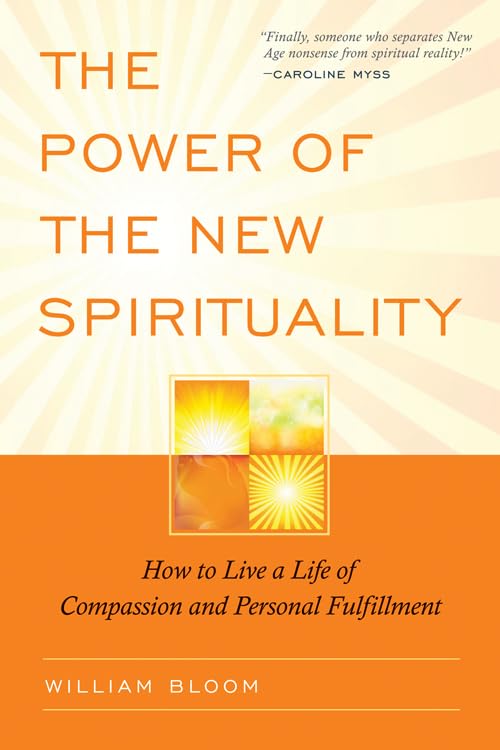
William Bloom who combines a long-standing interest in New Age approaches to spirituality with an identity focus in international relations (1), has written “We are in changing times. Our culture and technology are continually transforming, and the intellectual certainties of the last few hundred years are no longer secure…It is our need to find a new authenticity in our spiritual lives — to bring back fully into our consciousness — the sacred dimension of life, but we want to do this in a way that honours personal freedom and personal growth. In essence, then, we are turning to the teachings and experiences of what is called the ageless wisdom, but we are doing so with completely new attitudes”.

A key element of our changing culture is that we are discarding old religious forms and re-creating our spiritual and sacred world. Creative new attitudes, practices, and forms have been an emphasis of William Bloom. (2) As he writes, “As a teacher and author I often feel conflicted: on the one hand, I want to inspire and encourage people about their innate goodness and the wonders of creation; on the other hand, I do not want to support naiveté about the human condition. We are magnificent beings with cosmic consciousness, and yet at the same time we are also insecure and can do harm.

“Yet the current emergence and creation of a new culture is not always an easy process. It feels as if everything is being created anew. At the same time, we know that we are working with dimensions which have always been and which always shall be.”

The basis of many New Age approaches is that we live in a vast field of energy. Vibrations and atmospheres can move like waves through this field to impact others. Our thoughts, feelings and actions can cooperate with this vitality, energy and consciousness for our development and to benefit others. We find this use of energy fields in many schools of spiritual healing such as reiki, in yoga and martial arts. (3)

William Bloom sets out a three-step process for deepening and expanding our awareness, developing our hearts, and building a just, creative and benevolent world. He sets out some core skills.

The first is centering — a calm awareness, an integration of body, mind and spirit. This is best done through silent meditation, but some find music or ritual helpful. “Whatever works for you” is basically his approach. This is an approach called “mindfulness” in some Buddhist traditions and can also be helped by breathing exercises and other techniques.

The second step is to focus the heart on compassion. Visualization is one approach, such as visualizing ever wider circles of persons or places held within the field of compassion. Focusing on the Sacred Heart of Jesus is used in certain Catholic traditions.

The third step is to direct the energy field so that it is of service to others. When we are centered and heart-focused, with an encouraging psychological attitude, we create a vibration that is supportive for those around us and can be a positive influence in the wider world.

William Bloom has written a clear and helpful presentation for personal fulfillment and service to humanity.

Notes:

1) William Bloom, Personal Identity, National Identity and International Relations (Cambridge: Cambridge University Press, 1993)
2) William Bloom, First Steps: An Introduction to Spiritual Practice (Forres, Scotland: Findhorn Press, 1993)
3) Barbara Ann Brennan, Hands of Light: Guide to Healing Through the Human Energy Field (New York: Bantam, 1990)

Prof. René Wadlow is President of the Association of World Citizens.
BOOK REVIEW: Bill Devall and George Sessions, “Deep Ecology: Living as if Nature Mattered”

In Being a World Citizen, Book Review, Environmental protection, Human Development, Nonviolence, Peacebuilding, Solidarity, Sustainable Development, The Search for Peace on January 6, 2026 at 8:00 AM

By René Wadlow

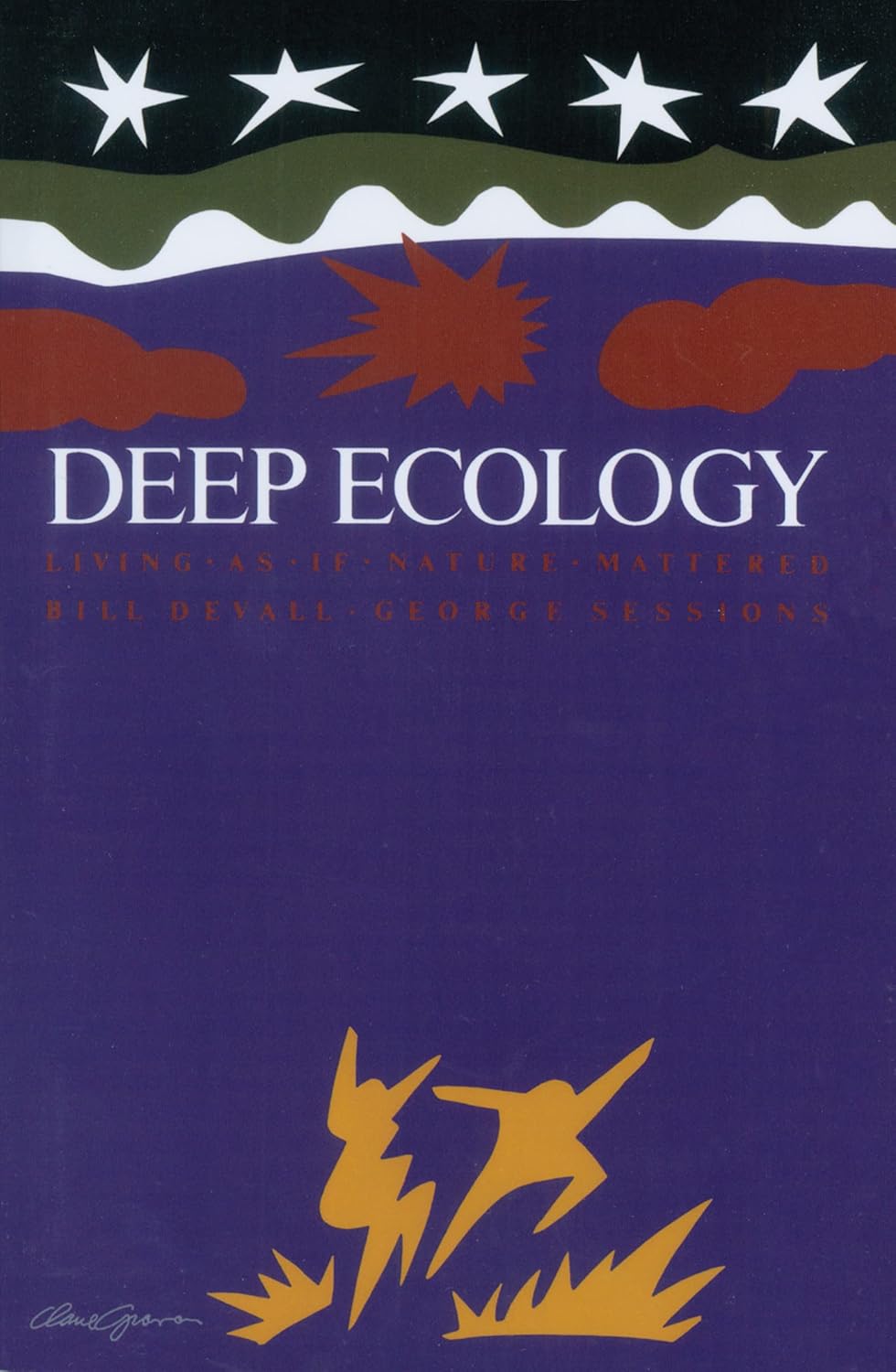
Bill Devall and George Sessions, Deep Ecology: Living as if Nature Mattered.

Layton, UT: Gibbs Smith, 1985, 267pp.

In his Small is Beautiful, Fritz Schumacher wrote, “In the affairs of men, there always appears to be a need for at least two things simultaneously, which on the face of it, seems to be incompatible and to exclude one another. We always need both freedom and order. We need the freedom of lots and lots of small, autonomous units, and, at the same time, the orderliness of large-scale, possibly global, unity and co-ordination.”

Likewise, there must be transformation both at the individual level as well as collective change. The two are closely linked. Only a whole and autonomous person can act, resist, walk away, and build something new. However, collective change is something more than the sum of individual changes. Collective change is a vision for a society. Thus, individual change and political action must go together.

One of the predicaments facing the emerging Green-ecology political movements is the need to gather enough people together to be a credible political force – which means general agreement upon a small number of basic options – while having a deep enough political philosophy so that people are not seduced by the current political parties using a few Green slogans. There is wide-spread support for reform environmentalism which aims to stop gross pollution, extensive despoliation of land, lakes, and seas, mistreatment of animals. But those who support such localized reforms may not see the need for a basic transformation of society and the system of values.

Yet we need planet-wide changes, for ecological awareness has shown us that the planet we live on is one inter-related system upon which we are all dependent. In order to survive, we must learn to work together to build a world beyond war, a society with sustainable development – which means sustainable agriculture and appropriate technology, wholistic approaches to education and health, a spiritual outlook based on reverence for life. Albert Schweitzer from his work in Africa re-launched the human-scale revolution by insisting that production ought to serve peoples’ real needs; that there must be a new relationship with nature; that solidarity must replace antagonism; and that there must be sane consumption and active individual participation in society.

The world as an interrelated system has come to be called the “Gaia hypothesis” after the work of James Lovelock and Lynn Margulies who wrote “We defined Gaia as a complex entity involving the earth’s biosphere, atmosphere, oceans and soil, the totality constituting a feedback or cybernetic system which seeks an optimal physical and chemical environment for life on this planet. Gaia remains a hypothesis, but much evidence suggests that many elements of this system act as the hypothesis predicts.” (Gaia is the first goddess of early Greek thought. From the void, neither born nor destroyed – what the Chinese call the Tao – Gaia danced forth and rolled herself into a spinning ball.)

Systems are integrated wholes whose properties cannot be reduced to those of smaller units. The systems approach emphasizes basic principles of organization. Thus, nature has an order, a pattern that as humans we need to understand, to respect, and to preserve. This order has intrinsic value and is the base of Life.

This book is an effort to outline the rich spiritual-religious-mystical component of the Green movements. The term “deep ecology” was coined in 1973 by Arne Naess, a social scientist and philosopher who has written widely on Mahatma Gandhi, nonviolence, and the Buddha. He wanted to describe the deeper more spiritual approach to nature exemplified by Rachel Carson and Aldo Leopold. This is a most useful analysis of Green values. The book should be widely used for discussion and political planning.

Prof. René Wadlow is President of the Association of World Citizens.
Protection of Children in Armed Conflict: Action Needed

In Africa, Being a World Citizen, Children's Rights, Conflict Resolution, Current Events, Human Rights, Humanitarian Law, NGOs, Nonviolence, Peacebuilding, Refugees, Solidarity, The Search for Peace, Track II, United Nations on January 6, 2026 at 8:00 AM

By René Wadlow

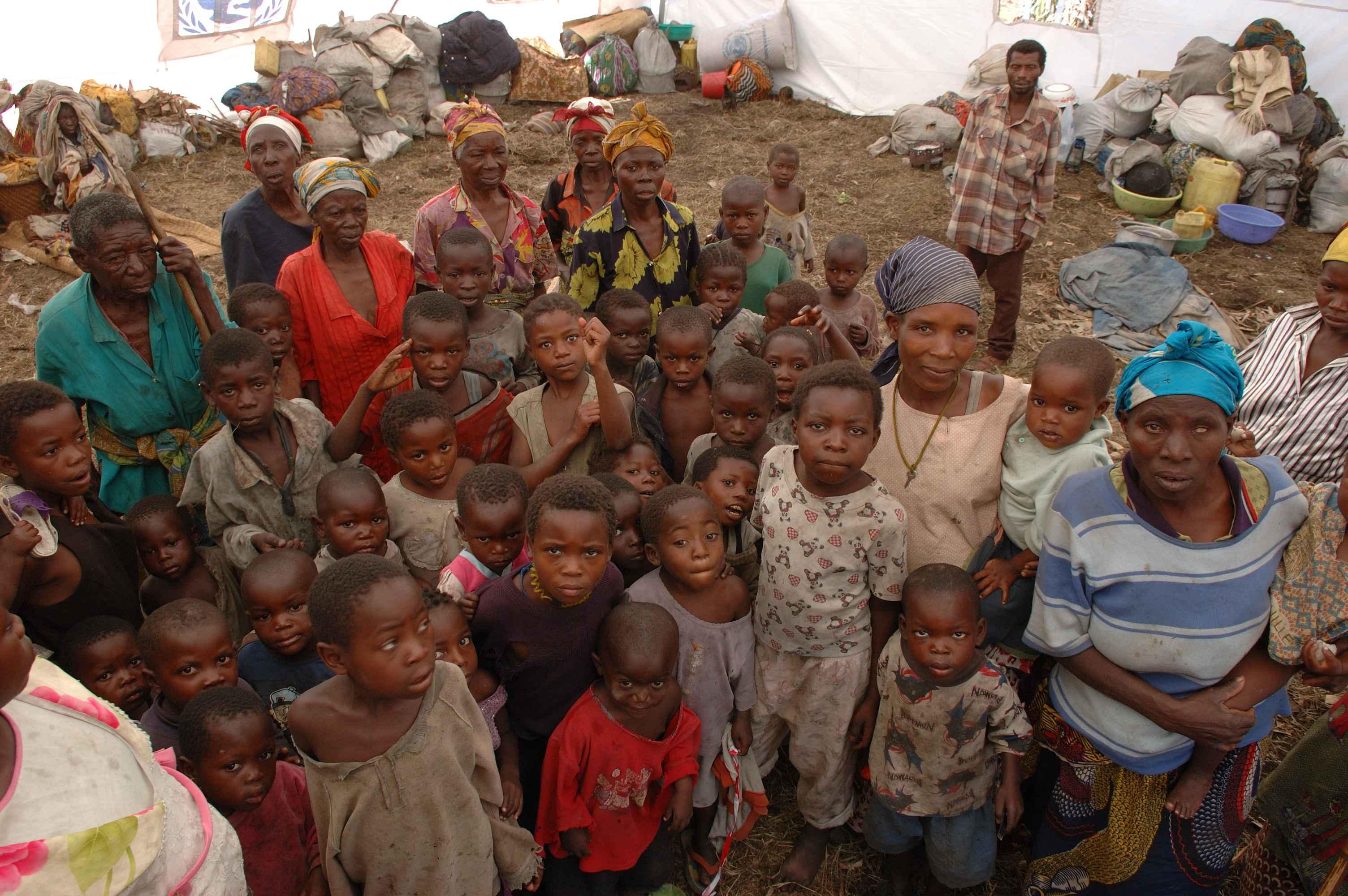
The recent armed conflicts in Darfur, Sudan, the Gaza Strip, and in the Democratic Republic of Congo have highlighted the fate of children caught in such armed conflicts. In addition to the children deliberately massacred or caught in the crossfire, many more have been deprived of their physical, mental, and emotional needs by the armed conflict. Children can be specifically targeted in strategies to eliminate the next generation. Children, especially girls, have been made the targets of sexual abuse and gender-based violence.

This brutal reality has been exacerbated by the changes in the nature of armed conflicts. Today’s conflicts are often internal, fought by multiple semi-autonomous armed groups within existing State boundaries. The international law of war governing Inter-State conflicts fought by regular armies is routinely ignored. Often the village has become the battlefield and the civilian population the primary victim.

Displaced children in North Kivu, 2007 (C) Julien Harneis

At the heart of this social disintegration is a crisis of values. Perhaps the most fundamental loss a society can suffer is the collapse of its value system. Many societies exposed to protracted armed conflicts have seen their community values radically undermined or shattered altogether. This loss has given rise to an ethical vacuum, a setting in which international standards are ignored with impunity and where local value systems have dissolved.

The world society has an obligation to focus attention on the plight of children. The Association of World Citizens (AWC) has worked to raise greater governmental and public awareness of the need for protection of children in times of armed conflict. The Convention on the Rights of the Child calls for the protection of children’s right to life, education, health, and other fundamental needs. Thus, the international standards are in place. Our task is to see that they are put into practice. Positive action is needed. This is a policy goal for 2026 of the AWC.

Prof. René Wadlow is President of the Association of World Citizens.