The Official Blog of the

Archive for the ‘Middle East & North Africa’ Category

UN Fact-finding Report: The Yazidis of Iraq

In Children's Rights, Conflict Resolution, Current Events, Democracy, Human Rights, International Justice, Middle East & North Africa, Religious Freedom, Solidarity on March 21, 2015 at 9:17 PM

UN FACT-FINDING REPORT: THE YAZIDIS OF IRAQ

By René Wadlow

On Thursday, March 19, 2015, the United Nations (UN) investigative team on human rights violations in Iraq led by Ms. Suki Nagra raised accusations of genocide and war crimes against the Islamic State (ISIS) citing evidence that ISIS sought to “destroy the Yazidi as a group” − the definition of genocide in the 1948 Genocide Convention which has become a core element of World Law. The fact-finding group of members of the Secretariat of the Office of the UN High Commissioner for Human Rights had been established by a Special Session of the Human Rights Council in September 2014. (See article ‘World Law Advanced by UN Special Session of the Human Rights Council on Human Rights Violations in Iraq’)

The report to the current session of the Human Rights Council included testimony from Yazidi men who had survived massacres by shielding themselves behind the bodies of men who had already been killed. “It was quite clear that attacks against them were not just spontaneous or happened out of the blue; they were clearly orchestrated. Witnesses consistently reported that orders were coming through, by telephone in many cases, about what to do with them. There was a clear chain of command”.  Ms. Nagra reported to the Human Rights Council. (On the Yazidis as a religious community, see the article ‘Iraq: Yazidis’ Genocide?’)

The report also detailed evidence that Yazidi women and girls were abducted and sold into slavery as spoils of war in violation of some of the oldest standards of world law against slavery developed by the League of Nations and continued by the UN. There were also repeated cases of rape. The use of rape as a weapon of war has become of increasing concern to both the UN human rights bodies and to NGOs.

As the Association of World Citizens’ (AWC) written Statement to the Iraq Special Session stressed, “The Association of World Citizens believes that world law as developed by the United Nations applies not only to the governments of Member States but also to individuals and non-governmental organizations. The ISIS has not been recognized as a State and is not a member of the UN. Nevertheless, the Association of World Citizens is convinced that the terms of the Declaration on the Elimination of All Forms of Intolerance and Discrimination Based on Religion or Belief adopted by the General Assembly on 25 November 1981 applies to the ISIS.”

Citizens of the World stress the need for world law and certain common values among all the States and peoples of the world. We are one humanity with a shared destiny. The challenge before us requires inclusive ethical values. Such values must be based on a sense of common responsibility for both present and future generations.

Prof. René Wadlow is President and Chief Representative to the United Nations Office at Geneva of the Association of World Citizens.
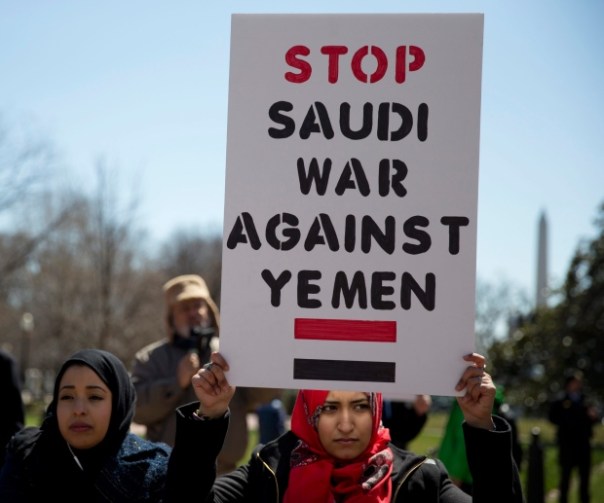
The Cultural Heritage of Iraq and Syria: “Destroyed by Human Ignorance – Rebuilt by Human Hope”

In Being a World Citizen, Cultural Bridges, Current Events, Human Rights, International Justice, Middle East & North Africa, Religious Freedom, The Search for Peace on March 3, 2015 at 9:25 PM

THE CULTURAL HERITAGE OF IRAQ AND SYRIA: DESTROYED BY HUMAN IGNORANCE – REBUILT BY HUMAN HOPE”

By René Wadlow

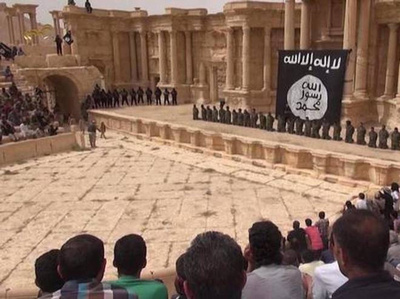
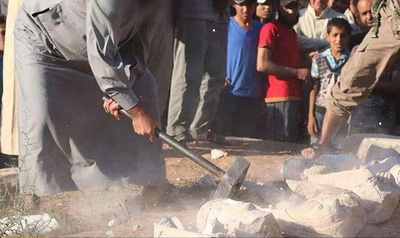
On Friday, February 27, 2015, the United Nations (UN) Security Council condemned “the deliberate destruction of irreplaceable religious and cultural artifacts housed in the Mosul Museum and burning of thousands of books and rare manuscripts from the Mosul Library” and having burned a few days earlier thousands of books from the Mosul, Iraq, University Library. The Mosul Museum which was not yet open to the public had a large number of statues from the pre-Islamic Mesopotamian civilizations as well as statues from the Greek Hellenistic period. The spokesman for the Islamic State (ISIS) faction which carried out the destruction − filmed and posted on the internet by them − maintained that the statues represented gods which had been worshipped while only the true god should receive worship.

This approach to pre-Islamic faiths and their material culture is the same as had led to the destruction of the large Buddha statues in Afghanistan − monuments that attested to the rich culture along the Silk Road.

There have been iconoclastic movements in the past, especially among Muslims and early Protestants holding that the spiritual world cannot (and thus should not) be represented in forms. All forms lead to confusing the specific form with the spiritual formless energy behind it. The iconoclastic reasoning can be defended, but not the destruction of objects which represented other philosophies, cultures and levels of understanding. (1)

As if to drive home to the least philosophical in the area, the ISIS also attacked Assyrian Christian villages in the area; villages were emptied, persons taken as hostages and younger women forced into slavery. The Assyrian Christians are among the oldest of the Christian communities; some speak Aramaic, the language spoken at the time of Jesus.

The shameless destruction by ISIS members of historical treasures Iraq will never be able to get back.

The shameless destruction by ISIS members of historical treasures Iraq will never be able to get back.

There are world laws against slavery going back to the abolitionist movements of the 1800s and made universal by conventions of the League of Nations and the UN. These conventions are rarely cited except in discussions of the current trafficking of persons as a “modern form of slavery”. Now ISIS has given us examples of slavery in its old forms, nearly to the point of caricature. We need to dust off these conventions and see that they are applied.

Syria and Iraq are home to some of the world’s first cities, a complex and unique meeting of states, empires and faiths. The protection of works of art and cultural heritage is a newer aspect of world law in which UNESCO is playing a leading role. Until the filming and posting of the destruction in Mosul, the looting of museums in Apamea, Aleppo and Raqqa as well as numerous archaeological sites had been known to specialists but had not gained wide public attention. Most of the looted objects were not destroyed but sold on a parallel international art market to fill the ISIS coffers. There is a need to develop global awareness and to campaign against this illicit trade in looted Syrian and Iraqi artifacts which first pass through the neighboring countries of Lebanon, Turkey and Jordan before ending in the hands of dealers and small auction houses who also profit from the theft.

The protection of cultural heritage owes much to the vision and energy of the Russian artist Nicholas Roerich (1874-1947). Roerich’s desire to make known the artistic achievements of the past through archaeology, coupled with the need to preserve the landmarks of the past from destruction, led to his work for the Banner of Peace to preserve art and architecture in time of war. Roerich had seen the destruction brought by the First World War and the civil war which followed the 1917 Russian Revolution. He worked with French international lawyers to draft a treaty by which museums, churches and buildings of value would be preserved in time of war through the use of a symbol − three red circles representing past, present and future − a practice inspired by the red cross to protect medical personnel in times of conflict.

In the areas it has conquered, ISIS has established formal slavery, including for girls as sex slaves.

In the areas it has conquered, ISIS has established formal slavery, including for girls as sex slaves. (C) CNN

Roerich mobilized artists and intellectuals in the 1920s for the establishment of this Banner of Peace. Henry A. Wallace, the United States Secretary of Agriculture and later Vice-President, was an admirer of Roerich and helped to have an official treaty introducing the Banner of Peace − the Roerich Peace Pact − signed at the White House on April 15, 1935 by 21 States in a Pan-American Union ceremony. At the signing, Henry Wallace on behalf of the USA said “At no time has such an ideal been more needed. It is high time for the idealists who make the reality of tomorrow, to rally around such a symbol of international cultural unity. It is time that we appeal to that appreciation of beauty, science, education which runs across all national boundaries to strengthen all that we hold dear in our particular governments and customs. Its acceptance signifies the approach of a time when those who truly love their own nation will appreciate in addition the unique contribution of other nations and also do reverence to that common spiritual enterprise which draws together in one fellowship all artists, scientists, educators and truly religious of whatever faith.”

As Nicholas Roerich said in a presentation of his Pact “The world is striving toward peace in many ways and everyone realizes in his heart that this constructive work is a true prophesy of the New Era. We deplore the loss of the libraries of Louvain and Oviedo and the irreplaceable beauty of the Cathedral of Reims. We remember the beautiful treasures of private collections which were lost during world calamities. But we do not want to inscribe on these deeds any words of hatred. Let us simply say: Destroyed by human ignorance − rebuilt by human hope.”

After the Second World War, UNESCO has continued these efforts, and there have been additional conventions on the protection of cultural and educational bodies in times of conflict, in particular the Hague Convention of May 1954, though no universal symbol as proposed by Nicholas Roerich has been developed.

In 2001 Afghanistan's Taleban militia, an "early version" of ISIS, blew up the magnificent Buddha statues of Bamiyan, thinking this would help them strengthen their implacable grip on the country. This most unwise move only hastened their downfall.

In 2001 Afghanistan’s Taleban militia, an “early version” of ISIS, blew up the magnificent Buddha statues of Bamiyan, thinking this would help them strengthen their implacable grip on the country. This most unwise move only hastened their downfall. (C) RAWA

As too often, governments and people react after events rather than affirm from a deeper level of consciousness. Now, we have seen mindless but deliberate destruction of both art and people. Let us not inscribe on these deeds any words of hatred, but let us work unitedly and creatively to establish a just peace.

Prof. René Wadlow is President and Chief Representative to the United Nations Office at Geneva of the Association of World Citizens.
(1) A good overview of iconoclastic movements in the non-Muslim world see: Alain Besancon, L’Image interdite. Une histoire intellectuelle de l’iconoclasme (Paris: Gallimard, 1994, 722pp.)

Celebrating Social Justice: The People’s Revolution is On the March

In Being a World Citizen, Democracy, Human Development, Human Rights, Middle East & North Africa, Social Rights, Solidarity on February 22, 2015 at 4:45 PM

CELEBRATING SOCIAL JUSTICE: THE PEOPLE’S REVOLUTION IS ON THE MARCH

By René Wadlow

Social Justice

The United Nations (UN) General Assembly, on the initiative of Nurbch Jeenbrev, the Ambassador of Kyrgyzstan to the UN in New York, has proclaimed February as the “World Day of Social Justice”.

The World Day of Social Justice gives us an opportunity to take stock of how we can work together – the whole year round – at the local, national and global level on policy and action to achieve the goals set out in the resolution of “solidarity, harmony and equality within and among states.”

As the resolution states, “Social development and social justice are indispensable for the achievement and maintenance of peace and security within and among nations, and that in turn, social development and social justice cannot be attained in the absence of peace and security or in the absence of respect for all human rights and fundamental freedoms.”

The Preamble to the UN Charter makes social justice one of the chief aims of the organization using the more common expression of that time “social progress”. The Preamble calls for efforts to “promote social progress and better standards of life in larger freedom.”

The United States (U. S.) representatives who worked on the draft of the UN Charter were strongly influenced in their views of social progress by the “New Deal” legislation of President Roosevelt and its philosophy as it had been set out by his Vice-President Henry A. Wallace in 1942 when he set out the U. S. war aims. Wallace’s speech was the first time that the war aims of a country were not stated in terms of “national interest” and limited to the demands that had produced the start of the war.

Wallace, who had first been the Secretary of Agriculture and who had to deal with the severe depression facing U. S. agriculture, was proposing a world-wide New Deal based on the cooperative action of all of humanity. Wallace said “The people’s revolution is on the march. When the freedom-loving people march — when the farmers have an opportunity to buy land at reasonable prices and to see the produce of their land through their own organizations, when workers have the opportunity to form unions and bargain through them collectively, and when the children of all the people have an opportunity to attend schools which teach them truths of the real world in which they live — when these opportunities are open to everyone, then the world moves straight ahead…The people are on the march toward ever fuller freedom, toward manifesting here on earth the dignity that is in every human soul.”

Henry A. Wallace (left), Vice-President of the United States from 1941 to 1945. After the third and final reelection of Franklin Delano Roosevelt (right) to the presidency in 1944, Wallace was succeeded by Harry S. Truman, who himself succeeded Roosevelt as President of the United States after Roosevelt died on April 12, 1945.

Henry A. Wallace (left), Vice-President of the United States from 1941 to 1945. After the third and final reelection of Franklin Delano Roosevelt (right) to the presidency in 1944, Wallace was succeeded by Harry S. Truman, who himself succeeded Roosevelt as President of the United States after Roosevelt died on April 12, 1945.

The People’s Revolution found its expression in the cry of the Tunisian uprising — Work-Liberty-Dignity. Today in the demands of “Work-Liberty-Dignity” we hear the demands of farmers to own land under sure conditions, to receive a fair price for their crops as well as the right to organize to protect their interests. We hear the crises of industrial and urban workers to be able to organize and to have their work appreciated for its full value. We hear the demands of students and the young for an education that opens minds and prepares for meaningful work.

A Tunisian demonstrator in Paris, France, as the Tunisian community there celebrated the first anniversary of the revolution on January 14, 2012. (C) Bernard J. Henry/AWC

A Tunisian demonstrator in Paris, France as Tunisians living there were celebrating the first anniversary of their revolution on January 14, 2012. (C) Bernard J. Henry/AWC

The people’s revolution is on the march. While the forces of the status quo are still strong and often heavily armed, the energy has shifted from the rulers to the people. The concept of Social Justice has articulated and focused deep demands for liberty, jobs, and dignity. The people’s revolution is not that of an elite willing to replace the existing ruling elite. The people’s revolution is a wave of all moving together, with deep currents below the surface. The tide moves with only a few visible waves but the collective demands for social justice and dignity is what makes the difference between the people’s revolution and a military coup. This is the true meaning of the World Day of Social Justice.

“For the wretched of the earth,
There is a flame that never dies,
Even the darkest night will end
And the sun will rise.”

Les Miserables, “Do You Hear the People Sing – Epilogue”.

In 2011, as the Tunisian and Egyptian revolutions were underway, the AWC adopted this song as its unofficial anthem.

* * *

Prof. René Wadlow is President and Chief Representative to the United Nations in Geneva of the Association of World Citizens.
Boko Haram: The Long Shadow of Usman dan Fodio

In Africa, Being a World Citizen, Current Events, Democracy, Human Rights, Middle East & North Africa, Religious Freedom on February 13, 2015 at 9:58 PM

BOKO HARAM: THE LONG SHADOW OF USMAN DAN FODIO

By René Wadlow

There has been growing concern with the activities of Boko Haram in northeast Nigeria and its spillover into northern Cameroon, Niger, and in the Lake Chad area. There has been a recent conference of the African Union on the issue, and military units from Chad, Cameroon and Niger are linking up with the Nigerian army to counter the growing power of the organization and its possible links with the Islamic State (ISIS) in Iraq-Syria. The practice of forced marriage, the slavery of women and girls, and arbitrary killing – including beheading – has led many to flee the area. This has resulted in a large number of displaced people, often living in difficult situations.

Boko Haram is not the first militant, anti-establishment Islamic movement in northern Nigeria and northern Cameroon. In the early 1980s, an Islamic sect, the Yan Tatsine unleashed an armed insurrection against the Nigerian security forces, especially in the Kano area. The revolts were led (or at least influenced by) a wandering preacher, Mohammed Marwa Maitatsine. Maitatsine was a nickname added to the family name of Marwa. The nickname originated from the Hausa word “tsini” meaning “to damn”. While preaching, he would name his enemies and their lifestyle and end with the phrase ‘Allah ta tsini” (May God damn you), thus the name “the one who damns”. Maitatsine, like Boko Haram, damned all those who enjoyed Western consumer goods, automobiles, radio, watches, and especially Western education, which was an avenue to these goods.

As with Boko Haram, there were ideological, economic and social aspects to the movement as well as reactions to the brutality of the Nigerian army’s efforts to weaken or destroy the movement. In the case of Mohammed Marwa, his control of territory was largely limited to the city of Kano, and he was killed by Nigerian security forces relatively quickly after the start of the armed attacks of his movement. However, the socio-economic conditions which led to the rise of his movement have continued and have produced smaller and less violent currents until the creation around 2002 of Boko Haram, first as a sect closed in on itself in an isolated area of Borno State in northeast Nigeria, and then for the last four years as an armed insurgency holding an ever-larger territory − or at least creating insecurity in ever larger areas.

For the current leader of Boko Haram, Abubaka Shekau, as well as for others in the movement, Usman dan Fodio (also written as Usuman) and his 1804-1808 jihad is the model to be followed. Although radically different in many ways, Boko Haram is part of the long shadow of Usman dan Fodio and the creation of the Sokoto Caliphate, the largest state in West Africa in the nineteenth century. Toyin Falola describes the background to the jihad:

“The background to the jihad was a crisis in the Hausa states and Islamic leaders’ resort to Islam to reform society. During the eighteenth century, Hausa society witnessed conflicts between one state and another, between Muslims and non-Muslims, between rich and poor. The states were heterogeneous and highly developed with established kingships, talented Islamic scholars and jurists. Succession disputes were endemic while ambition for political domination was common. Gofir state in the northwest emerged as a dominant power, but not without costly and ruthless wars. Merchants and kings grew wealthy, and their ostentatious living displeased the poor and devout Muslims. Methods of wealth accumulation involved corruption and unjust treatment of the poor. Taxes and levies could be excessive, demand for free labor ruinous, enslavement was common and conscription for military service was indiscriminate. The practice of Islam was not always strict: many were Muslims only in name, traditional religion was synthesized with Islam in a way that displeased devout preachers and only a small minority committed itself to spreading the religion”. (1)

Dan Fodio (1754-1817) was a Peul (plu. Fulani) and thus a member of a minority within the largely Hausa area. However, the Fulani are found throughout West Africa. Prior to 1800, there had been a gradual influx of Fulani into northern Nigeria, a migration which had spread over several centuries and which involved people who were ethnically and linguistically distinct from the Hausa. During the earlier migratory phases, they were largely pastoral herdsmen but increasingly they settled in Hausa towns.

As an educated Peul, dan Fodio felt excluded from political power as did other Fulani. The jihad and the distribution of power that followed led to the Sokoto Caliphate − a sort of unified theocracy. Old Hausa dynasties were replaced by new local leaders, mainly Fulani emirs. The caliphate was headed by a sultan, based in Sokoto, while local emirates were governed by an emir. The appointment of each emir had to be ratified by the sultan. Thus was created a Fulani-Hausa political area with elements still in place today.

Dan Fodio, often referred to as Shehu, was an educated preacher who gathered around him students who became the core of his jihad army. Dan Fodio knew the history of Islam and wanted to recreate the Muslim community of the time of the first four Caliphs, thought of as the ‘Golden Age of Islam’. He thus broke down the existing Hausa state system of some 15 separate states into a loosely organized Fulani-Hausa confederation of some 30 emirates with loyalty beyond the clan and the traditional ruler within the embrace of a common religion.

The Sokoto Caliphate, which spanned much of the northern halves of today's nations of Nigeria and Cameroon.

The Sokoto Caliphate, which spanned much of the northern halves of today’s nations of Nigeria and Cameroon.

Two features tended to characterize the emirate system. First, there was virtually no distinction between religious and political authority. The emir possessed both. Second, politics was conducted in an essentially despotic fashion. The common man was subservient to the emir and was dependent on his benevolence. The Fulani jihad fell short of establishing the just Islamic theocracy it had purported to create. Many saw the jihad as a road to power rather than to the purity of religious practice.

Boko Haram has kept the use of flags and flag bearers from Dan Fodio’s jihad as well as the arbitrary killing and indiscriminate marauding. In Boko Haram, there seem to be few Islamic scholars in their ranks, but there do seem to be some who have been to Islamic schools. The future from today is very uncertain. It is unlikely that there is a “military answer.”

Neither Boko Haram nor ISIS/Daesh should be confused with the Islamic faith. These two militant groups give Islam a bad name and do not speak for the world's Muslims.

Neither Boko Haram nor ISIS/Daesh should be confused with the Islamic faith in any way. These two militant groups do not speak for the world’s Muslims and only give Islam a bad name.

Changes in socio-economic conditions are likely to take a long time. From a distance, it is difficult to see how good faith negotiations can be carried out between governments and Boko Haram. Long shadows can last for centuries, but we must keep trying to see how negotiations can be carried out and if non-governmental organizations can play an intermediary role.

Prof. René Wadlow is President and Chief Representative to the United Nations, Geneva of the Association of World Citizens.
(1) Toyin Falola.The History of Nigeria (Westport, CT: Greenwood Press, 1999, p. 35)

POUR UN NOUVEL ANTI-ESCLAVAGISME

In Africa, Being a World Citizen, Children's Rights, Current Events, Human Rights, International Justice, Middle East & North Africa, Religious Freedom, United Nations, War Crimes, Women's Rights on February 10, 2015 at 12:10 AM

-- AWC-UN Geneva Logo --

L’Association of World Citizens

dit

L’ESCLAVAGE,

PLUS JAMAIS CA !

  1. L’esclavage est IMMORAL,
  2. L’esclavage est CONTRAIRE AU DROIT MONDIAL,
  3. L’esclavage doit être VAINCU SANS RECOURIR A LA GUERRE.

L’asservissement, la vente tel du bétail, et le mariage forcé de femmes et de jeunes filles par l’ « Etat islamique » (Daesh) dans les zones de l’Irak et de la Syrie qu’il a soumises par la barbarie, ainsi que par Boko Haram dans le nord-est du Nigéria, appellent une réaction concertée, notamment dans la mesure où cette pratique risque de s’étendre à d’autres zones telles que le nord du Cameroun et du Niger si l’influence de Boko Haram continue de croître.

C’est pourquoi l’Association of World Citizens appelle à un effort aussi vaste que possible en direction d’un Nouveau Mouvement Anti-Esclavagiste, rappelant à cette fin la devise du Libérateur (1831-1865) de William Lloyd Garrison, «Notre pays, c’est le Monde, et tous les êtres humains sont nos compatriotes».

Aux Etats-Unis, l’abolition de l’esclavage ne fut qu’un aspect de la sanglante Guerre de Sécession qui n’a produit que de l’amertume et n’a eu d’influence sur les relations interraciales que négative. En France, une première abolition de l’esclavage dans la fureur guerrière de la Révolution n’a abouti qu’à son rétablissement sous un Premier Empire qui s’est montré tout aussi guerrier, l’abolition définitive n’étant venue, avec Victor Schoelcher, que lorsque les canons se furent enfin tus. C’est pourquoi nous croyons fermement que l’esclavage tel que le pratiquent Daesh et Boko Haram doit être vaincu sans qu’il y ait pour cela recours à une guerre.

A travers les frappes aériennes en cours contre Daesh et l’action militaire kurde pour enrayer les atrocités de ce dernier, les tambours de la guerre se font pourtant d’ores et déjà entendre. Les troupes tchadiennes et camerounaises se sont jointes aux forces armées nigérianes pour empêcher Boko Haram de nuire plus avant, ce qui ne fera toutefois qu’ajouter encore au conflit armé déjà violent dans la région. Des armées peuvent vaincre d’autres armées, mais comme le rappelle l’Acte constitutif de l’UNESCO, «Les guerres prenant naissance dans l’esprit des hommes, c’est dans l’esprit des hommes que doivent être élevées les défenses de la paix».

Nous croyons donc que la réponse au problème doit venir d’un mouvement social et populaire issu des sociétés irakienne, syrienne et nigériane, qui reconnaissent toutes que l’esclavage est immoral et constitue une violation du droit mondial. La prohibition de l’esclavage est un élément crucial du droit mondial, au sein duquel elle s’est manifestée historiquement tant par les interdictions du trafic d’esclaves au dix-neuvième siècle, obtenues grâce au combat du Mouvement Anti-Esclavagiste de l’époque, que par celles édictées plus tard par la Société des Nations et enfin par l’action des Nations Unies depuis leur création en 1945.

Aujourd’hui, c’est d’un Nouveau Mouvement Anti-Esclavagiste que nous avons besoin, afin d’en appeler à toutes celles et tous ceux qui, au Moyen-Orient et en Afrique, peuvent et veulent nous rejoindre pour réaffirmer et renforcer le respect de la dignité humaine, en particulier des femmes et des jeunes filles, ainsi que le respect des droits des minorités religieuses quelles qu’elles soient.

REJOIGNEZ-NOUS DANS CE COMBAT!

THE NEW ABOLITIONISTS

In Africa, Being a World Citizen, Children's Rights, Current Events, Human Rights, International Justice, Middle East & North Africa, Religious Freedom, United Nations, War Crimes, Women's Rights, World Law on February 9, 2015 at 11:19 PM

-- AWC-UN Geneva Logo --

The Association of World Citizens

says

 NO TO SLAVERY!

  1. Slavery is IMMORAL,
  2. Slavery is BANNED BY WORLD LAW,
  3. Slavery must be OVERCOME WITHOUT RESORT TO WAR.

The enslavement, sale, and forced marriage of women and girls by the Islamic State (ISIS) in parts of Iraq-Syria and by Boko Haram in northeast Nigeria calls for concerted action, especially as the practice may spread to other areas such as northern Cameroon and Niger if the influence of Boko Haram grows.

Therefore, the Association of World Citizens calls for a broad effort of a New Abolitionist Movement, recalling the motto of The Liberator (1831-1865) of William Lloyd Garrison “Our country is the world; our countrymen are all mankind.”

As slavery was abolished in the United States only as an aspect of a bloody civil war which left long bitterness and influenced race relations negatively, we believe that slavery in ISIS and Boko Haram-held areas must be overcome without recourse to a war. The signs of war are already present in air strikes on ISIS positions and Kurdish military action. The joining of troops from Chad and Cameroon to Nigerian forces to combat Boko Haram can also lead to increased armed conflict.

Rather, we believe that reform must come from within Iraqi, Syrian and Nigerian society which recognizes that slavery is immoral and a violation of world law. The banning of slavery is a core element of world law: the unilateral bans on the slave trade of the nineteenth century in response to the efforts of the Abolitionist Movements, the League of Nations bans, and the continuing efforts of the United Nations.

Today, a New Abolitionist Movement is needed to reach out to those in the wider Middle East and Africa to join in strengthening respect for human dignity, respect of women and girls and respect of religious minorities.

JOIN US IN THIS COMMON CAUSE!

December 18: International Migrants Day

In Africa, Asia, Being a World Citizen, Current Events, Environmental protection, Europe, Fighting Racism, Human Development, Human Rights, Middle East & North Africa, Solidarity, United Nations, World Law on December 17, 2014 at 11:33 PM

DECEMBER 18: INTERNATIONAL MIGRANTS DAY
By René Wadlow


“Let us make migration work for the benefit of migrants and countries alike. We owe this to the millions of migrants who, through their courage, vitality and dreams, help make our societies more prosperous, resilient and diverse.”

Ban Ki-moon, Secretary-General of the United Nations.


In December 2000, the United Nations (UN) General Assembly proclaimed December 18 as the International Migrants Day. The day was chosen to highlight that on a December 18, the UN had adopted the International Convention on the Protection of the Rights of All Migrants Workers and Members of Their Families. Although migration to and from countries is a worldwide flow of people, only 42 countries, basically Latin American, North and West African, Indonesia and the Philippines, have ratified the Convention. The Convention created a Committee on Migrant Workers which meets in Geneva to review once every four years a report of the Convention members on their application of the Convention. The Convention also created a mechanism by which the Committee could receive individual complaints. Only three States have ratified this individual complaints mechanism: Mexico, Guatemala and Uruguay.

Today, there are some 232 million persons who reside and work outside their country of birth. The reasons for migration are diverse − most often economic, but also refugees from armed conflicts and oppression, and increasingly what are called “ecological refugees” − persons who leave their home area due to changing environmental conditions: drought, floods, rising sea levels etc. Global warming may increase the number of these ecological refugees.

After war, persecution, and poverty, a new danger is now driving people away from their homes in their millions – climate change. (C) Tck Tck Tck

After war, persecution, and poverty, a new danger is now driving people away from their homes in their millions – climate change. (C) Tck Tck Tck

Although migration is an important issue with a multitude of consequences in both countries of origin and destination, the Committee on Migrant Workers, a group of experts who function in their individual capacity and not as representatives of the State of which they are citizens, has a low profile among what are called “UN Treaty Bodies” – the committees which review the reports of States which have ratified UN human rights conventions such as the International Covenant on Civil and Political Rights or the International Covenant on Economic, Social and Cultural Rights.

Since the great majority of States receiving migrants − Western Europe and North America – have not ratified the Convention on Migrant Workers, other ways have to be found within the UN system to look at migration issues. Thus has been created outside the UN system but in close cooperation with the UN, the Global Forum on Migration and Development and the Global Migration Group to address the opportunities and challenges of international migration. Within the UN, there was the recent, October 2013 “High-level Dialogue on International Migration and Development”.

In 2013 the Conservative-led Government of the United Kingdom publicly called on undocumented migrants to “go home or face arrest”, a move that was basically inhumane and completely out of place. ( (C) Socialist Party of Great Britain)

In 2013 the Conservative-led Government of the United Kingdom publicly called on undocumented migrants to “go home or face arrest”, a move that was basically inhumane and completely out of place. (C) Socialist Party of Great Britain)

The Governments at the Dialogue unanimously adopted a Declaration (A/68/L.5) calling for greater cooperation to address the challenges of irregular migration and to facilitate safe, orderly and regular migration. The Declaration also emphasized the need to respect the human rights of migrants and to promote international labor standards. The Declaration strongly condemns manifestations of racism and intolerance and stresses the need to improve public perceptions of migrants.

UN conferences and such dialogues or forums serve as a magnet, pulling Governments to agree to higher ideals and standards collectively than they would proclaim individually. This is not only hypocrisy − though there is certainly an element of hypocrisy as Governments have no plans to put these aims into practice. Rather it is a sort of “collective unconscious” of Government representatives who have a vision of an emerging world society based on justice and peace.


In 2010 two French singers, Stanislas and Mike Ibrahim, released a song entitled “Tu verras en France” (“You’ll see in France”). In this song, the two young men call for attention to the situation of migrants who leave their home countries hoping to find a better life in France but end up undocumented and living in extreme poverty, constantly having to run from the police if they don’t want to end up in jail or sent back to their country of origin.


The role of nongovernmental organizations is to remind constantly Government representatives that it is they who have written the text and voted for it without voicing reservations. Numerous States which ratified the International Convention on Migrant Workers made reservations limiting the application of the Convention on their territory. Thus, the Declaration of the High-level Dialogue was not written by the Association of World Citizens but by Government diplomats.

The Declaration is a strong text and covers most of the important issues, including human mobility as a key factor for sustainable development, the role of women and girls who represent nearly half of all migrants, the need to protect the rights of migrant children and the role of remittances to families.

The Declaration merits to be better known and widely quoted in the on-going discussions and debates on migration policies and practices.

Prof. René Wadlow is President of the Association of World Citizens.
A l’ombre du Pays des Cèdres, pas de refuge pour les Syriens

In Current Events, Human Rights, International Justice, Middle East & North Africa, Solidarity, The Search for Peace, War Crimes, World Law on September 29, 2014 at 11:51 AM

A L’OMBRE DU PAYS DES CEDRES, PAS DE REFUGE POUR LES SYRIENS

Par Bernard Henry


Lorsque l’on pense au Liban et à la Syrie, l’on ne peut oublier la longue guerre civile libanaise, l’ingérence permanente de Damas et la fin du conflit en 1990 qui laissa Hafez el-Assad, le Président syrien, seul maître du Liban. L’on se souvient de l’assassinat, le 14 février 2005 à Beyrouth, de l’ancien Premier Ministre libanais Rafic Hariri, élément déclencheur du retrait précipité du Liban de cette Syrie qui s’y croyait pour toujours en terrain conquis.

Rares sont ceux qui pensent, aujourd’hui, aux 1 200 000 Syriens réfugiés au Liban voisin, fuyant le conflit qui ravage leur pays depuis trois ans et la répression sanglante de toute résistance à la dictature de Bachar el-Assad, le fils d’Hafez. Ayant succédé en 2000 à son père décédé, le jeune Bachar avait tôt fait de décevoir les espoirs de réforme placés en lui, ayant tout au contraire accru l’écrasement de la dissidence à partir de 2004 et n’ayant laissé d’autre choix à son peuple, au printemps 2011, que de prendre les armes.

Ce n’est pas une actualité dominée par les conquêtes militaires de Daesh, le fameux « Etat islamique en Irak et au Levant », qui se veut même « Etat islamique » tout court maintenant qu’il a soumis une portion conséquente de l’Irak, qui va y changer quelque chose. Persécutant les minorités dans les zones tombées sous sa coupe, Chrétiens et Yazidis notamment, Daesh a réalisé l’exploit de concentrer sur ses méfaits l’attention d’une Session spéciale du Conseil des Droits de l’Homme de l’ONU le 1er septembre dernier.

Il n’en fallait guère plus à de bonnes consciences occidentales déjà enclines à soutenir Bachar al-Assad, certes jugé désagréable parce que dictateur, contre une révolution syrienne condamnée par contumace parce que contenant des éléments islamistes, pour parler aujourd’hui, en dépit même de faits accablant le régime de Damas, de blanchir Assad en tant qu’allié de circonstance contre l’islamisme barbare de Daesh, quitte à lui faire ainsi crédit de la création du groupe islamiste dont son régime est pourtant le premier fautif, à la manière d’un Frankenstein.

Mais que diraient ceux-là du sort des réfugiés syriens d’Ersal, ce village de trente mille âmes de la Beqaa à quelques cent vingt kilomètres au nord-est de Beyrouth ?

Un village libanais au cœur de la guerre en Syrie

Depuis le début de la guerre, bien que protégé en théorie par la frontière libanaise, Ersal est littéralement partie prenante au conflit syrien. La population locale ayant pris fait et cause depuis le départ pour l’Armée syrienne libre, Ersal accueille aujourd’hui non moins de cent dix mille réfugiés syriens, répartis dans plusieurs camps de la ville, dont par exemple celui d’Alsanabel.

L’été dernier, c’est la guerre proprement dite qui a fini par s’inviter à Ersal, avec l’incursion dans le village de combattants du groupe armé syrien Jahbat al-Nosra, avatar syrien d’Al-Qaïda, après l’arrestation de l’un de ses dirigeants, Imad Ahmad Joumaa.

D’interminables et violents combats ont ensuite opposé Jahbat al-Nosra et l’armée libanaise, avec, sous leurs feux croisés, des réfugiés syriens pris dans des affrontements par trop semblables à ceux auxquels, chez eux, ils avaient échappé. Même le retrait d’Ersal de Jahbat al-Nosra le 6 août dernier ne ramena pas la paix, l’armée libanaise se livrant depuis lors à une répression féroce à travers la ville et dans les camps de réfugiés – les réfugiés, dont treize mille sur les cent vingt-trois mille que comptait Ersal ont regagné la Syrie, leur lieu d’asile espéré étant devenu pire encore que l’enfer qu’ils avaient fui.

L’armée libanaise n’est pas celle d’Assad. Mais dans un Liban se cherchant désespérément un Président depuis mai dernier, elle est ce qui s’approche le plus d’une colonne vertébrale de l’Etat. Et bien sûr, sa mission première demeure la défense du territoire, mission dans laquelle un passé d’humiliation, non dans une moindre mesure pendant la guerre civile, lui interdit la moindre faiblesse.

Septembre porte le noir souvenir d’un épisode de cette guerre des plus humiliants pour l’armée libanaise – Sabra et Chatila, en 1982, lorsque plus de mille civils palestiniens et sud-libanais furent exécutés dans les deux camps de réfugiés beyrouthins par les Kataeb, les Phalanges chrétiennes d’extrême droite du Président Bechir Gemayel, sous le regard complice de l’armée d’invasion israélienne.

Cet été, Tsahal s’est à nouveau distinguée de manière macabre en se livrant à Gaza à son opération la plus meurtrière depuis la création de l’Etat d’Israël, rendant plus vivace et brûlante encore la mémoire de Sabra et Chatila.

Tant le présent que le passé privent l’armée libanaise de tout droit à l’indulgence face à une force armée étrangère sur son sol. Il n’en faut pas plus pour céder aux traumatismes du passé, quitte à voir Jahbat al-Nosra là où il n’est plus, à la manière des Kataeb obsédées par la présence de fedayin de l’OLP tapis dans l’ombre de Sabra et Chatila. Et Alsanabel en a fait les frais.

Des réfugiés bombardés délibérément, l’un d’entre eux torturé à mort

Le 25 septembre, sous le commandement du Général Chamel Roukoz, des blindés font feu sans sommation sur le camp de réfugiés, dont s’emparent aussitôt les flammes. Tout se consume, et bientôt, le camp entier n’est plus que ruines. Les militaires pénètrent dans un Alsanabel livré à la panique et arrêtent quatre cent cinquante réfugiés, les plaquant face contre terre aux pieds des soldats.

Le 25 septembre dernier, les blindés libanais attaquent le camp d’Alsanabel.

Le 25 septembre dernier, les blindés libanais attaquent le camp d’Alsanabel.

Les flammes ravagent le camp, réduisant les maigres biens des réfugiés syriens en cendres.

Les flammes ravagent le camp, réduisant les maigres biens des réfugiés syriens en cendres.

Les forces armées libanaises forcent les réfugiés d’Alsanabel à se coucher à leurs pieds, les dépouillant de la moindre dignité humaine.

Les forces armées libanaises forcent les réfugiés d’Alsanabel à se coucher à leurs pieds, les dépouillant de la moindre dignité humaine.

Non, ce ne sont pas des sacs poubelle que l’on voit aux pieds des soldats libanais ; ce sont des réfugiés syriens, dont la vie et la dignité ne semble pourtant pas, aux yeux des militaires, valoir plus que cela.

Non, ce ne sont pas des sacs poubelle que l’on voit aux pieds des soldats libanais ; ce sont des réfugiés syriens, dont la vie et la dignité ne semble pourtant pas, aux yeux des militaires, valoir plus que cela.

Ce même jour à Alsanabel, les parents d’un jeune Syrien, Ahmad Mohammad Abdalla Aldorra, originaire de Qara, voient les soldats libanais leur apporter la dépouille mutilée de leur fils, arrêté le 20 septembre et qui a succombé à la torture.

Ahmad Mohammad Abdalla Aldorra, arrêté le 20 septembre par des soldats libanais.

Ahmad Mohammad Abdalla Aldorra, arrêté le 20 septembre par des soldats libanais.

Ses parents devaient ne le revoir que mort, son corps couvert de blessures reçues sous la torture.

Ses parents devaient ne le revoir que mort, son corps couvert de blessures reçues sous la torture.

Le sort des quatre cent cinquante personnes arrêtées demeure indéterminé.

D’aucuns peuvent bien s’obstiner à dire que, face au danger islamiste de Daesh, la dictature réputée « laïque » de Bachar el-Assad, même récusée par les capitales occidentales comme moindre mal face à une révolution syrienne jugée dévoyée par le djihadisme, peut constituer un rempart, pas idéal certes, mais un rempart.

Ce n’en est pas moins faire la scandaleuse économie, d’une part, de l’amnistie générale de cette année qui a ouvert grand les portes des prisons du régime pour en faire sortir, on ne peut plus sciemment venant de Damas, ceux qui sont allés aussitôt grossir les rangs de Daesh, et d’autre part, du verrouillage total de la société syrienne par le régime Assad depuis 2004, notamment au détriment des Kurdes qui, au sein de leur propre pays, sont devenus, plus encore que des étrangers, des invisibles.

Quant à la persécution de réfugiés syriens par une armée étrangère, en l’occurrence l’armée libanaise, contre quoi celle-ci peut-elle bien constituer un « rempart » ?

Une armée libanaise aux atours plus « laïcs » que Daesh est-elle plus fondée à harceler des civils, qui plus est des réfugiés ? Est-ce différent, a fortiori meilleur, que les attaques d’installations civiles et de lieux protégés, tels que des hôpitaux ou des écoles de l’ONU, reprochées à l’Etat d’Israël lors de sa campagne à Gaza l’été dernier ?

Un crime de guerre

Sabra et Chatila était un crime de guerre, Gaza cet été était un crime de guerre, et de la même façon, Alsanabel est un crime de guerre. Soit les autorités libanaises, cette fois seules en cause puisque c’est leur armée qui est intervenue et non une quelconque armée étrangère ou milice partisane, s’expliquent et/ou enquêtent de manière réelle et sérieuse, soit l’on saura quel parti elles ont désormais choisi – celui d’Assad et de Daesh, « les deux têtes du serpent » comme l’écrivaient le 18 septembre dernier dans Libération les Syriens Bassma Kodmani et Bicher Haj Ibrahim[i].

Ce serait dommage, et pour tout dire inexplicable, de la part d’un pays qui a tant souffert, dans son histoire récente, du fanatisme religieux et de la volonté de conquête militaire au mépris de l’intégrité territoriale d’un Etat et de l’unité de son peuple.

Ce que l’on reproche à Damas et Daesh tout à la fois, l’on ne peut l’admettre des soldats d’un pays qui accueille en connaissance de cause des réfugiés de Syrie. Le Liban a beau n’avoir pas ratifié la Convention des Nations Unies relative au Statut des Réfugiés de 1951, s’il accepte la présence de réfugiés étrangers sur son sol, il sait ce qu’il fait et, précisément, il le fait sous les auspices du Haut Commissariat des Nations Unies pour les Réfugiés, qui œuvre pour faire respecter cette convention.

Si en 1982, les Libanais, des Kataeb jusqu’aux communistes, avaient su mettre de côté leurs divisions partisanes après Sabra et Chatila au profit de l’intérêt national, alors l’on s’attendrait à ce qu’ils en tirent aujourd’hui l’enseignement au profit des réfugiés syriens présents sur leur sol, en commençant par ceux d’Alsanabel. A moins qu’ils ne le fassent, jamais le Liban, le « Pays des Cèdres », ne pourra offrir le moindre refuge digne de ce nom à ceux qui sont venus, dans un dernier espoir, l’y chercher de Syrie.


Bernard Henry est Officier des Relations Extérieures de l’Association of World Citizens.


[i] « L’Etat islamique et Assad, les deux têtes du serpent », Libération, 18 septembre 2013, www.liberation.fr/monde/2014/09/15/l-etat-islamique-et-assad-les-deux-tetes-du-serpent_1100773.

UN Human Rights Protection: Small Steps, But No Turning Back

In Anticolonialism, Asia, Being a World Citizen, Conflict Resolution, Cultural Bridges, Current Events, Human Rights, International Justice, Middle East & North Africa, Solidarity, The Search for Peace, United Nations, War Crimes, World Law on September 7, 2014 at 10:11 PM

UN HUMAN RIGHTS PROTECTION: SMALL STEPS, BUT NO TURNING BACK

By René Wadlow


The effectiveness of United Nations (UN) action to promote human rights and prevent massive violations grows by small steps. However, the steps, once taken, serve as precedents and can be cited in future cases. Once the steps taken, it is difficult to refuse such action later.

Such small steps can be seen in the contrasting response to two situations:

1) The current situation in Iraq and Syria, in particular the areas held by the Islamic State (IS) and

2) The massacres and refugee flow from East Pakistan, now Bangladesh, in 1971.

I will contrast briefly the Special Session on Iraq held on September 1, 2014 in Geneva of the Human Rights Council with efforts at the Sub-Commission on Prevention of Discrimination and Protection of Minorities in August 1971 when I was among the representatives of nongovernmental organizations (NGOs) which had signed a joint appeal to the Sub-Commission for action in East Pakistan.

The September 1 Special Session stands out for two precedents which can be important:

1) The affirmation that non-State actors are bound to respect UN human rights standards;

2) The speedy creation of a UN Committee of Inquiry by using members of the UN human rights secretariat.

The massive violations of human rights in those parts of Iraq and Syria held by the IS is the first time that a major UN human rights body, the Human Rights Council or the earlier Commission on Human Rights, deals with an area not under the control of a State.

The diplomats working on a Special Session decided to focus only on Iraq. If Syria had been included, the actions of the Syrian government would have had to be considered as well.

Holding non-State actors responsible for violations of UN human rights norms is an important precedent and can have wide implications. The Declaration of the Eliminations of All Forms of Intolerance and Discrimination Based on Religion or Belief, adopted by the UN General Assembly on November 25, 1981 sets the standard − a standard repeatedly being violated by the forces of the IS.

Likewise, the speedy creation of a Committee of Inquiry is a major advance. The Human Rights Council in the past, following a practice of the earlier Commission on Human Rights, has created “Commissions of Inquiry” also called “Fact-finding Missions.” Currently there are four such Commissions at work:

1) Commission of Inquiry on Human Rights in the Democratic People’s Republic of Korea,

2) The Independent International Commission of Inquiry on the Syrian Arab Republic,

3) The OHCHR Investigation on Sri Lanka,

4) The Commission of Inquiry on Gaza.

It was under Navanethem Pillay, who was the United Nations High Commissioner for Human Rights from 2008 to September 2014, that all of the existing four UN Commissions of Inquiry were created. The world has the former High Commissioner to thank for such valuable efforts in defense of human rights.

It was under Navanethem Pillay, who was the United Nations High Commissioner for Human Rights from 2008 to September 2014, that all of the existing four UN Commissions of Inquiry were created. The world has the former High Commissioner to thank for such valuable efforts in defense of human rights.

Each commission has three, sometimes four, members each from a different geographic zone. The members have usually had experience in UN activities, and the chair is usually someone who has a reputation beyond his UN efforts.

Since the commissions are usually not welcomed by the government of the country to be studies, the fact-finding is done by interviewing exiles and refugees. NGOs, scholars as well as governments can also provide information in writing. The commission reports rarely contain information that is not already available from specialized NGOs, journalists, and increasingly the Internet. However, the commission reports give an official coloring to the information, and some UN follow up action can be based on the reports.

It takes a good deal of time to put these commissions together as there must be regional balance, increasingly gender balance, as well as a balance of expertise. Moreover, the people approached to be a commission member are often busy and have other professional duties. It can sometimes take a month or more to put together a commission. In light of the pressing need presented by the situation in Iraq, it was decided that the members of the fact-finding group for Iraq would be members of the Secretariat of the Office of the High Commissioner for Human Rights so that they can get to work immediately.

For the UN, this is a major step forward and must have led to a good deal of discussion before the proposal was presented in the resolution. As it is, India and China objected publicly in official statements just before the final resolution was accepted. Both States maintained that using Secretariat members went beyond the mandate of the Office of the High Commissioner. They were worried by the increasing investigative role of the Office which should be limited only to helping develop national capacity building. Iraq today, Kashmir and Tibet tomorrow. The Indians and the Chinese are probably not the only governments worried, but they were the only States which spoke on the issue, Objecting strongly but saying they would not block consensus on the resolution.

In contrast to these steps: I had followed as closely as possible, from Geneva, the events in East Pakistan, having at one stage helped a representative of the Bangladesh opposition to speak to relevant diplomats in Geneva. Later, he became the Ambassador of Bangladesh to the UN in Geneva, and for a year was president of the Commission on Human Rights.

In December 1970, the Awami League led by Sheik Mujib Rahman won a majority of seats in the national assembly. The government of Pakistan refused to convene the national assembly, since it would result in shifting political power from West to East Pakistan. For three months, the government and the Awami League tried to negotiate a political settlement. On March 25, 1971, the government discontinued negotiations and unleashed the Pakistan army against the civilian population of East Pakistan. Hindus, members and sympathizers of the Awami League, students and faculty of the universities and women were especially singled out.

These atrocities continued until the Indian army which had been drawn into the conflict, in part by the large number of refugees that had fled to India, took control of Dacca on December 1, 1971.

When India gained independence from Britain in 1947, the predominantly Muslim-inhabited parts of the former colony became a separate country called Pakistan. Originally a Dominion within the British Empire, Pakistan eventually established a republic of its own in 1956. In March 1971 the province of East Pakistan launched a war of independence, waged by an armed force called the Mukti Bahini, also called the Bengali Liberation Army, and the Indian military which came to the aid of the rebels. Eventually, in December 1971 Pakistani troops were defeated and East Pakistan became a sovereign nation with the name of Bangladesh.

When India gained independence from Britain in 1947, the predominantly Muslim-inhabited parts of the former colony became a separate country called Pakistan. Originally a Dominion within the British Empire, Pakistan eventually established a republic of its own in 1956.
In March 1971 the province of East Pakistan launched a war of independence, waged by an armed force called the Mukti Bahini, also called the Bengali Liberation Army, and the Indian military which came to the aid of the rebels. Eventually, in December 1971 Pakistani troops were defeated and East Pakistan became a sovereign nation with the name of Bangladesh.

The UN Security Council was unwilling or unable to deal with the human rights situations in East Pakistan. The U. S. government strongly supported the Pakistan army while the Soviet Union supported India. For NGO representatives our hopes rested on the Sub-Commission on the Prevention of Discrimination and Protection of Minorities which was to meet in Geneva from August 2 to 20, 1971. At the time, the Commission on Human Rights and the bulk of the human rights secretariat was still in New York. However, the Sub-Commission would meet in Geneva once a year, usually in July or August.

The Sub-Commission members were not diplomatic representatives of governments as was the Commission on Human Rights. Rather they were “independent experts”. The saying among NGOs was that some were more independent than others, and some were more expert than others. Most were professors of law in their countries − thus the August dates when universities were on vacation. It was easier to have informal relations with Sub-Commission members than with diplomats, and NGO representatives could get advice on the best avenues of action.

NGOs had two formal avenues of action. We could present written statements that were distributed as official documents, and we could make oral statements, usually 10 minutes in which to develop ideas and to call attention to additional elements in the written statement. Written statements could be that of a single NGO or, often to give more weight, there could be a “joint statement”. On the East Pakistan situation, with the violence being covered by the world media, it was decided to have a joint statement. The statement called upon the Sub-Commission “to examine all available information regarding allegations of the violation of human rights and fundamental freedoms in East Pakistan and to recommend measures which might be taken to protect the human rights and fundamental freedoms of the people of East Pakistan”. Twenty-two NGOs with representatives in Geneva signed the joint statement, and John Salzberg, a representative of the International Commission of Jurists, made an oral statement presenting the written joint statement.

Government representatives were always present in the room and had the right to make statements (and also to try to influence the independent experts behind the scene). Najmul Saguib Khan, the independent expert from Pakistan contended that the Sub-Commission could not consider East Pakistan since the UN role in human rights “did not extend to questions arising out of situations affecting the sovereignty and territorial integrity of Member States and that attention to such situations would encourage those seeking the dismemberment of Member States.” The Indian diplomat, N.P. Jain, replied highlighting the influx of eight million refugees into India.

"On 13 June 1971, an article in the UK's Sunday Times exposed the brutality of Pakistan's suppression of the Bangladeshi uprising. It forced the reporter's family into hiding and changed history. (...) Written by Anthony Mascarenhas, a Pakistani reporter, and printed in the UK's Sunday Times, it exposed for the first time the scale of the Pakistan army's brutal campaign to suppress its breakaway eastern province in 1971. (...) There is little doubt that Mascarenhas' reportage played its part in ending the war. It helped turn world opinion against Pakistan and encouraged India to play a decisive role." (C) BBC News

“On 13 June 1971, an article in the UK’s Sunday Times exposed the brutality of Pakistan’s suppression of the Bangladeshi uprising. It forced the reporter’s family into hiding and changed history. (…)
Written by Anthony Mascarenhas, a Pakistani reporter, and printed in the UK’s Sunday Times, it exposed for the first time the scale of the Pakistan army’s brutal campaign to suppress its breakaway eastern province in 1971. (…)
There is little doubt that Mascarenhas’ reportage played its part in ending the war. It helped turn world opinion against Pakistan and encouraged India to play a decisive role.”
(C) BBC News

The Sub-Commission members took the “diplomatic way out” and said nothing. In drafting the report of the session, one member, Adamu Mohammed from Nigeria proposed deleting any reference to the discussion on East Pakistan. He held that the Sub-Commission had listened to, but had not considered the statements made by the representative of the International Commission of Jurists, the Sub-Commission member from Pakistan and the observer of India.

The NGO representatives were saddened by the lack of action but not totally surprised. No other UN human rights body took action, and the massacres stopped only after the ‘lightning war’ of India defeated the Pakistan army and occupied the country until a Bangladesh government could be set up.

There remains real danger that the situation in Iraq and Syria will continue through military means, but at least progress has been made within the UN in calling attention to conflicts within a State and holding all parties responsible for maintaining the standards of human rights.

Prof. René Wadlow is President of the Association of World Citizens.
World Law Advanced by the UN Special Session of the Human Rights Council on Human Rights Violations in Iraq

In Being a World Citizen, Current Events, Human Rights, International Justice, Middle East & North Africa, Religious Freedom, Solidarity, United Nations, War Crimes, World Law on September 3, 2014 at 12:21 AM

WORLD LAW ADVANCED BY THE UN SPECIAL SESSION OF THE HUMAN RIGHTS COUNCIL ON HUMAN RIGHTS VIOLATIONS IN IRAQ

By René Wadlow


Two major advancements in the universal application of world law were made by the United Nations (UN) Human Rights Council Special Session in Geneva on September 1, 2014. The Council met in response to widespread and converging accusations of human rights violations in territory in Iraq and Syria under the control of the Islamic State (IS) also called the Islamic State in Iraq and the Levant (ISIL) and the Islamic State in Iraq and Syria (ISIS). I will use the term “Islamic State” which is the title that the movement most often uses now for itself.

For the past several years, the IS was one of a good number of shifting insurgency groups active in Syria in opposition to the government, and it did not receive more attention than any of the other insurgencies. It had no clear political program, and its ideology was not particularly different from that of other Islamist groups. Then suddenly in June 2014, under the leadership of the young Abu Bakr al-Baghdadi, the group shifted its focus from Syria to Iraq. It was able to build on the growing resentment and sentiment of marginalization of the Iraqi Sunnis and the disorganization of the Iraq army to sweep through large parts of western Iraq and eastern Syria. IS’s ideology does not recognize existing nation-states but rather a potentially unified Islamic world. One of its first symbolic moves was to destroy frontier wall and frontier posts on the Iraq-Syria frontier. Thus the name of Islamic State and the title of Caliphate for the area under its control.

In the areas under IS control, IS armed groups have killed prisoners of the Iraqi army and members of religious and ethnic minorities leading to larger scale displacement of people, often to the Kurdish Autonomous Area − some 800,000 during August. The Office of the High Commissioner for Refugees has stated that this is a “humanitarian crisis” and appealed for support from governments and civil society to meet the urgent needs of the displaced. On August 12, 2014, Heiner Beilefeldt, the Special Rapporteur of the Council on Discrimination due to Religion or Belief, warned of the destruction of religious minorities and the UN Committee on the Elimination of Racial Discrimination activated its early warning and urgent action procedures.

During August, IS forces took areas close to the Kurdish Autonomous Area, areas in which there is a large Kurdish-speaking population but is outside the Kurdish Autonomous Area’s boundaries. The Kurdish forces fought back, helped by US bombing missions aimed at IS military equipment and posts. The danger of a military escalation and a spreading of the conflict was (and still is) a real possibility.

Kurdish women fighters in Suleymaniyeh, Iraq. Many people in Kurdistan believe the region owes much of its safety to the efforts of the Peshmerga. (C) BBC News

Kurdish women fighters in Suleymaniyeh, Iraq.
Many people in Kurdistan believe the region owes much of its safety to the efforts of the Peshmerga.
(C) BBC News

Many looked toward the UN Human Rights Council to speak out. Both some governments and nongovernmental organizations (NGOs) urged a Special Session of the Council, the highest profile action which the Council can take. It seems that France took the lead in the effort to get a Special Session. Although a minority of 16 States among the 47 Members of the Council is needed to call a Special Session, diplomatic sense requires that as many States as possible participate in the call and that they would vote positively on the resolution at the end of the Special Session.

In the case of this session, it was agreed by government negotiators to limit the discussion to IS actions in Iraq and not bring up violations in Syria on which governments hold differing views. The negotiators organizing the effort had to have the agreement of Iraq, the concerned State, of Iran which holds the presidency of the Non-Aligned Movement and its 120 members. Iran is also heavily involved in the conflicts of Syria and Iraq. Pakistan needed to agree as Pakistan is the usual spokesperson for the Organization of the Islamic Cooperation. Italy, as current president of the EU had to play a key role.

The President of the Council, Ambassador Baudelaire Ndong Ella, had to be kept informed as the Special Session would be under his leadership.

It is difficult for someone not party to the government private negotiations to know how they are carried out and how the resolution is written, well in advance of the Session itself. In this case, the Ambassador of South Africa felt that he had been left out of the discussions and complained bitterly that the resolution had not been negotiated inclusively and transparently and had appealed to the President of the Council to defer until more time was given to delegates to negotiate the text. His request was turned down, and so South Africa was the only State to say after the resolution was passed by consensus without a vote that had there been a vote, he would have abstained.

As the final resolution is written and agreed upon prior to the start of the Session, all the statements of the Member States of the Council, the Observer States and NGOs are “for the record”. Each State wishes to have been seen as saying something in the very short time that each State is allocated. The factual information was presented at the start of the Session by Ms. Flavia Pansieri, Deputy High Commissioner for Human Rights, and Ms. Leila Zerrougui, Special Representative of the Secretary-General for Children in Armed Conflict. There is therefore a good deal of repetition in what government representatives have to say. There is a story in the United States (U. S.) about a mythical conference of comedians who have heard all the jokes before, so rather than tell a joke, they would just say a number, “Number 10” and everyone would laugh. Along these lines, I have suggested that at the UN a good deal of time could be saved by having all ideas given a number, so the Ambassador could just say, “We believe, 7 9 15, Thank you” and a skilled technician would flash a red light if ever a new idea was mentioned. My suggestion has not yet been acted upon, and so one must listen carefully to “hear between the lines” and see who is saying something different or occasionally saying it very well.

Thus, it was impossible for the Ambassador of Syria not to mention that the IS was also in Syria, which the Canadian Ambassador did as well. Germany mentioned that there were Syrian refugees in Iraqi Kurdistan but did not go into more detail. Cuba and Venezuela mentioned that the problems of Iraq were due to the U. S. invasion of 2003 “responsible or sowing the seeds of death and the social breakdown among the Iraqi people”. Ireland was the one State to mention “open and possibly genocidal attacks on minority communities” but did not mention the 1948 Genocide Convention. Austria spoke of the “total annihilation of minorities” but did not use the term “genocide”. Morocco called or Iraq to become a “cohesive State in which all citizens were equal and enjoyed their human rights.” Malaysia called upon “the voices of moderation to drown out the destructive and divisive voices of extremism and terrorism”. Lebanon called for action by the International Criminal Court (ICC), especially against those bearing passports of States which were party to the Rome Statute setting up the ICC. The Holy See (the Vatican) made a moving call or tolerance and understanding among all religions.

After the speeches “for the record”, what was the action proposal which was an advancement for world law? The action proposal followed a Council pattern but with a significant difference. The Council in the past, following a practice of the earlier Commission on Human Rights, has created “Commissions of Inquiry” also called “Fact-finding Missions”. Currently there are four such Commissions at work: Commission of Inquiry on Human Rights in the Democratic People’s Republic of Korea, the Independent International Commission of Inquiry on the Syrian Arab Republic, the OHCHR Investigation on Sri Lanka, and the Commission of Inquiry on Gaza. Each commission has three, sometimes four people, each from a different geographic zone. The members have usually had experience in UN activities, and the chair is usually someone who has a reputation beyond his UN efforts, such as Mr. Marti Ahtisaari, the former President of Finland who heads the Sri Lanka study.

This sign, here painted in red on a wall with a circle around it, is the letter N in Arabic. When the IS started seizing predominantly Christian-inhabited areas of Iraq by force, its militiamen immediately painted this on houses they knew or thought were owned by Christians, N being for “Nasrani” which is itself the Arabic for “Christian”. A long echo of the Nazis’ practices in pre-World War II Germany, when Hitler’s own militiamen would paint a Star of David on the front door of each Jewish-owned business. That was just before the “Final Solution” which claimed over 6 million lives.

This sign, here painted in red on a wall with a circle around it, is the letter N in Arabic.
When the IS started seizing predominantly Christian-inhabited areas of Iraq by force, its militiamen immediately painted this on houses they knew or thought were owned by Christians, N being for “Nasrani” which is itself the Arabic for “Christian”.
A long echo of the Nazis’ practices in pre-World War II Germany, when Hitler’s own militiamen would paint a Star of David on the front door of each Jewish-owned business. That was just before the “Final Solution” which claimed over 6 million lives.

Since the commissions are usually not welcomed by the government of the country to be studied, the fact-finding is done by interviewing exiles and refugees. NGOs, scholars as well as governments can also provide information in writing. The Commission reports rarely contain information that is not already available from specialized NGOs, journalists and increasingly the Internet. However, the commission reports give an official coloring to the information, and some UN follow up action can be based on the reports.

It takes a good deal of time to put these commissions together as there must be regional balance, increasingly gender balance, and a balance of expertise. Moreover, the people approached to be commission members are often busy and have other professional duties. It can sometimes take a month or more to put together a commission. In light of the pressing need presented by the situation in Iraq, it was decided that the members of the fact-finding group would be members of the Secretariat of the Office of the High Commissioner for Human Rights so that they can get to work immediately.

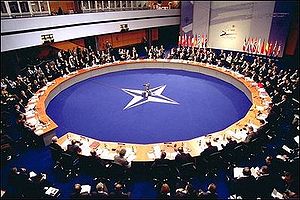
Inside the Human Rights and Alliance of Civilizations Room of the Palais des Nations in Geneva. Inaugurated in 2008, the room accommodates different United Nations bodies, including ECOSOC and the Human Rights Council. (C) United Nations

Inside the Human Rights and Alliance of Civilizations Room of the Palais des Nations in Geneva.
Inaugurated in 2008, the room accommodates different United Nations bodies, including ECOSOC and the Human Rights Council.
(C) United Nations

For the UN, this is a major step forward and must have led to a good deal of discussion before being presented in the resolution. As it is, India and China objected publicly in official statements just before the final resolution was accepted. Both States maintained that using Secretariat members went beyond the mandate of the Office of the High Commissioner. They were worried by the increasing investigative role of the Office which should be limited only to helping develop national capacity building: Iraq today, Kashmir and Tibet tomorrow. The Indians and the Chinese are probably not the only governments worried, but they were the only States which spoke up on the issue, objecting strongly but saying they would not block consensus on the resolution.

The other advance or world law arising from the Special Session is the principle of the universality of concern and thus of investigation. In no previous case, has the UN looked at the violations within an area not under the control of a Member State. In this case, the investigation concerns actions of a non-state actor who nevertheless controls territory and to some extent administers the territory trying to impose its vision of strict Islamic law. This is a major step forward and has implications or other state entities but which are not members of the UN or recognized by the majority of UN Member States such as Abkhazia, South Ossetia, Transnistra, Nagorno-Karabakh, and if a state were set up in eastern Ukraine.

This principle was stated in a widely distributed text for the Special Session and which will come out as a written NGO statement at the regular session of the Council starting 8 September. With due modesty, I quote from myself:

“The Association of World Citizens believes that world law as developed by the United Nations applies not only to the governments of Member States but also to individuals and non-governmental organizations. The ISIS has not been recognized as a State and is not a member of the UN. Nevertheless the Association of World Citizens is convinced that the terms of the Declaration on the Elimination of All Forms of Intolerance and Discrimination Based on Religion or Belief applies to the ISIS and that the actions of the ISIS are, in the terms of the Declaration adopted by the General Assembly on November 25, 1981 ‘inadmissible’.

Citizens of the World stress the need for world law and certain common values among all the States and peoples of the world. We are one humanity with a shared destiny. The challenge before us requires inclusive ethical values. Such values must be based on a sense of common responsibility for both present and future generations.”

Prof. René Wadlow is President of the Association of World Citizens.