The Official Blog of the

Archive for the ‘Human Rights’ Category

Iraq: What does one do with the broken pieces?

In Anticolonialism, Conflict Resolution, Cultural Bridges, Current Events, Democracy, Human Rights, Middle East & North Africa, The Search for Peace, United Nations, War Crimes, World Law on June 23, 2014 at 9:31 PM

IRAQ: WHAT DOES ONE DO WITH THE BROKEN PIECES?

By René Wadlow


There is the legendary sign in shops selling china and porcelain “Do not touch; If you break it, you buy it”. The same sign should have been hung at the entry to Baghdad rather than portraits of Saddam Hussein. With Iraq in armed confusion as sectors of the country change side, and the Iraqi government seems incapable of an adequate response other than to call for military help, as concerned world citizens we must ask ourselves “What can we do?”

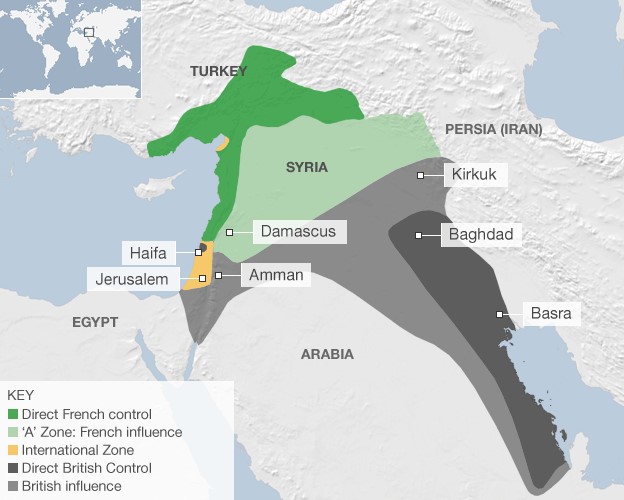
The forces of the Islamic State of Iraq and Syria (ISIS) have broken down a wall on the frontier between Iraq and Syria as a symbol of abolishing national frontiers to be replaced by a community of the Islamic faithful − the umma. In some ways, we are back to the early days of the post-World War One period when France and England tried to re-structure that part of the Ottoman Empire that is now Iraq, Syria, Lebanon, Israel-Palestine, Jordan, Turkey and an ill-defined Kurdistan.


In March 2003 an international "coalition" led by the United States attacked Iraq in violation of international law and overthrew the country's dictator, Saddam Hussein. The problem is that, having acted without prior permission from the Security Council, the "coalition" was never able to garner support from the international community and build a real, stable democracy in Iraq. As a result, a significant part of the country is now in the hands of radical Islamist fighters.

In March 2003 an international “coalition” led by the United States attacked Iraq in violation of international law and overthrew the country’s dictator, Saddam Hussein. The problem is that, having acted without prior permission from the Security Council, the “coalition” was never able to garner support from the international community and build a real, stable democracy in Iraq. As a result, a significant part of the country is now in the hands of radical Islamist fighters.


During 1915, Sir Mark Sykes, a Tory Member of Parliament and a specialist on  Turkish affairs and Francois Georges-Picot, a French political figure with strong links to colonial factions in the French Senate negotiated how to re-structure the Ottoman Empire to the benefit of England and France. Although these were considered “secret negotiations” Sykes reported to Lord Kitchener, the War Minister, and Picot had joined the French Foreign Ministry as war service. However, both operated largely as “free agents”. Today Sykes and Picot are recalled for no other achievement than their talent in dividing. The agreement between them was signed in January 1916 but kept in a draw until the war was over. In April 1920 at San Remo, France and England made the divisions official.

History has moved on, but dividing and re-structuring remains the order of the day. The political structures of Israel-Palestine as one state, two states, or one state and occupied territories have confronted the best of mediators − and less talented mediators as well. With the war in Syria continuing, there have been suggestions to divide − or federate − the state into three parts: an Alawite-Shi’ite area, a Sunni area, and a Kurdish area. The same divisions had been suggested for Iraq earlier and are again being discussed in the light of the ISIS advances: a Shi’ite area in the south, Kurds in the north − already largely independent − and Sunnis in the Middle. Lebanon, although not a federal state, is largely structured on sectarian-geographic divisions.


In 1916 the Sykes-Picot agreement carved the Middle East into two "spheres of influence", one British, the other French, plus two zones of direct control by either of the colonial powers.

In 1916 the Sykes-Picot agreement carved the Middle East into two “spheres of influence”, one British, the other French, plus two zones of direct control by either of the colonial powers.


Constitution-making under duress is not the best way of doing things. Forced federalism presents even more difficulties than creating a federal state when people are not fighting each other. We have seen the difficulties of proposing federal structures for Ukraine, federalism seen by some as a prelude to the disintegration of the state. The difficulties in the wider Middle East are even greater, as we have three states directly involved: Iraq, Syria, Turkey with a well-organized and armed Kurdish community in Iraq and parts of Syria.

The Kurds had expected that a Kurdistan would be recognized after World War One. The issue was raised at a conference to set Middle East frontiers held in June 1923 in Lausanne. The failure of the Kurds to achieve their goal for independence and the forced inclusion of their mountainous homeland within the then newly created states of Iraq, Syria and Turkey caused resentment and unrest. All the Kurds received in 1923 was a pledge to respect minority rights. By 1924, the Turkish government had banned all Kurdish schools, organizations, publications, and religious Sufi brotherhoods. In 1925, there was the first of the Kurdish revolts in Turkey, which, on-and-off, continue to today.


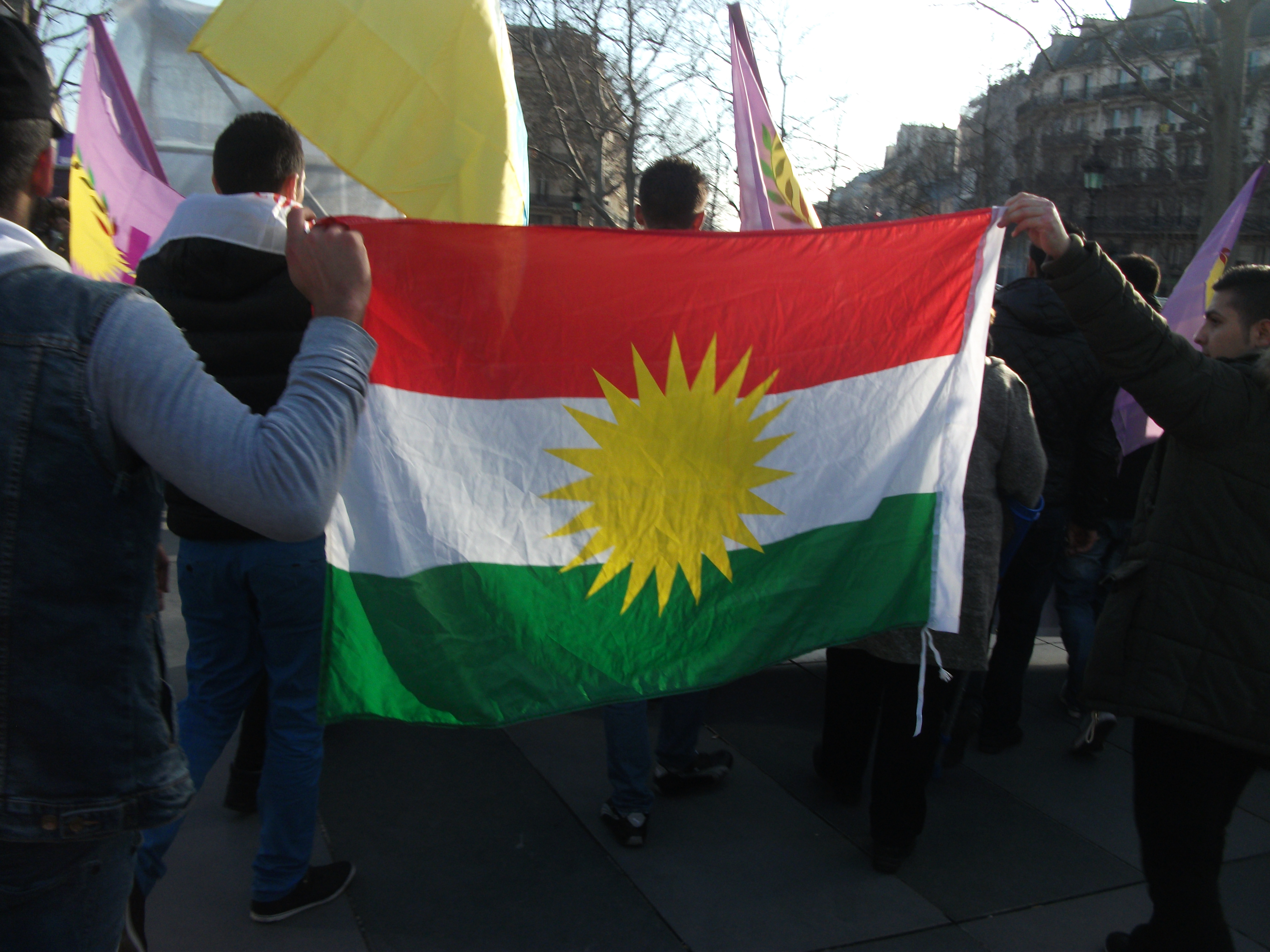
The flag of the Kurdish people, a people without a nation, a people without a land, to whom the promises of history ring hollow today more than they ever have. (C) Bernard J. Henry/AWC

The flag of the Kurdish people, a people without a nation, a people without a land, to whom the promises of history ring hollow today more than they ever have. (C) Bernard J. Henry/AWC


As outsiders but as specialists in federal forms of government, is there anything which we can do to be helpful? Maps are deceptive, and what is drawn as Shi’ite, Sunni and Kurdish area in Iraq and Syria have, in fact, mixed populations. Nor are religious-sectarian divisions the only lines of fracture.

Nevertheless, discussions among Syrians, Iraqis, Turks, Iranians and outside specialists on forms of government may be of greater use than sending Special Forces as ‘intelligence’ specialists. Such discussions will not be easy to organize or to facilitate but in a period of constitutional disorder and flux, such efforts are necessary.


Prof. René Wadlow is President of the Association of World Citizens.

Ukraine: The Dogs of the Cold War are Awakened

In Being a World Citizen, Conflict Resolution, Current Events, Democracy, Europe, Human Rights, International Justice, The former Soviet Union, The Search for Peace, United Nations, World Law on June 12, 2014 at 9:11 PM

UKRAINE: THE DOGS OF THE COLD WAR ARE AWAKENED

By René Wadlow


“Cry Havoc! And let slip the dogs of war!”

William Shakespeare, Julius Caesar


The dogs of the Cold War (1945-1990) had largely fallen asleep after the 1990 Summit Conference of the Organization for Security and Cooperation in Europe (OSCE) in Paris had put a formal end to the European aspects of the Cold War. A New Europe was the slogan of both governments and non-governmental currents that had been working for a Europe without its East-West divisions symbolized by the Berlin Wall.

Many of us had been involved in the April 1980 European Nuclear Disarmament Appeal, often shortened to END, of which the English historian E.P. Thompson was a leading spokesman. Mient Jan Faber of the Dutch Inter-Church Peace Council was the link to those working within church/religious groups on the same lines. Obviously, the level of arms − and thus disarmament − was not the only aspect of the moves necessary to move beyond the Cold War embodied in bureaucratic, and military-industrial forms.

There was a necessary ‘healing process’ − a need to remove the barbed wire in people’s minds and hearts.

The hope was that moving beyond the Cold War would become a citizens’ search for common projects, bringing together widening constituencies in a direct discourse beyond Cold War agendas and the media’s framing of the debates.

Many of us met in Prague in what was still Czechoslovakia in October 1990 for the creation of the Helsinki Citizens’ Assembly with an aim of a democratic integration of Europe. Vaclav Havel who had become Head of State spoke to the opening session on the power of acting from principle guided by our consciences to build a thoroughly new Europe undivided into blocs.

Vaclav Havel (1936-2011), the Czechoslovakian dissident playwright who in 1989 led the country's 'Velvet Revolution', eventually becoming President of Czechoslovakia. From 1992 to 2003 Havel was President of the Czech Republic after Czechoslovakia was eventually dissolved.

Vaclav Havel (1936-2011), the Czechoslovakian dissident playwright who in 1989 led the country’s ‘Velvet Revolution’, eventually becoming President of Czechoslovakia. From 1992 to 2003 Havel was President of the Czech Republic after Czechoslovakia was dissolved. (C) John Macdougall/AFP/Getty Images

“Helsinki Citizens” had been chosen by the organizers as the name because Helsinki had been the city which saw the formal start of the governmental process in 1975 leading first to a certain stabilization of the European Cold War structure and progressively to tension-reduction under the title of “détente”. Since much of the governmental detente seemed to be aimed only at making a more stable status quo, citizen activists spoke of “detente from below”, as going beyond the current structures.

The visions of a better world differed among peace, green, and human rights groups. However all agreed that the future forms of Europe was beyond the current status quo.

I had gone to Prague already concerned with ethnic-nationalities tensions. These tensions were colored by the Cold War but also had non-Cold War roots as seen in the Nagorno-Karabakh conflict within the then USSR. Through contacts in Geneva, I had become concerned by Nagorno-Karabakh and thought that good faith negotiations could lead to a resolution of the conflict. I was also concerned with the growing tensions in Yugoslavia. My paper read at the Prague conference “Future of Europe” was published in the Belgrade Review of International Affairs in December 1990.

Since 1990, the conflicts linked to the breakup of Yugoslavia, and the conflicts of Abkhazia-South Ossetia-Georgia, and Transnistra-Moldova all confirm my analysis that the key problem of our time is the manifestation of narrow nationalism. This narrow nationalist ideology must be countered by a strong cosmopolitan-world citizen ideology and practice.

The hope at Prague in 1990 was to build a pan-European movement participating in public debates, offering opinions and discussing alternatives in each country but also able to come together and act in a conflict resolution way in times of strong tensions and armed conflicts. There were a few efforts of the Helsinki groups during the Yugoslav conflicts, but they were not coordinated nor of massive size. I had participated in some of these undertakings at the UN in Geneva when the conference on Yugoslavia was in session there.

The Hofburg Palace in Vienna, Austria, which houses the Headquarters of the Organization for Security and Cooperation in Europe. (C) Bernard Henry

The Hofburg Palace in Vienna, Austria, which houses the Headquarters of the Organization for Security and Cooperation in Europe. (C) Bernard Henry/AWC

Since 1990, we have seen the rise in some European countries of hard line nationalist groups − often Right wing and some with Neo-Fascist aspects. This rise was illustrated by the May 25, 2014 elections to the European Parliament. The entry of an additional number of narrow nationalists will not have much impact on the way the European Parliament operates, but it will give the nationalists a media platform and a degree of legitimacy in their home country. There has not been a significant rise in cosmopolitan-world citizen movements, although cosmopolitanism as an intellectual framework has become increasingly common.

Without a well-organized movement of pan-European peace-green-human rights movements, “Europe from Below” has been unable to act in the Ukraine crisis. Individual governments, in particular Russia and the USA, have taken a highly visible role. The media in both countries dusted off the Cold War vocabulary and political analysis.

Talk of a “New Cold War” has been common. The OSCE − with Switzerland as President for 2014 − has called for restraint and negotiations. There has been no equivalent “high profile” efforts on the part of non-governmental groups. Today, there is no Vaclav Havel to serve as a bridge of respect among both governments and non-governmental movements. Certainly, the dogs of the Cold War have awakened to remind us that they are still there. In addition, new nationalist, and authoritarian tendencies are emerging. Although these nationalist movements are sometimes led by comic figures, they need to be taken seriously.

Counter voices also need to awaken, and the ability for nongovernmental conflict resolution groups to act must be strengthened.


Prof. René Wadlow is President of the Association of World Citizens.
Liberating the Young Women Kidnapped by Boko Haram

In Africa, Being a World Citizen, Children's Rights, Conflict Resolution, Current Events, Foundations for the New Humanism, Human Rights, Solidarity, War Crimes, Women's Rights, World Law on May 12, 2014 at 1:53 PM

LIBERATING THE YOUNG WOMEN KIDNAPPED BY BOKO HARAM

By René Wadlow


Citizens of the World, motivated by the spirit of compassion symbolized by Kuan Yin appeal to the members of Boko Haram to return the young women taken from the girls’ school in Chibok, northeastern Nigeria.

The actions of Boko Haram undermine the efforts of local and national educational services in Nigeria to overcome the persistent poverty and lack of development in northern Nigeria.

Although the name of the armed group which carried out the kidnapping can be roughly translated as “Western Education is Unlawful” of forbidden, its members know full well that education is neither “Western” or “Southern” but is an effort to train individuals to meet the challenges of life and to develop their full potential as persons. The members of Boko Haram know that education is a crucial need for the development of northern Nigeria and that the education of women is necessary for progress.

Kuan Yin is the bodhisattva (the "compassionate one") associated with compassion as venerated by East Asian Buddhists, usually as a female. The name Guanyin is short for Guanshiyin, which means "Observing the Sounds (or Cries) of the World." (Source: Wikipedia)

Kuan Yin (or Guanyin) is the bodhisattva (the “compassionate one”) associated with compassion as venerated by East Asian Buddhists, usually as a female. The name Guanyin is short for Guanshiyin, which means “Observing the Sounds (or Cries) of the World.” ((c) Wikipedia)

We are sure that many members of the Boko Haram group understand that their actions are morally wrong as well as unlawful under Nigerian law and in violation of the universally-recognized standards of human rights. Thus they will act to return the young women to their home area.

Armed violence will destroy the efforts being made to meet basic needs and to improve the standard of living of all in northern Nigeria. A spirit of compassion should motivate members of Boko Haram to return the young women to their families and to find nonviolent ways to better the lives of all in northern Nigeria.


Prof. René Wadlow is President of the Association of World Citizens.
Rencontre avec Ali ETMAN, jeune révolutionnaire égyptien que la France veut expulser

In Being a World Citizen, Current Events, Democracy, Human Rights, Middle East & North Africa, Solidarity on April 29, 2014 at 5:30 PM

Sur la chaîne Dailymotion de l’AWC :

Bernard HENRY, Officier des Relations extérieures du Bureau de Représentation auprès de l’Office des Nations Unies à Genève de l’AWC, donne la parole à Ali ETMAN, jeune militant de la révolution égyptienne en France que les autorités françaises veulent expulser parce qu’il a pris part à une protestation publique devant l’Ambassade d’Egypte en France.

Rencontre avec Ali ETMAN, jeune révolutionnaire égyptien que la France veut expulser

Les Citoyens du Monde Refusent l’Expulsion de Jeunes Militants Égyptiens par la France

In Being a World Citizen, Current Events, Democracy, Human Rights, Middle East & North Africa, Solidarity, World Law on March 28, 2014 at 7:25 PM

-- AWC-UN Geneva Logo --

LES CITOYENS DU MONDE REFUSENT L’EXPULSION DE JEUNES MILITANTS ÉGYPTIENS PAR LA FRANCE

L’Association of World Citizens, Organisation Non-Gouvernementale dotée du Statut Consultatif aux Nations Unies et accréditée auprès du Conseil des Droits de l’Homme, appelle le Gouvernement de la République française à honorer la tradition historique et constitutionnelle de la France en renonçant à toute poursuite, pénale ou administrative, contre les jeunes Egyptiens qui ont été arrêtés le 25 janvier dernier après avoir protesté pacifiquement devant l’Ambassade d’Egypte à Paris.

Depuis 1948 et les débuts de notre mouvement, nous, Citoyens du Monde, avons toujours œuvré pour le respect des Droits de l’Homme pour toutes et tous, au-delà de toutes les frontières, qu’elles soient nationales, politiques, religieuses ou autres.

Avant les révolutions arabes, le mot « frontière » était un symbole des régimes en place en Tunisie, en Egypte et ailleurs. Assumant un rôle de gardes-frontières pour des pays occidentaux qui n’étaient pas pressés d’accueillir des migrants en provenance d’Afrique du Nord, les régimes répressifs obligeaient souvent celles et ceux qui n’avaient d’autre choix que de fuir la misère, ou la persécution, souvent les deux, à « brûler » les frontières, à devenir ce que la langue arabe appelle « harraga », une personne qui « brûle » la frontière de son pays, et avec, toute sa vie passée.

Aujourd’hui, la décision des autorités françaises de renvoyer en Egypte des jeunes gens qui, ici en France, ne cherchaient qu’à faire usage de la liberté d’expression que consacrent tant la Constitution française que les engagements internationaux de la France en matière de Droits de l’Homme est incompréhensible. Nous voulons que les frontières ne soient pas des murs pour les migrants, mais pour ce qui est du respect des Droits de l’Homme, nous refusons que les frontières nationales ne s’ouvrent, comme c’est apparemment le cas ici, que pour laisser entrer la répression.

En voyant nos différentes structures – associations, syndicats, partis politiques et autres, unir ainsi leurs forces aujourd’hui, nous sommes certains que le Gouvernement de la France finira par nous entendre et par se montrer digne des valeurs de respect des normes universelles de Droits de l’Homme qui sont celles de ce pays, ces normes universelles qui, avec l’adoption de la Déclaration universelle des Droits de l’Homme au Palais de Chaillot, ont pris naissance en 1948 ici même, à Paris.

Professeur René WADLOW, Président

Bernard HENRY, Officier des Relations Extérieures du Bureau de Représentation auprès de l’ONU à Genève

http://www.worldcitizensunited.orghttp://www.awcungeneva.comawcungeneva@yahoo.fr

World Citizens, Opposed to the Death Penalty, Question the Egyptian Government’s Sentencing to Death 528 People in a Mass Trial

In Current Events, Human Rights, International Justice, Middle East & North Africa, Uncategorized, World Law on March 25, 2014 at 5:51 PM

-- AWC-UN Geneva Logo --

WORLD CITIZENS, STRONGLY OPPOSED TO THE DEATH PENALTY, QUESTION THE EGYPTIAN GOVERNMENT’S SENTENCING TO DEATH 528 PEOPLE IN A SHORT MASS TRIAL

In a March 26, 2014 message to the Acting President of Egypt and to the United Nations High Commissioner for Human Rights, Prof. René Wadlow, President of the Association of World Citizens (AWC), stated that the mass trial of Muslim Brotherhood members accused of the murder of a police officer and terrorist acts during the August 2013 protests was an insult to the Spirit of Justice and a violation of the rule of law.

The AWC has repeatedly called upon governments to declare a moratorium on executions with a view to abolishing the death penalty – a penalty that extensive research has shown has little or no impact on the level of violent crime and too often opens the door to judicial errors and injustice.

The speed of the two-day trial during which defense lawyers were not able to develop their arguments is unprecedented and points to the political motivations of the current military-influenced Government.

There is a possibility to appeal the verdict, but the timing and modalities are unclear. There are some 1,200 Muslim Brotherhood supporters awaiting trial, and this trial in the Minya Criminal Count does not indicate a rule of law but rather of revenge and a desire to inspire fear of possible Government action.

The verdict now goes to Egypt’s Grand Mufti, a religious authority, for approval or rejection. It is not clear on what basis religious authorities review and make decisions on what are essentially secular trials. In practice, death sentences in Egypt are often handed down, but few have been carried out in recent years. The aims of the trials and the sentences are political: to show that death is a real possibility if one “steps out of line”.

Such a misuse of the court system undermines trust in the legal order and is in violation of the spirit and provisions of human rights law.

The AWC is devoted to the universal application of human rights law which includes fair trials and the right to adequate defense. Therefore, the AWC calls upon the Government of Egypt to revise this court case by a speedy appeal procedure and to see that the subsequent trials concerning Muslim Brotherhood members or supporters of former President Mohammed Morsi are carried out in conformity with established international norms.

Le droit universel à la fraternité

In Being a World Citizen, Cultural Bridges, Fighting Racism, Human Rights, Solidarity, The Search for Peace, Uncategorized, World Law on February 11, 2014 at 9:25 PM

LE DROIT UNIVERSEL A LA FRATERNITE

Par Bernard Henry

(D’après « The Universal Right to Brotherhood », du même auteur :

https://awcungeneva.com/2014/02/10/the-universal-right-to-brotherhood/)

En tant qu’Organisation Non-Gouvernementale (ONG) dotée du Statut Consultatif auprès de l’ONU et active au sein du Conseil des Droits de l’Homme, l’Association of World Citizens a toujours défendu les Droits de l’Homme partout dans le monde, tous les Droits de l’Homme, qu’ils soient civils, politiques, économiques, sociaux, culturels ou autres, tels que ceux plus récemment reconnus au développement et à un environnement sain.

Depuis le début de la décennie, le désir mondial de Droits de l’Homme est plus visible que jamais auparavant. Mais les nombreux auteurs de violations auxquels le peuple du monde doit faire face – les gouvernements des Etats, les corporations multinationales, les groupes politiques non-étatiques, armés ou non – balaient ouvertement les Droits de l’Homme comme étant de simples revendications politiques qui en valent d’autres, leur refusant le moindre caractère de prérogatives universelles reconnues en droit international.

Parfois même, les gouvernements répressifs et autres entités qui le sont tout autant vont jusqu’à prétendre qu’ils agissent au nom même des Droits de l’Homme, accusant en cela leurs critiques et leurs opposants d’attenter eux-mêmes aux Droits de l’Homme.

C’est comme si chacun ne revendiquait plus les Droits de l’Homme qu’à son seul profit, ignorant superbement autrui et considérant les Droits de l’Homme comme étant tout ou rien – mes droits ou les leurs, l’un ou l’autre mais pas les deux. Rien ne saurait être plus contraire à l’idée même de défense des Droits de l’Homme.

Le Préambule de la Déclaration universelle des Droits de l’Homme, depuis 1948 clé de voûte du droit international des Droits de l’Homme, affirme très clairement qu’une protection effective des Droits de l’Homme par la loi est essentielle « pour que l’homme ne soit pas contraint, en suprême recours, à la révolte contre la tyrannie et l’oppression ». Même si certains peuvent voir en les Droits de l’Homme une question trop « conflictuelle » à aborder, ignorer ou renier les Droits de l’Homme rend bel et bien impossible à toute personne, tout gouvernement, ou toute autre entité que ce soit, d’espérer en tout bon sens atteindre une quelconque paix ou un quelconque progrès dont il ou elle puisse tirer parti.

L’Article Premier de la Déclaration se fait encore plus explicite sur ce point :

« Tous les êtres humains naissent libres et égaux en dignité et en droits. Ils sont doués de raison et de conscience et doivent agir les uns envers les autres dans un esprit de fraternité. »

Fraternité – c’est bien là le mot qui compte, car c’est là tout ce que les Droits de l’Homme veulent dire.

Se soucier de son prochain, un être humain comme soi-même. Accorder de l’importance à la vie, la liberté, la sécurité d’un ou d’une autre autant qu’aux siennes propres. Vouloir faire le bien des autres plutôt que de concevoir sa propre vie comme un combat permanent et inexorable contre tous. C’est cela, vivre « dans un esprit de fraternité », et partant de là, respecter les Droits de l’Homme, à commencer par le plus essentiel d’entre eux – le droit à la fraternité.

Même s’il est devenu très à la mode de chercher des noises à autrui en invoquant les Droits de l’Homme, se conduire ainsi n’a aucun sens, dans la mesure où la défense des Droits de l’Homme doit être par essence inclusive et jamais sectaire. Lorsque l’on reconnait le droit à la fraternité en tant que droit inaliénable devant être garanti à toutes et à tous, l’on en vient tout naturellement à reconnaître tous les autres droits consacrés par la Déclaration et par bien d’autres instruments internationaux de Droits de l’Homme – civils, politiques, économiques, sociaux et culturels.

La Déclaration universelle des Droits de l'Homme en langue française, langue maternelle de son principal créateur, le Français René Cassin.

La Déclaration universelle des Droits de l’Homme en langue française, langue maternelle de son principal artisan, le Français René Cassin.

Dans la droite ligne de ce principe, la Déclaration se termine sur trois articles rappelant la primauté du droit à la fraternité sur tous les autres :

Article 28

« Toute personne a droit à ce que règne, sur le plan social et sur le plan international, un ordre tel que les droits et libertés énoncés dans la présente Déclaration puissent y trouver plein effet. »

Bien évidemment, cela veut dire que chacun a droit à la paix, et plus évident encore, il ne peut y avoir de paix sans la fraternité.

Article 29

« 1. L’individu a des devoirs envers la communauté dans laquelle seul le libre et plein développement de sa personnalité est possible. 

2. Dans l’exercice de ses droits et dans la jouissance de ses libertés, chacun n’est soumis qu’aux limitations établies par la loi exclusivement en vue d’assurer la reconnaissance et le respect des droits et libertés d’autrui et afin de satisfaire aux justes exigences de la morale, de l’ordre public et du bien-être général dans une société démocratique. 

3. Ces droits et libertés ne pourront, en aucun cas, s’exercer contrairement aux buts et aux principes des Nations Unies. »

Peut-on être plus clair ? L’on ne peut jouir de ses droits qu’au sein de la communauté humaine, « dans un esprit de fraternité », donc, ni en dehors de la communauté ni contre la communauté.

Article 30

« Aucune disposition de la présente Déclaration ne peut être interprétée comme impliquant pour un Etat, un groupement ou un individu un droit quelconque de se livrer à une activité ou d’accomplir un acte visant à la destruction des droits et libertés qui y sont énoncés. »

La plus forte, et la plus logique, conclusion possible à une déclaration universelle des droits – les droits ne peuvent être revendiqués, à plus forte raison utilisés, pour faire du tort à qui que ce soit, ce en aucune circonstance. En d’autres termes, si vous ne reconnaissez pas le droit à la fraternité, vous ne pouvez tout simplement pas vous prévaloir de vos droits du tout.

Jargon juridique mis à part, ce n’est là rien d’autre que ce que disait déjà Albert Schweitzer lorsqu’il a créé son concept de Respect de la Vie (Ehrfurcht vor dem Leben). Dans son livre paru en 1923, La Civilisation et l’Ethique, Schweitzer résumait ce concept ainsi : « L’éthique n’est rien d’autre que le Respect de la vie. Le Respect de la vie me fournit le principe fondamental de la morale, à savoir que le bien consiste à entretenir, assister et mettre en valeur la vie, et que détruire la vie, lui faire du tort ou y faire obstacle est mal. »

En un temps où il n’existait aucune véritable institution politique ou juridique au niveau mondial, ce qui s’en rapprochait le plus étant une Société des Nations bâtie pour l’essentiel sur des vœux pieux et dénuée de tout pouvoir de promulguer des lois, Schweitzer proclamait déjà, de la manière la plus claire qui puisse être, le droit universel à la fraternité.

En 1952, la philosophie de "Respect de la Vie" valut à Albert Schweitzer le Prix Nobel de la Paix.

En 1952, la philosophie du “Respect de la Vie” valut à Albert Schweitzer le Prix Nobel de la Paix.

Plus le « respect », selon l’idée que Schweitzer s’en faisait, du droit à la fraternité est important, plus l’oppression et l’injustice ont du mal à s’installer dans une société. Que l’on se batte contre une dictature, que l’on engage le combat contre des politiciens qui propagent le racisme, que l’on manifeste pour un salaire décent, que l’on dispense un enseignement à des enfants démunis ou que l’on fournisse à un village isolé l’accès à l’eau potable, l’on affirme une seule et même chose : nous sommes citoyens du monde entier, l’humanité est notre famille, et en tant qu’êtres humains, nous avons le droit de vivre en famille avec nos frères sur la Terre.

Bernard Henry est Officier des Relations Extérieures du Bureau de Représentation auprès de l’Office des Nations Unies à Genève de l’Association of World Citizens.

The Universal Right to Brotherhood

In Being a World Citizen, Cultural Bridges, Fighting Racism, Human Rights, Solidarity, The Search for Peace, World Law on February 10, 2014 at 7:47 PM

THE UNIVERSAL RIGHT TO BROTHERHOOD

By Bernard Henry

As a Nongovernmental Organization (NGO) in Consultative Status with the United Nations (UN) and accredited with the UN Human Rights Council, the Association of World Citizens has always stood up for human rights everywhere in the world, all human rights, whether civil, political, economic, social, cultural or others, such as the more recently recognized rights to development and to a sound environment.

Since the beginning of this decade, the global yearning for human rights has been more visible than ever before. But the many violators to whom the people of the world have had to stand up – national governments, multinational corporations, non-state political groups, whether armed or not – have been openly dismissing human rights as mere political claims pro se, denying these may ever be a universal prerogative officially recognized in international law.

Sometimes repressive governments or other entities even claim to be acting in the very name of human rights, accusing their critics and opponents of being themselves human rights offenders.

It looks like everybody is now claiming human rights for their sole benefit, totally leaving out others and viewing human rights as a zero-sum game – my rights or theirs, it can’t be both. That is completely out of line with the concept of human rights advocacy.

The Preamble to the Universal Declaration of Human Rights, since 1948 the cornerstone of international human rights law, makes it clear that effective legal protection of human rights is essential “if man is not to be compelled to have recourse, as a last resort, to rebellion against tyranny and oppression”. Even though some people may think of human rights as an overly “divisive” issue to deal with, ignoring or rejecting human rights makes it impossible for any person, government, or other to sensibly hope to achieve any peace or progress for their own enjoyment.

Article 1 of the Declaration is even more explicit about it:

“All human beings are born free and equal in dignity and rights. They are endowed with reason and conscience and should act toward one another in a spirit of brotherhood.”

Brotherhood – that is the one word that counts, for that is just what human rights are all about.

Caring for one’s fellow human being. Valuing another person’s life, liberty, and safety like one’s own. Wishing well on others rather than thinking of one’s own life as an inescapable, permanent fight against everybody else. That is what it means to live “in a spirit of brotherhood”, and accordingly, to respect human rights, starting with the most essential of them all – the right to brotherhood.

Although it has become fashionable to antagonize others while citing human rights, a conduct like that makes no sense, as the defense of human rights shall be by essence inclusive, never sectarian. In recognizing the right to brotherhood as an inalienable right to be guaranteed for everyone, one naturally comes to recognize all other rights enshrined in the Declaration and other international human rights instruments – civil, political, economic, social and cultural.

The Universal Declaration of Human Rights in French, the mother tongue of its main initiator, Frenchman René Cassin.

In line with this principle, the Declaration ends with three articles that recall the primacy of the right to brotherhood over all other rights:

Article 28

“Everyone is entitled to a social and international order in which the rights and freedoms set forth in this Declaration can be fully realized.”

Obviously, this means everyone has a right to peace, and more obviously still, there can be no peace without brotherhood.

Article 29

“(1) Everyone has duties to the community in which alone the free and full development of his personality is possible.

(2) In the exercise of his rights and freedoms, everyone shall be subject only to such limitations as are determined by law solely for the purpose of securing due recognition and respect for the rights and freedoms of others and of meeting the just requirements of morality, public order and the general welfare in a democratic society.

(3) These rights and freedoms may in no case be exercised contrary to the purposes and principles of the United Nations.”

Clear as day. Rights are there to be enjoyed within the human community, “in a spirit of brotherhood”, thus neither apart from the community nor against the community.

Article 30

“Nothing in this Declaration may be interpreted as implying for any State, group or person any right to engage in any activity or to perform any act aimed at the destruction of any of the rights and freedoms set forth herein.”

The strongest, most logical possible conclusion to a universal declaration of rights – rights can never be claimed, let alone used, to do any harm to anyone under any circumstances. In other words, if you don’t recognize the right to brotherhood, you just cannot claim any rights at all.

All legalese aside, that is just what Albert Schweitzer was already saying when he developed his concept of Reverence for Life (Ehrfurcht vor dem Leben). In his 1923 book Civilization and Ethics, Schweitzer outlined the concept in these words: “Ethics is nothing other than Reverence for Life. Reverence for Life affords me my fundamental principle of morality, namely, that good consists in maintaining, assisting and enhancing life, and to destroy, to harm or to hinder life is evil.”

At a time when there was no real global political or legal institution in existence, the closest thing to it being a League of Nations largely built on wishful thinking and with no lawmaking powers, Schweitzer was already asserting, in the plainest possible manner, the universal right to brotherhood.

In 1952 Albert Schweitzer was awarded the Nobel Peace Prize for his philosophy of “Reverence for Life”.

The greater the “reverence”, as Schweitzer said, for the right to brotherhood, the harder it gets for oppression and injustice to settle down. Whether fighting a dictatorship, confronting racist politicians, demonstrating for decent wages, teaching poor children or providing a remote community with access to clean water, it all comes down to stating loud and clear this one universal claim: We are citizens of one world, humanity is our family, and as human beings, we all have a right to family life with our brothers on earth.

Bernard Henry is External Relations Officer of the Representative Office to the United Nations in Geneva of the Association of World Citizens.
Libérez Razan Zaïtouneh !

In Current Events, Human Rights, International Justice, Middle East & North Africa, United Nations, War Crimes, World Law on December 19, 2013 at 1:44 PM

-- AWC-UN Geneva Logo --

LES CITOYENS DU MONDE APPELLENT A LA LIBÉRATION IMMÉDIATE DE MAÎTRE RAZAN ZAITOUNEH ET TROIS AUTRES DÉFENSEURS DES DROITS DE L’HOMME CAPTURÉS AVEC ELLE DANS LA SYRIE EN GUERRE

Paris & Genève, le 19 décembre 2013

L’Association of World Citizens (AWC) appelle à la libération immédiate de Madame Razan Zaïtouneh, avocate syrienne des Droits de l’Homme, et de trois autres Défenseurs des Droits de l’Homme (DDH) – Monsieur Wael Hamada, Monsieur Nazem Hamadi et Madame Samira Khalil – qui ont été enlevés avec elle par des inconnus voici dix jours.

Le 9 décembre 2013, ces quatre DDH ont été capturés par des hommes masqués et armés puis conduits en un endroit inconnu, depuis les locaux du Centre pour la Documentation des Violations des Droits de l’Homme en Syrie situé à Douma.

Madame Razan Zaïtouneh défend sans relâche les droits des prisonniers politiques en Syrie. Quand la révolution, qui était au départ non-violente, a éclaté en 2011, elle a fondé les « comités locaux de coordination ». Cette même année, elle a été la lauréate du Prix Anna Politkovskaïa « RAW (Reach of Women) in WAR ».

Active également en tant que journaliste, Madame Razan Zaitouneh observe et informe sur les crimes de guerre et les atteintes aux Droits de l’Homme en Syrie. Dans le courant de cette année, le Prix « International Women of Courage » lui a été décerné pour son travail et ses efforts remarquables.

Depuis le 9 décembre, personne n’a revendiqué l’enlèvement, qui a eu lieu dans une zone où toutes les parties au conflit sont représentées et il est donc impossible de savoir avec certitude pour le compte de qui œuvraient les ravisseurs.

La seule certitude en la matière est que, qui qu’ils soient, les kidnappeurs ont commis un crime de guerre par l’enlèvement délibéré de civils dans un contexte de conflit armé, particulièrement s’agissant de DDH qui sont protégés de manière spéciale par le droit international des Droits de l’Homme.

En conséquence, l’AWC exige la libération immédiate de ces quatre DDH syriens.

Release Razan Zaitouneh!

In Current Events, Human Rights, International Justice, Middle East & North Africa, Uncategorized, United Nations, War Crimes, World Law on December 19, 2013 at 1:37 PM

-- AWC-UN Geneva Logo --

CITIZENS OF THE WORLD CALL FOR THE RELEASE OF ATTORNEY RAZAN ZAITOUNEH AND OTHER HUMAN RIGHTS DEFENDERS CAPTURED IN WAR-TORN SYRIA

Paris & Geneva, December 19, 2013

The Association of World Citizens (AWC) calls for the immediate release of Ms. Razan Zaitouneh, a Syrian human rights lawyer, and three other Human Rights Defenders (HRDs) – Mr. Wael Hamada, Mr. Nazem Hamadi, and Ms. Samira Khalil, who were kidnapped by unknown assailants ten days ago.

On December 9, 2013, the four HRDs were abducted by masked armed men and taken to unknown whereabouts from the premises of the Center for Documenting Human Rights Violations in Syria, located in Douma.

Ms. Razan Zaitouneh has tirelessly defended the rights of political prisoners in Syria. When the revolution, initially a nonviolent one, started in 2011 she founded the “local coordination committees”. That year she received the Anna Politkovskaya award “RAW (Reach All Women) in WAR”.

Also active as a journalist, Ms. Razan Zaitouneh has been monitoring and reporting war crimes and human rights violations in Syria. Earlier this year she received the International Women of Courage Award for her outstanding work and efforts.

Since December 9 no one has claimed responsibility for the abduction, which took place in a zone where all parties to the conflict are represented, making it impossible to know for sure who the kidnappers were working for.

The one thing we know for sure is that, whoever they are, the kidnappers committed a war crime by deliberately abducting civilians in a context of armed conflict, especially HRDs who are specially protected under international human rights law.

Consequently, the AWC demands the immediate release of the four Syrian HRDs.