The Official Blog of the

Archive for the ‘Democracy’ Category

BOOK REVIEW: Thomas Nordström, “A World Government in Action”

In Being a World Citizen, Book Review, Conflict Resolution, Cultural Bridges, Democracy, Human Development, Human Rights, International Justice, NGOs, Nonviolence, Peacebuilding, Solidarity, The Search for Peace, Track II, United Nations, Women's Rights, World Law on September 8, 2025 at 7:00 PM

By René Wadlow

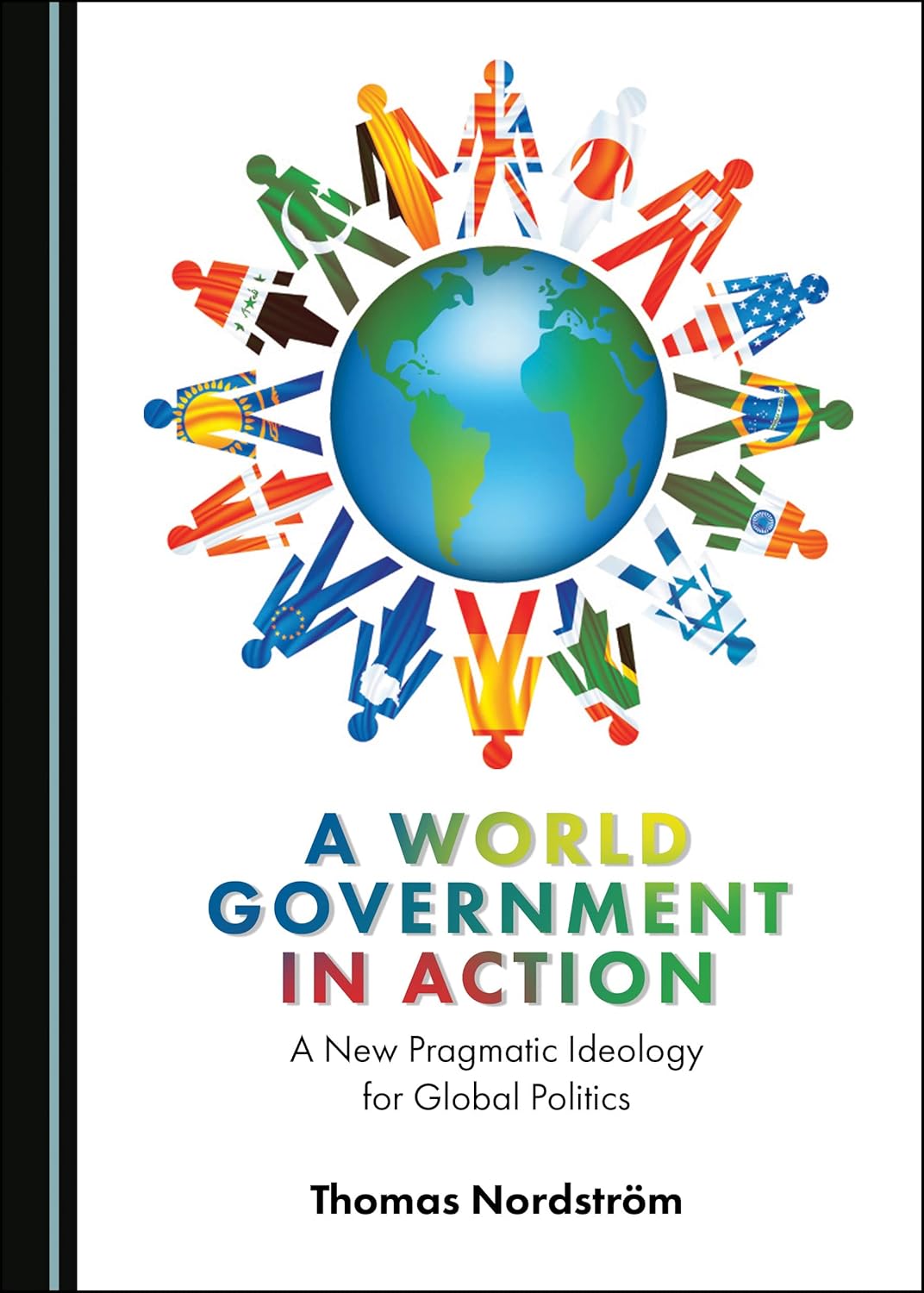
Thomas Nordström, A World Government in Action.

Newcastle upon Tyne: Cambridge Scholars Publishing, 2020, 147pp.

Thomas Nordström has written a useful book which more accurately should have been called “The Need for a World Government in Action”. He outlines many of the challenges facing the world society and stresses that the United Nations (UN) does not have the authority or the power to deal with these challenges adequately. The challenges are interrelated and thus must be faced in an interrelated way. Thus, climate change has an impact on land use which has an impact on food production. To improve food production, there must be better education on food issues as well as greater equality among women and men, as, in many countries, women play a major role in food production, food preparation, and food conservation.

As governments and UN Secretariat members become aware of an issue, the issue is taken up in one or another of the UN Specialized Agencies – FAO, WHO, ILO, UNESCO, or a new program is created: the Environment Program, or different programs on the issue of women. Today, within the halls of the UN there are negotiations for a Global Pact on the Environment and for the creation of a World Environment Organization which would be stronger than the existing UN Environment Program. Such a Global Pact for the Environment would clarify important environmental principles and relations between the existing treaties on the environment which have been negotiated separately.

In the UN, the international agenda reflects the growing influence of nongovernmental organizations (NGOs) and the scientific community in shaping policy. We see this vividly in the discussions on the impact of climate change. The distinction that used to be made between national and international questions has almost entirely vanished. NGOs must be able to provide possible avenues of action based on an effective theoretical analysis that acknowledges the complexity of the international environment.

Governments cannot at the same time boost expenditure on armaments and deal effectively with ecological deterioration and the consequences of climate change. Militarization has contributed to the neglect of other pressing issues, such as shrinking forests, erosion of soils and falling water tables. Militarization draws energy and efforts away from constructive action to deal with common problems. Militarization creates rigidity at the center of world politics as well as brittleness which leads to regional conflicts and civil wars. This political paralysis is both a cause and a result of the rigidity and the brittleness of current international politics. Opportunities are missed for building upon the more positive elements of a particular situation.

What is often called “complex emergencies” – a combination of political and social disintegration that includes armed conflicts, ethnic violence, state collapse, warlordism, refugee flows and famine – have become one of the most pressing humanitarian issues of our time. Today’s violent conflicts are often rooted in a mix of exclusion, inequality, mismanagement of natural resources, corruption, and the frustrations that accompany a lack of jobs and opportunities. Lack of opportunities sows the seeds of instability and violence.

As Nordström points out, behind all the current armed conflicts, there is the presence in a small number of countries of nuclear weapons. If they were used, the level of destruction would be great. Although nuclear disarmament was on the agenda of the UN General Assembly from its start, there has been little progress on nuclear disarmament issues.

As World Citizen and former President of India S. Radhakrishnan has written, “To survive we need a revolution in our thoughts and outlook. From the alter of the past we should take the living fire and not the dead ashes. Let us remember the past, be alive to the present and create the future with courage in our hearts and faith in ourselves.” The great challenge which humanity faces today is to leave behind the culture of violence in which we find ourselves and move rapidly to a culture of peace and solidarity. We can achieve this historic task by casting aside our ancient nationalistic and social prejudices and begin to think and act as responsible Citizens of the World. Nordström sets out some of the guideposts.

Prof. René Wadlow is President of the Association of World Citizens.
BOOK REVIEW: Robin Yassin-Kassab and Leila Al-Shami, “Burning Country – Syrians in Revolution and War”

In Being a World Citizen, Book Review, Conflict Resolution, Cultural Bridges, Current Events, Democracy, Human Rights, International Justice, Middle East & North Africa, NGOs, Peacebuilding, Solidarity, Syria, The Search for Peace, Track II, United Nations, War Crimes, World Law on September 1, 2025 at 6:00 AM

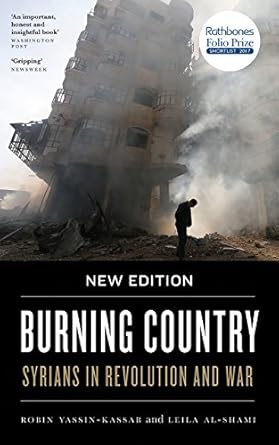
Robin Yassin-Kassab and Leila Al-Shami, Burning Country – Syrians in Revolution and War.

London, Pluto Press, 2016, 262pp.

Although this overview of Syrian society was written before the January 2025 flight of Bashar al-Assad to Moscow and the coming to power of Ahmed al-Sharaa as “interim” President, the book is a useful guide to many of the current issues in Syria today.

As Khalil Gibran wrote in The Garden of the Prophet, thinking of his home country, Lebanon, but it can also be said of the neighboring Syria, “Pity the nation divided into fragments, each fragment deeming itself a nation.” The fragments, ethnic and religious to which are added deep social divisions, make common action difficult. The Druze, the Alaouites, the Kurds, all play an important role but are often fearful of each other. Some of the Alaouites have fled to Lebanon. At the same time, there is a slow return of Syrians who have been in exile in Turkey and western Europe – especially Germany.

The divisions were made deeper by the years of violent conflict against the government of Bashar al-Assad which began in March 2011 with youth-led demonstrations appealing for a Syrian republic based on equality of citizenship, the rule of law, respect for human rights, and political pluralism.

After some months of non-violent protests, members of the military deserted, taking their weapons with them. The Syrian conflict became militarized. A host of armed militias were formed, often hostile to each other.

From late 2013 to February 2014, there were negotiations for a ceasefire held at the United Nations (UN), Geneva. Representatives of the Association of World Citizens (AWC) met with the Ambassador to the UN of Syria, as well as with the representatives of different Syrian factions who had come to Geneva. Unfortunately, Syrian politics has been that of “winner takes all” with little spirit of compromise or agreed-upon steps for the public good. The AWC called for a broad coming together of individuals who believe in non-violence, equality of women and men, ecologically-sound development, and cooperative action for the common good. The need to work together for an orderly creation of the government and the development of a just and pluralistic Syrian society is still with us.

Robin Yassin-Kassab’s book is a useful guide to the forces that must come together and cooperate today.

Prof. René Wadlow is President of the Association of World Citizens.
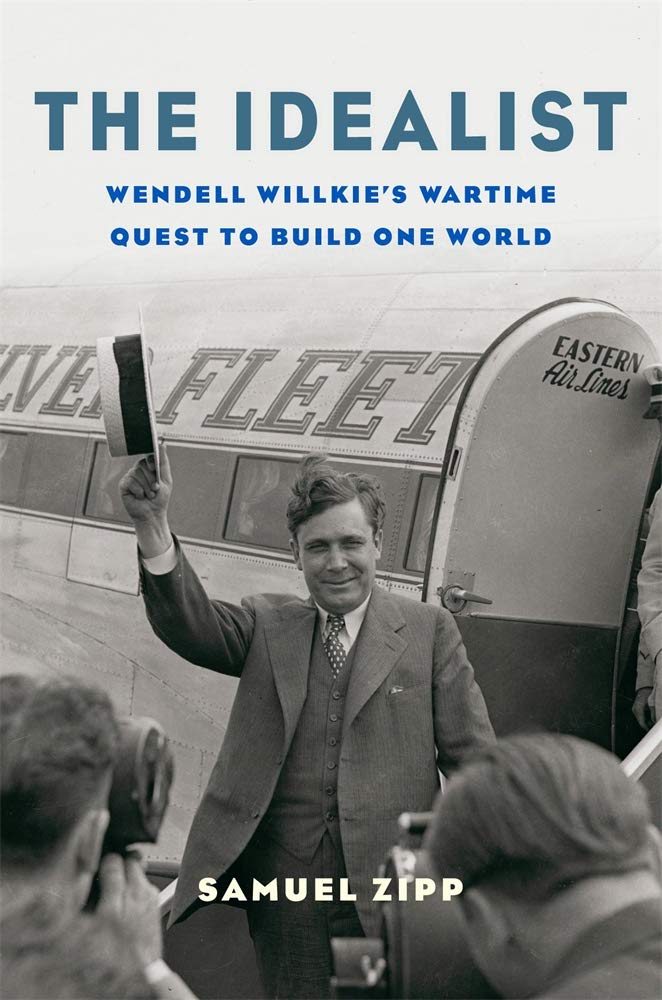
BOOK REVIEW: Samuel Zipp, “The Idealist: Wendell Willkie’s Wartime Quest to Build One World”

In Being a World Citizen, Book Review, Conflict Resolution, Democracy, Peacebuilding, Solidarity, The Search for Peace, United States, World Law on August 4, 2025 at 6:40 AM

By Lawrence Wittner

Samuel Zipp, The Idealist: Wendell Willkie’s Wartime Quest to Build One World.

Cambridge, MA: Belknap Press of Harvard University Press, 2020

Wendell Willkie – successful lawyer and businessman, as well as a defeated candidate for U.S. President on the Republican Party ticket in 1940 – is a largely forgotten figure today. But, as Samuel Zipp reminds us, Willkie was extremely influential during World War II, when he launched a popular campaign for “global interdependence” or, as it became known, “One World.”

In this beautifully written and well researched book, Zipp, Professor of American Studies at Brown University, points out that, unlike the conservatives and isolationists in his party, Willkie was a liberal who had backed Woodrow Wilson’s call for a League of Nations, advocated racial equality, and usually supported President Franklin D. Roosevelt’s policy of collective security.

Indeed, with World War II well underway, he and Roosevelt hatched a plan to have Willkie embark on a worldwide goodwill tour, by aircraft, from August to October 1942. This well-publicized venture was designed to demonstrate America’s political unity in wartime, foster support for the Allied powers, and provide a source of information on governmental and public opinion abroad.

Willkie – an informal, garrulous, likeable individual with a common touch – not only had great success along these lines, but was powerfully influenced by what he saw. Appalled by imperialism and racism and impressed by the demand for freedom of colonized or subordinate people in Africa, the Middle East and Asia, Willkie returned, as Zipp notes, convinced of the need to get Americans “to see the wider world through the lens of fraternity and cooperation.” He hoped to convince them that their independence “would require a new form of interdependence with the world,” one in harmony with “global desires for an end to empire and a guarantee of self-determination.”

Back in the United States, Willkie embarked on a round of interviews, speeches, and articles along these lines, capped off by the publication of an immensely popular book, One World. With sales topping 1.6 million copies by July, some observers called it the best-selling book in U.S. history. Furthermore, that June over 100 newspapers in the United States and abroad, with a combined circulation of over seven million readers, ran an abridged version in their pages. Using his celebrity status to assail both “narrow nationalism” and “imperialism,” Willkie produced what Zipp calls “a fleeting moment,” when he “showed the country an alternative possible future.”

But the moment passed. Nationalists and imperialists began to criticize this vision, the Republican Party repudiated his leadership, and, in October 1944, Willkie – only 52 years of age – died of a heart attack. Although, after the atomic bombing of Japan, world federalist and nuclear disarmament groups adopted “One World or None” as their slogan, the idea of egalitarian global interdependence gradually lost favor, despite its occasional revival by environmentalists and others.

Even so, Zipp concludes, Willkie’s “diagnosis of the value of global interdependence has never been more prescient,” while “his warnings about the perils of racially charged ‘narrow nationalism’ have never been more indispensable.”

Lawrence Wittner (http://lawrenceswittner.com) is Professor of History Emeritus at SUNY/Albany.

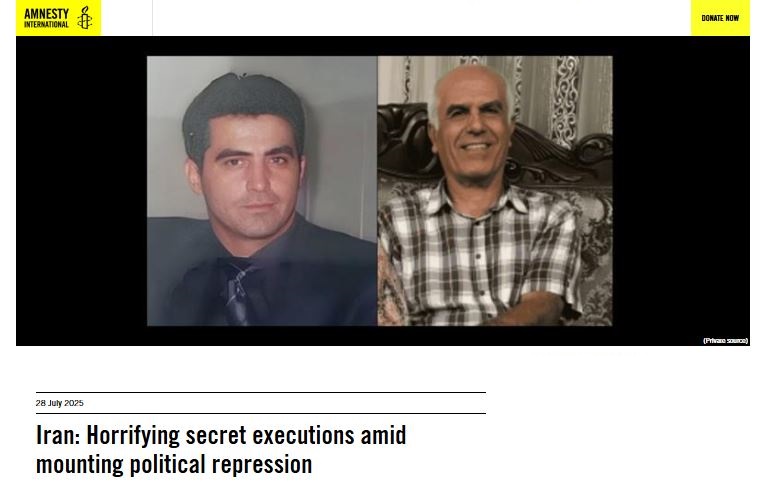
Opposing the Death Penalty: The Fight Goes On

In Current Events, Democracy, Human Rights, International Justice, Middle East & North Africa, NGOs, Religious Freedom, Solidarity, United Nations, World Law on July 29, 2025 at 7:45 PM

By René Wadlow

In a July 28, 2025 statement, the United Nations (UN) High Commissioner for Human Rights, Volker Türk, called for a moratorium on capital punishment in Iran where at least 48 persons are currently on death row. According to information gathered by the UN Human Rights Office in Geneva, at least 612 persons were reportedly executed in the first half of 2025. Minorities continue to be disproportionately affected by executions.

Religious minorities in Iran include Sunni Muslims, Christians, Baha’is, Zoroastrians, Jews, and the Gonabali Sufi community. Religious and ethnic identities in Iran often overlap.

Türk added, “Information received by my Office also indicates that judicial proceedings in a number of cases, often held behind closed doors, have consistently failed to meet due process and fair trial guarantees…The death penalty is incompatible with the right to life and irreconcilable with human dignity. Instead of accelerating executions, I urge Iran join the worldwide movement abolishing capital punishment starting with a moratorium on all executions.”

The Association of World Citizens has repeatedly called upon governments for a moratorium on executions with a view of abolishing the death penalty – a penalty that extensive research has shown has little or no impact on the level of crime and too often opens doors to judicial errors and injustices.

Prof. René Wadlow is President of the Association of World Citizens.
Syria: Creating a Framework for Cooperative Action

In Being a World Citizen, Conflict Resolution, Cultural Bridges, Current Events, Democracy, Human Rights, Middle East & North Africa, NGOs, Nonviolence, Peacebuilding, Solidarity, Syria, The Search for Peace, Track II, United Nations, War Crimes, World Law on March 26, 2025 at 7:00 AM

By René Wadlow

Recent violence and growing tensions along religious, ethnic and social class lines in Syria have highlighted the need to create a framework for cooperation among civil society groups. The Peacebuilding Section of the United Nations (UN) Secretariat was created because of the difficulties of creating a peaceful and just society after a period of armed conflict. It has been noted that violence often starts up again if strong measures of reconciliation and cooperative action are not undertaken as soon as the armed conflict ends. A spirit of revenge is often present, especially among those who consider themselves as victims. Thus, there needs to an interweaving of economic improvement with social reconciliation and the creation of trust among factions.

The long, multi-layered conflict in Syria from 2011 to the departure of Bashar al-Assad in December 2024 had increased tensions among groups, but the tensions were already there, clashing over values and interests. “Pity the nation divided into fragments, each fragment deeming itself a nation” wrote Khalil Gibran in The Garden of the Prophet thinking about his home country Lebanon, but it can also be said of neighboring Syria.

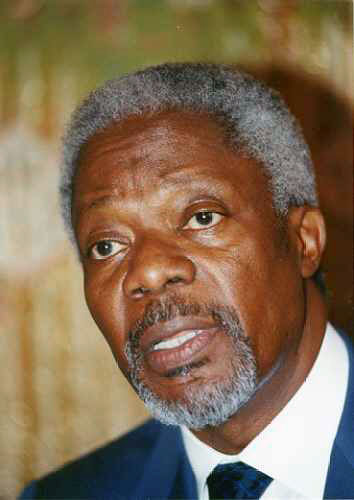
External countries had quickly stepped into the armed conflict after 2011 projecting their rivalries onto Syria and jockeying for regional preeminence. Syrian civil society members had cooperated during the efforts of mediation during the early years of the conflict. The first mediator was Mr. Kofi Annan as the joint envoy of the UN and the League of Arab States in February 2012.

Kofi Annan (C) Magyar ENSZ Társaság

Kofi Annan, a former UN Secretary General, had spent his entire career in the UN system and was a seasoned mediator. From his discussions and observations, he proposed first steps based on a ceasefire with effective UN supervision, a release of arbitrarily detained persons, increased humanitarian aid, and freedom of association within Syria. The implementation of his proposals did not follow, and he resigned his mandate on August 2, 2012.

I knew somewhat Kofi Annan and knew better some members of his staff. I also knew fairly well the Secretary General of the League of Arab States Nabil al-Araby, a longtime Ambassador of Egypt to the UN in Geneva. Thus, on behalf of the Association of World Citizens (AWC), I became involved with the armed conflict in Syria.

I had discussions with Dr. Faysal Khabbaz Hamouri, the Ambassador of Syria to the UN in Geneva, to see what issues might be negotiable and if an agenda could be fixed. I also had discussions with Syrian Nongovernmental Organization (NGO) members who had come to Geneva because of the negotiations. NGO representatives, such as I for the AWC, have no standing as official mediators but can play some role through their contacts with diplomats and UN Secretariat members. From these discussions, I came to realize how deeply divided was the Syrian community involved in the political aspects of the armed conflict. There were no public negotiations in Geneva after 2015. In September 2015, Russian military troops started their heavy support of the al-Assad government.

Today, it is difficult to know what those of us who are not Syrians and who are outside of Syria can do to help build a society of social cohesion in Syria. The wider Middle East is filled with violence and tensions among Israelis and Palestinians, in Lebanon, Yemen and Iran. We have to keep our spirits open for new possibilities of positive action.


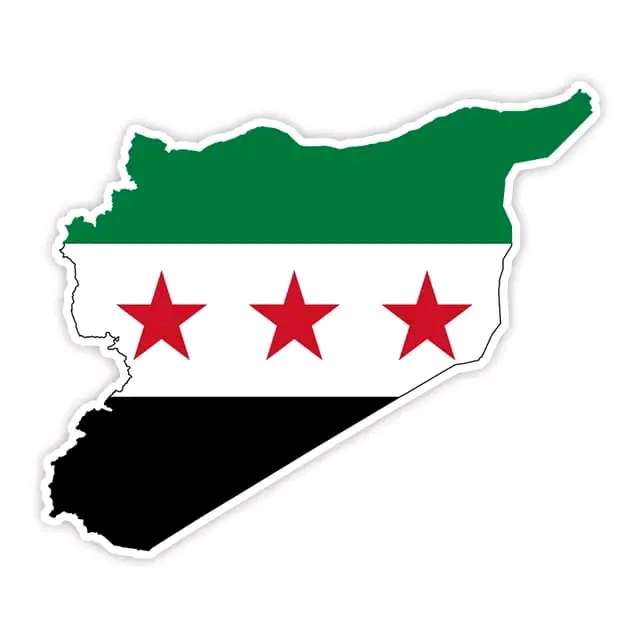
(C) Khaled Fozan

Prof. René Wadlow is President of the Association of World Citizens.
Syria: What New Structures of the State Are Needed?

In Being a World Citizen, Conflict Resolution, Cultural Bridges, Current Events, Democracy, Human Rights, Middle East & North Africa, Solidarity, Syria, The Search for Peace on February 17, 2025 at 8:00 AM

By René Wadlow

With the end of the long dictatorship of Bachar al-Assad and the naming of Ahmed al-Sharaa, leader of the militia Hayat Tahrir al-Sham (HTS), as President, there is a need for the Syrians to consider the structures of the state. Like its neighbor Lebanon, Syria is home to a number of religious and ethnic groups, sometimes mixed, especially in the major cities. In other places, one group is dominant and usually controls both the economic and political life of the area. Thus, there have been suggestions that Syria should be re-structured as a federal or confederal state.

On March 17, 2016, the “federal democratic system of Rojava” (a Kurdish term for northern Syria) was proclaimed officially. Some 150 representatives of Kurdish, Arab, and Assyrian (largely Christian) groups met in the city of Rmeilan in northeast Syria and voted in favor of the union of three ‘cantons’ largely populated by Kurds − the cantons of Afrin, Kobani, and Jezireh.

The government as well as a major opposition group stated their refusal of a federalist system which they saw as a first step to the breakup of Syria.

While the Kurdish issues in Turkey have attracted international attention, and the largely autonomous Kurdish region of Iraq is a major player in Iraqi politics, the Kurds in Syria have been less discussed.

The Kurds of Syria had not been as visible a factor as other ethnic or sectarian groups. As Michael Gunter, a specialist on the Kurdish world, writes,

On July 19, 2012, the previously almost unheard Syrian Kurds suddenly emerged as a potential game changer in the Syrian civil war and what its aftermath might hold for the future in the Middle East when in an attempt to consolidate their increasingly desperate position, government troops were abruptly pulled out of the major Kurdish areas. The Kurds in Syria had suddenly become autonomous, a situation that also gravely affected neighboring Turkey and the virtually independent Kurdistan Regional Government in Iraq. Indeed, the precipitous rise of the Kurds in Syria bid to become a tipping point that might help change the artificial borders of the Middle East established after the First World War following the notorious Sykes-Picot Agreement. (1)

In a hope of keeping the Kurds out of the growing armed conflict, shortly after the March 15, 2011 start of the Syrian armed conflict, in April 2011, Bashar al-Assad had granted Syrian citizenship to some 220,000 Kurds that had been long waiting to be considered as citizens or who had been stripped of their citizenship in a 1962 census.

However, armed conflict spread, and the Islamic State started to control territory near Kurdish majority areas. Some observers saw the Kurds as “objective allies” of Bashar as they had many of the same enemies.

Working with the regime had largely saved the Kurdish areas from government bombardment and allowed Kurdish leadership to build alternative forms of government. Gunter discusses in some detail the influence among some Kurdish leaders in Turkey and Syria of the writings of Murray Bookchin (1921-2006) and his views of ecologically-sound autonomous governance – “democratic autonomy”.

In the first years of the French mandate of Syria after the First World War, the French had created a form of ‘federal’ administration.

It is very unlikely that the Kurdish propositions will be on the agenda for new governmental structures in Syria now in 2025. The current Syrian leadership is heavily influenced by the government of Turkey, strongly opposed to anything Kurdish. The future development of the Syrian state is an issue to watch closely.

Prof. René Wadlow is President of the Association of World Citizens.
Notes

(1) Michael M. Gunter, Out of Nowhere: The Kurds of Syria in Peace and War (London: Hurst and Co, 2014, p.1)

(2) Damian White, Bookchin: A Critical Appraisal (London: Pluto Press, 2008)

President Trump: Act Two

In Being a World Citizen, Conflict Resolution, Current Events, Democracy, Human Development, Human Rights, Humanitarian Law, International Justice, Middle East & North Africa, Migration, NGOs, Nonviolence, Peacebuilding, Social Rights, Solidarity, Sustainable Development, The Search for Peace, Track II, UKRAINE, United Nations, Women's Rights, World Law on January 21, 2025 at 7:30 PM

By René Wadlow

The January 20, 2025 inauguration of President Donald Trump has brought into sharp focus the turbulent and complex world society in which we live. As peacebuilders and citizens of the world, we face the same challenges as President Trump but with a different style and with far fewer resources at our command. We make plans but then are called to work for conflict resolution in unanticipated ways.

There are four policy challenges which face both President Trump and World Citizens: armed conflicts, currently ongoing and potential, persistent poverty in many areas, the erosion of international law and faith in multinational institutions, particularly the United Nations (UN), and the consequences of climate change.

The ongoing and potential armed conflicts are neither new nor unexpected. The Israeli-Palestinian tensions exist at least since 1936 and increased after the creation of the State of Israel. There may be some possibilities for negotiations in good faith. We must keep an eye open for possible actions.

Tensions with Iran are not new. The Soviet forces in part of Iran was the first conflict with which the UN had to deal in its early days. However, the rule by the Ayatollahs has made matters more complex.

The Russian-Ukrainian war grinds on with a large number of persons killed, wounded, and uprooted. Again, we must look to see if a ceasefire and negotiations are possible.

In Asia, the armed conflict in Myanmar between the military in power and the ethnic militias dates from the creation of the Burmese State at the end of the Second World War. A potential armed conflict between Mainland China and Taiwan dates from 1949 and the Nationalist government’s retreat to Taiwan. The potential armed conflict between the two Korean States dates from 1950 and the start of the Korean War.

The armed conflicts in Africa are no longer in the headlines, but they date from the early 1960s and the breakup of the European Empires: the Democratic Republic of Congo, Sudan, the States of the Sahel.

Thus, we all have a poor record of armed conflict prevention and mediation. Armed conflicts should remain at the top of both the governmental and nongovernmental agenda for action.

(C) U.S. Embassy France on Instagram

Persistent Poverty: Despite the UN Decades for Development, the Sustainable Development Goals, and Article 22 of the Universal Declaration of Human Rights which states that everyone is entitled to the economic, social, and cultural rights indispensable for his dignity and free development of his personality, persistent poverty exists in many parts of the world. One consequence of persistent poverty is migration from poorer to richer areas, both within countries and from poorer to richer States. Migration is a hotly debated issue in many countries, as right-wing nationalist groups make anti-migration their battle cry. Migration is likely to become an even more heated topic of debate as President Trump tries to carry out his proposal for a mass deportation of immigrants from the USA.

Linked to persistent poverty are trade issues and the protectionist trends in many countries. President Trump has proposed higher tariffs for good coming into the USA. This policy may set off tariff wars. Obviously to counter persistent poverty, world development policies must be improved – easier said than done!

The Erosion of International Law and Faith in Multinational Institutions: Armed conflicts and persistent poverty are closely related to the third issue: the receding United States (U.S.) involvement with the UN, the World Bank, the IMF, the World Court and other multinational organizations. Some of the foreign policy authorities appointed by President Trump are overtly critical of the UN and the International Criminal Court. There has already been an Executive Order to halt U.S. funding of the World Health Organization. However, there is no unifying vision of what a new world society would involve. The battle cry of “Make America Great Again”, if repeated by each State for itself, “Make Panama Great Again”, could be a loud concert but not conducive to positive decision making.

The Consequences of Climate Change: The fourth major group of issues concerns the consequences of climate change and the ways to lessen its impact. During the campaign for the presidency, Trump threatened to pull the USA out of the Paris Climate Agreement, and he has now signed an Executive Order doing so. The issue of climate change has been brought to the world agenda by scientists on the one hand, and by Nongovernmental Organizations and popular, often youth-led efforts, on the other hand. It is likely that these vital efforts related to climate change will continue despite climate policy resistance by some in the Trump administration.

President Trump said during his inaugural ceremony that “The Golden Age of America begins now… We stand on the verge of the four greatest years in American history.” We will have to watch closely and judge in four years. What is sure for peacebuilders and citizens of the world is that we stand on the verge of four more years of serious challenges. Thus, there is a need for cooperative and courageous action.

Prof. René Wadlow is President of the Association of World Citizens.
Victims of Enforced Disappearances: Continued Action Needed

In Being a World Citizen, Current Events, Democracy, Human Rights, International Justice, NGOs, Solidarity, Track II, United Nations, World Law on August 30, 2024 at 6:00 AM

By René Wadlow

August 30 each year is the International Day of the Victims of Enforced Disappearances. The Day highlights the United Nations (UN) General Assembly Declaration on the Protection of All Persons from Enforced Disappearances of December 18, 1992.

In a good number of countries, there are State-sponsored “death squads” – persons affiliated to the police or to the intelligence agencies who kill “in the dark of the night”, unofficially. These deaths avoid a trial which might attract attention. A shot in the back of the head is faster. In many cases, the bodies of those killed are destroyed. Death is suspected but not proved. Family members hope for a return. In addition to governments, nongovernmental armed groups and criminal gangs have the same practices.

Disappearances was one of the first issues to be raised, largely by Nongovernmental Organizations (NGOs) such as the Association of World Citizens (AWC), when the UN Secretariat for Human Rights with a new director, Theo van Boven, moved from New York to Geneva in 1977.

In 1976, Argentina’s military seized power and set out to kill opposition figures. This situation was quickly raised in the UN human rights bodies in Geneva. In 1980 a UN Working Group on Enforced or Involuntary Disappearances was created and has done important work.[i] However, continued action is needed by both the UN and national NGOs.

Prof. René Wadlow is President of the Association of World Citizens.

[i] See Iain Guest, Behind the Disappearances: Argentina’s Dirty War Against Human Rights and the United Nations (Philadelphia: University of Pennsylvania Press, 1990). Iain Guest was the Geneva UN correspondent for the International Herald Tribune. He had access to Argentine confidential documents once the military left power. He interviewed many diplomats and NGO representatives active in Geneva-based human rights work. This book is probably the most detailed look at how human rights efforts are carried out in the UN Geneva-based human rights bodies.

La AWC Llama a las Autoridades de Nicaragua a Derogar la Prohibición Anunciada de 1.500 Organizaciones No Gubernamentales

In Being a World Citizen, Current Events, Democracy, Human Rights, Latin America, NGOs, Religious Freedom, Social Rights, Solidarity, The Search for Peace, United Nations, World Law on August 20, 2024 at 8:45 PM

LA AWC LLAMA A LAS AUTORIDADES DE NICARAGUA A DEROGAR LA PROHIBICIÓN ANUNCIADA DE 1.500 ORGANIZACIONES NO GUBERNAMENTALES

La Association of World Citizens (Asociación de Ciudadanos del Mundo; AWC) expresa su alarma al aprender que las autoridades de la República de Nicaragua anunciaron el 19 de agosto la prohibición de 1.500 organizaciones no gubernamentales (ONG), la mayoría de ellas organizaciones de beneficencia católicas romanas, aunque, lamentablemente, la medida también ha afectado a la Cruz Roja Nicaragüense.

Desde abril de 2018, el Gobierno encabezado por el Presidente Daniel Ortega ha adoptado un cariz abiertamente autoritario, tras las protestas cuya violenta represión, según las Naciones Unidas (ONU), ha dejado más de 300 muertos. En este contexto, casi todos los opositores políticos han sido encarcelados o forzados al exilio.

En cuanto a los grupos de la sociedad civil, esta última medida eleva a 5.000 el número de ONG prohibidas por las autoridades en los últimos seis años. Todos los grupos prohibidos han visto sus bienes confiscados por el Gobierno. Aunque la razón oficial esgrimida es que estas ONG no han declarado sus ingresos, la semana pasada se aprobó una normativa que obliga a las ONG a establecer “alianzas de asociación” con las autoridades, con lo que prácticamente se acaba su carácter “no gubernamental”.

La Oficina del Alto Comisionado de las Naciones Unidas para los Derechos Humanos ha pedido “a las autoridades nicaragüenses que dejen de imponer restricciones severas a los espacios cívicos y democráticos del país y que garanticen el respeto de los derechos humanos, de conformidad con las obligaciones internacionales de Nicaragua en materia de derechos humanos”.

La AWC respalda sin reservas este llamamiento, instando al Gobierno de Nicaragua a rescindir de inmediato su prohibición anunciada y a restablecer a todas las ONG ilegalizadas desde 2018 su estatus jurídico y financiero inicial, garantizando además que sean libres de operar como consideren conveniente, un requisito básico para cualquier país que pretenda defender el Estado de derecho.

The AWC Calls on the Authorities of Nicaragua to Rescind Their Announced Ban on 1,500 Nongovernmental Organizations

In Being a World Citizen, Current Events, Democracy, Human Rights, Latin America, NGOs, Nicaragua, Religious Freedom, Social Rights, Solidarity, The Search for Peace, United Nations, World Law on August 20, 2024 at 8:45 PM

THE AWC CALLS ON THE AUTHORITIES OF NICARAGUA TO RESCIND THEIR ANNOUNCED BAN ON 1,500 NONGOVERNMENTAL ORGANIZATIONS

The Association of World Citizens (AWC) is alarmed to hear that the authorities of the Republic of Nicaragua announced on August 19 that they were banning 1,500 Nongovernmental Organizations (NGOs), most of them Roman Catholic charities – even though, regrettably, the Nicaraguan Red Cross has been struck by the measure too.

Since April 2018, the Government led by President Daniel Ortega has taken an openly authoritarian turn, after protests whose violent repression the United Nations (UN) claims left more than 300 people dead. In this context, nearly all political opponents have been jailed or forced into exile.

As for civil society groups, this latest move brings to 5,000 the number of NGOs banned by the authorities over the last six years. All groups thus banned have had their assets seized by the Government.

Even though the official reason put forward is that these NGOs have failed to declare their income, last week, a regulation was passed requiring NGOs to enter “partnership alliances” with the authorities, therefore practically ending their “nongovernmental” nature.

The Office of the UN High Commissioner for Human Rights has called “on the Nicaraguan authorities to stop imposing severe restrictions on civic and democratic spaces in the country, and to ensure that human rights are respected, in line with Nicaragua’s international human rights obligations.”

The AWC unreservedly endorses this call, urging the Nicaraguan Government to rescind immediately its announced ban and restore all NGOs outlawed since 2018 to their initial legal and financial status, further ensuring that they are free to operate as they see fit, a basic requirement for any country which claims to be upholding the rule of law.