The Official Blog of the

Archive for the ‘World Law’ Category

Iraq: Yazidis’ Genocide?

In Cultural Bridges, Current Events, Human Rights, International Justice, Middle East & North Africa, Religious Freedom, Uncategorized, United Nations, War Crimes, World Law on August 11, 2014 at 7:05 PM

IRAQ: YAZIDIS’ GENOCIDE?

By René Wadlow


A mix of United States (U. S.) humanitarian airdrops of food and water to the stranded displaced people on Mount Sinjar as well as U. S. military air strikes against some of the positions of the Islamic State in Iraq and Syria (ISIS) has focused international attention on the area. The Christian Peacemaker Teams have had a group working toward human rights protection and reconciliation in the Iraq Kurdistan for some years and are now posting daily updates on their website and Facebook [i].

I will not deal here with the broader issues of the impact of the ISIS on the possible geographic fragmentation and re-structuring of Iraq and Syria.

As a Nongovernmental Organization (NGO) representative to the United Nations, Geneva, and active on human rights issues, I had already raised the issues of two major religious minorities in Iraq at the UN Commission on Human Rights: the Yazidis and the Mandaeans. Here I ask if their fate can be identified as genocide under the 1948 Convention for the Prevention and Punishment of the Crime of Genocide. My concern with the Yazidi (also written as Yezidi) dates from the early 1990s and the creation of the Kurdish Autonomous Region. Many of the Yazidis are ethnic Kurds, and the government of Saddam Hussein was opposed to them not so much for their religious beliefs but rather that some Yazidis played important roles in the Kurdish community seen as largely opposed to the government. The Yazidis also had some old ownership claims on land on which oil reserves are found in northern Iraq.

My concern with the Mandaeans (also written as Sabean-Mandeans) came in the early 2000s after the U. S. invasion when the Mandaeans were persecuted as being supporters of Saddam Hussein and most fled to Syria. A word about the faiths of the two groups which helps to explain their special status. Although both are called “sects” and are closed religious communities which one can only enter by birth, they are faiths even if the number of the faithful is small.

The Mandaeans are a religious group formed in the first centuries of the Common Era in what is now Israel-Palestine-Jordan. Over time, they migrated to southern Iraq in the area of Basra as well as to what is now the Islamic Republic of Iran. One of their distinctive signs is the frequent purification by running water − baptism. They honor John the Baptist, described in the Christian Gospel of Luke, but are probably not direct descendents of his followers. At the time of John and Jesus, there were a good number of movements which had purification by water as one of their rituals. The Mandaean scripture The Book of John is probably a third-century collection. The Book of John was used in Mandaean rituals and services but was never published to be read by others. Given intellectual and historic interest in the Mandaeans, the Mandaean leadership authorized the publication of their scriptures. As a sign of respect, the first printed copy was given to Saddam Hussein as President of the country. In the confused situation after the U. S. occupation of Iraq, the book presentation was enough to have some accuse the Mandaeans of being Saddam Hussein supporters. Under increasing pressure, the vast majority of Mandaeans left Iraq for Syria (the frying pan into the fire image). Now they are caught in the Syrian civil war, unable or unwilling to return to Iraq. A small number of Mandaeans have been granted refugee status in the US and Western Europe.

There has been some intellectual mutual interplay among the Mandaeans and the Yazidis, but they are separate faiths and located in different parts of Iraq. The structure of the Yazidi worldview is Zoroastrian, a faith born in Persia proclaiming that two great cosmic forces, that of light and good, and that of darkness and evil are in constant battle. Man is called upon to help light overcome evil.

Sabean Mandeans perform baptisms for the faithful, in Iraq's Tigris River. (C) The Washington Post

Sabean Mandeans perform baptisms for the faithful, in Iraq’s Tigris River.
(C) The Washington Post

However, the strict dualistic thinking of Zoroastrianism was modified by another Persian prophet, Mani of Ctesiphon in the third century CE who had to deal with a situation very close of that of ours today. Mani tried to create a synthesis of religious teachings that were increasingly coming into contact through travcl and trade: Buddhism and Hinduism from India, Jewish and Christian thought, Helenistic Gnostic philosophy from Egypt and Greece as well as many smaller, traditional and “animist” beliefs. He kept the Zoroastrian dualism as the most easily understood intellectual framework, though giving it a somewhat more Taoist (yin-yang) flexibility, Mani having traveled in China. He developed the idea of the progression of the soul by individual effort through reincarnation − a main feature of Indian thought combined with the ethical insights of Gnostic and Christian thought. Unfortunately, only the dualistic Zoroastrian framework is still attached to Mani’s name − Manichaeism. This is somewhat ironic as it was the Zoroastrian Magi who had him put to death as a dangerous rival.

Within the Mani-Zoroastrian framework, the Yazidi added the presence of angels who are to help man in his constant battle for light and good, in particular Melek Tawis, the peacock angel. Although there are angels in Islam, angels that one does not know could well be demons, and so the Yazidis are regularly accused of being “demon worshipers” [ii].

The faravahar is one of the best-known symbols of Zoroastrianism, the state religion of ancient Iran.

The faravahar is one of the best-known symbols of Zoroastrianism, the state religion of ancient Iran.

With the smaller Mandaean faith, originally some 60,000 people, now virtually destroyed in Iraq and unable to function effectively in Syria, the idea of ridding a country of the near totality of a faith is not for the ISIS an “impossible dream”. There are probably some 500,000 Yazidis in Iraq. Iraq demographic statistics are not fully reliable, and Yazidi leaders may give larger estimates by counting Kurds who had been Yazidis but had been converted to Islam. There had been some 200,000 Yazidis among the Kurds of Turkey but now nearly all have migrated to Western Europe, Australia and Canada.

Already in the last days, some 150,000 Yazidis have been uprooted and have fled to Iraqi Kurdistan. Thus most Yazidis could be pushed into an ever-smaller Kurdish-controlled zone of Iraq and Syria. The rest could be converted to Islam or killed. The government of the autonomous Kurdish region of Iraq has done little (if anything) to help the socio-economic development of the Yazidis, probably fearing competition for the Kurdish families now in control of the autonomous Kurdish government and society. Now the Kurdistan government and civil society groups are stretched well beyond capacity with displaced persons from Iraq and Syria.

Thousands of Yazidis previously trapped by Isis have been rescued by Kurdish peshmerga forces. (C) Anadolu Agency/Getty Images

Thousands of Yazidis previously trapped by Isis have been rescued by Kurdish peshmerga forces.
(C) Anadolu Agency/Getty Images

If one is to take seriously the statements of the ISIS leadership, genocide − the destruction in whole or in part of a group − is a stated aim. The killing of the Yazidis is a policy and not “collateral damage” from fighting. The 1948 Convention for the Prevention and Punishment of the Crime of Genocide allows any State party to the Convention to “call upon the competent organs of the United Nations to take such action under the Charter of the United Nations as they consider appropriate for the prevention and suppression of acts of genocide.” Thus far no State has done so by making a formal proposal to deal with the Convention.

With the incomplete evidence at hand, I would maintain that the ISIS policy is genocide and not just a control of territory. Although the UN “track record” of dealing with genocide is very mixed, the first immediate step is for a State to raise the issue within the UN in order to set a legal approach in motion [iii].

Prof. René Wadlow is President of the Association of World Citizens.
 

[i] See the website of the Christian Peacemaker Teams: www.cpt.org.

[ii] A Yazidi website has been set up by Iraqis living in Lincoln, Nebraska. The website is uneven but of interest as a self presentation: www.yeziditruth.org.

[iii] See the very complete study: William A. Schabas, Genocide in International Law (Cambridge Univesity Press, 2000).

Tribal Societies: Survival and Transformations

In Being a World Citizen, Cultural Bridges, Current Events, Environmental protection, Foundations for the New Humanism, Human Development, Human Rights, International Justice, Solidarity, The Search for Peace, United Nations, World Law on August 9, 2014 at 10:46 AM

TRIBAL SOCIETIES: SURVIVAL AND TRANSFORMATIONS

by René Wadlow


August 9 has been chosen by the UN General Assembly as the International Day of the World’s Indigenous Peoples.

As Paulo Freire has written, “While both humanization and dehumanization are real alternatives, only the first is man’s vocation. This vocation is constantly negated. It is hindered by injustice, exploitation, oppression, and the violence of the oppressors; it is affirmed by the yearning of the oppressed for freedom and justice, and by their struggle to recover their lost humanity.

The world society is filled with many different types of collective actors: clans, tribes, castes, ethnic groups, cities, races, social classes, religious organizations, nation-states, multi-state alliances for military or economic goals, transnational corporations and associations. Each is the creation of individuals who have grouped together − or have been grouped together − to achieve goals considered common to the group’s members. All such collective groups have techniques to socialize new members to share the common values, to accept the ideology and beliefs of the tribe, the nation-state or the association. This socialization process goes so deeply that a person’s sense of identity becomes associated with these collective identity, the school, the army, the church, the political process and institutions − each propose a sense of group purpose.

Yet none of these groups is static and unchanging. Even clans and tribes whose members often consider that they have a common ancestor do, in fact, change. Tribes merge and divide; new identities are formed; new ancestors are created to justify the new groupings.

Some types of collective belonging are more easily left than others. One can move relatively easily from a city and take on the character, the values and the goals of a new city. Social mobility can produce changes in social class, and even caste lines become blurred. Persons change nationality or acquire new nationalities as frontiers are modified. Race is less easily changed but definitions of what constitutes a race do change. Ethnic identity is often associated with birth, but parents can belong to different ethnic communities, although the child is usually raised as belonging to the more dominant group. However the socialization process of group identity goes to the level of sub-conscious behavior and is not easily set aside.

In Peru, some tribes remain uncontacted. Some live no more than 100 kms from the legendary mountain site of Machu Picchu. Today, however, the future of these tribes who live in the heartland of the ancient Inca Empire is threatened by a gas project. (C) Survival International

In Peru, some tribes remain uncontacted. Some live no more than 100 kms from the legendary mountain site of Machu Picchu. Today, however, the future of these tribes who live in the heartland of the ancient Inca Empire is threatened by a gas project. (C) Survival International

Today the nation-state claims to be the dominant collective association − setting the boundaries of loyalty and identity. The State claims the right to set out the major collective goals and values. Through laws, the State claims the right to set out the rules by which other collective entities may pursue their goals; through taxation the State draws the resources to further the goals it has set, and the State claims to have the only legitimate use of violence to punish those who break the laws and rules it has set.

There have always been tensions between these collective groups for their spheres of goal-setting and value-setting have overlapped. Thus there have been tensions between religious organizations and the State as to who should set what goals and the means to achieve these goals. There have also been tensions between economic classes and the State when it was felt that the State was dominated by another economic class who used its power within State institutions not for the good of all but only to advance class interests. The same is true of other collective units − races or ethnic groups − excluded from power within State institutions.

Today in many parts of the world those most excluded from power within State institutions are people living in alternative structures of authority, goal-setting and rule-making: persons living in tribal societies.

Tribal societies predated most of today’s nation-state. A tribal society usually has all the same functions as the nation-state: it sets out membership, loyalties, common goals and rules of behavior. It has sanctions against those breaking the laws of the tribe and has − or had − the monopoly of the legitimacy of using violence against those breaking the laws. Tribes are, in fact, more realistically “nation-states” if one defines nation as a common language, a common history and a common will to act together.

Thus because the tribal society is the closest in function to that of the nation-state, it is also the most feared. Tribes are institutions with whom it is difficult to compromise because they have the same pretensions as the State. It is relatively easy for a government to offer higher wages to the industrial worker or higher prices to the farmer as these social classes do not claim to carry out an alternative way the functions of the State. It is more of a challenge to the State’s image of its role to allow tribal societies to set out a land policy or fishing rights or trans-frontier trading rights because these activities conflict directly with the functions that the government has set for itself.

Thus there has been a long history of the State destroying alternative institutions of governance on its territory. The nation-states of Europe were built upon the ruins of feudal institutions; much of Asia on the destruction of local rulers. We see the pattern today as we watch traditional chiefs in Africa lose their authority to the heads of State and the military. In the Americas, many of the indigenous tribal societies were destroyed. Others were pushed into areas that those who controlled the government did not want − the “reservations” of the USA and Canada.

In Latin America and Asia, there is still active struggle going on between those trying to preserve their tribal institutions and homelands and the State which claims complete authority over all its territory and who often wished to put new settlers on tribal lands.

A Koma tribe woman at her farm. Alantika Mountain, Cameroon. (C) Middle Africa The Koma people are indigenous hill-dwelling people occupying the Alantika Mountains in northern Adamawa State, Nigeria and in Northern Cameroon (Faro National Park), near the border with Adamawa State.

A Koma tribe woman at her farm. Alantika Mountain, Cameroon. (C) Middle Africa
The Koma people are indigenous hill-dwelling people living in the Alantika Mountains in northern Adamawa State, Nigeria and in Northern Cameroon (Faro National Park), near the border with Adamawa State.

The amount of violence and suffering is considerable. Slowly, the fate of tribal societies has come to the attention of the United Nations (UN). The UN was set up to facilitate relations among nation-states. However, because wide-spread violations of individual rights had been one of the consequences of the Second World War, a Universal Declaration of Human Rights was drafted and proclaimed by the UN General Assembly in December 1948. The aim of the Declaration is to stress the rights of the individual − a natural consequence of the philosophy of the drafters. The rights of collective bodies which the drafters knew were also protected: trade unions, churches, professional associations. However tribal societies were not particularly thought of as one sees by reading the drafting negotiations. Thus, the Universal Declaration protects the rights of all individuals − including, of course, individuals living in tribal societies − but there is no direct recognition of the functions of tribal societies.

Thus for many years, indigenous and tribal peoples were the forgotten stepchildren of the UN system dealing with human rights. Yet they needed protection at least as much as those on whom the political limelight had focused. The situation began to change with the publication by the International Labor Organization’s study Indigenous Peoples: Living and working conditions of aboriginal populations in independent countries (1953). This was followed by the study by Jose Martinez Cobo Study of the Problem of Discrimination Against Indigenous Populations of the UN Commission on Human Rights (1986). While the Cobo study was being written, a Working Group on Indigenous Populations was set up under the then-existing Sub-Commission on Prevention of Discrimination and Protection of Minorities under the dynamic leadership of Erica-Irene Daes.

The United Nations Declaration on the Rights of Indigenous Peoples, a document that was long awaited by indigenous peoples and their defenders throughout the world.

The United Nations Declaration on the Rights of Indigenous Peoples, a document that was long awaited by indigenous peoples and their defenders throughout the world.

From the Working Group, with a good deal of interaction with the representatives of Nongovernmental Organizations and tribal groups came a United Nations Declaration on the Rights of Indigenous Peoples (A61/295) in 2007 after some 20 years of efforts. The Declaration sets out a useful framework for action. A UN Permanent Forum on Indigenous Issues has been created and meets once a year in New York. Conditions “on the ground” change slowly but there is now a UN institutions where issues can be raised. It is still the task of non-government organizations and tribal groups to continue to draw attention and to seek cooperation with governments.

See the useful Making the Declaration Work published by the International Work Group for Indigenous Affairs (Copenhagen) available on their website: www.iwgia.org.


********************************************************************


Prof. René Wadlow is President of the Association of World Citizens.
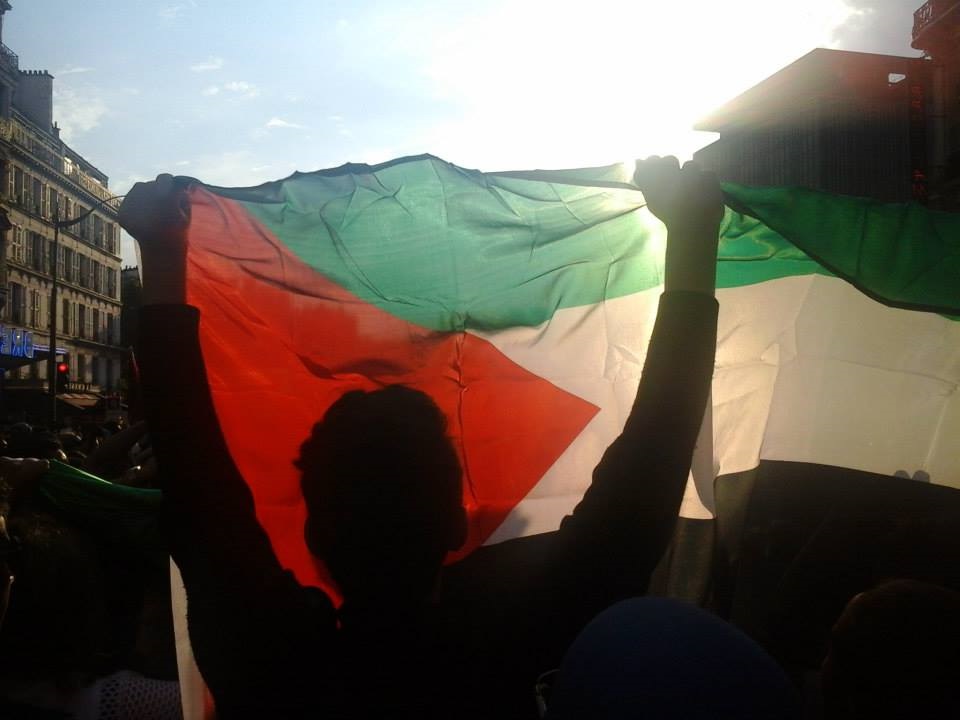
Could the Use of Rockets Be Banned in the Middle East?

In Conflict Resolution, Current Events, Middle East & North Africa, The Search for Peace, United Nations, World Law on August 1, 2014 at 8:50 PM

COULD THE USE OF ROCKETS BE BANNED IN THE MIDDLE EAST?

By René Wadlow


The use of rockets by Islamic groups from Gaza toward Israel and the more deadly use of rockets and bombs by Israeli forces toward Gaza have raised in a dramatic way the possibility of banning rocket use in the Middle East.

Arms control in the Middle East has always been difficult as there is no equivalent of the Organization for Security and Cooperation in Europe (OSCE) in the Middle East. The United Nations (UN) as a universal organization has difficulty dealing with security matters on a regional basis. There are UN regional bodies to deal with economic and social issues but not for security matters. Thus, discussions and negotiations on the Iranian nuclear program is an ad hoc grouping. Likewise, negotiations on a Middle East Nuclear-weapon Free Zone often proposed by UN General Assembly resolutions as well as agreed upon during the 5-year reviews of the Treaty on the Non-Proliferation of Nuclear Weapons has never advanced, though Finland had proposed to host a governmental conference on the issue.

There had been in the 1992-1995 period the creation of the Arms Control and Regional Security Working Group (ACRS) which grew from the Madrid “peace process” with 14 States. In the words of the then United States Secretary of State, James Baker, the agenda of the Working Group was to consider “a set of modest confidence-building or transparency measures covering notification of selected military-related activities and crisis-prevention communications. The purpose would be to lessen the prospects for incidents and miscalculations that could lead to heightened competition or even conflict”. The approach followed the pattern of NATO-Warsaw Pact discussions as part of what was then still the Conference for Security and Cooperation in Europe. The ACRS confidence-building and transparency measures were so modest as to have been unseen when they ended in 1996.

A rocket being fired by the Israeli Defense Force (IDF) to counter an incoming rocket attack from Gaza. (AP Photo/Tsafrir Abayov)

A rocket being fired by the Israeli Defense Force (IDF) to counter an incoming rocket attack from Gaza. (AP Photo/Tsafrir Abayov)

Arms control can succeed when they are part of a larger process that addresses the human, social and psychological elements that undermine security. The NATO-Warsaw Pact confidence-building measures took place as the first “winds of change” were blowing in Eastern Europe and there were subtle signs of change in the Soviet Union leading to the 1990 Treaty on Conventional Armed Forces in Europe.

Unfortunately, confidence and security-building measures that would lead to missile control do not seem to be high on the current agendas of Middle East governments. With violence exploding, hopes for positive steps toward an Israeli-Palestinian accord in the near future seem dim. Some believe that regional arms control can only come after a comprehensive peace has been established in the region, to be followed by a state of peace among peoples beyond the terms of a formal peace agreement. Only then can there be an arms control process linked to confidence-building measures. In this approach, arms are seen as a result of political tensions, not the cause of political instability.

Thus, some feel that pressures to force premature disarmament in the absence of reliable alternative security structures will be seen as efforts to gain unilateral advantage rather than part of a broader approach towards co-operative security and stability.

No one will argue that the general political “climate” is not important to arms control efforts. However, a “one-weapon at a time approach” has had some success at the world level concerning chemical weapons, land mines, cluster bombs, as well as the small-arms trade. In nearly all the “one-weapon at a time approach” non-governmental organizations played an important role in raising the issue at the start and then building momentum once a few governments took an interest and provided leadership within government meetings.

Islamic Jihad rockets, ready to fire, in northern Gaza. (C) Flash90/File)

Islamic Jihad rockets, ready to fire, in northern Gaza. (C) Flash90/File

Thus, the Association of World Citizens (AWC) proposed in an 18 July 2014 message to the UN Secretary General and the Secretary-General of the League of Arab States that serious consideration be given to a pledge by States as well as non-State actors such as Hamas to refuse to use rockets and missiles at any time.

The AWC’s proposal is based on the “no first use” pledges concerning the use of nuclear weapons − a commitment never under any circumstance to initiate a nuclear attack. This commitment has become an accepted international norm though few nuclear-weapon States have made such a pledge. The norm is re-stated in UN General Assembly Resolution 36/100 which states in its Preamble, “Any doctrine allowing the first use of nuclear weapons and any actions pushing the world toward a catastrophe are incompatible with human moral standards and the lofty ideals of the UN.”

The AWC’s proposal follows the pattern of the Protocol for the Prohibition of the Use in War of Asphyxiating, Poisonous or Other Gases and of Bacteriological Methods of Warfare, often called the 1925 Geneva Protocol. The Protocol bans the use, not the possession of poison gas so widely used during the 1914-1918 World War. The idea of inspection and the total destruction of stocks of chemical weapons came much later. It was the signature by Syria of the 1925 Geneva Protocol that led to the recent agreement by Syria to honor the no-use provisions and ultimately to have destroyed existing stocks under the provisions of the more recent Chemical Weapons Treaty which Syria signed as part of the recent agreement. However, it was the 1925 Geneva Protocol, as incomplete as it is, which “opened the door” to effective action.

Thus, efforts to eliminate stocks of rockets and missiles seem unlikely of success in the current context. However, a ban on use might be a real possibility and merits speedy consultations.


Prof. René Wadlow is President of the Association of World Citizens.

Lettre au Ministre des Affaires Etrangères de la République française

In Anticolonialism, Being a World Citizen, Children's Rights, Conflict Resolution, Cultural Bridges, Current Events, Human Rights, International Justice, Middle East & North Africa, Solidarity, The Search for Peace, United Nations, War Crimes, World Law on July 30, 2014 at 9:07 PM

awc-un-geneva-logo

ASSOCIATION OF WORLD CITIZENS

ASSOCIATION DES CITOYENS DU MONDE


The External Relations Desk


Monsieur Laurent FABIUS

Ministre des Affaires Etrangères de la République française

Ministère des Affaires Etrangères

37 Quai d’Orsay

75700 PARIS


Le 25 juillet 2014


Monsieur le Ministre,

En tant qu’Organisation Non-Gouvernementale dotée du Statut Consultatif auprès de l’ONU et active à ce titre au sein du Conseil des Droits de l’Homme, l’Association of World Citizens (ci-après, AWC) tient à vous exprimer sa plus vive préoccupation quant aux positions adoptées par la République française au sujet des actuels événements violents et tragiques au Proche-Orient.

Depuis que l’Etat d’Israël a lancé, à travers la Force de Défense israélienne (ci-après, Tsahal), une opération dénommée « Gardiens de nos Frères », en réaction à l’enlèvement et l’assassinat, non élucidés à ce jour, de trois jeunes Israéliens originaires des colonies le 12 juin dernier, complétée par une autre opération de Tsahal portant pour sa part le nom de « Bordure de protection », celle-ci en réponse aux tirs de roquettes depuis la Bande de Gaza, votre pays exprime des positions favorables au seul Etat d’Israël, cependant que la population civile palestinienne de Gaza en semble oubliée.

Autant l’AWC ne peut que partager la méfiance des autorités françaises quant aux manières de faire avérées et intentions probables du Mouvement de la Résistance islamique (ci-après, Hamas), lequel contrôle la Bande de Gaza depuis sept ans, autant, pour une organisation telle que la nôtre qui a toujours dénoncé les atteintes aux Droits de l’Homme et appelé au respect de la dignité humaine sans considération de frontières, pas même de celles séparant l’Etat hébreu du Hamas ou de l’Autorité palestinienne, cette position de la part de la France est purement et simplement incompréhensible.

En particulier, nous ne pouvons pas nous expliquer que la France ait choisi, lors du vote du 22 écoulé au Conseil des Droits de l’Homme d’une résolution sur le respect du droit international dans les Territoires palestiniens occupés, de s’abstenir. Sachant quelle est l’histoire de la France au Proche-Orient, notamment à quel point votre pays s’est souvent distingué comme un interlocuteur hors pair entre les uns et les autres des belligérants, nous y voyons une occasion manquée d’aider à affirmer le principe de justice internationale et de favoriser un retour à la recherche de la paix.

Ensuite, l’AWC ne peut qu’attirer votre attention sur le rôle que joue inéluctablement la France dans le bombardement de zones civiles dans la Bande de Gaza, de par son statut de cinquième exportateur mondial d’armement à l’Etat d’Israël.

Selon le Quinzième Rapport de l’Union européenne sur les Autorisations d’Exportation d’Armes, pour la seule année 2012, votre pays a délivré des autorisations d’exportations à Tel Aviv pour plus de 200 millions d’euros.

A ce jour, plus de cinq cents Palestiniens ont été tués dans des attaques par les forces israéliennes, la grande majorité d’entre eux étant des civils, dont des femmes et des enfants. Du côté de l’Etat d’Israël, deux civils ont été tués ainsi que dix-huit membres de Tsahal.

L’AWC entend vous rappeler, à cet égard, la déclaration de Madame Navi PILLAY, Haute Commissaire des Nations Unies pour les Droits de l’Homme, rappelant aux parties en conflit à Gaza l’obligation qui leur est faite de se conformer aux principes de distinction, de proportionnalité et de précaution des attaques afin d’éviter les dommages civils, les exhortant au surabondant à mener des enquêtes promptes, indépendantes et sérieuses sur les allégations de violation du droit international.

A cette fin, il incombe à chaque pays du monde, plus particulièrement encore aux Membres Permanents du Conseil de Sécurité de l’ONU, de prendre en compte toutes les souffrances causées par ce conflit et de manière juste, non l’une plutôt que l’autre, ainsi que de tarir à la source la possibilité pour l’une ou l’autre des deux parties de faire perdurer le conflit, bien entendu en termes d’armement.

Seul l’avènement d’un système viable de droit mondial peut fournir le cadre travail propre à la création d’une société mondiale qui soit tout à la fois juste et pacifique. En tant que Citoyens du Monde, nous travaillons au renforcement du droit mondial ainsi que de son acceptation, de son fonctionnement ainsi que d’un système d’observation et de sanctions ô combien nécessaire en pareil cas.

C’est pourquoi nous sommes certains que votre Gouvernement ne manquera pas d’entreprendre tous les efforts afin,

D’une part,

– de condamner publiquement et fermement les attaques menées par Israël à l’encontre des Palestiniens tout autant qu’il condamne, à juste titre, les tirs de roquettes sur Israël en provenance de la Bande de Gaza,

– de soutenir dans les faits, malgré le vote français au Conseil des Droits de l’Homme, la création par les Nations Unies d’une mission d’enquête internationale qui soit chargée de faire la lumière sur les violations du droit international humanitaire et du droit international des Droits de l’Homme commises par les différentes parties depuis le 12 juin 2014,

D’autre part,

– de suspendre immédiatement toutes les livraisons de matériel militaire à l’Etat d’Israël et toute autorisation d’exportation délivrée en ce sens,

– d’œuvrer au Conseil de Sécurité pour un embargo général sur les armes à destination d’Israël, du Hamas et des groupes armés palestiniens, avec obligation préalable à toute fin à celui-ci de voir éliminé tout risque substantiel de voir ces armes utilisées pour commettre ou faciliter des violations graves du droit international humanitaire et du droit international des Droits de l’Homme.

Nous vous remercions par avance de mettre ainsi la France en conformité avec les normes internationales de Droits de l’Homme telles que définies par l’ONU, et ce faisant de rendre à votre pays le statut particulier que lui a depuis toujours conféré l’histoire dans la défense de ces droits au Proche et Moyen-Orient.

Nous vous prions de croire, Monsieur le Ministre, en l’assurance de notre haute considération.


Prof. René Wadlow

Président


Bernard Henry

Officier des Relations Extérieures


Cherifa Maaoui

Officier de Liaison

Afrique du Nord & Moyen-Orient


Noura Addad, Avocat

Officier juridique

Attack on Gaza: Letter to the President of the UN Security Council

In Anticolonialism, Conflict Resolution, Cultural Bridges, Current Events, Human Development, Human Rights, International Justice, Middle East & North Africa, Solidarity, The Search for Peace, United Nations, War Crimes, World Law on July 15, 2014 at 7:24 PM

-- AWC-UN Geneva Logo --

ASSOCIATION OF WORLD CITIZENS

THE EXTERNAL RELATIONS DESK


July 14, 2014


H. E. Mr. Eugène-Richard Gasana

Ambassador, Permanent Representative

of the Republic of Rwanda

to the United Nations

President of the United Nations Security Council


Excellency:

The Association of World Citizens (AWC), a Nongovernmental Organization in Consultative Status with the United Nations Economic and Social Council (ECOSOC), has been concerned with the status of Gaza as well as the broader Israel-Palestine context.

The current manifestations of violence are part of a recurrent cycle of violence and counter-violence with which You are familiar.

The AWC believes that there must be a sharp break in this pattern of violence by creating institutions of security, development, and cooperation. Such a break requires more than the ceasefire proposed by the Security Council. The Association believes that longer-lasting measures must be undertaken that will allow new patterns of understanding and cooperation to be established.

In an earlier United Nations (UN) discussion of Gaza tensions, the AWC had proposed in a written statement to the Human Rights Council, “Human Rights in Gaza: Need for a Special Focus and Specific Policy Recommendations” (A/HRC/S-12/NGO-1, October 14, 2009; see attached copy) that a Gaza Development Authority be created – a transnational economic effort that would bring together the skills, knowledge and finance from Gaza, Israel, the Palestinian Authority on the West Bank, and Egypt to create conditions which would facilitate the entry of other partners.

Our proposal was obviously inspired by the Tennessee Valley Authority (TVA) of the “New Deal” in the USA. The TVA was a path-making measure to overcome the deep economic depression of the 1930s in the USA and the difficulties of cooperative action across state frontiers in the federal structure of the USA.

Today, the deep divisions in the Israel-Palestine area require more than economic measures – although economy and raising the standards of living remain important elements. Today, there should be a structure that provides security as well as economic advancement.

Therefore, the AWC would like to propose the creation of an International Temporary Transition Administration for Gaza that would promote security, stabilization, economic development, and institution building. Such a Transitional Administration would be limited in time from the start, perhaps five years.

Unlike the earlier UN Trusteeship agreements which followed upon the League of Nations mandate pattern, the Gaza Transitional Authority would welcome civil society cooperation from outside the area.

Such a Transitional Administration cannot be imposed. We believe that the Members of the Security Council can raise the possibility publicly, request a UN Secretariat study on what such a Transitional Administration would require, and encourage’ discussion among those most directly involved.

As Jean Monnet, one of the fathers of the European Common Market, had said, “Men take great decisions only when crisis stares them in the face.” We believe that the current violence is such a time of crisis. Our hope is that the Members of the Security Council are prepared to take great decisions.

Please accept, Excellency, the assurance of our highest consideration.


Prof. René Wadlow

President


Bernard Henry

External Relations Officer


1914 : Aurait-on pu tenir en laisse les chiens de guerre ?

In Being a World Citizen, Conflict Resolution, Europe, The Search for Peace, World Law on July 14, 2014 at 10:14 PM

1914 : AURAIT-ON PU TENIR EN LAISSE LES CHIENS DE GUERRE ?

Par René Wadlow


Depuis 1890, l’éventualité d’une guerre flottait dans l’air, lorsqu’Otto von Bismarck fut remplacé au poste de Chancelier de Prusse. Il avait su faire preuve de fermeté au milieu du complexe d’alliances formé entre les puissances européennes et tenté de garder la Prusse hors d’aventures coloniales en Afrique qui n’auraient fait qu’accroître encore les rivalités avec la France et la Grande-Bretagne. Mais le jeune Kaiser, Guillaume II, le destitua en mars 1890. Le Kaiser ne fut pas long à se mettre à dos la Russie et à alarmer la Grande-Bretagne, en encourageant des ambitions coloniales et navales inédites, de telle sorte que, venue l’année 1914, la carte politique du monde était devenue pour l’essentiel une carte des possessions coloniales, des protectorats et des sphères d’influence économique des Grandes Puissances qui dominaient la scène internationale.

Les guerres de 1912 et 1913 dans les Balkans avaient montré que des guerres demeuraient possible, mais la plupart des dirigeants des Grandes Puissances avaient le sentiment qu’ils étaient en mesure de maintenir le statu quo à travers la diplomatie et au moyen de conférences. Dans La Grande Illusion (1908), Norman Angell avait mis au jour la futilité de la guerre d’un point de vue économique. Et pourtant, les nuages continuaient de s’amonceler, annonçant l’orage.

Otto Eduard Leopold von Bismarck (1815-1898), le premier chef de gouvernement de l'Empire allemand.

Otto Eduard Leopold von Bismarck (1815-1898), le premier chef de gouvernement de l’Empire allemand.

Si les dirigeants des Puissances Européennes étaient voués à aller de crise en crise, jusqu’à déclencher in fine une guerre, n’était-il rien que le peuple aurait pu faire pour enrayer les aspirations irréconciliables des gouvernements ? Un espoir que l’on avait à l’époque était que le mouvement ouvrier, mené par les socialistes, refuserait de faire la guerre à la classe ouvrière d’autres Etats. Depuis 1900, la croissance industrielle avait conduit à la création d’un mouvement ouvrier dans la plupart des pays hautement industrialisés – l’Allemagne, l’Angleterre, la France. Un lien entre ces mouvements aurait-il pu empêcher la guerre ?

Le 29 juin 1914, le Bureau de l’Internationale socialiste se réunit à Bruxelles sous la bannière « Guerre à la Guerre ! », avec des dirigeants socialistes d’Angleterre, de France, d’Allemagne et de Belgique. Les deux personnalités qui s’en détachaient étaient Keir Hardie, de Grande-Bretagne, et venant de France, Jean Jaurès.

Jean Jaurès (1859-1914) avait d’abord été professeur de philosophie, ancien élève de l’Ecole normale supérieure, l’institution française d’élite qui forme les enseignants des dernières années du second cycle et ceux des universités. Jaurès avait été le condisciple d’Henri Bergson, qui serait connu par la suite comme le plus grand philosophe de son temps. Jaurès avait été élu au Parlement français alors qu’il n’était âgé que de vingt-six ans ; en 1893, il avait défendu des mineurs du charbon dans sa circonscription du sud-ouest, dans le Tarn, et s’était ainsi forgé une réputation au niveau national.

Jean Jaurès (1859-1914), ici au Pré Saint-Gervais (France) lors d'un meeting en 1913. L'homme politique avait été également le fondateur de la Ligue française des Droits de l'Homme et du journal L'Humanité.

Jean Jaurès (1859-1914), ici au Pré Saint-Gervais (France) lors d’un meeting en 1913.
L’homme politique avait été également le fondateur de la Ligue française des Droits de l’Homme et du journal L’Humanité.

Jaurès était un orateur hors pair, mû par un esprit humaniste dénué de tout dogmatisme, lequel allait l’amener à s’exprimer lors de meetings à travers tout le pays. N’étant en rien dogmatique, il avait la faculté de fédérer divers courants de pensée du réformisme social au sein d’un parti socialiste relativement unifié.

De plus en plus, l’incarnation à l’étranger du socialisme français, c’était Jaurès. Etudiant, il avait écrit sur les penseurs allemands, en particulier Fichte et Hegel, ce qui lui conférait une aisance particulière dans ses contacts avec les socialistes allemands.

L’idée d’une « grève générale internationale » au moment d’une éventuelle déclaration de guerre était l’une des idées en discussion dans les cercles socialistes en Angleterre. Cependant, aucun plan d’action formel n’avait été établi. Nombreux étaient les socialistes qui acceptaient l’esprit nationaliste étroit de leurs pays respectifs.

Deux jours après un meeting à Bruxelles, le 31 juillet 1914, de retour à Paris, assis dans un café, Jaurès fut abattu par un homme qui se disait nationaliste. Dans le style d’écriture violent de cette époque, les journaux de droite avaient appelé depuis un certain temps à la mort de Jaurès. Auparavant, Jaurès avait défendu le Capitaine Alfred Dreyfus, à l’occasion de ce qui avait été une ligne de fracture majeure dans la vie politique française, ce qui lui avait valu de nombreuses inimitiés à droite. Jaurès avait dit de Dreyfus qu’il était « un témoignage vivant des mensonges de l’armée, de la couardise politique, des crimes de l’autorité ».

Illustration de l'époque. Le 31 juillet 1914, Raoul Villain, âgé de vingt-neuf ans, tire sur Jaurès qui succombe à une hémorragie cérébrale.

Illustration de l’époque.
Le 31 juillet 1914, Raoul Villain, âgé de vingt-neuf ans, tire sur Jaurès qui succombe presque aussitôt à une hémorragie cérébrale.

Quelles qu’en aient été les motivations, le meurtre de Jaurès eut pour effet de réduire au silence une voix qui aurait pu porter dans l’appel à la retenue et à la raison, alors que les gouvernements se précipitaient vers une guerre qui n’avait de fondement que la peur qu’entretenait chacun de voir le camp adverse modifier les rapports de force irrémédiablement en sa propre faveur.


Le Professeur René Wadlow est Président et de l’Association of World Citizens.

Iraq: What does one do with the broken pieces?

In Anticolonialism, Conflict Resolution, Cultural Bridges, Current Events, Democracy, Human Rights, Middle East & North Africa, The Search for Peace, United Nations, War Crimes, World Law on June 23, 2014 at 9:31 PM

IRAQ: WHAT DOES ONE DO WITH THE BROKEN PIECES?

By René Wadlow


There is the legendary sign in shops selling china and porcelain “Do not touch; If you break it, you buy it”. The same sign should have been hung at the entry to Baghdad rather than portraits of Saddam Hussein. With Iraq in armed confusion as sectors of the country change side, and the Iraqi government seems incapable of an adequate response other than to call for military help, as concerned world citizens we must ask ourselves “What can we do?”

The forces of the Islamic State of Iraq and Syria (ISIS) have broken down a wall on the frontier between Iraq and Syria as a symbol of abolishing national frontiers to be replaced by a community of the Islamic faithful − the umma. In some ways, we are back to the early days of the post-World War One period when France and England tried to re-structure that part of the Ottoman Empire that is now Iraq, Syria, Lebanon, Israel-Palestine, Jordan, Turkey and an ill-defined Kurdistan.


In March 2003 an international "coalition" led by the United States attacked Iraq in violation of international law and overthrew the country's dictator, Saddam Hussein. The problem is that, having acted without prior permission from the Security Council, the "coalition" was never able to garner support from the international community and build a real, stable democracy in Iraq. As a result, a significant part of the country is now in the hands of radical Islamist fighters.

In March 2003 an international “coalition” led by the United States attacked Iraq in violation of international law and overthrew the country’s dictator, Saddam Hussein. The problem is that, having acted without prior permission from the Security Council, the “coalition” was never able to garner support from the international community and build a real, stable democracy in Iraq. As a result, a significant part of the country is now in the hands of radical Islamist fighters.


During 1915, Sir Mark Sykes, a Tory Member of Parliament and a specialist on  Turkish affairs and Francois Georges-Picot, a French political figure with strong links to colonial factions in the French Senate negotiated how to re-structure the Ottoman Empire to the benefit of England and France. Although these were considered “secret negotiations” Sykes reported to Lord Kitchener, the War Minister, and Picot had joined the French Foreign Ministry as war service. However, both operated largely as “free agents”. Today Sykes and Picot are recalled for no other achievement than their talent in dividing. The agreement between them was signed in January 1916 but kept in a draw until the war was over. In April 1920 at San Remo, France and England made the divisions official.

History has moved on, but dividing and re-structuring remains the order of the day. The political structures of Israel-Palestine as one state, two states, or one state and occupied territories have confronted the best of mediators − and less talented mediators as well. With the war in Syria continuing, there have been suggestions to divide − or federate − the state into three parts: an Alawite-Shi’ite area, a Sunni area, and a Kurdish area. The same divisions had been suggested for Iraq earlier and are again being discussed in the light of the ISIS advances: a Shi’ite area in the south, Kurds in the north − already largely independent − and Sunnis in the Middle. Lebanon, although not a federal state, is largely structured on sectarian-geographic divisions.


In 1916 the Sykes-Picot agreement carved the Middle East into two "spheres of influence", one British, the other French, plus two zones of direct control by either of the colonial powers.

In 1916 the Sykes-Picot agreement carved the Middle East into two “spheres of influence”, one British, the other French, plus two zones of direct control by either of the colonial powers.


Constitution-making under duress is not the best way of doing things. Forced federalism presents even more difficulties than creating a federal state when people are not fighting each other. We have seen the difficulties of proposing federal structures for Ukraine, federalism seen by some as a prelude to the disintegration of the state. The difficulties in the wider Middle East are even greater, as we have three states directly involved: Iraq, Syria, Turkey with a well-organized and armed Kurdish community in Iraq and parts of Syria.

The Kurds had expected that a Kurdistan would be recognized after World War One. The issue was raised at a conference to set Middle East frontiers held in June 1923 in Lausanne. The failure of the Kurds to achieve their goal for independence and the forced inclusion of their mountainous homeland within the then newly created states of Iraq, Syria and Turkey caused resentment and unrest. All the Kurds received in 1923 was a pledge to respect minority rights. By 1924, the Turkish government had banned all Kurdish schools, organizations, publications, and religious Sufi brotherhoods. In 1925, there was the first of the Kurdish revolts in Turkey, which, on-and-off, continue to today.


The flag of the Kurdish people, a people without a nation, a people without a land, to whom the promises of history ring hollow today more than they ever have. (C) Bernard J. Henry/AWC

The flag of the Kurdish people, a people without a nation, a people without a land, to whom the promises of history ring hollow today more than they ever have. (C) Bernard J. Henry/AWC


As outsiders but as specialists in federal forms of government, is there anything which we can do to be helpful? Maps are deceptive, and what is drawn as Shi’ite, Sunni and Kurdish area in Iraq and Syria have, in fact, mixed populations. Nor are religious-sectarian divisions the only lines of fracture.

Nevertheless, discussions among Syrians, Iraqis, Turks, Iranians and outside specialists on forms of government may be of greater use than sending Special Forces as ‘intelligence’ specialists. Such discussions will not be easy to organize or to facilitate but in a period of constitutional disorder and flux, such efforts are necessary.


Prof. René Wadlow is President of the Association of World Citizens.
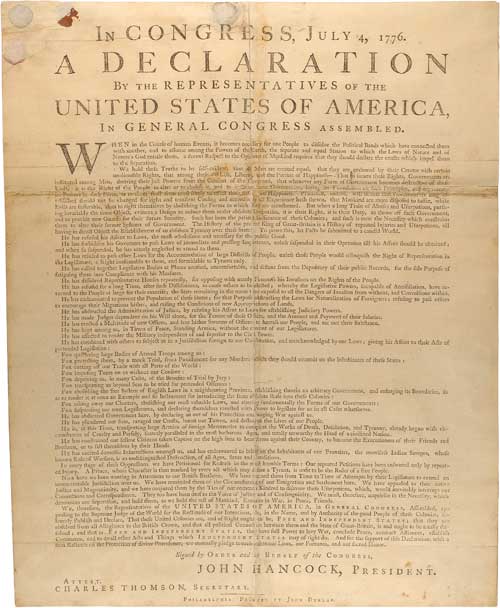
The Law of the Seize

In Being a World Citizen, Conflict Resolution, Environmental protection, International Justice, The Search for Peace, United Nations, World Law on June 15, 2014 at 10:03 PM

THE LAW OF THE SEIZE

By René Wadlow


June 8 of each year has been proclaimed by the UN General Assembly as the Day of the Law of the Sea. However, according to my friend John Logue, who had participated with me as non-governmental organization representative in the long negotiations in New York and Geneva, it should be called “the Law of the Seize.”

What started out in November 1967 with a General Assembly presentation by Ambassador Arivid Pardo of Malta as a call to establish a new political and legal regime for the ocean space ended in August 1980 with a draft convention. It was a mixed bag of successes and disappointments, but that convention has now been ratified by 162 States.

For world citizens, the quality of the Law of the Sea Convention was of particular significance. The greater part of the oceans has been considered res communis, a global common beyond national ownership. Furthermore, the physical nature of the oceans suggests world rather than national solutions to the increasing need for management of marine resources and the marine environment.

World Citizen Thor Heyerdahl was one of those who called attention to the dangers of ocean pollution coming to Geneva to speak for world citizens during the Law of the Sea negotiations. The oceans and the seas remind us that the planet and not the State should be our focus. A holistic view of life arises from our interdependence as a species and our dependence on the life system of nature. World citizens have stressed that a balanced, sustainable eco-system will only emerge if our political, economic and ethical policies coincide in building a more stable and more peaceful—in short, a more human—planet.

(C) The Economist

(C) The Economist

Establishing rules for the management of the oceans was a real possibility in bringing about an increase in the awareness of the earth as our common home. However, the UN Law of the Sea Conference was first and foremost a political conference with over 160 States participating. From the outset of the conference, it was agreed that the convention had to be drafted by consensus in order to create a political and legal system for the oceans accepted to all — to manage what Arivid Pardo had called “the common heritage of mankind.”

During the negotiations, there were groupings that cut across the Cold War divisions of the times, especially within a group called “the landlocked and geographically disadvantaged countries.” There were also informal groups of persons who acted in a private capacity, a mixture of nongovernmental organization (NGO) representatives, legal scholars, and diplomats who prepared suggestions on many of the issues of the conference. These issues included the economic zones, the continental shelf, scientific research, marine pollution, and dispute settlement. Such propositions were taken seriously by the government negotiators, in part because few diplomats had the technical knowledge needed for making decisions as well as the creation of a new international organization, the Seabed Authority.

However, in practice, government negotiators are more used to working for the “national interest” and in defending the idea of “territory,” both on land and on the sea. Boundary-making is a primordial activity. Various theories have been advanced to explain why, many of them derived from our animal ancestors. However, ocean boundary problems are more difficult than building a wall on land. As Douglas Johnston and Mark Valencia write,

The forces of nationalism were too strong to be swayed by Pardo’s appeals to international cooperation and technocratic rationality. Instead the coastal states, developed and developing alike, saw in the newly available ocean areas an unexpected windfall, offering the prospect of a previously unimagined extension of their natural resource base. The economic goal of national autonomy had prevailed over the interest in global cooperation, setting in motion the processes of establishing vast national enclosures of offshore areas, especially those enclosures consonant with the new exclusive economic zone (EEZ) regime. International cooperation had yielded to national autonomy.1

An outstanding first attempt at codification of the law of the sea was the work of Hugo Grotius, the Dutch jurist widely regarded as the forefather of international law as we know it today. In 1609 Grotius published Mare Liberum (A Free Sea), a book in which claimed that the sea was international territory and thus free for all nations to use in their usual conduct of trade with one another.

An outstanding first attempt at codification of the law of the sea was the work of Hugo Grotius, the Dutch jurist widely regarded as the forefather of international law as we know it today. In 1609 Grotius published Mare Liberum (A Free Sea), a book in which claimed that the sea was international territory and thus free for all nations to use in their usual conduct of trade with one another.

Conflicts over national sea boundaries are particularly strong in the Pacific Ocean among China, Vietnam, the Philippines, Japan, Taiwan, and Cambodia, with India and Indonesia watching closely. The disputes arise largely because of the claims of waters around small islands as national territory. Most of these islands are not inhabited, but are claimed as the starting point of “territorial waters.”

Originally, the disputes concerned exclusive fishing rights within national territorial zones. Now the issues have become stronger, as it is believed that there are oil and natural gas reserves in these areas.

Concerning China’s dispute with Japan (which is also largely true of China’s policy with other Asian countries), Krista Wiegand writes,

China’s current strategy to negotiate with Japan over joint development of natural gas and oil resources outside the disputed zone seems to be the most rational strategy it can take in the disputes. Rather than dropping its territorial claim, China continues to maintain its claim for sovereignty, while at the same time benefiting from joint development of natural gas resources. By maintaining the territorial claim, China also sustains its ability to confront Japan through diplomatic and militarized conflict when other disputed issues arise.2

Territorial sea disputes can be heated up or cooled off at will or when other political issues require attention. We are currently in a “heating up” stage. Thus for June 8, in honor of the Law of the Sea, we can consider how best to resolve territorial disputes by having a broader view of the common heritage of humanity.


Prof. René Wadlow is President of the Association of World Citizens.
 

Notes

1)   Douglas M. Johnston and Mark J. Valencia. Pacific Ocean Boundary Problems (Dordrecht: Martinus Nighoff Publishers, 1991, 214pp.)

2)   Krista E. Wiegand. Enduring Territorial Disputes (Athens, GA: University of Georgia Press, 2011, 340pp.)

Ukraine: The Dogs of the Cold War are Awakened

In Being a World Citizen, Conflict Resolution, Current Events, Democracy, Europe, Human Rights, International Justice, The former Soviet Union, The Search for Peace, United Nations, World Law on June 12, 2014 at 9:11 PM

UKRAINE: THE DOGS OF THE COLD WAR ARE AWAKENED

By René Wadlow


“Cry Havoc! And let slip the dogs of war!”

William Shakespeare, Julius Caesar


The dogs of the Cold War (1945-1990) had largely fallen asleep after the 1990 Summit Conference of the Organization for Security and Cooperation in Europe (OSCE) in Paris had put a formal end to the European aspects of the Cold War. A New Europe was the slogan of both governments and non-governmental currents that had been working for a Europe without its East-West divisions symbolized by the Berlin Wall.

Many of us had been involved in the April 1980 European Nuclear Disarmament Appeal, often shortened to END, of which the English historian E.P. Thompson was a leading spokesman. Mient Jan Faber of the Dutch Inter-Church Peace Council was the link to those working within church/religious groups on the same lines. Obviously, the level of arms − and thus disarmament − was not the only aspect of the moves necessary to move beyond the Cold War embodied in bureaucratic, and military-industrial forms.

There was a necessary ‘healing process’ − a need to remove the barbed wire in people’s minds and hearts.

The hope was that moving beyond the Cold War would become a citizens’ search for common projects, bringing together widening constituencies in a direct discourse beyond Cold War agendas and the media’s framing of the debates.

Many of us met in Prague in what was still Czechoslovakia in October 1990 for the creation of the Helsinki Citizens’ Assembly with an aim of a democratic integration of Europe. Vaclav Havel who had become Head of State spoke to the opening session on the power of acting from principle guided by our consciences to build a thoroughly new Europe undivided into blocs.

Vaclav Havel (1936-2011), the Czechoslovakian dissident playwright who in 1989 led the country's 'Velvet Revolution', eventually becoming President of Czechoslovakia. From 1992 to 2003 Havel was President of the Czech Republic after Czechoslovakia was eventually dissolved.

Vaclav Havel (1936-2011), the Czechoslovakian dissident playwright who in 1989 led the country’s ‘Velvet Revolution’, eventually becoming President of Czechoslovakia. From 1992 to 2003 Havel was President of the Czech Republic after Czechoslovakia was dissolved. (C) John Macdougall/AFP/Getty Images

“Helsinki Citizens” had been chosen by the organizers as the name because Helsinki had been the city which saw the formal start of the governmental process in 1975 leading first to a certain stabilization of the European Cold War structure and progressively to tension-reduction under the title of “détente”. Since much of the governmental detente seemed to be aimed only at making a more stable status quo, citizen activists spoke of “detente from below”, as going beyond the current structures.

The visions of a better world differed among peace, green, and human rights groups. However all agreed that the future forms of Europe was beyond the current status quo.

I had gone to Prague already concerned with ethnic-nationalities tensions. These tensions were colored by the Cold War but also had non-Cold War roots as seen in the Nagorno-Karabakh conflict within the then USSR. Through contacts in Geneva, I had become concerned by Nagorno-Karabakh and thought that good faith negotiations could lead to a resolution of the conflict. I was also concerned with the growing tensions in Yugoslavia. My paper read at the Prague conference “Future of Europe” was published in the Belgrade Review of International Affairs in December 1990.

Since 1990, the conflicts linked to the breakup of Yugoslavia, and the conflicts of Abkhazia-South Ossetia-Georgia, and Transnistra-Moldova all confirm my analysis that the key problem of our time is the manifestation of narrow nationalism. This narrow nationalist ideology must be countered by a strong cosmopolitan-world citizen ideology and practice.

The hope at Prague in 1990 was to build a pan-European movement participating in public debates, offering opinions and discussing alternatives in each country but also able to come together and act in a conflict resolution way in times of strong tensions and armed conflicts. There were a few efforts of the Helsinki groups during the Yugoslav conflicts, but they were not coordinated nor of massive size. I had participated in some of these undertakings at the UN in Geneva when the conference on Yugoslavia was in session there.

The Hofburg Palace in Vienna, Austria, which houses the Headquarters of the Organization for Security and Cooperation in Europe. (C) Bernard Henry

The Hofburg Palace in Vienna, Austria, which houses the Headquarters of the Organization for Security and Cooperation in Europe. (C) Bernard Henry/AWC

Since 1990, we have seen the rise in some European countries of hard line nationalist groups − often Right wing and some with Neo-Fascist aspects. This rise was illustrated by the May 25, 2014 elections to the European Parliament. The entry of an additional number of narrow nationalists will not have much impact on the way the European Parliament operates, but it will give the nationalists a media platform and a degree of legitimacy in their home country. There has not been a significant rise in cosmopolitan-world citizen movements, although cosmopolitanism as an intellectual framework has become increasingly common.

Without a well-organized movement of pan-European peace-green-human rights movements, “Europe from Below” has been unable to act in the Ukraine crisis. Individual governments, in particular Russia and the USA, have taken a highly visible role. The media in both countries dusted off the Cold War vocabulary and political analysis.

Talk of a “New Cold War” has been common. The OSCE − with Switzerland as President for 2014 − has called for restraint and negotiations. There has been no equivalent “high profile” efforts on the part of non-governmental groups. Today, there is no Vaclav Havel to serve as a bridge of respect among both governments and non-governmental movements. Certainly, the dogs of the Cold War have awakened to remind us that they are still there. In addition, new nationalist, and authoritarian tendencies are emerging. Although these nationalist movements are sometimes led by comic figures, they need to be taken seriously.

Counter voices also need to awaken, and the ability for nongovernmental conflict resolution groups to act must be strengthened.


Prof. René Wadlow is President of the Association of World Citizens.
Hugh Joseph Schonfield, the World Citizen Pioneer who Tried to Unite the Holy Land

In Being a World Citizen, Conflict Resolution, Cultural Bridges, Current Events, Middle East & North Africa, Solidarity, The Search for Peace, United Nations, World Law on May 24, 2014 at 8:50 PM

HUGH JOSEPH SCHONFIELD, THE WORLD CITIZEN PIONEER WHO TRIED TO UNITE THE HOLY LAND

By René Wadlow


Hugh Joseph Schonfield (1901-1988) was the first to incorporate the term “world citizen” into the name of a nongovernmental organization: the Commonwealth of World Citizens in 1938. The Commonwealth of World Citizens was to have an emphasis on service to humanity and a potential role as impartial mediator in international disputes. The founding was what he called a “revolt into sanity” from a mentally-deranged world in which Fascism, Nazism, Communism and militarized Shintoism flourished. From 1941 to 1948, Schonfield published a magazine called The World Citizen. As he said in a speech to the Constructive World Peace Conference in April 1940 “External forces, the agents of God, have caused the emergence in the world itself of ideas of World Community and World Citizenship. It is seen by serious political thinkers that if peace and justice are to reign here there must be a loyalty above that which is due from subjects to their own nation state. Much is being done, and rightly, to encourage such ideas. What we have to concern ourselves with is the bridge that will bring us safely to that farther shore. The bridge must be one that will carry us eventually to the New Jerusalem, not to a new Babylon.”

He wrote, “So many of the grave problems of our time are due to the fact that we are living in a radical transition, having to relate to the rapid advances of science which are requiring us to move forward into a wholeness and interdependence for which we are not sufficiently prepared. There are inevitable consequences, which chiefly affect our self-consciousness. The problems of the transition period affect individuals just as much as nations. Multitudes find themselves incapable of adjusting to the new demands and fear loss of identity.”

In his Mondcivitan Writings ('mondcivitan" coming from "mondcivitano" which is the Esperanto for "World Citizen"), Schonfield developed a comprehensive World Citizen thought, long before the Association of World Citizen was created.

In his Mondcivitan Writings (‘mondcivitan” coming from “mondcivitano” which is the Esperanto for “World Citizen”), Schonfield developed a comprehensive World Citizen thought and ideology, long before the Association of World Citizens itself was created.

Hugh Schonfield drew parallels between the current period of transition with the Jewish society at the time of Jesus, a period which was the focus of most of his writings. He wrote in 1936 History of Jewish Christianity and in 1939 Jesus: A Biography. During the Second World War while working on Middle East issues for the British government, he published in 1943 Judaism and World Order. Shortly afterwards he published Jesus: Man and Messiah, Readings from the Aprocryphal Gospels. A major work was published in 1955, a translation of the New Testament with notes relating the work to the thoughts of the period in which it was written and linking it to Jewish writings of the same period. As a Jew, he did not want his translation to become known as the “Schonfield New Testament” so it was published in 1955 as The Authentic New Testament. He continued his research on Jesus and messianic expectations and in 1965 published The Passover Plot which became a ‘best seller’ selling over two million copies. He became very interested in the Dead Sea scrolls and one of his last books in 1984 was The Essene Odyssey.

With his interest in the Holy Land, he was particularly concerned with Arab-Jewish relations and became an active champion for the idea of an Israel-Palestine Confederation, setting out proposals in 1944 which also concerned what is now Jordan, the pre-Independence Mandate area.

As Dr. Schonfield wrote in Transnational Perspectives in 1982, “What is clearly called for is a Confederation, possibly on the Swiss model, composed of the states of Palestine and Israel, with Jerusalem as the federal capital. The city would not have to be divided or fought over as to who should possess it. Palestine could have a state capital in the eastern part and Israel in the western sector, if they so desired, but the city as a whole would represent the Confederation.

Jerusalem is the cradle of the world's two major religions, Islam and Christianity, as well as of Judaism. Therefore, why should it have to be a place of hatred and division, and not a place of brotherhood and unity?

Jerusalem is the cradle of the world’s two major religions, Islam and Christianity, as well as of Judaism. Therefore, why should it have to be a place of hatred and division, and not a place of brotherhood and unity instead?

“The advantage of this plan should be obvious. The frontiers between the two states would be internal and unfortified, and would therefore not create a risk of future war. As citizens of the Confederation, both Palestinians and Israelis would enjoy rights of access to all parts for purposes of travel and commerce, and questions of settlement would be covered by federal laws. There should be freedom of conscience for all citizens of the Confederation, but if so desired the religious laws of Islam and Judaism could be operative in the respective component states. The important thing would be that the Confederation would be the common homeland of both Palestinians and Israelis, who would yet have their own states.

“This is not a dream and could readily become a practical reality. What has been provided here is no more than a plan in outline, but it does keep the Holy Land as a unity, a common homeland for both Israelis and Palestinians, and satisfies their aspirations for self-governing statehood. With imagination and goodwill, it would inaugurate a new era in the Near East, and become an inspiration to mankind.” He saw that forms of regional integration are increasingly considered as the principal methodology for general security, development and the safeguard of human rights. Individual, national and regional security should be accompanied by a spirit of mutual acceptance – with economic cooperation and development as a by-product for a future Israel-Jordan-Palestine grouping.

A rocket being fired by the Israeli Defense Force (IDF) to counter an incoming rocket attack from Gaza. (AP Photo/Tsafrir Abayov)

As the Middle East remains hopelessly plagued by violence, a rocket is being fired by the Israeli Defense Force (IDF) to counter an incoming rocket attack on Israel coming from Gaza. (AP Photo/Tsafrir Abayov)

However, the World Citizen proposals have not been followed by the strong national political leadership needed to bring them to the fore of real political negotiations. The quality of government leadership in the Middle East has been uneven at best. But even the Israeli-Palestinian problems are more complex than the quality of leadership. A new spirit of mutual acceptance will only flourish in the region when individual security and dignity for all will become rooted in law – everywhere in the region. This can happen with a general process of democratization and respect for human rights, with safeguards for ethnic and religious minorities. Such democratic values and practices must become the natural bedrock of society in all the countries of the Middle East.

World Citizens can take inspiration from Hugh Schonfield and in their Middle East efforts put an emphasis on unity rather than division.


Prof. René Wadlow is President and Chief Representative to the United Nations in Geneva of the Association of World Citizens.