The Official Blog of the

Archive for the ‘Middle East & North Africa’ Category

Saudi Arabia: Still Lost in the Sands of War

In Children's Rights, Conflict Resolution, Current Events, Human Rights, Humanitarian Law, International Justice, Middle East & North Africa, NGOs, Refugees, Solidarity, The Search for Peace, United Nations, War Crimes, World Law on April 5, 2017 at 9:38 PM

SAUDI ARABIA: STILL LOST IN THE SANDS OF WAR

By René Wadlow

The aggression of the Saudi Arabia-led coalition (Bahrain, Egypt, Jordan, Kuwait, Morocco, Qatar, Sudan, and the United Arab Emirates) against Yemen began on March 24, 2015 so that we can now mark its second anniversary. However, there has been little progress toward a resolution of the armed conflict. Rather, there has been an increase in suffering, displacement of people, and destruction of the society. Saudi Arabia has changed the name from “Operation Decisive Storm” to “Operation Restoring Hope”, probably on the advice of the public relations firm which advises the United States (U. S.) Pentagon on the name of its operations. The first 28 days in 2015 of bombing from the air of cities and camps, killing women and children, created a sand storm, but the results were in no way decisive. Since that start on March 24, at least a 4,600 people have been killed, many more wounded and many displaced within the country. Nevertheless, the aggression has had little impact on the power configuration within the country.

The Association of World Citizens (AWC) has constantly called attention to the violations of the minimum standards of the laws of war. There are international agreements which set humanitarian law and human rights standards in times of armed conflicts, mainly the Red Cross Geneva Conventions of 1949 written in the light of experience during the Second World War and the two Protocols to the Conventions written in 1977 in the light of experiences of the Vietnam War. Not all States have ratified Protocols I and II, and a number of States have made reservations, especially refusing to forgo reprisals against civilians. Protocol I requires that attacks against military objectives be planned and executed so that “incidental” civilian injuries are not “excessive in relation to the specific military advantages anticipated”. The decision-making is subjective on the part of the military, and military officers rarely see any action as “excessive” (1)

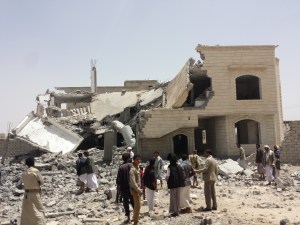
Air_strike_in_Sana'a_11-5-2015

Another consequence of the bombing in Yemen is the starvation of the civilian population due to lack of food and water. As a result of the widespread use of defoliants in the Vietnam War, there was written as Article 54 (2) of the 1977 Additional Protocol I, a prohibition to destroy foodstuffs, crops, drinking water installations and irrigation works. Yemen is, at the best of times, short of food and drinking water installations. The bombing has deliberately increased the hardship as well as increasing the number of displaced people with resulting lack of access to food and water.

The members of the United Nations (UN) Security Council looked at the situation, and then decided to look away, although the Council appointed a UN mediator to try to find a “political solution”. The UN envoys to Yemen have had little influence on the promotion of a “political solution” or even any meaningful negotiations. The first UN envoy, Jamal Benomar, resigned in frustration. He has been replaced by Ismail Ould Cheikh Ahmed of Mauritania, who had been earlier the UN humanitarian coordinator for Yemen and so knows the country and its many factions well.

There is wide agreement in UN circles that Yemen is in a quagmire, with a free-fall of its economy, a collapse of its health services, its food imports blocked, and the country on the eve of division between north and south. The country’s present form dates from 1990 when south Yemen (Aden) was more or less integrated into the north, but the country remains highly fractured on tribal, sectarian, and ideological lines, with tribal structures being the most important. In the best of worlds, one could envisage a federal Yemen with a rule of law. More realistically, we can hope that autonomous tribal areas can be created that do not fight each other actively and allow necessary food imports and medical supplies into their areas.

3_Kids_in_San'a

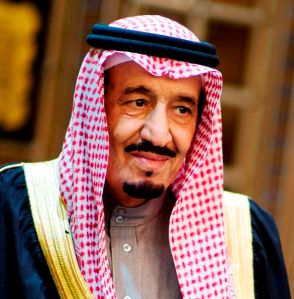
Salman_bin_Abdull_aziz_December_9,_2013

King Salman of Saudi Arabia

Saudi Arabia, which should have known better, thought that it could expand its influence in Yemen. The new King Salman with his son Mohammed as Defense Minister hoped for a quick victory, having an endless supply of modern military equipment from the USA, England and cooperation from the Gulf States. The memories of the Egyptian intervention with its heavy use of chemical weapons in the Yemen civil war of the 1960s was overlooked, both by Saudi Arabia and its close partner Egypt, although Egypt had lost some 20,000 soldiers at the time.

One generation rarely learns from the experiences of earlier generations, and both Saudi’s and Egyptians had hoped to advance their interests in Yemen’s political confusion. Instead, Saudi Arabian leaders have been lost, blinded by the sands of war. It is likely that the King and his son will never be trusted again. The aggression in Yemen was the first foreign policy effort of Saudi Arabia which had not been designed and directed by the USA − their first effort to walk alone. The King and his son were lost in the sands of war and will never be heard of again on the international scene, but oil revenues will continue to assure the royal court of a comfortable life style.

The AWC has proposed a four-step approach to the resolution of the armed conflict:

1) an immediate ceasefire ending all foreign military attacks;

2) humanitarian assistance, especially for hard-to-reach zones;

3) a broad national dialogue;

4) through this dialogue, the establishment of a highly decentralized federal government.

In an April 17, 2015 letter to the then UN Secretary-General Ban Ki-moon, the President of the Association of World Citizens wrote “It is imperative for the United Nations to be more effectively involved in ending the senseless aerial attacks and to establish a ceasefire, ensuring humanitarian and medical assistance to the people of Yemen. The critical situation is escalating and the humanitarian crisis in Yemen is approaching catastrophic dimensions”

We can, alas, only repeat ourselves today.

*********************************************

Note:

D. Schindler and J. Toman, The Laws of Armed Conflicts (Martinus Nihjoff Publishers, 1988)

*********************************************

Prof. René Wadlow is President of the Association of World Citizens.
Syrie : Résoudre le Conflit Armé et Reconstruire une Société Qui Soit Inclusive et Juste

In Being a World Citizen, Conflict Resolution, Current Events, Human Rights, Humanitarian Law, International Justice, Middle East & North Africa, NGOs, Refugees, Solidarity, The Search for Peace, United Nations, War Crimes, World Law on April 3, 2017 at 10:56 PM

SYRIE : RÉSOUDRE LE CONFLIT ARME ET RECONSTRUIRE UNE SOCIÉTÉ QUI SOIT INCLUSIVE ET JUSTE

Par René Wadlow et Bernard J. Henry

Le 5 avril 2017, l’Union européenne (UE) et l’ONU tiendront une conférence commune sur l’avenir de la Syrie et de sa région. La « société civile » est invitée à y participer, mais il est impossible de savoir par avance si la rencontre de Bruxelles sera un événement de « récolte de fonds », auquel cas les Organisations Non-Gouvernementales (ONG) dotées du statut consultatif auprès de l’ONU ne pourront apporter qu’une contribution limitée, ou si les buts fixés seront plus ambitieux.

La rencontre organisée par l’UE et l’ONU est la troisième sur la Syrie en un laps de temps très court, démontrant l’ampleur des inquiétudes quant au flot des réfugiés ainsi que devant la violence et la souffrance qui ne semblent pas connaître de fin en Syrie et en Irak. Le texte suivant a été écrit au nom de l’Association of World Citizens (AWC) qui le transmet en amont aux gouvernements concernés par la conférence du 5 avril.

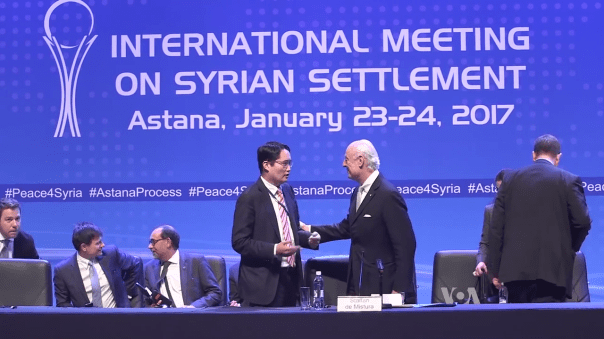
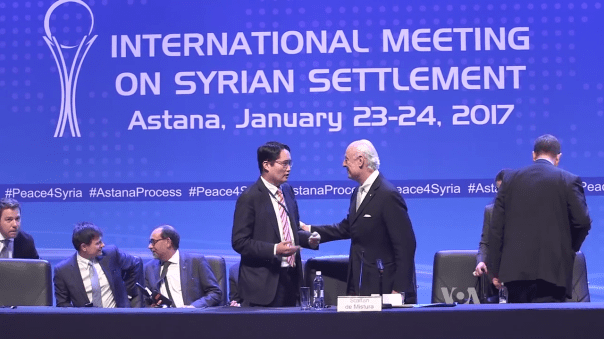
A la suite des pourparlers qui se sont tenus du 23 au 25 janvier 2017 à Astana (Kazakhstan) sous le parrainage de la Fédération de Russie, de la Turquie et de la République islamique d’Iran, un nouveau tour de pourparlers parrainé par l’ONU a eu lieu du 23 au 31 mars à Genève, sous l’appellation non-officielle de « Genève IV ». L’Émissaire spécial de l’ONU pour la Syrie, M. Staffan de Mistura, a dirigé ces pourparlers conviés par l’ONU à Genève et Lausanne.

Toutes les parties en présence au conflit en Syrie et en Irak n’y ont pas participé. Ni Daesh ni les Kurdes n’y étaient présents et toutes les composantes de l’opposition au Gouvernement du Président syrien Bachar al-Assad n’y ont pas été représentées. S’il existe des pourparlers non-officiels dans des hôtels ou des restaurants de Genève parallèlement aux négociations, en tout cas, personne n’en parle. Il existe une vaste et active communauté kurde à Genève et dans sa région, où certains agissent peut-être comme porte-paroles des efforts actuels de création du Rojava, zone autonome kurde au nord de la Syrie dont il est envisageable qu’elle s’associe un jour avec la région autonome kurde d’Irak.

International_Meeting_on_Syrian_Settlement_in_Astana.png

Les pourparlers de Genève ont porté sur des questions à court terme, parmi lesquelles un cessez-le-feu, la sécurité des civils syriens et l’accès aux humanitaires des zones en besoin d’aide. D’autres questions ont été abordées sur un plus long terme, s’agissant de processus politiques tels une administration transitoire, des changements constitutionnels, et des élections en vue d’un nouveau gouvernement dont les fondements soient plus larges.

En parallèle aux pourparlers intra-syriens lors desquels M. de Mistura a officié en tant que médiateur, l’ONU s’est saisie des préoccupations liées aux Droits Humains en Syrie, ayant créé une Commission d’enquête internationale indépendante sur la République arabe syrienne ainsi qu’un mécanisme commun d’enquête ONU-Organisation pour l’Interdiction des Armes Chimiques.

Saadallah_after_the_explosion

L’Association of World Citizens (AWC), Organisation Non-Gouvernementale (ONG) dotée du statut consultatif auprès de l’ONU, active dans la résolution des conflits armés et la promotion des Droits Humains, avait salué l’appel lancé le 20 juillet 2011 par le Secrétaire Général de l’ONU de l’époque, Ban Ki-moon, pour un dialogue inclusif sur les griefs du peuple syrien et ses préoccupations pour l’avenir. A travers un message au Secrétaire Général, l’AWC avait encouragé une participation aussi large que possible de la société civile syrienne à un tel dialogue, ajoutant que l’AWC, consciente de l’utilité qui peut être celle des ONG internationales dans la résolution des conflits, aiderait à faciliter de telles discussions de toute manière jugée appropriée.

En décembre 2011 commença une Mission d’Observation de la Ligue des Etats Arabes qui allait s’avérer de courte durée. Dans un message du 9 février 2012 au Secrétaire Général de la Ligue des Etats Arabes, l’Ambassadeur Nabil el-Araby, l’AWC a proposé un renouvellement de la Mission d’Observation de la Ligue Arabe, avec l’inclusion d’un nombre plus important d’observateurs issus d’ONG et un mandat élargi dépassant la simple mission d’exploration, et ainsi jouer un rôle actif de résolution des conflits au niveau local dans l’espoir d’arrêter la spirale qui engloutit le peuple syrien dans la violence et le carnage.

A bien des reprises depuis lors, l’AWC a rappelé à l’ONU, au Gouvernement syrien et aux mouvements d’opposition le rôle important que peuvent remplir les ONG, tant syriennes qu’internationales, pour faciliter la résolution des conflits.

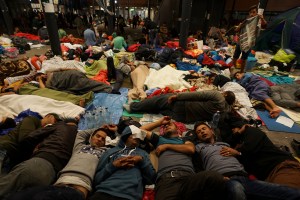
Syrian_refugees_having_rest_at_the_floor_of_Keleti_railway_station._Refugee_crisis._Budapest,_Hungary,_Central_Europe,_5_September_2015

Les combats en Syrie, en Irak et dans certaines régions de la Turquie ont généré un grand nombre de personnes déplacées et de réfugiés. La réaction des gouvernements au flot de réfugiés s’est montrée pour le moins inégale, quelques-uns s’étant montrés accueillants et d’autres ayant ouvertement fermé leur porte. Très tôt, l’AWC avait appelé de ses vœux une conférence de l’ONU sur les réfugiés et personnes déplacées. L’AWC a salué la convocation par l’ONU de conférences sur les réfugiés et l’aide humanitaire, au sein desquelles elle a pris toute sa part.

Les conflits armés en Syrie, en Irak, au Yémen et en Afghanistan ont causé des violations graves du droit humanitaire international : attaques contre des installations médicales et du personnel de santé, exécutions de prisonniers de guerre, tortures, destructions délibérées du patrimoine culturel, attaques délibérées contre des populations civiles, usage d’armes que les traités internationaux interdisent. En conséquence, l’AWC a souligné la nécessité d’une conférence de l’ONU pour la réaffirmation du droit humanitaire international. S’il ne se manifeste pas maintenant un soutien fort au droit humanitaire international, il existera un danger réel de voir les violations désormais considérées comme « normales », ce qui les rendra hors de contrôle. Des mesures fortes de soutien au droit humanitaire international doivent être prises sans délai.

8211986588_54c6f4f542_b

Les structures de gouvernement, l’autorité, les limites géographiques des régions administratives et les droits des minorités de prendre part à la vie de la nation posent problème en Irak, en Syrie au Liban depuis l’époque de la désintégration de l’Empire ottoman après la fin de la Première Guerre Mondiale. Il est essentiel de développer des formes de gouvernement adaptées rendant possibles à la fois l’autonomie locale et la coopération régionale.

La recherche d’une structure adaptée à ceux qui s’identifient comme Kurdes s’est avérée être une question particulièrement difficile qui a donné lieu à des violences. L’AWC, fidèle à la tradition de décentralisation et de fédéralisme d’Alexandre Marc et de Denis de Rougemont, tient que le fédéralisme et la décentralisation ne sont pas des chemins vers la désintégration d’un Etat, mais tendent au contraire à créer des structures plus justes d’organisation de l’Etat et de coopération régionale.

L’AWC salue la conférence organisée le 5 avril par l’UE et l’ONU sur la Syrie et la région du monde à laquelle elle appartient.

L’AWC affirme une nouvelle fois son souhait de coopérer pleinement à la vaste et indispensable tâche de mettre fin au conflit armé et de développer une société qui soit inclusive et juste.

Le Professeur René Wadlow est Président de l’Association of World Citizens.

Bernard J. Henry est Officier des Relations Extérieures de l’Association of World Citizens.

Syria: Armed Conflict Resolution and the Reconstruction of an Inclusive and Just Society

In Being a World Citizen, Conflict Resolution, Current Events, Human Rights, Humanitarian Law, International Justice, Middle East & North Africa, NGOs, Refugees, Solidarity, The Search for Peace, United Nations, War Crimes, World Law on April 3, 2017 at 10:45 PM

SYRIA: ARMED CONFLICT RESOLUTION AND THE RECONSTRUCTION OF AN INCLUSIVE AND JUST SOCIETY

By René Wadlow

On April 5, 2017, the European Union (EU) and the United Nations (UN) will hold a joint conference on the future of Syria and its region. “Civil Society” is invited to participate, but it is not clear in advance if the Brussels meeting will be a “fundraising” one, in which case most Nongovernmental Organizations (NGO) in consultative status with the UN will have little to contribute or if there will be wider aims.

The EU-UN meeting is the third in a short space of time concerning Syria, a reflection of concern with the refugee flow and the continued violence and suffering in Syria and Iraq. The following is a text written on behalf of the Association of World Citizens (AWC) that is being sent to governments in advance of the April 5 conference. The text notes earlier appeals and efforts of the AWC in the Syria-Iraq-Turkey conflicts.

Following the January 23-25, 2017 talks in Astana, Kazakhstan sponsored by the Russian Federation, Turkey, and the Islamic Republic of Iran, a new round of United Nations (UN)-sponsored talks, March 23-31 was held in Geneva (informally called Geneva 4). The UN Special Envoy for Syria, Mr. Staffan de Mistura, has led the UN, Geneva and Lausanne-based talks. Not all the parties involved in the Syria-Iraq conflicts are participants in the talks. ISIS and the Kurds were not present, nor have all segments of the opposition to the Government of President Bashar al-Assad been formally present. What informal talks are held in Geneva hotels and restaurants during the negotiations are not officially reported. There is a large and active Kurdish community in the Geneva area and some may be spokespersons for the effort to create Rojava, a Kurdish autonomous zone in Northern Syria that might form some sort of association with the Kurdish autonomous area of Iraq.

International_Meeting_on_Syrian_Settlement_in_Astana.png

The Geneva-based talks have concerned short-term issues such as a ceasefire, safety of Syrian civilians and humanitarian access. There have also been longer-range issues concerning political processes such as a transition administration, constitutional changes, and elections for a new, more broadly based government.

Parallel to the intra-Syrian talks mediated by Mr. de Mistura, the UN has been concerned with the human rights issues having created an Independent International Commission of Inquiry on the Syrian Arab Republic as well as a joint UN-Organization for the Prohibition of Chemical Weapons investigative mechanism.

Saadallah_after_the_explosion

The Association of World Citizens (AWC), a Nongovernmental Organization in consultative status with the UN, active on issues of the resolution of armed conflicts and the promotion of human rights, had welcome a July 20, 2011 call of then UN Secretary-General Ban Ki-moon for an inclusive dialogue to respond to pressing grievances and longer-term concerns of the Syrian people. The AWC, in a message to the Secretary-General, encouraged broad participation of Syrian civil society in such a dialogue and indicated that the AWC, knowing the possible usefulness of international NGOs in conflict resolution, would help facilitate such discussions in any way considered appropriate.

In December 2011, there was the start of a short-lived Observer Mission of the League of Arab States. In a February 9, 2012 message to the Secretary General of the League of Arab States, Ambassador Nabil el-Araby, the AWC proposed a renewal of the Arab League Observer Mission with the inclusion of a greater number of NGO observers and a broadened mandate to go beyond fact-finding and thus to play an active conflict resolution role at the local level in the hope to halt the downward spiral of violence and killing.

On many occasions since, the AWC has indicated to the UN, the Government of Syria, and opposition movements the potentially important role of NGOs, both Syrian and international, in facilitating armed conflict resolution measures.

Syrian_refugees_having_rest_at_the_floor_of_Keleti_railway_station._Refugee_crisis._Budapest,_Hungary,_Central_Europe,_5_September_2015

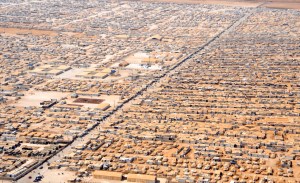
The fighting in Syria, Iraq and parts of Turkey has led to a large number of displaced persons and refugees. The response of governments to the refugee flow has been very uneven, welcoming in a few cases, outright rejection in other cases. The AWC early on called for a UN-led conference on refugees and internally displaced persons. The AWC welcomed and participated in the UN conferences on refugees and humanitarian aid.

The armed conflicts in Syria, Iraq, Yemen and Afghanistan have led to serious violations of humanitarian international law: attacks of medical facilities and personnel, the execution of prisoners of war, the use of torture, the deliberate destruction of cultural heritage, the deliberate attacks on civilian populations, the use of weapons banned by international treaties. Therefore, the AWC has stressed the need for a UN-led conference to reaffirm humanitarian international law. If strong support for international law is not manifested now, there is a danger that violations will become considered as “normal”, and thus will increase. Strong measures of support for humanitarian international law are needed to be undertaken now.

8211986588_54c6f4f542_b

The structures of government, the authority, and the geographic limits of administrative regions, the rights and participation in national life of minorities have been issues in Iraq, Syria and Lebanon since the disintegration of the Ottoman Empire at the end of the First World War. Appropriate forms of government which allow both for local autonomy and regional cooperation need to be developed. The search for an appropriate structure for those considering themselves to be Kurds has been a particularly difficult issue often leading to violence. The AWC which has a decentralization, federalist tradition in the spirit of Alexandre Marc and Denis de Rougemont, has highlighted that federalism and decentralization are not steps toward the disintegration of a State but rather are efforts to find a more just structure of State organization and regional cooperation.

The AWC welcomes the April 5, 2017 EU-UN conference on Syria and the region. The AWC reconfirms its willingness to cooperate fully in the vast and critical effort for an end to the armed conflict and a development of an inclusive and just society.

Prof. René Wadlow is President of the Association of World Citizens.
Aleppo: Short-term action followed by reaffirmation of humanitarian law

In Being a World Citizen, Conflict Resolution, Current Events, Human Rights, Humanitarian Law, International Justice, Middle East & North Africa, Refugees, Solidarity, The Search for Peace, United Nations, War Crimes, World Law on December 20, 2016 at 10:34 PM

ALEPPO: SHORT-TERM ACTION FOLLOWED BY REAFFIRMATION OF HUMANITARIAN LAW

By René Wadlow


Stephen O’Brien, the United Nations (UN) Under Secretary-General for Humanitarian Affairs describing the ever-more destructive situation in and around Aleppo, Syria, said, “The parties to the conflict have shown time and again they are willing to take any action to secure military advantage even if it means killing, maiming or starving children into submission in the process.”

aleppo-1

A large number of persons are trapped within the city, victims of blind bombardments, shelling, landmines and gunfire. Some persons are used as “human shields” and are unable to protect themselves. Medical facilities have been destroyed, and medical supplies are lacking. Food is unable to reach much of the population, and relief efforts are unable to reach persons in real need.

For the moment, there seems to be no willingness to negotiate a broad ceasefire. The UN Security Council is blocked. Thus, the only short-term action possible is to create “safe routes” so that those who wish to leave the besieged areas can do so. Mr. Brita Hagi Hasan, an elected official of a committee administering parts of Aleppo, has made a moving appeal for such humanitarian corridors. Some persons, an estimated 16,000 as of the first of December, have already been able to leave the city, but many more would do so if true safe routes were put into place.

Brita_Hagi_Hasan.jpg

Brita Hagi Hasan (left), Chairman of the Local Council of the City of Aleppo, the (now defunct) local administration committee created by the leaders of the Syrian revolution there, addressing supporters in Paris, France on December 1, 2016. (C) Bernard J. Henry/AWC

However, there are two immediate obstacles. Many persons feel that such “safe routes” would, in fact, not be safe. There is a fear that they would be trapped, and once outside of their houses in the open, they would be shot at or bombed. The second fear is that they would not be safe when they reach government-held areas but could become victims of government-led repression.

aleppo-2

Thus, there is a double, short-term need: the first is accompaniment of citizens leaving the area either by UN or other international troops or by unarmed nongovernmental observers. With such accompaniment, there would be some reluctance to attack persons on foot or in buses. The second need is for credible guarantees by the government that there would be no reprisals against civilians, most of whom have been living in opposition-administered parts of the city, often for several years. There needs to be some sort of international follow-up to make sure that such government guarantees are honored.

Beyond these short-term but vital efforts, there is a longer-term need for the reaffirmation of the validity of humanitarian law and especially a reaffirmation of respect for humanitarian law.

The current armed conflicts in Afghanistan, Yemen, Libya, and the Syria-Iraq-ISIS-Kurds-Turkey conflict have seen a dangerous erosion of respect for the laws of war concerning medical facilities and personnel, concerning prisoners of war, of hostages, and of civilians, in particular women and children. There have been repeated cries of alarm from leaders of the International Committee of the Red Cross, of the UN, and nongovernmental organizations such as the Association of World Citizens (AWC). However, violations of these fundamental prohibitions of the laws of war continue. There have been relatively few calls for creative responses in the face of these continuing violations.

Thus, the AWC stresses the need to create immediately internationally-guaranteed safe routes for the evacuation of civilians from the besieged areas of Aleppo. Such guaranteed safe routes can also serve as a model for civilians in other besieged cities.

The AWC also calls for a serious investigation of the reasons for the erosion of the respect for humanitarian law to be followed by a UN-led conference on the reaffirmation of humanitarian law.

Prof. René Wadlow is President of the Association of World Citizens.
Immigration, Detention, Control

In Being a World Citizen, Conflict Resolution, Current Events, Europe, Human Rights, Middle East & North Africa, Migration, Refugees, Solidarity, The Search for Peace, United Nations, World Law on December 18, 2016 at 9:56 AM

IMMIGRATION, DETENTION, CONTROL

By René Wadlow

Migrants_1.jpg

If I were another on the road, I wouldn’t have looked back. I’d have said what one traveler says to another: Hello stranger, wake up your guitar! Let’s postpone our tomorrow to lengthen our road and widen our space, so that we may be rescued from our story together.


– Mahmoud Darwish, Palestinian poet.


By creating special observance days, the United Nations (UN) tries to promote international awareness and action on specific issues. Thus February 6 is International Day of Zero Tolerance to Female Genital Mutilation and March 20 is International Day of Happiness. May 2 highlights an issue we do not think about often: World Tuna Day. December 18 has been designated as the International Migrants Day, but even without a special day, migrants and refugees have become worldwide issues leading to political debate, especially in Europe and the USA.

Asylum seekers and immigrants with low level of education are often seen as a “burden”, not only for “Fortress Europe” but also for first reception countries. Thus, today’s borders function as a filter, separating the “wanted” – that is, migrants who can be used – from the “unwanted”. The filter serves to separate those that get in from those who are pushed back.

migrants_3

The filter serves to distort refugee flows. Because unaccompanied minors are more protected by law or policy and are often not deported, there are an increasing number of unaccompanied minors separated from the rest of the family and facing very uncertain futures, especially as concerns education.

There have been some efforts to provide for educational facilities, but most often for students already at the university level. In September 2014, the German Foreign Minister, Frank-Walter Steinmeier, announced the establishment of a special scholarship program for refugees from Syria saying “We cannot allow the Syrian conflict to engender a lost generation. It is particularly young Syrians who will play a crucial role in rebuilding their country and deciding the future as soon as this terrible conflict is over. We want to help give this young generation a future perspective.” Since then there are many signs of a lost Syrian generation, especially for those in the neighboring countries of Jordan, Turkey and Lebanon.

The filter also increases the trafficking of people by organized bands who quickly learn the ways of going around a filter. The trafficking of women and children for the sexual industries occurs in all parts of the world, but increases in areas with armed conflicts. Women in war zones are forced into sex slavery by combatant forces or sold to international gangs. Even without commercial trafficking, there has been a sharp increase in early marriage among Syrian refugee girls in Jordan, marriage being one of the few ways to cope economically and socially.

Migrants_2.jpg

The systemic failures and bureaucratic delays that characterize government reception systems have left many migrants and refugees in a legal “limbo” in which migrants remain trapped, contributing to processes of alienation. There is obviously a need for cooperation and some coordination among States of origin, transit and destination – more easily said than done.

Fortunately, nongovernmental organizations (NGOs) have tried to meet the challenges of migrant and refugee flows, often being able to draw upon the spontaneous goodwill of people. However, there are real limits to what NGOs can do, especially on longer-term issues. There is an obvious need to resolve the different armed conflicts through negotiations in good faith. There is also an obvious need to increase development efforts in those countries from which economic migration is a strong motivation. There is also a need to reverse environmental damage with ecologically-sound development programs.

090525-N-4774B-032

December 18 should serve as a time when we look with compassion at the fate of migrants, refugees and the internally displaced. It is especially a time when we must plan and increase resources for creative action.

Prof. René Wadlow is the President of the Association of World Citizens.
Yazidi Freedom of Thought Honored

In Being a World Citizen, Conflict Resolution, Cultural Bridges, Current Events, Human Rights, International Justice, Middle East & North Africa, Religious Freedom, Solidarity, The Search for Peace, United Nations, War Crimes, World Law on December 3, 2016 at 11:07 PM

YAZIDI FREEDOM OF THOUGHT HONORED

By René Wadlow

The Yearly Sakharov Prize for Freedom of Thought awarded by the European Parliament was given on October 27, 2016 to Nadia Mourad Bassi Taka and Lamiya Aji Bachar, both Iraqi Yazidis. Both had been taken captive by Islamic State (IS) forces in August 2014 and then sold into sexual slavery and forced marriage. Both were recently able to escape from bondage and went to Germany as refugees. Both have become spokespersons for the Yazidis, especially those Yazidi women who are still being held in sexual slavery. The United Nations (UN) has appointed Nadia Taka as Goodwill Ambassador for the Dignity of Survivors of Human Trafficking.

art_13949

There were probably some 500,000 Yazidis, a Kurdish-speaking religious community living in northern Iraq, many in the Mosul area. Iraqi demographic statistics are not very reliable, and Yazidi leaders may give larger estimates by counting Kurds who had been Yazidis but who had converted to Islam. There were also some 200,000 Yazidis among the Kurds of Turkey but now nearly all have migrated to Western Europe, primarily Germany, to Australia, Canada, and the USA. There are also some Yazidis among Kurds living in Syria, Iran and Armenia. The Yazidi do not convert people, and so the religion continues only through birth into the community.

The structure of the Yazidi world view is Zoroastrian, a faith born in Persia proclaiming that two great cosmic forces, that of light and good, and that of darkness and evil are in constant battle. Man is called upon to help light overcome evil.

However, the strict dualistic thinking of Zoroastrianism was modified by another Persian prophet, Mani of Ctesiphon in the third century CE who had to deal with a situation very close to that of ours today. Mani tried to create a synthesis of religious teachings that were increasingly coming into contact through travel and trade: Buddhism and Hinduism from India, Jewish and Christian thought, Hellenistic Gnostic philosophy from Egypt and Greece as well as many smaller, traditional and “animist” beliefs. Mani kept the Zoroastrian dualism as the most easily understood intellectual framework, though giving it a somewhat more Taoist (yin/yang) flexibility, Mani having traveled to China, he developed the idea of the progression of the soul by individual effort through reincarnation – a main feature of Indian thought combined with the ethical insights of Gnostic and Christian thought. Unfortunately, only the dualistic Zoroastrian framework is still attached to Mani’s name – Manichaeism. This is somewhat ironic as it was the Zoroastrian Magi who had him put to death as a dangerous rival.

rene02_400_02

Within the Mani-Zoroastrian framework, the Yazidis added the presence of angels who are to help man in his constant battle for light and good, in particular Melek Tawis, the peacock angel. Although there are angels in Islam, angels that one does not know could well be demons, and so the Yazidis are regularly accused of being “demon worshipers” (1).

If one is to take seriously the statements of the IS leadership, genocide – the destruction in whole or in part of a group – is a stated aim concerning the Yazidis. The killing of the Yazidis is a policy and not “collateral damage” from fighting. The 1948 Convention for the Prevention and Punishment of the Crime of Genocide allows any State party to the Convention to “call upon the competent organs of the United Nations to take such action under the Charter of the United Nations as they consider appropriate for the prevention and suppression of acts of genocide.” Thus far, no State has done so by making a formal proposal to deal with the Convention.

rene01_400_06

The Yazidis have always been looked down upon by both their Muslim and Christian neighbors as “pagans”. The government of Saddam Hussein was opposed to them not so much for their religious beliefs but rather because some Yazidi played important roles in the Kurdish community, seen as largely opposed to the government. The Yazidis also had some old ownership claims on land on which oil reserves are found in northern Iraq which makes them suspect in the eyes of the current leadership of the Kurdish Autonomous Region of Iraq. The government of the Kurdish Region has accepted the Yazidi refugees but has done little to help their socio-economic development perhaps fearing competition with the Kurdish families now in control of the government. In all fairness, the government and the civil society of the Kurdish Region are stretched well beyond their means to deal with the refugees and displaced.

The current fighting in both Iraq and Syria overshadows concerns for the freedom of thought as the ability to live is in question. However, the Sakharov Prize may serve as a reminder that the quality of life is also measured by the ability to think and to hold on to one’s convictions.

(1) A Yazidi website has been set up by Iraqis living in Lincoln, Nebraska, USA. The website is uneven but of interest as a self-presentation: yeziditruth.org.

Prof. René Wadlow is President of the Association of World Citizens.
Les Citoyens du Monde appellent à des couloirs humanitaires à Alep (Syrie) pour laisser entrer l’aide et sortir les civils

In Being a World Citizen, Conflict Resolution, Current Events, Human Rights, International Justice, Middle East & North Africa, Solidarity, The Search for Peace, United Nations, War Crimes, World Law on December 2, 2016 at 1:04 AM

LES CITOYENS DU MONDE APPELLENT A DES COULOIRS HUMANITAIRES A ALEP (SYRIE) POUR LAISSER ENTRER L’AIDE ET SORTIR LES CIVILS

-- AWC-UN Geneva Logo --

L’Association of World Citizens (AWC) est choquée et révoltée par les attaques délibérées perpétrées par l’armée du Gouvernement syrien et les alliés étrangers de celui-ci contre les quartiers est de la ville d’Alep, sous le contrôle des forces révolutionnaires.

Nous condamnons fermement le refus persistant du gouvernement russe d’accepter aucune des résolutions proposées par la France au Conseil de Sécurité des Nations Unies pour une fin des bombardements menés par les troupes russes sur les secteurs d’Alep tenus par les rebelles.

Nous condamnons avec la même vigueur le refus constant des gouvernements syrien et russe de laisser ouvrir des couloirs humanitaires à l’intérieur d’Alep et depuis la ville, tant pour y laisser entrer l’aide d’urgence que pour permettre aux civils qui souhaitent quitter la zone de combat de le faire sans que leurs vies en soient mises en danger.

Nous en appelons aux gouvernements syrien et russe en vue de cesser leur obstruction à l’ouverture de tels couloirs et de créer enfin les conditions permettant, d’une part, à l’aide d’être acheminée aux zones qui en ont besoin, d’autre part, aux civils souhaitant fuir les secteurs subissant des attaques de chercher un abri en dehors d’Alep sans que ce soit à leurs risques et périls.

Enfin, l’AWC appelle à une solution politique en Syrie qui n’avalisât aucun fait accompli généré par des violations du droit international.

World Citizens Call for Humanitarian Corridors in Aleppo, Syria to Let Aid In and Civilians Out

In Conflict Resolution, Current Events, Human Rights, International Justice, Middle East & North Africa, Solidarity, The Search for Peace, United Nations, War Crimes, World Law on December 1, 2016 at 1:15 PM

WORLD CITIZENS CALL FOR HUMANITARIAN CORRIDORS IN ALEPPO, SYRIA TO LET AID IN AND CIVILIANS OUT

-- AWC-UN Geneva Logo --

The Association of World Citizens (AWC) is shocked and outraged by the relentless attacks carried out by the Syrian Government’s army and its foreign allies on the eastern districts of the city of Aleppo controlled by revolutionary forces.

We strongly condemn the persistent refusal of the Russian Government to accept any of the resolutions proposed by France to the United Nations Security Council for an end to the Russian forces’ bombardments on Aleppo’s rebel-held sectors.

We condemn with equal strength the Syrian and Russian Governments’ constant refusal to have humanitarian corridors opened into and from Aleppo, both to let emergency aid in and allow those civilians who wish to leave the combat zones to do so without endangering their lives.

We hereby call on the Syrian and Russian Governments to stop blocking the opening of such corridors and make it possible at last for aid to be delivered to those areas in need and for civilians wishing to flee those sectors under attack to seek shelter outside of Aleppo without putting themselves at risk in so doing.

Finally, the AWC calls for a political solution in Syria that does not endorse any fait accompli generated by violations of international law.

Battle for Mosul: Can There Be Respect for the Laws of War?

In Conflict Resolution, Current Events, Human Rights, International Justice, Middle East & North Africa, Solidarity, The Search for Peace, United Nations, War Crimes, World Law on October 18, 2016 at 7:43 PM

BATTLE FOR MOSUL: CAN THERE BE RESPECT FOR THE LAWS OF WAR?
By René Wadlow

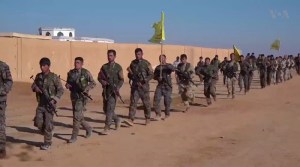
On Monday, October 17, 2016, the battle of Mosul began as the troops of the Iraqi army started moving toward the northern Iraq city of Mosul. The Iraqi Prime Minister, Haider al-Abadi, announced the effort to take Mosul, a city of over one million people which has been held by the forces of the Islamic State (ISIS or Daesh in its Arabic initials) since July 2014. The Iraqi troops are assisted by Turkish troops and tanks, by United States (U. S.) Special Forces who have also been training the Iraqi troops, and by the Kurdish peshmerga militias who have attacked surrounding villages but who, for political reasons, are not likely to enter Mosul.

There are estimates that there are some 4,500 ISIS troops facing some 50,000 on the Iraqi government side. ISIS has been aware that an attack on Mosul was in preparation for a long time and has responded by mining buildings and roads as well as building tunnels. It is likely that some ISIS fighters have slipped away, but it is also likely that the remaining majority of ISIS will fight to the bitter end, preferring death to surrender. In a situation that is confused by the number and nationalities of the groups in combat as well as the very ethnically and religiously mixed population of Mosul, what possibilities exist for respect of the laws of war?

15015691860_2c3dd3f2e1_b.jpg

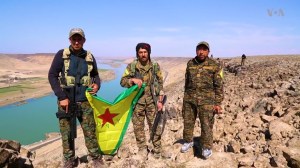
Two Kurdish peshmerga fighters at Mosul Dam in 2014.

The laws of war, now often called humanitarian law, have two wings, one dealing with the treatment of medical personnel in armed conflict situations, the treatment of the military wounded and prisoners of war as well as the protection of civilians. This wing is represented by the Geneva (Red Cross) Conventions. The second wing, often called the Hague Conventions limit or ban outright the use of certain categories of weapons. These efforts began at The Hague with the 1900 peace conferences and have continued since even if the more recent limitations on land mines, cluster weapons and chemical weapons have been negotiated elsewhere than in The Hague.

For the Hague Conventions such as the ban on land mines, the ban is binding only on States which have ratified the convention. Although the Islamic State had some of the markings of a proto-State, it was not recognized as a State by any other State. Basically ISIS can be considered as an armed militia.

ISIS_YouTube.jpg

ISIS, or Daesh, the self-styled “Islamic State”, only believes in violence. It has always displayed an unmitigated hatred of everything that international law and human rights stand for. It is neither “Islamic” nor a “State” and never will be.

The status of the Geneva Conventions for non-State militias can be debated. When I was involved at the United Nations (UN) with the national minorities of Burma in the 1990s, I encouraged the Burmese militias to study, discuss and then sign the Geneva Conventions, of which the Swiss government is the depositary power. When the Burmese government learned of our efforts, they quickly signed the Geneva Conventions. Once the national minorities had signed, and I sent the document to the Swiss government and to the International Committee of the Red Cross, both the Burmese military and the national minorities released a number of prisoners of war as a mark of good faith which had never been done before. The status of world law for non-State entities and individuals is a crucial question, and there are discussions at the International Criminal Court on this issue.

The current situation concerning refugees and internally-displaced persons can also be considered as part of humanitarian law. The status of refugees is more widely respected than that of the internally-displaced.

ISIS has shown no interest or respect for humanitarian law nor for universally-recognized human rights. ISIS has carried out many summary executions of perceived opponents. There is a real danger that as ISIS disintegrates and no longer controls as much territory, it will increase terrorist actions having “nothing left to lose”.

The violations of the laws of war are not limited to ISIS. On May 3, 2016, the UN Security Council unanimously adopted Resolution 2286 calling for greater protection for health care institutions and personnel in light of recent attacks against hospitals and clinics in Syria, Iraq, Yemen, South Sudan, Democratic Republic of Congo and Afghanistan. These attacks indicate a dangerous trend of non-compliance with the laws of war by both State and non-State agents.

To prevent and alleviate human suffering, to protect life and health, and to ensure respect for the human person – these are the core values of humanitarian law. These values may get lost in the “fog of war” of the battle for Mosul. Therefore, there needs to be a wide public outcry in the defense of humanitarian law so that violations can be reduced. As the tanks move ahead, the time for the defense of humanitarian values is now.

Prof. René Wadlow is President of the Association of World Citizens.
World Policy for Migrants and Refugees

In Africa, Being a World Citizen, Conflict Resolution, Current Events, Democracy, Europe, Fighting Racism, Human Rights, Middle East & North Africa, Solidarity, The Search for Peace, United Nations, World Law on October 4, 2016 at 7:26 PM

WORLD POLICY FOR MIGRANTS AND REFUGEES
By René Wadlow

«There is no doubt that Mankind is once more on the move. The very foundations have been shaken and loosened, and things are again fluid. The tents have been struck, and the great caravan of Humanity is once more on the march.»

Jan Christian Smuts at the end of the 1914-1918 World War.

On September 19, 2016, the United Nations (UN) General Assembly held a one-day Summit on “Addressing Large Movements of Refugees and Migrants”, a complex of issues which have become important and emotional issues in many countries. The UN Department of Economic and Social Affairs (DESA) published a report on international migration indicating that there are some 244 million migrants, some 76 million live in Europe, 75 million in Asia, 54 million in North America and others in the Middle East, Latin America and the Pacific, especially Australia and New Zealand. In addition, there are some 24 million refugees – people who have crossed State frontiers fleeing armed conflict and repression as well as some 40 million internally-displaced persons within their own country. Acute poverty, armed conflicts, population growth and high unemployment levels provide the incentives for people to move, while easier communications and transport are the means.

However, as we have seen with the many who have died in the Mediterranean Sea, people will take great risks to migrate. Thus, there is an urgent need to take away the monopoly of the life and death of refugees from the hands of mafias and traffickers and to create an effective world policy for migrants and refugees.

UNGA

This is the third time that the major governments of the world have tried to deal in an organized way with migration and refugees. The first was within the League of Nations in the 1920s. The 1914-1918 World War and the 1917 Russian Revolution had created a large number of refugees and “stateless” persons – citizens of the former Russian, Ottoman, and Austro-Hungarian Empires. These people had no passports or valid identity documents. The League of Nations created a League identity document – the Nansen Passport – which gave some relief to the “stateless” and brought international attention to their conditions. The Nansen Passport, however, became overshadowed in the mid-1930 when people – in particular Jews – fled from Germany-Austria and were refused resettlement.

nansenpassport

The second international effort was as a result of the experiences of the 1939-1945 Second World War and the large number of refugees and displaced. Under UN leadership was created the 1951 Geneva Convention on the Status of Refugees. In addition, the UN Office of the High Commissioner for Refugees, originally created as a temporary body, was made a permanent UN agency in recognition of the continuing nature of refugee issues.

The current third international effort is largely a result of the flow of refugees and migrants toward Europe during 2015-2016. The disorganized and very uneven response of European governments and the European Union to this flow has indicated that governments are unprepared to deal with such massive movements of people. Nongovernmental organizations (NGOs) have not been able to deal adequately with this large number of persons despite many good-will efforts. Moreover, certain European political movements and political parties have used the refugee issue to promote narrow nationalist and sometimes racist policies. Even a much smaller flow of refugees to the USA has provoked very mixed reactions – few of them welcoming.

Distressed persons wave after being transferred to a Maltese patrol vessel.

The September 19 Summit is a first step toward creating a functioning world policy for migrants and refugees. The Summit is not an end in itself but follows a pattern of UN awareness-building conferences on the environment, population, food, urbanization and other world issues. The impact of UN conferences has been greatest when there are preexisting popular movements led by NGOs which have in part sensitized people to the issue. The two UN conferences which have had the most lasting consequences were the 1972 Stockholm conference on the environment and the 1975 International Year of Women and its Mexico conference. The environment conference was held at a time of growing popular concern with the harm to the environment symbolized by the widely-read book of Rachel Carson Silent Spring. The 1975 women’s conference came at a time when in Western Europe and the USA there was a strong “women’s lib” movement and active discussion on questions of equality and gender.

Migration and refugee issues do not have a well-organized NGO structure highlighting these issues. However human rights NGOs have stressed the fate of refugees and migrants as well as human rights violations in the countries from which they fled. There is also some cooperation among relief NGOs which provide direct help to refugees and migrants such as those from Syria and Iraq living in Turkey, Jordan, Lebanon and those going to Greece and Italy.

The Summit’s Declaration is very general, and some observers have been disappointed with the lack of specific measures. However, we can welcome the spirit of the Summit Declaration with its emphasis on cooperative action, a humane sense of sharing the responsibilities for refugees and migrants and on seeking root causes of migration and refugee flows. What is needed now are strong NGO efforts to remind constantly government authorities of the seriousness of the issues and the need for collective action. Refugees and migrants are not a temporary “emergency” but part of a continuing aspect of the emerging world society. Thus there is a need to develop a world policy and strong institutions for migrants and refugees.

Prof. René Wadlow is President of the Association of World Citizens.